Brepols
Brepols is an international academic publisher of works in the humanities, with a particular focus in history, archaeology, history of the arts, language and literature, and critical editions of source works.801 - 850 of 3194 results
-
-
Entre stabilité et itinérance
Livres et culture des ordres mendiants, XIIIe-XVe siècle
show More to view fulltext, buy and share links for:Entre stabilité et itinérance show Less to hide fulltext, buy and share links for: Entre stabilité et itinéranceLes travaux de ces dernières années confirment que les livres tiennent une place centrale dans l’organisation des couvents mendiants et dans leurs pratiques économiques. Au quotidien, les livres font partie intégrante de la vie des couvents, comme vecteur de connaissances, support d’édification et outil de communication. Les frères les acquièrent pour étudier, pour transmettre les savoirs et pour discipliner la société. Les sœurs sont aussi, souvent, familières de la culture écrite, qui peut représenter un lieu de rencontre et de complémentarité entre les communautés masculines et féminines. Les contributions réunies dans ce volume s’attachent à considérer les différentes formes sous lesquelles les uns et les autres ont exprimé leur adhésion à la culture livresque, ou leurs éventuelles réserves, et reconnaissent dans la tension entre stabilité et itinérance l’un des points essentiels de l’identité culturelle des ordres mendiants. Parmi les aspects étudiés, figurent, en particulier, les réseaux institutionnels et interpersonnels, où les échanges de livres ont eu une très grande ampleur à l’humanisme, ainsi que les conditions historiques qui marquent le passage du manuscrit à l’imprimé.
-
-
-
Entre évitement et alliance
Formes mineures du divin
show More to view fulltext, buy and share links for:Entre évitement et alliance show Less to hide fulltext, buy and share links for: Entre évitement et allianceSelon le mot de Pétrone, « notre pays est si plein de divinités que tu peux plus facilement y rencontrer un dieu qu’un homme. » La Rome antique est bien loin d’être la seule société à connaître pareille surpopulation divine. Par-delà la différence entre d’un côté ce que les sciences religieuses ont l’habitude de considérer comme des « religions traditionnelles » désignées par les termes de fétichisme, animisme, chamanisme et, de l’autre, des monothéismes et des polythéismes, la quasi-totalité des religions du monde réserve une place de choix à d’innombrables divinités mineures ou entités invisibles. Esprits, génies, êtres fantastiques, revenants, ancêtres ou saints font l’objet de relations intéressées, parfois aussi assez inquiétantes pour que l’on cherche à les éviter. La plupart de ces entités ambiguës ne donnent pas lieu à des cultes réguliers. Leur présence se manifeste le plus souvent dans des rencontres fortuites qui appellent un traitement rituel visant à normaliser les relations que les hommes ont avec elles. Créditées de pouvoirs qui se cantonnent à des champs d’intervention limités, elles sont liées à des lieux, des moments, des pratiques telles la chasse, l’agriculture, la guerre ou encore des épisodes biographiques saillants – naissance, maladies, conflits, etc. Cet ouvrage réunit les contributions d’anthropologues, historiens et philosophes qui, chacun à sa manière, se sont essayés à mieux comprendre le sens de cette prolifération d’entités mineures et à questionner sur cette base la notion même de religion comme impliquant – ou non – celle de dieux.
-
-
-
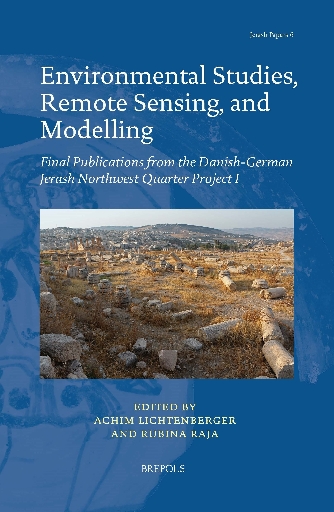
Environmental Studies, Remote Sensing, and Modelling
Final Publications from the Danish-German Jerash Northwest Quarter Project I
show More to view fulltext, buy and share links for:Environmental Studies, Remote Sensing, and Modelling show Less to hide fulltext, buy and share links for: Environmental Studies, Remote Sensing, and ModellingThe Decapolis city of Jerash has long attracted attention from travellers and scholars, due both to the longevity of the site and the remarkable finds uncovered during successive phases of excavation that have taken place from 1902 onwards. Between 2011 and 2016, a Danish-German team, led by the universities of Aarhus and Münster, focused their attention on the Northwest Quarter of Jerash - the highest point within the walled city - and this volume is the first in a series of books presenting the team’s final results.
Covering different themes and categories of finds, this volume focuses on the geophysical survey and other remote-sensing work undertaken in and around the Northwest Quarter, and also presents an in-depth discussion of the environmental studies performed at the site. This includes the geoscientific analysis carried out in various contexts, as well as radiocarbon dating, studies of both human and animal bones, and conclusions drawn from the archaeobotanical research.
-
-
-
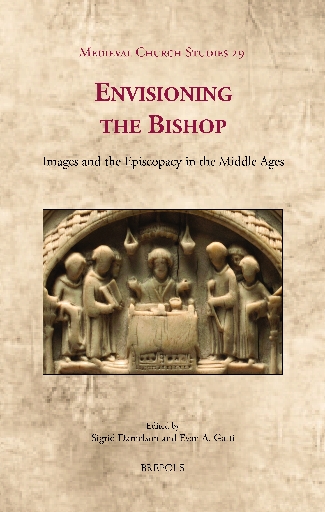
Envisioning the Bishop
Images and the Episcopacy in the Middle Ages
show More to view fulltext, buy and share links for:Envisioning the Bishop show Less to hide fulltext, buy and share links for: Envisioning the BishopThe bishop wielded significant authority in religious, intellectual, and political spheres during the Middle Ages, but how was this influence articulated, and once articulated, how was it received? The essays in this volume represent a variety of disciplinary perspectives, each tuned to the production of images made by, for, and about the medieval episcopacy. They present the bishop as a model of piety and intellectual life as well as political and religious action.
Considering material from Late Antiquity through the thirteenth century, the essays offer a series of case-studies demonstrating that crafting episcopal imagery was a complicated endeavour employing pictorial, historical, literary, and historiographic devices. Never a static institution, the episcopacy was formed and reformed making it visible to the bishop, to those with whom he interacted, and to broader communities. These efforts at making present the power and authorities of the office asserted the duties, expectations, and ideals of the bishop in ways often specific to time and place.
The diverse perspectives on the episcopal image assembled here reveal the office, not as a singular contour, but as a succession of marks and erasures. Shaped by supporters and detractors alike, medieval images of the bishop engaged with historical models, responded to present realities, and considered the eschatological future.
-
-
-
Ephrem, a 'Jewish' Sage
A Comparison of the Exegetical Writings of St. Ephrem the Syrian and Jewish Traditions
show More to view fulltext, buy and share links for:Ephrem, a 'Jewish' Sage show Less to hide fulltext, buy and share links for: Ephrem, a 'Jewish' SageThis book seeks to reconsider the commonly held view that some of Ephrem’s writings are anti-Semitic, and that his relationship with Judaism is polemical and controversial. The outcome of the research highlights several key issues. First, it indicates that the whole emphasis of Ephrem’s critical remarks about Jews and Judaism is directed towards Christian conduct, and not towards Jews; and second, it considers Ephrem’s negative remarks towards Jews strictly within the context of his awareness of the need for a more clearly defined identity for the Syriac Church.
Furthermore, this book examines discernible parallels between Ephrem’s commentaries on Scripture and Jewish sources. Such an exercise contributes to a general portrait of Ephrem within the context of his Semitic background. And in addition, the book offers an alternative reading of Ephrem’s exegetical writings, suggesting that Ephrem was aiming to include Jews together with Christians among his target audience. Further analysis of Ephrem’s biblical commentaries suggests that his exegetical style resembles in many respects approaches to Scripture familiar to us from the writings of Jewish scholars.
A comparison of Ephrem’s writings with Jewish sources represents a legitimate exercise, considering ideas that Ephrem emphasises, exegetical techniques that he uses, and his great appreciation of ‘the People’ - the Jews as a chosen nation and the people of God - an appreciation which becomes apparent from Ephrem’s presentation of them. The process of reading Ephrem’s exegetical writings in parallel with Jewish sources strongly identifies him as an heir of Jewish exegetical tradition who is comfortably and thoroughly grounded in it. This reading identifies Ephrem on a theological, exegetical and methodological level as a Christian writer demonstrating the qualities and features of a Jewish sage.
The author, Elena Narinskaya, has been awarded a PhD at Durham University (Department of Theology and Religion) and is currently involved in Post-doctoral Studies offered by the Department of Theology and Religious Studies at the University of Wales, Lampeter. In her research she works with a variety of methodologies including historical and literary criticism, and philosophical techniques.
-
-
-
Epidemics and Pandemics
Philosophical Perspectives
show More to view fulltext, buy and share links for:Epidemics and Pandemics show Less to hide fulltext, buy and share links for: Epidemics and PandemicsEpidemics, pandemics, contagion, immunity, social distance, zoonosis are just a few of the concepts that have become commonplace in the academic community and in everyday conversation since the outbreak of the Covid-19. This book aims to provide the reader with a philosophical guide to this conceptual vocabulary by investigating the meanings, implications, and history of words related to the current emergency of Covid-19.
This book addresses the fundamental anthropological, ethical, and political issues that have come under the spotlight of the public debate (life and death, freedom and authority, fear and protection, poverty and access to medical care). In this context, particular attention is given to the conflict between the scientific discourse on the one hand, and irrational bias, misinformation and fake news on the other.
The SARS-CoV-2 outbreak is only the latest episode in a long history of pandemics and epidemics that have constellated human history since its very beginning. Authoritative accounts have made some of these contagious plagues famous (Thucydides’ pages immortalizing the Athenian epidemic of the 5th century B.C.; Boccaccio’s description of the Black Death; Manzoni’s depiction of the Plague ravaging 17th-century Milan). Because a full understanding of the present is not possible without historical inquiry, several contributions in the book explore debates about calamitous phenomena as documented in philosophical literature from Antiquity to 20th-century philosophy.
-
-
-
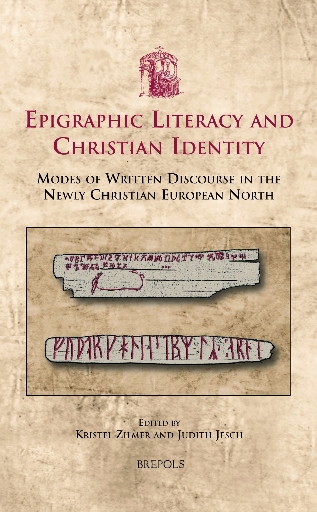
Epigraphic Literacy and Christian Identity
Modes of Written Discourse in the Newly Christian European North
show More to view fulltext, buy and share links for:Epigraphic Literacy and Christian Identity show Less to hide fulltext, buy and share links for: Epigraphic Literacy and Christian IdentityThis volume examines the role of epigraphic literacy within the newly introduced Christian culture and the developing tradition of literacy in Northern Europe during the Viking Age and the High Middle Ages. The epigraphic material under scrutiny here originates from Scandinavia and North-West Russia - two regions that were converted to Christianity around the turn of the first millennium. Besides traditional categories of epigraphic sources, such as monumental inscriptions on durable materials, the volume is concerned with more casual inscriptions on less permanent materials. The first part of the book discusses a form of monumental epigraphic literacy manifested on Scandinavian rune stones, with a particular focus on their Christian connections. The second part examines exchanges between Christian culture and ephemeral products of epigraphic literacy, as expressed through Scandinavian rune sticks, East Slavonic birchbark documents and church graffiti. The essays look beyond the traditional sphere of parchment literacy and the Christian discourse of manuscript sources in order to explore the role of epigraphic literacy in the written vernacular cultures of Scandinavia and North-West Russia.
-
-
-
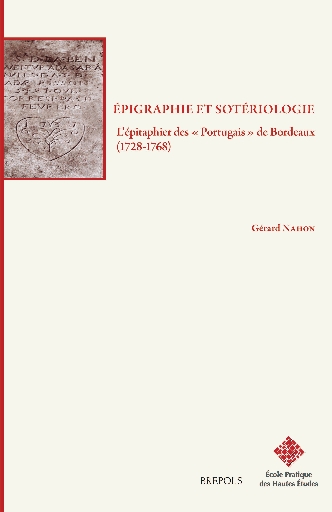
Epigraphie et sotériologie: l'épitaphier des "Portugais" de Bordeaux (1728-1768)
show More to view fulltext, buy and share links for:Epigraphie et sotériologie: l'épitaphier des "Portugais" de Bordeaux (1728-1768) show Less to hide fulltext, buy and share links for: Epigraphie et sotériologie: l'épitaphier des "Portugais" de Bordeaux (1728-1768)Visitant Bordeaux au début du xviii e siècle, Dom Edmond Martène et Dom Ursin Durand signalent que « les Cordeliers ont seuls le droit d’enterrer les juifs, dont on compte environ cent familles dans Bordeaux, où ils n’ont point de synagogue ni aucune marque qui les distingue. Ils mettent sur les tombes de leurs morts des épitaphes, dans lesquelles ils comptent les années depuis la création du monde ».
Établis à Bordeaux à la suite de Lettres Patentes octroyées par Henri II en 1550, les « Nouveaux Chrétiens » ou « Marchands Portugais » étaient issus de juifs convertis de la péninsule Ibérique. Dissimulant leur identité et leurs observances juives, ils inhumèrent leurs morts, deux siècles durant, dans des terrains dépendant de divers monastères. En 1728, la Nation juive portugaise acquit un cimetière particulier (aujourd’hui situé au 105 cours de la Marne), un espace religieux du xviii e siècle pratiquement inchangé au xxi e siècle.
Ce volume analyse et synthétise le discours gravé sur 255 sépultures en regard des paysages homologues de la diaspora portugaise à Amsterdam, Hambourg, Londres, à Curaçao, à La Jamaïque, au Suriname. Il dresse l’historique de la Nation portugaise et la problématique du crypto judaïsme ou marranisme ; il parcourt les sites funéraires portugais antérieurs et postérieurs à l’achat du cimetière, analyse le programme épigraphique et son décor en fonction des temps, des espaces, des langues, des individus eux-mêmes, de la Nation, des confréries ; il traite du discours du judaïsme dans l’Europe des Lumières sous l’angle du salut des vivants et des défunts, de la vision de l’au-delà. Il fonde, enfin, l’ensemble du corpus d’épitaphes dans leurs composantes espagnole, hébraïque et portugaise.
-
-
-
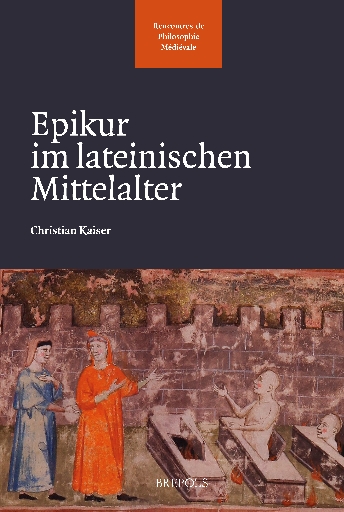
Epikur im lateinischen Mittelalter
Mit einer kritischen Edition des X. Buches der Vitae philosophorum des Diogenes Laertios in der lateinischenÜbersetzung von Ambrogio Traversari (1433)
show More to view fulltext, buy and share links for:Epikur im lateinischen Mittelalter show Less to hide fulltext, buy and share links for: Epikur im lateinischen MittelalterDie Studie liefert im ersten Teil erstmalig eine umfassende historisch-systematische, monographische Aufarbeitung der Rolle Epikurs in der Philosophie-, Kultur- und Ideengeschichte des lateinischen Mittelalters (von Isidor von Sevilla bis zum Ende des 15. Jahrhunderts). Quellennah werden viele mittelalterliche Denker von Rang und Namen besprochen. Neben der Philosophie im engeren Sinne wird auch die Bedeutung, die Epikurs Denken im theologischen, medizinischen und poetologischen Diskurs innehatte, eingehend beleuchtet. Durch diese Fülle wird es jetzt erstmals möglich, ein fundiertes Bild über das mittelalterliche Wissen zur epikureischen Philosophie - das sehr viel detaillierter und facettenreicher war als bisher allgemein angenommen - und vor allem zu deren systematischer Funktion innerhalb der mittelalterlichen Denkgebäude zu gewinnen. Der zweite Teil bietet die kritische und kommentierte Edition der ersten lateinischen Übersetzung des X. Buches des Diogenes Laertios, die Ambrogio Traversari 1433 fertiggestellt hatte. Diese Übersetzung bildete den Grundlagentext für die Epikur-Rezeption der Renaissance und Frühen Neuzeit. Für die Edition wurden neben Traversaris Autograph 16 weitere Handschriften aus dem 15. Jahrhundert sowie die Editio princeps von Marchese (ohne Epigramme; ca. 1472) und die zweite Edition von Brugnoli (erstmals mit lat. Übersetzung der Epigramme; 1. Auflage 1475) herangezogen.
-
-
-
Epirus Revisited. New Perceptions of its History and Material Culture
From the Thematic Session "Epirus Revisited" of the 23rd International Congress of Byzantine Studies, Belgrade, 22-27 August 2016
show More to view fulltext, buy and share links for:Epirus Revisited. New Perceptions of its History and Material Culture show Less to hide fulltext, buy and share links for: Epirus Revisited. New Perceptions of its History and Material CultureThe opening of the borders of Albania in the 1990s stimulated an increased interest in its cultural heritage and led to extensive research, as well as archaeological investigations. These, however, have mainly concentrated within Albania's present-day borders and have lacked broader contextualization. Very recent excavations in Greece, which resulted from the construction of the new Ionia Odos highway, have, however brought to light unexpected and interesting material that changes our image of the monumental topography and the settlements in Epirus. New studies concerning Epirus and its broader connections during the early and later Ottoman periods provide a broader impression of the region and its relationships with the large economic centres of the West, as well as with the spiritual-religious and political centres of the Balkans.
-
-
-
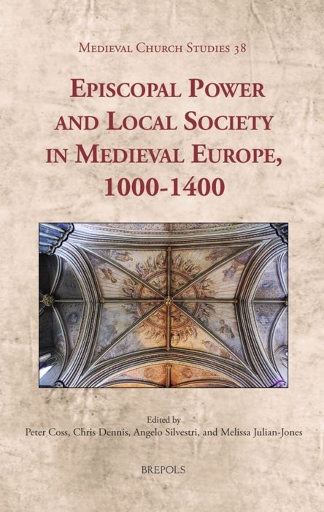
Episcopal Power and Local Society in Medieval Europe, 1000-1400
show More to view fulltext, buy and share links for:Episcopal Power and Local Society in Medieval Europe, 1000-1400 show Less to hide fulltext, buy and share links for: Episcopal Power and Local Society in Medieval Europe, 1000-1400The medieval bishop occupied a position of central importance in European society between 900 and 1400. Indeed, medieval bishops across Europe were involved in an assortment of ecclesiastical and secular affairs, a feature of the episcopal office in this period that ensured their place amongst the most influential figures in their respective milieux. Such prominence has inevitably piqued the interest of modern scholars and a number of important studies focusing on individual aspects of the medieval episcopal office have emerged, notably in recent years. Yet scholarly attention has often been drawn towards the careers of extraordinary bishops, men whose renown was often due to their involvement in both ecclesiastical and secular activities that took them beyond the borders of their dioceses. As a result, there has been a tendency to overlook the significance of the function of the episcopal office within local society, and, in particular, the way that this context shaped episcopal power.
The purpose of this volume is to examine the foundations of episcopal power in medieval Europe by considering its functioning and development at the level of local society. This collection of essays derives from papers delivered at a conference at Cardiff University in May 2013, and is divided into three sections focusing on the construction of episcopal power in local society, the ways in which it was augmented, and the different forms through which it was expressed. The essays have a broad geographical scope and include studies focused on English, French, Italian, and Icelandic dioceses.
-
-
-
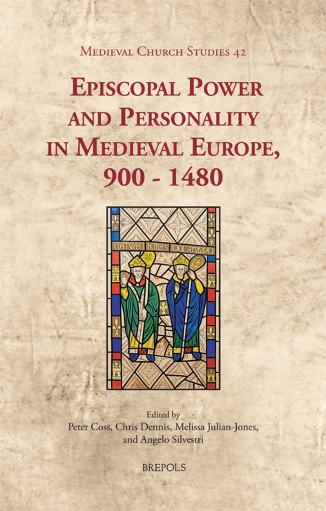
Episcopal Power and Personality in Medieval Europe, c. 900–c. 1480
show More to view fulltext, buy and share links for:Episcopal Power and Personality in Medieval Europe, c. 900–c. 1480 show Less to hide fulltext, buy and share links for: Episcopal Power and Personality in Medieval Europe, c. 900–c. 1480The question of personality is a problematic one, beset by complications of cultural distance, the layers of the past, and the limitations of the source material.
Recognising these difficulties, this volume draws together character sketches based upon historical narratives and a range of sources, including architecture, liturgical manuscripts, chronicles, and hagiographical material, to show a multifaceted range of means by which historians can construct, reconstruct, and deconstruct episcopal power through the person of the bishop.
Building on a previous volume of essays, Episcopal Power and Local Society in Medieval Europe, 900-1400, which examined the construction, augmentation, and expression of episcopal power in local society, this second volume seeks to uncover the impact of the personalities behind that power. Through essays dealing with the construction of cultural and political personalities, the shadows they cast, and the contexts that forged them, this volume brings to life the careers of bishops across medieval Europe from c. 900 to c. 1480. This geographical range and broad time span throws up the similarity in applications and bene ts of interdisciplinarity which can be applied to ecclesiastical history, and presents a fascinating range of case studies for consideration.
-
-
-
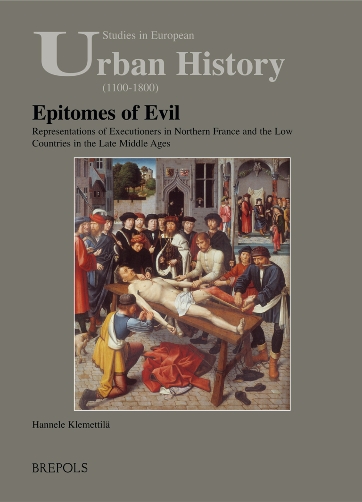
Epitomes of Evil
Representations of Executioners in Northern France and the Low Countries in the Late Middle Ages
show More to view fulltext, buy and share links for:Epitomes of Evil show Less to hide fulltext, buy and share links for: Epitomes of EvilHangmen were familiar characters from urban reality to people living in France and the Burgundian Netherlands in the late Middle Ages. These officers played an essential role in the new penal system. However, general attitudes towards public executioners were highly ambiguous, often hostile and disparaging. In past imagery, various hangman figures, real or fictitious, were closely linked to ideas of otherness, cruelty, sin and evil. They were identified with criminals, marginal people and demons. In the period of the late Middle Ages, the hangman's representations were actively exploited, shaped and modified for various reasons by different social and cultural groups in different products of culture, religious as well as secular.
This study casts light on ways of perceiving the executioner in French and Burgundian culture and society from the fourteenth to the early sixteenth century. The primary sources used in this work consist of wide and varied printed and non-printed textual materials such as chronicles, writings by legal experts and theologians, drama and poetry. Significant role is also given to the testimony offered by pictorial art, both sacred and profane, especially miniatures and panel paintings.
-
-
-
Eraclito ad Alessandria.
Studi e ricerche intorno alla testimonianza di Filone.
show More to view fulltext, buy and share links for:Eraclito ad Alessandria. show Less to hide fulltext, buy and share links for: Eraclito ad Alessandria.Questa monografia è uno studio tematico dedicato alla trasmissione e alla ricezione del filosofo presocratico Eraclito di Efeso da parte di Filone di Alessandria, il maggior rappresentante del giudaismo ellenistico. I testi esegetici, filosofici e storico-apologetici di Filone con riferimento allo scritto e alla dottrina eraclitea sono analizzati in modo dettagliato ed esaustivo, prima di essere confrontati con quelli di fonti anteriori e posteriori da un lato, con quelli degli altri filosofi Presocratici dall’altro. Le testimonianze di Filone sono quindi utilizzate per cogliere in modo più preciso il significato originario del discorso filosofico di Eraclito, rispetto alle diverse tradizioni interpretative che si succedono e si intrecciano nel corso della storia della filosofia antica.
-
-
-
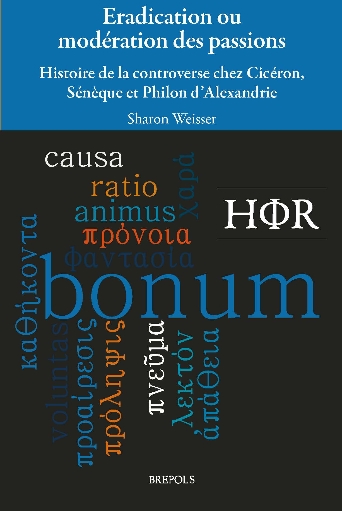
Eradication ou modération des passions. Histoire de la controverse chez Cicéron, Sénèque et Philon d’Alexandrie
show More to view fulltext, buy and share links for:Eradication ou modération des passions. Histoire de la controverse chez Cicéron, Sénèque et Philon d’Alexandrie show Less to hide fulltext, buy and share links for: Eradication ou modération des passions. Histoire de la controverse chez Cicéron, Sénèque et Philon d’AlexandrieCe livre retrace l’histoire de la controverse qui opposa les Stoïciens aux Péripatéticiens à propos des passions. Alors que les Stoïciens prônent un sage dépourvu de toute passion, les Péripatéticiens quant à eux admettent les passions modérées. Contrairement aux études dont la démarche consiste à reconstruire la doctrine stoïcienne au moyen d’une lecture synoptique de fragments issus de sources et de périodes variées, cette étude favorise les témoignages complets et se concentre sur les textes qui attestent clairement de la polémique entre éradication et modération des passions. Ainsi, cet ouvrage s’attelle aussi bien à l’argumentation théorique qu'aux différentes articulations de la controverse telle qu’elle émerge chez Cicéron, le premier témoin important de la dispute, Sénèque et Philon d’Alexandrie. L’approche de cette étude est à la fois analytique et historique et s’articule autour de trois objectifs majeurs. Il s’agit tout d’abord 1) d’éclairer les problématiques philosophiques soulevées ou relayées par la polémique à propos des passions à chaque époque déterminée, 2) d’élucider les mécanismes polémiques ainsi que 3) de comprendre la manière dont les identités philosophiques sont articulées à travers la controverse. La double méthodologie (analytique et historique) permet d'éclairer les fondements théoriques de la théorie des passions du Portique ainsi que d'aborder la question des acteurs, des sources, des modes d’expression de la dispute ainsi que de la terminologie à travers laquelle elle fut véhiculée à chaque époque.
-
-
-
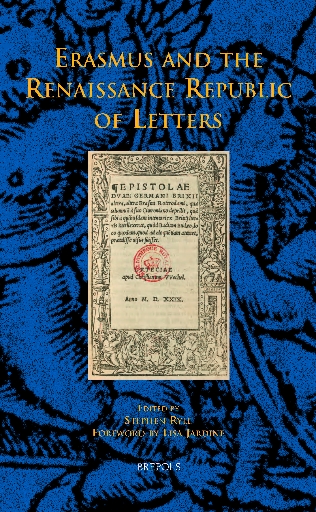
Erasmus and the Renaissance Republic of Letters
show More to view fulltext, buy and share links for:Erasmus and the Renaissance Republic of Letters show Less to hide fulltext, buy and share links for: Erasmus and the Renaissance Republic of LettersThis volume contains a selection from among the papers delivered at a conference held to mark the centenary of a watershed event in early modern studies: the appearance of Volume I of P. S. Allen’s edition of Erasmus’s letters. Erasmus scholarship has been a growing field since the late twentieth century, owing to the enormous volume and vast intellectual range of his oeuvre and to the reprinting of his works from the 1960s onwards, while Allen’s edition has proved the basis for research for scholars of almost every aspect of Renaissance humanism and the Reformation.
The conference aimed to investigate as many aspects as possible of Erasmus’s literary, educational, rhetorical, and theological activities and of their influence on the emerging Europe of the early modern era. The essays collected here present a wide-ranging overview of the current state of Erasmus scholarship, including a survey of the discoveries of letters to and from Erasmus unknown to Allen, the printing for the first time since 1529 of the opening section of an important letter to him from Germain de Brie, an account of the crucial role played by Ulrich von Hutten in the publication of the dialogue Iulius exclusus e coelis, and several studies of the influence of Erasmian thought on early modern political and theological controversies. With its broad coverage of the current field, the volume will prove indispensable to Erasmus scholars.
-
-
-
Eriugena and Creation
Proceedings of the Eleventh International Conference on Eriugenian Studies, held in honor of Edouard Jeauneau, Chicago, 9-12 November 2011
show More to view fulltext, buy and share links for:Eriugena and Creation show Less to hide fulltext, buy and share links for: Eriugena and CreationUnjustly ignored as a result of a thirteenth-century condemnation, the thought of Johannes Scottus Eriugena (ca. 810-877) has only been subject to critical study in the twentieth century. Now, with the completion of the critical edition of Eriugena’s masterwork - the Periphyseon - the time has come to explore what is arguably the most intriguing and vital theme in his work: creation and nature.
In honor of Edouard Jeauneau - Institute Professor at the Pontifical Institute of Mediaeval Studies, University of Toronto and Honorary Research Director at the C.N.R.S. in Paris - to whom the field of Eriugenian studies is enormously indebted, this volume seeks to undertake a serious examination of the centrality of Eriugena’s thought within the Carolingian context, taking into account his Irish heritage, his absorption of Greek thought and his place in Carolingian culture; of Eriugena as a medieval thinker, both his intellectual influences and his impact on later medieval thinkers; and of Eriugena’s reception by modern philosophy, from considerations of philosophical idealism to technology.
-
-
-
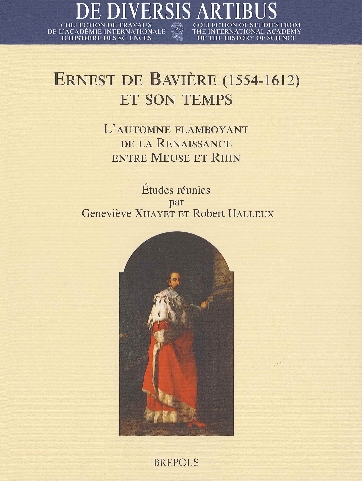
Ernest de Bavière (1554-1612) et son temps
L'automne flamboyant de la Renaissance entre Meuse et Rhin
show More to view fulltext, buy and share links for:Ernest de Bavière (1554-1612) et son temps show Less to hide fulltext, buy and share links for: Ernest de Bavière (1554-1612) et son tempsPrince-évêque de Liège de 1581 à 1612, Ernest de Bavière est aussi archevêque de Cologne, évêque de Munster, Hildesheim et Freising. A l'occasion de l'exposition internationale organisée à Liège pour son 400e anniversaire, ce recueil d'études explore les différents aspects de l'activité d'un prince à la charnière de deux temps, entre Renaissance et Modernité. Humaniste et défenseur du concile de Trente, il fut aussi un "prince practitioner", ami de Kepler et de Galilée, alchimiste et mécène des paracelsiens, créateur de stations thermales et d'hôpitaux et opérateur industriel dans les mines et la métallurgie.
-
-
-
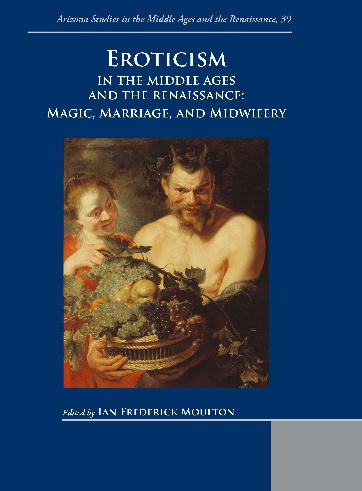
Eroticism in the Middle Ages and the Renaissance
Magic, Marriage, and Midwifery
show More to view fulltext, buy and share links for:Eroticism in the Middle Ages and the Renaissance show Less to hide fulltext, buy and share links for: Eroticism in the Middle Ages and the RenaissanceMagic rings; seductive she-devils; satyrs bound and whipped on stage; a woman sexually coerced in the confessional; a boy caught masturbating over a midwifery manual; a marriage of true minds between two men; a prince led to repentance at the sight of a naked girl prepared to give her life for his. These varied manifestations of medieval and early modern sexuality - each at the center of one of the essays in this volume - suggest the ubiquity and diversity of eroticism in the period. The erotic is the stuff of legend, but also of daily life. It is inextricable from relations of power and subordination and is plays a fundamental role in the heirarchical social structures of the period. The erotic is also very much a part of the spiritual realm, often in morally ambiguous ways. The seven essays collected in this volume explore the role the erotic played in early modern notions of happiness or fulfillment, in clerical life, in Jewish legend, heretical magic and Christian marriage, in poetry, on the public stage, and in medical manuals.
-
-
-
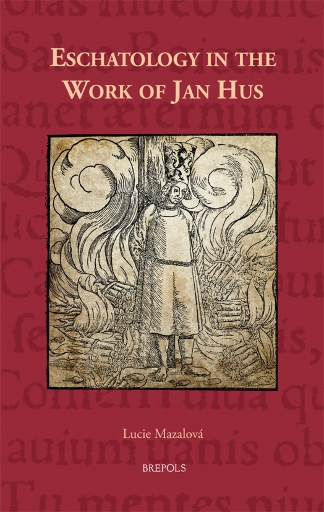
Eschatology in the Work of Jan Hus
show More to view fulltext, buy and share links for:Eschatology in the Work of Jan Hus show Less to hide fulltext, buy and share links for: Eschatology in the Work of Jan HusThis study provides a systematic and comprehensive overview of Hus’s ideas on the last things as they are presented in both his work and life. It examines the content and language of his works, particularly his Latin sermons and correspondence, from a literary-historical perspective. It explores general eschatology (Antichrist, purgatory, heaven and hell), as well as its intertwining with the Last Things that Jan Hus experienced personally in his struggle against Antichrist. Thus, the reader will learn not only about Hus’s official ideas, but also about his intimate thoughts contained in correspondence written during his exile and even as he was in prison awaiting death.
The book also presents Hus’s eschatology in the broader context of Church reform. It clarifies how Hus’s eschatology developed from its beginnings up to his death, and takes into account the writings of other thinkers whose ideas are connected to Hus’s eschatology, such as John Wycliffe, Milíč of Kroměříž, Matěj of Janov, and Nicholas of Dresden. The book also features an introductory prolegomena on Hus’s life and work and early reform eschatology, which describes not only relevant Czech influences on Hus’s eschatology (e.g. university theology, social-political factors, the Czech preaching tradition), but also European influences (e.g. Peter Lombard, heterodox doctrines).
-
-
-
Escritos medievales en honor del obispo Isidoro de Sevilla
Introducción, traducción, índices y notas por Jose Carlos Martín-Iglesias
show More to view fulltext, buy and share links for:Escritos medievales en honor del obispo Isidoro de Sevilla show Less to hide fulltext, buy and share links for: Escritos medievales en honor del obispo Isidoro de SevillaIsidoro de Sevilla es el escritor más destacado de la Hispania visigoda. Aunque es conocido, sobre todo, como autor de la enciclopedia de las Etymologiae, se interesó igualmente por la exégesis bíblica, la historia, la biografía, la astronomía y la geografía, la liturgia, la teología, la espiritualidad, las herejías, la numerología y el monacato. A su muerte, dejó fama de hombre sabio y santo. En consecuencia, a lo largo de la Edad Media se compusieron numerosas obras en su honor en Hispania. Este volumen recoge la traducción de la mayor parte de esos escritos, desde los más antiguos, fechados en el año 636, hasta varias piezas litúrgicas del siglo xv. Las primeras composiciones surgieron en Sevilla y Zaragoza, pero, después del traslado de los restos de Isidoro a León en 1063, su culto conoció un gran desarrollo en esta ciudad y los canónigos del monasterio de San Isidoro de León quisieron exaltar la memoria del santo consagrando varias obras a su figura. A continuación, en la segunda mitad del siglo xiii, otra relevante leyenda hagiográfica sobre Isidoro de Sevilla y sus hermanos fue compuesta en Zaragoza. Se conservan, además, algunos pequeños escritos litúrgicos redactados entre los siglos xiii y xv.
Los textos latinos en los que se basa este volumen aparecieron en las colecciones del Corpus Christianorum: Series Latina, bajo el título de Scripta de uita Isidori Hispalensis episcopi (CC SL 113B), y Continuatio Mediaeualis, bajo el título de Scripta Medii Aeui de uita Isidori Hispalensis episcopi (CC CM 281). En los márgenes de esta traducción pueden encontrarse las referencias a las páginas correspondientes de las ediciones.
-
-
-
Esorcismo cristiano e possessione diabolica tra II e III secolo
show More to view fulltext, buy and share links for:Esorcismo cristiano e possessione diabolica tra II e III secolo show Less to hide fulltext, buy and share links for: Esorcismo cristiano e possessione diabolica tra II e III secoloIl libro contiene un’approfondita analisi della pratica dell’esorcismo e del trattamento della possessione diabolica nell’antichità cristiana. Vengono riprodotte, criticamente esaminate, tradotte e commentate tutte le occorrenze scritte esistenti - più di duecento, in sette lingue - in cui compare qualche menzione o anche solo qualche allusione al tema. La provenienza dei testi è varia: autori cristiani, autori pagani che descrivono gli usi dei cristiani, scritti giudeocristiani, gnostici, apocrifi, ordinamenti ecclesiastici, etc. L’arco cronologico preso in considerazione va dall’inizio del II secolo (Elcasaiti) alla metà del III (Cornelio di Roma). La parte analitica è preceduta da un’antologia dei testi antecedenti giudaici (Antico Testamento, Qumran e Giuseppe Flavio) e protocristiani (Nuovo Testamento), e delle testimonianze pagane coeve (Luciano di Samosata e Filostrato). Una lunga introduzione indaga in generale sui presupposti teologici dell’esorcismo, sui modelli biblici, sulle sue implicazioni apologetiche e propagandistiche, sulla sua funzione nell’ambito del conflitto interreligioso, sulla terminologia adoperata, sui formulari e le pratiche attestate, sulle caratteristiche, prerogative e qualità morali dell’esorcista, sul progressivo stabilirsi dell’esorcistato come ordine sacro e sull’istituzione del rito dell’esorcismo dei catecumeni. La bibliografia scientifica utilizzata supera i 1000 titoli. Al termine del libro è a disposizione un riassunto in lingua inglese.
-
-
-
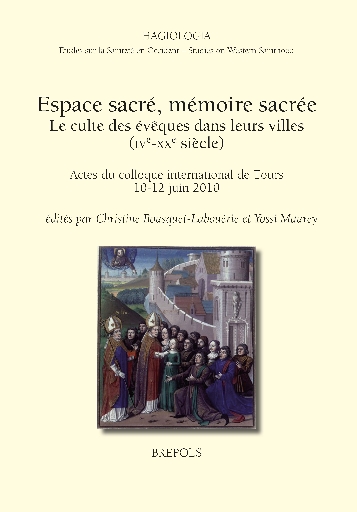
Espace sacré, mémoire sacrée. Le culte des évêques dans leurs villes (IVe-XXe siècle)
Actes du colloque de Tours, 10-12 juin 2010
show More to view fulltext, buy and share links for:Espace sacré, mémoire sacrée. Le culte des évêques dans leurs villes (IVe-XXe siècle) show Less to hide fulltext, buy and share links for: Espace sacré, mémoire sacrée. Le culte des évêques dans leurs villes (IVe-XXe siècle)L’histoire de bien des villes européennes a été façonnée par une ou plusieurs figures saintes dont les relations aux villes-vraies ou imaginées- ont eu des conséquences spirituelles et pratiques. La topographie de la ville, son économie, ses établissements, sa liturgie, sa réputation, et même le développement de la fierté civique des habitants, se sont forgés dans une association idiosyncratique du saint et de sa ville. La figure de l’évêque-saint, en adéquation avec ses prérogatives spirituelles et temporelles extraordinaires, représente une catégorie particulière dont ce livre a voulu tracer les contours. Le topos de la sainteté épiscopale préjuge la plupart du temps de rapports passionnels entre l’évêque et sa ville, parfois conflictuels même tant l’écart entre la sainteté vécue ou du moins ressentie peut entrer en contradiction avec une population souvent versatile mais soucieuse cependant de participer par capillarité à la sainteté de son chef de diocèse.
-
-
-
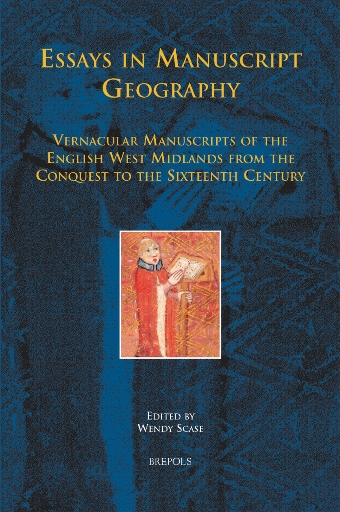
Essays in Manuscript Geography
Vernacular Manuscripts of the English West Midlands from the Conquest to the Sixteenth Century
show More to view fulltext, buy and share links for:Essays in Manuscript Geography show Less to hide fulltext, buy and share links for: Essays in Manuscript GeographyThe medieval English West Midlands has long been associated with the production of vernacular texts, in Old and Middle English, and with the making of several famous manuscripts. The aim of this volume is to re-think assumptions about medieval literature and the region in the light of new research in medieval book history. A series of specially commissioned essays in ‘manuscript geography’ examines the making and use of texts and books in relation to cultural networks in the region and beyond. Included are case studies of manuscripts of Worcester and the Worcester diocese from the eleventh to the thirteenth centuries; investigations of manuscript production in fourteenth-century Shropshire and its wider regional links; and essays on textual cultures in Warwickshire from the activities of the aristocrats and gentry of the fifteenth and sixteenth centuries to the projects of later antiquarians. Essays in the final section of the volume reflect on the possibilities of large-scale, corpus-based research on medieval manuscript books. Collectively the essays identify and explore some of the investments of traditional regionalist accounts of vernacular literary culture and model new theoretical and methodological approaches.
-
-
-
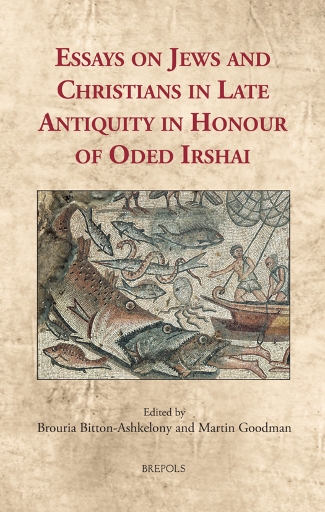
Essays on Jews and Christians in Late Antiquity in Honour of Oded Irshai
show More to view fulltext, buy and share links for:Essays on Jews and Christians in Late Antiquity in Honour of Oded Irshai show Less to hide fulltext, buy and share links for: Essays on Jews and Christians in Late Antiquity in Honour of Oded IrshaiLeading scholars in the study of Late Antiquity discuss the religious landscape of the eastern Roman Empire, with expert discussion of the theological, political, and social issues which confronted Jews and Christians in late Roman Palestine and surrounding regions. Individual chapters analyse in depth the rabbinic, patristic, and archaeological evidence to produce a sophisticated account of religious lives in provincial societies in which rabbinic Judaism took root within a Roman world increasingly dominated from the early fourth century CE by competing Christian power structures, particularly within Palestine. Detailed studies investigate, among other topics, rabbinic speculation about the origins and nature of the Roman state; the implications of the sharing of urban space by different religious traditions and the sharing of religious iconography; competition both within Judaism and Christianity and between Jews and Christians in light of the political pressures exerted by the Christian Roman state; and both similarities and differences in speculation by Jews and Christians about the nature of the expected end of days.
-
-
-
Estética de la Contemplación en Ricardo de San Víctor
Sabiduría, Caridad, Trinidad
show More to view fulltext, buy and share links for:Estética de la Contemplación en Ricardo de San Víctor show Less to hide fulltext, buy and share links for: Estética de la Contemplación en Ricardo de San VíctorEl renovado interés por las fuentes históricas ha favorecido el redescubrimiento de figuras como Ricardo de San Víctor que, habiendo sido opacadas por la fama de autores posteriores como santo Tomás o san Buenaventura, constituyen, sin embargo, auténticos hitos del pensamiento cristiano.
Las obras de Ricardo de San Víctor, de gran calado teológico, espiritual y místico, son una constante invitación a explorar la belleza escondida en las profundidades del misterio divino. Un misterio al que solo es posible acceder mediante la gracia de la contemplación que ilumina el camino hacia la restauración del alma y la comunión con Dios. En sus escritos, Ricardo ofrece una explicación coherente y sistemática de la relación del ser humano con lo divino que, iniciándose en la contemplación de lo creado, puede elevarse hacia la unión con Dios a través de la luz de la sabiduría y el fuego de la caridad. Justamente son estos elementos -sabiduría y caridad- los que constituyen el hilo conductor de sus desarrollos teológicos sobre la contemplación y la Trinidad.
Por medio de un análisis detallado del conjunto de sus obras, esta investigación identifica su continuidad temática, así como el modo excepcional con que se articula en ellas la experiencia mística y la reflexión dialéctica. Este acercamiento integral a sus desarrollos permite descubrir la auténtica riqueza de su teología que, al poner de relieve la indisoluble relación entre la antropología, la estética, la contemplación y el misterio trinitario, constituye una de las propuestas más originales del siglo XII.
-
-
-
Etudes sur la Faculté des arts dans les universités médiévales
Recueil d'articles
show More to view fulltext, buy and share links for:Etudes sur la Faculté des arts dans les universités médiévales show Less to hide fulltext, buy and share links for: Etudes sur la Faculté des arts dans les universités médiévalesCe recueil comprend dix-neuf articles concernant divers aspects de l’enseignement à la Faculté des arts au moyen âge. Ils ont été publiés, depuis une vingtaine d’années environ, dans des revues, des actes de colloques et autres volumes collectifs. La dispersion de ces publications rend leurs liens réciproques assez opaques et il a semblé utile de les réunir en un volume.
Tous les articles repris ici sont suivis de notes qui donnent des corrections, des compléments de bibliographie, etc. L’un d’entre eux ( le numéro XIV) est suivi du texte d’une communication dont le thème est dans ses grandes lignes le même et qui n’est pas encore parue (XIVa). Une autre communication qui n’a pas été publiée a été reprise sous le numéro XIX.
Les articles ont été organisés en six sections, selon les six thèmes qui ont retenu mon attention ces dernières années. Le premier, l’étude du vocabulaire, remonte à une époque plus lointaine, où mes travaux de lexicographie m’ont inspiré des recherches sur l’origine des termes techniques de la vie intellectuelle au moyen âge. Le deuxième thème, les examens et les cérémonies dans les universités médiévales, est issu du premier et témoigne, comme les autres, de mon intérêt grandissant pour la vie intellectuelle, en particulier dans les universités médiévales. L’étude du vocabulaire mène non seulement à la réalité historique , mais aussi aux textes témoignant de cette réalité et de l’activité intellectuelle qui s’y exprime. Ces textes n’ont pas seulement un contenu, mais aussi une forme qui n’est pas le fruit du hasard et qui a une influence sur le contenu même. C’est pourquoi le sujet des genres littéraires m’a semblé important à explorer, brièvement ou, dans la seconde étude de la troisième section, comme un moyen de classification de textes divers traitant du même sujet. La cinquième section, sur la disputatio, rassemble quelques études qui complètent les monographies que j’ai publiées sur ce sujet : La ‘disputatio’ à la Faculté des arts de Paris (1200-1350 environ) et La ‘disputatio’ dans les Facultés des arts au moyen âge, parues respectivement en 1995 et 2002. Finalement, la sixième section réunit quelques études centrées sur les disciplines enseignées: la façon dont la lecture des textes de base s’est transformée graduellement en discipline systématique, la place qu’avait sans doute la musique dans l’enseignement de la Faculté des arts, et, en dernier, un exemple de l’influence de la logique sur une tout autre discipline, à savoir le droit.
Les index permettront un usage plus aisé de ce volume et fourniront pour ainsi dire une clef d’accès à ces articles restés relativement isolés.
-
-
-
Etudes sur le premier siècle de l’averroïsme latin. Approches et textes inédits
show More to view fulltext, buy and share links for:Etudes sur le premier siècle de l’averroïsme latin. Approches et textes inédits show Less to hide fulltext, buy and share links for: Etudes sur le premier siècle de l’averroïsme latin. Approches et textes inéditsCe livre est consacré aux auteurs qui ont repris la pensée d’Averroès dans le monde latin entre 1250 et 1350. De nouvelles remarques sur la polysémie du terme averroista précèdent les grands thèmes abordés : le retour numériquement identique au corps corrompu, le rapport entre matière et puissance, la nécessité et la contingence, l’intellect agent et possible. Des manuscrits et des textes inédits jusqu’à ce jour sont au coeur des discussions qui apportent la preuve que des doctrines puisées dans l’œuvre d’Averroès circulaient entre les Universités de Paris, Oxford, Bologne et Padoue. Sans prétendre aborder tous les aspects de l'averroïsme latin de cette période, le livre reprend sur nouveaux frais des questions considérées comme résolues et propose de nouvelles perspectives de recherche.
-
-
-
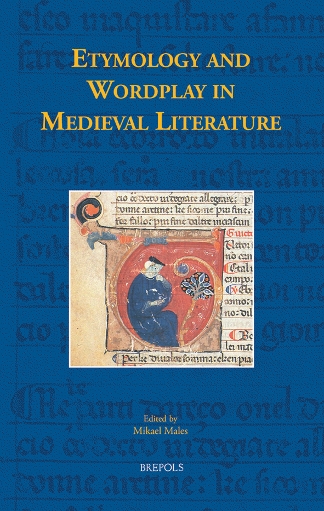
Etymology and Wordplay in Medieval Literature
show More to view fulltext, buy and share links for:Etymology and Wordplay in Medieval Literature show Less to hide fulltext, buy and share links for: Etymology and Wordplay in Medieval LiteratureIn modern scholarship, etymology and wordplay are rarely studied in tandem. In the Middle Ages, however, they were intrinsically related, and both feature prominently in medieval literature. Their functions are often at variance with the expectations of the modern reader, in particular when wordplay is used to arrive at crucial answers or to convey theological insights. The studies in this book therefore carry important implications for our understanding of the reception of medieval texts. The authors show how etymology and wordplay in the Middle Ages often served as an impetus for meditation and as a route to truth, but that they could also be put to more mundane uses, such as the bolstering of national pride. In a narrative context, the functions of etymology and wordplay could range from underlining the sexual bravado of the protagonist to being the key indicator of whether the hero would live or die.
This book presents case studies of the uses of etymology and wordplay in a number of medieval literatures (Latin, Old French, Middle High German, Italian, Old Irish, Old English, Old Norse, Slavic). By moving beyond the strictly etymological discourse into different parts of medieval literature, the functions of these devices are highlighted in various contexts. Their significance ranges from the bawdy to the sublime, from the open-ended to the specific. Classical and medieval developments of etymology and wordplay are described in a background chapter.
-
-
-

Eulogia
Mélanges offerts à Antoon R. Bastiaensen à l'occasion de son soixante-cinquième anniversaire
-
-
-
Euphrosyne
Journal for Classical Philology
show More to view fulltext, buy and share links for:Euphrosyne show Less to hide fulltext, buy and share links for: EuphrosyneEuphrosyne: Journal for Classical Philology is an annual academic journal in Classics. The journal publishes original research articles that contribute to various fields within the broader scope of Classical Studies, including Greek and Roman literature, philology and culture; Byzantine and medieval culture and literature; and Neo-Latin Humanism and Classical Reception with emphasis on how Classical, Byzantine or medieval authors and themes have been transmitted through time (Nachleben).
Founded in 1957, Euphrosyne has been dedicated to promoting quality research for over half a century. Based in Lisbon, the journal prides itself on its strong international profile. It is committed to promoting innovative research, especially by promising early-career scholars, and encouraging fresh perspectives and scholarly dialogue across disciplines.
More information about this journal on Brepols.net
-
-
-
Europe. Comédie héroique attribuée à Richelieu
show More to view fulltext, buy and share links for:Europe. Comédie héroique attribuée à Richelieu show Less to hide fulltext, buy and share links for: Europe. Comédie héroique attribuée à RichelieuRichelieu, cardinal ministre, considérait la nécessité de l’intervention de l’État dans tous les domaines de la vie du royaume - guerre, finances, commerce, organisation du territoire, diplomatie, religion et culture. La France de Richelieu est engagée dans la Guerre de Trente ans qui, caractérisée par une double dimension nationale et religieuse, implique toutes les puissances européennes et ravage les territoires. Richelieu conçoit sa mission d’homme d’État comme devant apporter la paix à l’intérieur et à l’extérieur du royaume et conforter les positions de la France face à l’impérialisme espagnol. Plus que quiconque conscient de l’apparition d’une opinion publique dont il fallait convaincre les différents cercles (la cour, Paris, le royaume) de la légitimité de ses actions et de ses choix, notamment sur la scène extérieure, il mit sa plume au service de ses desseins politiques. On connaît le Richelieu mémorialiste, épistolier, théoricien politique, orateur, on le connaît fondateur de l’Académie française et créateur de la Gazette ; on sait qu’il a encouragé et soutenu le théâtre, qui s’enrichit de très nombreuses formes dans cette première moitié du dix-septième siècle. Richelieu conçut des pièces et les fit écrire, de même que Rubens concevait les toiles dont il confiait ensuite la réalisation à son atelier. Tel est le cas de Europe, dont nous donnons la première publication française depuis 1642, qui peut être ainsi attribuée à la fois à Desmarets de Saint-Sorlin et au Cardinal. Rédigée dans les bouleversements de l’actualité politique dont elle restitue les grandes tensions, cette comédie héroïque en alexandrins qui donne à des thèmes d’abord précieux une coloration tragique met en scène, à travers les péripéties sinueuses de l’ambition du roi d’Espagne, Ibère, le difficile accouchement d’une concorde des nations européennes, sous l’égide d’un héros pacificateur et vertueux, Francion, enfin libérées de leur passion amoureuse mimétique et délétère pour la belle Europe, voire pour l’ensemble du monde - c’est-à-dire libérées de leur impérialisme.
-
-
-
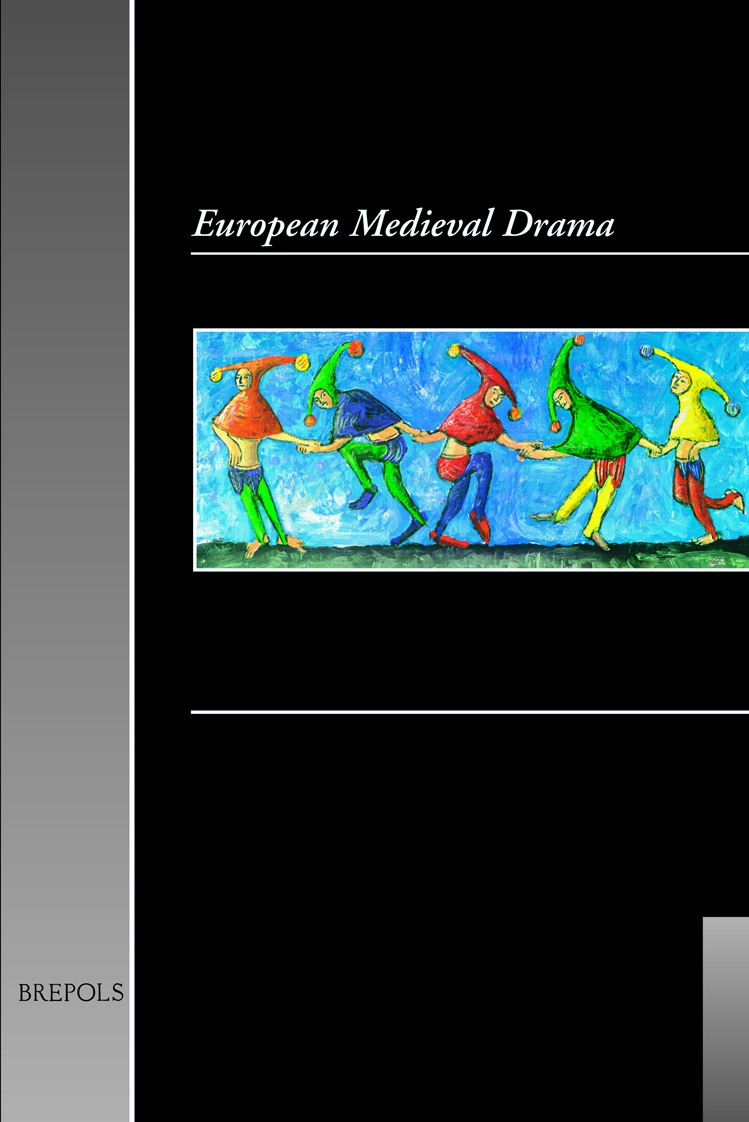
European Medieval Drama
show More to view fulltext, buy and share links for:European Medieval Drama show Less to hide fulltext, buy and share links for: European Medieval DramaEuropean Medieval Drama is an international project which seeks to promote the study of medieval drama and performance. It explores medieval drama in all European languages and traditions. Drama and performance is widely interpreted to include subjects such as processions, dances, folk traditions, (semi-)theatrical and ritual events, and tournaments. The journal also includes notices relevant to members of the Société Internationale pour l’étude du théâtre médiéval, and information of interest to all scholars in the field of medieval drama (e.g. recently published books, forthcoming conferences, and book reviews).
More information about this journal on Brepols.net
-
-
-
European Yearbook of the History of Psychology
Sources, Theories, and Models
show More to view fulltext, buy and share links for:European Yearbook of the History of Psychology show Less to hide fulltext, buy and share links for: European Yearbook of the History of PsychologyEuropean Yearbook of the History of Psychology is a peer-reviewed international annual journal devoted to the history of psychology, and especially to the interconnection between historiographic survey and problems of epistemology. The journal welcomes contributions that offer precise reconstructions of specific moments, topics, and figures in the history of psychology via the recovery and critical analysis of both archival and published sources. Critical editions of relevant primary texts or archival sources are also encouraged. While primarily aimed at historians and philosophers of psychology, epistemologists, historians of philosophy, and historians of human sciences, the journal is also open to contributions from all areas of psychology, provided they address a phenomenon or topic relevant to the discipline of psychology from a historical perspective.
More information about this journal on Brepols.net
-
-
-
Eusèbe de Césarée et la philosophie
Christianisme et philosophie en Palestine au tournant du IVe siècle de notre ère
show More to view fulltext, buy and share links for:Eusèbe de Césarée et la philosophie show Less to hide fulltext, buy and share links for: Eusèbe de Césarée et la philosophieEusebius of Caesarea in Palestine, active between the end of the third century and the beginning of the fourth, is the Christian author who has handed down to us, in the form of quotations, the greatest number of Greek philosophical texts. Yet his precise relationship to philosophy has never been the subject of a comprehensive study.
This book, which brings together contributions by leading specialists, aims to provide an initial overview. The analyses, covering most of Eusebius’ works, starting with the Preparation for the Gospel, show the importance of philosophy in his thought. Beyond the use he makes of philosophers, sometimes to criticise them, sometimes to appropriate their ideas, Eusebius stands out for his fairly good knowledge of philosophy, especially Platonic philosophy, the issues of which he seems to understand well. Although he takes up from his Christian predecessors the idea that Christianity is, as such, a “philosophy”, this claim sometimes implies a technicality that is revealed not only in the way he quotes and comments on the philosophers, but also in the presence in his work, less visible at first sight, of concepts and methods of exposition that bear witness to a real philosophical culture. At the end of these studies, Eusebius of Caesarea, too often reduced to a “court theologian” or to the status of “Father of Ecclesiastical History,” emerges more as the scholar he was, both Greek and Christian, whose work and thought are inseparable from the philosophical context in which they were born.
-
-
-
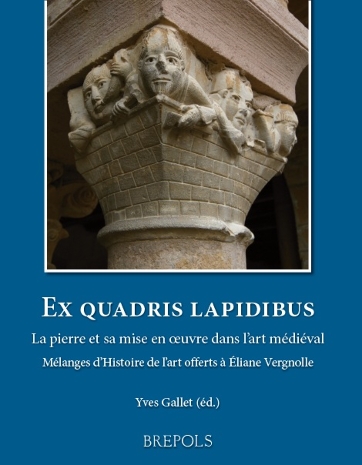
Ex quadris lapidibus. La pierre et sa mise en oeuvre dans l'art médiéval
Mélanges d'Histoire de l'art offerts à Éliane Vergnolle
show More to view fulltext, buy and share links for:Ex quadris lapidibus. La pierre et sa mise en oeuvre dans l'art médiéval show Less to hide fulltext, buy and share links for: Ex quadris lapidibus. La pierre et sa mise en oeuvre dans l'art médiévalLa pierre et sa mise en oeuvre dans l’art du Moyen Age: autour de ce thème, plus de quarante spécialistes français et étrangers, historiens de l’art, archéologues, conservateurs ou architectes, se sont associés pour rendre hommage à Éliane Vergnolle, dont les travaux sur l’art et l’architecture de la période romane font aujourd’hui autorité. Le domaine de recherche d’Éliane Vergnolle et ses études sur les techniques de taille de la pierre ont dicté les thèmes explorés dans ce volume, qui couvre un large champ. De nombreuses contributions abordent la question du travail de la pierre dans la sculpture et dans l’architecture romane ou gothique, ainsi que dans la création artistique des périodes plus récentes. Plusieurs études sont consacrées aux rapports entre la pierre et les arts de la couleur (enluminure, peinture, vitrail), aux questions de méthode d’analyse, à l’archéologie du bâti, à la pratique du réemploi, aux comptabilités des chantiers, aux modes de transmission des formes et des connaissances, aux tailleurs de pierre eux-mêmes, ainsi qu’à la pierre « rêvée », celle des représentations et de l’imaginaire médiéval. Au total, cet ouvrage offre, sous un angle original, un panorama complet des principales orientations de la recherche actuelle autour des arts monumentaux à l’époque médiévale.
-
-
-
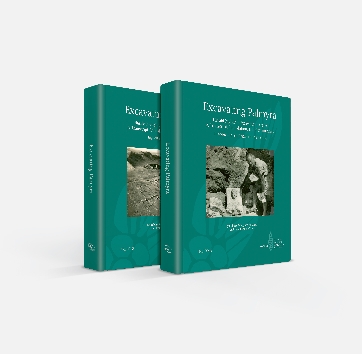
Excavating Palmyra
Harald Ingholt’s Excavation Diaries: A Transcript, Translation, and Commentary
show More to view fulltext, buy and share links for:Excavating Palmyra show Less to hide fulltext, buy and share links for: Excavating PalmyraWhen the Danish archaeologist Harald Ingholt conducted his ground-breaking excavations of Palmyra in the 1920s and 1930s, during which time he investigated several grave monuments and carried out the first observations of Palmyra’s famous funerary portraits, he kept detailed diaries of his work. For a long time, these have been stored at the Ny Carlsberg Glyptotek in Copenhagen together with the extensive Ingholt Archive, while further photographs and notes on Palmyrene sculpture have been kept with Ingholt’s family in the United States. Now this material and Ingholt’s diaries, written primarily in Danish, have for the first time been transcribed and translated into English with a full commentary written by Professor Rubina Raja, Dr Julia Steding, and Dr Jean-Baptiste Yon, in order to make these unique texts available to a wider public. The diaries contain a wealth of information on Palmyrene sculpture, grave complexes, and inscriptions from the city, as well as offering previously unpublished details into Ingholt’s excavations, and his time in the field that will provide essential new insights for scholars working on Palmyra.
-
-
-

Excerptum de Talmud
Study and Edition of a Thirteenth-Century Latin Translation
show More to view fulltext, buy and share links for:Excerptum de Talmud show Less to hide fulltext, buy and share links for: Excerptum de TalmudIn 1239 the Christian convert Nicholas Donin submitted thirty-five articles to Pope Gregory IX that decried the indecency, blasphemy, and heresy in the Talmud. As a result, the pope triggered a campaign across Europe that gave rise to a trial of the Talmud in Paris in 1240. The Latin translation of the Talmud - namely, the 1245 Extractiones de Talmud and later versions such as the Excerptum de Talmud - emerged from these events.
This volume offers the first critical edition, along with an English translation, of the Excerptum de Talmud. Drawing on the substantial translation of the Babylonian Talmud known as the Extractiones de Talmud (Paris, 1245), the Excerptum provided a selection of passages from the Talmud which its compiler organized according to controversial topics.
This book consists of two principal parts. The first contains a study of the Excerptum, its textual source (the Extractiones de Talmud), and an overview of the historical background which prompted this translation. The second part consists of an edition and translation of the text, as well as an edition of the passages from the Extractiones which served as the basis for the Excerptum.
These texts mark a significant chapter in Christian anti-Jewish disputations and Latin polemical works in the Middle Ages. This volume will thus prove useful to scholars interested in Latin philology, religious disputation, medieval translation and transmission of knowledge, and the history of Christian-Jewish relations.
-
-
-
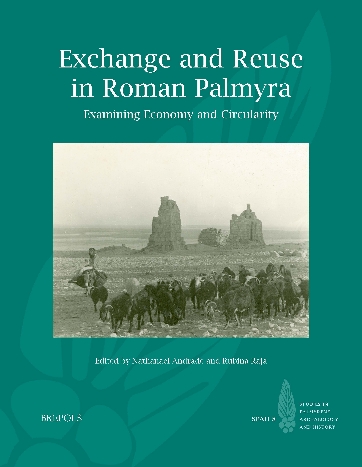
Exchange and Reuse in Roman Palmyra
Examining Economy and Circularity
show More to view fulltext, buy and share links for:Exchange and Reuse in Roman Palmyra show Less to hide fulltext, buy and share links for: Exchange and Reuse in Roman PalmyraHow did ancient cities like Palmyra survive? How did their people produce and manage the resources required for both their short- and long-term needs? Were their methods circular or wasteful? What materials did they reuse, and how? What form did their routine exchanges take? The material culture of Palmyra offers unique potential for addressing these questions in a concrete way. While the city is most famous for its long-distance commerce, a century of excavations at the site, together with a series of recent print publications and digital enterprises, have provided scholars with unprecedented amounts of material objects, among them inscriptions, statues, tesserae, coins, glass and metal finds, textiles, and other objects, all of which shed new light on Palmyra’s economy and how its inhabitants consumed, maintained, exchanged, or reused key resources.
Drawing together contributions from leading researchers on ancient Palmyra, this volume explores various dimensions of the city’s economy from fresh angles. The chapters gathered here feature new methodologies for determining the size of Palmyra’s population and for understanding the nature of coins in local exchanges, offer reassessments of the Palmyrene institutions that underpinned economic exchange, examine how Palmyrenes used and reused materials, and consider the forms of exchange and reuse that governed the building activity of Palmyrenes after the city’s Roman heyday and within areas of Egypt.
-
-
-
Exclure de la communauté chrétienne
Sens et pratiques sociales de l'anathème et de l'excommunication (IVe-XIIe s.)
show More to view fulltext, buy and share links for:Exclure de la communauté chrétienne show Less to hide fulltext, buy and share links for: Exclure de la communauté chrétienneL’excommunication et l’anathème, « condamnation à la mort éternelle », théoriquement plus grave mais en réalité devenu rapidement synonyme, sont attestés dès les débuts du christianisme et suivent d’abord une évolution parallèle à celle de la pénitence : ils deviennent progressivement de moins en moins publics et de plus en plus renouvelables, devenant par là-même des instruments privilégiés du contrôle social par la pression exercée sur l’individu retranché de la communauté chrétienne.
Cet ouvrage s’interroge à la fois sur la législation ecclésiastique dans la longue durée - pour quelle faute encourt-on l’excommunication entre le IVe et le Xe siècle ? - et sur la pertinence de son application suivant les différents espaces, afin d’évaluer les modalités de la mise en place de cette norme canonique. Il permet de comprendre comment l’excommunication sert à définir et à délimiter les communautés et il étudie les formules et les rituels mis en oeuvre.
-
-
-
Exile in the Middle Ages
Selected Proceedings from the International Medieval Congress, University of Leeds, 8-11 July 2002
show More to view fulltext, buy and share links for:Exile in the Middle Ages show Less to hide fulltext, buy and share links for: Exile in the Middle AgesExile in the Middle Ages took many different forms. As a literary theme it has received much scholarly attention in the Latin, Greek and vernacular traditions. The historical and legal phenomenon of exile is relatively unexplored territory. In the secular world, it usually meant banishment of a person by a higher authority for political reasons, resulting in the exile leaving home for a shorter or longer period. Sometimes an exile did not wait to be expelled but left of his or her own accord. Leaving home to go on pilgrimage, or, in the case of women to marry, could be experienced as a form of exile. In the ecclesiastical sphere, two forms of exile stand out. Monasticism was often seen as a form of spiritual (permanent) exile from the secular world. Excommunication was a punishment exercised by the Church authorities in order to eject persons (often only temporarily) from the community of Christians. Banishment as a form of social punishment is therefore the central theme of this volume on Exile in the Middle Ages. The book covers the period of the central Middle Ages from ca. 900 to ca. 1300 in Western Europe, though some chapters have a wider remit. The genesis of the volume was a series of presentations delivered at the Leeds International Medieval Congress in 2002, which was devoted to the theme of Exile.
-
-
-
Existe-t-il une mystique au Moyen Âge ?
Actes du colloque international, organisé par l’Institut d’Études Médiévales et tenu à l’Institut Catholique de Paris les 30 novembre et 1er décembre 2017
show More to view fulltext, buy and share links for:Existe-t-il une mystique au Moyen Âge ? show Less to hide fulltext, buy and share links for: Existe-t-il une mystique au Moyen Âge ?Si la notion de mystique semble aller de soi pour le Moyen Âge, ce semble être par suite d’un malentendu. Car si l’historiographie du xixe siècle flétrissait volontiers de ce mot ce qui, dans la littérature médiévale, lui semblait mièvre, irrationnel ou extravagant, les auteurs médiévaux se servent quant à eux de l’adjectif “mystique” pour désigner bien autre chose : une certaine manière d’interpréter les Écritures (sens mystique), une façon de discourir sur Dieu (théologie mystique), une appartenance à la même Église (corps mystique). Il convient donc de revenir aux textes, en leur posant ces questions. Quand le mot “mystique” est-il employé dans des œuvres médiévales, et que veut-il dire ? À l’inverse, dans les œuvres dites aujourd’hui “mystiques”, comment ce qui relève de cette catégorie est-il nommé, défini, compris par les auteurs eux-mêmes ? Est-il pertinent d’enclore dans un même genre des textes aussi divers que les visions, la littérature de dévotion, les analyses de la contemplation, les itinéraires de l’âme vers Dieu, la Théologie mystique du pseudo-Denys ? De la fin de l’époque patristique aux début de la Renaissance, le sens du mot “mystique” est-il resté stable, ou bien a-t-il évolué ? Au fond, peut-on dire que la notion moderne de mystique a son origine dans les temps médiévaux ?
-
-
-
Explorations in Islamic Archaeology
Material Culture, Settlements, and Landscapes from the Mediterranean to Western Asia
show More to view fulltext, buy and share links for:Explorations in Islamic Archaeology show Less to hide fulltext, buy and share links for: Explorations in Islamic ArchaeologyThis volume presents contributions by leading scholars on various topics and aspects of Islamic Archaeology, a discipline which has recently seen the development of exciting new approaches to the study of the material culture of the Muslim world. This material culture was produced by and/or for Muslims, as well as by and/or for non-Muslims living under Islamic rule from the 7th century onward, in an expanding and ultimately vast area reaching from southern Europe to West Asia.
The contributions in this book focus on Jordan, Oman, Spain, Turkey, Lebanon, as well as Israel, and cover a timespan from the 7th century through the Mamluk period to the early 20th century. They highlight the archaeology of large Islamic centers in the past, but also of the material culture in smaller sites and peripheral regions. Special emphasis is paid to pottery as one of the main artifacts that carry information on past societies, but other finds and materials are discussed as well. The aspect of Islamic material culture which receives particular attention is ‘production’, specifically the production of clay vessels, glaze, mercury, and crops.
What unites the new approaches presented here is that Islam is understood as both a ‘religion’ and a framework for economic, cultural, and social networks and influence. In this perspective, the volume aims to offer students of Islamic archaeology, historians of Islam and archaeologists of different disciplines a glimpse of the state-of-the-art in current Islamic Archaeology
-