


BOB2023MIOT

Collection Contents
4 results
-
-

Consumption, Ritual, Art, and Society
show More to view fulltext, buy and share links for:Consumption, Ritual, Art, and Society show Less to hide fulltext, buy and share links for: Consumption, Ritual, Art, and SocietyFood determines who we are. We are what we eat, but also how we eat, with whom we eat, where we eat and, in some cases, even why we eat. Food production and consumption in the ancient world can express multiple dimensions of identity and negotiate belonging to, or exclusion from, cultural groups. It can bind through religious praxis, express wealth, manifest cultural identity, reveal differentiation in age or gender, and define status. As a prism through which to investigate the past, its utility is manifold. The chapters gathered together in this ground-breaking book explore the intersections between food, consumption, and ritual within Etruscan society through a purposeful cross-disciplinary approach. It offers a unique and innovative selection of up-to-date analysis from a variety of Etruscan food-related topics. From banqueting, feasting, fish rites, and symbolic consumption to bio-archaeological data, this volume explores a new and exciting field in ancient Italian archaeology.
-
-
-
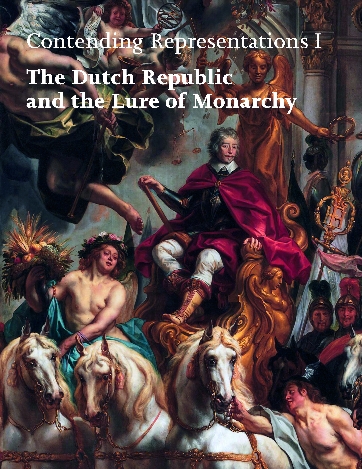
Contending Representations I: The Dutch Republic and the Lure of Monarchy
show More to view fulltext, buy and share links for:Contending Representations I: The Dutch Republic and the Lure of Monarchy show Less to hide fulltext, buy and share links for: Contending Representations I: The Dutch Republic and the Lure of MonarchyThis volume is the first book-length study to thematise the representation of power in the seventeenth-century Dutch Republic. Bringing together scholars from different backgrounds, the volume aims to stimulate a cross-disciplinary dialogue about representations in art, literature, ritual, and other media. Within the Dutch Republic, different state actors - the city, the provincial states, the States General, the stadtholders, and individual power-holders - vied for the supremacy of power. A vital aspect of this persistent struggle was its representative dimension. In making representative claims about their place in the balance of power, these institutions all faced the challenge of developing a republican language that was both distinctive enough and universally understood. In the cultural repertoires available to political figures, artists, and intellectuals, republican models contended with monarchical ones. In visual and literary depictions, public ritual, and diplomatic encounters alike, the temptation to stand up to the grandeur of powerful European monarchies by borrowing from their representative traditions was not always easy to resist.
-
-
-
The Collectio Avellana and the Development of Notarial Practices in Late Antiquity
show More to view fulltext, buy and share links for:The Collectio Avellana and the Development of Notarial Practices in Late Antiquity show Less to hide fulltext, buy and share links for: The Collectio Avellana and the Development of Notarial Practices in Late AntiquityThe essays collected in this volume study the competences and status of late antique notaries, who from simple stenographers acquired responsibilities and growing importance within the imperial court and in the papal chancellery, being charged with drawing up the acts of the consistorium and the ecclesiastical councils, and with preserving and often delivering sensitive documents from Rome to Constantinople. The analysis of their multiple activities and of the functions they occupied, in the imperial and episcopal archives as well as in the libraries of the great Roman domus, also allows us to verify some new hypotheses on the compiler and on the editing of the Collectio Avellana. Since in the Middle Ages, the collection was transcribed into two main manuscripts both preserved in Santa Croce di Fonte Avellana, the essays also try to understand what role the founder of the Monastery, San Pier Damiani, played in preserving this collection.
-
-
-
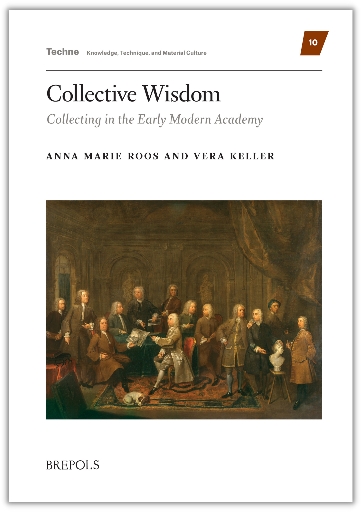
Collective Wisdom
show More to view fulltext, buy and share links for:Collective Wisdom show Less to hide fulltext, buy and share links for: Collective WisdomThis volume analyses how and why members of scholarly societies such as the Royal Society, the Society of Antiquaries of London, and the Leopoldina collected specimens of the natural world, art, and archaeology in the seventeenth and eighteenth centuries. These scholarly societies, founded before knowledge became subspecialised, had many common members. We focus upon how their exploration of natural philosophy, antiquarianism, and medicine were reflected in collecting practice, the organisation of specimens and how knowledge was classified and disseminated. The overall shift from curiosity cabinets with objects playfully crossing the domains of art and nature, to their well-ordered Enlightenment museums is well known. Collective Wisdom analyses the process through which this transformation occurred, and the role of members of these academies in developing new techniques of classifying and organising objects and new uses of these objects for experimental and pedagogical purposes.
-