


BOB2023MIOT

Collection Contents
1 - 20 of 45 results
-
-
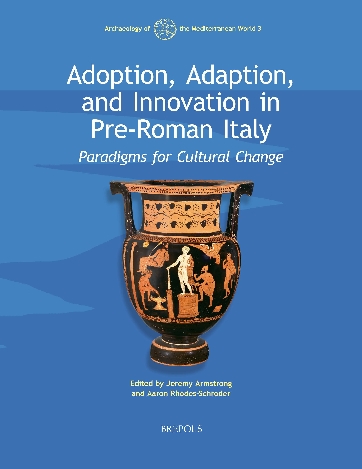
Adoption, Adaption, and Innovation in Pre-Roman Italy
show More to view fulltext, buy and share links for:Adoption, Adaption, and Innovation in Pre-Roman Italy show Less to hide fulltext, buy and share links for: Adoption, Adaption, and Innovation in Pre-Roman ItalyThe ancient Mediterranean basin was once thought to be populated by large, monolithic, cultural-political entities. In this conception, ‘the Greeks’, ‘the Romans’, and other stable and homogenous cultures interacted and vied for supremacy like early modern states or empires. Today, however, thanks largely to an ever-increasing archaeological record, critical and sensitive approaches to the literary evidence, and the impact and application of new theoretical approaches, the ancient Mediterranean region is instead argued to be full of dynamic microcultures organized in a fl uid set of overlapping networks. While this atomization of culture has resulted in more interesting and accurate micro-histories, it has also challenged how we understand cultural interaction and change.
This volume draws on this new understanding of cultural identity and contact to address the themes of adoption, adaption, and innovation in Pre-Roman Italy from the 9th-3rd centuries BCE. The contributors to this volume build upon recent paradigm shifts in research that challenge traditional Hellenocentric models and work to establish a new set of frameworks for approaching the tangled question of how ‘indigenous’ and ’foreign’ features relate to one another in the material record. Using focused case-studies, ranging from the role played by mobile populations in transferring ideas and technologies to the different ways in which ‘foreign’ artistic elements were used by Italian peoples, the volume explores what the - now commonly accepted - connectedness of a wider Mediterranean world meant for the people of Italy in practical terms, and offers new models for how concepts and ideas were transmitted, reinterpreted, repurposed, and re-appropriated in early Italy to fit within their local context.
-
-
-
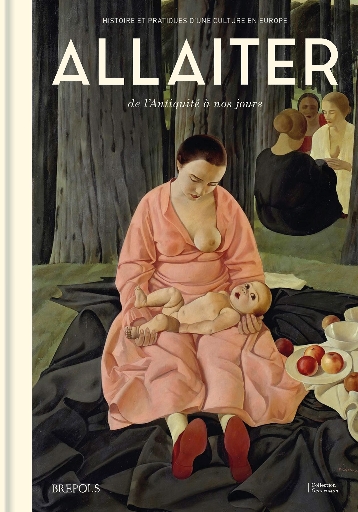
Allaiter de l’Antiquité à nos jours
show More to view fulltext, buy and share links for:Allaiter de l’Antiquité à nos jours show Less to hide fulltext, buy and share links for: Allaiter de l’Antiquité à nos joursAujourd’hui, l’allaitement est au centre des préoccupations des organismes internationaux, en ce qui concerne les soins destinés aux nouveau-nés et la santé des femmes. Ces questions occupent une place importante dans les débats autour de la maternité et du travail féminin. Mais les pratiques et les représentations de l’allaitement sont traversées par des tensions politiques, économiques et religieuses. Pouvons-nous éclairer les controverses par une mise en perspective historique large de leurs enjeux socio-culturels ? Faire l’histoire de l’allaitement en Europe est une manière de contribuer à une approche globale de la question de la reproduction. Emboîtant le pas aux recherches récentes sur la maternité, les quatre sections de cet ouvrage proposent les résultats d’une vaste enquête collective pluridisciplinaire et ouvrent des pistes pour une réflexion critique sur les enjeux actuels de la parentalité et de la reproduction. Les chapitres de ce volume associent les investigations historiques, anthropologiques et archéologiques à l’histoire de l’art et aux études littéraires. L’ouvrage présente également une riche documentation visuelle et des focus conçus comme outils pour la recherche, la divulgation scientifique et la didactique.
-
-
-
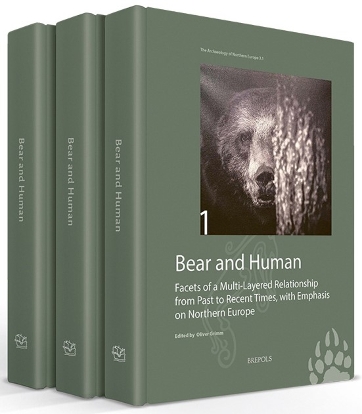
Bear and Human
show More to view fulltext, buy and share links for:Bear and Human show Less to hide fulltext, buy and share links for: Bear and HumanBears have, throughout human history, been admired and feared by humans in equal measure, with an interrelationship between the two species identifiable from pre-modern times through a wealth of material items, as well as from cult sites, sacral remains, images, and written sources. This unique interdisciplinary volume draws together sixty-four contributions by experts from across a range of fields in order to shed light on the complex connections between bears and humans in a period extending from the pre-modern into modern times, and across an area stretching from England into Russia. From bear biology (represented by work from the Scandinavian Brown Bear Research Project) and archaeo(zoo)logy to art history, and from history of religion to philology, the research gathered across this three-volume set explores a wide-range of subjects. Among them are the bear in biology, bears and animal agency, bear remains in graves and churches, the role of bears in religious beliefs (including berserker and bear ceremonialism), bears in literature, the philology underpinning why bear is a taboo word, and the image of the bear in rock art, as well as political iconography up to the present day. Together, these wide-ranging but closely thematic texts combine to produce a ground-breaking new work that will prove fundamental in understanding the human connection with this remarkable animal.
-
-
-

Consumption, Ritual, Art, and Society
show More to view fulltext, buy and share links for:Consumption, Ritual, Art, and Society show Less to hide fulltext, buy and share links for: Consumption, Ritual, Art, and SocietyFood determines who we are. We are what we eat, but also how we eat, with whom we eat, where we eat and, in some cases, even why we eat. Food production and consumption in the ancient world can express multiple dimensions of identity and negotiate belonging to, or exclusion from, cultural groups. It can bind through religious praxis, express wealth, manifest cultural identity, reveal differentiation in age or gender, and define status. As a prism through which to investigate the past, its utility is manifold. The chapters gathered together in this ground-breaking book explore the intersections between food, consumption, and ritual within Etruscan society through a purposeful cross-disciplinary approach. It offers a unique and innovative selection of up-to-date analysis from a variety of Etruscan food-related topics. From banqueting, feasting, fish rites, and symbolic consumption to bio-archaeological data, this volume explores a new and exciting field in ancient Italian archaeology.
-
-
-
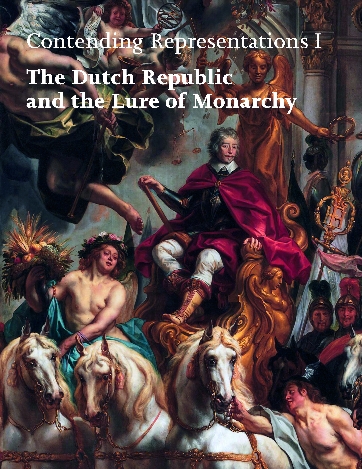
Contending Representations I: The Dutch Republic and the Lure of Monarchy
show More to view fulltext, buy and share links for:Contending Representations I: The Dutch Republic and the Lure of Monarchy show Less to hide fulltext, buy and share links for: Contending Representations I: The Dutch Republic and the Lure of MonarchyThis volume is the first book-length study to thematise the representation of power in the seventeenth-century Dutch Republic. Bringing together scholars from different backgrounds, the volume aims to stimulate a cross-disciplinary dialogue about representations in art, literature, ritual, and other media. Within the Dutch Republic, different state actors - the city, the provincial states, the States General, the stadtholders, and individual power-holders - vied for the supremacy of power. A vital aspect of this persistent struggle was its representative dimension. In making representative claims about their place in the balance of power, these institutions all faced the challenge of developing a republican language that was both distinctive enough and universally understood. In the cultural repertoires available to political figures, artists, and intellectuals, republican models contended with monarchical ones. In visual and literary depictions, public ritual, and diplomatic encounters alike, the temptation to stand up to the grandeur of powerful European monarchies by borrowing from their representative traditions was not always easy to resist.
-
-
-
De l’Europe ottomane aux nations balkaniques : les Lumières en question
show More to view fulltext, buy and share links for:De l’Europe ottomane aux nations balkaniques : les Lumières en question show Less to hide fulltext, buy and share links for: De l’Europe ottomane aux nations balkaniques : les Lumières en questionThe Enlightenment has often been used as a fundamental reference point for understanding the evolution of societies. Nevertheless, the broad nature of this term hides great inequalities between different historiographical traditions, with some countries considered to have ‘ownership’ of this intellectual and cultural current, which arose in the eighteenth century, while other lands have been considered at best peripheral, or at worst have been wholly disregarded. This is particularly true of the Ottoman Empire, and of the Balkan states, founded in the first decades of the nineteenth century, which have often been studied only through their relationship with France, Great Britain, and German. This, however, is not sufficient for understanding how these countries entered modernity. The studies gathered in this book seek to question the invention of the National Enlightenment, the history of representations of the European Enlightenment and their variations in Balkan space and time, and the phenomena of acculturation and rejection that can be identified in the histories of these lands in order to offer new insights into the contradictory aspirations of nations that have often been torn between several different models of society.
-
-
-

Descartes and Medicine
show More to view fulltext, buy and share links for:Descartes and Medicine show Less to hide fulltext, buy and share links for: Descartes and MedicineThis volume provides a more exhaustive interpretation of René Descartes’ medical views and its reception in the seventeenth century. Filling the gap in the recent scholarship, the contributions in the volume follow four axes: exegetical, textual, philosophical, and contextual. Authors in this book deal with Descartes’ physiology, anatomy, and therapy by reconstructing Cartesian texts, detailing possible medical and philosophical sources, discussing medical collaborations and oppositions, and exploring obscurities and failures in Descartes’ medicine. In laying bare the more promising issues of Cartesian programme and discussing the reception and opposition in the seventeenth century, the volume also uncovers the limitations within his interpretation, ultimately revealing a more nuanced application of his methodology to a field of natural philosophy. While medical studies play a not secondary role in Descartes’ entire work, the volume aims to discuss in detail the importance of medicine as a suitable field to understand Cartesian philosophy from a significant perspective in seventeenth-century Europe.
-
-
-
Du Jésus des Écritures au Christ des théologiens
show More to view fulltext, buy and share links for:Du Jésus des Écritures au Christ des théologiens show Less to hide fulltext, buy and share links for: Du Jésus des Écritures au Christ des théologiensPour parler de la foi chrétienne, les Pères ont souvent recouru à des exposés concrets, s’appuyant sur des personnages bibliques. Or, de tous ces modèles bibliques, Jésus est sans conteste le paradigme. Les premiers écrivains chrétiens se sont ainsi attachés à expliquer les épisodes de sa vie pour en dégager des enseignements spirituels, moraux ou doctrinaux, soulevant de la sorte aussi bien des questions d’exégèse que de théologie.
La grande question qui s’est posée dès le début à la communauté chrétienne fut de démontrer que le Jésus de Nazareth de la Bible est bien le « Christ ». Cette question s’est posée de manière complexe et souvent violente au cours des premiers siècles du christianisme.
Partant de la lecture que les Pères ont faite de la figure de Jésus, notamment dans les Évangiles, le présent volume s’interrogera sur l’élaboration progressive, parfois polémique, des différents éléments constitutifs du personnage théologique du Christ. Il s’agira de permettre de mieux saisir la manière dont la figure de Jésus, telle qu’on la trouve dans les Écritures, a été peu à peu comprise et réélaborée dans des lectures théologiques.
Ces réflexions des Pères conservent toute leur portée aujourd’hui, tant les questions soulevées dès les premiers siècles du christianisme continuent d’être actuelles : elles concernent tant les historiens des religions que les théologiens, sans oublier les exégètes et tous ceux qui s’intéressent à la réception du personnage du Christ.
-
-
-
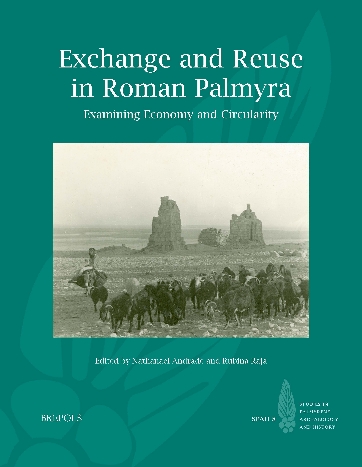
Exchange and Reuse in Roman Palmyra
show More to view fulltext, buy and share links for:Exchange and Reuse in Roman Palmyra show Less to hide fulltext, buy and share links for: Exchange and Reuse in Roman PalmyraHow did ancient cities like Palmyra survive? How did their people produce and manage the resources required for both their short- and long-term needs? Were their methods circular or wasteful? What materials did they reuse, and how? What form did their routine exchanges take? The material culture of Palmyra offers unique potential for addressing these questions in a concrete way. While the city is most famous for its long-distance commerce, a century of excavations at the site, together with a series of recent print publications and digital enterprises, have provided scholars with unprecedented amounts of material objects, among them inscriptions, statues, tesserae, coins, glass and metal finds, textiles, and other objects, all of which shed new light on Palmyra’s economy and how its inhabitants consumed, maintained, exchanged, or reused key resources.
Drawing together contributions from leading researchers on ancient Palmyra, this volume explores various dimensions of the city’s economy from fresh angles. The chapters gathered here feature new methodologies for determining the size of Palmyra’s population and for understanding the nature of coins in local exchanges, offer reassessments of the Palmyrene institutions that underpinned economic exchange, examine how Palmyrenes used and reused materials, and consider the forms of exchange and reuse that governed the building activity of Palmyrenes after the city’s Roman heyday and within areas of Egypt.
-
-
-
Figures exemplaires de pouvoir sous l’Empire dans la littérature gréco-latine
show More to view fulltext, buy and share links for:Figures exemplaires de pouvoir sous l’Empire dans la littérature gréco-latine show Less to hide fulltext, buy and share links for: Figures exemplaires de pouvoir sous l’Empire dans la littérature gréco-latineThe exemplum held immense power in antiquity, especially in the political field. What role did historical or legendary figures from the Greco-Roman past play during the Empire in speeches intended to build, legitimise or question power? How were they selected? How did they work? These are the questions that the eighteen contributions in this volume seek to answer. This multifaceted approach crosses several literary genres, including poetry, historiography, and political or philosophical discourse, which are examined over six centuries. It considers different types of power or authority (imperial power, but also the authority of the magistrate in the Greek city during Roman domination, and the power of bishops). This highlights the plasticity of exempla that, depending on the context, could justify or question a vast diversity of ideologies and practices of power.
-
-
-
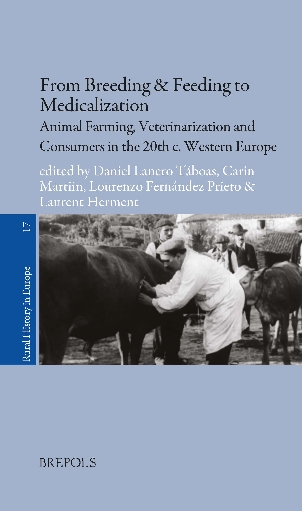
From Breeding & Feeding to Medicalization
show More to view fulltext, buy and share links for:From Breeding & Feeding to Medicalization show Less to hide fulltext, buy and share links for: From Breeding & Feeding to MedicalizationTo fully understand the changes in European animal husbandry during the long twentieth century, it is necessary to examine all aspects of the food chain devoted to supplying proteins and fats to a growing population. Indeed, the twentieth century saw great changes in animal husbandry - towards a market-oriented, intensified and specialized production. This influenced and was influenced by policies, trade, aspects of animal and public health, food supply issues, aims in animal breeding, development of production systems, principles in feeding and impact of producer cooperatives.
Because it is not possible to apprehend all these global changes from a rural point of view, this book aims to bring together many different expert perspectives in fields such as: agronomy, veterinary medicine, microbiology, history of sciences, economic and cultural history, and sociology. Taking into account both national idiosyncrasies and changes from an international perspective, the book gathers scientists from Italy, Spain, France, England, The Netherlands and Sweden.
The first part of the book will be devoted to the evolution of animal husbandry and commercialization from the end of the nineteenth century to the beginning of the twenty-first century. The second part of the book is devoted to the increasing medicalization of this sector with a special focus on the role of veterinarians and the on the increasing uses of antibiotics.
-
-
-
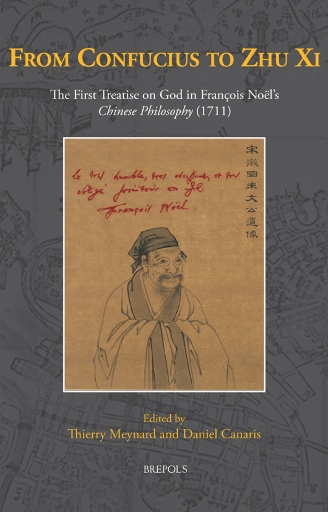
From Confucius to Zhu Xi
show More to view fulltext, buy and share links for:From Confucius to Zhu Xi show Less to hide fulltext, buy and share links for: From Confucius to Zhu XiOn 25 September 1710, Pope Clement XI finally promulgated the 1704 decree Cum Deus optimus, which condemned the toleration of certain Confucian rituals among Chinese Catholic converts and the use of the Chinese terms tian and Shangdi to refer to the Christian God. This papal decision antagonised the Kangxi Emperor and devastated the Jesuit China mission. Although the Jesuits were prohibited from publicly refuting the decree, the Flemish Jesuit François Noël sought to defend the Jesuit position by publishing his voluminous scholarship on the Chinese classics. Among other works, in 1711 Noël published two seminal contributions to the history of Sinology: the Sinensis imperii libri classici sex or Libri sex, and the Philosophia Sinica, a sophisticated treatment of Chinese metaphysics, ritual, and ethics. While the Libri sex achieved some degree of influence in the Enlightenment through the French translation of the French Jesuit historian Du Halde and the writings of the philosopher Christian Wolff, the Philosophia Sinica was actively suppressed by the Superior-General of the Jesuit order. Yet it is in this latter work where the full breadth of Noël’s originality and intellectual contribution can be found. Noël reinterprets the Jesuits’ position through the lens of Neo-Confucianism, integrating concepts such as li, taiji, yin, and yang in his reading of Chinese philosophy. With contributions from Sinologists and intellectual historians, this book offers the first systematic study of this pioneering work.
-
-
-
Gods in the House
show More to view fulltext, buy and share links for:Gods in the House show Less to hide fulltext, buy and share links for: Gods in the HouseThe archaeological excavations conducted from one end of the Mediterranean zone to the other have illuminated the place of gods in the ritual practices in the dwellings of the Graeco-Roman era. The discovery of multiple artefacts, dedicated spaces, and figurative paintings support new avenues of historical, anthropological, and social reflection with the aim of better understanding domestic religious practices in the polytheistic contexts of antiquity. This collective volume organizes those reflections around three axes.The first axis centres on identifying the deities that were favoured in domestic sanctuaries. Which gods are represented and which are not? The second axisconcerns the interrelationships evident within domestic ritual spaces and sanctuaries.The third axis is dedicated to the anthropology of rituals. Lines of inquiry informed by anthropological, social, and phenomenological approaches are assuming ever-greater importance in scholarship on Antiquity. It is from this perspective that the authors explore the role that domestic ritual spaces play in shaping the lived environment.
-
-
-
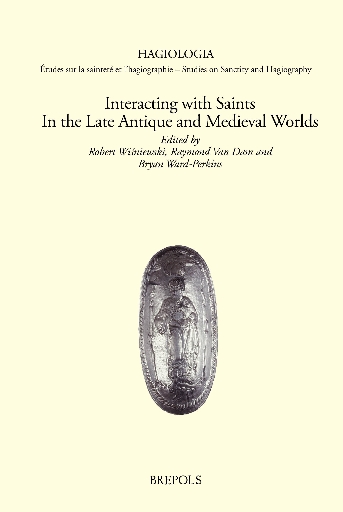
Interacting with Saints in the Late Antique and Medieval Worlds
show More to view fulltext, buy and share links for:Interacting with Saints in the Late Antique and Medieval Worlds show Less to hide fulltext, buy and share links for: Interacting with Saints in the Late Antique and Medieval WorldsThe cult of saints is one of the most fascinating religious developments of Late Antiquity and the early Middle Ages. Christians admired martyrs already in the second century, but for a long time they perceived them only as examples to follow and believed they could pray directly to God, whom they addressed as ‘Our Father’. A new attitude toward saints, now considered above all as powerful friends of God and efficient intercessors, started to emerge in the third century. Once this process gained momentum in the Constantinian era, the cult of saints constantly changed and rapidly adapted to new conditions and demands. This evolution highlighted many factors: the popularity of specific saints and the different types of sanctity, the spread of cults and customs, and the ways in which the saints were described, visualised, and represented.
This volume seeks to capture the dynamic of these adaptations, showing both those aspects of cult which evolved quickly and those which remained stable for a long time. It studies the evolution of the cults in a broad period from the third to the seventh centuries and in various regions from Gaul to Georgia, with a particular interest in the two greatest centres of the cult of saints: Rome and Constantinople. In response to changing needs and different circumstances, new generations of believers repeatedly modified the cults of established saints, even as they introduced new saints.
-
-
-
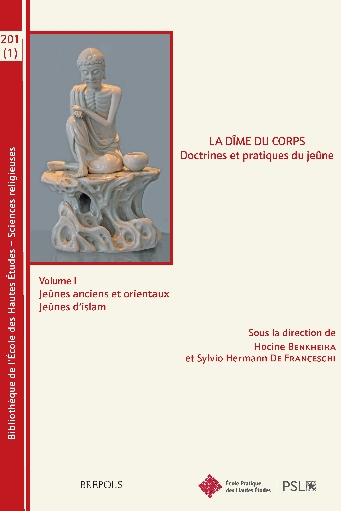
La dîme du corps
show More to view fulltext, buy and share links for:La dîme du corps show Less to hide fulltext, buy and share links for: La dîme du corpsPratique thérapeutique et rituelle universellement répandue, le jeûne est un acte éminemment culturel qui semble être associé à la médecine, à la religion et aux conflits dans la société. Envisagé du point de vue de ses finalités, il peut prendre trois visages : thérapeutique, politique et religieux. Dans ce triptyque, le jeûne motivé par des considérations religieuses est le plus important. Il comporte un trait caractéristique : la scission du sujet entre une part qui recherche la vérité profonde de l’existence - esprit, âme, intellect - et une part qui recherche des satisfactions finies - corps physique, âme concupiscente. Pour réduire l’affrontement entre les deux parties, la seule solution est de lutter contre les passions physiques, et on peut dire qu’au cœur du jeûne religieux, il y a une psychomachie. Si la pratique du jeûne alimentaire n’est, en soi, guère complexe - une privation de nourriture -, les sens et la portée morale que lui donnent ceux qui partout s’y appliquent sont en revanche innombrables. Infinie variété dont le présent volume veut donner l’illustration en multipliant les types d’approches et les points de vue dans l’espace et le temps. Si l’histoire de la sexualité a donné lieu à des recherches abondantes, force est de constater que l’histoire de l’alimentation n’a quant à elle trouvé sa place que dans la mesure où elle était associée à la gastronomie et que la pratique du jeûne, qui compte au nombre des « techniques de soi » les plus fondamentales, n’a jamais pu accéder au statut d’objet majeur des études historiques. Les travaux ici rassemblés entendent combler une lacune qui n’est restée que trop longtemps béante dans le champ des investigations relatives aux pratiques alimentaires.
-
-
-
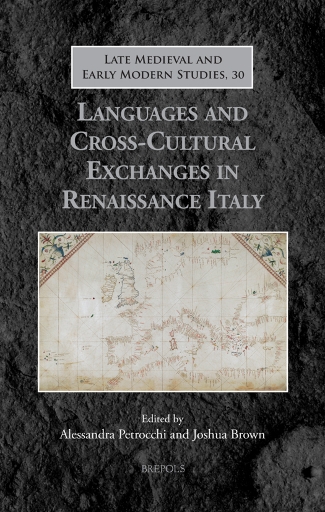
Languages and Cross-Cultural Exchanges in Renaissance Italy
show More to view fulltext, buy and share links for:Languages and Cross-Cultural Exchanges in Renaissance Italy show Less to hide fulltext, buy and share links for: Languages and Cross-Cultural Exchanges in Renaissance ItalyAlthough much work has been done in the field of Renaissance Studies, at present there is no book which offers a comparative overview of the linguistic interaction between Renaissance Italy and the wider world. The present volume is intended to fill this void, representing the first-ever collection of essays that deal with multiple types of language contact and cross-cultural exchanges in and with respect to Renaissance Italy (1300‒1600). We bring diverse disciplinary perspectives together: literary scholars, historians, and linguists with different regional expertise; we argue for multilingualism and language contact as products of a period of dynamic change which cannot be fully grasped through a single framework. The contributions present a variety of case-studies by often cross-fertilising their approaches with other disciplinary lenses. This book aims to provide a comprehensive picture of a truly global Renaissance Italy where languages, textual traditions, and systems of knowledge from different geographical areas either combined or clashed. It takes a fresh approach to the history of late medieval and early modern Italy by focusing on East/West linguistic and cultural encounters, transmission of ideas and texts, multilingualism in literature (various genres and various forms of multilingualism), translation practices, reception/adaptation of new knowledge, transculturalism and literary exchanges, and the relationship between languages and language varieties.
-
-
-
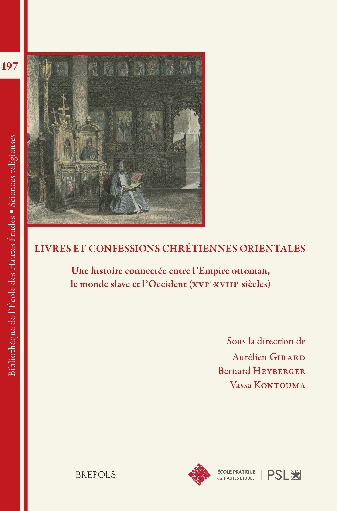
Livres et confessions chrétiennes orientales
show More to view fulltext, buy and share links for:Livres et confessions chrétiennes orientales show Less to hide fulltext, buy and share links for: Livres et confessions chrétiennes orientalesDans le vaste espace qui englobe le monde slave et l’Empire ottoman, les christianismes orientaux ont jusqu’ici été étudiés comme des entités particulières. Il est temps de les aborder dans une approche globale qui, par-delà leur singularité, permet des comparaisons et met en lumière des connections restées ignorées.
Aux xvi e-xviii e siècles, dans les aires linguistiques considérées (arabe, arménienne, grecque, roumaine, russe, ruthène, syriaque), les Églises orientales connaissent toutes à des degrés divers la confrontation avec le christianisme occidental, catholique et protestant, qui débouche sur des situations inédites de division, de conflit ou de mimétisme. L’observation de l’intense circulation des hommes et des objets - comme les livres - éclaire des phénomènes de transfert, d’appropriation et de rejet, qui contribuent à renforcer les identités confessionnelles. L’étude de ces dynamiques propres aux christianismes orientaux permet également d’approfondir le débat historiographique actuel autour de la notion de ‘confessionnalisation’.
Cet ouvrage se propose d’étudier le rôle joué par le livre dans la construction des cultures confessionnelles des Orients chrétiens, à un moment où partout le manuscrit fait une place à l’imprimé. Le livre est ici envisagé sous tous ses aspects, de la commande à la production, de la diffusion aux usages. Il apparaît comme un instrument de pouvoir pour qui le fait produire ou contrôle sa diffusion.
-
-
-
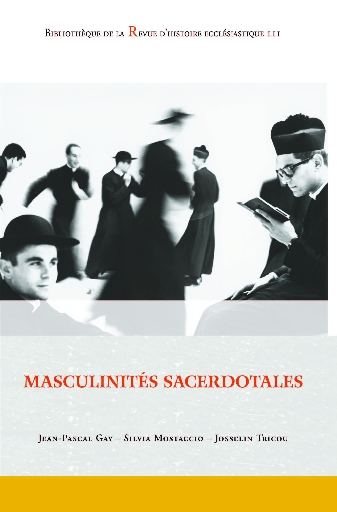
Masculinités sacerdotales
show More to view fulltext, buy and share links for:Masculinités sacerdotales show Less to hide fulltext, buy and share links for: Masculinités sacerdotalesCe volume, fruit d’un colloque tenu à Louvain-la-Neuve en mars 2018, est le premier à rassembler des études de chercheurs venu d’horizons historiographiques différents (histoire religieuse, histoire du genre, histoire de l’art, histoire culturelle) pour traiter de l’histoire des masculinités sacerdotales et cléricales du Moyen-Âge à l’époque contemporaine. À l’intersection de l’histoire religieuse et de l’histoire du genre, ces études manifestent l’importance de la prise en compte de l’outil du genre pour l’histoire des clergés, mais mettent ausssi en lumière la manière dont tant les approches historiques que la prise en compte du religieux, interrogent en retour les catégories par lesquelles les études de genre ont interrogé les masculinités contemporaines.
-
-
-
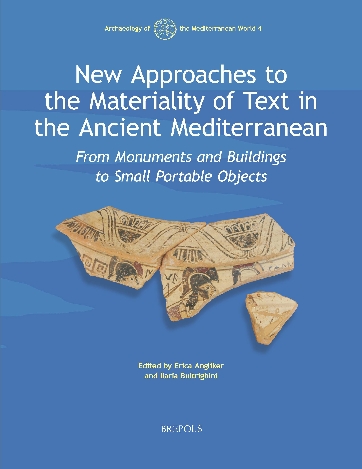
New Approaches to the Materiality of Text in the Ancient Mediterranean
show More to view fulltext, buy and share links for:New Approaches to the Materiality of Text in the Ancient Mediterranean show Less to hide fulltext, buy and share links for: New Approaches to the Materiality of Text in the Ancient MediterraneanIn recent years, the study of epigraphy and ancient writings has undergone a ‘material turn’, as scholars have increasingly looked beyond just the contents of written sources to also focus on their broader material and visual contexts as a way of exploring the layers of different meanings that can attach to written evidence. Taking this interdisciplinary approach as its starting point, this volume draws together contributions from specialists in different fields in order to analyze text-bearing objects and monuments from across the ancient Mediterranean world.
From texts inscribed on large stone monuments and buildings, clay, or metal tablets, to writings on papyrus and parchment rolls, jewellery, vases, coins, and textiles, writing on different materials had manifold possibilities. The case studies gathered here examine novel approaches to the creation and display of inscribed objects, as well as to the ways in which such items were approached and perceived by people during a chronological period ranging from the Late Bronze Age to Late Antiquity. In doing so, the volume sheds new light not only on the interplay between ancient texts, text-bearers, and viewers within their wider spatial and physical contexts, but also on the possibilities opened by exploring the material aspects of writing through interdisciplinary approaches.
-
-
-
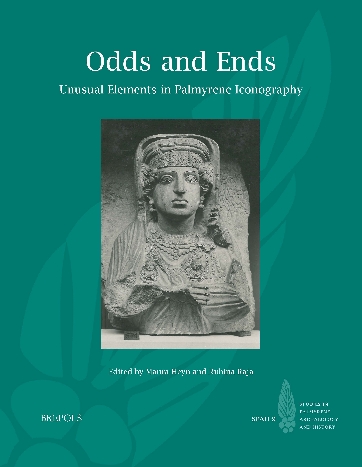
Odds and Ends
show More to view fulltext, buy and share links for:Odds and Ends show Less to hide fulltext, buy and share links for: Odds and EndsThe funerary art that was produced in Roman Palmyra, a caravan city in the Syrian steppe desert, is rightly world-renowned. The frontal depictions of the deceased, featured in torso-length portraits, and the large-scale banqueting scenes are iconic, and lent an added mystique by the absence of any literary sources that might aid in their interpretation. But while from a distance these exquisite portraits might seem rather formulaic, when examining more closely, it is clear that these scenes reveal a surprisingly rich and varied funerary décor. Alongside the more popular iconographic choices are singular scenes, motifs, and elements that deviate from the norm, while new patterns and connections between Palmyra and its surroundings are identifiable.
This volume, which draws on the vast materials gathered under the auspices of the Palmyra Portrait Project directed by Professor Rubina Raja, explores the ‘oddities’ raised by the Palmyrene corpus; it examines one-off scenes or elements, and unusual or unparalleled iconographical choices, and questions how and why such unusual choices should be interpreted. The chapters gathered here not only focus on these visual ‘hapax legomena’ in Palmyra, but also explore the city’s connections with the art of Roman centres to the west, as well as the nearby Hellenistic city states, regional centres of production, and Parthian and Persian sites to the east. Through this approach, the authors engage with the visual richness and sheer amount of choice that existed in Palmyrene funerary art, while also providing unique insights into the knowledge culture that existed within Palmyrene society.
-