


BOB2023MIOT

Collection Contents
21 - 40 of 45 results
-
-
Pedro da Fonseca
show More to view fulltext, buy and share links for:Pedro da Fonseca show Less to hide fulltext, buy and share links for: Pedro da FonsecaAlso known as the «Portuguese Aristotle», Pedro da Fonseca S. J. (1527-1599) was a leading figure in modern scholasticism and particularly in the history of the Society of Jesus. He laid the groundwork for the publication of the famous Cursus Conimbricensis (1592- 1606) and was the author of an influential textbook of logic and dialectic, the Institutionum Dialecticarum Libri Octo (1564), officially recommended by the Ratio Studiorum. He was also one of the most important and recognized commentators on Aristotle’s Metaphysics in the 16th century (with his unfinished Commentaria, 1577-1612).
This volume is the first collection of essays in English devoted to Fonseca, his intellectual endeavour, and thought. The book brings together some of today’s leading specialists in early modern scholasticism, Portuguese Aristotelianism, and the history of the Society of Jesus, in order to present a reliable portrait of Fonseca’s institutional role, to reconstruct his thought on many important aspects of scholastic metaphysics, and to discuss the reception of his work in the early modern age.
-
-
-
Pour une histoire sociale et culturelle de la théologie
show More to view fulltext, buy and share links for:Pour une histoire sociale et culturelle de la théologie show Less to hide fulltext, buy and share links for: Pour une histoire sociale et culturelle de la théologieClaude Langlois est l’auteur d’une œuvre considérable par son ampleur, sa diversité et son inventivité, qui fait sans nul doute de lui l’un des très grands historiens de sa génération. Il fut directeur d’études à l’EPHE de 1993 à 2005, président de la section des sciences religieuses entre 1995 et 2002, co-fondateur avec Régis Debray, en 2002, de l’IESR, dont il fut le directeur de 2002 à 2005. Il n’a cessé - du Catholicisme au féminin (1984) à la suite sur Thérèse de Lisieux, en passant par L’Encyclopédie théologique de Migne (1992), Le crime d’Onan (2005) et nombre de ses articles - de questionner le statut de l’histoire religieuse au regard d’une histoire sociale, d’une histoire culturelle, d’une histoire du genre ; il a fait de la production du discours théologique un observatoire aigu du changement religieux.
Où en est aujourd’hui le débat sur les manières d’historiciser la théologie ? Quel parti tirer des voies pionnières ouvertes par Claude Langlois ? Les auteurs de ce volume - historiens, sociologues, théologiens et spécialistes de littérature - explorent ces questions et donnent à voir, à travers la pluralité de leurs contributions, un paysage de recherche nourri d’intelligence complice.
Cet ouvrage est le témoignage de leur reconnaissance envers un historien et un professeur qui n’a cessé d’ouvrir des chantiers nouveaux et d’arpenter des terrains en friche, livrant sa propre recherche aux surprises de l’archive et à ses détours imprévus, sans jamais renoncer au dialogue avec celles et ceux pour lesquels son œuvre continue d’être une précieuse source de réflexion.
-
-
-
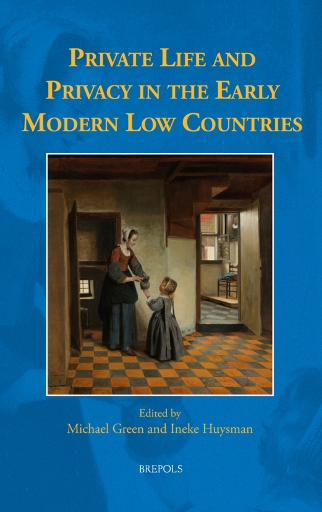
Private Life and Privacy in the Early Modern Low Countries
show More to view fulltext, buy and share links for:Private Life and Privacy in the Early Modern Low Countries show Less to hide fulltext, buy and share links for: Private Life and Privacy in the Early Modern Low CountriesThis volume investigates the origins of one of the most important notions of contemporary society: privacy. Based on case studies from the early modern Low Countries, privacy is tackled from various historical perspectives: social and cultural history, and the history of art and architecture.The Dutch Republic is well known for its financial success, which went hand in hand with the development of a distinguished bourgeois culture and religious toleration. The accumulation of wealth among the urban population led to changes in various spheres, from daily life to art. Privacy, as a concept, started to develop in this period. Indeed, new ideas about housing with the invention of corridors, separate rooms that could be locked, and the separation of the ‘common’ and the ‘private’ space, all illustrate the growing importance of privacy in this geographical area. This volume traces perspectives on early modern privacy and private life based on primary sources in several domains: letters, diaries, and poems; genre painting in art; communal life as illustrated by the Jewish community; and finally, the homes of the Dutch elite.The essays in this volume make a key contribution to the emergence of early modern privacy studies as a research field, and to the ongoing discussion of privacy in the Low Countries. Equally, these case studies can serve as models for the analysis of privacy in other European contexts.
-
-
-
Re-Thinking Late Antique Armenia: Historiography, Material Culture, and Heritage
show More to view fulltext, buy and share links for:Re-Thinking Late Antique Armenia: Historiography, Material Culture, and Heritage show Less to hide fulltext, buy and share links for: Re-Thinking Late Antique Armenia: Historiography, Material Culture, and HeritageThis book questions the place of Armenian visual and material culture in the period known as Late Antiquity, at a time when Armenia is usually presented as an in-between space defined by surrounding external entities: the Roman and the Persian, and later Arab world. The volume includes articles that confront this notion both from the perspective of art history, architecture, and archaeology, and from a historiographical point of view, which examines the reception of Armenian arts by scholars from Italy, Russia, and France. The articles in this richly illustrated volume aim to reposition Armenia as one of the forces of artistic creation and mediation to be reckoned with within the Mediterranean and Eurasian space of Late Antiquity. This project draws on the papers presented at the conference “Re-Constructing Late Antique Armenia (2nd–8th Centuries CE). Historiography, Material Culture, Immaterial Heritage” that took place in February 2022 at the Center for Early Medieval Studies in Brno, Czech Republic.
-
-
-
The Collectio Avellana and the Development of Notarial Practices in Late Antiquity
show More to view fulltext, buy and share links for:The Collectio Avellana and the Development of Notarial Practices in Late Antiquity show Less to hide fulltext, buy and share links for: The Collectio Avellana and the Development of Notarial Practices in Late AntiquityThe essays collected in this volume study the competences and status of late antique notaries, who from simple stenographers acquired responsibilities and growing importance within the imperial court and in the papal chancellery, being charged with drawing up the acts of the consistorium and the ecclesiastical councils, and with preserving and often delivering sensitive documents from Rome to Constantinople. The analysis of their multiple activities and of the functions they occupied, in the imperial and episcopal archives as well as in the libraries of the great Roman domus, also allows us to verify some new hypotheses on the compiler and on the editing of the Collectio Avellana. Since in the Middle Ages, the collection was transcribed into two main manuscripts both preserved in Santa Croce di Fonte Avellana, the essays also try to understand what role the founder of the Monastery, San Pier Damiani, played in preserving this collection.
-
-
-
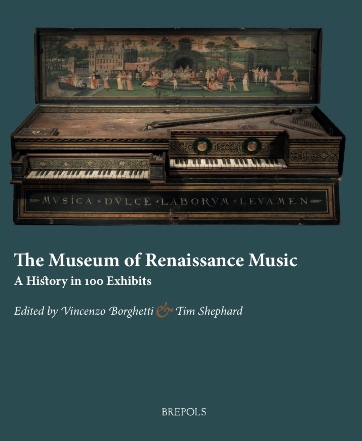
The Museum of Renaissance Music
show More to view fulltext, buy and share links for:The Museum of Renaissance Music show Less to hide fulltext, buy and share links for: The Museum of Renaissance MusicThis book collates 100 exhibits with accompanying essays as an imaginary museum dedicated to the musical cultures of Renaissance Europe, at home and in its global horizons. It is a history through artefacts-materials, tools, instruments, art objects, images, texts, and spaces-and their witness to the priorities and activities of people in the past as they addressed their world through music. The result is a history by collage, revealing overlapping musical practices and meanings-not only those of the elite, but reflecting the everyday cacophony of a diverse culture and its musics. Through the lens of its exhibits, this museum surveys music’s central role in culture and lived experience in fifteenth- and sixteenth-century Europe, offering interest and insights well beyond the strictly musicological field.
-
-
-
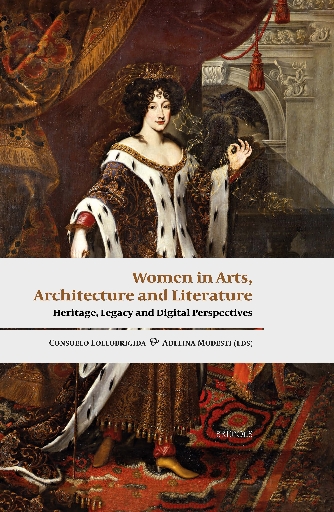
Women in Arts, Architecture and Literature: Heritage, Legacy and Digital Perspectives
show More to view fulltext, buy and share links for:Women in Arts, Architecture and Literature: Heritage, Legacy and Digital Perspectives show Less to hide fulltext, buy and share links for: Women in Arts, Architecture and Literature: Heritage, Legacy and Digital PerspectivesIn the last few decades, the study of women in the arts has largely increased in terms of scholars involved in research and investigation, with the reception of the outcomes especially acknowledged by museums which are dedicating part of their mission to organizing exhibitions and/or acquiring the works of women. The Annual International Women in Arts Conference seeks to advance contemporary discussions on how female creativity has helped shape European culture in its heterogeneity since the Middle Ages. This volume collects the proceedings of the first conference organised in Rome, in October 2021. It focuses on the role of women in literature, art, and architecture. Throughout history, these domains were often seen as very masculine. Yet, there have been many women who have made their mark as writers, illuminators, artists and architects, or have played a decisive role as patrons and supporters in these arts. This collection of essays aims to bring these women to the fore and sheds a new light on the heritage and legacy of women in the creative arts and architecture from the Middle Ages until the 20th century.
-
-
-
sicut commentatores loquuntur
show More to view fulltext, buy and share links for:sicut commentatores loquuntur show Less to hide fulltext, buy and share links for: sicut commentatores loquunturAncient commentaries on poetry - due to their heteronomous nature, their miscellaneous character, and the fact that most of them are transmitted in abridged and anonymous form - are usually not considered ‘authorial’ texts in the same way as poems or literary prose are. On the other hand, as didactic texts, they rely on authority to convey their interpretation, and they also often seem to have been perceived as products of authorial activity, as paratexts, references and pseudepigraphic attributions demonstrate.
The aim of this volume is to explore this tension and to examine commentaries and scholia on poetry in terms of authorship and ‘authoriality’. The contributions use several Latin and Greek corpora as case studies to shed light on how these texts were read, how they display authorial activity themselves, and how they fulfil their function as didactic works. They provide reflections on the relationship of author, authorship, and authority in ‘authorless’ traditions, explore how authorial figures and authorial viewpoints emerge in an implicit manner in spite of the stratified nature of commentaries, investigate the authorial roles adopted by commentators, compilers and scribes, and elucidate how commentators came to be perceived as authors in other exegetic traditions.
-
-
-

A Radical Turn? Re-appropriation, Fragmentation, and Variety in the Post-Classical World (3rd-8th c.)
show More to view fulltext, buy and share links for:A Radical Turn? Re-appropriation, Fragmentation, and Variety in the Post-Classical World (3rd-8th c.) show Less to hide fulltext, buy and share links for: A Radical Turn? Re-appropriation, Fragmentation, and Variety in the Post-Classical World (3rd-8th c.)This thematic issue draws on the papers presented at the conference “Radical Turn? Subversions, Conversions, and Mutations in the Postclassical World (3rd-8th c.)” that took place last autumn in Brno, Czech Republic. Its aim is to contribute to the rehabilitation of the period of “Late Antiquity”, which has often been neglected in scholarly circles as a mere transitional period between the classical past and the medieval future. Individual papers reflect on the cultural production of this period from the perspectives of different disciplines (art history, classical philology, archaeology, and history), offering new insights on various aspects of late antique.
-
-
-
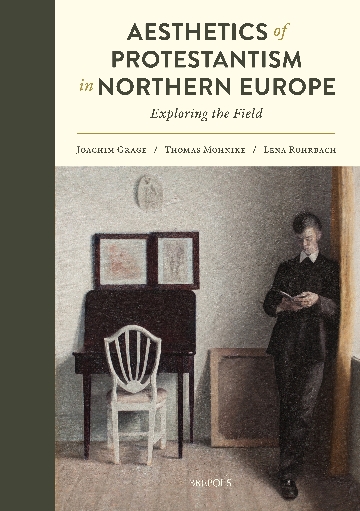
Aesthetics of Protestantism in Northern Europe
show More to view fulltext, buy and share links for:Aesthetics of Protestantism in Northern Europe show Less to hide fulltext, buy and share links for: Aesthetics of Protestantism in Northern EuropeThis book explores the aesthetic consequences of Protestantism in Scandinavia. Fourteen case studies from the sixteenth to the twenty-first century discuss five abstract and trans-historical principles that characterize Scandinavian aesthetics and that arguably derive from Protestant thinking and practice, namely: simplicity, logocentrism, tension between pronounced individualism and collectivism, relatedness to the world, and ethics. The contributions address the peculiar aesthetics of Scandinavian print, literature, architecture, film, and opera and reflect on the influence of Protestant traditions on the establishment of genres and writing practices. This volume is the first in a new series that will focus on the aesthetics of Protestantism in Scandinavia, both theoretically and through exemplary individual analyses.
-
-
-
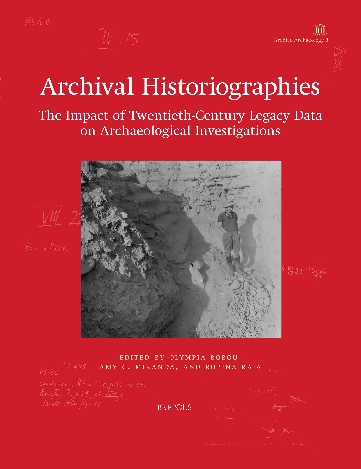
Archival Historiographies
show More to view fulltext, buy and share links for:Archival Historiographies show Less to hide fulltext, buy and share links for: Archival HistoriographiesArchives held in institutions around the world hold a wealth of material but traditionally, the fields of Classical and ancient Near Eastern archaeology have been slow to make use of such legacy data in their investigations. In recent years, however, this trend has begun to change, and scholars increasingly recognize the importance of archival material to their research. Drawing directly on these trends, this volume offers the first in-depth analysis of what it means to engage in archive archaeology and how it can influence understandings of both the ancient world and the recent past. Excavation historiographies and the formation of archaeological archives in the twentieth century are investigated in locations from across the Eastern Mediterranean and the Middle East, with current understanding of sites such as Dura Europos or Palmyra being fundamentally reassessed in the light of the archival material. Crucially, the volume contributions gathered here look to the future as well as to the past: archives are acknowledged as essential to cultural heritage preservation and restitution initiatives, and chapters explore best practices, as well as presenting some of the manifold potentials of archive and legacy data to future research.
-
-
-
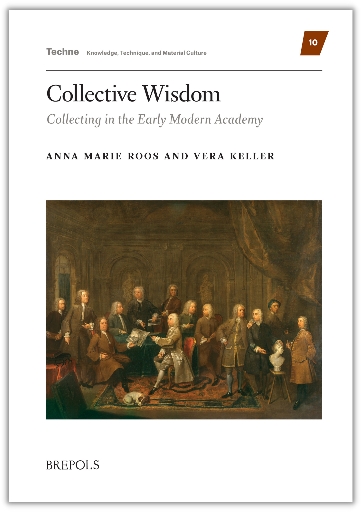
Collective Wisdom
show More to view fulltext, buy and share links for:Collective Wisdom show Less to hide fulltext, buy and share links for: Collective WisdomThis volume analyses how and why members of scholarly societies such as the Royal Society, the Society of Antiquaries of London, and the Leopoldina collected specimens of the natural world, art, and archaeology in the seventeenth and eighteenth centuries. These scholarly societies, founded before knowledge became subspecialised, had many common members. We focus upon how their exploration of natural philosophy, antiquarianism, and medicine were reflected in collecting practice, the organisation of specimens and how knowledge was classified and disseminated. The overall shift from curiosity cabinets with objects playfully crossing the domains of art and nature, to their well-ordered Enlightenment museums is well known. Collective Wisdom analyses the process through which this transformation occurred, and the role of members of these academies in developing new techniques of classifying and organising objects and new uses of these objects for experimental and pedagogical purposes.
-
-
-
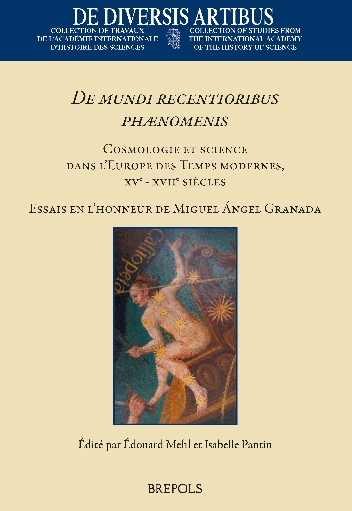
De mundi recentioribus phænomenis
show More to view fulltext, buy and share links for:De mundi recentioribus phænomenis show Less to hide fulltext, buy and share links for: De mundi recentioribus phænomenis« Sur les phénomènes les plus récents de l’univers » : le titre de ce recueil d’essais offerts à Miguel Ángel Granada est emprunté à l’ouvrage de Tycho Brahe sur la comète de 1577. Il fait allusion au lien entre les prodiges qui ont traversé le ciel, entre la fin du 16e et le début du 17e siècle (les supernovas de 1572 et de 1604, les grandes comètes de 1577 et 1618) et les renouvellements profonds, philosophiques, religieux, culturels, qui ont marqué cette période. Ce lien, le travail mené par Miguel Angel Granada depuis une trentaine d’années n’a cessé de l’approfondir. En explorant la complexité de ce qu’on appelle la Révolution scientifique, il a aussi été un acteur majeur de la transformation et de l’élargissement de l’histoire des sciences : l’étude de l’astronomie mathématique, longtemps centrale, s’intègre désormais à une histoire des savoirs, des institutions, des contextes politiques et religieux.
Les articles qui composent ce recueil s’inscrivent dans ce sillage. Ils s’inspirent des découvertes et des idées de ce grand chercheur, et prolongent certaines de ses enquêtes, en abordant tous les domaines, de la métaphysique à l’astrologie. Ils restituent ainsi l’image d’une Europe savante en train de se constituer par la circulation et la dissémination des idées, de Rostock à Naples, de Lisbonne à Prague, ou de Londres à Wittenberg.
-
-
-
Dealing with Disagreement
show More to view fulltext, buy and share links for:Dealing with Disagreement show Less to hide fulltext, buy and share links for: Dealing with DisagreementAncient philosophy is known for its organisation into distinct schools. But those schools were not locked into static dogmatism. As recent scholarship has shown, lively debate persisted between and within traditions. Yet the interplay between tradition and disagreement remains underexplored. This volume asks, first, how philosophers talked about differences of opinion within and between traditions and, second, how such debates affected the traditions involved. It covers the period from the first century BCE, which witnessed a turn to authoritative texts in different philosophical movements, through the rise of Christianity, to the golden age of Neoplatonic commentaries in the fifth and sixth centuries CE.
By studying various philosophical and Christian traditions alongside and in interaction with each other, this volume reveals common philosophical strategies of identification and differentiation. Ancient authors construct their own traditions in their (polemical) engagements with dissenters and opponents. Yet this very process of dissociation helped establish a common conceptual ground between traditions. This volume will be an important resource for specialists in late ancient philosophy, early Christianity, and the history of ideas.
-
-
-
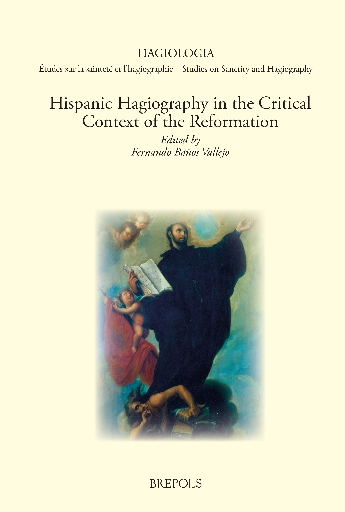
Hispanic Hagiography in the Critical Context of the Reformation
show More to view fulltext, buy and share links for:Hispanic Hagiography in the Critical Context of the Reformation show Less to hide fulltext, buy and share links for: Hispanic Hagiography in the Critical Context of the ReformationThe sixteenth century was a time of great religious turmoil in Europe, during which the critical positions within the Catholic Church led to a definitive break between Christians. One of the major controversies pertained to the cult of the saints, since in 1523 Martin Luther denied the mediating role of the saints and repudiated what he considered excesses in their devotions.
The studies presented in this volume examine the impact of the Reformation on hagiography in the Hispanic sphere. They investigate how theological positions and controversy were projected onto literature, and how literature incorporated theological discourse, explicitly or implicitly. Unsurprisingly, the Catholic Church reaffirmed the hagiographical tradition, but to what extent was hagiographical literature, specifically Hispanic literature, affected by reformist approaches? This book explores issues less evident and hitherto neglected: for example, Hispanic Catholic authorities and authors, influenced by the denunciations of the excesses of the cult of saints and hagiographical “fables,” publicly declared the purging of apocryphal elements in saints’ lives; in practice, however, they grappled with the difficulty of applying theoretical criteria to such an enormous subject. As a result, certain contradictions arose between these criteria and the commitment to the hagiographical tradition, which some even sought to expand and update. This complex tension is brought out by the studies gathered here in the fields of hagiographical prose in Catalan, Portuguese and Spanish, in Iberia and in America, without neglecting the role of the theater in the dissemination of saints’ legends.
-
-
-

How the Secularization of Religious Houses Transformed the Libraries of Europe, 16th-19th Centuries
show More to view fulltext, buy and share links for:How the Secularization of Religious Houses Transformed the Libraries of Europe, 16th-19th Centuries show Less to hide fulltext, buy and share links for: How the Secularization of Religious Houses Transformed the Libraries of Europe, 16th-19th CenturiesThe closure of religious houses, in varying circumstances, affected all of Europe at some point between the sixteenth and nineteenth century. At different times and in different countries the consequences were widely varied, in some cases preserving medieval and early modern collections intact, in others abandoning books to their fate, or transferring them piecemeal into new ownership to serve different cultural purposes. Integral preservation or dispersal may each be viewed in positive or negative terms. For religious and political history there are many, and bigger, factors involved, and the effects of secularization worked on many things beside libraries and books. None the less, by focusing on books and libraries through these changes a particular narrative emerges of great cultural importance. It is the most important book-historical story for the survival and accessibility of Europe's heritage of the written word, one that interacts with major historical themes and still connects with future issues for the continuing role of books and libraries in the European heritage.
A conference held in Oxford in 2012 brought together thirty experts in different aspects of this process or with knowledge of its impact in different countries and at different periods. The result was to bring together and share for the first time the similar and different experiences of different European countries, from Portugal and Spain in the west to Poland and Ukraine in the east, from Finland and Sweden in the north to Naples in the south, with ramifications stretching to North and South America. While reading this volume of collected essays, the reader may notice a disparity in the evidence that each author has been able to bring to bear upon their subject. Provenance research is well advanced in some territories, less so in others. In the decade since the conference and this publication, there have been some attempts to bridge certain gaps. But in general, there has been little new work in the years since the conference took place. The editors anticipate that this publication will stimulate further research, bridging some of the gaps visible in the evidence presented in this volume. Multiple avenues for further investigation open up, indeed, in historical and cultural studies, such as the impact of the secularization on nonreligious libraries, and the change in attitude with respect to certain disciplines and even to erudition itself.
-
-
-
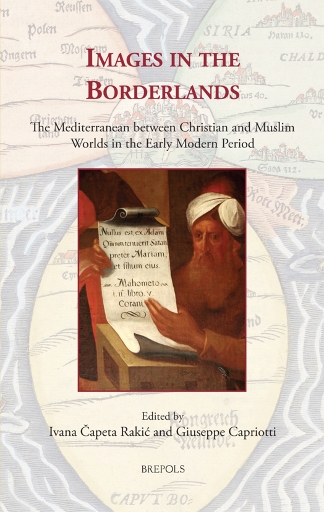
Images in the Borderlands
show More to view fulltext, buy and share links for:Images in the Borderlands show Less to hide fulltext, buy and share links for: Images in the BorderlandsThis volume offers a unique exploration into the cultural history of the Mediterranean in the Early Modern Period by examining the region through the prism of Christian-Muslim encounters and conflicts and the way in which such relationships were represented in art works from the time. Taking images from the period as its starting point, this interdisciplinary work draws together contributors from fields as varied as cultural history, art history, archaeology, and the political sciences in order to reconstruct the history of a region that was often construed in the Early Modern period as a ‘borderland’ between religions. From discussions of borders as both physical construction and mental construct in the Mediterranean to case studies exploring the Battle of Lepanto, and from analyses of art work produced from the fifteenth to eighteenth centuries to a consideration of the influence of the Ottoman Empire in the Mediterranean Basin, the chapters gathered together in this insightful volume provide a new approach to our understanding of Early Modern Mediterranean history.
-
-
-
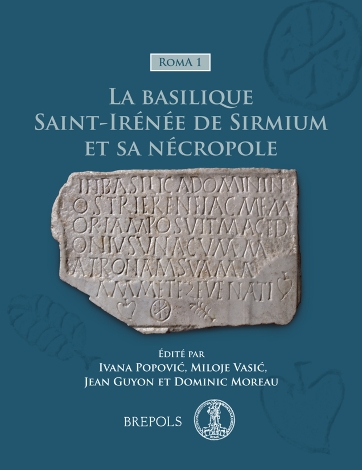
La basilique Saint-Irénée de Sirmium et sa nécropole
show More to view fulltext, buy and share links for:La basilique Saint-Irénée de Sirmium et sa nécropole show Less to hide fulltext, buy and share links for: La basilique Saint-Irénée de Sirmium et sa nécropoleLes fouilles franco-yougoslaves dirigées conjointement par Noël Duval (1929-2018) et Vladislav Popovic (1930-1999), d’abord à Sirmium de 1973 à 1978, puis à Caricin Grad de 1978 à 1991, demeurent encore aujourd’hui un modèle de collaboration archéologique internationale. Du fait de leur impressionnant bilan, les deux missions participèrent pleinement à la mise en valeur du patrimoine romain sur le territoire de l’actuelle Serbie, de même qu’à la démonstration de l’intérêt de la période que l’on qualifie aujourd’hui d’Antiquité tardive. Dédié à la mémoire des deux grandes figures susmentionnées, le présent ouvrage unit les découvertes restées inédites de l’exploration franco-yougoslave de la basilique Saint-Irénée de Sirmium, menée entre 1976 et 1977, avec celles faites plus récemment, soit en 2002 et en 2016, à l’occasion des travaux conduits sur le site de la nécropole environnante de cette église paléochrétienne, par l’équipe de l’Institut archéologique de Belgrade. Les résultats obtenus par de véritables « pères fondateurs » se retrouvent donc ici associés à ceux de générations qui ont été formées dans la suite directe des importantes avancées scientiques, non seulement en termes de données, mais aussi de méthodologie, dont ils furent à l’origine.
-
-
-
Learning with Light and Shadows
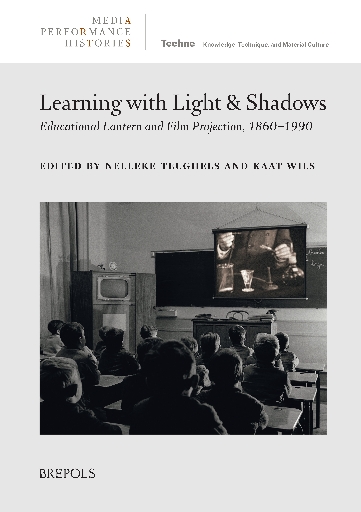
show More to view fulltext, buy and share links for:Learning with Light and Shadows show Less to hide fulltext, buy and share links for: Learning with Light and ShadowsSince the early nineteenth century, European pedagogical theory has stimulated a didactic turn towards the visual as an alternative to textual mediations of knowledge through books and lectures. Pedagogues and policymakers who strove for a more child-centred approach to teaching were soon joined by media producers and marketers in their aim to transform the classroom into a multimodal space for learning. From the turn of the twentieth century onwards, teachers were increasingly pressured to incorporate high-profile media technologies such as stereoscopes, lantern and film projectors into their lessons.
This collection of essays focuses on European educational light projection, from its first appearance at the end of the nineteenth century through the 1990s, when digital image projection started to gradually replace analogue film, slide and overhead projectors. It explores the classroom use of these technologies. In doing so, it challenges top-down approaches to the introduction of new visual technology and questions discourses that characterize the relation of visual media technology to teachers as one of consumption. The studies in this volume demonstrate how everyday demands and preferences transformed the 'ideal' instructional culture as put forward by policymakers, producers and pedagogues, into distinctive didactic practices that worked around or went beyond the pre-imposed ways of usage of visual media products. The volume moves beyond the view of instructional technology as a one-way route to modernization and teaching efficiency. By laying bare the power relations, interests and ideologies at play, the contributions also lend insight into the intertwinement between politics, media, material culture and classroom practices.
-
-
-
Orthodox Christianity and Modern Science: Past, Present and Future
show More to view fulltext, buy and share links for:Orthodox Christianity and Modern Science: Past, Present and Future show Less to hide fulltext, buy and share links for: Orthodox Christianity and Modern Science: Past, Present and FutureThe relationship of Orthodox Christianity to the modern sciences has received scant attention in the last fifty years. While important contributions have been made in history, theology and philosophy, there have been very few attempts to highlight the importance and fruitfulness of the field for an international audience. This volume brings together contributions from scholars of different disciplines to discuss the past, present and future of the relations between Orthodox Christianity and the sciences. The topics covered range from theological discussions of miracles to the importance of seminary work on science and religion and from a practitioner’s view of addressing medical suffering to a historical discussion of the Scientific Revolution in Orthodox spaces. The volume is addressed to historians, philosophers, theologians, scientists and members of the clergy, but also to any scholar that is interested in discovering the vibrancy of the emerging field of Science and Orthodox Christianity Studies.
-