


BOB2023MIOT

Collection Contents
3 results
-
-
Pedro da Fonseca
show More to view fulltext, buy and share links for:Pedro da Fonseca show Less to hide fulltext, buy and share links for: Pedro da FonsecaAlso known as the «Portuguese Aristotle», Pedro da Fonseca S. J. (1527-1599) was a leading figure in modern scholasticism and particularly in the history of the Society of Jesus. He laid the groundwork for the publication of the famous Cursus Conimbricensis (1592- 1606) and was the author of an influential textbook of logic and dialectic, the Institutionum Dialecticarum Libri Octo (1564), officially recommended by the Ratio Studiorum. He was also one of the most important and recognized commentators on Aristotle’s Metaphysics in the 16th century (with his unfinished Commentaria, 1577-1612).
This volume is the first collection of essays in English devoted to Fonseca, his intellectual endeavour, and thought. The book brings together some of today’s leading specialists in early modern scholasticism, Portuguese Aristotelianism, and the history of the Society of Jesus, in order to present a reliable portrait of Fonseca’s institutional role, to reconstruct his thought on many important aspects of scholastic metaphysics, and to discuss the reception of his work in the early modern age.
-
-
-
Pour une histoire sociale et culturelle de la théologie
show More to view fulltext, buy and share links for:Pour une histoire sociale et culturelle de la théologie show Less to hide fulltext, buy and share links for: Pour une histoire sociale et culturelle de la théologieClaude Langlois est l’auteur d’une œuvre considérable par son ampleur, sa diversité et son inventivité, qui fait sans nul doute de lui l’un des très grands historiens de sa génération. Il fut directeur d’études à l’EPHE de 1993 à 2005, président de la section des sciences religieuses entre 1995 et 2002, co-fondateur avec Régis Debray, en 2002, de l’IESR, dont il fut le directeur de 2002 à 2005. Il n’a cessé - du Catholicisme au féminin (1984) à la suite sur Thérèse de Lisieux, en passant par L’Encyclopédie théologique de Migne (1992), Le crime d’Onan (2005) et nombre de ses articles - de questionner le statut de l’histoire religieuse au regard d’une histoire sociale, d’une histoire culturelle, d’une histoire du genre ; il a fait de la production du discours théologique un observatoire aigu du changement religieux.
Où en est aujourd’hui le débat sur les manières d’historiciser la théologie ? Quel parti tirer des voies pionnières ouvertes par Claude Langlois ? Les auteurs de ce volume - historiens, sociologues, théologiens et spécialistes de littérature - explorent ces questions et donnent à voir, à travers la pluralité de leurs contributions, un paysage de recherche nourri d’intelligence complice.
Cet ouvrage est le témoignage de leur reconnaissance envers un historien et un professeur qui n’a cessé d’ouvrir des chantiers nouveaux et d’arpenter des terrains en friche, livrant sa propre recherche aux surprises de l’archive et à ses détours imprévus, sans jamais renoncer au dialogue avec celles et ceux pour lesquels son œuvre continue d’être une précieuse source de réflexion.
-
-
-
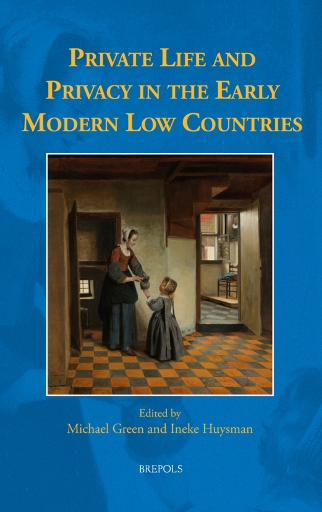
Private Life and Privacy in the Early Modern Low Countries
show More to view fulltext, buy and share links for:Private Life and Privacy in the Early Modern Low Countries show Less to hide fulltext, buy and share links for: Private Life and Privacy in the Early Modern Low CountriesThis volume investigates the origins of one of the most important notions of contemporary society: privacy. Based on case studies from the early modern Low Countries, privacy is tackled from various historical perspectives: social and cultural history, and the history of art and architecture.The Dutch Republic is well known for its financial success, which went hand in hand with the development of a distinguished bourgeois culture and religious toleration. The accumulation of wealth among the urban population led to changes in various spheres, from daily life to art. Privacy, as a concept, started to develop in this period. Indeed, new ideas about housing with the invention of corridors, separate rooms that could be locked, and the separation of the ‘common’ and the ‘private’ space, all illustrate the growing importance of privacy in this geographical area. This volume traces perspectives on early modern privacy and private life based on primary sources in several domains: letters, diaries, and poems; genre painting in art; communal life as illustrated by the Jewish community; and finally, the homes of the Dutch elite.The essays in this volume make a key contribution to the emergence of early modern privacy studies as a research field, and to the ongoing discussion of privacy in the Low Countries. Equally, these case studies can serve as models for the analysis of privacy in other European contexts.
-