


BOB2023MIOT

Collection Contents
41 - 45 of 45 results
-
-
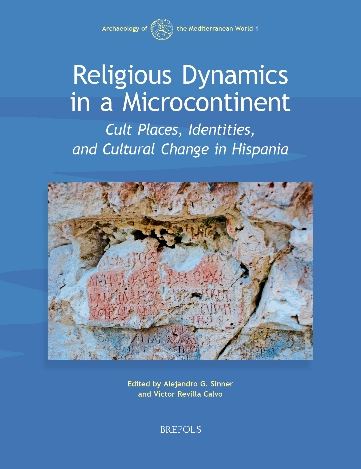
Religious Dynamics in a Microcontinent
show More to view fulltext, buy and share links for:Religious Dynamics in a Microcontinent show Less to hide fulltext, buy and share links for: Religious Dynamics in a MicrocontinentThe Roman conquest of the Iberian peninsula, a land already inhabited by peoples who were characterized by cultural, ethnic, and social diversity, was one of the longest and most complex colonial processes to have occurred in the Roman world. Different political entities saw integration and interaction taking place at different speeds and via different mechanisms, and these differences had a profound impact on the development of religious dynamics and cultural change across the peninsula.
This edited volume draws together contributions from a number of experts in the field in order to deepen our understanding of religious phenomena in Hispania - in particular cult, rituals, mechanisms, and spaces - and in doing so, to offer new insights into processes of cultural and social change, and the impact of conquest and colonialism. The chapters gathered here identify how forms of religious interaction occurred at different levels and scales, and explore the ways in which religion and religious practices underpinned the construction, development, and renegotiation of different identities. Through this approach they shed important light on the crucial role of cultic practices in defining cultural and social identity as Iberia’s provincial communities were drawn into the Roman world.
-
-
-
Roman Identity
show More to view fulltext, buy and share links for:Roman Identity show Less to hide fulltext, buy and share links for: Roman IdentityRecent years have seen a significant increase in migration and displacement. Due to economic, political, and climatic pressures, large numbers of individuals are leaving their countries of origin and settling in new environments and societies. As a result, national identity has increasingly come to the fore in public discourse. Shaping and reshaping national agendas, debates surrounding national identity are affecting policies and influencing voting behaviours. Discourse on this issue is often centred on the idea of autochthony and nativism. Yet we do not encounter such anxieties in ancient Rome, one of the longest-lasting political orders in history. Unlike among the Greeks, the idea of autochthony did not take root among the Romans. Instead, Rome’s identity tended to be fluid, accommodating the development of highly variegated and multi-ethnic groups and societies.
The purpose of this volume is to understand how the Romans represented themselves and how others defined and regarded them. It aims to identify the various narratives that contributed to the construction of Roman self-representation by raising the following questions: What stories did Romans tell about themselves? How did they enact and perform their selfhood in biographic and autobiographical sources? How did Greek and Judean sources understand and define Roman identity? And, taken together, how did these narratives influence Roman self-perception?
Rather than arguing for a monolithic or coherent understanding of Romanitas, this volume explores a variety of performances and manifestations of Roman identity. It focuses both on sources where the self or individual is the primary focus, alongside more general texts dealing with specific elements of Roman identity.
-
-
-
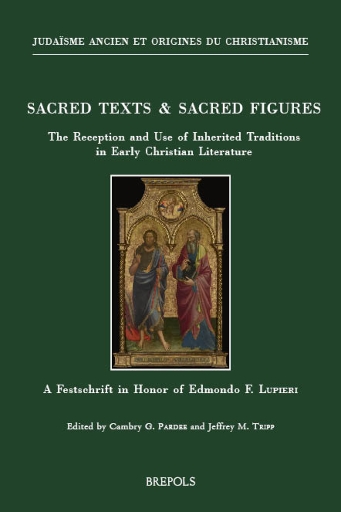
Sacred Texts & Sacred Figures: The Reception and Use of Inherited Traditions in Early Christian Literature
show More to view fulltext, buy and share links for:Sacred Texts & Sacred Figures: The Reception and Use of Inherited Traditions in Early Christian Literature show Less to hide fulltext, buy and share links for: Sacred Texts & Sacred Figures: The Reception and Use of Inherited Traditions in Early Christian LiteratureIn tribute to the scholarly legacy of Edmondo F. Lupieri, in Sacred Texts & Sacred Figures an international group of esteemed biblical scholars offer essays on the ways religious traditions, texts, and even the legacies of notable figures were received, re-interpreted, and used by the authors of gospels, epistles, and apocalypses to address the ever-evolving circumstances of emerging Christianity. In the first and second centuries ce, oral and written traditions about the life of Jesus proliferated and formed the basis for written narratives. The authors of the gospels received and redacted those traditions to make distinctive theological claims about Jesus and to address their specific milieu and the wider movement of Jesus-followers. Among some groups of Jesus-followers the sacred texts of Judaism remained paramount. Authors like that of the Epistle to the Hebrews re-examined their inheritance of Jewish scriptures in order to demonstrate the continuity of their novel claims about Jesus with the sacred texts and traditions of Judaism. Similarly, the authors of first- and second-century apocalypses drew on the heritage of Jewish apocalypticism to write and record new revelations of and about Jesus. In addition to traditions and texts, authors in the first and second centuries re-examined the legacy of significant Jewish figures and followers of Jesus and wrote about them in the context of their own contemporary circumstances. Using innovative strategies and written in an engaging style, the essays assembled here explore the reception and reinterpretation of sacred traditions, texts, and figures in the writings of early Christianity.
-
-
-
Spinoza en Angleterre
show More to view fulltext, buy and share links for:Spinoza en Angleterre show Less to hide fulltext, buy and share links for: Spinoza en AngleterreLe volume s’interroge sur la place de Spinoza dans les milieux intellectuels, philosophiques et scientifiques de l’Angleterre et de l’Europe du xvii e siècle, et il analyse les contextes scientifiques privilégiés qui ont fourni à Spinoza plusieurs motifs de réflexion et qui ont compté ensuite parmi ses principaux lieux de réception. Le rapport entre Spinoza et le débat philosophique en Angleterre a retenu l’attention des historiens depuis longtemps. Il s’agit d’un terrain historiographique complexe où questions de sources, réception des idées et enjeux polémiques se mêlent souvent. La première partie du volume a une approche plus thématique : on se focalise sur un thème de la philosophie de Spinoza pour y voir, comme dans un prisme, le reflet des débats croisés entre Pays-Bas et Angleterre. La deuxième partie du volume est consacrée principalement à Spinoza et à la considération du rapport avec la physique hobbesienne. La troisième partie du volume porte sur les polémiques autour des œuvres de Spinoza qui furent lues durant le dix-huitième siècle en Angleterre et sur le continent, les spéculations philosophiques d’un cartésien athée et les œuvres d’un impie. Le parcours intellectuel du livre, qui rassemble les contributions de A. Di Nardo, R. Evangelista, G. Giglioni, E. Guillemeau, M. Laerke, F. Mignini, A. Sangiacomo, C. Santinelli, M. Sanna, C. Secretan, L. Simonutti, T. Verbeek, s’achève par la postface de Pierre-François Moreau.
-
-
-

Studies in Maximus the Confessor’s Opuscula Theologica et Polemica
show More to view fulltext, buy and share links for:Studies in Maximus the Confessor’s Opuscula Theologica et Polemica show Less to hide fulltext, buy and share links for: Studies in Maximus the Confessor’s Opuscula Theologica et PolemicaOpuscula theologica et polemica is a collection of minor works of Maximus the Confessor that has not received much scholarly attention so far. Nevertheless, it offers a unique insight in the Christological and personological universe of the Christian thinker. The present volume is the first attempt to bring together scholars of different traditions and to apply different approaches - theological, philosophical, philological and historical - to this seminal work.
-