


BOB2023MOME

Collection Contents
30 results
-
-
Commentary on Isaiah
show More to view fulltext, buy and share links for:Commentary on Isaiah show Less to hide fulltext, buy and share links for: Commentary on IsaiahAndrew of Saint Victor was one of the most prominent biblical scholars of the twelfth century. He was a regular canon of the Parisian abbey of St Victor, founded in 1108, which in the twelfth century had developed into a prestigious center of spiritual learning, closely connected to the nascent university in Paris. Because of his frequent use of Jewish exegetical materials, Andrew's commentaries are a rich source for the history both of biblical hermeneutics and of inter-religious dialogue during the Middle Ages. His Isaiah commentary caused outrage among medieval Christian scholars because it eschewed traditional christological interpretations, and instead offered a reading “according to the Hebrew.” This translation makes this work accessible in English for the first time.
The source text of this volume was published in 2021 by Frans van Liere (Corpus Christianorum, Continuatio Mediaeualis, 53C). References to the corresponding pages of the Corpus Christianorum edition are provided in the margins of this translation.
-
-
-
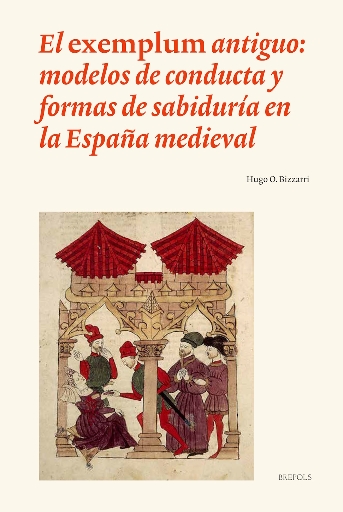
El exemplum antiguo: modelos de conducta y formas de sabiduría en la España medieval
show More to view fulltext, buy and share links for:El exemplum antiguo: modelos de conducta y formas de sabiduría en la España medieval show Less to hide fulltext, buy and share links for: El exemplum antiguo: modelos de conducta y formas de sabiduría en la España medievalL'exemplum antique est l'un des héritages les plus importants de l'Antiquité au Moyen Âge. Les anecdotes tirées des œuvres d'historiens latins tels que Tite-Live, Suétone, Valère Maxim et même de traités tels que Sénèque et Cicéron étaient diffusées sous la forme d'un récit bref. Mais l'Antiquité n'a pas transmis au Moyen Âge qu'une collection d'histoires. Ils étaient porteurs d'une idéologie, le mos maiorum, c'est-à-dire une série de vertus qui avaient constitué la base de l'Empire romain et que le Moyen Âge souhaitait appliquer à la chevalerie. Cette forme d'exemplum avait une longue tradition en Espagne. Dès le xii e siècle, des auteurs tels que Pedro Alfonso de Huesca s'en servent. Au xiv e siècle, il a été revalorisé et a commencé à faire partie du discours politique des ‘miroirs des princes’. Mais son moment de diffusion le plus important se situe au xv e siècle, au point que cette période peut être caractérisée comme une aetas valeriana.
-
-
-
La loi salique
show More to view fulltext, buy and share links for:La loi salique show Less to hide fulltext, buy and share links for: La loi saliqueLa loi salique a été l’objet d’une attention approfondie à la fin du Moyen Âge, où elle fut utilisée par les partisans du roi de France pour justifier les successions royales et l’éviction du roi d’Angleterre, aussi bien qu’à l’époque moderne et contemporaine, car les érudits y ont cherché l’expression des coutumes germaniques originelles. Pour autant, elle n’a fait l’objet que d’une édition partielle et les manuscrits qui la comportent, copiés à ‘époque carolingienne, n’ont encore jamais fait l’objet d’une étude systématique. L’étude revient sur les conditions de l’échec d’une édition scientifique de la loi salique, au milieu du XXe siècle, puis se consacre aux témoins manuscrits, copiés après 750. La comparaison détaillée des différentes versions du texte et des différents recueils manuscrits jette un nouvel éclairage sur l’histoire compliquée de ce texte.
La loi salique constituait, au VIIIe, un ensemble d’articles aux contours flous, dont l’association à l’autorité royale mérovingienne n’empêchait la liberté de composition de chaque copiste, qui élaborait son propre assemblage des articles juridiques. Toutes les versions de la loi salique étaient considérées comme valables et ce n’est qu’à partir du règne de Louis le Pieux que la version la plus récente du texte fut préférée aux autres, probablement en raison de sa clarté. Le nombre important de copies de petit format du texte, dans la première moitié du IXe siècle, semble montrer le recours courant à la loi salique par les détenteurs de l’autorité dans l’ensemble de l’empire carolingien.
-
-
-
Le Institutiones humanarum litterarum di Cassiodoro
show More to view fulltext, buy and share links for:Le Institutiones humanarum litterarum di Cassiodoro show Less to hide fulltext, buy and share links for: Le Institutiones humanarum litterarum di CassiodoroThe Institutiones humanarum litterarum - that is, the second book of Cassiodorus’ masterpiece, devoted to secular learning - have come down to us in three different textual forms: the ‘authentic’ recension Ω, corresponding to Cassiodorus’ final wishes, and two subsequent recensions, designated as Φ and Δ. In these two recensions, later interpolations were added on the basis of an earlier authorial draft, providing modern readers with valuable information both about Cassiodorus’ progressive revisions and about the early fortune of his work.
This volume provides a full commentary to the first critical edition of the interpolated recensions Φ and Δ (CC SL 99A). In doing so, it conveys a full picture of the complex history of the Institutiones saeculares, from their first appearance in the monastery of Vivarium to the Carolingian Renaissance, at which time they knew their greatest success and circulation.
-
-
-
Le siècle des saints
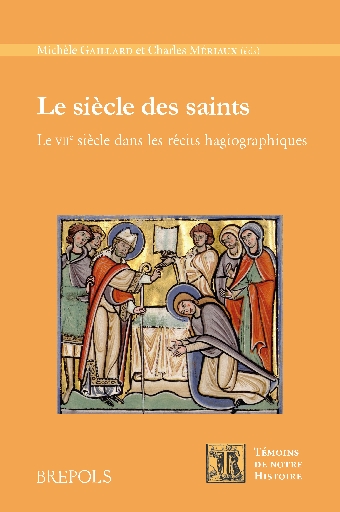
show More to view fulltext, buy and share links for:Le siècle des saints show Less to hide fulltext, buy and share links for: Le siècle des saintsLes Vies de saints représentent la principale source d’informations sur la vie religieuse, sociale et politiques du royaume mérovingien à son apogée, sous les règnes de Clotaire II (613-629), de Dagobert Ier (629-639) puis de ses fils. Elles viennent ainsi compléter les informations fournies par la principale chronique de cette période dite « de Frédégaire ». Ce recueil rassemble des traductions inédites de Vies particulièrement représentatives. Elles montrent des évêques dans leurs activités administratives et politiques au sein de vieilles cités de fondation romaine (Didier de Vienne et Arnoul de Metz) comme dans les missions de conversion dans les marges du royaume (Amand dans la vallée de l’Escaut, Omer le long du littoral flamand) et, au-delà, jusqu’en Frise (Vulfran) et dans la lointaine Angleterre qui maintenait toutefois des liens étroits avec le continent ce qui justifie la présence de la Vie de saint Wilfrid d’York dans ce recueil. Le monde monastique est représenté par des fondateurs d’abbayes qui acquirent dès le VIIe siècle un rôle religieux, social et politique considérable : à Laon (Salaberge), Nivelles (Gertrude), Sithiu, aujourd’hui Saint-Omer (Bertin), Jumièges puis Noirmoutier (Philibert) et Chelles où se retira la reine Bathilde au début des années 660. Enfin, le célèbre récit de la vision du moine Baronte est un témoignage original de la spiritualité monastique du temps.
-
-
-
Les modes de plain-chant
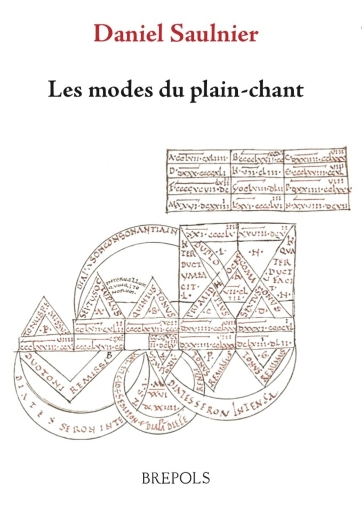
show More to view fulltext, buy and share links for:Les modes de plain-chant show Less to hide fulltext, buy and share links for: Les modes de plain-chantQuand la musique européenne a commencé à buter sur les limites du système tonal dans lequel elle s’était progressivement enfermée, c’est auprès du plain-chant et des mélodies populaires, voire exotiques, qu’elle est venue mendier un regain d’inspiration. Au cours de la seconde moitié du xix e siècle, la musique dite « modale » apparaît aux yeux de certains compositeurs comme une opportunité de rajeunissement : pentaphonismes de réputation orientale, gammes par tons entiers ou avec quarte augmentée s’intègrent dans le paysage musical occidental. De telles turqueries ne sont pas franchement nouvelles, mais la situation est inédite. En effet, au même moment, la redécouverte du chant médiéval et de ses traités dans un contexte fortement idéalisé propulse les vieux modes ecclésiastiques, porteurs de noms chatoyants des provinces de la Grèce antique, sur le devant de la scène.
-
-
-
Literacy in Medieval and Early Modern Vilnius
show More to view fulltext, buy and share links for:Literacy in Medieval and Early Modern Vilnius show Less to hide fulltext, buy and share links for: Literacy in Medieval and Early Modern VilniusLate medieval and early modern cities in Europe could not exist without the use of the written word. Based on a case study of Vilnius - the capital of the Grand Duchy of Lithuania in the fourteenth -eighteenth centuries - this book shows how rhetoric influenced all the spheres of urban literacy: the rules of writing, rhetorical genres and their functions, and the social practices of producing, preserving, and disseminating texts. Vilnius was a multi-ethnic, multi-religious, and multi-scriptural city, and its literary culture was particularly rich. What was the legal basis of the city? Who were the professionals of the written word? What was the role of schools and books in the literary culture of the city? How did women participate in Vilnius’s textuality? Which rhetorical genres were used? This study is based on research into the different types of texts used in Vilnius: contracts; last wills; sermons; municipal, state, and church records; primers; shopping lists; poetry; manuals; and letters, in Polish, Latin, Ruthenian, Lithuanian, Yiddish, and other languages written or printed in five alphabets. The rhetorical organization of Vilnius can serve as a model for examining other towns of the time. It also shows the complexity of the use of script in the multi-ethnic urban communities of North-Eastern Europe.
-
-
-
Malfante l’Africain
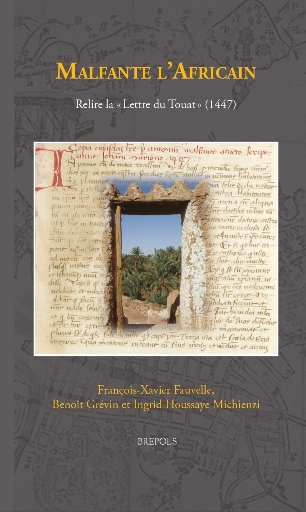
show More to view fulltext, buy and share links for:Malfante l’Africain show Less to hide fulltext, buy and share links for: Malfante l’AfricainEn 1447, Antonio Malfante, un marchand génois, adresse une lettre en latin depuis Tamentit dans l’oasis saharienne du Touat (actuelle Algérie). Il y décrit la région et livre des informations sur le Sahara et l’Afrique subsaharienne. Dans une perspective d’histoire globale, ce livre explore tous les aspects d’une source exceptionnelle qui relie trois mondes interconnectés : celui des marchands italiens rayonnant en Méditerranée occidentale ; celui des routes sahariennes, du Maghreb à Tombouctou ; celui des royaumes, sociétés et cités de l’Afrique subsaharienne. Une approche interdisciplinaire revisite ce texte fameux. L’analyse philologique corrige nombre d’erreurs présentes depuis la première édition-traduction (La Roncière, 1919), et présente les interactions linguistiques (latin, italien, arabe…). La contextualisation dans l’histoire du commerce transcontinental du xve siècle renouvelle la compréhension de la démarche de Malfante et de ses relais africains. L’analyse africaniste de sa description du Sahara et de l’Afrique subsaharienne lève un voile sur le Nord-Ouest de l’Afrique à une époque de raréfaction des sources écrites. Enfin, une lecture historiographique du texte met en relief les présupposés colonialistes qui ont accompagné sa découverte. Combinant histoire textuelle, commerciale et africaine, cette relecture du « voyage de Malfante » présente une histoire globale euro-africaine, entre christianisme, islam et animisme, entre recherche de profit, description anthropologique et construction d’une image de l’autre.
-
-
-
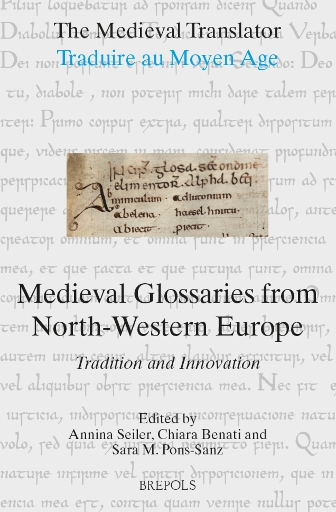
Medieval Glossaries from North-Western Europe
show More to view fulltext, buy and share links for:Medieval Glossaries from North-Western Europe show Less to hide fulltext, buy and share links for: Medieval Glossaries from North-Western EuropeGlossaries are the dictionaries of the medieval period. They were created at a time when no comprehensive dictionary of the Latin language existed, but lexicographical resources were urgently needed to engage with the writings of Classical and Late Antiquity as well as near-contemporary texts. In the non-Romance speaking areas in north-western Europe, the compilers of glossaries were quick to have recourse to their vernacular languages. Glossaries are often the places in which these languages were put into writing for the first time. Hence, the effort to explain Latin vocabulary resulted in bilingual lexicography and in the establishment of the vernaculars as written languages in their own right. The negotiation of linguistic and cultural barriers lies at the centre of the glossaries. Consequently, medieval traditions of glossography are highly interconnected.
This volume represents the first reference work dedicated to medieval glossaries in English and related traditions, including other languages spoken in the British Isles (Celtic languages, Anglo-Norman) and the Germanic languages (High and Low German, Dutch, Scandinavian, Gothic). As such, it is intended as a vademecum for researchers in order to facilitate modern approaches to medieval glossography, lexicology and lexicography, which often require some familiarity with different traditions. Written by experts in the field, the fifty chapters of this volume highlight important characteristics and themes of medieval glossaries and outline different glossographic traditions; they facilitate access to individual glossaries, or groups of related glossaries, by providing detailed discussions of the texts, their sources, relationships and transmission; they also give an account of the current state of research and highlight important resources.
-
-
-

Peter of Ireland, Writings on Natural Philosophy
show More to view fulltext, buy and share links for:Peter of Ireland, Writings on Natural Philosophy show Less to hide fulltext, buy and share links for: Peter of Ireland, Writings on Natural PhilosophyPeter of Ireland (Petrus de Ybernia) was born sometime around the beginning of the thirteenth century in Ireland, probably of a Norman family. He probably left Ireland aged around age 15 to pursue his studies abroad. His interest in medical and scientific questions would suggest a stay at Oxford, whereas his approach to logic would suggest a Parisian influence. By the middle of the century he was Professor of Logic and Natural Philosophy at the University at Naples. Peter is perhaps one of the best known of medieval Irish thinkers on the continent owing to the fact that he was held to be the teacher of the young Thomas Aquinas at Naples University from 1239-44. As such, it would be he who, in all likelihood, first introduced Thomas to the study of Aristotle and perhaps also to the commentaries of Avicenna and Averroes. The works presented here date from at least a decade later, and relate to lectures given at Naples in the 1250s and 1260s. The extent to which he was held in respect by his contemporaries is to be seen in his solution (determinatio) to the disputed question on the origin of the design of an animal’s body which was held before King Manfred around 1260. It was, perhaps the culmination of a famous scholarly career.
-
-
-
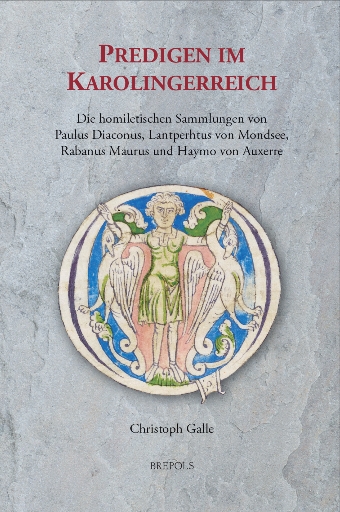
Predigen im Karolingerreich
show More to view fulltext, buy and share links for:Predigen im Karolingerreich show Less to hide fulltext, buy and share links for: Predigen im KarolingerreichBy supporting the Christianization process within their realm, Carolingian rulers not only served matters of faith, obedience, and healing of the soul; they also intended to unify the conquered tribes, remove their pagan traditions, and strengthen royal power. Carolingian sermon collections provide significant insights into the cultural, political, and social background to the process of Christianization in the Carolingian world. Five sample collections compiled by leading intellectuals are now explored extensively and comparatively for the first time.
-
-
-
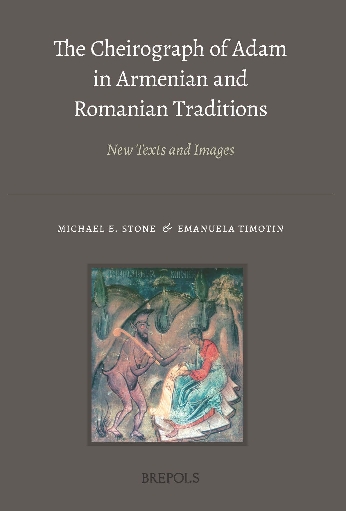
The Cheirograph of Adam in Armenian and Romanian Traditions
show More to view fulltext, buy and share links for:The Cheirograph of Adam in Armenian and Romanian Traditions show Less to hide fulltext, buy and share links for: The Cheirograph of Adam in Armenian and Romanian TraditionsThis book explores the legend of Adam’s Contract with Satan that was made after the expulsion from the Garden of Eden.This legend was current in the Eastern Orthodox churches of SE Europe as well as in the Caucasus. Unknown forms of the legend have been found in two traditions, the Romanian and the Armenian, and are investigated here. Notably this legend has found its way into folk stories and sometimes into folk music, showing how widely it was accepted and distributed. This legend also inspired images in both traditions. In Romania the most striking illustrations are to be found in Bukovina province, in frescos on the famous painted churches of that region, as well as in manuscripts. In Armenia features of this story are incorporated into the iconography of the Baptism of Christ in the River Jordan.
-
-
-
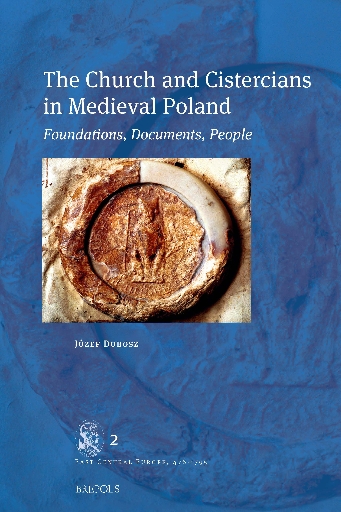
The Church and Cistercians in Medieval Poland
show More to view fulltext, buy and share links for:The Church and Cistercians in Medieval Poland show Less to hide fulltext, buy and share links for: The Church and Cistercians in Medieval PolandIn this volume, the research of Józef Dobosz, one of Poland’s leading historians of the Middle Ages, is made accessible in English for the first time. It brings together nineteen studies focused on the role of the Church, the Cistercian Order, and other religious institutions in the history of the Piast realm from which Poland emerged. The introduction offers a broad outline of the first two centuries of the rule of the Piast dynasty after the Baptism of Poland in 966 until the fragmentation of the Piast patrimony during the twelfth century. The subsequent essays examine the circumstances of the foundation of Poland’s leading Cistercian monasteries in Sulejów, Jędrzejów, Wąchock, Owińska, and Łekno. The author analyses the means of their establishment, evaluates the existing sources, and places these within the context of the Piast dynasty’s economic, political, and social policies.
The studies offer an in-depth analysis of the motivations of the leading dynasts, magnates, and prelates in supporting the mission of the Church in Poland and enabling further embedding of Christianity across all strata of the society. The author examines the oldest Polish documents related to Cistercian monasteries and canons regular (in particular foundation charters) including early medieval charter forgeries. The volume’s key conclusions about the impact of Christianity on nascent Poland are based on a detailed examination of medieval charters, the role of scriptoria, identities of significant people of the Church, and the wider historical record.
-
-
-
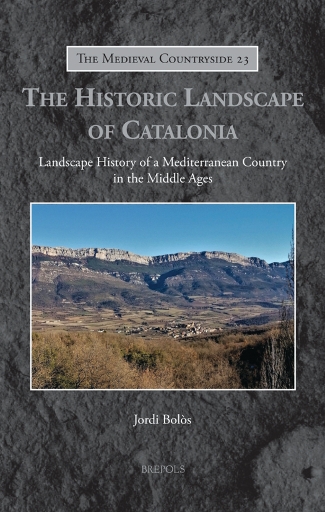
The Historic Landscape of Catalonia
show More to view fulltext, buy and share links for:The Historic Landscape of Catalonia show Less to hide fulltext, buy and share links for: The Historic Landscape of CataloniaThe landscape around us is largely the result of man-made transformations. It consists of villages, farmsteads, cities, fields, ditches, and roads. This book examines how the landscape of the Mediterranean country of Catalonia was created and transformed. Although Catalonia’s history goes back before the Middle Ages, it was during the medieval period that it saw significant development, which has continued ever since. Understanding the landscape helps us understand political, social, economic, and cultural changes. In this book we discover how the settlements built around a castle or a church were created, and what the open villages and new towns were like, both in Catalonia and in neighbouring territories. The book also explores the formation of cities and towns as well as the significance of hamlets and farmsteads, based on data provided by written documents and archaeological excavations. It also explores the formation of fields, ditches, and irrigated areas, and shows the importance of understanding the boundaries and demarcations that enclose valleys, villages, castles, and parishes. Finally, special attention is devoted to place names and cartography, as these shed light on numerous historical realities.
-
-
-
Théodulf d’Orléans (vers 760-821)
show More to view fulltext, buy and share links for:Théodulf d’Orléans (vers 760-821) show Less to hide fulltext, buy and share links for: Théodulf d’Orléans (vers 760-821)Parmi les lettrés entrés au service de Charlemagne à la fin du VIIIe siècle, Théodulf est une figure à la fois représentative et singulière. Par ses productions et ses fonctions de missus, d’évêque, d’abbé, il contribue à l’élaboration et à la mise en œuvre des réformes et fait partie des proches du souverain. Sa déposition en 818 jette cependant une ombre sur sa carrière et sur ce qu’il est possible d’en reconstituer. À partir de l’étude de son œuvre et des variations de son image dans les sources du premier Moyen Âge, y compris manuscrites, cet ouvrage examine les différentes facettes de son action et de son parcours, comme lettré et comme prélat, et met en lumière le jeu d’échelles qui caractérise les réformes carolingiennes. Grâce à l’analyse de son environnement relationnel, la participation de Théodulf à la révolte de Bernard d’Italie et sa disgrâce font l’objet de nouvelles hypothèses.
-
-
-
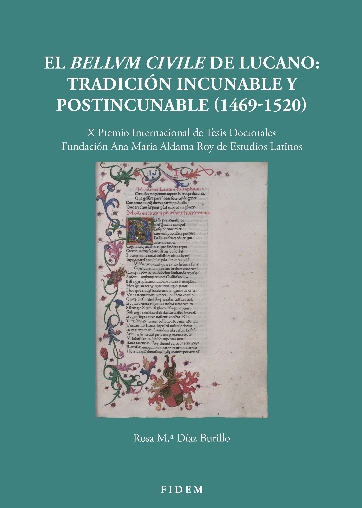
El Bellum Ciuile de Lucano: tradición incunable y postincunable (1469-1520)
show More to view fulltext, buy and share links for:El Bellum Ciuile de Lucano: tradición incunable y postincunable (1469-1520) show Less to hide fulltext, buy and share links for: El Bellum Ciuile de Lucano: tradición incunable y postincunable (1469-1520)Desde 1469, año en el que vio la luz la editio princeps del Bellum Ciuile en Roma, el poema de Lucano se imprimió íntegramente en diecisiete ocasiones en el siglo XV y en dieciocho en los primeros veinte años del siglo XVI. Así, su difusión y lectura durante el Renacimiento fue profusa. En muy poco tiempo, los ejemplares impresos, procedentes de diferentes talleres de imprenta europeos, sobre todo italianos, circularon por la Península Ibérica.
En el presente volumen se aborda, en primer lugar, el estudio filológico del texto transmitido por las ediciones incunables y postincunables del Bellum Ciuile. Durante estos primeros años de tradición impresa, se establecieron diferentes formas textuales del poemay finalmente se configuró la vulgata del texto. El análisis filológico del texto de Lucano transmitido en estas ediciones incunables y postincunables ha permitido precisar las relaciones de filiación entre ediciones, reconocer las diferentes familias textuales que convivieron en los primeros años de tradición impresa y dar los primeros pasos en la descripción de su relación con la tradición manuscrita, así como en la identificación de la intervención de los editores sobre el texto. Todo ello contribuye, desde el estudio de una tradición determinada, al conocimiento del trabajo editorial realizado en el Renacimiento sobre textos latinos antiguos.
Igualmente, se presenta el corpus de ejemplares conservados en bibliotecas españolas, atendiendo a las huellas de lectura y a los poseedores que han dejado su rastro en este valioso patrimonio bibliográfico del que somos herederos.
-
-
-
Homo Interior and Vita Socialis
show More to view fulltext, buy and share links for:Homo Interior and Vita Socialis show Less to hide fulltext, buy and share links for: Homo Interior and Vita SocialisJust as apparently universal ideas of inwardness are different over time, so the idea of the self in relation to others is subject to historical change and dependent on different contexts. Against a shared background of late antique and early medieval Christianity the thinkers who are the subject of this book develop their thoughts of a relational self within their wider concerns. Augustine is the thinker of interiority, but also of the social life. For Augustine, the opacity of others, even of oneself, and how to overcome it, is a main concern. Cassian writes about the ideal of solitude, yet neither the abbas who are the subject of his Conversations, nor his readers can avoid the company of others. For Cassian, human fellowship is instrumental in reaching the desired virtues of detachment, which then enables love for others. Gregory the Great searches for the right balance of the contemplative and the active life, but even the contemplative is not a separate individual. Gregory’s instruction of the leaders of the Church emphasises the need to widen in compassion, against the constant danger for the preachers of hypocrisy and the swollenness of pride and arrogance. These three authors were among the most influential sources in later ages. Their echoes resonated in the twelfth century, when a renewed interest in interiority raises the question how the twelfth-century ‘inner man’ relates to others. Hugh of Saint-Victor, Abelard, and Heloise, are among the writers in whose thoughts we see patristic thought reflected and changed in various ways.
-
-
-
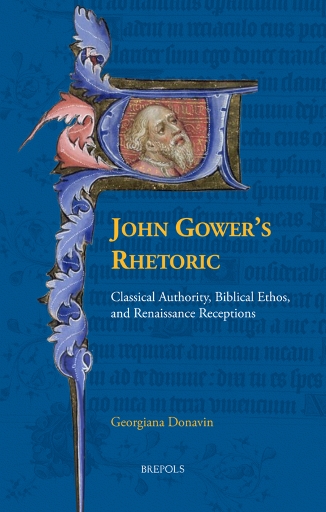
John Gower’s Rhetoric
show More to view fulltext, buy and share links for:John Gower’s Rhetoric show Less to hide fulltext, buy and share links for: John Gower’s RhetoricThis is the first book-length study in decades to offer in-depth readings of a variety of late medieval poems across Gower’s trilingual corpus. Identifying Gower’s rhetorical cornerstones in Aristotelian pathos, the theology of the Word, and the execution of a plain style, it provides fresh interpretations of poems in Latin, French, and Middle English that arise from an enhanced understanding of Gower’s literary methods. It explores the classical and medieval rhetorical traditions that informed Gower’s craft, the biblical personae through which the poet achieved his rhetorical aims, and the Renaissance publishers and authors who valued and imitated his strategies for composition. Gower adapted his rhetorical theory from the principles of Aristotelian texts, Augustinian theology, exemplars of Ciceronian style, and the dictates of various artes poetriae; from the latter, John of Garland’s Parisiana Poetria is especially important for outlining practices of Marian rhetoric. Modelling virtuous female speakers on the Virgin and prophetic narrators on John the Baptist and John the Evangelist, Gower gave extra-scriptural voice to members of the extended Holy Family and in so doing, achieved unimpeachable expressions inside classically informed structures of discourse. The epistolary structure, proceeding from Ciceronian rhetoric and the artes dictaminis, is one among Gower’s favoured rhetorical forms for projecting singular voices. His straightforward, reiterative style in Middle English and his virginal speakers compelled Renaissance publisher Thomas Berthelette and celebrated authors Ben Jonson and William Shakespeare to praise Gower’s rhetoric in prefaces and imitate it on the stage.
-
-
-
La caduta di Acri 1291
show More to view fulltext, buy and share links for:La caduta di Acri 1291 show Less to hide fulltext, buy and share links for: La caduta di Acri 1291La caduta di San Giovanni d’Acri nel 1291, che segna la fine degli stati crociati d’Oltremare, rappresenta un punto di svolta nella storia medievale, già percepito come tale dai contemporanei. Sulla scia immediata dell’evento, due scritti narrano e commentano la battaglia: l’anonima Excidii Aconis gestorum collectio (composta probabilmente nel Nord della Francia) e l’Ystoria de desolatione et conculcatione ciuitatis Acconensis et tocius Terre Sancte di Taddeo di Napoli, venata di influssi gioachimiti. Entrambi ripercorrono con impressionante vividità le vicende che hanno portato allo scontro e soprattutto la disperata resistenza della città, mettendo in scena una molteplicità di personaggi nelle loro dinamiche di collaborazione e dissenso: i maestri degli Ordini Militari, i governanti e il patriarca, la folla dei combattenti e delle vittime inermi; dall’altra parte, i due sultani che si succedono nel corso degli eventi con il loro popolo di “infedeli”, sinistri eppure valorosi. Lo stile adottato dall’Anonimo e da Taddeo è improntato a un preziosismo al limite talvolta della comprensibilità, che rende ardua la lettura nell’originale latino. La traduzione italiana mette a disposizione in modo più facilmente accessibile due fonti fondamentali per la storia delle crociate e della percezione di esse nella cultura del tempo.
La versione latina originale dei testi qui tradotti è pubblicata nella collana Corpus Christianorum Continuatio Mediaeualis con il titolo Excidii Aconis gestorum collectio; Ystoria de desolatione et conculcatione ciuitatis Acconensis et tocius Terre Sancte (CC CM, 202), a cura di R.B.C. Huygens (2004). I rimandi alle pagine corrispondenti dell’edizione sono forniti a margine di questa traduzione.
-
-
-
![Les Perles ordonnées : Des vertus d’al-Malik al-Ẓāhir Abū Saʿīd [Barqūq]](/docserver/fulltext/10.1484/M.MOM-EB.5.132604/M.MOM-EB.5.132604.largecover.jpg)
Les Perles ordonnées : Des vertus d’al-Malik al-Ẓāhir Abū Saʿīd [Barqūq]
show More to view fulltext, buy and share links for:Les Perles ordonnées : Des vertus d’al-Malik al-Ẓāhir Abū Saʿīd [Barqūq] show Less to hide fulltext, buy and share links for: Les Perles ordonnées : Des vertus d’al-Malik al-Ẓāhir Abū Saʿīd [Barqūq]Les perles ordonnées est un petit traité inédit de 45 folios, un unicum, sans doute autographe,conservé à la Bibliothèque nationale de Berlin. Dédié au sultan mamelouk Barqūq (784-801/1382-99), il ressort d’une littérature panégyrique généralement connue sous le nom de manāqib (vertus, qualités), c’est-à-dire une littérature à caractère laudatif destinée à faire l’éloge du sujet décrit. Le but de l’auteur, en chantant les louanges de Barqūq, était surtout de légitimer sa prise de pouvoir en le replaçant dans une longue lignée de sultans mamelouks, tout en profitant de cette occasion pour se rapprocher du sultan et lui faire valoir ses propres compétences de juriste. L’ouvrage est composé d’une préface et de trois chapitres. Le premier est un bref résumé des règnes des sultans mamelouks bahrites, de l’avènement de la dynastie en 648/1250 à la prise de pouvoir par Barqūq en 784/1382 ; le deuxième comprend une suite de trente-deux questions et réponses juridiques sur des sujets variés qui concernent aussi bien des piliers de l’islam (prière, aumône légale, jeûne, pèlerinage) que les questions de témoignage en justice, achats de biens, héritage, femmes, esclaves, divorce ou chasse, le but étant d’aider le sultan à « tester » les connaissances des juristes qui l’entourent ; le troisième chapitre fait l’éloge des vertus de Barqūq.
Au travers de ce traité transparaissent quelques événements marquants du début du règne de ce sultan - notamment la célébration de certaines fêtes égyptiennes y compris chrétiennes -, mais aussi et surtout un discours de légitimation d’un pouvoir acquis par la force. L’image qui se dégage est celle d’un souverain investi par le calife, épris de justice et de religion, capable d’assurer protection et prospérité à ses sujets, sachant s’entourer des conseils avisés des oulémas, en général, et des juristes, en particulier.
-
-
-
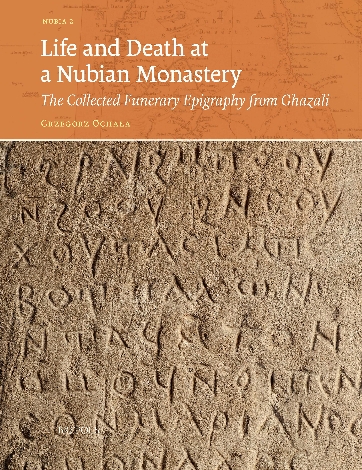
Life and Death at a Nubian Monastery
show More to view fulltext, buy and share links for:Life and Death at a Nubian Monastery show Less to hide fulltext, buy and share links for: Life and Death at a Nubian MonasteryThe Christian monastery of Ghazali, located in Wadi Abu Dom, in northern Sudan, is one of the most famous archaeological sites within the country. Built by the Makurians in the seventh century AD, it flourished until its abandonment in the thirteenth century, and its picturesque ruins became a popular tourist attraction in the nineteenth and twentieth centuries. During the period of the monastery’s activity, it was an important religious centre, a place where monks lived, worshipped, died, and left important information about their lives buried in the archaeological record.
This volume offers a catalogue and in-depth analysis of over two hundred funerary epigraphy monuments, inscribed in Greek and Coptic, onto stone stelae and terracotta plaques, that have been uncovered at Ghazali and that bear an important witness to life and death at the site. The meticulous epigraphic and philological work presented here is combined with a detailed discussion of the ensemble, including their archaeological context, material aspects, language use, and formulary. The analysis of onomastic practices and the monastic hierarchy supplements the picture and brings to the fore both individual persons and the community responsible for the production of these texts.
-
-
-
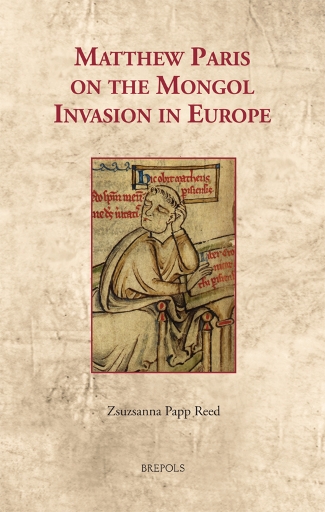
Matthew Paris on the Mongol Invasion in Europe
show More to view fulltext, buy and share links for:Matthew Paris on the Mongol Invasion in Europe show Less to hide fulltext, buy and share links for: Matthew Paris on the Mongol Invasion in EuropeThis is a novel, interdisciplinary study of the Mongol military campaign in Eastern Europe (1241–1242) — the North, as thirteenth-century Europeans saw the region — in the works of contemporary English chronicler, Matthew Paris of St Albans Monastery. Tracing the journey of his sources, the volume explores thirteenth-century information networks against the backdrop of the struggle between Emperor Frederick II and Pope Innocent IV.
Parallel to the history of information, the subject of the study is the Chronica majora and its afterlife, Matthew’s chronicle world where the sometimes fictitious (and often very real) episodes of the Mongol story unfold. Tracing major landmarks in the meta-history of the Chronica majora, the author wishes to emancipate Matthew Paris as a historian — one in the series of a multitude of others who continue to write and rewrite the history of the Mongol invasion across centuries of historiography.
The volume is a handy companion both to scholars of English historiography and those who want to read critically the oft-cited primary sources of the history of the Mongol military operations in Europe.
-
-
-
Mit Sphaera und Astrolab
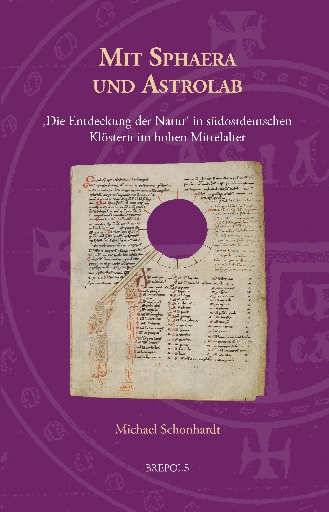
show More to view fulltext, buy and share links for:Mit Sphaera und Astrolab show Less to hide fulltext, buy and share links for: Mit Sphaera und AstrolabThis book offers a study of the scientific landscape of medieval Bavaria during the higher Middle Ages. Based on manuscripts as well as medieval library catalogues, it tries to quantify the so-called ‘Discovery of Nature’ and tries to analyse it from the perspective of a monastic landscape in which the arrival of the astrolab in the 11th century marked a significant turning point. By introducing new methods and questions into the traditional body of Carolingian astronomy, monastic scholars of this area played a decisive, albeit neglected, role in the development of medieval astronomy.
The book reconstructs the studies of the monk Wilhelm von Hirsau who tackled some of the most urgent problems of astronomy of his time: correcting the dates of the solstices and finding latitude. These studies are then placed in the broader development of medieval science, particularly focusing on his sphaera, an instrument that has often been wrongly understood as a teaching device. In contrast, the present study argues that this instrument is not only William’s lost astronomical clock, but also the first example for stationary observational astronomy in medieval Europe as well as an important milestone towards the empirical astronomy of future centuries.
-
-
-
Pierre Abélard, L’Hymnaire du Paraclet
show More to view fulltext, buy and share links for:Pierre Abélard, L’Hymnaire du Paraclet show Less to hide fulltext, buy and share links for: Pierre Abélard, L’Hymnaire du ParacletLes œuvres en vers les plus célèbres d’Abélard sont ces poèmes d’amour composés pour Héloïse au temps qu’il la séduisait ; mais ils sont perdus, et c’est en vain qu’on les cherche. La célébrité de ces textes inconnus a laissé dans l’ombre d’autres poèmes qui, eux, sont bien parvenus jusqu’à nous. Eux aussi ont été composés pour Héloïse, d’une certaine manière ; eux aussi sont, d’une certaine manière, des produits de l’amour, et même des poèmes d’amour. Il s’agit des hymnes que, dans les années 1130, Abélard composa pour le monastère dont Héloïse était la supérieure, le Paraclet. Leur série, presque complète, constitue au fil de l’année liturgique un itinéraire spirituel et intellectuel d’une cohérence inégalée. Ces hymnes ne sont pas seulement des témoins d’une tentative quasiment inouïe dans l’histoire du christianisme de réformer la totalité de la liturgie : ils sont aussi la pensée d’un théologien exceptionnel coulée dans les vers d’un poète génial. L’Hymnaire du Paraclet mérite bien ainsi, à de multiples titres, d'être appelé un monument de la culture occidentale. Ce volume offre à la fois le texte latin original, entièrement établi et contrôlé sur les manuscrits, et, en regard, l'une des premières traductions complètes de l'Hymnaire, et la première en français.
-
-
-
Public Opinion and Political Contest in Late Medieval Paris
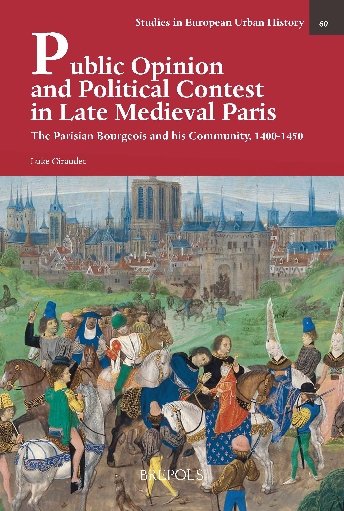
show More to view fulltext, buy and share links for:Public Opinion and Political Contest in Late Medieval Paris show Less to hide fulltext, buy and share links for: Public Opinion and Political Contest in Late Medieval ParisPublic Opinion and Political Contest presents an important historiographical intervention regarding the emergence of larger political publics during the fifteenth century. The study analyses political interaction and public opinion in medieval Europe’s largest city through the lens of the only continuous narrative source compiled in Paris during the early fifteenth century, the well-known Journal d’un bourgeois de Paris. Examining one of the most turbulent periods in Paris’ history, which witnessed civil conflict and English occupation, the monograph contributes substantially to understandings of late medieval popular opinion conceptually and empirically, revealing Parisian groups bound by shared idioms and assumptions engaging with supralocal movements. Through an assessment of contemporary reactions to official communication, protest in public space, rumour and civic ceremony, the book presents a timely mirror to themes in flux today, addressing historiographical conclusions that have relegated premodern societies from considerations of the public sphere. As a result, this nuanced assessment of the Journal d’un bourgeois de Paris reveals how access to informational media and forums for discussion bound Parisians and framed a wider commentary upon political issues beyond the highest echelons of medieval society.
-
-
-
Risk, Emotions, and Hospitality in the Christianization of the Baltic Rim, 1000–1300
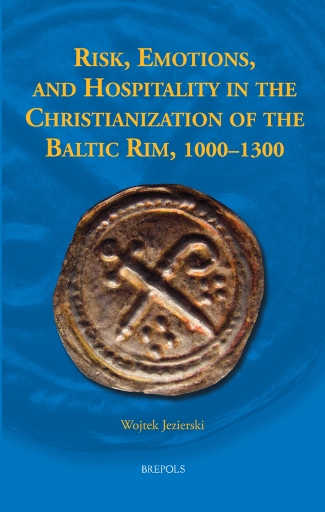
show More to view fulltext, buy and share links for:Risk, Emotions, and Hospitality in the Christianization of the Baltic Rim, 1000–1300 show Less to hide fulltext, buy and share links for: Risk, Emotions, and Hospitality in the Christianization of the Baltic Rim, 1000–1300What anxieties did medieval missionaries and crusaders face and what role did the sense of risk play in their community-building? To what extent did crusaders and Christian colonists empathize with the local populations they set out to conquer? Who were the hosts and who were the guests during the confrontations with the pagan societies on the Baltic Rim? And how were the uncertainties of the conversion process addressed in concrete encounters and in the accounts of Christian authors?
This book explores emotional bonding as well as practices and discourses of hospitality as uncertain means of evangelization, interaction, and socialization across cultural divides on the Baltic Rim, c. 1000-1300. It focuses on interactions between local populations and missionary communities, as well as crusader frontier societies. By applying tools of historical anthropology to the study of host-guest relations, spaces of hospitality, emotional communities, and empathy on the fronts of Christianization, this book offers fresh insights and approaches to the manner in which missionaries and crusaders reflexively engaged with the groups targeted by Christianization in terms of practice, ethics, and identity.
-
-
-

The Tables of 1322 by John of Lignères
show More to view fulltext, buy and share links for:The Tables of 1322 by John of Lignères show Less to hide fulltext, buy and share links for: The Tables of 1322 by John of LignèresMedieval astronomers used tables to solve most of the problems they faced. These tables were generally assembled in sets, which constituted genuine tool-boxes aimed at facilitating the task of practitioners of astronomy. In the early fourteenth century, the set of tables compiled by the astronomers at the service of King Alfonso X of Castile and León (d. 1284), reached Paris, where several scholars linked to the university recast them and generated new tables. John of Lignères, one of the earliest Alfonsine astronomers, assembled his own set of astronomical tables, mainly building on the work of previous Muslim and Jewish astronomers in the Iberian Peninsula, especially in Toledo. Two major sets had been compiled in this town: one in Arabic, the Toledan Tables, during the second half of the eleventh century, and the Castilian Alfonsine Tables, under the patronage of King Alfonso.
This monograph provides for the first time an edition of the Tables of 1322 by John of Lignères. It is the earliest major set of astronomical tables to be compiled in Latin astronomy. It was widely distributed and is found in about fifty manuscripts. A great number of the tables were borrowed directly from the work of the Toledan astronomers, while others were adapted to the meridian of Paris, and many were later transferred to the standard version of the Parisian Alfonsine Tables. Therefore, John of Lignères’ set can be considered as an intermediary work between the Toledan Tables and the Parisian Alfonsine Tables.
-
-
-
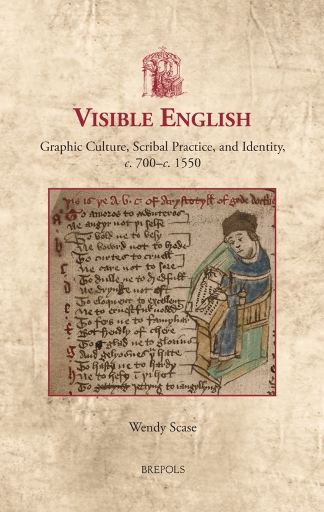
Visible English
show More to view fulltext, buy and share links for:Visible English show Less to hide fulltext, buy and share links for: Visible EnglishVisible English recovers for the first time the experience of reading and writing the English language in the medieval period through the perspectives of littera pedagogy, the basis of medieval learning and teaching of literate skills in Latin. Littera is at the heart of the set of theories and practices that constitute the ‘graphic culture’ of the book’s title. The book shows for the first time that littera pedagogy was an ‘us and them’ discourse that functioned as a vehicle for identity formation. Using littera pedagogy as a framework for understanding the medieval English-language corpus from the point of view of the readers and writers who produced it, Visible English offers new insights on experiences of writing and reading English in communities ranging from those first in contact with Latin literacy to those where print was an alternative to manuscript. Discussing a broad range of materials from so-called ‘pen-trials’ and graffiti to key literary manuscripts, Visible English provides new perspectives on the ways that the alphabet was understood, on genres such as alphabet poems, riddles, and scribal signatures, and on the different ways in which scribes copied Old and Middle English texts. It argues that the graphic culture underpinned and transmitted by littera pedagogy provided frameworks for the development and understanding of English-language literacy practices and new ways of experiencing social belonging and difference. To be literate in English, it proposes, was to inhabit identities marked by Anglophone literate practices.
-
-
-
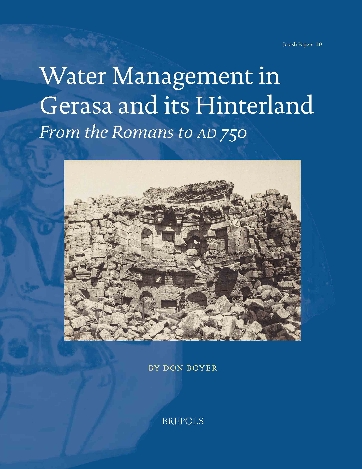
Water Management in Gerasa and its Hinterland
show More to view fulltext, buy and share links for:Water Management in Gerasa and its Hinterland show Less to hide fulltext, buy and share links for: Water Management in Gerasa and its HinterlandThe Decapolis city of Gerasa has seen occupation since the Bronze Age but reached its zenith in the Roman to early Islamic period as a population centre and trading hub. Located in a fertile valley in the limestone foothills of the Ajlun mountains, the city benefitted from a benign climate and an excellent local water supply from karstic springs and perennial streams. By the Roman-Early Byzantine period, these water sources were harnessed and managed by extensive aqueduct and distribution networks that satisfied the broad range of water needs of both urban and rural dwellers.
This volume offers an up-to-date, comprehensive, and multidisciplinary analysis of the water management system employed in both Gerasa and its hinterland from the time of Roman occupation to the devastating earthquakes that struck the city at the end of the Umayyad period. Drawing on archaeological evidence from the author’s field research, together with a critical and detailed analysis of the evidence of water installations and the results of a radiocarbon dating study, this insightful book offers the first diachronic interpretation of Gerasa’s water distribution, setting the city in its geoarchaeological, historical, and landscape contexts, and contributing to the broader understanding of its archaeological history.
-
-
-
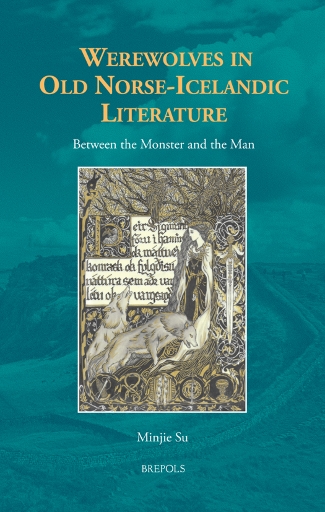
Werewolves in Old Norse-Icelandic Literature
show More to view fulltext, buy and share links for:Werewolves in Old Norse-Icelandic Literature show Less to hide fulltext, buy and share links for: Werewolves in Old Norse-Icelandic LiteratureAt the heart of any story of metamorphosis lies the issue of identity, and the tales of the werwulf (lit. ‘man-wolf’) are just as much about the wolf as about the man. What are the constituents of the human in general? What symbolic significance do they hold? How do they differ for different types of human? How would it affect the individual if one or more of these elements were to be subtracted?
Focusing on a group of Old Norse-Icelandic werewolf narratives, many of which have hitherto been little studied, this insightful book sets out to answer these questions by exploring how these texts understood and conceptualized what it means to be human. At the heart of this investigation are five factors key to the werewolf existence - skin, clothing, food, landscape, and purpose - and these are innovatively examined through a cross-disciplinary approach that carefully teases apart the interaction between two polarizations: the external and social, and the interior and psychological. Through this approach, the volume presents a comprehensive new look at the werewolf not only as a supernatural creature and a literary motif, but also as a metaphor that bears on the relationship between human and non-human, between Self and Other, and that is able to situate the Old-Norse texts into a broader intellectual discourse that extends beyond medieval Iceland and Norway.
-