


BOB2023MOOT

Collection Contents
21 - 28 of 28 results
-
-
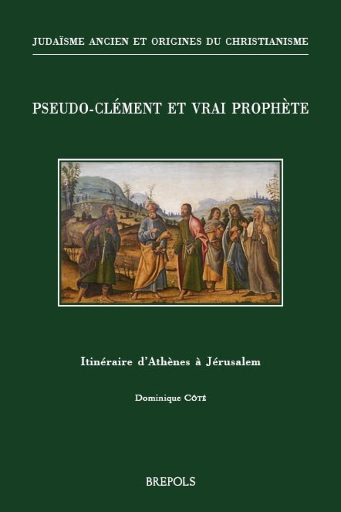
Pseudo-Clément et Vrai Prophète
show More to view fulltext, buy and share links for:Pseudo-Clément et Vrai Prophète show Less to hide fulltext, buy and share links for: Pseudo-Clément et Vrai ProphèteLes personnages historiques que sont Clément de Rome, Simon le Magicien, Pierre l’Apôtre et Apion le grammairien deviennent, dans les Reconnaissances de Clément, les personnages d’une fiction romanesque. Rufin d’Aquilée, à la fin du iv e iècle, nous apprend qu’il existait de son temps deux versions de ces Reconnaissances dans lesquelles discussions philosophiques et rebondissements de l’intrigue visaient le même but : démontrer la supériorité de la vérité prophétique sur celle des philosophes et des autres tenants de la culture grecque. Les études que regroupe ce volume propose une analyse du roman de Clément dans sa composition littéraire et dans son contexte culturel et religieux. On y aborde tout d’abord la question des rapports du texte clémentin avec la paideia, dans les études qui portent sur la discussion entre Clément de Rome et Apion d’Alexandrie. C’est la nature littéraire du corpus qui occupe ensuite la partie centrale du recueil. On s’intéresse aussi à la relation qu’entretient le texte avec la philosophie et ses représentations, dans les chapitres qui cherchent à comprendre l’opposition entre Pierre et Simon. C’est enfin la dimension judéenne du texte qui fait l’objet d’une série d’études qui traitent de prophétie, de mystique et d’identité religieuse.
-
-
-
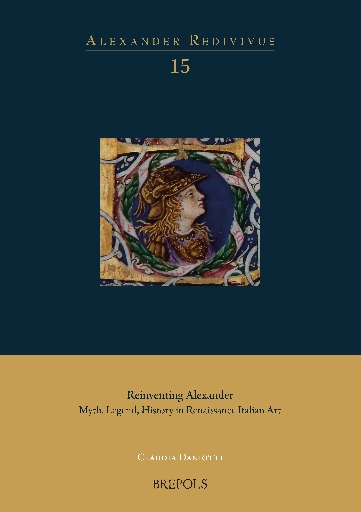
Reinventing Alexander
show More to view fulltext, buy and share links for:Reinventing Alexander show Less to hide fulltext, buy and share links for: Reinventing AlexanderIn this book Claudia Daniotti provides the first comprehensive study of the representation of Alexander the Great in Renaissance Italian art, exploring a fundamental turning point in the tradition: the transition from the medieval imagery of Alexander as a legendary, fairy-tale hero to the new historically grounded portrait of him as an example of moral virtue and military prowess.
During the Middle Ages, Alexander was turned into a fabled creature and fearless explorer, whose Flight to Heaven and other marvellous adventures were tirelessly recounted and illustrated, enjoying huge popularity. With the humanist recovery of the ancient historical texts and the changing taste and expectations of the wider, wealthier and more diverse public of the courts and cities of the Italian peninsula, the fabulous aura that had surrounded Alexander for centuries evaporated. He was recast as the moral exemplum and valorous military commander spoken of by the newly available ancient historians, and became the protagonist of an unprecedently vast iconographic repertoire established in the course of the sixteenth century.
By discussing a body of artworks from 1160s to 1560s spanning several media (from illuminated manuscripts and frescoes to sculptural reliefs, wedding chests and tapestries) and researching this material in constant dialogue with the literary tradition, this book offers a reassessment of the whole visual tradition of Alexander in Renaissance Italy, making sense of a figurative repertoire often perceived as fragmentary and disparate, and casting new light on an overall still neglected chapter in the tradition of the myth of Alexander.
-
-
-
Stéphane de Byzance
show More to view fulltext, buy and share links for:Stéphane de Byzance show Less to hide fulltext, buy and share links for: Stéphane de ByzanceLe lexique géographique du grammairien byzantin Stéphane de Byzance, les Ethniques, est une œuvre à l’origine monumentale. Ce lexique contenait de nombreuses mentions d’auteurs disparus, se rapportant à des toponymes du monde antique connu des Grecs et des Romains. À l’intérieur de ce lexique, nous avons choisi d’étudier plus spécialement ceux situés en Europe occidentale (péninsule ibérique, Gaule, Germanie et Bretagne antiques), en lien avec les sites archéologiques connus s’y rapportant. L’ouvrage ayant été abrégé à plusieurs reprises au cours du Moyen Âge, la confrontation de l’ensemble des notices a permis de proposer de nouvelles attributions d’auteurs antiques, leur nom et leur citation ayant très souvent disparu des manuscrits conservés. Par ailleurs l’analyse précise de la transmission de l’œuvre apporte un éclairage nouveau sur les moments où ce grammairien a été lu et utilisé, du VIe s. jusqu’à sa redécouverte à la fin du XVe s. La structure même du lexique permet de revenir sur la lexicographie antique et médiévale, et d’envisager les apports à la fois des grammairiens et des auteurs antiques (pour la plupart géographes et historiens) qui étaient cités. Enfin, le cadre géographique choisi permet d’explorer les autres textes antiques ainsi que les données archéologiques depuis l’époque grecque archaïque jusqu’à la fin de l’Empire romain. Nous avons inclus dans ce travail une analyse et une traduction de l’Ora maritima d’Aviénus, afin de compléter l’étude de la péninsule ibérique et du Midi de la Gaule.
-
-
-
The Protevangelium of James
show More to view fulltext, buy and share links for:The Protevangelium of James show Less to hide fulltext, buy and share links for: The Protevangelium of JamesAs a prehistory to the Nativity accounts of the gospels of Matthew and Luke the Protevangelium of James, dated to the second half of the second century, aimed to fill in alleged gaps in the canonical accounts of Jesus' and his mother's ancestry and births. Thus, it describes the birth of Mary, the mother of Christ, the Annunciation, the Nativity and the death of Zachariah, the high priest and father of John the Baptist.
The edition of the original Greek text has an English version on its facing pages.
The commentary pays particular attention to the early liturgical use of the Protevangelium and to artistic representations of the scenes it describes as these were the main means by which this highly influential text was transmitted throughout the known world. It also questions the usually accepted genre and purpose of the text and suggests that its author may have had a satirical intention or have intended it as an early Christian novelette, using scriptural scenes and themes as his inspiration. Maybe we have approached the Protevangelium of James with solemn faces and have been prepared to carry out serious theological investigations, whereas the many inconsistencies and glaring contradictions so obvious as to be ridiculous might suggest the author's intentions were not quite so grave or weighty.
-
-
-
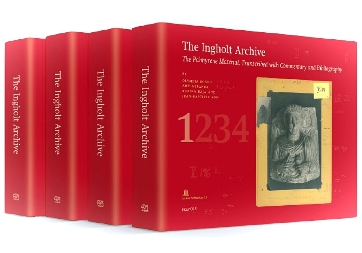
The Ingholt Archive
show More to view fulltext, buy and share links for:The Ingholt Archive show Less to hide fulltext, buy and share links for: The Ingholt ArchiveFor a period of over 50 years, from his first visit to Palmyra in the 1920s until the late 1970s, Danish archaeologist Harald Ingholt carefully collected and curated a detailed archive of Palmyrene sculpture, architecture, and epigraphy. Containing approximately 2000 images, each archive sheet contains handwritten annotations on Palmyrene funerary art, transcribes and translates inscriptions, includes detailed observations on object style and dating, and provides bibliographical information for each sculpture. As such, this archive is a treasure trove of information on Palmyrene sculpture, architecture, and epigraphy. Moreover, Ingholt’s notes go beyond shedding light on the creation of these sculptures, and also provide rich information about their more recent histories: object biographies offer details on provenance, collection history, and excavation photography. In doing so, they offer unique insights into twentieth-century excavation, conservation, and collection practices. Since 1983, Ingholt’s archive has been housed at the Ny Carlsberg Glyptotek in Copenhagen, Denmark, and then, from 2012 onwards, the archive took digital shape within the framework of the Palmyra Portrait Project at Aarhus University. Now available in print for the first time, the Ingholt Archive is here presented in its entirety as a lavishly illustrated four-volume set. The authors have transcribed and commented upon each sheet in the archive, provided new translations of the inscriptions that accompany the sculptures, and compiled an updated bibliography for each item. This unique set is published together with a detailed introduction, thirteen concordances, and a bibliography, making it an invaluable resource for researchers in the field.
-
-
-

Three Pilgrimages to the Holy Land
show More to view fulltext, buy and share links for:Three Pilgrimages to the Holy Land show Less to hide fulltext, buy and share links for: Three Pilgrimages to the Holy LandThis edition presents English translations of the accounts of three important twelfth-century travellers to the Holy Land, the Anglo-Saxon Saewulf and the Germans John of Würzburg and Theoderic, based on the edition of the Latin texts. Saewulf travelled to the Holy Land soon after its capture by the First Crusade in 1099. His travelogue, framed by accounts of his outward sea journeys from southern Italy to Jaffa and back to Constantinople, describes the buildings and holy sites of Jerusalem and its surrounding countryside as they appeared in the early years of the Frankish kingdom, before the major building works that characterized the short century of Christian rule over the city were fully under way. In contrast, the two German descriptions give more detailed accounts of the transformation that the city and surrounding landscape had undergone and of the new churches and monasteries and their artistic programmes that had been created by the 1160s and 1170s. The translated texts are preceded by an introduction placing the texts in their historical context and are accompanied by brief explanatory notes with bibliographical indications for further information.
The source texts of this volume appeared in Corpus Christianorum. Continuatio Mediaeualis as Peregrinationes tres (CC CM, 139), edited by R.B.C. Huygens. References to the corresponding pages of the Corpus Christianorum edition are provided in the margins of this translation.
-
-
-
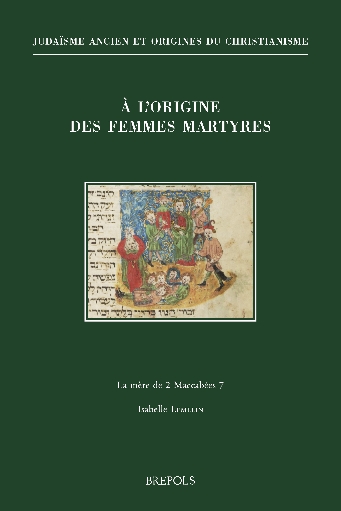
À l’origine des femmes martyres
show More to view fulltext, buy and share links for:À l’origine des femmes martyres show Less to hide fulltext, buy and share links for: À l’origine des femmes martyresLe présent ouvrage porte sur la première martyre de la littérature monothéiste, c’est-à-dire la mère anonyme du 7ème chapitre du 2ème livre des Maccabées (2 M). L’exégèse qui y est faite démontre, grâce à une critique structurelle et des analyses narratologique, comparative et philologique, que ce personnage est central, autant dans le texte deutérocanonique que pour la martyrologie, bien qu’il soit généralement éclipsé dans la littérature savante. Or, la particulière virilité des femmes martyres d’hier et d’aujourd’hui s’y inscrit en primeur au verset 7, 21 et la nouvelle traduction proposée par l'auteure bouscule les idées reçues. En effet, les habituels « sentiments féminins » deviennent « une pensée féminine » et le « mâle courage » fait place à « une colère virile ou humaine », selon que l’épithète est comparée au féminin dans le parallélisme croisé du verset ou mise en parallèle avec les colères inhumaines de certains personnages masculins du livre, dont le roi Antiochos IV Épiphane et les guerriers judéens. D’ailleurs, les analyses comparées des éléments identitaires de la martyre avec ceux du roi séleucide permettent de constater que son trouble dans le genre s’observe sur divers plans et contribue indéniablement à son unicité. C’est sans compter que les discours de la mère représentent la plus importante innovation du livre, et ce, tant sur le plan anthropologique que théologique. En somme, l’ouvrage montre que la mère de 2 M 7 est belle et bien « éminemment admirable et digne de bonne mémoire » (2 M 7, 21).
-
-
-
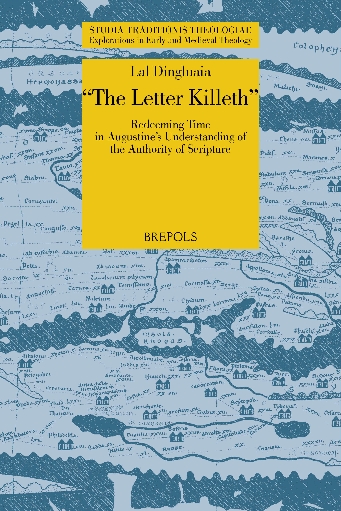
“The Letter Killeth”
show More to view fulltext, buy and share links for:“The Letter Killeth” show Less to hide fulltext, buy and share links for: “The Letter Killeth”The experience of time is always momentous and stimulating to Augustine’s theological reflection. This book asserts that even Augustine’s concept of the authority of Scripture was embedded in his awareness of time. This “awareness” was rooted in the tension between the “already” and “not yet” of the “last days” that permeated the entire New Testament theological outlook.
This does not mean that it is reflections on time that is the determining feature of a particular complex debate, or the origin of a particular work in Augustine’s corpus. However, this work argues that “time” is a factor which need to be taken into greater account than scholarship heretofore has done. Accordingly, the author specifically delineates how Augustine’s experience of time as a living, ongoing and creative tension critically determined his theological stances towards scriptural authority.
The book shows how Augustine’s awareness of this temporal tension was roused by the acceptance of his own temporality and creaturehood which brings to the fore the importance of the incarnate Christ. Exploring how Augustine and his contemporaries grappled with the existential implications of this tension in time, this work asserts that the authority of Scripture is not the authority of “the Book” in the modern sense but is related to more complicated sources of authority that are linked to this specific notion of time.
-