


BOB2024MOOT

Collection Contents
4 results
-
-
Allusions to Scripture in the Psalms of Solomon
show More to view fulltext, buy and share links for:Allusions to Scripture in the Psalms of Solomon show Less to hide fulltext, buy and share links for: Allusions to Scripture in the Psalms of SolomonLike other Jewish works from the late Second Temple period, Psalms of Solomon alludes constantly to passages in Scripture—particularly the Pentateuch, the Prophetic books and Psalms. Gathering all passages where the Psalms of Solomon refer to a specific verse in Scripture, the present monograph ventures to analyze the authors’ use of Scripture and to identify the textual tradition underlying the allusions. The conclusion this leads to is that the authors used a Greek version, close to the Septuagint but sporadically revised on the basis of the proto-Masoretic Hebrew text. This conclusion agrees with recent research on revisionary work on the Septuagint, which must have begun in the first century BCE, long before the named recensions of the second century CE (Aquila, Symmachus, Theodotion).
The textual analysis casts a new light on the Psalms of Solomon. Although they came into being in Jerusalem in the aftermath of Pompey’s conquest of the city in 63 BCE, they were not composed in Hebrew, but in Greek. The identity of the Greek-speaking group that produced the Psalms of Solomon, and their religious views, are discussed in the final chapter of this monograph.
-
-
-
Ambigua to John
show More to view fulltext, buy and share links for:Ambigua to John show Less to hide fulltext, buy and share links for: Ambigua to JohnIn the Ambigua to John, the great early Byzantine monastic theologian and philosopher Maximus the Confessor (580–662) is at work in his most creative and expansive mode. Using difficult passages in Gregory Nazianzen as starting points for his thinking, Maximus draws together various strands of the theological and philosophical traditions he inherited and shapes an ever-moving, kaleidoscopic vision of the journey through the world of place, time, and materiality to final dynamic repose in eternity. Throughout the text, Maximus takes his readers along the many paths his own mind traveled to clarify this breathtaking reflection of the teachings of Scripture and the patristic tradition. In this translation of the first fully critical edition of Maximus’s text, the streams of the Confessor’s divine philosophy are revealed in their own right. This translation will be followed with the first full commentary on the Ambigua to John in English, to appear in Corpus Christianorum in Translation.
The source text of this volume will appear in Corpus Christianorum, Series Graeca, vol. 84.
-
-
-
Analogical Identities: The Creation of the Christian Self
show More to view fulltext, buy and share links for:Analogical Identities: The Creation of the Christian Self show Less to hide fulltext, buy and share links for: Analogical Identities: The Creation of the Christian SelfFollowing the first volume entitled Analogical Identities: The Creation of the Christian Self of a trilogy dedicated to Christian anthropology in a modern re-assessment, the present second volume deals with the specific content of this concept of “Analogical Identity” as a new hermeneutic retrieval of Christian anthropology in its relation with its historical roots and in the light of modern Philosophical and Psychological thought, to which we thus introduce some new conceptual tools. At the same time, a theological criticism of modern Philosophy and Psychology is initiated, and some new anthropological concepts of theological provenance are proposed.
-
-
-
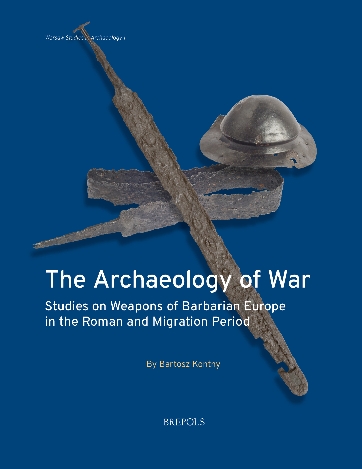
Archaeology of War
show More to view fulltext, buy and share links for:Archaeology of War show Less to hide fulltext, buy and share links for: Archaeology of WarFrom graves to settlements, and from the battlefield to underwater sacrificial sites, weapons dating to the Roman and Migration Period have long been found in an array of contexts throughout the region that forms modern-day Poland. This volume for the first time aims to draw together research into these finds, gathered throughout the author’s career, in a synthetic approach that sees discoveries of swords and other armaments analysed against a broad, comparative background. The work begins with a focus on votive deposits from lakes, here used as a lens for addressing questions about military strategy and war ritual more generally, before moving on to explore the weapons and warriors of the Przeworsk and Wielbark Cultures, as well as shedding light on the lives of the Balts. Finally, an in-depth analysis is made of shields from the protohistoric period, exploring the genesis and variability of the forms taken by this protective weapon. Through this approach, this richly illustrated volume sheds new light not only on the typology and chronology of weaponry from the Roman and Migration Periods, but also on the symbolism and functionality that these arms held.
-