


BOB2024MOOT

Collection Contents
4 results
-
-
The Septuagint of Ruth
show More to view fulltext, buy and share links for:The Septuagint of Ruth show Less to hide fulltext, buy and share links for: The Septuagint of RuthFor many years, the Septuagint of Ruth (LXX-Ruth) has been considered a literal translation. Several authors have emphasized the similarities between the Greek text and the Masoretic Text, while others have also noted the divergences. In the wake of this second stream, this book seeks to answer the crucial question: How can we nuance the definition of “literalism” for LXX-Ruth, and which innovations and specifics can be detected in this text? A fresh analysis of the Greek rendering of the Hebrew proper names, toponyms, hapax legomena as well as legal aspects makes it possible to develop new perspectives on the translation technique of LXX-Ruth and to highlight several characteristics of this text. This volume, moreover, extends the discussion by including the analysis of the theological accents of LXX-Ruth and an up-to-date presentation of its textual history including the fragments of the book in the Dead Sea Scrolls. Overall, this volume enhances our understanding of the linguistic and literary background of the LXX, as well as its specific features.
-
-
-
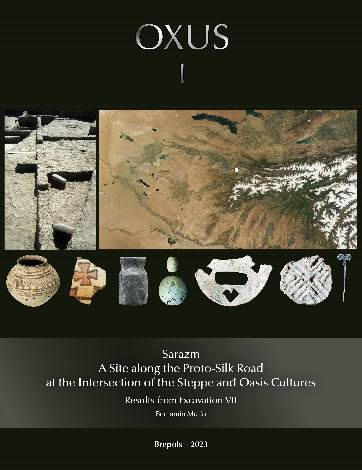
Sarazm: A Site along the Proto-Silk Road at the Intersection of the Steppe and Oasis Cultures
show More to view fulltext, buy and share links for:Sarazm: A Site along the Proto-Silk Road at the Intersection of the Steppe and Oasis Cultures show Less to hide fulltext, buy and share links for: Sarazm: A Site along the Proto-Silk Road at the Intersection of the Steppe and Oasis CulturesSarazm, in modern-day Tajikistan, is rightly famous as an archaeological site. A Chalcolithic and Bronze Age settlement, it formed part of a cultural and economic network that stretched from the steppe of Central Asia across to the Iranian Plateau and the Indus. Between 1984 and 1994, fieldwork led by a joint Tajik-French project took place at Excavation VII, yielding unique archaeological contexts and materials that shed light on Sarazm’s multicultural nature, its evolution through time, and the varied activities that took place at the site. Now, in this new volume, the first comprehensive description and analysis of all available data from Excavation VII is presented, and the data from this excavation contextualized both at site level and within the broader setting of the Steppe and Oasis cultures of the IVth and IIIrd millennia bce. The author offers functional, cultural, and chronological conclusions about the exposed occupations, as well as putting forward new interpretations and hypotheses on this important settlement.
-
-
-

Scythians and Greeks on the Western Black Sea
show More to view fulltext, buy and share links for:Scythians and Greeks on the Western Black Sea show Less to hide fulltext, buy and share links for: Scythians and Greeks on the Western Black SeaThe Scythians have fascinated investigators since the time of Herodotus. This study examines the bronze and silver coinage of the kingdom of Scythia Minor in Dobruja at the mouth of the Danube River, a Scythian successor state that emerged in the second century bce after the breakup of Scythia Magna. It is based on a corpus of over 1,500 coins, more than ever before, and draws upon scholarship in nine languages, including hard-to-find sources from Bulgaria, Romania, USSR, Ukraine, and Russia. The much-debated chronology of the six kings of Scythia Minor (Kanites, Tanousas, Charaspes, Ailis, Sariakes, and Akrosas) is determined through literary evidence, inscriptions, die linkage, shared monograms, coin hoards, and counterstamps. Metrological analysis distinguishes four denominations, plus the alterations and debasements of the weight standard during the troubled reigns of Ailis and Sariakes. Fifteen counterstamps that appear on Scythian coins are attributed to the local Greek poleis of Callatis, Tomis, Istros, and Dionysopolis. An inventory of four hoards and 47 findspots of single coins identifies the mint site, Dionysopolis. The volume concludes with a catalog of 63 major coin types and 15 counterstamps, plus bibliography and index.
-
-
-
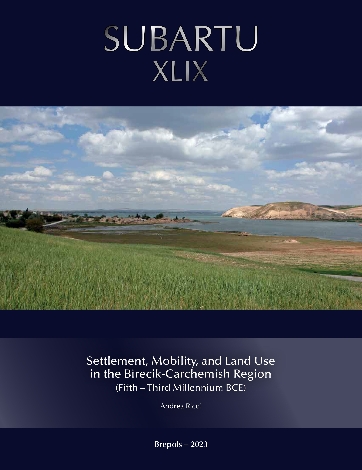
Settlement, Mobility, and Land Use in the Birecik-Carchemish Region
show More to view fulltext, buy and share links for:Settlement, Mobility, and Land Use in the Birecik-Carchemish Region show Less to hide fulltext, buy and share links for: Settlement, Mobility, and Land Use in the Birecik-Carchemish RegionThis volume investigates settlement trajectories and systems of movement in the Birecik-Carchemish sector of the Euphrates River Valley from the fifth to the third millennium BCE. Integrating remote sensing analyses, published data of individual surveys and excavations, and the original results of the ‘Land of Carchemish Project’, this multi-scalar study shows the significant longevity of settlement choices and the role of small sites in shaping the cultural landscape of the region, both along the Euphrates and in the uplands. Attention is paid to the dynamics behind settlement creation and continuity, while the author also provides a reassessment of the radiocarbon dates from sites in the area of study.
-