


BOB2024MOOT

Collection Contents
3 results
-
-
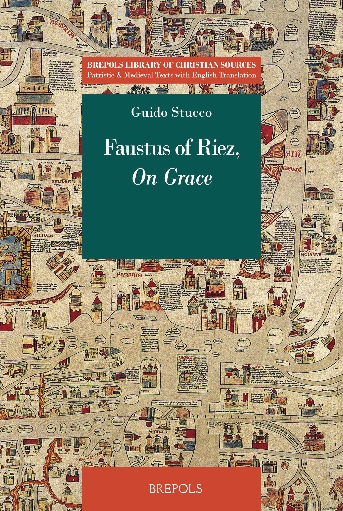
Faustus of Riez, On Grace
show More to view fulltext, buy and share links for:Faustus of Riez, On Grace show Less to hide fulltext, buy and share links for: Faustus of Riez, On GraceFaustus was a Gallic representative of what has been referred to as 'semipelagianism'. In his De Gratia, he fiercely opposed the Augustinian view of Grace and Predestination that had been upheld by Lucidus, a presbyter who possibly misunderstood Augustine's thought. Faustus did not open new ground about these contested doctrines, but put significant roadblocks to their possible extreme trajectories.
-
-
-

From the Domesday Book to Shakespeare’s Globe
show More to view fulltext, buy and share links for:From the Domesday Book to Shakespeare’s Globe show Less to hide fulltext, buy and share links for: From the Domesday Book to Shakespeare’s GlobeThe phrase ‘Jus Uncommon’ summarizes England’s claim to independence from Europe, a claim supported by its unique legal system and Elizabethan theatre, and their strong interconnexion. Elizabethan tragedy begins at the Inns of Court. It was no mere coincidence, but a result of the long history of intersecting processes of law, politics, and theatre. This book sets out to contextualize and explore such legal and literary intersections, charting the emergence of Elizabethan legal culture from its various English and European sources over the course of the four hundred years running from Magna Carta to Shakespeare. It encompasses the major strands of legal history and culture that formed the background to Elizabethan political drama, republican tradition, theories of monarchical sovereignty, European and English theories of imperium, pedagogical and rhetorical practices of the Inns of Court,legal-antiquarian research, parliamentary privilege, and Tudor political pamphleteering.
Legal texts, discourses, and social practices constructed a pervasive intellectual culture from which Elizabethan drama – like Shakespeare’s – emerged. Shakespeare is not the central object of this study, but he is central to its argument. What he knew about law was what collective memory had stored from centuries past at home and abroad. The issues, characters, themes, theories, and metaphors dramatized by the Elizabethan playwrights followed the way opened at the Inns. Emblematic figures of lawyers-writers and their Senecan patterns paved the way to Gorboduc and to Shakespeare’s histories.
-
-
-
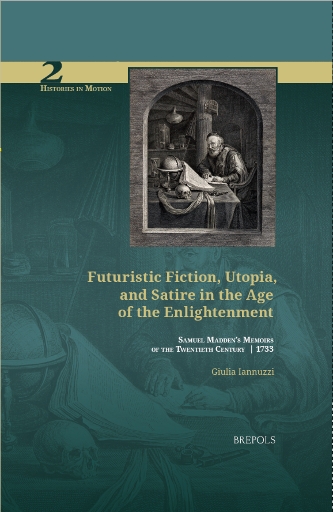
Futuristic Fiction, Utopia, and Satire in the Age of the Enlightenment
show More to view fulltext, buy and share links for:Futuristic Fiction, Utopia, and Satire in the Age of the Enlightenment show Less to hide fulltext, buy and share links for: Futuristic Fiction, Utopia, and Satire in the Age of the EnlightenmentPublished anonymously in 1733, Memoirs of the Twentieth Century is one of the earliest futuristic novels known in Anglophone and Euro-American literature. It foregrounds an acceleration of history brought about by an increasing degree of global interconnectedness, and the exclusion of prophetism and astrology as credible ways to know the future. The work of Samuel Madden, an Irish writer and philanthropist of Whig sympathies, it consists of a collection of diplomatic letters composed in the 1990s, which the narrator claims were brought to him from the time to come by a supernatural entity. Through these correspondences, twentieth-century world scenarios are spread out before the reader, in which British naval power rules the waves and international commerce, while the transnational scheming of the Jesuits threatens the independence of weaker European courts.
This book — which includes a study followed by an annotated edition of the text — assesses the cultural significance of this literary work, as an apt observatory on how historical time as a cultural construction was shaped, during the eighteenth century, by new forms of transnational circulation of information, and by the dubious space carved out in European culture by seventeenth- and early eighteenth-century debates on the nature of historical knowledge.
Through and by means of the Memoirs case study, this volume aims to contribute to a wider cultural history of the future and speculative fiction. The novel’s ironic distancing of beliefs considered to be superstitious and absurd — such as divination techniques and occult and magical disciplines — offers an exceptional testimony to the negotiation of the boundaries of verisimilitude and credibility within a religious enlightenment.
-