


BOB2024MOOT

Collection Contents
21 - 30 of 30 results
-
-
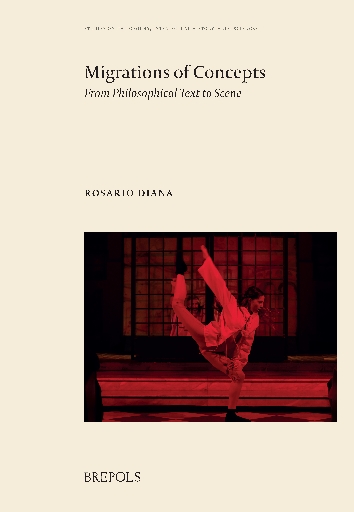
Migrations of Concepts
show More to view fulltext, buy and share links for:Migrations of Concepts show Less to hide fulltext, buy and share links for: Migrations of ConceptsMigrations of Concepts brings together the results of an experimental research on the migration of philosophical concepts into the languages of the arts. The monograph explores the intersection of philosophy, literature and art and presents a theoretical-performative investigation on the transposition of philosophical contents into theatrical and musical performance. Starting with Giambattista Vico and Samuel Beckett, a first part elaborates the paradigm of the ‘Disbelonging’ of the I – which is the condition of the I who realizes that it is both its own and foreign at the same time –, shows how this is transposed into the language of sounds, and reflects on the significance of public performance of a philosophical work. The second and third parts further explore the transposition of philosophical thought into art by presenting the theatrical performances written and directed by the author. More specifically, the book contains the text of two theatre readings on Vico and Gorgia, and the libretto of two melologues dedicated to Hegel and the Prince of Sansevero, with the corresponding scores of music composed by Rosalba Quindici. By exploring the boundaries of adaptation studies this monograph radically proposes a new and innovative way to study and communicate philosophical concepts.
-
-
-

Repertorio di letteratura biblica in italiano a stampa (ca 1462-1650)
show More to view fulltext, buy and share links for:Repertorio di letteratura biblica in italiano a stampa (ca 1462-1650) show Less to hide fulltext, buy and share links for: Repertorio di letteratura biblica in italiano a stampa (ca 1462-1650)This catalogue collects Italian biblical works issued from the beginning of print to the middle of the 17th century. The abundant literature had multiple uses: the transmission of the sacred text, its interpretation, preaching, religious education, and devotional uses (meditation and prayer). It was also used as a foundation of learning and general knowledge, ethics, professional practices (i.e. in medecine and politics), domestic piety and everyday life, as well as literary and theatrical entertainment. This catalogue will help to reconstruct the access to the Bible by Italian lay people. It contributes to the historiographical debate on how Italians could read the Bible after the ban of biblical translations. It represents an extremely rich source of information for future research about authorship, readership and the very nature and use of this production, shedding light on forgotten bestsellers of Italian Renaissance.
-
-
-
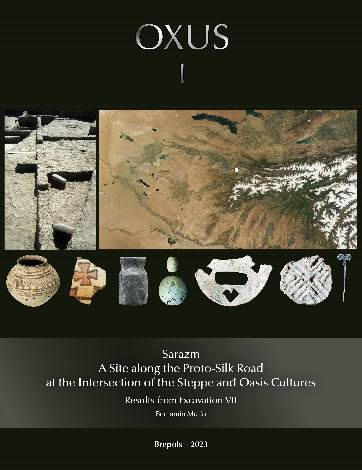
Sarazm: A Site along the Proto-Silk Road at the Intersection of the Steppe and Oasis Cultures
show More to view fulltext, buy and share links for:Sarazm: A Site along the Proto-Silk Road at the Intersection of the Steppe and Oasis Cultures show Less to hide fulltext, buy and share links for: Sarazm: A Site along the Proto-Silk Road at the Intersection of the Steppe and Oasis CulturesSarazm, in modern-day Tajikistan, is rightly famous as an archaeological site. A Chalcolithic and Bronze Age settlement, it formed part of a cultural and economic network that stretched from the steppe of Central Asia across to the Iranian Plateau and the Indus. Between 1984 and 1994, fieldwork led by a joint Tajik-French project took place at Excavation VII, yielding unique archaeological contexts and materials that shed light on Sarazm’s multicultural nature, its evolution through time, and the varied activities that took place at the site. Now, in this new volume, the first comprehensive description and analysis of all available data from Excavation VII is presented, and the data from this excavation contextualized both at site level and within the broader setting of the Steppe and Oasis cultures of the IVth and IIIrd millennia bce. The author offers functional, cultural, and chronological conclusions about the exposed occupations, as well as putting forward new interpretations and hypotheses on this important settlement.
-
-
-

Scythians and Greeks on the Western Black Sea
show More to view fulltext, buy and share links for:Scythians and Greeks on the Western Black Sea show Less to hide fulltext, buy and share links for: Scythians and Greeks on the Western Black SeaThe Scythians have fascinated investigators since the time of Herodotus. This study examines the bronze and silver coinage of the kingdom of Scythia Minor in Dobruja at the mouth of the Danube River, a Scythian successor state that emerged in the second century bce after the breakup of Scythia Magna. It is based on a corpus of over 1,500 coins, more than ever before, and draws upon scholarship in nine languages, including hard-to-find sources from Bulgaria, Romania, USSR, Ukraine, and Russia. The much-debated chronology of the six kings of Scythia Minor (Kanites, Tanousas, Charaspes, Ailis, Sariakes, and Akrosas) is determined through literary evidence, inscriptions, die linkage, shared monograms, coin hoards, and counterstamps. Metrological analysis distinguishes four denominations, plus the alterations and debasements of the weight standard during the troubled reigns of Ailis and Sariakes. Fifteen counterstamps that appear on Scythian coins are attributed to the local Greek poleis of Callatis, Tomis, Istros, and Dionysopolis. An inventory of four hoards and 47 findspots of single coins identifies the mint site, Dionysopolis. The volume concludes with a catalog of 63 major coin types and 15 counterstamps, plus bibliography and index.
-
-
-
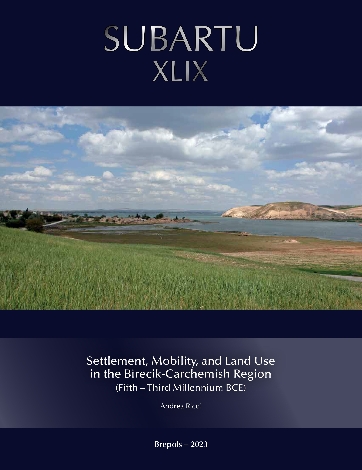
Settlement, Mobility, and Land Use in the Birecik-Carchemish Region
show More to view fulltext, buy and share links for:Settlement, Mobility, and Land Use in the Birecik-Carchemish Region show Less to hide fulltext, buy and share links for: Settlement, Mobility, and Land Use in the Birecik-Carchemish RegionThis volume investigates settlement trajectories and systems of movement in the Birecik-Carchemish sector of the Euphrates River Valley from the fifth to the third millennium BCE. Integrating remote sensing analyses, published data of individual surveys and excavations, and the original results of the ‘Land of Carchemish Project’, this multi-scalar study shows the significant longevity of settlement choices and the role of small sites in shaping the cultural landscape of the region, both along the Euphrates and in the uplands. Attention is paid to the dynamics behind settlement creation and continuity, while the author also provides a reassessment of the radiocarbon dates from sites in the area of study.
-
-
-
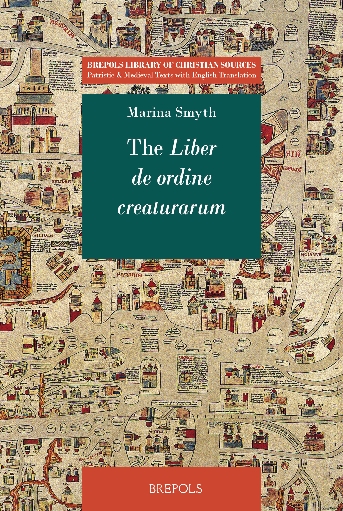
The Liber de ordine creaturarum
show More to view fulltext, buy and share links for:The Liber de ordine creaturarum show Less to hide fulltext, buy and share links for: The Liber de ordine creaturarumThe Liber de ordine creaturarum is an anonymous Latin work with an Irish provenance that dates back to the seventh century. It presents the creation as the divine handiwork and is notable for serving as both a commentary on the Hexaemeron (Six-day Work) in Genesis and as one of the earliest works of systematic theology. Although previously attributed to Isidore of Seville, the Liber de ordine creaturarum is far more than a mere compilation of 'authorities.' Instead, it emphasizes the inherent order that exists within the creation itself.
-
-
-
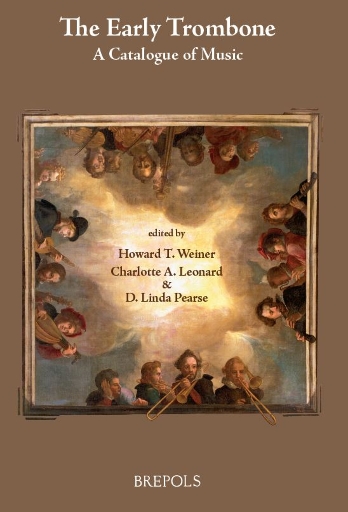
The Early Trombone: A Catalogue of Music
show More to view fulltext, buy and share links for:The Early Trombone: A Catalogue of Music show Less to hide fulltext, buy and share links for: The Early Trombone: A Catalogue of MusicThis catalogue documents nearly 9000 musical works specifying the trombone, from anonymous pieces mentioned in early sixteenth-century writings up to Haydn’s iconic oratorios The Creation and The Seasons on the cusp of the nineteenth century. As such, the catalogue provides a single resource for scholars, trombonists, chamber musicians, and conductors to access instrumental solo and ensemble, as well as choral works specifying trombone from the sixteenth through to the end of the eighteenth century. In compiling this inventory, the authors have personally examined as many of the sources as possible, either the original prints and manuscripts in libraries and archives or copies thereof (microfilm, microfiche, scans, facsimile editions, photocopies, and photos). Relevant text passages from title pages, prefaces, and composer’s performance instructions are given in the original language and in English translation. Annotations discuss attributions, the situation and peculiarities of sources, and relationships to parallel transmissions. Extensive bibliographical information is provided to guide the readers to relevant secondary literature.
The catalogue is divided into three sections: concerted instrumental music (with solo trombone), instrumental music with trombones, and vocal music specifying trombones, with the vocal works representing the largest portion of the repertoire. The compositions range in size from pieces for a single voice with trombone and basso continuo to large-scale sacred and secular polychoral works with multiple trombones.
-
-
-
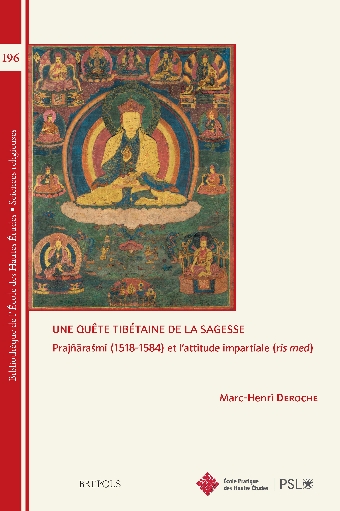
Une quête tibétaine de la sagesse
show More to view fulltext, buy and share links for:Une quête tibétaine de la sagesse show Less to hide fulltext, buy and share links for: Une quête tibétaine de la sagessePrajñāraśmi (1518-1584), ou « Lumière de Sagesse », est le nom de plume sanskrit d’un auteur tibétain qui vécut durant une période de crise politico-religieuse située entre la pleine assimilation du bouddhisme indien par les Tibétains et l’instauration du régime des Dalaï-Lamas. Dans ce contexte d’instabilité, Prajñāraśmi se distingua par une formation éclectique exceptionnelle et un enseignement qui, centré sur l’idée de sagesse – ou gnose –, chercha à montrer l’unité des différentes traditions du bouddhisme au Tibet.
Ses grands textes sont présentés et traduits dans cet ouvrage, notamment l’Ambroisie de l’étude, de la réflexion et de la méditation, et la Lampe qui illumine les deux vérités, qui traite de la philosophie de la voie du milieu (Madhyamaka). Sa biographie, ainsi que l’étude de son oeuvre et de son héritage, révèlent une filiation entre les renouveaux de l’école des Anciens (Rnying ma pa) durant la réunification du Tibet sous le Ve Dalaï-Lama (xvii e s.), la nouvelle révélation de ’Jigs med gling pa (xviii e s.), et la floraison du mouvement « impartial » (ris med, xix e siècle) avec la collection transsectaire du Trésor des instructions spirituelles.
Il se dessine ici une quête tibétaine de la sagesse qui, conjuguant l’histoire des traditions, le discours philosophique, le yoga et la contemplation, visait à une liberté intérieure conçue au-delà de tout parti pris, « intention unique » de tous les enseignements du Bouddha, ou, selon sa propre lignée de la Grande Perfection (Rdzogs chen), « sphère de la libération ».
-
-
-
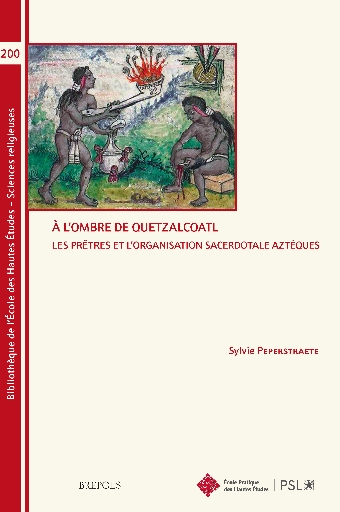
À l’ombre de Quetzalcoatl. Les prêtres et l’organisation sacerdotale aztèques
show More to view fulltext, buy and share links for:À l’ombre de Quetzalcoatl. Les prêtres et l’organisation sacerdotale aztèques show Less to hide fulltext, buy and share links for: À l’ombre de Quetzalcoatl. Les prêtres et l’organisation sacerdotale aztèquesLa prêtrise aztèque constitue une thématique de recherche à la fois inédite et d’une grande richesse. Quelles étaient les caractéristiques de la fonction sacerdotale au Mexique ancien ? Qui étaient les hommes et les femmes qui, journellement comme en des circonstances plus exceptionnelles, prenaient soin des divinités et veillaient au bon accomplissement des rites ? Quels étaient les modèles mythiques des prêtres mésoaméricains ? Quels étaient leurs rapports avec Quetzalcoatl et Tlaloc, les deux divinités dont ils étaient présentés comme proches ?
C’est un regard neuf qui, à travers ces questions, se porte ici sur les religions mésoaméricaines, étudiées dans leurs aspects pratiques et quotidiens et non pas uniquement au moyen de concepts abstraits ou par le biais des rites les plus spectaculaires – à l’instar de ce qui fut l’une des seules images véhiculées en Europe depuis le xvi e siècle, celle du prêtre arrachant le cœur encore palpitant d’une victime sacrificielle.
Cet ouvrage richement illustré se situe à la croisée de l’iconologie, de l’histoire et de l’anthropologie des religions, tout en intégrant des éléments de philologie et d’archéologie. Il propose une réflexion résolument contemporaine sur la méthodologie à mettre en œuvre pour aborder la documentation relative aux cultures mésoaméricaines préhispaniques et mieux comprendre le processus d’élaboration des sources du xvi e siècle.
-
-
-
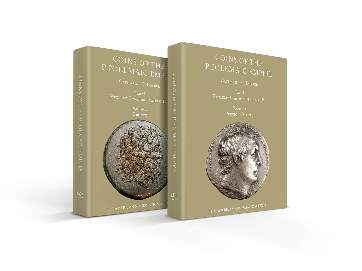
Coins of the Ptolemaic Empire, Part I: Ptolemy I through Ptolemy IV
show More to view fulltext, buy and share links for:Coins of the Ptolemaic Empire, Part I: Ptolemy I through Ptolemy IV show Less to hide fulltext, buy and share links for: Coins of the Ptolemaic Empire, Part I: Ptolemy I through Ptolemy IVCoins of the Ptolemaic Empire, Part 1, Volumes 1 and 2 (Precious Metal and Bronze) by Catharine Lorber, is the massive, long-anticipated catalogue of coins struck by the first four Ptolemaic kings. It essentially rewrites the sections on these rulers in J. N. Svoronos’ classic, but now much out of date, Ta Nomismata tou Kratous ton Ptolemaion (1904). The body of coinage catalogued by Svoronos is enlarged by more than 300 further emissions in precious metal and more than 180 emissions in bronze, recorded from subsequent scholarship, from hoards, from commercial sources, and from private collections, and constituting about a third of the total catalogue entries. Lorber’s attributions, dates, and interpretations rest on numismatic research since Svoronos, or on the latest archaeological and hoard information. She also provides extensive historical and numismatic introductions that give the coins deeper context and meaning. The coinage of Ptolemies I through IV is supplemented by a few issues possibly attributable to Cleomenes of Naucratis, the predecessor of Ptolemy I in Egypt, as well as by coinages of Ptolemy Ceraunus, Magas, and Ptolemy of Telmessus, members of the Lagid dynasty ruling their own kingdoms outside of Egypt.
-