


Brepols Online Books Medieval Miscellanea Collection 2025 - bob2025mime

Collection Contents
1 - 20 of 50 results
-
-
Accountability in Late Medieval Europe
show More to view fulltext, buy and share links for:Accountability in Late Medieval Europe show Less to hide fulltext, buy and share links for: Accountability in Late Medieval EuropeThis volume brings together studies of late medieval accountability in both the domestic and the public realms. It traces practices of accountability across the social spectrum, from households to small businesses to communal and regnal administrations, highlighting the intersections between competing conceptions of personal and institutional responsibility. Focusing on France and Italy from the thirteenth to the early sixteenth centuries, the case studies follow territorial officers, consular agents, and town notables co-opted into local governance from Avignon and Marseille to Tuscany and the Venetian and Genoese overseas territories. The studies explore both personal and institutional accounting registers, as well as records of a textual nature, such as rulebooks and inquests, in an effort to reflect the range of records and procedures relied on to achieve a measure of accountability in late medieval Europe.
-
-
-
Boundaries of Holiness, Frontiers of Sainthood
show More to view fulltext, buy and share links for:Boundaries of Holiness, Frontiers of Sainthood show Less to hide fulltext, buy and share links for: Boundaries of Holiness, Frontiers of SainthoodMany excellent studies have been published on the phenomenon of holy (wo)men and saints. As a rule, however, they focus on successful candidates for holiness who played the roles of charismatic leaders and patrons of social and religious life.
This volume offers a new perspective on ancient and medieval holiness — its main focus is holiness as defined by its peripheries, and not by its conceptual centre. The contributors explore stories of men and women whose way to sainthood did not follow typical ‘models’, but who engaged with it from its outskirts. Several essays examine the strategies employed by hagiographical authors to tailor the images of candidates for holiness whose lives provided less obvious examples of moral and/or religious ideals. These include attempts to make saints out of emperors, heretics, and other unlikely or obscure figures. Other case studies focus on concerns with false holiness, or unusual cases of holiness being ascribed prior to a saint’s death. Another concept explored in the volume is space. The spatial boundaries of holiness are discussed in relation to the transmission of relics, to the opposition between urban and rural spaces, holy sites, and even imagined space.
Holiness and sainthood have been crucial concepts for Christianity from its inception. By exploring their ‘marginal’ and ‘peripheral’ aspects, the essays in this book offer vital new perspectives on the religious world of Late Antiquity.
-
-
-
Byzantine Liturgical Books
show More to view fulltext, buy and share links for:Byzantine Liturgical Books show Less to hide fulltext, buy and share links for: Byzantine Liturgical BooksThe world of Byzantine liturgical book types is fascinating but also confusing. While they are central to the study and celebration of Byzantine Liturgy, no one work offers an overview of their history, contents, and structure. This volume offers for the first time an introduction to the major types of Byzantine liturgical books, their taxonomy, origins, development, and contents.
-
-
-
Communicating the Passion
show More to view fulltext, buy and share links for:Communicating the Passion show Less to hide fulltext, buy and share links for: Communicating the PassionThis volume investigates the vivid and emotionally intense commemoration of the Passion of Christ as a key element in late medieval religious culture. Its goal is to shed light on how the Passion was communicated and on its socio-religious function in late medieval Europe. By adopting a multidisciplinary approach, the volume analyses the different media involved in this cultural process (sermons, devotional texts, lively performances, statues, images), the multiple forms and languages in which the Passion was presented to the faithful, and how they were expected to respond to it. Key questions concern the strategies used to present the Passion; the interaction between texts, images, and sounds in different media; the dissemination of theological ideas in the public space; the fashioning of an affective response in the audience; and the presence or absence of anti-Jewish commonplaces.
By exploring the interplay among a wide range of sources, this volume highlights the pervasive role of the Passion in late medieval society and in the life of the people of the time.
-
-
-

Cultivating the Earth, Nurturing the Body and Soul: Daily Life in Early Medieval England
show More to view fulltext, buy and share links for:Cultivating the Earth, Nurturing the Body and Soul: Daily Life in Early Medieval England show Less to hide fulltext, buy and share links for: Cultivating the Earth, Nurturing the Body and Soul: Daily Life in Early Medieval EnglandHow did food impact social relationships in early medieval England? What cultivation practices were followed, to produce the best possible food supplies? What was the cultural significance of bread? How was the human body nourished? When sickness inevitably occurred, where did one go, and who was consulted for healing? And how was spiritual health also protected? The essays gathered together in this exciting volume draw on a range of different disciplines, from early medieval economic and social history, to experimental archaeology and medieval medicine, to offer a unique overview into day-to-day life in England nearly two millennia ago.Taking as their starting point the broad research interests of the volume’s honorand, Dr Debby Banham, contributors here offer new insights into the reproduction and ritual use of vernacular charms, examine the collation and translation of medieval medicine, elucidate monastic economies and production, and uncover the circumstances behind the production and transmission of medical manuscripts in early medieval England. Presenting new insights into agricultural practices and animal husbandry, monastic sign language and materia medica, plant knowledge and medical practices, the chapters within this volume not only offer a fitting tribute to Banham’s own groundbreaking work, but also shed new light on what it meant to nurture both body and soul in early medieval England.
-
-
-

Cultural Models for Emotions in the North Atlantic Vernaculars, 700–1400
show More to view fulltext, buy and share links for:Cultural Models for Emotions in the North Atlantic Vernaculars, 700–1400 show Less to hide fulltext, buy and share links for: Cultural Models for Emotions in the North Atlantic Vernaculars, 700–1400While the medieval regions that form modern-day Britain, Ireland, Iceland, and the Scandinavian states were, very much like today, home to diverse ethnic and linguistic groups, it is evident that the peoples who inhabited the north-western Atlantic seaboard at this time were nonetheless connected by key cultural, environmental, historical, and ideological experiences that set them apart from other regions of Europe. This volume is the first to focus specifically on these cultural and linguistic connections from the perspective of the history of emotions. The contributions collected here examine cultural encounters among medieval North Atlantic peoples with regard to the gradual development of shared emotional models and the emergence of early cross-cultural emotional communities in this region. The chapters also explore how the folk psychologies illustrated in the oldest European vernacular writing traditions (Irish, English, and Scandinavian) bear witness to cultural models for emotions that first took shape in pre-Christian times.
-
-
-
Explorations in Islamic Archaeology
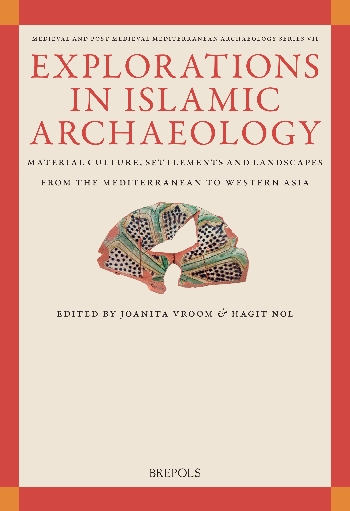
show More to view fulltext, buy and share links for:Explorations in Islamic Archaeology show Less to hide fulltext, buy and share links for: Explorations in Islamic ArchaeologyThis volume presents contributions by leading scholars on various topics and aspects of Islamic Archaeology, a discipline which has recently seen the development of exciting new approaches to the study of the material culture of the Muslim world. This material culture was produced by and/or for Muslims, as well as by and/or for non-Muslims living under Islamic rule from the 7th century onward, in an expanding and ultimately vast area reaching from southern Europe to West Asia.
The contributions in this book focus on Jordan, Oman, Spain, Turkey, Lebanon, as well as Israel, and cover a timespan from the 7th century through the Mamluk period to the early 20th century. They highlight the archaeology of large Islamic centers in the past, but also of the material culture in smaller sites and peripheral regions. Special emphasis is paid to pottery as one of the main artifacts that carry information on past societies, but other finds and materials are discussed as well. The aspect of Islamic material culture which receives particular attention is ‘production’, specifically the production of clay vessels, glaze, mercury, and crops.
What unites the new approaches presented here is that Islam is understood as both a ‘religion’ and a framework for economic, cultural, and social networks and influence. In this perspective, the volume aims to offer students of Islamic archaeology, historians of Islam and archaeologists of different disciplines a glimpse of the state-of-the-art in current Islamic Archaeology
-
-
-
Filosofia e medicina in Italia fra medioevo e prima età moderna
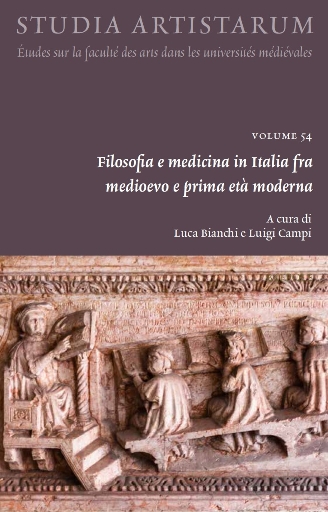
show More to view fulltext, buy and share links for:Filosofia e medicina in Italia fra medioevo e prima età moderna show Less to hide fulltext, buy and share links for: Filosofia e medicina in Italia fra medioevo e prima età modernaIl volume raccoglie alcune delle relazioni presentate durante il 4° Colloquio Internazionale della Societas Artistarum. Svoltosi presso l’Università degli studi di Milano il 7-9 novembre 2019, esso si proponeva di approfondire da prospettive diverse come si sia configurato nell’Italia medievale e rinascimentale il rapporto fra medicina e filosofia. Alcuni contributi si soffermano sul contesto storico-istituzionale dell’insegnamento e della pratica della medicina, sull’uso di dottrine etiche e di strumenti logici e retorici da parte dei medici. Altri contributi, avvalendosi anche di documenti e testi inediti, analizzano invece temi interdisciplinari come le teorie della generazione e la natura delle acque fluviali oppure mettono a fuoco il pensiero e l’opera di medici-filosofi come Bartolomeo da Salerno, Taddeo Alderotti, Antonio da Parma, e Ludovico Boccadiferro.
-
-
-
Fragmenta Musicae
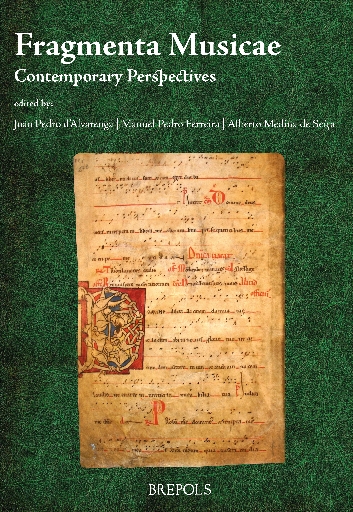
show More to view fulltext, buy and share links for:Fragmenta Musicae show Less to hide fulltext, buy and share links for: Fragmenta MusicaeThis volume stems from a research project on medieval and sixteenth-century fragments with music carried out at CESEM–Centre for the Study of the Sociology and Aesthetics of Music, Lisbon Nova University, between 2021 and 2024, as well as from an international colloquium on fragmentology held in Cascais, Portugal, in July 2023. It brings together twenty studies that address a varied range of disjecta membra, including loose folios from dismembered manuscripts, mutilated musical-liturgical codices, incomplete sets of part-books, truncated musical settings, and even the remains of a historic organ. The aim is to invest these materials with significance beyond their condition as fragmented cultural artefacts by exploring their texts, contexts, meanings, trajectories and, when appropriate, proposing methods for their reconstitution.
-
-
-
Graphic Practices and Literacies in the History of English
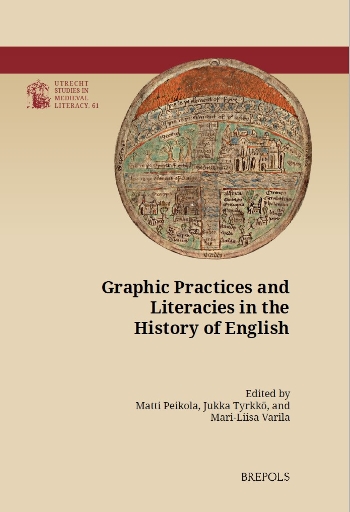
show More to view fulltext, buy and share links for:Graphic Practices and Literacies in the History of English show Less to hide fulltext, buy and share links for: Graphic Practices and Literacies in the History of EnglishGraphic devices such as tables and diagrams and other visual strategies of organising text and information are an essential part of communication. The use of these devices and strategies in books and documents developed throughout the medieval and early modern periods, as knowledge was translated and circulated in European vernaculars. Yet the use of graphic practices and multimodal literacies associated with them have mostly been examined in the context of Latin, Greek, Arabic, and Hebrew, and early vernacular writing remains an under-researched area. This volume brings together contributors from English historical linguistics and book studies to highlight multimodal graphic practices and literacies in texts across a range of genres and text types from the late medieval period until the eighteenth century. Contributions in the volume investigate both handwritten and printed materials, from books in the domains of medicine, religion, history, and grammar, to administrative records and letter writing.
-
-
-
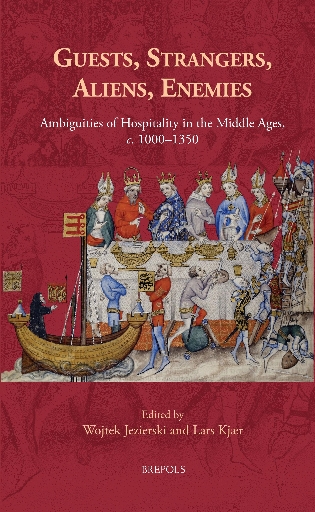
Guests, Strangers, Aliens, Enemies
show More to view fulltext, buy and share links for:Guests, Strangers, Aliens, Enemies show Less to hide fulltext, buy and share links for: Guests, Strangers, Aliens, EnemiesMany of our oldest and best-loved stories are about killing guests and betraying hosts. Hospitality is celebrated, in medieval texts and in medieval studies, as a way of binding individuals together and strengthening social cohesion, but both the practice and narration of hospitality was shot through with ambiguity and ambivalence.
This volume shifts the scholarly gaze from the high table — where kings, queens, and honoured guests are graciously served by skilled servants — to the shadowy corners of the hall, the places where gossip and complaint are exchanged, where outlaws hide under the guise of hospitality, where hostages and troublesome strangers are benched, where the light from the hall-fire reflects on drawn blades: prompting difficult reflections on the processes of extraction and predation that provided the material foundations for the feast.
The chapters in Guests, Strangers, Aliens, Enemies range from Silk Road caravanserais in Armenia and crusader relations in the Latin East, through ambassadorial and papal receptions in the Mediterranean, treatment of merchants and the poor in Scandinavia, elite feasts in Latin Europe, to hosting of outlaws and hostages in Eurasia. The authors explore ambiguities of hospitality in the Middle Ages through a wide range of sources and methodological approaches.
-
-
-
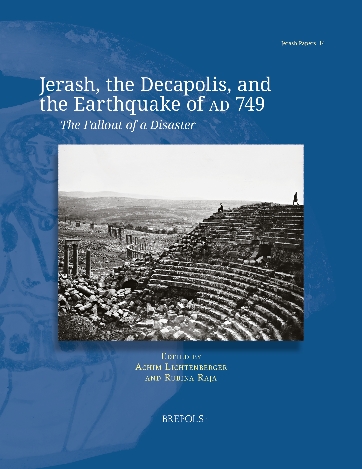
Jerash, the Decapolis, and the Earthquake of ad 749
show More to view fulltext, buy and share links for:Jerash, the Decapolis, and the Earthquake of ad 749 show Less to hide fulltext, buy and share links for: Jerash, the Decapolis, and the Earthquake of ad 749Gerasa/Jerash and the Decapolis are located along the seismically active area of the Dead Sea Rift, a point where four tectonic plates meet to create the 110 km-long fault known as the Dead Sea Transform. It was activity along this fault that led, in ad 749, to a famously devastating earthquake in the region. Measuring at least 7.0 on the Richter scale, this quake not only had a profound physical impact on the Decapolis, Galilee, Caesarea, and Jerusalem, causing widespread destruction and reshaping urban landscapes, but also led to a clear shift in socio-economic dynamics through a combination of economic decline and population displacement. It thus stands as a clear watershed moment in Late Antiquity. In its aftermath, some cities struggled to regain prominence, while others declined and were abandoned. Taking the ad 749 earthquake as its starting point, this volume aims to provide a nuanced understanding of the quake’s effects, questioning its role as a sole watershed moment and exploring the various other factors at play that influenced urban change. The contributions gathered here, which clearly recognize earthquakes as non-human actors in this process, clearly highlight the diverse impacts that this seismic event had on the city life in the southern Levant, and the fallout in the decades that followed.
-
-
-
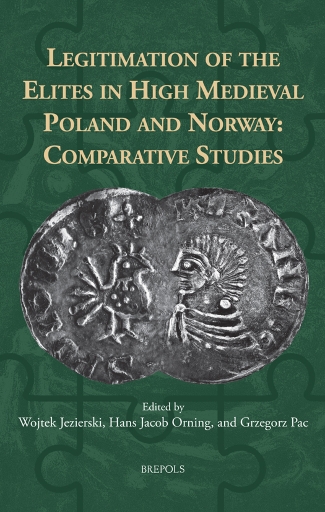
Legitimation of the Elites in High Medieval Poland and Norway
show More to view fulltext, buy and share links for:Legitimation of the Elites in High Medieval Poland and Norway show Less to hide fulltext, buy and share links for: Legitimation of the Elites in High Medieval Poland and NorwayBetween the years 1000 and 1300, the two developing polities of Norway and Poland often followed similar trends. Both realms were located on what was considered the periphery of Europe, both joined Latin Christendom — and with it, the wider sphere of European cultural influence — at the turn of the first millennium, and both, by the end of the thirteenth century, had largely coalesced as stable kingdoms. Yet while the histories of these two countries have long been studied along national lines, it remains rarer for them to be considered outside of their traditional geographical context, and studied via comparison with events elsewhere.
This innovative volume seeks to explore the means and uses of symbolic power that were employed by religiopolitical elites in order to assert their legitimacy and dominance by taking an explicitly comparative approach and dual perspective on these two polities. What stories did elites tell themselves and others about their deservedness to rule, what spaces and objects did they utilize in order to project their elevated status, and how did struggle and rivalry form part of their societal dominance? Formed from chapters co-written by experts in Polish and Norwegian history, this unique volume not only reflects on the similarities and differences between events in these two polities, but also more broadly offers conceptual tools and comparative frameworks that can enhance our wider understanding of the conditions and factors that shaped religiopolitical behaviour on the peripheries.
-
-
-
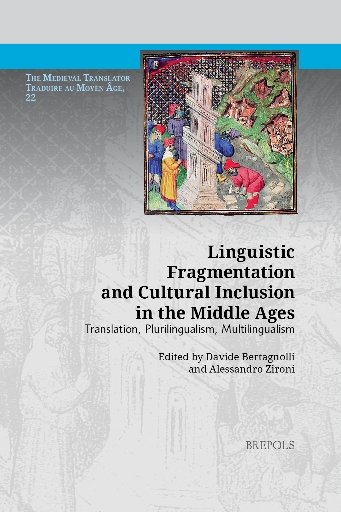
Linguistic Fragmentation and Cultural Inclusion in the Middle Ages
show More to view fulltext, buy and share links for:Linguistic Fragmentation and Cultural Inclusion in the Middle Ages show Less to hide fulltext, buy and share links for: Linguistic Fragmentation and Cultural Inclusion in the Middle AgesLinguistic fragmentation contains the risk of cultural separation, while the concept of inclusion implies the recognition of the difference of the Other, which must be recognised in its specificity to develop a process of inclusion. One of the main means of overcoming the dangers hidden in linguistic fragmentation is unquestionably plurilingualism and, relatedly, translation. Translation enables the transmission of content from one linguistic-cultural system to another. Multilingualism is not just a peculiarity of the contemporary age, it is a fundamental phenomenon of the Middle Ages. The conceptual relationship between linguistic fragmentation and cultural inclusion, and the inter-relationships of these two apparently opposing poles with the communicative tool of translation, requires some reflection within the broader framework of translation studies in the Middle Ages. This collection of essays examines the seemingly paradoxical concept of linguistic fragmentation as an instrument of cultural inclusion thanks to the practice of translation.
The essays explain the relationship through translations between many medieval languages and texts, from Icelandic to Italian, from English to French, and more. They examine vernacular circulation of religious texts (translation of the Bible, of hagiographic or homiletic texts, etc.); circulation, thanks to translation, of literary texts (e.g., the translation of epic-chivalric cycles); translation from a koine language to another language and vice versa; and the relationship between the choice of the target language and the socio-cultural context.
-
-
-

L’amour au Moyen Âge
show More to view fulltext, buy and share links for:L’amour au Moyen Âge show Less to hide fulltext, buy and share links for: L’amour au Moyen ÂgePeu de notions médiévales sont aussi vastes et, semble-t-il, aussi hétérogènes que l’« amour » puisque, de la convoitise à la charité, de la passion amoureuse à la piété filiale, de l’amitié entre égaux à l’amour du prince, de l’amour de Dieu à l’amour du prochain en passant par celui envers soi-même ou ses ennemis, il reçoit les noms les plus variés, vise les objets les plus divers, encourt les jugements moraux les plus contraires. Ceci soulève plusieurs questions, au centre des échanges entre médiévistes de toutes disciplines: histoire, philosophie, théologie, lettres latines et romanes, histoire du droit, histoire de l’art etc. Pourquoi observe-t-on soudain une vogue littéraire de l’amour au xiie siècle, chez les poètes d’oc et d’oïl, les exégètes du Cantique des cantiques, les théologiens de la Trinité ou de la charité, les maîtres de la vie intérieure, les commentateurs du pseudo-Denys, les philosophes de l’amor honestus ou de l’amitié, les canonistes définissant le mariage, les théoriciens de l’amour du prince et de ses sujets, les amants eux-mêmes dont on commence à conserver les correspondances enflammées? Ensuite, comment écrivains et docteurs, tout en distinguant soigneusement les diverses sortes d’amour, les intègrent-ils dans une même conception unitaire? Enfin, pourquoi, dans les trois derniers siècles du Moyen Âge, se met-on à opposer de plus en plus la connaissance et l’amour comme deux facultés de l’âme symétriques et antithétiques, et quels sont les enjeux jusqu’à aujourd’hui de cette joute entre l’amour et la connaissance ?
-
-
-
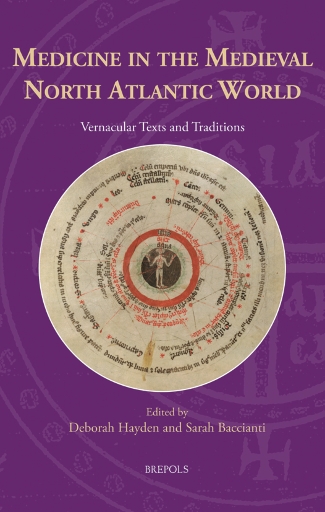
Medicine in the Medieval North Atlantic World
show More to view fulltext, buy and share links for:Medicine in the Medieval North Atlantic World show Less to hide fulltext, buy and share links for: Medicine in the Medieval North Atlantic WorldStudies of medical learning in medieval England, Wales, Ireland, and Scandinavia have traditionally focused on each geographical region individually, with the North Atlantic perceived as a region largely peripheral to European culture. Such an approach, however, means that knowledge within this part of the world is never considered in the context of more global interactions, where scholars were in fact deeply engaged in wider intellectual currents concerning medicine and healing that stemmed from both continental Europe and the Middle East.
The chapters in this interdisciplinary collection draw together new research from historians, literary scholars, and linguists working on Norse, English, and Celtic material in order to bring fresh insights into the multilingual and cross-cultural nature of medical learning in northern Europe during the Middle Ages, c. 700–1600. They interrogate medical texts and ideas in both Latin and vernacular languages, addressing questions of translation, cultural and scientific inheritance, and exchange, and historical conceptions of health and the human being within nature. In doing so, this volume offers an in-depth study of the reception and transmission of medical knowledge that furthers our understanding both of scholarship in the medieval North Atlantic and across medieval Europe as a whole.
-
-
-
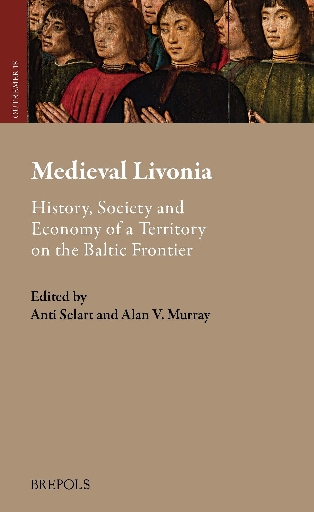
Medieval Livonia
show More to view fulltext, buy and share links for:Medieval Livonia show Less to hide fulltext, buy and share links for: Medieval LivoniaThe territory known as Livonia, on the eastern shore of the Baltic Sea, emerged as a result of the Baltic Crusades in the twelfth and thirteenth centuries. It was a region of multiple nations, languages and cultures, and the scene of their mutual interaction, connected to the Holy Roman Empire, the papal curia, Scandinavia and Lithuania, and mediating the Hanseatic trade with Russia. This book is a significant new study of the multiple facets of Baltic history, taking in social history, urban and rural culture, peasant economy and literacy, with novel perspectives on crusading, political history and the chief agents of power, notably the Teutonic Order. This first comprehensive treatment of Livonian history in English will serve as a valuable source of information for undergraduate and postgraduate students as well as a resource for studying the Baltic Crusades and crusader territories in general.
-
-
-

Mémoires des passés antiques
show More to view fulltext, buy and share links for:Mémoires des passés antiques show Less to hide fulltext, buy and share links for: Mémoires des passés antiquesAlors que depuis plusieurs décennies, les recherches sur la mémoire – memory studies – prennent un essor exceptionnel, ce volume a pour objet les modalités de l’élaboration de mémoires particulières, celles de passés antiques, et prend en compte une longue durée allant du xive siècle jusque dans les années 1830. Les deux termes de « mémoire » et d’« élaboration » évoquent un acte de réception et de construction. Les mémoires de l’Antiquité ne sont pas un ensemble de connaissances reçues passivement et non transformées, elles sont des représentations consciemment élaborées par des auteurs et des artistes. Étudier le phénomène sur une longue temporalité permet de mieux analyser les constantes, qui relèvent sans nul doute d’une anthropologie de la mémoire, et aussi les évolutions. Ce volume porte sur des œuvres qui, illustrées ou non, sont écrites et/ou contiennent un texte. La réflexion qu’il propose s’inscrit en parallèle aux recherches dédiées à la réception de la Grèce ancienne dans la littérature française prémoderne (1320-1550) et le projet ERC Advanced Grant AGRELITA, « The Reception of Ancient Greece in Premodern French Literature and Illustrations of Manuscripts and Printed Books (1320-1550) ». Elle ouvre le champ d’analyse à une plus large diachronie et à un plus large corpus.
-
-
-
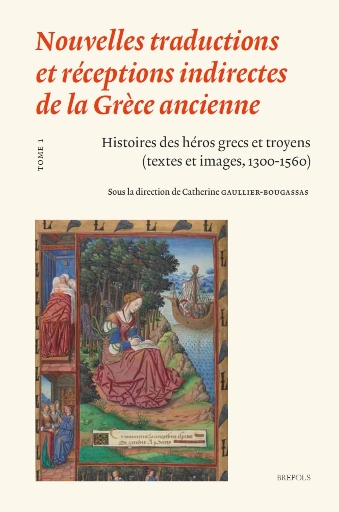
Nouvelles traductions et réceptions indirectes de la Grèce ancienne
show More to view fulltext, buy and share links for:Nouvelles traductions et réceptions indirectes de la Grèce ancienne show Less to hide fulltext, buy and share links for: Nouvelles traductions et réceptions indirectes de la Grèce ancienneL’essor des traductions directes du grec au français commence dans les années 1550. Du début du xive siècle jusqu’au milieu du xvie siècle, les auteurs-traducteurs en langue française qui représentent la Grèce ancienne n’ont, sauf exception, aucune connaissance directe des œuvres grecques. Les savoirs sur la Grèce qu’ils transmettent et réinventent sont médiatisés par des filtres divers. Leur réception est indirecte, elle prend appui sur des œuvres antérieures, textuelles et iconographiques, dont les représentations de la Grèce ancienne sont déjà le fruit d’une ou de plusieurs réceptions.Les œuvres latines qu’ils traduisent et adaptentsont très diverses : des textes antiques jusqu’aux traductions humanistes d’œuvres grecques réalisées en Italie et aux Pays-Bas, en passant par des œuvres latines médiévales originales, des traductions latines du français et des traductions arabo-latines et arabo-hispano-latines. Les illustrations de nombreux manuscrits et imprimés redoublent cette traduction textuelle d’une traduction visuelle qui enrichit la mémoire de la Grèce ancienne ainsi recréée. La question de la réception de l’Antiquité grecque est ainsi explorée par une entrée différente de celle qui a été adoptée jusqu’à présent et qui a consisté en l’étude de la transmission et de la traduction directe des œuvres grecques. Le présent volume porte sur des traductions consacrées à des héros et héroïnes des temps mythiques jusqu’à la guerre de Troie.
-
-
-
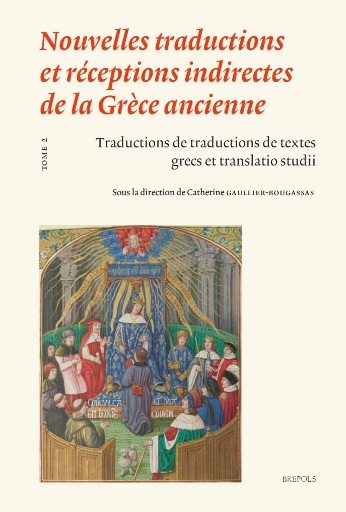
Nouvelles traductions et réceptions indirectes de la Grèce ancienne. Tome 2 : Traductions de traductions de textes grecs et translatio studii
show More to view fulltext, buy and share links for:Nouvelles traductions et réceptions indirectes de la Grèce ancienne. Tome 2 : Traductions de traductions de textes grecs et translatio studii show Less to hide fulltext, buy and share links for: Nouvelles traductions et réceptions indirectes de la Grèce ancienne. Tome 2 : Traductions de traductions de textes grecs et translatio studiiL’essor des traductions directes du grec au français commence dans les années 1550. Du début du XIVe siècle jusqu’au milieu du XVIe siècle, les auteurs-traducteurs en langue française qui représentent la Grèce ancienne n’ont, sauf exception, aucune connaissance directe des œuvres grecques. Les savoirs sur la Grèce qu’ils transmettent et réinventent sont médiatisés par des filtres divers. Leur réception est indirecte, elle prend appui sur des œuvres antérieures, textuelles et iconographiques, dont les représentations de la Grèce ancienne sont déjà le fruit d’une ou de plusieurs réceptions.Les œuvres latines qu’ils traduisent et adaptentsont pour une part des œuvres antiques et médiévales qui ne sont pas des traductions, et pour une part des traductions ou adaptations d’œuvres grecques, avec parfois plusieurs transferts linguistiques à partir du grec. Elles sont très diverses : des textes antiques jusqu’aux traductions humanistes latines d’œuvres grecques réalisées en Italie et aux Pays-Bas, en passant par des œuvres latines médiévales originales, des traductions latines du français et des traductions arabo-latines et arabo-hispano-latines.
Les auteurs-traducteurs en langue française héritent ainsi de réceptions antérieures diverses, qu’ils s’approprient et transforment, poursuivant le processus d’invention de représentations de la Grèce ancienne. Comme les manuscrits et les imprimés de leurs nouvelles traductions sont souvent très illustrés, les artistes offrent dans le même temps des traductions visuelles qui elles aussi s’appuient sur des sources diverses et des réceptions antérieures et donnent à voir de nouvelles images de la Grèce ancienne. La question de la réception de l’Antiquité grecque sera donc explorée par une entrée différente de celle qui a été adoptée jusqu’à présent et qui a consisté en l’étude de la transmission et de la traduction directes des œuvres grecques. Le présent volume se focalise sur les traductions au second degré de textes grecs.
-