


Brepols Online Books Medieval Miscellanea Collection 2025 - bob2025mime

Collection Contents
3 results
-
-
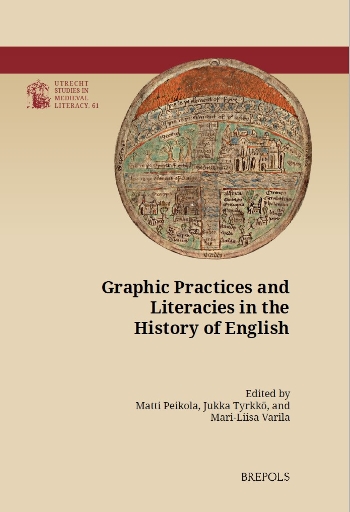
Graphic Practices and Literacies in the History of English
show More to view fulltext, buy and share links for:Graphic Practices and Literacies in the History of English show Less to hide fulltext, buy and share links for: Graphic Practices and Literacies in the History of EnglishGraphic devices such as tables and diagrams and other visual strategies of organising text and information are an essential part of communication. The use of these devices and strategies in books and documents developed throughout the medieval and early modern periods, as knowledge was translated and circulated in European vernaculars. Yet the use of graphic practices and multimodal literacies associated with them have mostly been examined in the context of Latin, Greek, Arabic, and Hebrew, and early vernacular writing remains an under-researched area. This volume brings together contributors from English historical linguistics and book studies to highlight multimodal graphic practices and literacies in texts across a range of genres and text types from the late medieval period until the eighteenth century. Contributions in the volume investigate both handwritten and printed materials, from books in the domains of medicine, religion, history, and grammar, to administrative records and letter writing.
-
-
-
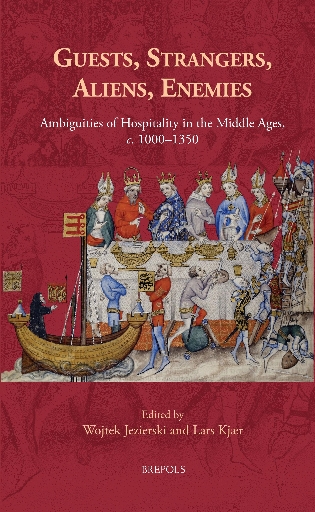
Guests, Strangers, Aliens, Enemies
show More to view fulltext, buy and share links for:Guests, Strangers, Aliens, Enemies show Less to hide fulltext, buy and share links for: Guests, Strangers, Aliens, EnemiesMany of our oldest and best-loved stories are about killing guests and betraying hosts. Hospitality is celebrated, in medieval texts and in medieval studies, as a way of binding individuals together and strengthening social cohesion, but both the practice and narration of hospitality was shot through with ambiguity and ambivalence.
This volume shifts the scholarly gaze from the high table — where kings, queens, and honoured guests are graciously served by skilled servants — to the shadowy corners of the hall, the places where gossip and complaint are exchanged, where outlaws hide under the guise of hospitality, where hostages and troublesome strangers are benched, where the light from the hall-fire reflects on drawn blades: prompting difficult reflections on the processes of extraction and predation that provided the material foundations for the feast.
The chapters in Guests, Strangers, Aliens, Enemies range from Silk Road caravanserais in Armenia and crusader relations in the Latin East, through ambassadorial and papal receptions in the Mediterranean, treatment of merchants and the poor in Scandinavia, elite feasts in Latin Europe, to hosting of outlaws and hostages in Eurasia. The authors explore ambiguities of hospitality in the Middle Ages through a wide range of sources and methodological approaches.
-
-
-
Gerson rhénan
show More to view fulltext, buy and share links for:Gerson rhénan show Less to hide fulltext, buy and share links for: Gerson rhénanChancelier de l’Université de Paris, Jean Gerson (1363-1429) est surtout connu comme théoricien de la théologie mystique et par son action réformatrice au sein de l’Église pendant les années difficiles du Grand Schisme, où il joua un rôle de premier plan. Or si la carrière universitaire et l’action politique de Gerson font de lui un intellectuel parisien, l’évidence de la transmission manuscrite et imprimée désigne sans équivoque le Rhin supérieur comme la région où la diffusion des œuvres du chancelier a été la plus foisonnante. Intervenant à une échelle comparable à la diffusion manuscrite des œuvres de Thomas d’Aquin, le rayonnement de l’œuvre de Gerson a ceci de spectaculaire qu’il dépasse largement le milieu universitaire et qu’il se déploie en moins d’un siècle. Le paradoxe reste pourtant intact de pourquoi l’Allemagne, et non la France, s’impose comme le lieu de rayonnement de l’œuvre de Gerson dans des proportions aussi importantes quantitativement ? Pour répondre à cette question, l’étude de la réception de l’œuvre du chancelier ne peut pas faire l’économie d’une réévaluation de la tradition manuscrite et imprimée des 15e et 16e siècles à partir des témoins préservés dans les bibliothèques du Rhin supérieur. En privilégiant le cas de Gerson comme point d’observation, ce volume se propose de renouveler les perspectives de l’histoire intellectuelle et culturelle dans le long 15e siècle en focalisant sur l’histoire des textes, les conditions et les circonstances de leur transmission, afin de dresser une cartographie des réseaux de communication dans la région rhénane dans les décennies qui entourent l’invention de l’imprimerie.
-