


Brepols Online Books Medieval Miscellanea Collection 2025 - bob2025mime

Collection Contents
6 results
-
-
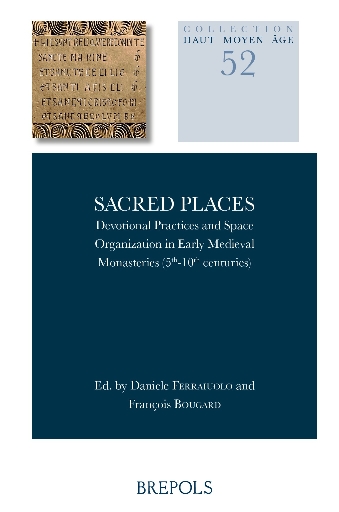
Sacred Places
show More to view fulltext, buy and share links for:Sacred Places show Less to hide fulltext, buy and share links for: Sacred PlacesThe body or relics of a saint could attract divine protection on the community and the place where they were kept. If, in some cases, the monasteries were structures of assistance to sanctuaries of certain notoriety, starting from the 7th century, they increasingly played the role of protagonists, autonomously managing the devotional activities derived from the acquisition or translation of relics. The need to preserve the isolation of the 'clausura' and to manage, at the same time, an increasing flow of pilgrims led these monasteries to build new spaces for prayer, communion and assistance.
This book includes the Proceedings of the International Conference held in Naples (Italy) on November 28-29, 2022. The Conference - organized, as part of a Marie-Curie research project, by the Fondazione San Bonaventura with the contribution of the Italian Ministry of Culture - brought together historians, archaeologists, and art historians to discuss the theme of spatial articulation of monasteries chosen as places of pilgrimage during the Early Middle Ages in Western Europe. From this interdisciplinary discussion, exciting insights have emerged on aspects of particular relevance, such as the organization of the funerary space and interaction between monks and laypeople, the elements of balance or clash between 'clausura' and hospitality and the comparison between male and female monasteries as devotional centers.
-
-
-
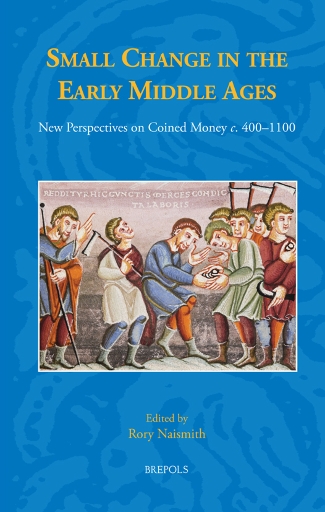
Small Change in the Early Middle Ages
show More to view fulltext, buy and share links for:Small Change in the Early Middle Ages show Less to hide fulltext, buy and share links for: Small Change in the Early Middle AgesCoined money is a familiar part of day-to-day life, and has been for millennia in many societies. In the early Middle Ages, however, it worked rather differently. People across the former Roman Empire and beyond continued to think in terms of monetary units of account, but the supply and use of actual coin became highly uneven. Access to low-value coinage, small change, was particularly attenuated in western Europe, where gold and silver pieces predominated. This volume explores how people and societies dealt with changes to monetary systems. It looks at the experiences of different groups in society, from those who struggled with regimes that used only high value coins, to the elites who tended to benefit from those same conditions. The ten contributions to this volume consider diverse geographical areas from Byzantine Egypt to Italy, Francia, and Britain, identifying parallels and divergences among them. The chapters draw on cutting-edge archaeological and historical research to give a panorama of the latest thinking on early medieval money and coinage.
-
-
-
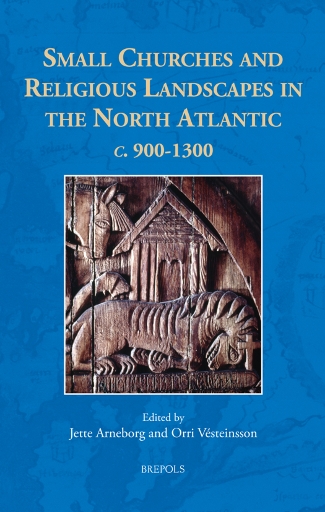
Small Churches and Religious Landscapes in the North Atlantic c. 900–1300
show More to view fulltext, buy and share links for:Small Churches and Religious Landscapes in the North Atlantic c. 900–1300 show Less to hide fulltext, buy and share links for: Small Churches and Religious Landscapes in the North Atlantic c. 900–1300In recent years, archaeologists working at Norse sites across the North Atlantic have excavated a number of very small churches with cemeteries, often associated with individual farms. Such sites seem to be a characteristic feature of early ecclesiastical establishments in Norse settlements around the North Atlantic, and they stand in marked contrast to church sites elsewhere in Europe. But what was the reason behind this phenomenon?
From Greenland to Denmark, and from Ireland to the Hebrides, Iceland, and Norway, this volume presents a much-needed overview of small church studies from around the North Atlantic. The chapters gathered here discuss the different types of evidence for small churches and early ecclesiastical landscapes, review existing debates, and develop a synthesis that places the small churches in a broader context. Ultimately, despite the varied types of data at play, the contributions to this volume combine to offer a more coherent picture of the small church phenomenon, pointing to a church that was able to answer the needs of a newly converted population despite the lack of an established infrastructure, and throwing new light on how people lived and worshipped in an environment of dispersed settlements.
-
-
-
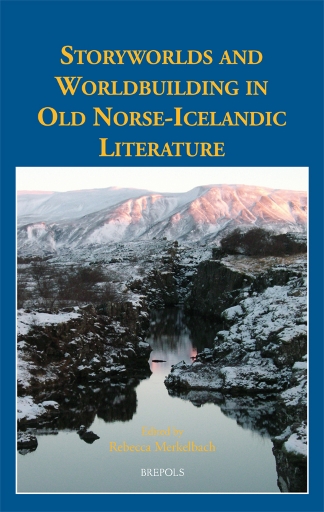
Storyworlds and Worldbuilding in Old Norse‑Icelandic Literature
show More to view fulltext, buy and share links for:Storyworlds and Worldbuilding in Old Norse‑Icelandic Literature show Less to hide fulltext, buy and share links for: Storyworlds and Worldbuilding in Old Norse‑Icelandic LiteratureThe storyworlds of Old Norse-Icelandic literature are multifaceted and variable, ranging from the worlds of heroic poetry and popular romance to the recognizable narrative universe built by the Sagas of Icelanders. Despite this, they have rarely been explored, and narratological theories of storyworlds or fantasy scholarship have had little impact on the field. Yet given that every story creates its own storyworld, it can be assumed that Old Norse-Icelandic literary texts, too, build worlds — and these worlds are diverse and complex, as shown by the contributors in this volume: they constantly engage with one another, exploring, shaping, and expanding, while also entering into a dialogue with the primary world from which they draw.
This volume brings together scholars from different areas of Old Norse-Icelandic studies to explore questions related to not only the storyworlds of medieval Icelandic literature, but also those of legal and learned texts, and to the way that they are built. Together they inquire into the nature of these worlds, into their preservation and transmission in manuscripts, their transmediality, transnarrativity, and reception. In doing so, these inquiries showcase the breadth of new perspectives on medieval Icelandic literature made possible by the application of narratological theory in its study.
-
-
-
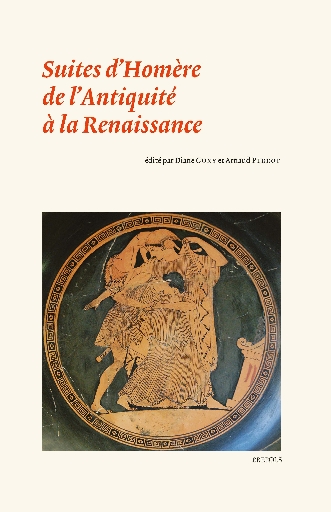
Suites d’Homère de l’Antiquité à la Renaissance
show More to view fulltext, buy and share links for:Suites d’Homère de l’Antiquité à la Renaissance show Less to hide fulltext, buy and share links for: Suites d’Homère de l’Antiquité à la RenaissanceThis book is the result of an international conference organized by the University of Tours in May 2021. It sets out to explore the notion of sequel in literature by examining the Homeric poems. While Gérard Genette evoked Homer in a considerable number of pages of his essay Palimpsestes, he however paid particular attention to forms of continuity from the front, from the back and from the sides, afterwards and sideways, which seem to make Homeric material the first victim of the cyclical additions that appear to constitute the ineluctable future of the great epics. In recent decades, however, these positions have been strongly nuanced and the time was ripe, therefore, for diachronic reflection on the validity of the notion of the ‘Homeric sequel’ by testing the meaning it has in various geographical and cultural contexts, from Antiquity to the Middle Ages and the Renaissance.
The authors of this volume contribute to the discussion of the literary concept of ‘continuation’ and offer a wide panorama of the poet's fruitful reception over time; they do so without neglecting the phenomena of transformation made possible by the survival of a mythology of Homeric origin which exists despite the absence of a direct reading of the Greek texts.
-
-
-
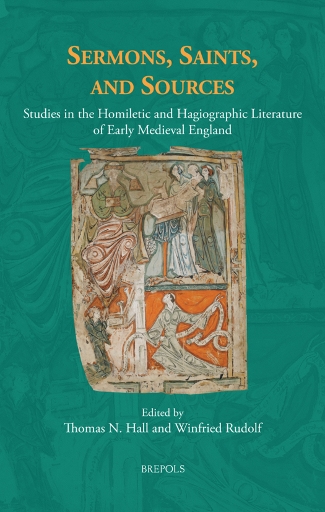
Sermons, Saints, and Sources
show More to view fulltext, buy and share links for:Sermons, Saints, and Sources show Less to hide fulltext, buy and share links for: Sermons, Saints, and SourcesThe corpus of sermons and saints’ lives from early medieval England, in English and Latin, is the largest and most varied of its kind from a contemporary European perspective. In recent years this extraordinary body of literature has attracted increasing attention, as witnessed by an efflorescence of new editions, translations, commentaries, essay collections, dissertations, and amply funded research projects such as the Electronic Corpus of Anonymous Old English Homilies (ECHOE) project based at the University of Göttingen.
The present collection of thirteen essays grew out of a 2022 conference sponsored by the ECHOE project on Old English anonymous homilies and saints’ lives and their sources and reflects the best of current scholarship on early medieval homiletic and hagiographic literature from England. This literature is central to an understanding of the spiritual imagination and social practices of non-élite audiences. Together, they introduce new discoveries, identify new sources, edit new texts, make new claims about authors, revisers, and textual relationships, revise previous arguments about aspects of literary history, and provide new interpretations of Old English and Latin sermons and saints’ lives. These studies show vividly how European learning influenced the liturgical practices and peripheral education of early medieval England.
Contributors include Helen Appleton, Aidan Conti, Claudia Di Sciacca, R. D. Fulk, Thomas N. Hall, Christopher A. Jones, Leslie Lockett, Rosalind Love, Hugh Magennis, Stephen Pelle, Jane Roberts, Winfried Rudolf, and Charles D. Wright.
-