


Brepols Online Books Medieval Miscellanea Collection 2025 - bob2025mime

Collection Contents
7 results
-
-
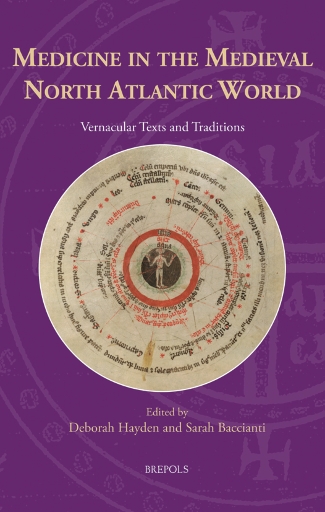
Medicine in the Medieval North Atlantic World
show More to view fulltext, buy and share links for:Medicine in the Medieval North Atlantic World show Less to hide fulltext, buy and share links for: Medicine in the Medieval North Atlantic WorldStudies of medical learning in medieval England, Wales, Ireland, and Scandinavia have traditionally focused on each geographical region individually, with the North Atlantic perceived as a region largely peripheral to European culture. Such an approach, however, means that knowledge within this part of the world is never considered in the context of more global interactions, where scholars were in fact deeply engaged in wider intellectual currents concerning medicine and healing that stemmed from both continental Europe and the Middle East.
The chapters in this interdisciplinary collection draw together new research from historians, literary scholars, and linguists working on Norse, English, and Celtic material in order to bring fresh insights into the multilingual and cross-cultural nature of medical learning in northern Europe during the Middle Ages, c. 700–1600. They interrogate medical texts and ideas in both Latin and vernacular languages, addressing questions of translation, cultural and scientific inheritance, and exchange, and historical conceptions of health and the human being within nature. In doing so, this volume offers an in-depth study of the reception and transmission of medical knowledge that furthers our understanding both of scholarship in the medieval North Atlantic and across medieval Europe as a whole.
-
-
-
Medieval Livonia
show More to view fulltext, buy and share links for:Medieval Livonia show Less to hide fulltext, buy and share links for: Medieval LivoniaThe territory known as Livonia, on the eastern shore of the Baltic Sea, emerged as a result of the Baltic Crusades in the twelfth and thirteenth centuries. It was a region of multiple nations, languages and cultures, and the scene of their mutual interaction, connected to the Holy Roman Empire, the papal curia, Scandinavia and Lithuania, and mediating the Hanseatic trade with Russia. This book is a significant new study of the multiple facets of Baltic history, taking in social history, urban and rural culture, peasant economy and literacy, with novel perspectives on crusading, political history and the chief agents of power, notably the Teutonic Order. This first comprehensive treatment of Livonian history in English will serve as a valuable source of information for undergraduate and postgraduate students as well as a resource for studying the Baltic Crusades and crusader territories in general.
-
-
-

Mémoires des passés antiques
show More to view fulltext, buy and share links for:Mémoires des passés antiques show Less to hide fulltext, buy and share links for: Mémoires des passés antiquesAlors que depuis plusieurs décennies, les recherches sur la mémoire – memory studies – prennent un essor exceptionnel, ce volume a pour objet les modalités de l’élaboration de mémoires particulières, celles de passés antiques, et prend en compte une longue durée allant du xive siècle jusque dans les années 1830. Les deux termes de « mémoire » et d’« élaboration » évoquent un acte de réception et de construction. Les mémoires de l’Antiquité ne sont pas un ensemble de connaissances reçues passivement et non transformées, elles sont des représentations consciemment élaborées par des auteurs et des artistes. Étudier le phénomène sur une longue temporalité permet de mieux analyser les constantes, qui relèvent sans nul doute d’une anthropologie de la mémoire, et aussi les évolutions. Ce volume porte sur des œuvres qui, illustrées ou non, sont écrites et/ou contiennent un texte. La réflexion qu’il propose s’inscrit en parallèle aux recherches dédiées à la réception de la Grèce ancienne dans la littérature française prémoderne (1320-1550) et le projet ERC Advanced Grant AGRELITA, « The Reception of Ancient Greece in Premodern French Literature and Illustrations of Manuscripts and Printed Books (1320-1550) ». Elle ouvre le champ d’analyse à une plus large diachronie et à un plus large corpus.
-
-
-

The Materiality of Sound in Chant Manuscripts in the East
show More to view fulltext, buy and share links for:The Materiality of Sound in Chant Manuscripts in the East show Less to hide fulltext, buy and share links for: The Materiality of Sound in Chant Manuscripts in the EastThe two books of Scriptor, Cantor & Notator present an innovative multi-author project dealing with the complex interconnections between learning, writing and performing chant in the Middle Ages. A number of different methodological approaches have been employed, with the aim of beginning to understand the phenomenon of chant transmission over a large geographical area, linking and contrasting modern definitions of East and West. Thus, in spite of this wide geographical spread, and the consequent variety of rites, languages and musical styles involved, the common thread of parallels and similarities between various chant repertoires arising from the need to fix oral repertories in a written form, and the challenges involved in so doing, are what bring this wide variety of repertoires and approaches together. This multi-centric multi-disciplinary approach will encourage scholars working in these areas to consider their work as part of a much larger geographical and historical picture, and thus reveal to reader and listener more, and far richer, patterns of connections and developments than might otherwise have been suspected. The Materiality of Sound in Chant Manuscripts in the East brings together articles on ancient Greek, Byzantine, Coptic and Armenian music scripts in the East. Together with the collection of essays published in The Materiality of Sound in Chant Manuscripts in the West, these books discuss local scribal peculiarities and idiosyncrasies beyond the cultural and geographical contexts of production and uses of their manuscript sources.
-
-
-

The Multilingual Dynamics of Medieval Literature in Western Europe, c. 1200–c. 1600
show More to view fulltext, buy and share links for:The Multilingual Dynamics of Medieval Literature in Western Europe, c. 1200–c. 1600 show Less to hide fulltext, buy and share links for: The Multilingual Dynamics of Medieval Literature in Western Europe, c. 1200–c. 1600While the multilingualism of the medieval world has been at the forefront of research agendas across medieval studies in recent years, there nonetheless remain many questions to answer. What, for example, were the stakes and consequences of multilingualism for literary culture? And how do these change if we think of multilingualism through cultural, social, artistic, or material lenses? Taking such concerns as their starting point, the essays in this volume address a variety of aspects of medieval literature and literary culture related to multilingualism. They deal with multilingualism in relation to manuscripts, literary contexts, and historical contexts. The chapters gathered together here address considerations that have been overlooked in previous scholarship, and ask where the future of the study of medieval multilingualism lies. Contributions to the volume are grouped thematically, rather than by date or period, in order to draw out comparative perspectives, with the aim of encouraging innovative new approaches to future research in the field.
-
-
-
The Munich Court Chapel at 500
show More to view fulltext, buy and share links for:The Munich Court Chapel at 500 show Less to hide fulltext, buy and share links for: The Munich Court Chapel at 500This collection of essays is the first to focus exclusively on the Wittelsbach court of Duke Wilhelm IV of Bavaria (1493–1550). The contributors argue for a deeper understanding of this duke’s reign and acknowledge his crucial role in shaping the religious and cultural identity of the Duchy of Bavaria. By providing insights into the duke’s cultural aspirations, the organisation of the court, musical sources, religious musical practice, and everyday working life, this book aims to: (1) situate the court of Wilhelm IV in the context of the religious and political upheavals of the early sixteenth century; (2) trace the development of the musical repertoire and personnel of the Bavarian court chapel between 1500 and 1550; and (3) critically assess the degree to which the Munich court could be considered ‘modern’ by re-evaluating the broader cultural, religious, and musical life of the court around 1520. The volume thus sheds light on the cultural ambitions of a duke who defined music and art as expressions of strategic elements that interwove tradition, devotion, and representation in a programme of governance based on humanist education—a duke whose foresight enabled the Munich court to quickly become one of the most prestigious and famous seats of power in the Holy Roman Empire.
-
-
-
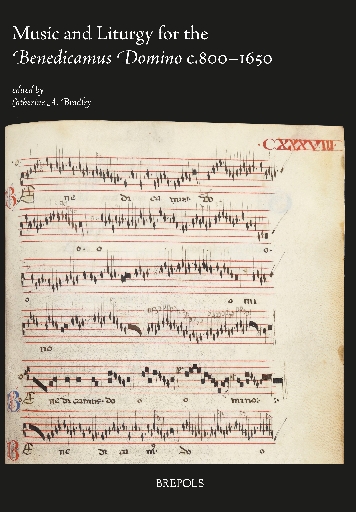
Music and Liturgy for the Benedicamus Domino c.800–1650
show More to view fulltext, buy and share links for:Music and Liturgy for the Benedicamus Domino c.800–1650 show Less to hide fulltext, buy and share links for: Music and Liturgy for the Benedicamus Domino c.800–1650For more than a millenium, singers in churches, monasteries, and private chapels across Europe have closed their worship with the joyful musical exclamation Benedicamus Domino (‘Let us Bless the Lord’). This moment has sounded in song many times a day: at the end of the Mass, the Office hours, outside the church walls in celebratory processions, as well as in informal sacred, devotional, and festive contexts. Benedicamus Domino was uniquely associated with an unprecedented amount of creative freedom in the sacred rituals of the Christian West: plainchant melodies could be adopted at will from other parts of the liturgy, and this moment inspired a proliferation of poetic and polyphonic elaborations from the eleventh century on.
This collection of essays brings together interdisciplinary contributions from eighteen scholars, illuminating the wide range of ritual, musical, poetic, manuscript, and generic contexts for the Benedicamus Domino versicle in the period c.800–1650. Individual chapters engage with the evidence of liturgical commentaries and Patristic texts, Ordines, and hagiographies. They present and analyse musical and textual embellishments of the Benedicamus Domino, as well as their written traces and material contexts, with several sources discovered or discussed in detail here for the first time. Encompassing a wide geographical and generic scope, this volume reveals unsuspected continuities and contrasts in the history of the Benedicamus Domino versicle in medieval and early modern Europe.
-