


Brepols Online Books Medieval Miscellanea Collection 2025 - bob2025mime

Collection Contents
3 results
-
-
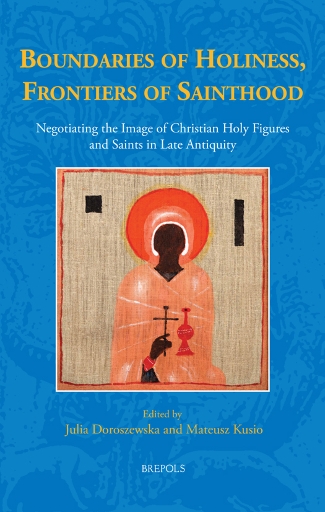
Boundaries of Holiness, Frontiers of Sainthood
show More to view fulltext, buy and share links for:Boundaries of Holiness, Frontiers of Sainthood show Less to hide fulltext, buy and share links for: Boundaries of Holiness, Frontiers of SainthoodMany excellent studies have been published on the phenomenon of holy (wo)men and saints. As a rule, however, they focus on successful candidates for holiness who played the roles of charismatic leaders and patrons of social and religious life.
This volume offers a new perspective on ancient and medieval holiness — its main focus is holiness as defined by its peripheries, and not by its conceptual centre. The contributors explore stories of men and women whose way to sainthood did not follow typical ‘models’, but who engaged with it from its outskirts. Several essays examine the strategies employed by hagiographical authors to tailor the images of candidates for holiness whose lives provided less obvious examples of moral and/or religious ideals. These include attempts to make saints out of emperors, heretics, and other unlikely or obscure figures. Other case studies focus on concerns with false holiness, or unusual cases of holiness being ascribed prior to a saint’s death. Another concept explored in the volume is space. The spatial boundaries of holiness are discussed in relation to the transmission of relics, to the opposition between urban and rural spaces, holy sites, and even imagined space.
Holiness and sainthood have been crucial concepts for Christianity from its inception. By exploring their ‘marginal’ and ‘peripheral’ aspects, the essays in this book offer vital new perspectives on the religious world of Late Antiquity.
-
-
-

Byzantine Liturgical Books
show More to view fulltext, buy and share links for:Byzantine Liturgical Books show Less to hide fulltext, buy and share links for: Byzantine Liturgical BooksThe world of Byzantine liturgical book types is fascinating but also confusing. While they are central to the study and celebration of Byzantine Liturgy, no one work offers an overview of their history, contents, and structure. This volume offers for the first time an introduction to the major types of Byzantine liturgical books, their taxonomy, origins, development, and contents.
-
-
-
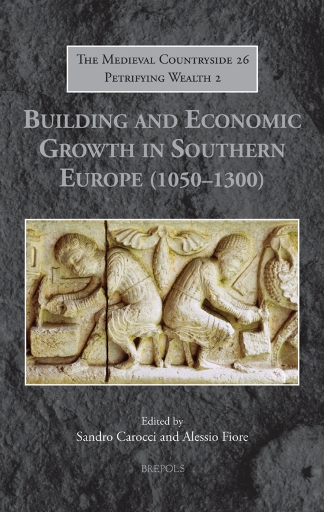
Building and Economic Growth in Southern Europe (1050–1300)
show More to view fulltext, buy and share links for:Building and Economic Growth in Southern Europe (1050–1300) show Less to hide fulltext, buy and share links for: Building and Economic Growth in Southern Europe (1050–1300)The four-volume sub-series ‘Petrifying Wealth’ explores the sudden ubiquity of masonry construction between 1050 and 1300 in Southern Europe and its profound effect on the European landscape. New questions about wealth, society, and medieval building are explored, which highlight the link between construction in durable materials and the shaping of individual, collective, and territorial identities: the birth of a new, long-lasting panorama, epitomising the way we see the space and territory of Europe nowadays.
Volume 2 of the ‘Petrifying Wealth’ series focuses on economic growth in Southern Europe between 1050 and 1300, discussing investments on buildings connected with production and trade. It examines buildings that served a primarily economic purpose, in various aspects: agricultural activity and the conservation and processing of its products, crafts, and exchanges and their material infrastructures. The growth in this period resulted in a multiplication of material structures closely linked with economic activity, such as mills, barns, canals, workshops, and arsenals. Focusing on the dynamics connected with these buildings thus offers a vantage point to better understand the contexts and characteristics of the ‘economic take-off’ in Southern Europe in this period.
-