


Brepols Online Books Medieval Miscellanea Collection 2025 - bob2025mime

Collection Contents
5 results
-
-
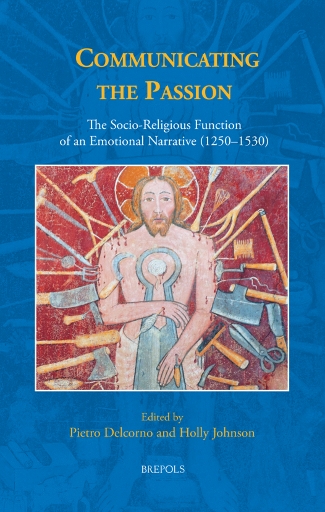
Communicating the Passion
show More to view fulltext, buy and share links for:Communicating the Passion show Less to hide fulltext, buy and share links for: Communicating the PassionThis volume investigates the vivid and emotionally intense commemoration of the Passion of Christ as a key element in late medieval religious culture. Its goal is to shed light on how the Passion was communicated and on its socio-religious function in late medieval Europe. By adopting a multidisciplinary approach, the volume analyses the different media involved in this cultural process (sermons, devotional texts, lively performances, statues, images), the multiple forms and languages in which the Passion was presented to the faithful, and how they were expected to respond to it. Key questions concern the strategies used to present the Passion; the interaction between texts, images, and sounds in different media; the dissemination of theological ideas in the public space; the fashioning of an affective response in the audience; and the presence or absence of anti-Jewish commonplaces.
By exploring the interplay among a wide range of sources, this volume highlights the pervasive role of the Passion in late medieval society and in the life of the people of the time.
-
-
-

Cultivating the Earth, Nurturing the Body and Soul: Daily Life in Early Medieval England
show More to view fulltext, buy and share links for:Cultivating the Earth, Nurturing the Body and Soul: Daily Life in Early Medieval England show Less to hide fulltext, buy and share links for: Cultivating the Earth, Nurturing the Body and Soul: Daily Life in Early Medieval EnglandHow did food impact social relationships in early medieval England? What cultivation practices were followed, to produce the best possible food supplies? What was the cultural significance of bread? How was the human body nourished? When sickness inevitably occurred, where did one go, and who was consulted for healing? And how was spiritual health also protected? The essays gathered together in this exciting volume draw on a range of different disciplines, from early medieval economic and social history, to experimental archaeology and medieval medicine, to offer a unique overview into day-to-day life in England nearly two millennia ago.Taking as their starting point the broad research interests of the volume’s honorand, Dr Debby Banham, contributors here offer new insights into the reproduction and ritual use of vernacular charms, examine the collation and translation of medieval medicine, elucidate monastic economies and production, and uncover the circumstances behind the production and transmission of medical manuscripts in early medieval England. Presenting new insights into agricultural practices and animal husbandry, monastic sign language and materia medica, plant knowledge and medical practices, the chapters within this volume not only offer a fitting tribute to Banham’s own groundbreaking work, but also shed new light on what it meant to nurture both body and soul in early medieval England.
-
-
-

Cultural Models for Emotions in the North Atlantic Vernaculars, 700–1400
show More to view fulltext, buy and share links for:Cultural Models for Emotions in the North Atlantic Vernaculars, 700–1400 show Less to hide fulltext, buy and share links for: Cultural Models for Emotions in the North Atlantic Vernaculars, 700–1400While the medieval regions that form modern-day Britain, Ireland, Iceland, and the Scandinavian states were, very much like today, home to diverse ethnic and linguistic groups, it is evident that the peoples who inhabited the north-western Atlantic seaboard at this time were nonetheless connected by key cultural, environmental, historical, and ideological experiences that set them apart from other regions of Europe. This volume is the first to focus specifically on these cultural and linguistic connections from the perspective of the history of emotions. The contributions collected here examine cultural encounters among medieval North Atlantic peoples with regard to the gradual development of shared emotional models and the emergence of early cross-cultural emotional communities in this region. The chapters also explore how the folk psychologies illustrated in the oldest European vernacular writing traditions (Irish, English, and Scandinavian) bear witness to cultural models for emotions that first took shape in pre-Christian times.
-
-
-
The Co-production of Judaism, Christianity, and Islam
show More to view fulltext, buy and share links for:The Co-production of Judaism, Christianity, and Islam show Less to hide fulltext, buy and share links for: The Co-production of Judaism, Christianity, and IslamJudaism, Christianity, and Islam have always formed, re-formed, and transformed themselves in conversation. That is, these religions have come to exist in all their varieties by interacting with, thinking about, and imagining each other. In this sense they are co-produced, linked by a dynamic and ongoing inter-dependence. The fifteen essays collected in this volume explore moments of such religious coproduction from the second to the twenty-first century, from early pilgrimage sites to social media. The case studies range across textual and material cultures, showing how a variety of artefacts, coins, rituals, communities, narratives, theological doctrines, and scholarly concepts, were all co-produced across the three religious traditions. In so doing they present a panorama of possibilities from the past, as well as a taxonomy that can help us think about the future of religious co-production. An introductory essay describes the advantages of approaching the past, present, and future of these religions through the lens of co-production, and reflects on crucial methodological issues related to the understanding of Judaism, Christianity, and Islam as co-produced religions.
-
-
-
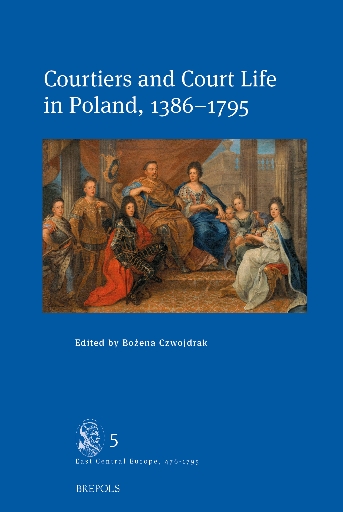
Courtiers and Court Life in Poland, 1386–1795
show More to view fulltext, buy and share links for:Courtiers and Court Life in Poland, 1386–1795 show Less to hide fulltext, buy and share links for: Courtiers and Court Life in Poland, 1386–1795This collection of studies explores the complexities of the royal courts of Poland from the late medieval period to the cusp of modernity. Drawing on pioneering research and primary sources, the volume authors dissect the multifaceted roles and dynamics of courtiers, positioning them within the broader socio-political and cultural paradigms of their time. From the distinct cultural imprints of the Jagiellon dynasty to the challenges faced by monarchs elected during the eighteenth century, each study within this collection provides a rigorous examination of courtly structures, influences, and transformations.
The volume examines the symbiotic relationships between courtiers and monarchs, the changing ideals of courtly service, and the impact of both domestic traditions and foreign influences on the Polish courts. It offers invaluable insights for scholars of court culture, bringing to the world stage evidence from the archives of Poland and seeking to understand the evolution of court life and its implications for the broader historical narratives of Poland throughout the entire existence of this composite monarchy.
-