


Brepols Online Books Medieval Miscellanea Collection 2025 - bob2025mime

Collection Contents
4 results
-
-
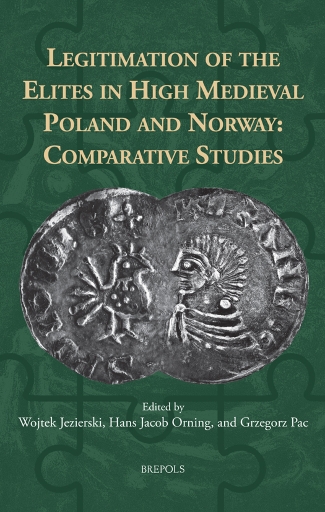
Legitimation of the Elites in High Medieval Poland and Norway
show More to view fulltext, buy and share links for:Legitimation of the Elites in High Medieval Poland and Norway show Less to hide fulltext, buy and share links for: Legitimation of the Elites in High Medieval Poland and NorwayBetween the years 1000 and 1300, the two developing polities of Norway and Poland often followed similar trends. Both realms were located on what was considered the periphery of Europe, both joined Latin Christendom — and with it, the wider sphere of European cultural influence — at the turn of the first millennium, and both, by the end of the thirteenth century, had largely coalesced as stable kingdoms. Yet while the histories of these two countries have long been studied along national lines, it remains rarer for them to be considered outside of their traditional geographical context, and studied via comparison with events elsewhere.
This innovative volume seeks to explore the means and uses of symbolic power that were employed by religiopolitical elites in order to assert their legitimacy and dominance by taking an explicitly comparative approach and dual perspective on these two polities. What stories did elites tell themselves and others about their deservedness to rule, what spaces and objects did they utilize in order to project their elevated status, and how did struggle and rivalry form part of their societal dominance? Formed from chapters co-written by experts in Polish and Norwegian history, this unique volume not only reflects on the similarities and differences between events in these two polities, but also more broadly offers conceptual tools and comparative frameworks that can enhance our wider understanding of the conditions and factors that shaped religiopolitical behaviour on the peripheries.
-
-
-
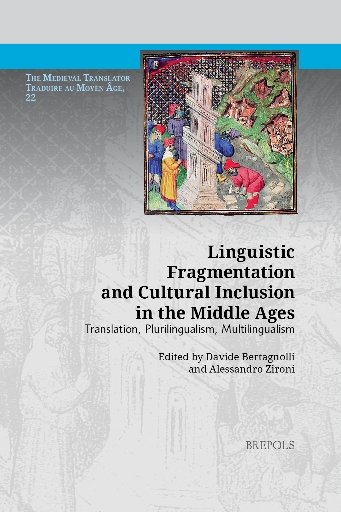
Linguistic Fragmentation and Cultural Inclusion in the Middle Ages
show More to view fulltext, buy and share links for:Linguistic Fragmentation and Cultural Inclusion in the Middle Ages show Less to hide fulltext, buy and share links for: Linguistic Fragmentation and Cultural Inclusion in the Middle AgesLinguistic fragmentation contains the risk of cultural separation, while the concept of inclusion implies the recognition of the difference of the Other, which must be recognised in its specificity to develop a process of inclusion. One of the main means of overcoming the dangers hidden in linguistic fragmentation is unquestionably plurilingualism and, relatedly, translation. Translation enables the transmission of content from one linguistic-cultural system to another. Multilingualism is not just a peculiarity of the contemporary age, it is a fundamental phenomenon of the Middle Ages. The conceptual relationship between linguistic fragmentation and cultural inclusion, and the inter-relationships of these two apparently opposing poles with the communicative tool of translation, requires some reflection within the broader framework of translation studies in the Middle Ages. This collection of essays examines the seemingly paradoxical concept of linguistic fragmentation as an instrument of cultural inclusion thanks to the practice of translation.
The essays explain the relationship through translations between many medieval languages and texts, from Icelandic to Italian, from English to French, and more. They examine vernacular circulation of religious texts (translation of the Bible, of hagiographic or homiletic texts, etc.); circulation, thanks to translation, of literary texts (e.g., the translation of epic-chivalric cycles); translation from a koine language to another language and vice versa; and the relationship between the choice of the target language and the socio-cultural context.
-
-
-

L’amour au Moyen Âge
show More to view fulltext, buy and share links for:L’amour au Moyen Âge show Less to hide fulltext, buy and share links for: L’amour au Moyen ÂgePeu de notions médiévales sont aussi vastes et, semble-t-il, aussi hétérogènes que l’« amour » puisque, de la convoitise à la charité, de la passion amoureuse à la piété filiale, de l’amitié entre égaux à l’amour du prince, de l’amour de Dieu à l’amour du prochain en passant par celui envers soi-même ou ses ennemis, il reçoit les noms les plus variés, vise les objets les plus divers, encourt les jugements moraux les plus contraires. Ceci soulève plusieurs questions, au centre des échanges entre médiévistes de toutes disciplines: histoire, philosophie, théologie, lettres latines et romanes, histoire du droit, histoire de l’art etc. Pourquoi observe-t-on soudain une vogue littéraire de l’amour au xiie siècle, chez les poètes d’oc et d’oïl, les exégètes du Cantique des cantiques, les théologiens de la Trinité ou de la charité, les maîtres de la vie intérieure, les commentateurs du pseudo-Denys, les philosophes de l’amor honestus ou de l’amitié, les canonistes définissant le mariage, les théoriciens de l’amour du prince et de ses sujets, les amants eux-mêmes dont on commence à conserver les correspondances enflammées? Ensuite, comment écrivains et docteurs, tout en distinguant soigneusement les diverses sortes d’amour, les intègrent-ils dans une même conception unitaire? Enfin, pourquoi, dans les trois derniers siècles du Moyen Âge, se met-on à opposer de plus en plus la connaissance et l’amour comme deux facultés de l’âme symétriques et antithétiques, et quels sont les enjeux jusqu’à aujourd’hui de cette joute entre l’amour et la connaissance ?
-
-
-
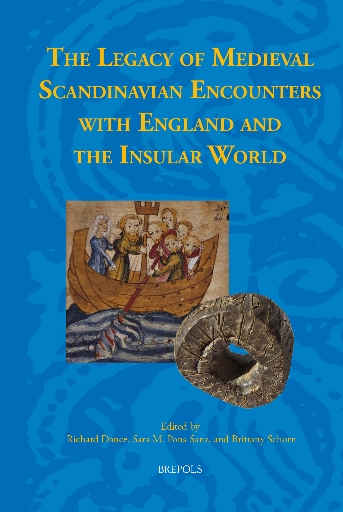
The Legacy of Medieval Scandinavian Encounters with England and the Insular World
show More to view fulltext, buy and share links for:The Legacy of Medieval Scandinavian Encounters with England and the Insular World show Less to hide fulltext, buy and share links for: The Legacy of Medieval Scandinavian Encounters with England and the Insular WorldThe Vikings had a major and lasting impact on the English language. This volume is a unique companion to the study of Anglo-Scandinavian language contact, providing expert discussions of its contexts, backgrounds, and the considerable afterlife of its effects through the Middle Ages and down to the present day. It contains thirteen new articles by leading specialists in the fields of early medieval languages, literature, and history, specially commissioned in order to explore as wide a range as possible of the historical and cultural contexts for Anglo-Scandinavian encounters in the Viking Age and the evidence for them. These essays analyse in detail the Old Norse influence on English, offering studies of words and their meanings in their textual and literary contexts, and including lexicography, dialectology, and syntactic research; they explore findings from archaeology, inscriptions, and place-names; and they situate Anglo-Scandinavian contacts in the larger multilingual, multicultural contexts of the North Sea and Irish Sea worlds.
-