


Brepols Online Books Medieval Miscellanea Collection 2025 - bob2025mime

Collection Contents
3 results
-
-
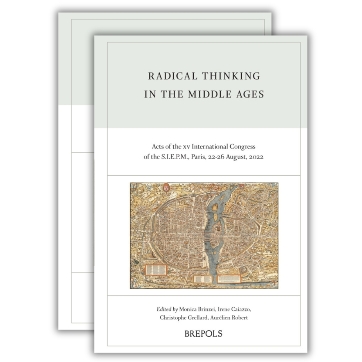
Radical Thinking in the Middle Ages: Acts of the XVth International Congress of the SIEPM, Paris, 22-26 August 2022
show More to view fulltext, buy and share links for:Radical Thinking in the Middle Ages: Acts of the XVth International Congress of the SIEPM, Paris, 22-26 August 2022 show Less to hide fulltext, buy and share links for: Radical Thinking in the Middle Ages: Acts of the XVth International Congress of the SIEPM, Paris, 22-26 August 2022These volumes present a selection of papers delivered in Paris at the XV International Congress of the Société Internationale pour l’Étude de la Philosophie Médiévale, August 22-26, 2022. The appearance of the term radix positionis in medieval debates inspired the contributors to investigate whether there was something that could be considered radical thought in the Middle Ages and, if so, what the roots of this radical thought were in the different philosophical traditions in various geographical, cultural, religious, and linguistic contexts (Arabic, Greek, Hebrew, Latin).
Medieval philosophy often engaged in a quest for origins, but it could also be radical in its methodology or in its attitude when it refused any compromise on its principles or basic concepts, be they innovative or rediscovered. Radicalism could be conceived as extremism in pushing a hypothesis, procedure, or line of inquiry to its limits, leading to extreme positions. Radical thought could mean being intellectually inflexible on principles, obstinate in embracing theses that broke from tradition, progressive but also extremist. The contributions in these volumes thus analyse case-studies of doctrinal conflict, dogmatic struggle, and condemnation by religious or academic institutions, presenting examples of both intellectual courage and philosophical intransigence.
-
-
-
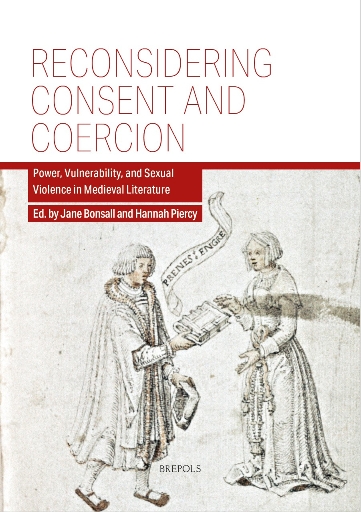
Reconsidering Consent and Coercion
show More to view fulltext, buy and share links for:Reconsidering Consent and Coercion show Less to hide fulltext, buy and share links for: Reconsidering Consent and CoercionHow can contemporary theorisations of consent help us to nuance our understanding of consent and coercion in the Middle Ages? And what can reconsidering medieval attitudes towards consent offer to our own ‘consent culture’? Contemporary feminist approaches have identified consent both as a potent political framework for liberation and as an inherently limited concept that opens out onto other important ethical questions. Proceeding from this moment, this book looks in two directions to understand the varied ways in which structural inequalities impact meaningful consent and facilitate coercion in the Middle Ages and today.
Building upon the momentum of ‘medieval consent studies’ as a newly defined field, this volume expands the focus beyond rape and raptus, assessing more varied representations of consent and coercion through an intersectional consideration of power, inequality, and sexual violence. The contributions bring together different methodologies, cultural contexts, and literary traditions to highlight literature’s capacity to reflect otherwise undocumented forms of sexual vulnerability. Offering a compelling case for integrating critical approaches like trans history, codicology, animal studies, ecocriticism, and disability studies into this field, Reconsidering Consent and Coercion demonstrates the vital necessity of a nuanced and inclusive understanding of the past for our present discourses of consent.
-
-
-
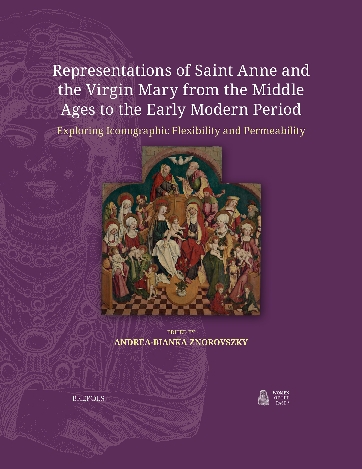
Representations of Saint Anne and the Virgin Mary from the Middle Ages to the Early Modern Period
show More to view fulltext, buy and share links for:Representations of Saint Anne and the Virgin Mary from the Middle Ages to the Early Modern Period show Less to hide fulltext, buy and share links for: Representations of Saint Anne and the Virgin Mary from the Middle Ages to the Early Modern PeriodBetween the thirteenth and the sixteenth centuries, the cult of the Virgin Mary underwent significant changes, a shift clearly revealed by an increase in artistic representations of Mary, as well as a flourishing devotional literature in her honour, written in both Latin and the vernacular. One aspect of this change was a broader attention to Mary’s genealogical line, and in particular to her relationship with St Anne. The result was not only a renewed focus on the vita Annae, but also a significant overlap in how these two women were represented, juxtaposed, and perceived.
This volume traces the often significant iconographic flexibility in terms of both how the Virgin Mary and Saint Anne were presented and perceived, and what can be termed a permeability between visual representations of the two saints. Focusing on the multiple readings, layers of meaning, and the visual interplay between the vita Mariae and the vita Annae, the chapters gathered here explore the overlap and influence between different iconographic motifs, and how these were used to advance political, religious, and social ideologies at the time of their creation, as well as exploring representations across a range of different media, from sculptures and frescoes to panel paintings, and manuscript illuminations.
-