


Brepols Online Books Medieval Miscellanea Collection 2025 - bob2025mime

Collection Contents
21 - 40 of 50 results
-
-
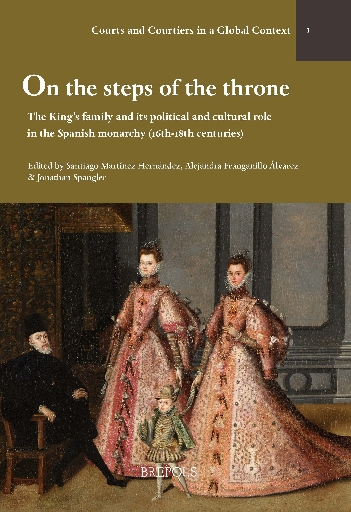
On the steps of the throne
show More to view fulltext, buy and share links for:On the steps of the throne show Less to hide fulltext, buy and share links for: On the steps of the throneThe aim of this book is to forge a new critical perspective on the Spanish Habsburgs’ family networks by studying the roles performed by princes and princesses of the blood, of different ranks and status, in the service of the Spanish monarchs. The chapters included draw on a range of case studies in order to rethink the dynastic and political role assigned to the king’s relatives. They also analyse the problematic issues generated by the court, ceremonial, diplomatic, dynastic, and governmental duties undertaken by these political actors. In doing so, these studies forge a deeper understanding of the conflicts prompted by the administration of the extensive transnational community of Spanish Habsburg interests and allegiances. The innovative and insightful studies included in this volume are drawn from both unpublished doctoral theses as well as ongoing research projects. In this sense, it seeks to contribute to the evolving historiographical debate on the role played by a range of agents who have not been studied in depth by historians, above all with a focus on the construction of the Spanish Habsburg monarchy in the early modern period. The approach we have adopted has been to prioritize little-known and less-studied agents, contexts, and periods from the Spanish Habsburg sphere, which are nonetheless highly relevant for developing a deeper knowledge of the potential and expectations assigned to the king’s extended family, whether legitimate or illegitimate. Furthermore, this book addresses the problematic issues and conflicts that were prompted by these political agents in undertaking various diplomatic, dynastic and governmental roles.
-
-
-
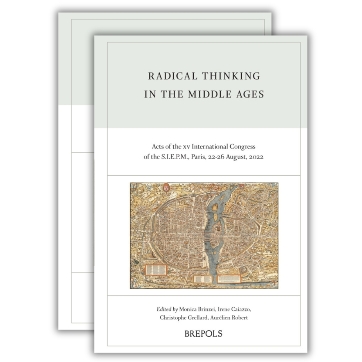
Radical Thinking in the Middle Ages: Acts of the XVth International Congress of the SIEPM, Paris, 22-26 August 2022
show More to view fulltext, buy and share links for:Radical Thinking in the Middle Ages: Acts of the XVth International Congress of the SIEPM, Paris, 22-26 August 2022 show Less to hide fulltext, buy and share links for: Radical Thinking in the Middle Ages: Acts of the XVth International Congress of the SIEPM, Paris, 22-26 August 2022These volumes present a selection of papers delivered in Paris at the XV International Congress of the Société Internationale pour l’Étude de la Philosophie Médiévale, August 22-26, 2022. The appearance of the term radix positionis in medieval debates inspired the contributors to investigate whether there was something that could be considered radical thought in the Middle Ages and, if so, what the roots of this radical thought were in the different philosophical traditions in various geographical, cultural, religious, and linguistic contexts (Arabic, Greek, Hebrew, Latin).
Medieval philosophy often engaged in a quest for origins, but it could also be radical in its methodology or in its attitude when it refused any compromise on its principles or basic concepts, be they innovative or rediscovered. Radicalism could be conceived as extremism in pushing a hypothesis, procedure, or line of inquiry to its limits, leading to extreme positions. Radical thought could mean being intellectually inflexible on principles, obstinate in embracing theses that broke from tradition, progressive but also extremist. The contributions in these volumes thus analyse case-studies of doctrinal conflict, dogmatic struggle, and condemnation by religious or academic institutions, presenting examples of both intellectual courage and philosophical intransigence.
-
-
-
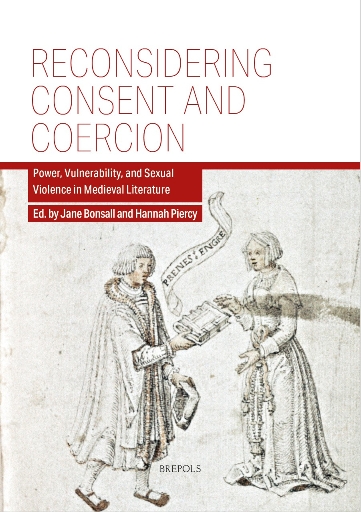
Reconsidering Consent and Coercion
show More to view fulltext, buy and share links for:Reconsidering Consent and Coercion show Less to hide fulltext, buy and share links for: Reconsidering Consent and CoercionHow can contemporary theorisations of consent help us to nuance our understanding of consent and coercion in the Middle Ages? And what can reconsidering medieval attitudes towards consent offer to our own ‘consent culture’? Contemporary feminist approaches have identified consent both as a potent political framework for liberation and as an inherently limited concept that opens out onto other important ethical questions. Proceeding from this moment, this book looks in two directions to understand the varied ways in which structural inequalities impact meaningful consent and facilitate coercion in the Middle Ages and today.
Building upon the momentum of ‘medieval consent studies’ as a newly defined field, this volume expands the focus beyond rape and raptus, assessing more varied representations of consent and coercion through an intersectional consideration of power, inequality, and sexual violence. The contributions bring together different methodologies, cultural contexts, and literary traditions to highlight literature’s capacity to reflect otherwise undocumented forms of sexual vulnerability. Offering a compelling case for integrating critical approaches like trans history, codicology, animal studies, ecocriticism, and disability studies into this field, Reconsidering Consent and Coercion demonstrates the vital necessity of a nuanced and inclusive understanding of the past for our present discourses of consent.
-
-
-
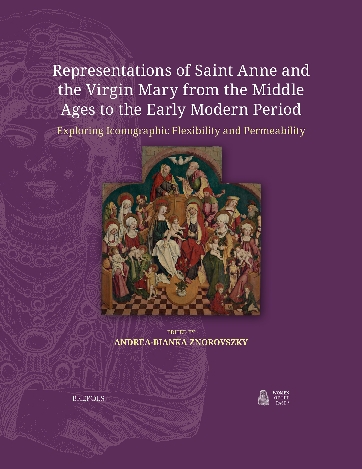
Representations of Saint Anne and the Virgin Mary from the Middle Ages to the Early Modern Period
show More to view fulltext, buy and share links for:Representations of Saint Anne and the Virgin Mary from the Middle Ages to the Early Modern Period show Less to hide fulltext, buy and share links for: Representations of Saint Anne and the Virgin Mary from the Middle Ages to the Early Modern PeriodBetween the thirteenth and the sixteenth centuries, the cult of the Virgin Mary underwent significant changes, a shift clearly revealed by an increase in artistic representations of Mary, as well as a flourishing devotional literature in her honour, written in both Latin and the vernacular. One aspect of this change was a broader attention to Mary’s genealogical line, and in particular to her relationship with St Anne. The result was not only a renewed focus on the vita Annae, but also a significant overlap in how these two women were represented, juxtaposed, and perceived.
This volume traces the often significant iconographic flexibility in terms of both how the Virgin Mary and Saint Anne were presented and perceived, and what can be termed a permeability between visual representations of the two saints. Focusing on the multiple readings, layers of meaning, and the visual interplay between the vita Mariae and the vita Annae, the chapters gathered here explore the overlap and influence between different iconographic motifs, and how these were used to advance political, religious, and social ideologies at the time of their creation, as well as exploring representations across a range of different media, from sculptures and frescoes to panel paintings, and manuscript illuminations.
-
-
-
Sacred Places
show More to view fulltext, buy and share links for:Sacred Places show Less to hide fulltext, buy and share links for: Sacred PlacesThe body or relics of a saint could attract divine protection on the community and the place where they were kept. If, in some cases, the monasteries were structures of assistance to sanctuaries of certain notoriety, starting from the 7th century, they increasingly played the role of protagonists, autonomously managing the devotional activities derived from the acquisition or translation of relics. The need to preserve the isolation of the 'clausura' and to manage, at the same time, an increasing flow of pilgrims led these monasteries to build new spaces for prayer, communion and assistance.
This book includes the Proceedings of the International Conference held in Naples (Italy) on November 28-29, 2022. The Conference - organized, as part of a Marie-Curie research project, by the Fondazione San Bonaventura with the contribution of the Italian Ministry of Culture - brought together historians, archaeologists, and art historians to discuss the theme of spatial articulation of monasteries chosen as places of pilgrimage during the Early Middle Ages in Western Europe. From this interdisciplinary discussion, exciting insights have emerged on aspects of particular relevance, such as the organization of the funerary space and interaction between monks and laypeople, the elements of balance or clash between 'clausura' and hospitality and the comparison between male and female monasteries as devotional centers.
-
-
-
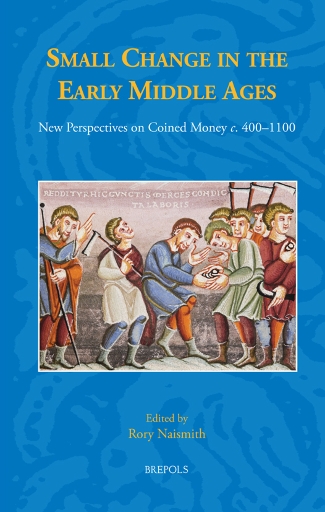
Small Change in the Early Middle Ages
show More to view fulltext, buy and share links for:Small Change in the Early Middle Ages show Less to hide fulltext, buy and share links for: Small Change in the Early Middle AgesCoined money is a familiar part of day-to-day life, and has been for millennia in many societies. In the early Middle Ages, however, it worked rather differently. People across the former Roman Empire and beyond continued to think in terms of monetary units of account, but the supply and use of actual coin became highly uneven. Access to low-value coinage, small change, was particularly attenuated in western Europe, where gold and silver pieces predominated. This volume explores how people and societies dealt with changes to monetary systems. It looks at the experiences of different groups in society, from those who struggled with regimes that used only high value coins, to the elites who tended to benefit from those same conditions. The ten contributions to this volume consider diverse geographical areas from Byzantine Egypt to Italy, Francia, and Britain, identifying parallels and divergences among them. The chapters draw on cutting-edge archaeological and historical research to give a panorama of the latest thinking on early medieval money and coinage.
-
-
-
Small Churches and Religious Landscapes in the North Atlantic c. 900–1300
show More to view fulltext, buy and share links for:Small Churches and Religious Landscapes in the North Atlantic c. 900–1300 show Less to hide fulltext, buy and share links for: Small Churches and Religious Landscapes in the North Atlantic c. 900–1300In recent years, archaeologists working at Norse sites across the North Atlantic have excavated a number of very small churches with cemeteries, often associated with individual farms. Such sites seem to be a characteristic feature of early ecclesiastical establishments in Norse settlements around the North Atlantic, and they stand in marked contrast to church sites elsewhere in Europe. But what was the reason behind this phenomenon?
From Greenland to Denmark, and from Ireland to the Hebrides, Iceland, and Norway, this volume presents a much-needed overview of small church studies from around the North Atlantic. The chapters gathered here discuss the different types of evidence for small churches and early ecclesiastical landscapes, review existing debates, and develop a synthesis that places the small churches in a broader context. Ultimately, despite the varied types of data at play, the contributions to this volume combine to offer a more coherent picture of the small church phenomenon, pointing to a church that was able to answer the needs of a newly converted population despite the lack of an established infrastructure, and throwing new light on how people lived and worshipped in an environment of dispersed settlements.
-
-
-
Storyworlds and Worldbuilding in Old Norse‑Icelandic Literature
show More to view fulltext, buy and share links for:Storyworlds and Worldbuilding in Old Norse‑Icelandic Literature show Less to hide fulltext, buy and share links for: Storyworlds and Worldbuilding in Old Norse‑Icelandic LiteratureThe storyworlds of Old Norse-Icelandic literature are multifaceted and variable, ranging from the worlds of heroic poetry and popular romance to the recognizable narrative universe built by the Sagas of Icelanders. Despite this, they have rarely been explored, and narratological theories of storyworlds or fantasy scholarship have had little impact on the field. Yet given that every story creates its own storyworld, it can be assumed that Old Norse-Icelandic literary texts, too, build worlds — and these worlds are diverse and complex, as shown by the contributors in this volume: they constantly engage with one another, exploring, shaping, and expanding, while also entering into a dialogue with the primary world from which they draw.
This volume brings together scholars from different areas of Old Norse-Icelandic studies to explore questions related to not only the storyworlds of medieval Icelandic literature, but also those of legal and learned texts, and to the way that they are built. Together they inquire into the nature of these worlds, into their preservation and transmission in manuscripts, their transmediality, transnarrativity, and reception. In doing so, these inquiries showcase the breadth of new perspectives on medieval Icelandic literature made possible by the application of narratological theory in its study.
-
-
-
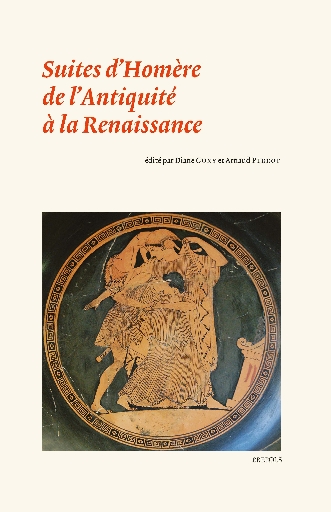
Suites d’Homère de l’Antiquité à la Renaissance
show More to view fulltext, buy and share links for:Suites d’Homère de l’Antiquité à la Renaissance show Less to hide fulltext, buy and share links for: Suites d’Homère de l’Antiquité à la RenaissanceThis book is the result of an international conference organized by the University of Tours in May 2021. It sets out to explore the notion of sequel in literature by examining the Homeric poems. While Gérard Genette evoked Homer in a considerable number of pages of his essay Palimpsestes, he however paid particular attention to forms of continuity from the front, from the back and from the sides, afterwards and sideways, which seem to make Homeric material the first victim of the cyclical additions that appear to constitute the ineluctable future of the great epics. In recent decades, however, these positions have been strongly nuanced and the time was ripe, therefore, for diachronic reflection on the validity of the notion of the ‘Homeric sequel’ by testing the meaning it has in various geographical and cultural contexts, from Antiquity to the Middle Ages and the Renaissance.
The authors of this volume contribute to the discussion of the literary concept of ‘continuation’ and offer a wide panorama of the poet's fruitful reception over time; they do so without neglecting the phenomena of transformation made possible by the survival of a mythology of Homeric origin which exists despite the absence of a direct reading of the Greek texts.
-
-
-
The Co-production of Judaism, Christianity, and Islam
show More to view fulltext, buy and share links for:The Co-production of Judaism, Christianity, and Islam show Less to hide fulltext, buy and share links for: The Co-production of Judaism, Christianity, and IslamJudaism, Christianity, and Islam have always formed, re-formed, and transformed themselves in conversation. That is, these religions have come to exist in all their varieties by interacting with, thinking about, and imagining each other. In this sense they are co-produced, linked by a dynamic and ongoing inter-dependence. The fifteen essays collected in this volume explore moments of such religious coproduction from the second to the twenty-first century, from early pilgrimage sites to social media. The case studies range across textual and material cultures, showing how a variety of artefacts, coins, rituals, communities, narratives, theological doctrines, and scholarly concepts, were all co-produced across the three religious traditions. In so doing they present a panorama of possibilities from the past, as well as a taxonomy that can help us think about the future of religious co-production. An introductory essay describes the advantages of approaching the past, present, and future of these religions through the lens of co-production, and reflects on crucial methodological issues related to the understanding of Judaism, Christianity, and Islam as co-produced religions.
-
-
-
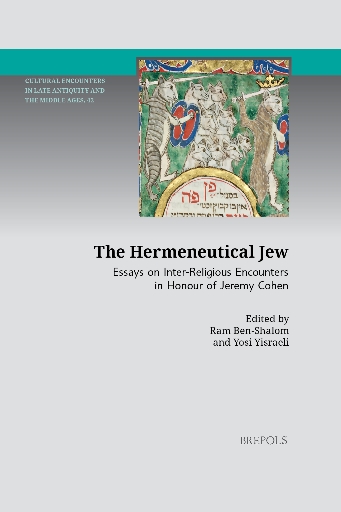
The Hermeneutical Jew
show More to view fulltext, buy and share links for:The Hermeneutical Jew show Less to hide fulltext, buy and share links for: The Hermeneutical JewThe interconnected histories of Judaism and Christianity are explored in this compelling volume honouring the influential work of Jeremy Cohen. Cohen’s pioneering studies have reshaped our understanding of these religious traditions, emphasizing the crucial role of cross-religious engagements in forming their self-perceptions and identities.
Comprising fifteen chapters, the book is organized into four thematic sections. The first section, Literary Mirrors and Inter-Religious Representations, explores patterns of internalizations, (mis)representations, and appropriations between competing religious traditions. The second section, Physical and Figurative Encounters, addresses the roles played by visible and physical markers in setting interreligious boundaries and exchanges. The third section, Agents of Anti-Jewish Discourse, focuses on Christian thinkers of the late Middle Ages who propagated anti-Jewish measures or prejudices across different genres and causes. The final section, The Transformability of the Jews and the Hermeneutics of Inter-Religious Conversion, examines the cultural and intellectual impact of different efforts to convert Jews and Jewishness.
This collection of new studies by leading medievalists serves as a fitting tribute to Jeremy Cohen’s groundbreaking contributions and offers readers an insightful look into the complex world of medieval and early modern religious identity.
-
-
-
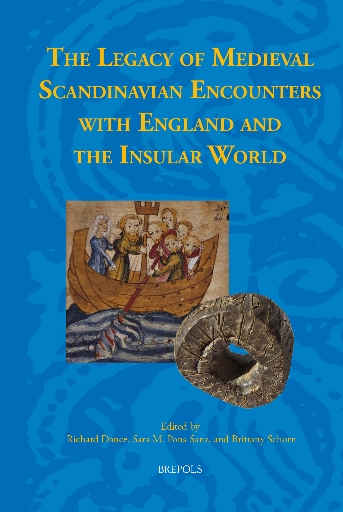
The Legacy of Medieval Scandinavian Encounters with England and the Insular World
show More to view fulltext, buy and share links for:The Legacy of Medieval Scandinavian Encounters with England and the Insular World show Less to hide fulltext, buy and share links for: The Legacy of Medieval Scandinavian Encounters with England and the Insular WorldThe Vikings had a major and lasting impact on the English language. This volume is a unique companion to the study of Anglo-Scandinavian language contact, providing expert discussions of its contexts, backgrounds, and the considerable afterlife of its effects through the Middle Ages and down to the present day. It contains thirteen new articles by leading specialists in the fields of early medieval languages, literature, and history, specially commissioned in order to explore as wide a range as possible of the historical and cultural contexts for Anglo-Scandinavian encounters in the Viking Age and the evidence for them. These essays analyse in detail the Old Norse influence on English, offering studies of words and their meanings in their textual and literary contexts, and including lexicography, dialectology, and syntactic research; they explore findings from archaeology, inscriptions, and place-names; and they situate Anglo-Scandinavian contacts in the larger multilingual, multicultural contexts of the North Sea and Irish Sea worlds.
-
-
-

The Materiality of Sound in Chant Manuscripts in the East
show More to view fulltext, buy and share links for:The Materiality of Sound in Chant Manuscripts in the East show Less to hide fulltext, buy and share links for: The Materiality of Sound in Chant Manuscripts in the EastThe two books of Scriptor, Cantor & Notator present an innovative multi-author project dealing with the complex interconnections between learning, writing and performing chant in the Middle Ages. A number of different methodological approaches have been employed, with the aim of beginning to understand the phenomenon of chant transmission over a large geographical area, linking and contrasting modern definitions of East and West. Thus, in spite of this wide geographical spread, and the consequent variety of rites, languages and musical styles involved, the common thread of parallels and similarities between various chant repertoires arising from the need to fix oral repertories in a written form, and the challenges involved in so doing, are what bring this wide variety of repertoires and approaches together. This multi-centric multi-disciplinary approach will encourage scholars working in these areas to consider their work as part of a much larger geographical and historical picture, and thus reveal to reader and listener more, and far richer, patterns of connections and developments than might otherwise have been suspected. The Materiality of Sound in Chant Manuscripts in the East brings together articles on ancient Greek, Byzantine, Coptic and Armenian music scripts in the East. Together with the collection of essays published in The Materiality of Sound in Chant Manuscripts in the West, these books discuss local scribal peculiarities and idiosyncrasies beyond the cultural and geographical contexts of production and uses of their manuscript sources.
-
-
-

The Multilingual Dynamics of Medieval Literature in Western Europe, c. 1200–c. 1600
show More to view fulltext, buy and share links for:The Multilingual Dynamics of Medieval Literature in Western Europe, c. 1200–c. 1600 show Less to hide fulltext, buy and share links for: The Multilingual Dynamics of Medieval Literature in Western Europe, c. 1200–c. 1600While the multilingualism of the medieval world has been at the forefront of research agendas across medieval studies in recent years, there nonetheless remain many questions to answer. What, for example, were the stakes and consequences of multilingualism for literary culture? And how do these change if we think of multilingualism through cultural, social, artistic, or material lenses? Taking such concerns as their starting point, the essays in this volume address a variety of aspects of medieval literature and literary culture related to multilingualism. They deal with multilingualism in relation to manuscripts, literary contexts, and historical contexts. The chapters gathered together here address considerations that have been overlooked in previous scholarship, and ask where the future of the study of medieval multilingualism lies. Contributions to the volume are grouped thematically, rather than by date or period, in order to draw out comparative perspectives, with the aim of encouraging innovative new approaches to future research in the field.
-
-
-
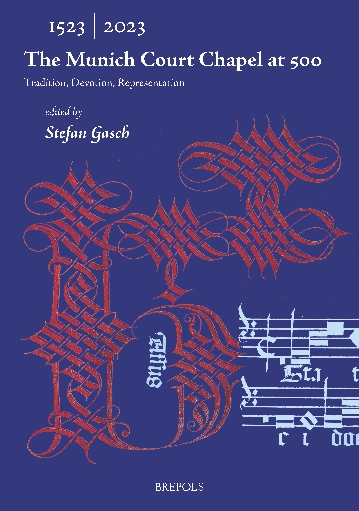
The Munich Court Chapel at 500
show More to view fulltext, buy and share links for:The Munich Court Chapel at 500 show Less to hide fulltext, buy and share links for: The Munich Court Chapel at 500This collection of essays is the first to focus exclusively on the Wittelsbach court of Duke Wilhelm IV of Bavaria (1493–1550). The contributors argue for a deeper understanding of this duke’s reign and acknowledge his crucial role in shaping the religious and cultural identity of the Duchy of Bavaria. By providing insights into the duke’s cultural aspirations, the organisation of the court, musical sources, religious musical practice, and everyday working life, this book aims to: (1) situate the court of Wilhelm IV in the context of the religious and political upheavals of the early sixteenth century; (2) trace the development of the musical repertoire and personnel of the Bavarian court chapel between 1500 and 1550; and (3) critically assess the degree to which the Munich court could be considered ‘modern’ by re-evaluating the broader cultural, religious, and musical life of the court around 1520. The volume thus sheds light on the cultural ambitions of a duke who defined music and art as expressions of strategic elements that interwove tradition, devotion, and representation in a programme of governance based on humanist education—a duke whose foresight enabled the Munich court to quickly become one of the most prestigious and famous seats of power in the Holy Roman Empire.
-
-
-

The Power of Words in Late Medieval Devotional and Mystical Writing
show More to view fulltext, buy and share links for:The Power of Words in Late Medieval Devotional and Mystical Writing show Less to hide fulltext, buy and share links for: The Power of Words in Late Medieval Devotional and Mystical WritingThis volume honours Denis Renevey's contribution to late medieval devotional and mystical studies via a series of essays focusing on a topic that has been of central relevance to Denis's research: the power of words. Contributors address the centrality of language to devotional and mystical experience as well as the attitudes towards language fostered by devotional and mystical practices. The essays are arranged in four sections: 'Other Words: Figures and Metaphors: treating the application of the languages of romantic love, medicine, and travel to descriptions of devotional and mystical experience; 'Iconic Words: Images and the Name of Jesus; considering the deployment of words and the Word (Jesus) as powerful images in devotional practice; 'Testing Words: Syntax and Semantics; exploring the ways in which medieval writers stretch the conventions of language to achieve fresh perspectives on devotional and mystical experiences; and 'Beyond Words: The Apophatic and The Senses; offering novel perspectives on a group of texts that address the difficulty of expressing God and visionary experience with words.
The volume's global purpose is to demonstrate the attractions of an explicitly philological approach for scholars studying the Christian tradition.
-
-
-
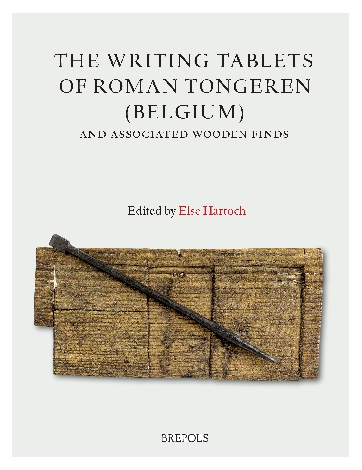
The Writing Tablets of Roman Tongeren (Belgium)
show More to view fulltext, buy and share links for:The Writing Tablets of Roman Tongeren (Belgium) show Less to hide fulltext, buy and share links for: The Writing Tablets of Roman Tongeren (Belgium)Roman wooden writing tablets, known in Latin as tabulae ceratae, have been found by archaeologists in various locations around the former capital of the civitas/municipium Tungrorum or Roman Tongeren (now the Belgian city of Tongeren-Borgloon). These rare and delicate finds are remarkable not only due to the excellent state of their preservation, but also because they are inscribed with the remnants of texts, once etched into an overlying wax layer, that can, to the discerning eye, still be deciphered. The tablets not only provide concrete information about religious, judicial and administrative practices, but they also enhance our understanding of the complex processes of Romanisation and Latinisation in the northwestern civitates and municipia of the Roman Empire.
Unearthed in the first half of the twentieth century, with a second group discovered in 2013, the Roman tablets housed in the Gallo-Roman Museum of Tongeren-Borgloon and in the city’s municipal heritage depository, became the object of an in-depth study by an international team of specialists piloted by the Gallo-Roman Museum. It is the results of this project that are presented here in this volume for the first time. The painstaking process of deciphering and interpreting the script marks and text fragments is explored via analysis of palaeography, philology and onomastics, along with key scientific techniques such as wax analysis, wood species identification, and script visualisation by Multi-Light Reflectance Imaging. Rich detail is also provided about other associated wooden finds that shed light on how and where the tablets were produced.
The result is a beautifully illustrated and insightful volume that introduces the lost world of Roman Tongeren and its writing tablets to professionals and the general public alike.
-
-
-
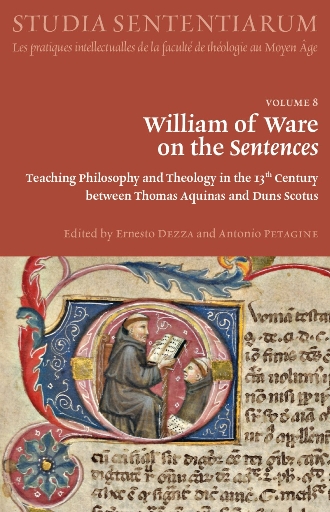
William of Ware on the Sentences
show More to view fulltext, buy and share links for:William of Ware on the Sentences show Less to hide fulltext, buy and share links for: William of Ware on the SentencesThe Franciscan William of Ware – the Magister Scoti – flourished as a theologian at the end of the thirteenth century. Although he wielded significant influence on fourteenth-century theological and philosophical debates, his thought remains little known and even less studied than it deserves. A major cause for this situation lies in the difficulty of accessing the text of his Questions on the Four Books of the Sentences, which is largely unedited.
This volume is the first entirely devoted to William of Ware. It aims to promote a renewed knowledge of his texts and doctrines. The book includes updated information on studies and editions of Ware's texts, and specific studies on crucial aspects of his doctrines, such as theology, metaphysics, physics, epistemology, Christology, and anthropology. Additionally, the volume presents previously unpublished questions from his Commentary on the Sentences.
Overall, the volume serves as an essential reference for the thought and texts of William of Ware and provides a new and illuminating perspective on scholastic culture during the turn from the thirteenth to the fourteenth century.
-
-
-
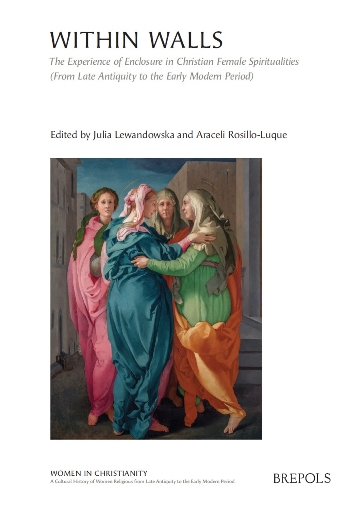
Within Walls
show More to view fulltext, buy and share links for:Within Walls show Less to hide fulltext, buy and share links for: Within WallsWhat different mechanisms did women religious use to interpret the communal and individual aspects of enclosure throughout history? To what extent was enclosure a pivotal feature of Christian spiritual, social and cultural life? How did social and political contexts shape the strategies of nuns and beatas in accepting or rejecting strict enclosure?
Within Walls explores the diverse experiences of enclosure within female Christian spiritualities, presenting it as a crucial concept for a deep understanding of the history of women religious. The volume primarily aims to show the different ways in which women religious lived, negotiated and redefined enclosure in its material and symbolic dimensions. Covering the period from the New Testament era to the late sixteenth century, and spanning regions from the Holy Land and Egypt to Western Europe and colonial Mexico, it explores the evolving meanings and uses of the confined life as experienced and shaped by women religious in Christianity.
The case studies presented in this volume—from the strategies of seclusion of early Christian anchoresses to the plethora of voices of Mediaeval and Early Modern female communities and the authority wielded by individual nuns, pilgrims, prioresses, reformers and mystics—argue that there was by no means a single form of enclosure in female Christian religious life. Instead, inspired by Philip Sheldrake’s interpretation of sacred spaces as polyphonic, this volume stresses the multivocality and multilocality of the term. Adopting an interdisciplinary approach that integrates microhistory, human geography, the cultural analysis of materiality, literary studies, feminist and gender studies, indigenous methodologies, art studies, postcolonial anthropology and the philosophy of religion and spirituality, Within Walls provides fresh perspectives on the most intricate dimension of religious life in history.
-
-
-
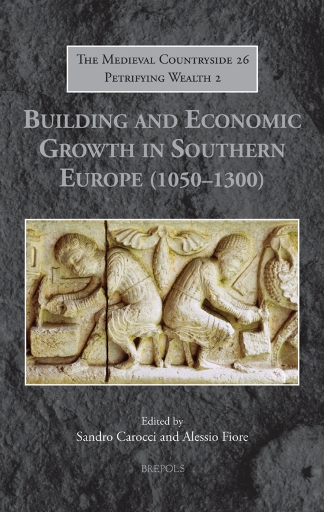
Building and Economic Growth in Southern Europe (1050–1300)
show More to view fulltext, buy and share links for:Building and Economic Growth in Southern Europe (1050–1300) show Less to hide fulltext, buy and share links for: Building and Economic Growth in Southern Europe (1050–1300)The four-volume sub-series ‘Petrifying Wealth’ explores the sudden ubiquity of masonry construction between 1050 and 1300 in Southern Europe and its profound effect on the European landscape. New questions about wealth, society, and medieval building are explored, which highlight the link between construction in durable materials and the shaping of individual, collective, and territorial identities: the birth of a new, long-lasting panorama, epitomising the way we see the space and territory of Europe nowadays.
Volume 2 of the ‘Petrifying Wealth’ series focuses on economic growth in Southern Europe between 1050 and 1300, discussing investments on buildings connected with production and trade. It examines buildings that served a primarily economic purpose, in various aspects: agricultural activity and the conservation and processing of its products, crafts, and exchanges and their material infrastructures. The growth in this period resulted in a multiplication of material structures closely linked with economic activity, such as mills, barns, canals, workshops, and arsenals. Focusing on the dynamics connected with these buildings thus offers a vantage point to better understand the contexts and characteristics of the ‘economic take-off’ in Southern Europe in this period.
-