


Brepols Online Books Medieval Miscellanea Collection 2025 - bob2025mime

Collection Contents
41 - 50 of 50 results
-
-
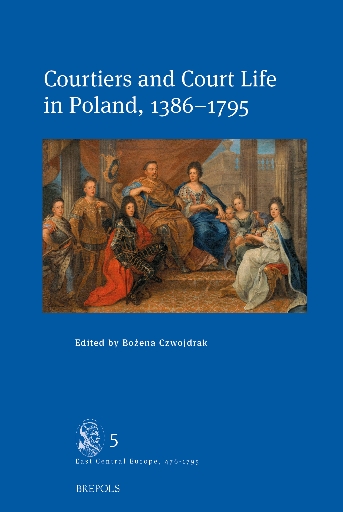
Courtiers and Court Life in Poland, 1386–1795
show More to view fulltext, buy and share links for:Courtiers and Court Life in Poland, 1386–1795 show Less to hide fulltext, buy and share links for: Courtiers and Court Life in Poland, 1386–1795This collection of studies explores the complexities of the royal courts of Poland from the late medieval period to the cusp of modernity. Drawing on pioneering research and primary sources, the volume authors dissect the multifaceted roles and dynamics of courtiers, positioning them within the broader socio-political and cultural paradigms of their time. From the distinct cultural imprints of the Jagiellon dynasty to the challenges faced by monarchs elected during the eighteenth century, each study within this collection provides a rigorous examination of courtly structures, influences, and transformations.
The volume examines the symbiotic relationships between courtiers and monarchs, the changing ideals of courtly service, and the impact of both domestic traditions and foreign influences on the Polish courts. It offers invaluable insights for scholars of court culture, bringing to the world stage evidence from the archives of Poland and seeking to understand the evolution of court life and its implications for the broader historical narratives of Poland throughout the entire existence of this composite monarchy.
-
-
-
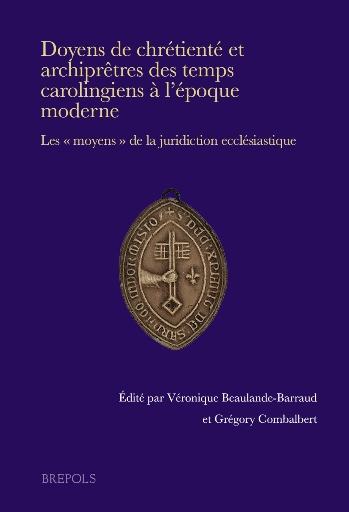
Doyens de chrétienté et archiprêtres des temps carolingiens à l’époque moderne
show More to view fulltext, buy and share links for:Doyens de chrétienté et archiprêtres des temps carolingiens à l’époque moderne show Less to hide fulltext, buy and share links for: Doyens de chrétienté et archiprêtres des temps carolingiens à l’époque moderneLes doyens ruraux, aussi appelés archiprêtres, doyens de chrétienté ou vicaires forains, sont des agents locaux au service des évêques, constituant un échelon intermédiaire entre ce dernier et la paroisse. Ils jouent un rôle très important dans l’administation du diocèse, dans le contrôle des bénéfices ecclésiastiques, du clergé local et des habitants du diocèse. Ils disposent de leur propre juridiction et assurent de nombreuses tâches d’exécution commandées par les autorités diocésaines, notamment le tribunal épiscopal. Ils réunissent régulièrement leurs collègues, avertissent, sanctionnent, jugent, produisent des écrits et des preuves, pour eux mêmes et pour autrui. Ils sont des maillons indispensables de la transmission d’informations entre les autorités diocésaines et la société locale. Le diocèse est en général découpé en circonscriptions qui leur sont confiées. Pourtant, ils n’ont guère retenu l’attention des historiens jusqu’à aujourd’hui. Ce livre a pour ambition de mettre dans la lumière ces doyens de chrétienté et de lever le voile, à partir d’études de cas régionales et de synthèse thématiques plus larges, sur leur apparition et leur place dans les diocèses médiévaux, leur activité, leurs rapports avec les autres acteurs de l’Église et leur rôle dans la société chrétienne. Ces questions sont abordées sur la longue durée, de l’époque carolingienne aux Temps modernes, dans une grande partie de l’Europe occidentale, de l’Italie à l’Angleterre, en passant par le royaume de France. Les doyens s’y révèlent véritablement, pendant des siècles, comme les « moyens » de la juridiction ecclésiastique, aux deux sens de ce terme.
-
-
-
Entangled Histories at Conques
show More to view fulltext, buy and share links for:Entangled Histories at Conques show Less to hide fulltext, buy and share links for: Entangled Histories at ConquesConques has been an important node, a singularity within many entangled histories from late antiquity to the present. This volume publishes papers expanding on the second conference of the project “Conques in the Global World. Transferring Knowledge: from Material to Immaterial Heritage” (Marie Skłodowska-Curie Research and Innovation Staff Exchange H2020). Held in October 2023 at the Centre européen in Conques, the workshop brought together international experts from a variety of disciplines and geographies, indicating the directions future studies of this site might take and reflecting on its material, literary, and historiographical legacy.
The collected essays in this volume reflect scholarly and artistic fascination with Conques. They question, open, and reopen important dossiers, bringing fresh insights and perspectives on the site’s material, literary, and performative culture. These range from Bernard of Angers’s Miracles of Sainte Foy and the scholarly reception of this text to charged discussions of the architectural sources and models for the abbey-church and its role in regional and interregional dynamics. From the heated architectural history, the essays segue into the other hot topic of Conques: rethinking the elusive Majesty of Sainte Foy. Essays examine its fabrication history, its specific perception during the eleventh and twelfth centuries, and its staging and geographical anchoring. These analyses give way to an essay devoted to Conques’ nineteenth-century reconstruction. The present volume closes with a text devoted to the mediation of medieval literary culture within contemporary contexts. In their disciplinary diversity, this volume unites scholarly traditions, opening new avenues for the study of a medieval site which, through its entangled histories, captivates scholars around the world.
-
-
-
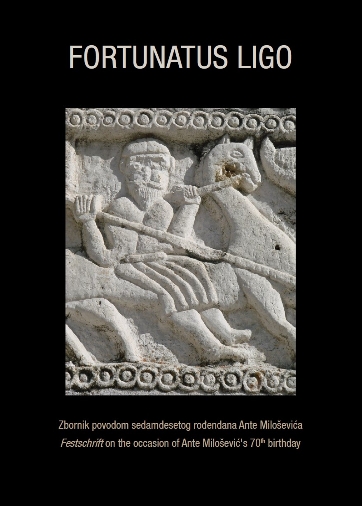
Fortunatus Ligo
show More to view fulltext, buy and share links for:Fortunatus Ligo show Less to hide fulltext, buy and share links for: Fortunatus LigoThis book consists of 36 contributions, all of them intended as a memento for professor Ante Milošević in honour of his 70th birthday. The first part of the book with 5 contributions are depicting the bio-bibliography of the celebrant, and two homages. Thirty-one contributions are original scientific papers dealing with problems in disciplines of history, art history and archaeology in the chronological span from prehistory to early modern times, connected to the territory of today’s Croatia or its neighbouring regions in European context, which is why they are especially relevant for the Croatian national scientific community and its development. Therefore, the scientific impact of this book will be important.
-
-
-
Gerson rhénan
show More to view fulltext, buy and share links for:Gerson rhénan show Less to hide fulltext, buy and share links for: Gerson rhénanChancelier de l’Université de Paris, Jean Gerson (1363-1429) est surtout connu comme théoricien de la théologie mystique et par son action réformatrice au sein de l’Église pendant les années difficiles du Grand Schisme, où il joua un rôle de premier plan. Or si la carrière universitaire et l’action politique de Gerson font de lui un intellectuel parisien, l’évidence de la transmission manuscrite et imprimée désigne sans équivoque le Rhin supérieur comme la région où la diffusion des œuvres du chancelier a été la plus foisonnante. Intervenant à une échelle comparable à la diffusion manuscrite des œuvres de Thomas d’Aquin, le rayonnement de l’œuvre de Gerson a ceci de spectaculaire qu’il dépasse largement le milieu universitaire et qu’il se déploie en moins d’un siècle. Le paradoxe reste pourtant intact de pourquoi l’Allemagne, et non la France, s’impose comme le lieu de rayonnement de l’œuvre de Gerson dans des proportions aussi importantes quantitativement ? Pour répondre à cette question, l’étude de la réception de l’œuvre du chancelier ne peut pas faire l’économie d’une réévaluation de la tradition manuscrite et imprimée des 15e et 16e siècles à partir des témoins préservés dans les bibliothèques du Rhin supérieur. En privilégiant le cas de Gerson comme point d’observation, ce volume se propose de renouveler les perspectives de l’histoire intellectuelle et culturelle dans le long 15e siècle en focalisant sur l’histoire des textes, les conditions et les circonstances de leur transmission, afin de dresser une cartographie des réseaux de communication dans la région rhénane dans les décennies qui entourent l’invention de l’imprimerie.
-
-
-
Music and Liturgy for the Benedicamus Domino c.800–1650
show More to view fulltext, buy and share links for:Music and Liturgy for the Benedicamus Domino c.800–1650 show Less to hide fulltext, buy and share links for: Music and Liturgy for the Benedicamus Domino c.800–1650For more than a millenium, singers in churches, monasteries, and private chapels across Europe have closed their worship with the joyful musical exclamation Benedicamus Domino (‘Let us Bless the Lord’). This moment has sounded in song many times a day: at the end of the Mass, the Office hours, outside the church walls in celebratory processions, as well as in informal sacred, devotional, and festive contexts. Benedicamus Domino was uniquely associated with an unprecedented amount of creative freedom in the sacred rituals of the Christian West: plainchant melodies could be adopted at will from other parts of the liturgy, and this moment inspired a proliferation of poetic and polyphonic elaborations from the eleventh century on.
This collection of essays brings together interdisciplinary contributions from eighteen scholars, illuminating the wide range of ritual, musical, poetic, manuscript, and generic contexts for the Benedicamus Domino versicle in the period c.800–1650. Individual chapters engage with the evidence of liturgical commentaries and Patristic texts, Ordines, and hagiographies. They present and analyse musical and textual embellishments of the Benedicamus Domino, as well as their written traces and material contexts, with several sources discovered or discussed in detail here for the first time. Encompassing a wide geographical and generic scope, this volume reveals unsuspected continuities and contrasts in the history of the Benedicamus Domino versicle in medieval and early modern Europe.
-
-
-
Popes, Bishops, Religious, and Scholars
show More to view fulltext, buy and share links for:Popes, Bishops, Religious, and Scholars show Less to hide fulltext, buy and share links for: Popes, Bishops, Religious, and ScholarsPatrick Zutshi is a leading authority on the later medieval Western Church and papacy and internationally recognised as an expert in papal diplomatic and the Avignon Curia. This volume brings together essays by over twenty of Patrick’s colleagues and friends, all distinguished scholars in medieval history, to celebrate his 70th birthday. The volume reflects both Patrick’s wide scholarly interests, ranging from the administration of the papal curia to intellectual and legal history and the mendicant orders, and his extensive network of colleagues and collaborators in different countries, including Germany, Italy, Ireland, Switzerland, Finland, Australia, USA, and UK. This collection of essays also engages with important themes in later medieval history of wide interest to university students, their teachers, and other researchers in the field, comprising: Mendicants and the Religious Life; University and Intellectual History; Bishops and Secular Clergy; and the Papal Curia between Avignon and Rome. All the essays draw on original research, reflecting Patrick’s own research and editing of manuscript and archival sources.
-
-
-

Power in Numbers
show More to view fulltext, buy and share links for:Power in Numbers show Less to hide fulltext, buy and share links for: Power in NumbersAround the turn of the first millennium, the political and religious landscape of Central Europe began to change dramatically. As the decentralized pagan societies along its borders became Christian, the polity that later became the Holy Roman Empire began to expand significantly according to the principles of the Imperium Christianum — an idea that first originated with Charlemagne, but that was consciously revived by Emperor Otto I and his predecessors as a way of extending power and authority into the Empire’s newly converted eastern fringes. This acculturation was effective, and societies began to actively adopt the new ideology and social order on their own initiative.
Drawing on material first presented at conferences held in the Department of Archaeology at Charles University, Prague, this volume draws together researchers working on different yet connected events along the Empire’s eastern frontier, and the often-overlooked part of society who nevertheless participated in these events, in particular commoners and the rural population. The papers gathered here cover affairs of the early state and church, networks of archaeological and historical heritage, and archaeological, historical, and digital investigations, to offer a blend of both synthetic archaeological and historical overviews and more focused geographical and thematic case studies that explore the role of Christianization in the centralization processes that occurred at the edge of the Ottonian-Salian world. The result is a forward-looking volume that seeks to explore new approaches to historical narratives, in particular by emphasizing the importance of archaeological material in examining early state formation and religious change. Moreover, it is the first synthetic study to directly compare the north-east and south-east peripheries of the later Holy Roman Empire, making it possible to shed new light on these lands at the periphery of Western Christendom.
-
-
-
Sermons, Saints, and Sources
show More to view fulltext, buy and share links for:Sermons, Saints, and Sources show Less to hide fulltext, buy and share links for: Sermons, Saints, and SourcesThe corpus of sermons and saints’ lives from early medieval England, in English and Latin, is the largest and most varied of its kind from a contemporary European perspective. In recent years this extraordinary body of literature has attracted increasing attention, as witnessed by an efflorescence of new editions, translations, commentaries, essay collections, dissertations, and amply funded research projects such as the Electronic Corpus of Anonymous Old English Homilies (ECHOE) project based at the University of Göttingen.
The present collection of thirteen essays grew out of a 2022 conference sponsored by the ECHOE project on Old English anonymous homilies and saints’ lives and their sources and reflects the best of current scholarship on early medieval homiletic and hagiographic literature from England. This literature is central to an understanding of the spiritual imagination and social practices of non-élite audiences. Together, they introduce new discoveries, identify new sources, edit new texts, make new claims about authors, revisers, and textual relationships, revise previous arguments about aspects of literary history, and provide new interpretations of Old English and Latin sermons and saints’ lives. These studies show vividly how European learning influenced the liturgical practices and peripheral education of early medieval England.
Contributors include Helen Appleton, Aidan Conti, Claudia Di Sciacca, R. D. Fulk, Thomas N. Hall, Christopher A. Jones, Leslie Lockett, Rosalind Love, Hugh Magennis, Stephen Pelle, Jane Roberts, Winfried Rudolf, and Charles D. Wright.
-
-
-
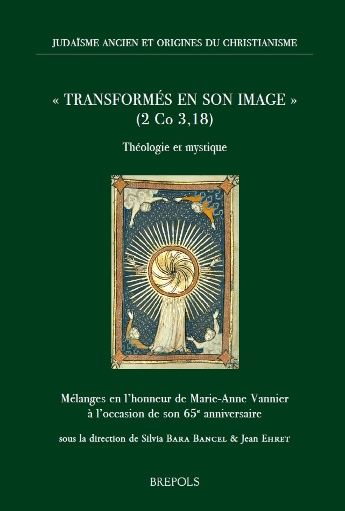
« Transformés en son image » (2 Co 3,18) – Théologie et mystique
show More to view fulltext, buy and share links for:« Transformés en son image » (2 Co 3,18) – Théologie et mystique show Less to hide fulltext, buy and share links for: « Transformés en son image » (2 Co 3,18) – Théologie et mystiqueCet ouvrage, qui se réalise en l’honneur de la professeure Marie-Anne Vannier, dans une perspective interdisciplinaire, réunit les experts sur les grands thèmes qu’elle a parcourus : les Pères de l’Église, les mystiques rhénans et Nicolas de Cues, les études juives et orthodoxes, l’histoire de la mystique et la réflexion systématique sur la relation entre théologie et mystique en centrant les propos autour de la conformation au Christ. L’ouvrage prend en compte des recherches récentes et se déploie comme une étude originale de théologie mystique, structuré comme un parcours historique qui s’étend des origines judéo-chrétiennes à nos jours, et se termine par des réflexions systématiques sur la relation entre théologie et mystique.
-