


BOB2025MOME

Collection Contents
21 - 37 of 37 results
-
-
The Byzantine Historiographical Prefaces (4th–15th Centuries)
show More to view fulltext, buy and share links for:The Byzantine Historiographical Prefaces (4th–15th Centuries) show Less to hide fulltext, buy and share links for: The Byzantine Historiographical Prefaces (4th–15th Centuries)In recent years a lively debate has developed on the features of Byzantine historiography. The increasingly dominant tendency today is to treat historical texts more as pleasant literary narratives than as systematic historical accounts of the political and military history of Byzantium. The present study aims to contribute to this debate by revisiting the voices of the Byzantine authors themselves, focusing on the extant historical prefaces from the Early, Middle, and Late Byzantine eras. This seemed timely, more than a century after the publication of Ηeinrich Lieberich’s fundamental work on Byzantine historiographical proems.
Obviously, not all prefaces are of equal interest: some serve a purely conventional function, while others are composed more thoughtfully and merit more careful attention. The book’s goal is twofold: firstly, to outline the details of the prefatory function of the Byzantine historiographical proems as microtexts; secondly, to detect and evaluate the theoretical views expressed by the authors of each period regarding the genre of Byzantine historiography. This will expand our knowledge of how the Byzantines wrote (praxis) and thought (culture) about historiography.
-
-
-
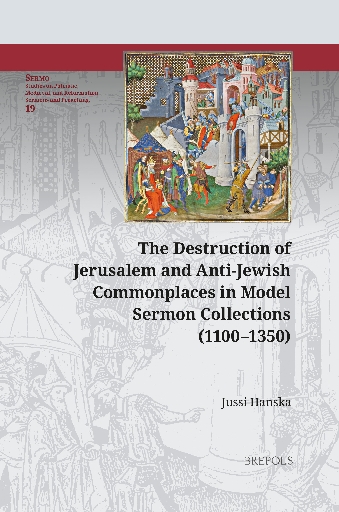
The Destruction of Jerusalem and Anti-Jewish Commonplaces in Model Sermon Collections (1100–1350)
show More to view fulltext, buy and share links for:The Destruction of Jerusalem and Anti-Jewish Commonplaces in Model Sermon Collections (1100–1350) show Less to hide fulltext, buy and share links for: The Destruction of Jerusalem and Anti-Jewish Commonplaces in Model Sermon Collections (1100–1350)This book analyses the diffusion of anti-Judaic stereotypes and topoi in thirteenth- and early fourteenth-century model sermon collections. It concentrates on the sermons on Luke 19.41-48 where Jesus foretells the Destruction of Jerusalem. The preachers took the view that the Destruction of Jerusalem was divine vengeance for the Jews because they killed Jesus. Thus, these sermons were a good venue for those preachers who wanted to preach against the Jews.
Model sermon collections were the closest thing to modern mass media. Consequently, their role in the diffusion of anti-Judaic attitudes was significant. The anti-Judaic writings of the early Church Fathers were only read by few literate church men, whereas model sermons reached the illiterate masses all over Christianity. Therefore, they played a major role in diffusing anti-Judaic attitudes amongst the population at large and thus contributed to the marginalization of the Jews, to various libels, expulsions, violence, and eventually to large-scale pogroms.
-
-
-
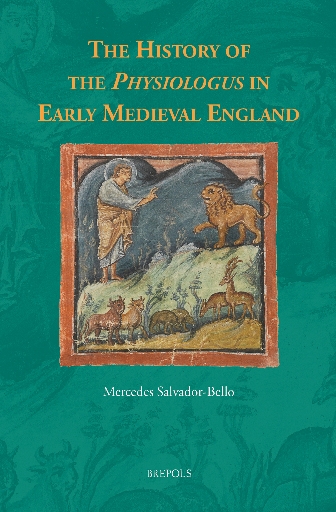
The History of the Physiologus in Early Medieval England
show More to view fulltext, buy and share links for:The History of the Physiologus in Early Medieval England show Less to hide fulltext, buy and share links for: The History of the Physiologus in Early Medieval EnglandThe Physiologus is the ancestor of the bestiary, a collection of chapters describing animal qualities and behaviours, usually with an allegorical meaning, which proliferated especially in England in the late Middle Ages. While much scholarly attention has been directed to the bestiary, the history of the transmission of the Physiologus has hardly been investigated. Evidence of the circulation of this treatise in the early medieval period is certainly scanty, since only two brief versions dating from this period have been preserved, one in Old English and another one in Latin. However, this monograph shows further proof of the knowledge of the Physiologus in Anglo-Saxon England. It also reveals the relationship of the only two surviving texts and their connection to the main Continental recension of the time. This study therefore demonstrates that the popularity of bestiaries in the later Middle Ages was largely due to the prominence that its predecessor, the Physiologus, enjoyed in the preceding period.
-
-
-

Ugo di San Vittore, Sull’inanità delle cose mondane e Dialogo sulla creazione del mondo
show More to view fulltext, buy and share links for:Ugo di San Vittore, Sull’inanità delle cose mondane e Dialogo sulla creazione del mondo show Less to hide fulltext, buy and share links for: Ugo di San Vittore, Sull’inanità delle cose mondane e Dialogo sulla creazione del mondoIl De vanitate rerum mundanarum e il Dialogus de creatione mundi sono due opere fortemente legate l’una all’altra: in un primo momento unite e poi separate, testimoniano il gusto ugoniano per la pratica della riscrittura, segno di un pensiero in continuo movimento, che progredisce e si evolve tornando su sé stesso. Il De vanitate si presenta come un dialogo tra due personaggi, Anima e Ratio, volto a dimostrare come chi ripone tutte le proprie aspettative e speranze nel mondo, senza guardare a quello che è il vero bene e fine ultimo di ogni esistenza, Dio, sia destinato a vivere un’esistenza di frustrazione e infelicità. Il Dialogus, che invece vede come protagonisti un Discipulus e un Magister, dopo un dettagliato racconto della creazione del mondo si concentra sulla trattazione della natura dell’uomo, del peccato, della redenzione e dei sacramenti. Questa è la prima traduzione del testo criticamente curato da Cédric Giraud (CC CM, 269).
-
-
-
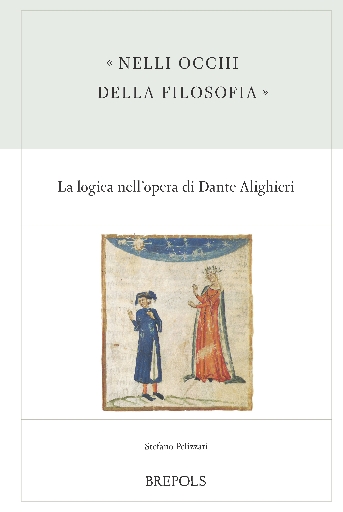
«Nelli occhi della filosofia». La logica nell’opera di Dante Alighieri
show More to view fulltext, buy and share links for:«Nelli occhi della filosofia». La logica nell’opera di Dante Alighieri show Less to hide fulltext, buy and share links for: «Nelli occhi della filosofia». La logica nell’opera di Dante AlighieriCodificata a partire da una sezione specifica del corpus aristotelico, la logica rappresentava nel Medioevo latino quell’"arte delle arti" (ars artium) che studiava le regole del ragionamento corretto e le era riconosciuta una universalità di tipo strumentale. Come notato sin dai primi biografi e commentatori, Dante dimostra in svariate occasioni una maestria e una padronanza della materia del tutto degne, per dirla col Boccaccio, di un «maraviglioso loïco». Giustamente celebri sono i versi di Inferno XXVII in cui «un d’i neri cherubini», con un raffinato ragionamento, strappa l’anima di Guido da Montefeltro all’impotente San Francesco («forse / tu non pensavi ch’io loïco fossi!», v. 123); ma è soprattutto nel Convivio, nella Monarchia e nella controversa Questio de aqua et terra che l’Alighieri sfoggia una competenza difficilmente riducibile alla consultazione occasionale di qualche ‘manuale’. Questo studio analizza sistematicamente i passaggi dell’opera dantesca riconducibili a questo specifico ambito disciplinare; e offre una panoramica sugli ambienti culturali in cui il Poeta avrebbe verosimilmente potuto formarsi (Firenze, Bologna, la Toscana occidentale, la marca Trevigiana). Da un lato, quindi, si inserisce nel fortunato filone di studi che si è occupato di valutare la conoscenza che Dante poté avere delle dottrine di Aristotele e dei suoi interpreti. Dall’altro, tenta di ricostruire i tempi, i luoghi e i modi in cui, «peregrino, quasi mendicando», poté acquisire tale competenza specialistica. In tal modo, non viene solo illuminato un lato inesplorato di questo eccezionale «amatore di sapienza», ma viene anche offerto uno scorcio privilegiato sullo stato delle conoscenze filosofiche in Italia fra XIII e XIV secolo.
-
-
-
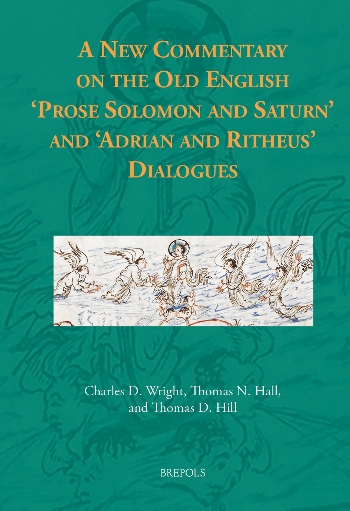
A New Commentary on the Old English ‘Prose Solomon and Saturn’ and ‘Adrian and Ritheus’ Dialogues
show More to view fulltext, buy and share links for:A New Commentary on the Old English ‘Prose Solomon and Saturn’ and ‘Adrian and Ritheus’ Dialogues show Less to hide fulltext, buy and share links for: A New Commentary on the Old English ‘Prose Solomon and Saturn’ and ‘Adrian and Ritheus’ DialoguesWho was not born, was buried in his mother’s womb, and was baptized after death? Who first spoke with a dog? Why don’t stones bear fruit? Who first said the word ‘God’? Why is the sea salty? Who built the first monastery? Who was the first doctor? How many species of fish are there? What is the heaviest thing to bear on earth? What creatures are sometimes male and sometimes female? The Old English dialogues The Prose Solomon and Saturn and Adrian and Ritheus, critically edited in 1982 by J. E. Cross and Thomas D. Hill, provide the answers to a trove of curious medieval ‘wisdom questions’ such as these, drawing on a remarkable range of biblical, apocryphal, patristic, and encyclopaedic lore.
This volume (which reprints the texts and translations of the two dialogues from Cross and Hill’s edition) both updates and massively supplements the commentary by Cross and Hill, contributing extensive new sources and analogues (many from unpublished medieval Latin question-and-answer texts) and comprehensively reviews the secondary scholarship on the ancient and medieval texts and traditions that inform these Old English sapiential dialogues. It also provides an extended survey of the late antique and early medieval genres of ‘curiosity’ and ‘wisdom’ dialogues and florilegia, including their dissemination and influence as well as their social and educational functions.
-
-
-
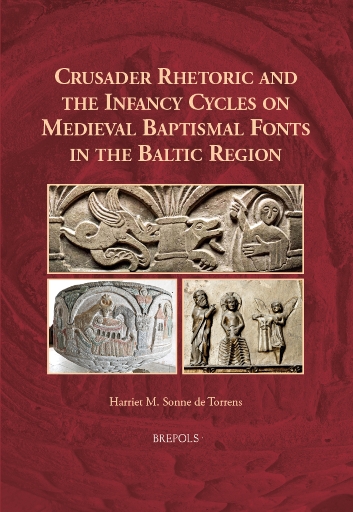
Crusader Rhetoric and the Infancy Cycles on Medieval Baptismal Fonts in the Baltic Region
show More to view fulltext, buy and share links for:Crusader Rhetoric and the Infancy Cycles on Medieval Baptismal Fonts in the Baltic Region show Less to hide fulltext, buy and share links for: Crusader Rhetoric and the Infancy Cycles on Medieval Baptismal Fonts in the Baltic RegionThis is the first comprehensive, interdisciplinary analysis to demonstrate that the representation of Infancy cycles on twelfth-and-thirteenth-century baptismal fonts was primarily a northern predilection in the Latin West directly influenced by the contemporary military campaigns. The Infantia Christi Corpus, a collection of approximately one-hundred-and-fifty fonts, verifies how the Danish and Gotland workshops modified and augmented biblical history to reflect the prevailing crusader ideology and rhetoric that dominated life during the Valdemarian era in the Baltic region. The artisans constructed the pictorial programs according to the readings of the Mass for the feast days in the seasons of Advent, Christmas and Epiphanytide. The political ambitions of the northern leaders and the Church to create a Land of St. Peter in the Baltic region strategically influenced the integration of Holy Land motifs, warrior saints, militia Christi and martyrdom in the Infancy cycles to justify the escalating northern conquests.
Neither before nor after, in the history of baptismal fonts, have so many been ornamented with the Infancy cycle in elaborate pictorial programs. A brief revival of elaborate Infancy cycles occurs on the fourteenth and fifteenth century fonts commissioned for sites previously located in the Christian borderlands east of the Elbe River with the rise of the Baltic military orders and the advancement of the Church authority. This extraordinary study integrates theological, liturgical, historical and political developments, broadening our understanding of what constituted northern crusader art in the twelfth and thirteenth centuries.
-
-
-

Du chartrier au codex
show More to view fulltext, buy and share links for:Du chartrier au codex show Less to hide fulltext, buy and share links for: Du chartrier au codexAlors que le champ historiographique touchant les cartulaires s'est renouvelé en profondeur depuis les années 1990, les premières compilations datées du IXe siècle sont restées à l'écart de ce mouvement. Cette monographie entend donner un éclairage nouveau sur la première cartularisation. En considérant tous les témoins conservés, elle replace l'apparition d'un nouveau type d'écrit dans son contexte documentaire et spatio-temporel en Francie orientale. Huit ensembles documentaires sont comparés entre eux mais aussi avec d'autres écrits contemporains afin de déterminer les origines, les fonctions attribuées à ses premières compilations. Enfin une réflexion sur la matérialité éclaire les choix faits lors de la mise en codex. Un jeu constant sur les échelles est proposé pour comprendre pourquoi huit pôles cartularistes choisissent de produire un cartulaire parmi un arsenal d'écrits possibles pour répondre à des finalités précises.
Le croisement de différentes historiographies sur les cartulaires et les pratiques de l'écrit renouvelle les approches et les perspectives. Cette monographie replace le moment-cartulaire dans un paysage documentaire large et rend compte de la cartularisation comme un phénomène scriptural et culturel global inscrit dans les dynamiques de la société carolingienne.
-
-
-
Lettere. Il Dio santo e immortale
show More to view fulltext, buy and share links for:Lettere. Il Dio santo e immortale show Less to hide fulltext, buy and share links for: Lettere. Il Dio santo e immortaleUgo Eteriano da Pisa (ca. 1110/1120-1182) costituisce una particolarissima figura di intellettuale occidentale: dopo una prima formazione nelle scuole logiche di Parigi, egli si ambienta a Bisanzio alla corte di Manuele Comneno, a tal punto da diventare bilingue (greco-latino), e da familiarizzarsi a fondo con la tradizione teologica e filosofica bizantina e con il pensiero antico. È autore, fra l’altro, di opere dottrinali dedicate alle psicologia (De anima), alla controversia contro i Bogomili orientali oltre che di un importante opuscolo legato alla controversia cristologica bizantina del 1166 (De minoritate). L’opera che è qui presentata con traduzione e sussidi esegetici è il De sancto et immortali Deo, un trattato in tre libri composto in via definitiva fra 1175 e 1177 su esortazione di Manuele Comneno e dedicato alla difesa del Filioque. Polemizzando contro i più importanti sostenitori della posizione antifilioquista degli orientali (in prima battuta Nicola di Metone e Fozio), Ugo Eteriano fa ampio ricorso non solo alla tradizione teologica latina (Agostino e gli altri autori sostenitori della processione dello Spirito ab utroque) ma attinge a piene mani anche ai testimonia di tutti quei padri greci che potrebbero in qualche modo avallare la posizione latina. Punto di interesse dell’opera sta anche nel rinnovato rapporto con la filosofia secolare: fra le fonti citate, in parte dal greco in parte da traduzioni latine, figurano Aristotele e i suoi commentatori greci, Platone, Plotino, gli autori neoplatonici, che sono rivisitati alla luce della passione per la logica e di un forte interesse per l’Organon già sviluppati nel corso della iniziale formazione parigina.
-
-
-
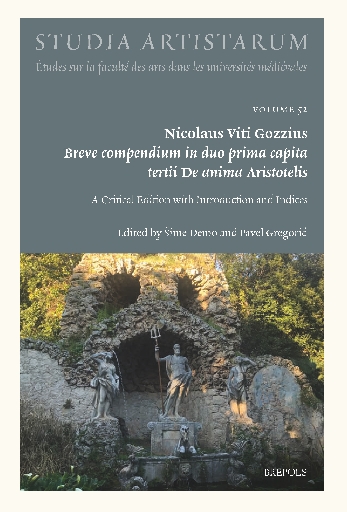
Nicolaus Viti Gozzius, Breve compendium in duo prima capita tertii De anima Aristotelis
show More to view fulltext, buy and share links for:Nicolaus Viti Gozzius, Breve compendium in duo prima capita tertii De anima Aristotelis show Less to hide fulltext, buy and share links for: Nicolaus Viti Gozzius, Breve compendium in duo prima capita tertii De anima AristotelisThis is the first edition of Nikola Vitov Gučetić’s (1549–1610) compendium of philosophical and theological problems arising from Aristotle’s De anima Book 3, Chapter 4, where he begins his discussion of the thinking part of the soul, that is, the intellect (nous). With the interpretation of Averroes (1126–1198), this text has structured much of the debate on the immortality of the soul in the Middle Ages and the Renaissance. Gučetić’s Breve compendium is a testament to these debates, interesting for its selection of issues for discussion in connection with Aristotle’s text, and for its open defence of the Averroist position in the late decades of the sixteenth century. Although Gučetić had a preliminary arrangement with Aldo Manuzio the Younger to print this text around 1590, at some point he abandoned the plan to publish it.
The main purpose of this book is to provide a critical edition of the Latin text for scholars in the humanities, especially historians of late Medieval and Renaissance philosophy. The edition is accompanied by an introductory study that places the author and his work in the historical and intellectual context, describes the manuscript, and gives a detailed synopsis of the work. This will make the book useful also to students of the humanities and those interested in the history and culture of Dubrovnik.
-
-
-
The Craft of History
show More to view fulltext, buy and share links for:The Craft of History show Less to hide fulltext, buy and share links for: The Craft of HistoryHistory is today an established academic discipline, characterized by the use of footnotes and references to support claims. However, attempts to codify history and impose disciplinary rigour were made in the Middle Ages, even before the introduction of the modern apparatus. One such attempt was the use of the source mark, a precursor of the modern footnote. Initially used in the works of lawyers and theologians, the source mark indicated that a text and its ideas belonged to a named authority. The application of the source mark to historical writings marked a change in the way history was perceived.
This volume explores how history was transformed into a discipline by focusing on four key twelfth-and thirteenth-century sources: the anonymous Status Imperii Iudaici, the Chronicle of Hélinand of Froidmont, the Chronicle of Alberic of Trois-Fontaines, and Vincent of Beauvais’s Speculum Historiale. By focusing on these four texts and examining the influences of surrounding disciplines such as law and theology, the author explores how these historical writers drew on a wide range of different sources of information to provide a truthful account of the past. Furthermore, the aim of producing a reliable narrative was combined with an awareness of the status of the author. Through these case studies, this volume offers a fascinating reassessment of our modern understanding of the origins of the study of history.
-
-
-
The Ideological Foundations of Early Irish Law and Their Reception in Anglo-Saxon England, c. 600–c. 900
show More to view fulltext, buy and share links for:The Ideological Foundations of Early Irish Law and Their Reception in Anglo-Saxon England, c. 600–c. 900 show Less to hide fulltext, buy and share links for: The Ideological Foundations of Early Irish Law and Their Reception in Anglo-Saxon England, c. 600–c. 900Old Testament Levites who considered the Law of Moses to be the living law: this has long been the established view among many scholars for how early Irish jurists perceived themselves, as well as how they saw the broader theoretical and religious bases of their jurisprudence. In this volume, however, Kristen Carella offers a timely reassessment of scholarly opinion, exploring Irish legal texts within the broader context of both vernacular Irish and Hiberno-Latin literature to argue that early Irish Christian intellectuals in fact saw themselves as gentile converts, subscribing to an orthodox Christian faith that was deeply infused with Pelagian theology.
Certain aspects of Irish legal ideology, particularly Irish views of divine history and pseudo-historical ideas about their own ethnogenesis, moreover, extended out of Ireland and into Anglo-Saxon England; their impact can be seen on lawmakers such as Alcuin, when he helped draft the Anglo-Latin Legatine Capitulary of 786, and King Alfred of Wessex, when he composed the Old English prologue to his law code in the late-ninth century. Through this approach, this volume not only challenges long-held scholarly views on Irish legal ideology and its influences beyond Ireland, but also provides a new paradigm for intellectual relations between early medieval Ireland and England.
-
-
-

The Poor Caitif
show More to view fulltext, buy and share links for:The Poor Caitif show Less to hide fulltext, buy and share links for: The Poor CaitifThe Pore Caitif is a popular, late-fourteenth-century, carefully crafted compilation of biblical, catechetical, devotional and mystical material drawing on patristic and medieval sources, in Middle English, consisting of a Prologue and a variable number of sections of differing lengths according to each manuscript, assembled probably by a clerical writer for an increasing literate lay readership/audience.The Prologue sets out the reason for writing and its overall structure as an integrated ladder leading the reader to heaven. The text begins with basic catechetical instruction modelled on John Peckham’s Lambeth Constitutions of 1281 before continuing with more affective material, meditating, for example, on the Passion, and concludes with a treatise on virginity, leading the reader from an active to a contemplative way of life.
The Pore Caitif was written about the time the Lollards were starting to propagate their programme of universal vernacular education. The writer believes in the need to educate his readers in the truths necessary for salvation without necessarily subscribing to Lollard positions.
Although referred to in a number of secondary articles and books, and serving as the focus of three doctoral dissertations, an edition of the work was not published until 2019. Penkett's publication is the first Modern English translation based on the 2019 publication and is in a readily accessible format for the modern reader, accompanied by a series of ground-breaking essays.
-
-
-

The Sisterbook of Master Geert’s House, Deventer
show More to view fulltext, buy and share links for:The Sisterbook of Master Geert’s House, Deventer show Less to hide fulltext, buy and share links for: The Sisterbook of Master Geert’s House, DeventerThe Sisterbook of Master Geert’s House contains the lives of sixty-four Sisters of the Common Life who died between 1398 and 1456. Founded as an alms-house for destitute women in 1374, by the end of the fourteenth century Master Geert’s House had become a home for women desiring to live a life of humility and penitence, as well as in community of goods without vows. The Sisterbook was likely written sometime between 1460 and 1470, at a time when the religious fervour that had characterized the earlier Sisters had begun to wane. It was to incite the readers and hearers of the Sisterbook, which would have been read in the refectory during mealtimes, to imitate the earlier Sisters who are portrayed as outstanding examples of godliness and Sisters of the Common Life. The opening sentence of the Sisterbook succinctly sums up the author’s reason for writing it: ‘Here begin some edifying points about our earlier Sisters whose lives it behoves us to have before our eyes at all times, for in their ways they were truly like a candle on a candlestick’, and who, by implication, could still illumine the way for her own generation of Sisters. The first foundation of Sisters of the Common Life, Master Geert’s House became the ‘mother’ house of numerous other houses in the Low Countries and Germany directly as well as indirectly and served as an inspiration for others.
This book provides a study of the Sisterbook and its significance in the Devotio Moderna and late medieval female religiosity, while the accompanying translation introduces this important source to an English audience.
-
-
-

Through Words, Not Wounds
show More to view fulltext, buy and share links for:Through Words, Not Wounds show Less to hide fulltext, buy and share links for: Through Words, Not WoundsThe chronicle of Henry of Livonia has long been recognized as the single most important source on the early history of Livonia and Estonia in the late twelfth and early thirteenth centuries.
The chronicler describes in great detail how the people of the region were subjected to intense campaigns of crusading and mission from the 1180s until the 1220s, primarily at the hands of ecclesiastical and secular powers of Northern Germany (Saxony), Denmark and Sweden. The chronicler himself, a German cleric named Henry (Henricus), was not only active in recording the events that happened around him. He also took a very active role as a missionary and interpreter among the indigenous population as well as joining the armies of crusaders on campaign, making this chronicle both a first-hand account and a very intriguing narrative. Papal missionary politics and theological ideas are intermingled in the chronicle with detailed descriptions of military campaigns, raids and sieges, making the entire chronicle a fascinating read.
The aim of this book is to clarify the ways in which Henry construes the historical events that he describes, portraying them as the continuation of a form of sacred history that was initiated by God in biblical times and continued by clerics and crusaders among Henry’s own peers.
-
-
-
Œuvres, 3
show More to view fulltext, buy and share links for:Œuvres, 3 show Less to hide fulltext, buy and share links for: Œuvres, 3Les deux oeuvres De archa Noe, Libellus de formatione archae, occupent une place singulière dans la production du maître de Saint-Victor. Ils forment d’abord une somme morale ou tropologique, tout comme le De sacramentis donnera une somme allégorique, et à ce titre livrent tous les thèmes porteurs de la spiritualité de Hugues. Ils sont ensuite comme au centre de sa carrière enseignante, mentionnant des traités déjà rédigés et en annonçant d’autres. La place de Hugues tant à Saint-Victor que dans le milieu des écoles parisiennes est déjà acquise et reconnue. Enfin nos écrits mettent en oeuvre des pédagogies visuelles qui lors d’entretiens réglés menés oralement, s’appuient sur un diagramme support des expositiones orales. La mise par écrit de ces conférences (qui donnera le De archa Noe) fut suivie de la rédaction de directives (qui seront le Libellus) par lesquelles un lecteur puisse reconstruire le diagramme que les auditeurs avaient eu sous les yeux.
-
-
-
‘The Gods Have Faces’
show More to view fulltext, buy and share links for:‘The Gods Have Faces’ show Less to hide fulltext, buy and share links for: ‘The Gods Have Faces’Hildebert of Lavardin is one of the great poets of the Middle Ages, praised for his elegant style by his contemporaries and by modern scholars alike. He occupies a seminal position in the revival of learning in the late Middle Ages known as the Twelfth Century Renaissance, and his mastery of classical Latin style was so refined that some of his works were long considered products of Antiquity. This collection of Hildebert's biblical epigrams and short poems introduces English-speaking readers to the best works of this neglected poet and places them in the context of his life and literary career. The translations attempt to bring the reader as close as possible to experiencing these poems in their original Latin while still being readable and comprehensible, facilitated by notes and commentary. Hildebert's poetry is sometimes challenging, dense and complicated, yet his rhetoric is often beautiful, even magnificent.
-