


BOB2025MOOT

Collection Contents
1 - 20 of 35 results
-
-
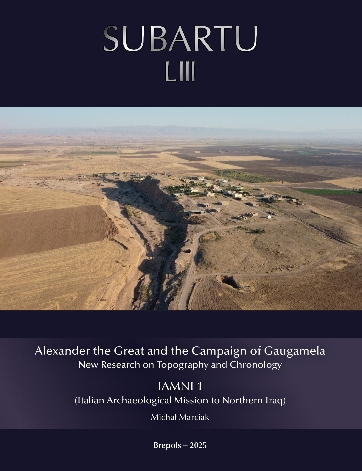
Alexander the Great and the Campaign of Gaugamela
show More to view fulltext, buy and share links for:Alexander the Great and the Campaign of Gaugamela show Less to hide fulltext, buy and share links for: Alexander the Great and the Campaign of GaugamelaThe Battle of Gaugamela, in which Alexander the Great’s army faced the Persian army of King Darius III in 331 bce, remains a famous date in history, the last battle that led to Alexander’s conquest of the Achaemenid Empire. However, the topography and chronology of the campaign have, up to now, remained little studied. Taking these two elements as its starting point, this volume draws both on the latest archaeological research in the region and on recent advances in science (in particular GIS) to offer a completely new reconstruction of the Gaugamela campaign, arguing for a much shorter campaign than has hitherto been understood. By turning the spotlight for the first time onto the geographical and topographical context of the campaign, the author here also provides a new understanding of both the scale of Alexander’s military achievement and the long-term effects of the military reforms introduced by his father, Philip II.
-
-
-

Chanter par le Si en France au xvii e siècle
show More to view fulltext, buy and share links for:Chanter par le Si en France au xvii e siècle show Less to hide fulltext, buy and share links for: Chanter par le Si en France au xvii e siècleEn 1666, la « Methode facile pour apprendre à chanter la musique » (Paris, Ballard), est le premier ouvrage imprimé en France à recommander l'utilisation du Si. Cette septième syllabe de solmisation permet de s’affranchir du solfège ancien, des hexacordes et des muances. La gamme du Si, ou gamme française, s'impose comme une nouvelle norme, parallèlement à une actualisation du discours sur les échelles musicales, prélude à l’énonciation des principes de la tonalité.
Pourtant, depuis la fin du XVIe siècle, des solmisations heptacordales essaiment ailleurs, de l’Italie au Danemark. La France semble à rebours du reste de l’Europe : elle tarde à réagir à ce nouveau modèle et s’avère finalement être le seul pays où le Si est intégré durablement. Quel fut le cheminement de ces idées et pratiques ? Que disent-elles des représentations de l’espace sonore qui coexistent et s’anamorphosent au XVIIe siècle, isthme entre Humanisme et Lumières ? Ces questions serpentent dans la littérature depuis que Brossard, Montéclair ou Rousseau s’en sont emparés.
L’étude de sources essentiellement manuscrites permet aujourd’hui de préciser les jalons de cette histoire en France, de mettre en lumière des pionniers autant que des détracteurs du Si. Leurs témoignages sont issus de l'entourage scientifique de Mersenne, des sphères huguenotes et mauristes, des chapelles musicales parisiennes et finalement des méthodes destinées aux amateurs. C’est en questionnant ces pionniers, leurs écrits et les contextes dans lesquels ils ont évolué que ce pan de l’histoire du solfège est ici mis en perspective et, d’une certaine manière, humanisé.
-
-
-
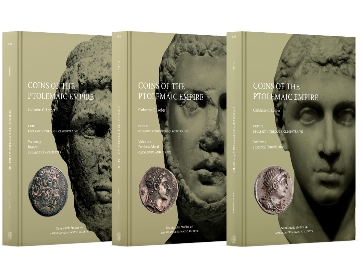
Coins of the Ptolemaic Empire, Part 2: Ptolemy V through Cleopatra VII
show More to view fulltext, buy and share links for:Coins of the Ptolemaic Empire, Part 2: Ptolemy V through Cleopatra VII show Less to hide fulltext, buy and share links for: Coins of the Ptolemaic Empire, Part 2: Ptolemy V through Cleopatra VIIThirty years in the making, Coins of the Ptolemaic Empire, Part II, by Catharine C. Lorber, is the long-anticipated second half of the Coins of the Ptolemaic Empire (CPE) project, featuring the coins struck by Ptolemy V–Cleopatra VII. As with Part 1, Lorber essentially rewrites the sections on these rulers in J. N. Svoronos’ classic, but now much out-of-date, Ta Nomismata tou Kratous ton Ptolemaion (1904). The body of coinage catalogued by Svoronos is enlarged by hundreds of additional emissions in precious metal and bronze, recorded from subsequent scholarship, from hoards, from commercial sources, and from private collections. Lorber’s attributions, dates, and interpretations rest on numismatic research conducted after Svoronos, or on the latest archaeological and hoard information. She also provides extensive historical and numismatic introductions that give the coins deeper context and meaning.
-
-
-

Dacia Ripensis
show More to view fulltext, buy and share links for:Dacia Ripensis show Less to hide fulltext, buy and share links for: Dacia RipensisLa Dacia Ripensis fu una provincia danubiana la cui esistenza si data fra gli anni ‘80 del III secolo e i primi anni del VII. Il suo territorio funse da cerniera fra il medio ed il basso corso del Danubio e, al tempo stesso, da raccordo fra il barbaricum e l’entroterra illirico. L’urbanizzazione vi ebbe un modesto successo; cionondimeno essa favorì la romanizzazione della provincia dove la militarizzazione si manifesta invece in modo evidente grazie a quanto noto dalla Notitia dignitatum e dall’archeologia. L’attenzione per la difesa dell’area era, del resto, giustificata per via della pressione esercitata da popolazioni come Goti, Unni, Slavi e Avari, che condizionarono la storia dell’intera penisola proprio attraversando la Dacia Ripensis.
Dalle fonti letterarie è noto che la provincia fu anche interessata dalla diffusione della religione cristiana, le cui prime testimonianze si datano ai primordi del IV secolo. Il processo rese possibile l’ascesa di sedi vescovili assai implicate nelle dispute teologiche e nella lotta a dottrine eretiche localmente diffuse ancora nel VI secolo. L’archeologia ha permesso di riconoscere la graduale formazione di questa rete ecclesiastica che, in forme monumentali, è riconoscibile sia in ambito urbano che rurale. Nonostante la sua importanza, questa provincia è stata finora studiata solo occasionalmente e questo volume vuole ovviare a questo problema proponendo uno studio aggiornato, mirato a definire le conoscenze storiche e archeologiche necessarie alla comprensione generale della topografia provinciale così come alla contestualizzazione del processo di cristianizzazione di questa porzione dell’area danubiana.
-
-
-
Diplomatics in the Netherlands
show More to view fulltext, buy and share links for:Diplomatics in the Netherlands show Less to hide fulltext, buy and share links for: Diplomatics in the NetherlandsCharters and other administrative texts have long had the full attention of medievalists as primary sources in their historiographical work. This also applies to scholars from the Netherlands. Ever since the late Middle Ages, they recognised the value of these sources, included them as testimony in their historiography and gradually began to realise that charters and other documents required a specific form of textual criticism and a special way of editing. In this, Dutch historians usually followed developments abroad. Sometimes, as in the early seventeenth century, they were ahead methodologically, but for long periods they depended for new insights on developments elsewhere. This was especially true in the nineteenth century, when scientific diplomatic methods and editing techniques emerged which would only be introduced and applied in the Netherlands in the next century. In the twenty-first century, Dutch scholars are fully participating in the ‘digital turn’ that is creating new research tools in diplomatics.
Ultimately, the history of diplomatics in the Netherlands is part of the broad development of historiography in the country, and therefore a valuable aspect of the history of scholarship in general.
-
-
-
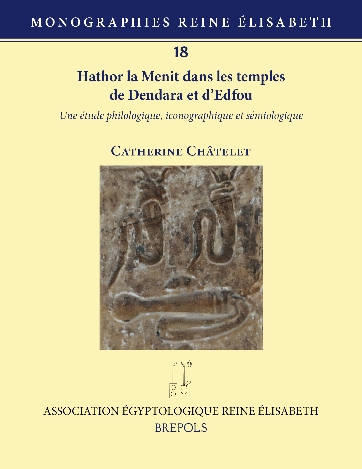
Hathor la Menit dans les temples de Dendara et d’Edfou
show More to view fulltext, buy and share links for:Hathor la Menit dans les temples de Dendara et d’Edfou show Less to hide fulltext, buy and share links for: Hathor la Menit dans les temples de Dendara et d’EdfouCette recherche se positionne dans la continuité d’une première étude portant sur le collier-menit dans les temples ptolémaïques et publiée dans la collection Monographies Reine Élisabeth. Ce collier, qui est un des objets sacrés d’Hathor, porte également le nom de l’entité divine du même nom, forme d’Hathor de Dendara et d’Edfou dont cette étude fait l’objet. En tant que forme d’Hathor, quels sont les termes, les parures, les actions, la gestuelle, qui pouvaient la différencier de la grande Hathor, si toutefois cela est envisageable, ces deux divinités étant intimement associées ?
Une partie de cette recherche porte sur l’étude de la chapelle du collier-menit. Les textes et les épithètes de la déesse ont été ici analysés d’un point de vue stylistique afin d’essayer de comprendre la démarche des hiérogrammates et la raison d’être d’une telle chapelle dédiée à Hathor la Menit, sachant que pour les deux autres formes secondaires d’Hathor : « Hathor-chef-du-grand-siège » et « Hathor-uraeus », il n’en existe point.
Hathor la Menit est la récipiendaire de nombreuses offrandes, qui ont été étudiées et contextualisées, afin de comprendre son implication dans chacune de ces scènes et de cerner au mieux la personnalité de cette déesse. Son étude dans le temple d’Edfou s’imposait afin de comprendre comment elle était perçue dans ce temple apollonopolitain.
-
-
-
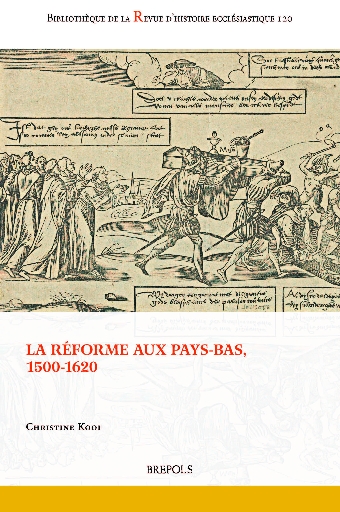
La Réforme aux Pays‑Bas,1500-1620
show More to view fulltext, buy and share links for:La Réforme aux Pays‑Bas,1500-1620 show Less to hide fulltext, buy and share links for: La Réforme aux Pays‑Bas,1500-1620Cette étude générale de la Réforme aux Pays-Bas retrace les développements clés du processus de réforme - à la fois auprès de la population protestante et catholique - pendant le XVIe siècle. Synthétisant cinquante ans de littérature scientifique, Christine Kooi se concentre particulièrement sur le contexte politique de l'époque : comment le changement religieux a été procédé au milieu de l'intégration et la désintégration de l'État dynastique des Habsbourg aux Pays-Bas. Une attention particulière est accordée au rôle de la Réforme dans la fomentation et l'alimentation de la révolte contre le régime des Habsbourg à la fin du XVIe siècle, ainsi qu'à sa contribution à la formation des deux états successeurs de la région, la République néerlandaise et la Pays-Bas du Sud (Belgique). La Réforme aux Pays-Bas, 1500-1620 est un outil de travail essentiel pour les universitaires et les étudiants de l'histoire européenne moderne, réunissant en un seul volume des recherches spécialisées sur les Pays-Bas.
-
-
-
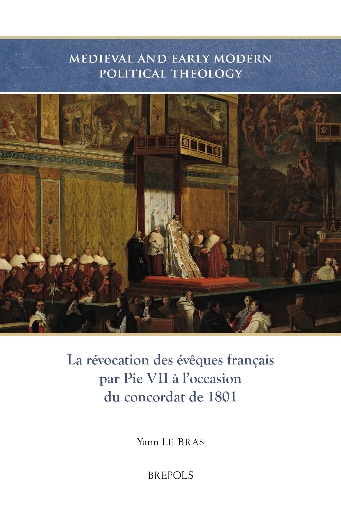
La révocation des évêques français par Pie VII à l’occasion du concordat de 1801
show More to view fulltext, buy and share links for:La révocation des évêques français par Pie VII à l’occasion du concordat de 1801 show Less to hide fulltext, buy and share links for: La révocation des évêques français par Pie VII à l’occasion du concordat de 1801La décision de Pie VII de révoquer en 1801 plusieurs dizaines d’évêques d’un seul trait de plume est totalement singulière. Jamais un pape n’avait pris une telle mesure et, jusqu’à ce jour, aucun des successeurs de Pie VII ne l’a réitérée. Il faut dire que le pape a agi dans des conditions très particulières.
Cet ouvrage propose au lecteur de revivre les heures à la fois tragiques et grandioses qui ont mené à cette décision unique. Cette étude captivante s’appuie sur un grand nombre d’archives dont certaines sont publiées ici pour la première fois. Elles redonnent vie aux acteurs de l’époque. Au fil des pages, le lecteur sera le témoin privilégié des passions, des affrontements, de la qualité aussi, de ces hommes qui ont forgé le destin de la France religieuse pour leur siècle.
Pie VII, en destituant les évêques français, a tracé un chemin juridique pour l’utilisation de l’instrument de la révocation, redécouvert sous Jean-Paul II et utilisé depuis à une dizaine de reprises par ses successeurs. L’auteur, sur le fondement de l’expérience de Pie VII, propose de réserver la révocation aux cas où l’évêque, sans faute de sa part, ne pourrait plus gouverner sans dommage son diocèse. Il suggère également quelques idées pour garantir qu’elle soit un instrument au service de la justice.
-
-
-
Manichaeism: Encounters with Death
show More to view fulltext, buy and share links for:Manichaeism: Encounters with Death show Less to hide fulltext, buy and share links for: Manichaeism: Encounters with DeathBorn in Persian Mesopotamia in the year 232 CE, the self-proclaimed prophet Mani promulgated a dualist faith that rapidly spread throughout the Roman Empire, Central Asia and China. This monograph comprises a series of studies of the Manichaean conceptualization of death and the afterlife in the context of Manichaean soteriology, eschatology and anthropology. Material, documentary and liturgical evidence is analysed to enrich knowledge of Manichaean funeral ritual and mourning practice. The book explores the thematic symbolism of the corpse in Manichaean parabolic literature, offering fresh interpretations and exploring the influence of Buddhist teachings on the impermanence of the body, karma and metempsychosis.
-
-
-
On the Virgin Birth and On the Assumption of the Blessed Virgin Mary
show More to view fulltext, buy and share links for:On the Virgin Birth and On the Assumption of the Blessed Virgin Mary show Less to hide fulltext, buy and share links for: On the Virgin Birth and On the Assumption of the Blessed Virgin MaryOn the Virgin Birth and On the Assumption of the Blessed Virgin Mary are two key Mariological treatises by the ninth-century Carolingian theologian Paschasius Radbertus. Written at a time when scholarship and erudition during the Carolingian Renaissance were at their height and prominence in the great monastery of Corbie, these two works offer important insights into ninth-century reception of the doctrines of Mary’s perpetual virginity and her assumption into heaven. Written for the nuns of the monastery of Notre-Dame de Soissons, they also provide important source material for the study of female spirituality during the Carolingian Reformation era.
This work presents for the first time an English translation with introduction and commentary of these texts, based on the critical editions found in Corpus Christianorum, Continuatio Mediaevalis (CC CM, 56C). References to the corresponding pages of the Corpus Christianorum edition are provided in the margins of this translation.
-
-
-
Painter to the Queen
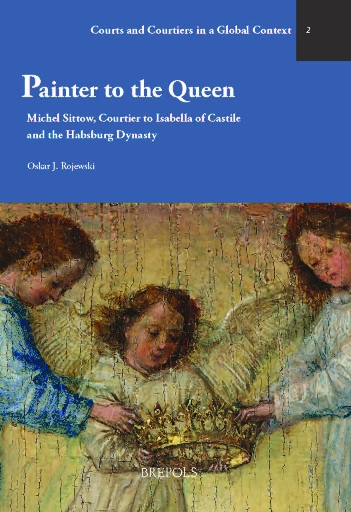
show More to view fulltext, buy and share links for:Painter to the Queen show Less to hide fulltext, buy and share links for: Painter to the QueenMichel Sittow was born in Reval c. 1469, today the Estonian capital city of Tallinn. Possibly trained in the workshop of Hans Memling in Bruges, he subsequently moved to work in the Iberian Peninsula, where he first held the position of court painter. This monograph undertakes research on this phase of his career. In the Kingdom of Castille, Michel Sittow was appointed painter to Queen Isabella and became a member of her household with an impressive annual salary. Thanks to the analysis of archival documents and formal and iconographical studies on Sittow’s paintings, it is possible to explain the court painter’s life circumstances and describe the benefits he enjoyed and the difficulties he faced. The Castilian period was crucial for Michel Sittow’s career since over the course of his professional life, he also resided at the courts of Philip the Fair, Margaret of Austria, Christian II of Denmark and Charles V, all relatives of his first royal patron. While serving European monarchs, he transferred Memling’s techniques and visual language beyond the Low Countries and developed his artistic practice and style. The analysis of the various contexts Michel Sittow worked in sheds light on his oeuvre and his possible privileged status as a courtier, which provided opportunities to establish a flourishing and ambitious career in northern and southern Europe.
-
-
-

Rhetoric, Persuasion, and Teaching the Emotions in the Early Modern English Sermon, 1600–1642
show More to view fulltext, buy and share links for:Rhetoric, Persuasion, and Teaching the Emotions in the Early Modern English Sermon, 1600–1642 show Less to hide fulltext, buy and share links for: Rhetoric, Persuasion, and Teaching the Emotions in the Early Modern English Sermon, 1600–1642The early seventeenth-century English sermon was the bestselling print genre of its time, and church preaching was more widely attended than any play. Jennifer Clement argues here that a major aim of these sermons was to teach people how to feel the right emotions — or, as preachers would have said at the time, the passions or affections — to lead a good Christian life. In the process, preachers took a primarily rhetorical approach to the emotions; that is, they used their sermons to define emotions and to encourage their listeners and readers actively to cultivate and shape their emotions in line with Scripture.
This study offers an overview of five key emotions — love, fear, anger, grief, and joy – in the sermons of key preachers such as John Donne, Richard Sibbes, Joseph Hall, Launcelot Andrewes, and others. It shows how these preachers engaged with contemporary treatises on the emotions as well as treatises on preaching to highlight the importance of the rhetorical, as opposed to the humoral, approach to understanding the emotions in a religious context. In addition, Clement reads sermons next to early seventeenth-century religious poetry by writers such as Donne, George Herbert, Amelia Lanyer, and Henry Vaughan to show how the emotional concerns of the sermons also appear in the poetry, reverberating beyond the pulpit.
Bringing together rhetorical theory, sermon studies, and the history of the emotions, Clement shows how the early seventeenth-century English sermon needs to inform our thinking about literature and its engagement with emotion in this period.
-
-
-
Stones of Zadar
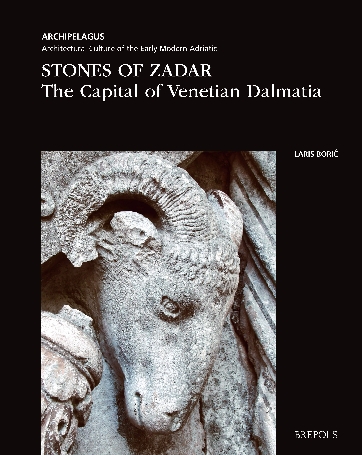
show More to view fulltext, buy and share links for:Stones of Zadar show Less to hide fulltext, buy and share links for: Stones of ZadarThe book investigates the transformation of the architectural and visual language in Zadar, eastern Adriatic town, at the dawn of the early modern era, when the mighty mediaeval commune was being transformed by the emerging governmental structures of the Republic of Venice. These events coincided with the Ottoman Empire's takeover of the hinterland of Dalmatian cities, transforming Zadar into a city on the brink of two worlds.
A highly autonomous mediaeval commune was a lively trans-Adriatic artistic centre, a network of builders, painters, and sculptors from Dalmatia, Venice, Marche and Lombardy, so with the early adoption of humanist concepts by the local elite, this practice continued. However, the transformations the governmental structure and economic policies steadily limited its community autonomy and commercial sources. The crisis worsened in the 16th century, when the local elites lost a large portion of their revenue from the fertile hinterland captured by the Ottoman Empire.
This launched an ongoing militarisation of social structures and fortifying the town. These events were reflected in the fields of architecture and art. The process of adopting a new architectural and artistic language began in the second half of the 15th century, as demonstrated by motifs in architectural decoration and sculpture with impulses from important Dalmatian sculptural and stonemasons’ circles, as well as Venetian models from the circles of Pietro Lombardo and Mauro Codussi. When the new classical language of architecture began spreading in the middle of the 16th century, it expressed mostly in the renovation of administrative structures, with occasional departures from the stylistic canons of artistic centres.
-
-
-
Sur la route du devoir
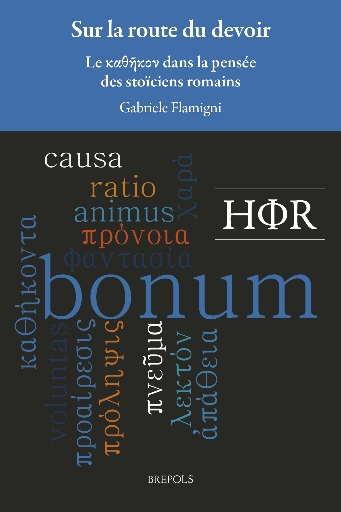
show More to view fulltext, buy and share links for:Sur la route du devoir show Less to hide fulltext, buy and share links for: Sur la route du devoirQu’y a-t-il à l’origine du devoir, une idée d’une importance capitale dans l’histoire intellectuelle de l’Occident ? Parmi ses premières incarnations, il faut reconnaître le καθῆκον stoïcien, « ce qui est convenable », latinisé en officium, « devoir ». Cette notion a été développée par les stoïciens hellénistiques, mais les témoignages les plus amples à ce sujet proviennent des représentants de l’école ayant vécu à l’époque de l’Empire romain, à savoir Sénèque, Musonius Rufus, Épictète, Hiéroclès et Marc Aurèle. Dans ce livre, nous essayons de reconstruire une histoire aussi complète que possible du καθῆκον à travers une analyse exhaustive des sources disponibles.
-
-
-
Temps, sciences et empire
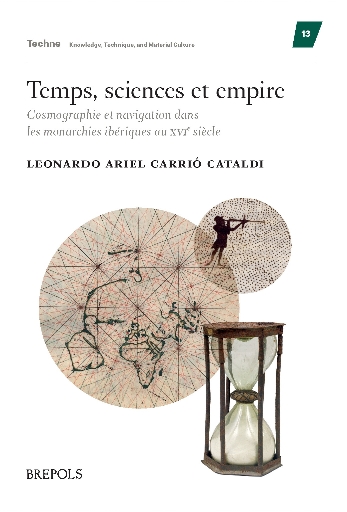
show More to view fulltext, buy and share links for:Temps, sciences et empire show Less to hide fulltext, buy and share links for: Temps, sciences et empireDès la fin du xve siècle, les monarchies portugaise et espagnole se lancent au grand large dans un élan de construction impériale qui saisit le globe. Une diversité d’acteurs et de savoirs, dont la cosmographie et la navigation, sont porteurs de ce processus. Ce dernier transforme, à jamais, l’image et le concept de la Terre comme espace de l’habitat humain, retravaillant les liens entre espace et temps. Pilotes et cosmographes contribuent alors à une reconceptualisation des temporalités et des temps de la Terre. Quels textes ont-ils rédigés et lus, quels instruments ont-ils manipulés à cette fin ?
En explorant ces dynamiques à partir d’une pluralité de matériaux, le livre embarque le lecteur sur des bateaux naviguant vers les Indes, l’invite dans des Casas et des entrepôts portuaires ou dans des universités où résonnent les échos d’une mer transformatrice des connaissances. La création de la chaire de cosmographie à la Casa de la contratación (Séville, 1552) et la trajectoire de son premier détenteur, Jerónimo de Chaves (1523-1574), servent de « laboratoire » privilégié d’où observer ces problématiques.
Le livre élargit ainsi la manière de comprendre la cosmographie au xvie siècle, souvent réduite à son rapport à la cartographie, à l’intersection de plusieurs pratiques et savoirs (histoire naturelle, théologie, astrologie, astronomie, navigation) et au-delà du clivage « Anciens-Modernes ». En embrassant d’un regard les monarchies ibériques, l’ouvrage ancre dans l’Europe méridionale la question plus large de la production des techniques et des sciences à l’époque moderne, inscrivant l’espace ibérique dans une première globalisation.
-
-
-
The Donatist Compendium of 427 and Related Texts
show More to view fulltext, buy and share links for:The Donatist Compendium of 427 and Related Texts show Less to hide fulltext, buy and share links for: The Donatist Compendium of 427 and Related TextsThis volume contains the first translation into English of a number of documents associated with the Donatist movement in North Africa, a dissident church which flourished during the fourth and fifth centuries before the Vandal invasion obscures our view of it. Donatists are often remembered for their fanatical opposition to traditores—those who had “handed over” the sacred scriptures during the Diocletianic Persecution—and their belief that those baptized by such people were not part of the true church. The writings contained in this volume add critical nuance to this portrait. At its centerpiece is the Donatist Compendium of 427, a collection of eleven exegetical texts compiled c. 427 CE by an unknown Donatist editor; other translated writings include a chronograph revised on the eve of the Vandal conquest of Carthage known as the Genealogy Book, a set of section-headings for the Major Prophets and the book of Acts, and a Donatist homily on the Epiphany, one of the few sermons by a Donatist preacher that still survives. All of these texts were produced within a Donatist milieu, and taken together, they offer us a unique window into the inner life of the dissident communion as well as valuable insight into the exegetical tools that late antique bishops had at their disposal as they sought to illuminate the biblical text for their congregations.
-
-
-
The Origins of Christianity in the Calendar Wars of the Second Century bce
show More to view fulltext, buy and share links for:The Origins of Christianity in the Calendar Wars of the Second Century bce show Less to hide fulltext, buy and share links for: The Origins of Christianity in the Calendar Wars of the Second Century bceIn the Gospels Jesus is called a ‘Nazarene’ or ‘Nazoraean’. Does this mean he came from Nazareth? Basing himself on Lidzbarski’s analysis of the Hebrew/Aramaic origins of the Greek terms Nazarênos and Nazôraios Dr Osborne proposes that these epithets indicate that Jesus was a nôṣrî, a ‘(Strict) Keeper/Guardian (of the Law)’. This meant he was a follower of the 364-day liturgical calendar known to us from 1 Enoch, Jubilees, and Qumran. An examination of the passages where these terms appear shows that this hypothesis leads to a deeper understanding of the circumstances in which the first Christian communities arose and clarifies greatly the background of Jesus’ crucifixion as Yēšû ha-Nôṣrî.
The book then traces the influence of the nôṣrîm on the history of Israel from their origin in the ‘calendar wars’ that tore apart the Jewish nation from 172-163 BCE. These broke out after the lunisolar calendar was introduced into the temple liturgy by Menelaus the high priest, and only came to an end when the 364-day calendar was reintroduced under his successor, Alcimus. In 151 BCE, however, Jonathan Maccabaeus was appointed high priest and reintroduced the lunisolar calendar. The nôṣrîm were suppressed and forced to emigrate or go underground. They reappear as leaders of Jewish resistance to Roman occupation after Pompey incorporated Judaea into the empire in 63 BCE. Eventually they became the chief instigators of the revolt against Rome that led to the destruction of Jerusalem in 70 CE. Osborne argues that the nôṣrîm thought to have been included in the Twelfth Benediction of the Amidah at Yavneh around 90 CE are these same ‘(Strict) Keepers/Guardians (of the Law)’.
-
-
-

The Sanctuary of Parthenos at Ancient Neapolis (Kavala), Volume i
show More to view fulltext, buy and share links for:The Sanctuary of Parthenos at Ancient Neapolis (Kavala), Volume i show Less to hide fulltext, buy and share links for: The Sanctuary of Parthenos at Ancient Neapolis (Kavala), Volume iThe ancient city of Neapolis (modern Kavala, Greece) was founded by Thasos in the seventh century bce at a strategic location where the Thracian hinterlands meet the Aegean Sea. The patron deity of this North Aegean polis was Parthenos (the Maiden), known to us through epigraphic and archaeological evidence. Her sanctuary came to light in the twentieth century during rescue excavations, and yielded numerous finds, most of which date from the Archaic period.
This monograph provides a discussion of the history of excavations at this sanctuary, as well as a contextual examination of the material, leading to a new interpretation of Parthenos’ identity. Among the wealth of finds from the site, the corpus of incised and painted ceramic inscriptions stands out, as it offers a unique glimpse into the history of the cosmopolitan temenos and the dedicatory practices and rituals that took place there. The inscribed vessels carry dedications, numerical and other graffiti, and dipinti, as well as the initials of the goddess, which designate them as sacred equipment. When considered in the context of the ceramic inscriptions from sanctuaries across Aegean Thrace, they further underscore the important role of Neapolis and the Sanctuary of Parthenos in the commercial networks and cultural dynamics of the Aegean, both in the early stages of Greek colonization, and in the centuries that followed.
-
-
-
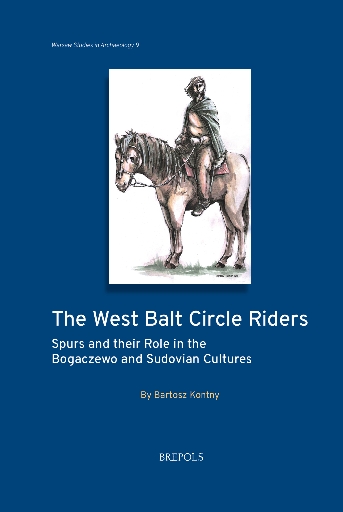
The West Balt Circle Riders
show More to view fulltext, buy and share links for:The West Balt Circle Riders show Less to hide fulltext, buy and share links for: The West Balt Circle RidersThe spurs of horse riders have long been acknowledged as an important item of grave furniture in the Late Roman and Migration period burials of Poland, a reflection of the high social position held by the deceased. Yet while spurs have been studied at a general level, and typo-chronological studies have been conducted on spurs found in southern and central Poland, no such research has so far been conducted on finds from the West Balt Circle, in north-eastern Poland. This volume is an attempt to rectify the situation by offering a thorough examination of finds attributed to the Bogaczewo and Sudovian Cultures. The author here offers a comprehensive assessment of surviving materials from the period, many of which are scattered through museums across Europe, together with an in-depth analysis of archival sources (included among them the private inventories of archaeologists working in the pre-war period) in order to reconstruct our understanding of the furnishings and data relating to spurs. This detailed research, carefully contextualized against our wider understanding of Barbarian Europe, offers an important new reference for our understanding both of the West Balt Circle and its inter-cultural relations with surrounding regions, as well as of the symbolic meaning of spurs and their significance in burial rites.
-
-
-

Uist Unearthed
show More to view fulltext, buy and share links for:Uist Unearthed show Less to hide fulltext, buy and share links for: Uist UnearthedPeople have been living in Uist’s island landscapes for millennia; shaping and shaped by the unique environments of machair and moorland we see today. Uist Unearthed tells the story of 5000 years of the islands’ prehistory and history through five key archaeological sites.
Based on the award-winning Uist Virtual Archaeology Project, this interactive book brings Uist’s past to life. Readers are invited to dig deeper and discover Uist’s unique archaeology through colourful and creative mixed media including illustrations, infographics, and photography, enhanced with state-of-the-art augmented reality.
This book provides an excellent introduction to Uist’s archaeology for novices and professionals alike. It discusses the importance of Gaelic language and culture in our interpretation and understanding of archaeological landscapes. It is for all those interested in exploring alternative ways of reimagining, interpreting, and presenting the past through digital storytelling.
-