


BOB2025MOOT

Collection Contents
21 - 35 of 35 results
-
-
Ælius Aristide et Xénophon
show More to view fulltext, buy and share links for:Ælius Aristide et Xénophon show Less to hide fulltext, buy and share links for: Ælius Aristide et XénophonSeveral ancient literary sources show that Xenophon was regarded during the Imperial period as a preeminent model. This study looks at how Xenophon was received in the speeches of Ælius Aristides – an angle that has not been explored until now. The speeches examined include the Platonic speeches (or. 2-4), the speech Concerning a remark in passing (or. 28), the declamation On behalf of making peace with the Athenians (or. 8), the group of the five Leuctran orations (or. 11-15), the evidence for the lost declamation Callixenus, the Panathenaicus (or. 1) and the speech To Rome (or. 26). Greek history plays a key role in this inquiry, especially since Aristides showed a particular interest in the aftermath of the Battle of Leuctra. The historical allusions to Xenophon’s Hellenica reveal Aristides’ erudition and his attention to the speeches within that work. Studying how Aristides draws on Xenophon can help deepen our understanding of his orations and open up new directions for research on Xenophon’s reception.
-
-
-
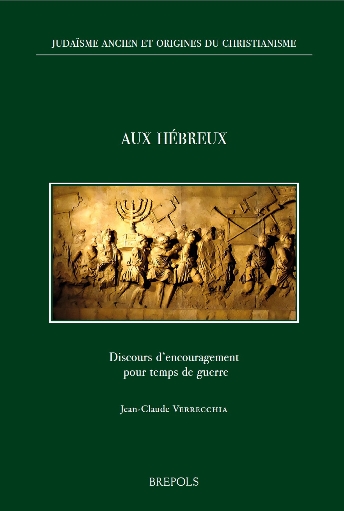
Aux Hébreux : Discours d’encouragement pour temps de guerre
show More to view fulltext, buy and share links for:Aux Hébreux : Discours d’encouragement pour temps de guerre show Less to hide fulltext, buy and share links for: Aux Hébreux : Discours d’encouragement pour temps de guerreÉpître aux Hébreux ou plutôt comme l’indique lui-même son auteur anonyme, parole d’encouragement qui se donne à écouter. Le temple de Jérusalem est en ruines depuis une dizaine d’années déjà. Les stigmates de la guerre sont encore bien visibles dans Jérusalem. La pratique religieuse est réduite à sa plus simple expression : quelques sacrifices en cachette, une liturgie qui a perdu tout son lustre, des grandes fêtes comme le Jour de l’Expiation dont la célébration est devenue impossible. Les Romains sont toujours là, qui veillent à ne pas laisser la moindre illusion de reconstruction. Dans la population judéenne, le découragement prévaut. Il faudrait peu de choses pour que le feu de la révolte se ranime. Hébreux est une parole d’encouragement particulièrement adressée aux prêtres, dont un bon nombre « obéissent à la foi » (Actes 6.7). Ils doivent sortir de la torpeur dans laquelle ils se sont enfermés. Comme la génération du désert qui s’est arrêtée aux portes du pays promis, ils se sont laissé paralyser par l’épreuve de la guerre. La parole d’encouragement les conduit sur un chemin de réinterprétation des textes anciens. La religion de leurs pères n’est pas dépassée. Elle portait en germe des trésors inestimables. Hébreux accompagne ses auditeurs sur le chemin d’une relecture exigeante, qui jette les bases d’une société reconstruite sur des fondements sacerdotaux.
-
-
-
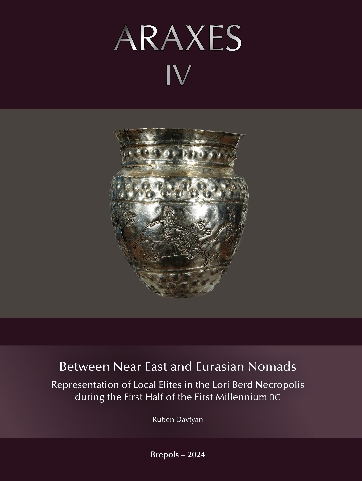
Between Near East and Eurasian Nomads
show More to view fulltext, buy and share links for:Between Near East and Eurasian Nomads show Less to hide fulltext, buy and share links for: Between Near East and Eurasian NomadsThe site of Lori Berd, located in northern Armenia, is home to an extraordinary necropolis that once housed the dead of the local elite during a period that spanned from 2200 to 400 BC. Influenced both by Urartian conquests from the south and by invasions from the Eurasian nomadic tribes from the north, the people of this region buried their dead with prestigious artefacts, complex customs, and a particular reverence shown during the later stages of the Early and Middle Iron Ages (1000–550 BC). This volume offers a detailed account of the archaeological significance of the site, providing detailed accounts of thirty-one tombs, the majority of which have never before been comprehensively published, and seeking to set Lori Berd in its broader historical and material context. Through this approach, the book offers a comprehensive exploration of the Iron Age in the South Caucasus, unravelling the interconnected themes of wealth, power, and cultural expressions.
-
-
-
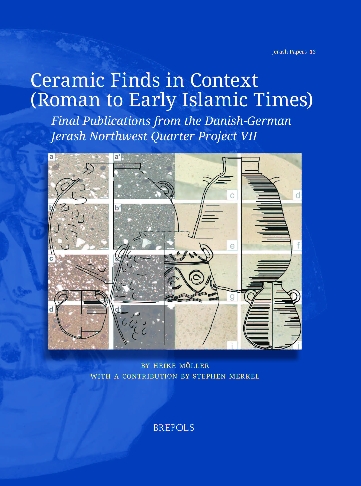
Ceramic Finds in Context (Roman to Early Islamic Times)
show More to view fulltext, buy and share links for:Ceramic Finds in Context (Roman to Early Islamic Times) show Less to hide fulltext, buy and share links for: Ceramic Finds in Context (Roman to Early Islamic Times)The Decapolis city of Jerash has long attracted attention from travellers and scholars, due both to the longevity of the site and the remarkable finds uncovered during successive phases of excavation that have taken place from 1902 onwards. Between 2011 and 2016, a Danish-German team, led by the universities of Aarhus and Münster, focused their attention on the Northwest Quarter of Jerash — the highest point within the walled city — and this volume is the seventh in a series of books presenting the team’s final results.This volume provides an in-depth analysis into the ceramic materials found in Jerash’s Northwest Quarter, much of which comes from largely undisturbed contexts. The ceramic finds presented in this volume are typo-chronologically evaluated and contextually analysed. The authors then use this dataset as a starting point to explore the micro- and macro-networks that existed in ancient Gerasa from Roman to Early Islamic times more broadly, examining how finely meshed exchange could take place on a micro-regional level, and assessing what conditions were required in order for trade to occur.
-
-
-
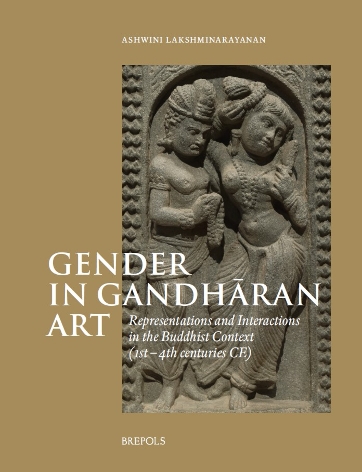
Gender in Gandhāran Art
show More to view fulltext, buy and share links for:Gender in Gandhāran Art show Less to hide fulltext, buy and share links for: Gender in Gandhāran ArtGandhāran art developed around the first century BCE till the fourth century CE in parts of present-day Afghanistan and Pakistan and has been the focus of intense scholarly debates in both Classical and South Asian Studies for many decades. In this book, Ashwini Lakshminarayan offers for the first time a specialized study on gender using Gandharan material culture and convincingly proposes new readings of visual culture beyond Eurocentric and postcolonial interpretations.
This book sets the stage with a detailed overview of the contexts in which Gandhāran art was located in Buddhist sites by analysing the gendered use of space, and the gender and activities of donors and administrators. At its core, the book gives prominence to the stone reliefs of Gandhāra and examines how male and female bodies are represented, how they interact, and how gender symbolised ideals and values.
With an important comparative overview of the Gandhāran artistic production and new illustrations, this work is indispensable for all those interested in the study of gender in ancient art, the interaction between Graeco-Roman and Indic cultures, and the development of the early Buddhist artistic tradition in South and Central Asia that also shaped Buddhist visual culture eastwards in China.
-
-
-
Le dieu de Sénèque
show More to view fulltext, buy and share links for:Le dieu de Sénèque show Less to hide fulltext, buy and share links for: Le dieu de SénèqueThis volume concludes that there is such a thing as a unified Senequian theology, which forms a system despite the necessary duality of its philosophical and literary approaches. This quest for a definition of the Stoic god is achieved through multiple literary forms, which provide as many perspectives on the divine. Seneca's religious views offer the individual growing in wisdom to develop a knowledge of the god which is inductive rather than deductive, experimental and not only theoretical, sensitive and not purely rational – all within the context of a pagan and philosophical monotheism. Thus all the originality of Seneca’s theological undertaking lies, paradoxically, in a refocusing on Man, who must be freed from his existential fears and led to the heroic acceptance of the divine plan. Indeed, Seneca’s carefully thought out theodicy goes beyond the Stoic’s traditional optimism – which considers the rational god to be inherently provident – and positively confronts the question of the existence of Evil, which culminates in tragedies. Ultimately, the center of gravity of Seneca’s religion, which is based on an exaltation of human interiority, shifts from the god to the sage, a true hero who has managed to overcome the vicissitudes of life and whose glorification constitutes the supreme degree of piety.
-
-
-
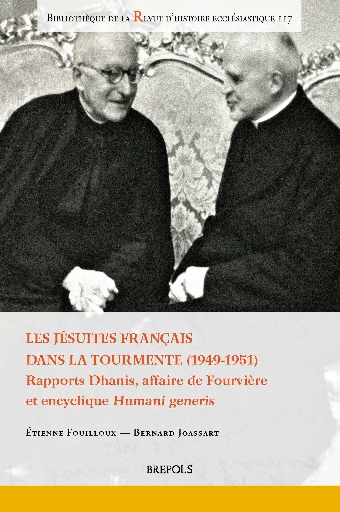
Les jésuites français dans la tourmente (1949-1951)
show More to view fulltext, buy and share links for:Les jésuites français dans la tourmente (1949-1951) show Less to hide fulltext, buy and share links for: Les jésuites français dans la tourmente (1949-1951)17 septembre 1946 : devant les membres de la 29e congrégation générale des Jésuites, Pie XII évoque la « nouvelle théologie », qui vise – du moins d’aucuns le croient – en particulier les maisons de formation des jésuites français. Cela ne manque pas d’alarmer les autorités de l’Ordre, à commencer par le P. Jean-Baptiste Janssens, nouveau général. Face à l’agitation que suscitent les débats à propos de cette « nouvelle théologie », le 25 janvier 1949, Janssens nomme un visiteur, le P. Édouard Dhanis, professeur au scolasticat des jésuites belges, chargé d’examiner le contenu de l’enseignement dispensé dans les scolasticats français. Le 4 octobre 1949, Dhanis remet son rapport au Général : il pointe ce qu’il considère comme des défaillances graves par rapport à la scolastique officielle. Cette expertise sera rapidement suivie de mesures sévères prises par Janssens : notamment, plusieurs professeurs sont relevés de leur enseignement ou soumis à un contrôle strict dans leurs publications, en particulier à Fourvière. Suite à diverses interventions, en janvier 1950, à la demande du Saint-Office, Dhanis transmet à celui-ci un second rapport (daté du 26 novembre 1949). Fort semblable au premier, il sera une source importante de l’encyclique Humani generis (15 août 1950). Replacés dans le cadre des remous ayant précédé la visite du P. Dhanis et de ses suites, et édités ici, ces deux documents se révèlent être des pièces majeures sur une des crises importantes de l’Église du XXe siècle.
-
-
-
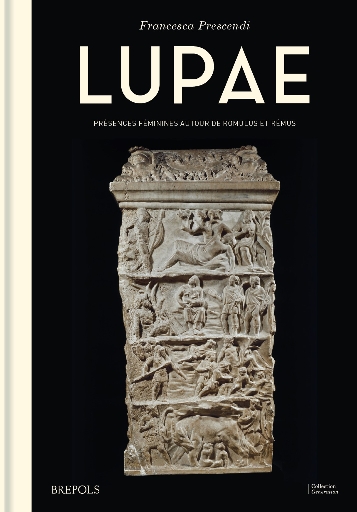
Lupae
show More to view fulltext, buy and share links for:Lupae show Less to hide fulltext, buy and share links for: LupaeRomulus et Rémus naissent d’une vierge vestale (Ilia ou Rhéa Silvia) ou d’une esclave qui s’accouple avec un phallus divin. Après avoir été soustraits à leur mère, ils sont allaités par la louve, une bête qui, malgré son caractère de prédateur, se comporte comme une nourrice pleine d’attention et d’affection. L’abris pour cet allaitement interspécifique est offert par le figuier Ruminalis, qui dérive son nom, comme la déesse Rumina, de la mamelle allaitante. Cette enfance sauvage se conclut quand les jumeaux sont accueillis par Acca Larentia, femme de renommée redoutable, qui les allaite et les fait grandir dans un milieu pastoral. Comme la louve, dont elle est l’alter-ego, Acca Larentia s’affiche pour sa remarquable générosité, qui est à l’origine d’une fête publique, les Larentalia, célébrée en décembre. Un fil rouge se dénoue entre ces figures primordiales : le lait nourricier, que la mère n’a pas pu donner à ses fils, et que les autres figures offrent à sa place.
En suivant les traces de ce fluide, cette enquête anthropologique, historique et philologique analyse les valeurs culturelles et religieux de ces présences féminines devenues des piliers de la mémoire collective des Romains.
-
-
-
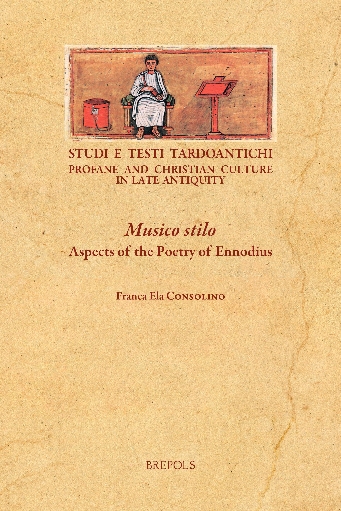
Musico stilo
show More to view fulltext, buy and share links for:Musico stilo show Less to hide fulltext, buy and share links for: Musico stiloSince the end of the last century, Ennodius has been the object of increasing interest among scholars of late antiquity. Developments in Ennodian criticism are also addressed in this volume, that presents the results of more than twenty years of research on the relationship – always dialectical and not infrequently innovative – that Ennodius maintains as a poet with the Latin literary tradition, both profane and Christian. The chapters of the book revisit – in English and in one case with substantial modifications – eight of the author’s previously published papers on Ennodius, along with one unpublished contribution.
Areas that have been specifically investigated include the functions that he assigns to poetry compared to those he assigns to prose, his original re-treatment of some literary genres, and his thematic, stylistic, lexical and metric choices. The last chapter explores the literary influence exerted by Ennodius’ poetry on the text of his epitaph. The very fact that its unknown author – certainly a great admirer of the deceased – did his best to imitate his style is a significant testimony to the prestige that Ennodius enjoyed after his death in the diocese of Pavia of which he had been the bishop.
-
-
-
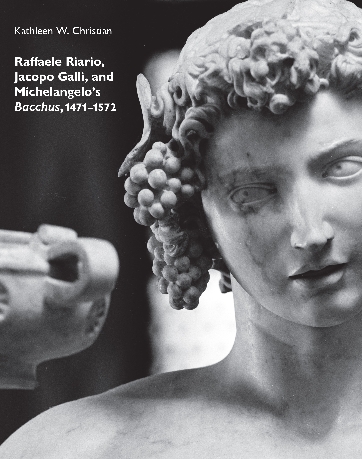
Raffaele Riario, Jacopo Galli, and Michelangelo’s Bacchus, 1471–1572
show More to view fulltext, buy and share links for:Raffaele Riario, Jacopo Galli, and Michelangelo’s Bacchus, 1471–1572 show Less to hide fulltext, buy and share links for: Raffaele Riario, Jacopo Galli, and Michelangelo’s Bacchus, 1471–1572On Michelangelo’s first day in Rome, in June 1496, Cardinal Raffaele Riario asked him if he could create ‘something beautiful’ in competition with the antique. The twenty-one-year old sculptor responded to this unique challenge with the statue of Bacchus now in the Bargello museum. This statue, as well as the Sleeping Cupid which first brought Michelangelo to Riario’s attention, have long been shrouded in mystery, and the Bacchus as well as its patron have long suffered from critical censure.
Through a comprehensive analysis of overlooked and previously-unpublished sources, this study sheds new light on the Sleeping Cupid, the Bacchus,and a fascinating period in the history of Renaissance Rome when the careers of Riario, Galli, and Michelangelo were closely intertwined. It considers the rise of the Riario dynasty starting with the election of Pope Sixtus IV in 1471, Riario’s partnership with Jacopo Galli in the reconstruction of the palace now known as the Palazzo della Cancelleria, the attempted sale of Michelangelo’s Sleeping Cupid in Rome as an antiquity, Riario’s patronage of the Bacchus, and the Bacchus’s displayin the house of the Galli up until its sale to the Medici in 1572. Taking a broad, interdisciplinary perspective, it offers a fundamental reassessment of Cardinal Riario’s career as a patron, of Jacopo Galli’s role as an intermediary for both Riario and Michelangelo, and of Michelangelo’s collaboration with Riario and Galli.
-
-
-
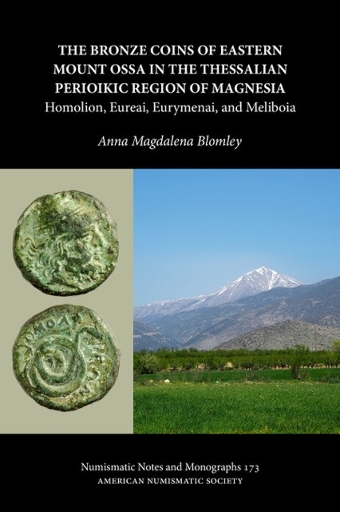
The Bronze Coins of Eastern Mount Ossa in the Thessalian Perioikic Region of Magnesia
show More to view fulltext, buy and share links for:The Bronze Coins of Eastern Mount Ossa in the Thessalian Perioikic Region of Magnesia show Less to hide fulltext, buy and share links for: The Bronze Coins of Eastern Mount Ossa in the Thessalian Perioikic Region of MagnesiaThis monograph examines the Late Classical and Hellenistic bronze coinages of five mints in the Thessalian perioikic region of Magnesia. At the core of this work lies a new die-study of the coins produced by the strategically and economically important coastal cities of Homolion and Meliboia as well as the lesser-known mints of Eureai, Eurymenai, and Rhizous. Combining this die-study with a close examination of the cities’ topographical context in a border region between Thessaly and Macedon and drawing on archaeological data from Magnesia and beyond, the monograph addresses key questions concerning the chronology, denominations, and circulation patterns of the bronze issues minted on eastern Mount Ossa. This analysis not only throws new light on coin production in Late Classical and Hellenistic Magnesia, but also allows a discussion of the possible military and non-military functions of the region’s different bronze issues.
Placing the coins of Eureai, Eurymenai, Homolion, Meliboia, and Rhizous in their wider context, this monograph furthermore addresses broader issues in the history of Thessalian coinage. In particular, the monograph’s regional approach offers an unusual opportunity to examine to what extent Thessaly’s Late Classical and Hellenistic civic coins were genuinely local in design, production, and function. The monograph thus both explores the coins of Mount Ossa and contributes towards a better understanding of the introduction and development of bronze coinages in the wider Thessalian region and beyond.
-
-
-

The Concept of Space in the Book of Judith
show More to view fulltext, buy and share links for:The Concept of Space in the Book of Judith show Less to hide fulltext, buy and share links for: The Concept of Space in the Book of JudithIn the last decade, biblical exegesis has gradually taken into consideration the so-called “spatial turn.” However, the literary concept of space and its narrative analysis have found less interest than the study of space as a social and cultural phenomenon. This obvious gap in biblical research has become the impulse for the present work, dedicated to the book of Judith. Its aim is, on the one hand, to present the narrative analysis of space as a still-developing field in non-biblical literature and, on the other, to show how this promising approach can be developed in biblical studies.
In particular, this monograph provides the narrative analysis and interpretation of space in the book of Judith in response. The first part of the study offers a synthetic overview of perceptions, concepts and theories of space from antiquity to contemporary research, and of the theoretical approaches to space in the Old Testament. The main part is dedicated to the analysis of space on the micro and macro levels of the Judith story through the application of Katrin Dennerlein’s narratological theory of space. Thus, it can be demonstrated to what extent an in-depth analysis of the notion of space can contribute to better understand its thematic and symbolic dimension in the narrative, its function of characterising persons and actions, its role as a structuring element in the story and, last but not least, as a vehicle for an ideological and theological message.
-
-
-
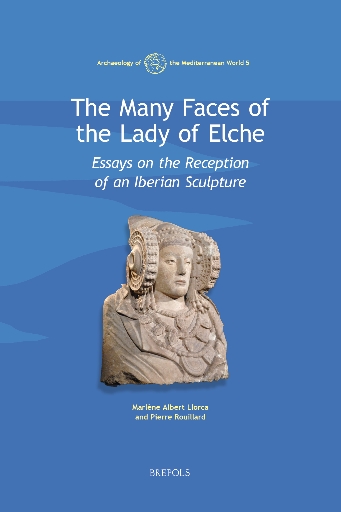
The Many Faces of the Lady of Elche
show More to view fulltext, buy and share links for:The Many Faces of the Lady of Elche show Less to hide fulltext, buy and share links for: The Many Faces of the Lady of ElcheOn 4 August 1897, farm workers in Elche — the site of ancient Ilici — discovered an Iberian sculpture of a woman that dated from the fifth– fourth centuries BCE. French archaeologist Pierre Paris dubbed this figure ‘the Lady of Elche’, and promptly purchased the sculpture on behalf of the Louvre Museum. There, she drew the attention of European scholars who were intrigued by her stylistic features, finally concluding that she bore witness to the existence of a specifically Iberian art. Since her discovery, the Lady of Elche has been a source of fascination not only for scholars, but also for artists, and she has become an icon of regional and national identity across Spain. This volume, co-written by an archaeologist and an anthropologist and translated here into English for the first time, seeks to explore the importance of the Lady of Elche, both for students of the past, and for the peoples of Iberia. The authors here explore not only what we know — and still do not know — about her creation, but also engage with key questions about what she represents for the men and women of our time who have questioned, manipulated, admired, loved, and often reinvented the singular beauty of this iconic figure.
-
-
-
The Royal Albert Hall
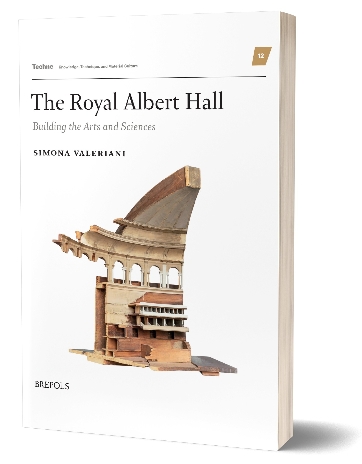
show More to view fulltext, buy and share links for:The Royal Albert Hall show Less to hide fulltext, buy and share links for: The Royal Albert HallThis groundbreaking study takes one of London’s most iconic buildings and deconstructs it to offer new insights into the society that produced it. As part of the new cultural quarter built in South Kensington on the proceeds from The Great Exhibition of 1851, the Royal Albert Hall was originally intended to be a ‘Central Hall of Arts and Sciences’. Prince Albert’s overarching vision was to promote technological and industrial progress to a wider audience, and in so doing increase its cultural and economic reach.Placing materiality at its core, this volume provides an intellectual history of Victorian ideas about technology, progress, and prosperity. The narrative is underpinned by a wealth of new sources – from architectural models and archival materials to 19th century newspapers. Each chapter focuses on a particular element of the Royal Albert Hall’s construction, chronicling the previously overlooked work of a host of contributors from all walks of life, including female mosaic-makers and the Royal Engineers.Lighting, ventilation, fireproofing, ‘ascending rooms’, cements, acoustics, the organ, the record-breaking iron dome, and the organisation of internal spaces were all attempts to attain progress - and subject to intense public scrutiny. From iron structures to terracotta, from the education of women to the abolition of slavery, in the making of the Royal Albert Hall scientific knowledge and socio-cultural reform were intertwined.This book shows, for the first time, how the Royal Albert Hall’s building was itself a crucible for innovation. Illustrious techniques from antiquity were reimagined for the new mechanical age, placing the building at the heart of a process of collecting, describing, and systematising arts and practices. At the same time, the Royal Albert Hall was conceived as a ‘manifesto’ of what the Victorians thought Britain ought to be, at a crucial moment of its socio-economic history: a symbolic cultural hub for the Empire’s metropole.This is the Royal Albert Hall: a central piece of the puzzle in Britain’s march towards modernity.
-
-
-
À l’ombre du laurier
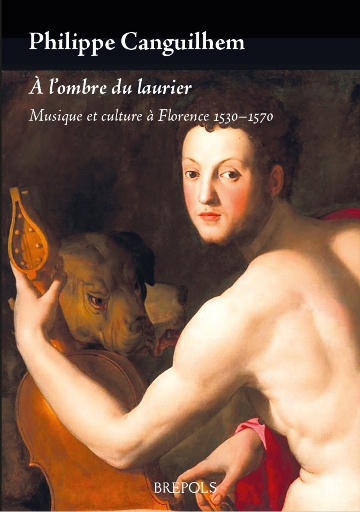
show More to view fulltext, buy and share links for:À l’ombre du laurier show Less to hide fulltext, buy and share links for: À l’ombre du laurierFruit de plus de quinze années de recherches dans les bibliothèques et archives de Florence, ce livre souhaite mettre en évidence le rôle de la musique dans le dispositif culturel mis en place par les premiers ducs de Florence, Alessandro et Cosimo 1, depuis la chute de la dernière République jusqu’à l’obtention par Cosimo du titre de grand-duc de Toscane par le pape Pie V. Ces quatre décennies, marquées par des bouleversements politiques, sociaux et culturels ont été scrutées avec la plus grande attention dans les domaines de l’histoire de l’art, de l’histoire politique, économique ou littéraire, mais la place de la musique dans cette société en mouvement n’avait jamais été évaluée en profondeur. Observer la vie musicale florentine de cette période permet pourtant de révéler les mutations profondes des structures de pouvoir, des réseaux de sociabilité et des référents culturels.
Suivant un plan chronologique, le livre s’appuie sur certains personnages-clés qui traversent toute la période, les peintres Bronzino et Vasari, les écrivains et académiciens Benedetto Varchi, Antonfrancesco Grazzini ou Giovan Battista Strozzi, dont les collaborations et les amitiés avec les musiciens florentins ont laissé de nombreuses traces. En suivant les activités de cette communauté, cette enquête relate la transformation progressive des canti carnascialeschi en mascherate de cour, les débats musicaux au sein de l’Accademia Fiorentina, le dynamisme de la pratique du madrigal polyphonique dans les milieux amateurs, sans oublier les mécanismes du mécénat musical et la construction d’une musique de cour au service du nouveau duché des Médicis.
-