Brepols Online Books Medieval Monographs Archive v2016 - bobar16mome

Collection Contents
9 results
-
-
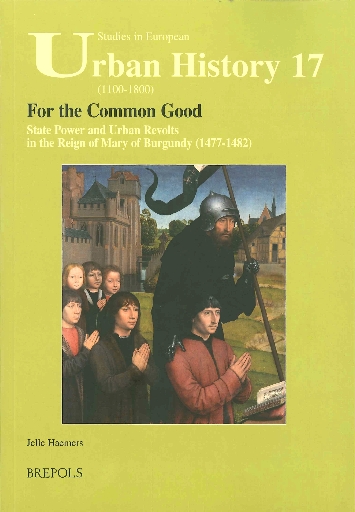
For the Common Good
show More to view fulltext, buy and share links for:For the Common Good show Less to hide fulltext, buy and share links for: For the Common GoodIn 1477, the Low Countries were in chaos. On 5 January Charles the Bold, Duke of Burgundy, was killed in the battle of Nancy. His political adversaries used this fortuitous opportunity to reverse his much-hated policies. The late duke’s confidents were executed, as nobles fled from court. The French king declared war on Charles’ heir, Mary of Burgundy, and the cities rose in rebellion against the duchy. United in their opposition to the ducal court, the Estates-General instituted a new state structure which severely reduced the power of the central state. The duchess’ new husband, Maximilian of Austria, was never able to dictate war policy nor appease the discontent of the populace, because his first priority was to strengthen the power of the Habsburg dynasty. In 1482, when Mary of Burgundy died after a tragic fall from her horse, revolt again spread across the county of Flanders. In this dramatic crisis that would last for a decade, central authority was again challenged by a political alternative, the Flemish regency council.
This book examines the people behind the revolt. From a murky background of conflicting loyalties, it identifies the principal allies of the Habsburg dynasty and key political adversaries of Maximilian in the Flemish cities. An in-depth analysis of their lives and their socio-economic and cultural backgrounds on the eve of the Flemish Revolt elucidates their reasons for rebelling or remaining loyal to court. By focusing on disloyal nobles at court and urban dissenters in the county of Flanders, this book goes beyond previous studies of the revolt and offers new insights into the social history of medieval politics. In the end, readers will discover whether the court, the nobility, and the urban rebels were really striving for the goal they claimed, the common good.
Jelle Haemers is a post-doctoral research fellow at Ghent University (IAP-project ‘City and Society in the Low Countries, 1100-1800’). His research interests focus mainly on urban history of the Late Middle Ages.
-
-
-
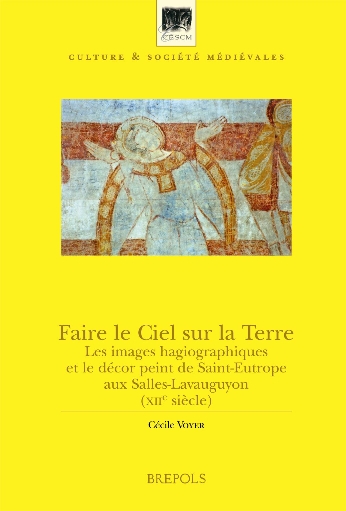
Faire le ciel sur la terre
show More to view fulltext, buy and share links for:Faire le ciel sur la terre show Less to hide fulltext, buy and share links for: Faire le ciel sur la terreFondée sur le décor peint remarquable et jusqu’ici méconnu de l’église Saint-Eutrope des Salles-Lavauguyon, la présente étude explore les fonctions des images hagiographiques monumentales des XI e-XII e siècles. L’élargissement du questionnement à d’autres édifices permet d’éclairer leur rôle et leur inscription dans l’espace culturel. Se concentrer sur un « lieu d’images » suppose de définir les cadres d’une réflexion méthodologique. Ce livre s’appuie sur une approche contextuelle des œuvres visuelles en changeant d’échelle au fur et à mesure de l’analyse. L’auteur met en lumière la singularité et l’inventivité des concepteurs de chaque image en la replaçant dans sa série, une série qui témoigne de la variété des occurrences du Haut Moyen Age au XII e siècle. Détailler chaque cycle narratif permet d’examiner la façon dont la matière hagiographique est traduite en images et d’observer la construction ou la reconstruction de la vita peinte, les rythmes et les temps du récit.
Chaque cycle hagiographique est étudié à l’aune des thèmes qui sous-tendent l’ensemble du décor. Se dessine ainsi l’acte de création qui a présidé à l’élaboration de celui du prieuré des Salles-Lavauguyon. Les intentions des commanditaires, des chanoines réguliers, se lisent entre les images qu’ils ont choisies et leur mise en œuvre. Une communauté canoniale qui se pense à travers son édifice et son décor et qui se positionne au sein de l’Eglise locale grâce aux images hagiographiques. Prendre pour objet ce prieuré et ses peintures invite à aborder la géographie canoniale du diocèse et son articulation avec les réseaux monastiques, la politique épiscopale, la réforme canoniale, l’instruction et la culture spirituelles mais aussi les enjeux de pouvoir, d’autorité et de territoire.
Le but de ce livre qui dépasse celui de la stricte monographie thématique est ainsi de contribuer à rendre compte de la richesse des mentalités médiévales.
Cécile Voyer a fait ses études au Centre d’Etudes Supérieures de Civilisation Médiévale de Poitiers. Elle est actuellement maître de conférences à l’Université Michel de Montaigne, Bordeaux 3.
-
-
-
From Ducatus to Regnum. Ruling Bavaria under the Merovingians and Early Carolingians
show More to view fulltext, buy and share links for:From Ducatus to Regnum. Ruling Bavaria under the Merovingians and Early Carolingians show Less to hide fulltext, buy and share links for: From Ducatus to Regnum. Ruling Bavaria under the Merovingians and Early CarolingiansBavaria was a very important country during the early Middle Ages. Its territory included much of the modern German state but also reached across the Alps into what are now Austria and northern Italy. Bavaria thus occupied a strategic position between the rival kingdoms of the Franks and the Langobards. It was ruled by powerful dukes who had close political and personal relations with the Frankish rulers but who also vigorously resisted attempts to limit their own sovereignty. Bavaria’s independence was ended in 788 by Charlemagne who deposed his cousin, Duke Tassilo. Charlemagne’s son, the Emperor Louis the Pious, then established Bavaria as the first monarchy east of the river Rhine for his own son, Ludwig the German. This is the first full study of the entire evolution of Bavarian rule from the mid-sixth century into the early ninth century. It explores the changing strategies adopted by its dukes and then its first king to establish their authority and maintain their autonomy in face of evolving challenges to their rule. An Epilogue continues the story into the early tenth century.
Carl I. Hammer graduated from Amherst College (B.A.) and the University of Toronto (Ph.D.) and also studied at the universities of Munich, Chicago and Oxford. After a career in international business with Westinghouse and Daimler-Benz, he is now retired. He has published two other scholarly books on early-medieval Bavaria and numerous articles in academic journals in N. America and Europe. He lives in Pittsburgh.
-
-
-
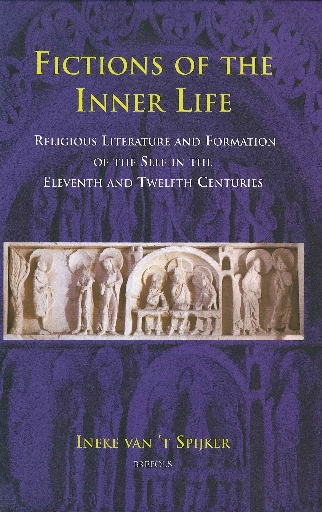
Fictions of the Inner Life
show More to view fulltext, buy and share links for:Fictions of the Inner Life show Less to hide fulltext, buy and share links for: Fictions of the Inner LifeInteriorization and a trend towards a consideration of the nature of personal experience have long been recognized as important elements in the changing landscape of the religious culture of the eleventh and twelfth centuries. The homo interior is at the centre of the religious writings of that time, and the 'inner man' is a pivotal concept for making sense of the literature of religious formation. Monastic writers try to provide their readers with a 'script' to enact in themselves, in order to form their inner self, as the way to ascend to the knowledge of God. Interiority, however, is not a straightforward aspect of human existence with an unchanging meaning. The notion as it is used by medieval monastic authors gives expression to a specific understanding of what a human being was thought to be, quite different from later self-perceptions. Because of this difference, when they write 'histories of the self' historians and philosophers often pass over the Middle Ages. On the other hand, in histories of mysticism the twelfth century is often read through the lens of later mysticism. This book explores the notion of interiority via four influential authors of the eleventh and twelfth centuries, and the way in which notions about interiority function in their pedagogy. The concepts governing how the homo interior is fashioned are developed within age-old monastic and theological traditions. Medieval ideas about man as imago Dei, monastic reading culture and biblical exegesis are only a few of the elements of these traditions. The choice of authors has been guided by the wish to encompass and highlight various aspects of the eleventh- and twelfth-century notions of 'inner life': monastic and eremitical tradition in Peter Damian, theological-anthropological concepts in Hugh of Saint-Victor, the importance of exegetical procedures in Richard of Saint-Victor, and the role of experience in William of Saint-Thierry. These authors illustrate what was then conceptually possible when it came to thinking about the inner life. Their notions of the inner self are an intriguing part of a continuing history of conceptions of the self and of how it may be fashioned.
-
-
-
From the Treasure-House of Scripture. An Analysis of Scriptural Sources in De Imitatione Christi
show More to view fulltext, buy and share links for:From the Treasure-House of Scripture. An Analysis of Scriptural Sources in De Imitatione Christi show Less to hide fulltext, buy and share links for: From the Treasure-House of Scripture. An Analysis of Scriptural Sources in De Imitatione ChristiFrom the Treasure-House of Scripture presents the first comprehensive assessment of the relation between the Latin Bible and the text of the highly influential late-medieval devotional manual known as De Imitatione Christi (The Imitation of Christ). Consisting of a detailed analysis of scriptural sources in The Imitation, this work contains the complete Latin text of The Imitation juxtaposed against 3815 Vulgate source texts. Included are some 2600 sources collated from citations in seventy editions of The Imitation, and some 1200 sources newly identified in this study.
A collation is presented of explicit statements in The Imitation on ‘Scripture’ and aspects of lectio divina (‘prayed reading’). The textual analysis highlights several aspects of the relation between The Imitation and the Vulgate. First, some fifty ‘forms of usage’ of scriptural passages in The Imitation are described. Secondly, some three hundred scriptural passages important in informing the overall content of The Imitation are identified. Thirdly, the role of scriptural sources in helping to shape the ascetic character of The Imitation is discussed.
Background information is presented on the content, authorship and influence of The Imitation; the Devotio moderna (‘New Devotion’ or ‘Modern Devotion’) movement; the life of Thomas a Kempis; the role of Scripture and lectio divina in the New Devotion movement; and the general role of Scripture in Thomas a Kempis’s oeuvre.
-
-
-
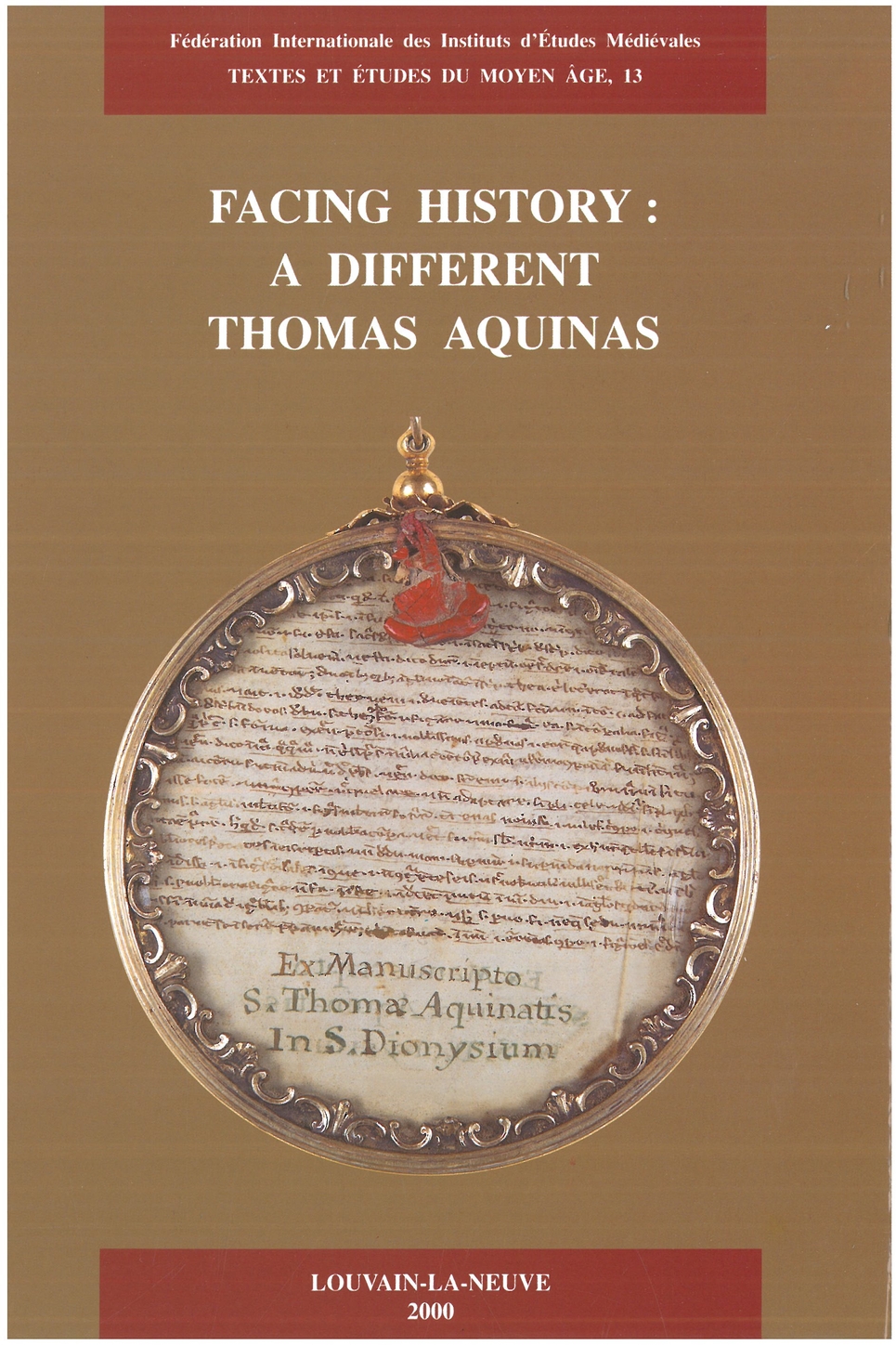
Facing History: A Different Thomas Aquinas
show More to view fulltext, buy and share links for:Facing History: A Different Thomas Aquinas show Less to hide fulltext, buy and share links for: Facing History: A Different Thomas AquinasCe volume rassemble les articles que le Père Boyle a publiés sur Thomas d'Aquin tout au long de sa carrière. Par le simple fait de replacer la moindre question dans son contexte le plus large, ce médiéviste averti avait l'art de la renouveler profondément. En relisant cet ensemble de travaux à quelques années de distance, on ne peut qu'être frappé de leur pertinence. Souvent livré, et à juste titre, aux philosophes et aux théologiens, Thomas d'Aquin n'a pas toujours été situé par eux dans le contexte historique nécessaire à sa bonne compréhension. C'est précisément ce qu'a fait Leonard Boyle.
Personne, certes, n'eut été mieux qualifié que lui pour dire l'intention qui le guidait; mais à défaut de pouvoir l'entendre lui-même, il n'est peut-être pas impossible de dégager l'originalité des études ici rassemblées. On ne semble pas jusqu'ici s'être particulièrement intéressé à ses travaux du point de vue de la théologie. De ce fait, ils n'ont peut-être pas encore trouvé tout le retentissement qu'il était en droit d'en attendre.
La maestria avec laquelle l'auteur met en oeuvre les différents aspects d'une méthode bien rôdée pour l'étude des textes médiévaux aurait suffi à elle seule à justifier leur reprise en un volume. Non seulement leur qualité les fait émerger très au-dessus de nombreux autres travaux, mais certaines d'entre elles touchent aux questions les plus graves quant au sens de l'oeuvre thomasienne, de la mission et de la spiritualité de l'ordre dominicain, et même quant à la vision d'ensemble du XIIIe siècle religieux tout entier.
Par la générosité de son travail le Père Boyle a sensiblement renouvelé les questions qu'il a touchées. Quiconque voudra bien porter à sa recherche l'attention qu'elle mérite devra reconnaître qu'il nous fait découvrir un saint Thomas "différent".
-
-
-
From Chaos to Enemy: Encounters with Monsters in Early Irish Texts. An Investigation Related to the Process of Christianization and the Concept of Evil
show More to view fulltext, buy and share links for:From Chaos to Enemy: Encounters with Monsters in Early Irish Texts. An Investigation Related to the Process of Christianization and the Concept of Evil show Less to hide fulltext, buy and share links for: From Chaos to Enemy: Encounters with Monsters in Early Irish Texts. An Investigation Related to the Process of Christianization and the Concept of EvilThis book deals with the theme of 'encounters with monsters' in early Irish texts. Three texts dealing with this theme are central to this study: the Old Irish Adventure of Fergus mac Leite, the Hiberno-Latin Life of St Columba by Adomnan, and the Old Irish Letter of Jesus. The author's investigation of the theme follows two lines. The first main line is the question of how aspects of the process of Christianization were reflected in early Irish literary texts. The second main line focusses on the development of ideas about evil in these textes. These two lines of investigations generated two approaches: firstly, a study into the origin of the descriptions of the monsters and, secondly, an analysis - by means of a hypothesis - of the ideas found in these three texts on this time. The broad scope of the process of Christianization is narrowed down to an investigation of the origin of the monsters and non-canonical scripture, encyclopedic Latin works such as Pliny's Naturalis Historia and Isidore's Etymologiae, related Latin and Old English material, Hiberno-Latin, and Old and Middle Irish texts. The author made this comparison in order to ascertain whether these descriptions were derived from sources and to classify the monsters according to three categories: "native", "imported", or "integrated". The author did this to determine if and how Christian idead influenced the symbolisation of evil in the form of monsters. In order to analyse the ideas about evil, the author distinguishes between two forms of evil: firstly, non-moral evil - evil that occurs without anyone inflicting it intentionally uppn the victims, and secondly, moral evil - evil done intentionally. According to the author's hypothesis, the monsters are said to belong originally to the realm of non-moral evil but, under the influence of Christianity, they also begin to personify moral evil.
-
-
-
Femmes troubadours de Dieu
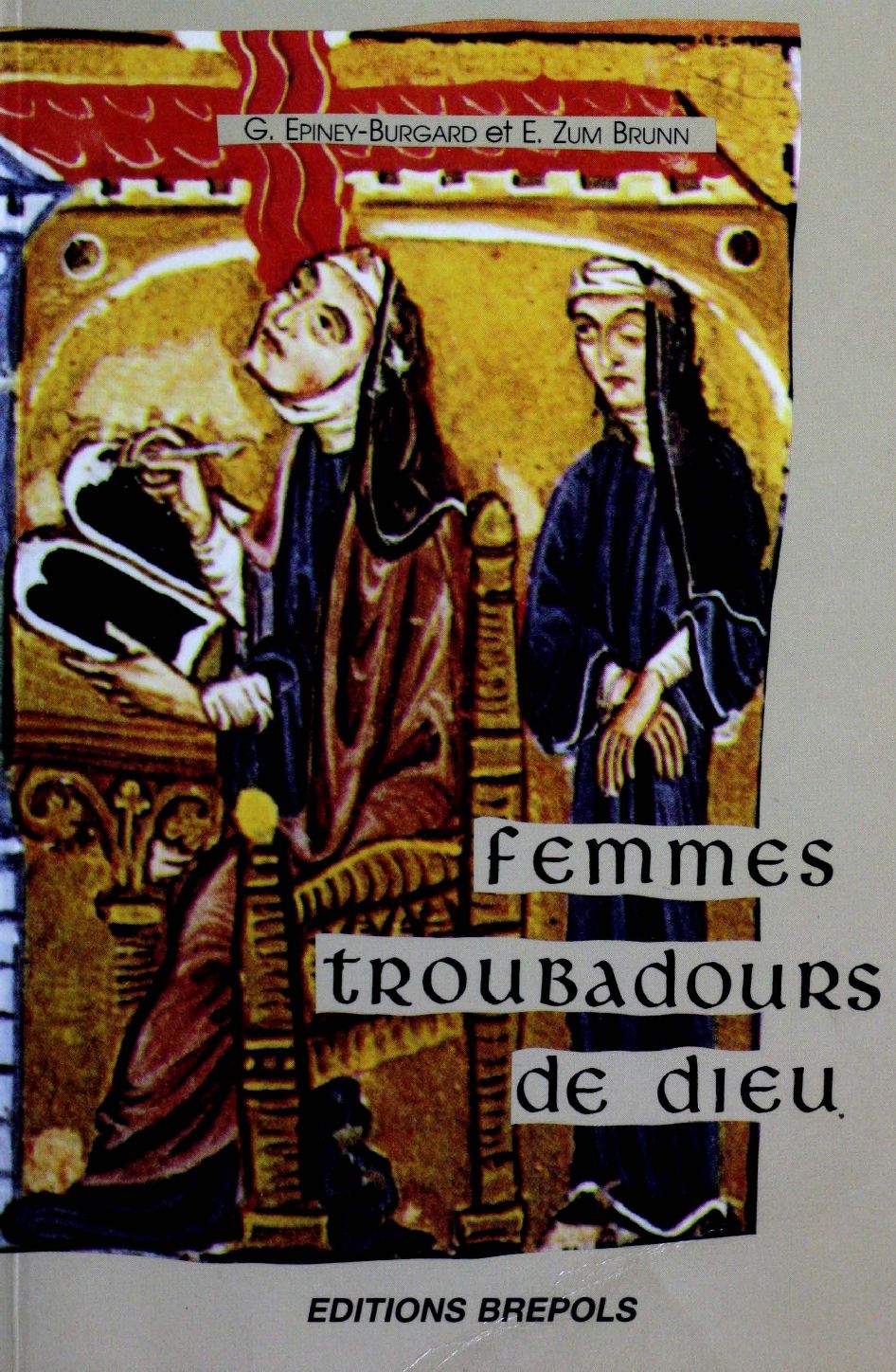
show More to view fulltext, buy and share links for:Femmes troubadours de Dieu show Less to hide fulltext, buy and share links for: Femmes troubadours de DieuComment montrer brièvement ce qui apparente l'abbesse bénédictine Hildegarde de Bingen, qui appartient encore au haut moyen âge et, moins d'un siècle plus tard, les béguines Hadewijch d'Anvers, Mechthilde de Magdebourg, Marguerite Porete, du Hainaut, ainsi que la prieure cistercienne Béatrice de Nazareth, élevée chez les béguines et partageant leur spiritualité? Ce qui fait leur parenté profonde est bien mis en évidence par certains textes de l'époque, tel ce témoignage de 1158 concernant Hildegarde et sa contemporaine, Elisabeth de Schönau, appartenant aussi à l'ordre bénédictin: "En ces jours-là, Dieu manifesta sa puissance par l'intermédiaire du sexe faible, en ces servantes qu'il emplit de l'esprit prophétique."
-