Brepols Online Books Medieval Monographs Archive v2016 - bobar16mome

Collection Contents
161 - 180 of 263 results
-
-
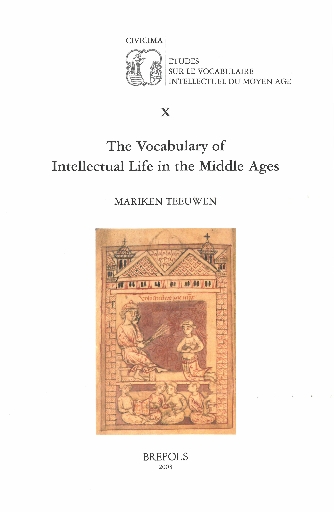
The Vocabulary of Intellectual Life in the Middle Ages
show More to view fulltext, buy and share links for:The Vocabulary of Intellectual Life in the Middle Ages show Less to hide fulltext, buy and share links for: The Vocabulary of Intellectual Life in the Middle AgesThe Latin vocabulary of intellectual life in the Middle Ages has been the focus of the CIVICIMA-series: nine volumes of conference-proceedings, monographs and collective works. The series has proved convincingly that analyses of the verbal expressions of medieval intellectual life and their precise meanings is a worthwhile and rewarding task, which sharpens and deepens our understanding of education and learning in the medieval world.
With this tenth volume the series has been brought to a conclusion. It serves as a handbook, a practical tool for finding information and material about a considerable number of key terms, which have been classified in four categories of “technical vocabulary” - terms that developed specialized meanings in the context of medieval education and learning. The first category consists of the vocabulary of schools and universities (for instance, schola, magister, universitas, etc.); the second the vocabulary of the book and book production (for instance, armarium, pecia, scriptorium, etc.); the third treats the vocabulary of teaching-methods, instruments and products of intellectual life (for instance, concordantia, disputatio, glossa, etc.); the fourth the names of the disciplines, their teachers and students (for instance, artes liberales, canonista, decretista, theologia, etc.).
Terms from these four categories are treated, either individually or in groups coherent with respect to content, in short and uniform articles. Their medieval meanings are described, together with their origins, their classical meanings, their semantic development, and the historical or regional differences in meaning.
-
-
-
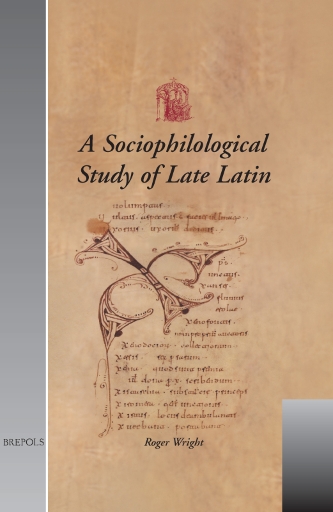
A Sociophilological Study of Late Latin
show More to view fulltext, buy and share links for:A Sociophilological Study of Late Latin show Less to hide fulltext, buy and share links for: A Sociophilological Study of Late LatinSociophilology combines traditional detailed philological expertise with the broader insights of modern sociolinguistics. Late Latin is the native language, both spoken and written, of the former Roman Empire in the Early Middle Ages, sometimes also regarded as being 'Early Romance'. By the thirteenth century Late Latin had split conceptually, from being a single complex living language, into several different living Romance languages, as well as the 'dead' language we now call 'Medieval Latin'. The complex aspects of these developments have been central to Roger Wright's research for many years; this sociophilological study of Late Latin places many texts, authors, scribes and linguistic developments in a coherent historical, intellectual and educational context. The book is presented in six sections, with four chapters in each: Late Latin, Medieval Latin and Romance; Texts and Language in Late Antiquity; The Ninth Century; Italy and Spain in the Tenth and Eleventh Centuries; Twelfth- and Thirteenth-Century Spain; Sociophilology and Historical Linguistics; followed by a Conclusion, a lengthy bibliography, and an index. The whole presents a vitally important intrinsic component of a thousand years of European cultural history, seen from unusually wide historical and linguistic perspectives.
-
-
-
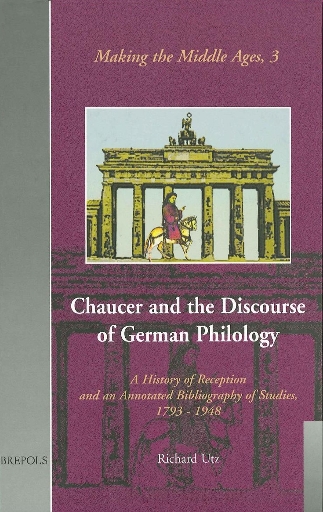
Chaucer and the Discourse of German Philology
show More to view fulltext, buy and share links for:Chaucer and the Discourse of German Philology show Less to hide fulltext, buy and share links for: Chaucer and the Discourse of German PhilologyIn the nineteenth and early twentieth century, German-speaking scholars played a decisive role in founding and shaping the study of medieval and early modern English language and culture. During this process, aesthetic and literary enthusiasms were gradually replaced, first by broadly comparative and then by increasingly narrow scientistic practices, all confusingly subsumed under the term 'philology'. Towards 1871, German and Austrian Anglicists were successful at imposing-- for about 30 years -- many of their philological discoursive practices on their English-speaking counterparts by focusing on strict textual criticism, chronology, historical linguistics, prosody, and literary history. After World War I, these philological practices were rejected in the U.K. and the United States because they were 'Made in Germany', but have remained essential features of German medieval scholarship until the present day.
This book offers a case study of these foundational developments by investigating the reception of Geoffrey Chaucer by eminent scholars such as V.A. Huber, W. Hertzberg, B. ten Brink, J. Zupitza, E. Fluegel, and J. Koch. The narrative of their nationalist, scientist, and self-fashioning efforts is complemented by a comprehensive annotated bibliography of German Chaucer criticism between 1793 and 1948.
-
-
-
From the Treasure-House of Scripture. An Analysis of Scriptural Sources in De Imitatione Christi
show More to view fulltext, buy and share links for:From the Treasure-House of Scripture. An Analysis of Scriptural Sources in De Imitatione Christi show Less to hide fulltext, buy and share links for: From the Treasure-House of Scripture. An Analysis of Scriptural Sources in De Imitatione ChristiFrom the Treasure-House of Scripture presents the first comprehensive assessment of the relation between the Latin Bible and the text of the highly influential late-medieval devotional manual known as De Imitatione Christi (The Imitation of Christ). Consisting of a detailed analysis of scriptural sources in The Imitation, this work contains the complete Latin text of The Imitation juxtaposed against 3815 Vulgate source texts. Included are some 2600 sources collated from citations in seventy editions of The Imitation, and some 1200 sources newly identified in this study.
A collation is presented of explicit statements in The Imitation on ‘Scripture’ and aspects of lectio divina (‘prayed reading’). The textual analysis highlights several aspects of the relation between The Imitation and the Vulgate. First, some fifty ‘forms of usage’ of scriptural passages in The Imitation are described. Secondly, some three hundred scriptural passages important in informing the overall content of The Imitation are identified. Thirdly, the role of scriptural sources in helping to shape the ascetic character of The Imitation is discussed.
Background information is presented on the content, authorship and influence of The Imitation; the Devotio moderna (‘New Devotion’ or ‘Modern Devotion’) movement; the life of Thomas a Kempis; the role of Scripture and lectio divina in the New Devotion movement; and the general role of Scripture in Thomas a Kempis’s oeuvre.
-
-
-
La 'disputatio' dans les Facultés des arts au moyen âge
show More to view fulltext, buy and share links for:La 'disputatio' dans les Facultés des arts au moyen âge show Less to hide fulltext, buy and share links for: La 'disputatio' dans les Facultés des arts au moyen âgeCe volume représente le deuxième volet d'une recherche sur la disputatio , l'une des principales méthodes d'enseignement et de recherche dans les universités médiévales. Après une première étude, parue en 1995, sur la disputatio à la Faculté des arts de Paris au XIIIe siècle, ce deuxième volume étudie le phénomène dans un contexte chronologique et géographique plus large et veut dresser un tableau plus général de l'usage et de l'évolution de cette méthode dans les Facultés des arts du XIIIe au XVe siècle. Toutefois, le point de vue est le même que dans le volume précédent, à savoir celui de l'histoire intellectuelle, insistant sur le caractère et le fonctionnement de la dispute. Ici aussi, le lien entre les règles édictées par les statuts et la pratique telle qu'elle se dégage des textes occupe une place centrale.
La présente étude est organisée en cinq parties. La première est consacrée à la disputatio à la Faculté des arts de Paris aux XIVe et XVe siècles, constituant ainsi la suite de l'étude précédente, dont le contenu est résumé ici dans l'introduction. Les autres parties concernent la dispute dans les Facultés des arts à Oxford et Cambridge, dans le Midi de la France, en Italie et en Europe centrale. Des exemples de sources étudiées sont cités dans le texte.
L'intention est de faire suivre ce volume d'un troisième volet, dans lequel la disputatio dans les Facultés des arts sera comparée à celle qui était en usage dans les autres facultés.
-
-
-
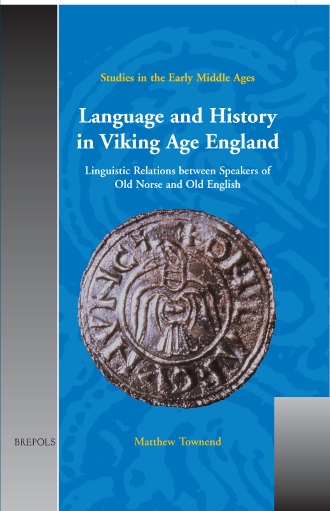
Language and History in Viking Age England
show More to view fulltext, buy and share links for:Language and History in Viking Age England show Less to hide fulltext, buy and share links for: Language and History in Viking Age EnglandThis is the first ever book-length study for the nature and significance of the linguistic contact between speakers of Old Norse and Old English in Viking Age England. It investigates in a wide-ranging and systematic fashion a foundational but under-considered factor in the history and culture of the Vikings in England. The subject is important for late Anglo-Saxon and Viking Age history; for language and literature in the late Anglo-Saxon period; and for the history and development of the English language. The work's primary focus is on Anglo-Norse language contact, with a particular emphasis on the question of possible mutual intelligibility between speakers of the two languages; but since language contact is an emphatically sociolinguistic phenomenon, the work's methodology combines linguistic, literary and historical approaches, and draws for its evidence on texts in Old English, Old Norse and Anglo-Latin, and other forms of linguistic and onomastic material. 'Matthew Townend's interdisciplinary study is a stimulating and in many ways ground breaking research work. It offers a profound analysis of one of the central issues of Viking Age England: the linguistic relations between and mutual intelligibility of speakers of Old Norse and Old English.' [Susanne Kries, Universitaet Potsdam]
-
-
-
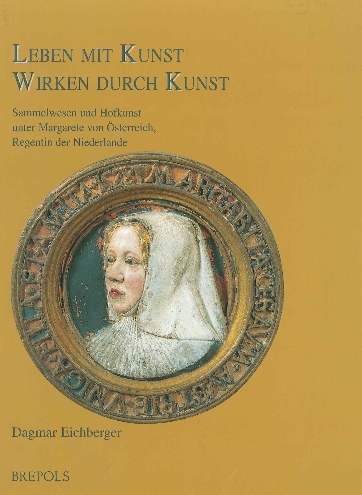
Leben mit Kunst - Wirken durch Kunst. Sammelwesen und Hofkunst unter Margarete von Österreich, Regentin der Niederlande
show More to view fulltext, buy and share links for:Leben mit Kunst - Wirken durch Kunst. Sammelwesen und Hofkunst unter Margarete von Österreich, Regentin der Niederlande show Less to hide fulltext, buy and share links for: Leben mit Kunst - Wirken durch Kunst. Sammelwesen und Hofkunst unter Margarete von Österreich, Regentin der NiederlandeThis study aims at reconstructing the courtly environment in which art was collected, studied and displayed during the first half of the sixteenth century. Much research has been undertaken to date on Netherlandish art and culture, however, little attention has been paid to the ways in which artefacts were arranged within noble residences. Where were paintings such as Jan van Eyck's Arnolfini Wedding and Jan Gossaert's Salamacis and Hermaphrodite kept? What can the reconstruction of the original location contribute to our understanding of such important works of art? The court of Margaret of Austria (1480-1530) in Mechelen is used as a case study for this new approach which combines the methods of art history, history and museum studies. Given the wealth of documentary evidence, including inventories, civic records, court accounts, ordinances, etc., it is possible to bring to life Margaret of Austria's encyclopaedic collection and to reconstruct the residence in which she lived and held court for more than twenty years. The regent owned an outstanding array of artefacts: Netherlandish art from the fifteenth and sixteenth centuries as well as Italian, Spanish, German and French paintings, sculptures and decorative art objects. By determining the original functions of the regent's personal chambers and cabinets, new light is shed on the context in which her collection was presented to visitors and high-ranking courtiers. In addition to her apartment on the first floor, Margaret set up a new collection cabinet on the ground floor. In this room, close to her palace garden, Margaret of Austria put on display a wide range of objects including Naturalia, Exotica, technical instruments and works of art. The so-called 'coral cabinet' is one of the first genuine display spaces north of the Alps which is well documented.
-
-
-
Narratives of a New Order
show More to view fulltext, buy and share links for:Narratives of a New Order show Less to hide fulltext, buy and share links for: Narratives of a New OrderThe origins of the Cistercian monastic order are currently under intense scrutiny and revision, as scholars identify how the written word was used to ‘invent’ a unified corporate identity. Here Elizabeth Freeman examines the classic genre for inventing a past - the history, chronicle, and annal - and argues that historical narratives of the English Cistercians helped define the characteristics of both the new Cistercian monastic order and also the new orders of twelfth- and thirteenth-century England. She shows how Aelred of Rievaulx’s Relatio de standardo and Genealogia regum Anglorum articulated new senses of Englishness, and demonstrates through attention to library holdings that this focus on national self-definition continued throughout the twelfth century. The Fundacio abbathie de Kyrkestall shifts focus to local history and exploits Cistercian tropes of land-use in order to resolve the communal insecurity that characterised the Cistercians in around 1200. The Narratione de fundatione Fontanis monasterii features another method of reconciling the nostalgic quest for continuity with the intellectual recognition of change - it separates historical ‘fact’ from ‘meaning’ and imbues events with rich allegorical significance. Finally, Ralph of Coggeshall’s Chronicon Anglicanum indicates the multiple strategies Cistercian historians employed in order to turn the disparate and contradictory events of the past into a comprehensible and meaningful narrative.
-
-
-
St Anselm and the Handmaidens of God
show More to view fulltext, buy and share links for:St Anselm and the Handmaidens of God show Less to hide fulltext, buy and share links for: St Anselm and the Handmaidens of GodAs abbot of Bec and archbishop of Canterbury, the renowned theologian St. Anselm spent most of his career working ‘in the world’, primarily with laypersons, not in the cloister. His correspondence contains surprisingly many letters to laywomen, only a few perfunctory letters to nuns and abbesses. Anselm wrote to all estates of noble laywomen: young girls, mothers, mature wives or widows, countesses and queens. Vaughn argues that Anselm collected and edited his own letters, which addressed real women and situations, but also represented particular ideals of women, marriage, parents and children, students and teachers; that the correspondence, an artful construct, was almost an autobiography, teaching by word, deed, and his own example; and a lens through which to discern Anselm’s views of men and women in Anselm’s ideal society. Anselm accords women surprising equality and power, seeing queens as equal to both kings and archbishops, all three primarily as nurturers and teachers, and ideal married couples writ large - social views modelled on past ideals (primarily St. Gregory), but ironically leaping toward new Twelfth Century attitudes of introspection, self-analysis, individualism, and logic and reason in theology, social issues, politics and law. Mothers and teachers emerge as the ultimate Handmaidens of God.
-
-
-
The Old Norse Poetic Translations of Thomas Percy
show More to view fulltext, buy and share links for:The Old Norse Poetic Translations of Thomas Percy show Less to hide fulltext, buy and share links for: The Old Norse Poetic Translations of Thomas PercyThomas Percy was the first serious translator of Old Norse-Icelandic poetry into English. He published his Five Pieces of Runic Poetry in London in 1763 and in 1770 published his translation of Mallet's very influential work on early Scandinavian literature and culture as Northern Antiquities (with extensive annotations and additions by Percy himself). In publishing Five Pieces, Percy was influenced by the success of Macpherson's first volume of Ossian poetry (1760) and his own wide-ranging interest in ancient, especially 'gothic' poetry. Five Pieces had a mixed reception and was never republished as a separate work, but reappeared as an appendix to the second edn. of Northern Antiquities. Nevertheless, it was a seminal work in the history of reception and understanding of Old Norse poetry in Britain and it also has more general significance in our understanding of the development of the discipline of Old Norse-Icelandic studies. This work makes available to the modern scholarly community the work of one of the pioneers of the discipline and produces in easily accessible format a text that is currently only available as a rare book. The study comprises a facsimile of the 1763 edition, with facing-page notes to allow the modern reader to situate Percy's work in its intellectual context, together with an introduction on Percy himself, his work on Old Norse-Icelandic studies, and the contemporary context of the reception of Old Norse poetry in Britain (and to some extent in the rest of Europe). In addition, this study publishes eight other poetic translations (one from Old English and the others from Old Icelandic) that Percy completed about the same time as the translations now in Five Pieces of Runic Poetry, but did not then publish, due to the restrictions of contemporary tolerance for demanding or difficult 'ancient' poetry. This publication reveals his full range as a translator for the first time.
-
-
-
Traité de la division des royaumes. Introduction à une histoire universelle
show More to view fulltext, buy and share links for:Traité de la division des royaumes. Introduction à une histoire universelle show Less to hide fulltext, buy and share links for: Traité de la division des royaumes. Introduction à une histoire universelleDans les premières années du XIVe siècle, Jean de Saint-Victor entreprend la rédaction d'une chronique qu'il fait précéder d'une courte description des régions et des royaumes. Conduit à réviser ce travail et à lui donner l'envergure d'une histoire universelle depuis la Création, désormais intitulée Memoriale historiarum, il développe l'introduction initiale en un véritable traité, fruit d'une réflexion longuement mûrie au contact des sources sollicitées pour l'élaboration de son premier texte. Il y expose, à l'aide de tous les exemples historiques qu'il a pu rassembler, ce qui lui apparaît commun l'une des lois fondamentales de l'histoire, la divisio regnorum : tels des organismes naturels, les royaumes, mais aussi les empires, naissent, vivent et meurent. Ainsi fait-il place à la pensée aristotélicienne dans une lecture traditionnellement augustinienne de l'Histoire sainte.
-
-
-
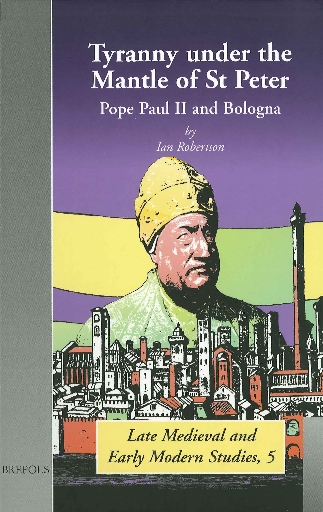
Tyranny under the Mantle of St Peter
show More to view fulltext, buy and share links for:Tyranny under the Mantle of St Peter show Less to hide fulltext, buy and share links for: Tyranny under the Mantle of St PeterThe clash between Pope Paul II ( 1464-1471) and Bologna was one of two opposed concepts of government and 'state'. Paul II held to a high concept of princely sovereignty, and to a vision of the papal temporal dominions as a genuinely co-ordinated territorial state, an enduring public; entity. Inevitably he clashed with the Commune of Bologna, second city of the Papal State, over which he aspired to more jurisdiction. The political vision of the Bolognese regime had a. local focus which precluded the sacrifice of independence in favour of integration into a wider entity, and sprang from a view of government as rightfully the private preserve of a restricted oligarchic group, from the 1440s consolidated in the magistracy of the 'Sixteen Reformers of the Regime of Liberty'. Paul II regarded the regime of the Sixteen as a 'tyranny', and declared that no such ty rannies should flourish 'under the mantle of St Peter'. But his intervention failed and, instead, Paul modified the constitution which gave the long-developing predominance of the Bentivoglio family an institutional basis. This 'signorial' regime aggravated the tension between collegiality and despotism and paved the way for the eventual destruction of the Bentivoglio dominance and later the fuller incorporation in the sixteenth century of Bologna into the Papal State.
-
-
-

Anima mea. Prières privées et textes de dévotion du Moyen Age latin
show More to view fulltext, buy and share links for:Anima mea. Prières privées et textes de dévotion du Moyen Age latin show Less to hide fulltext, buy and share links for: Anima mea. Prières privées et textes de dévotion du Moyen Age latinSt. Anselm of Canterbury's († 1109) Orationes siue Meditationes offers a most instructive testimony of the change that occurred in the late eleventh century in Western spirituality. Thanks to the beauty of its language and the freshness of its approach, Anselm's volume truly touched the minds of contemporaries and aroused so great a passion that the book was copied, imitated, and incorporatedinto apocryphal collections. These new books illustrate by their variety, originality, and even commonplace aspects the profuse resources of a literary genre that is too often unrecognized although most deserving of interest. After exposing the political and religious background of the Anglo-Norman world, as well as treating the rhetorical tradition of private prayers, the present work offers the first critical edition, with a French translation, of the Anselmian collections of the 12th century.
-
-
-
Chronique des temps mérovingiens (Livre IV et Continuations)
show More to view fulltext, buy and share links for:Chronique des temps mérovingiens (Livre IV et Continuations) show Less to hide fulltext, buy and share links for: Chronique des temps mérovingiens (Livre IV et Continuations)La chronique de l'auteur connu sous le nom de Frédégaire est une source essentielle pour la connaissance des règnes mérovingiens. Le chroniqueur a pourtant été longtemps méprisé : sa langue était considérée comme barbare, et ses qualités d'historien étaient jugées de piètre valeur. Les recherches récentes ayant renouvelé l'étude de cette période, on a voulu tirer de l'oubli un auteur trop longtemps mal compris. Le lecteur trouvera donc ici, accompagnée du texte latin (selon l'édition de J.M. Wallace-Hadrill) et d'une abondante annotation, la traduction de la partie originale de la chronique et de ses continuations carolingiennes, qui poursuivent le récit jusqu'en 768. Une introduction substantielle défend l'hypothèse d'un chroniqueur unique écrivant vers 660, situe la chronique dans son contexte historique et l'appréhende à la fois comme une œuvre d'histoire et de littérature. Une étude spéciale est consacrée à la langue de l'auteur, témoin des mutations que connaît le latin au milieu du VIIe siècle. Olivier Devillers est un spécialiste d'historiographie romaine et Jean Meyers de langue et de littérature latines du Haut Moyen Âge. L'un et l'autre enseignent à l'Université Paul Valéry (Montpellier III).
-
-
-
La diplomatique française du Haut Moyen Age
show More to view fulltext, buy and share links for:La diplomatique française du Haut Moyen Age show Less to hide fulltext, buy and share links for: La diplomatique française du Haut Moyen AgeCet ouvrage donne la table et les index de la base de données de l'ARTEM de Nancy, relatifs à quelque 4.800 chartes originales antérieures à 1121 et conservées en France. Cette table et ces index se constituent comme suit:
- Introduction développée, présentant l'évolution, au moins quantitative, de la diplomatique française (évolution chronologique, diversités régionales et typlogiques).
- Table générale des chartes, par numéro de classement de l'ARTEM.
- Différents index: chronologique, auteurs, destinataires, genre diplomatique, sceaux. Ces index renvoient à la liste des chartes.
-
-
-
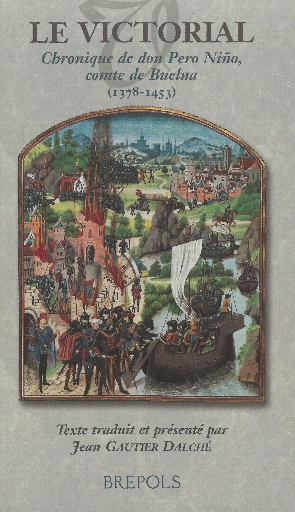
Le Victorial
show More to view fulltext, buy and share links for:Le Victorial show Less to hide fulltext, buy and share links for: Le VictorialLe Victorial - le titre s'explique par le fait que le héros ne fut jamais vaincu - peut être lu de plusieurs manières. Il présente une suite de tableaux de la vie chevaleresque au temps de la guerre de Cent ans: intrigues politiques à la suite de l'arrivée sur le trône de Castille de la dynastie Trastamare, rapports avec les membres de la haute aristocratie castillane et française à l'époque où la Castille et la France sont alliées contre l'Angleterre, prouesses et faits d'armes sur terre et sur mer, joutes et tournois, fêtes, amours heureuses ou contrariées. Toutes les aventures du héros contribuent à former une image du parfait chevalier, fidèle à son seigneur, dont la vie en tous points conforme à l'idéal reflète les valeurs de la société aristocratique de son temps.
Par la variété des milieux et des événements décrits, en Castille aussi bien qu'en France, le Victorial est aussi un document de première main pour tout ce qui relève de la vie quotidienne. Les divers aspects de l'art nautique et de l'art militaire, en particulier, sont décrits avec une grande précision.
Le talent de son auteur, témoin oculaire qui fut le propre porte-bannière de Pero Niño et l'accompagna dans ses campagnes, a su incarner ces valeurs grâce à une culture étendue et à un art certain. Les réminiscences de l'histoire ancienne, qu'il s'agisse de la guerre de Troie, de l'histoire d'Alexandre et de César, les origines légendaires des peuples, les digressions sur toutes sortes de sujets de philosophie politique, d'éthique ou de physique, la variété et la vivacité des récits contribuent au plaisir du lecteur.
-
-
-
Le travail intellectuel à la Faculté des arts de Paris: textes et maîtres (ca. 1200-1500)
show More to view fulltext, buy and share links for:Le travail intellectuel à la Faculté des arts de Paris: textes et maîtres (ca. 1200-1500) show Less to hide fulltext, buy and share links for: Le travail intellectuel à la Faculté des arts de Paris: textes et maîtres (ca. 1200-1500)Ce répertoire n'est pas une révision du livre de Glorieux sur les maîtres de la Faculté des arts au XIIe siècle. D'une part, c'est un répertoire plus restreint: on ne retient que les auteurs et les textes qui ont un rapport direct avec l'enseignement à la Faculté des arts de Paris; de l'autre, il est plus large: on a fixé les limites chronologiques à 1200-1500 environ. Plus important, le but envisagé est de mettre au point un instrument pour les recherches concernant l'histoire intellectuelle de la Faculté des arts de Paris. Le répertoire n'est donc pas consacré à la prosopographie des maîtres, mais à leur activité intellectuelle, c'est-à-dire leurs écrits et leurs lectures. En conséquence, il comprend également des maîtres qui n'ont jamais enseigné à Paris, mais dont les oeuvres ont sûrement ou probablement été lues et commentées à la Faculté des arts de Paris. Le répertoire veut répondre à deux types de questions: premièrement, quels étaient les maîtres de la Faculté des arts de Paris et quelles sont leurs oeuvres; deuxièmement, quels textes contemporains relevant des mêmes disciplines ont contribué à déterminer le climat de ce milieu intellectuel? Ce sont deux éléments qui sont intimement liés et qui se complètent.
Ce fascicule comprend les noms commençant par H et J (jusqu'à Johannes C.).
-
-
-
Manuel de la réforme intérieure. Tractatus de reformacione virium anime
show More to view fulltext, buy and share links for:Manuel de la réforme intérieure. Tractatus de reformacione virium anime show Less to hide fulltext, buy and share links for: Manuel de la réforme intérieure. Tractatus de reformacione virium anime«Un homme descendait de Jérusalem à Jéricho»: Gérard Zerboldt (†1398), trouve dans ces premiers mots de la parabole du Bon Samaritain le thème et l'articulation de son De reformacione virium anime. L'homme déchoit en quittant la cité de l'harmonie et de la paix, Jérusalem, pour celle de la confusion et des divisions intestines, Jéricho. Il aura à parcourir le chemin inverse, une remontée, pour être restitué à son intégrité première, par la réforme des «trois puissances» - la mémoire, l'entendement, la volonté. Elle s'opère par une exercitatio animi pour laquelle Gérard entend fournir son lecteur de moyens et de conseils. Le résultat est une cartographie des voies intérieures du voyage de retour où paraît le goût du concret, didactique et classificateur, de la Devotio moderna. À côté du Petit manuel pour le Dévot moderne de Florent Radewijns, à usage domestique, le traité de Gérard prit la forme d'un précis développé, d'abord destiné à la première génération des Frères de la Vie commune, puis largement répandu à travers ce qui fut d'abord, plus que des institutions régulières, une mouvance spirituelle aux cercles concentriques.
Avec le précédent volume de la même collection sur Florent Radewijns, et celui sur Gérard Grote, c'est un troisième initiateur de la Devotio moderna dont l'œuvre maîtresse est présentée.
-
-
-
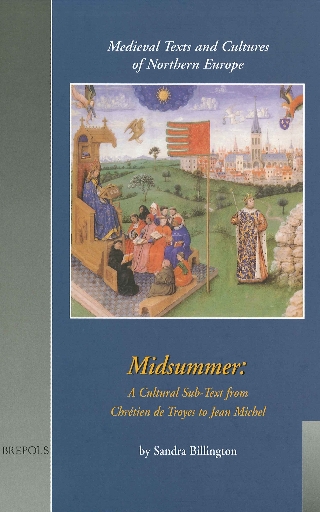
Midsummer
show More to view fulltext, buy and share links for:Midsummer show Less to hide fulltext, buy and share links for: MidsummerMidsummer was not only a season for purification, it was primarily viewed as a time of change. The moment of the sun's power crisis was used as an analogy for mankind's mid-life crisis and for reversals, or wished-for reversals, in social power-structures. A number of factors combined to make truth-telling, even slander on those in authority, licensed at this season. This volume reveals for the first time the significance of the season for popular tradition, for literature, for theatre, and for civic politics in France and the Low Countries. And the new evidence, on which it is based, shows that subversion was inherent at the feast of St John's Nativity three centuries before it became associated with Carnival.
Sandra Billington is a Reader at the Department of Theatre, Film and Television Studies at the University of Glasgow.
-