


Giornale Italiano di Filologia
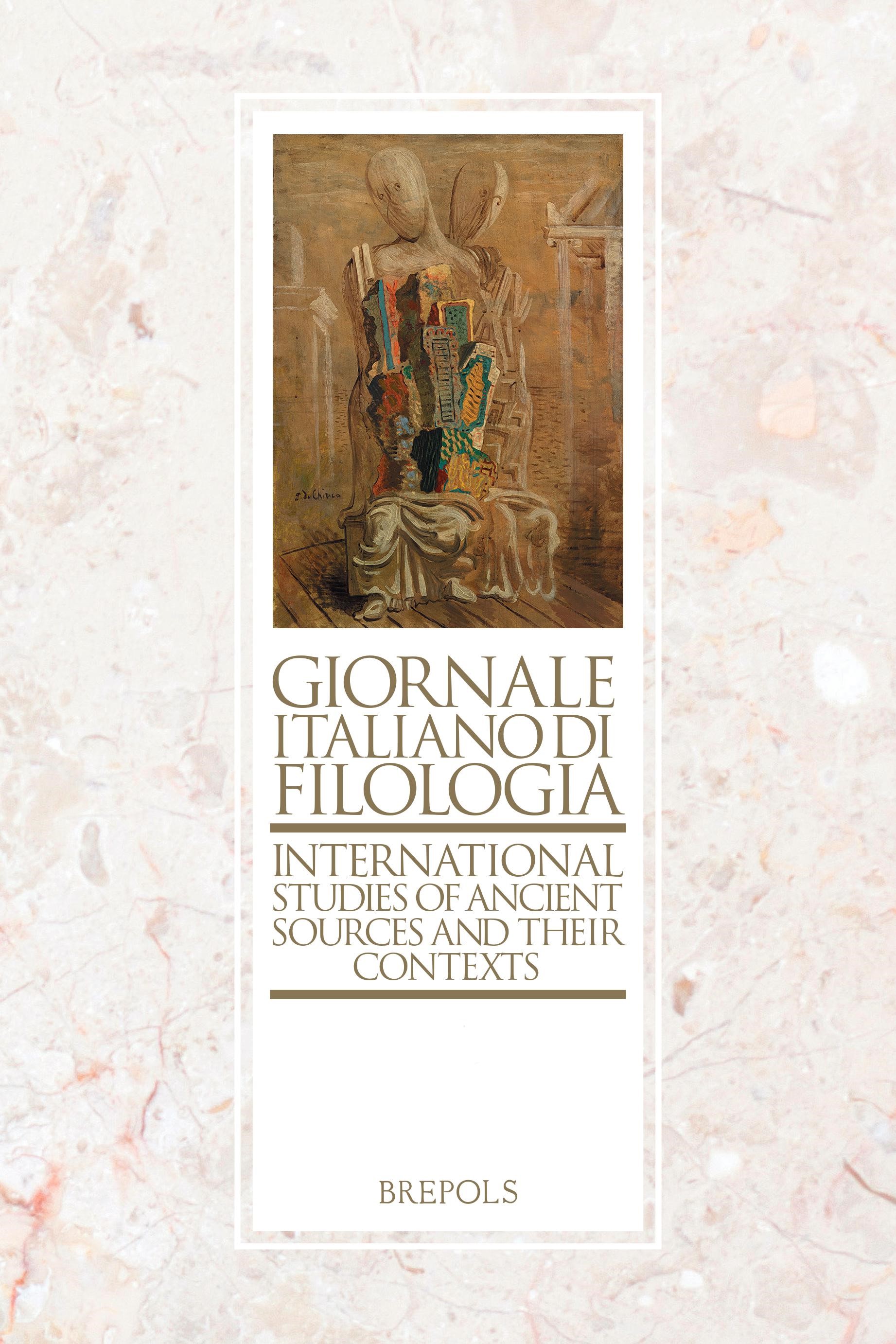
Volume 66, Issue 1, 2014


- Articoli
-
-
-
The Case of Epizelos (Herodotus 6.117) Revisited
show More to view fulltext, buy and share links for:The Case of Epizelos (Herodotus 6.117) Revisited show Less to hide fulltext, buy and share links for: The Case of Epizelos (Herodotus 6.117) RevisitedAuthors: Arthur Keaveney and Adam BartleyAbstractThis paper discusses the blinding of Epizelos after encountering a supernatural warrior at Marathon. It is argued that for the Greeks this is to be numbered among a number of such divine or semi-divine interventions on the battlefield but, contrary to what is sometimes supposed, no especial standing or heroic status was conferred on Epizelos as a result of the blinding. Modern medical science sees here a case of bilateral blindness. This is often attributed to hysteria but the nature of our source material councils against dogmatism and other plausible explanations are possible.
-
-

-
-
Il μεταξύ fisiologico (pseudo)presocratico e il μεταξύ matematico (pseudo)platonico
show More to view fulltext, buy and share links for:Il μεταξύ fisiologico (pseudo)presocratico e il μεταξύ matematico (pseudo)platonico show Less to hide fulltext, buy and share links for: Il μεταξύ fisiologico (pseudo)presocratico e il μεταξύ matematico (pseudo)platonicoBy: Vittorio RicciAbstractL’analisi concerne il lemma μεταξύ, cioè entità “di mezzo” o “intermedia” tra due diverse o opposte realtà. Aristotele lo usa per poter elaborare un concetto metafisico in un duplice contesto ermeneuticopolemico. In primo luogo, in riferimento al pensiero presocratico egli parla di tre tipi fisiologici, ovvero (a) tra aria e acqua oppure (b) acqua e fuoco o (c) aria e fuoco. Questa descrizione risulta essere una interpretazione anacronistica di ciò che era originariamente concepito come un mero “altro” (ἄλλο) o “diverso” (ἕτερον) dai ben noti quattro elementi (la terra e i summenzionati tre). Una tale iniziale testimonianza, che non riferisce nessuno specifico ed esplicito nome del suo possibile autore, provoca le due seguenti tradizioni: la scettica attraverso Sesto Empirico che individua Ideo di Imera come suo teorico, forse in base di un’allusione geografica di Aristotele (Ἰταλικοί); la peripatetico-neoplatonica che è molto complicata e stratificata. Nicola di Damasco sostiene che il μεταξύ aria/fuoco contro quello aria/acqua, preferito da Aristotele, e si richiama a Diogene di Apollonia come suo autore. Questa tesi è totalmente accettata da Porfirio contro Alessandro di Afrodisia, che precedentemente ha ristabilito la tradizione originale peripatetica con il tipo aria/acqua e si richiama addirittura ad Anassimandro cosí che la sua concezione di ἄπειρον è spiegata attraverso la suddetta nozione posteriore. Alla fine Simplicio congiunge le notizie da Nicola-Porfirio e Alessandro, anche se egli nega che Diogene abbia supposto il μεταξύ come principio esclusivo dell’intera realtà nella maniera, in cui Anassimandro l’avrebbe determinato. Secondo Simplicio l’epigono aveva descritto solo qualcosa di totalmente unito, incluso ogni elemento di qualsiasi tipo, per cui lo stesso nella sua assoluta unità diversifica continuamente se stesso e riunifica se stesso. Il cosiddetto μεταξύ matematico, attribuito a Platone da Aristotele, non è attestato, poiché nella visione platonica non c’è nessuna entità mediana di questa natura con la funzione di mediare l’intelligibile e il sensibile. Alla fine del VI libro della Repubblica, specialmente in 511d2, il solo testo originale, in cui il termine è usato in un contesto matematico, in effetti Platone tratta esclusivamente solo di un approccio metodologico delle scienze ‘dianoetiche’ (matematica, geometria, astronomia), che, per poter dimostrare i loro assiomi, hanno bisogno di supporti di rappresentazioni (come un disegno particolare materiale di triangolo usato da un geometra per dedurre le sue universali proprietà intelligibili di natura geometrica), ma non hanno nessuna funzione di mediazione tra le due dimensioni ontologiche (l’intelligibile e il sensibile).
AbstractThe analysis concerns the lemma μεταξύ, namely “middle” or “intermediate” entity between two different or opposite realities. Aristotle uses it in order to elaborate a metaphysical concept in a double hermeneutic- polemic context. Firstly, with reference to the Presocratic thought he speaks of three physiological types, that’s (a) between air and water, or (b) water and fire, or (c) air and fire. This description turns out to be an anachronistic interpretation of what was originally conceived as a mere “other” (ἄλλο) or “different” (ἔτερον) one from the well-known four elements (the earth and the above mentioned three). Such a beginning witness, referring no specific and explicit name of its possible author, provokes the two following traditions: the skeptical one through Sextus Empiricus who individualizes Ideus of Imera as its theorist, perhaps at the basis of a geographical Aristotle’s allusion (Ἰταλικοί); the peripatetic-neoplatonic one which is very complicated and stratified. Nikolaos of Damascus maintains the μεταξύ air/fire against that air/water, preferred by Aristotle, and appeals to Diogenes of Apollonia as its author. This thesis is totally accepted by Porphyry against Alexander of Aphrodisia, who formerly reestablished the original peripatetic tradition with the type air/water and appealed even to Anaximander so that his conception of ἄπειρον is explained through the aforesaid posterior notion. At the end Simplicius joins up the notices from Nikolaos-Porphyry and Alexander, even if he denies that Diogenes supposed the μεταξύ as exclusive principle of the entire reality in the manner, Anaximander would have determined it. According to Simplicius the epigone had described only something totally united, including every element of whichever type, whereby the same in its absolute unity continuously diversifies itself and reunifies itself. The so-called mathematical μεταξύ, attributed to Plato by Aristotle, is not attested, because in the Platonic vision there is no middle entity of this nature with the function to mediate between the intelligible and the sensible. At the end of the VI Book of Republic, especially at 511d2, the only original text, where the term is used in a mathematical context, indeed Plato exclusively deals with a methodological approach of ‘dianoetic’ sciences (mathematics, geometry, astronomy), which, in order to demonstrate their axioms, need supports of empirical representations (as a particular material drawing of triangle used by a geometer in order to deduce its universal, intelligible proprieties of geometric nature), but have no function of mediation between the two ontological dimensions (the intelligible and the sensible).
-

-
-
Too Kindred by Half: Half-Siblings in Elite Families of the Mid- and Late Roman Republic
show More to view fulltext, buy and share links for:Too Kindred by Half: Half-Siblings in Elite Families of the Mid- and Late Roman Republic show Less to hide fulltext, buy and share links for: Too Kindred by Half: Half-Siblings in Elite Families of the Mid- and Late Roman RepublicAbstractMy essay examines some ancient evidence for the treatment of half-siblings, and for interactions among half-siblings, in several elite families of the mid- to late Roman Republic. I observe that our ancient Greek and Roman sources on these families at times acknowledge half-sibling relationships, and occasionally testify that parents treated their offspring from different marriages differently. But I argue that these sources make, and that elite Roman families of this era ultimately made, little distinction between half-siblings and fullsiblings. I will focus on several selected families from the second and first centuries bce, whose interpersonal interactions attract notice from a variety of ancient Greek and Roman writers. My concluding discussion will consider the limitations and strengths of this, selective and anecdotal, body of evidence, most of it much later than the events it purports to describe: for investigating halfsiblings in elite republican Roman families, as well as for illuminating “the ancient Roman family” itself. I will ponder, too, how this evidence problematizes scholarly efforts to view the ancient Roman family as typifying a larger, trans-historical Mediterranean pattern. Finally, I will reflect on how and why elite Republican Roman familial dynamics involving the treatment of half-siblings complicate our understanding of elite Roman kinship, and underscore the socially contingent nature of kinship generally.
-

-
-
Senari e trimetri giambici nelle versioni poetiche di Marco Tullio Cicerone
show More to view fulltext, buy and share links for:Senari e trimetri giambici nelle versioni poetiche di Marco Tullio Cicerone show Less to hide fulltext, buy and share links for: Senari e trimetri giambici nelle versioni poetiche di Marco Tullio CiceroneAbstractGli obiettivi di questo contributo sono definiti dall’esame delle traduzioni metriche, elaborate da Cicerone, di alcuni loci della produzione drammatica di Eschilo, Sofocle ed Euripide (per un totale di 117 metri giambici, di cui 83 senari e 34 trimetri); versioni che dall’Arpinate sono state poi inserite, come è risaputo, nei suoi scritti filosofici. L’analisi da me effettuata ha avuto soprattutto come oggetto la struttura dei senari e dei trimetri: se nell’impiego del primo impianto metrico Cicerone si è richiamato sostanzialmente a quella tradizione che era stata inaugurata da Livio Andronico nei suoi drammi, in quello dei trimetri, sebbene anche essi rivelino tratti simili a quelli sporadici dei suoi predecessori, l’interpres ha in qualche misura anticipato l’architettura del verso delle sezioni dialogiche delle Tragoediae di Seneca.
AbstractThe purpose of this article is to explore the iambic versifications in Cicero’s translations from Attic dramatists (Aeschylus, Sophocles, Euripides). It is common knowledge that Cicero used to insert his own translations of tragic passages (altogether 117 lines, of which 83 senarii and 34 iambic trimeters) in his philosophical works. From structure’s examination of these two meters, which are employed in the deverbia, it turn out Cicero’s senarii are following the dialogical verse of the previous Latin drama, while his iambic trimeters have paved the way to Seneca’s Tragedies.
-

-
-
Oreste da Cicerone a Virgilio
show More to view fulltext, buy and share links for:Oreste da Cicerone a Virgilio show Less to hide fulltext, buy and share links for: Oreste da Cicerone a VirgilioAbstractL’articolo prende in esame i due luoghi dell’Eneide, in cui compare sulla scena il personaggio di Oreste furiis / scaenis agitatus (Aen. 3, 330 sgg. e 4, 471 sgg.), mettendone in luce il rapporto intertestuale con un passo della orazione ciceroniana Pro Sexto Roscio Amerino 66-67, che rivela anche il ricorso all’immaginario di Pacuvio. L’analisi di queste complesse intersezioni suggerisce delle ulteriori riflessioni sull’interpretazione dell’episodio di Elena in Aen. 2, 567 sgg., di discussa paternità e da sempre al centro del dibattito filologico.
AbstractThe paper deals with Verg. Aen. 3, 330 ff. and 4, 471 ff., where Orestes is mentioned the first time as furiis agitatus and the second time as scaenis agitatus, re-examining the deep intertextual relationship between both loci and Cic. Pro Sexto Roscio Amerino 66-67, or rather his source (Pacuvius, very likely). The results of such investigation could involve also some details of the so called ‘Helen-Episode’ in Aeneid 2, 567-88.
-

-
-
Deifications and Catasterisms in Ovid’s Fasti
show More to view fulltext, buy and share links for:Deifications and Catasterisms in Ovid’s Fasti show Less to hide fulltext, buy and share links for: Deifications and Catasterisms in Ovid’s FastiAbstractThe paper examines the passages about deification and catasterism in Ovid’s Fasti. Three groups of figures that acquire divine nature are identified: Greek mythological characters, Roman or romanized mythological characters, and historical figures. It is shown that only figures not related to the Roman world become constellations; that the deification process is normally barely described; and that, on the whole, the Roman or romanized figures are presented in a more varied and complex way than the Greek ones. Special stress is laid on Caesar and Romulus, key figures in Augustan ideology. In fact, it is argued that Ovid follows substantially Augustan ideology, although ambiguities exist, all the more so because deification in the Fasti is part of a literary system, that is to say part of a fictional world.
-

-
-
Sulla prima fase della fortuna lucanea
show More to view fulltext, buy and share links for:Sulla prima fase della fortuna lucanea show Less to hide fulltext, buy and share links for: Sulla prima fase della fortuna lucaneaBy: Paolo EspositoAbstractLa prima fase della storia della ricezione di Lucano è caratterizzata da giudizi contrastanti, ma è forse opportuno sgombrare il campo da qualche equivoco. In realtà, le riserve sul conto del Bellum Civile non hanno impedito che avesse una circolazione notevole ed un indubbio successo. I dubbi sulle qualità di Lucano come poeta erano dovuti piuttosto alla difficoltà di classificare la sua opera in base ai parametri del poema epico tradizionale, ma non riguardavano l’alto livello artistico del poema. Le critiche infatti non impedivano che venisse indicato come modello di poesia, insieme ad altri poeti di primo piano. Di particolare interesse il giudizio del Dialogus di Tacito (20, 5-7), che segna l’ingresso di Lucano nel canone ufficiale dei principali modelli poetici latini, accanto a Virgilio e Orazio. Insomma Lucano, da subito, crea ai critici problemi di classificazione, ma gode di grande popolarità e di stima, e questa situazione di giudizio ambiguo sulla sua opera, anche a causa di qualche equivoco di fondo, continua, benché in forme diverse, fino al secolo scorso.
AbstractThe first period of Lucan’s reception is marked by conflicting judgments, but it is perhaps appropriate to clear up some misunderstanding. In fact, the reserves on behalf of Bellum Civile not have prevented it from having a considerable circulation, and an undoubted success. The doubts about the quality of Lucan as a poet, rather derived from the difficulty of classifying his work according to parameters of the traditional epic, but did not concern the high artistic level of his work. In fact, the criticism of Lucan did not prevent that it could be claimed as a model of poetry, along with other prominent poets. Of particular interest is the judgment of the Dialogus of Tacitus (20, 5-7), which marks the entry of Lucan in official canon of the leading Latin poets, next to Virgil and Horace. In short, Lucan, from the beginning, has problems of classification, but is highly respected and enjoys wide popularity. The ambiguous judgment on his work, even if the result of some misunderstanding, continues, albeit in different ways, until the last century.
-

-
-
Riflettendo su Stat., Theb. XI, 22
show More to view fulltext, buy and share links for:Riflettendo su Stat., Theb. XI, 22 show Less to hide fulltext, buy and share links for: Riflettendo su Stat., Theb. XI, 22By: Antonella ArenaAbstractIn Stat., Theb. XI, 22 la presenza di hostes costituisce un problema interpretativo che non è affatto facile risolvere. Possiamo, infatti, ipotizzare la presenza di asindeto, un valore predicativo o addirittura aggettivale del termine, ma forse è piú opportuno pensare ad un emendamento testuale, mirante a restituire un aggettivo, che qualifichi il sostantivo turmae.
AbstractIn Stat., Theb. XI, 22 the presence of hostes is an interpretative problem not easily resolvable. Indeed, we can assume the presence of asyndeton, a predicative value, or even the adjectivation of this noun, but perhaps it is more appropriate to think of a textual emendation, aiming to restore an adjective that qualifies the noun turmae.
-

-
-
Alcune riflessioni sul mito di Achille: per un’interpretazione del proemio dell’Achilleide di Stazio
show More to view fulltext, buy and share links for:Alcune riflessioni sul mito di Achille: per un’interpretazione del proemio dell’Achilleide di Stazio show Less to hide fulltext, buy and share links for: Alcune riflessioni sul mito di Achille: per un’interpretazione del proemio dell’Achilleide di StazioBy: Anna BasileAbstractLa rappresentazione del personaggio di Achille nell’Achilleide di Stazio si caratterizza per una particolare complessità: il poeta intende presentare un eroe che sia la summa delle precedenti scritture del mito. In tal senso, potrebbe acquisire nuovo valore anche l’espressione presente nel proemio ai versi 4-5 nos ire per omnem / sic amor est, heroa, che sembra rimandare ad un disegno culturale piú ampio, volto alla composizione di un’opera che possa eguagliare la grandezza del precedente omerico.
AbstractAchille’s character in Statius’ Achilleid is particulary complex: the poet intends to present a hero who encompasses all the features of its literary precedents. In this sense, could acquire new value also the expression present in the preface to verses 4-5 nos ire per omnem / sic amor est, heroa which seems to respond to a broader cultural intent, aimed to the composition of a poem that can match the greatness of the Homeric text.
-

-
-
Termini tecnici nel poema sulla Via Domitiana di Papinio Stazio (Silv. 4, 3, 40-66)
show More to view fulltext, buy and share links for:Termini tecnici nel poema sulla Via Domitiana di Papinio Stazio (Silv. 4, 3, 40-66) show Less to hide fulltext, buy and share links for: Termini tecnici nel poema sulla Via Domitiana di Papinio Stazio (Silv. 4, 3, 40-66)AbstractLa silva 4,3 celebra la Via Domitiana che l’imperatore Domiziano costruí intorno al 95 d.C. Oggetto del presente articolo sono i vv. 40-66, in cui Stazio descrive le fasi piú tecniche della sua costruzione: l’obiettivo è mettere in evidenza lo sperimentale modo di poetare di Stazio che, cercando di riprodurre i suoni, il fermento e i movimenti del cantiere, utilizza termini tecnici dell’ingegneria idraulica e civile e li inserisce nel linguaggio poetico formando nuove iuncturae e creando cosí un unicum nella letteratura latina.
AbstractThe Silva 4.3 celebrates the inauguration of the Via Domitiana, built by Domitian c. 95 ad. The present article focuses on ll. 40-66, where Statius describes with a technical language the road construction, and highlights the innovative poetry of Statius, who is the first in the Latin literature to make use in a poem of technical terms taken from the language of the hydraulic and civil Roman engineers.
-

-
-
La violenza nel Tideo di Stazio: contro l’altro o contro se stesso?
show More to view fulltext, buy and share links for:La violenza nel Tideo di Stazio: contro l’altro o contro se stesso? show Less to hide fulltext, buy and share links for: La violenza nel Tideo di Stazio: contro l’altro o contro se stesso?By: Carlo SantiniAbstractNon è semplice comprendere se la violenza di Tideo sia diretta contro altri o contro se stesso. Un celebre studioso, Karl Kerényi, concorda con la tradizione antica nel biasimare la sua crudeltà, che lo porta a uccidere uno zio e un fratello in patria e che caratterizza il suo atteggiamento durante la guerra dei Sette contro Tebe, quando addenta il teschio di un nemico caduto. Marie Delcourt, storica delle religioni, pone l’accento sul modello antropologico riscontrabile in questo mito. A nostro avviso, tuttavia, il mito e i dati archeologici portano a ritenere che Stesicoro abbia avuto un ruolo importante nella transizione del mito da Omero e dal Ciclo epico alla poesia ellenistica e romana. Ciò nonostante, la figura di Tideo ritratta da Stazio nella Tebaide è quella di un vero eroe, la cui prodezza fisica è tuttavia meno prominente del suo coraggio e del valore della sua anima. È il realizzare questo stato delle cose a portare Tideo al collasso in battaglia. Piú che elevarlo al cielo e all’immortalità, il suo ultimo delitto lo abbassa al livello delle bestie, con una conclusione degna della sua evoluzione psicologica.
AbstractIt is not easy to answer the question whether Tydeus’ violence is directed toward others or toward himself. A famous scholar, Karl Kerényi, agrees with the ancient tradition when he blames his cruelty - he has in fact killed an uncle and his own brother in his homeland and behaves with similar cruelty during the war of the Seven against Thebes, when he gnaws at the skull of a fallen enemy. The historian of religion Marie Delcourt, however, has laid emphasis on the anthropological pattern detectable in the myth. In our opinion, based on the mythical story as well as on archaeological evidence, Stesichoros played an important role in the transition of the myth from Homer and the epic Cycle to Hellenistic and Roman poetry. Nevertheless, the Tydeus portrayed by Statius in his Thebaid is a real hero, whose physical prowess, however, is less prominent than his courage and the worth of his soul. The realization of this state of things leads to his breakdown during the fight. Rather than rising to heaven and immortality, his final misdeed lowers him to the level of beastliness - a fitting conclusion for his psychological evolution.
-

-
-
Limiti e prospettive nello studio del lessico franco-italiano
show More to view fulltext, buy and share links for:Limiti e prospettive nello studio del lessico franco-italiano show Less to hide fulltext, buy and share links for: Limiti e prospettive nello studio del lessico franco-italianoBy: Luca MorlinoAbstractL’articolo intende contribuire allo studio del lessico di quella particolare lingua letteraria che si suole definire come franco-italiano. Sulla base una serie di casi significativi, l’autore sviluppa alcune considerazioni di metodo riguardo ai forti limiti e sulle notevoli carenze che ancora caratterizzano - a livello tanto di documentazione (dal punto di vista tanto geografico quanto storico) quanto di interpretazione - la ricerca lessicografica in tale settore e che quindi ostacolano una piú precisa comprensione di questo complesso fenomeno linguistico.
AbstractThis article is a contribution to the lexicographic studies of the particular literary language which is usually defined as Franco- Italian. The author puts forward, on the basis of some examples, some methodological considerations about the status and practice of franco-italian studies, underlining how the poorness of lexicographic research in this field prevents us from clearly understanding the extent and implications of what proves to be a very complex linguistic and literary phenomenon.
-

-
-
Valla, il simbolo apostolico e il codice di Isidoro: nota a Antidotum in Pogium, IV p. 359 Petrus
show More to view fulltext, buy and share links for:Valla, il simbolo apostolico e il codice di Isidoro: nota a Antidotum in Pogium, IV p. 359 Petrus show Less to hide fulltext, buy and share links for: Valla, il simbolo apostolico e il codice di Isidoro: nota a Antidotum in Pogium, IV p. 359 PetrusAbstractNel 1444 a Napoli Lorenzo Valla dovette affrontare un processo inquisitoriale la cui causa scatenante fu la polemica che vide coinvolti l’umanista e fra Antonio da Bitonto a proposito dell’autenticità del Simbolo apostolico. Infatti, mentre quest’ultimo sosteneva che il Credo era stato composto articulatim dagli Apostoli, il Valla affermava che il primo Simbolo era stato formulato durante il Concilio di Nicea. A sostegno della tesi di fra Antonio, Lorenzo vescovo di Pozzuoli presentò al patrono del Valla Arnaut Roger de Pallars un passo del Decretum di Graziano in cui si diceva che il Simbolo niceno era stato il secondo ad essere stato composto dopo quello apostolico (Sancti Patres in concilio Niceno de omni orbe terrarum convenientes iuxta fidem evangelicam et apostolicam secundum post Apostolos symbolum condiderunt). Il Valla, dopo aver scoperto che Graziano aveva tratto questa citazione dalle Etymologiae di Isidoro, affermò che invece di secundum bisognava leggere secundo (Sancti Patres in concilio Niceno ... secundo post Apostolos symbolum condiderunt), e trovò la conferma della sua congettura in un codex antiquissimus di Isidoro (cfr. Antidotum in Pogium, IV, p. 359 Petrus). In questo articolo, dopo aver tentato di ricostruire la personalità del possessore del codice (il vir eruditus Antonello Caivano), si dimostrerà non solo come questa congettura sia infondata, ma anche come molto probabilmente il Valla abbia addotto la presenza di questo codice per avvalorare le proprie tesi e scampare da accuse di eresia.
AbstractIn 1444 Lorenzo Valla was charged of heresy and was brought to trial by the Inquisition. One of the main reasons was the disquisition between Valla and fra Antonio da Bitonto on the authenticity of the Apostles’ Creed: if Antonio thought that the Creed was composed by the Apostles during the day of Pentecost, Valla rejected his opinion saying that the first Creed created was the Nicene Creed. In support of fra Antonio’s thesis, the bishop of Pozzuoli showed Valla’s patron Arnaut Roger de Pallars a passage of the Decretum Gratiani in which Gratian says: Sancti Patres in concilio Niceno de omni orbe terrarum convenientes iuxta fidem evangelicam et apostolicam secundum post Apostolos symbolum condiderunt. First of all, Valla discovered that Gratian quoted this sentence from Isidore of Seville’s Etymologiae; then, he said that the correct reading was secundo (Sancti Patres in concilio Niceno ... secundo post Apostolos symbolum condiderunt) and that he found this reading in an ancient manuscript of Isidore (see Antidotum in Pogium, IV, p. 359 Petrus). In this article the author demonstrates not only that this conjecture is unproven, but also that probably Valla invented the existence of this manuscript to defend himself from charges of heresy.
-

- Retractando atque expoliendo varia
-
-
-
La vita sempre nuova dei classici. A proposito di un libro di Sergio Audano
show More to view fulltext, buy and share links for:La vita sempre nuova dei classici. A proposito di un libro di Sergio Audano show Less to hide fulltext, buy and share links for: La vita sempre nuova dei classici. A proposito di un libro di Sergio Audano
-
-


-
-
A proposito della Teogonia di Esiodo nella traduzione metrica di Pierpaolo Quattrone
show More to view fulltext, buy and share links for:A proposito della Teogonia di Esiodo nella traduzione metrica di Pierpaolo Quattrone show Less to hide fulltext, buy and share links for: A proposito della Teogonia di Esiodo nella traduzione metrica di Pierpaolo Quattrone
-

-
-
Cronaca della XVII settimana di studi tardoantichi e romanobarbarici (22-25 Settembre 2014)
show More to view fulltext, buy and share links for:Cronaca della XVII settimana di studi tardoantichi e romanobarbarici (22-25 Settembre 2014) show Less to hide fulltext, buy and share links for: Cronaca della XVII settimana di studi tardoantichi e romanobarbarici (22-25 Settembre 2014)
-

Volumes & issues
-
Volume 76 (2024)
-
Volume 75 (2023)
-
Volume 74 (2022)
-
Volume 73 (2021)
-
Volume 72 (2020)
-
Volume 71 (2019)
-
Volume 70 (2018)
-
Volume 69 (2017)
-
Volume 68 (2016)
-
Volume 67 (2015)
-
Volume 66 (2014)
-
Volume 65 (2013)
-
Volume 3 (2012)
-
Volume 2 (2011)
-
Volume 1 (2010)
-
Volume 61 (2009)
-
Volume 60 (2008)
-
Volume 59 (2007)
-
Volume 58 (2006)
-
Volume 57 (2005)
Most Read This Month


