Brepols
Brepols is an international academic publisher of works in the humanities, with a particular focus in history, archaeology, history of the arts, language and literature, and critical editions of source works.2001 - 2100 of 3194 results
-
-
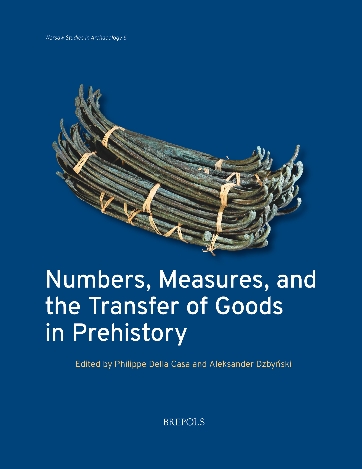
Numbers, Measures, and the Transfer of Goods in Prehistory
show More to view fulltext, buy and share links for:Numbers, Measures, and the Transfer of Goods in Prehistory show Less to hide fulltext, buy and share links for: Numbers, Measures, and the Transfer of Goods in PrehistoryNumbers, weights, and measurements, and the systems underpinning them, have always been a fundamental part of human society. Developed in different ways and at different times, such systems have provided a foundation for science, technology, economics, and new ways of engaging with and understanding the world. This volume aims to explore the background to numbers and measurements in more detail by drawing together specialists from a growing field of research. The contributions gathered here offer new and interdisciplinary insights into how the development of mathematical ideas and systems evolved, early metrological systems, the exchange of goods and their impact, the standardization of measuring tools, and the impact of such concepts. This unique volume is deliberately set broad, both geographically and chronologically, in order to compare and contrast changes over time and between peoples, and in doing so it sheds new light on the social and scientific developments among both prehistoric and early historic societies.
-
-
-
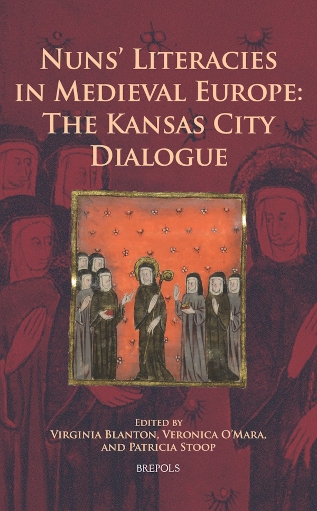
Nuns’ Literacies in Medieval Europe
The Kansas City Dialogue
show More to view fulltext, buy and share links for:Nuns’ Literacies in Medieval Europe show Less to hide fulltext, buy and share links for: Nuns’ Literacies in Medieval EuropeThe present volume is the second in a series of three integrated publications, the first produced in 2013 as Nuns’ Literacies in Medieval Europe: The Hull Dialogue. Like that volume, this collection of essays, focused on various aspects of nuns’ literacies from the late seventh to the mid-sixteenth century, brings together the work of specialists to create a dialogue about the Latin and vernacular texts that were read, written, and exchanged by medieval nuns.
It investigates literacy from palaeographical and textual perspectives, evidence of book ownership and exchange, and other more external evidence, both literary and historical. To highlight the benefits of cross-cultural comparison, contributions include case studies focused on northern and southern Europe, as well as the extreme north and west of the region. A number of essays illustrate nuns’ active engagement with formal education, and with varied textual forms, such as the legal and epistolary, while others convey the different opportunities for studying examples of nuns’ artistic literacy. The various discussions included here build collectively on the first volume to demonstrate the comparative experiences of medieval female religious who were reading, writing, teaching, composing, and illustrating at different times and in diverse geographical areas throughout medieval Europe.
-
-
-
Nuns’ Literacies in Medieval Europe: The Antwerp Dialogue
show More to view fulltext, buy and share links for:Nuns’ Literacies in Medieval Europe: The Antwerp Dialogue show Less to hide fulltext, buy and share links for: Nuns’ Literacies in Medieval Europe: The Antwerp DialogueThe present volume is the third in a series of three integrated publications, the first produced in 2013 as Nuns’ Literacies in Medieval Europe: The Hull Dialogue and the second in 2015 as Nuns’ Literacies in Medieval Europe: The Kansas City Dialogue. Whereas the first volume focused primarily on Northern Europe, the second expanded the range to include material in minority languages such as Old Norse and Old Irish and focused particularly on education and other textual forms, such as the epistolary and the legal.
The third volume expands the geographical range by including a larger selection of female religious, for instance, tertiaries, and further languages (for example, Danish and Hungarian), as well as engaging more explicitly on issues of adaptation of manuscript and early printed texts for a female readership. Like the previous volumes, this collection of essays, focused on various aspects of nuns’ literacies from the late seventh to the mid-sixteenth century, brings together the work of specialists to create a dialogue about the Latin and vernacular texts that were read, written, and exchanged by medieval nuns. Contributors to this volume investigate the topic of literacy primarily from palaeographical and textual evidence and by discussing information about book ownership and production in convents.
-
-
-
Nuns’ Literacies in Medieval Europe: The Hull Dialogue
show More to view fulltext, buy and share links for:Nuns’ Literacies in Medieval Europe: The Hull Dialogue show Less to hide fulltext, buy and share links for: Nuns’ Literacies in Medieval Europe: The Hull DialogueThis collection of essays, focused on the literacies of nuns in medieval Europe, brings together specialists working on diverse geographical areas to create a dialogue about the Latin and vernacular texts nuns read, wrote, and exchanged, primarily in northern Europe from the eighth to the mid-sixteenth centuries. To date, there has been some significant research in this field but little in the way of cross-cultural study. Drawing especially on the rich body of scholarship that currently exists about nuns and books in England, Germany, the Low Countries, and Sweden, these essays investigate the meaning of nuns’ literacies in terms of reading and writing, Latin and the vernaculars.
Contributors to this volume investigate the topic of literacy primarily from palaeographical and textual evidence and by discussing information about book ownership and book production in convents. In this first concentrated study that examines the literacy of nuns in a comparative fashion the essays pay close attention to the individual textual and cultural complexities of nuns’ literacies in the European Middle Ages.
-
-
-
Néoplatonisme et philosophie médiévale
Actes du Colloque international de Corfou, 6-8 octobre 1995, édités par Linos G. Benakis
show More to view fulltext, buy and share links for:Néoplatonisme et philosophie médiévale show Less to hide fulltext, buy and share links for: Néoplatonisme et philosophie médiévaleL'intérêt grandissant de la recherche scientifique de ces dernières décennies pour le courant ultime de la pensée grecque ancienne, qui va de Plotin à ses principaux disciples, est reflété par le nombre important de monographies, d'articles et d'autres textes de recherche, qui sont en grande partie publiés par des participants au colloque de Corfou. Les textes des communications sont présentés selon l'ordre systématique adopté lors du colloque: sujets généraux; périodes historiques; penseurs de la tradition philosophique de l'Occident, de Byzance et du monde arabe. La leçon inaugurale du professeur Éd. Jeauneau, spécialiste reconnu dans le dommaine, fait l'objet de la première contribution sur "Denys l'Aréopagite, promoteur du néoplatonisme en Occident".
Un assez grand nombre de communications propose une nouvelle approche des oeuvres de philosophes du Moyen Âge, comme Abélard, Bonaventure, Thomas d'Aquin, Gilles de Rome, Henri de Gand, Richard Rufus, Jean Wyclif, Arethas, Psellos, Sophonias, Choumnos et d'autres.
-
-
-

Objects, Environment, and Everyday Life in Medieval Europe
show More to view fulltext, buy and share links for:Objects, Environment, and Everyday Life in Medieval Europe show Less to hide fulltext, buy and share links for: Objects, Environment, and Everyday Life in Medieval EuropeArtefacts and environmental remains are abundant from archaeological excavations across Europe, but until now they have most commonly been used to accompany broader narratives built on historical sources and studies of topography and buildings, rather than being studied as important evidence in their own right. The papers in this volume aim to redress the balance by taking an environmental and artefact-based approach to life in medieval Europe.
The contributions included here address central themes such as urban identities, the nature of towns and their relationship with their hinterlands, provisioning processes, and the role of ritual and religion in everyday life. Case studies from across Europe encourage a comparative approach between town and country, and provide a pan-European perspective to current debates.
The volume is divided into four key parts: an exploration of the processes of provisioning; an assessment of the dynamics of urban population; an examination of domestic life; and a discussion of the status quaestionis and future potential of urban environmental archaeology. Together, these sections make a significant contribution to medieval archaeology and offer new and unique insights into the conditions of everyday life in medieval Europe.
-
-
-
Occasionalism
From Metaphysics to Science
show More to view fulltext, buy and share links for:Occasionalism show Less to hide fulltext, buy and share links for: OccasionalismTraditionally interpreted as an outcome of Cartesian dualism, in recent years occasionalism has undergone serious reassessment. Scholars have shifted their focus from the post-Cartesian debates on the mindbody problem to earlier discussions of bodybody issues or even to the problem of causation as such. Occasionalism appears less and less a cheap solution to the mind-problem and more and more a family of theories on causation, which share the fundamental claim that all genuine causal powers belong to God. So why did the most spectacular emergence of occasionalism take place precisely in the post-Cartesian era? How did the scientific revolution and the need to fight back against the early modern resurgence of naturalism contribute to the success of occasionalist doctrines?
This book provides a historical and theoretical map of occasionalism in all its various forms, with a special focus on its seventeenth-century supporters, adversaries, and polemical targets. These include not only canonical authors such as Cordemoy, La Forge, Malebranche, Spinoza, and Leibniz, but also less explored figures such as Clauberg, Clerselier, Fnelon, Fernel, Rgis, and Regius. Furthermore, the book covers the earlier Arabic and Scholastic sources of occasionalism and its later developments in Berkeley, Wolff, and Hume.
-
-
-
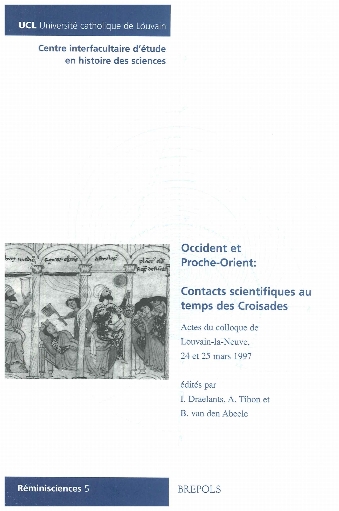
Occident et Proche-Orient: contacts scientifiques au temps des Croisades
Actes du colloque de Louvain-la-Neuve, 24 et 25 mars 1997
show More to view fulltext, buy and share links for:Occident et Proche-Orient: contacts scientifiques au temps des Croisades show Less to hide fulltext, buy and share links for: Occident et Proche-Orient: contacts scientifiques au temps des CroisadesLes échanges entre Orient et Occident au Moyen Age ont fait l’objet de nombreux travaux récents. En histoire des sciences, l’attention a porté en priorité sur l’activité de traduction et de rédaction dans l’Espagne arabo-latine et l’Italie méridionale. Le colloque de Louvain-la-Neuve s’est proposé d’explorer les contacts scientifiques dans un contexte moins étudié, les états latins de Palestine, du XIe au XIIIe s. Les contributions intéressent les trois principales cultures en présence: arabe, byzantine et latine. L’éventail des disciplines abordées couvre l’alchimie, l’astronomie, l’histoire naturelle, les mathématiques, la médecine; une place est faite à l’histoire des techniques, ainsi qu’à certains milieux porteurs: la ville d’Antioche, la cour de Frédéric II de Hohenstaufen. On découvre ainsi que le Proche Orient des Croisades n’a pas seulement été un champ de bataille, mais qu’il y a eu place aussi pour des découvertes, des échanges, des influences réciproques.
-
-
-
Ockham and Ockhamists
Acts of the Symposium Organized by the Dutch Society for Medieval Philosophy 'Medium Aevum' on the Occasion of its 10th Anniversary (Leiden, 10-12 September 1986)
-
-
-
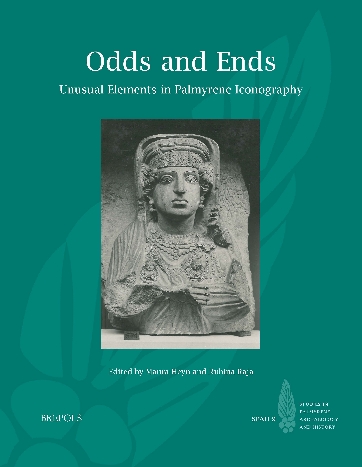
Odds and Ends
Unusual Elements in Palmyrene Iconography
show More to view fulltext, buy and share links for:Odds and Ends show Less to hide fulltext, buy and share links for: Odds and EndsThe funerary art that was produced in Roman Palmyra, a caravan city in the Syrian steppe desert, is rightly world-renowned. The frontal depictions of the deceased, featured in torso-length portraits, and the large-scale banqueting scenes are iconic, and lent an added mystique by the absence of any literary sources that might aid in their interpretation. But while from a distance these exquisite portraits might seem rather formulaic, when examining more closely, it is clear that these scenes reveal a surprisingly rich and varied funerary décor. Alongside the more popular iconographic choices are singular scenes, motifs, and elements that deviate from the norm, while new patterns and connections between Palmyra and its surroundings are identifiable.
This volume, which draws on the vast materials gathered under the auspices of the Palmyra Portrait Project directed by Professor Rubina Raja, explores the ‘oddities’ raised by the Palmyrene corpus; it examines one-off scenes or elements, and unusual or unparalleled iconographical choices, and questions how and why such unusual choices should be interpreted. The chapters gathered here not only focus on these visual ‘hapax legomena’ in Palmyra, but also explore the city’s connections with the art of Roman centres to the west, as well as the nearby Hellenistic city states, regional centres of production, and Parthian and Persian sites to the east. Through this approach, the authors engage with the visual richness and sheer amount of choice that existed in Palmyrene funerary art, while also providing unique insights into the knowledge culture that existed within Palmyrene society.
-
-
-
Oeuvres érotiques
Cinthia - Historia de duobus amantibus avec L'ystoire de Eurialus et Lucresse d'Octovien de Saint-Gelais - De remedio amoris
show More to view fulltext, buy and share links for:Oeuvres érotiques show Less to hide fulltext, buy and share links for: Oeuvres érotiquesIl valait la peine, au moment où l'on redécouvre la richesse littéraire d'Eneas Silvius Piccolomini (Pie II), de publier un choix significatif de sa production érotique. Présentés chronologiquement, les textes contenus dans ce volume mettent en lumière l'évolution de sa conception de l'amour au cours de sa vie laïque. À la suite de la Cinthia, dont les plus anciens poèmes datent des années d'étude d'Eneas à Sienne, figurent quatre lettres: la première fournit un modèle de lettre d'amour (1443); la deuxième renferme l'Historia de duobus amantibus (1444); la troisième précédait une copie de la nouvelle destinée au chancelier impérial Gaspard Schlick (1444); la dernière enfin, datée de 1446, diffusée sous le titre de De remedio amoris, témoigne de la conversion spirituelle et morale d'Eneas, quelques mois avant son ordination comme sous-diacre. Le texte latin de l'Historia, qui repose sur une nouvelle transcription du manuscrit Prague, Státni Knihovna, XXIII F 112, est présenté en regard de la traduction qu'en donna Octovien de Saint-Gelais vers 1488. Œuvre de jeunesse d'un des plus grands poètes français de la fin du XVe siècle, cette savante traduction est le miroir vernaculaire et courtois du texte de l'humaniste italien.
-
-
-
Oeuvres, 1
De institutione novitiorum. De virtute orandi. De laude caritatis. De arrha animae
show More to view fulltext, buy and share links for:Oeuvres, 1 show Less to hide fulltext, buy and share links for: Oeuvres, 1De Bonaventure à Gerson, Hugues de Saint-Victor († 1141) fut l'un des auteurs les plus transcrits, influents et goûtés. Sans doute parce que ce «second Augustin», philosophe, théologien, mystique et pédagogue, toucha de son génie jusqu'aux artes liberales, à la géographie et à l'histoire. Quatre chefs d'œuvre ouvrent la première édition et traduction française de son œuvre. Dans l'opuscule De la formation des novices, art de vivre et de savoir-vivre, une éthique exigeante guide la maîtrise du geste et de la discipline de la parole. De la puissance de la prière analyse les formes du discours adressé à Dieu en usant des préceptes de la rhétorique classique et cherche à concilier sincérité du sentiment personnel et psalmodie liturgique. Au siècle des délicatesses de l'amour courtois et de la redécouverte de la personne, Hugues s'est complu à composer une hymne à l'amour (La louange de la charité) et à mettre en scène les intermittences du cœur dans un monologue à deux personnages: lui-même et son âme; et ce sont Les arrhes de l'âme, une des perles de la littérature spirituelle du douzième siècle.
-
-
-
Old English Enigmatic Poems and the Play of the Texts
show More to view fulltext, buy and share links for:Old English Enigmatic Poems and the Play of the Texts show Less to hide fulltext, buy and share links for: Old English Enigmatic Poems and the Play of the TextsThis book consists of a close study of a number of verse texts chiefly drawn from the Exeter Book of Old English poetry. All of these texts are enigmatic. Some are outright riddles, while others (such as the elegies) are riddle-like in their manner of simultaneously giving and withholding information. The author approaches these poems as microcosms of the art of Old English poetry in general, which (particularly in its more lyrical forms) relies on its audience’s ability to decipher metaphorical language and to fill out details that remain unexpressed. The chief claim advanced is that Old English poetry is a good deal more playful than is often acknowledged, so that the art of interpreting it can require a kind of ‘game strategy’ whereby riddling authors match their wits against adventurous readers. Innovative readings of a number of poems are offered, while the whole collection of Exeter Book riddles is given a set of answers posed in the language of the riddler. The literary use of runes in The Rune Poem, The Husband’s Message, and Cynewulf ’s runic signatures comes under close scrutiny, and the thesis is advanced that Anglo-Saxon runes (particularly those that lacked stable conventional names) were sometimes used as initialisms. The book combines the methods of rigorous philology and imaginative literary analysis
-
-
-
Old English Heroic Poems and the Social Life of Texts
show More to view fulltext, buy and share links for:Old English Heroic Poems and the Social Life of Texts show Less to hide fulltext, buy and share links for: Old English Heroic Poems and the Social Life of TextsOld English Heroic Poems and the Social Life of Texts develops the theme that all stories- all 'beautiful lies', if one considers them as such- have a potentially myth-like function as they enter and re-enter the stream of human consciousness. In particular, the volume assesses the place of heroic poetry (including Beowulf, Widsith, and The Battle of Maldon) in the evolving society of Anglo-Saxon England during the tenth-century period of nation-building. Poetry, Niles argues, was a great collective medium through which the Anglo-Saxons conceived of their changing social world and made mental adjustments to it. Old English 'heroic geography' is examined as an aspect of the mentality of that era. So too is the idea of the oral poet (or bard) as a means by which the people of this time continued to conceive of themselves, in defiance of reality, as members of a tribe-like community knit by close personal bonds. The volume is rounded off by the identification of Bede's story of the poet Cædmon as the earliest known example of a modern folktale type, and by a spirited defense of Seamus Heaney's recent verse translation of Beowulf.
-
-
-
Old English Poetry from Manuscript to Message
show More to view fulltext, buy and share links for:Old English Poetry from Manuscript to Message show Less to hide fulltext, buy and share links for: Old English Poetry from Manuscript to MessageBy comparison with Latin Europe, Anglo-Saxon civilization is notable for the amount of literature preserved in contemporary manuscripts in the vernacular language, formerly called ‘Anglo-Saxon’ but now more usually called ‘Old English’. This literature includes some remarkable poetry, which is the subject of the present collection of essays. Some of the earliest poems may well have been written at a time when northern England held the intellectual leadership of Europe. The approach is holistic, investigating important issues in the manuscripts that affect the integrity of the texts to be studied or the way they relate to each other, examining metrical issues that affect the way the poems are appreciated for their compositional skill, studying particular textual problems that require elucidation or even emendation to make the meaning clear, and finally offering readings of particular poems focussing on themes that are central to Old English poetry. A postscript examines Lewis Carroll’s Jabberwocky, which is presented as a ‘Stanza of Anglo-Saxon Poetry’.
-
-
-
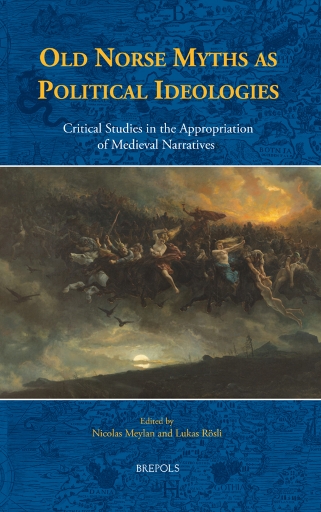
Old Norse Myths as Political Ideologies
Critical Studies in the Appropriation of Medieval Narratives
show More to view fulltext, buy and share links for:Old Norse Myths as Political Ideologies show Less to hide fulltext, buy and share links for: Old Norse Myths as Political IdeologiesThe mythology of the Norse world has long been a source of fascination, from the first written texts of thirteenth-century Iceland up to the modern period. Most studies, however, have focused on the content of the narratives themselves, rather than the broader political contexts in which these myths have been explored. This volume offers a timely corrective to this broader trend by offering one of the first in-depth examinations of the political uses of Norse mythology within specific historical contexts. Tracing the changing interests and usages of Norse myths from the medieval period, via the nineteenth century and the importance of ancient Norse beliefs to both the Romantic and völkisch movements, up to the co-option of mythology and symbolism by political groups across the twentieth and early twenty-first centuries, the papers gathered here offer new and critical insights into the changing nature of historiography and the political agendas that Old Norse myths are made to serve, as well as shedding new light on the way in which ‘myths’ are conceptualized.
-
-
-
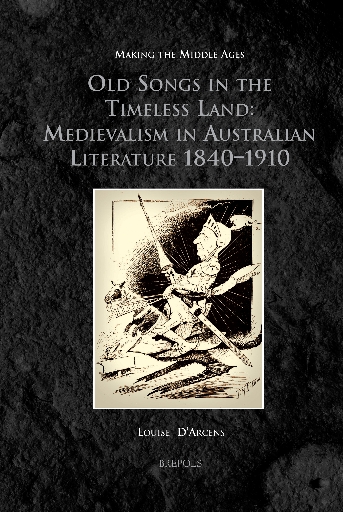
Old Songs in the Timeless Land: Medievalism in Australian Literature 1840-1910
show More to view fulltext, buy and share links for:Old Songs in the Timeless Land: Medievalism in Australian Literature 1840-1910 show Less to hide fulltext, buy and share links for: Old Songs in the Timeless Land: Medievalism in Australian Literature 1840-1910This volume is the first close examination of the rich and diverse body of medievalist texts produced in late colonial and early Federal (ie post-1901) Australia. It examines the many ways in which early Australian novelists, poets, and dramatists drew on the motifs, events, and personages of the medieval past, and places particular emphasis on how they used the European past to illuminate their sense of the Australian present. Broadly stated, the book argues that a study of early Australian medievalist literature and theatre uncovers a rich and revealing drama in which the forces of cultural nostalgia and cultural amnesia sometimes contended against one another, and sometimes harmonised, to produce a unique and distinctive corpus. The book significantly extends current knowledge about nineteenth-century literary and theatrical medievalism by offering an exploration of how medievalist discourses and idioms came to be taken up within a major, but as yet under-examined, branch of Anglophone literature. It aims also to broaden the cultural ambit of nineteenth-century medievalism by offering analyses of popular and ephemeral instances alongside more ‘serious’ medievalist texts. The study balances an interest in how this medievalism responded to local conditions with an interest in its international complexion, examining how Australian medievalist novels, poems, and plays, participated in imperial and transpacific intellectual and entertainment circuits. While the emphasis of the volume is on close, historically-contextualising interpretations of texts, it has woven through its arguments a series of meditations on such theoretical matters as how we determine the boundaries of medievalism, how we might develop an account of colonial medievalism as non-derivative, whether medievalist discourses are equally amenable across gender, class, and ideological lines, and how the premodern past is evoked as a means for formulating the present and the future.
-
-
-
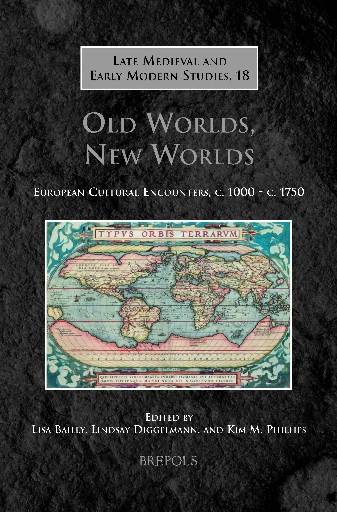
Old Worlds, New Worlds
European Cultural Encounters, c. 1000 - c. 1750
show More to view fulltext, buy and share links for:Old Worlds, New Worlds show Less to hide fulltext, buy and share links for: Old Worlds, New WorldsPre-modern European history is replete with moments of encounter. At the end of arduous sea and land journeys, and en route, Europeans met people who challenged their assumptions and certainties about the world. Some sought riches, others allies; some looked for Christian converts and some aimed for conquest. Others experienced the forced cultural encounter of exile. Many travelled only in imagination, forming ideas which have become foundational to modern mentalities: race, ethnicity, nation, and the nature of humanity. The consequences were profound: both productive and destructive. At the beginning of the third millennium CE we occupy a world shaped by those centuries of travel and encounter. This collection examines key themes and moments in European cultural expansion. Unlike many studies it spans both the medieval and early modern periods, challenging the stereotype of the post-Columbus ‘age of discovery’. There is room too for examining cross-cultural relationships within Europe and regions closely linked to it, to show that curiosity, conflict, and transformation could result from such meetings as they did in more far-flung realms. Several essays deal with authors, events and ideas which will be unfamiliar to most readers but which deserve greater attention in the history of encounter and exploration.
-
-
-

Oligarchy and Patronage in Late Medieval Spanish Urban Society
show More to view fulltext, buy and share links for:Oligarchy and Patronage in Late Medieval Spanish Urban Society show Less to hide fulltext, buy and share links for: Oligarchy and Patronage in Late Medieval Spanish Urban SocietyHistorians have considered medieval oligarchic groups as part of a hierarchical social structure in urban societies. Frequently the interpretation of oligarchy as an isolated faction makes it difficult to understand its capacity in processes of incorporation and integration. M. Asenjo-González’s study of different cities in Northern Castile - Segovia, Soria, Valladolid and Toledo — attempts to identify bonding processes and the relationships among individuals or groups. In the city of Cuenca, J. A. Jara-Fuente stresses the importance of mechanisms for the attribution of social spaces of projection (related to individuals, lineages or collectivities), because it is through the analysis of the social expectations and of the degree of satisfaction reached in that process that other patterns of relationship come to light. Y. Guerrero-Navarrete deals with the connections between financial groups and the oligarchic policy of the elite in the case of Burgos. In Granada, A. Galán-Sánchez analyzes the Islamic elites’ behaviour, considering their economic and political interests, related to the goodwill of the Christian conquerors, and, their functions as representatives of the second-class citizens who were the moriscos. F. Sabaté focuses his research on the social consequences of the merchant oligarchy investments in the urban surroundings that contributed to establishing a flow of capital between the city and the region in Catalonia. E. Ramírez-Vaquero analyzes aspects of great relevance such as the relationship that oligarchies had with other systems linked to the noble and court spheres in the cities of Navarra. Finally Marc Boone offers an historiographic reflection on Iberian urban elites and analyzes some comparative perspectives about oligarchy and patronage in the Late Middle Ages.
-
-
-
Omelia e Commento sul vangelo di Giovanni
show More to view fulltext, buy and share links for:Omelia e Commento sul vangelo di Giovanni show Less to hide fulltext, buy and share links for: Omelia e Commento sul vangelo di GiovanniComposti da Giovanni Scoto Eriugena forse verso la fine della sua vita, l’Omelia e il Commento sul vangelo di Giovanni costituiscono una testimonianza preziosa della sua attività di pensatore e di esegeta. Le due opere, di fortuna diversa (diffusissima la poetica Omelia, bozza incompiuta il Commento), a una lettura congiunta permettono di scoprire man mano, lemma dopo lemma, la fisionomia intellettuale di questo maestro irlandese del IX secolo: l’espressività del poeta, l’attenzione del filologo e traduttore dal greco, la sottigliezza speculativa del filosofo e la fantasia dell’esegeta concorrono al fascino multiforme di queste pagine. Vi si ritrovano tutti gli elementi principali della sintesi teologico-filosofica di Eriugena, operata a partire dai Padri della Chiesa sia greci che latini, con le sue tesi a volte ardite, sempre suggestive: la progressione della rivelazione divina, la natura simbolica del cosmo e del testo sacro, il problema della visione di Dio e la divinizzazione dell’uomo
La versione latina originale del testo proposto in traduzione in questo volume è pubblicata nella collana Corpus Christianorum Continuatio Mediaeualis con il titolo Iohannis Scotti seu Eriugenae Homilia super ‘In principio erat verbum’ et Commentarius in Evangelium Iohannis (CC CM 166), a cura di Édouard A. Jeauneau. I rimandi alle pagine corrispondenti dell’edizione sono forniti a margine di questa traduzione.
-
-
-
Omnium expetendorum prima est sapientia
Studies on Victorine thought and influence
show More to view fulltext, buy and share links for:Omnium expetendorum prima est sapientia show Less to hide fulltext, buy and share links for: Omnium expetendorum prima est sapientiaFounded at the beginning of the twelfth century on the outskirts of Paris, the Parisian school of Saint-Victor soon became an intellectual centre on a European scale: through the international recruitment of its masters; through the wide handwritten dissemination of their works, in particular those of Hugh and Richard; and finally through the extent of its doctrinal contribution to a common European culture, on a large number of points: the importance of acquiring a "general culture"; the need for a rigorous historical approach to biblical texts, open to rabbinic exegesis; a contagious interest in the writings and thought of the pseudo-Dionysius Areopagita; a major contribution to the constitution of a theological discipline; an effort to reconcile fervour in spiritual life and psychological finesse in the analysis of contemplation and its stages. In short, a curiosity for all fields of knowledge and, at the same time, an effort to unify them into a universal and unified wisdom.
The Book gathers new studies on original sources concerning Hugh of St. Victor, as the intellectual founder or the Victorine school; several of his Victorine brothers and disciples: Richard, Achard, Andrew, Godfrey, Absalon, up to late and little known Victorine masters as Pierre Leduc and Henri le Boulangier, at the time of the Great Schism (with critical edition of inedited texts); their influences on twelfth century texts as Ysagoge in theologiam or Speculum Ecclesiae, on Franciscan authors including Antony of Padua, Bonaventure, Rudolf of Biberach, and Duns Scotus, on romance literature of troubadours, on Carmelite authors of the sixteenth centruy and - a still uncharted territory - on Polish culture from Middle Ages to contemporary times.
-
-
-
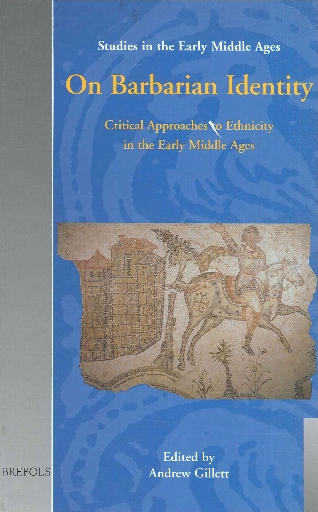
On Barbarian Identity
Critical Approaches to Ethnicity in the Early Middle Ages
show More to view fulltext, buy and share links for:On Barbarian Identity show Less to hide fulltext, buy and share links for: On Barbarian IdentityEthnicity has been central to medieval studies since the Goths, Franks, Alamanni and other barbarian settlers of the former Roman empire were first seen as part of Germanic antiquity. Today, two paradigms dominate interpretation of barbarian Europe. In history, theories of how tribes formed (‘ethnogenesis’) assert the continuity of Germanic identities from prehistory through the Middle Ages, and see cultural rather than biological factors as the means of preserving these identities. In archaeology, the ‘culture history’ approach has long claimed to be able to trace movements of peoples not attested in the historical record, by identifying ethnically-specific material goods. The papers in this volume challenge the concepts and methodologies of these two models. The authors explore new ways to understand barbarians in the early Middle Ages, and to analyse the images of the period constructed by modern scholarship. Two responses to the papers, one by a leading exponent of the ‘ethnogenesis’ approach, the other by a leading critic, continue this important debate.
-
-
-
On Good Authority
Tradition, Compilation and the Construction of Authority in Literature from Antiquity to the Renaissance
show More to view fulltext, buy and share links for:On Good Authority show Less to hide fulltext, buy and share links for: On Good AuthorityThis book brings together views from various disciplines on the concept of authority in Greek and Latin literature from Antiquity to the Renaissance. More specifically it deals with the questions how texts attempt to gain authority, and if and how they use-or abuse-earlier writings in the construction of their own authority. Moreover, this volume examines to what extent a text’s authoritative claims influence its transmission and reception and how these claims themselves are subject to evolution over time. In this context, special attention is devoted to compilation literature (such as anthologies and commonplace books), which is characterized by extensive use of existing source material and thus specifically poses the problem of the role played by compilers in transmitting and establishing authority. The volume contains fifteen articles in which the contributors discuss various cases and texts that illustrate the different factors at stake in dealing with and constructing authority.
List of contributors: S. Boodts, L. Bossina, M. Crab, E. De Bom, E. De Ridder, I. De Vos, S. Delmas, I. Draelants, B. Flusin, E. Gielen, J. Hamesse, U. Kenens, K. Levrie, J. Mansfeld, S. Morlet, L. Waelkens.
-
-
-
On Lamentations
show More to view fulltext, buy and share links for:On Lamentations show Less to hide fulltext, buy and share links for: On LamentationsWilliam, a Benedictine monk of Malmesbury in western England (died c. 1143), is well known as the author of major historical works. But his commentary on Lamentations was not published in full until 2011. It presents itself as an abbreviation of the work of a ninth-century predecessor, Paschasius Radbertus. But William aimed to re-write and improve on his source in both content and style. His characteristic mastery of the Bible and of an astonishingly wide range of classical and patristic texts is everywhere apparent. His Latin is elegant, not to say mannered and sometimes obscure, and presents many problems to the translator.William tells us that he had just turned forty, and had moved away from history to something more religious, that would conduce to his own moral improvement and to that of his readers. But the evils of the present age are often attacked, and commentary becomes moralising history by another means.A personal note, too, often comes through. William feels freer in this medium to comment adversely on the Norman conquest of England, and his struggles with the demons that tempted him and with his own conscience are often vividly evoked. Heartfelt prayers regularly round off the sections of his book. Profoundly influenced by Augustine, he made his commentary a meditation.
The source text of this volume appeared in Corpus Christianorum Continuatio Mediaeualis as Willelmus Meldunensis monachus - Liber super explanationem Lamentationum Ieremiae prophetae (CCCM 244). References to the corresponding pages of the Corpus Christianorum edition are provided in the margins of this translation.
Michael Winterbottom (born in 1934) spent most of his career teaching in Oxford, where he was Corpus Christi Professor of Latin from 1993 to 2001; he has edited several Latin prose texts of the classical period, but for thirty years has been working especially on William of Malmesbury, in collaboration with R. M. Thomson.
-
-
-
On Love
A Selection of Works of Hugh, Adam, Achard, Richard, and Godfrey of St Victor
show More to view fulltext, buy and share links for:On Love show Less to hide fulltext, buy and share links for: On LoveThe version of the Rule of St Augustine used at the Abbey of St Victor began with the command to love God above all things and one’s neighbor as oneself. Not surprisingly, then, love was a pervasive theme in the writings produced there, many of which are introduced and translated here : (1) five lyrical essays by Hugh of St Victor (d. 1141): ThePraise of Charity; The Betrothal Gift of the Soul; In Praise of the Spouse; On the Substance of Love; What Truly Should Be Loved ?; (2) On the Four Degrees of Violent Love, by Richard of St Victor (d. 1173), which traces the likenesses and differences between romantic love and the love of God; (3) Achard of St Victor (d. 1170), Sermon 5 and two of Adam of St Victor’s sequences are examples of how these authors wove love into their writings ; (4) excerpts from the Microcosmus by Godfrey of St Victor (d. ca. 1195), summarize the central place of love in his humanistic theological anthropology.
Hugh Feiss, OSB (STD, Anselmianum, Rome; Monastery of the Ascension), the editor of this volume, translated Achard of St Victor, Works (2001).
-
-
-
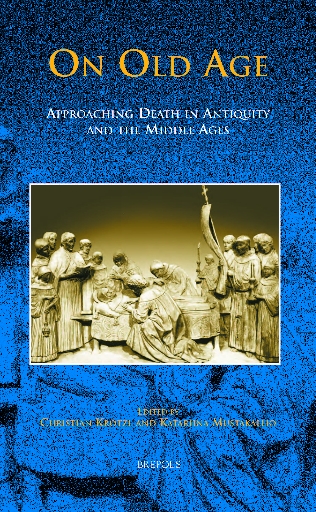
On Old Age
Approaching Death in Antiquity and the Middle Ages
show More to view fulltext, buy and share links for:On Old Age show Less to hide fulltext, buy and share links for: On Old AgeRecent research into old age and dying in the premodern world has examined not only the demographic aspects of ageing populations but also the social role of aged people. Nonetheless, there has usually been a neglect of the end of life and attitudes towards death and memory. These topics have seldom been discussed in the same volume. The end of life evokes questions. What does it mean to grow old? What happens when one dies? How does one cope with old age and death? These questions were as relevant for individuals and societies in earlier periods as they are in the present. The aim of this collection of articles is to cross the boundaries that have traditionally isolated different time periods and scholarly disciplines from each other. The volume focuses on aging, old age, and death from Classical Antiquity to the Middle Ages. The purpose of this book is to approach these themes from an interdisciplinary point of view in the longue durée. Instead of concentrating solely on demographic issues it takes a much broader view, considering attitudes towards ageing, dying, death, and memory. The volume, with its diverse topics, cuts across traditional scholarly barriers and will provide valuable analytical tools for further studies on the subject.
-
-
-
On the Body and the Blood of the Lord, with the Letter to Fredugard
show More to view fulltext, buy and share links for:On the Body and the Blood of the Lord, with the Letter to Fredugard show Less to hide fulltext, buy and share links for: On the Body and the Blood of the Lord, with the Letter to FredugardThe De corpore et sanguine Domini by Paschasius Radbertus was the first monograph ever written solely on the Eucharist. This English translation of the De corpore, along with its companion piece the Letter to Fredugard, make an important contribution to our understanding of the development of Eucharistic theology in the Carolingian era and after. Because of their place in history and the nature of their doctrine, these works give an important witness to the received tradition on the Eucharist, as well as demonstrate an early substantial change theory that contributed to the development of the doctrine of transubstantiation. The translation, along with its extensive commentary and notes, makes this volume in the Corpus Christianorum in Translation series an important resource for the study of Eucharistic theology. The source text of this volume appeared in Corpus Christianorum Continuatio Mediaeualis as Pascasius Radbertus - De corpore et sanguine Domini, cum appendice Epistola ad Fredugardum (CCCM, 16). References to the corresponding pages of the Corpus Christianorum edition are provided in the margins of this translation.
-
-
-
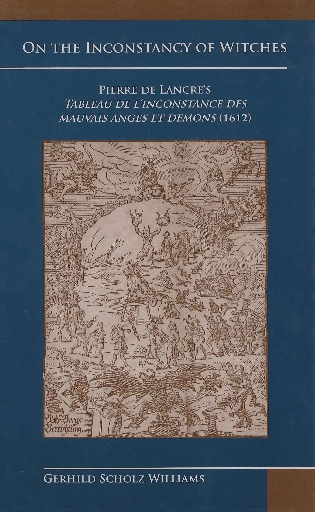
On the Inconstancy of Witches
Pierre de Lancre's Tableau de l'inconstance des mauvais anges et demons (1612)
show More to view fulltext, buy and share links for:On the Inconstancy of Witches show Less to hide fulltext, buy and share links for: On the Inconstancy of WitchesThe demonology Tableau de l’inconstance des mauvais anges et demons (1612) is an important text in the early modern European witch persecutions (sixteenth and seventeenth centuries). It is a report of the author’s four-month stay in the Labourd (Basque) region of France, situated in the extreme southwest corner bordering Spain and Navarre. De Lancre was there as part of a commission empowered to cleanse the region of witches. This narrative is based on his own experiences and trial records now lost. This text contains one of the most detailed accounts of the witches’ Sabbath that survives. An ethnologist before his time, de Lancre gives an expert and meticulous account of the Basque people, their lives, their culture, and their alleged easy commerce with Satan and 'bad angels'. The text was translated into German in a truncated version in 1630, but has never until now been rendered into English.
-
-
-
On the Sacraments
A Selection of Works of Hugh and Richard of St Victor, and of Peter of Poitiers
show More to view fulltext, buy and share links for:On the Sacraments show Less to hide fulltext, buy and share links for: On the SacramentsThe Canons Regular of St Victor were important contributors to the theology of the sacraments in the twelfth century. This volume introduces and translates much of Hugh’s treatment on the Christian Sacraments, as contained in De sacramentis 1.9 and 2.5-9, 11-12 and 14, as well as his treatise on the Virginity of the Blessed Virgin, two treatises on penance by Richard of St Victor, and the penitential of Peter of Poitiers. The historical introductions and annotated translations make this volume suitable for courses on the development of the theology of the sacraments through the twelfth century.
-
-
-
On the Trinity, Letters to Cyprian of Carthage, Ethical Treatises
show More to view fulltext, buy and share links for:On the Trinity, Letters to Cyprian of Carthage, Ethical Treatises show Less to hide fulltext, buy and share links for: On the Trinity, Letters to Cyprian of Carthage, Ethical TreatisesNovatian was a priest of Rome in the third century who wrote a commentary on the Rule of Faith, commonly titled, On the Trinity. Although the document is not well known outside of the field of early Christian studies, it made an important contribution to the doctrine of the Trinity in the early Church, and as several scholars have maintained, it helped set the stage for the definition of the faith known as the Nicene Creed. Novatian would eventually find himself at the center of a controversy which led to a schism of the Church, and so his works were relegated to obscurity for centuries. However, in its time, Novatian’s On the Trinity was the epitome of Roman theology, and as some have argued, it was even ahead of its time.
The present volume contains the complete works of Novatian translated into English, with an introduction and full bibliography of Novatian studies. This new translation takes into account the latest scholarship on Novatian, and brings the documents up to a new level of clarity and readability.
The source text of this volume appeared in Corpus Christianorum Series Latina as Novatianus - Opera quae supersunt (CCSL 4), edited by G. F. Diercks. References to the corresponding pages of the Corpus Christianorum edition are provided in the margins of this translation.
-
-
-
On the Virgin Birth and On the Assumption of the Blessed Virgin Mary
show More to view fulltext, buy and share links for:On the Virgin Birth and On the Assumption of the Blessed Virgin Mary show Less to hide fulltext, buy and share links for: On the Virgin Birth and On the Assumption of the Blessed Virgin MaryOn the Virgin Birth and On the Assumption of the Blessed Virgin Mary are two key Mariological treatises by the ninth-century Carolingian theologian Paschasius Radbertus. Written at a time when scholarship and erudition during the Carolingian Renaissance were at their height and prominence in the great monastery of Corbie, these two works offer important insights into ninth-century reception of the doctrines of Mary’s perpetual virginity and her assumption into heaven. Written for the nuns of the monastery of Notre-Dame de Soissons, they also provide important source material for the study of female spirituality during the Carolingian Reformation era.
This work presents for the first time an English translation with introduction and commentary of these texts, based on the critical editions found in Corpus Christianorum, Continuatio Mediaevalis (CC CM, 56C). References to the corresponding pages of the Corpus Christianorum edition are provided in the margins of this translation.
-
-
-
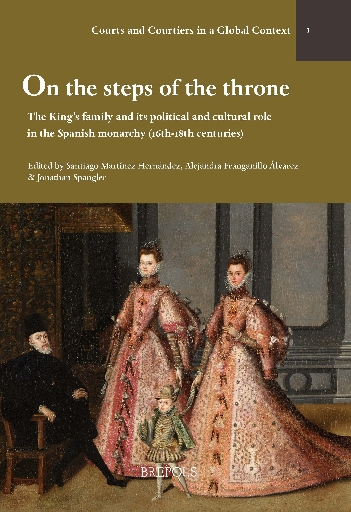
On the steps of the throne
The King’s family and its political and cultural role in the Spanish monarchy (16th-18th centuries)
show More to view fulltext, buy and share links for:On the steps of the throne show Less to hide fulltext, buy and share links for: On the steps of the throneThe aim of this book is to forge a new critical perspective on the Spanish Habsburgs’ family networks by studying the roles performed by princes and princesses of the blood, of different ranks and status, in the service of the Spanish monarchs. The chapters included draw on a range of case studies in order to rethink the dynastic and political role assigned to the king’s relatives. They also analyse the problematic issues generated by the court, ceremonial, diplomatic, dynastic, and governmental duties undertaken by these political actors. In doing so, these studies forge a deeper understanding of the conflicts prompted by the administration of the extensive transnational community of Spanish Habsburg interests and allegiances. The innovative and insightful studies included in this volume are drawn from both unpublished doctoral theses as well as ongoing research projects. In this sense, it seeks to contribute to the evolving historiographical debate on the role played by a range of agents who have not been studied in depth by historians, above all with a focus on the construction of the Spanish Habsburg monarchy in the early modern period. The approach we have adopted has been to prioritize little-known and less-studied agents, contexts, and periods from the Spanish Habsburg sphere, which are nonetheless highly relevant for developing a deeper knowledge of the potential and expectations assigned to the king’s extended family, whether legitimate or illegitimate. Furthermore, this book addresses the problematic issues and conflicts that were prompted by these political agents in undertaking various diplomatic, dynastic and governmental roles.
-
-
-
Opera minora I
show More to view fulltext, buy and share links for:Opera minora I show Less to hide fulltext, buy and share links for: Opera minora IRecueil d'articles de Marcel Richard publiés entre 1934 et 1976. Contient une bibliographie de Marcel Richard p. 23-28.
-
-
-
Opere diffuse per exemplar e pecia
show More to view fulltext, buy and share links for:Opere diffuse per exemplar e pecia show Less to hide fulltext, buy and share links for: Opere diffuse per exemplar e peciaA partir des premières décennies du 13e siècle, la transmission de la science et de la connaissance dans une Europe unifiée par la langue, la religion et le droit, se prévaut d'un nouveau système de production du livre. Le manuscrit réalisé à l'aide de l'exemplar et de la pecia n'est plus seulement un objet de luxe, mais devient aussi un instrument pour la diffusion de la Bible, des Pères de l'Eglise, d'Aristote, des ouvrages arabes, en un mot de tous les textes qui nourrissent la scolastique, grâce à un nouveau système révolutionnaire qui leur assure une diffusion plus grande. A cette production, viennent s'ajouter les fruits même de la scolastique, à savoir les summae, les quodlibeta, les quaestiones et les commentaires.
Ce volume recense pour la première fois toutes les listes de taxation et des exemplaria découverts jusqu'à nos jours, depuis ceux connus depuis longtemps, provenant des universités de Paris, Bologne, Padoue etc., jusqu'aux moins connus conservés actuellement à Uppsala, Dubrovnik, Olomouc, Autun, Montpellier, Greiswald etc. Les sources documentaires rassemblées attestent la diffusion par exemplar et pecia de plus de 600 oeuvres.
La seconde partie du livre contient la description de 900 oeuvres extraites des sources documentaires ou attestées dans des manuscrits portant des indications de pecia et exemplaria. Il s'agit non seulement de textes en usage dans les facultés de théologie, de philosophie, de médecine et de droit, mais aussi des oeuvres qui ne faisaient pas partie du curriculum normal des études, à savoir la Legenda de Jacques de Voragine, les epistolae de Pierre de la Vigne, des summae confessorum, des summae sermonum et des encyclopédies. Ce corpus comprend la description de plus de 2800 manuscrits à pièces et exemplaria - 1800 provenant d'un index inédit du fichier de Destrez -. Transportés dans les lieux d'origine des étudiants, pour la plupart clercs, formatés dans les universités italiennes et françaises, les manuscrits actuellement conservés dans toutes les régions d'Europe (de l'Espagne à la Finlande, de l'Angleterre à la Pologne), constituent le témoignage matériel et culturel le plus concret de l'extraordinaire vitalité intellectuelle des 13e et 14e siècles. Cet ouvrage constitue donc un instrument de travail irremplaçable et de première main, non seulement pour les spécialistes des manuscrits, mais aussi pour tous les médiévistes
-
-
-
Optics and Astronomy
Proceedings of the XXth International Congress of History of Science (Liège, 20-26 July 1997) Vol. XII
show More to view fulltext, buy and share links for:Optics and Astronomy show Less to hide fulltext, buy and share links for: Optics and AstronomyL'ouvrage qui paraît sous le titre " Optics and Astronomy " groupe un ensemble de communications présentées lors du XXe congrès international d'histoire des sciences. Toutes relèvent de ces domaines intimement liés au cours du temps. Qu'aurait été l'évolution de l'astronomie sans le développement de l'optique ? Quant à ce dernier domaine il a trouvé un terrain de prédilection dans les applications qu'en ont fait les astronomes. Dans l'antiquité, d'Euclide fonde en géomètre une optique qui trouve un premier aboutissement chez Ptolémée. La grande école arabe prend le relais en renouvelant la théorie de la lumière et de la vision. Le premier XVIIe siècle européen invente la lunette, analyse ses implications optiques et construit des instruments qui modifient l'idée même qu'on se faisait des choses et des cieux. Mécanique céleste s'appliquant principalement au système solaire, marginalisation d'une tradition astrologique pourtant rémanente, création de modèles, analyse de données..., tout concourt à former les esprits - au siècle des Lumières notamment - à la compréhension du Monde que viennent renforcer les découvertes de l'astrométrie et de l'astrophysique. L'unité du volume, confortée par la variété des sujets traités, doit permettre au lecteur qui n'a pu se rendre à Liège en 1997, d'apprécier l'influence réciproque précoce des deux domaines de la recherche qu'il couvre.
-
-
-
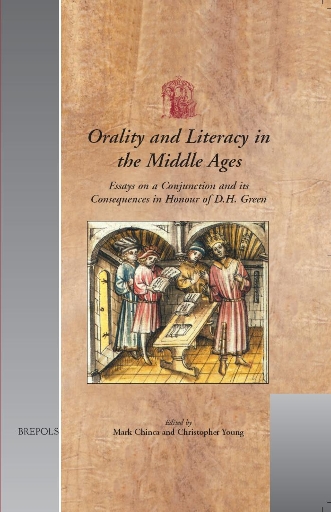
Orality and Literacy in the Middle Ages
Essays on a Conjunction and its Consequences in Honour of D. H. Green
show More to view fulltext, buy and share links for:Orality and Literacy in the Middle Ages show Less to hide fulltext, buy and share links for: Orality and Literacy in the Middle Ages“The most important part of the title of this book is the word ‘and’.” These words form the memorable conclusion to D.H. Green’s study Medieval Listening and Reading, they encapsulate how, in the Middle Ages, orality and literacy are not to be considered as two separate and largely unrelated cultures or modes of textual transmission, but as elements in a mutual interplay and interpenetration. In this volume, scholars from Britain, Germany and North America follow Green’s insistence on the conjunction of medieval orality and literacy, and show how this approach can open up new areas for investigation as well as help to reformulate old problems. The languages and literatures covered include English, Latin, French, Occitan and German, and the essays span the whole of the period from the early Middle Ages through to the fifteenth century.
-
-
-
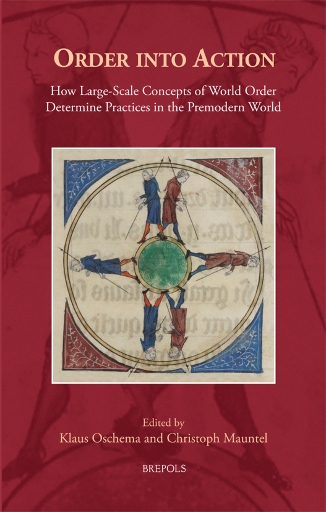
Order into Action
How Large-Scale Concepts of World-Order determine Practices in the Premodern World
show More to view fulltext, buy and share links for:Order into Action show Less to hide fulltext, buy and share links for: Order into ActionThe construction (and application) of models that order complex phenomena such as ‘the world’ is not a ‘neutral’ activity: theoretical models and ideas help us to perceive and categorize the information conveyed by experience and tradition alike; in turn, they also influence the behaviour and actions of individuals and groups.
Collecting a global series of case studies on premodern societies, this volume proposes new research into premodern models of world-order and their effects. With its focus on the period between c. 1300 and 1600, it seeks to open up fresh perspectives for premodern Global History and the analysis of phenomena of transcultural contact and exchange.
Focussing on religious, political, and geographical ideas and models, the contributions explore whether and how large-scale concepts influenced or even determined concrete actions. The examples include socio-religious concepts (Christianity, terra paganorum, dār al-harb), political concepts (empire) and geographical notions. A special section is dedicated to comparative insights into societies in Sub-Saharan Africa, Australia, and pre-Columbian America. Taken together, the contributions underline the importance and effects of historically shaped cultural traits in the long term.
-
-
-
Ordres et désordres dans les chaînes exégétiques grecques
show More to view fulltext, buy and share links for:Ordres et désordres dans les chaînes exégétiques grecques show Less to hide fulltext, buy and share links for: Ordres et désordres dans les chaînes exégétiques grecquesAmoncellement de fragments ? catalogue d’extraits ? tapisserie exégétique ? Les chaînes ont pour premier principe d’organisation le texte biblique qu’elles commentent en le suivant pas à pas. Mais comment les différentes scholies sont-elles classées entre elles, si elles le sont ? Jusqu’à présent, la question de l’organisation interne des chaînes a fait l’objet de remarques rapides en marge de l’étude de telle ou telle collection, mais rarement d’un examen approfondi. C’est pourtant un aspect essentiel pour comprendre ce genre, en préciser les différentes formes et saisir l’enjeu de ces entreprises byzantines : conserver un maximum de textes, favoriser la consultation, la mémorisation ou la confrontation de différentes exégèses, composer un commentaire continu, etc. Cet ouvrage collectif rassemble des enquêtes originales portant aussi bien sur les chaînes de l’Ancien que du Nouveau Testament. Sont explorés différents phénomènes structurants relatifs à la connexion entre texte biblique et commentaire, au classement des sources, à l’enchaînement des contenus exégétiques, à la disposition des scholies sur la page. On met au jour la méthode de travail d’un caténiste ou les étapes de l’élaboration d’une compilation ; une place est accordée au désordre et à ses causes, notamment en lien avec les phénomènes de transformation et de combinaison de différentes collections. Premier tour d’horizon, permettant déjà de découvrir des situations très diverses, ce volume ouvre la voie à une approche comparative des chaînes, nécessaire pour mieux comprendre cette pratique de compilation byzantine.
-
-
-
Organising a Literary Corpus in the Middle Ages
The Corpus Nazianzenum and the Corpus Dionysiacum
show More to view fulltext, buy and share links for:Organising a Literary Corpus in the Middle Ages show Less to hide fulltext, buy and share links for: Organising a Literary Corpus in the Middle AgesThrough the word corpus, the metaphor of the body is applied to a collection of works by the same author that are transmitted together. These works not only share the same skin, the manuscript, but also function organically thanks to a complex system of paracontents. It is possible to see this system at work in the case of only a very few medieval authors throughout history, cultures and languages; the Corpus Nazianzenum and the Corpus Dionysiacum are such instances.
Both Gregory of Nazianzus and Dionysius the Areopagite are super-authors, who forged their own literary identity as much as they shaped the body of their writings. This sets both corpora apart from other collections of patristic works. They are also exceptional because of the large scale and enduring character of their cultural impact in the different cultures in which the corpora were translated, commented and annotated. By confronting these two exceptional cases, it is possible to gain some new light on the intellectual and book-historical aspects of literary creation and reception in Late Antiquity and the Middle Ages.
-
-
-
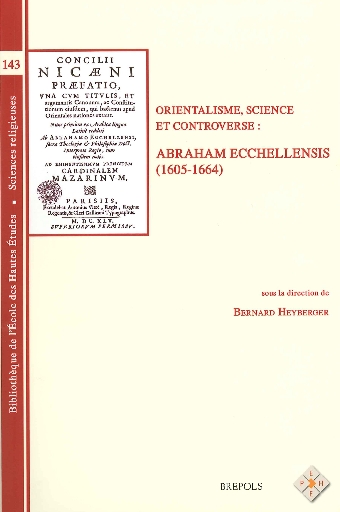
Orientalisme, science et controverse : Abraham Ecchellensis (1605-1664)
show More to view fulltext, buy and share links for:Orientalisme, science et controverse : Abraham Ecchellensis (1605-1664) show Less to hide fulltext, buy and share links for: Orientalisme, science et controverse : Abraham Ecchellensis (1605-1664)Abraham Ecchellensis (Ibrahîm Al-Hâqilânî) est sans doute le plus représentatif des chrétiens orientaux qui contribuèrent à la formation de l’orientalisme européen au xvii e siècle. Après une première éducation dans un couvent libanais, il arriva au collège maronite de Rome en 1620, où il fut très jeune reconnu pour ses talents dans l’enseignement de l’arabe et du syriaque, et dans l’expertise des questions orientales. Ses études achevées, il mena quelques aventures militaires et commerciales au service de l’emir libanais Fakhraddîn et de la croisade, en se plongeant brièvement dans les trafics méditerranéens liés à la course et au rachat des captifs. Il tenta aussi d’ouvrir un collège au Liban.
Mais c’est surtout par une carrière d’érudit qu’il se fit connaître. Ce volume s’attache moins à la biographie d’Abraham; Ecchellensis qu’à la place qu’il occupa dans la République des Lettres du xvii e siècle, entre Pise, Rome et Paris (où il enseigna au Collège Royal). Il sut bénéficier d’un réseau de protecteurs, qui estimaient sa capacité à cataloguer et publier des manuscrits, enseigner les langues, ou servir d’expert et d’interprète : Les Médicis, les Barberini, Richelieu, Mazarin et le chancelier Séguier veillèrent successivement sur sa carrière. Il fut l’ami et le collaborateur de savants de son temps, comme Jean Morin, Marin Mersenne, Lucas Holsten ou Athanase Kircher.
Il contribua aux grands chantiers intellectuels du xvii e siècle, comme la bible polyglotte de Paris et la bible arabe de Rome. Il composa des outils pour l’apprentissage de l’arabe et du syriaque. Mais il fut surtout un traducteur d’ouvrages en langues orientales. Chez lui, la controverse et l’apologétique ne se distinguaient guère de l’érudition, et il entendait mettre sa science au service de la foi catholique, contre les protestants. Mais ses origines orientales et arabophones l’amenèrent aussi à défendre la dignité des Orientaux et à valoriser leur culture face aux milieux savants européens. Il contribua à l’élaboration du « récit national » maronite et libanais. Il voulut faire connaître la « sagesse arabe » et l’intégrer dans la science européenne, en la distinguant de l’islam, qu’il ne pouvait accepter. Il collabora avec le professeur «galiléen» de Pise Giovanni Alfonso Borelli, pour traduire à partir de manuscrits arabes le traité d’Apollonius de Perga sur le Coniques.
Ses travaux érudits furent utilisés dans les controverses théologiques du second xvii e siècle. Mais, au début du xviii e siècle, la connaissance des langues orientales était suffisamment avancée en Europe pour qu’on pût se passer des « médiateurs » issus du Collège de Rome.
Bernard Heyberger, directeur d’études à l’École Pratique des Hautes Études, est professeur à l’université François-Rabelais de Tours et membre de l’Institut Universitaire de France. Ses travaux portent sur le christianisme de langue arabe et sur les relations entre le christianisme et l’islam. Il a notamment publié Les chrétiens du Proche-Orient au temps de la Réforme catholique (1994) et Hindiyya, mystique et criminelle (2001).
-
-
-

Originaux et cartulaires dans la Lorraine médiévale (XIIe - XVIe siècles)
Recueil d'études
show More to view fulltext, buy and share links for:Originaux et cartulaires dans la Lorraine médiévale (XIIe - XVIe siècles) show Less to hide fulltext, buy and share links for: Originaux et cartulaires dans la Lorraine médiévale (XIIe - XVIe siècles)Entourés des attentions des médiévistes, les cartulaires sont devenus un objet d’histoire. Ces recueils, résultant de la compilation d’actes par une institution ou une personne juridique, entretiennent des relations complexes avec les originaux, sources directes ou indirectes mises en œuvre par les cartularistes. Qu’il s’agisse de la sélection des matériaux ou du transfert d’informations du modèle à la cible, le travail accompli est affaire de choix, divers et multiples, dont il faut retrouver les logiques pour espérer comprendre les objectifs des hommes qui ont commandités et réalisés ces manuscrits. Même soumis à des contingences matérielles, les copistes conservent une certaine marge de manœuvre dans le traitement de leur documentation. Ils trient, classent ou reclassent les documents qu’ils accueillent et enfin transcrivent les actes en adoptant certains principes. Ce recueil d’études a pour but de renouveler la confrontation originaux-cartulaires, à travers l’analyse d’un recueil et de son chartrier ou grâce à l’exploration d’une question liée à la transcription, à travers plusieurs cartulaires.
La question est ici approchée dans un cadre régional, en l’occurrence la Lorraine médiévale, principalement constituée des diocèses de Metz, Toul et Verdun - et occasionnellement étendue à l’ancienne Lotharingie. La chronologie est délibérément large (XIIe - XVIe siècle), donnant toute leur place aux expériences, parfois négligées, de la fin du Moyen Âge. À défaut d’aborder systématiquement le phénomène de la « mise en cartulaire », les dossiers ici réunis voudraient en enrichir les données et questionnements.
-
-
-
Origines du christianisme. Recherche et enseignement à la Section des sciences religieuses de l’École pratique des Hautes études, 1991-2017
show More to view fulltext, buy and share links for:Origines du christianisme. Recherche et enseignement à la Section des sciences religieuses de l’École pratique des Hautes études, 1991-2017 show Less to hide fulltext, buy and share links for: Origines du christianisme. Recherche et enseignement à la Section des sciences religieuses de l’École pratique des Hautes études, 1991-2017Sont reproduits dans ce volume en intégralité les comptes rendus des séminaires de Simon Claude Mimouni publiés régulièrement de 1992 à 2018 dans l’Annuaire de l’École pratique des Hautes études, Section des sciences religieuses. Ils ont été parfois réécrits et complétés, mais non actualisés. Ils représentent les étapes du développement de ses recherches durant vingt-cinq ans, permettant de comprendre leur déroulé au fil des ans. Ils sont évidemment lacunaires par rapport au travail effectivement mené lors des séminaires du jeudi matin, seuls ceux qui y ont assisté, auditeurs et étudiants, le savent.
Directeur d’études Émérite à la Section des sciences religieuses de l’École pratique des Hautes études où il a été titulaire de la chaire « Origines du christianisme », Simon Claude Mimouni a étudié l’histoire de la formation du mouvement des disciples de Jésus dans et hors du judaïsme aux Ier et IIe siècles. Il a traité durant de longues années la délicate et difficile question, mais ô combien fondamentale, des « origines juives » du christianisme, car le christianisme est une sorte de judaïsme - évidemment un judaïsme messianique et mystique, centré sur Jésus de Nazareth considéré tour à tour comme prophète et comme messie, puis comme personnage uniquement divin ou uniquement humain ou encore à la fois humain et divin, ce qui l’a obligé à réformer nombre de ses observances et préceptes.
-
-
-
Orthodox Christianity and Modern Science
Tensions, Ambiguities, Potential
show More to view fulltext, buy and share links for:Orthodox Christianity and Modern Science show Less to hide fulltext, buy and share links for: Orthodox Christianity and Modern ScienceThe first volume of the new series “Science and the Orthodox Christianity” focuses on the nature of the relationship between modern science and Orthodox Christianity with its centuries-old tradition. Orthodoxy today shares a variety of - sometimes ambiguous - attitudes towards modern science shaped by the texts of the Church Fathers, medieval and modern theologians and scholars, as well as contemporary social realities. On the other hand, modern science, which sprung from the quest by West European scholars for a better knowledge of the world, is faced with crucial and uneasy questions about the meaning of life and the position of humankind within the natural world.
The main goal of this volume is to define the patterns of the science-religion relationship in the Orthodox world, especially in the light of the most recent trends in both science and theology. Is this a relationship of dialogue or conflict? Of integration or independence? What is the impact of the revival of patristic studies and new theological currents on the relationship? But also, what is the relevant impact of new scientific discoveries on the image of the human and the universe? Has the modern science-religion dialogue in the West influenced Orthodox Christianity in its effort to create new perspectives and concepts in response to new challenges? These questions are crucial for understanding and mapping the current science-religion dialogue in the Orthodox world, and apart from recording given views and opinions.
-
-
-
Orthodox Christianity and Modern Science
Theological, Philosophical, Scientific and Historical Aspects
show More to view fulltext, buy and share links for:Orthodox Christianity and Modern Science show Less to hide fulltext, buy and share links for: Orthodox Christianity and Modern ScienceOrthodox Christian theology is based on a living tradition that is deeply rooted in Greek Patristic thought. However, few systematic proposals about how this theology can respond to questions that arise from modern science have yet appeared. This volume, consisting of eleven essays by different authors about how this response should be formulated, therefore represents a significant contribution to Orthodox thinking as well as to the broader science-theology dialogue among Christians. The variety of approaches in the essays indicates that there does not yet exist among Orthodox a consensus about the methodology that is appropriate to this dialogue or about how the questions that arise from specific scientific insights should be answered. Nevertheless, they indicate the ways in which Orthodox approaches to science differ significantly from most of those to be found among Western Christian scholars, and in this way they point to an underlying unity of perspective that is rooted in the Orthodox Tradition.
-
-
-
Orthodox Christianity and Modern Science: Past, Present and Future
show More to view fulltext, buy and share links for:Orthodox Christianity and Modern Science: Past, Present and Future show Less to hide fulltext, buy and share links for: Orthodox Christianity and Modern Science: Past, Present and FutureThe relationship of Orthodox Christianity to the modern sciences has received scant attention in the last fifty years. While important contributions have been made in history, theology and philosophy, there have been very few attempts to highlight the importance and fruitfulness of the field for an international audience. This volume brings together contributions from scholars of different disciplines to discuss the past, present and future of the relations between Orthodox Christianity and the sciences. The topics covered range from theological discussions of miracles to the importance of seminary work on science and religion and from a practitioner’s view of addressing medical suffering to a historical discussion of the Scientific Revolution in Orthodox spaces. The volume is addressed to historians, philosophers, theologians, scientists and members of the clergy, but also to any scholar that is interested in discovering the vibrancy of the emerging field of Science and Orthodox Christianity Studies.
-
-
-
Orthodox Christianity and the Study of Nature
Histories of Interaction
-
-
-
Orthodoxy and Controversy in Twelfth-Century Religious Discourse
Peter Lombard’s 'Sentences' and the Development of Theology
show More to view fulltext, buy and share links for:Orthodoxy and Controversy in Twelfth-Century Religious Discourse show Less to hide fulltext, buy and share links for: Orthodoxy and Controversy in Twelfth-Century Religious DiscourseThis is the first book to look closely at the contested reception of Peter Lombard’s Sentences and its eventual triumph at the Fourth Lateran Council. By placing Peter Lombard’s career and works within the broader frame of twelfth-century ideas, practice, and institutions, the author explores and contextualizes the controversies that attended the publication of the Sentences. At the same time, she also traces the growing popularity of the Sentences and its increasing prestige and importance among the literary elites of Northern Europe.
The book argues that the allegations of error made against Lombard’s Christology and Trinitarian theology in the period between 1156 and 1215 must be understood in the longer history of intellectual controversy in the Schools of Northern Europe. In the trials of Berengar of Tours, Abelard, and Gilbert of Poitiers, the author uncovers a consistent tradition of critique within the schools which, she then shows, inform subsequent criticisms of Peter Lombard’s intellectual legacy. Concomitantly, she explores how responses made in support of the Sentences, against men such as Gerhoh of Reichersberg and Joachim of Fiore, consolidated the emerging canonical status of the work as a textbook in theology which would be finally endorsed at Lateran IV.
As such, this study challenges our understanding of the making of orthodoxy in the twelfth century.
-
-
-
Outsiders and Forerunners
Modern Reason and Historiographical Births of Medieval Philosophy
show More to view fulltext, buy and share links for:Outsiders and Forerunners show Less to hide fulltext, buy and share links for: Outsiders and ForerunnersThis book focuses on the emergence and development of philosophical historiography as a university discipline in the 18th and 19th centuries. During that period historians of philosophy evaluated medieval philosophical theories through the lenses of modern leitmotifs and assigned to medieval thinkers positions within an imaginary map of cultural identities based on the juxtaposition of ‘self ’ and ‘other’. Some medieval philosophers were regarded as ‘forerunners’ who had constructively paved the way for modern rationality; whereas others, viewed as ‘outsiders’, had contributed to the same effect by way of their struggle against established forms of philosophy. The contributions gathered in this volume each deal with the creative reception of a particular figure in modern history of philosophy. From the 9th century, with al-Fārābī, to the 16th century, these philosophers belong to four historical worlds which have been characterized by European cultural history or have defined themselves as such: the (Jewish-)Arabic world (al-Fārābī, Avicenna, Maimonides), Latin scholasticism (Roger Bacon, Henry of Ghent, William of Ockham, Marsilius of Padua), medieval lay philosophy (Ramon Lull, Petrarch), and Humanism in a broader sense (Nicholas of Cusa, Petrus Ramus, Andrea Cesalpino).
-
-
-
Ouvertures à la française: migrations musicales dans l’espace germanique 1660 – 1730
show More to view fulltext, buy and share links for:Ouvertures à la française: migrations musicales dans l’espace germanique 1660 – 1730 show Less to hide fulltext, buy and share links for: Ouvertures à la française: migrations musicales dans l’espace germanique 1660 – 1730"Une musique indéchiffrable pour toute autre nation." Depuis Rousseau, la musique française d’Ancien Régime est vue comme une étrange exception culturelle dans une Europe baroque toute acquise à la musique italienne. Cependant, les nombreux exemples d’acclimatation du style français dans l’espace germanique entre 1660 et 1730, de Georg Muffat à Johann Sebastian Bach en passant par Johann Sigismund Kusser et Georg Philipp Telemann, nous invitent à ouvrir les yeux sur un phénomène trop longtemps méconnu. La migration de nombreux musiciens français dans l’Empire, leur engagement dans de prestigieuses chapelles ducales et princières, la circulation de sources musicales manuscrites et imprimées, sont autant de phénomènes essentiels que ce livre aborde pour la première fois de façon conjointe et systématique. À la croisée de l’histoire des migrations, de l’anthropologie historique et de la musicologie, il déploie les routes empruntées par la musique et les musiciens français dans l’espace germanique, parcourt leur destin et reconstruit leur vie quotidienne dans ce nouvel environnement. L’ouvrage s’organise en cinq grands chapitres consacrés à l’Europe galante comme marché du travail, à l’administration de la musique française, aux carrières et aux mobilités des musiciens, à la circulation des sources musicales, et à l’invention allemande du style français.
-
-
-
Ovid in Late Antiquity
show More to view fulltext, buy and share links for:Ovid in Late Antiquity show Less to hide fulltext, buy and share links for: Ovid in Late AntiquityThe 2000th anniversary of Ovid's death was celebrated in 2017, and Ovid in Late Antiquity aims to mark the occasion. This book embodies a specific approach to Ovid's oeuvre, which is not analysed in and of itself, but rather in its role as a wellspring of inspiration to which later authors would return time and again. Covering the work of a number of authors, who found their way back to Ovid via different methodological pathways, the research distilled in this book is geared towards exploring the ways in which the authors of late antquity interacted with the poet of the Metamorphoses and with his immense, multifaceted output. The choice of this approach arose out of an awareness that the presence and influence of Ovid in late antiquity constitute aspects of the Ovidian legacy that would benefit from more in-depth exploration. The essays in this collection are intended to help bridge this gap.
-
-
-
Pacification and Reconciliation in the Spanish Habsburg Worlds
show More to view fulltext, buy and share links for:Pacification and Reconciliation in the Spanish Habsburg Worlds show Less to hide fulltext, buy and share links for: Pacification and Reconciliation in the Spanish Habsburg WorldsThis is the first volume to analyze pacification strategies within the Spanish Monarchy on a global level. It deals with the development and aftermath of the many early modern revolts on the Iberian and Italian Peninsula, the Sicilian and Sardinian islands, the cities along the North Sea and the Spanish Americas. These comparative studies uncover the different ways in which the Spanish Monarchy dealt with rebellion from cities and constituencies, ranging from military responses and repression to offers for negotiation and reconciliation. They also point out common characteristics of these pacification processes, such as the promises of pardon, the granting of grace and the instruction of peace envoys. The different chapters, each accompanied by an edition of sources, show how the reconciliation and reincorporation into the Spanish Habsburg orbit proved to be a painstaking process with an unpredictable outcome.
-
-
-
Painter to the Queen
Michel Sittow, Courtier to Isabella of Castile and the Habsburg Dynasty
show More to view fulltext, buy and share links for:Painter to the Queen show Less to hide fulltext, buy and share links for: Painter to the QueenMichel Sittow was born in Reval c. 1469, today the Estonian capital city of Tallinn. Possibly trained in the workshop of Hans Memling in Bruges, he subsequently moved to work in the Iberian Peninsula, where he first held the position of court painter. This monograph undertakes research on this phase of his career. In the Kingdom of Castille, Michel Sittow was appointed painter to Queen Isabella and became a member of her household with an impressive annual salary. Thanks to the analysis of archival documents and formal and iconographical studies on Sittow’s paintings, it is possible to explain the court painter’s life circumstances and describe the benefits he enjoyed and the difficulties he faced. The Castilian period was crucial for Michel Sittow’s career since over the course of his professional life, he also resided at the courts of Philip the Fair, Margaret of Austria, Christian II of Denmark and Charles V, all relatives of his first royal patron. While serving European monarchs, he transferred Memling’s techniques and visual language beyond the Low Countries and developed his artistic practice and style. The analysis of the various contexts Michel Sittow worked in sheds light on his oeuvre and his possible privileged status as a courtier, which provided opportunities to establish a flourishing and ambitious career in northern and southern Europe.
-
-
-
Painting for the Market : Commercialisation of Art in Antwerp's Golden Age
show More to view fulltext, buy and share links for:Painting for the Market : Commercialisation of Art in Antwerp's Golden Age show Less to hide fulltext, buy and share links for: Painting for the Market : Commercialisation of Art in Antwerp's Golden AgeThis study examines the process of commercialization of art which took place in Antwerp during the long sixteenth century, an era of rapid expansion of both the city’s economy and its art market. Indeed, Antwerp carved altarpieces, paintings, tapestries, books and other luxury items were exported to an area stretching from the Baltic region to the Mediterranean Basin during this time period. The key development that explains the success of Antwerp as an export center for the arts, the author argues, lies not only in the strength of the Antwerp economy and the artistic tradition of the Southern Netherlands, but specifically in the shift from ordering artwork on commission to the production for the open market. In other words, Antwerp artists were much more inclined to produce art on spec and, consequently, art was commercialized at an early stage and became the subject of intense trading.
Focusing on painting and to some degree on other art forms such as sculpture and tapestry, the author surveys the various factors that contributed to this phenomenon: proto-industrial workshops engaged in standardized production of popular images, and the sophisticated commercial infrastructure that the city could boast allowed art to be sold wholesale to an international clientele at the panden (specialized sales halls). However, the flourishing of the art market was ultimately a direct result of the increased demand for luxury goods, both foreign and domestic, and Antwerp was essentially the locale where supply and demand for art converged.
The booming art market led to increased commodization of works of art; art dealers entered on the scene and further professionalized the art trade during the second half of the sixteenth century. In painting, commercialization led to a diversification of the genres, a form of product innovation that generated new demand. Clearly, Antwerp’s pivotal position in the European trade network and its pioneering role in introducing capitalist commercial techniques had transformed the way art was marketed and produced.
The outbreak of the Dutch Revolt during the last third of the sixteenth century severely disrupted the economy of the Southern Netherlands, and as a result, the Antwerp art market collapsed in the mid-1580s. However, in the difficult closing years of the sixteenth century, a transformation process began to take shape in which the foundations were laid for yet a new era of cultural eminence for the city of Antwerp.
-
-
-
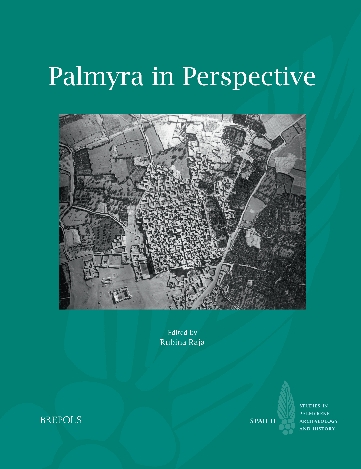
Palmyra in Perspective
show More to view fulltext, buy and share links for:Palmyra in Perspective show Less to hide fulltext, buy and share links for: Palmyra in PerspectiveThe famous oasis city of Palmyra, located in the Syrian Desert, has long been the subject of scholarly research; and over the last decade, it has been the focus of three key projects based at Aarhus University in Denmark. Together, these projects have yielded results that have shed new light on Palmyra and have profoundly changed what we know about both the city itself, and its place in the wider Roman Empire, through a focus on sculptural production and the sustainability and economy that underpinned this, urban development, excavation history, and legacy data. This volume, based on a conference organized under the auspices of the Palmyra research projects in Aarhus, draws together papers that reflect on our understanding of Palmyra up to now, and pave the way for new lines of enquiry. Experts in the field engage with discussions of best practice, offer new perspectives on the city, its society, and its environs, and outline approaches that will allow research to continue to break new ground in our understanding of Palmyra.
-
-
-
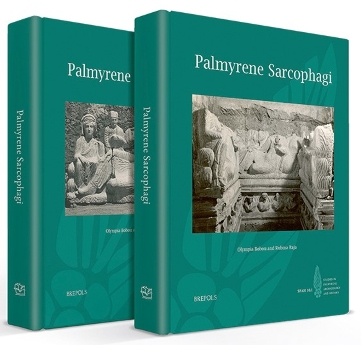
Palmyrene Sarcophagi
show More to view fulltext, buy and share links for:Palmyrene Sarcophagi show Less to hide fulltext, buy and share links for: Palmyrene SarcophagiWhile the funerary portraiture of Palmyra is rightly world-renowned, up to now, the corpus of sarcophagi from the ancient city has received relatively little attention as a cohesive group in their own right. Comprising sarcophagi, banqueting reliefs and founder reliefs, as well as sarcophagus reliefs, most of these objects share a common iconographic motif, that of the banquet, although other scenes, mostly drawn from the daily life of the city’s caravan leaders and their families, also appear. The emphasis on the banqueting scene in particular reveals the crucial importance of dining in ancient Palmyrene society: for the living, banquets were a marker of social standing and gave hosts a chance to honour the gods and offer an ephemeral benefaction to their fellow citizens, while for the dead, the banquet motif offered the opportunity for the entire family to be depicted together and showcase their wealth and sophistication, as well as their connections outside the city.
This single corpus of material gathered through the Palmyra Portrait Project, is presented in this beautifully illustrated two-volume monograph. Through careful analysis of the portraits, and the costumes and attribute choices that appear in these images, the authors explore how the sarcophagi were used by Palmyrenes to project an image of local pride, while at the same time participating in the visual cultures of the Roman and Parthian Empires between which their city was situated.
-
-
-
Pancartes monastiques des XIe et XIIe siècles
Table ronde organisée par l'ARTEM, 6-7 juillet 1994, Nancy
show More to view fulltext, buy and share links for:Pancartes monastiques des XIe et XIIe siècles show Less to hide fulltext, buy and share links for: Pancartes monastiques des XIe et XIIe sièclesLes pancartes sont des textes diplomatiques, fréquents aux Xle et Xlle siècles, qui consignent plusieurs actions juridiques, liées ou indépendantes, et qui éventuellement les renforcent par la confirmation d'une autorité laïque ou ecclésiastique. Elles constituent un état intermédiaire entre la charte et Je cartulaire, entre la notice de donation et la charte confirmative. Elles n'éclairent donc pas seulement la constitution ou la gestion du temporel d'un monastère, mais surtout le rapport que les moines entretenaient avec l'écrit : comment, sous quelle autorité, dans quel but mettait-on par écrit les actions juridiques dont on bénéficiait ? Comment gérait-on les archives monastiques ? Elles montrent aussi souvent les différentes étapes nécessitées, entre donation, contestation, renonciation et confirmation, par les cessions de biens et les procès.
Peu étudiées jusqu'a présent, ces sources pourtant très riches ont été placées au centre des débats d'une table ronde tenue en 1994 à l'Université Nancy 2. Par le biais d'études régionales (Normandie, Poitou, Bourgogne, Languedoc, Artois), mais aussi au moyen d'une synthèse sur l'originalité et la constitution de ces documents. L'ensemble de ces travaux permet de préciser ce que pouvait être une pancarte, d'attirer l'attention sur la diversité des types de textes diplomatiques, particulièrement au Xle siècle, et de montrer l'importance des notices de tradition, aujourd'hui presque toutes disparues, mais qui jouèrent un rôle central dans la mémoire monastique aux Xle et Xlle siècles.
-
-
-
Paolo Diacono e il dolore
I racconti di un’emozione
show More to view fulltext, buy and share links for:Paolo Diacono e il dolore show Less to hide fulltext, buy and share links for: Paolo Diacono e il dolorePaolo Diacono mette in scena il dolore dei suoi contemporanei o dei grandi del passato, fondendo nelle sue opere elementi autobiografici, topoi letterari e messaggi politici. In epoca altomedievale il dolore non si riduce infatti alla mera lesione fisica, ma presenta una molteplicità di significati e sfumature che lo portano ad essere una delle emozioni protagoniste nella comunità emotiva della corte carolingia di Carlo Magno e di quella longobardo-beneventana di Arechi.
-
-
-
Paradigm Shifts During the Global Middle Ages and Renaissance
show More to view fulltext, buy and share links for:Paradigm Shifts During the Global Middle Ages and Renaissance show Less to hide fulltext, buy and share links for: Paradigm Shifts During the Global Middle Ages and RenaissanceFor a long time we have naively talked about the Middle Ages, the Renaissance, and other periods, but at closer analysis all those terms prove to be constructed models to help us understand in rough terms profound changes that affected human conditions throughout time. As the contributions to the present volume indicate, paradigm shifts have occurred regularly and constituted some of the critical developments in human existence. The notion of paradigm shift as first developed by Thomas Kuhn is here considerably expanded to address also literary, religious, scientific, and cultural-historical phenomena, to deal with contrasting conceptions of various parts of the world (China versus Europe), conflicts between genders, economic changes pertaining to women's roles, social and political criticism, models of how to explain our existence, ideological positions, and epistemological approaches. The study of paradigm shifts makes it possible to grasp fundamental movements both horizontally (the present world in global terms) and vertically (from the past to the present), exposing thereby central forces leading to shifts in power structures and in the mental-historical world-views. Focusing on paradigm-shifts allows us to gain deep insight into conflicting discourses throughout time and to illuminate the struggle between dominant and competing models explaining or determining reality.
-
-
-
Paraulas de vertat e de profiech
Edizione del canzoniere di Guilhem de l’Olivier d'Arles
show More to view fulltext, buy and share links for:Paraulas de vertat e de profiech show Less to hide fulltext, buy and share links for: Paraulas de vertat e de profiechGuilhem de l’Olivier fu politico e funzionario ad Arles tra 1200 e 1230, e di lui ci sono rimaste 77 cobbole in lingua d’oc, destinate al pubblico dei cavalieri urbani, dei mercanti e di quelle famiglie che stavano sovvertendo la tradizionale struttura sociale della città rodaniana. Nel suo canzoniere trovano spazio la vita municipale e le esigenze di quella classe colta che guidava Arles attraverso complicate vicende istituzionali. Centro commerciale di primaria importanza, infatti, tra la fine del Cento e i primissimi decenni del Duecento quella che era stata una delle metropoli più fiorenti delle Gallie e una delle capitali dell’impero costantiniano, si trasformò in comune consolare e poi podestarile. In ragione di ciò gruppi sociali fin lì esclusi dalla gestione della cosa pubblica si trovarono quasi improvvisamente proiettati ai vertici del potere; la città nel suo insieme fu scossa da tali sommovimenti. La produzione poetica di Guilhem si inserisce in questo complesso quadro: i suoi versi propongono una sintesi tra la cultura ufficiale feudal-cortese della fin’amor e l’inedito codice comunicativo che sorresse l’evoluzione istituzionale di Arles. Vero intellettuale municipale, riutilizzando materiali collaudati il poeta propone un modello di civis che sia a un tempo attento al bene comune e avveduto negli interessi individuali. Il suo disegno educativo e formativo emerge con nettezza dall’analisi della sequenza con cui le cobbole sono state predisposte presumibilmente da Guilhem stesso, il quale ci avrebbe così lasciato un ‘canzoniere d’autore’.
-
-
-

Parisian Confraternity Drama of the Fourteenth Century
The ’Miracles de Nostre Dame par personnages’
show More to view fulltext, buy and share links for:Parisian Confraternity Drama of the Fourteenth Century show Less to hide fulltext, buy and share links for: Parisian Confraternity Drama of the Fourteenth CenturyParisian Confraternity Drama of the Fourteenth Century is the first volume of studies devoted solely to the Miracles de Nostre Dame par personnages. These anonymous plays, found in a single luxury manuscript, comprise the only major corpus of dramatic works in French that have survived from the fourteenth century. They derive from a rich diversity of sources: narrative miracle accounts, saints’ lives, epic chansons de geste, vernacular romances, and history. Each play is preceded by a richly detailed miniature, some two dozen include a sermon in prose, and each includes at least one rondel to be sung by the cortege accompanying the Virgin. They constitute both a collective demonstration of the fervent late-medieval devotion to the Virgin, and a substantial archive of contemporary insights into the issues of power, authority, and influence that struggled for dominance in fourteenth-century Paris. As this extraordinary collection has, in its entirety, attracted little critical attention to date, this volume will be of significant interest to scholars wishing to explore the plays in their literary context, as well as those interested in medieval drama, the Marian tradition, and the role of confraternities in fourteenth-century French culture.
-
-
-
Parole di montagna
Il lessico geografico nelle Alpi Cozie
show More to view fulltext, buy and share links for:Parole di montagna show Less to hide fulltext, buy and share links for: Parole di montagnaLe "parole di montagna" sono state studiate soprattutto perché le loro radici etimologiche risalgono spesso a epoche precedenti alla romanizzazione delle Alpi: in questo lungo periodo, il lessico geografico è rimasto vivo nelle parlate occitane, subendo delle modifiche anche importanti non solo dal punto di vista fonetico, ma anche dal punto di vista del significato. Questo volume da un lato rappresenta in sincronia la variazione diatopica del significato delle “parole di montagna”, attraverso un apparato di carte semasiologiche opportunamente commentate, dall’altro restituisce la speciale “visione del mondo” soggiacente alla strutturazione del lessico geografico in un determinato numero di località, attraverso una trattazione articolata per campi semantici e un Lessico specifico. La ricerca da cui nasce questo libro ha coinvolto dieci località di parlata occitana distribuite sui due versanti della Alpi Cozie, a più di mille metri di quota, ed è stata svolta dall’autrice per la redazione della sua tesi di dottorato (che ha vinto il premio Peter T. Ricketts promosso dall’AIEO).
-
-
-
Participation in Heavenly Worship
From Apocalyptic Mysticism to the Eucharistic Sanctus
show More to view fulltext, buy and share links for:Participation in Heavenly Worship show Less to hide fulltext, buy and share links for: Participation in Heavenly WorshipThe idea of participation in heavenly worship is a fascinating perspective on the Christian Eucharistic liturgy. Although somewhat forgotten in modern times, the early church knew it as a central aspect of meaning in interpretations of the Eucharistic rite. Through this rite worshippers could see themselves in communion with angels and saints in the eternal liturgy of heaven. Interpretations along such lines emerge clearly in catechesis and homilies from the fourth century onwards, and continue to develop in the following centuries, especially in the eastern liturgical traditions. The question remains, however, what are the origins of this concept?
In Participation in Heavenly Worship, Sverre Lied explores how the relations between the earthly and heavenly realms were understood within the context of Christian worship during the first three centuries CE. He argues that the idea of participation is an aspect of Christian worship that may be traced back to Jewish Christian apocalyptic mysticism, and shows how this concept, with considerable variations, was preserved and developed during the following centuries. These observations also shed new light on the appearance of the Sanctus in the Eucharistic liturgy.
-
-
-

Partners in Spirit
Women, Men, and Religious Life in Germany, 1100-1500
show More to view fulltext, buy and share links for:Partners in Spirit show Less to hide fulltext, buy and share links for: Partners in SpiritPartners in Spirit focuses on relations between chaste men and women within religious life in Germany (c. 1100-1500), concentrating on the complex set of negotiations that governed contact between a male priest and his female charge. Although religious women were undeniably reliant on priests for pastoral care (the cura monialium) throughout the medieval period, it does not follow that men saw such care as burdensome or that women were spiritually subordinate in their relations with priests. Within the context of the cura, ordained men and professed women met regularly, often developing intimate friendships and providing each other with crucial spiritual support, despite prevailing fears that contact between the sexes must result in sexual temptation and sin.
Examining the various interactions of priests with religious women, Partners in Spirit traces the ways in which both viewed the cura, highlighting the fluidity of gender and authority within the medieval religious life. In doing so, the volume suggests new ways of considering the intersection of gender, religion, and spiritual power within the medieval world.
-
-
-

Parva pro magnis munera
Etudes de littérature latine tardo-antique et médiévale offertes à François Dolbeau par ses élèves
-
-
-
Pascal Payen
L’Antiquité et ses réceptions : un nouvel objet d’histoire
show More to view fulltext, buy and share links for:Pascal Payen show Less to hide fulltext, buy and share links for: Pascal PayenLes vingt-six articles rassemblés dans ce volume témoignent à la fois de la riche activité scientifique de Pascal Payen durant une vingtaine d’années, mais aussi de la manière dont il a contribué de façon décisive à construire et faire connaître un nouvel objet d’histoire : la réception, ou plutôt les réceptions de l’Antiquité. En partant d’Hérodote, de Thucydide et de Plutarque, il a embrassé les innombrables ramifications des processus d’appropriation ou de rejet, de traduction ou d’adaptation, voire de recréation des auteurs anciens, de l’écriture de l’histoire, de la pensée politique. Ce recueil montre ainsi que la constitution de l’Antiquité, en « tradition », en « patrimoine » s’inscrit dans la longue durée et procède d’un va-et-vient polymorphe et fécond, constitutif de toute herméneutique, entre le passé de l’œuvre et les présents de ses publics successifs.
-
-
-

Passeurs de culture
La transmission de la culture grecque dans le monde romain des i er-iv e siècles après J.-C.
show More to view fulltext, buy and share links for:Passeurs de culture show Less to hide fulltext, buy and share links for: Passeurs de cultureIf the word « culture » comes from the Latin word cultura, the concept itself, which means general knowledge acquired through schools, books and cultural institutions, is related, in the Roman world of the first centuries ad to Greek paideia. As for paideia, which was then restricted to social elite, it covered literary education formulated and conveyed by sophists and grammarians in the time of the Roman Empire, as well as other forms of Greek culture like music, philosophy and sports.
This book focuses on cultural mediators, first of all professors, who are examined from various points of view: social and cultural status, teaching practices or ambivalent representations. Nevertheless, transmission of knowledge exceeds the environment of school; it is performed through literary and intellectual productions, within specialized disciplines, and through reinterpretations which convey a singular world view.
The present collection of essays displays the circulation of culture between the Greek and Roman worlds, throughout an Empire whose epicentre is paideia.
-
-
-
Past and Future
Medieval Studies Today
show More to view fulltext, buy and share links for:Past and Future show Less to hide fulltext, buy and share links for: Past and FutureThere was a time, not so long ago, when Medieval Studies constituted a major pillar for the understanding of the history of human civilization. Today, things are different. While the medieval contribution to the project of humanity remains beyond doubt, the challenges facing those interested in history have changed definitively. Currently, different responses to the new situation are under discussion, each with its own potential and challenges: e.g., global medievalism, digital humanities, comparative history, rethinking the cultural narrative. In this volume, specialists from the fields of Digital Humanities, History, Literary Studies, Philosophy, and Theology share with the readers their views about the possible futures of Medieval Studies. They evince the vitality and multi-perspectivism characteristic of the field today, showing that Medieval Studies looks to a future that, while different from the past, promises to be at least as rich and creative.
The papers collected here were first presented and discussed at the 6th European Congress of Medieval Studies of the Fédération Internationale des Instituts d’Etudes Médiévales (FIDEM), which was held at the University of Basel, Switzerland, 2-5 September 2018.
-
-
-
Pastoral Works
Priests, Books, and Compilatory Practices in the Carolingian Period
show More to view fulltext, buy and share links for:Pastoral Works show Less to hide fulltext, buy and share links for: Pastoral WorksMuch of the Christian empire established by the Carolingians in the eighth century was not only built through royal initiative, but also through the work of local priests. Living among the laity, these clerics provided pastoral care and religious instruction. Yet despite their vital contribution to the development of Christianity in Western Europe, these clergymen and the communities they served remain understudied.
This book investigates the manuscripts they used, offering a glimpse into everyday life around the local church. Far from being poor and illiterate, priests had access to texts specifically adapted to their needs. By examining how these materials were compiled, this study reveals what mattered most in the early medieval countryside. Drawing on excerpts from collections of liturgy, canon law, and patristic expositions — often preserved in the great monastic and court libraries — it uncovers the diversity of local religious practice. These texts reflect how the efforts instigated by Carolingians to foster ‘good Christianity’ were interpreted and implemented outside the centres of power. In exploring these seemingly modest manuscripts, this study opens new pathways into the world of the Carolingian local church and the people who inhabited it.
-
-
-
Patristic Studies in the Twenty-First Century
Proceedings of an International Conference to Mark the 50th Anniversary of the International Association of Patristic Studies
show More to view fulltext, buy and share links for:Patristic Studies in the Twenty-First Century show Less to hide fulltext, buy and share links for: Patristic Studies in the Twenty-First CenturyTo mark the fiftieth anniversary of its inception, the International Association of Patristic Studies, in collaboration with the Center for the Study of Christianity in the Hebrew University of Jerusalem, convened an international conference in Jerusalem on 25th – 27th June, 2013. The theme of the conference was the state of patristic studies in the twenty-first century, focusing on the implications of the various settings and interests of patristic studies for the future of the field.
The collected proceedings include an overview of the current state of patristic studies around the world, with presentations from leading researchers from Eastern and Western Europe, North and South America, Africa, Asia and Australia, as well as plenary lectures and shorter papers on six designated themes which demonstrate the interdisciplinary relevance and contribution of Patristics: Patristics and the Confluence of Jewish, Christian and Muslim Cultures; Patristics Between Eastern and Western Christian Traditions; Patristics and Theology; Patristics, Literature and the Histories of the Book; Patristics and Art; Patristics and Archaeology.
-
-
-
Patronage, Production, and Transmission of Texts in Medieval and Early Modern Jewish Cultures
show More to view fulltext, buy and share links for:Patronage, Production, and Transmission of Texts in Medieval and Early Modern Jewish Cultures show Less to hide fulltext, buy and share links for: Patronage, Production, and Transmission of Texts in Medieval and Early Modern Jewish CulturesMedieval and early modern cultural history has witnessed a recent shift from the study of manuscripts and early printed books as vehicles of texts and images towards their study as cultural objects in their own right. Rather than focusing solely on original authorship, scholars have turned to subjects such as the patronage, production, circulation, and consumption of texts. Codicological features, annotations, glosses, ownership notes, deeds of sale, and other traces have revealed countless insights into the social worlds of texts - their patrons, producers, and readers.
This book contributes to this area of scholarship with respect to Jewish texts and Jewish social contexts by focusing on select cases in the production of Bibles, Haggadot, religious poetry, and translations of and commentaries on scripture in the Eastern and Western Mediterranean between the tenth and sixteenth centuries. Individual essays consider models of patron-client relationships, interconfessional patronage scenarios, manuscript production through ‘multiple hands’, the (incomplete) transition from manuscript production to printed books, and relationships among text, image, and reader as suggested by codicological features.
-
-
-
Paul Vignaux, citoyen et philosophe (1904-1987), suivi de Paul Vignaux, La philosophie franciscaine et autres documents inédits
show More to view fulltext, buy and share links for:Paul Vignaux, citoyen et philosophe (1904-1987), suivi de Paul Vignaux, La philosophie franciscaine et autres documents inédits show Less to hide fulltext, buy and share links for: Paul Vignaux, citoyen et philosophe (1904-1987), suivi de Paul Vignaux, La philosophie franciscaine et autres documents inéditsQui se cache derrière l’œuvre de Paul Vignaux, une œuvre dense, discrète, austère, de haute érudition ? En tant que philosophe, normalien, agrégé, élève d’Étienne Gilson, il a renouvelé l’approche de la philosophie médiévale, sensible à ce qu’il nommait sa « diversité rebelle », attentif à l’écart entre philosophie et théologie, mais interprète fécond de leur dialogue. D’une direction d’études en 1933 à la présidence de la Section des sciences religieuses, sa présence a illustré l’École pratique des hautes études.
Mais qui connaît le rôle historique de Paul Vignaux ? -Militant à la CFTC, il participe à la création d’un syndicat universitaire au sein de la confédération chrétienne. Celui-ci devenu le SGEN, il le dirigera de 1949 à 1972. Lucide face à la montée du fascisme, il consacre un livre à la guerre d’Espagne, et échappe au régime de Vichy par l’exil. Il enseigne alors à New York dans ce qu’on appelait l’École libre des hautes études. De retour en France, il défend la laïcité au sein du syndicalisme, fondant le groupe « Reconstruction » qui est à l’origine de la déconfessionnalisation syndicale, et donc de la scission menant de la CFTC à la CFDT.
Ce volume ne rend pas seulement un hommage justifié à une grande figure de l’École Pratique. Il prend aussi en compte l’unité et la « diversité rebelle » du penseur, du citoyen, du militant syndical, laïc et chrétien qu’il était tout à la fois.
On y trouvera un ouvrage inédit, Sur la philosophie franciscaine, confisqué par la Gestapo, le recueil de ses « Comptes rendus de conférences » à l’EPHE, ainsi qu'une bibliographie complète des écrits de Paul et Georgette Vignaux.
Ce volume contribue à notre connaissance du médiévisme et de la philosophie française, des évolutions du catholicisme moderne et de notre histoire politique et sociale.
Sous la direction d’Olivier Boulnois, directeur d’études à l’École pratique des hautes études, directeur du Laboratoire d’études sur les monothéismes. Principales publications : Duns Scot, La rigueur de la charité, Paris, Le Cerf, 1998 ; Être et Représentation, Paris, PUF, 1999 ; Au-delà de l’image, Paris, Le Seuil, 2008.
Avec la collaboration de Jean-Robert Armogathe, directeur d’études émérite à l’École pratique des hautes études. Dernière publication : Histoire des idées religieuses et scientifiques dans l’Europe moderne, Turnhout, Brepols, 2012 (BEHE-SR 150).
Des contributions de : Tullio Gregory, professeur émérite à l’université de Rome, La Sapienza ; Joseph Pinard, professeur agrégé d’histoire, ancien député du Doubs ; Jean Jolivet, directeur d’études émérite à l’École pratique des hautes études ; Jean Lecuir, ancien maître de conférences à l’université Paris X-Nanterre ; Alain de Libera, directeur d’études à l’École pratique des hautes études ; Ruedi Imbach, professeur à l’université Paris IV-Sorbonne ; Olivier Boulnois, directeur d’études à l’École pratique des hautes études ; Zénon Kaluza, ancien directeur de recherche au CNRS ; Joël Biard, professeur à l’université de Tours ; Jean-François Genest, ingénieur de recherche au CNRS ; Philippe Büttgen, professeur à l’université Paris I-Panthéon-Sorbonne.
-
-
-
Pauper et peregrinus
Problèmes, comportements et mentalités du pèlerin chrétien
show More to view fulltext, buy and share links for:Pauper et peregrinus show Less to hide fulltext, buy and share links for: Pauper et peregrinusEn 1958 Edmond-René Labande donnait, dans les Cahiers de Civilisation médiévale qu’il venait de fonder, les grands traits d’un projet «de recherche sur les pèlerins dans l’Europe des XIe et XIIe s iècles». Ce projet allait retenir prioritairement son attention pendant plus de trente ans, s’affiner au cours de nombreux séminaires, de congrès, de lectures, de comptes rendus.
Son travail l’aura retenu jusqu’à la fin de sa vie, mais il n’aura pu mener jusqu’au bout son dernier ouvrage, puisque les derniers chapitres de sa dernière partie n’auront pas été rédigés.
Fallait-il laisser perdre cette longue et patiente recherche dans les chroniques, récits de pèlerinage, vies de saints, cartulaires, dans la liturgie, la littérature, etc., et naturellement une considérable masse de lectures ? Ses proches et ses amis se sont longuement et longtemps interrogés. La décision a finalement été de mettre cette riche documentation sur le pèlerin chrétien à travers les âges à la disposition des chercheurs. Son fils François a fait une très soi gn euse préparation du texte. Marie-Thérèse Camus, Marie-Hélène Debiès, Claude Arrignon, Georges Pon et Robert Favreau ont revu le manuscrit pour compléter les références, faire toutes les vérifications possibles et établir une liste des sources et une bibliographie. Il restera quelques incertitudes et lacunes, mais elles sont secondaires par rapport à la synthèse qui pourra être ainsi disponible. Travail inachevé, et donc imparfait, mais combien précieux. Tel a été le sentiment des initiateurs, et la raison de la publication de ce travail d’un homme qui leur fut cher, qui «traversa cette vie comme un pèlerinage, double pèlerin qu’il fut de la connaissance et de la foi».
-
-
-
Peace and Negotiation: Strategies for Coexistence in the Middle Ages and the Renaissance
show More to view fulltext, buy and share links for:Peace and Negotiation: Strategies for Coexistence in the Middle Ages and the Renaissance show Less to hide fulltext, buy and share links for: Peace and Negotiation: Strategies for Coexistence in the Middle Ages and the RenaissancePeace was far from a pale, static concept - a simple lack of violence - in the Middle Ages and Renaissance. Rather, it was at times constructed as a rich and complex, positive and dynamic ideal. The thirteen articles in this volume cover a broad range of disciplines, times, and geographical areas and explore strategies that were used in the past to resolve conflict and attain peace. They examine events, texts, and images that date from the fifth through the sixteenth centuries, and their authors focus not only on Western Europe, but also on Scandinavia, the Caucausus, and Egypt. This volume rests on the assumption that peace covers a spectrum of situations that connects the personal and the political. Therefore, the papers presented here examine not only how nations negotiated peace, but also how individuals did. Similarly, although several essays spotlight those in the seat of power, others explore the situation of those lower on the social hierarchy. Our views about peace and conflict, as this collection makes clear, are shaped in part by the mentalités of the past. Although some peacemaking strategies may be unacceptable to us today - forced marriages and conversions, for example - we can learn from other strategies how to transcend or modify various modes of antagonistic thinking.
-
-
-
Peace and Peril
Sima Qian's Portrayal of Han-Xiongnu Relations
show More to view fulltext, buy and share links for:Peace and Peril show Less to hide fulltext, buy and share links for: Peace and PerilEmperor Wu is generally recognized as the greatest ruler of the Han Dynasty, and his wars against the steppe warrior Xiongnu as one of his greatest undertakings. To the chief narrator of these events, ancient Chinese historian Sima Qian, the turning point in Han Dynasty history was the way Emperor Wu had abandoned the policy of peaceful relations with the Xiongnu, and launched China on a series of campaigns that would last for decades. This has been almost universally accepted as “truth” in modern scholarship, but these claims cannot be taken at face value.
Firstly, this book identifies ways in which the Shiji account is riddled with inconsistencies and deliberately misleading information, and provides explanations for this. He hid signs of rising disquiet with the peace policy of earlier rulers, and concealed indications that for at least two decades China’s leadership had been searching for alternatives.
Secondly, the work reconstructs a more accurate narrative of events for one hundred years of Han - Xiongnu relations than can be gained by a straight-forwarding reading of individual chapters of the Shiji. A narrative emerges of an historian with an agenda, and of a century of Han - Xiongnu relations that is markedly different from any previously produced.
-
-
-
Peasants and Lords in the Medieval English Economy
Essays in Honour of Bruce M. S. Campbell
show More to view fulltext, buy and share links for:Peasants and Lords in the Medieval English Economy show Less to hide fulltext, buy and share links for: Peasants and Lords in the Medieval English EconomyProfessor Bruce Campbell’s career has been devoted to providing systematic and highly influential studies of the medieval economy and society of the British Isles, including his innovative work on the role of the elites in defining medieval agricultural practices. This volume draws together essays from a distinguished group of researchers who have been inspired by Campbell’s work and the spirit of collegiality and inclusiveness that he has always demonstrated, and who wish to celebrate his significant contributions to scholarship. Many of the essays collected here engage directly with critical issues raised in Professor Campbell’s own research: how medieval society fed itself with reputedly very low levels of technology, the productivity of medieval society as a whole, the impact of external forces (particularly climate), the relationship between lords and peasants, and the importance of nonseigniorial contributions to the medieval economy.
-
-
-
Peasants and their fields
The rationale of open-field agriculture, c. 700-1800
show More to view fulltext, buy and share links for:Peasants and their fields show Less to hide fulltext, buy and share links for: Peasants and their fieldsIn the Middle Ages and the Early Modern Period open fields could be found in many if not most countries in Europe. They took a wide variety of forms, but can in essence be defined as areas of cultivated land in which the intermingled plots of different cultivators, without upstanding physical boundaries, were subject to some degree of communal management, in terms of cropping and grazing. Sometimes such fields occupied a high proportion of the land in a district, but often they formed a relatively minor element in landscapes which also contained enclosed fields, woodland or expanses of pasture. In some areas, open-field agriculture had already been abandoned before the end of the Middle Ages, but in others it continued to flourish into the nineteenth or even twentieth centuries.
Although open fields have long been studied by geographers, historians and archaeologists, much about their origins, development and rationale remains contentious. Why, across wide areas of Europe, did such fields sometimes become central to the experience of so many of our ancestors, shaping not only farming practices but also the basic structures of their everyday lives? And why, in contrast, did they fail to develop, or have a less significant role, elsewhere?
Over recent decades open fields have been investigated in new, interdisciplinary ways, and as a Europe-wide phenomenon. In this book, more than ever before, their development and operation are explained in terms of economic, social, agrarian and environmental developments which were shared, to varying degrees, by all parts of the continent. It contains ten new studies from a wide range of regions, together with important comparative research from South America and Japan. This collection of essays represents a milestone in the study of open-field agriculture, and is a major contribution to the study of the rationale of field systems more generally.
-
-
-
Peasants into Farmers?
The Transformation of Rural Economy and Society in the Low Countries (Middle Ages - 19th Century) in Light of the Brenner Debate
show More to view fulltext, buy and share links for:Peasants into Farmers? show Less to hide fulltext, buy and share links for: Peasants into Farmers?Since his pioneering article of 1976 the American historian Robert P. Brenner has tried to come to terms with an issue that has puzzled historians for generations: how can we explain the differences in growth-patterns of North Western European countries in the transition from feudalism to capitalism. In a frontal attack on both the ‘(homeostatic) demographic’ and ‘commercialization’ models, Brenner traced the roots of the divergent evolutions back to rural and feudal ‘social-property relations’. In the debate that immediately followed Brenner’s first article, and in subsequent exchanges, the Low Countries were sorely neglected, although areas such as Flanders and Holland played a decisive role in the economic development of Europe. This was partly due to a lack of publications on Dutch rural history in foreign languages. This volume aims to fill this lacuna. It draws upon substantial research, and confronts the Brenner thesis with new results and hypotheses; and it contains a powerful and detailed response by Brenner himself.
-
-
-
Pecia
Le livre et l’écrit
show More to view fulltext, buy and share links for:Pecia show Less to hide fulltext, buy and share links for: PeciaLa production culturelle médiévale ne peut se concevoir sans prendre en compte le livre manuscrit sous toutes ses formes. Abandonnant les scriptoria monastiques, puis les « bibliothèques » cathédrales (et de facto, son état de privilège d’hommes d’Église), le livre s’est très vite immiscé dans la cité avec l’avènement des grands centres universitaires et de leurs collèges associés, l’essor considérable des ateliers laïcs à partir du système de la pecia. Autour de lui se sont alors développés des métiers innovants, où l’enlumineur s’est forgé une place de premier choix, symbolisant toute l’importance de l’image dans la société médiévale. Du simple lecteur au « collectionneur » averti, le livre manuscrit s’est ainsi constitué un nouveau public, plus large, et de la Bible moralisée au Livre d’heures (bestseller de la piété individuelle), l’objet culturel s’est parfois transformé en objet marchand, pénétrant les imposantes « librairies » des nouveaux princes et seigneurs bibliophiles. Pecia – Le livre et l’écrit – entend promouvoir les études de bibliologie par la publication de contributions dédiées à l’histoire du livre manuscrit au Moyen Âge. Chaque volume est articulé autour d’un thème central.
More information about this journal on Brepols.net
-
-
-
Pedro da Fonseca
Humanism and Metaphysics
show More to view fulltext, buy and share links for:Pedro da Fonseca show Less to hide fulltext, buy and share links for: Pedro da FonsecaAlso known as the «Portuguese Aristotle», Pedro da Fonseca S. J. (1527-1599) was a leading figure in modern scholasticism and particularly in the history of the Society of Jesus. He laid the groundwork for the publication of the famous Cursus Conimbricensis (1592- 1606) and was the author of an influential textbook of logic and dialectic, the Institutionum Dialecticarum Libri Octo (1564), officially recommended by the Ratio Studiorum. He was also one of the most important and recognized commentators on Aristotle’s Metaphysics in the 16th century (with his unfinished Commentaria, 1577-1612).
This volume is the first collection of essays in English devoted to Fonseca, his intellectual endeavour, and thought. The book brings together some of today’s leading specialists in early modern scholasticism, Portuguese Aristotelianism, and the history of the Society of Jesus, in order to present a reliable portrait of Fonseca’s institutional role, to reconstruct his thought on many important aspects of scholastic metaphysics, and to discuss the reception of his work in the early modern age.
-
-
-
Penser l'amitié au Moyen Age
Etude historique des commentaires sur les livres VIII et IX de l'Ethique à Nicomaque (XIIIe-XVe siècles)
show More to view fulltext, buy and share links for:Penser l'amitié au Moyen Age show Less to hide fulltext, buy and share links for: Penser l'amitié au Moyen AgeSans conteste, l’amitié innerve le monde médiéval. Le vocable sature les textes tant pratiques que théoriques. Il concerne toute la société, l’élite, les milieux princiers et la noblesse autant que les humbles et le monde ordinaire. Au regard de l’insistance des sources médiévales à dire l’amitié dans sa factualité et sa réalité, il s’avère nécessaire de s’interroger sur la pensée de l’amitié au Moyen Âge. A-t-on pensé l’amitié au Moyen Âge? Plus exactement posé: quels sont les cadres intellectuels, institutionnels et structurels qui poussent les hommes des XIIIe-XVe siècles à penser l’amitié; quelles sont les conditions historiques et les événements culturels qui façonnent les contours d’une telle conceptualisation?
Les médiévaux puisent à la source aristotélicienne un matériau exceptionnellement dense: la philia de l’Éthique à Nicomaque est par excellence le lien social qui unit les citoyens. Penser l’amitié au Moyen Âge à partir de l’auctoritas aristotélicienne, c’était, en quelque sorte, nommer l’expérience proprement médiévale de l’amitié elle-même, définie par la précellence de son acception sociale.
Bénédicte Sère, est agrégée d’histoire et docteur de l’Université de Paris-I Panthéon Sorbonne.
-
-
-
Penser l'amour avec Thomas d'Aquin
Lecture philosophique
show More to view fulltext, buy and share links for:Penser l'amour avec Thomas d'Aquin show Less to hide fulltext, buy and share links for: Penser l'amour avec Thomas d'AquinQu'est-ce que l'amour et quelles sont ses différentes formes? C'est la question que Thomas d'Aquin s'est posée dès les débuts de son enseignement. Ce livre étudie ses réponses. Lues au prisme de l'histoire de la philosophie, elles révèlent ce qu'est "essentiellement" l'amour : l'union de l'aimant et de l'aimé, fondée sur une convenance de nature entre les deux. Cette conception philosophique de l'amour, que Thomas déploie en théologie, concerne tous les étants et les relie entre eux dans une sorte d'amitié qui, cependant, est propre aux êtres spirituels et libres. L'intelligence et la volonté, enracinées dans la liberté de la substance spirituelle, concourent à l'acte d'amour selon leur opération propre et réciproque. Le mouvement de la volonté se fait lumière chez l'intelligence: " Là où se trouve l'amour, là est le regard '', écrit Thomas.
-
-
-
Penser l'icône en Inde ancienne
show More to view fulltext, buy and share links for:Penser l'icône en Inde ancienne show Less to hide fulltext, buy and share links for: Penser l'icône en Inde ancienneL'icône prit une importance croissante dans les religions indiennes dès avant l'ère chrétienne, qu'il s'agisse du védisme tardif, de l'hindouisme, du bouddhisme ou du jaïnisme. Si les spéculations philosophiques l'ignorèrent largement jusqu'au XIIe siècle de notre ère environ, 1'icône fut depuis une époque ancienne l'objet de débats dans une civilisation qui était encline aux discussions critiques.
La société harappéenne (vallée de l’Indus, vers 2500-1800 av. J.-C.) connaissait un iconisme qui est aujourd’hui d’une interprétation difficile. Le védisme ancien, qui lui succéda, associe les dieux non à des représentations plastiques, mais à leur révélation par la parole du Veda, conçue comme une véritable substance . Les milieux qui se réclament du védisme pourraient avoir connu une sorte de crise de conscience iconologique du IVe au IIe siècle avant notre ère environ. L’icône matérielle devint progressivement l’objet d’un consensus social, en dépit des réserves, du scepticisme, voire des critiques que l’on émit à son égard dans certains cercles.
Cet ouvrage, qui ne traite pas d’histoire de l’art, examine la pensée fragmentaire de l’icône en Inde ancienne jusqu’au XIIe siècle : parfois conçue comme étant un être vivant ou un sujet juridique, parfois suscitant des résistances théoriques (notamment dans le bouddhisme ancien, en comparaison avec la relique), inscrite dans le réseau des signes divinatoires favorables, emplie de conscience divine au moyen du rite, l’icône est restée - jusqu’à nos jours d'ailleurs - une composante majeure de la société indienne.
-
-
-
Penser l’individu. Genèse stoïcienne de la subjectivité
show More to view fulltext, buy and share links for:Penser l’individu. Genèse stoïcienne de la subjectivité show Less to hide fulltext, buy and share links for: Penser l’individu. Genèse stoïcienne de la subjectivitéPar quel prodige une philosophie matérialiste et naturaliste qui posait tout à la fois l’unité du continuum cosmique et l’existence du destin a-t-elle pu donner naissance à une conception forte de l’individu, et de cet individu singulier qu’est le sujet humain? Tel est le paradoxe que nous cherchons ici à éclairer. Sur près de cinq siècles, le stoïcisme construit en effet une conception unifiée de l’individu, depuis sa forme commune à tous les vivants jusqu’à la spécificité radicale de l’individuation humaine, celle de la subjectivité. C’est cette genèse dans laquelle le passage du stoïcisme à Rome a joué un rôle décisif que nous nous attachons à reconstruire.
-
-
-
Pensée grecque et sagesse d'Orient
Hommage à Michel Tardieu
show More to view fulltext, buy and share links for:Pensée grecque et sagesse d'Orient show Less to hide fulltext, buy and share links for: Pensée grecque et sagesse d'OrientÀ l’occasion du 70e anniversaire de Michel Tardieu, un certain nombre d’amis et de collègues ont voulu manifester un hommage particulier à celui qui fut un maître, un ami, un professeur estimé. Cet anniversaire correspond aussi à son départ à la retraite du Collège de France. La diversité des contributions de ce volume illustre le genre de domaines qu’il s’est plu à fréquenter, tout autour du Bassin méditerranéen et dans les contrées plus lointaines de l’Orient et de l’Extrême-Orient.
Ce volume d’hommage à Michel Tardieu s’adresse aux spécialistes de l’Antiquité et du Proche-Orient ancien, aux historiens des religions ; il intéressera les historiens de la philosophie, les spécialistes des papyri magiques, des mouvements gnostiques, du manichéisme, de l’islam, du monde iranien, de l’Asie centrale, des christianismes orientaux.
Philosophe et historien des religions, Michel Tardieu entra comme chercheur au CNRS en 1972. Il occupa la direction d’études « Gnose et manichéisme » à la Section des Sciences religieuses de l’Ecole pratique des hautes études, de 1976 à 1990, et la chaire « Histoire des syncrétismes de la fin de l’Antiquité » au Collège de France, de 1990 à 2008.
-
-
-

People and Space in the Middle Ages, 300-1300
show More to view fulltext, buy and share links for:People and Space in the Middle Ages, 300-1300 show Less to hide fulltext, buy and share links for: People and Space in the Middle Ages, 300-1300This book compares community definition and change in the temperate zones of southern Britain and northern France with the starkly contrasting regions of the Spanish meseta and Iceland. Local communities were fundamental to human societies in the pre-industrial world; crucial in supporting their members and regulating their relationships, as well as in wider society. While geographical and biological work on territoriality is very good, existing archaeological literature is rarely time-specific and lacks wider social context; most of its premises are too simple for the interdependencies of the early medieval world. Historical work, by contrast, has a weak sense of territory and no sense of scale; like much archaeological work, there is confusion about distinctions - and relationships - between kin groups, neighbourhood groups, collections of tenants and small polities.
The contributors to this book address what determined the size and shape of communities in the early historic past and the ways that communities delineated themselves in physical terms. The roles of the environment, labour patterns, the church and the physical proximity of residences in determining community identity are also examined. Additional themes include social exclusion, the community as an elite body, and the various stimuli for change in community structure. Major issues surrounding relationships between the local and the governmental are investigated: did larger polities exploit pre-existing communities, or did developments in governance call local communities into being?
-
-
-

Per cognitionem visualem. The Visualization of Cognitive and Natural Processes in the Middle Ages
Acts of the XXV Annual Colloquium of the SIEPM, Porto, 14-15 and 21-22 June 2021
show More to view fulltext, buy and share links for:Per cognitionem visualem. The Visualization of Cognitive and Natural Processes in the Middle Ages show Less to hide fulltext, buy and share links for: Per cognitionem visualem. The Visualization of Cognitive and Natural Processes in the Middle AgesVisual representations were deeply involved in medieval traditions related to the dissemination and teaching of philosophy and science. Consequently, they were not only examples of theological or philosophical interpretation, but rather brought together manifold intellectual activities, illuminating various perceptual, cognitive, and spiritual concerns. Visual tools, which appear frequently in medieval manuscripts, have often been considered as “illustrative material” intended to facilitate the comprehension and interpretation of texts. These “visual aids” offer something more than a straightforward correspondence between a conceptual interpretation and its figurative depiction. They are, in fact, key to understanding the methods of acquiring and shaping knowledge through visual frameworks with didactical, disputational or heuristic purposes. The aim of this volume is to deepen our understanding of medieval visual tools that represented and demonstrated philosophical and scientific knowledge and, to an extent, the accumulation of empirical information.
-
-
-
Per i testi latini: Prime riflessioni sul fondo inedito di Robert Marichal
show More to view fulltext, buy and share links for:Per i testi latini: Prime riflessioni sul fondo inedito di Robert Marichal show Less to hide fulltext, buy and share links for: Per i testi latini: Prime riflessioni sul fondo inedito di Robert MarichalRobert Marichal (1904-1999) was one of the most famous Latin paleographers of the Twentieth Century. His broad production is precious and well-known by scholars from all over the world, but his recently discovered Archive at the École Pratique des Hautes Études (Paris) offers a further and impressive contribution to the knowledge we have of ancient Latin texts, from Latin papyri from Herculaneum, to Latin ostraka from Northen Africa, and to Latin graffiti the ancient Latium and Campania.
This volume moves from the pioneer work on this Archive by the ERC project PLATINUM. It collects eight papers from leading specialists and highlights how promising is the work on such an unpublished Archive.
-
-
-

Per sen de trobar : l'opera lirica di Daude de Pradas
show More to view fulltext, buy and share links for:Per sen de trobar : l'opera lirica di Daude de Pradas show Less to hide fulltext, buy and share links for: Per sen de trobar : l'opera lirica di Daude de PradasL’œuvre lyrique du troubadour Daude de Pradas a déjà fait l’objet d’une édition intégrale publiée par Alexander H. Schutz en 1933. Quatre-vingts ans après, une mise à jour et une révision des résultats présentés par le savant américain semblent nécessaires. Tenu par son premier éditeur pour un auteur tardif et peu original, Daude de Pradas est aujourd’hui à considérer comme un poète actif d’entre la fin du xii e et le début du xiii e siècle, presque contemporain de la génération dite « classique » des troubadours. Les contenus ainsi que la forme de son œuvre sont bien plus intéressant que ce que l’on croyait. Cette nouvelle édition vise à proposer un texte plus fiable que celui établi par M. Schutz. Elle tente de résoudre les conflits d’attribution de certains textes, de les rectifier à l’aide des études les plus récentes des hypothèses chronologiques et biographiques considérées désormais comme acquises. Enfin elle s’efforce d’expliquer, au moins en partie, à l’aide d’un apparat de notes interprétatives et à l’aide des traductions intégrales des textes, les nombreux vers obscurs et difficiles d’un auteur lu seulement de façon superficielle.
Silvio Melani a étudié la Philologie romane aux Universités de Pise et de Florence et a été Lecteur de langue et littérature italiennes à l’Université de Stockholm. Parmi ses travaux, il a publié l’édition critique de Philippe de Novare (Guerra di Federico II in Oriente, Napoli 1994) et le recueil d’essais historiques Ospitalieri, monaci e guerrieri, Turku 2002. En ce moment, il termine son deuxième Doctorat à l’Université de Udine.
-
-
-
Per verba magistri
Anselme de Laon et son école au XIIe siècle
show More to view fulltext, buy and share links for:Per verba magistri show Less to hide fulltext, buy and share links for: Per verba magistriLoué par ses contemporains et critiqué par le seul Pierre Abélard, Anselme de Laon († 1117) constitue l’une des figures majeures de la « Renaissance du xiie siècle ». Anselme n’est pas seulement l’auteur probable de gloses et de commentaires bibliques, il est aussi le rédacteur de sentences théologiques à la diffusion manuscrite non négligeable. Afin de comprendre cette figure magistrale, il convient de restituer la carrière d’Anselme, de suivre la transmission de ses sentences théologiques et d’étudier la constitution des recueils rattachés à son enseignement. Il devient alors possible de montrer la manière dont un maître aussi prestigieux a fait école, de son vivant et jusque dans les dernières décennies duXIIe siècle.
Cédric Giraud, ancien élève de l’École nationale des chartes et agrégé d’histoire, est maître de conférences à l’université de Nancy 2 (ERL 7229 de Médiévistique). Ses recherches portent sur l’histoire culturelle du Moyen Âge central et la philologie médiolatine.
-
-
-
Perception and Awareness: Artefacts and Imageries in Medieval European Jewish Cultures
show More to view fulltext, buy and share links for:Perception and Awareness: Artefacts and Imageries in Medieval European Jewish Cultures show Less to hide fulltext, buy and share links for: Perception and Awareness: Artefacts and Imageries in Medieval European Jewish CulturesWhat did the world look like for Jews living in medieval Europe? How did they perceive and make use of the elements of their daily life, from items on the street to religious iconography within holy spaces — in particular synagogues and at the exterior of churches — and profane elements from the home? And how did they experience the visual and material cultures of their non-Jewish neighbours?
These questions form the core of this volume, which explores pre-modern Jewish approaches to images and material objects from a variety of perspectives. From clothing to manuscripts, and from lighting devices to the understanding of the invisible, the chapters gathered together in this multifaceted volume combine analyses of images and artefacts together with in-depth analyses of texts to offer fresh insights into the visual cultures that informed the world of European Jews in the Middle Ages.
-