


Brepols
Brepols is an international academic publisher of works in the humanities, with a particular focus in history, archaeology, history of the arts, language and literature, and critical editions of source works.1001 - 1050 of 3194 results
-
-
Hagiografía hispana de los siglos ix-xiii en los reinos de Aragón y Castilla y León
Vidas de santos, hallazgos y traslaciones de reliquias, libros de milagros, himnos
show More to view fulltext, buy and share links for:Hagiografía hispana de los siglos ix-xiii en los reinos de Aragón y Castilla y León show Less to hide fulltext, buy and share links for: Hagiografía hispana de los siglos ix-xiii en los reinos de Aragón y Castilla y LeónEste libro reúne las traducciones anotadas de las obras hagiográficas latinas publicadas en el volumen Hagiographica hispana regnorum Aragonum et Castellae Legionisque saeculorum IX-XIII (Corpus Christianorum, Continuatio Mediaeualis, vol. 310), publicado en 2022. Se trata de las más importantes Vidas, traslados de reliquias y colecciones de milagros compuestas en la Edad Media en los monasterios de San Juan de la Peña, San Millán de la Cogolla y San Zoilo de Carrión en honor de san Indalecio (uno de los siete míticos evangelizadores de Hispania); dos santos de época visigoda, san Felices de Bilibio (maestro de San Millán) y el propio san Millán; y dos santos medievales: san Voto y san Félix de Zaragoza (fundadores de lo que más tarde sería San Juan de la Peña). Los otros dos escritos del volumen son dos Vidas dedicadas a san Urbez (eremita aragonés de posible origen francés) y, sobre todo, al famoso patrón de la ciudad de Madrid, san Isidro Labrador. La mayoría de estas traducciones son las primeras que se han realizado en una lengua moderna.
-
-
-
Hagiographie Médiévale. Vies de saints d'Angleterre et d'ailleurs
show More to view fulltext, buy and share links for:Hagiographie Médiévale. Vies de saints d'Angleterre et d'ailleurs show Less to hide fulltext, buy and share links for: Hagiographie Médiévale. Vies de saints d'Angleterre et d'ailleursLe Moyen Age, on le sait, est "créateur de saints" et, dans une société pour laquelle le visible n’était que le reflet de l’invisible, le saint est le reflet de Dieu sur terre. Le culte des saints constitue l’un des aspects essentiels de la spiritualité.
Les Vies de saints rassemblées dans cet ouvrage relatent les faits et gestes de saints ayant joué un rôle dans la christianisation de l’Irlande (saint Patrick) et de l’Angleterre (Grégoire le Grand, Augustin de Canterbury) ou y ayant vécu entre le Ve et le XIIe siècle. Elles ont été écrites en vieil anglais ou en moyen anglais par des religieux des Xe, XIe ou XIIIe siècles.
A l’exception des vies de saints Guthlac et de saint Chad, les Vitae rédigées en vieil anglais sont l’œuvre d’Aelfric, sermonnaire et hagiographe, disciple d’Aethelwold - ce dernier étant l’une des grandes figures dominant la réforme monastique anglaise du Xe siècle. L’objectif d’Aelfric était de développer la foi de ses contemporains et de rendre accessibles les textes sacrés ou édifiants au plus grand nombre en les leur présentant en langue vernaculaire. A cette fin, il rédige les Sermones Catholici et les Lives of Saint d’où sont extraites les Vitae présentées ici (Etheldrede, Swithun, Oswald, Edmond, Grégoire, Cuthberht).
Contemporain de la "Légende dorée", le "South English Legendary" est certainement l’un des plus riches légendiers en anglais. Parmi les nombreux saints dont il nous relate la vie, ont été retenus certains saints anglais (Augustin de Canterbury, Dunstan, Thomas Becket, Edouard l'Ancien) et celtes (Patrick, Brendan), d’une part parce qu’ils couvrent toute la période du Haut Moyen Age jusqu’au XIIe siècle, d’autre part parce que ces Vitae témoignent d’une grande diversité tant par leur longueur que par leur contenu qui souvent va au-delà du simple récit hagiographique stéréotypé, lorsque, par exemple, l’histoire prend le pas sur la "légende".
S’éloignant du moule traditionnel des Vitae ainsi que du contexte purement anglais, le récit des Sept Dormants vient clore cet ouvrage sur une touche de merveilleux chrétien.
Outre leur intérêt hagiographique et leur valeur d’exempla, ces Vies de Saints constituent des sources d’information non négligeables sur l’Angleterre du Moyen Age, sur les évènements qui ont marqué cette période et la perception du monde et de l’au-delà qui prévalait à l’époque.
-
-
-
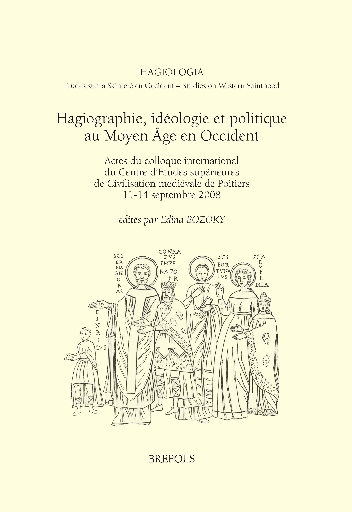
Hagiographie, idéologie et politique au Moyen Âge en Occident
Actes du colloque international du Centre d'Études supérieures de Civilisation médiévale de Poitiers, 11-14 septembre 2008
show More to view fulltext, buy and share links for:Hagiographie, idéologie et politique au Moyen Âge en Occident show Less to hide fulltext, buy and share links for: Hagiographie, idéologie et politique au Moyen Âge en OccidentLa reconnaissance de la sainteté et sa propagation par l’écrit et l’image dépendent étroitement de la conjoncture sociale et politique : les saints ont du pouvoir et le pouvoir a ses saints. Issues du congrès international organisé à Poitiers en 2008, les contributions de ce volume analysent les enjeux du culte des saints dans les stratégies du pouvoir ecclésiastique et laïc en Occident du VII e au XV e siècle. La représentation de la sainteté et ses usages sont abordés selon plusieurs axes : la légitimation du pouvoir par le prestige des saints du passé ; l’hagiographie instrumentalisée dans les luttes idéologiques et politiques ; le rapport entre l’iconographie, la mise en valeur des reliques et le contexte historique. Ce bilan des recherches récentes jette un nouvel éclairage sur la question fondamentale de l’imbrication du religieux et du politique à l’époque médiévale
L’auteur
Edina Bozóky est maître de conférences à l’Université de Poitiers, membre du Centre d’Études Supérieures de Civilisation Médiévale. Elle a publié La politique des reliques de Constantin à Saint Louis (Paris) et Le Moyen Âge miraculeux (Paris, 2010) et a édité avec A.-M. Helvétius Les reliques : objets, cultes, symboles (Turnhout, 1999). Elle dirige la collection Culture et société médiévales aux Éditions Brepols
-
-
-
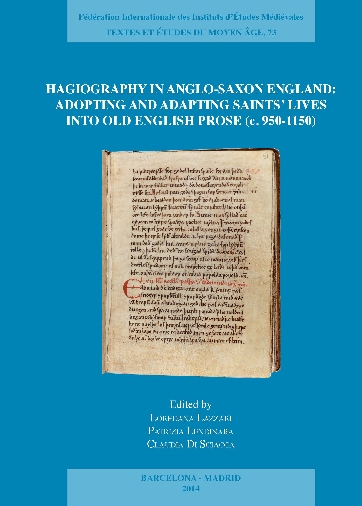
Hagiography in Anglo-Saxon England: Adopting and Adapting Saints' Lives into Old English Prose (c. 950-1150)
show More to view fulltext, buy and share links for:Hagiography in Anglo-Saxon England: Adopting and Adapting Saints' Lives into Old English Prose (c. 950-1150) show Less to hide fulltext, buy and share links for: Hagiography in Anglo-Saxon England: Adopting and Adapting Saints' Lives into Old English Prose (c. 950-1150)This volume gathers fourteen new essays devoted to Old English prose saints’ lives from the late Anglo-Saxon period. Moving from diverse methodological approaches and building on the most recent developments in primary and secondary scholarship, the contributions comprehensively consider the texts and contexts of the vernacular hagiographic output both by Ælfric, the major hagiographer of his day, and by anonymous authors. By means of a comprehensive scrutiny of the Latin source-texts, including the often neglected Vitas Patrum, as well as of both the historical and manuscript context, this collection contributes to outline the late Anglo-Saxon sanctorale and to advance our knowledge of the literary culture and intellectual history of pre-Conquest England and beyond.
Contributors:Roberta Bassi, Rolf H. Bremmer Jr., Claudio Cataldi, Catherine Cubitt, Giuseppe D. De Bonis, Maria Caterina De Bonis, Claudia Di Sciacca, Concetta Giliberto, Joyce Hill, Susan Irvine, Loredana Lazzari, Patrizia Lendinara, Rosalind Love, Winfried Rudolf.
-
-
-
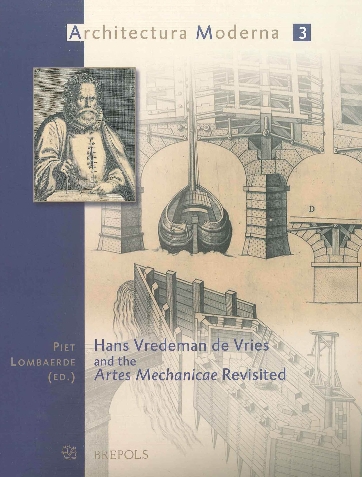
Hans Vredeman De Vries And The Artes Mechanicae Revisited
show More to view fulltext, buy and share links for:Hans Vredeman De Vries And The Artes Mechanicae Revisited show Less to hide fulltext, buy and share links for: Hans Vredeman De Vries And The Artes Mechanicae RevisitedIn this publication, attention is devoted to the technical aspects in the work of Hans Vredeman de Vries. Throughout his long career, he has perfected his skills as a painter, architect, fortification engineer and hydraulic engineer. Those technical aspects are considered not so much as discrete characteristics, but rather as a particular way in which this late sixteenth- century artist from the Low Countries typically dealt with a number of disciplines of the technical and applied arts. Indeed, from a predominantly traditional approach to his work, too much emphasis has until now been placed on his highly personal contribution to the dissemination of ornamental elements, whereby typical Renaissance characteristics, such as technical innovation and engineering, are relegated to the background.
During Hans Vredeman de Vries's lifetime, attempts began to be made to define the arts and the sciences. Defining the demarcation criteria of the sciences would continue to gain in importance especially at the beginning of the seventeenth century. With his work, Vredeman de Vries raised Architectura together with all its technical acquisitions to the level of both the Artes and the Scienciae. Attempts were even made to establish some kind of hierarchy. Yet the artist never strictly separated fine and applied arts, nor did he explicitly distinguish between theory and practice. It was the intention of Vredeman de Vries to aim towards an equilibrium between the sciences and the arts. A team of thirteen distinguished art and architectural historians from North America, Germany, the Netherlands and Belgium focus upon Vredeman de Vries's diverse manifestations of knowledge: urbanism, fortification works, hydraulics, interior decoration, architecture (its practical and technical aspects), inlay work and furniture, tapestry and the use of scientific instruments. One author points out that the similarity between such 'technical' practices and the structure of, for example, sixteenth-century rhetorical practices, forces us to consider Vredeman de Vries not simply as an architect, an engineer, or a designer, but above all as an experimenter in multiple disciplines and various fields.
-
-
-
Hathor la Menit dans les temples de Dendara et d’Edfou
Une étude philologique, iconographique et sémiologique
show More to view fulltext, buy and share links for:Hathor la Menit dans les temples de Dendara et d’Edfou show Less to hide fulltext, buy and share links for: Hathor la Menit dans les temples de Dendara et d’EdfouCette recherche se positionne dans la continuité d’une première étude portant sur le collier-menit dans les temples ptolémaïques et publiée dans la collection Monographies Reine Élisabeth. Ce collier, qui est un des objets sacrés d’Hathor, porte également le nom de l’entité divine du même nom, forme d’Hathor de Dendara et d’Edfou dont cette étude fait l’objet. En tant que forme d’Hathor, quels sont les termes, les parures, les actions, la gestuelle, qui pouvaient la différencier de la grande Hathor, si toutefois cela est envisageable, ces deux divinités étant intimement associées ?
Une partie de cette recherche porte sur l’étude de la chapelle du collier-menit. Les textes et les épithètes de la déesse ont été ici analysés d’un point de vue stylistique afin d’essayer de comprendre la démarche des hiérogrammates et la raison d’être d’une telle chapelle dédiée à Hathor la Menit, sachant que pour les deux autres formes secondaires d’Hathor : « Hathor-chef-du-grand-siège » et « Hathor-uraeus », il n’en existe point.
Hathor la Menit est la récipiendaire de nombreuses offrandes, qui ont été étudiées et contextualisées, afin de comprendre son implication dans chacune de ces scènes et de cerner au mieux la personnalité de cette déesse. Son étude dans le temple d’Edfou s’imposait afin de comprendre comment elle était perçue dans ce temple apollonopolitain.
-
-
-
Haymon d’Auxerre, exégète carolingien
show More to view fulltext, buy and share links for:Haymon d’Auxerre, exégète carolingien show Less to hide fulltext, buy and share links for: Haymon d’Auxerre, exégète carolingienHaymon d’Auxerre est l’un des plus prolifiques commentateurs de la Bible au IXe siècle et l’un de ceux dont on connaît le moins la biographie. L’ouvrage offre une mise au point sur ce que l’on sait de l’homme et du milieu dans lequel il œuvre, en tant que maître en sciences scripturaires et en tant qu’auteur de traités sur la Bible. Un panorama du renouveau de l’exégèse à l’époque carolingienne montre l’importance de ce genre littéraire alors : c’est celui que se réserve l’élite des gouvernants de l’Église - rois, empereurs, clercs et moines -, au moment où l’on prend conscience de la richesse de la matière patristique, perçue comme un héritage à ordonner et à faire fructifier. L’autorité d’Haymon, célébrée par son élève Heiric, est d’autant plus remarquable qu’il ne semble pas avoir dédicacé ses œuvres, contrairement à une habitude répandue chez ses contemporains. L’exégèse du maître révèle un ensemble de représentations politiques originales au milieu du ixe siècle, annonciateur de la pensée grégorienne : réformateur, Haymon se concentre, plus que les autres carolingiens, sur l’interprétation des prophètes dont il réitère la parole, clamant leurs avertissements, exhortant avec leurs mots les détenteurs du pouvoir. Le moine, le savant et le réformateur se rejoignent ainsi dans la figure du pasteur idéal de l’Église universelle qu’Haymon cherche à incarner.
-
-
-
Healing not Punishment
Historical and Pastoral Networking of the Penitentials between the Sixth and Eighth Centuries
show More to view fulltext, buy and share links for:Healing not Punishment show Less to hide fulltext, buy and share links for: Healing not PunishmentThe entire conception of repentance and penance in the Oriental Church in the first six centuries is a remedial one: sin represents an ailment of the soul. The confessor is called upon to meet the confessing person as a spiritual physician or soul-friend. Penance does not mean punishment, but healing like a salutary remedy. Nevertheless the lack of privacy led to the unwanted practice of postponing repentance and even baptism to the deathbed. An alternative procedure of repentance arose from the sixth century onwards in the Irish Church as well as in the Continental Church under the influence of Irish missionaries, and in the South-West-British and later the English Church (Insular Church). In treatises about repentance, called penitentials, ecclesiastical authorities of the sixth to the eight centuries wrote down regulations on how to deal with the different capital sins and minor trespasses committed by monks, clerics and laypeople. Church-representatives like Finnian, Columbanus, the anonymous author of the Ambrosianum, Cummean and Theodore developed a new conception of repentance that protected privacy and guaranteed a discrete, affordable as well as predictable penance, the paenitentia privata. They established an astonishing network in using their mutual interrelations. Here the earlier penitentials served as source for the later ones. But it is remarkable that the authors appeared as creative revisers, who took regard of the pastoral necessities of the entrusted flock. The aim of the authors was to enable the confessors to do the healing dialogue qualitatively in a high standard. The penitents should feel themselves healed, not punished.
-
-
-
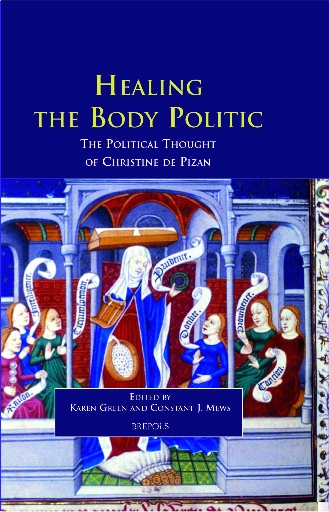
Healing the Body Politic
The Political Thought of Christine de Pizan
show More to view fulltext, buy and share links for:Healing the Body Politic show Less to hide fulltext, buy and share links for: Healing the Body PoliticChristine de Pizan (1364-1431) has been recognized as a poet, early humanist and feminist precursor but rarely as political theorist whose works were intended to have a direct impact on the tumultuous politics of her time. The essays in this collection focus on Christine as a political writer and provide an important resource for those wishing to understand her political thought. They locate her political writing in the late medieval tradition, discussing her indebtedness to Aristotle, Aquinas and Augustine as well as her transformations of their thought. They also illuminate Christine’s ‘political epistemology’: her understanding of political wisdom as a part of theology, the knowledge of God. New light is thrown on the circumstances which prompted Christine to write on political issues and on her attitude to Isabeau of Bavaria. These essays show that Christine’s originality consisted in her capacity to modify and feminize the tradition of Christian Aristotelianism through the use of elements of Christian imagery, in particular Mariology, in order to construct an image of the virtuous and prudent monarch which had lost the explicitly manly and warlike character of the Aristotelian phronimos. This reconfigured image of the monarch lent itself to the extension which she developed in her more feminist works, which demonstrated the prudence of women and their capacity, in times of need, to function as authoritative political figures.
-
-
-
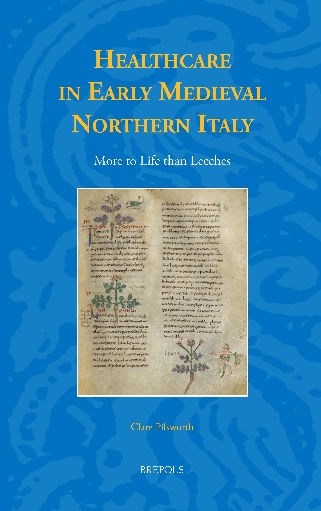
Healthcare in Early Medieval Northern Italy
More to Life than Leeches
show More to view fulltext, buy and share links for:Healthcare in Early Medieval Northern Italy show Less to hide fulltext, buy and share links for: Healthcare in Early Medieval Northern ItalyAfter the fall of the last Western Roman Emperor in 476 AD, Northern Italy played a crucial role - both geographically and culturally - in connecting East to West and North to South. Nowhere is this revealed more clearly than in the knowledge and practice of medicine. In sixth-century Ravenna, Greek medical texts were translated into Latin, and medical practitioners such as Anthimus, famous for his work on diet, also travelled from East to West. Despite Northern Italy’s location as a confluence of cultures and values, modern scholarship has thus far ignored the extensive range of medical practices in existence throughout this region. This book aims to rectify this absence. It will draw upon both archaeological and written sources to argue for redefinitions of health and illness in relation to the Northern-Italian Middle Ages. This volume does not only put forward new classifications of illness and understandings of diet, but it also demonstrates the centrality of medicine to everyday life in Northern Italy. Using charter evidence and literary sources, the author expands our understanding of the literacy levels and social circles of the elite medical practitioners, the medici, and their lesser counterparts. This work marks a significant intervention into the field of medical studies in the early to high Middle Ages.
-
-
-
Heinrich Isaac and Polyphony for the Proper of the Mass in the Late Middle Ages and the Renaissance
show More to view fulltext, buy and share links for:Heinrich Isaac and Polyphony for the Proper of the Mass in the Late Middle Ages and the Renaissance show Less to hide fulltext, buy and share links for: Heinrich Isaac and Polyphony for the Proper of the Mass in the Late Middle Ages and the RenaissanceThe important contribution of Heinrich Isaac (ca. 1455–1517) to the genre of the proper of the mass has long been recognised. His work in this genre, collected in the monumental posthumously published Choralis Constantinus, was considered a landmark even in the sixteenth century. Yet Isaac’s magnum opus was by no means isolated. The mass proper played a much greater and more significant musical and symbolic role in the landscape of later-medieval and Renaissance music-making than is currently acknowledged. The present collection of fifteen essays offers new insights into both Isaac's mass propers themselves, which are still shrouded by many enigmas, and their context within broader later-fifteenth and sixteenth-century mass proper traditions. The circumstances under which Isaac's mass propers were composed, performed, and transmitted are discussed afresh, as is the striking late-sixteenth-century reception that the Choralis experienced. Studies of previously unknown or little-examined mass proper collections from countries as widely seperated as Portugal and Poland, as well as of the transformation of the genre in Lutheran territories and in the hands of William Byrd, show that Isaac's enterprise, though the largest of its kind, was built on and embedded in a strong and ongoing tradition of proper settings and cycles.
-
-
-
Heliand. L'évangile de la Mer du Nord
show More to view fulltext, buy and share links for:Heliand. L'évangile de la Mer du Nord show Less to hide fulltext, buy and share links for: Heliand. L'évangile de la Mer du NordCe poème germanique de près de 6000 vers a été composé entre 822 et 840, vraisemblablement vers 825, dans les premières années du règne de Louis le Pieux, par un érudit chrétien, sans doute compagnon du Frison Liudger. Ce dernier était le continuateur de l’œuvre, en pays frison et saxon, des évangélisateurs anglo-saxons du VIIIème siècle, dont Willehad, lequel avait succédé à Boniface, tué en 754 à Dokkum alors qu’il poursuivait l’évangélisation entreprise par Willibrord.
La langue utilisée, qualifiée de Vieux-Saxon par les spécialistes, était donc tout à fait familière à son auteur. Celui-ci, soucieux d’assurer le succès de l’Evangile dans les cœurs à la suite de la dure conquête par Charlemagne de la Frise Occidentale et du pays saxon, usa d’une langue connue des peuples riverains de la Mer du Nord au début du IXème siècle. Surtout, il apporta au texte de l’Evangile, basé sur des manuscrits et travaux provenant de Fulda, abbaye fondée par Boniface, des adaptations d’ordre sociologique propres à susciter l’adhésion des peuples rudes et fiers de ces contrées nordiques.
En ce sens, le Heliand n’est pas seulement une reprise de l’Evangile : il est aussi le document particulier par lequel les évangélisateurs des pays riverains de la Mer du Nord font entrer le lecteur dans la société des nouveaux convertis d’entre Weser, Ems et Lauwers, fraîchement vaincus et soumis par les Francs. La présente traduction, en prose, est accompagnée du texte germanique tel qu’édité à Halle en 1878 par Eduard Sievers, et de commentaires et annotations. Elle est précédée d’une introduction historique et d’un lexique de termes empruntés au Heliand et comparés à quatre langues germaniques proches, avec traduction en français.
-
-
-
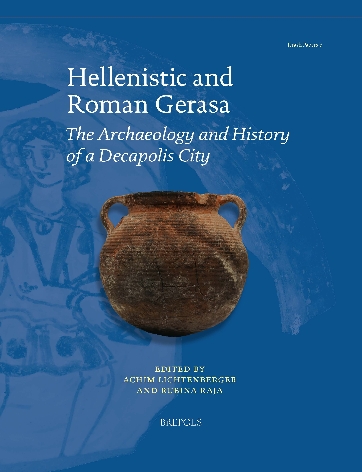
Hellenistic and Roman Gerasa
The Archaeology and History of a Decapolis city
show More to view fulltext, buy and share links for:Hellenistic and Roman Gerasa show Less to hide fulltext, buy and share links for: Hellenistic and Roman GerasaThe Graeco-Roman Decapolis city of Gerasa was a flourishing centre of population from the Late Hellenistic up to the Early Islamic period. It was also home to a vibrant ceramics industry. Kilns found throughout the city, with a concentration in the Hippodrome, suggest that Gerasa was in fact a mass-production centre in the Decapolis region over a number of centuries, manufacturing a vast array of material to suit the changing needs of daily life.
Drawing on finds yielded during excavations by the Danish-German Northwest Quarter Project and other archaeological projects, as well as the research undertaken within the Ceramics in Context project, this volume evaluates the pottery from Gerasa produced in the Late Hellenistic and Roman periods. Typology, development over time, and variations in the Gerasene pottery are explored, and rare examples of imported material are analysed in order to shed light both on the inner workings of the city, and on the networks that extended beyond Gerasa’s walls. The contributions gathered here examine the archaeology and history of Gerasa and assess ceramic remains alongside other finds from both the city and neighbouring urban centres. In doing so, they seek to contextualize this material in a broader cultural and historical context, and to improve our understanding of consumption, trading, and networks in the wider Decapolis area.
-
-
-
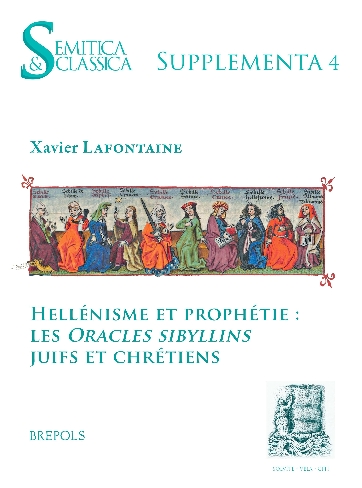
Hellénisme et prophétie
Les Oracles sibyllins juifs et chrétiens
show More to view fulltext, buy and share links for:Hellénisme et prophétie show Less to hide fulltext, buy and share links for: Hellénisme et prophétieThe formal study of the collection of Jewish and Christian texts transmitted under the name of Sibylline Oracles highlights the continuity of the model of biblical prophecy while underlining the heritage of Greek didactic poetry. The interest of this approach is to situate the Sibylline Oracles as a literary work in the context of contemporary Greek versified literary production, which implies, on the part of their successive editors, a familiarity with Greek poetic forms related to a common scholar background.
The study of the retelling of biblical episodes aims at identifying the passages where the fictitious Sibyl claims to announce the events of the biblical past and confronting these narrative sequences with contemporary rhetorical theories of paraphrase in order to highlight the formal technique that runs through them and the interpretation of the biblical hypotext that it presumes. Most of the rewritings preserved in the corpus are compatible with the prevailing doctrine of the third century ce.
-
-
-
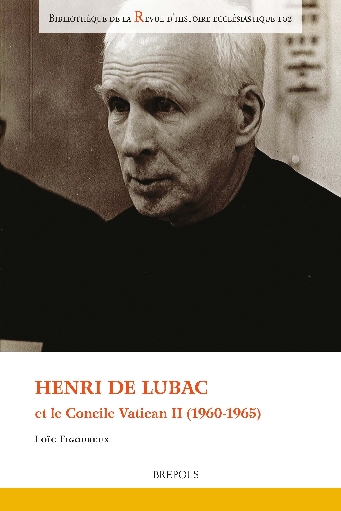
Henri de Lubac et le concile Vatican II (1960-1965)
show More to view fulltext, buy and share links for:Henri de Lubac et le concile Vatican II (1960-1965) show Less to hide fulltext, buy and share links for: Henri de Lubac et le concile Vatican II (1960-1965)Henri de Lubac (1896-1991) est une figure éminente de la théologie du XXe siècle. Pourtant, sa nomination comme consulteur du Concile, dès sa période préparatoire, fut pour lui comme pour ses amis une surprise. Il avait, en effet, surtout depuis la Seconde Guerre mondiale, subi des mesures très sévères de la Compagnie de Jésus, allant jusqu’à lui interdire l’enseignement et les publications théologiques. Le concile pouvait alors apparaître comme une réhabilitation, voire comme une occasion pour le père de Lubac de mettre en œuvre le ressourcement théologique auquel il tenait tant. Le jésuite s’avère un bon guide pour saisir les enjeux d’un Concile auquel il donnait beaucoup d’importance, tant la sortie d’un modèle théologique à bout de souffle lui semblait impératif pour parler aux hommes de son temps. Pourtant, dès l’époque conciliaire, une inquiétude de plus en plus vive le saisit sur ce qui lui semble une mauvaise compréhension de l’aggiornamento à l’œuvre. Autant de débats qui n’étaient pas près de s’éteindre.
-
-
-
Henry Corbin. Philosophies et sagesses des religions du Livre
Actes du colloque "Henry Corbin", Sorbonne, les 6-8 novembre 2003
show More to view fulltext, buy and share links for:Henry Corbin. Philosophies et sagesses des religions du Livre show Less to hide fulltext, buy and share links for: Henry Corbin. Philosophies et sagesses des religions du LivreLe présent volume regroupe les communications données lors du colloque tenu en Sorbonne les 6-8 novembre 2003 à l'occasion du centenaire de la naissance de Henry Corbin. Il s'agissait à cette occasion de rendre hommage à ce grand penseur non pas par une suite stérile d'éloges, mais en poursuivant les lignes de réflexions sur la philosophie et les religions qu'il avait si généreusement ouvertes. Une grande partie de l'oeuvre de Corbin a concerné la pensée islamique classique. Tout naturellement, plusieurs intervenants ont donc approfondi ou précisé certaines voies par lui tracées: son approche du chiisme duodécimain (Mohammad Ali Amir-Moezzi), de l'ismaélisme (Daniel de Smet, Guy Monnot), de la mystique persane (Paul Ballanfat, Charles-Henri de Fouchécour), du soufisme d'Ibn 'Arabî (Michel Chodkiewicz). Toutefois, la réflexion sur des points de religions non musulmanes, également stimulés par Henry Corbin, a trouvé sa place ici: la christologie ancienne (Simon Mimouni; Gerard Wiegers), la spiritualité du judaïsme (Paul Fenton, Maria Subtelny). Enfin, c'est la pensée philosophique tout court qui s'est trouvé fécondée par les apports de Corbin. C'est ce qu'illustrent les réflexions de Christian Jambet sur l'histoire, de Jean-Michel Hirt sur la psychanalyse, de Hermann Landolt sur l'avicennisme, de Jean-François Marquet sur "la science de l'unique", de James Morris sur la transmission de la science des religions, de Jean-Louis Vieillard-Baron sur l'hégélianisme.
Ce colloque ne constituait qu'un premier pas dans l'approfondissement de cette véritable " quête philosophique " à laquelle invitait l'oeuvre de Henry Corbin. D'autres manifestations scientifiques ont eu lieu dans le même esprit en Europe, au Proche Orient. Elles unissent beaucoup de ceux qui, à la suite de Corbin, voient dans la philosophie un engagement de tout le regard sur l'être.
Mohammad Ali AMIR-MOEZZI est directeur d'études à la Section des Sciences religieuses de l'École Pratique des Hautes Études, où il est titulaire de la chaire "Exégèse et théologie de l'Islam chiite". Il est l'auteur de plusieurs ouvrages, et a notamment coordonné Le voyage initiatique en terre d'Islam. Ascensions célestes et itinéraires spirituels, paru en 1997 dans la collection de la Bibliothèque de l'Ecole Pratique des Hautes Etudes.
Christian JAMBET, professeur en khâgne au Lycée Jules Ferry, est l'auteur de nombreux ouvrages sur la philosophie ( La logique des Orientaux - Henry Corbin et la science des formes, 1983), et en particulier sur la philosophie islamique. Il a coordonné le volume Henry Corbin publié en 1981 (L'Herne) ainsi que de nombreux textes posthumes de Henry Corbin.
Pierre LORY est directeur d'études à la Section des Sciences religieuses de l'École Pratique des Hautes Études (chaire "Mystique musulmane"). Il a publié plusieurs ouvrages sur la mystique et l'ésotérisme en Islam, notamment Alchimie et mystique en terre d'Islam, et édité le recueil de textes de Henry Corbin L'alchimie comme art hiératique(1987).
-
-
-
Heralds of Hope
The Three Advent Hymns of the Roman Office
show More to view fulltext, buy and share links for:Heralds of Hope show Less to hide fulltext, buy and share links for: Heralds of HopeThis book shares the fruits of several years of research on the Advent Hymns of the Roman Office. It provides an opportunity to gain fresh insights into the gradual development of the liturgical season of Advent and the particular characteristics assumed in its Roman form. The journey of the exquisite treasure of the Western Church that is the Latin hymn is explored before each of the three Advent hymns of the Roman Office is mined for its theology and rich scriptural associations. Its sometimes rocky journey through successive revisions of the Roman Office is considered through the lens of the three Advent hymns. Finally, a number of important pastoral issues dealing with the celebration of the Advent Season in our contemporary Church are considered, taking into account the nature of Advent as revealed in the traditional hymn texts, the liturgical reforms following the Second Vatican Council and current liturgical texts for Advent.
-
-
-

Hermes Christianus
The Intermingling of Hermetic Piety and Christian Thought
show More to view fulltext, buy and share links for:Hermes Christianus show Less to hide fulltext, buy and share links for: Hermes ChristianusHermetic theosophy, originally an offspring of Egyptian religion, spread throughout the ancient world from the Hellenistic age onwards and was welcomed by Christianity in Late Antiquity. Cultivated people in a Christian milieu were convinced that Hermetic piety and religion were the preparation, expressed by heathen imagery, of their own faith: Hermes, a wise and pious philosopher in Egypt in the time of Moses, received (so it was thought) the same revelation which would be manifested 1,000 years later by Christ. At the end of the third century AD, this belief did not perish with the end of the Roman Empire; rather, it was taken up and explored during the French Renaissance of the twelfth century. In the fifteenth century, Italian humanism, supported by the rediscovery of Greek language and literature, promoted a fresh new evaluation of the ancient Hermetic texts which continued to be considered and studied as pre-Christian documents. In the sixteenth century, new interpretations of Christian Hermetism were explored until this connection between pagan and Christian was increasingly criticized by scholars who argued that Hermetism was neither as ancient as was thought nor as close to Christianity. The theory was abandoned in scientific milieux from the seventeenth century onwards, whereas Hermetic theosophy, on the contrary, survived in esoteric circles.
-
-
-
Hermetism from Late Antiquity to Humanism
show More to view fulltext, buy and share links for:Hermetism from Late Antiquity to Humanism show Less to hide fulltext, buy and share links for: Hermetism from Late Antiquity to HumanismIl Convegno, articolato in quattro sezioni (I. L'Ermetismo filosofico, II. L'Ermetismo filosofico nel Medioevo e nel Rinascimento, III. L'Ermetismo arabo ed ebraico, IV. L'Ermetismo operativo: astrologia, magia, alchimia), è stato il primo ad affrontare in tutta la loro ampiezza i problemi testuali e storiografici legati alla diffusione dell'ermetismo nella cultura medioevale. La partecipazione di studiosi di formazione diversa e la varietà degli argomenti e degli ambiti linguistici hanno dato luogo a un confronto importante, dal quale sono scaturiti affreschi inediti di ampio respiro, esplorazioni puntuali di percorsi fino a oggi sconosciuti, conferme significative, ipotesi e dibattiti su grandi temi (dalla religione alla filosofia, dalla magia all'alchimia).I contributi degli autori sono accompagnati dal censimento dei manoscritti dei testi ermetici latini, da una bibliografia ermetica e dall'indice delle opere attribuite a Ermete. Il censimento dei manoscritti, I testi e i codici di Ermete nel Medioevo latino, a cura di Paolo Lucentini e Vittoria Perrone Compagni, offre uno strumento unico per l'investigazione diretta dei testi editi o inediti, che appartengono a categorie diverse (versioni greco-latine di scritti risalenti all'età ellenistica e poi imperiale, versioni arabo-latine in gran parte provenienti dalla cultura harraniana e dalla tradizione islamica, apocrifi latini composti nei secoli XII-XIV) e delineano la letteratura più conosciuta e diffusa dell'ermetismo medievale latino. La Bibliografia ermetica, a cura di Ilaria Parri, costituisce uno strumento di rapida e agevole consultazione (ricerche sulla tradizione manoscritta; grandi opere di storia della filosofia, della scienza e della letteratura; singoli contributi che analizzano aspetti particolari) per l'approfondimento documentario ed ermeneutico dei temi trattati nel presente volume. L'indice delle opere attribuite a Ermete offre un ampio panorama degli scritti e dei titoli riferiti al Trismegisto nel Medioevo latino, arabo ed ebraico.
-
-
-
Herméneutique et subjectivité dans les Confessions d'Augustin
show More to view fulltext, buy and share links for:Herméneutique et subjectivité dans les Confessions d'Augustin show Less to hide fulltext, buy and share links for: Herméneutique et subjectivité dans les Confessions d'AugustinCe livre est une tentative de donner sens à toutes les scènes de lecture qui jalonnent le récit des Confessions et qui forment comme l’inévitable parallèle à la ligne de vie du récit autobiographique. Pourquoi ce premier grand récit autobiographique accorde-t-il une telle importance à la lecture ? Quel est l’impact spécifique du livre sur l’âme du lecteur ? Comment la lecture entre-t-elle dans la construction ou dans la reconstruction de l’identité du sujet qui narre son histoire ? En quelle mesure la profondeur de cet impact ne bouleverse-t-il pas profondément les pratiques de soi et les exercices spirituels puisqu’il constitue un renversement évident de la condamnation platonicienne de la lecture dans le Phèdre?En s’appuyant sur la très abondante littérature secondaire de type historique, cette étude s’essaye à développer une vision cohérente et structurale des concepts fondateurs de l’anthropologie augustinienne et plus largement de l’anthropologie chrétienne. Elle s'appuie sur l'analyse de thèses récurrentes dans les Confessions et qui s’appellent mutuellement : 1) l’idée de la transmission du péché et de la culpabilité inaugurale de tout homme depuis Adam, 2) le rôle de la volonté dans la faute originelle, 3) les conséquences de cette faute pour l’homme dans la création d’un univers de labeur , 4) l’assimilation de ce labeur à un travail de la volonté sur elle-même 5) le rôle de la lecture dans ce travail du vouloir et enfin 6) la place du plaisir de lire dans cet univers de labeur contraint et de travail sur soi pour se défaire d’une culpabilité originelle.Cette étude vise à « raréfier » certaines notions comme celle de travail intellectuel, de plaisir littéraire, de travail sur soi, etc. c’est-à-dire à en déconstruire l’évidence pour nous par une généalogie qui en montre les conditions d’apparition et qui permet ainsi de souligner leur étrangeté à l’univers de pensée des Grecs.
-
-
-
Hervaeus Natalis O.P. De quattuor materiis sive Determinationes contra magistrum Henricum de Gandavo
Vol. I: De formis (together with his 'De unitate formae substantialis in eodem supposito'). A critical Edition from Selected Manuscripts
show More to view fulltext, buy and share links for:Hervaeus Natalis O.P. De quattuor materiis sive Determinationes contra magistrum Henricum de Gandavo show Less to hide fulltext, buy and share links for: Hervaeus Natalis O.P. De quattuor materiis sive Determinationes contra magistrum Henricum de GandavoThe aim of the present edition of Harvey Nedellec's De quattuor materiis is to make a collection of texts available that can throw some more light upon the ongoing debates around 1300 about some highly controversial issues, including the plurality of forms, the relationship between being and essence, the significance (or superfluity) of the intelligible species, and the intellect's priority to the will. Harvey's polemic interventions, which are explicitly directed against the ontological positions held by Henry of Ghent, are the more interesting as they are coloured by a manifest animosity against his opponent and the Ghentian way of doing philosophy in general. The author's attitude is most prominent in the first tract of the collection presented in the first volume, De formis. In order to put the impact of this tract into a larger perspective, Harvey's extensive treatise De unitate formae substantialis in eodem supposito has been added.
About the author: L.M. de Rijk (1924) is emeritus professor of Ancient and Medieval Philosophy of Leiden University. He was a member of the Dutch Parliament (Senate 1956-1991) and is a member of the Royal Netherlands Academy of Sciences (KNAW). He is the author of a large number of publications, particularly on Ancient and Medieval philosophy, including John Buridan's Lectura Erfordiensis in I-VI Metaphysicam (Brepols 2008).
-
-
-

Hervaeus Natalis O.P. De quattuor materiis sive Determinationes contra magistrum Henricum de Gandavo
Vol. II: De esse et essentia. De materia et forma. A Critical Edition from Selected Manuscripts
show More to view fulltext, buy and share links for:Hervaeus Natalis O.P. De quattuor materiis sive Determinationes contra magistrum Henricum de Gandavo show Less to hide fulltext, buy and share links for: Hervaeus Natalis O.P. De quattuor materiis sive Determinationes contra magistrum Henricum de GandavoThis second volume of Hervaeus Natalis’s polemical work, De quattuor materiis contains his De esse et essentia. In this work the author criticizes the rival systems of the metaphysics of creation that were upheld by Giles of Rome and Henry of Ghent, and presents an exposition of his own notion of being. To explain Harvey’s antagonistic attitude to Henry of Ghent and his simultaneous rejection of Giles’s positions (the rigid Aegidian real distinction between essence and existence in particular) it was necessary to provide a thorough investigation of the ontological positions of both Henry and Giles. Hence the lion’s part of the Introduction is devoted to these two rivals of Harvey’s.
The selection of the manuscripts used for the present edition of De esse et essentia as well as the ratio edendi, orthography, punctuation and headings employed, are explained in the General Introduction to volume one, De formis (SA 30).
This second volume had been finished by the editor, L.M. de Rijk, just before his sudden death on July 30. The final version has been read by Joke Spruyt and Olga Weijers.
The third and last volume of the edition of Hervaeus’ work, already well advanced by the editor, will be finished by two of his main disciples: Henk Braakhuis and Onno Kneepkens. Thus we will have kept our promise, in respect and friendship for our master.
-
-
-
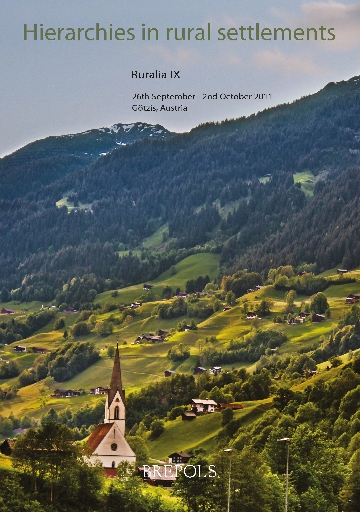
Hierarchies in rural settlements
show More to view fulltext, buy and share links for:Hierarchies in rural settlements show Less to hide fulltext, buy and share links for: Hierarchies in rural settlementsThe Ruralia, Volume 9, includes thirty papers dealing with the various aspects of social and economic hierarchy in the rural settlement in medieval Europe mainly from archaeological point of view. The authors from 15 countries provide a broad overview of the current issues, complemented for the most part by extensive bibliographies. Very important are also the high quality figures.
The main topics include the differentiation of rural social and economic structure, refl ected, for example, in the building culture and various aspects of everyday life. The topic of discussion is the hierarchy of power and the many ways it is presented in archaeology. The focus is on the manor houses and manorial farms, as well as the grain mills in rural areas and the impact of mining activity.
The Ruralia, Volume 9, represents one of the current fields of European archaeological research and offers a solid foundation for further comparative studies.
-
-
-
Hieronymus Romanus
Studies on Jerome and Rome on the Occasion of the 1600th Anniversary of his Death
show More to view fulltext, buy and share links for:Hieronymus Romanus show Less to hide fulltext, buy and share links for: Hieronymus RomanusRome, be it as a concrete space or as a concept and idea, occupies an outstanding place in the thoughts and actions of Jerome of Stridon (c. 347-419). Glowing propagandist of the ideal of asceticism in the Latin sphere and highly influential scholar of the Bible, he received his philological education here as well as his baptism. Beyond this background of study and adherence to the church of Rome, the Vrbs continued to hold a key position for him, who under the pontificate of Damasus established himself as a mediator between East and West and translator of Scripture. A sharp-tongued and increasingly controversial figure at the same time, Jerome subsequently turned into the target of antiascetic criticism and, once bereft of papal protection, had to leave Rome for good. However, even in distant Palestine, the city on the Tiber and its memories remained present in the writings of Jerome, who did not stop using a Roman network in order to have his works circulate within the Vrbs and eventually lamented its fall as that of “the entire world in a city”.
From multifaceted perspectives - historical, philological, theological, exegetical and archaeological - the papers collected in this volume explore Rome’s unique and exemplary meaning for Jerome’s life and works. In the juxtaposition of both lieux de mémoire, the father of the Church and the Vrbs, this reciprocal thematic cut illuminates additional aspects of a Roma Christiana as imagined by Jerome, and of the Stridonian himself as both key figurations of Late Antiquity.
-
-
-
Hildegard of Bingen and her Gospel Homilies
Speaking New Mysteries
show More to view fulltext, buy and share links for:Hildegard of Bingen and her Gospel Homilies show Less to hide fulltext, buy and share links for: Hildegard of Bingen and her Gospel HomiliesHildegard of Bingen (1098-1179), the only medieval woman known to have authored systematic works of exegesis, composed fifty-eight little-studied Expositiones euangeliorum, homilies on twenty-seven Gospel passages. Hildegard described her divine charge to restore the tottering faith of her era through the revelation of hidden mysteries in the Scriptures. She was to continue the exegetical tradition of the Fathers and to construct moral fortifications with the words of Scripture in order to defend her sisters against the forces of evil. Hildegard of Bingen and her Gospel Homilies constitutes the first in-depth study of Hildegard’s Expositiones and of her exegesis, preaching, and use of sources. It explores the Expositiones in the context of Hildegard’s intellectual and cultural milieu and underscores the central role of biblical interpretation in the seer’s works. Furthermore, this book re-examines Hildegard’s self-depiction in the context of monastic education for women, the magistra’s exchange with her mentors and friends, and her rich use of divine voice to empower her own expression. This is a new, exciting, and erudite study on one of the most influential female mystics.
-
-
-
Himnodia hispánica
show More to view fulltext, buy and share links for:Himnodia hispánica show Less to hide fulltext, buy and share links for: Himnodia hispánicaSe puede decir que la himnodia cristiana, nacida en la liturgia siria con san Efrén (306-373), comienza a formar parte de la litúrgica de Occidente con san Hilariode Poitiers († 366) y sobre todo con san Ambrosio (340-397), su verdadero creador. Es a partir del siglo V cuando los himnos entrarán en la liturgia hispánica.
Esta es la traducción al español de los 210 himnos considerados hispánicos. Es la primera traducción que se hace de todos ellos. Con anterioridad muy pocos de estos han sido traducidos al español, generalmente de forma tangencial; algunos más son los traducidos al inglés. Muchas de estas traducciones pueden encontrarse en distintas web.
Es la primera traducción que se hace sobre un texto latino reciente (J. Castro Sánchez, Hymnodia Hispanica, CC SL 167, Turnhout, 2011), que, tomando como referencia la edición de Blume (Hymnodia Gothica. Die Mozarabischen Hymnen des alt-spanischen Ritus (Analecta Hymnica Medii Aeui, 27), Leipzig, 1897, reprint 1961) y partiendo sobre todo de la lectura de los manuscritos, ha tenido también en cuenta todas las ediciones particulares y los estudios posteriores sobre la himnodia de nuestra liturgia.
Cumple además dos importantes objetivos. Por una parte se pone al alcance de un lector culto, no necesariamente especialista, un rico tesoro de nuestra cultura, como es la poesía española, que en estos siglos (VI-XII) se identifica con la poesía religiosa. Por otra parte pretende ser un instrumento útil para mejor comprender la fijación del texto de los himnos de la edición crítica anteriormente citada.
José Castro Sánchez, Profesor Titular de latin de la Universidad de Córdoba (España) (actualmente jubilado),
Emilio García Ruiz, Catedrático de latin del Instituto Juana de Castilla de Madrid (España) (actualmente jubilado).
-
-
-
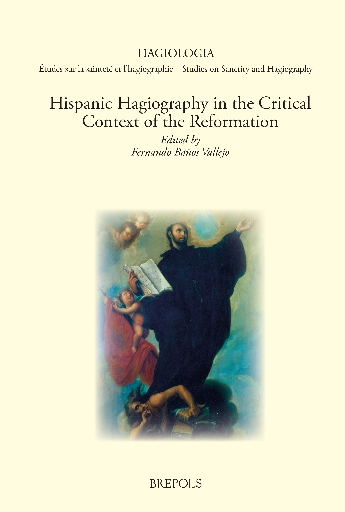
Hispanic Hagiography in the Critical Context of the Reformation
show More to view fulltext, buy and share links for:Hispanic Hagiography in the Critical Context of the Reformation show Less to hide fulltext, buy and share links for: Hispanic Hagiography in the Critical Context of the ReformationThe sixteenth century was a time of great religious turmoil in Europe, during which the critical positions within the Catholic Church led to a definitive break between Christians. One of the major controversies pertained to the cult of the saints, since in 1523 Martin Luther denied the mediating role of the saints and repudiated what he considered excesses in their devotions.
The studies presented in this volume examine the impact of the Reformation on hagiography in the Hispanic sphere. They investigate how theological positions and controversy were projected onto literature, and how literature incorporated theological discourse, explicitly or implicitly. Unsurprisingly, the Catholic Church reaffirmed the hagiographical tradition, but to what extent was hagiographical literature, specifically Hispanic literature, affected by reformist approaches? This book explores issues less evident and hitherto neglected: for example, Hispanic Catholic authorities and authors, influenced by the denunciations of the excesses of the cult of saints and hagiographical “fables,” publicly declared the purging of apocryphal elements in saints’ lives; in practice, however, they grappled with the difficulty of applying theoretical criteria to such an enormous subject. As a result, certain contradictions arose between these criteria and the commitment to the hagiographical tradition, which some even sought to expand and update. This complex tension is brought out by the studies gathered here in the fields of hagiographical prose in Catalan, Portuguese and Spanish, in Iberia and in America, without neglecting the role of the theater in the dissemination of saints’ legends.
-
-
-

Histoire des Lombards
show More to view fulltext, buy and share links for:Histoire des Lombards show Less to hide fulltext, buy and share links for: Histoire des LombardsDerniers des envahisseurs germaniques de l'ancien empire de Rome, les Winniles "aux longues barbes" se sont jetés sur l'Italie en 569, au bout d'une longue migration depuis leur Scandinavie originelle.
Occupant un pays laissé exsangue par la guerre de reconquête menée par les troupes de Justinien, ils ont précipité, disent certains, sa décomposition, renforçant une réputation de férocité déjà bien ancrée chez les auteurs antiques.
Rien de tel pourtant dans l'Histoire que leur a consacrée Paul, descendant des premiers conquérants, ecclésiastique à la cour de Pavie puis moine au Mont-Cassin, à la fin du VIIIe siècle. Reprenant un genre un peu désuet en pleine renaissance culturelle carolingienne dont il fut lui-même un des piliers, une quinzaine d'années après avoir vu tomber le royaume lombard aux mains de Charlemagne, il met par écrit la rencontre de son peuple avec l'histoire et la latinité tout en lui fournissant une réponse morale à sa défaite finale. Son récit présente une genèse mythique sous les auspices d'Odin, une marche vers le sud semée de combats initiatiques au cours desquels ils se dotent de la royauté constitutive des nations, une conquête tranquille, la geste enfin des différents souverains qui se sont succédés sur le trône de Pavie. Habilement construite, écrite dans une langue limpide et sobre, la narration pasṣe de la capitale à Bénévent, de Bénévent au Frioul, des Lombards aux Francs puis aux Byzantins, mêlant au patchwork des références savantes tout l'héritage d'une mémoire orale nordique, en autant d'anecdotes savoureuses. Certaines sont restées profondément ancrées dans la culture italienne; elles ont fait la joie de Pétrarque et de Boccace, passionnent aujourd'hui les interprètes des mythes et du folklore.
Les historiens ont reconnu dans l'œuvre de Paul Diacre leur principale source d'information sur un peuple et une période qui restent mal connus. Le lecteur éclairé y trouvera, tout simplement, son plaisir.
-
-
-
Histoire des idées religieuses et scientifiques dans l’Europe moderne
Quarante ans d’enseignement à l’École Pratique des Hautes Études
show More to view fulltext, buy and share links for:Histoire des idées religieuses et scientifiques dans l’Europe moderne show Less to hide fulltext, buy and share links for: Histoire des idées religieuses et scientifiques dans l’Europe modernePendant plus de quarante ans, Jean-Robert Armogathe, titulaire de la chaire « Histoire des idées religieuses et scientifiques dans l'Europe moderne », a publié dans l’Annuaire de l’Ecole pratique des hautes études un résumé annuel de ses conférences hebdomadaires à la section des sciences religieuses. S’appuyant sur des documents rares ou inédits, tirant parti de recherches internationales souvent originales, cet ensemble contient à la fois une somme de connaissances sur les origines de l’Europe moderne dans leurs composantes philosophiques, théologiques et scientifiques et de nombreuses suggestions de recherches. De la théologie du concile de Trente à la théorie de la vision oculaire, l'ouvrage aborde les thèmes principaux de la réflexion philosophique, religieuse et scientifique du XVIe au XVIIIe siècle ; si l'on y rencontre les noms les plus connus de cette période fondamentale dans la formation de la pensée occidentale moderne (Bellarmin, Descartes, Leibniz, Bayle et bien d'autres), l'ouvrage met également en valeur l'apport de penseurs moins connus (Paolo Sarpi, Giulio Cesare Vanini Franciscus Gomarus, Zeger-Bernhard van Espen et d'autres). Complété par la liste des trois cents publications scientifiques qui ont accompagné son enseignement, enrichi d’un index analytique des matières et des noms (plus de huit cents entrées), ce volume constitue de la sorte une introduction savante et claire à ce champ de recherches.
Jean-Robert Armogathe, né à Marseille en 1947, est directeur d’études à l’École pratique des hautes études (sciences religieuses), où il enseigne depuis 1970. Il a dirigél’Histoire générale du christianisme (2 vol., PUF, 2010) et publié une édition critique des Pensées (1670) de Pascal (avec D. Blot, Champion, 2010) et la Correspondance de Descartes (Tel, Gallimard, 2012). Sa dernière publication est La nature du monde. Science nouvelle et exégèse au XVIIe siècle (PUF, 2007).
-
-
-
Histoire du roi Abgar et de Jésus
show More to view fulltext, buy and share links for:Histoire du roi Abgar et de Jésus show Less to hide fulltext, buy and share links for: Histoire du roi Abgar et de JésusDeux jours avant sa mort, Jésus reçoit un courrier de la cité d'Édesse située au nord de la Syrie, sur l'Euphrate. Le roi Abgar lui écrit, en syriaque, pour lui dire sa foi, lui demander la guérison et lui offrir asile en sa place forte. A défaut de ramener avec lui le bon médecin, le scribe messager du roi rapporte à son maître le portrait de Jésus et une double promesse: celle de lui envoyer un apôtre et de protéger sa ville. Le texte intégral de la légende nous a été transmis par un beau manuscrit syriaque du Ve siècle, conservé aujourd'hui à Saint-Pétersbourg. La légende utilise des faits historiques et puise dans le trésor de la fable apocryphe. Mais la fiction véhicule la quête des origines de l'Église d'Édesse: l'Osroène est bien devenue le premier royaume chrétien tandis que le syriaque resta longtemps la première langue de tout le Proche-Orient chrétien et sa culture se répandit jusqu'en Inde et en Chine. La correspondance entre Abgar et Jésus a été diffusée dans les langues orientales et occidentales. Le portrait de Jésus, modèle de l'icône byzantine, copié jusqu'au XVIIe siècle en Europe, déposé à l'Escurial, reproduit à Gènes et à Turin, a donné naissance à l'une des plus grandes aventures iconographiques des mondes byzantin et latin. Alain Desreumaux est chargé de recherche au CNRS, dans le Centre d'études des religions du Livre à l'École pratique des hautes études, section des sciences religieuses. Il est spécialiste du syriaque et de l'araméen chrétien.
-
-
-

Histoire littéraire des bénédictins de Saint-Maur
Tome Cinquième : Abbayes - Index Nominum
show More to view fulltext, buy and share links for:Histoire littéraire des bénédictins de Saint-Maur show Less to hide fulltext, buy and share links for: Histoire littéraire des bénédictins de Saint-MaurPour faire suite à la Refonte de l'Histoire littéraire des Bénédictins de Saint-Maur, réunissant entre autres les travaux de Dom Tassin, d'Ulysse Robert et d'Ursmer Berlière, l'auteur des quatre volumes parus précédemment en 2004-2006, 2008, 2010 et 2014, a décidé d'acquiescer à la demande (cf. préface au tome III) de Monsieur Emmanuel Poulle, ancien directeur de l'École des chartes, aujourd'hui décédé, de produire séparément un Index Nominum des moines écrivains de la Congrégation de Saint-Maur, permettant un repérage plus aisé des notices les concernant. Ce dernier volume propose également un Catalogue complet des Monastères de la Congrégation d'ancien régime, classés par provinces ecclésiastiques et plusieurs cartes, gravures ou illustrations.
-
-
-
Histoire orientale. Historia orientalis
show More to view fulltext, buy and share links for:Histoire orientale. Historia orientalis show Less to hide fulltext, buy and share links for: Histoire orientale. Historia orientalisSur les relations complexes et riches entre Occident et Orient, l’Historia orientalis fournit un témoignage de premier ordre. Composée entre 1216 et 1227 par Jacques de Vitry, alors évêque d’Acre, elle déploie une riche documentation sur l’histoire de Jérusalem et des Lieux saints jusqu’en 1215 et présente le regard privilégié d’une grande personnalité latine, à la fois homme d’Église, de lettres et d’action, sur les trois premières croisades, les établissements latins en Terre sainte, la fondation de l’islam, l’histoire des divers peuples et communautés religieuses d’Orient, la faune et les particularités naturelles des régions environnantes.
A mi-chemin entre l’histoire et le récit de voyage, l’ouvrage est tiraillé entre la formation augustinienne de son auteur et la découverte de mondes nouveaux, irréductibles aux schémas anciens. Dans le prolongement des Lettres, publiées dans la même collection, l’Historia orientalis de Jacques de Vitry attire l’attention par son ton pessimiste et désabusé : comme si le désordre des événements et la déception devant les revers obligeaient l’auteur à s’interroger sur le sens de l’histoire.
La présente édition s’appuie, à travers l’editio princeps de 1597, sur un manuscrit presque contemporain de l’auteur, confronté à dix des cent-vingt-quatre témoins conservés de cette œuvre à l’immense succès, mais devenue presque inaccessible.
-
-
-
Histoires
show More to view fulltext, buy and share links for:Histoires show Less to hide fulltext, buy and share links for: HistoiresRaoul Glaber, né vers 990 et mort vers 1046/47 fut moine à Auxerre, Dijon et Cluny. Écrites entre 1031 et 1047, ses Histoires ne sont pas un simple assemblage d'anecdotes pittoresques. Elles visent à décrire et analyser les changements survenus en Occident autour de l'an Mil. En rupture avec la littérature antérieure, Raoul abandonne le schéma de l'histoire nationale pour éclairer une époque, les années 980-1020, et un processus, l'unification de l'Occident et son ouverture vers d'autres mondes, l'Islam, Byzance ou les pays slaves.
-
-
-
Historia de Alejandro Magno de Quinto Curcio por Micer Alfonso de Liñán
Estudio y edición del BNE, Mss/7565
show More to view fulltext, buy and share links for:Historia de Alejandro Magno de Quinto Curcio por Micer Alfonso de Liñán show Less to hide fulltext, buy and share links for: Historia de Alejandro Magno de Quinto Curcio por Micer Alfonso de LiñánInteresado en las hazañas de los grandes caudillos de la Antigüedad, el aragonés Alfonso de Liñán (†1468) tradujo las Historiae Alexandri Magni de Quinto Curcio al castellano a partir de la versión italiana de Pier Candido Decembrio. El texto se conserva todavía en la Biblioteca Nacional de España, bajo la signatura BNE Mss/7565. Testimonio valioso para el estudio de la traducción medieval y sus funciones, el códice recuerda sobre todo la fascinación de aquel lectorado por Alejandro Magno, ya conocido en la literatura castellana desde el Libro de Alexandre. En los albores del Renacimiento, el macedonio va a ser un modelo para una nobleza que debe definirse bajo nuevos criterios. El presente volumen ofrece el estudio y la edición de esta traducción y desvela los intereses de un noble aragonés por la figura alejandrina.
-
-
-

Historical Narratives and Christian Identity on a European Periphery
Early History Writing in Northern, East-Central, and Eastern Europe (c.1070–1200)
show More to view fulltext, buy and share links for:Historical Narratives and Christian Identity on a European Periphery show Less to hide fulltext, buy and share links for: Historical Narratives and Christian Identity on a European PeripheryThis volume presents the first comprehensive overview of the major early historical narratives created in Northern, East-Central, and Eastern Europe between c. 1070 and c. 1200, with each chapter providing a short introduction to the narrative in question. Most chapters are written by established experts in their fields, who have published critical editions of the discussed narratives, their English translations, or analytical works dealing with early history writing in corresponding regions. However, the volume is more than just a summary of various narratives. Despite being written in such different languages as Latin, Old Norse, and Old Church Slavonic, these narratives played similar roles for their reading audiences, in that they were crucial in the construction of Christian identity in the lands recently converted to Christianity. The thirteen authors contemplate the extent to which this identity formation affected the nature of narrativity in these early historical works. The authors ask how the pagan past and Christian present were incorporated in the texture of the narratives, and address the relative importance of classical and biblical models for their composition and structure. By addressing such questions, the volume offers medievalists a coherent comparative study of early history writing in the peripheral regions of medieval Europe in the first centuries after conversion.
-
-
-
Historiographie de l'histoire de l'art religieux en France à l'époque moderne et contemporaine
Bilan bibliographique (1975-2000) et perspectives
show More to view fulltext, buy and share links for:Historiographie de l'histoire de l'art religieux en France à l'époque moderne et contemporaine show Less to hide fulltext, buy and share links for: Historiographie de l'histoire de l'art religieux en France à l'époque moderne et contemporaineDe 1975 à 2000, l'histoire de l'art religieux des XVIe, XVIIe, XVIIIe, XIXe et XXe siècles en France a fait l'objet d'environ 2500 études. En voici la bibliographie à peu près exhaustive : elle concerne l'architecture, la peinture, la sculpture et les arts décoratifs en rapport avec la liturgie catholique, le protestantisme et le judaïsme. Des commentaires la précèdent, qui mettent évidence la vitalité de cette spécialité historiographique, mais aussi les lacunes et les pistes qui restent encore à défricher : ils fournissent un bilan riche et nuancé sur les travaux consacrés à notre patrimoine religieux et proposent d'enthousiasmants programmes de recherce pour l'avenir. Et surtout, ils montrent que, loin de l'image qu'on pourrait en avoir parfois, les arts religieux ont constitué l'un des domaines les plus féconds de la création artistique en France. À ce titre, ils encouragent l'historien du fait religieux à les traiter désormais comme une source fondamentale, au même titre que la documentation écrite. Mais indépendamment de ces propositions historiographiques, on trouve ici un instrument de travail nouveau et précieux destiné non seulement à l'historien et à l'historien de l'art, mais aussi au bibliothécaire et au conservateur du patrimoine.
-
-
-
Historiographie et littérature au XVIe siècle en Provence: l'oeuvre de Jean de Nostredame
show More to view fulltext, buy and share links for:Historiographie et littérature au XVIe siècle en Provence: l'oeuvre de Jean de Nostredame show Less to hide fulltext, buy and share links for: Historiographie et littérature au XVIe siècle en Provence: l'oeuvre de Jean de NostredameJean de Nostredame est connu pour la publication en 1575 des Vies des plus celebres et anciens poetes provençaux que la critique médiéviste a souvent critiqué ou dénigré pour ses « inventions ». Camille Chabaneau avait mis au jour des proses historiographiques qui révélaient l’ampleur d’un travail historique et littéraire, d’une pensée linguistique au cœur du XVIe siècle provençal. Par l’édition des Memoires Historiques, réalisée d’après le manuscrit original d’Aix-en-Provence, la place de Jean de Nostredame est ainsi considérablement réévaluée. Nous ne sommes pas en présence d’un « faussaire », mais d’un humaniste provençal dont l’œuvre et l’action ont été méconnues, négligées, et que l’on doit relire à l’aune de nos connaissances actuelles. Jean de Nostredame devient ainsi un historien et un écrivain dont la pensée s’est effacée, et ce à cause de la situation particulière des lettres occitanes, tombant en quelque sorte dans « un trou de la pensée littéraire et linguistique ». Il n’est que justice aujourd’hui de le redécouvrir et d’apprécier ce que furent son œuvre et sa pensée.
Jean-Yves Casanova est professeur à l’Université de Pau et des Pays de l’Adour. Il est notamment l’auteur de plusieurs ouvrages et études critiques sur la littérature occitane, du XVIe siècle à l’œuvre de Frédéric Mistral.
-
-
-

Historiography and Identity I: Ancient and Early Christian Narratives of Community
show More to view fulltext, buy and share links for:Historiography and Identity I: Ancient and Early Christian Narratives of Community show Less to hide fulltext, buy and share links for: Historiography and Identity I: Ancient and Early Christian Narratives of CommunityThe six-volume sub-series Historiography and Identity unites a wide variety of case studies from Antiquity to the Late Middle Ages, from the Latin West to the emerging polities in Northern and Eastern Europe, and also incorporates a Eurasian perspective which includes the Islamic World and China. The series aims to develop a critical methodology that harnesses the potential of identity studies to enhance our understanding of the construction and impact of historiography.
This first volume in the Historiography and Identity sub-series examines the many ways in which historiographical works shaped identities in ancient and medieval societies by focusing on the historians of ancient Greece and the late Roman Empire. It presents in-depth studies about how history writing could create a sense of community, thereby shedding light on the links between authorial strategies, processes of identification, and cultural memory. The contributions explore the importance of regional, ethnic, cultural, and imperial identities to the process of history writing, embedding the works in the changing political landscape.
-
-
-
Historiography and Identity VI: Competing Narratives of the Past in Central and Eastern Europe, c. 1200 —c. 1600
show More to view fulltext, buy and share links for:Historiography and Identity VI: Competing Narratives of the Past in Central and Eastern Europe, c. 1200 —c. 1600 show Less to hide fulltext, buy and share links for: Historiography and Identity VI: Competing Narratives of the Past in Central and Eastern Europe, c. 1200 —c. 1600The volume discusses Central European and Eastern Central European historiographies of the High and Late Middle Ages. It deals with histories written in a time which brought about a profound differentiation of medieval societies in these regions. As new social classes achieved economic and political power, the demand for reassuring identifications grew more pressing. Narratives of the past were tailored specifically for distinct social groups, often using vernacular languages instead of the universal language of elite education, Latin.
The volume pays attention to the interplay between languages and focuses on the strategies that individual works developed in order to balance the many alternative modes of identification. Filling a significant scholarly gap, the volume offers important insights into narratives of identification written in Latin and in the various vernaculars emerging as the new political languages of the period.
-
-
-
Historiography and Identity II: Post-Roman Multiplicity and New Political Identities
show More to view fulltext, buy and share links for:Historiography and Identity II: Post-Roman Multiplicity and New Political Identities show Less to hide fulltext, buy and share links for: Historiography and Identity II: Post-Roman Multiplicity and New Political IdentitiesThe six-volume sub-series Historiography and Identity unites a wide variety of case studies from Antiquity to the Late Middle Ages, from the Latin West to the emerging polities in Northern and Eastern Europe, and also incorporates a Eurasian perspective which includes the Islamic World and China. The series aims to develop a critical methodology that harnesses the potential of identity studies to enhance our understanding of the construction and impact of historiography.
This second volume of the series studies the social function of historiography in the Justinianic age and the post-Roman kingdoms of the West. The papers explore how writers in Constantinople and in the various kingdoms from Italy to Britain adopted late antique historiographical traditions and adapted them in response to the new needs and challenges created by the transformation of the political and social order. What was the significance of their choices between different models (or their creation of new ones) for their ‘vision of community’? The volume provides a representative analysis of the historiographical resources of ethnic, political, and religious identifications created in the various Western kingdoms. In doing so, it seeks to understand the extant works as part of a once much wider and more polyphonic historiographical debate.
-
-
-
Historiography and Identity III: Carolingian Approaches
show More to view fulltext, buy and share links for:Historiography and Identity III: Carolingian Approaches show Less to hide fulltext, buy and share links for: Historiography and Identity III: Carolingian ApproachesThis volume explores the extent to which the reinstitution of the Empire in Western Europe brought about new ways of reconciling the multitude of post-Roman identities with the way the past was shaped in historiographical narratives. From universal histories to local chronicles, and from narratives that support Carolingian rule to histories with a more local focus, the centralization of power and authority in the course of the eighth and ninth centuries forced those who engaged with their own past and that of their community to acknowledge the new situation, and situate themselves in it. The contributions in this volume each depart from a single source, event, or community, and relate their findings to the broader issue of whether the rise of the multi-ethnic Carolingian court allowed for more inclusive narratives to be created, or if their self-proclaimed place at the centre of the Frankish world actually created a context in which local communities were given new tools to assert themselves.
-
-
-

Historiography and Identity IV
Writing History across Medieval Eurasia
show More to view fulltext, buy and share links for:Historiography and Identity IV show Less to hide fulltext, buy and share links for: Historiography and Identity IVHistorical writing has shaped identities in various ways and to different extents. This volume explores this multiplicity by looking at case studies from Europe, Byzantium, the Islamic World, and China around the turn of the first millennium. The chapters in this volume address official histories and polemical critique, traditional genres and experimental forms, ancient traditions and emerging territories, empires and barbarians. The authors do not take the identities highlighted in the texts for granted, but examine the complex strategies of identification that they employ. This volume thus explores how historiographical works in diverse contexts construct and shape identities, as well as legitimate political claims and communicate ‘visions of community’.
-
-
-
Historiography and Identity V
The Emergence of New Peoples and Polities in Europe, 1000–1300
show More to view fulltext, buy and share links for:Historiography and Identity V show Less to hide fulltext, buy and share links for: Historiography and Identity VIn many countries in Northern and Eastern Europe, the period after 1000 saw the emergence of new Christian kingdoms. This process was soon reflected in works of historiography that traced the foundation and development of the new polities. Many of these texts had a lasting impact on the formation of political, ethnic, and religious identities of these states and peoples.
This volume deals with some of these earliest histories narrating the past of the new polities that had emerged after 1000 in Northern, East Central, and Eastern Europe, as well as in the Adriatic regions. They have often been understood as ‘national histories’, but a closer look brings out the differences in their aims and construction. One question addressed here is to what extent these historians built on models of identification developed in earlier historiography. The volume provides an overview of several fundamental texts in which identities in the new Christian kingdoms were negotiated, and of recent research on these texts.
-
