


Brepols
Brepols is an international academic publisher of works in the humanities, with a particular focus in history, archaeology, history of the arts, language and literature, and critical editions of source works.141 - 160 of 3194 results
-
-
Antiquité tardive et humanisme: de Tertullien à Beatus Rhenanus
Mélanges offerts à François Heim à l'occasion de son 70e anniversaire
show More to view fulltext, buy and share links for:Antiquité tardive et humanisme: de Tertullien à Beatus Rhenanus show Less to hide fulltext, buy and share links for: Antiquité tardive et humanisme: de Tertullien à Beatus RhenanusAu total, 29 études rédigées par des philologues de réputation internationale, précédées d'un avant-propos et d'une introduction et suivies d'un index général ainsi que d'une table des matières, 550 p. Les contributions scientifiques des divers coauteurs ressortissent aux deux domaines de spécialité du dédicataire : d'une part les littératures antiques du IIIe au VIe siècles, de l'autre le mouvement intellectuel et spirituel de la Renaissance. Mais, outre les articles afférents à ces deux axes de recherche privilégiés, les miscellanées en l'honneur de F. Heim accueillent aussi des essais transversaux sur la réception des auteurs tardifs - tant chrétiens que païens - par les humanistes européens des XVe, XVIe et XVIIe siècles.
-
-
-
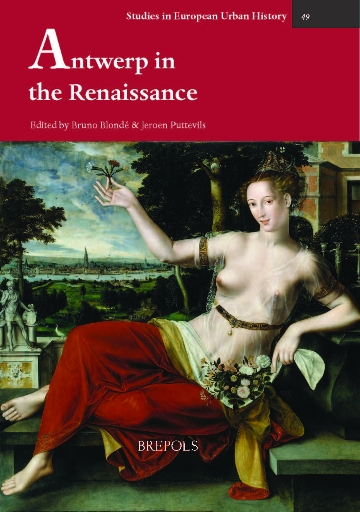
Antwerp in the Renaissance
show More to view fulltext, buy and share links for:Antwerp in the Renaissance show Less to hide fulltext, buy and share links for: Antwerp in the RenaissanceThis book engages with Antwerp in the Renaissance. Bringing together several specialists of sixteenth-century Antwerp, it offers new research results and fresh perspectives on the economic, cultural and social history of the metropolis in the sixteenth century. Recurrent themes are the creative ways in which the Italian renaissance was translated in the Antwerp context. Imperfect imitation often resulted from the specific social context in which the renaissance was translated: Antwerp was a metropolis marked by a strong commercial ideology, a high level affluence and social inequality, but also by the presence of large and strong middling layers, which contributed to the city’s ‘bourgeois’ character. The growth of the Antwerp market was remarkable: in no time the city gained metropolitan status. This book does a good job in showing how quite a few of the Antwerp ‘achievements’ did result from the absence of ‘existing structures’ and ‘examples’. Moreover, the city and its culture were given shape by the many frictions, and uncertainties that came along with rapid urban growth and religious turmoil.
-
-
-
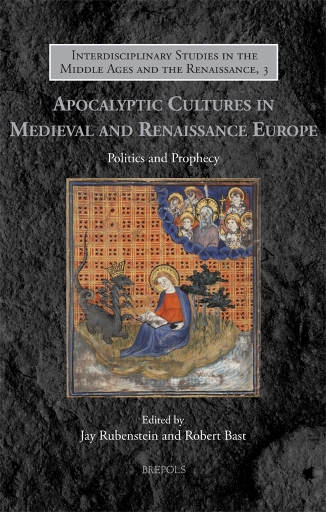
Apocalyptic Cultures in Medieval and Renaissance Europe
Politics and Prophecy
show More to view fulltext, buy and share links for:Apocalyptic Cultures in Medieval and Renaissance Europe show Less to hide fulltext, buy and share links for: Apocalyptic Cultures in Medieval and Renaissance EuropeThe essays in this collection were presented at the 2020 Symposium on Apocalypticism, sponsored by the Marco Institute for Medieval and Renaissance Studies at the University of Tennessee. The authors offer new readings of medieval and Renaissance Apocalypticism in quotidian terms, not as ‘counterculture’ but as the pragmatic expression of spiritualities that informed both debate and practice, on subjects as mundane and diverse as warfare, pilgrimage, gender, cartography, environmentalism, and governance. Topics include the origins of imperial eschatology; reflections on cosmology and the fate of the earth; the fusion of history, prophecy, and genealogy; Joachite readings of the political landscape of Italy; the influence of the Great Schism on Burgundian art; eschatology and gender in pilgrimage literature; the late medieval interpretation of the Revelationes of Pseudo-Methodius; and the appropriation of apocalyptic tropes in the propaganda and policies of the German emperor Maximilian I. The essays that open and close this collection offer meditations on the enduring legacy of Apocalypticism by focusing on the events — pandemic, political unrest, and the proliferation of conspiracy theories manifest in both — that mark the historical era in which this symposium took place.
-
-
-
Apocrypha
Revue internationale des littératures apocryphes. International Journal of Apocryphal Literatures
show More to view fulltext, buy and share links for:Apocrypha show Less to hide fulltext, buy and share links for: ApocryphaApocrypha is published with the scholarly assistance of the Association pour l’Étude de la Littérature Apocryphe Chrétienne (AELAC) and the Société pour l’Étude de la Littérature Apocryphe Chrétienne (SELAC). The journal focuses on the wealth of material borne through literature and expressions of the imagination over the course of two millennia. This material was generated, cultivated and transmitted by numerous Jewish and Christian communities across Asia, Africa, and Europe. The articles are written by scholars who, within their own disciplines and through their own research, have reason to study this common material. Such scholarship aids to restore the real dimensions of these texts and draws attention to ideas which shaped the imagination, minds and living spaces of so many societies and cultures.
More information about this journal on Brepols.net
-
-
-
Apocryphité. Histoire d'un concept transversal aux religions du Livre
En hommage à Pierre Geoltrain
show More to view fulltext, buy and share links for:Apocryphité. Histoire d'un concept transversal aux religions du Livre show Less to hide fulltext, buy and share links for: Apocryphité. Histoire d'un concept transversal aux religions du LivreAu point de départ, le concept d’apocryphité suppose le concept de canonicité. C’est donc d’abord la constitution d’un corpus d’écrits dits canonisés qui génère ensuite de diverses manières une littérature définie comme apocryphe. Le concept d’apocryphité repose donc apparemment sur une simple équation - il est le produit d’un autre concept, celui de la canonicité. Même s’il convient de ne pas généraliser à tous les cas un tel paramètre, c’est, semble-t-il, une évidence. Ce phénomène a touché l’ensemble des religions dites du Livre au sens actuel de l’expression qui est bien large, mais aussi les religions grecques et romaines de l’Antiquité dans lesquelles la constitution de corpus a entraîné la formation d’une frange apocryphe. En la matière, ce qui se passe dans le christianisme provient évidemment du judaïsme, mais se déroule aussi, sous des formes plus ou moins similaires, dans le mazdéisme et le manichéisme.
Cet ouvrage, qui est le fruit d’un projet collectif du Centre d’études des religions du Livre (Unité mixte de recherche EPHE-CNRS), concerne non seulement les antiquisants et les médiévistes, mais aussi les modernistes. C’est aux XVIe et XVIIe siècles, en effet, que certains corpus d’apocryphes chrétiens, non des moindres, ont pris forme.
-
-
-
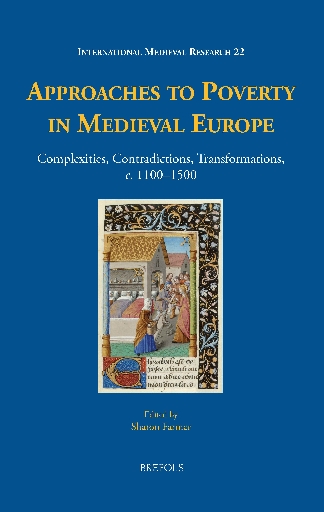
Approaches to Poverty in Medieval Europe
Complexities, Contradictions, Transformations, c. 1100-1500
show More to view fulltext, buy and share links for:Approaches to Poverty in Medieval Europe show Less to hide fulltext, buy and share links for: Approaches to Poverty in Medieval EuropeThe essays in this volume re-examine two major medieval turning points in the relationship between rich and poor: the revolution in charity of the twelfth and thirteenth centuries, and the era of late medieval crises when the vulnerability of the poor increased dramatically and charitable generosity often declined. Drawing on a variety of sources from England, France, the Low Countries, Italy, and Iberia, the contributors to this volume add new perspectives on the agency of the poor, the influence of gendered forms of devotion, parallels in Christian and Jewish representations of the deserving and undeserving poor, and the effect of mendicant piety on the status of the involuntary poor. A broader implication of the volume as a whole is that medieval studies of poverty and wealth need to pay more attention to the role of rulers, ruling elites, and public policy in shaping the experiences of the poor.
-
-
-
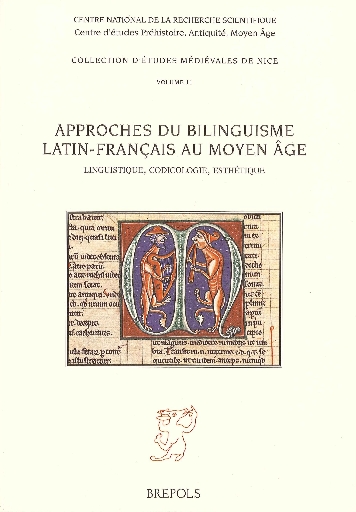
Approches du bilinguisme latin-français au Moyen Âge: linguistique, codicologie, esthétique
show More to view fulltext, buy and share links for:Approches du bilinguisme latin-français au Moyen Âge: linguistique, codicologie, esthétique show Less to hide fulltext, buy and share links for: Approches du bilinguisme latin-français au Moyen Âge: linguistique, codicologie, esthétiqueLe Moyen Âge a vu naître les langues romanes. L’émergence progressive de ces nouveaux systèmes linguistiques, puis leur accession à l’écrit et à la littérature, n’a pourtant pas rendu caduc l’usage du latin. Témoignent de cette résistance du latin la diglossie de nombreux locuteurs, auteurs ou copistes médiévaux, ainsi que le bilinguisme courant de leurs énoncés et de leurs productions textuelles. Ces phénomènes ont été éclairés et illustrés par d’abondants travaux dont l’apport est régulièrement signalé par les auteurs de ce volume.
L’originalité du présent recueil tient au fait qu’y sont analysées les modalités de cohabitation du latin et de la langue d’oïl dans les textes du Moyen Âge central et tardif. Cette réflexion collective, adossée à un souci permanent de définition théorique, se montre attentive à l’évolution chronologique, depuis les Psautiers bilingues du xii e siècle jusqu’aux imprimés du xvi e siècle. Elle est sensible aussi à des enjeux variables, depuis l’enseignement élémentaire de la grammaire ou du vocabulaire jusqu’à la mise en œuvre de dispositifs esthétiques complexes. En s’appuyant sur les témoins — pour la plupart manuscrits — qu’a pu susciter la double compétence linguistique médiévale, les auteurs du volume interrogent la conception des textes bilingues, leurs conditions d’élaboration, leur transmission, leur réception. L’insertion souvent discrète de fragments latins au sein de textes français, tout comme la présence plus rare de la langue d’oïl au sein de manuscrits latins, se lit alors comme un mode d’expression aussi raffiné que spontané, susceptible d’enrichir les usages prévus pour le texte enchâssant. Au-delà, l’ensemble de ces études permet d’entrevoir la conscience linguistique des locuteurs du Moyen Âge.
-
-
-

Appropriation, Interpretation and Criticism
Philosophical and Theological Exchanges Between the Arabic, Hebrew and Latin Intellectual Traditions
show More to view fulltext, buy and share links for:Appropriation, Interpretation and Criticism show Less to hide fulltext, buy and share links for: Appropriation, Interpretation and CriticismThe contributions in this volume are dedicated to cross-cultural exchanges during the Middle Ages among exponents of the Arabic, Hebrew and Latin philosophical and theological traditions. They draw particular attention to the intellectual approaches which shaped the interplays among these traditions - interplays that were characterized by the contact of various languages being used by people of different religious beliefs in their quest for knowledge: Spanish Jews writing in Arabic, Jews collaborating in the translation of Arabic texts into Latin through the vernacular, Western Muslims whose writings were read mainly by Jews and Christians in Hebrew and Latin, etc. Altogether, the eleven studies contained in this book wish to offer new insights into the rich exchanges of knowledge among communities of learning and their scholarly traditions during the Middle Ages and beyond.
-
-
-
Apuleius and the Metamorphoses of Platonism
show More to view fulltext, buy and share links for:Apuleius and the Metamorphoses of Platonism show Less to hide fulltext, buy and share links for: Apuleius and the Metamorphoses of PlatonismThis book presents a thorough re-examination of Apuleius’ Platonic philosophy, encompassing both his philosophical and literary works. Its primary concern lies in demonstrating how there is no significant gap between the Platonic philosophy of the Opuscula (De deo Socratis, De Platone et eius dogmate, De mundo) and the literary tastes of his rhetorical and most important output, such as the Apologia, the Florida, and foremost the Metamorphoses. Apuleius’ Middle-Platonism did not limit itself to technical works, but also influenced his literary interests.
Up to now, Apuleius’ Platonism has been very poorly investigated. It had attracted the attention of only a few - although prominent - scholars (Festugière, Dodds, Theiler), before being taken briefly into consideration in the monographs by John Dillon (The Middleplatonists, London 1977) and Stephen Gersh (Middle Platonism and Neoplatonism. The Latin Tradition, Notre Dame 1986). Because of his multifaceted interests and brilliant style, which is reflected in his conferences, judicial orations and in the novel, Apuleius was mainly treated as a sophist. In the wake of a recent revival of interest in Greek Middle Platonism and in its predecessors (such as Philo of Alexandria or Plutarch), the rhetor of Madauros is worthy of a new examination. This book aims at considering Apuleius as a Philosophus Platonicus who, at the same time, is a Latin Sophist, showing how the two aspects are closely intertwined.
Examining only one aspect would be easy, but would not do justice to Apuleius’ personality. In particular, it is necessary to insert him into a philosophical line, which runs from the first to the third century AD, thus outlining the specifics of Latin Platonism. On the other hand, it is necessary to take into account the concerns of the Second Sophistic in philosophy, though in a somewhat trivialized and less systematic way.
The title of the book (Apuleius and the Metamorphoses of Platonism) indeed underlines how Apuleius’ chameleonic Platonism ‘transforms’ itself, both in his philosophical and his literary works. While challenging the current scholarly trend that overrates the philosophical presence in the Metamorphoses, this book suggests new outlooks, as well as providing a new perspective on many hypotheses previously considered as a given. In order to do this, it investigates the literary, religious and philosophical, Graeco-Roman / African milieu in which Apuleius lived from a literary, religious and philosophical point of view, while considering his influence on authors from Late Antiquity.
-
-
-
Arbor scientiae. Der Baum des Wissens von Ramon Llull
Akten des Internationalen Kongresses aus Anlass des 40-jährigen Jubiläums des Raimundus-Lullus-Institutes der Universität Freiburg. 29. September - 2. Oktober 1996
-
-
-
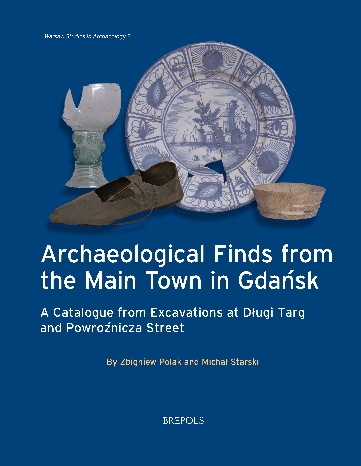
Archaeological Finds from the Main Town in Gdańsk
A Catalogue from Excavations at Długi Targ and Powroźnicza Street
show More to view fulltext, buy and share links for:Archaeological Finds from the Main Town in Gdańsk show Less to hide fulltext, buy and share links for: Archaeological Finds from the Main Town in GdańskBetween 2002 and 2004, archaeological excavations took place on Powroźnicza Street, in the city of Gdańsk, Poland. Twelve burghers’ plots, located in the centre of this former medieval metropolis, were investigated, and yielded a rich collection of archaeological finds, among them ceramics, and items of wood, metal, and glass, from a period stretching from the fourteenth to the twentieth century. These finds are presented here for this first time in this richly illustrated bilingual volume, published in both English and Polish, which lays out a detailed catalogue of all the items, together with a discussion of the site, its settlement phases, and its most significant discoveries.
-
-
-
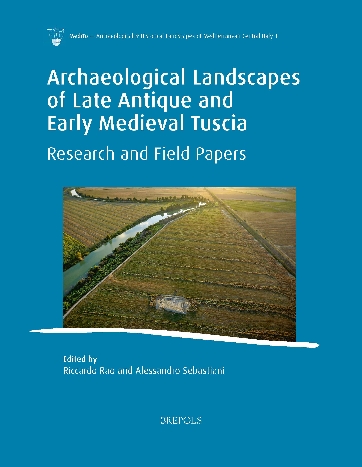
Archaeological Landscapes of Late Antique and Early Medieval Tuscia
Research and Field Papers
show More to view fulltext, buy and share links for:Archaeological Landscapes of Late Antique and Early Medieval Tuscia show Less to hide fulltext, buy and share links for: Archaeological Landscapes of Late Antique and Early Medieval TusciaThis volume, the third in the series MediTo, investigates the changing landscapes of Tuscany during Late Antiquity and the Early Middle Ages. Through a selection of thematic case studies, presented initially during the second International workshop held in Paganico (Grosseto, Italy) in June 2019 and here further developed, the volume explores the concepts of settlement, economic, and societal changes in both Tuscany and its broader Mediterranean context over the course of several centuries. Together, the contributions gathered here showcase how cities and rural settlements, when studied in their archaeological and historical context, shed light on a dynamic landscape in which natural resources played a crucial role in defining the success or later abandonment of sites.
-
-
-
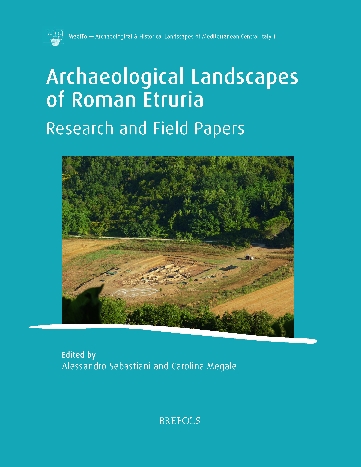
Archaeological Landscapes of Roman Etruria
Research and Field Papers
show More to view fulltext, buy and share links for:Archaeological Landscapes of Roman Etruria show Less to hide fulltext, buy and share links for: Archaeological Landscapes of Roman EtruriaThis volume, the first in a new series dedicated to the archaeological and historical landscapes of central Mediterranean Italy, aims to offer a fresh and dynamic new approach to our understanding of central-southern maritime Tuscany during the Roman period. Drawing on research that was initially presented at the first International Mediterranean Tuscan Conference (MediTo) held in Paganico (Grosseto, Italy) in June 2018, and supported by invited papers from other experts in the field, this collection of essays offers the most up-to-date research into Roman and Late Antique landscapes within Tuscany and its broader Mediterranean context, as well as the political, economic, and social networks that developed in this area during the Classical Period. Ultimately, what emerges from this in-depth study of river valleys, urban centres, and coastal settlements is an understanding of a dynamic Roman territory of cities and villages, villas and sanctuaries, minor sites, and manufacturing districts in which the local population fought to establish and maintain connections with the wider Mediterranean.
-
-
-
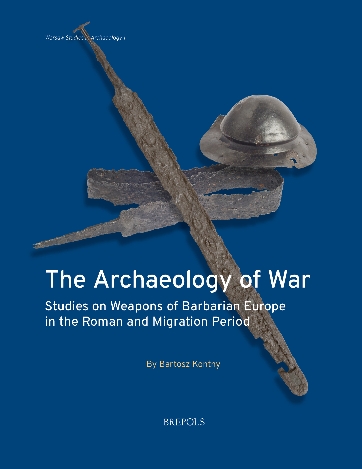
Archaeology of War
Studies on Weapons of Barbarian Europe in the Roman and Migration Period
show More to view fulltext, buy and share links for:Archaeology of War show Less to hide fulltext, buy and share links for: Archaeology of WarFrom graves to settlements, and from the battlefield to underwater sacrificial sites, weapons dating to the Roman and Migration Period have long been found in an array of contexts throughout the region that forms modern-day Poland. This volume for the first time aims to draw together research into these finds, gathered throughout the author’s career, in a synthetic approach that sees discoveries of swords and other armaments analysed against a broad, comparative background. The work begins with a focus on votive deposits from lakes, here used as a lens for addressing questions about military strategy and war ritual more generally, before moving on to explore the weapons and warriors of the Przeworsk and Wielbark Cultures, as well as shedding light on the lives of the Balts. Finally, an in-depth analysis is made of shields from the protohistoric period, exploring the genesis and variability of the forms taken by this protective weapon. Through this approach, this richly illustrated volume sheds new light not only on the typology and chronology of weaponry from the Roman and Migration Periods, but also on the symbolism and functionality that these arms held.
-
