Brepols
Brepols is an international academic publisher of works in the humanities, with a particular focus in history, archaeology, history of the arts, language and literature, and critical editions of source works.181 - 200 of 3194 results
-
-
Aristoteles Romanus
La réception de la science aristotélicienne dans l'Empire gréco-romain
show More to view fulltext, buy and share links for:Aristoteles Romanus show Less to hide fulltext, buy and share links for: Aristoteles RomanusThe scholarly contributions which form this volume aim at a better understanding of one of the key stages in the transmission of Aristotle’s philosophical message from antiquity to modernity. It’s an established fact that Aristotelianism, because of an encyclopedic vocation for exploring all of the real, is perfectly in accordance with the cognitive universalism of the Greco-Roman Empire. Indeed Aristotle had classified the whole knowledge in a series of well-ordered disciplines, beginning with logic regarded as an essential instrument for learning and based on the philosophy of first principles that is metaphysics. But his investigations had also led him to renew physics, meteorology, grammar, poetics, rhetoric, politics, ethics, and above all to create the life sciences. This research and study wide-ranging program has without fail subsequently first aroused deep interest among the Roman encyclopedists, then among the Greek commentators, anxious to restore the original prestige of Aristotelian philosophy.
The result of a colloquium organized by the Universities of Strasbourg and Naples, Aristoteles Romanus. The survival of Aristotelian science in the Greco-Roman Empire is an ordered, if not complete, approach originating from a varied investigation of the permanence of a phenomenon into modern times.
-
-
-
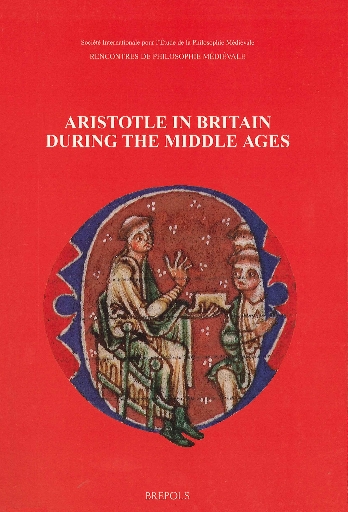
Aristotle in Britain during the Middle Ages
show More to view fulltext, buy and share links for:Aristotle in Britain during the Middle Ages show Less to hide fulltext, buy and share links for: Aristotle in Britain during the Middle AgesThis volume contains the papers given at the S.I.E.P.M. conference held at Trinity College, Cambridge in 1994 on Aristotle in Britain during the Middle Ages. The subject was chosen so as to bring together a wide variety of different specialists and to illustrate the range of Britain's contribution to medieval philosophy. A number of the discussions throw new light on celebrated British medieval philosophers, such as Robert Grosseteste and John Duns Scotus. Others show the importance of less well-known thinkers, such as Richard Fishacre, Richard Rufus and Thomas Wylton. The subjects of the papers range widely, both chronologically - from Anselm of Canterbury in the eleventh century to the political and ethical writers of fifteenth-century Oxford and Cambridge - and in method - from philosophical analyses to manuscript studies.
-
-
-
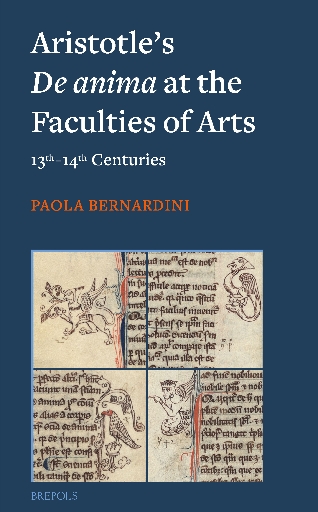
Aristotle’s De anima at the Faculties of Arts (13th-14th Centuries)
show More to view fulltext, buy and share links for:Aristotle’s De anima at the Faculties of Arts (13th-14th Centuries) show Less to hide fulltext, buy and share links for: Aristotle’s De anima at the Faculties of Arts (13th-14th Centuries)This book explores the intersection between the early development of medieval universities and the arrival of Aristotle's works in the Christian West, especially De anima: one of his most famous and obscure writings, straddling the fields of biology and psychology, and devoted to the functions of living beings – including the human being.
The leading figures in this very special meeting of cultures, also involving scientific writings from the Islamic world, are the Masters of Faculties of Arts. From the first half of the 13th century, they embarked on a theoretically very demanding enterprise, namely to restore a complete understanding of De anima; and they accomplished this difficult task by establishing a close – and often polemical – relationship with their more famous colleagues: theologians such as Albert the Great and Thomas Aquinas.
By resorting to the research and teaching methods of their time, the Masters of Arts addressed crucial topics such as the soul/body relationship, sense perception, intellectual knowledge and the special status of the human intellect, mediating, as far as possible, between scientific requirements and those of the Christian faith.
Authors such as Adam of Buckfield, Peter of Spain, Siger of Brabant, John of Jandun and John Buridan, together with other, less famous ones and a small crowd of completely anonymous – yet theoretically no less interesting – scholars, gave rise to a choral narrative that disclosed new philosophical perspectives on man. It is in this intellectual context that the roots of Modern philosophical thought lie.
-
-
-

Armeeführung und Militäreliten in Byzanz, 1081–1203
Selektion, Hierarchie, Repräsentation
show More to view fulltext, buy and share links for:Armeeführung und Militäreliten in Byzanz, 1081–1203 show Less to hide fulltext, buy and share links for: Armeeführung und Militäreliten in Byzanz, 1081–1203Das mittelalterliche Byzanz erlebte während des „langen“ zwölften Jahrhunderts (1081-1204) eine letzte Phase als mediterrane Großmacht. Nach den Krisen des ausgehenden elften Jahrhunderts führte die Etablierung der komnenischen Herrscherdynastie zu einer Periode innerer und äußerer Stabilität. Erst in den politisch und militärisch turbulenten 1180er Jahren sollte das System erneut unter massiven Druck geraten, bevor die Zäsur des IV. Kreuzzuges (1204) gar das vorläufige Ende der staatlichen Einheit brachte.
Die byzantinischen Streitkräfte spielten in dieser Zeit stets eine zentrale Rolle für Staat und Gesellschaft, nicht nur als Instrument der Gewaltausübung und Herrschaftsdurchsetzung, sondern auch als Arbeitgeber, Konsument von Gütern und Dienstleistungen, Betätigungsfeld der Machtelite, Kanal sozialen Aufstiegs und Ort der Integration ausländischer Eliten. Die kaiserlichen Feldherren und Kommandeure lassen sich nicht als reine Funktionselite betrachten, sondern sie waren eingebunden in den Mikrokosmos des Hofes, in Familien- und Patronagebeziehungen, regionale und ethnische Netzwerke. Ihre Geschichte ist nicht nur Militär- sondern stets auch Sozial-, Politik,- Wirtschafts-, und Kulturgeschichte.
Das vorliegende Werk analysiert zum ersten Mal systematisch die personelle, soziale, ethnische und regionale Zusammensetzung der kaiserlichen Feldherren und Offiziere. Die Dynamik politischer, gesellschaftlicher und militärischer Rahmenbedingungen veränderte immer wieder die Personalstrategien der aufeinanderfolgenden Regierungen wie auch die Praktiken der Auswahl und Selektion sowie den Umgang mit formellen und informellen Hierarchien. Die Strukturen und Praktiken militärischer Führung waren dabei stets in gesellschafts- und zeitspezifische Semantiken und Diskurse eingebettet, die ein spezifisch byzantinisches Bild militärischer Führungskultur erkennen lassen.
-
-
-
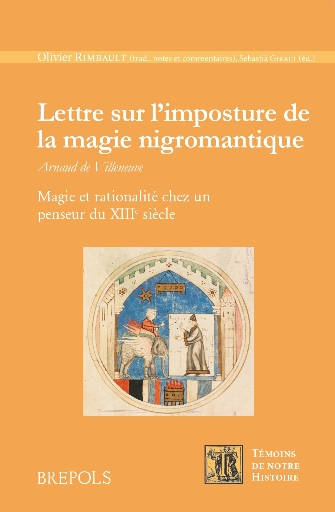
Arnaud de Villeneuve: Lettre sur l’imposture de la magie nigromantique - Epistola de reprobacione nigromantice ficcionis
Magie et rationalité chez un penseur du xiii e siècle
show More to view fulltext, buy and share links for:Arnaud de Villeneuve: Lettre sur l’imposture de la magie nigromantique - Epistola de reprobacione nigromantice ficcionis show Less to hide fulltext, buy and share links for: Arnaud de Villeneuve: Lettre sur l’imposture de la magie nigromantique - Epistola de reprobacione nigromantice ficcionisVers 1280, Arnaud de Villeneuve publie une courte démonstration à la fois philosophique, théologique et médicale de l’illusion de ces lettrés musulmans, juifs et chrétiens qui prétendaient pouvoir, selon les instructions de manuels de magie alors en vogue, commander aux démons pour obtenir d’eux la réalisation des vœux les plus divers - ce que l’on appelait la nigromancie. Cette édition bilingue est la première en français d’un document représentatif aussi bien du rationalisme aristotélicien que de la médecine galénique qui accompagnèrent le développement de l’enseignement scolastique. Olivier Rimbault commente Arnaud de Villeneuve en historien, en philosophe et en anthropologue. Il montre en effet ce que la rationalité des Modernes doit à cette longue période paradoxale et méconnue qu’est le Moyen Âge, et de cette synthèse tire des parallèles avec la nôtre, mettant en évidence l’irrationnel à l’œuvre dans nos propres croyances les plus « scientifiques » et réhabilitant en conclusion une forme de « magie philosophique » qui pourrait répondre aux défis du XXIe siècle.
-
-
-
Arnobe : le combat Contre les païens
Religion, mythologie et polémique au IIIe siècle ap. J.-C.
show More to view fulltext, buy and share links for:Arnobe : le combat Contre les païens show Less to hide fulltext, buy and share links for: Arnobe : le combat Contre les païensArnobius is a man of one book. A little known author, he was a rhetor and a teacher at Sicca Veneria, a town named after Venus - it is a predestined confluence of rhetoric and religion ! - in the 3rd century AD, and his book, Against the Heathen, has never been the subject of a thoroughgoing study in French. Having converted to Christianity at the end of his life, this African rhetor proves to be, not only a brilliant and spirited writer, but also a man of culture, at home in Greek literature and in Latin. Remaining intellectually very close to the pagan ideas of his contemporaries, he adopts, in the seven books of an apology that he left unfinished at his death, a vehement and insidious tone of controversy - verging upon dishonesty - in order to turn ancestral Roman religion and Greek mythology from their purpose, with the sole aim of magnifying the glory of the Christian God.
-
-
-
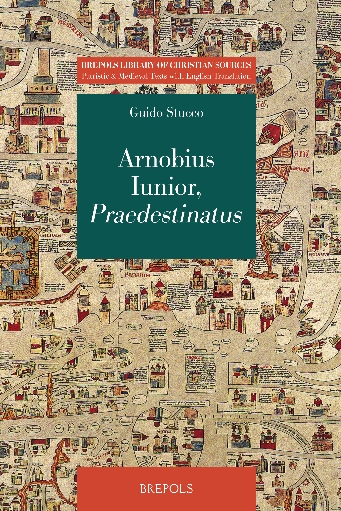
Arnobius Iunior, Praedestinatus
show More to view fulltext, buy and share links for:Arnobius Iunior, Praedestinatus show Less to hide fulltext, buy and share links for: Arnobius Iunior, PraedestinatusFor the first time in English, the Praedestinatus represents a moment in the fifteen-century old theological conversation in Latin Christianity about the topics of grace, predestination and free will. Written as a response to Augustine’s growing theological influence, this book should not merely be regarded as a work of apologetics, despite the author’s intention, but seen as breaking controversial new ground because of his claim that a small circle of heretics was acting as a ‘fifth column’ within the Church, undermining orthodox beliefs concerning God, his providence and all-inclusive love.
After a three hundred year hiatus since Jacques Sirmond’s 1643 editio princeps, interest in the Praedestinatus revived in the twentieth century thanks to German and French scholars who studied the book’s theological trajectory and claims. Its critical edition was eventually accomplished in 2000 by Italian scholar Franco Gori. The present translation is based on Gori’s edition.
-
-
-
Arnold Geulincx, Éthique
show More to view fulltext, buy and share links for:Arnold Geulincx, Éthique show Less to hide fulltext, buy and share links for: Arnold Geulincx, ÉthiqueEn juillet 1665 paraît, en Hollande, le premier traité de l’Éthique d’Arnold Geulincx. Le texte complet n’en paraîtra en 1675, quelques années après la mort de son auteur. Qui aujourd’hui le sait ? De ces lieux, de ces temps, est-ce cette Éthique-là qui a fait date? Certainement non! Et c’est sans doute justice que nombre d’études consacrées à cet auteur, - Geulincx - prennent pour interrogation principale la question de son rapport à Spinoza dont l’Éthique, pense-t-on, dut commencer à être rédigée vers 1665 et achevée vers l675. Geulincx néanmoins connut des tribulations, géographiques et intellectuelles, qui l’amenèrent à formuler, de manière unique et singulière ses vues sur ce que la philosophie de l’époque pouvait affirmer en matière d’éthique. Question peu simple à cette croisée des perspectives, où l’on ne savait trop selon quelles modalités l’homme devait être mis au centre du discours philosophique - centre vide, «égout» pour reprendre une terminologie baroque assumée par Geulincx, ou épicentre d’une raison ou d’une vertu capable de sauver, dans le cadre de religions peu amènes pour les capacités propres de l’homme, la possibilité d’une liberté pensée comme soumission à la Raison.
Le présent travail entend avant tout donner à entendre à la voix d’un homme dont il est aujourd’hui attesté qu’elle fut entendue de son temps et contribua de manière significative, ne serait-ce que par les impasses dont elle a pu témoigner, à l’évolution de la pensée de l’époque. Aussi, dans cette perspective, laisserons-nous de côté la question aussi récurrente qu’implicite, en histoire des idées et de la philosophie, sur les grands et les petits. Inventeur ou créateur, continuateur ou précurseur, Geulincx présente l’intérêt d’une figure originale dans l’histoire des idées, et son Éthique condense des questions qui trouveront dans l’avenir les réponses diversement appréciées, diversement cohérentes : Spinoza, Malebranche, voire Leibniz puis Kant.
Est-il si primordial, d’emblée, de le caractériser - ce qui du reste est peu contestable - comme occasionnaliste ? Cette étiquette ne risque-t-elle pas d’épuiser à tort les potentialités d’une pensée qui trouvera bien d’autres développements ? Avant d’enrôler ce « mineur » dans les grands courants de l’histoire de la philosophie, ce travail de traduction voudrait lui donner la chance d’être lu dans des directions peut-être, sait-on jamais, insoupçonnées.
-
-
-
Arnoul de Lisieux (1105/1109-1184)
Lettres d'un évêque de cour dans l'embarras
show More to view fulltext, buy and share links for:Arnoul de Lisieux (1105/1109-1184) show Less to hide fulltext, buy and share links for: Arnoul de Lisieux (1105/1109-1184)Si la cour d’Henri II d’Angleterre (1154-1189) a connu des évêques partisans du roi ou, comme le montre le cas de Thomas Becket, des adversaires farouches, Arnoul de Lisieux a été un homme de compromis, convaincu de la nécessaire collaboration du regnum et du sacerdotium. Voué aux gémonies par le parti de Becket, Arnoul n’a pas su gagner pour autant la sympathie indéfectible d’Henri II. Sa carrière d’évêque de cour fut pour lui jusqu’à la fin une source d’inquiétude et d’insatisfaction, comme le montrent ses lettres. Harmonieux au début du règne, les rapports avec le roi se sont rapidement refroidis, et si Arnoul comptait, entre 1164 et 1172, parmi les curiales influents, à la suite de la révolte des princes royaux (1173-1175) contre leur père, il a perdu la confiance du monarque. Sachant que le roi ne pardonnerait pas s’il avait conçu de la haine pour quelqu’un, l’évêque dut assister, impuissant et endetté, à la perte de ses revenus. Poussé vers la sortie par Henri II, il se retira, en 1181, à Saint-Victor, où il mourut (1184). Sous Henri II, vouloir être à la fois l’ami du pape et celui du roi fut une erreur lourde de conséquences pour qui avait des ambitions politiques.
-
-
-
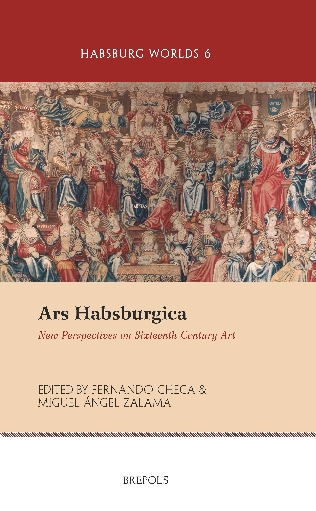
Ars Habsburgica
New Perspectives on Sixteenth-Century Art
show More to view fulltext, buy and share links for:Ars Habsburgica show Less to hide fulltext, buy and share links for: Ars HabsburgicaStarting from a political reality, which is, at the same time, artistic and cultural, the book Ars Hasburgica aims to review the still so common historiographical conception of the Renaissance that conceives this period from a geographically Italocentric, artistically classicist and politically centered the idea of "national" arts and schools.
But Renaissance is a more global and complex phenomenon. What this book aims to offer is an idea of the art of that period that considers the role played by the Habsburg dynasty and its various courts in this period, trying to verify whether, by applying other historiographic models, and having the art of the Casa de Austria as a focus, traditional ideas can continue to be maintained well into the twenty-first century. We refer to the so-called "Vasari paradigm", on which art history of the sixteenth century has largely been built over the last centuries. It is also intended to structure concepts about the art of the period not so much around nationalist considerations and identities of the arts, but to raise these issues throughout ideas such as that of the court as a political, artistic and cultural sphere, in the wake of the classical studies by Norbert Elias, Amedeo Quondam or Carlo Ossola.
-
-
-
Ars Lyrica
Journal of the Lyrica Society for Word-Music Relations
show More to view fulltext, buy and share links for:Ars Lyrica show Less to hide fulltext, buy and share links for: Ars LyricaThe journal Ars Lyrica foregrounds what is basic to Comparative Literature, Musicology and Ethnomusicology as disciplines: analysis of relations between and among composers, authors, performance practices, works, languages, traditions, cultures, nations, continents, and histories, and exploration of the methods and mechanisms by which those relations create meaning. Topics and theories involving points of cultural contact and crossings remain critical to the journal’s focus.
-
-
-
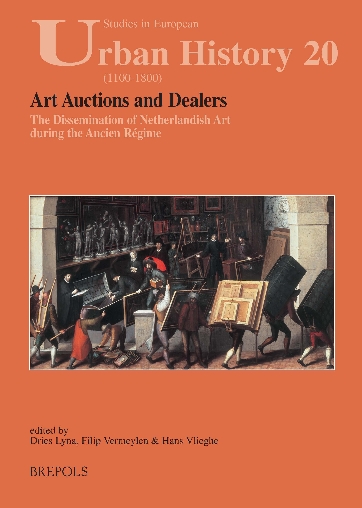
Art Auctions and Dealers
The Dissemination of Netherlandish Art during the Ancien Régime
show More to view fulltext, buy and share links for:Art Auctions and Dealers show Less to hide fulltext, buy and share links for: Art Auctions and DealersThis collection of essays presents a status quaestionis concerning the dissemination of Flemish and Dutch art during the period 1500-1800, and highlights the role art auctions and dealers have played in this process. Auctions emerged as the primary channel for art sales at the end of the seventeenth century in the Low Countries and started a trent whereby countless local art collections were broken up and sold to the highest bidder. Especially (old master) paintings exchanged hands in great numbers at these public sales, and the finest pieces frequently ended up in foreign holdings.
The activities of the professional art dealer form the focus of several essays. These intermediaries played an instrumental role in the commercialization and expansion of the art trade in early modern Europe. They had a profound impact on the history of collecting as they mediated and even influenced taste. Naturally, the role of art dealers changed over time. Therefore, the historians, art historians and economists who contributed to this volume have approached this phenomenon in an interdisciplinary fashion in order to properly understand how art markets functioned. In doing so, these essays explore the various ways in which art dealers helped shape markets for art, and how they facilitated the increasing volume of exports of Netherlandish art from the sixteenth century onwards.
Hans Vlieghe is professor emeritus at the University of Leuven. He has published extensively on Flemish art of the 17th century, especially on Rubens and his circle.
Filip Vermeylen is assistant professor of Cultural Economics at the Erasmus University in Rotterdam. His current research focuses on the history of art markets.
Dries Lyna works at the Center for Urban History (University of Antwerp), where he is currently preparing a Ph.D. thesis on art auctions in eighteenth-century Antwerp and Brussels.
-
-
-
Art, Architecture and Religion Along the Silk Roads
show More to view fulltext, buy and share links for:Art, Architecture and Religion Along the Silk Roads show Less to hide fulltext, buy and share links for: Art, Architecture and Religion Along the Silk RoadsArt, Architecture and Religion Along the Silk Roads will be volume 12 in the Silk Road Studies series. It has been produced by the Ancient History Documentary Research Centre at Macquarie University, Australia and edited by Ken Parry, Senior Research Fellow, Department of Ancient History, Macquarie University. It consists of selected papers from the 2004 conference of the Australasian Society for Inner Asian Studies. The volume contains 14 articles of 350 pages with 40 illustrations and covers topics relating to Ancient Chorasmia, Sogdia and China, Buddhist and Manichaean art, Middle Iranian manuscripts and Buddhist manuscripts from Afghanistan, Nestorian Christianity and contemporary Islam, Silk Road clowns and headcoverings of Central Asia. The collection highlights the range and depth of Australasian scholarship on Inner Asia and demonstrates that there are still many unexplored aspects of Silk Road Studies.
-