Brepols
Brepols is an international academic publisher of works in the humanities, with a particular focus in history, archaeology, history of the arts, language and literature, and critical editions of source works.161 - 180 of 3194 results
-
-
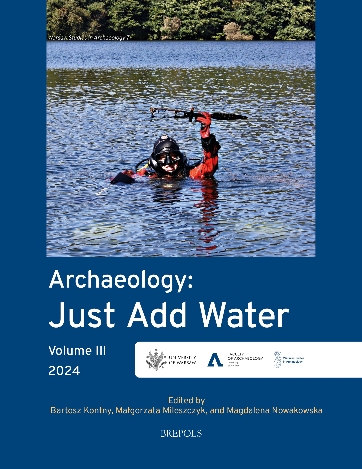
Archaeology: Just Add Water
Volume III
show More to view fulltext, buy and share links for:Archaeology: Just Add Water show Less to hide fulltext, buy and share links for: Archaeology: Just Add WaterWhile archaeology is often considered to focus on the land that lies beneath our feet, significant amounts of material culture have been lost to us beneath water, whether in seas, lakes, rivers, or submerged caves. The world of underwater archaeology, however, is increasingly recognized as a field that is vital to our understanding of the past. The chapters gathered together into this volume draw on research first presented at the Fourth Warsaw Seminar on Underwater Archaeology, held at the University of Warsaw on 18–20 November 2021. From the seas of the Caribbean through to the Mediterranean and Norway, and from Antiquity through to contemporary times, the chapters presented here offer a dazzling array of different approaches to underwater archaeology and outline the potential that changing technology presents in this expanding field.
-
-
-
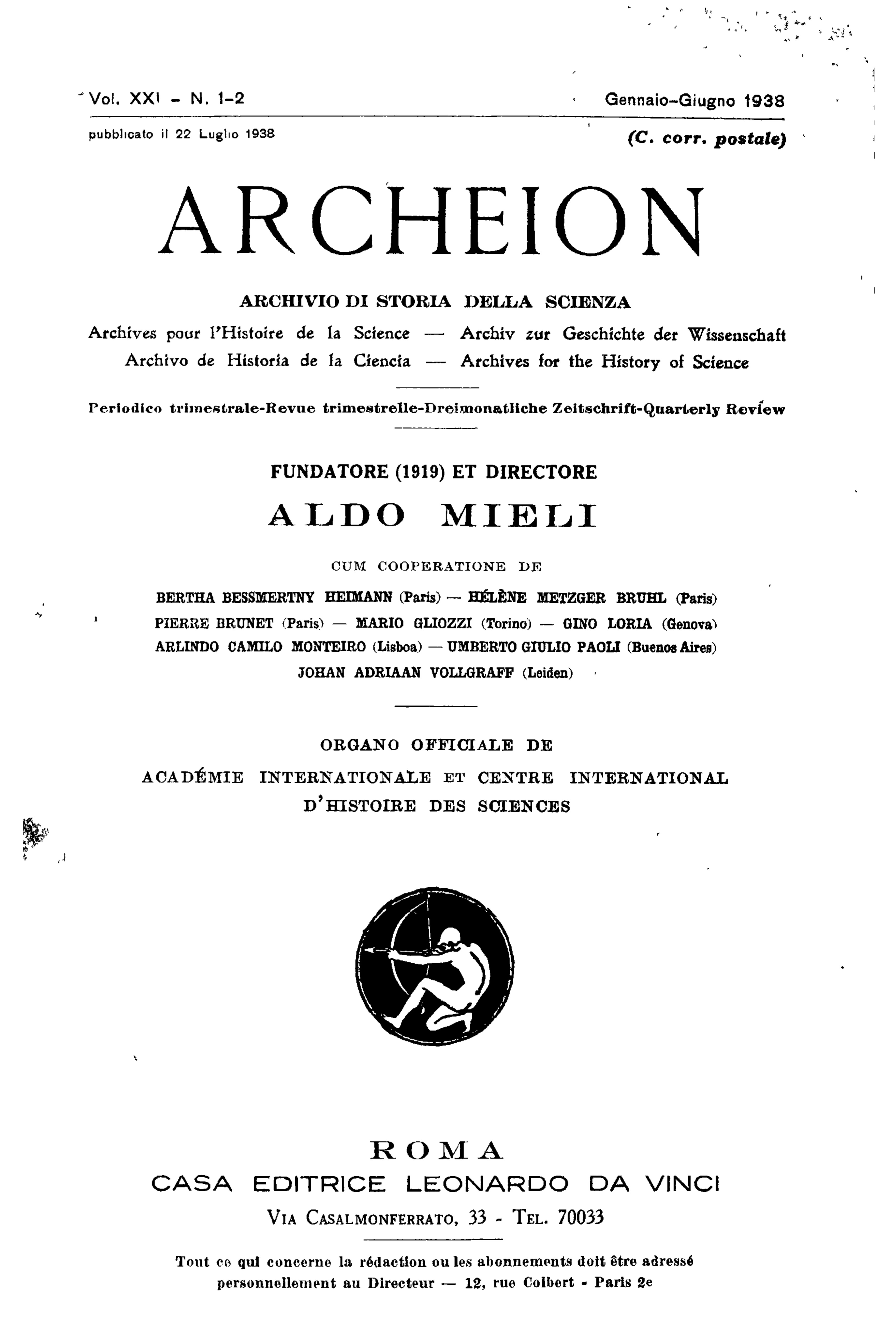
Archeion
Archivio di Storia della Scienza
show More to view fulltext, buy and share links for:Archeion show Less to hide fulltext, buy and share links for: ArcheionArcheion, founded in Rome in 1919 by its editor Aldo Mieli (1879-1950), has had a profound influence on the internationalization of the study of the history of science. The journal serves as a repository of knowledge, shedding light on the gradual development of connections among European countries through congresses, reviews, associations, and scientific societies.
More information about this journal on Brepols.net
-
-
-
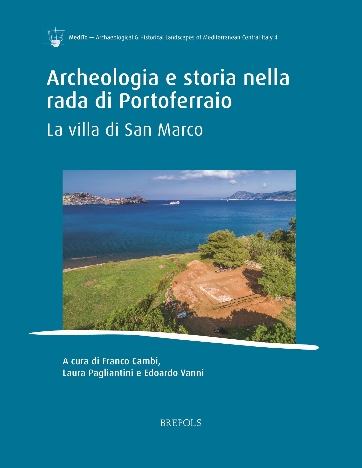
Archeologia e storia nella rada di Portoferraio
La villa di San Marco
show More to view fulltext, buy and share links for:Archeologia e storia nella rada di Portoferraio show Less to hide fulltext, buy and share links for: Archeologia e storia nella rada di PortoferraioIl libro raccoglie una serie di contributi che scaturiscono dallo scavo e dallo studio della villa romana di San Marco sull’isola d’Elba, dei suoi reperti e del suo contesto storico ed ambientale. I ritrovamenti archeologici sono pertinenti un periodo molto ristretto di vita dell’insediamento, all’incirca tra il II secolo a.C e il II secolo d.C., quando la villa fu verosimilmente distrutta da un’incendio. Tale drammatico evento ha permesso la conservazione straordinaria di una serie di reperti organici (come la travatura di un solaio), attraverso i quali è stato possibile procedere ad una ricostruzione dettagliata della planimetria e degli elevati dell’edificio. Lo studio poi delle incredibili decorazioni pittoriche, insieme ad i ritrovamenti epigrafici, hanno permesso di attribuire la villa ad una delle proprietà dell’importante famiglia senatoria dei Valerii.
-
-
-
Archetypal Narratives. Pattern and Parable in the Lives of Three Saints
show More to view fulltext, buy and share links for:Archetypal Narratives. Pattern and Parable in the Lives of Three Saints show Less to hide fulltext, buy and share links for: Archetypal Narratives. Pattern and Parable in the Lives of Three SaintsSaints’ Lives have been read as documentary evidence for their particular historical periods, biographies of their heroic protagonists, folklore for the entertainment of monks, or propaganda in defense of a cult. None of these readings, however, address the problem of theologically interpreting narratives that were conceived and dispersed within a Christian monastic environment. Concentrating on the earliest extant Lives of Sts Brigit, Samson, and Cuthbert, the author adopts an interpretive approach that combines close textual analysis with a theological hermeneutic to uncover the deep biblical influences within the narratives, and poses the possibility that many of the stories within them are actually parables - stories intended to be both metaphorical and illustrative, but hardly factual. Building on this foundation, each narrative is then explored for its internal structural logic, a step which is seen to identify each hagiographer’s unique skills, as well as literary and theological concerns. A theological interpretation of the narratives opens up a fresh appreciation of their religious impact, and the possibility of a widened ‘horizon of meaning’ for readers.
-
-
-
Architectural Elements, Wall Paintings, and Mosaics
Final Publications from the Danish-German Jerash Northwest Quarter Project IV
show More to view fulltext, buy and share links for:Architectural Elements, Wall Paintings, and Mosaics show Less to hide fulltext, buy and share links for: Architectural Elements, Wall Paintings, and MosaicsThe Decapolis city of Jerash has long attracted attention from travellers and scholars, due both to the longevity of the site and the remarkable finds uncovered during successive phases of excavation that have taken place from 1902 onwards. Between 2011 and 2016, a Danish-German team, led by the universities of Aarhus and Münster, focused their attention on the Northwest Quarter of Jerash - the highest point within the walled city - and this is the fourth in a series of books presenting the team’s final results.
This two-part set offers a comprehensive presentation of Jerash’s rich building heritage from the Late Hellenistic period up to the city’s destruction in the mid-eighth century ad through a discussion of architectural elements, together with analysis of the mosaics, wall paintings, and building ceramics excavated from the Northwest Quarter. As well as providing a general overview of the city’s changing patterns of habitation, the contributions gathered here also include close case- studies and object biographies that shed new light on the intense use, reuse, and recycling of materials that testify to evolving urban practices and optimization of resources across the Roman, Byzantine, and Islamic periods.
-
-
-
Architecture and Visual Culture in the Late Antique and Medieval Mediterranean
Studies in Honor of Robert G. Ousterhout
show More to view fulltext, buy and share links for:Architecture and Visual Culture in the Late Antique and Medieval Mediterranean show Less to hide fulltext, buy and share links for: Architecture and Visual Culture in the Late Antique and Medieval MediterraneanThis book comprises sixteen essays addressing issues of art and architecture together with archaeology within the context of sacred space, broadly defined. It encompasses a wide range of territories, methodologies, perspectives, and scholarly concerns. Our point of departure is the built environment, with all that this entails, including religious and political ceremony, painted interiors, patronage, contested spaces, structural and environmental concerns, sensory properties, the written word as it pertains to architectural projects, and imagined spaces. In all, the scholars involved in this project find fresh approaches and uncover new meanings and interpretations in the material examined within this volume, including buildings and objects from Europe to Asia, and spanning from Late Antiquity through the end of the Middle Ages.
-
-
-
Architecture as Profession
The Origins of Architectural Practice in the Low Countries in the Fifteenth Century
show More to view fulltext, buy and share links for:Architecture as Profession show Less to hide fulltext, buy and share links for: Architecture as ProfessionFifteenth-century Florence is generally considered the cradle of the modern architect. There, for the first time since Antiquity, the Vitruvian concept which distinguishes between builder and designer was recognised in architectural theory, causing a fundamental rupture in architectural practice. In this well-established narrative Northern Europe only followed a century later when, along with the diffusion of Italian treatises and the introduction of the all’antic style, a new type of architect began to replace traditional gothic masters. However, historiography has largely overlooked the important transformations in building organisation that laid the foundations for our modern architectural production, such as the advent of affluent contractors, public tenders, and specialised architectural designers, all of which happened in fifteenth-century Northern Europe. Drawing on a wealth of new source material from the Low Countries, this book offers a new approach to the transition from the Middle Ages to the Early Modern Period by providing an alternative interpretation to the predominantly Italo-centric perspective of the current literature, and its concomitant focus on style and on Vitruvian theory.
-
-
-
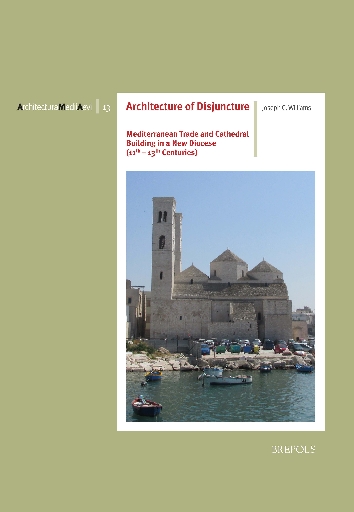
Architecture of Disjuncture
Mediterranean Trade and Cathedral Building in a New Diocese (11th - 13th Centuries)
show More to view fulltext, buy and share links for:Architecture of Disjuncture show Less to hide fulltext, buy and share links for: Architecture of DisjunctureThrough careful analysis of the Romanesque cathedral of Molfetta (in Apulia, southern Italy), Williams demonstrates how the commercial boom of the medieval Mediterranean changed the way churches were funded, designed, and built. The young bishopric of Molfetta, emerging in an economy of long-distance trade, competed with much wealthier institutions in its own diocese. Funding for the cathedral was slow and unpredictable. To adapt, the builders designed toward versatility, embracing multi-functionalism, change over time, specialization, and a heterogeneous style.
-
-
-
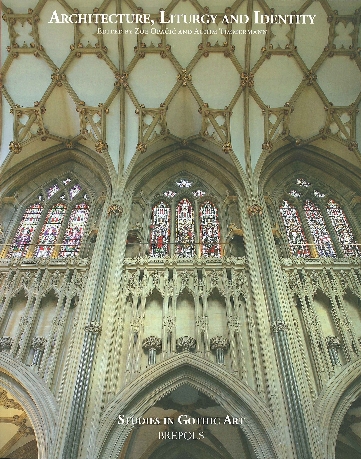
Architecture, Liturgy and Identity
Liber Amicorum Paul Crossley
show More to view fulltext, buy and share links for:Architecture, Liturgy and Identity show Less to hide fulltext, buy and share links for: Architecture, Liturgy and IdentityThis collection of essays, written in honour of the eminent architectural historian Paul Crossley, brings together some of the most distinguished scholars of medieval art and architecture from the United States and many parts of Europe. Covering a broad spectrum of topics and approaches including recent discoveries, new interpretations and critical debates, this book and its counterpart Image, Memory and Devotion (also published in the Studies in Gothic Art series) offer a fitting tribute to the exceptional range of Professor Crossley’s intellectual interests, while providing invaluable insights into the present study of the Middle Ages.
-
-
-
Architecturer l'invisible
Autels, ligatures, écritures
show More to view fulltext, buy and share links for:Architecturer l'invisible show Less to hide fulltext, buy and share links for: Architecturer l'invisibleDes ethnologues, des hellénistes, un assyriologue, une médiéviste, conscients du risque d'ethnocentrisme que fait peser l'utilisation de la catégorie de la «présence» dans le champ du religieux, ont cependant placé cette abstraction au centre de leurs travaux : ils ont fait de la «présence» un dénominateur commun dans un large spectre de catégories comparatives que l'on a coutume d'étudier séparément, comme la divination, le sacrifice, la possession. La simple approche concrète de ce que l'on pourrait appeler «autel» dans les cultures particulières, a démontré que cet artefact rituel pouvait se réaliser indépendamment de toute procédure spécifique d'aménagement ou de construction, mais plus directement dans la gestuelle de présentation de l'offrande, animée ou inanimée ; et l'instance pouvait elle-même se réaliser sous la forme d'un autel. Simultanément, des corrélations nouvelles, rarement repérées, ont pu émerger entre des composantes du rite, faisant apparaître ici, une articulation étroite entre parole, écriture et ligature, là la récurrence de «bouches» pour faire taire, ingérer, proférer, révéler, maudire, ailleurs encore la grammaire complexe et les gestes à suivre pour les formes variées du dépôt. Les contributions se distribuent entre trois verbes d'action : ouvrir, parce que toute instauration et toute «reprise» d'un culte requièrent l'invention et la mise en place d'un commencement; œuvrer, parce que le rite fait feu de tout bois dans les manipulations qui, par métaphore ou par métonymie, construisent des lieux de mise en présence des acteurs et des instances ; écrire, parce qu'en toute performance rituelle, y compris dans les sociétés réputées sans écriture, surgissent un temps d'inscription et un temps de déchiffrement du signe, sur un support rendu efficace tant par ses qualités propres que par cette inscription même.
Michel Cartry, ethnologue de l'Afrique Noire (École Pratique des Hautes Études), Jean-Louis Durand, helléniste et anthropologue (CNRS, Centre Louis Gernet), Renée Koch Piettre, helléniste et comparatiste (École Pratique des Hautes Études), animent ensemble à Paris un groupe de travail sur les pratiques des polythéismes, en s'inspirant des travaux de Marcel Detienne. Leurs travaux croisés ont exploré les aires sacrificielles, avant de s'orienter vers la question de la «présence» des puissances de l'au-delà.
-
-
-
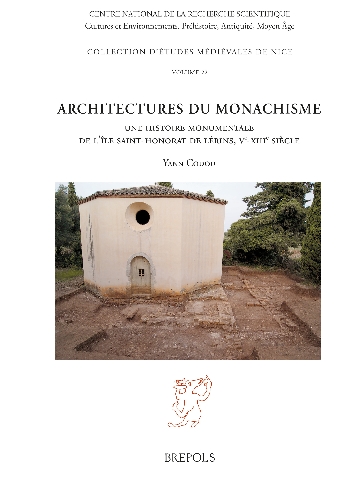
Architectures du monachisme
Une histoire monumentale de l’Île Saint-Honorat de Lérins, Ve-XIIIe siècle
show More to view fulltext, buy and share links for:Architectures du monachisme show Less to hide fulltext, buy and share links for: Architectures du monachismeL’île Saint-Honorat de Lérins accueille des religieux depuis le début du Ve siècle. Il s’agit d’un haut lieu du monachisme, témoin des expériences ascétiques insulaires qui se développent en Occident durant l’Antiquité tardive. Le caractère exceptionnel de Lérins tient aussi à la longue durée d’occupation du site par des religieux. Ce n’est qu’à partir de 2005 qu’ont été entreprises des recherches archéologiques d’envergure sur l’île : fouilles et archéologie du bâti, qui font de Lérins la seule île monastique pour laquelle il existe des vestiges archéologiques remontant de façon assurée aux premières expériences ascétiques occidentales. En présentant ce dossier, l’ouvrage de Yann Codou apporte un éclairage inédit sur la genèse du monachisme en Occident, où des expériences érémitiques cohabitent, au sein de l’espace insulaire, avec des formes de vie plus collectives. Les données restituent également les dynamiques du monachisme au cours du haut Moyen Âge et dans les siècles suivants, en particulier le processus de communautarisation du monachisme. L’architecture est ici un document historique à part entière, qui dialogue avec les sources écrites. Les multiples monuments qui composent le paysage insulaire offrent un terrain de choix pour comprendre des mécanismes de construction identitaire, fondés sur la création et la réinterprétation des espaces sacrés. Les enjeux de la recherche dépassent largement l’histoire de la seule communauté lérinienne pour s’inscrire dans une réflexion sur l’organisation des espaces monastiques et leurs mutations tout au long du Moyen Âge.
-
-
-
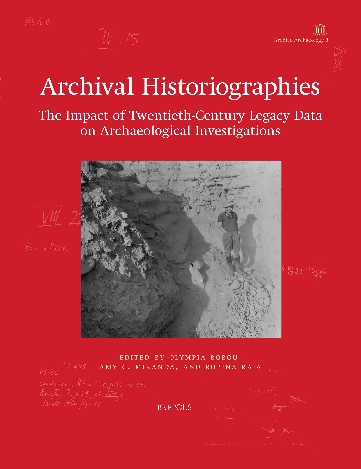
Archival Historiographies
The Impact of Twentieth-Century Legacy Data on Archaeological Investigations
show More to view fulltext, buy and share links for:Archival Historiographies show Less to hide fulltext, buy and share links for: Archival HistoriographiesArchives held in institutions around the world hold a wealth of material but traditionally, the fields of Classical and ancient Near Eastern archaeology have been slow to make use of such legacy data in their investigations. In recent years, however, this trend has begun to change, and scholars increasingly recognize the importance of archival material to their research. Drawing directly on these trends, this volume offers the first in-depth analysis of what it means to engage in archive archaeology and how it can influence understandings of both the ancient world and the recent past. Excavation historiographies and the formation of archaeological archives in the twentieth century are investigated in locations from across the Eastern Mediterranean and the Middle East, with current understanding of sites such as Dura Europos or Palmyra being fundamentally reassessed in the light of the archival material. Crucially, the volume contributions gathered here look to the future as well as to the past: archives are acknowledged as essential to cultural heritage preservation and restitution initiatives, and chapters explore best practices, as well as presenting some of the manifold potentials of archive and legacy data to future research.
-
-
-

Archives Internationales d'Histoire des Sciences
show More to view fulltext, buy and share links for:Archives Internationales d'Histoire des Sciences show Less to hide fulltext, buy and share links for: Archives Internationales d'Histoire des SciencesArchives Internationales d’Histoire des Sciences aims to publish works in the history of science, epistemology, and philosophy of science across various fields: from biology and medicine to mathematics and astronomy, by way of the physical and chemical sciences, arts and architecture, and studies considering the institutional and political contexts in which science has developed. Archives Internationales d’Histoire des Sciences encourages the publication of original works. Hence the journal gives priority to new discoveries and interpretations which enrich, deepen, and renew knowledge in the fields in which the journal is concerned, for all cultural areas from Antiquity to contemporary times.
The Archives Internationales d’Histoire des Sciences publish 2 issues per year in six languages: English, French, Italian, German, Russian, and Spanish. Each issue should contain varied and duly evaluated contributions, as well as individual articles, thematic sets of papers, and reviews of recent books.
More information about this journal on Brepols.net
-