Brepols Online Books Medieval Miscellanea Collection 2021 - bob2021mime

Collection Contents
1 - 20 of 47 results
-
-
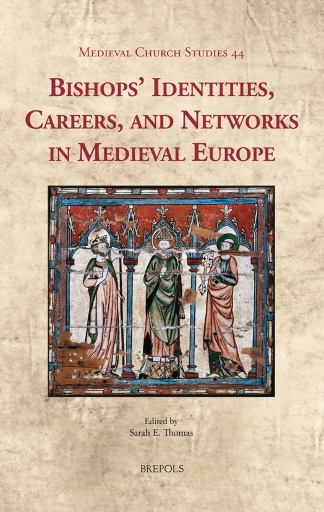
Bishops’ Identities, Careers, and Networks in Medieval Europe
show More to view fulltext, buy and share links for:Bishops’ Identities, Careers, and Networks in Medieval Europe show Less to hide fulltext, buy and share links for: Bishops’ Identities, Careers, and Networks in Medieval EuropeBishops were powerful individuals who had considerable spiritual, economic, and political power. They were not just religious leaders; they were important men who served kings and lords as advisers and even diplomats. They also controlled large territories and had significant incomes and people at their command. The nature of the international Church also meant that they travelled and had connections well beyond their home countries, were players on an increasingly international stage, and were key conduits for the transfer of ideas.
This volume examines the identities and networks of bishops in medieval Europe. The fifteen papers explore how senior clerics attained their bishoprics through their familial, social, and educational networks, their career paths, relationships with secular lords, and the papacy. It brings together research on bishops in central, southern, and northern Europe, by early career and established scholars. The first part features five case-studies of individual bishops’ identities, careers, and networks. Then we turn to examine contact with the papacy and its role in three regions: northern Italy, the archbishopric of Split, and Sweden. Part III focuses on five main issues: royal patronage, reforming bishops, nepotism, social mobility, and public assemblies. Finally Part IV explores how episcopal networks in Poland, Sigüenza, and the Nidaros church province helped candidates achieve promotion. These contributions will thus enhance of our understanding of how bishops fit into the religious, political, social, and cultural fabrics of medieval Europe.
-
-
-
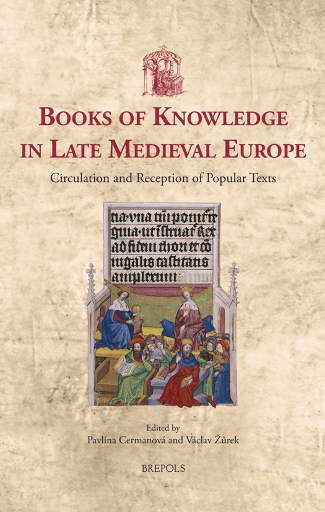
Books of Knowledge in Late Medieval Europe
show More to view fulltext, buy and share links for:Books of Knowledge in Late Medieval Europe show Less to hide fulltext, buy and share links for: Books of Knowledge in Late Medieval EuropeThis book provides a series of studies concerning unique medieval texts that can be defined as ‘books of knowledge’, such as medieval chronicles, bestiaries, or catechetic handbooks. Thus far, scholarship of intellectual history has focused on concepts of knowledge to describe a specific community, or to delimit intellectuals in society. However, the specific textual tool for the transmission of knowledge has been missing. Besides oral tradition, books and other written texts were the only sources of knowledge, and they were thus invaluable in efforts to receive or transfer knowledge. That is one reason why texts that proclaim to introduce a specific field of expertise or promise to present a summary of wisdom were so popular. These texts discussed cosmology, theology, philosophy, the natural sciences, history, and other fields. They often did so in an accessible way to maintain the potential to also attract a non-specialised public. The basic form was usually a narrative, chronologically or thematically structured, and clearly ordered to appeal to readers. Books of this kind could be disseminated in dozens or even hundreds of copies, and were often available (by translation or adaptation) in various languages, including the vernacular.
In exploring these widely-disseminated and highly popular texts that offered a precise segment of knowledge that could be accessed by readers outside the intellectual and social elite, this volume intends to introduce books of knowledge as a new category within the study of medieval literacy.
-
-
-
Centres and Peripheries in the History of Philosophical Thought / Centri e periferie nella storia del pensiero filosofico
show More to view fulltext, buy and share links for:Centres and Peripheries in the History of Philosophical Thought / Centri e periferie nella storia del pensiero filosofico show Less to hide fulltext, buy and share links for: Centres and Peripheries in the History of Philosophical Thought / Centri e periferie nella storia del pensiero filosoficoThis volume is an homage to the great intellectual contribution made by Loris Sturlese to the field of history of medieval philosophy. Its point of departure lies in a methodological line, which Sturlese has maintained throughout his whole academic career: the importance in the historical and conceptual reconstruction of medieval philosophical thought of focusing not only on the classical, most famous centers of knowledge production and transmission, but also on the often-neglected peripheries, which during the Middle Ages were increasingly more relevant in propelling the circulation of texts and ideas. In this volume, the notions of ‘center’ and ‘periphery’ are not understood in a merely geographical sense, but also in conceptual, linguistic, historical and literary terms. The richness of this approach is demonstrated by the broad spectrum of the contributions, which range from Islamic philosophy to Italian Renaissance, including the reception of ancient philosophy and of Arabic scientific works in the Latin world, and up to eighteenth-century French geography. Special attention is devoted to the philosophical thought developed in the German area. The volume does not lack in giving space to important medieval figures, such as Dante, as well as to more general philosophical notions, such as the concept of rationality.
The volume explores connections, ruptures, relations and affinities through the analysis of paradigmatic figures, places and topics within the micro- and macro-histories of philosophy.
-
-
-
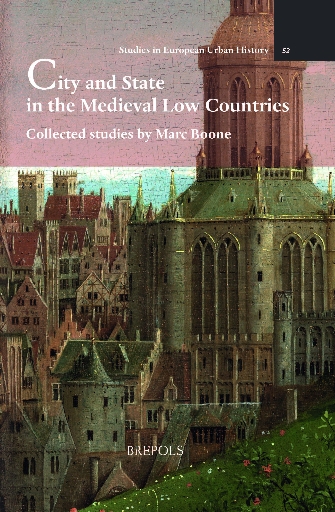
City and State in the Medieval Low Countries
show More to view fulltext, buy and share links for:City and State in the Medieval Low Countries show Less to hide fulltext, buy and share links for: City and State in the Medieval Low CountriesThe oeuvre of Marc Boone (Ghent, 1955) has become standard reading for specialists of medieval European towns and cities, as well as for those interested in the history of state building - most notably that of the Burgundian polity. Honoring Ghent University’s venerable tradition of medieval studies begun by Henri Pirenne and building upon the work of his Doktorvater Walter Prevenier, Marc Boone also investigated taxation and the history of government spending, popular protest, and the persecution of “deviant” sexuality. Over the course of his rich career, he served as president of the European Association of Urban History and as dean of the Faculty of Arts and Philosophy of Ghent University. For more than twenty years, he taught the introductory course on historical criticism to every first-year student of the faculty, and thus had a major impact on the pensée critique of generations of young minds. Upon the occasion of his retirement in 2021, his former students have compiled this collection of some of his best historical essays, half of which have been translated from French and Dutch into English.
-
-
-
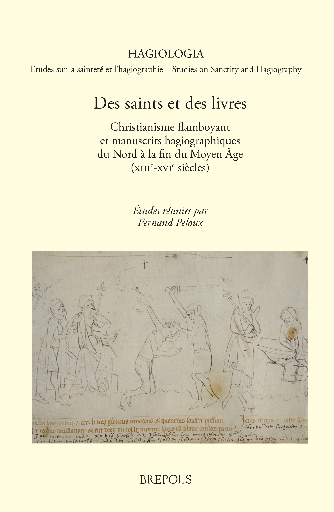
Des saints et des livres
show More to view fulltext, buy and share links for:Des saints et des livres show Less to hide fulltext, buy and share links for: Des saints et des livresÀ la fin du Moyen Âge, la production hagiographique manuscrite se transforme et connaît son dernier âge d’or entre le succès éditorial de la Légende dorée et l’arrivée de l’imprimerie. De nombreux textes anciens sont abrégés pour intégrer de nouvelles collections. Ce phénomène est en partie responsable du relatif désintérêt des historiens à leur égard : à quoi bon s’intéresser à ces abrégés alors qu’il reste tant à découvrir dans les grands légendiers du Moyen Âge central, et qu’on commence à peine à mieux connaître les tout premiers manuscrits conservés ? L’objectif de ce livre est de mieux saisir la fonction sociale du manuscrit hagiographique, à une période, celle du « christianisme flamboyant », caractérisée par l’accumulation et la multiplication des dévotions. En se focalisant sur les Pays-Bas méridionaux et une large France septentrionale, une région traversée par la devotio moderna et d’intenses dynamiques religieuses, son objectif est aussi de comprendre ensemble les légendiers latins et vernaculaires, en moyen néerlandais comme dans les parlers d’oïl. Il s’agit de saisir les conditions matérielles de la circulation des textes hagiographiques, mais aussi l’usage de ces manuscrits, dans le cadre de la pastorale et des pratiques cultuelles collectives comme dans celui de l’affirmation de l’individu à la fin du Moyen Âge.
-
-
-
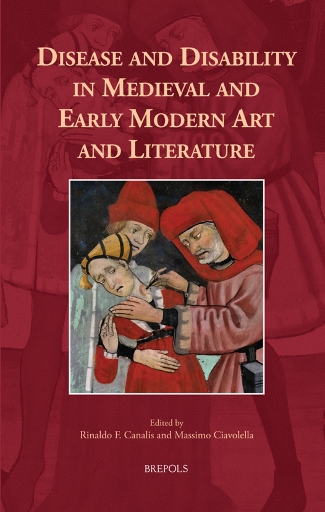
Disease and Disability in Medieval and Early Modern Art and Literature
show More to view fulltext, buy and share links for:Disease and Disability in Medieval and Early Modern Art and Literature show Less to hide fulltext, buy and share links for: Disease and Disability in Medieval and Early Modern Art and LiteratureHumanity has always shown a keen interest in the pathological, ranging from a morbid fascination with ‘monsters’ and deformities to a genuine compassion for the ill and suffering. Medieval and early modern people were no exception, expressing their emotional response to disease in both literary works and, to a somewhat lesser extent, in the plastic arts. Consequently, it becomes necessary to ask what motivated writers and artists to choose an illness or a disability and its physical and social consequences as subjects of aesthetic or intellectual expression. Were these works the result of an intrusion in their intent to faithfully reproduce nature, or do they reflect an intentional contrast against the pre-modern portrayal of spiritual ideals and, later, through the influence of the classics, the rediscovered importance and beauty of the human body?
The essays contained in this volume address these questions, albeit not always directly but, rather, through an analysis of the societal reactions to the threats and challenges that essentially unopposed disease and physical impairment presented. They cover a wide range of responses, variable, of course, according to the period under scrutiny, its technological moment, and the usually fruitless attempts at treatment.
-
-
-
Décrire le manuscrit liturgique
show More to view fulltext, buy and share links for:Décrire le manuscrit liturgique show Less to hide fulltext, buy and share links for: Décrire le manuscrit liturgiqueObjet complexe en raison de sa nature à la fois normative et ‘documentaire’, le livre liturgique offre une diversité de formes qui rend parfois son classement malaisé. Les différents livres destinés au culte sont à considérer non seulement en fonction des textes qu’ils contiennent, mais aussi quant à la manière dont les textes sont organisés, voire présentés, aux aspects codicologiques et surtout aux raisons pour lesquelles ils ont été copiés, à savoir les circonstances liturgiques, le lieu et / ou le destinataire ultime. Malgré cette approche analytique déjà expérimentée, il faut constater une difficulté considérable, de la part des chercheurs et conservateurs de bibliothèques, à comprendre les manuscrits liturgiques et à en donner une description efficace. Ces aspects ont fait l’objet de deux journées d’étude qui se sont tenues à Paris, l’une en 2014 (« Aspiciens a longe. Sources et transmission des livres liturgiques. Répertoires, éditions et catalogues ») et l’autre en 2019 (« La description du manuscrit liturgique. Hommage à Victor Leroquais », destinataire de la dotation Hermans). Le présent volume regroupe une grande partie des communications, qui offrent des approches différentes et s’avèrent être d’une importance fondamentale pour la compréhension de ce type de sources.
-
-
-
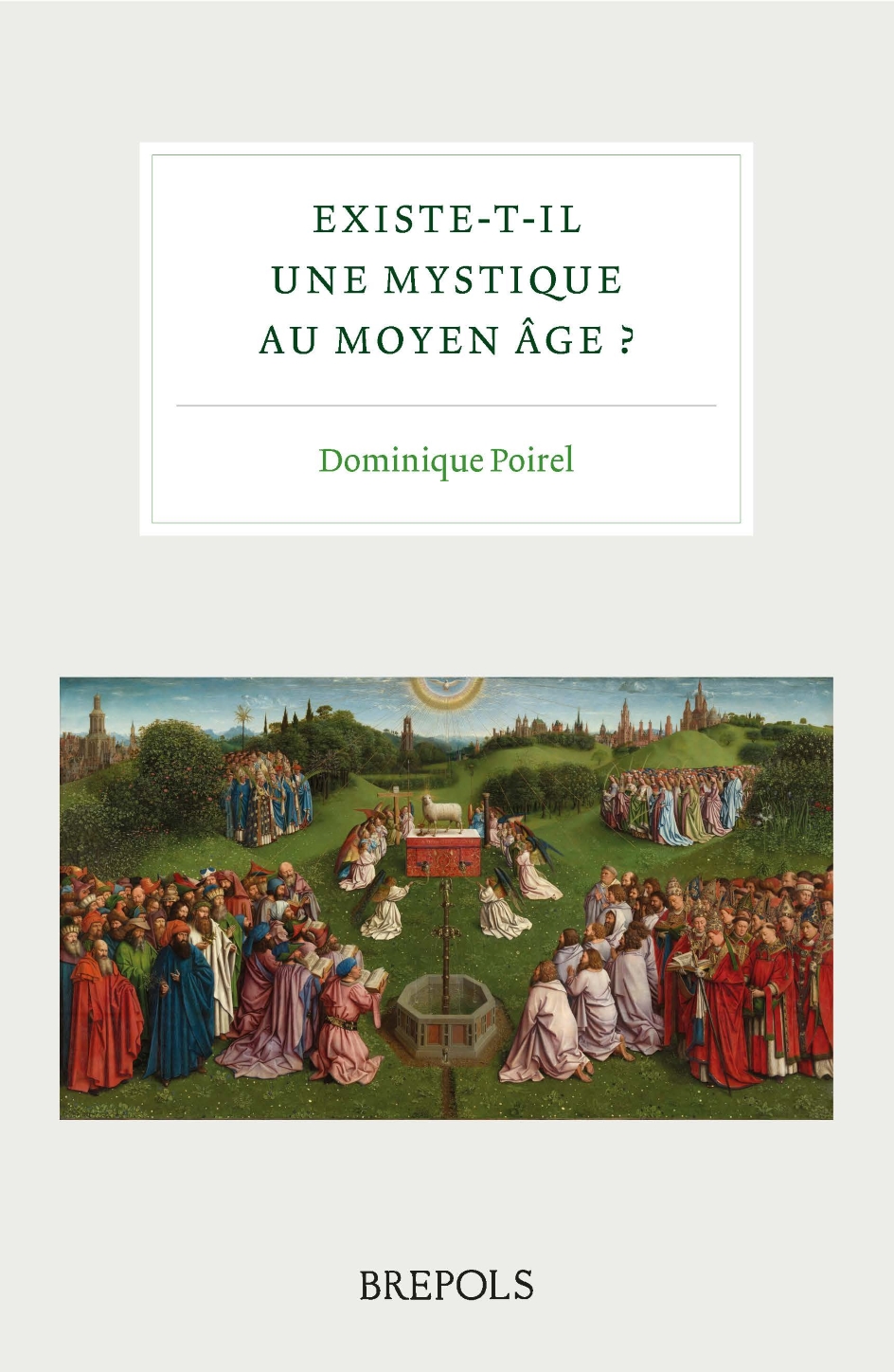
Existe-t-il une mystique au Moyen Âge ?
show More to view fulltext, buy and share links for:Existe-t-il une mystique au Moyen Âge ? show Less to hide fulltext, buy and share links for: Existe-t-il une mystique au Moyen Âge ?Si la notion de mystique semble aller de soi pour le Moyen Âge, ce semble être par suite d’un malentendu. Car si l’historiographie du xixe siècle flétrissait volontiers de ce mot ce qui, dans la littérature médiévale, lui semblait mièvre, irrationnel ou extravagant, les auteurs médiévaux se servent quant à eux de l’adjectif “mystique” pour désigner bien autre chose : une certaine manière d’interpréter les Écritures (sens mystique), une façon de discourir sur Dieu (théologie mystique), une appartenance à la même Église (corps mystique). Il convient donc de revenir aux textes, en leur posant ces questions. Quand le mot “mystique” est-il employé dans des œuvres médiévales, et que veut-il dire ? À l’inverse, dans les œuvres dites aujourd’hui “mystiques”, comment ce qui relève de cette catégorie est-il nommé, défini, compris par les auteurs eux-mêmes ? Est-il pertinent d’enclore dans un même genre des textes aussi divers que les visions, la littérature de dévotion, les analyses de la contemplation, les itinéraires de l’âme vers Dieu, la Théologie mystique du pseudo-Denys ? De la fin de l’époque patristique aux début de la Renaissance, le sens du mot “mystique” est-il resté stable, ou bien a-t-il évolué ? Au fond, peut-on dire que la notion moderne de mystique a son origine dans les temps médiévaux ?
-
-
-
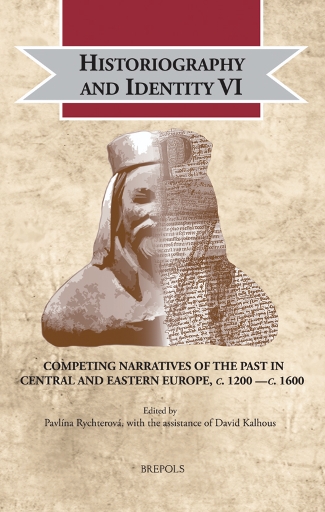
Historiography and Identity VI: Competing Narratives of the Past in Central and Eastern Europe, c. 1200 —c. 1600
show More to view fulltext, buy and share links for:Historiography and Identity VI: Competing Narratives of the Past in Central and Eastern Europe, c. 1200 —c. 1600 show Less to hide fulltext, buy and share links for: Historiography and Identity VI: Competing Narratives of the Past in Central and Eastern Europe, c. 1200 —c. 1600The volume discusses Central European and Eastern Central European historiographies of the High and Late Middle Ages. It deals with histories written in a time which brought about a profound differentiation of medieval societies in these regions. As new social classes achieved economic and political power, the demand for reassuring identifications grew more pressing. Narratives of the past were tailored specifically for distinct social groups, often using vernacular languages instead of the universal language of elite education, Latin.
The volume pays attention to the interplay between languages and focuses on the strategies that individual works developed in order to balance the many alternative modes of identification. Filling a significant scholarly gap, the volume offers important insights into narratives of identification written in Latin and in the various vernaculars emerging as the new political languages of the period.
-
-
-

Historiography and Identity IV
show More to view fulltext, buy and share links for:Historiography and Identity IV show Less to hide fulltext, buy and share links for: Historiography and Identity IVHistorical writing has shaped identities in various ways and to different extents. This volume explores this multiplicity by looking at case studies from Europe, Byzantium, the Islamic World, and China around the turn of the first millennium. The chapters in this volume address official histories and polemical critique, traditional genres and experimental forms, ancient traditions and emerging territories, empires and barbarians. The authors do not take the identities highlighted in the texts for granted, but examine the complex strategies of identification that they employ. This volume thus explores how historiographical works in diverse contexts construct and shape identities, as well as legitimate political claims and communicate ‘visions of community’.
-
-
-
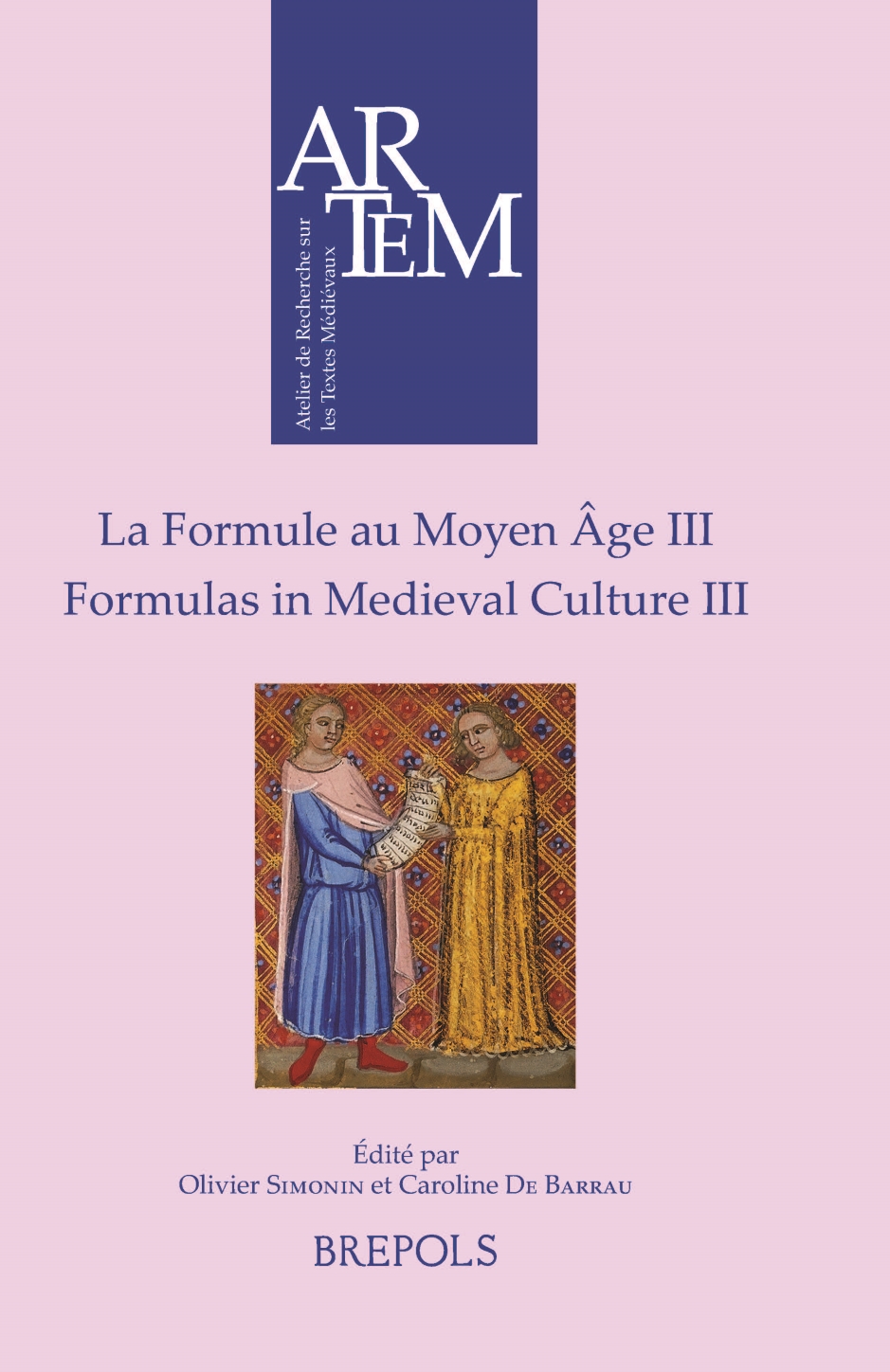
La Formule au Moyen Âge
show More to view fulltext, buy and share links for:La Formule au Moyen Âge show Less to hide fulltext, buy and share links for: La Formule au Moyen ÂgeLes modes de pensée et de représentation médiévaux sont profondément marqués par l'usage de reprises et de régularités attendus et reconnaissables, qui sont sources de tensions productives entre expression individuelle et normes collectives, changement et continuité, création et convention. De façon très générale, toute formule se caractérise par un figement ou une régularité plus ou moins marquée laissant la place, en creux, à l'innovation. La définition de la formule se décline différemment en fonction de la discipline considérée, et cet ouvrage propose une réflexion interdisciplinaire sur ses différentes acceptions et sur les recoupements que l’on peut observer entre elles. En outre, un échange entre plusieurs intervenants, poursuivant une discussion sous forme de table ronde à l’occasion du colloque international organisé à Perpignan en 2014, vient clore le volume et propose un premier aperçu synthétique de l’emploi de la notion pour les différentes disciplines concernées : codicologie, diplomatique, épigraphie, histoire, histoire de l’art, littérature, linguistique, musicologie.
Ce travail sera prolongé par de futures publications dans la même collection, dans l’espoir que l’effort de clarification voulu permettra à d’autres d’explorer encore plus avant la notion de formule et de continuer à attester de sa fécondité pour les études médiévales.
-
-
-
Latin Anonymous Sermons from Late Antiquity and the Early Middle Ages (ad 300-800)
show More to view fulltext, buy and share links for:Latin Anonymous Sermons from Late Antiquity and the Early Middle Ages (ad 300-800) show Less to hide fulltext, buy and share links for: Latin Anonymous Sermons from Late Antiquity and the Early Middle Ages (ad 300-800)This volume contains the proceedings of the international conference on anonymous sermons, funded by the F.R.S.-FNRS and held on 16 May 2019 at the Université de Namur (Belgium), within the Faculty of Philosophy and Letters and the research centre Pratiques Médiévales de l’Écrit (PraME). It brings together scholars working on late antique and early medieval Latin preaching, and follows on previous volumes on Augustine and African sermons published in the Ministerium Sermonis subseries. The focus here is on Christian Latin preached texts, thought to date from the period c. 300-800 ad, which are not currently attributed to a known author. Long neglected because of their uncertain attribution, these sermons offer new material for the study of late antique and early medieval Christianity. The contributions assembled here provide an essential entry point to the study of these little-known sermons: after an introduction which sets the aims of the book, discusses the state of the art and describes main avenues for research, individual papers present future tools to classify sermons and explore their medieval transmission in manuscripts, offer new critical editions of previously unknown sermons, and develop methods and reliable criteria to shed new light on their historical context of composition. Both engaging with current issues and challenges and offering innovative case studies, this book opens up new ground for future research on late antique and early medieval Latin Christian preaching in general.
-
-
-
Legacies of the Crusades
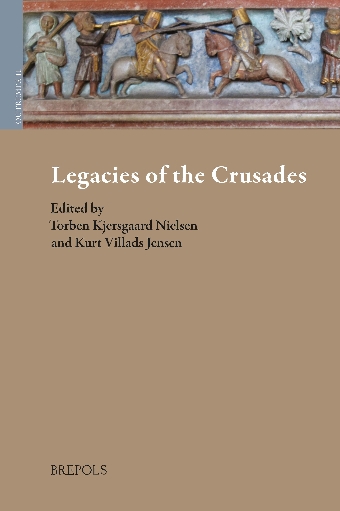
show More to view fulltext, buy and share links for:Legacies of the Crusades show Less to hide fulltext, buy and share links for: Legacies of the CrusadesWhen war ended, the hard work began. Crusader warfare was only the beginning, for after peace came huge and often fundamental changes for individuals and societies. First it was necessary to establish firm and secure agreements between enemies, and take care of prisoners of war and refugees. Soon followed new legal systems, and new social groups emerged as old and new families intermarried, or entire segments of the population became subordinates under new rulers. And in a longer time perspective, the entire physical landscape was changed to conform to and express the beliefs and values of the conquerors.
The military expeditions of the medieval crusades are well studied, at different times and in many diverse areas, but the consequences for individuals and societies much less. This book opens up a new research area, and contributes with 11 studies covering the Middle Eastern crusader states, the Mediterranean, and the Baltic Sea.
-
-
-
Les Communautés menacées au Haut Moyen Âge (vi e-xi e siècles)
show More to view fulltext, buy and share links for:Les Communautés menacées au Haut Moyen Âge (vi e-xi e siècles) show Less to hide fulltext, buy and share links for: Les Communautés menacées au Haut Moyen Âge (vi e-xi e siècles)Ce volume découle d’une double interrogation: sur la manière dont on peut appréhender les communautés du haut Moyen Âge, qu’elles soient religieuses ou politiques, rurales ou urbaines, textuelles ou émotionnelles, et sur le rôle que jouent les menaces de tous ordres (politique, économique, environnemental) dans la constitution, le fonctionnement et l’évolution de ces communautés. Car la menace structure l’action collective: elle est déstabilisante, mais aussi créatrice d’ordre. Elle impose de renégocier les rapports entre intérieur et extérieur, entre normalité et anormalité, entre individu et groupe. Ce sont ces rapports de création et de destruction entre menace, ordre et communauté qui forment le principal objet de ces études menées par des historiens et éclairées par l’apport des sciences sociales.
-
-
-
Litterarum dulces fructus
show More to view fulltext, buy and share links for:Litterarum dulces fructus show Less to hide fulltext, buy and share links for: Litterarum dulces fructusDrawing inspiration from the scholarship of Professor Michael Herren, founding editor of The Journal of Medieval Latin, this florilegium of studies advances our understanding of the dynamics of Latin and vernacular literature and learning in the early medieval world. Taken together, the papers gathered in this volume cast light on authors, poets, glossators, and compilers at work as they grappled with linguistic and literary ambitions and challenges, while negotiating their use of ancient authorities to address contemporary concerns.
-
-
-
Marginal Figures in the Global Middle Ages and the Renaissance
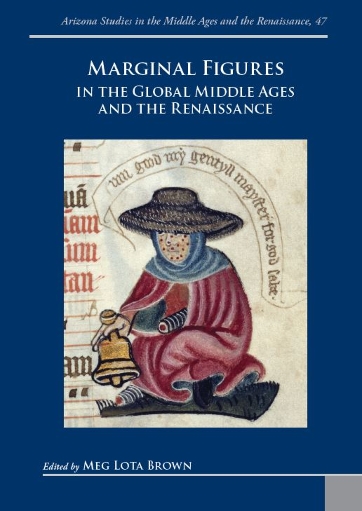
show More to view fulltext, buy and share links for:Marginal Figures in the Global Middle Ages and the Renaissance show Less to hide fulltext, buy and share links for: Marginal Figures in the Global Middle Ages and the RenaissanceThe essays in this collection explore the motives and methods of marginalization throughout pre-modern Europe, Japan, the Ottoman Empire, and areas that are now Mexico, Iran, Peru, Syria, and Costa Rica. The authors offer a rich variety of perspectives on precarity and privilege, resistance and hybridity, they unpack the intersections of power, tradition, and difference, and they examine the relationship of marginality to both violence and creativity not only in the global Middle Ages and Renaissance but also in our present moment. While deepening readers’ understanding of our antecedents, the collection illuminates the contemporary urgency of being 'ethically awake to the needs, sufferings, sorrows, and dignity of others around the globe'.
-
-
-
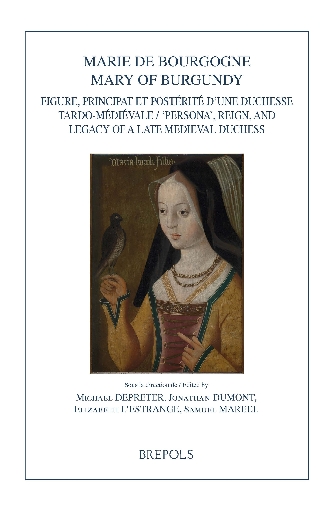
Marie de Bourgogne/Mary of Burgundy
show More to view fulltext, buy and share links for:Marie de Bourgogne/Mary of Burgundy show Less to hide fulltext, buy and share links for: Marie de Bourgogne/Mary of BurgundyMary of Burgundy (r. 1477-1482) occupies an important place in the history of late medieval and Early Modern Europe, yet her life and principate have received relatively little scholarly attention. They are, however, key to the history both of the Low Countries and of Europe, since her marriage to Maximilian of Austria united the Habsburgs with the Valois-Burgundy dynasty, giving them vast territories on the borders of France. In this book, some of the best specialists in the field contribute to a better understanding of Mary’s principate, its features, and its long-term perception. In the first part, the authors address the issue of Mary’s contested legitimacy as a late-medieval female ruler: law, literature, visual art and theatrical representations are examined as means of communication, strengthening or weakening her authority. In the second part, the authors examine some of Mary’s governmental tools and the agents behind them. Finally, the last part questions the ways in which Mary’s power and her principate have been represented and reinterpreted in subsequent eras, often with political or social intent, beginning with Maximilian’s long regency and reign immediately after her death, right up to modern-day Belgium.
-
-
-
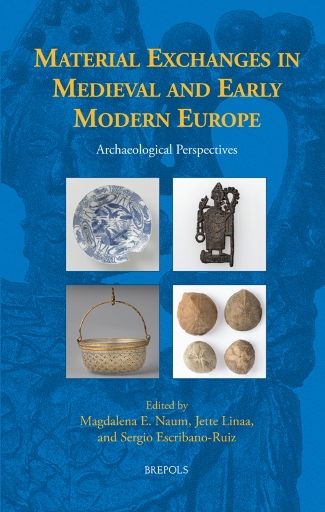
Material Exchanges in Medieval and Early Modern Europe
show More to view fulltext, buy and share links for:Material Exchanges in Medieval and Early Modern Europe show Less to hide fulltext, buy and share links for: Material Exchanges in Medieval and Early Modern EuropeThe study of the movement of ‘things’ - the exchange of objects as gifts or through trade, the itineraries that they followed when on the move, and their changing importance from location to location - can offer unique insights into our understanding of past societies; and archaeology plays a vital role in allowing such movements to be traced. Nonetheless the circulation of objects across time, and between peoples and places, has long been neglected as a field of research in its own right. This volume aims to address this gap in scholarship by drawing on recent archaeological research to provide a detailed study of the moment of objects across Europe in the late medieval and early modern period. The contributions gathered here trace the interactions between peoples, ideas, and objects in order to explore the impact of movement both on the material things themselves, and on the people who manufactured, exchanged, or used such goods. The volume draws on a wide range of archaeological evidence to explore subjects as varied as production and transport, modes of trade, the connections between trade and religion, and the emotional connections between things and people. Together, they offer a pioneering approach to our understanding of objects and their movement in the past.
-
-
-
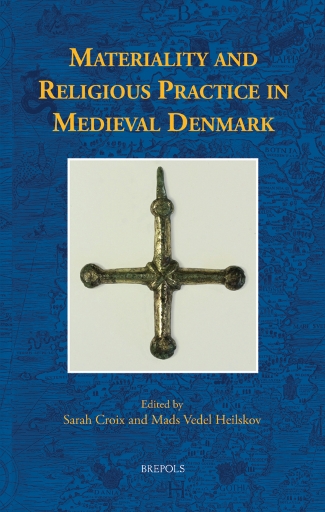
Materiality and Religious Practice in Medieval Denmark
show More to view fulltext, buy and share links for:Materiality and Religious Practice in Medieval Denmark show Less to hide fulltext, buy and share links for: Materiality and Religious Practice in Medieval DenmarkFrom bread and wine to holy water, and from oils and incense to the relics of saints, the material objects of religion stood at the heart of medieval Christian practice, bridging the gap between the profane and the divine. While theoretical debates around the importance of physicality and materiality have animated scholarship in recent years, however, little attention has been paid to finding solid, empirical evidence upon which to base such discussions.
Taking medieval Denmark as its case study, this volume draws on a wide range of different fields to explore and investigate material objects, spaces, and bodies that were employed to make the sacred tangible in the religious experience and practice of medieval people. The contributions gathered here explore subjects as diverse as saints’ relics, sculptures, liturgical vessels and implements, items used for personal devotion, gospel books, and the materiality of Christian burials to explore the significance of objects that moved the souls, bodies, hearts, and minds of the faithful. In doing so, they also open new insights into religion and belief in medieval Denmark.
-