BOB2025MIOT

Collection Contents
1 - 50 of 60 results
-
-
Ambiguum 10 of Maximus the Confessor in Modern Study
show More to view fulltext, buy and share links for:Ambiguum 10 of Maximus the Confessor in Modern Study show Less to hide fulltext, buy and share links for: Ambiguum 10 of Maximus the Confessor in Modern StudyAmbiguum 10 is an important sample of Maximus the Confessor’s philosophical exegesis, which has not received concentrated scholarly attention so far. This volume includes a new critical text edition by Prof. Carl Laga and a new English translation by Dr. Joshua Lollar. It also offers a unique insight into the universe of the great Christian thinker, showcasing his extensive knowledge of Aristotelian, Platonic and Neoplatonic philosophy and offering possible parallels with the Corpus Hermeticum and Ps-Dionysius the Areopagite. The present volume is the first attempt to bring together scholars from different traditions to understand the message and the reception of this seminal work.
-
-
-
Clashing Religions in Ancient Egypt
show More to view fulltext, buy and share links for:Clashing Religions in Ancient Egypt show Less to hide fulltext, buy and share links for: Clashing Religions in Ancient EgyptWhat did ‘religion’ mean for the Ancient Egyptians? Was the state involved in acting as a unifying and founding force for Egyptian religion or can we still identify some clashes between different religious practices? To what extent did different rituals, practices, and beliefs intersect and merge across time and space? Such questions have long preoccupied scholars working in the field, but they have often only been considered through the lens of official, ‘centralized’ texts. Yet increasingly, there is an acknowledgement that such texts require calibration from archaeological data in order to offer a more nuanced understanding of how people must have lived and worshipped.
The chapters gathered in the volume aim to offer a thorough exploration of Egyptian cultural and religious beliefs, and to explore how these impacted on other areas of daily life. Contributors explore the connection between religion and central power, the paradigms around burial and access to the afterlife, the interconnections between religion, demonology, magic, and medicine, and the impact of multicultural interaction on the religious landscape. What emerges from this discussion is an understanding that the only truly identifiable clash is that between modern, Eurocentric perspectives, and the views of the ancient Egyptians themselves.
-
-
-
De la lettre à l’esprit / From the Letter to the Spirit
show More to view fulltext, buy and share links for:De la lettre à l’esprit / From the Letter to the Spirit show Less to hide fulltext, buy and share links for: De la lettre à l’esprit / From the Letter to the SpiritLa parution du Guide divin dans le shî’isme originel en 1992 a marqué le début de l’itinéraire scientifique de Mohammad Ali Amir-Moezzi. Suivant une ligne directrice cohérente aux ramifications nombreuses, cet islamologue a transformé en profondeur les études shi’ites d’abord, notamment en soulignant l’importance de la « tradition ésotérique originelle » dans l’histoire de ce grand courant de l’islam, et les études coraniques ensuite, par la prise en compte des sources shi’ites anciennes et la critique du récit traditionnel « orthodoxe ». Détenteur de 1996 à 2024 de la chaire « Exégèse et théologie de l’islam shi’ite » à la section des sciences religieuses de l’École Pratique des Hautes Études, Mohammad Ali Amir-Moezzi est également un professeur hors du commun dont l’enseignement a formé et inspiré de nombreux chercheurs actuels. Ces volumes d’hommage réunissent quarante-quatre contributions de ses collègues et amis, dont nombre d’anciens étudiants, de tous horizons, portant sur les domaines d’études chers au dédicataire : études shi’ites ; études coraniques ; antiquité tardive et débuts de l’islam ; traditions mystiques de l’islam ; aspects de la vie religieuse et intellectuelle contemporaine. Témoignages d’amitié et de reconnaissance pour une œuvre scientifique majeure, les contributions savantes réunies dans ces volumes en font un ouvrage de référence.
-
-
-
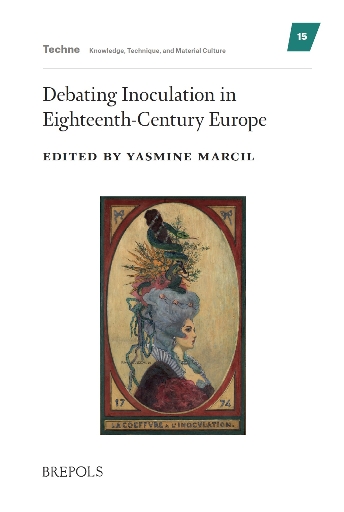
Debating Inoculation in Eighteenth-Century Europe
show More to view fulltext, buy and share links for:Debating Inoculation in Eighteenth-Century Europe show Less to hide fulltext, buy and share links for: Debating Inoculation in Eighteenth-Century EuropeSmallpox (known as "variole" or "petite vérole" in French) spread relentlessly across Europe during the eighteenth century, gaining an unprecedented and deadly momentum. While there was no cure for this highly infectious and often fatal disease, those that recovered from it were immune to future infections. This phenomenon was the origin of a practice of inoculation, whereby infectious material was introduced into the body to induce immunity. In Europe, this practice was initially experimented with in England, and it was subsequently adopted across the continent during the eighteenth century. Inoculation was, however, not without controversy—not least because the practice originated outside of Europe—and it became the subject of intense debate. This debate, this volume argues, extended beyond medical circles to include intellectuals and the broader public—a phenomenon driven by a growing periodical press. As books, scientific treatises, and plays crossed regional and national boundaries, debates on inoculation must, this volume shows, be examined within a European, transnational perspective, thereby considering how ideas were shaped by adaptation, translations, and citation. Doing so, this volume not only sheds new light on the history inoculation as a practice, but also illustrates how cultural history can enrich history of medicine
-
-
-
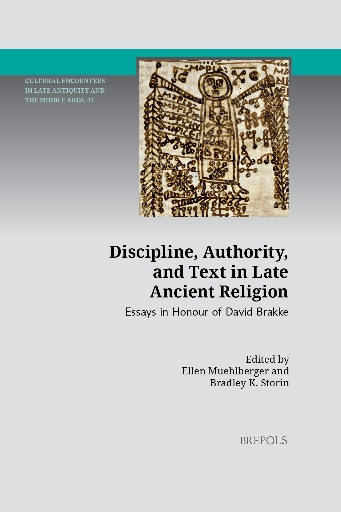
Discipline, Authority, and Text in Late Ancient Religion
show More to view fulltext, buy and share links for:Discipline, Authority, and Text in Late Ancient Religion show Less to hide fulltext, buy and share links for: Discipline, Authority, and Text in Late Ancient ReligionThis collection of essays on religious practice in the Mediterranean, Near East, and Middle East (ca. 100–800 ce) celebrates the impact that Professor David Brakke has had on the study of late antique religious history. Nineteen scholars celebrate the career of Professor Brakke with essays on a range of subjects on late ancient religion. Some chapters treat monastic texts, ascetic practice, and ritual performance; others address the roles of magic, demons, and miracle stories; still others examine Christian violence and martyrdom.
In particular, many of these essays explore the kinds of ascetic theory, practice, identity, organization, performance, and writing found throughout the diverse authors, groups, and locales of Late Antiquity. Essay topics cross disciplinary boundaries and operate in the overlapping intellectual space of Religious Studies, History, Classics, English, Anthropology, and Comparative Literature. By treating asceticism as a phenomenon within a relatively confined time period and geography across a variety of religious and literary traditions, this volume highlights the ascetic impulse within new areas.
The volume thus stands alone for its multifaceted discussions of religion and asceticism in Late Antiquity, and advances scholarly investigation of and discourse about late antique asceticism by expanding conceptual and disciplinary boundaries in new and exciting directions.
-
-
-
Disoriented
show More to view fulltext, buy and share links for:Disoriented show Less to hide fulltext, buy and share links for: Disoriented'Desnortar', or disoriented, means to lose the north or the sense of direction, to disorient. In Disoriented a collective book from a gender perspective, we consciously seek to lose both the geographical north and the north of the contemporary art canon. We aim to rethink and disrupt, from feminist, LGTBQ+ and postcolonial approaches, the coordinates that have articulated the discourses on the art history and art system along the 20th and 21st centuries. Coordinates that define how these artistic practices and systems of modernity and the contemporary are understood, the cardinal directions and main conceptual issues, or which artists are relevant or expendable according to the narratives of avant-garde and contemporary art history. It is crucial to reinterpret and disorientate, to disnorth and thereby shatter these references to overcome the gaps that prevent the emergence of alternative knowledges. To address questions or artists often perceived as peripheral to a grand historical narrative, we propose an intersection of modern and contemporary art history, gender, feminist, queer and postcolonial approaches, and transnational interrelations. This intersectionality allows us to actively lose the north of the canon and to direct our gaze towards subjects outside the usual centres of legitimation. Mostly, we attend to women artists, to peripheral geographical centres, to subaltern collectives, or to practices or materials regularly considered of little artistic interest. All of the above critiques how conventional discourses have excluded some collectives or certain artistic proposals, and the resistances that have emerged against them.
-
-
-
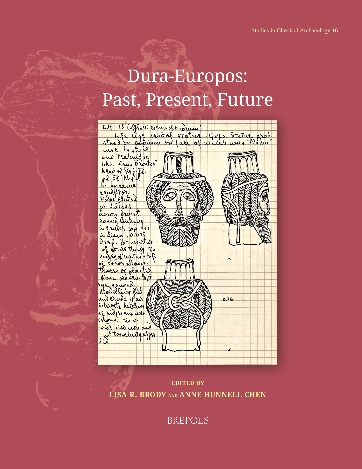
Dura-Europos: Past, Present, Future
show More to view fulltext, buy and share links for:Dura-Europos: Past, Present, Future show Less to hide fulltext, buy and share links for: Dura-Europos: Past, Present, FutureThis volume brings together an international and interdisciplinary host of scholars to reflect on the complicated legacies of exploration at the archaeological site of Dura-Europos, situated on the western bank of the Euphrates River near modern Salihiyeh (Syria). A chance discovery after World War I kicked off a series of excavations that would span the next century and whose finds are today housed in collections worldwide, including the Yale University Art Gallery, the Louvre, and the National Museum in Damascus. Dura-Europos exemplifies a multiethnic frontier town at the crossroads of major trade routes. Its textual remains and remarkably-preserved Christian, Jewish, and polytheist religious sanctuaries provide key resources for the study of antiquity and attest to the cross-cultural interconnectivity that was demonstrably central to the ancient world but which has been too often obscured by Eurocentric historiographic traditions and siloed disciplinary divisions.
Foreign-run, large-scale archaeological campaigns of the early twentieth century, like those at Dura-Europos, have created narratives of power and privilege that often exclude local communities. The significance of these imbalances is entangled with the destruction the site has experienced since the 2011 outbreak of conflict in Syria. As a step toward making knowledge descendant of early excavations more accessible, this volume includes Arabic summaries of each paper, following up on the simultaneous Arabic interpretation provided at the 2022 hybrid conference whose proceedings form the core of this publication. The papers address topics connected to essential themes in relation to Dura-Europos: long-distance trade relations and cross-border interactions in antiquity, including the exchange of technologies, people, and materials; Christianity, Judaism, and other religious practices, and their relations to one another; contemporary trafficking of looted artifacts; cultural heritage and the Islamic State; and the evolving role of museum collections, technologies, and archival materials for research.
-
-
-

Forgotten Roots of the Nordic Welfare State in Protestant Cultures
show More to view fulltext, buy and share links for:Forgotten Roots of the Nordic Welfare State in Protestant Cultures show Less to hide fulltext, buy and share links for: Forgotten Roots of the Nordic Welfare State in Protestant CulturesThe Nordic welfare state of the 20th century has been hailed around the world as a model of how to build democratic and egalitarian societies. It has often been described as a project of social democracy, often following a narrative of secularization and rationalization of society. However, some of the most important actors and ideas of the "Scandinavian Sonderweg" had their roots in Protestant, often Pietist and revivalist milieus that dreamed of creating an egalitarian community. The present volume explores these often forgotten roots in several case studies of phenomena from the seventeenth to the twenty-first century, focusing primarily on questioning the function of aesthetics in the creation of the welfare state model. We argue that aesthetics and what Friedrich Schiller called aesthetic education played an important, unifying role for Nordic societies. These aesthetics were shaped by Protestant ideas and practices. Through references to the then widespread circulation of educational texts based on Luther's catechism, the later pietistic catechism of Erik Pontoppidan, Nordic hymnbooks, and practices such as communal singing and preaching in church, church coffee, reading circles, and conventicle meetings, a common aesthetic language emerged that unified different social groups and their competing goals and claims. Civic actors and movements learned specific ways to engage in society, to develop practices of internalizing responsibility, (self)critique, and accountability, and to communicate and develop a more democratic modern civic sphere. We therefore propose to look at this history from the perspective of a historically changing aesthetic as an integrating principle for understanding the political, social, cultural, economic and many other aspects of the Nordic welfare state.
-
-
-
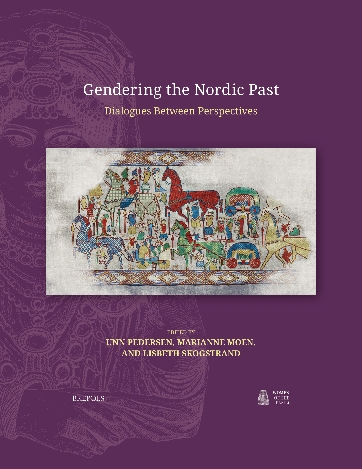
Gendering the Nordic Past
show More to view fulltext, buy and share links for:Gendering the Nordic Past show Less to hide fulltext, buy and share links for: Gendering the Nordic PastThe idea of the Nordic nations as champions of gender equality is firmly rooted in today’s perceptions of society. But how does such a modern comprehension influence our views of history? Does our understanding of gender impact on how we see the past? And do the ways in which we gender the past have an effect on our present identities?
From the Stone Age to the Early Modern period, and from warriors and queens to households and burials, this groundbreaking volume draws together research conducted as part of the project Gendering the Nordic Past, an inter-Nordic collaboration aimed at (re)evaluating and revitalizing the field of gender studies in the region. The chapters gathered in this volume, contributed by archaeologists and historians, theologians, art historians, and specialists in gender studies, aim to offer novel perspectives on the ways in which we gender the past. While many of the chapters focus explicitly on the Nordic countries, comparisons are also drawn with other regions in order to provide both internal and external views on the role of the collective past in present Nordic identities. The result, presented here, is an essential dialogue into the importance of gender in creating and maintaining past identities, as well as a new understanding of how the identities that we construct for the past can relate to heritage narratives.
-
-
-
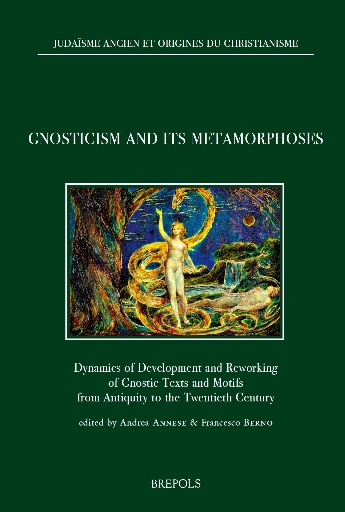
Gnosticism and Its Metamorphoses
show More to view fulltext, buy and share links for:Gnosticism and Its Metamorphoses show Less to hide fulltext, buy and share links for: Gnosticism and Its MetamorphosesThe complex and multifaceted religious phenomenon called Gnosticism continues to fascinate both specialists and the wider audience. This volume explores the “metamorphoses” of Gnosticism, through the analysis of selected examples. Late antique Gnostic groups and schools of thought developed and even changed their ideas when interacting with other religious groups and with various sources. Confrontation and polemics with the so-called “Great Church” and with other Christian groups were crucial to doctrinal elaboration of all parties involved. On a different side, one can trace the metamorphoses of Gnostic ideasthrough the centuries, as these ideas influenced, and were reinterpreted by, other religious and cultural traditions and currents, from Manichaeism to medieval dualistic movements, modern esotericism, and even contemporary literature.
The essays gathered in this volume focus on two main topics, namely how ancient Gnostic groups developed their doctrines by interpreting and reworking their wide range of sources (Jewish, early Christian, Platonic ones, etc.), and how ancient Gnostic ideas and motifs survived – with new forms – in later philosophical, religious, and literary works, up to the twentieth century.
The volume consists of three sections, the first being dedicated to early anti-Gnostic controversy in texts embedding Jewish-Christian and Petrine traditions and using Gnostic motifs for polemical purposes; the second to some treatises from the Nag Hammadi corpus and other Gnostic manuscripts (plus Epiphanius’ Panarion) so as to provide fresh insights into late antique Gnostic texts and groups; and the third to three case studies of the modern reception and reworking of Gnostic writings and ideas.
-
-
-

Les (r)évolutions dans le théâtre européen (xvii e-xviii e siècles)
show More to view fulltext, buy and share links for:Les (r)évolutions dans le théâtre européen (xvii e-xviii e siècles) show Less to hide fulltext, buy and share links for: Les (r)évolutions dans le théâtre européen (xvii e-xviii e siècles)Au fil des siècles, le théâtre a subi plusieurs transformations : formelles, esthétiques et techniques. Le jeu d’acteur, l’arrangement de la scène et l’aménagement de la salle de spectacle ont aussi évolué. Les dramaturges et les comédiens se sont investis dans la recherche de la meilleure forme d’expression, visant à influer le mieux sur le public. Dans différents pays européens, ces évolutions se manifestèrent de différentes manières et intensités, selon la spécificité culturelle, politique et sociale locale.
Les contributeurs du présent ouvrage essaient de retracer certaines de ces (r)évolutions théâtrales qui ont eu lieu en Europe à travers les siècles. Leurs textes offrent une vue panoramique sur cette thématique, invitant les lecteurs à explorer les aspects parfois un peu moins connus de l’histoire du théâtre.
-
-
-
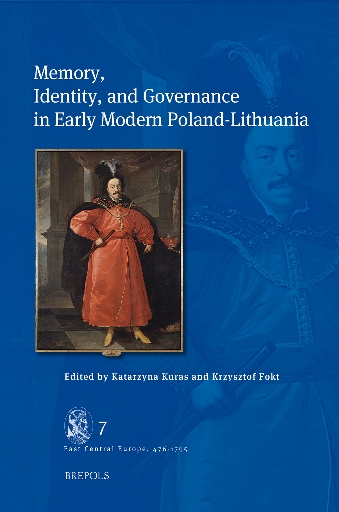
Memory, Identity, and Governance in Early Modern Poland‑Lithuania
show More to view fulltext, buy and share links for:Memory, Identity, and Governance in Early Modern Poland‑Lithuania show Less to hide fulltext, buy and share links for: Memory, Identity, and Governance in Early Modern Poland‑LithuaniaIn the early modern period, Poland–Lithuania stood as a realm where the echoes of a storied past intertwined with the ambitions of a dynamic present. This volume illuminates how its diverse populace navigated the complexities of their shared heritage, weaving tradition with innovation to craft a uniquely multi-layered identity. The essays presented here examine the dual nature of historical inheritance in this vast polity. On the one hand, the past served as a treasure trove of enduring ideas, compelling narratives, and time-tested practices that enriched cultural and political life. On the other, it posed formidable challenges, requiring creative adaptation to meet the demands of changing times. By exploring established narratives, performative traditions, and historical frameworks, the contributors uncover the intricate ways in which memory influenced decision-making and societal evolution. They reveal how the past was neither static nor simply an obstacle, but was an active force that shaped contemporary aspirations and inspired visions of the future. Through the lenses of rulers, nobles, intellectuals, and commoners, this collection offers fresh perspectives on how the people of Poland–Lithuania harnessed the power of history to craft a legacy that transcended their era. Essential reading for scholars and enthusiasts alike, this work examines the enduring dialogue between memory and identity in one of Europe’s most compelling early modern states.
-
-
-
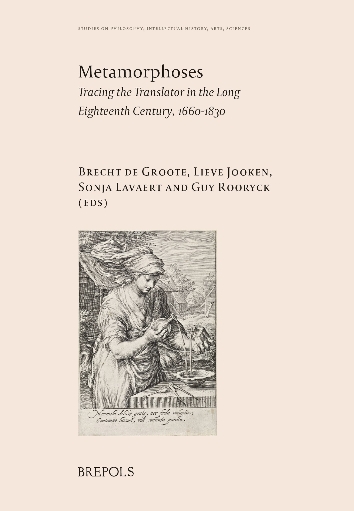
Metamorphoses
show More to view fulltext, buy and share links for:Metamorphoses show Less to hide fulltext, buy and share links for: MetamorphosesTranslators are crucial to the constitution, dissemination, and adaptation of literatures, cultures, and ideas. However, their presence in the historical record often proves difficult to recognise or retrace. This volume places front and centre this key problem for historians of translation, as well as for historians of literature, culture, and ideas. It sheds new light on the much-debated (in)visibility of historical translators by investigating in what contexts and through what strategies translators sought to render themselves either (in)visible, and how critics and scholars can now trace these efforts. When and how does the visible metamorphose into the invisible, and vice versa?
The volume focuses on the long eighteenth century, a period which witnesses a metamorphosis in literature and culture that tells powerfully on translators. From relatively visible cultural actors, they are reduced to enforced invisibility as cultural products stabilised their meanings around singular authors. Tracing this shift across a swathe of products and practices, the book conducts its investigations across a range of genres, ranging from radical politics over philosophy to opera; taking in languages and cultures across Western Europe.
Chapters employ case studies to develop methodological and theoretical models that will empower scholars of translation history to recover translators, both from the direct evidence of their work and from the networks and tools that supported them.
-
-
-
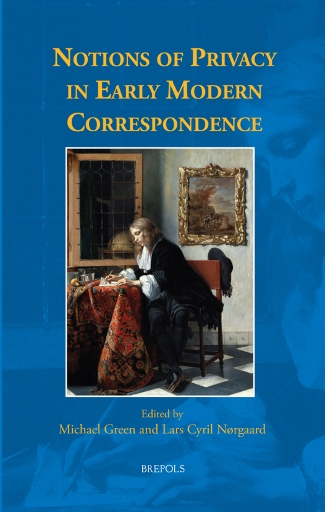
Notions of Privacy in Early Modern Correspondence
show More to view fulltext, buy and share links for:Notions of Privacy in Early Modern Correspondence show Less to hide fulltext, buy and share links for: Notions of Privacy in Early Modern CorrespondenceOur modern notions of privacy have their roots in the early modern period. When studying this historical background, one of the most important sources is correspondence. Letters sent from one person to another reflect specific situations, ideas, thoughts, emotions, and experiences. Contextualizing an epistolary exchange provides information about the world and values of past individuals.
This volume presents essays that deal with a variety of early modern correspondence. The letters analysed, written in French, Dutch, German, and English, speak to very different contexts and cultural codes. While each of the letters in question has its own unique story to tell, all contributions come together by focusing on notions of privacy. From the intimacy that unfolds in educational exchanges to specific letter-writers and their strategic use of the private, this volume offers ground-breaking insights that will be relevant to many different researchers and their respective fields: the history of science, the history of Christianity, the history of travel writing and education, gender studies, and the history of diplomacy. In addition, the contributions also tackle the issue of publishing letters in the early modern period, both as a cultural phenomenon and as a material praxis.
Together, the essays show how ‘privacy’ was an ambiguous term in the early modern period; the letter as literary genre and a means of communication demonstrates how privacy was perceived both as valuable and as a potential threat.
-
-
-
Ordres et désordres dans les chaînes exégétiques grecques
show More to view fulltext, buy and share links for:Ordres et désordres dans les chaînes exégétiques grecques show Less to hide fulltext, buy and share links for: Ordres et désordres dans les chaînes exégétiques grecquesAmoncellement de fragments ? catalogue d’extraits ? tapisserie exégétique ? Les chaînes ont pour premier principe d’organisation le texte biblique qu’elles commentent en le suivant pas à pas. Mais comment les différentes scholies sont-elles classées entre elles, si elles le sont ? Jusqu’à présent, la question de l’organisation interne des chaînes a fait l’objet de remarques rapides en marge de l’étude de telle ou telle collection, mais rarement d’un examen approfondi. C’est pourtant un aspect essentiel pour comprendre ce genre, en préciser les différentes formes et saisir l’enjeu de ces entreprises byzantines : conserver un maximum de textes, favoriser la consultation, la mémorisation ou la confrontation de différentes exégèses, composer un commentaire continu, etc. Cet ouvrage collectif rassemble des enquêtes originales portant aussi bien sur les chaînes de l’Ancien que du Nouveau Testament. Sont explorés différents phénomènes structurants relatifs à la connexion entre texte biblique et commentaire, au classement des sources, à l’enchaînement des contenus exégétiques, à la disposition des scholies sur la page. On met au jour la méthode de travail d’un caténiste ou les étapes de l’élaboration d’une compilation ; une place est accordée au désordre et à ses causes, notamment en lien avec les phénomènes de transformation et de combinaison de différentes collections. Premier tour d’horizon, permettant déjà de découvrir des situations très diverses, ce volume ouvre la voie à une approche comparative des chaînes, nécessaire pour mieux comprendre cette pratique de compilation byzantine.
-
-
-
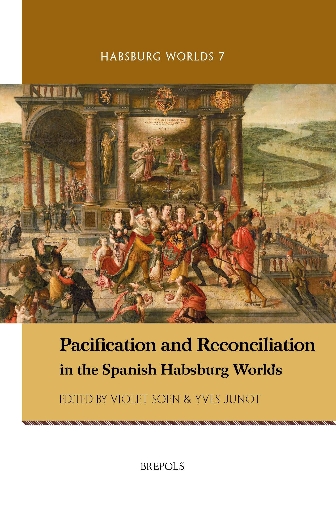
Pacification and Reconciliation in the Spanish Habsburg Worlds
show More to view fulltext, buy and share links for:Pacification and Reconciliation in the Spanish Habsburg Worlds show Less to hide fulltext, buy and share links for: Pacification and Reconciliation in the Spanish Habsburg WorldsThis is the first volume to analyze pacification strategies within the Spanish Monarchy on a global level. It deals with the development and aftermath of the many early modern revolts on the Iberian and Italian Peninsula, the Sicilian and Sardinian islands, the cities along the North Sea and the Spanish Americas. These comparative studies uncover the different ways in which the Spanish Monarchy dealt with rebellion from cities and constituencies, ranging from military responses and repression to offers for negotiation and reconciliation. They also point out common characteristics of these pacification processes, such as the promises of pardon, the granting of grace and the instruction of peace envoys. The different chapters, each accompanied by an edition of sources, show how the reconciliation and reincorporation into the Spanish Habsburg orbit proved to be a painstaking process with an unpredictable outcome.
-
-
-
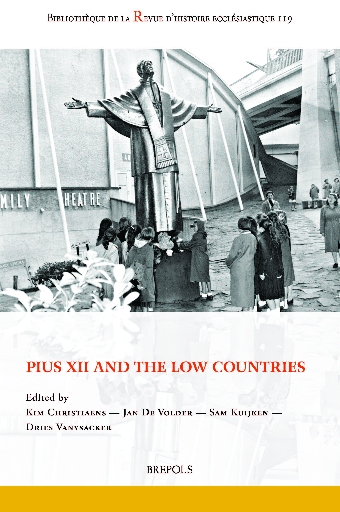
Pius XII and the Low Countries
show More to view fulltext, buy and share links for:Pius XII and the Low Countries show Less to hide fulltext, buy and share links for: Pius XII and the Low CountriesThe opening of the different Vatican Archives for the pontificate of Pius XII (1939-1958) in March 2020 sparked the interest of scholars across different disciplines worldwide. It invigorated tendencies to revisit the history of the 1940s and 1950s beyond the established narratives and sources, and nourished hopes to address both longstanding and emerging questions, and to discover innovative themes and approaches. Three years after the opening of these archives, a multidisciplinary group of scholars from Belgium and the Netherlands convened at a scientific conference in Rome, organized by the editors of this volume, to study the impact of the archival access on diverse research domains. This publication presents new research based on documentation unearthed in the Vatican archives, spanning both the Second World War and the postwar period and challenges existing scholarship not only on the history of the Catholic Church, but also on broader themes in the Low Countries.
-
-
-
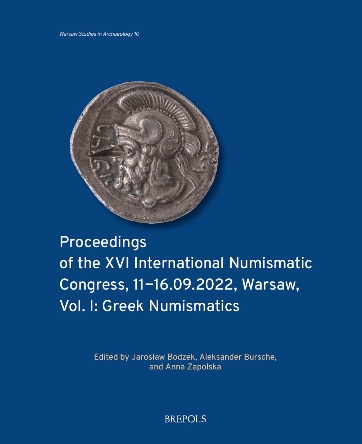
Proceedings of the XVI International Numismatic Congress, 11–16.09.2022, Warsaw, Vol. i: Greek Numismatics
show More to view fulltext, buy and share links for:Proceedings of the XVI International Numismatic Congress, 11–16.09.2022, Warsaw, Vol. i: Greek Numismatics show Less to hide fulltext, buy and share links for: Proceedings of the XVI International Numismatic Congress, 11–16.09.2022, Warsaw, Vol. i: Greek NumismaticsThe XVI International Numismatic Congress, held in Warsaw, Poland, in September 2022, was a landmark event, drawing the largest number of participants in its history. With over 550 papers presented during thematic sessions and round tables, this congress showcased the latest advancements and research in the field of numismatics from leading experts and scholars in their field.
A curated selection of papers from the conference have now been drawn together into peer-reviewed conference proceedings, representing a comprehensive spectrum of numismatic studies from antiquity to modern times. Each paper is meticulously illustrated with high-quality images, often of unique specimens, along with detailed diagrams, maps, and die/typological chains. Topics covered include coins and coin finds, medals, tokens, banknotes, the history of collections and collecting, and cutting-edge chemical analyses and technologies used in coin examination.
This volume, the first in four thematic volumes, focuses on Greek numismatics, and comprises fifty-nine chapters exploring different elements of Greek coinage, as well as touching on coins from ancient India.
-
-
-
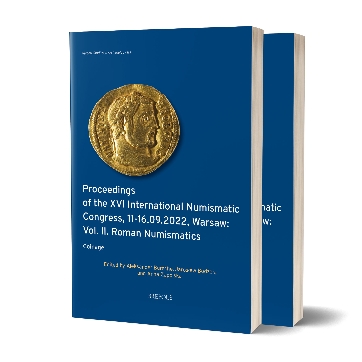
Proceedings of the XVI International Numismatic Congress, 11–16.09.2022, Warsaw, Vol. ii, Roman Numismatics
show More to view fulltext, buy and share links for:Proceedings of the XVI International Numismatic Congress, 11–16.09.2022, Warsaw, Vol. ii, Roman Numismatics show Less to hide fulltext, buy and share links for: Proceedings of the XVI International Numismatic Congress, 11–16.09.2022, Warsaw, Vol. ii, Roman NumismaticsThe XVI International Numismatic Congress, held in Warsaw, Poland, in September 2022, was a landmark event, drawing the largest number of participants in its history. With over 550 papers presented during thematic sessions and round tables, this congress showcased the latest advancements and research in the field of numismatics from leading experts and scholars in their field.
A curated selection of papers from the conference have now been drawn together into peer-reviewed conference proceedings, representing a comprehensive spectrum of numismatic studies from antiquity to modern times. Each paper is meticulously illustrated with high-quality images, often of unique specimens, along with detailed diagrams, maps, and die/typological chains. Topics covered include coins and coin finds, medals, tokens, banknotes, the history of collections and collecting, and cutting-edge chemical analyses and technologies used in coin examination.
This volume, the second in four thematic volumes, focuses on Roman coinage. Divided into two separate volumes, covering respectively forty-three chapters on coinage and forty-one on circulation, the contributions gathered here explore not only Rome and the imperial mints, but also local phenomena from Spain to Asia Minor, including graffiti, imitations, and copies of Roman coinage.
-
-
-
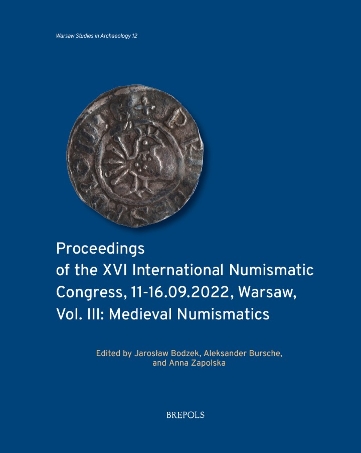
Proceedings of the XVI International Numismatic Congress, 11–16.09.2022, Warsaw, Vol. iii: Medieval Numismatics
show More to view fulltext, buy and share links for:Proceedings of the XVI International Numismatic Congress, 11–16.09.2022, Warsaw, Vol. iii: Medieval Numismatics show Less to hide fulltext, buy and share links for: Proceedings of the XVI International Numismatic Congress, 11–16.09.2022, Warsaw, Vol. iii: Medieval NumismaticsThe XVI International Numismatic Congress, held in Warsaw, Poland, in September 2022, was a landmark event, drawing the largest number of participants in its history. With over 550 papers presented during thematic sessions and round tables, this congress showcased the latest advancements and research in the field of numismatics from leading experts and scholars in their field.
A curated selection of papers from the conference have now been drawn together into peer-reviewed conference proceedings, representing a comprehensive spectrum of numismatic studies from antiquity to modern times. Each paper is meticulously illustrated with high-quality images, often of unique specimens, along with detailed diagrams, maps, and die/typological chains. Topics covered include coins and coin finds, medals, tokens, banknotes, the history of collections and collecting, and cutting-edge chemical analyses and technologies used in coin examination.
This book, the third in four thematic volumes, explores medieval coinage. Research presented in forty-two different chapters ranges from the early Byzantine period through to the late Middle Ages, including Asiatique and Islamic coinages, and medieval tokens.
-
-
-
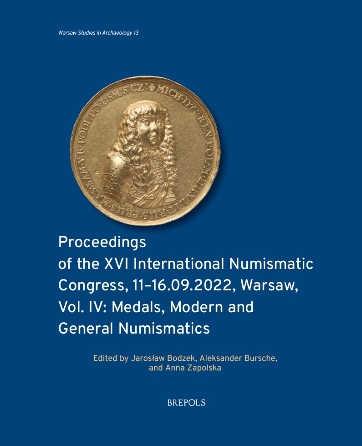
Proceedings of the XVI International Numismatic Congress, 11–16.09.2022, Warsaw, Vol. iv: Medals, Modern and General Numismatics
show More to view fulltext, buy and share links for:Proceedings of the XVI International Numismatic Congress, 11–16.09.2022, Warsaw, Vol. iv: Medals, Modern and General Numismatics show Less to hide fulltext, buy and share links for: Proceedings of the XVI International Numismatic Congress, 11–16.09.2022, Warsaw, Vol. iv: Medals, Modern and General NumismaticsThe XVI International Numismatic Congress, held in Warsaw, Poland, in September 2022, was a landmark event, drawing the largest number of participants in its history. With over 550 papers presented during thematic sessions and round tables, this congress showcased the latest advancements and research in the field of numismatics from leading experts and scholars in their field.
A curated selection of papers from the conference have now been drawn together into peer-reviewed conference proceedings, representing a comprehensive spectrum of numismatic studies from antiquity to modern times. Each paper is meticulously illustrated with high-quality images, often of unique specimens, along with detailed diagrams, maps, and die/typological chains. Topics covered include coins and coin finds, medals, tokens, banknotes, the history of collections and collecting, and cutting-edge chemical analyses and technologies used in coin examination.
This volume, the last in four thematic volumes, comprises fifty-five chapters that explore modern numismatics, as well as medal making and tokens. It also includes discussions that touch more broadly on the general field of numismatics, among them digital numismatics, counterfeit coins, coin finds, and the history of coin collecting.
-
-
-
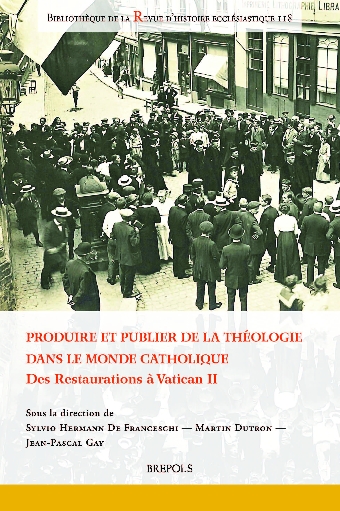
Produire et publier de la théologie dans le monde catholique
show More to view fulltext, buy and share links for:Produire et publier de la théologie dans le monde catholique show Less to hide fulltext, buy and share links for: Produire et publier de la théologie dans le monde catholiqueIssu d’un colloque organisé en septembre 2020, ce volume part de la nécessité de faire dialoguer histoire de la théologie et histoire des savoirs. Il se concentre plus particulièrement sur les lieux académiques de la production de la théologie, sur son rapport à d’autres disciplines et son séquençage en sous-disciplines, sur sa circulation dans des espaces plus vastes, et sur le rapport aux éditeurs. Les 16 contributions ici rassemblées rompent avec l’écriture classique de l’histoire de la théologie qui est restée à grande distance des questions et des méthodes de l’histoire des savoirs, ils rompent également avec la réticence des historiens des savoirs à appréhender l’objet-théologie malgré son importance dans les universités européennes des deux derniers siècles. Ce volume s’inscrit dans un agenda renouvelé d’historicisation des conditions et de la production des savoirs théologiques dans le monde catholique, depuis les restaurations européennes du 19e siècle jusqu’à Vatican II.
-
-
-
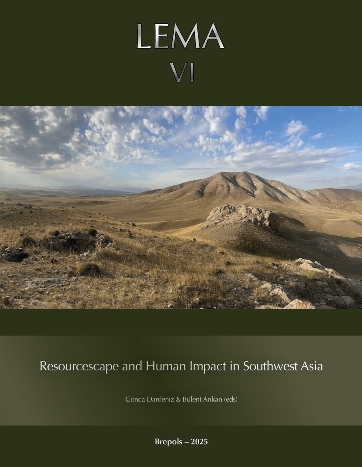
Resourcescape and Human Impact in Southwest Asia
show More to view fulltext, buy and share links for:Resourcescape and Human Impact in Southwest Asia show Less to hide fulltext, buy and share links for: Resourcescape and Human Impact in Southwest AsiaLandscape archaeology has, in recent years, expanded as a discipline to include various aspects of human-environment interactions in the past. In line with this trend, this volume offers a comprehensive perspective on three topics: theoretical and textual approaches to landscape, which provides an important framework for interdisciplinary research; the use of land and resources, which, while a popular topic in Southwest Asian archaeology, remains relatively understudied in connection to ancient technologies; and human impact on the highlands. The contributions gathered in this volume cover topics as diverse as agricultural practices, metallurgy, trade, and environmental research, and draw together evidence from both textual and material evidence to shed light on different places and periods from the Bronze Age through to the Roman era. Together, these varied case studies offer new insights into how different methods can be utilized to assess unique patterns in human-environment interactions in Southwest Asia.
-
-
-
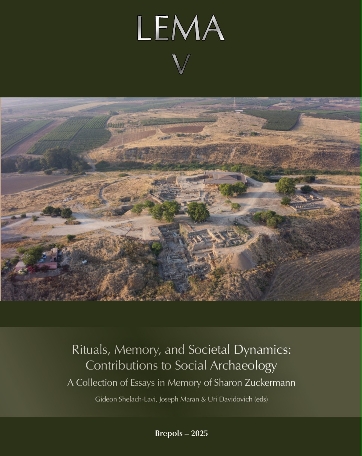
Rituals, Memory, and Societal Dynamics: Contributions to Social Archaeology
show More to view fulltext, buy and share links for:Rituals, Memory, and Societal Dynamics: Contributions to Social Archaeology show Less to hide fulltext, buy and share links for: Rituals, Memory, and Societal Dynamics: Contributions to Social ArchaeologyThanks largely to the introduction of new methods of recovery and analysis, archaeology is increasingly treated as a science. Yet, it should continue to ask questions that are founded in the humanities. This is especially true of social archaeology, which forms the core of this volume. Being based on the notion that ‘the social’ permeates all areas of life, the chapters gathered here give priority to archaeological data and contexts, which in turn form the prerequisite for analyzing how, at particular times and places, people negotiated or reaffirmed the society around them. Case studies from the Levant and the Eastern Mediterranean sit alongside selected comparative cases from other parts of the world and assess issues such as the development of cultural characteristics of societies, societal continuity and collapse, religious beliefs and rituals, and the role of social memory, as well as interactions within and between societies. The volume is dedicated to the memory of our colleague and friend, Dr. Sharon Zuckerman, who embraced the quest for ‘the social’ throughout her career.
-
-
-
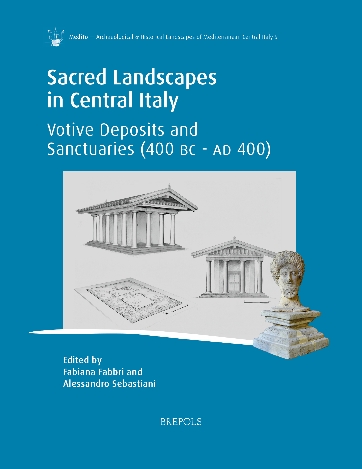
Sacred Landscapes in Central Italy
show More to view fulltext, buy and share links for:Sacred Landscapes in Central Italy show Less to hide fulltext, buy and share links for: Sacred Landscapes in Central ItalyVeneration of the supernatural was, in ancient times, interwoven into the fabric of the surrounding landscape. Caves, rivers, lakes, mountains, and water springs all formed conduits for a relationship between divinity and nature, and sanctuaries were established as dedicated sites of worship. Taking Central Italy as its main focus, this volume unravels layers of history and archaeology in order to shed light on the religious practices, sacred sites, and profound connections that have long existed between landscapes and religious places in this region. Through a synthesis of archaeological evidence and scholarly analysis, the chapters gathered here unveil the significance of temples, sanctuaries, ex-votos, religious productions, and ritual spaces, and provide a comprehensive understanding of how Etruscan and Roman societies engaged with their sacred surroundings. The result is an important reassessment of the religious dimensions that helped to shape the antique landscape of Central Italy.
-
-
-
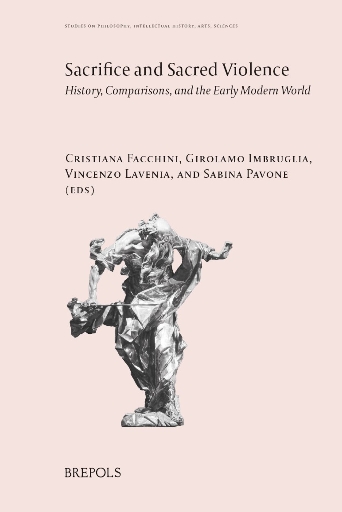
Sacrifice and Sacred Violence
show More to view fulltext, buy and share links for:Sacrifice and Sacred Violence show Less to hide fulltext, buy and share links for: Sacrifice and Sacred ViolenceSacrifice has long been a central topic in scholarly debate. Since the publication of Marcel Mauss and Henri Hubert's groundbreaking work in 1898-99, the concept has gained prominence as a distinct theme in comparative religion, anthropology, and the history of religions. Throughout the twentieth century, many distinguished scholars and intellectuals examined the meaning and function of sacrifice to better understand various aspects of human cognition and social interactions. While some explored its connections to violence—particularly forms of self-inflicted violence, such as martyrdom—others sought to disentangle the concept from violent practices altogether.
Building on this rich tradition, this collection of articles gathers contributions from leading scholars who explore the theme of sacrifice, examining its diverse meanings and roles across various religious traditions. While the book places particular emphasis on the history of Christianity and the early modern period, it also provides valuable insights into a broad spectrum of religious traditions, including Judaism, Islam, Greek and ancient religions, as well as Japanese religions. Its geographical scope spans regions such as India, China, Africa, and Brazil, offering a truly global perspective.By mapping the varied interpretations and transformations of sacrifice in the early modern period, this book seeks to illuminate its evolving significance. It also strives to offer a comparative framework that highlights the concept's complexity and adaptability across cultural and historical contexts.
-
-
-
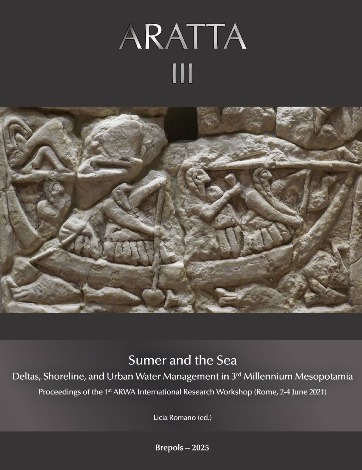
Sumer and the Sea
show More to view fulltext, buy and share links for:Sumer and the Sea show Less to hide fulltext, buy and share links for: Sumer and the SeaFrom the Chalcolithic onwards, the culture and society of Sumer flourished along the banks of the Tigris and Euphrates Rivers, with communities living close to the ancient shoreline in an environment that was closely linked to the exploitation of fluvial systems, the sea, and the unique marshlands of the area. This volume gathers together research first presented as part of a workshop, entitled Sumer and the Sea: Deltas, Shoreline, and Urban Water Management in 3rd Millennium Mesopotamia, to explore the interaction between Sumerians and their water-dominated environment. The chapters gathered here offer updates on methodologies and the most recent research from the field to provide new understanding and fresh insights into how the Sumerians adapted to the world in which they lived.
-
-
-
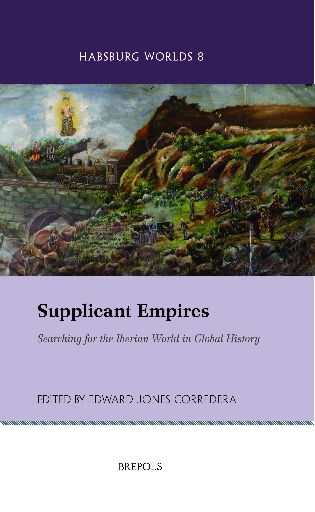
Supplicant Empires
show More to view fulltext, buy and share links for:Supplicant Empires show Less to hide fulltext, buy and share links for: Supplicant EmpiresThis volume is a collection of reflections from leading senior and junior historians regarding the merits of historical comparativism in the field of Iberian history. The first purpose of the book is to encourage a dialogue between scholars of the Iberian Empires and to foster a reconsider how they see the broader history of the early modern world in light of recent historiography. The second aim of the book is to prompt scholars of other regions in global history to consider the recent literature on the Iberian Empires anew, to move beyond the tropes of the Black Legend and narrative of growth, splendour, and decline, and to study those imbrications had connected disparate parts of the world and which the postcolonial turn has unearthed. In a series of articles and interviews, contributors were encouraged to consider the role of linguistic divides in the growth of historiographical strands, and to speak plainly about the possible siloes that have emerged in the field. Contributors discuss the Atlantic turn, corporate cultures, the Catholic adoption of Protestant ideals, gender and race, all while drawing on insights from scholars who work on early modern nuns, the material history of sugar and coffee, or those who are exploring the uses of the concept of barbarity in borderlands.
-
-
-
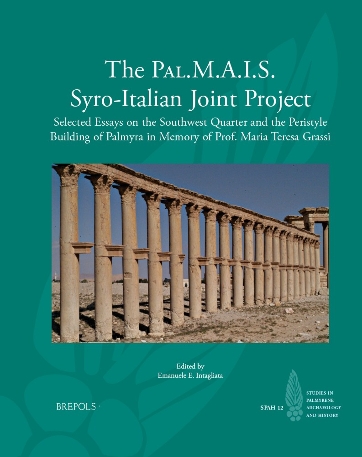
The Pal.M.A.I.S. Syro-Italian Joint Project
show More to view fulltext, buy and share links for:The Pal.M.A.I.S. Syro-Italian Joint Project show Less to hide fulltext, buy and share links for: The Pal.M.A.I.S. Syro-Italian Joint ProjectThe Pal.M.A.I.S. Syro-Italian joint project at Palmyra, established in 2007, aimed to shed light on private housing in the Roman East. Through excavations in Palmyra’s southwest quarter, the remains of a residential complex, the ‘Peristyle Building’, were uncovered; this site was built in the Roman period but was inhabited up to the eighth century ad.
This volume, dedicated to Prof. Maria Teresa Grassi (Università degli Studi di Milano), who co-directed the project together with Dr Waleed al-As‘ad (Museum of Palmyra), presents selected studies stemming from the Pal.M.A.I.S. project. It draws together contributions dedicated to the topography of the southwest quarter, the excavation of the Peristyle Building, and selected classes of material. Through detailed analysis and the presentation of fresh data, this volume sheds new light on a relatively unexplored sector of a threatened UNESCO World Heritage site.
-
-
-
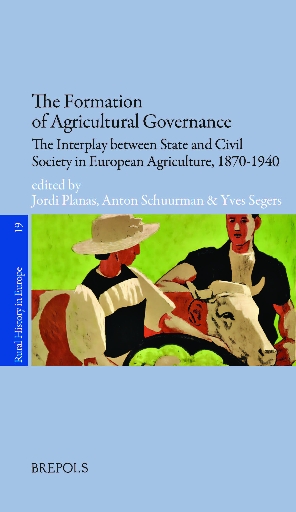
The Formation of Agricultural Governance
show More to view fulltext, buy and share links for:The Formation of Agricultural Governance show Less to hide fulltext, buy and share links for: The Formation of Agricultural GovernanceThis book unravels how the agricultural sector and the rural world in Europe became more and more organised within capitalism in the years 1870-1940, and this with the aim of tackling the important challenges of the time. The focus is not so much on the myriad of individual farmers’ actions, but on the collective efforts undertaken through the interplay between the state and the agricultural civil society.
A wide variety of actors, from landowners associations, farmers’ unions, cooperatives, scientific institutions and researchers to farmers themselves (or civil society) played a critical role in the process of drafting a policy agenda, developing agricultural policies and were instrumental in implementing them in close relationship with the state. The result was a metamorphosis from mobilisation and representation of agrarian interests to a form of self-government or co-government of the agricultural sector at the national level, which would only reach its highest point after the Second World War.
These issues are explored by established rural historians, covering a period of seven decades (1870-1940). The papers provide a wide geographical perspective, from the north of Europe to the Mediterranean.
-
-
-
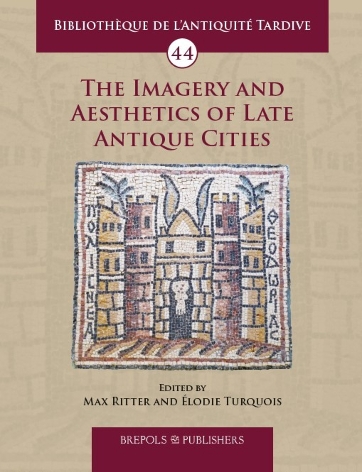
The Imagery and Aesthetics of Late Antique Cities
show More to view fulltext, buy and share links for:The Imagery and Aesthetics of Late Antique Cities show Less to hide fulltext, buy and share links for: The Imagery and Aesthetics of Late Antique CitiesWhile the role of the city in Late Antiquity has often been discussed by archaeologists and historians alike, it is only in recent years that scholarship has begun to offer a more nuanced approach in our understanding to how such cities functioned, stepping away from the traditional paradigm of their decline and fall with the collapse of the Roman Empire. In line with this approach, this deliberately interdisciplinary volume seeks to provide a more multifaceted understanding of urban history by drawing together scholars of literary and material culture to discuss the concepts of imagery and aesthetics of late antique cities.
Gathering together contributions by historians, philologists, archaeologists, literature specialists, and art historians, the volume aims to explore the imagery and aesthetics of cities in Late Antiquity within a strong theoretical framework. The different chapters explore the aesthetics of cityscape representations in literature and art, asking in particular whether literary representations of late antique urban landscapes mirror the urban reality of eclectic ensembles of pre-existing architecture and new buildings, as well as questioning both how the ideal of the city evolved in the imagination of the period and if imperial ideology was reflected in literary depictions of cities.
-
-
-

The Missing Interaction: Science and Diplomacy in the Early Cold War
show More to view fulltext, buy and share links for:The Missing Interaction: Science and Diplomacy in the Early Cold War show Less to hide fulltext, buy and share links for: The Missing Interaction: Science and Diplomacy in the Early Cold WarThis book enriches our understanding of the circumstances and conditions that have made the relation between science and diplomacy a primary concern of the political landscape in the twenty first century. As western liberal democracy and its effects on the environment but also on global war politics are under question, authors in this collective volume rethink the effects that an ahistorical definition of science diplomacy has had on world politics. They document the historicity of the entanglement between, on the one hand, epistemic practices and knowledge production and, on the other, foreign policy strategies and negotiation tactics. The book is the first in a series of what Rentetzi calls 'Diplomatic Studies of Science', a highly inter- and trans- disciplinary field that analyzes science and diplomacy as historically co-produced. It primarily focuses on the entanglements of science and diplomacy after the Second World War, bridging history of science, diplomatic history and international relations
-
-
-
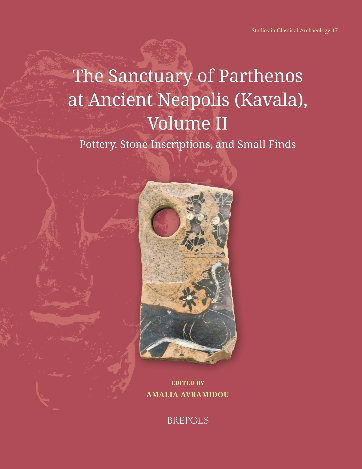
The Sanctuary of Parthenos at Ancient Neapolis (Kavala), Volume ii
show More to view fulltext, buy and share links for:The Sanctuary of Parthenos at Ancient Neapolis (Kavala), Volume ii show Less to hide fulltext, buy and share links for: The Sanctuary of Parthenos at Ancient Neapolis (Kavala), Volume iiThe ancient city of Neapolis (modern Kavala, Greece) was founded by Thasos in the seventh century BCE at a strategic location where the Thracian hinterlands meet the Aegean Sea. The patron deity of this North Aegean polis was Parthenos (the Maiden), a goddess often associated with Artemis and known to us through epigraphic and archaeological evidence. Her sanctuary came to light in the twentieth century, during rescue excavations, and yielded numerous finds, most of which date from the Archaic period.
This edited volume draws together the material evidence from the Sanctuary of Parthenos, with a particular focus on the ceramic wares, stone inscriptions, and small finds from the site. Published as a counterpart to an earlier publication in this series, Amalia Avramidou’s monograph, The Sanctuary of Parthenos at Ancient Neapolis (Kavala): Incised and Painted Ceramic Inscriptions from the Sanctuary and in Aegean Thrace, the essays gathered here nonetheless form a stand-alone volume that sheds light on both the importance of the site as a place of cult, and more broadly the role that it played within the commercial networks and cultural dynamics of the Aegean.
-
-
-
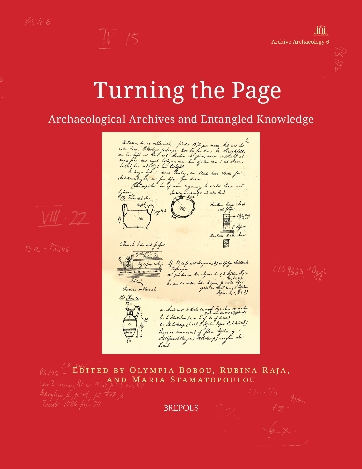
Turning the Page
show More to view fulltext, buy and share links for:Turning the Page show Less to hide fulltext, buy and share links for: Turning the PageThroughout the nineteenth, and for much of the twentieth century, archives were considered to be containers of knowledge, holding material that was deemed to be objective and unbiased. In more recent years, however, as scholars have begun to engage more with archival material, this perception has changed, and archives have increasingly been recognized as sites of contention, holding curated historical documents — a re-evaluation that, in turn, has led to a new understanding of the role and significance of both archives and archiving practices, as well as to revived interest in their contents.
Taking renewed scholarly interest in archives as its starting point, this volume highlights the importance of archival material both as a source of study, and as a way of unleashing hitherto ‘lost’ knowledge. The chapters gathered here present previously unpublished material for the first time, as well as offer new insights into archival and curatorial practices. Through this approach, the authors not only reveal unknown aspects and histories of both past and ongoing excavations, but also shed light on the creation processes of an archive, an element that is typically lost by the time the material is designated as an archive by those who study it. The result is a volume that can shape best archival practices and approaches for the future.
-
-
-
Varietate delectamur: Multifarious Approaches to Synchronic and Diachronic Variation in Latin
show More to view fulltext, buy and share links for:Varietate delectamur: Multifarious Approaches to Synchronic and Diachronic Variation in Latin show Less to hide fulltext, buy and share links for: Varietate delectamur: Multifarious Approaches to Synchronic and Diachronic Variation in LatinThe focus of the Latin Vulgaire – Latin Tardif book series lies on the complex and multifaceted problem of late and so-called vulgar Latin. Specifically, starting out from a wide range of methodological approaches involving all levels of language, the series’ main purpose is to investigate how Classical Latin (i.e. the language used in the period from ca. 100 BC to AD 100 by authors such as Cicero, Horace and Vergil) underwent the changes during the late period (i.e. mainly between the 3rd and the 7th century AD) that resulted in (the early stages of) the Romance languages. To this purpose, three main types of linguistic sources are taken into consideration. First, direct Latin sources, which include for instance texts written by people with a lesser level of literacy (e.g. inscriptions, soldiers’ letters), or by fully literate authors reproducing colloquial language deliberately (e.g. Petronius, Apuleius). Second, indirect Latin sources, which consist of metalinguistic testimonies of ancient authors (mainly, but not exclusively, grammarians) dealing with the language variation typical of their time and region. And third, the Romance idioms themselves: by comparing sources in at least two Romance varieties, one may reconstruct Latin words or forms which were used widely in spoken usage but, for different reasons, are not attested in any extant source.
-
-
-
Writing Distant Travels and Linguistic Otherness in Early Modern England (c. 1550–1660)
show More to view fulltext, buy and share links for:Writing Distant Travels and Linguistic Otherness in Early Modern England (c. 1550–1660) show Less to hide fulltext, buy and share links for: Writing Distant Travels and Linguistic Otherness in Early Modern England (c. 1550–1660)As Britain’s global interests expanded from the mid-sixteenth century, geographic mobility encouraged many forms of multilingual practices in English writings. Translations, lexical borrowings, and records of exchanges between travellers and far-off lands and peoples diversely registered, communicated, engaged and politicised encounters with alterity. Meanwhile, earlier continental European translations also influenced and complicated the reception of distant otherness, entailing questions of linguistic hybridity or pluralism.
This volume explores some of the practices and strategies underpinning polyglot encounters in travel accounts produced, translated, or read in England, as well as in artistic and educational materials inflected by those travels. Drawing on linguistic, lexicographic, literary, and historical methodologies, the twelve chapters in this volume collectively look into the contexts and significances of textual contact zones. Particular attention is paid to uses of multilingualism in processes of identity construction, defining and promoting national or imperial agendas, appropriating and assimilating foreign linguistic capital, or meeting resistance and limits from linguistic and cultural otherness refusing to lend itself to a subjected or go-between status. Treating of indigenous languages, newly anglicized words, and new artistic and instructional materials, the volume makes the case for the vibrancy and influence of early modern English engagements with polyglossia and the need for multiple scales of approach to – and interdisciplinary perspectives on – the subject.
-
-
-
Archaeology: Just Add Water
show More to view fulltext, buy and share links for:Archaeology: Just Add Water show Less to hide fulltext, buy and share links for: Archaeology: Just Add WaterWhile archaeology is often considered to focus on the land that lies beneath our feet, significant amounts of material culture have been lost to us beneath water, whether in seas, lakes, rivers, or submerged caves. The world of underwater archaeology, however, is increasingly recognized as a field that is vital to our understanding of the past. The chapters gathered together into this volume draw on research first presented at the Fourth Warsaw Seminar on Underwater Archaeology, held at the University of Warsaw on 18–20 November 2021. From the seas of the Caribbean through to the Mediterranean and Norway, and from Antiquity through to contemporary times, the chapters presented here offer a dazzling array of different approaches to underwater archaeology and outline the potential that changing technology presents in this expanding field.
-
-
-
Aux origines judéennes du christianisme
show More to view fulltext, buy and share links for:Aux origines judéennes du christianisme show Less to hide fulltext, buy and share links for: Aux origines judéennes du christianismeSimon Claude Mimouni a été titulaire de la direction d’études « Origines du christianisme » à la Section des Sciences religieuses de l’École pratique des hautes études entre 1995 et 2017. Il est l’auteur d’une œuvre académique considérable, qui a renouvelé en profondeur la manière dont les historiens conçoivent habituellement le judaïsme et le christianisme anciens. Ses travaux insistent notamment sur deux composantes souvent négligées voire ignorées du judaïsme antique : le judaïsme chrétien, et le judaïsme sacerdotal et synagogal. Ce volume lui rend hommage. Il réunit quarante contributions groupées selon trois perspectives : « phénoménologies du judaïsme et du christianisme », « histoire et catégorisation sociales », « rhétorique de l’histoire et administration de la preuve ». Ces contributions, qui relèvent de domaines et de thématiques variées, témoignent de la fécondité des voies ouvertes par Simon Claude Mimouni dans la recherche sur les « religions » du monde tardo-antique.
-
-
-
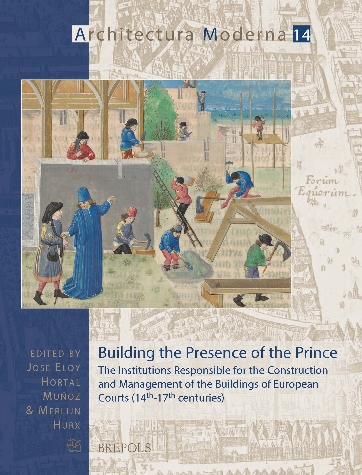
Building the Presence of the Prince
show More to view fulltext, buy and share links for:Building the Presence of the Prince show Less to hide fulltext, buy and share links for: Building the Presence of the PrinceBy the late Middle Ages, architecture became an increasingly important means of representation of princely rule and institutions. In addition to their symbolic significance, the ruler’s buildings served a host of practical purposes. Obviously, castles and fortresses defended the territory, while urban and rural residences served the itinerant court during its proceedings, but their possessions also comprised a wider network of estates that included infrastructure and agricultural, commercial, industrial, and administrative buildings. Together, these networks of sites became a significant means of consolidating the sovereigns’ power and served as key instruments for promoting their rule. To tighten the control over their possessions and to ensure their upkeep, rulers set up Offices of Works, permanent administrative bodies entrusted with their management.
These building administrations have not yet been systematically studied, and it remains unclear to what extent such centralised institutions developed autonomously, responding to local conditions and requirements, or were part of international developments facilitated by the close networks of the European courts.
This volume, with contributions from architectural historians, administrative historians, and court historians, represents a first attempt to compare these institutions on a pan-European scale from the late Middle Ages up to the end of the seventeenth century. It aims to explore the relationships between the local specificities of these organisations and their shared characteristics. From a multidisciplinary perspective, it addresses questions concerning the nature of such administrations, their purpose, organisational structure, and judicial powers, as well as their role in the formation of the state.
-
-
-
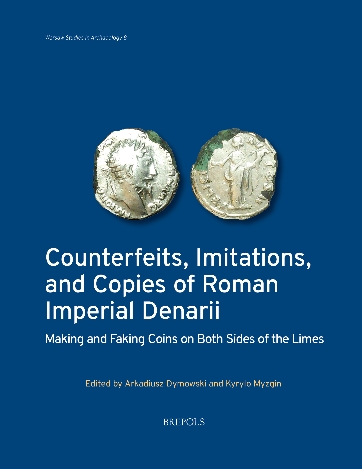
Counterfeits, Imitations, and Copies of Roman Imperial Denarii
show More to view fulltext, buy and share links for:Counterfeits, Imitations, and Copies of Roman Imperial Denarii show Less to hide fulltext, buy and share links for: Counterfeits, Imitations, and Copies of Roman Imperial DenariiRoman Imperial denarii from the first–third centuries ad are, almost without exception, the most common ancient coinage to be found in Central, Northern, and Eastern Europe beyond the Roman limes. Perhaps surprisingly, however, a significant percentage of these coins are in fact counterfeit, comprised largely of denarii subaerati (plated denarii, fourrées) and denarii flati (base-metal cast copies). Moreover, these fake coins were not only manufactured by Romans themselves, but also by barbarian peoples in Eastern Europe, far from the Roman limes, in what should be considered a mass-scale phenomena.
This volume draws together archaeological, numismatic, and historical research in order to offer a new assessment of the production and use of counterfeit Roman Imperial denarii both within the European provinces of the Roman Empire and in European Barbaricum. Drawing on the results of the research project Barbarian Fakers. Manufacturing and Use of Counterfeit Roman Imperial Denarii in East-Central Europe in Antiquity, from the University of Warsaw, the papers gathered here explore the transfer of ideas, technology, and finished products that led to the transfer of counterfeit coinage across the Empire, and shed light on how, why, and when such coins were created and used.
-
-
-
Eusèbe de Césarée et la philosophie
show More to view fulltext, buy and share links for:Eusèbe de Césarée et la philosophie show Less to hide fulltext, buy and share links for: Eusèbe de Césarée et la philosophieEusebius of Caesarea in Palestine, active between the end of the third century and the beginning of the fourth, is the Christian author who has handed down to us, in the form of quotations, the greatest number of Greek philosophical texts. Yet his precise relationship to philosophy has never been the subject of a comprehensive study.
This book, which brings together contributions by leading specialists, aims to provide an initial overview. The analyses, covering most of Eusebius’ works, starting with the Preparation for the Gospel, show the importance of philosophy in his thought. Beyond the use he makes of philosophers, sometimes to criticise them, sometimes to appropriate their ideas, Eusebius stands out for his fairly good knowledge of philosophy, especially Platonic philosophy, the issues of which he seems to understand well. Although he takes up from his Christian predecessors the idea that Christianity is, as such, a “philosophy”, this claim sometimes implies a technicality that is revealed not only in the way he quotes and comments on the philosophers, but also in the presence in his work, less visible at first sight, of concepts and methods of exposition that bear witness to a real philosophical culture. At the end of these studies, Eusebius of Caesarea, too often reduced to a “court theologian” or to the status of “Father of Ecclesiastical History,” emerges more as the scholar he was, both Greek and Christian, whose work and thought are inseparable from the philosophical context in which they were born.
-
-
-
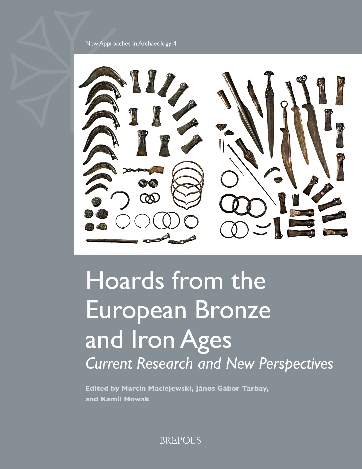
Hoards from the European Bronze and Iron Ages
show More to view fulltext, buy and share links for:Hoards from the European Bronze and Iron Ages show Less to hide fulltext, buy and share links for: Hoards from the European Bronze and Iron AgesHoards are among the most enigmatic of archaeological finds. The term ‘hoard’ itself has been applied to different assemblages across space and time, from the Stone Age into the modern era, with an inventory that typically includes artefacts made of valuable raw materials, to which significant symbolic meanings can also be assigned. Archaeologists have been trying to understand this phenomenon for much of the last century, sometimes emphasizing the universal nature of hoards, but more typically focusing on specific regions, chronologies, and finds. They have, for the most part, used results derived from typolo-chronological methods. Contemporary archaeology has, however, developed a broad spectrum of paradigms and methods, and hoardresearch in the twenty-first century draws on an increasingly wide range of approaches.This volume presents examples of research that make use of these multi-faceted approaches through a focus on European hoards of metal objects dating to the Bronze and Iron Ages. The contributors to this volume make use of diverse methods, among them archaeometallurgical analyses, studies of use- and production-wear, destruction patterns, and landscape archaeology, but together, their common denominator is the search for a methodological toolkit that will allow researchers to better understand the phenomenon of hoard-deposition more broadly.
-
-
-
Inheritance, Social Networks, Adaptation
show More to view fulltext, buy and share links for:Inheritance, Social Networks, Adaptation show Less to hide fulltext, buy and share links for: Inheritance, Social Networks, AdaptationHow did societies change between the Early Bronze Age and the Early Iron Age? And what was the impetus that led to these changes — social contacts and innovation, intergenerational contacts, or perhaps simply adaptation? Taking these questions as its starting point, this richly detailed volume explores four different regions of southern Poland to compare and contrast the mechanisms that drove socio-cultural change in the region between the second and the first half of the first millennium BC. Drawing on standardized sets of archaeological data, the chapters gathered here examine the interplay of different factors influencing cultural change across five key parameters: environment; settlement patterns; settlement organization; economy; and material culture. The result is a beautifully illustrated volume that offers important insights into Central and Eastern European prehistory, made accessible for an English-speaking audience.
-
-
-
Integrated Peasant Economy in Central and Eastern Europe
show More to view fulltext, buy and share links for:Integrated Peasant Economy in Central and Eastern Europe show Less to hide fulltext, buy and share links for: Integrated Peasant Economy in Central and Eastern EuropeIncome integration based on the peasants’ engagement in non-agrarian sectors is a prominent and widespread feature in the history of the European countryside. While listing a multitude of activities outside the narrow scope of farm management aimed at self-consumption, prevailing interpretations emphasize how survival was the goal of peasant economies and societies. The “integrated peasant economy” is a new concept that considers the peasant economy as a comprehensive system of agrarian and non-agrarian activities, disclosing how peasants demonstrate agency, aspirations and the ability to proactively change and improve their economic and social condition. After having been successfully applied to the Alpine and Scandinavian areas, the book tests this innovative concept through a range of case studies on central and eastern European regions comprising Poland, the Czech Republic, Slovenia, Serbia, Bosnia and Herzegovina and Ukraine. By enhancing our knowledge on central and eastern Europe and questioning the assumption that these regions were “different”, it helps overcome interpretive simplifications and common places, as well as the underrepresentation of the “eastern half” of Europe in scholarly literature on rural history. That’s why the book represents a refreshing methodological contribution and a new insight into European rural history.
-
-
-
La frontière absente
show More to view fulltext, buy and share links for:La frontière absente show Less to hide fulltext, buy and share links for: La frontière absenteÀ l’occasion des soixante-dix ans de François de Polignac, nous sommes réunis autour de ce projet d’édition pour développer des sujets de recherche inspirés de ses publications et de son enseignement à l’École pratique des hautes études. Ce volume prend la forme non pas de mélanges mais d’essais sur des thématiques autour de l’Antiquité grecque, de la structuration de l’espace et des constructions identitaires, combinant des sources archéologiques et textuelles, et propose une réflexion dans le temps et l’espace. Nous voulons ainsi montrer, par des cas d’étude, comment François de Polignac a su aborder les civilisations antiques par une vision aussi précise que large, en intégrant les données sur la longue durée et en évitant d’adopter un modèle interprétatif uniforme dans le processus de la rédaction historique. L’aspect comparatiste s’est révélé important entre des régions et des époques différentes, du monde gréco-romain jusqu’à la Mésopotamie et la Chine. Une partie des textes est consacrée au commentaire de ses travaux dans le but d’expliquer comment ceux-ci nous inspirent et ouvrent des perspectives à d’autres réflexions et recherches.
-
-
-
Limiting Spaces
show More to view fulltext, buy and share links for:Limiting Spaces show Less to hide fulltext, buy and share links for: Limiting SpacesThis volume explores how boundaries were created, perceived, and experienced in past societies. Bringing together diverse theoretical and methodological approaches — from cognitive and processual to sensory and phenomenological — the contributors examine how spatial meaning is attributed through the creation and negotiation of boundaries. The volume is structured into three thematic sections: the first investigates how boundaries define and characterize space; the second focuses on the act of crossing boundaries and its role in shaping spatial significance; and the third examines the experience of boundaries, of their crossing, and of the spaces contained within them. Drawing on case studies from Prehistory to the Early Modern period, and spanning regions from Europe and Africa to Central Asia, the chapters reflect a wide range of archaeological traditions and perspectives. Through innovative analyses and interdisciplinary dialogue, this collection advances our understanding of how past societies organized, perceived, and interacted with space.
-
-
-
Numbers, Measures, and the Transfer of Goods in Prehistory
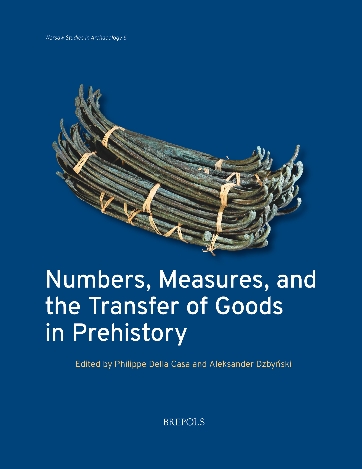
show More to view fulltext, buy and share links for:Numbers, Measures, and the Transfer of Goods in Prehistory show Less to hide fulltext, buy and share links for: Numbers, Measures, and the Transfer of Goods in PrehistoryNumbers, weights, and measurements, and the systems underpinning them, have always been a fundamental part of human society. Developed in different ways and at different times, such systems have provided a foundation for science, technology, economics, and new ways of engaging with and understanding the world. This volume aims to explore the background to numbers and measurements in more detail by drawing together specialists from a growing field of research. The contributions gathered here offer new and interdisciplinary insights into how the development of mathematical ideas and systems evolved, early metrological systems, the exchange of goods and their impact, the standardization of measuring tools, and the impact of such concepts. This unique volume is deliberately set broad, both geographically and chronologically, in order to compare and contrast changes over time and between peoples, and in doing so it sheds new light on the social and scientific developments among both prehistoric and early historic societies.
-
-
-
Pascal Payen
show More to view fulltext, buy and share links for:Pascal Payen show Less to hide fulltext, buy and share links for: Pascal PayenLes vingt-six articles rassemblés dans ce volume témoignent à la fois de la riche activité scientifique de Pascal Payen durant une vingtaine d’années, mais aussi de la manière dont il a contribué de façon décisive à construire et faire connaître un nouvel objet d’histoire : la réception, ou plutôt les réceptions de l’Antiquité. En partant d’Hérodote, de Thucydide et de Plutarque, il a embrassé les innombrables ramifications des processus d’appropriation ou de rejet, de traduction ou d’adaptation, voire de recréation des auteurs anciens, de l’écriture de l’histoire, de la pensée politique. Ce recueil montre ainsi que la constitution de l’Antiquité, en « tradition », en « patrimoine » s’inscrit dans la longue durée et procède d’un va-et-vient polymorphe et fécond, constitutif de toute herméneutique, entre le passé de l’œuvre et les présents de ses publics successifs.
-
-
-
Polyhistor Europaeus
show More to view fulltext, buy and share links for:Polyhistor Europaeus show Less to hide fulltext, buy and share links for: Polyhistor EuropaeusLe vieux mot grec polyhistor désignait jusqu’au XVIIe siècle à la fois un savant aux multiples compétences et un vade-mecum bibliographique embrassant tout le champ des savoirs.
C’est le cas de Chantal Grell qui, au fil de sa carrière, a exploré tout l’âge classique en Europe dans ses domaines les plus divers de l’Espagne à la Pologne, avec Versailles pour centre de gravité.
C’est aussi le cas du présent recueil où soixante-quatre chercheurs ont rassemblé en deux volumes des contributions de haut niveau scientifique sur ses thèmes de prédilection.
Le tome I traite des antiquités et de l’historiographie, d’histoire des savoirs et des idées, le tome II des cours et de la diplomatie, des arts et des collections.
-