Brepols Online Books Medieval Monographs Archive v2016 - bobar16mome

Collection Contents
14 results
-
-
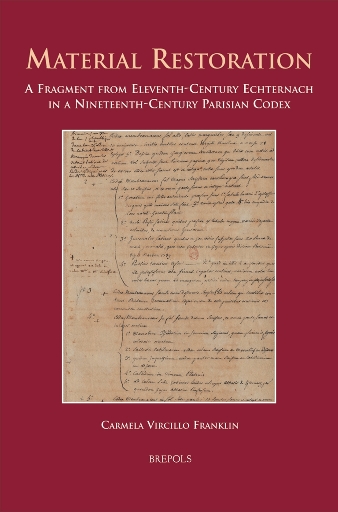
Material Restoration
show More to view fulltext, buy and share links for:Material Restoration show Less to hide fulltext, buy and share links for: Material RestorationMaterial Restoration follows the journey of a parchment bifolium, which was first used in the binding of a manuscript produced in Echternach around the year 1000, and then removed from its original container-codex after it was appropriated by the French during the Napoleonic wars. By tracing the creation, interpretations, and migratory life of the parchment until its eventual incorporation within a nineteenth-century codex, this analysis presents the bifolium as an illustration of ‘new philology’, and as an essential material and cultural element of the different codices that contained it. Material Restoration also analyses the texts inscribed on the bifolium, which include a charter, two poems, and verbal and musical glosses. By considering these texts within the context of the networks that produced and used them, the book offers an intriguing insight into the monastic and literary communities of eleventh-century Echternach. Material Restoration is a riveting and satisfying scholarly detective story that combines both erudition and new discoveries, and adheres to the standards of both classical and new philology.
-
-
-
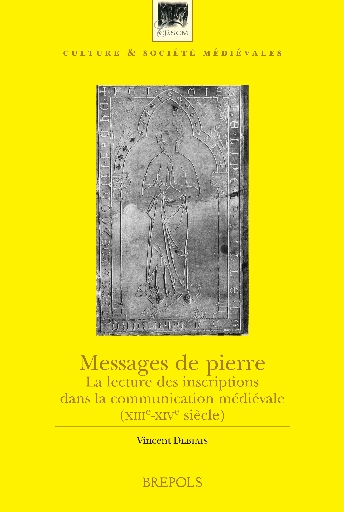
Messages de pierre
show More to view fulltext, buy and share links for:Messages de pierre show Less to hide fulltext, buy and share links for: Messages de pierreLa culture écrite médiévale se caractérise par la diversité et l’originalité de ses formes et de ses fonctions. Au sein de cet éventail très large des pratiques de l’écriture, les inscriptions tracées sur la pierre, le bois, le verre ou le métal dans le but de communiquer un message pour la plus longue durée occupent une place particulière bien qu’encore assez mal définie aujourd’hui. Née en France à la fin des années 1960, l’épigraphie médiévale s’est jusqu’à présent principalement attachée au texte de l’inscription et à son contenu, en étudiant la forme des lettres, les sources de la composition et les informations transmises par le document.
Si elles ont permis des avancées considérables dans la connaissance des formes de l’écriture épigraphique, ces études, en se concentrant sur le contenu du texte, ont isolé le document de sa fonction réelle dans la communication médiévale. Le public des inscriptions, la façon dont il appréhende, par les sens et par l’esprit, le texte vu dans le paysage graphique quotidien, et l’utilisation qu’il peut en faire échappent encore pour beaucoup à la connaissance du médiéviste. C’est en posant l’inscription au cœur du système culturel médiéval et en essayant de déterminer sa place effective dans la transmission des informations que ce livre entend discuter la réalité de la fonction publicitaire du texte épigraphique et déterminer les modalités de lecture, de compréhension et d’utilisation de l’écriture exposée. Au tournant des xiii e-xiv e siècles, alors que se met en place une nouvelle culture écrite, définie par une diffusion plus profonde du texte dans la société médiévale, l’inscription devient un élément incontournable dans la ville et y joue des rôles très différents (affichage des décisions, commémoration des événements, structuration des espaces, affirmation des autorités) qui constituent autant d’occasions pour le public d’exercer sa familiarité avec l’écriture et de s’affirmer en tant que lecteur potentiel.
Docteur en histoire médiévale, ingénieur de recherche au CNRS spécialisé en analyse des sources anciennes et membre du Centre d’études supérieures de civilisation médiévale de Poitiers, Vincent Debiais est l’auteur depuis 2005 du Corpus des inscriptions de la France médiévale et participe aux activités de recherche du CESCM sur la culture écrite au Moyen Âge.
-
-
-
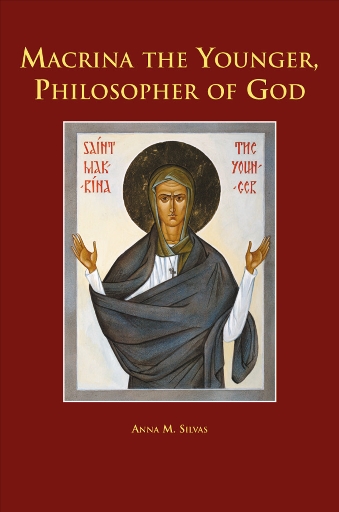
Macrina the Younger
show More to view fulltext, buy and share links for:Macrina the Younger show Less to hide fulltext, buy and share links for: Macrina the YoungerThis book presents St Macrina the Younger (c. 327-379), eldest sister of Ss Basil the Great and Gregory of Nyssa. All the sources of Macrina's life are gathered together, translated afresh into English, and provided with up-to-date introductions and notes. Documents include: Testimonies of St Basil, St Gregory Nazianzen's epigrams on Macrina and her siblings; Gregory of Nyssa's letter 19 which appears in English for the first time; The Life of Macrina, a jewel of fourth-century Christian biography; and the dialogue On the Soul and Resurrection in which Macrina appears as the Teacher expounding Christian doctrine with reasoned argument. The introduction shows how Macrina gradually changed the family household of Annisa into the proto-monastic community that became model of the monasticism that has come down under Basil's name. A specially commissioned icon, a map of Central Anatolia, and a report of the author's expeditions to ancient Pontus are included.
'In contrast with those works that seek to translate the ancient texts into colloquial English with a pedestrian tone, Silvas' translations have a grand and noble quality about them that is fully fitting Gregory's rhetoric and that conveys to the reader the seriousness of the lofty subject. Silvas does not "over translate"; her translation preserves those points of ambiguity in Nyssen's writing that should be resolved (if possible) not in the translation itself but in scholarly debate'.
Warren Smith, Duke University.
-
-
-
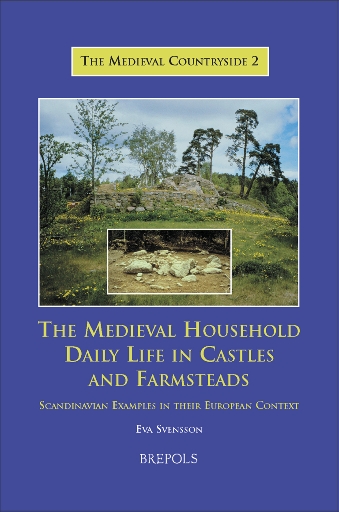
The Medieval Household: Daily Life in Castles and Farmsteads
show More to view fulltext, buy and share links for:The Medieval Household: Daily Life in Castles and Farmsteads show Less to hide fulltext, buy and share links for: The Medieval Household: Daily Life in Castles and FarmsteadsRecent archaeological excavations in Scandinavia provide us with a fascinating insight into the household and its function as a social focus for people of different medieval social estates. This book investigates four excavated Swedish sites - the castles of Saxholmen and Edsholm, and the rural settlements of Skramle and Skinnerud - in order to juxtapose the daily life of nobles and peasants. The author argues that the practices of everyday life revealed by these sites offer new insights into social traditions, mentalities, and cultural patterns. In particular, she asserts that notwithstanding the huge social gulf between the peasantry and the nobility in medieval Scandinavia, the two social groups shared some fundamental experiences which point to a common cultural milieu. In turn, the author uses daily life as a prism for addressing the formation of common European cultural traits during the medieval period by comparing these excavations with material from comparable sites in Central and Western Europe. By means of this comparison, the author questions the degree to which we may talk about a process of ‘Europeanization’ taking place in this era.
-
-
-
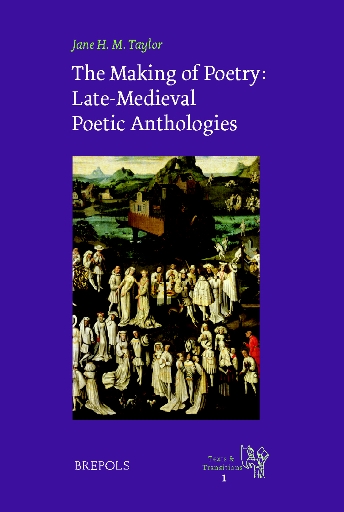
The Making of Poetry
show More to view fulltext, buy and share links for:The Making of Poetry show Less to hide fulltext, buy and share links for: The Making of PoetryIn this ground-breaking book, the author explores some late-medieval lyric anthologies. Taking a cue from the French sociologist, Pierre Bourdieu, she sets poetic creation in the context of an understanding of the structures of court society, and sketches the range of social, intellectual and aesthetic positions available to the poet and the patron. Her primary focus is on a series of manuscripts which, she argues, reveal much about the socioliterary dynamics of particular poems, and about the way in which they are vessels for the participation by individuals in a common culture of literary exchange: Charles d'Orléans's personal manuscript, bnf français 25458, in which, she argues, the poets leave implicit or explicit traces of their social interactions; his duchess Marie's album, Carpentras 375, which is interestingly different from the Duke's; bnf fr. 9223 and n.a.f. 15771, 'coterie' manuscripts which allow us to see how social milieu determines shared literary forms and conventions; Marguerite d'Autriche's Album poétique, Brussels br 10572, an anthology which is a cultural commodity allowing a princely court to recognise stylistic expertise and control of form. She finishes by examining the first great French poetic anthology, Antoine Vérard's Jardin de Plaisance (1501), which seeks to recreate, knowingly and imaginatively, via rubrics, illustrations, and choice of texts, the elite sociability for which the other anthologies are evidence.
-
-
-

Medievalism and the Gothic in Australian Culture
show More to view fulltext, buy and share links for:Medievalism and the Gothic in Australian Culture show Less to hide fulltext, buy and share links for: Medievalism and the Gothic in Australian CultureThis collection opens up a new field of academic and general interest: Australian medievalism. That is, the heritage and continuing influence of medieval and gothic themes, ideas and cultural practices. Geographically removed from Europe, and distinguished by its eighteenth-century colonial settlement, Australia is a fascinating testing-ground on which to explore the cultural residues of medieval and gothic tradition. These traditions take a distinctive form, once they have been 'transported' to a different topographical setting, and a cultural context whose relationship with Europe has always been dynamic and troubled.
Early colonists attempted to make the unfamiliar landscape of Australia familiar by inscribing it with European traditions: since then, a diverse range of responses and attitudes to the medieval and gothic past have been played out in Australian culture, from traditional forms of historical reconstruction through to playful postmodernist pastiche.
These essays examine the early narratives of Australian 'discovery' and the settlement of what was perceived as a hostile, gothic environment; exercises of medieval revivalism and association consonant with the British nineteenth-century rediscovery of chivalric ideals and aesthetic, spiritual and architectural practices and models; the conscious invocation and interrogation of medieval and gothic tropes in Australian fiction and poetry, including children's literature; the transformation of those tropes in fantasy, role-playing games and subcultural groups; and finally, the implication of the medieval past for discussions of Australian nationalism.
-
-
-
Manuel de la réforme intérieure. Tractatus de reformacione virium anime
show More to view fulltext, buy and share links for:Manuel de la réforme intérieure. Tractatus de reformacione virium anime show Less to hide fulltext, buy and share links for: Manuel de la réforme intérieure. Tractatus de reformacione virium anime«Un homme descendait de Jérusalem à Jéricho»: Gérard Zerboldt (†1398), trouve dans ces premiers mots de la parabole du Bon Samaritain le thème et l'articulation de son De reformacione virium anime. L'homme déchoit en quittant la cité de l'harmonie et de la paix, Jérusalem, pour celle de la confusion et des divisions intestines, Jéricho. Il aura à parcourir le chemin inverse, une remontée, pour être restitué à son intégrité première, par la réforme des «trois puissances» - la mémoire, l'entendement, la volonté. Elle s'opère par une exercitatio animi pour laquelle Gérard entend fournir son lecteur de moyens et de conseils. Le résultat est une cartographie des voies intérieures du voyage de retour où paraît le goût du concret, didactique et classificateur, de la Devotio moderna. À côté du Petit manuel pour le Dévot moderne de Florent Radewijns, à usage domestique, le traité de Gérard prit la forme d'un précis développé, d'abord destiné à la première génération des Frères de la Vie commune, puis largement répandu à travers ce qui fut d'abord, plus que des institutions régulières, une mouvance spirituelle aux cercles concentriques.
Avec le précédent volume de la même collection sur Florent Radewijns, et celui sur Gérard Grote, c'est un troisième initiateur de la Devotio moderna dont l'œuvre maîtresse est présentée.
-
-
-
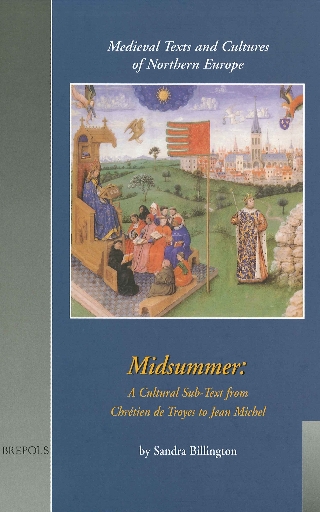
Midsummer
show More to view fulltext, buy and share links for:Midsummer show Less to hide fulltext, buy and share links for: MidsummerMidsummer was not only a season for purification, it was primarily viewed as a time of change. The moment of the sun's power crisis was used as an analogy for mankind's mid-life crisis and for reversals, or wished-for reversals, in social power-structures. A number of factors combined to make truth-telling, even slander on those in authority, licensed at this season. This volume reveals for the first time the significance of the season for popular tradition, for literature, for theatre, and for civic politics in France and the Low Countries. And the new evidence, on which it is based, shows that subversion was inherent at the feast of St John's Nativity three centuries before it became associated with Carnival.
Sandra Billington is a Reader at the Department of Theatre, Film and Television Studies at the University of Glasgow.
-
-
-
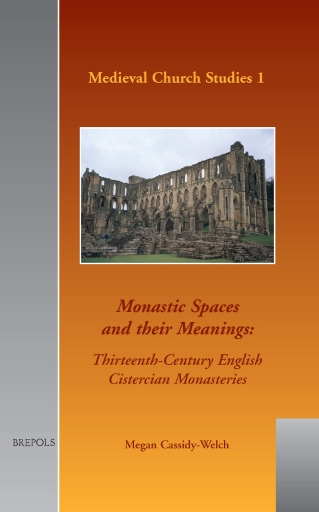
Monastic Spaces and their Meanings
show More to view fulltext, buy and share links for:Monastic Spaces and their Meanings show Less to hide fulltext, buy and share links for: Monastic Spaces and their MeaningsMedieval Cistercians distinguished between material and imagined space, while the landscapes in which they lived were perceived as both physical sites and abstract topographies. Ostensibly, Cistercians lived in intensely regulated and confined physical circumstances in accordance with ideals of enclosure articulated in the Regula S. Benedicti. However, Cistercian representations of space also express ideas of transcendence and freedom. This monograph focuses on the abbeys of northern England during the period 1132-1400 (Fountains, Rievaulx, Jervaulx, Meaux, Sawley, Roche, Byland and Kirkstall) to facilitate a microhistory of cultural, textual, personnel and architectural comparisons. Post-twelfth century Cistercian history has been understudied, in comparison with research into the euphoria of the order's foundation, and has tended to focus on 'ideals' versus 'reality', whereas this study considers Cistercian houses in terms of contingency, singularity and specificity. The author engages with the work of theorists such as Michel Foucault, Pierre Bourdieu and Henri Lefebvre, all of whom have explored the cultural production of space and the meanings attributed to certain spaces by abstract reference, performative practice and institutional direction. The study is richly illustrated with 45 images of the landscape and space of these houses and enables the reader to see how one monastic order positioned itself in relation to geography, architecture, institution, community and cosmos, and dealt with the dialectic between regulation and imagination, freedom and enclosure. Patrick Geary (UCLA) commends this study as being 'based on a wide reading of Cistercian texts and blends solid text-critical historical scholarship with more conceptual approaches in a most convincing way'.
-
-
-
Morgante
show More to view fulltext, buy and share links for:Morgante show Less to hide fulltext, buy and share links for: MorgantePoète et courtisan, Luigi Pulci écrivit le Morgante á Florence dans la deuxième moitie du xv e siècle. Inspirée des chansons de geste, cette épopée héroïcomique de plus de 30 000 vers raconte les aventures de Roland, de son ami le géant Morgante et des paladins de Charlemagne. La légende arthurienne et les contes arabes font entrer dans la geste carolingienne les monstres et les décors exotiques d'un Orient de fantaisie, ainsi que les rencontres belliqueuses ou amoureuses avec les païens. C'est aussi une comédie humaine du temps des Médicis : dans les palais et les ruelles de Florence, on assiste aux réjouissances populaires et aux fêtes nocturnes, aux rixes des portefaix et aux joutes des princes, aux intrigues de cour et aux rivalités entre cites. Ecrit dans une langue qui parcourt tous les registres, du ton le plus soutenu á l' oralité, le Morgante multiplie les changements de ton de l'aristocratique au carnavalesque, détourne nombre de genres littéraires et refuse toute clôture. Faisant entendre a la fois les échos de la Renaissance et la voix des cantanbanchi au coin des places italiennes, c'est une œuvre profondément moderne par sa diversité.
-
-
-
Medievalism in the Modern World
show More to view fulltext, buy and share links for:Medievalism in the Modern World show Less to hide fulltext, buy and share links for: Medievalism in the Modern WorldThe twenty-six essays in this volume have been written by a select number of experienced practitioners of medievalism, most of whom also happen to be friends and/or collaborators of Leslie J. Workman. While using different approaches and discussing topics in a variery of specialised fields, all the contributors clearly centre on negotiating the reception of medieval culture in the Early Modern, Modern, and Contemporary periods, thus presenting a broad and representative picture of current research in medievalism. The essays examine the process of creating the Middle Ages. In so doing they honour Workman by leading the academic study of medievalism towards the comprehensiveness which Lord Action as early as 1859 had promised: 'Two great principles divide the world, and contend for the mastery: antiquity and the Middle Ages. These are the two civilizations that have preceded us, the two elements of which ours is composed. All political as well as religious questions reduce themselves practically to this. This is the great dualism that runs through our society. '
-
-
-
Media latinitas, a collection of essays to mark the occasion of the retirement of L.J. Engels
show More to view fulltext, buy and share links for:Media latinitas, a collection of essays to mark the occasion of the retirement of L.J. Engels show Less to hide fulltext, buy and share links for: Media latinitas, a collection of essays to mark the occasion of the retirement of L.J. EngelsL.J. Engels, Van den vos Reynaerde and Reynardus vulpes: a Middle Dutch source text and its Latin version, and vice versa, D.E.H. Den Boer, Advenerunt cum Brantledderis of the Combustion of Latin Middle Netherlandish Administrative Contexts, H. Van Dijk, Jacob van Maerlant and the Latinitas, M. Gosman, 'A chaque nation sa langue' ou le triomphe du vulgaire, E.M.C. van Houts, Medieval Latin and Historical Narrative, C.H. Kneepkens, There is more in Biblical quotationthan meets the eye: On Peter the Venerables letter of consolation to Heloise, D. Luscombe, Peter Abelard and the Arts of Language, G. Orlandi, Some aftrethoughts on the Carmen de Hastingae Proelio, L.M. de Rijk, The Key Role of the Latin Language in Medieval Philosophical Thought, P.G. Schmidt, zur Geschichte der mittellateinischen Philologie, W.J. Aerts, Alexander's Wondercoating, F.J. Bakker, Der Übergang vom Latein zur Volks- sprache in Stadt-Gronginger Urkunden, G.J.M. Bartelink, The 'Active' Demons, A.A.R. Bastiaensen, Les Martyrs Esprits Célestes selon Victrice de Rouen, P.A. Binkley, Tractatus Novarum Decretalium: Verses on the Liber Extra, G.H.V. Bunt, Three Middle English Sermon Exempla of Alexander the Great, E. Dekkers, Saint Barnabé dans la tradition médiolatine, H.J.W. Drijvers, The Man of God of Edessa, Bishop Rabbula, and the Urban Poor, B. Ebels-Hoving, William of Tyre and his patria, W.P. Gerritsen, Exculpating Aeneas. An Ovidian Argument in MAerlant's History van Troyen, A. Hilhorts, The Escorial Fragment on the Heavenly Jerusalem, M.B. de Jong, The Emperor Lothar and his Bibliotheca Historiarum, G.A.A. Kortekaas, The Biblical Quotations in the Pseudo-Ephremian Sermo de fine mundi, P.H.D. Leupen, The Sacred Authority of the Pontiffs, F.A. van Liere, Andrew of St. Victor and the Gloss on Samuel and Kings, C.A.A. Linssen, Latinitas Limburgensis, a Triptych, A.A. M
-
-
-
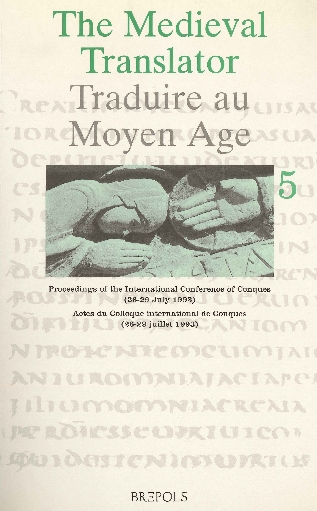
The Medieval Translator. Traduire au Moyen Age
show More to view fulltext, buy and share links for:The Medieval Translator. Traduire au Moyen Age show Less to hide fulltext, buy and share links for: The Medieval Translator. Traduire au Moyen AgeLe premier volume de cette collection chez Brepols est le cinquième d'une série du même nom, éditée par Roger Ellis, et publiée précédemment chez d'autres éditeurs. Comme ses prédécesseurs, il présente les communications faites lors de colloques internationaux et traitant de la théorie et de la pratique de la traduction au moyen âge. Les articles figurant au sommaire de ce volume ont été présentés lors du colloque de Conques, les 26-29 juillet 1993. Les articles sont rédigés dans une des langues internationales et sont accompagnés de résumés en anglais. Le fil conducteur est le phénomène de la traduction au moyen âge, et la série contient tant les études spécialisées que les approches plus générales. L'article phare du volume 5 (K. Ashley & P. Sheingorn, The translations of Sainte Foy: bodies, textes and places), par exemple, traite de l'interaction entre la transmission littéraire et la translation de reliques, en partant du cas de sainte Foy. D'autre part, la question des traductions post-médiévales ou contemporaines de textes mediévaux est également abordée.
-