


Brepols Online Books Medieval Monographs Archive v2016 - bobar16mome

Collection Contents
81 - 100 of 263 results
-
-
Le retour au paradis
show More to view fulltext, buy and share links for:Le retour au paradis show Less to hide fulltext, buy and share links for: Le retour au paradisCette recherche veut répondre à deux questions: comment Tertullien conçoit-il la sainteté et la sanctification de l’homme, quel sens attribue-t-il dans ce contexte à l’ascèse sexuelle ?
Dans une première partie, le père De Brabander présente une analyse lexicographique du vocabulaire de la sainteté. Cette analyse met en lumière les différentes harmoniques que Tertullien fait vibrer et démontre sa continuité avec la tradition biblique. La deuxième partie explicite les fondements théologiques à l’origine de la pensée de Tertullien au sujet de l’ascèse sexuelle. Celle-ci ne se rend compréhensible que dans le contexte de l’ensemble de l’économie du salut. La sanctification de l’homme et son salut ultime sont conçus comme un retour à sa condition originelle, régénérée dans le baptême et rendue parfaite dans l’état eschatologique. L’ascèse sexuelle est présentée comme instrument de sanctification : elle est le moyen privilégié de conserver l’état de sainteté acquis par le baptême et de rejoindre l’état de la vie éternelle. La troisième partie offre une description phénoménologique des différentes formes d’ascèse sexuelle en tant qu’expression de sanctification à l’époque de Tertullien.
Après avoir terminé ses études de philosophie et de théologie au Centre d’Études Ecclésiastiques de Louvain, Kris De Brabander (1964) a obtenu une licence en théologie et sciences patristiques auprès de l’ Institutum Patristicum Augustinianum de Rome en 1992. Il a ensuite suivi les cours de l’Institut Monastique du Pontificium Athenaeum S. Anselmi où il a été reçu comme docteur en théologie grâce à la présente étude, en 2003. Il s’est engagé par la suite dans diverses initiatives de formation patristique. C’est ainsi qu’il enseigne la patristique à Agripo, l’institut de formation des abbayes prémontrées flamandes de Belgique. L’auteur est lui-même chanoine régulier de Prémontré, appartenant à l’abbaye de Tongerlo (Belgique).
-
-
-
Le travail intellectuel à la Faculté des arts de Paris: textes et maîtres (ca. 1200-1500)
show More to view fulltext, buy and share links for:Le travail intellectuel à la Faculté des arts de Paris: textes et maîtres (ca. 1200-1500) show Less to hide fulltext, buy and share links for: Le travail intellectuel à la Faculté des arts de Paris: textes et maîtres (ca. 1200-1500)Le répertoire continué par ce fascicule n'est pas à proprement parler une révision du livre de Glorieux sur les maîtres de la Faculté des arts au XIIIe siècle. D'une part, c'est un répertoire plus restreint: on ne retient que les auteurs et les textes qui ont un rapport direct avec l'enseignement à la Faculté des arts de Paris; de l'autre, il est plus large: on a fixé les limites chronologiques à 1200-1500 environ. Plus important, le but envisagé est de mettre au point un instrument pour les recherches concernant l'histoire intellectuelle de la Faculté des arts de Paris. Le répertoire ne sera donc pas consacré à la prosopographie des maîtres, mais à leur activité intellectuelle, c'est-à-dire leurs écrits et leurs lectures. En conséquence, il comprendra également des maîtres qui n'ont jamais enseigné à Paris, mais dont les oeuvres ont sûrement ou probablement été lues et commentées à la Faculté des arts de Paris. De même, en ce qui concerne les oeuvres anonymes, on retiendra d'une part celles qui ont été écrites à Paris, d'autre part celles qui ont été lues et utilisées dans l'enseignement parisien. Le répertoire veut donc répondre à deux types de questions: 1. quels étaient les maîtres de la Faculté des arts de Paris et quelles sont leurs oeuvres; 2. quels textes contemporains relevant des mêmes disciplines ont contribué à déterminer le climat de ce milieu intellectuel. Ces deux éléments sont intimement liés et se complètent, car, pour citer le père Gauthier, "les maîtres ès arts forment un milieu homogène, leur enseignement est l'enseignement d'une faculté plus que d'un homme".
-
-
-
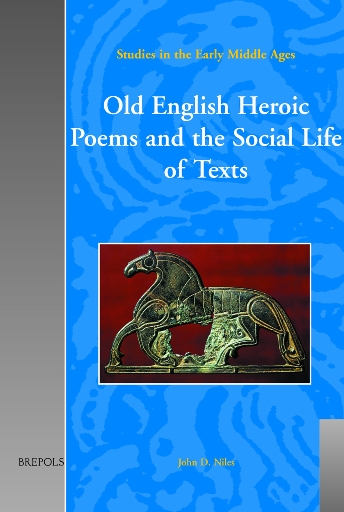
Old English Heroic Poems and the Social Life of Texts
show More to view fulltext, buy and share links for:Old English Heroic Poems and the Social Life of Texts show Less to hide fulltext, buy and share links for: Old English Heroic Poems and the Social Life of TextsOld English Heroic Poems and the Social Life of Texts develops the theme that all stories- all 'beautiful lies', if one considers them as such- have a potentially myth-like function as they enter and re-enter the stream of human consciousness. In particular, the volume assesses the place of heroic poetry (including Beowulf, Widsith, and The Battle of Maldon) in the evolving society of Anglo-Saxon England during the tenth-century period of nation-building. Poetry, Niles argues, was a great collective medium through which the Anglo-Saxons conceived of their changing social world and made mental adjustments to it. Old English 'heroic geography' is examined as an aspect of the mentality of that era. So too is the idea of the oral poet (or bard) as a means by which the people of this time continued to conceive of themselves, in defiance of reality, as members of a tribe-like community knit by close personal bonds. The volume is rounded off by the identification of Bede's story of the poet Cædmon as the earliest known example of a modern folktale type, and by a spirited defense of Seamus Heaney's recent verse translation of Beowulf.
-
-
-
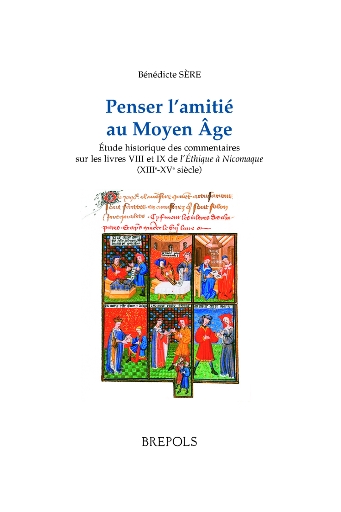
Penser l'amitié au Moyen Age
show More to view fulltext, buy and share links for:Penser l'amitié au Moyen Age show Less to hide fulltext, buy and share links for: Penser l'amitié au Moyen AgeSans conteste, l’amitié innerve le monde médiéval. Le vocable sature les textes tant pratiques que théoriques. Il concerne toute la société, l’élite, les milieux princiers et la noblesse autant que les humbles et le monde ordinaire. Au regard de l’insistance des sources médiévales à dire l’amitié dans sa factualité et sa réalité, il s’avère nécessaire de s’interroger sur la pensée de l’amitié au Moyen Âge. A-t-on pensé l’amitié au Moyen Âge? Plus exactement posé: quels sont les cadres intellectuels, institutionnels et structurels qui poussent les hommes des XIIIe-XVe siècles à penser l’amitié; quelles sont les conditions historiques et les événements culturels qui façonnent les contours d’une telle conceptualisation?
Les médiévaux puisent à la source aristotélicienne un matériau exceptionnellement dense: la philia de l’Éthique à Nicomaque est par excellence le lien social qui unit les citoyens. Penser l’amitié au Moyen Âge à partir de l’auctoritas aristotélicienne, c’était, en quelque sorte, nommer l’expérience proprement médiévale de l’amitié elle-même, définie par la précellence de son acception sociale.
Bénédicte Sère, est agrégée d’histoire et docteur de l’Université de Paris-I Panthéon Sorbonne.
-
-
-
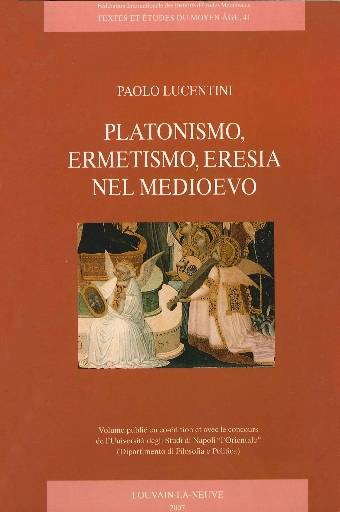
Platonismo, ermetismo, eresia nel medioevo
show More to view fulltext, buy and share links for:Platonismo, ermetismo, eresia nel medioevo show Less to hide fulltext, buy and share links for: Platonismo, ermetismo, eresia nel medioevoLes travaux de Paolo Lucentini ont changé de manière décisive notre approche de l’histoire de la philosophie médiévale. Initiateur de l’Hermes Latinus, il a publié plusieurs éditions et articles ayant trait à ce sujet. Ces publications ont changé fondamentalement notre conception de la « synthèse scolastique », en vigueur jusqu’aux années quatre-vingt. Les éditions de textes inédits qu’il a réalisées permettent de retrouver l’importance de sources encore mal connues et donc peu étudiées.
Comme la plupart de ses articles sont dispersés dans des revues et des ouvrages d’accès parfois difficile, ses collègues et ses élèves de l’Université de Naples, l’ « Orientale », ont souhaité lui rendre hommage en les réunissant en un volume. L’ouvrage rendra bien des services aux chercheurs qui souhaitent étudier de plus près l’hermétisme du Liber Alcidi, de l’Asclepius ou du Liber XXIV philosophorum. L’ensemble de ses articles constitue aussi une initiation privilégiée aux pratiques complexes de l’astrologie et de l’alchimie. Ils ouvrent la voie à des pratiques mystérieuses qui ont influencé profondément la pensée de nombreux auteurs médiévaux.
La table des matières illustre la richesse du contenu de ce livre : de la tradition ériugénienne à Honorius Augustodunensis, de la réception et de l’analyse de l’Asclepius au XIIe siècle, de l’influence du Liber XXIV philosophorum sur la Divine Comédie de Dante jusqu’aux hérésies provoquées par l’interprétation de ces textes chez certains auteurs, tous les articles permettront de mieux comprendre pourquoi l’hermétisme a profondément modifié notre conception de la pensée scolastique.
-
-
-
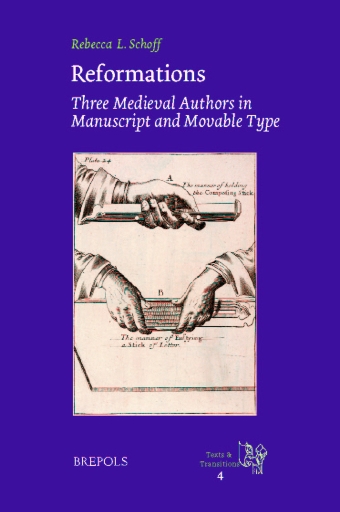
Reformations
show More to view fulltext, buy and share links for:Reformations show Less to hide fulltext, buy and share links for: ReformationsThis volume discusses the key shift from manuscript to print culture in the history of books, taking The Canterbury Tales, The Book of Margery Kempe, and Piers Plowman as models of the way in which a medieval text's unique tradition influenced its transition from manuscript to print. The forces of the Reformation era did not produce the same effect across the varied textual legacy of the Middle Ages. Every text that made the transition from manuscript to print brought with it a set of concerns, a tendency to address a particular readership in particular ways, a physical presence developed in manuscript culture, all of which might shape the pathways by which a text might arrive in print, and what it might look like when it got there. This study follows The Canterbury Tales, The Book of Margery Kempe, and Piers Plowman from their circulation in manuscript to their presentation in print, in order to track how each of them survived the metamorphosis of the relationship between writers and readers as the new technology was introduced. Taken together, the three case studies demonstrate to scholars of any medieval literature the variety of possible impacts made when texts composed in manuscript culture were prepared for printing. The great force exerted by the technological and cultural developments of the English Reformation, not least the more centralized legislative regulation of the press, has long been central to the study of the history of books. This volume takes into account the ways in which individual textual traditions pushed back or accelerated the forces of early modern reform, producing their own plural reformations.
-
-
-
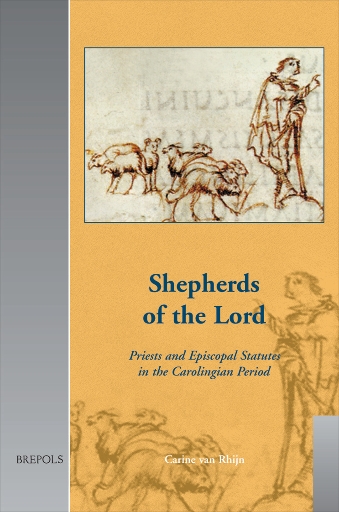
Shepherds of the Lord
show More to view fulltext, buy and share links for:Shepherds of the Lord show Less to hide fulltext, buy and share links for: Shepherds of the LordThis book is the first study of the rural priesthood, its significance, and the statutes written for them in the time of the Carolingians. It seeks to trace and explain the rise and emergence in the Carolingian period of both local priests and episcopal statutes that aimed at steering their behaviour. It was in the context of Carolingian ideals of reform, formulated in court-centred circles from the late eighth century onwards, that local priests increasingly came to be seen as those that held the key to turning the local Frankish population into ideal Christians by their word and living example. First of all, however, these educators needed to be educated themselves, hence the emergence of the Episcopal statutes, a new tool to direct the local diocesan clergy into becoming the ideal 'Shepherds of the Lord' that they needed to be. Smooth as this process of empire-wide reform theoretically was, however, obstacles lurked, both from a top-down (episcopal) and a grass-roots (local) perspective on the status, role, and function of priests. Nevertheless, the ninth century saw the emergence of the priesthood and the development of their role as an important group that connected bishops with the lay inhabitants of their dioceses and, from a higher-up perspective, those who opened up the vast Carolingian country-side to the implementation of the ideal society in the minds of contemporary reformers.
-
-
-
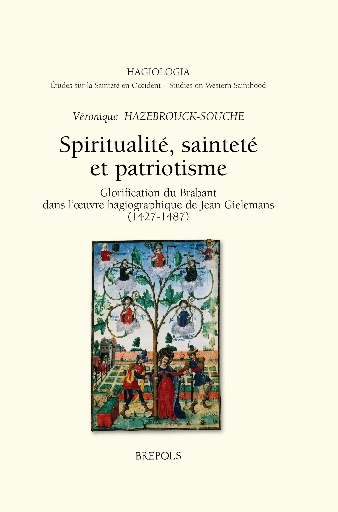
Spiritualité, sainteté et patriotisme
show More to view fulltext, buy and share links for:Spiritualité, sainteté et patriotisme show Less to hide fulltext, buy and share links for: Spiritualité, sainteté et patriotismeL’hagiographie a souvent été décriée jusqu’au vingtième siècle. C’est ainsi que la plus vaste compilation hagiographique du Moyen Age occidental était restée dans l’oubli presque total. à travers quatre volumineux manuscrits en latin (Sanctilogium, Agyologus Brabantinorum, Novale Sanctorum et Hystoriologus Brabantinorum), Jean Gielemans (1427-1487), chanoine régulier de saint Augustin à Rouge-Cloître en Brabant, avait pourtant réalisé entre 1471 et 1487 une véritable encyclopédie hagiographique, et plus encore, laissé un trésor inestimable pour l’histoire religieuse, culturelle et politique.
Issu d’une thèse de doctorat, ce livre met en évidence un genre patriotique inédit où l’hagiographe exalte le Brabant à travers une histoire sacrée tout en reflétant deux idéaux de sainteté, masculine et féminine, entre mystique et Dévotion moderne.
Véronique Hazebrouck-Souche, docteur en histoire médiévale, a enseigné principalement à l’université de Paris X et participé à des projets de recherche en France, Belgique, Italie, Angleterre, Allemagne et aux Pays-Bas.
-
-
-
Tendenda Vela
show More to view fulltext, buy and share links for:Tendenda Vela show Less to hide fulltext, buy and share links for: Tendenda VelaÉdouard Jeauneau a déjà publié deux recueils d'articles. Le premier, Lectio philosophorum (1973) était centré sur l'École de Chartres, le second, Études érigéniennes (1987, prix Victor Cousin 1990) sur Jean Scot Érigène. Ce troisième recueil, "Tendenda Vela", combine les deux thèmes.
Les travaux qui y sont rassemblés, et qui couvrent plus de vingt années de recherches, portent non seulement sur Jean Scot et sur les maîtres chartrains, mais sur leurs sources bibliques, patristiques et profanes. Parmi les sources patristiques, une place de choix est faite aux Pères grecs: Denys l'Aréopagite, Grégoire de Nysse, Maxime le Confesseur. Pour les sources profanes, l'accent est mis sur les textes philosophiques qu'on lisait dans le monde latin en la première moitié du XIIe siècle, notamment le Timée de Platon et la Consolation de Philosophie de Boèce.
Ce nouveau recueil ne se distingue pas seulement par la diversité des sujets traités, mais aussi par la variété de leur approche. Tantôt l'auteur dresse le bilan des recherches qu'il a menées sur les manuscrits en pays tchèque (Plato apud Bohemos) ou en Californie (Berkeley UCB Ms. 95), tantôt il approfondit les thèmes philosophiques (Translatio studii, Processio et Reditus, Cogito érigénien) et théologiques (le Filioque) qu'il a rencontrés au cours de ses excursions à travers le Moyen Âge, tantôt il propose une nouvelle interprétation de quelques œuvres d'art appartenant à cette période: De l'art comme mystagogie, Les sirènes dans le chœur des Vieillards. Un livre qui devrait intéresser les historiens de l'art, de la philosophie et de la théologie.
De 1958 à 1992, Édouard Jeauneau (° 1924) á été chercheur et depuis 1975 directeur de recherche de 1ère classe au Centre National de la Recherche Scientifique (Section Philosophie) à Paris. Depuis 1974 il est aussi fellow du Pontifical Institute of Mediaeval Studies (Toronto).
-
-
-
The Making of Poetry
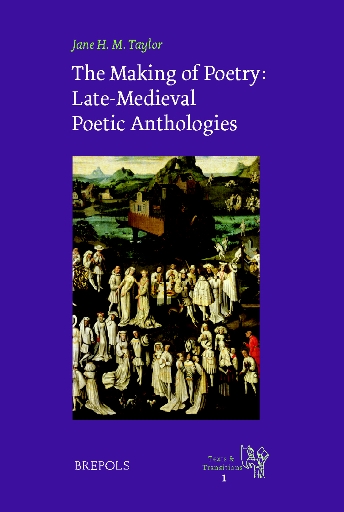
show More to view fulltext, buy and share links for:The Making of Poetry show Less to hide fulltext, buy and share links for: The Making of PoetryIn this ground-breaking book, the author explores some late-medieval lyric anthologies. Taking a cue from the French sociologist, Pierre Bourdieu, she sets poetic creation in the context of an understanding of the structures of court society, and sketches the range of social, intellectual and aesthetic positions available to the poet and the patron. Her primary focus is on a series of manuscripts which, she argues, reveal much about the socioliterary dynamics of particular poems, and about the way in which they are vessels for the participation by individuals in a common culture of literary exchange: Charles d'Orléans's personal manuscript, bnf français 25458, in which, she argues, the poets leave implicit or explicit traces of their social interactions; his duchess Marie's album, Carpentras 375, which is interestingly different from the Duke's; bnf fr. 9223 and n.a.f. 15771, 'coterie' manuscripts which allow us to see how social milieu determines shared literary forms and conventions; Marguerite d'Autriche's Album poétique, Brussels br 10572, an anthology which is a cultural commodity allowing a princely court to recognise stylistic expertise and control of form. She finishes by examining the first great French poetic anthology, Antoine Vérard's Jardin de Plaisance (1501), which seeks to recreate, knowingly and imaginatively, via rubrics, illustrations, and choice of texts, the elite sociability for which the other anthologies are evidence.
-
-
-
The Politics of Exclusion in Early Renaissance Florence
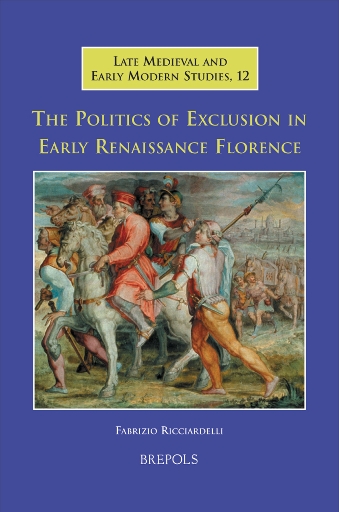
show More to view fulltext, buy and share links for:The Politics of Exclusion in Early Renaissance Florence show Less to hide fulltext, buy and share links for: The Politics of Exclusion in Early Renaissance FlorenceNo previous work has examined political exclusion in Early Renaissance Florence or its significance for the transition from Florentine popular government to oligarchy. Between the fourteenth and the first half of the fifteenth century, political exclusion became a normal feature of political life, regardless of the type of political regime; it was an essential instrument by which new governments consolidated their control over the city and the countryside in one of the largest and most powerful cities of Early Renaissance Europe. Exclusion from the Republic of Florence–separation from friends and family, business and property, coupled with the degradation of public humiliation–engendered a new outlook on life. In Early Renaissance Florence, excluded citizens across social classes became common outlaws, no different for common criminals prosecuted for heresy, blasphemy, gambling, or sexual deviance. By investigating these practices and attitudes of Early Renaissance Florence, this book shows the dark side of Renaissance republicanism: its fear of political dissent in any form and its means to crush it at all costs. This study of the other side of Renaissance republicanism presents a new and crucial chapter in Renaissance history.
-
-
-
Translating the Sagas
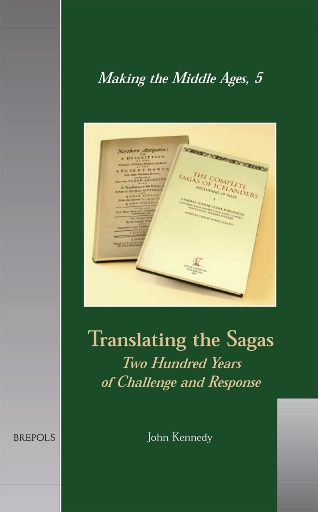
show More to view fulltext, buy and share links for:Translating the Sagas show Less to hide fulltext, buy and share links for: Translating the SagasFew speakers of English have ever been able to read the Icelandic sagas in the original language, and published saga translations have played a major role in shaping attitudes towards Viking Age Scandinavia and the great literary achievements of medieval Iceland in the English-speaking world. This book is the first publication to provide an extended examination of the history and development of Icelandic saga translations into English from their beginnings in the eighteenth century to today. It explores reasons for undertaking saga translation, and the challenges confronting translators. Chapters are devoted to the pioneering saga translations, the later Victorian and Edwardian eras, the often-neglected period of the two World Wars and their aftermath, and the upsurge of saga translation in the second half of the twentieth century. The contributions of individual translators and teams are reviewed, from James Johnstone in the 1780s through major Victorians such as Samuel Laing, George Webbe Dasent, and William Morris, distinguished twentieth century figures such as Lee M. Hollander, Gwyn Jones, Magnus Magnusson and Hermann Pálsson, and George Johnston, and the great co-operative project which produced The Complete Sagas of Icelanders at the century’s end. The book concludes with saga translation facing interesting new possibilities and challenges, not least those generated by information technology.
-
-
-
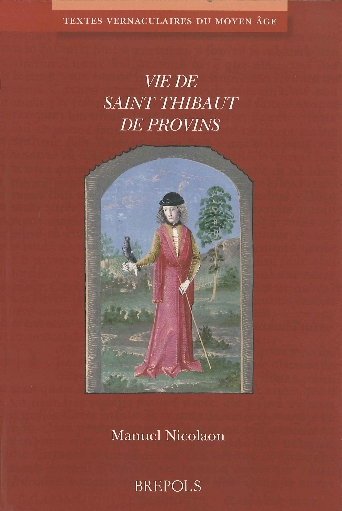
Vie de saint Thibaut de Provins
show More to view fulltext, buy and share links for:Vie de saint Thibaut de Provins show Less to hide fulltext, buy and share links for: Vie de saint Thibaut de ProvinsComment l’histoire si édifiante d’un jeune chevalier champenois du 11ème siècle qui, pour le seul amour de Dieu, délaisse pouvoir, famille et richesses et devient successivement ermite itinérant, pèlerin, prêtre et saint a-t-elle pu être écartée des fameuses compilations de vies de saints en français de la fin du Moyen Age et ainsi finalement tomber dans l’oubli ?
Bien sûr, la Vie de saint Thibaut de Provins n’est pas de ces textes qui mettent en évidence une figure emblématique ou des règles fondatrices de la religion chrétienne ; mais elle est loin cependant d’être une simple légende locale, et son intérêt réside sans aucun doute autant dans le caractère exemplaire de la vie qui est montrée que dans la valeur plus littéraire du récit qui, par le jeu de l’intertextualité, semble progressivement superposer la vie (ou plutôt la mort) de saint Thibaut à celle du Christ.
Accompagnée d’une introduction, d’une traduction, d’un appareil critique, de notes, d’un index, d’un glossaire et, en annexe, des différentes versions connues de la Vie de saint Thibaut, la présente édition souhaite ainsi permettre l’accès tant aux spécialistes de l’édition critique qu’aux amateurs de récits hagiographiques ou plus généralement d’histoire religieuse d’un texte français du 13ème siècle jusqu’alors inédit, dont la brièveté rend l’originalité et l’intérêt littéraire d’autant plus saillants.
-
-
-
Vie de sainte Marie l'Egyptienne
show More to view fulltext, buy and share links for:Vie de sainte Marie l'Egyptienne show Less to hide fulltext, buy and share links for: Vie de sainte Marie l'EgyptienneHildebert de Lavardin, évêque du Mans (1096-1125), puis archevêque de Tours (1125-1133), l’auteur de la Vita beate Marie Egyptiace, dont nous donnons ici la première traduction française, fut l’une des figures littéraires les plus importantes du Moyen Age: pendant plusieurs générations ses vers furent lus avec plaisir dans toute l’Europe occidentale; ses lettres servirent de modèles dans les écoles cathédrales et monastiques, pour leur élégance et leur noble distinction, et ses traités de philosophie morale et de droit canonique devinrent des manuels universellement appréciés.
La légende de Marie l’Égyptienne, compte parmi les figures du Moyen Age les plus connues et les plus vénérées de celles qui illustrent l’influence salutaire de Notre-Dame sur les plus grands pécheurs; elle a contribué pour une part nullement négligeable au développement du culte marial qui prend son essor définitif en Occident partir de l’époque carolingienne. Marie l’Égyptienne n’est pas seulement l’héroïne d’une parabole « évangélique », mais le personnage-clé d’un drame de la plus brûlante actualité : non seulement elle incarne en sa personne l’aspiration du monde féminin à rejoindre le mouvement des nouveaux ermites de l’époque d’Hildebert, mais elle intervient, en sa qualité d’ermite, pour donner des conseils au monde monastique. Le texte prend place dans la grande discussion de l'époque d'Hildebert sur la hiérarchie des vocations monastiques et leurs mérites respectifs, et sur les origines érémitiques du monachisme chrétien.
-
-
-
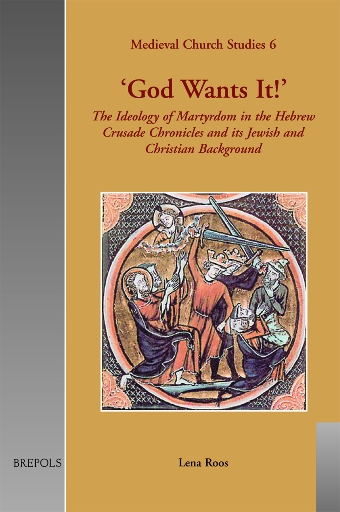
'God Wants It!'
show More to view fulltext, buy and share links for:'God Wants It!' show Less to hide fulltext, buy and share links for: 'God Wants It!'During the first months of the First Crusade, groups of crusaders attacked the Jewish communities in the Rhineland, forcing them to choose between death and conversion. Many converted, but others chose to die as martyrs. Among these, some were killed by the crusaders, some killed themselves, each other, or even their own children in order to prevent forcible conversion. These events are described in a number of Latin accounts, but also in three Hebrew chronicles and in a number of Hebrew liturgical poems. These Hebrew chronicles introduce many new ideas connected to martyrdom which are not found in earlier Jewish martyr texts. They also differ considerably from contemporary texts on martyrdom, written by Jews living under Muslim rule.
The purpose of the present study is as follows: to outline the most salient features of this new ideology of martyrdom found in the Hebrew Crusade Chronicles and how it differs from earlier Jewish tradition; to try to trace the roots of these new ideas, both by showing how the Chroniclers develop earlier Jewish ideas and also how they borrow notions and concepts from their Christian surroundings; to show what rhetorical means the Chroniclers use in order to present these innovations as firmly anchored in tradition; to attempt to explain why this ideology develops at this particular time and place, and thereby contribute some further methodological reflections on the nature of religious change, especially in a situation of persecution and oppression; to challenge the old paradigm that the Ashkenazic Jewish communities lived in isolation from their non-Jewish surroundings, and to suggest that a serious study of any medieval Jewish text must take into consideration the culture and current notions of the non-Jewish community in which the text was composed.
-
-
-
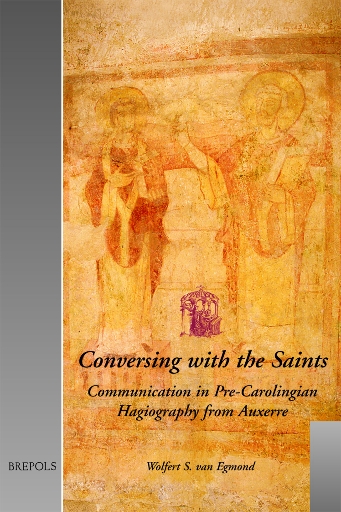
Conversing with the Saints
show More to view fulltext, buy and share links for:Conversing with the Saints show Less to hide fulltext, buy and share links for: Conversing with the SaintsEarly medieval hagiographical texts abound with vivid descriptions of acts of communication. Such descriptions in the hagiography written in the diocese of Auxerre during the Merovingian period are studied here in an attempt to establish the status of the written word vis-à-vis other means of communication, such as the spoken word or rituals. For this purpose the dating of each source is reconsidered. The texts were written within the clerical community of Auxerre and most relate in some way to Germanus, the most renowned bishop of Auxerre (first half of the fifth century). Although the Vita Germani by Constantius was not written in Auxerre nor for an Auxerrois audience, it is included in the analysis, since it has exerted a profound influence on the later hagiographical narratives produced in the diocese. This study demonstrates that the authors of these texts were very much aware of the limitations of the written word as well as of the advantages and importance of non-written communication.
-
-
-
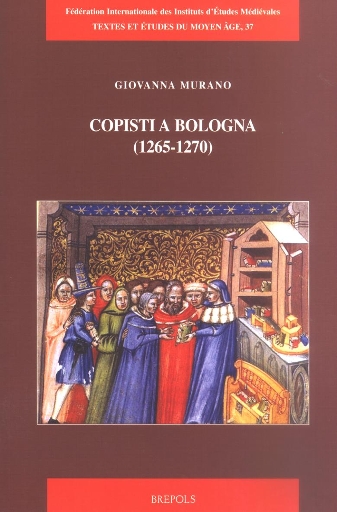
Copisti a Bologna (1265-1270)
show More to view fulltext, buy and share links for:Copisti a Bologna (1265-1270) show Less to hide fulltext, buy and share links for: Copisti a Bologna (1265-1270)The mystery of writing is that there is nothing mysterious about it. If Saramago is right, then it is obvious that palaeography has not yet found all the keys we need if we are to enter amongst the people who gave form to the thoughts and memories of the medieval world. In order to reveal their identity – the greatest mystery of all – it is sometimes necessary to pass over what has already been written, affirmed and maintained, and to return to the sources instead. The “Memoriali” conserved in the Archivio di Stato in Bologna reveal stories of men and women who created, with pen and quill veritable cathedrals of ink, indelible and sometimes of ineffable beauty. In this volume the names are collected, the commissions listed, where possible the careers and tribulations described of more than 270 copyists documented at Bologna between 1265 and 1270. In short, it is the documentary sources, not the works produced or such as have survived, on which the present book has been based.
-
-
-
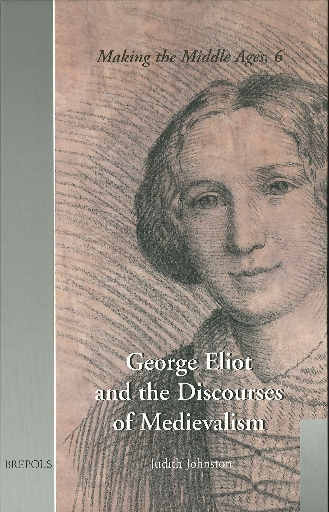
George Eliot and the Discourses of Medievalism
show More to view fulltext, buy and share links for:George Eliot and the Discourses of Medievalism show Less to hide fulltext, buy and share links for: George Eliot and the Discourses of MedievalismIn George Eliot's last two novels, Middlemarch (1871-72) and Daniel Deronda (1876), she abandons the realism she had explored and articulated so carefully, most famously in Adam Bede, 'a faithful account of men and things', for an unprecedented return to 'cloud-borne angels, [...] prophets, sibyls, and heroic warriors'. This study addresses Eliot's exploitation of Victorian medievalism by considering the way in which she utilizes the discourses of medievalism, both for their potential for subversiveness and their potential for mediation, to affirm that change is possible socially, culturally, and politically, in her modern contemporary world. The various medieval discourses are revealed as interstices within what initially appears to be a continuation of the realism of her earlier novels. They permit political and cultural readings of a different, and often unexpected, kind to the realist bourgeois values of novels like Adam Bede, and to a lesser extent, Felix Holt. These political and cultural readings reveal a more determined, more obvious feminist and socialist polemic in her two last and possibly greatest novels.
-
-
-

Hrabani Mauri Opera exegetica. Repertorium fontium.
show More to view fulltext, buy and share links for:Hrabani Mauri Opera exegetica. Repertorium fontium. show Less to hide fulltext, buy and share links for: Hrabani Mauri Opera exegetica. Repertorium fontium.Riconosciuto ed acclamato, sulla scia di una tradizione erudita affermatasi all'inizio del secolo scorso, quale 'praeceptor Germaniae', Rabano fu mandato dall'abate Baugulfo - già destinatario dell' Epistola de litteris colendis - a studiare a Tours presso Alcuino. Tornato a Fulda, prima come maestro e poi, a partire dall' 822, nella veste di abate, egli fece dell'abbazia la sede di una delle più importanti scuole del regno. Ma Rabano non lavorò solo per i suoi monaci. Vero erede dalla tradizione culturale alcuiniana - e interpretato dai suoi stessi contemporanei come tale - egli portò avanti il piano di politica culturale promosso da Carlo. A tal fine realizzò una glossa sistematica alla sacra Scrittura che, concepita come raccolta ordinata delle spiegazioni dei Padri, conobbe uno straordinario successo. Dopo Rabano, per generazioni, studiare il testo sacro significò, sopratutto, leggere, interpretare, rielaborare le raccolte di expositores da lui messe a punto.
L'opera esegetica di Rabano Mauro costituisce pertanto un passaggio obbligato non solo per comprendere quello che fu lo studio della Bibbia durante l'alto medioevo, ma anche per farsi un'idea delle letture patristiche alla base della formazione di molti dei maestri che operarono in questi secoli. Tuttavia, sopratutto a ragione del suo carattere compilativo, essa è stata completamente trascurata dalla critica.
Il presente lavoro si propone di colmare tale lacuna. Basato su un’indagine sistematica delle fonti, esso tenta una prima lettura complessiva dell’impegno interpretativo dell’abate di Fulda, assegnandogli un preciso posto nella storia dell’esegesi latina.
-
-
-
La fleur de France
show More to view fulltext, buy and share links for:La fleur de France show Less to hide fulltext, buy and share links for: La fleur de FranceAu XIIe siècle, l’Île-de-France n’existe pas. Les habitants des pays autour de Paris se nomment les Français et leur terre la France. Cet espace régional, qui prend le nom d’Île-de-France au XIVe siècle, est le produit d’une construction politique. Les souverains se fixent progressivement dans la vallée de la Seine, à proximité du grand sanctuaire de Saint-Denis, et, simultanément, entreprennent le « rassemblement capétien » qui dilate la terre des Français de l’île de la Cité à l’Île-de-France. La région France est un espace prospère, contrôlé par les représentants de la puissance publique qui assurent le maintien de l’ordre seigneurial. Ces seigneurs d’Île-de-France sont la fleur de France des chansons de geste, combattants admirables et défenseurs glorieux de la Terre sainte. Dans les sources ecclésiastiques, l’image de ce groupe régional - nous dirions national - est nettement moins flatteuse. Il rassemblerait les pires représentants d’une société seigneuriale violente et subversive, ennemie acharnée du grand progrès de l’Etat et du bien commun défendu par l’Eglise. Pourtant, même s’ils encombrent les actes royaux et les cartulaires ecclésiastiques, les maîtres de la Francia restent mal connus. Ce thème de recherche pose le problème de la construction de l’Etat. Dans le pays autour de Paris, noyau du « système français », le Capétien est présent physiquement. La lecture des rapports roi et seigneurs s’intègre dans une lecture globale de l’évolution politique du royaume de France.
Cette étude de synthèse veut être une contribution à l’histoire des familles seigneuriales d’Île-de-France au XIIe siècle. L’utilisation croisée des sources diplomatiques, iconographiques et littéraires permet d’observer les grandes lignes de la géographie politique des pays autour de Paris et les contours du groupe aristocratique attaché à cette terre. Quels sont les liens de fidélité qui unissent le roi, l’Eglise et les seigneurs ? Quels sont les rapports entre la construction de l’identité seigneuriale et l’exercice de l’autorité publique ? Enfin, les transformations de la spiritualité aristocratique sont-elles encouragées par l’Eglise ?
-