


BOB2023MOOT

Collection Contents
28 results
-
-
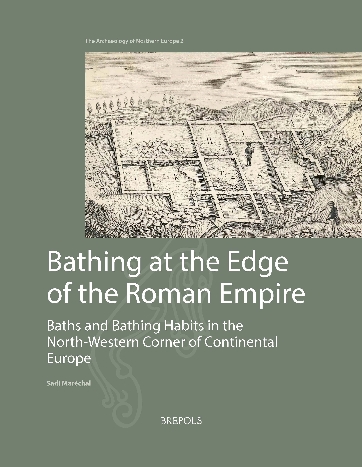
Bathing at the Edge of the Empire
show More to view fulltext, buy and share links for:Bathing at the Edge of the Empire show Less to hide fulltext, buy and share links for: Bathing at the Edge of the EmpireRoman bathhouses are considered to be prime markers when studying romanization in the provinces of the Empire, as these very specific - and archaeologically recognizable - buildings, together with their associated ideas about the body and personal health, introduced a decidedly Roman habit into regions that had hitherto been unfamiliar with (communal) bathhouses and heating technology. While traditionally, studies into Roman baths and bathing have focused on large public baths in the cities of the empire, however, those from the area that now roughly corresponds to modern-day Belgium have often been neglected in recent research as this was an area with few important urban centres.
This book for the first time investigates the introduction, spread, and eventual disappearance of Roman-style baths and of bathing habits in this north-western corner of the Roman Empire. A detailed analysis of the architecture, technology, and decoration of both public and private baths is combined with a discussion on the role of bathing in the area’s romanization, and supplemented by a fully illustrated catalogue of all bathhouses in the area of study. In doing so, the volume sheds new light not only on the evolution of baths and bathing in this region, but also on their broader role in larger historic processes such as cultural change across the Empire.
-
-
-
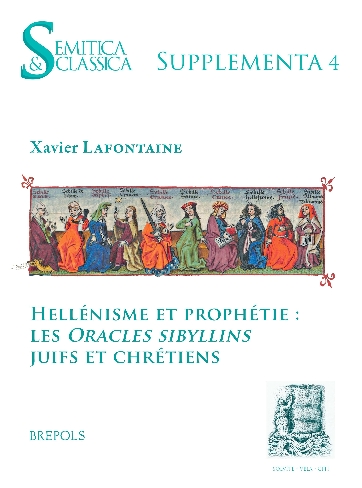
Hellénisme et prophétie
show More to view fulltext, buy and share links for:Hellénisme et prophétie show Less to hide fulltext, buy and share links for: Hellénisme et prophétieThe formal study of the collection of Jewish and Christian texts transmitted under the name of Sibylline Oracles highlights the continuity of the model of biblical prophecy while underlining the heritage of Greek didactic poetry. The interest of this approach is to situate the Sibylline Oracles as a literary work in the context of contemporary Greek versified literary production, which implies, on the part of their successive editors, a familiarity with Greek poetic forms related to a common scholar background.
The study of the retelling of biblical episodes aims at identifying the passages where the fictitious Sibyl claims to announce the events of the biblical past and confronting these narrative sequences with contemporary rhetorical theories of paraphrase in order to highlight the formal technique that runs through them and the interpretation of the biblical hypotext that it presumes. Most of the rewritings preserved in the corpus are compatible with the prevailing doctrine of the third century ce.
-
-
-
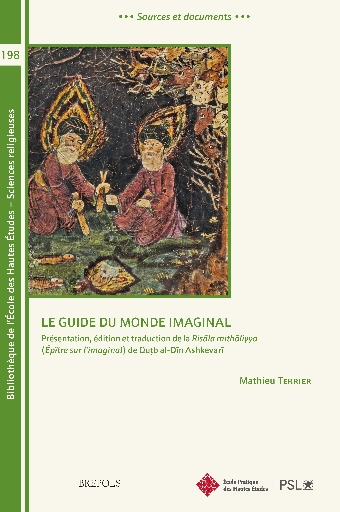
Le guide du monde imaginal
show More to view fulltext, buy and share links for:Le guide du monde imaginal show Less to hide fulltext, buy and share links for: Le guide du monde imaginalLe monde imaginal (‘ālam al-mithāl), concept élaboré entre l’école de la sagesse illuminative (ishrāq) de Suhrawardī et l’école de mystique spéculative d’Ibn ‘Arabī, est l’une des innovations majeures de la philosophie en Islam après Averroès. Intermédiaire entre les mondes matériel et spirituel, sensible et intelligible, il permet de rendre raison des événements des rêves, des phénomènes d’apparition, des ascensions célestes des sages et des saints, ainsi que des plaisirs et des tourments de la « résurrection mineure » dans la tombe.
L’on doit à Quṭb al-Dīn Ashkevarī, philosophe shi’ite méconnu de l’Iran safavide (11ème/17ème siècle), la première monographie sur ce nouveau monde, composée en arabe et en persan : Fānūs al-khayāl fī irā’at ‘ālam al-mithāl, « la Lanterne de l’imagination. Sur la vision du monde imaginal », aussi intitulé al-Risāla al-mithāliyya, « l’Épître sur l’imaginal ». Il s’agit à la fois d’une compilation rassemblant des sources variées sur le monde imaginal et d’une œuvre personnelle à contre-courant de son temps, soutenant l’harmonie entre le shi’isme imâmite, la philosophie et le soufisme, et appelant à une quête de salut par la connaissance hors du monde d’ici-bas.
Le présent ouvrage contient une présentation, une traduction inédite et la première édition de cette épître. En retraçant une « histoire-géographie » du monde imaginal, tout en analysant l’œuvre dans son caractère personnel singulier, il entend éclairer les relations profondes entre les trois courants de l’islam spirituel que sont le shi’isme imâmite, le soufisme et la philosophie.
-
-
-

Le père du siècle: The Early Modern Reception of Jean Gerson (1363–1429)
show More to view fulltext, buy and share links for:Le père du siècle: The Early Modern Reception of Jean Gerson (1363–1429) show Less to hide fulltext, buy and share links for: Le père du siècle: The Early Modern Reception of Jean Gerson (1363–1429)This volume provides the first wide-ranging investigation of the post-fifteenth-century reception of Jean Gerson (1363-1429), chancellor of the University of Paris, guiding light of the Council of Constance, and arguably the most influential of late medieval theologians. His impact on early modern movements and thinkers paved the way for many developments still shaping our existence today. Besides his well-known influence in theology and church history, the chancellor left a significant impact in jurisprudence, human rights, art, music, education, literature, and even medicine; there is hardly an area of the humanities that did not pay at least some tribute to his authority, and there was almost no early modern political or religious movement in the West that neglected his name. Nearly all of the most prominent early modern intellectuals perceived him as an authority and father figure; an illustrious cohort of celebrities, including Thomas More, Martin Luther, King James I, Ignatius of Loyola, Girolamo Savonarola, Christopher Columbus, Bartholomew de Las Casas, and many others, relied on his writings and ideas. The geography of his late-fifteenth- and sixteenth-century reception reflects his pre-eminence, reaching from Spain to Scandinavia.
-
-
-
Living with the Army II
show More to view fulltext, buy and share links for:Living with the Army II show Less to hide fulltext, buy and share links for: Living with the Army IIThis book presents the results of a research project realised in 2012-14 in the surroundings of the Roman legionary base at Novae (Moesia inferior), transformed in late Antiquity into a civilian town. The publication also contains material from surveys conducted in 1977 and in 2000, which have so far only been partly published.
Various research methods were implemented jointly to enable at least a partial reconstruction of the settlement’s character. These included geophysical prospection, field walking, and the mapping of metal finds, supplemented by a series of analyses, such as the testing of plant pollen and macroremains, with the aim of providing as complete a reconstruction as possible of the past environment in the fortress’ surroundings. We attempted to record both the finds originating from earlier epochs and those from later ones, in order to provide a more complete reconstruction of the settlement landscape and the character of the site.
-
-
-
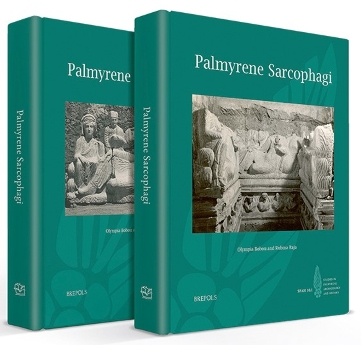
Palmyrene Sarcophagi
show More to view fulltext, buy and share links for:Palmyrene Sarcophagi show Less to hide fulltext, buy and share links for: Palmyrene SarcophagiWhile the funerary portraiture of Palmyra is rightly world-renowned, up to now, the corpus of sarcophagi from the ancient city has received relatively little attention as a cohesive group in their own right. Comprising sarcophagi, banqueting reliefs and founder reliefs, as well as sarcophagus reliefs, most of these objects share a common iconographic motif, that of the banquet, although other scenes, mostly drawn from the daily life of the city’s caravan leaders and their families, also appear. The emphasis on the banqueting scene in particular reveals the crucial importance of dining in ancient Palmyrene society: for the living, banquets were a marker of social standing and gave hosts a chance to honour the gods and offer an ephemeral benefaction to their fellow citizens, while for the dead, the banquet motif offered the opportunity for the entire family to be depicted together and showcase their wealth and sophistication, as well as their connections outside the city.
This single corpus of material gathered through the Palmyra Portrait Project, is presented in this beautifully illustrated two-volume monograph. Through careful analysis of the portraits, and the costumes and attribute choices that appear in these images, the authors explore how the sarcophagi were used by Palmyrenes to project an image of local pride, while at the same time participating in the visual cultures of the Roman and Parthian Empires between which their city was situated.
-
-
-
The Anaphoral Tradition in the ‘Barcelona Papyrus’
show More to view fulltext, buy and share links for:The Anaphoral Tradition in the ‘Barcelona Papyrus’ show Less to hide fulltext, buy and share links for: The Anaphoral Tradition in the ‘Barcelona Papyrus’Since the discovery in the 1950’s of the so-called 'Barcelona Papyrus', the anaphora contained within it has remained the most understudied classical anaphora. However, a close analysis of this anaphora can reshape liturgical historians’ understanding of a number of classical anaphoras, and thus their approach to anaphoral development more broadly. This anaphora requires scholars to rethink questions concerning the construction, geographical provenance, and structural patterns of early anaphoras and their units. It is a witness to a very early form of Eucharistic praying, and points to various ways in which older less developed Eucharistic prayers developed into the anaphoral patterns common in the fourth century. As such, an analysis of this anaphora is of historical and methodological interest. This anaphora is also an early witness to Egyptian Eucharistic praying. It stems from the same anaphoral tradition as the anaphora of St. Mark, but on the whole it is an earlier witness to that tradition. The anaphora in the Barcelona Papyrus also bears a number of structural and textual similarities to the anaphora described in the Mystagogical Catecheses, which is often attributed to Cyril of Jerusalem. As such, it sheds further light on the relationship between Egypt and Jerusalem.
-
-
-

The Christian Metaphysics of St Maximus the Confessor
show More to view fulltext, buy and share links for:The Christian Metaphysics of St Maximus the Confessor show Less to hide fulltext, buy and share links for: The Christian Metaphysics of St Maximus the ConfessorThis book offers an investigation into the basic structures of St Maximus the Confessor’s thought in the context of ancient and late antique philosophy. The introduction explains what is meant by the term ‘metaphysics of Maximus’, and discusses possible senses of terms like ‘Christian philosophy’ and ‘Byzantine philosophy’. On the background of a definition of ‘Christian philosophy’, the author devotes two chapters to discuss Maximus’ ideas of knowledge of the created world and of God. The chapters that follow are devoted to the doctrine of creation, the function of the so-called logoi (divine Ideas) in the procession and conversion of the totality of beings in relation to God, and the relation between the logoi and the so-called divine activities. The logoi, eternally comprised in God’s knowledge as the divine thoughts in accordance with which everything is created, are then shown to function as principles of a rather complex order of being: the cosmos instituted as a whole-part system. This whole-part system secures the possible communion between all creatures and facilitates the conversion of everything to the divine source as a unity in plurality deified by God. The last chapter treats of the doctrines of Incarnation and deification in order to clarify the exact sense of deification for all beings. In the final part of the book, the author applies Maximian metaphysics to a major ethical challenge in our days: the environmental crisis, thus proving that late antique philosophy still has relevance today.
-
-
-
The Dormition and Assumption of the Virgin Mary
show More to view fulltext, buy and share links for:The Dormition and Assumption of the Virgin Mary show Less to hide fulltext, buy and share links for: The Dormition and Assumption of the Virgin MaryThis volume includes eight new translations of early Christian narratives about the end of the Virgin Mary’s life, that is, her Dormition and Assumption. Translated from Greek, Latin, Syriac, Ethiopic, Georgian, and Christian Palestinian Aramaic, each of these texts is either translated into a modern language for the first time, or appears in a version that has not previously been published. The texts represent a broad range of the highly diverse early Christian memories of Mary's departure from this world. Likewise, the texts themselves often disclose a range of theological diversity within the early Christian tradition even beyond what scholars have thus far recognized.
-
-
-
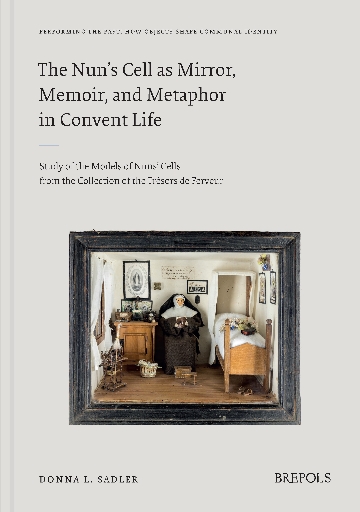
The Nun’s Cell as Mirror, Memoir, and Metaphor in Convent Life
show More to view fulltext, buy and share links for:The Nun’s Cell as Mirror, Memoir, and Metaphor in Convent Life show Less to hide fulltext, buy and share links for: The Nun’s Cell as Mirror, Memoir, and Metaphor in Convent LifeIn the eighteenth through the early twentieth century, French nuns from various orders created miniature simulacra of the cells in which they slept, studied, and performed their devotions. Each diorama contains an effigy of the nun, a prie-Dieu, devotional objects such as a crucifix, handiwork, and artifacts to foster study and contemplation. This book examines the lives of the brides of Christ as depicted in these dioramas, proposing that the material objects found in the chambers trace the contours of the collective and individual identities of the nuns who created these cells. Viewed as a type of memoir, the cells furnish the sisters a stage upon which to rehearse the meaning of their lives. The dioramas create a tension between the private and public presentations of the self, between verisimilitude and self-fashioning, and between reality and representation. The book contextualizes the miniature cells within the larger discourse of gender, identity, self-representation, monastic devotion, and the power wielded by the aesthetics of scale.
-
-
-
Xanthippe et Polyxène
show More to view fulltext, buy and share links for:Xanthippe et Polyxène show Less to hide fulltext, buy and share links for: Xanthippe et PolyxèneCe petit roman chrétien, composé en grec vraisemblablement autour du v e siècle et manifestement influencé par les Actes apocryphes des apôtres, se compose de deux parties, chacune centrée sur une femme. L’héroïne du premier récit, Xanthippe, épouse d’un notable, est tournée vers l’ascèse et, bien que païenne, aspire à connaître le Dieu de Paul. Or, il se trouve que l’apôtre se rend en Espagne dans sa ville. Surmontant plusieurs épreuves avec détermination et faisant preuve d’un remarquable discernement spirituel, la chaste Xanthippe est baptisée par Paul et contribue à la conversion de son mari. Polyxène, sa jeune sœur, est l’héroïne du second récit, fort différent, qui se présente comme un véritable roman d’aventures et de voyages. Victime d’un enlèvement et emmenée en Grèce, elle voit sa virginité maintes fois menacée. Mais elle bénéficie de plusieurs aides efficaces, dont celles des apôtres Pierre, Philippe et André. Elle s’en retourne saine et sauve dans sa ville d’Espagne pour rester désormais attachée à l’apôtre Paul. L’ensemble de ce roman présente la particularité de fournir l’unique récit conservé des faits et gestes de Paul en Espagne.
-
-
-
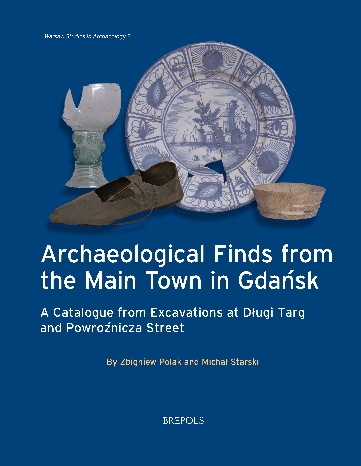
Archaeological Finds from the Main Town in Gdańsk
show More to view fulltext, buy and share links for:Archaeological Finds from the Main Town in Gdańsk show Less to hide fulltext, buy and share links for: Archaeological Finds from the Main Town in GdańskBetween 2002 and 2004, archaeological excavations took place on Powroźnicza Street, in the city of Gdańsk, Poland. Twelve burghers’ plots, located in the centre of this former medieval metropolis, were investigated, and yielded a rich collection of archaeological finds, among them ceramics, and items of wood, metal, and glass, from a period stretching from the fourteenth to the twentieth century. These finds are presented here for this first time in this richly illustrated bilingual volume, published in both English and Polish, which lays out a detailed catalogue of all the items, together with a discussion of the site, its settlement phases, and its most significant discoveries.
-
-
-
Bassit 2 (Syrie) - Fouilles Paul Courbin (1971-1984)
show More to view fulltext, buy and share links for:Bassit 2 (Syrie) - Fouilles Paul Courbin (1971-1984) show Less to hide fulltext, buy and share links for: Bassit 2 (Syrie) - Fouilles Paul Courbin (1971-1984)À 50 km au Nord de Lattaquié, le site côtier de Bassit a été étudié sous la direction de Paul Courbin : après l’acropole (1971-1972) (périodes hellénistique et romaine), et la nécropole du Fer (1973-1974), le « tell » a été fouillé de 1972 à 1984. Sont présentés ici une description détaillée de la stratigraphie et de l’architecture du « tell », des ensembles céramiques associés, ainsi que le corpus du mobilier datant du Bronze Récent I et II. Bassit est installé aux marges Nord du royaume d’Ougarit à partir du milieu du xvi e s. av. J.-C.. Les importations chypriotes sont nombreuses durant tout le Bronze Récent, mais la céramique égéenne apparaît très rare. Le site est détruit bien avant le passage des « peuples de la mer » (vers 1200). À l’âge du Fer, la fonction constante de Bassit est de contrôler l’accès maritime depuis Chypre et le cabotage littoral. Le commerce de la céramique chypriote domine le Fer I et II, celui des céramiques égéennes et étrusques, puis attiques, le Fer III. À l’époque hellénistique, la production d’amphores et de monnaies confirme l’identification de Posideion avec Bassit. L’époque romaine est également marquée par une importante production de céramique.
-
-
-
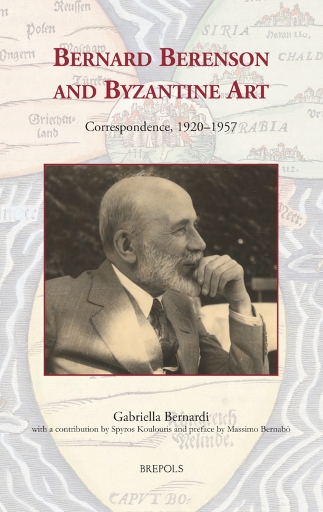
Bernard Berenson and Byzantine Art
show More to view fulltext, buy and share links for:Bernard Berenson and Byzantine Art show Less to hide fulltext, buy and share links for: Bernard Berenson and Byzantine ArtThe American art historian Bernard Berenson, born in 1865, is famous for his pioneering studies of the Italian Renaissance, but his work on Byzantine art remains less well-known and less studied. Yet his passion for studies of Byzantium - dubbed the ‘Byzantine infection’ - played a major role throughout Berenson’s life, and in the 1920s, he began work on a magnum opus on this topic that was sadly never completed. This volume aims to illuminate and revisit Berenson’s approach to Byzantium and the art of the Christian East through an exploration and analysis of the correspondence, travel notes, and photo archive that Berenson built up over his lifetime, and that taken together, clearly points to an explicit recognition by Berenson of the importance of Byzantine art in the Latin Middle Ages. Drawing together Berenson’s correspondence with art historians, collectors, and scholars from across Europe, the US, and the Near East, together with an overview of his numerous photography campaigns, the book is able to open a new window into Byzantine art historiography from the 1920s to the 1950s. In doing so, it sheds light onto a period in which important discoveries and extensive restoration campaigns were carried out, such as those of the mosaics of Hagia Sophia and Kariye Camii in Istanbul, as well as of the Basilica of San Marco in Venice and its decoration.
-
-
-

Commentaries on The Angelic Hierarchy
show More to view fulltext, buy and share links for:Commentaries on The Angelic Hierarchy show Less to hide fulltext, buy and share links for: Commentaries on The Angelic HierarchyThomas Gallus (d. 1246) was the Abbot of Vercelli in the north of Italy. Initially a canon regular in the abbey of St Victor in Paris, he helped found a new monastery and church in the home town of his patron, Cardinal Guala Bicchieri. As well as commenting on the Canticle of Canticles three times, Thomas was renowned for his expositions of the works of Dionysius the Areopagite, commentaries which earned him the title magister in hierarchia (master of the hierarchies). This volume contains the first translation in any language of his Glosses on the Angelic (or Celestial) Hierarchy (completed in 1224), as well as his more detailed Explanation of the Angelic Hierarchy (finished in 1243). The commentaries are fascinating for their insights into Thomas’s teaching that love has a higher access to an experience of God than the intellect, the role of the angelic hierarchies in the mystical return of the soul, the psychological interpretation of the angels as representing faculties of the soul, and the use of symbols representing analogical features of the divine.
The source text of this volume appeared in Corpus Christianorum. Continuatio Mediaeualis as Thomas Gallus, Super angelica ierarchia (CCCM, 223) and Glose super angelica ierarchia (CCCM, 223A). References to the corresponding pages of the Corpus Christianorum edition are provided in the margins of this translation.
-
-
-
Friendship as Ecclesial Binding
show More to view fulltext, buy and share links for:Friendship as Ecclesial Binding show Less to hide fulltext, buy and share links for: Friendship as Ecclesial BindingIn the age of Augustine, within the classical structures of society, nothing was more valued than friends and friendship. Augustine was an innovative thinker and friendship represents a good example of his flair for reconfiguring its framework into an ecclesial setting. He wrote: ‘what greater consolation do we have in this human society, riddled with errors and anxieties, than the unfeigned faith and mutual love of true and good friends?’. Yet, as a Christian Bishop, how would he reconceive this well established and treasured institution? Friendship was certainly something that became recast within the light of his conversion and immersion into the life of the Church. In Augustine’s exchange with the Donatists, we glimpse his most fully developed vision of friendship. Through his preaching on John’s gospel, which comes to us as his In Iohannis Euangelium Tractatus, Augustine reveals this vision of what friendship is. Given that John’s gospel gives such weight to the incarnation and to friendship, we can witness through his hermeneutical strategy of figuration, his notion that friendship with God comes in belonging to the totus Christus, ‘the whole Christ’. For Augustine, the universal nature of the Church as Christ’s body and bride enjoys a continued connection to the head (Christ) and through the Church, its members live within the embrace of the Spirit. With this foundation of friendship, Augustine cried out to those separated by schism: belong-be bound-be friends with God in Christ.
-
-
-
Gott im Bild
show More to view fulltext, buy and share links for:Gott im Bild show Less to hide fulltext, buy and share links for: Gott im BildIn the present day, the term ‘idol’ is often associated with a personality cult, but it still contains traces of its ancient meaning, namely above all the idea of worship. But this exactly creates a problem for the faith in God attested in the Old Testament. Worship and imagery obviously contradict the Old Testament commandment of worshipping the God of Israel without any image. This study fills a gap in the research in theological and religious studies by systematically exploring the various uses and connotations of the term eidôlon. The starting point is an examination of the use of eidôlon in Greek literature and in Egyptian sources from the Hellenistic period. The main part of the work is devoted to the various connotations of the term that later find their way into the Septuagint, the Greek Bible. There, as well as in later Jewish-Hellenistic literature, eidôlon becomes the terminus technicus for the pictorial representation of deities.
-
-
-
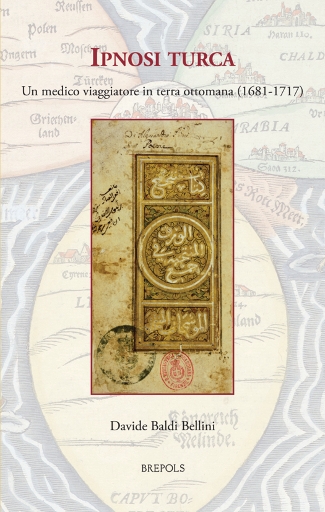
Ipnosi turca
show More to view fulltext, buy and share links for:Ipnosi turca show Less to hide fulltext, buy and share links for: Ipnosi turcaLe lettere del medico fiorentino Alessandro Pini (1653-1717) e il suo trattato De moribus Turcarum fanno emergere un’immagine avvincente del popolo egiziano e della cultura ottomana. Ciò che Pini ha osservato in Egitto e nel mondo ottomano rivela una straordinaria dimensione mediterranea di commistione culturale, fatta di scambi e di incontri scaturiti dalle necessità lavorative e anche dalla semplice quotidianità. Oltre alla missione scientifica ufficiale egli doveva svolgere un’intrigante attività spionistica per Cosimo III, Granduca di Toscana, in cui si rivelò poi fallimentare. Amareggiato e osteggiato per l’insuccesso, passò poi alle dipendenze della Repubblica di Venezia e dimorò per vari anni a Istanbul e in Morea, dove senza pregiudizi e con ampiezza di vedute osservò le tradizioni e i costumi dei popoli che incontrava. Decise dunque consapevolmente di scrivere l’esaltazione di un mondo che l’Occidente vedeva come il suo alter ego negativo. Sebbene fosse stato imprigionato nella sua società di adozione, Pini rimase affascinato, forse anche ipnotizzato, da quello stesso mondo che lo aveva variamente premiato e frustrato sia nel suo lavoro ufficiale che nel suo incarico segreto.
-
-
-
La Vie d’Auguste de Nicolas de Damas
show More to view fulltext, buy and share links for:La Vie d’Auguste de Nicolas de Damas show Less to hide fulltext, buy and share links for: La Vie d’Auguste de Nicolas de DamasNé en 64 avant J.-C. au sein d’une famille appartenant à l’élite aristocratique de Damas, Nicolas fut un polygraphe renommé. La partie sauvegardée de son œuvre, mal connue, se compose notamment d’une Vie d’Auguste, qui constitue le plus ancien compte rendu détaillé conservé non seulement du meurtre de César, mais aussi des dix-neuf premières années de la vie d’Octave/Octavien.
Dans la mesure où Nicolas considérait le premier princeps comme le seul Romain digne d’émulation et que sa biographie constitua le moyen par lequel il obtint la confiance d’Auguste, a-t-il fait davantage œuvre d’apologète que d’historien ? Sa Vie d’Auguste est-elle digne de foi ? Telles seront les questions qui serviront de fil rouge au présent ouvrage. Ainsi ambitionnons-nous de combler un certain nombre de lacunes historiographiques.
La première section de ce travail retracera la biographie de Nicolas, déterminera ses objectifs rédactionnels, le situera par rapport à ses modèles littéraires, et examinera le contenu de la Vie d’Auguste. Nous insisterons sur le fait que si des similitudes intertextuelles entre les Res Gestae et la biographie d’Auguste ont été constatées, elle ne peut avoir dépendu du testament politique de l’empereur, car elles trouveraient leur origine dans les Mémoires d’Auguste. La seconde section dépeindra Octave/Octavien tel que présenté dans la Vie d’Auguste. Nous insisterons sur les liens qu’entretenaient César et son petit-neveu. La volonté de Nicolas de rationaliser tout en colorant son récit constitue l’une de ses constantes. Cependant, sa biographie fait la part belle aux topoi.
-
-
-
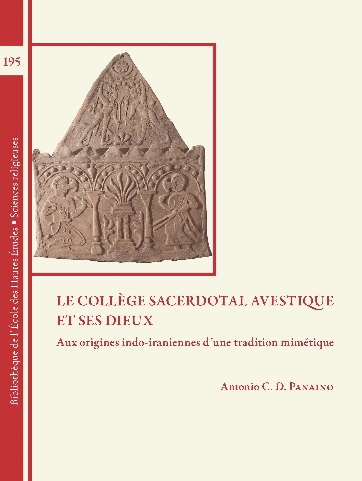
Le collège sacerdotal avestique et ses dieux
show More to view fulltext, buy and share links for:Le collège sacerdotal avestique et ses dieux show Less to hide fulltext, buy and share links for: Le collège sacerdotal avestique et ses dieuxDans cette monographie, l’auteur propose une réflexion générale sur la métaphysique de l’organisation sacerdotale zoroastrienne à la lumière du contexte indo-iranien et à partir de la préparation du sacrifice et l’installation des sept prêtres assistants dans la liturgie solennelle zoroastrienne sous la direction de leur chef, le zaōtar-. Le rapport entre prêtres et dieux est analysé à la lumière de la symbolique endossée par le collège sacerdotal, qui est « activé » comme un double mimétique du monde divin. On discute ainsi de noms, fonctions et correspondances liturgiques entre les huit prêtres (sept plus le zaōtar-) et le collège des Aməṣ̌a Spəṇtas dirigé par Ahura Mazdā lui-même (en tant que zaōtar-). D’autre part, le livre analyse les correspondances fonctionnelles de l’équipe sacerdotale activée dans le domaine védique. L’auteur développe aussi une discussion concernant la chaîne ininterrompue de la ritualité sacrificielle comme structure de l’ordre cosmique et temporel. Dans ce cadre, il met en évidence l’importance de la désinstallation ou désactivation du collège sacrificiel avant la fin du Yasna dans la liturgie longue, thème qui s’articule à la question de la réinstallation d’un autre collège dans la chaîne ininterrompue de la liturgie cosmique. Cette étude éclaire aussi la question du but du sacrifice et celle du sacrifice sanglant. Enfin, elle propose un retour à Kerdīr par une analyse de la « vision » du Grand Prêtre, expliquée cette fois comme liturgie ésotérique de la rencontre avec le double féminin.
-
-
-
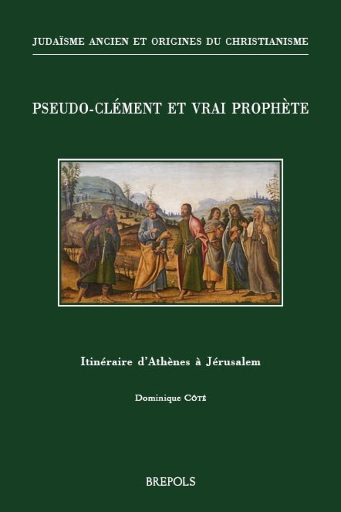
Pseudo-Clément et Vrai Prophète
show More to view fulltext, buy and share links for:Pseudo-Clément et Vrai Prophète show Less to hide fulltext, buy and share links for: Pseudo-Clément et Vrai ProphèteLes personnages historiques que sont Clément de Rome, Simon le Magicien, Pierre l’Apôtre et Apion le grammairien deviennent, dans les Reconnaissances de Clément, les personnages d’une fiction romanesque. Rufin d’Aquilée, à la fin du iv e iècle, nous apprend qu’il existait de son temps deux versions de ces Reconnaissances dans lesquelles discussions philosophiques et rebondissements de l’intrigue visaient le même but : démontrer la supériorité de la vérité prophétique sur celle des philosophes et des autres tenants de la culture grecque. Les études que regroupe ce volume propose une analyse du roman de Clément dans sa composition littéraire et dans son contexte culturel et religieux. On y aborde tout d’abord la question des rapports du texte clémentin avec la paideia, dans les études qui portent sur la discussion entre Clément de Rome et Apion d’Alexandrie. C’est la nature littéraire du corpus qui occupe ensuite la partie centrale du recueil. On s’intéresse aussi à la relation qu’entretient le texte avec la philosophie et ses représentations, dans les chapitres qui cherchent à comprendre l’opposition entre Pierre et Simon. C’est enfin la dimension judéenne du texte qui fait l’objet d’une série d’études qui traitent de prophétie, de mystique et d’identité religieuse.
-
-
-
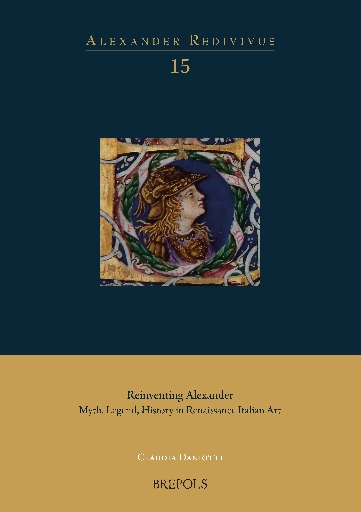
Reinventing Alexander
show More to view fulltext, buy and share links for:Reinventing Alexander show Less to hide fulltext, buy and share links for: Reinventing AlexanderIn this book Claudia Daniotti provides the first comprehensive study of the representation of Alexander the Great in Renaissance Italian art, exploring a fundamental turning point in the tradition: the transition from the medieval imagery of Alexander as a legendary, fairy-tale hero to the new historically grounded portrait of him as an example of moral virtue and military prowess.
During the Middle Ages, Alexander was turned into a fabled creature and fearless explorer, whose Flight to Heaven and other marvellous adventures were tirelessly recounted and illustrated, enjoying huge popularity. With the humanist recovery of the ancient historical texts and the changing taste and expectations of the wider, wealthier and more diverse public of the courts and cities of the Italian peninsula, the fabulous aura that had surrounded Alexander for centuries evaporated. He was recast as the moral exemplum and valorous military commander spoken of by the newly available ancient historians, and became the protagonist of an unprecedently vast iconographic repertoire established in the course of the sixteenth century.
By discussing a body of artworks from 1160s to 1560s spanning several media (from illuminated manuscripts and frescoes to sculptural reliefs, wedding chests and tapestries) and researching this material in constant dialogue with the literary tradition, this book offers a reassessment of the whole visual tradition of Alexander in Renaissance Italy, making sense of a figurative repertoire often perceived as fragmentary and disparate, and casting new light on an overall still neglected chapter in the tradition of the myth of Alexander.
-
-
-
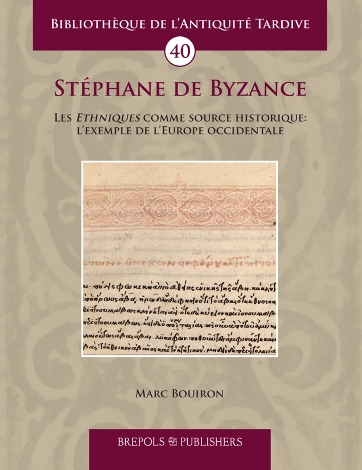
Stéphane de Byzance
show More to view fulltext, buy and share links for:Stéphane de Byzance show Less to hide fulltext, buy and share links for: Stéphane de ByzanceLe lexique géographique du grammairien byzantin Stéphane de Byzance, les Ethniques, est une œuvre à l’origine monumentale. Ce lexique contenait de nombreuses mentions d’auteurs disparus, se rapportant à des toponymes du monde antique connu des Grecs et des Romains. À l’intérieur de ce lexique, nous avons choisi d’étudier plus spécialement ceux situés en Europe occidentale (péninsule ibérique, Gaule, Germanie et Bretagne antiques), en lien avec les sites archéologiques connus s’y rapportant. L’ouvrage ayant été abrégé à plusieurs reprises au cours du Moyen Âge, la confrontation de l’ensemble des notices a permis de proposer de nouvelles attributions d’auteurs antiques, leur nom et leur citation ayant très souvent disparu des manuscrits conservés. Par ailleurs l’analyse précise de la transmission de l’œuvre apporte un éclairage nouveau sur les moments où ce grammairien a été lu et utilisé, du VIe s. jusqu’à sa redécouverte à la fin du XVe s. La structure même du lexique permet de revenir sur la lexicographie antique et médiévale, et d’envisager les apports à la fois des grammairiens et des auteurs antiques (pour la plupart géographes et historiens) qui étaient cités. Enfin, le cadre géographique choisi permet d’explorer les autres textes antiques ainsi que les données archéologiques depuis l’époque grecque archaïque jusqu’à la fin de l’Empire romain. Nous avons inclus dans ce travail une analyse et une traduction de l’Ora maritima d’Aviénus, afin de compléter l’étude de la péninsule ibérique et du Midi de la Gaule.
-
-
-
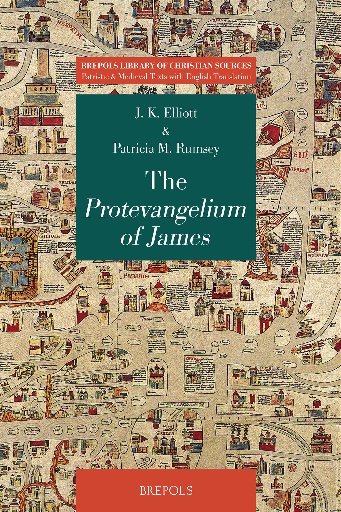
The Protevangelium of James
show More to view fulltext, buy and share links for:The Protevangelium of James show Less to hide fulltext, buy and share links for: The Protevangelium of JamesAs a prehistory to the Nativity accounts of the gospels of Matthew and Luke the Protevangelium of James, dated to the second half of the second century, aimed to fill in alleged gaps in the canonical accounts of Jesus' and his mother's ancestry and births. Thus, it describes the birth of Mary, the mother of Christ, the Annunciation, the Nativity and the death of Zachariah, the high priest and father of John the Baptist.
The edition of the original Greek text has an English version on its facing pages.
The commentary pays particular attention to the early liturgical use of the Protevangelium and to artistic representations of the scenes it describes as these were the main means by which this highly influential text was transmitted throughout the known world. It also questions the usually accepted genre and purpose of the text and suggests that its author may have had a satirical intention or have intended it as an early Christian novelette, using scriptural scenes and themes as his inspiration. Maybe we have approached the Protevangelium of James with solemn faces and have been prepared to carry out serious theological investigations, whereas the many inconsistencies and glaring contradictions so obvious as to be ridiculous might suggest the author's intentions were not quite so grave or weighty.
-
-
-
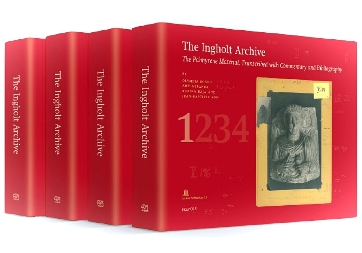
The Ingholt Archive
show More to view fulltext, buy and share links for:The Ingholt Archive show Less to hide fulltext, buy and share links for: The Ingholt ArchiveFor a period of over 50 years, from his first visit to Palmyra in the 1920s until the late 1970s, Danish archaeologist Harald Ingholt carefully collected and curated a detailed archive of Palmyrene sculpture, architecture, and epigraphy. Containing approximately 2000 images, each archive sheet contains handwritten annotations on Palmyrene funerary art, transcribes and translates inscriptions, includes detailed observations on object style and dating, and provides bibliographical information for each sculpture. As such, this archive is a treasure trove of information on Palmyrene sculpture, architecture, and epigraphy. Moreover, Ingholt’s notes go beyond shedding light on the creation of these sculptures, and also provide rich information about their more recent histories: object biographies offer details on provenance, collection history, and excavation photography. In doing so, they offer unique insights into twentieth-century excavation, conservation, and collection practices. Since 1983, Ingholt’s archive has been housed at the Ny Carlsberg Glyptotek in Copenhagen, Denmark, and then, from 2012 onwards, the archive took digital shape within the framework of the Palmyra Portrait Project at Aarhus University. Now available in print for the first time, the Ingholt Archive is here presented in its entirety as a lavishly illustrated four-volume set. The authors have transcribed and commented upon each sheet in the archive, provided new translations of the inscriptions that accompany the sculptures, and compiled an updated bibliography for each item. This unique set is published together with a detailed introduction, thirteen concordances, and a bibliography, making it an invaluable resource for researchers in the field.
-
-
-

Three Pilgrimages to the Holy Land
show More to view fulltext, buy and share links for:Three Pilgrimages to the Holy Land show Less to hide fulltext, buy and share links for: Three Pilgrimages to the Holy LandThis edition presents English translations of the accounts of three important twelfth-century travellers to the Holy Land, the Anglo-Saxon Saewulf and the Germans John of Würzburg and Theoderic, based on the edition of the Latin texts. Saewulf travelled to the Holy Land soon after its capture by the First Crusade in 1099. His travelogue, framed by accounts of his outward sea journeys from southern Italy to Jaffa and back to Constantinople, describes the buildings and holy sites of Jerusalem and its surrounding countryside as they appeared in the early years of the Frankish kingdom, before the major building works that characterized the short century of Christian rule over the city were fully under way. In contrast, the two German descriptions give more detailed accounts of the transformation that the city and surrounding landscape had undergone and of the new churches and monasteries and their artistic programmes that had been created by the 1160s and 1170s. The translated texts are preceded by an introduction placing the texts in their historical context and are accompanied by brief explanatory notes with bibliographical indications for further information.
The source texts of this volume appeared in Corpus Christianorum. Continuatio Mediaeualis as Peregrinationes tres (CC CM, 139), edited by R.B.C. Huygens. References to the corresponding pages of the Corpus Christianorum edition are provided in the margins of this translation.
-
-
-
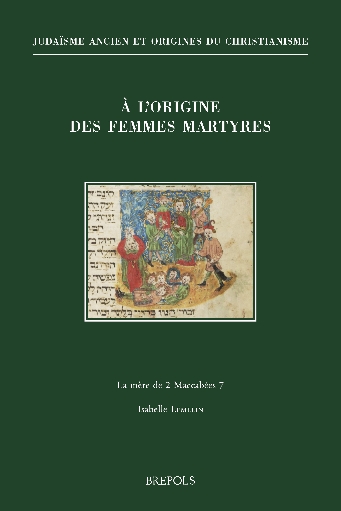
À l’origine des femmes martyres
show More to view fulltext, buy and share links for:À l’origine des femmes martyres show Less to hide fulltext, buy and share links for: À l’origine des femmes martyresLe présent ouvrage porte sur la première martyre de la littérature monothéiste, c’est-à-dire la mère anonyme du 7ème chapitre du 2ème livre des Maccabées (2 M). L’exégèse qui y est faite démontre, grâce à une critique structurelle et des analyses narratologique, comparative et philologique, que ce personnage est central, autant dans le texte deutérocanonique que pour la martyrologie, bien qu’il soit généralement éclipsé dans la littérature savante. Or, la particulière virilité des femmes martyres d’hier et d’aujourd’hui s’y inscrit en primeur au verset 7, 21 et la nouvelle traduction proposée par l'auteure bouscule les idées reçues. En effet, les habituels « sentiments féminins » deviennent « une pensée féminine » et le « mâle courage » fait place à « une colère virile ou humaine », selon que l’épithète est comparée au féminin dans le parallélisme croisé du verset ou mise en parallèle avec les colères inhumaines de certains personnages masculins du livre, dont le roi Antiochos IV Épiphane et les guerriers judéens. D’ailleurs, les analyses comparées des éléments identitaires de la martyre avec ceux du roi séleucide permettent de constater que son trouble dans le genre s’observe sur divers plans et contribue indéniablement à son unicité. C’est sans compter que les discours de la mère représentent la plus importante innovation du livre, et ce, tant sur le plan anthropologique que théologique. En somme, l’ouvrage montre que la mère de 2 M 7 est belle et bien « éminemment admirable et digne de bonne mémoire » (2 M 7, 21).
-
-
-
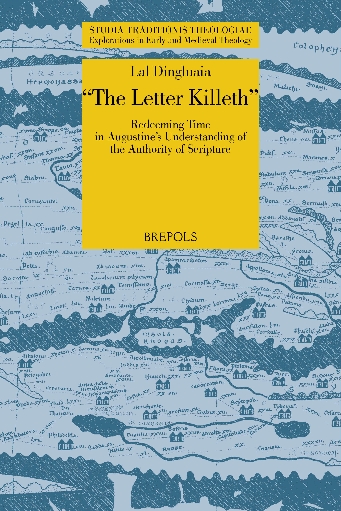
“The Letter Killeth”
show More to view fulltext, buy and share links for:“The Letter Killeth” show Less to hide fulltext, buy and share links for: “The Letter Killeth”The experience of time is always momentous and stimulating to Augustine’s theological reflection. This book asserts that even Augustine’s concept of the authority of Scripture was embedded in his awareness of time. This “awareness” was rooted in the tension between the “already” and “not yet” of the “last days” that permeated the entire New Testament theological outlook.
This does not mean that it is reflections on time that is the determining feature of a particular complex debate, or the origin of a particular work in Augustine’s corpus. However, this work argues that “time” is a factor which need to be taken into greater account than scholarship heretofore has done. Accordingly, the author specifically delineates how Augustine’s experience of time as a living, ongoing and creative tension critically determined his theological stances towards scriptural authority.
The book shows how Augustine’s awareness of this temporal tension was roused by the acceptance of his own temporality and creaturehood which brings to the fore the importance of the incarnate Christ. Exploring how Augustine and his contemporaries grappled with the existential implications of this tension in time, this work asserts that the authority of Scripture is not the authority of “the Book” in the modern sense but is related to more complicated sources of authority that are linked to this specific notion of time.
-