


EMISCS99

Collection Contents
3 results
-
-

The Idea of the Gothic Cathedral
show More to view fulltext, buy and share links for:The Idea of the Gothic Cathedral show Less to hide fulltext, buy and share links for: The Idea of the Gothic CathedralCentral to many medieval ritual traditions both sacred and secular, the Gothic cathedral holds a privileged place within the European cultural imagination and experience. Due to the burgeoning historical interest in the medieval past, in connection with the medieval revival in literature, visual arts, and architecture that began in the late seventeenth century and culminated in the nineteenth, the Gothic cathedral took centre stage in numerous ideological discourses. These discourses imposed contemporary political and aesthetic connotations upon the cathedral that were often far removed from its original meaning and ritual use.
This volume presents interdisciplinary perspectives on the resignification of the Gothic cathedral in the post-medieval period. Its contributors, literary scholars and historians of art and architecture, investigate the dynamics of national and cultural movements that turned Gothic cathedrals into symbols of the modern nation-state, highlight the political uses of the edifice in literature and the arts, and underscore the importance of subjectivity in literary and visual representations of Gothic architecture. Contributing to scholarship in historiography, cultural history, intermedial and interdisciplinary studies, as well as traditional disciplines, the volume resonates with wider perspectives, especially relating to the reuse of artefacts to serve particular ideological ends.
-
-
-

Islands in the West
show More to view fulltext, buy and share links for:Islands in the West show Less to hide fulltext, buy and share links for: Islands in the WestThis monograph traces the history of one of the most prominent types of geographical myths of the North-West Atlantic Ocean: transmarine otherworlds of blessedness and immortality. Taking the mythologization of the Viking Age discovery of North America in the earliest extant account of Vínland (‘Wine-Land’) and the Norse transmarine otherworlds of Hvítramannaland (‘The Land of White Men’) and the Ódáinsakr/Glæsisvellir (‘Field of the Not-Dead’/‘Shining Fields’) as its starting point, the book explores the historical entanglements of these imaginative places in a wider European context. It follows how these Norse otherworld myths adopt, adapt, and transform concepts from early Irish vernacular tradition and Medieval Latin geographical literature, and pursues their connection to the geographical mythology of classical antiquity. In doing so, it shows how myths as far distant in time and space as Homer’s Elysian Plain and the transmarine otherworlds of the Norse are connected by a continuous history of creative processes of adaptation and reinterpretation. Furthermore, viewing this material as a whole, the question arises as to whether the Norse mythologization of the North Atlantic might not only have accompanied the Norse westward expansion that led to the discovery of North America, but might even have been among the factors that induced it.
-
-
-
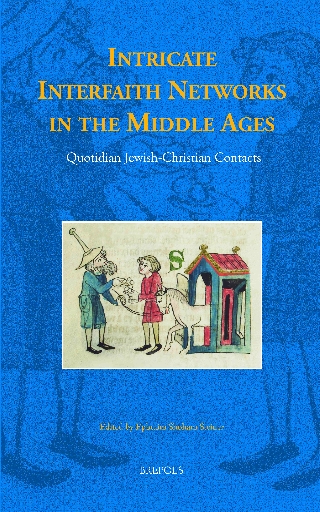
Intricate Interfaith Networks in the Middle Ages
show More to view fulltext, buy and share links for:Intricate Interfaith Networks in the Middle Ages show Less to hide fulltext, buy and share links for: Intricate Interfaith Networks in the Middle AgesRecent scholarship has suggested that the religious divide between Jews and Christians in the Middle Ages, although ever-present (and at times even violently so), did not stop individuals and groups from forming ties and expanding them in more intricate ways than previously thought. Moreover, these networks appear to have functioned with an apparent disregard towards any confessional and religious differences. Nevertheless, this was by no means a straightforward or simple situation; both the theological background to how each faith viewed ‘other’ beliefs, as well as the strong social, religious, and authoritative circles that at the least critiqued, even if they did not entirely discourage such contacts, created a formidable opposition to these networks. The articles in this book were presented as papers during an international workshop at the Central European University in Budapest in February 2010. In these presentations and discussions, the premise of interfaith relations and networks was thoroughly explored across Europe from the Iberian Peninsula to the eastern Hungarian frontier, and from England to Italy throughout the high and later medieval period. In this volume, the contributors explore a number of phenomena through different disciplinary approaches. Ties of an economic and cultural nature are examined, and attention is paid to social contacts and networks in the fields of art and the sciences, and matters of daily life. The picture that emerges is altogether more nuanced and diverse than the bipolar paradigm that has dominated previous scholarship.
-