


Brepols Online Books Medieval Monographs Archive v2016 - bobar16mome

Collection Contents
51 - 100 of 273 results
-
-
Heliand. L'évangile de la Mer du Nord
show More to view fulltext, buy and share links for:Heliand. L'évangile de la Mer du Nord show Less to hide fulltext, buy and share links for: Heliand. L'évangile de la Mer du NordCe poème germanique de près de 6000 vers a été composé entre 822 et 840, vraisemblablement vers 825, dans les premières années du règne de Louis le Pieux, par un érudit chrétien, sans doute compagnon du Frison Liudger. Ce dernier était le continuateur de l’œuvre, en pays frison et saxon, des évangélisateurs anglo-saxons du VIIIème siècle, dont Willehad, lequel avait succédé à Boniface, tué en 754 à Dokkum alors qu’il poursuivait l’évangélisation entreprise par Willibrord.
La langue utilisée, qualifiée de Vieux-Saxon par les spécialistes, était donc tout à fait familière à son auteur. Celui-ci, soucieux d’assurer le succès de l’Evangile dans les cœurs à la suite de la dure conquête par Charlemagne de la Frise Occidentale et du pays saxon, usa d’une langue connue des peuples riverains de la Mer du Nord au début du IXème siècle. Surtout, il apporta au texte de l’Evangile, basé sur des manuscrits et travaux provenant de Fulda, abbaye fondée par Boniface, des adaptations d’ordre sociologique propres à susciter l’adhésion des peuples rudes et fiers de ces contrées nordiques.
En ce sens, le Heliand n’est pas seulement une reprise de l’Evangile : il est aussi le document particulier par lequel les évangélisateurs des pays riverains de la Mer du Nord font entrer le lecteur dans la société des nouveaux convertis d’entre Weser, Ems et Lauwers, fraîchement vaincus et soumis par les Francs. La présente traduction, en prose, est accompagnée du texte germanique tel qu’édité à Halle en 1878 par Eduard Sievers, et de commentaires et annotations. Elle est précédée d’une introduction historique et d’un lexique de termes empruntés au Heliand et comparés à quatre langues germaniques proches, avec traduction en français.
-
-
-
Histoire orientale. Historia orientalis
show More to view fulltext, buy and share links for:Histoire orientale. Historia orientalis show Less to hide fulltext, buy and share links for: Histoire orientale. Historia orientalisSur les relations complexes et riches entre Occident et Orient, l’Historia orientalis fournit un témoignage de premier ordre. Composée entre 1216 et 1227 par Jacques de Vitry, alors évêque d’Acre, elle déploie une riche documentation sur l’histoire de Jérusalem et des Lieux saints jusqu’en 1215 et présente le regard privilégié d’une grande personnalité latine, à la fois homme d’Église, de lettres et d’action, sur les trois premières croisades, les établissements latins en Terre sainte, la fondation de l’islam, l’histoire des divers peuples et communautés religieuses d’Orient, la faune et les particularités naturelles des régions environnantes.
A mi-chemin entre l’histoire et le récit de voyage, l’ouvrage est tiraillé entre la formation augustinienne de son auteur et la découverte de mondes nouveaux, irréductibles aux schémas anciens. Dans le prolongement des Lettres, publiées dans la même collection, l’Historia orientalis de Jacques de Vitry attire l’attention par son ton pessimiste et désabusé : comme si le désordre des événements et la déception devant les revers obligeaient l’auteur à s’interroger sur le sens de l’histoire.
La présente édition s’appuie, à travers l’editio princeps de 1597, sur un manuscrit presque contemporain de l’auteur, confronté à dix des cent-vingt-quatre témoins conservés de cette œuvre à l’immense succès, mais devenue presque inaccessible.
-
-
-
I Porretani
show More to view fulltext, buy and share links for:I Porretani show Less to hide fulltext, buy and share links for: I PorretaniIl volume intende offrire uno sguardo d’insieme sui Porretani, protagonisti di una fase importante e ancora poco conosciuta della storia del pensiero medievale, attraverso un approfondimento progressivo che va dalla storia alle opere al pensiero. La ricostruzione di questo quadro storico prende le mosse nel primo capitolo dall’analisi della percezione, da parte degli storici della filosofia e della teologia, dell’esistenza, dei componenti e del valore della cosiddetta “scuola porretana”, categoria storiografica piuttosto problematica, cui è preferibile la dizione “Porretani”, capace di mettere in luce insieme la pluralità e il comune richiamo all’insegnamento di Gilberto di Poitiers (o Gilberto Porreta). Il secondo capitolo contiene l’esposizione delle tappe più importanti della storia stratificata di questo movimento filosofico e teologico, attraverso la ricognizione di testimonianze dirette e indirette della tradizione porretana nelle fonti coeve al caposcuola. Sono tratteggiate le figure degli allievi di Gilberto, dei divulgatori della sua opera, dei suoi sostenitori, dei suoi ammiratori. Il terzo capitolo del libro offre le informazioni essenziali relative alle opere riconducibili, in gradi e toni diversi, all’insegnamento di Gilberto, distinguendo la prima produzione logico-teologica ‘di scuola’ in senso stretto, l’insieme degli scritti di coloro che raccolgono e rielaborano l’eredità speculativa di Gilberto, i tenaci difensori dell’ortodossia gilbertina, attivi alla fine del secolo in ambienti spesso molto distanti da quelli del maestro. Sulla base di questi tre livelli di ricerca (la critica, la storia, le fonti) si sviluppa la seconda parte della ricerca, in cui si verifica la consistenza dottrinale della scuola, individuando alcuni percorsi speculativi e metodologici particolarmente significativi, funzionali all'elaborazione scolastica della scienza divina: il fondamento ontologico, il corpus delle teorie logico-grammaticali, la dottrina epistemologica, la definizione dei parametri del discorso teologico, la pianificazione della materia teologica. Chiude il lavoro un’ampia bibliografia delle fonti e della letteratura secondaria.
-
-
-
Il Mediterraneo del '300: Raimondo Lullo e Federico III d'Aragona, re di Sicilia. Omaggio a Fernando Dominguez Reboiras
show More to view fulltext, buy and share links for:Il Mediterraneo del '300: Raimondo Lullo e Federico III d'Aragona, re di Sicilia. Omaggio a Fernando Dominguez Reboiras show Less to hide fulltext, buy and share links for: Il Mediterraneo del '300: Raimondo Lullo e Federico III d'Aragona, re di Sicilia. Omaggio a Fernando Dominguez ReboirasThis volume brings together the contributions delivered at the International Seminar held in Palermo and Castelvetrano-Selinunte in Sicily on 17-19 November 2005. The Seminar was organized by the Officina di Studi Medievali in collaboration with the Dipartimento di Civiltà Euro-Mediterranee, the Dipartimento di Studi Storici e Artistici and the Dipartimento di Beni Culturali at the Facoltà di Lettere e Filosofia at the University of Palermo, under the patronage of the Region of Sicily and the Italian Ministero per i Beni e le Attività Culturali.
The contributions address four different themes: 1. Ramon Lull in Sicily at the time of Frederick III; 2. the Opera tuniciana et messanensia of Ramon Lull; 3. Sicily, the Mediterranean and Frederick III; 4. the Ars amativa boni by Ramon Lull. All the contributions - written in English, French, Italian and Spanish - are provided with an abstract in English.
The Seminar was organized in honour of Fernando Domínguez Reboiras who for many years has been the scientific co-ordinator and unceasing promoter of the critical edition of the Latin works of Ramon Lull (ROL) in the Corpus Christianorum, Continuatio Mediaevalis series. Alessandro Musco organized the Seminar and was responsible for the scholarly co-ordination of the present volume. Marta Romano supervised the editorial process and was responsible for the indexes.
-
-
-
Il metodo carolingio
show More to view fulltext, buy and share links for:Il metodo carolingio show Less to hide fulltext, buy and share links for: Il metodo carolingioLo stretto nodo che congiunge il progressivo formarsi dell’identità culturale all’evoluzione dinamica del sapere in età carolingia viene evidenzato in questo studio mediante una serrata analisi critica e storiografica delle diverse opere di argomento teologico scritte dai pensatori che furono più coinvolti nei dibattiti sull’ortodossia cristiana tra i primi anni di regno di Carlo Magno (dal 780 in poi) e la seconda metà del secolo IX. La lettura, il commento e l’esegesi dei testi che documentano tali discussioni consentono l’accesso più efficace e sostanziale all’evoluzione della teologia carolingia, che trovò proprio nel confronto con tesi ritenute eterodosse la spinta a chiarire i temi più delicati della dottrina cristiana. Da Beato di Libana, Alcuino e Rabano Mauro, fino a Ratramno di Corbie e Giovanni Scoto Eriugena, gli intellettuali carolingi si impegnarono nel comporre opere tendenzialmente ispirate dalla volontà di confutare argomentazioni estranee all’ortodossia e di specificare dottrine non ancora stabilmente definite. Il patrimonio patristico, la lettura assidua e consapevole delle Scritture e lo studio delle artes profane, tutti elementi che si ponevano alla base della loro formazione sapienziale, vennero così rielaborati in una comune identità teologica: in essa prese forma e concretezza la stessa ossatura culturale della nuova entità civile che con gli strumenti della politica, dell’azione militare e del controllo economico si andava creando e consolidando nell’Occidente latino in quegli stessi anni. Le fasi più intense del complesso quadro di dibattiti ricostruito nel presente volume evidenziano il duplice ruolo rivestito in età carolingia dalla discussione su temi teologici: funzionale a contenere e delimitare deviazioni dalla ortodossia di autori contemporanei, e, al contempo, utile ad una progressiva definizione della dottrina e dell’identità culturale del nuovo impero barbaro-cristiano.
-
-
-
Johannes Buridanus, Quaestiones topicorum
show More to view fulltext, buy and share links for:Johannes Buridanus, Quaestiones topicorum show Less to hide fulltext, buy and share links for: Johannes Buridanus, Quaestiones topicorumThis critical edition is the first edition of John Buridan’s commentary on Aristotle’s Topics. The work is preserved in one complete manuscript of good quality and in four abbreviated versions. Buridan composed the work at the University of Paris in the first half of the fourteenth century, and the work illustrates very well how the commentators of this period took a freer attitude to Aristotle than previously and were selective about the passages which they commented upon. In book II Buridan discussed a number of sophisms which are not found in his collection of sophisms. The commentary was quite influential in the fifteenth century, particularly on the teaching in the universities of Central and Eastern Europe.
-
-
-
L'abbaye féminine de Denain, des origines à la fin du XIIIe siècle
show More to view fulltext, buy and share links for:L'abbaye féminine de Denain, des origines à la fin du XIIIe siècle show Less to hide fulltext, buy and share links for: L'abbaye féminine de Denain, des origines à la fin du XIIIe siècleCloîtrées à l’abri de l’intrusion masculine, les femmes qui, au Moyen Age, se sont consacrées à la vie monastique ont trop largement échappé à la curiosité des historiens. Pourtant, les abbayes féminines ont elles aussi connu une histoire riche : de la fondation aux crises et aux réformes successives, elles ont dû, comme les monastères d’hommes, organiser la vie interne de la communauté, accomplir la liturgie, encourager la spiritualité, développer l’assise économique, assurer le quotidien, entretenir des relations fructueuses avec l’ordinaire et le souverain pontife ainsi qu’avec l’aristocratie locale… Jean-Pierre Gerzaguet, excellent connaisseur du monachisme entre Flandre et Hainaut, a reconstitué l’histoire de l’abbaye de Denain (département du Nord) des origines carolingiennes jusqu’à la fin du XIIIe siècle, et appuie cette étude par l’édition des quelque 100 chartes conservées pour cette époque.
-
-
-
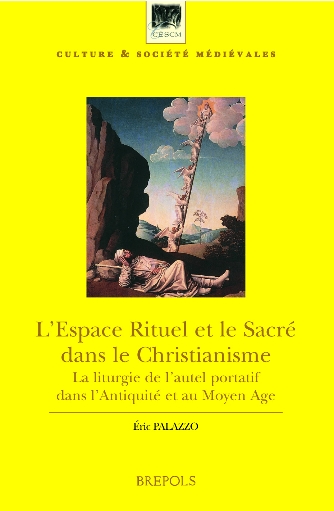
L'espace rituel et le sacré dans le christianisme
show More to view fulltext, buy and share links for:L'espace rituel et le sacré dans le christianisme show Less to hide fulltext, buy and share links for: L'espace rituel et le sacré dans le christianismeAujourd'hui conservés dans des musées où ils ont acquis le statut d'œuvre d'art, les autels portatifs chrétiens ont joué un rôle majeur dans la définition de l'espace sacré dans l'Antiquité et au Moyen Âge. Les autels portatifs constituent un objet liturgique indispensable au dispositif liturgique nécessaire au déroulement de rites tels que la célébration de l'eucharistie dans le cadre de pèlerinages, sur le champ de bataille en temps de guerre ou bien encore nécessitée par des missions d'évangélisation. À côté de ces fonctions liturgiques, les autels portatifs ont permis tout au long de l'Antiquité et du Moyen Age une réflexion théologique approfondie sur l'espace sacré chrétien et la notion de «lieu rituel ». Plutôt qu'un ouvrage sur les objets eux-mêmes, ce livre propose une vaste exploration de l'espace sacré chrétien à partir du discours à la fois théologique, liturgique, exégétique et iconographique sur les autels portatifs.
Éric Palazzo, Professeur d'histoire de l'art du Moyen Age à l'université de Poitiers, ancien directeur du Centre d'études supérieures de civilisation médiévale (2000-2007) a publié de nombreux ouvrages et articles sur les relations entre art et liturgie au Moyen Age dont Histoire des livres liturgiques. Le Moyen Age, des origines au XIII e siècle, Paris, 1993; Les sacramentaires de Fulda. Etude sur l'iconographie et la liturgie à l'époque ottonienne, Münster, 1994; L'évêque et son image. L'illustration du pontifical au Moyen Age, Turnhout, 1999; Liturgie et société au Moyen Âge, Paris, 2000.
-
-
-
La 'Clavis compendii' de Jean de Garlande
show More to view fulltext, buy and share links for:La 'Clavis compendii' de Jean de Garlande show Less to hide fulltext, buy and share links for: La 'Clavis compendii' de Jean de GarlandeLa Clavis compendii, rédigée par Jean de Garlande au début des années 1230, est la seconde en date de ses trois grammaires versifiées. Composée, tout comme les deux autres, le Compendium grammatice et l’Ars lectoria Ecclesie, en hexamètres dactyliques, elle forme un ensemble complexe à plusieurs égards, qui justifie l’ajout à l’édition princeps du texte d’une traduction en regard. La forme métrique, que ne vient pas seconder un appareil de gloses aussi dense que dans les manuscrits de l’Ars lectoria Ecclesie, constitue le premier rempart à la compréhension directe du traité. Le collage de parties hétérogènes, de prime abord sans rapport entre elles, ajoute à ces difficultés d’accès. Il apparaît cependant que l’œuvre s’articule autour de trois grandes parties distinctes, au sein desquelles coexistent des chapitres fortement individualisés. Ce que l’on peut identifier comme le « premier livre » du traité y est consacré à la récapitulation de définitions et règles grammaticales simples, telles que les enseignent les grands manuels en vogue à l’époque de Jean de Garlande, et qui lui donnent l’occasion de critiquer et corriger les deux plus célèbres d’entre eux, le Doctrinale d’Alexandre de Villedieu et le Grecismus d’Evrard de Béthune. Notes et excursus divers, grammaticaux, mais aussi, à l’occasion, lexicographiques, ponctuent et complètent l’ensemble. Le second livre affiche un parti plus ambitieux, et constitue la partie la plus homogène de l’œuvre. Contrairement à la première, qui se contentait d’énoncer les règles « positives » de la grammaire, cette partie interroge les propriétés des parties du discours afin de mieux cerner les principes moteurs de la syntaxe, vue à travers le prisme de concepts physiques issus directement d’Aristote, et que Jean, parmi les premiers, applique à la construction. L’appareil métatextuel présent dans les manuscrits insiste sur le caractère spéculatif de cette partie, qui suit pour large part le cours des commentaires sur les livres XVII et XVIII (de constructione) des Institutions grammaticales de Priscien. Le livre III consiste quant à lui en trois grands ensembles lexicaux, le premier constitué d’explications de vocables, d’origine hébraïque pour la plupart, tirés de la Bible, le second de differentiae, le troisième de termes médicaux.
L’esprit digressif de l’auteur, qui vient souvent interrompre cette architecture générale, n’a d’égal que la variété des sources, grammaticales, sémantiques, lexicographiques et littéraires, dont il se sert pour rédiger son traité. De cette multiplicité des centres d’intérêt garlandiens émergent des réflexions et des concepts originaux, voire novateurs, et qui pour certains influenceront les théoriciens du langage de la génération suivante.
-
-
-
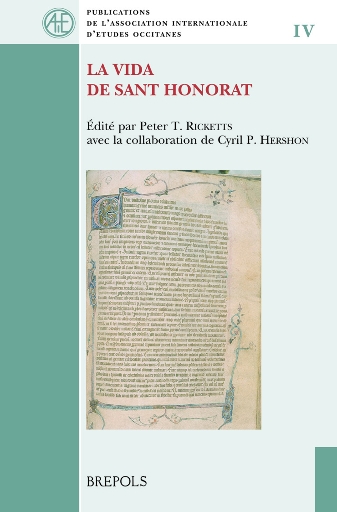
La Vida de Sant Honorat
show More to view fulltext, buy and share links for:La Vida de Sant Honorat show Less to hide fulltext, buy and share links for: La Vida de Sant HonoratVisitors to the Isle de Lérins, just off Cannes, can see not only the island but also what today is a Cistercian abbey founded about 410 A.D. by St. Honoratus (350-429), hermit, monk and bishop of Arles. Scarcely nothing has changed physically, and the wild unforgiving landscape of the place explains the nature of many of the events described in this verse text, especially the terrifying massacre of the community after the death of Honoratus, which contains horrifying details very rare in mediaeval narratives.
Given the importance of this story, based on nine manuscripts, it is astonishing that a complete edition has not appeared before this date. The late Ingegärd Suwe Ericsson, a Swedish scholar, had undertaken an edition of the first two books, approximately the first half of the work, for her doctorate, published in 1943, in a volume which is naturally difficult to find in libraries. Thereafter, she had hoped to create a complete edition, but, sadly, her profession as a teacher, the care she gave her husband and, in later years, her own ill-health prevented her from continuing the work. In 1988, she contacted Regina af Geijerstam, emeritus professor of Spanish, University of Stockholm, to ask if she would find an editor who would finish the work, for which Suwe Ericsson had a text of the last three books. In 1989, Peter Ricketts made the journey to Östersund, where Suwe Ericsson was living, and he decided to undertake the work himself. She died in 1991. In 2000, Cyril Hershon offered his support to bring the whole project to fruition, and the edition will shortly be ready to go to press.
Not only have Association Internationale d’Etudes Occitanes and Brepols given their approval for the publication of the second half of the work, dealing with the miracles performed by Honoratus after his death, but also for the addition of the work of Ingegärd Suwe Ericsson, to give the mediaeval Occitan work in its entirety in one volume.
Ingegard Suwe Ericsson’s 1943 edition has been respected, apart from the occasional correction to the text. Her introduction considers the manuscript tradition, the language of the scribe in a full linguistic analysis, with examples taken from the first 4127 lines, and only minor elements, such as a résumé in French of this part and a list of errors found in the venerable edition by Sardou have been omitted. Thereafter, there is a complete integration of the first and second parts: the text, accompanied by footnotes, followed by notes to the text, a selective glossary, a table of proper names, and an updated bibliography.
The whole is a text which repays reading and will fill a gap in the repertoire of important mediaeval texts.
Peter T. Ricketts is Emeritus Professor of Romance Philology of the University of London, and is now Honorary Professor in the Department of French, University of Birmingham.
Cyril P. Hershon is Honorary Senior Research Fellow of the University of the West of England.
-
-
-
Le 'questiones' di Radulfo Brito sull’ « Etica Nicomachea »
show More to view fulltext, buy and share links for:Le 'questiones' di Radulfo Brito sull’ « Etica Nicomachea » show Less to hide fulltext, buy and share links for: Le 'questiones' di Radulfo Brito sull’ « Etica Nicomachea »Radulfo Brito, oggi conosciuto e studiato principalmente per la sua produzione logica, è stato senza dubbio uno dei maestri in arti più influenti e fecondi tra la fine del XIII secolo e l'inizio del XIV. Commentatore di una parte notevole del corpus aristotelicum, i suoi scritti toccano tutti gli ambiti del sapere medievale. La maggior parte delle sue opere è, al giorno d'oggi, ancora inedita. Con il presente volume ci si propone di colmare in parte questa lacuna. Il commento di Radulfo all’Etica Nicomachea di Aristotele, scritto intorno al 1290, è un testo estremamente importante per la nostra conoscenza della produzione filosofica alla facoltà delle arti di Parigi e della ricezione della morale aristotelica nell’Occidente latino.
-
-
-
Lectura Erfordiensis in I-VI Metaphysicam, together with the 15th-century Abbreviatio Caminensis
show More to view fulltext, buy and share links for:Lectura Erfordiensis in I-VI Metaphysicam, together with the 15th-century Abbreviatio Caminensis show Less to hide fulltext, buy and share links for: Lectura Erfordiensis in I-VI Metaphysicam, together with the 15th-century Abbreviatio CaminensisThe aim of the present edition is to make two texts available which can throw some more light on the role of Aristotle's Metaphysics in 14th-15th academic teaching. One of them contains part of an early (hitherto unknown) version of John Buridan's Questions on Metaphysics, the other is a 15th century abbreviation of precisely this early version. Remarkably, both texts belong to the East European tradition of Buridan's works, which is the more interesting as they testify to the master's earlier activities as a Parisian teacher on the subject of metaphysics. In particular, they elucidate Buridan's ongoing semantic approach to matters of metaphysics and ontology as well as his attitude to Aristotle's authority.
L.M. de Rijk (1924) is emeritus professor of Ancient and Medieval Philosophy of Leiden University. He was a member of the Dutch Parliament (Senate 1956-1991) and is a member of the Royal Netherlands Academy of Sciences (KNAW}. He is the author of a large number of publications, particularly on ancient and medieval philosophy.
-
-
-
Les chartes des comtes de Saint-Pol (XIe-XIIIe siècles)
show More to view fulltext, buy and share links for:Les chartes des comtes de Saint-Pol (XIe-XIIIe siècles) show Less to hide fulltext, buy and share links for: Les chartes des comtes de Saint-Pol (XIe-XIIIe siècles)Le présent volume contient l’édition critique de 384 chartes promulguées par les comtes de Saint-Pol avant 1300. Il complète la thèse de doctorat consacrée par Jean-François Nieus au comté du même nom (Un pouvoir comtal entre Flandre et France. Saint-Pol, 1000-1300, Bruxelles, 2005). Le comté de Saint-Pol est une seigneurie de frontière apparue vers l’an mil aux confins de la Flandre, de l’Artois et de la Picardie. Au terme de son développement territorial, il s’étirait sur environ 80 kilomètres depuis la source de la Lys jusqu’au cours moyen de la Somme ; autour de son noyau primitif, le Ternois géographique, sont venues s’agréger les seigneuries artésiennes d’Aubigny-en-Artois et Bucquoy, ainsi que les châtellenies d’Encre (Albert) et Lucheux en Amiénois. Ses bâtisseurs - le lignage des Candavène, relayé après 1205 par les seigneurs champenois de Châtillon-sur-Marne - n’ont joué qu’un rôle discret sur la scène princière du nord de la France, mais sont néanmoins parvenus à construire une autorité régionale forte et durable. Les chartes comtales ici rassemblées témoignent de cet effort. Adressées à une centaine de destinataires différents, tant ecclésiastiques que laïques, elles montrent les comtes dans l’exercice de leurs fonctions de seigneurs féodaux, de grands propriétaires fonciers, de protecteurs des églises et des pauvres, de membres éminents de la classe aristocratique. Mais autant et plus encore que le pouvoir des comtes, c’est la société rurale que ceux-ci prétendent régir que le corpus édité révèle à l’historien, dans ses aspects les plus variés.
-
-
-
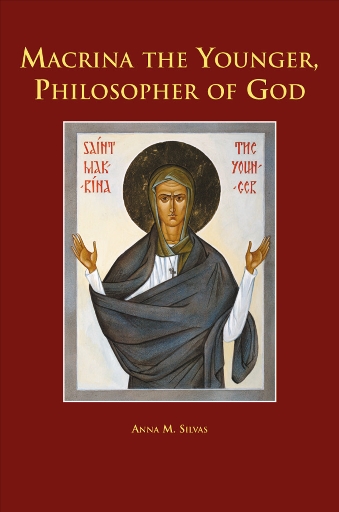
Macrina the Younger
show More to view fulltext, buy and share links for:Macrina the Younger show Less to hide fulltext, buy and share links for: Macrina the YoungerThis book presents St Macrina the Younger (c. 327-379), eldest sister of Ss Basil the Great and Gregory of Nyssa. All the sources of Macrina's life are gathered together, translated afresh into English, and provided with up-to-date introductions and notes. Documents include: Testimonies of St Basil, St Gregory Nazianzen's epigrams on Macrina and her siblings; Gregory of Nyssa's letter 19 which appears in English for the first time; The Life of Macrina, a jewel of fourth-century Christian biography; and the dialogue On the Soul and Resurrection in which Macrina appears as the Teacher expounding Christian doctrine with reasoned argument. The introduction shows how Macrina gradually changed the family household of Annisa into the proto-monastic community that became model of the monasticism that has come down under Basil's name. A specially commissioned icon, a map of Central Anatolia, and a report of the author's expeditions to ancient Pontus are included.
'In contrast with those works that seek to translate the ancient texts into colloquial English with a pedestrian tone, Silvas' translations have a grand and noble quality about them that is fully fitting Gregory's rhetoric and that conveys to the reader the seriousness of the lofty subject. Silvas does not "over translate"; her translation preserves those points of ambiguity in Nyssen's writing that should be resolved (if possible) not in the translation itself but in scholarly debate'.
Warren Smith, Duke University.
-
-
-
Performing the Middle Ages from 'Beowulf' to 'Othello'
show More to view fulltext, buy and share links for:Performing the Middle Ages from 'Beowulf' to 'Othello' show Less to hide fulltext, buy and share links for: Performing the Middle Ages from 'Beowulf' to 'Othello'Performing the Middle Ages from ‘Beowulf’ to ‘Othello’ traces the dialogic nature of the relationship between the Middle Ages and modernity. Arguing that modern beliefs in the alterity of the Middle Ages stem from the Middle Ages’ own processes of self-representation, Johnston explores varieties of nostalgia through a wide selection of texts. This volume spans an extensive chronological period with a view to demonstrating how our notions of the medieval have been crucially informed by the past itself. The study is focused on works which stage that popular literary archetype - the nostalgic figure of the aristocratic warrior - and argues that it is this image that provides a structural model for so many modern perspectives on the Middle Ages. And yet, in the Middle Ages this model was being deconstructed as it was also being generated. By moving from the self-consciously archaic heroism of Beowulf to the scathing comment on chivalric narrative presented in Chaucer’s ‘Knight’s Tale’, Johnston’s analysis offers an intriguing insight into the way medieval texts engage in a continual aesthetic and ideological critique of their own cultural moment. Using Sir Gawain and the Green Knight and the Alliterative Morte Arthure as examples of an incisive critique of the cult of subjectivity and of a highly self-conscious desire for tradition, Johnston extends his analysis to the early seventeenth century, and explores the ways in which Shakespeare’s Othello brilliantly deconstructs the very concept of ‘Renaissance Man’. With its interest in issues of subjectivity, textual performance, and the ideological self-awareness of medieval culture, Performing the Middle Ages provides a scholarly and compelling investigation into the Middle Ages’ ability both to understand itself and to shape (post)modern notions of the medieval.
-
-
-
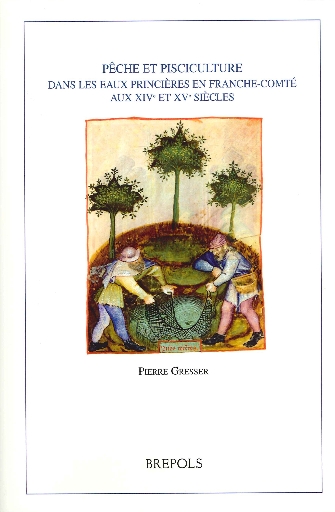
Pêche et pisciculture dans les eaux princières en Franche-Comté aux XIVe et XVe siècles
show More to view fulltext, buy and share links for:Pêche et pisciculture dans les eaux princières en Franche-Comté aux XIVe et XVe siècles show Less to hide fulltext, buy and share links for: Pêche et pisciculture dans les eaux princières en Franche-Comté aux XIVe et XVe sièclesParmi tous les éléments qui composaient le domaine des comtes de Bourgogne au bas Moyen Âge, les eaux vives et les étangs formaient un ensemble non négligeable, le poisson d’eau douce étant particulièrement recherché. C’est pour mieux mettre en valeur cette partie spécifique de ses propriétés en Franche-Comté que le duc-comte Eudes IV (1330-1349) créa un office nouveau : la gruerie, chargée d’administrer et de gérer les eaux et forêts domaniales.
La comptabilité de l’institution révèle que les rivières ne furent pas toutes prises en charge par le gruyer, d’où l’examen des comptes des autres officiers domaniaux. Dans tous les cas, les eaux vives donnèrent lieu à des amodiations, dont seuls les amodiataires et les revenus sont connus. Le recours aux chartes de franchises permet de mieux percevoir les rapports entre les sujets du prince et le milieu aquatique.
Des étangs les textes décrivent avec précision la structure, la pêche et la vente du poisson. Parmi les réserves piscicoles, il y avait des plans d’eau destinés à la reproduction, d’où le titre de pisciculture utilisé dans le titre de ce livre.
L’ouvrage se termine par une analyse des « mesus » (délits) perpétrés dans les eaux comtales, curieusement inclus dans le poste des « amendes des bois banaux ».
Au total cette étude forme le second volet d’un triptyque consacré aux eaux et forêts princières dans le comté de Bourgogne aux XIVe et XVe siècles. Elle fait suite logiquement à la description de l’office de gruerie en montrant son application aux eaux courantes et " stagnantes " (les étangs), c’est-à-dire deux milieux halieutiques très différents puisque le premier, à l’état naturel, s’oppose aux réserves piscicoles construites par les hommes.
-
-
-
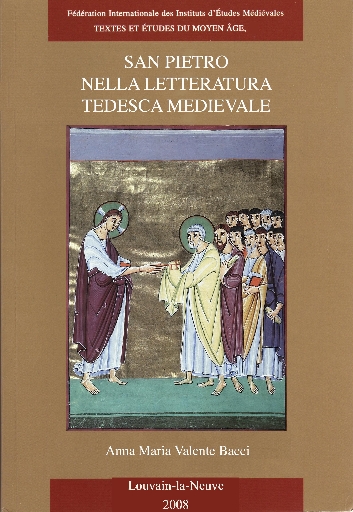
San Pietro nella letteratura tedesca medievale
show More to view fulltext, buy and share links for:San Pietro nella letteratura tedesca medievale show Less to hide fulltext, buy and share links for: San Pietro nella letteratura tedesca medievaleNella letteratura tedesca medievale la figura di Pietro assume un ruolo primario per tutto il medioevo fin dalle origini. Gli stretti rapporti che univano la Chiesa tedesca a Roma ed ai suoi pontefici, il riconoscimento del primato petrino e papale avevano portato a considerare il patrocinio di san Pietro superiore a quello di qualsiasi altro santo, all’affermazione ed espansione del culto dell’apostolo, alla sua celebrazione in una molteplicità di testi di vario genere. Questa monografia si propone di ricostruire l’immagine di Pietro attraverso l’analisi di testimonianze letterarie in volgare “tedesco”, composte nell’arco di tempo compreso tra i secoli IX-XIV. Nei testi della fase più antica, il tentativo di conciliare i due sistemi di valori, cristiano e germanico, indusse a connotare le prerogative con elementi che descrivono il rapporto fra Gesù e i discepoli secondo i termini della Gefolgschaft germanica. Nei testi del periodo medio si mettono in rilievo la funzione ecclesiale e la trasmissione del potere di legare e sciogliere da Pietro al papa, ai vescovi ed ai sacerdoti tutti. Permane la tendenza a giustificare i rinnegamenti di Pietro, 'necessari' er mostrare il legame inscindibile tra perdono e pentimento, per dare speranza all’uomo circa l’incommensurabilità della misericordia divina. Si affianca, inoltre, la figura del discepolo con quelle dell’apostolo, del taumaturgo e del martire. Il libro fornisce un contributo essenziale alla ricostruzione delle modalità con cui la complessa figura di san Pietro venne recepita in area tedesca, mettendo così in luce aspetti della sua personalità finora trascurati.
Anna Maria Valente Bacci, professore di Filologia germanica presso l’Università degli Studi della Tuscia (Viterbo), ha svolto la sua attività scientifica e didattica anche presso le Università di Roma La Sapienza e Roma Tre. Ha concentrato i suoi studi soprattutto sulla letteratura omiletica e leggendaria di area inglese e tedesca. Sullo stesso argomento ha scritto un contributo su La figura di san Pietro nelle prediche tedesche medievali, curando anche la pubblicazione degli Atti del Convegno su La figura di san Pietro nelle fonti del Medioevo (Textes et Études du Moyen Âge 17, Louvain-la-Neuve, 2001)
-
-
-
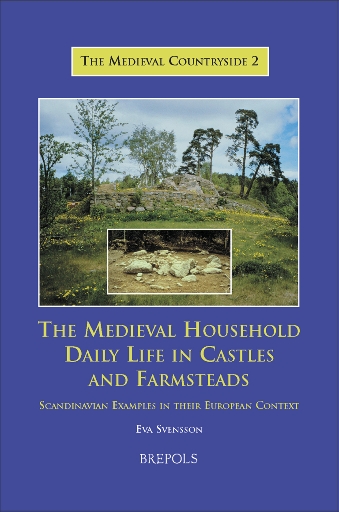
The Medieval Household: Daily Life in Castles and Farmsteads
show More to view fulltext, buy and share links for:The Medieval Household: Daily Life in Castles and Farmsteads show Less to hide fulltext, buy and share links for: The Medieval Household: Daily Life in Castles and FarmsteadsRecent archaeological excavations in Scandinavia provide us with a fascinating insight into the household and its function as a social focus for people of different medieval social estates. This book investigates four excavated Swedish sites - the castles of Saxholmen and Edsholm, and the rural settlements of Skramle and Skinnerud - in order to juxtapose the daily life of nobles and peasants. The author argues that the practices of everyday life revealed by these sites offer new insights into social traditions, mentalities, and cultural patterns. In particular, she asserts that notwithstanding the huge social gulf between the peasantry and the nobility in medieval Scandinavia, the two social groups shared some fundamental experiences which point to a common cultural milieu. In turn, the author uses daily life as a prism for addressing the formation of common European cultural traits during the medieval period by comparing these excavations with material from comparable sites in Central and Western Europe. By means of this comparison, the author questions the degree to which we may talk about a process of ‘Europeanization’ taking place in this era.
-
-
-
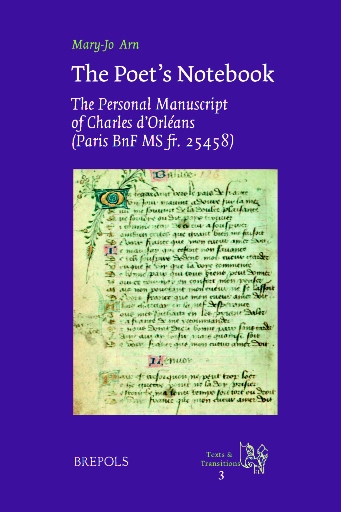
The Poet's Notebook
show More to view fulltext, buy and share links for:The Poet's Notebook show Less to hide fulltext, buy and share links for: The Poet's NotebookThis study of Charles d'Orléans's personal manuscript of his poetry - the first in nearly a century - paves the way not only for a new edition of the duke's œuvre (by Mary-Jo Arn, John Fox, and R. Barton Palmer) but for a new view of it. Following the first complete modern description of the manuscript, this study reconstructs the history of the manuscript, copying layer by copying layer. Codicological observations supplemented with palaeographical, historical, art-historical, and textual information reveal the approximate sequence of the manuscript’s composition, which in turn allows a re-dating of the manuscript and some of the poems in it. Charles saw lyric form differently than did his predecessors and contemporaries, a view made manifest in the poet’s own numbering of his poems. He mixed his complaintes with ballades and his rondels with chansons, each pair of forms in a numbered series, but never presenting the longer alongside the shorter forms. The analysis of the manuscript’s construction corrects the current physical disorder of the later chansons and rondels, as well as that of the ‘En la forest de longue actente’ series (including the lyric omitted from the standard edition) and re-evaluates the handful of English poems in the manuscript. In the end, we come to understand the relationship between the visual ‘messiness’ of the manuscript and the poet’s strong concept of lyric order. The technical aspects of the study are clarified by many tables and fascimile pages; the interactive cd contains an index of first lines that can be sorted in various ways to reveal a variety of kinds of manuscript relationships.
-
-
-
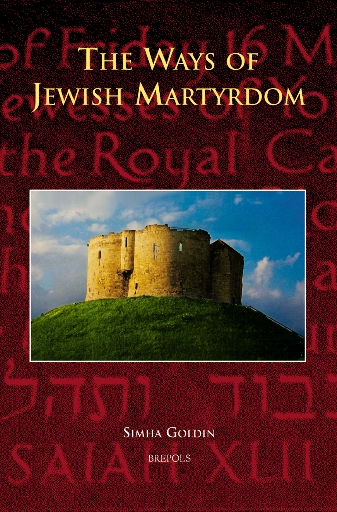
The Ways of Jewish Martyrdom
show More to view fulltext, buy and share links for:The Ways of Jewish Martyrdom show Less to hide fulltext, buy and share links for: The Ways of Jewish MartyrdomJewish martyrdom in the Middle Ages is a most intriguing social, cultural, and religious phenomenon. It was stimulated by ancient Jewish myths, and at the same time it was influenced by the Christian environment in which the Jews lived and operated. The result was a unique and unprecedented event in which the Jews did not simply refuse to convert to Christianity; they were ready to kill themselves and their children so they would not be forced to convert. The Ways of Jewish Martyrdom discusses the phenomenon of Jewish Martyrdom in medieval Germany, northern France, and England from the time of the First Crusade (1096) until the mid-fourteenth century (that is, the time of the ‘Black Death’), in light of modern research and with ample use of hitherto-neglected primary sources. In order to understand the unique phenomenon of Jewish martyrdom, the various Jewish and Christian antecedents that might have influenced the notion of Jewish martyrdom in the Middle Ages need analysis. The texts on which the analysis is based are various, ranging from chronicles through memorial books to liturgical materials and Piyyut. The last part of the book reviews the development of this phenomenon after the fourteenth century and delineates the essential changes and transformations therein at the dawn of the early modern period and beyond.
-
-
-
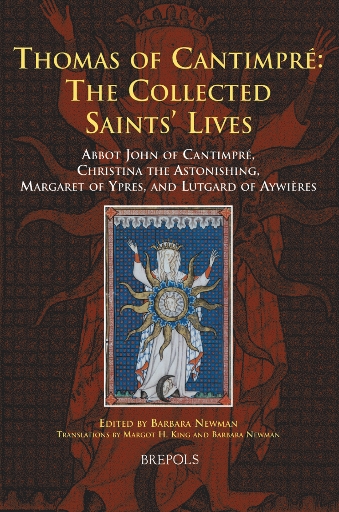
Thomas of Cantimpré: The Collected Saints' Lives
show More to view fulltext, buy and share links for:Thomas of Cantimpré: The Collected Saints' Lives show Less to hide fulltext, buy and share links for: Thomas of Cantimpré: The Collected Saints' LivesThe Dominican Thomas of Cantimpré (c. 1200-c. 1270) was a key figure in the 'evangelical awakening' of the thirteenth century. A prolific hagiographer, he lauded such diverse subjects as the abbot and apostolic preacher John of Cantimpré; the teenaged ascetic Margaret of Ypres, an urban recluse who died at twenty; Lutgard of Aywières, a Cistercian nun and mystic; and the theatrical, mentally troubled Christina 'the Astonishing' of Sint-Truiden. Thomas had few peers in portraying the ritual theatre of penance. He gives us such memorable scenes as a naked moneylender led out of a pit by a rope, a formerly rapacious prince kissing his peasants’ feet as he restores their stolen goods, St Christina leaping into fires and boiling cauldrons to save souls in purgatory, and the deceased Pope Innocent III in agony, begging St Lutgard for her prayers. In this volume readers will find all four lively and eventful lives between the same covers for the first time. The Life of Abbot John of Cantimpré has been newly translated by Barbara Newman, who has also supplied a new introduction. The other three Lives are revised reprints from Margot H. King's Peregrina Translations Series.
-
-
-
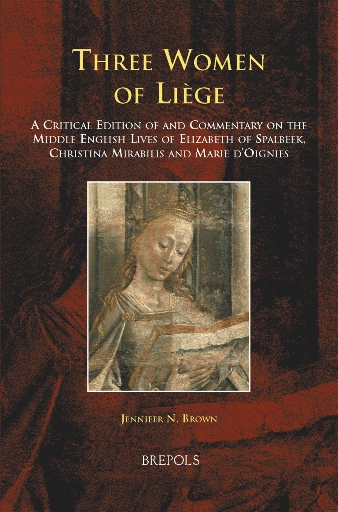
Three Women of Liège
show More to view fulltext, buy and share links for:Three Women of Liège show Less to hide fulltext, buy and share links for: Three Women of LiègeElizabeth of Spalbeek, Christina Mirabilis, and Marie d'Oignies were three of the famous late twelfth-/early thirteenth-century 'holy women' from the region of Brabant and Liège: their life stories (written in Latin by Philip of Clairvaux, Thomas of Cantimpré, and Jacques of Vitry) were read throughout later medieval Europe, and Margery Kempe modelled her Book, and her life, upon Marie’s. The Latin lives of these beguine saints were not well known in England, but they were translated into English in the fifteenth century, and survive in a single manuscript together in Oxford, Bodleian Library, Douce 114.
Three Women of Liège is the first critical edition of these Lives, which represent some of the only evidence of English interest in continental female mysticism. This edition includes an introduction that discusses the role of the manuscript in England and three essays that analyze the roles of these beguines in their Low Countries home of Liège along with the English reception of their lives. The edition itself is also extensively annotated and glossed, making it accessible to any scholar of English medieval literature.
-
-
-
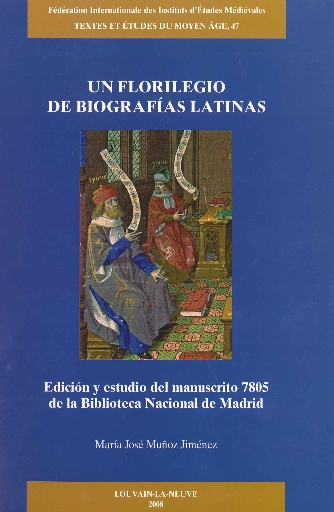
Un florilegio de biografías latinas
show More to view fulltext, buy and share links for:Un florilegio de biografías latinas show Less to hide fulltext, buy and share links for: Un florilegio de biografías latinasEl manuscrito 7805 de la Biblioteca Nacional de Madrid contiene un florilegio de biografías latinas que ofrece excerpta de Quinto Curcio, del De vita Caesarum de Suetonio, de la Historia Augusta y del Ab urbe condita de Tito Livio. Esta selección de obras de la Antigüedad se acompaña con extractos del De vita et moribus philosophorum erróneamente atribuido a Walter de Burley y de la versión latina realizada por A. Travesari del De vita philosophorum de Diógenes Laercio.
Varias razones aconsejan el estudio de este manuscrito: por una parte, es un autógrafo realizado por una mano hispana en el siglo XV del que no se conocen otras copias; por otra, presenta una producción de un género típicamente medieval como es el del florilegio, y, a la vez, acoge una semblanza de biografías, género recuperado en el Renacimiento. La obra contenida en el ms. 7805 se muestra, pues, como un producto propio de esa época tan discutida de ‘transición’ del Medievo al Renacimiento en la España cuatrocentista.
María José Muñoz Jiménez es Catedrática de Filología Latina en la Universidad Complutense de Madrid. Desde su Tesis Doctoral ha trabajado sobre los manuscritos latinos conservados en España. Es autora, además, de diversos trabajos de Literatura Latina y Tradición Clásica así como de Lexicografía Latina Medieval.
En la actualidad es directora de un Grupo de Investigación de la Universidad Complutense dedicado al estudio de los florilegios latinos conservados en las bibliotecas españolas.
-
-
-
Vera philosophia
show More to view fulltext, buy and share links for:Vera philosophia show Less to hide fulltext, buy and share links for: Vera philosophiaThis volume includes a collection of reworked articles which the author, during the last twenty years, dedicated to the origins and conditions constitutive of Christian philosophical-theological thought. From the earliest centuries of the Christian era, human reason was submitted to a particular formal conditioning, in so far as it was necessarily obliged to confront the contents of a divine revelation recognized as necessarily ‘true’. The medieval Latin scholar was induced by the social and cultural peculiarities of his time to confront a model of thought which imposes a decisive subordination of natural knowledge - demonstrated to be imperfect and inconclusive - to the certainties assured by the faith. The production of this model of philosophia, significantly different from the dominant paradigms in the classical period, rooted itself in the critical redimensioning of reason which Cicerointroduced into the West. Departing from the observation of the failure of the philosophical aspirations of antiquity, the Christian intellectuals effected an operative ‘overturning’ of the conditions of veridical knowledge.
The new wisdom was not entirely the result of religion interfering in the field of rational science, but it was shaped by a conscious ‘conversion’ of the philosophers and reached fulfillment under two principles: faith, which requires earthly knowledge in order to defend itself from misunderstandings and heresies; and reason, which allows itself to draw upon supernatural revelation for the possession of regulatory principles which guide it in the study of natural things.
This book investigates the development of this approach during the course of the centuries which in the West precede the rediscovery of Aristotelian epistemology: from Augustine to Boethius, from John Scottus Eriugena to Anselm of Aosta. It concludes by describing the return of this methodological approach, at the end of the Medieval Scholastic period, in the results of the anti-Aristotelian critique carried out by the men of the Renaissance through the recovery of a model of thought which had dominated in the Patristic and Early Medieval periods.
-
-
-
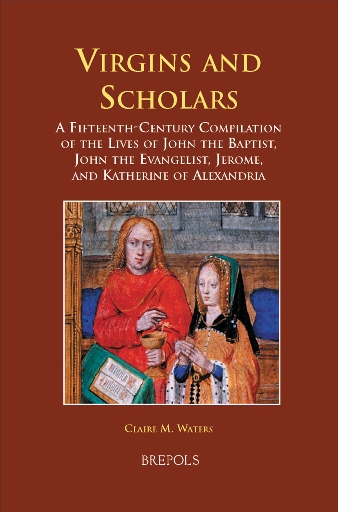
Virgins and Scholars
show More to view fulltext, buy and share links for:Virgins and Scholars show Less to hide fulltext, buy and share links for: Virgins and ScholarsThis collection of prose vitae of four virgins and scholars - Saints John the Baptist, John the Evangelist, Jerome, and Katherine of Alexandria - was almost certainly copied, and the texts very likely composed, at Syon Abbey or Sheen Charterhouse in the mid-fifteenth century. The lives cover a wide range of hagiographic modes, from hagiographic romance to affective, devotional appreciation to doctrinal treatise in narrative form. From the life of Jerome, composed by a monk for his aristocratic spiritual daughter, to the life of Katherine, reputedly translated for Henry V, to those of John the Baptist and John the Evangelist, which set their subjects in a recognizably Birgittine context, they show the interaction of men and women, lay and monastic, in the production of devotional literature. The diversity of their approaches and sources, moreover, shows the links between English dynastic politics and continental religious literature and spiritual traditions. As examples of translation practices, of monastic politics, and of religious instruction, these lives provide a window onto the devotional culture and literary worlds of fifteenth-century Europe.
-
-
-
Chanter en polyphonie à Notre-Dame de Paris aux 12e et 13e siècles
show More to view fulltext, buy and share links for:Chanter en polyphonie à Notre-Dame de Paris aux 12e et 13e siècles show Less to hide fulltext, buy and share links for: Chanter en polyphonie à Notre-Dame de Paris aux 12e et 13e sièclesLa polyphonie chantée au chœur de la cathédrale Notre-Dame de Paris à la fin du XIIe siècle a profondément marqué son temps et la virtuosité dont ont fait preuve les chanteurs dans le maniement de leur art, l’audace des scribes qui ont consigné l’organum dans une notation mesurée alors totalement inédite et l’intérêt que les intellectuels y ont porté, accordent à la polyphonie parisienne une place remarquable dans l’histoire de la musique occidentale.
Cet ouvrage explique comment les chantres de la nouvelle église de Paris ont réussi à exécuter ces majestueuses fresques qui enflammèrent l’imagination des médiévaux par leur étonnante splendeur et qui suscitent toujours autant d’enthousiasme de nos jours.
La musique médiévale entretient d’étroites relations avec les sciences du langage, puisant en elles les éléments de son développement technique et reposant sur une mémoire sans cesse exercée. Cette étude concerne l’ars musica dans ses relations avec les arts du trivium et la mémoire et veut ancrer les compositions dans le contexte intellectuel et éducatif qui a permis leur éclosion et leur développement. Elle montre ainsi comment les clercs de Notre-Dame ont utilisé des procédés rhétoriques d’ornementation afin d’élaborer un discours musical complexe et vise à comprendre dans quelles circonstances, comment et à quelles fins, les chantres ont composé une très haute manifestation de la Parole chantée.
-
-
-
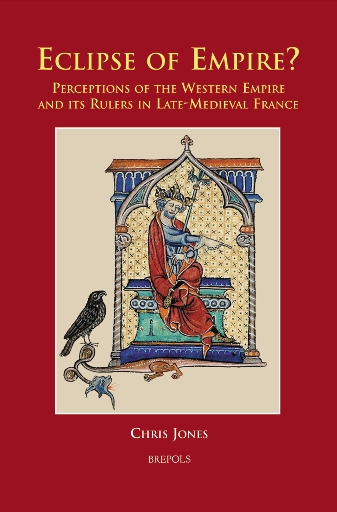
Eclipse of Empire?
show More to view fulltext, buy and share links for:Eclipse of Empire? show Less to hide fulltext, buy and share links for: Eclipse of Empire?Through an innovative and wide-ranging exploration this book examines the reality behind the assumption that the idea of a universal ruler became increasingly irrelevant in late-medieval Europe. Focusing on France in the century before the outbreak of the Hundred Years War, it explores attitudes towards the contemporary institution of the western Empire, its rulers, and its place in the world. Historians have tended to assume that there was little place for a universal Empire and its would-be rulers in late-medieval thought. Pointing to the rapid decline in the fortunes of the Empire after the death of the Emperor Frederick II, the rediscovery of Aristotle’s Politics by western Europeans, and the growing confidence – and burgeoning bureaucracy – of the kings of France and England, it is often argued that the claims to universal domination of men like the Emperor Henry VII, or indeed of popes like Boniface VIII, were becoming increasingly anachronistic, not to say a little ridiculous. Perceptions of the Empire undoubtedly changed in this period. Yet, whether it was in the cloisters of Saint-Denis, the pamphlets of Pierre Dubois, or even the thought of Charles d’Anjou, the first Angevin king of Sicily, this book argues that the Empire and its ruler still had an important, indeed unique, role to play in a properly ordered Christian society.
Chris Jones grew up in the Middle East before reading history at Durham. He now lives in New Zealand where he holds a lectureship in History at the University of Canterbury, Christchurch.
-
-
-
From Ducatus to Regnum. Ruling Bavaria under the Merovingians and Early Carolingians
show More to view fulltext, buy and share links for:From Ducatus to Regnum. Ruling Bavaria under the Merovingians and Early Carolingians show Less to hide fulltext, buy and share links for: From Ducatus to Regnum. Ruling Bavaria under the Merovingians and Early CarolingiansBavaria was a very important country during the early Middle Ages. Its territory included much of the modern German state but also reached across the Alps into what are now Austria and northern Italy. Bavaria thus occupied a strategic position between the rival kingdoms of the Franks and the Langobards. It was ruled by powerful dukes who had close political and personal relations with the Frankish rulers but who also vigorously resisted attempts to limit their own sovereignty. Bavaria’s independence was ended in 788 by Charlemagne who deposed his cousin, Duke Tassilo. Charlemagne’s son, the Emperor Louis the Pious, then established Bavaria as the first monarchy east of the river Rhine for his own son, Ludwig the German. This is the first full study of the entire evolution of Bavarian rule from the mid-sixth century into the early ninth century. It explores the changing strategies adopted by its dukes and then its first king to establish their authority and maintain their autonomy in face of evolving challenges to their rule. An Epilogue continues the story into the early tenth century.
Carl I. Hammer graduated from Amherst College (B.A.) and the University of Toronto (Ph.D.) and also studied at the universities of Munich, Chicago and Oxford. After a career in international business with Westinghouse and Daimler-Benz, he is now retired. He has published two other scholarly books on early-medieval Bavaria and numerous articles in academic journals in N. America and Europe. He lives in Pittsburgh.
-
-
-
La Joute, et autres oeuvres poétiques de Luigi Pulci, augmentées de pièces composées dans le cercle de Laurent de Magnifique
show More to view fulltext, buy and share links for:La Joute, et autres oeuvres poétiques de Luigi Pulci, augmentées de pièces composées dans le cercle de Laurent de Magnifique show Less to hide fulltext, buy and share links for: La Joute, et autres oeuvres poétiques de Luigi Pulci, augmentées de pièces composées dans le cercle de Laurent de MagnifiqueNé à Florence dans une famille noble, mais désargentée, Luigi Pulci (1432-1484) eut la chance d’être introduit très jeune dans le cercle des Médicis. Devenu un des familiers de Laurent le Magnifique, il vécut la vie d’un courtisan, remplissant les missions variées qu’on lui confiait. Mais il était avant tout poète et exerça à ce titre un « véritable magistère », car la poésie a joué à Florence, dans une communauté violente et conflictuelle, un rôle si fondamental pour le maintien du lien social qu’il nous est maintenant difficile de l’imaginer. A côté du Morgante, chef-d’oeuvre incontesté du poème heroï-comique à l’italienne, Pulci a été aussi l’auteur d’une production poétique vaste et diversifiée. Pratiquant tous les genres et tous les tons, de l’élégie à la satire, du burlesque à l’aulique, d’une incroyable virtuosité verbale, il nous fait partager la vie compliquée de la cour médicéenne et les moeurs de la Florence convulsive de cette deuxième moitié du quattrocento. Son attachement à un aristotélisme teinté d’avvéroisme, son refus du mysticisme esthétisant de Marsile Ficin offrent un témoignage précieux et souvent troublant de la pensée intellectuelle et religieuse de son temps. Il nous émeut enfin par l’expression à la fois pathétique et narquoise de son angoisse devant le mal, la solitude, la mort.
-
-
-
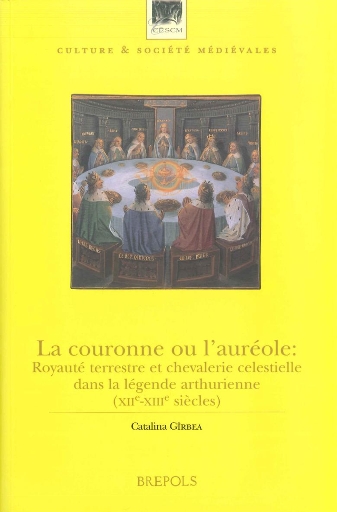
La couronne ou l'auréole
show More to view fulltext, buy and share links for:La couronne ou l'auréole show Less to hide fulltext, buy and share links for: La couronne ou l'auréoleLe roi Arthur et ses chevaliers fascinent les médiévaux. Ils connaissent un grand succès aux XII e et XIII e siècles, succès dont le secret réside dans la tension permanente qui s'établit entre deux systèmes de valeurs opposés: d'une part la royauté, centrée sur la Table Ronde, d'autre part la chevalerie celestielle, centrée sur le Graal, et qui met à l'honneur la vocation chevaleresque à la sainteté. Cette guerre des valeurs, chère à l'axiologie moderne, génère la complexité de la fiction arthurienne, et aussi celle des caractères qui y évoluent: les personnage qui ont enregistré le plus grand succès, précisément Lancelot ou Perceval, sont justement les indécis, systématiquement tiraillés entre les deux systèmes.
La royauté rend maîtrisable un expace saugrenu, peuplé de monstres et de fées. Le but est d'instaurer une sorte de pax arthuriana et de façonner le monde par la force des armes. À la violence environnante, la royauté riposte par la répression légitime. Sur ce canevas la chevalerie celestielle surgit comme valeur différente, mais aussi comme anomalie. Elle oppose la parole et la compréhension à la violence armée. Son émergence est une tentative d'aseptiser un monde qui tire son charme de son bellicisme et de son mystère.
C'est pourquoi le lecteur qui se penche sur les romans arthuriens se heurte continuellement à l'effondrement du sens dès qu'il essaie de leur donner une interprétation systématique. Cette incohérence est en grande partie le résultat du combat sourd des deux systèmes de valeurs concurrentiels, qui s'affrontent dans les profondeurs de la matière arthurienne comme les deux dragons sous la célèbre tour de Vertigier.
-
-
-
La librairie des frères captifs. Les manuscrits de Charles d'Orléans et Jean d'Angoulême
show More to view fulltext, buy and share links for:La librairie des frères captifs. Les manuscrits de Charles d'Orléans et Jean d'Angoulême show Less to hide fulltext, buy and share links for: La librairie des frères captifs. Les manuscrits de Charles d'Orléans et Jean d'AngoulêmeIl y a cinquante ans, jeune bibliothécaire au Cabinet des Manuscrits de la Bibliothèque nationale, l’auteur reconnut les mains de Charles d’Orléans et de son frère Jean d’Angoulême dans un carnet de notes figurant dans l’inventaire des livres rapportés d’Angleterre par Charles à sa libération en 1440. Contrairement à ce que l’on avait toujours affirmé, les deux captifs n’avaient donc pas vécu séparés pendant toute la durée de leur exil.
Ce petit volume contient l’autographe raturé d’un long poème mystique de Charles, inconnu jusqu’alors, le Canticum Amoris, ainsi que les brouillons ou les copies hâtives de nombreux textes de piété. Le tout fut retranscrit par d’excellents copistes de Londres dans l’un des plus beaux manuscrits enluminés rapportés par Charles en 1440.
Pierre Champion (1910) avait tenté de reconstituer la librairie de l’aîné et Gustave Dupont-Ferrier (1897) celle du cadet. Préférant traiter ensemble les deux fonds qui, réunis dès le début du XVI e siècle, formèrent le noyau originel de la Bibliothèque royale, l’auteur a retrouvé une bonne soixantaine de nouveaux manuscrits. Ces identifications, qui ont notamment permis la découverte d’œuvres perdues de Gerson, révèlent des aspects insoupçonnés de l’activité intellectuelle et de la spiritualité des princes captifs.
L’ouvrage, illustré de quelques reproductions de manuscrits, comprend, outre une introduction, l’édition des inventaires qui subsistent (Arch. Nat. K 500 n° 5 et 7, P 1403 n° 38 et 39), des notices sur chacun des manuscrits retrouvés (inventoriés ou non inventoriés), une table de concordances et des index. En appendice, on trouvera l’édition du Canticum Amoris : elle est précédée d’une brève présentation et accompagnée d’une réédition de la Carole en latin, seul poème latin longtemps connu de Charles d’Orléans, qu’il est intéressant de comparer à l’autre. On trouvera également une prière, que nous voyons littéralement composer sous nos yeux en étudiant toutes les ratures et additions du brouillon.
Gilbert OUY (1924-) est archiviste-paléographe, docteur ès-Lettres et directeur de recherche émérite au C.N.R.S. Conservateur au Cabinet des Manuscrits de la Bibliothèque nationale (1946-1959), puis chercheur au Centre national de la Recherche scientifique (1959-1992) où il a créé, et dirigé pendant dix-huit ans une équipe de recherche sur l'Humanisme français des XIV e et XV e siècles. Il a également enseigné la codicologie à l'École Pratique des Hautes Études.
-
-
-
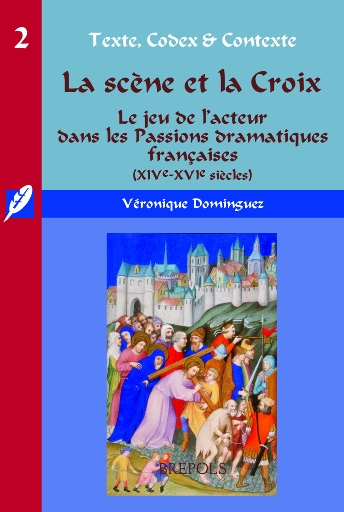
La scène et la Croix. Le jeu de l’acteur dans les Passions dramatiques françaises (XIVe-XVIe siècles)
show More to view fulltext, buy and share links for:La scène et la Croix. Le jeu de l’acteur dans les Passions dramatiques françaises (XIVe-XVIe siècles) show Less to hide fulltext, buy and share links for: La scène et la Croix. Le jeu de l’acteur dans les Passions dramatiques françaises (XIVe-XVIe siècles)Destinées à la lecture comme à la représentation, les Passions dramatiques françaises participent à la fois du spectacle et des théories du signe en vigueur à la fin du Moyen Age. Pour le spectateur chrétien, les corps des acteurs sont-ils des icônes désignant le divin, ou des idoles exerçant les séductions du sensible ? Parce qu’au plan historique Passions et prédication se répondent, le corps du Christ torturé y fonctionne comme signe de la Passion nécessaire à la Rédemption. Et entre scolastique thomiste et mimesis aristotélicienne, par similitude ou par opposition au Christ, le jeu des acteurs obéit à une typologie qui favorise la méditation de la ressemblance divine. Cependant, chaque corps se présente aussi comme un objet singulier, que le spectateur doit identifier avant d’en déchiffrer le sens. Son apparition se conforme alors à l’occamisme que reformule un Gerson, mais aussi à la définition néo-platonicienne de la mimesis, production consciente d’une réalité illusoire. Porté par le rythme du rondeau, du Planctus, l’acteur produit un jeu qui se sait dissemblable de son divin modèle, et suscite avant tout l’émotion. Les Passions offrent ainsi au débat qui opposait l’idole à l’icône une alternative où l’édification cohabite avec le plaisir du spectacle.
-
-
-
Le livre des papes
show More to view fulltext, buy and share links for:Le livre des papes show Less to hide fulltext, buy and share links for: Le livre des papesLe “Livre des papes” -Liber pontifica1is-, traduit ici pour la première fois en français, est la biographie des cinquante-neuf papes qui se sont succédés sur le siège romain de l’an 492 à 891.
Ce document, rédigé au plus haut lieu de la chrétienté par des auteurs qui servaient cette prestigieuse institution, est sans conteste une source majeure et unique pour l’histoire de l’Occident.
Jusqu’au milieu du VIIIe siècle, le siège apostolique est soumis au contrôle de l’empereur grec de Byzance, ce qui le mènera à intervenir dans les conflits théologico-politiques de l’Orient. Les invasions lombardes auront pour effet de remplacer cette tutelle séculaire par une autre, celle des Carolingiens avec pour conséquence la formation de ce que l’on appellera les Etats de l’Eglise. Le couronnement de Charlemagne en 800 en sera le logique aboutissement.
Le lecteur découvrira les deux préoccupations majeures de ces biographes proches du pontife. D’abord le souci constant d’embellir les églises romaines et d’accroître leurs trésors, souvent mis à contribution pour le rachat des prisonniers ou l’achat d’une paix.
L’autre grande affaire de ces temps lointains -mais n’en fut-il pas toujours ainsi- est l’élection du successeur du pape défunt, ce qui nous vaut l’histoire mouvementée et parfois pittoresque de ces joutes électorales.
Ajoutons que le Liber pontificalis apporte une contribution utile à la connaissance de la vie quotidienne de cette époque, à la fois éloignée et bien proche de nous.
-
-
-
Le retour au paradis
show More to view fulltext, buy and share links for:Le retour au paradis show Less to hide fulltext, buy and share links for: Le retour au paradisCette recherche veut répondre à deux questions: comment Tertullien conçoit-il la sainteté et la sanctification de l’homme, quel sens attribue-t-il dans ce contexte à l’ascèse sexuelle ?
Dans une première partie, le père De Brabander présente une analyse lexicographique du vocabulaire de la sainteté. Cette analyse met en lumière les différentes harmoniques que Tertullien fait vibrer et démontre sa continuité avec la tradition biblique. La deuxième partie explicite les fondements théologiques à l’origine de la pensée de Tertullien au sujet de l’ascèse sexuelle. Celle-ci ne se rend compréhensible que dans le contexte de l’ensemble de l’économie du salut. La sanctification de l’homme et son salut ultime sont conçus comme un retour à sa condition originelle, régénérée dans le baptême et rendue parfaite dans l’état eschatologique. L’ascèse sexuelle est présentée comme instrument de sanctification : elle est le moyen privilégié de conserver l’état de sainteté acquis par le baptême et de rejoindre l’état de la vie éternelle. La troisième partie offre une description phénoménologique des différentes formes d’ascèse sexuelle en tant qu’expression de sanctification à l’époque de Tertullien.
Après avoir terminé ses études de philosophie et de théologie au Centre d’Études Ecclésiastiques de Louvain, Kris De Brabander (1964) a obtenu une licence en théologie et sciences patristiques auprès de l’ Institutum Patristicum Augustinianum de Rome en 1992. Il a ensuite suivi les cours de l’Institut Monastique du Pontificium Athenaeum S. Anselmi où il a été reçu comme docteur en théologie grâce à la présente étude, en 2003. Il s’est engagé par la suite dans diverses initiatives de formation patristique. C’est ainsi qu’il enseigne la patristique à Agripo, l’institut de formation des abbayes prémontrées flamandes de Belgique. L’auteur est lui-même chanoine régulier de Prémontré, appartenant à l’abbaye de Tongerlo (Belgique).
-
-
-
Le travail intellectuel à la Faculté des arts de Paris: textes et maîtres (ca. 1200-1500)
show More to view fulltext, buy and share links for:Le travail intellectuel à la Faculté des arts de Paris: textes et maîtres (ca. 1200-1500) show Less to hide fulltext, buy and share links for: Le travail intellectuel à la Faculté des arts de Paris: textes et maîtres (ca. 1200-1500)Le répertoire continué par ce fascicule n'est pas à proprement parler une révision du livre de Glorieux sur les maîtres de la Faculté des arts au XIIIe siècle. D'une part, c'est un répertoire plus restreint: on ne retient que les auteurs et les textes qui ont un rapport direct avec l'enseignement à la Faculté des arts de Paris; de l'autre, il est plus large: on a fixé les limites chronologiques à 1200-1500 environ. Plus important, le but envisagé est de mettre au point un instrument pour les recherches concernant l'histoire intellectuelle de la Faculté des arts de Paris. Le répertoire ne sera donc pas consacré à la prosopographie des maîtres, mais à leur activité intellectuelle, c'est-à-dire leurs écrits et leurs lectures. En conséquence, il comprendra également des maîtres qui n'ont jamais enseigné à Paris, mais dont les oeuvres ont sûrement ou probablement été lues et commentées à la Faculté des arts de Paris. De même, en ce qui concerne les oeuvres anonymes, on retiendra d'une part celles qui ont été écrites à Paris, d'autre part celles qui ont été lues et utilisées dans l'enseignement parisien. Le répertoire veut donc répondre à deux types de questions: 1. quels étaient les maîtres de la Faculté des arts de Paris et quelles sont leurs oeuvres; 2. quels textes contemporains relevant des mêmes disciplines ont contribué à déterminer le climat de ce milieu intellectuel. Ces deux éléments sont intimement liés et se complètent, car, pour citer le père Gauthier, "les maîtres ès arts forment un milieu homogène, leur enseignement est l'enseignement d'une faculté plus que d'un homme".
-
-
-
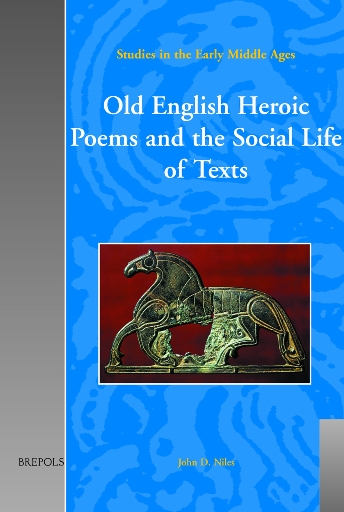
Old English Heroic Poems and the Social Life of Texts
show More to view fulltext, buy and share links for:Old English Heroic Poems and the Social Life of Texts show Less to hide fulltext, buy and share links for: Old English Heroic Poems and the Social Life of TextsOld English Heroic Poems and the Social Life of Texts develops the theme that all stories- all 'beautiful lies', if one considers them as such- have a potentially myth-like function as they enter and re-enter the stream of human consciousness. In particular, the volume assesses the place of heroic poetry (including Beowulf, Widsith, and The Battle of Maldon) in the evolving society of Anglo-Saxon England during the tenth-century period of nation-building. Poetry, Niles argues, was a great collective medium through which the Anglo-Saxons conceived of their changing social world and made mental adjustments to it. Old English 'heroic geography' is examined as an aspect of the mentality of that era. So too is the idea of the oral poet (or bard) as a means by which the people of this time continued to conceive of themselves, in defiance of reality, as members of a tribe-like community knit by close personal bonds. The volume is rounded off by the identification of Bede's story of the poet Cædmon as the earliest known example of a modern folktale type, and by a spirited defense of Seamus Heaney's recent verse translation of Beowulf.
-
-
-
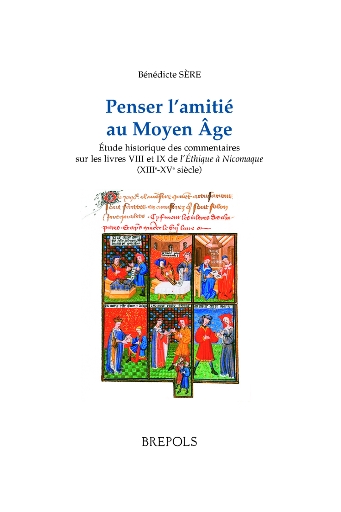
Penser l'amitié au Moyen Age
show More to view fulltext, buy and share links for:Penser l'amitié au Moyen Age show Less to hide fulltext, buy and share links for: Penser l'amitié au Moyen AgeSans conteste, l’amitié innerve le monde médiéval. Le vocable sature les textes tant pratiques que théoriques. Il concerne toute la société, l’élite, les milieux princiers et la noblesse autant que les humbles et le monde ordinaire. Au regard de l’insistance des sources médiévales à dire l’amitié dans sa factualité et sa réalité, il s’avère nécessaire de s’interroger sur la pensée de l’amitié au Moyen Âge. A-t-on pensé l’amitié au Moyen Âge? Plus exactement posé: quels sont les cadres intellectuels, institutionnels et structurels qui poussent les hommes des XIIIe-XVe siècles à penser l’amitié; quelles sont les conditions historiques et les événements culturels qui façonnent les contours d’une telle conceptualisation?
Les médiévaux puisent à la source aristotélicienne un matériau exceptionnellement dense: la philia de l’Éthique à Nicomaque est par excellence le lien social qui unit les citoyens. Penser l’amitié au Moyen Âge à partir de l’auctoritas aristotélicienne, c’était, en quelque sorte, nommer l’expérience proprement médiévale de l’amitié elle-même, définie par la précellence de son acception sociale.
Bénédicte Sère, est agrégée d’histoire et docteur de l’Université de Paris-I Panthéon Sorbonne.
-
-
-
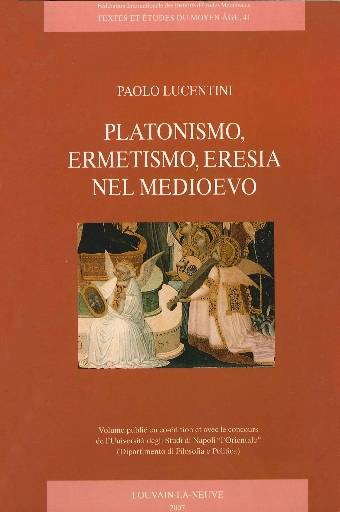
Platonismo, ermetismo, eresia nel medioevo
show More to view fulltext, buy and share links for:Platonismo, ermetismo, eresia nel medioevo show Less to hide fulltext, buy and share links for: Platonismo, ermetismo, eresia nel medioevoLes travaux de Paolo Lucentini ont changé de manière décisive notre approche de l’histoire de la philosophie médiévale. Initiateur de l’Hermes Latinus, il a publié plusieurs éditions et articles ayant trait à ce sujet. Ces publications ont changé fondamentalement notre conception de la « synthèse scolastique », en vigueur jusqu’aux années quatre-vingt. Les éditions de textes inédits qu’il a réalisées permettent de retrouver l’importance de sources encore mal connues et donc peu étudiées.
Comme la plupart de ses articles sont dispersés dans des revues et des ouvrages d’accès parfois difficile, ses collègues et ses élèves de l’Université de Naples, l’ « Orientale », ont souhaité lui rendre hommage en les réunissant en un volume. L’ouvrage rendra bien des services aux chercheurs qui souhaitent étudier de plus près l’hermétisme du Liber Alcidi, de l’Asclepius ou du Liber XXIV philosophorum. L’ensemble de ses articles constitue aussi une initiation privilégiée aux pratiques complexes de l’astrologie et de l’alchimie. Ils ouvrent la voie à des pratiques mystérieuses qui ont influencé profondément la pensée de nombreux auteurs médiévaux.
La table des matières illustre la richesse du contenu de ce livre : de la tradition ériugénienne à Honorius Augustodunensis, de la réception et de l’analyse de l’Asclepius au XIIe siècle, de l’influence du Liber XXIV philosophorum sur la Divine Comédie de Dante jusqu’aux hérésies provoquées par l’interprétation de ces textes chez certains auteurs, tous les articles permettront de mieux comprendre pourquoi l’hermétisme a profondément modifié notre conception de la pensée scolastique.
-
-
-
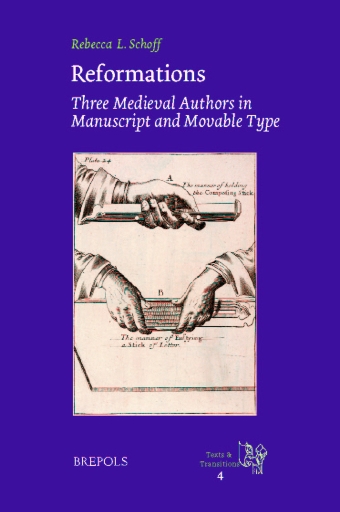
Reformations
show More to view fulltext, buy and share links for:Reformations show Less to hide fulltext, buy and share links for: ReformationsThis volume discusses the key shift from manuscript to print culture in the history of books, taking The Canterbury Tales, The Book of Margery Kempe, and Piers Plowman as models of the way in which a medieval text's unique tradition influenced its transition from manuscript to print. The forces of the Reformation era did not produce the same effect across the varied textual legacy of the Middle Ages. Every text that made the transition from manuscript to print brought with it a set of concerns, a tendency to address a particular readership in particular ways, a physical presence developed in manuscript culture, all of which might shape the pathways by which a text might arrive in print, and what it might look like when it got there. This study follows The Canterbury Tales, The Book of Margery Kempe, and Piers Plowman from their circulation in manuscript to their presentation in print, in order to track how each of them survived the metamorphosis of the relationship between writers and readers as the new technology was introduced. Taken together, the three case studies demonstrate to scholars of any medieval literature the variety of possible impacts made when texts composed in manuscript culture were prepared for printing. The great force exerted by the technological and cultural developments of the English Reformation, not least the more centralized legislative regulation of the press, has long been central to the study of the history of books. This volume takes into account the ways in which individual textual traditions pushed back or accelerated the forces of early modern reform, producing their own plural reformations.
-
-
-
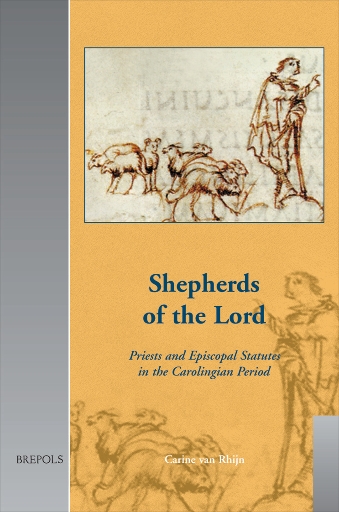
Shepherds of the Lord
show More to view fulltext, buy and share links for:Shepherds of the Lord show Less to hide fulltext, buy and share links for: Shepherds of the LordThis book is the first study of the rural priesthood, its significance, and the statutes written for them in the time of the Carolingians. It seeks to trace and explain the rise and emergence in the Carolingian period of both local priests and episcopal statutes that aimed at steering their behaviour. It was in the context of Carolingian ideals of reform, formulated in court-centred circles from the late eighth century onwards, that local priests increasingly came to be seen as those that held the key to turning the local Frankish population into ideal Christians by their word and living example. First of all, however, these educators needed to be educated themselves, hence the emergence of the Episcopal statutes, a new tool to direct the local diocesan clergy into becoming the ideal 'Shepherds of the Lord' that they needed to be. Smooth as this process of empire-wide reform theoretically was, however, obstacles lurked, both from a top-down (episcopal) and a grass-roots (local) perspective on the status, role, and function of priests. Nevertheless, the ninth century saw the emergence of the priesthood and the development of their role as an important group that connected bishops with the lay inhabitants of their dioceses and, from a higher-up perspective, those who opened up the vast Carolingian country-side to the implementation of the ideal society in the minds of contemporary reformers.
-
-
-
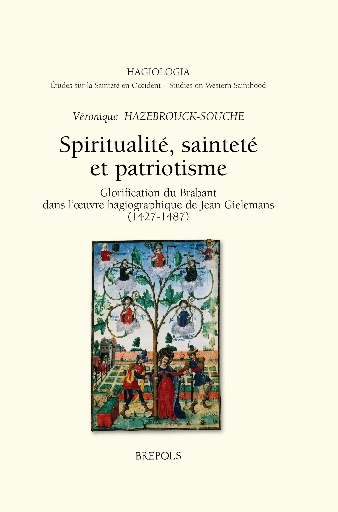
Spiritualité, sainteté et patriotisme
show More to view fulltext, buy and share links for:Spiritualité, sainteté et patriotisme show Less to hide fulltext, buy and share links for: Spiritualité, sainteté et patriotismeL’hagiographie a souvent été décriée jusqu’au vingtième siècle. C’est ainsi que la plus vaste compilation hagiographique du Moyen Age occidental était restée dans l’oubli presque total. à travers quatre volumineux manuscrits en latin (Sanctilogium, Agyologus Brabantinorum, Novale Sanctorum et Hystoriologus Brabantinorum), Jean Gielemans (1427-1487), chanoine régulier de saint Augustin à Rouge-Cloître en Brabant, avait pourtant réalisé entre 1471 et 1487 une véritable encyclopédie hagiographique, et plus encore, laissé un trésor inestimable pour l’histoire religieuse, culturelle et politique.
Issu d’une thèse de doctorat, ce livre met en évidence un genre patriotique inédit où l’hagiographe exalte le Brabant à travers une histoire sacrée tout en reflétant deux idéaux de sainteté, masculine et féminine, entre mystique et Dévotion moderne.
Véronique Hazebrouck-Souche, docteur en histoire médiévale, a enseigné principalement à l’université de Paris X et participé à des projets de recherche en France, Belgique, Italie, Angleterre, Allemagne et aux Pays-Bas.
-
-
-
Tendenda Vela
show More to view fulltext, buy and share links for:Tendenda Vela show Less to hide fulltext, buy and share links for: Tendenda VelaÉdouard Jeauneau a déjà publié deux recueils d'articles. Le premier, Lectio philosophorum (1973) était centré sur l'École de Chartres, le second, Études érigéniennes (1987, prix Victor Cousin 1990) sur Jean Scot Érigène. Ce troisième recueil, "Tendenda Vela", combine les deux thèmes.
Les travaux qui y sont rassemblés, et qui couvrent plus de vingt années de recherches, portent non seulement sur Jean Scot et sur les maîtres chartrains, mais sur leurs sources bibliques, patristiques et profanes. Parmi les sources patristiques, une place de choix est faite aux Pères grecs: Denys l'Aréopagite, Grégoire de Nysse, Maxime le Confesseur. Pour les sources profanes, l'accent est mis sur les textes philosophiques qu'on lisait dans le monde latin en la première moitié du XIIe siècle, notamment le Timée de Platon et la Consolation de Philosophie de Boèce.
Ce nouveau recueil ne se distingue pas seulement par la diversité des sujets traités, mais aussi par la variété de leur approche. Tantôt l'auteur dresse le bilan des recherches qu'il a menées sur les manuscrits en pays tchèque (Plato apud Bohemos) ou en Californie (Berkeley UCB Ms. 95), tantôt il approfondit les thèmes philosophiques (Translatio studii, Processio et Reditus, Cogito érigénien) et théologiques (le Filioque) qu'il a rencontrés au cours de ses excursions à travers le Moyen Âge, tantôt il propose une nouvelle interprétation de quelques œuvres d'art appartenant à cette période: De l'art comme mystagogie, Les sirènes dans le chœur des Vieillards. Un livre qui devrait intéresser les historiens de l'art, de la philosophie et de la théologie.
De 1958 à 1992, Édouard Jeauneau (° 1924) á été chercheur et depuis 1975 directeur de recherche de 1ère classe au Centre National de la Recherche Scientifique (Section Philosophie) à Paris. Depuis 1974 il est aussi fellow du Pontifical Institute of Mediaeval Studies (Toronto).
-
-
-
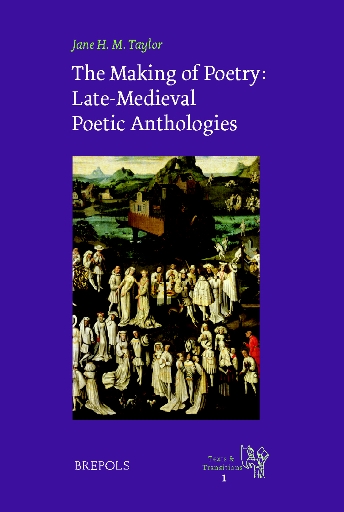
The Making of Poetry
show More to view fulltext, buy and share links for:The Making of Poetry show Less to hide fulltext, buy and share links for: The Making of PoetryIn this ground-breaking book, the author explores some late-medieval lyric anthologies. Taking a cue from the French sociologist, Pierre Bourdieu, she sets poetic creation in the context of an understanding of the structures of court society, and sketches the range of social, intellectual and aesthetic positions available to the poet and the patron. Her primary focus is on a series of manuscripts which, she argues, reveal much about the socioliterary dynamics of particular poems, and about the way in which they are vessels for the participation by individuals in a common culture of literary exchange: Charles d'Orléans's personal manuscript, bnf français 25458, in which, she argues, the poets leave implicit or explicit traces of their social interactions; his duchess Marie's album, Carpentras 375, which is interestingly different from the Duke's; bnf fr. 9223 and n.a.f. 15771, 'coterie' manuscripts which allow us to see how social milieu determines shared literary forms and conventions; Marguerite d'Autriche's Album poétique, Brussels br 10572, an anthology which is a cultural commodity allowing a princely court to recognise stylistic expertise and control of form. She finishes by examining the first great French poetic anthology, Antoine Vérard's Jardin de Plaisance (1501), which seeks to recreate, knowingly and imaginatively, via rubrics, illustrations, and choice of texts, the elite sociability for which the other anthologies are evidence.
-
-
-
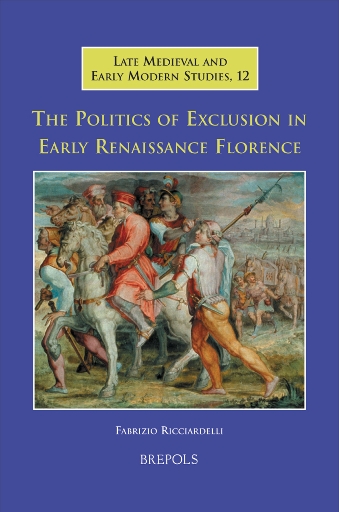
The Politics of Exclusion in Early Renaissance Florence
show More to view fulltext, buy and share links for:The Politics of Exclusion in Early Renaissance Florence show Less to hide fulltext, buy and share links for: The Politics of Exclusion in Early Renaissance FlorenceNo previous work has examined political exclusion in Early Renaissance Florence or its significance for the transition from Florentine popular government to oligarchy. Between the fourteenth and the first half of the fifteenth century, political exclusion became a normal feature of political life, regardless of the type of political regime; it was an essential instrument by which new governments consolidated their control over the city and the countryside in one of the largest and most powerful cities of Early Renaissance Europe. Exclusion from the Republic of Florence–separation from friends and family, business and property, coupled with the degradation of public humiliation–engendered a new outlook on life. In Early Renaissance Florence, excluded citizens across social classes became common outlaws, no different for common criminals prosecuted for heresy, blasphemy, gambling, or sexual deviance. By investigating these practices and attitudes of Early Renaissance Florence, this book shows the dark side of Renaissance republicanism: its fear of political dissent in any form and its means to crush it at all costs. This study of the other side of Renaissance republicanism presents a new and crucial chapter in Renaissance history.
-
-
-
Translating the Sagas
show More to view fulltext, buy and share links for:Translating the Sagas show Less to hide fulltext, buy and share links for: Translating the SagasFew speakers of English have ever been able to read the Icelandic sagas in the original language, and published saga translations have played a major role in shaping attitudes towards Viking Age Scandinavia and the great literary achievements of medieval Iceland in the English-speaking world. This book is the first publication to provide an extended examination of the history and development of Icelandic saga translations into English from their beginnings in the eighteenth century to today. It explores reasons for undertaking saga translation, and the challenges confronting translators. Chapters are devoted to the pioneering saga translations, the later Victorian and Edwardian eras, the often-neglected period of the two World Wars and their aftermath, and the upsurge of saga translation in the second half of the twentieth century. The contributions of individual translators and teams are reviewed, from James Johnstone in the 1780s through major Victorians such as Samuel Laing, George Webbe Dasent, and William Morris, distinguished twentieth century figures such as Lee M. Hollander, Gwyn Jones, Magnus Magnusson and Hermann Pálsson, and George Johnston, and the great co-operative project which produced The Complete Sagas of Icelanders at the century’s end. The book concludes with saga translation facing interesting new possibilities and challenges, not least those generated by information technology.
-
-
-
Vie de saint Thibaut de Provins
show More to view fulltext, buy and share links for:Vie de saint Thibaut de Provins show Less to hide fulltext, buy and share links for: Vie de saint Thibaut de ProvinsComment l’histoire si édifiante d’un jeune chevalier champenois du 11ème siècle qui, pour le seul amour de Dieu, délaisse pouvoir, famille et richesses et devient successivement ermite itinérant, pèlerin, prêtre et saint a-t-elle pu être écartée des fameuses compilations de vies de saints en français de la fin du Moyen Age et ainsi finalement tomber dans l’oubli ?
Bien sûr, la Vie de saint Thibaut de Provins n’est pas de ces textes qui mettent en évidence une figure emblématique ou des règles fondatrices de la religion chrétienne ; mais elle est loin cependant d’être une simple légende locale, et son intérêt réside sans aucun doute autant dans le caractère exemplaire de la vie qui est montrée que dans la valeur plus littéraire du récit qui, par le jeu de l’intertextualité, semble progressivement superposer la vie (ou plutôt la mort) de saint Thibaut à celle du Christ.
Accompagnée d’une introduction, d’une traduction, d’un appareil critique, de notes, d’un index, d’un glossaire et, en annexe, des différentes versions connues de la Vie de saint Thibaut, la présente édition souhaite ainsi permettre l’accès tant aux spécialistes de l’édition critique qu’aux amateurs de récits hagiographiques ou plus généralement d’histoire religieuse d’un texte français du 13ème siècle jusqu’alors inédit, dont la brièveté rend l’originalité et l’intérêt littéraire d’autant plus saillants.
-
-
-
Vie de sainte Marie l'Egyptienne
show More to view fulltext, buy and share links for:Vie de sainte Marie l'Egyptienne show Less to hide fulltext, buy and share links for: Vie de sainte Marie l'EgyptienneHildebert de Lavardin, évêque du Mans (1096-1125), puis archevêque de Tours (1125-1133), l’auteur de la Vita beate Marie Egyptiace, dont nous donnons ici la première traduction française, fut l’une des figures littéraires les plus importantes du Moyen Age: pendant plusieurs générations ses vers furent lus avec plaisir dans toute l’Europe occidentale; ses lettres servirent de modèles dans les écoles cathédrales et monastiques, pour leur élégance et leur noble distinction, et ses traités de philosophie morale et de droit canonique devinrent des manuels universellement appréciés.
La légende de Marie l’Égyptienne, compte parmi les figures du Moyen Age les plus connues et les plus vénérées de celles qui illustrent l’influence salutaire de Notre-Dame sur les plus grands pécheurs; elle a contribué pour une part nullement négligeable au développement du culte marial qui prend son essor définitif en Occident partir de l’époque carolingienne. Marie l’Égyptienne n’est pas seulement l’héroïne d’une parabole « évangélique », mais le personnage-clé d’un drame de la plus brûlante actualité : non seulement elle incarne en sa personne l’aspiration du monde féminin à rejoindre le mouvement des nouveaux ermites de l’époque d’Hildebert, mais elle intervient, en sa qualité d’ermite, pour donner des conseils au monde monastique. Le texte prend place dans la grande discussion de l'époque d'Hildebert sur la hiérarchie des vocations monastiques et leurs mérites respectifs, et sur les origines érémitiques du monachisme chrétien.
-
-
-
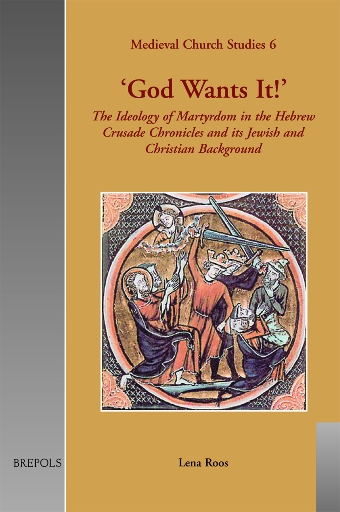
'God Wants It!'
show More to view fulltext, buy and share links for:'God Wants It!' show Less to hide fulltext, buy and share links for: 'God Wants It!'During the first months of the First Crusade, groups of crusaders attacked the Jewish communities in the Rhineland, forcing them to choose between death and conversion. Many converted, but others chose to die as martyrs. Among these, some were killed by the crusaders, some killed themselves, each other, or even their own children in order to prevent forcible conversion. These events are described in a number of Latin accounts, but also in three Hebrew chronicles and in a number of Hebrew liturgical poems. These Hebrew chronicles introduce many new ideas connected to martyrdom which are not found in earlier Jewish martyr texts. They also differ considerably from contemporary texts on martyrdom, written by Jews living under Muslim rule.
The purpose of the present study is as follows: to outline the most salient features of this new ideology of martyrdom found in the Hebrew Crusade Chronicles and how it differs from earlier Jewish tradition; to try to trace the roots of these new ideas, both by showing how the Chroniclers develop earlier Jewish ideas and also how they borrow notions and concepts from their Christian surroundings; to show what rhetorical means the Chroniclers use in order to present these innovations as firmly anchored in tradition; to attempt to explain why this ideology develops at this particular time and place, and thereby contribute some further methodological reflections on the nature of religious change, especially in a situation of persecution and oppression; to challenge the old paradigm that the Ashkenazic Jewish communities lived in isolation from their non-Jewish surroundings, and to suggest that a serious study of any medieval Jewish text must take into consideration the culture and current notions of the non-Jewish community in which the text was composed.
-
-
-
Conversing with the Saints
show More to view fulltext, buy and share links for:Conversing with the Saints show Less to hide fulltext, buy and share links for: Conversing with the SaintsEarly medieval hagiographical texts abound with vivid descriptions of acts of communication. Such descriptions in the hagiography written in the diocese of Auxerre during the Merovingian period are studied here in an attempt to establish the status of the written word vis-à-vis other means of communication, such as the spoken word or rituals. For this purpose the dating of each source is reconsidered. The texts were written within the clerical community of Auxerre and most relate in some way to Germanus, the most renowned bishop of Auxerre (first half of the fifth century). Although the Vita Germani by Constantius was not written in Auxerre nor for an Auxerrois audience, it is included in the analysis, since it has exerted a profound influence on the later hagiographical narratives produced in the diocese. This study demonstrates that the authors of these texts were very much aware of the limitations of the written word as well as of the advantages and importance of non-written communication.
-
-
-
Copisti a Bologna (1265-1270)
show More to view fulltext, buy and share links for:Copisti a Bologna (1265-1270) show Less to hide fulltext, buy and share links for: Copisti a Bologna (1265-1270)The mystery of writing is that there is nothing mysterious about it. If Saramago is right, then it is obvious that palaeography has not yet found all the keys we need if we are to enter amongst the people who gave form to the thoughts and memories of the medieval world. In order to reveal their identity – the greatest mystery of all – it is sometimes necessary to pass over what has already been written, affirmed and maintained, and to return to the sources instead. The “Memoriali” conserved in the Archivio di Stato in Bologna reveal stories of men and women who created, with pen and quill veritable cathedrals of ink, indelible and sometimes of ineffable beauty. In this volume the names are collected, the commissions listed, where possible the careers and tribulations described of more than 270 copyists documented at Bologna between 1265 and 1270. In short, it is the documentary sources, not the works produced or such as have survived, on which the present book has been based.
-