Brepols
Brepols is an international academic publisher of works in the humanities, with a particular focus in history, archaeology, history of the arts, language and literature, and critical editions of source works.3001 - 3100 of 3194 results
-
-
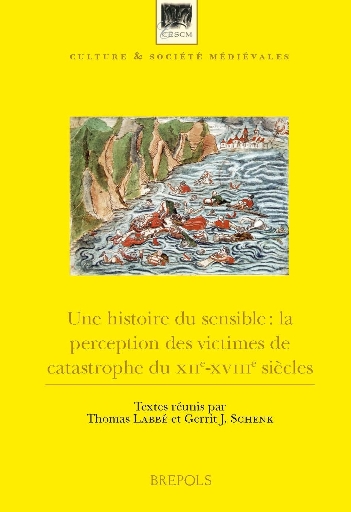
Une histoire du sensible : la perception des victimes de catastrophe du xii e au xviii e siècle
Actes du colloque international tenu à Lorsch (Allemagne, Hesse) du 11 au 14 décembre 2014
show More to view fulltext, buy and share links for:Une histoire du sensible : la perception des victimes de catastrophe du xii e au xviii e siècle show Less to hide fulltext, buy and share links for: Une histoire du sensible : la perception des victimes de catastrophe du xii e au xviii e siècleCet ouvrage se propose de réfléchir à la construction historique de la condition de victime, en relation avec les événements traumatiques dans l'Europe médiévale et moderne. Dans le contexte contemporain, le discours et la gestion des situations de catastrophe ou de mort de masse s'organisent en priorité autour de la place des victimes dans la fabrique événementielle. Cette attitude de la société contemporaine face à la dévastation, qualifiée tantôt de « compassionnelle », tantôt « d'humanitaire », ou bien encore de « tragique », reflète une forme de sensibilité qui définit en premier lieu la réalité catastrophique comme un drame.
Une telle approche de la souffrance possède-t-elle cependant une histoire ou constitue-t-elle une constante anthropologique de la société occidentale ? Quel regard les sociétés médiévales et modernes ont-elles posé sur cet aspect autant éthique que social du réel ? Les essais réunis dans ce volume proposent d'offrir quelques pistes de réflexion. À la lecture ambiguë de la victime au Moyen Âge, entre souffrance et responsabilité, la Renaissance semble commencer à proposer une vision plus « tragique » des individus souffrants. Les victimes peuvent dès lors entrer progressivement dans une politique des émotions qui triomphe au xviii e siècle.
-
-
-
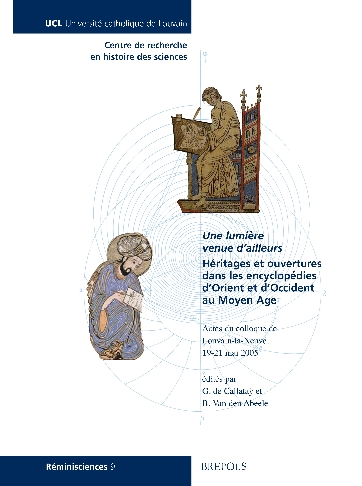
Une lumière venue d’ailleurs. Héritages et ouvertures dans les encyclopédies d’Orient et d’Occident au Moyen Age
Actes du colloque de Louvain-la-Neuve, 19-21 mai 2005
show More to view fulltext, buy and share links for:Une lumière venue d’ailleurs. Héritages et ouvertures dans les encyclopédies d’Orient et d’Occident au Moyen Age show Less to hide fulltext, buy and share links for: Une lumière venue d’ailleurs. Héritages et ouvertures dans les encyclopédies d’Orient et d’Occident au Moyen AgeL’encyclopédisme médiéval a fait l’objet de divers colloques ces dernières années, apportant des éclairages complémentaires. Un biais peu exploré encore est celui des relations entre œuvres encyclopédiques orientales et occidentales.
Le colloque de Louvain-la-Neuve «Une lumière venue d’ailleurs» s’est donné pour objectif général de mettre en parallèle les deux traditions, sur base d’études philologiques et historiques. Les onze articles publiés abordent les traditions arabe (C. Baffioni, G. de Callataÿ), persane (Ž. Vesel), juive (M. Zonta), la réception d’auteurs arabes par le Moyen Age latin (A. Galonnier, M.-C. Duchenne et M. Paulmier), la diffusion des textes latins (J. Loncke, B. Van den Abeele) et les avatars tardifs de l’encyclopédisme en Occident (C. Boucher, B. Roling, I. Ventura). Par le croisement de ces éclairages, le volume souhaite faire mieux comprendre les influences que l’Occident chrétien, l’Islam et le monde hébraïque exercèrent réciproquement à cette époque-charnière de leur histoire.
-
-
-
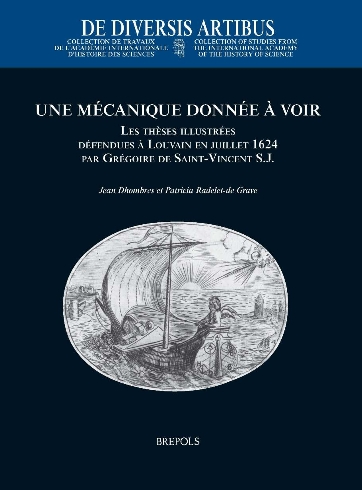
Une mécanique donnée à voir
Les thèses illustrées défendues à Louvain en juillet 1624 par Grégoire de Saint-Vincent S.J.
show More to view fulltext, buy and share links for:Une mécanique donnée à voir show Less to hide fulltext, buy and share links for: Une mécanique donnée à voirEn 1624, quelques mois après l’accession d’Urbain VIII au trône de Saint Pierre, plusieurs espéraient un infléchissement de la condamnation venue interdire en 1616 l’enseignement du mouvement de la Terre autour du Soleil alors défendue publiquement par Galilée. Etait de ceux-là l’inspirateur des thèses, le jésuite Grégoire de Saint-Vincent, né à Bruges une quarantaine d’années auparavant : il avait activement participé à la séance du Collège Romain lorsque Galilée en 1611 commentait ses observations au télescope de planètes comme Saturne ou Vénus, ce qui faisait « murmurer les philosophes ». Ainsi le raconte Grégoire lui-même. Les thèses de 1624 montrent une extraordinaire représentation de Saturne. Voilà un exemple parmi bien d’autres des surprises de ces thèses.
Onze chapitres, suivis d’une bibliographie, organisent l’enquête sur les thèses, cellesci étant traduites au chapitre IX. Le document est d’abord présenté avec les problèmes qu’il pose à l’historien. Puis le moment même des thèses, l’imaginaire des hommes de cette période, et les positions épistémologiques d’alors sont discutés, tant avec le texte qu’avec les images. Cette conjonction d’analyses est essentielle à l’enquête qui se poursuit sur les acteurs des thèses, avec trois récits possibles, le récit historique de la journée des thèses, le récit scientifique du contenu mais aussi le récit iconologique. A ce point, on peut entrer d’une part dans la tradition des thèses universitaires, d’autre part dans la tradition du livre illustré. Ce qui, à partir des travaux des historiens de la mécanique, permet d’aboutir à une discussion sur la place de ces thèses dans une histoire qui a tant servi à constituer les diverses philosophies des sciences, dont le positivisme, le constructivisme, etc. Après la traduction proposée, il convient de revenir à titre de justification sur le détail de chaque théorème et de chaque vignette, et de terminer par le vocabulaire latin des thèses. Cette démarche est tout le contraire de la démarche dogmatique si naturelle à l’histoire des sciences, discipline dont il faut se rappeler qu’elle doit beaucoup au positivisme.
Si l’enquête sur les textes et les images s’avère beaucoup plus longue que les courtes thèses, le plaisir n’est-il pas au final de retrouver la cohérence d’un des mondes du baroque à l’aube de la science moderne ? L’intérêt est en particulier de surprendre la façon dont un intellectuel issu d’un ordre religieux connu pour son obéissance disciplinaire, parvient malgré la rigoureuse orthodoxie récemment mise en place, à raisonnablement donner sa place à une nouvelle imagination, sans entrer en dissidence mais sans céder, cherchant sans aucun doute à libérer la pensée religieuse de la pensée scientifique, et s’aidant alors de la pensée toute profane d’un peintre d’emblèmes.
-
-
-
Une piété de la raison, philosophie et religion dans le stoïcisme impérial
Des Lettres à Lucilius de Sénèque aux Pensées de Marc-Aurèle
show More to view fulltext, buy and share links for:Une piété de la raison, philosophie et religion dans le stoïcisme impérial show Less to hide fulltext, buy and share links for: Une piété de la raison, philosophie et religion dans le stoïcisme impérialHow can the stoics reconcile the research of rational piety based on moral perfection with the legitimization of the ritualism and traditional representation of pagan gods? After studying the constant oscillation between the legitimization and condemnation of traditional rites in ancient stoicism, we demonstrate that the roman stoics, Seneca, Cornutus, Persius, Epictectus and Marcus Aurelius, address the same question, but with two essential specifics: adapting it to the political-religious context of Imperial Rome and paying particular attention to their readers as to the pedagogic strategist to grant their moral conversion.
-
-
-
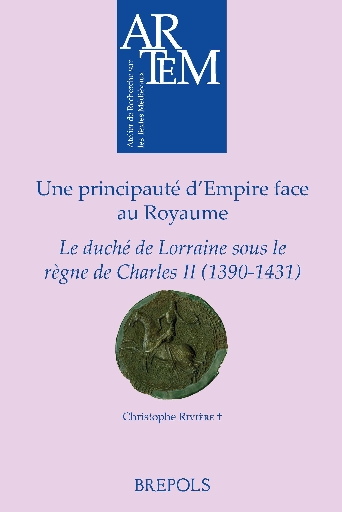
Une principauté d’Empire face au Royaume : le duché de Lorraine sous le règne de Charles II (1390-1431)
show More to view fulltext, buy and share links for:Une principauté d’Empire face au Royaume : le duché de Lorraine sous le règne de Charles II (1390-1431) show Less to hide fulltext, buy and share links for: Une principauté d’Empire face au Royaume : le duché de Lorraine sous le règne de Charles II (1390-1431)Précédant de peu Jeanne d’Arc et le duc René II, figures emblématiques d’un Moyen Âge lorrain flamboyant, Charles II apparaît comme un prince de second rang. Son règne (1390-1431) est associé, non sans raison, aux temps les plus sombres de l’histoire de la Lorraine, devenue l’épicentre douloureux d’une Europe qu’embrasait par le jeu des alliances le conflit franco-anglais de la Guerre de Cent Ans. Pourtant, s’en tenir là serait oublier que Charles II fut l’instigateur de la réunion des duchés de Lorraine et de Bar et qu’il posa les bases de l’État princier en Lorraine.
Rassemblant patiemment une documentation dispersée au gré des aléas de l’histoire, délaissant les impasses d’une historiographie longtemps préoccupée par la question de l’État-nation et prisonnière de l’antagonisme exacerbé entre la France et l’Allemagne, Christophe Rivière réévalue ici un règne trop longtemps méconnu et trop facilement renvoyé à ses archaïsmes. Son enquête prosopographique livre les contours d’une société politique originale ; il analyse le dialogue qu’elle entretient avec le prince dans un espace politiquement morcelé, au sein duquel se rencontrent et s’affrontent les influences venues du royaume de France et de l’Empire ; empruntant aux ethnologues les concepts d’ « acculturation » et de « métissage », il éclaire les valeurs qui cimentent cette société nobiliaire, valeurs par lesquelles elle se rapproche ou se distingue tour à tour des principautés voisines pour faire progressivement place à l’affirmation de la souveraineté ducale.
-
-
-
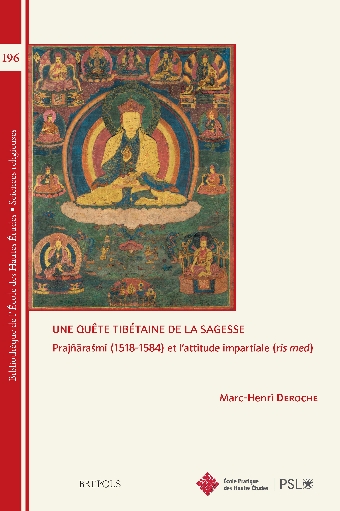
Une quête tibétaine de la sagesse
Prajñāraśmi (1518-1584) et l’attitude impartiale (ris med)
show More to view fulltext, buy and share links for:Une quête tibétaine de la sagesse show Less to hide fulltext, buy and share links for: Une quête tibétaine de la sagessePrajñāraśmi (1518-1584), ou « Lumière de Sagesse », est le nom de plume sanskrit d’un auteur tibétain qui vécut durant une période de crise politico-religieuse située entre la pleine assimilation du bouddhisme indien par les Tibétains et l’instauration du régime des Dalaï-Lamas. Dans ce contexte d’instabilité, Prajñāraśmi se distingua par une formation éclectique exceptionnelle et un enseignement qui, centré sur l’idée de sagesse – ou gnose –, chercha à montrer l’unité des différentes traditions du bouddhisme au Tibet.
Ses grands textes sont présentés et traduits dans cet ouvrage, notamment l’Ambroisie de l’étude, de la réflexion et de la méditation, et la Lampe qui illumine les deux vérités, qui traite de la philosophie de la voie du milieu (Madhyamaka). Sa biographie, ainsi que l’étude de son oeuvre et de son héritage, révèlent une filiation entre les renouveaux de l’école des Anciens (Rnying ma pa) durant la réunification du Tibet sous le Ve Dalaï-Lama (xvii e s.), la nouvelle révélation de ’Jigs med gling pa (xviii e s.), et la floraison du mouvement « impartial » (ris med, xix e siècle) avec la collection transsectaire du Trésor des instructions spirituelles.
Il se dessine ici une quête tibétaine de la sagesse qui, conjuguant l’histoire des traditions, le discours philosophique, le yoga et la contemplation, visait à une liberté intérieure conçue au-delà de tout parti pris, « intention unique » de tous les enseignements du Bouddha, ou, selon sa propre lignée de la Grande Perfection (Rdzogs chen), « sphère de la libération ».
-
-
-
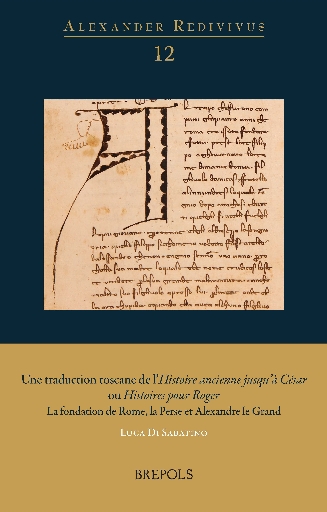
Une traduction toscane de l’Histoire ancienne jusqu’à César ou Histoires pour Roger
La fondation de Rome, la Perse et Alexandre le Grand
show More to view fulltext, buy and share links for:Une traduction toscane de l’Histoire ancienne jusqu’à César ou Histoires pour Roger show Less to hide fulltext, buy and share links for: Une traduction toscane de l’Histoire ancienne jusqu’à César ou Histoires pour RogerL’Histoire ancienne jusqu’à César, première histoire universelle écrite en prose française au début du XIIIe siècle, a joui d’une grande fortune en Italie, comme le montrent les manuscrits copiés dans les ateliers transalpins, les traductions, les citations et les réemplois jusqu’à la première moitié du XIVe siècle. Les traductions italiennes, ou volgarizzamenti, se divisent en deux groupes : les versions toscanes et les vénitiennes. Parmi les traductions toscanes, nous trouvons celle contenue dans trois manuscrits du Trecento, rédigée probablement entre la fin du XIIIe siècle et le début du XIVe. Le plus récent de ces codices, le manuscrit II I 146 de la Biblioteca Nazionale Centrale de Florence, est le seul témoin de l’Histoire ancienne en italien qui présente la section alexandrine ; il est utilisé comme base pour l’édition proposée ici, qui offre le récit sur Rome (depuis la fondation jusqu’aux guerres contre les Samnites), la Perse, Philippe II de Macédoine, Alexandre le Grand et les guerres des diadoques. Cette traduction toscane représente probablement l’une des plus anciennes versions italiennes de l’histoire d’Alexandre.
-
-
-
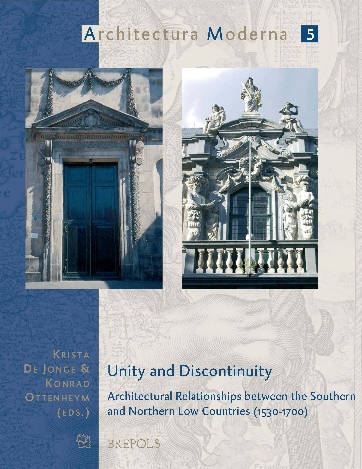
Unity and Discontinuity
Architectural Relationships between the Southern and Northern Low Countries (1530-1700)
show More to view fulltext, buy and share links for:Unity and Discontinuity show Less to hide fulltext, buy and share links for: Unity and DiscontinuityThis study focuses on change and continuity within the architecture of the Southern and Northern Low Countries from 1530 to 1700. Instead of looking at both regions separately and stressing the stylistic differences between the classicist North and the baroque South, the book establishes a new, common history of architecture for both parts of the Low Countries during the seventeenth century. Their reception of Antiquity in the guise of the Italian Renaissance, first introduced in Court circles in the early sixteenth century, constituted the common heritage on which they built after the political separation. The book also reassesses the position of Netherlandish architecture in the international debate on the Renaissance north of the Alps.
Krista De Jonge is professor of history of architecture at the Catholic University of Leuven.
Konrad Ottenheym is professor of history of architecture at Utrecht University.
-
-
-
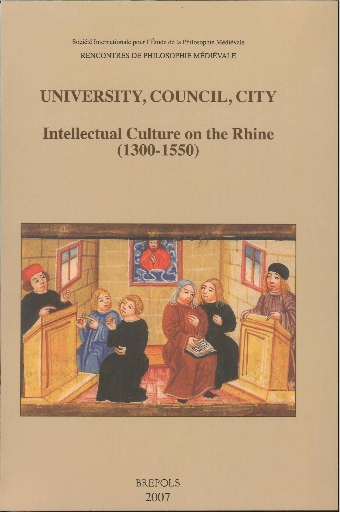
University, Council, City. Intellectual Culture on the Rhine (1300-1550)
Acts of the XIIth International Colloquium of the Société Internationale pour l’Étude de la Philosophie Médiévale, Freiburg im Breisgau, 27-29 October 2004
show More to view fulltext, buy and share links for:University, Council, City. Intellectual Culture on the Rhine (1300-1550) show Less to hide fulltext, buy and share links for: University, Council, City. Intellectual Culture on the Rhine (1300-1550)Stretching from Basel to Cologne, the Rhine formed the geographical axis of a broad cultural realm in the late Middle Ages, lending vitality not only to its cities and universities but also to the two great Councils to which it played host. Already in the fourteenth century, the lives of such famous German mystics as Meister Eckhart, Heinrich Seuse and Johannes Tauler testify to the presence of an advanced intellectual culture in the cities of the upper and lower Rhine. In the fifteenth century, the most famous Councils of the late Middle Ages took place along the Rhine, namely the Councils of Constance and Basel, which formed loci of intellectual exchange and which became seedbeds of philosophical ideas that engaged and influenced such participants as Heymericus de Campo and Nicholas of Cusa. With the establishment of the Universities of Cologne (1388), Freiburg (1457), Basel (1459) and Mainz (1476), the intellectual culture of this region took an institutional form that continues to exist to this day, and symbolizes the stability of the intellectual culture of the Rhineland. The main purpose of this volume is to explore the intellectual richness and vitality of the Rhineland in its various facets and on its different levels.
-
-
-
Uno gentile et subtile ingenio
Studies in Renaissance Music in Honour of Bonnie J. Blackburn
-
-
-
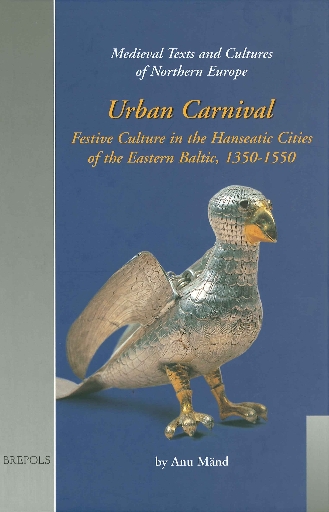
Urban Carnival
Festive Culture in the Hanseatic Cities of the Eastern Baltic, 1350-1550
show More to view fulltext, buy and share links for:Urban Carnival show Less to hide fulltext, buy and share links for: Urban CarnivalThis is a significant new study of the festival culture of northern Europe in the later Middle Ages: more specifically of the German-speaking communities of the great cities of the eastern Baltic littoral in what was then called Livonia. While subject to a degree of Scandinavian influence, the festival culture of Livonian cities such as Riga, Reval (Tallinn), and Dorpat (Tartu), all members of the Hanseatic League, substantially overlapped with that of other German-speaking areas, not least the Hanseatic cities of northern Germany.
The major part of the book is devoted to the main annual festivals of the merchants' guilds: Christmas, Carnival, the popinjay shoot, and the May Count celebrations. There follows an analysis of specific aspects of the festivals: spatial contexts, finances, food and drink, entertainments (dances, jousts, games), customs and rituals. There is also a concluding glance at changes in festival culture after the Reformation. The study combines close scrutiny of local customs (made possible by the almost miraculous survival of uniquely detailed documentation), contextualization within the wider comparative context of festival culture in late-medieval Europe, and an alterness to significant recent scholarship in both English and German.
-
-
-
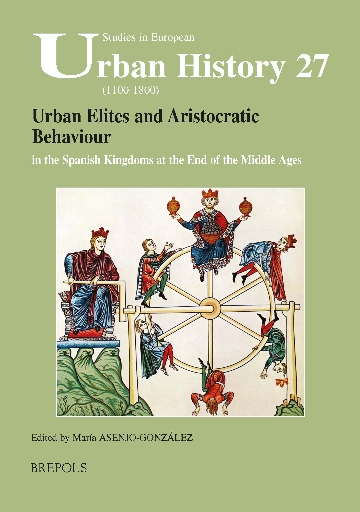
Urban Elites and Aristocratic Behaviour in the Spanish Kingdoms at the End of the Middle Ages
show More to view fulltext, buy and share links for:Urban Elites and Aristocratic Behaviour in the Spanish Kingdoms at the End of the Middle Ages show Less to hide fulltext, buy and share links for: Urban Elites and Aristocratic Behaviour in the Spanish Kingdoms at the End of the Middle AgesThis collection of studies presents the results of research to discover the scope of aristocratic ambitions of the urban elites in the Hispanic kingdoms in the Late Middle Ages. The goal is to gain a greater knowledge of the urban elites in order to discover the social and political motivations of the privileged, those who were able to profit from the mechanisms of social ascension. Aristocratisation is also related to the adoption of values which determined the behavior and mentality under the mark of the dominant feudal culture. The strategies, the resources to move up the social ladder and the ambition of the urban social elite and the occasions used to ensure successful promotion and the results obtained should be brought to light. The variety in the urban elites within the Iberian Peninsula offers comparative possibilities and supposes an important advancement in the knowledge of aspects related to social promotion.
María Asenjo-González, is professor of Medieval History at the Complutense University of Madrid. Her research interest covers Castilian cities from 1250 to 1520 in social, political, economic and cultural aspects.
-
-
-
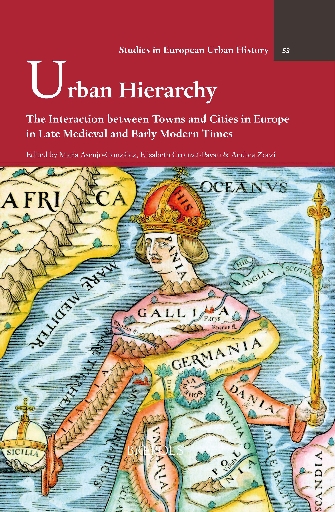
Urban Hierarchy
The Interaction between Towns and Cities in Europe in Late Medieval and Early Modern Times
show More to view fulltext, buy and share links for:Urban Hierarchy show Less to hide fulltext, buy and share links for: Urban HierarchyUrban hierarchy means a new study approach that focuses on the reciprocal concurrence of relationships between urban centers, their complementarity, opposition, support and ongoing collaboration. The goal is to go beyond the single analysis of a city and focus on the interaction between towns and cities and to distinguish their dynamics and the degree of specialization within a political framework. The final objective is to provide a comprehensive historical analysis as urban history requires, open to the advantages of interdisciplinarity and the contributions of the international researchers that will take part in the session. The processes of urban hierarchization are not only vital for observing the dynamics of cities, but also for studying in depth the response capabilities of the urban systems in the face of new challenges and stimuli. These aspects of the historical analysis of cities are still quite unexplored and, therefore, they will receive a great deal of attention in the book. The initial regional frameworks will not exclude small towns and rural centers since, even though they may look less potentially relevant, they might display greater specific development. Thanks to a renewed methodology and special attention to the empirical basis, it is possible to improve our knowledge of the urban systems of European regions at the end of the Middle Ages and the beginning of the Early Modern Era, shedding light on some aspects of the medieval past that will also influence other scientific areas of humanities.
-
-
-
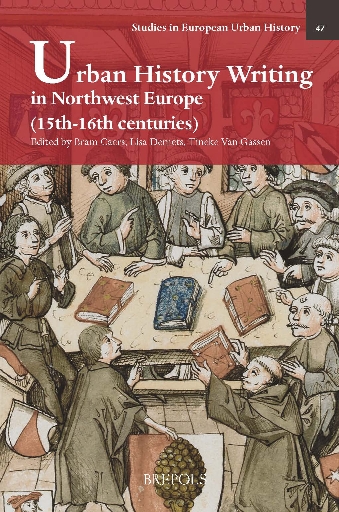
Urban History Writing in North-Western Europe (15th–16th centuries)
show More to view fulltext, buy and share links for:Urban History Writing in North-Western Europe (15th–16th centuries) show Less to hide fulltext, buy and share links for: Urban History Writing in North-Western Europe (15th–16th centuries)This volume aims at taking the first steps towards a revaluation of urban historiography in Northwest Europe, including rather than excluding texts that do not fit common definitions. It confronts examples from the Low Countries to well-studied cases abroad, in order to develop new approaches to urban historiography in general. In the authors' view, there are no fixed textual formats, social or political categories, or material forms that exclusively define ‘the urban chronicle’. Urban historiography in pre-modern Western Europe came in many guises, from the dry and modest historical notes in a guild register, to the elaborate heraldic images in a luxury manuscript made on commission for a patrician family, to the legally founded political narrative of a professional scribe in an official town chronicle. The contributions in this volume attest to the diversity of the ‘genre’ and look more closely at these texts from a broader, comparative perspective, unrestrained by typologies and genre definitions. It is mainly because of these hybrid guises, that many examples of urban historiography from the Low Countries for instance succeeded in going unnoticed for a considerable amount of time.
-
-
-
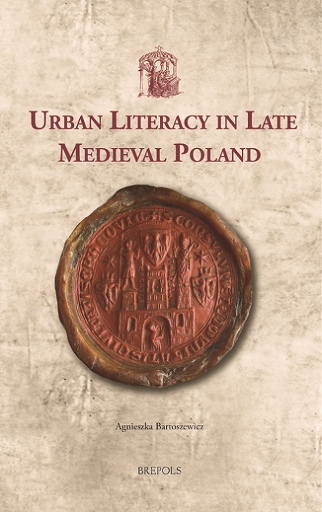
Urban Literacy in Late Medieval Poland
show More to view fulltext, buy and share links for:Urban Literacy in Late Medieval Poland show Less to hide fulltext, buy and share links for: Urban Literacy in Late Medieval PolandFrom the end of the thirteenth century onwards, European towns exhibited a significant increase in the use of writing as a tool for administrative and economic purposes, as well as for social communication. The medieval towns of Poland are no exception to this pattern.
This book surveys the development of the literacy of Polish burghers in the fourteenth and fifteenth centuries, revealing socio-economic and cultural processes that changed the life of Polish urban society. Polish urban literacy is examined according to the reception of Western European urban culture more generally. Town networks in medieval Poland are explained, and the literacy skills of the producers and users of the written word are discussed. Literacy skills differed greatly from one social group to another, it is shown, due to the variety of town dwellers (clerics and lay people, professionals of the written word, occasional users of writing, and illiterates). Other issues that are discussed include the cooperation between agents of lay and church literacy, the relationship between literacy and orality, and the difference between developing literacies in Latin and in the vernacular languages.
-
-
-
Urban Literacy in the Nordic Middle Ages
show More to view fulltext, buy and share links for:Urban Literacy in the Nordic Middle Ages show Less to hide fulltext, buy and share links for: Urban Literacy in the Nordic Middle AgesThis volume is about literacy in the medieval towns of Denmark, Norway, Sweden, and Finland, and aims to understand to what extent these medieval urban societies constituted a driving force in the development of literacy in Nordic societies generally.
As in other parts of Europe, two languages - Latin and the vernacular - were in use. However, the Nordic area is also characterised by its use of the runic alphabet, and thus two writing systems were also in use. Another characteristic of the North is its comparatively weak urbanization, especially in Finland, Sweden, and Norway.
Literacy and the uses of writing in medieval towns of the North is approached from various angles of research, including history, archaeology, philology, and runology. The contributions cover topics related to urban literacy that include both case studies and general surveys of the dissemination of writing, all from a Northern perspective. The thematic chapters all present new sources and approaches that offer a new dimension both to the study of medieval urban literacy and also to Scandinavian studies.
-
-
-
Urban Theatre in the Low Countries
1400-1625
show More to view fulltext, buy and share links for:Urban Theatre in the Low Countries show Less to hide fulltext, buy and share links for: Urban Theatre in the Low CountriesThis collection of essays by international scholars focuses on the vernacular urban culture of the Chambers of Rhetoric in the Low Countries of the fifteenth and sixteenth centuries. Reflecting social, religious, and economic realities at a time of fundamental change, the Rhetoricians’ plays also reveal a range of poetic and theatrical conventions that make them an important source of information both on practical stagecraft and on the role of theatre in the urban community, as seen in their involvement in civic processions or the organization of drama competitions. The volume sets the Rhetoricians’ drama in the cultural life of the provinces of the Low Countries during a period dominated by ruling foreign dynasties: the Burgundian dukes and then the Habsburg dynasty, most prominently the Emperor Charles V and his son King Philip II of Spain. It was a time of intense religious controversy which gave rise to debates both on and off stage. These debates, far from damaging Rhetorician culture, actually stimulated its activities and development to such an extent that Rhetoricians became representative voices for their time. The admixture of entertainment and education offered by the Chambers to their own members - and to a wider public - was one which, though originating in a medieval context, soon became linked with humanist and Renaissance thinking. This volume illustrates how, as a consequence, the Chambers of Rhetoric contributed to the development in the Low Countries of an increasingly articulate society.
-
-
-
Urban identities in Northern Italy, 800-1100 ca.
show More to view fulltext, buy and share links for:Urban identities in Northern Italy, 800-1100 ca. show Less to hide fulltext, buy and share links for: Urban identities in Northern Italy, 800-1100 ca.The book aims to reflect on the characteristics of urban centers of the kingdom of Italy between the ninth and the eleventh centuries, filling a noticeable historiographical gap. The cities in Northern Italy in this period have not yet been analysed with a multidisciplinary approach, able to outline their specific and distinctive characteristics and to pose this ages in relation to the post-Roman past and also to the following 'Communal' phase. Urban identities are examined from different points of view: from a political perspective, in relation to the dialectic between center and periphery and to the border areas of the kingdom; from an institutional and territorial standing point, analyzing the structures of local power and public territorializations; according to social and military history approaches, highlighting the continuities and transformations in comparison with former and following centuries. The issue of urban identities is also archaeologically investigated in relation to urban development and to topographic transformations, and culturally explored, examining mutual exchanges between the cities of the kingdom. Another aspect rarely addressed by previous literature is ultimately to compare the results of this research on the Italic kingdom with studies on the Transalpine Carolingian and post-Carolingian empire and kingdoms, outlining common trends, but also specific peculiarities.
-
-
-
Urban public debts, urban government and the market for annuities in Western Europe (14th-18th centuries)
show More to view fulltext, buy and share links for:Urban public debts, urban government and the market for annuities in Western Europe (14th-18th centuries) show Less to hide fulltext, buy and share links for: Urban public debts, urban government and the market for annuities in Western Europe (14th-18th centuries)The essays in this volume offer a state-of-the-art analysis of a heretofore somewhat neglected part of financial history: the way in which urban governments in Western Europe during the Late Middle Ages and Early Modern Times handled the public debts their cities were confronted with. The technical aspects of the sale of annuities (renten, rentes) may have already been abundantly studied, but the links with social and political history still needed to be tackled. Who bought these annuities and thus participated in sharing the burden and profits which were likely to arise from them? What were their motives? How did the obvious links with urban elites work? And, perhaps most significantly, how did these occasional sales evolve into a structural way of linking financially important private persons with public finances, in the context both of cities and of growing states, since often the cities needed the money on a short-term basis in order to accomplish their own financial obligations toward ‘the state’. Participants in the colloquium where a large number of the essays were first presented represent in the first place the urban strongholds of Europe in the period under scrutiny: the Low Countries and Northern and Central Italy, but the Swiss cities, the cities of Aragon, London and papal Rome are also considered.
-
-
-
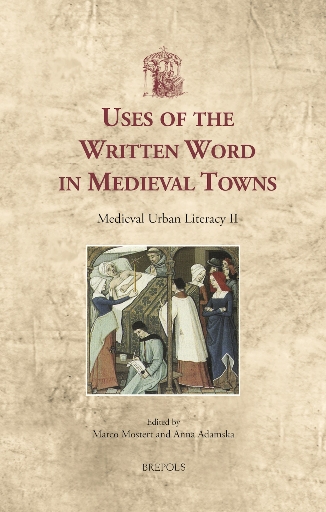
Uses of the Written Word in Medieval Towns
Medieval Urban Literacy II
show More to view fulltext, buy and share links for:Uses of the Written Word in Medieval Towns show Less to hide fulltext, buy and share links for: Uses of the Written Word in Medieval TownsIn medieval towns, examples of personal writing appear more prevalent than in non-urban spaces. Certain urban milieus participating in written culture, however, have been the focus of more scholarship than others. Considering the variety among town dwellers, we may assume that literacy skills differed from one social group to another. This raises several questions: Did attitudes towards the written word result from an experience of the urban educational system? On which levels, and in which registers, did different groups of people have access to writing? The need and the usefulness of written texts may not have been the same for communities and for individuals. In this volume we will concentrate on the town dwellers’ personal documents. These documents include practical uses of writing by individuals for their own professional and religious ends, including testaments and correspondence. Besides written records belonging to the domain of ‘pragmatic literacy’, other kinds of texts were also produced in town. Was there any connection between practical literacy, literary (and historical) creativity and book production?
-
-
-
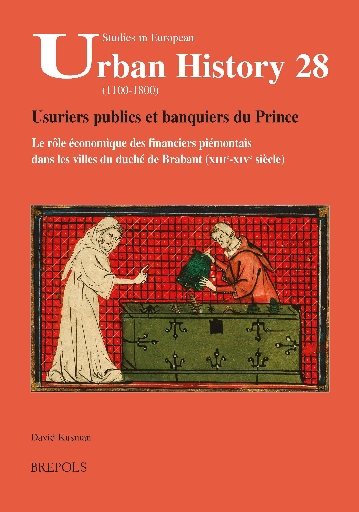
Usuriers publics et banquiers du Prince
Le rôle économique des financiers piémontais dans les villes du duché de Brabant (XIIIe-XIVe siècle)
show More to view fulltext, buy and share links for:Usuriers publics et banquiers du Prince show Less to hide fulltext, buy and share links for: Usuriers publics et banquiers du PrinceEntre le dernier quart du XIIIe siècle et le premier tiers du XIVe siècle, les banquiers piémontais installés dans le duché de Brabant constituèrent la communauté la plus importante des Lombards actifs dans les anciens Pays-Bas. Banquiers du Prince, ils prêtaient également aux élites urbaines et à la noblesse. Cette étude s’attache à reconstituer les stratégies commerciales et les réseaux sociaux des financiers piémontais grâce auxquels ceux-ci jouèrent un rôle de premier plan dans l’économie et la politique du duché de Brabant. En s’interrogeant sur les modalités d’intégration des Piémontais dans les villes brabançonnes, l’étude a finalement pour ambition de dépasser l’image caricaturale du Lombard, souvent identifié à un usurier public.
David Kusman , docteur en histoire médiévale de l’Université Libre de Bruxelles, est chercheur associé à l’Unité de Recherche en histoire rurale et urbaine (U.L.B.) et au PAI VII/26 "City and Society in the Low Countries (1200-1850)
-
-
-
Uygur Buddhist Literature
show More to view fulltext, buy and share links for:Uygur Buddhist Literature show Less to hide fulltext, buy and share links for: Uygur Buddhist LiteratureThis first volume of the Silk Roads Studies is a reference manual of the published Uygur Buddhist literature. Uygur Buddhist Literature creates a complete inventory of the published Uygur Buddhist texts along with a bibliography of the pertinent scholarlyliterature. The work includes an introduction that outlines the history of the discovery of the Uygur Buddhist Literature and a short history of the Buddhist Uygurs and their translation activities. The survey of the literature itself is divided into six sections: (1) Non-Mahayana Texts, including Sutra, Vinaya, Abhidarma, Biographies of the Buddha (including Jatakas) and Avadana; (2) Mahayana Sutras; (3) Commentaries; (4) Chinese Apocrypha; (5) Tantric Texts (6) Other Buddhist Works. Included under each title of a text is a brief synopsis of the text and an explanation of the Uygur manuscript, including where known: origin of translation, the translator and the place of translation, the place it was found, and any other interesting points. After this brief survey of the manuscript, the signature of the manuscript with references to the editions of the text is provided as well as additional references to the secondary literature. The survey concludes with an index to titles, translators, scribes and sponsors. This manual is an essential tool not only for specialists in the field of Altaic, especially Turcological or Monogolian, Iranological, Sinological or Buddhological Studies, but is also written for a larger public of students interested in Asian religions and cultural history in general. This book provides in a systematic and exhaustive way the most recent information on the places where the documents are kept, a synopsis of the text, editions and secondary literature.
-
-
-
Varietate delectamur: Multifarious Approaches to Synchronic and Diachronic Variation in Latin
Selected Papers from the 14th International Colloquium on Late and Vulgar Latin (Ghent, 2022)
show More to view fulltext, buy and share links for:Varietate delectamur: Multifarious Approaches to Synchronic and Diachronic Variation in Latin show Less to hide fulltext, buy and share links for: Varietate delectamur: Multifarious Approaches to Synchronic and Diachronic Variation in LatinThe focus of the Latin Vulgaire – Latin Tardif book series lies on the complex and multifaceted problem of late and so-called vulgar Latin. Specifically, starting out from a wide range of methodological approaches involving all levels of language, the series’ main purpose is to investigate how Classical Latin (i.e. the language used in the period from ca. 100 BC to AD 100 by authors such as Cicero, Horace and Vergil) underwent the changes during the late period (i.e. mainly between the 3rd and the 7th century AD) that resulted in (the early stages of) the Romance languages. To this purpose, three main types of linguistic sources are taken into consideration. First, direct Latin sources, which include for instance texts written by people with a lesser level of literacy (e.g. inscriptions, soldiers’ letters), or by fully literate authors reproducing colloquial language deliberately (e.g. Petronius, Apuleius). Second, indirect Latin sources, which consist of metalinguistic testimonies of ancient authors (mainly, but not exclusively, grammarians) dealing with the language variation typical of their time and region. And third, the Romance idioms themselves: by comparing sources in at least two Romance varieties, one may reconstruct Latin words or forms which were used widely in spoken usage but, for different reasons, are not attested in any extant source.
-
-
-
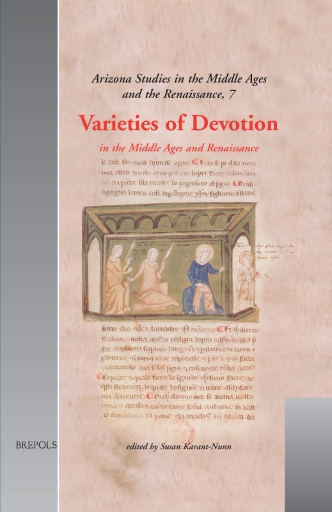
Varieties of Devotion in the Middle Ages and Renaissance
show More to view fulltext, buy and share links for:Varieties of Devotion in the Middle Ages and Renaissance show Less to hide fulltext, buy and share links for: Varieties of Devotion in the Middle Ages and RenaissanceIn the modern world, interest in religious devotion is as great as ever. This volume brings together the research of ten scholars into the diverse ways that Europeans expressed their quest for God over more than a millennium, from the formative centuries of Christianity up to the seventeenth century. Topics include women transvestite saints, Monophysite wall-paintings, Anglo-Saxon sainthood and painful martyrdom, Carmelite self-redefinition, the confident authorship of Gautier de Coinci and Matfre Ermengaud, competition between the bishop and a wandering preacher for popular favor in Le Mans, the contemplative philanthropies of the Poor Clares, Chester Nativity-cycle actors’ masculinity, Jean Gerson’s warm relations with his siblings, and George Herbert’s Eucharistic feeling. The authors’ profound familiarity with primary sources as well as the influence of current theory makes these essays vibrant and timely.
-
-
-
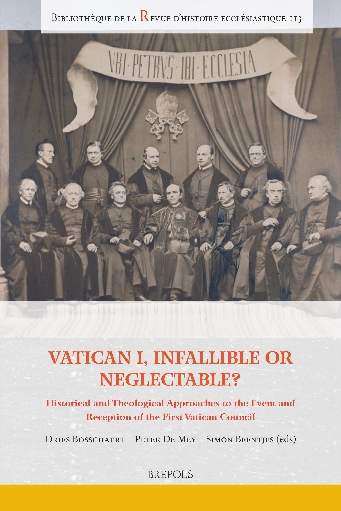
Vatican I, Infallible or Neglectable?
Historical and Theological Approaches to the Event and Reception of the First Vatican Council
show More to view fulltext, buy and share links for:Vatican I, Infallible or Neglectable? show Less to hide fulltext, buy and share links for: Vatican I, Infallible or Neglectable?On 20 October 1870 pope Pius IX adjourned the First Vatican Council, because of the Italian Rissorgimento troops approaching the city of Rome. Given that the Council had only opened less than a year prior, on 8 December 1869, the act was emblematic. The council, as the Catholic Church’s protective response against all things new – rationalism, liberalism, naturalism, materialism, and pantheism – was overtaken by history. Given its premature end not all documents prepared were completed and those that were promulgated, became among the most controversial documents in the nineteenth and twentieth-century Catholic Church, strongly defining its relations to other Christian confessions and modernity. Similarly, around one hundred years after the suspension of the First Vatican Council its historical and theological study was overtaken by the event of the Second Vatican Council, known for its rapprochement to the modern world. The history and results of the First Vatican Council were either forgotten or reinterpreted in light of this subsequent council’s decisions. In light of the 150th anniversary of this council, the editors and authors of this volume set themselves the goal of re-examining this tradition of historical and theological reception (and forgetting) of the First Vatican Council.
-
-
-
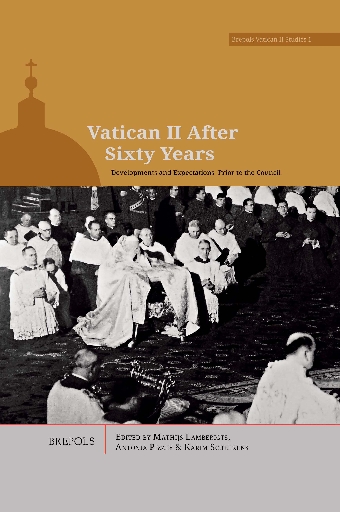
Vatican II After Sixty Years
Developments and Expectations Prior to the Council
show More to view fulltext, buy and share links for:Vatican II After Sixty Years show Less to hide fulltext, buy and share links for: Vatican II After Sixty YearsThis volume is the result of a workshop organized in Leuven within the context of the Australian Catholic University-KU Leuven-Tilburg University project on Vatican II (1962-1965). This volume focuses on the preparatory period of the Council and its broader context, for many renewal movements were underway decades before the Council's opening. The preparation of the Council was also a period of intense consultation of bishops and male superiors of religious orders and congregations. Indeed, John XXIII aimed at introducing an aggiornamento in the Roman Catholic Church, taking into account the wishes and the needs of bishops and superiors. The volume presented here offers new insights about this period on the basis of archives and other materials insufficiently consulted to date. The papers presented are the result of research by both senior scholars and junior researchers. They focus on the following issues: revelation, ecclesiology, ecumenism, and education.
-
-
-
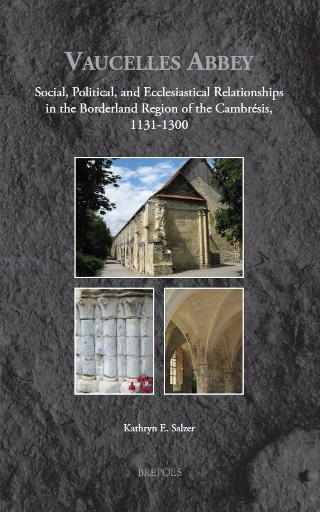
Vaucelles Abbey
Social, Political, and Ecclesiastical Relationships in the Borderland Region of the Cambrésis, 1131-1300
show More to view fulltext, buy and share links for:Vaucelles Abbey show Less to hide fulltext, buy and share links for: Vaucelles AbbeyFounded in 1131 by the castellan of Cambrai, Vaucelles Abbey thrived in a borderland region, where German emperors, French kings, Flemish counts, bishops of Cambrai, and the Cistercian Order all had active interests. To understand how Vaucelles flourished, we must look at the relationships that the house created and fostered with various international, regional, and local individuals and institutions. Vaucelles used these connections to protect the vast patrimony that the monks created in the two centuries after its foundation.
This study asserts that three principal factors influenced the foundation and development of Vaucelles. First, the abbey was fortunate in its local support, beginning with the castellan family and expanding to include numerous regional families and the bishops of Cambrai. Second, the abbey was established in a political borderland, a geo-political situation that Vaucelles survived and actually turned into a positive feature of its development. And finally, Vaucelles was a Cistercian monastery, a direct daughter house of Clairvaux. Vaucelles’ Cistercian observance fostered relationships that were particularly significant to the abbey’s development from the late twelfth century onward. These factors offer exceptional tools for demonstrating many features of Vaucelles’ political, social, and economic life during the twelfth and thirteenth centuries.
-
-
-

Vehicles of Transmission, Translation, and Transformation in Medieval Textual Culture
show More to view fulltext, buy and share links for:Vehicles of Transmission, Translation, and Transformation in Medieval Textual Culture show Less to hide fulltext, buy and share links for: Vehicles of Transmission, Translation, and Transformation in Medieval Textual CultureIn this volume the McGill University Research Group on Transmission, Translation, and Transformation in Medieval Cultures and their collaborators initiate a new reflection on the dynamics involved in receiving texts and ideas from the antiquity or from other contemporary cultures. For all their historic specificity, the western European, Arab/Islamic and Jewish civilizations of the Middle Ages were nonetheless co-participants in a complex web of cultural transmission that operated via translation and inevitably involved the transformation of what had been received. This threefold process is what defines medieval intellectual history. Every act of transmission presumes the existence of some ‘efficient cause’ – a translation, a commentary, a book, a library etc. Such vehicles of transmission, however, are not passive containers in which cultural products are transported. On the contrary: the vehicles themselves select, shape, and transform the material transmitted, making ancient or alien cultural products usable and attractive in another milieu. The case studies contained in this volume attempt to bring these larger processes into the foreground. They lay the groundwork for a new intellectual history of medieval civilizations in all their variety, based on the core premise that these shared not only a cultural heritage from antiquity but, more importantly, a broadly comparable ‘operating system’ for engaging with that heritage. Each was a culture of transmission, claiming ownership over the prestigious knowledge inherited from the past. Each depended on translation. Finally, each transformed what it appropriated.
-
-
-
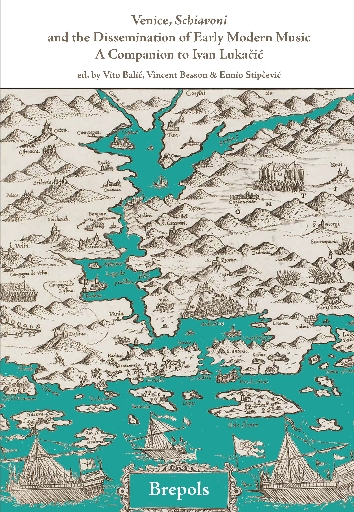
Venice, Schiavoni and the Dissemination of Early Modern Music: A Companion to Ivan Lukačić
show More to view fulltext, buy and share links for:Venice, Schiavoni and the Dissemination of Early Modern Music: A Companion to Ivan Lukačić show Less to hide fulltext, buy and share links for: Venice, Schiavoni and the Dissemination of Early Modern Music: A Companion to Ivan LukačićIvan Lukačić (born around 1585, died in 1648), composer, Conventual Franciscan, long-time “maestro di cappella” of the cathedral in Split, is a typical “hero” of local historiography. As early as 1935, the Croatian-American musicologist Dragan Plamenac (real name Karl Siebenschein) prepared a selection from the only known collection of Lukačić’s compositions, the Sacrae cantiones (Venice, 1620). In the same year, Plamenac introduced Croatian Renaissance and Baroque music to the local audience for the first time at a concert held at the Croatian Music Institute. In the aftermath of Plamenac’s emigration to the USA in 1939, it took several decades for new archival, stylistic, interdisciplinary, and international research in Croatian musicology to take place. Despite the availability of earlier material as well as contemporary musical publications of Lukačić’s work (J. Andreis, Zagreb, 1970; E. Stipčević, Padua, 1986), it is not an exaggeration to say that Lukačić still remains unknown internationally. For many years, a number of studies of Lukačić and the music of his contemporaries from the “other, eastern coast of the Adriatic” published almost exclusively in Croatian and thus the international professional public had very limited access to them. This collection of studies dedicated to Lukačić and to the musical and cultural contacts between the two Adriatic coasts is the first volume to be published in both English and Italian. The echoes of the contacts between Italy and Croatia reached the Royal Palace in Portugal, shops selling printed music in Denmark and church archives in Slovenia and Poland. The aim of this book is to follow the traces of that cultural dissemination.
-
-
-
Vera philosophia
Studies in Late Antique medieval and Renaissance Christian Thought
show More to view fulltext, buy and share links for:Vera philosophia show Less to hide fulltext, buy and share links for: Vera philosophiaThis volume includes a collection of reworked articles which the author, during the last twenty years, dedicated to the origins and conditions constitutive of Christian philosophical-theological thought. From the earliest centuries of the Christian era, human reason was submitted to a particular formal conditioning, in so far as it was necessarily obliged to confront the contents of a divine revelation recognized as necessarily ‘true’. The medieval Latin scholar was induced by the social and cultural peculiarities of his time to confront a model of thought which imposes a decisive subordination of natural knowledge - demonstrated to be imperfect and inconclusive - to the certainties assured by the faith. The production of this model of philosophia, significantly different from the dominant paradigms in the classical period, rooted itself in the critical redimensioning of reason which Cicerointroduced into the West. Departing from the observation of the failure of the philosophical aspirations of antiquity, the Christian intellectuals effected an operative ‘overturning’ of the conditions of veridical knowledge.
The new wisdom was not entirely the result of religion interfering in the field of rational science, but it was shaped by a conscious ‘conversion’ of the philosophers and reached fulfillment under two principles: faith, which requires earthly knowledge in order to defend itself from misunderstandings and heresies; and reason, which allows itself to draw upon supernatural revelation for the possession of regulatory principles which guide it in the study of natural things.
This book investigates the development of this approach during the course of the centuries which in the West precede the rediscovery of Aristotelian epistemology: from Augustine to Boethius, from John Scottus Eriugena to Anselm of Aosta. It concludes by describing the return of this methodological approach, at the end of the Medieval Scholastic period, in the results of the anti-Aristotelian critique carried out by the men of the Renaissance through the recovery of a model of thought which had dominated in the Patristic and Early Medieval periods.
-
-
-
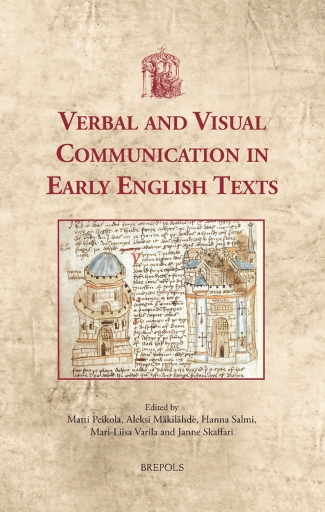
Verbal and Visual Communication in Early English Texts
show More to view fulltext, buy and share links for:Verbal and Visual Communication in Early English Texts show Less to hide fulltext, buy and share links for: Verbal and Visual Communication in Early English TextsWhen reading a text our understanding of its meaning is influenced by the visual form and material features of the page. The chapters in this volume investigate how visual and material features of early English books, documents, and other artefacts support - or potentially contradict - the linguistic features in communicating the message. In addition to investigating how such communication varies between different media and genres, our contributors propose novel methods for analysing these features, including new digital applications. They map the use of visual and material features - such as layout design or choice of script/typeface - against linguistic features - such as code-switching, lexical variation, or textual labels - to consider how these choices reflect the communicative purposes of the text, for example guiding readers to navigate the text in a certain way or persuading them to arrive at a certain interpretation. The chapters explore texts from the medieval and the early modern periods, including saints’ lives, medical treatises, dictionaries, personal letters, and inscriptions on objects. The thematic threads running through the volume serve to integrate book studies with discourse linguistics, the medieval with the early modern, manuscript with print, and the verbal with the visual.
-
-
-
Vergilius orator
Lire et commenter les discours de l’Énéide dans l’Antiquité tardive
show More to view fulltext, buy and share links for:Vergilius orator show Less to hide fulltext, buy and share links for: Vergilius oratorEn devenant le principal support pédagogique des grammatici, l’œuvre de Virgile a joué un rôle central dans la formation intellectuelle de la jeunesse lors de l’Antiquité romaine tardive, y compris dans la formation rhétorique : les discours - principalement ceux de l’Énéide - ont fourni aux commentateurs du grand poète l’occasion d’expliquer des notions rhétoriques et d’analyser des exemples précis de situations oratoires. Les contributions du présent volume explorent les différentes facettes de cet art virgilien de la parole, tel qu’il a été compris par les professionnels de la littérature et de l’éducation de l’Antiquité tardive.
-
-
-
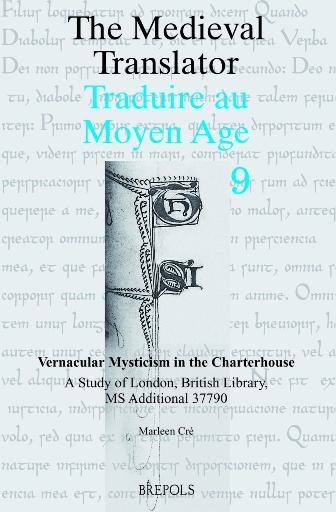
Vernacular Mysticism in the Charterhouse
A Study of London, British Library, MS Additional 37790
show More to view fulltext, buy and share links for:Vernacular Mysticism in the Charterhouse show Less to hide fulltext, buy and share links for: Vernacular Mysticism in the CharterhouseThe first monograph to appear in The Medieval Translator series, Vernacular Mysticism in the Charterhouse presents a study of London, British Library, MS Additional 37790 (Amherst), a purpose-built anthology of major mystical texts by Richard Rolle, Julian of Norwich, Jan van Ruusbroec and Marguerite Porète, interspersed with shorter texts and compilations. Though the manuscript is famous mainly because it contains the only extant copy of Julian of Norwich's short text, it is an intriguing witness to the fifteenth-century spread of the vernacular into traditionally Latinate environments, in this case the Carthusian Order in England. In this process of transmission, translation plays a central part. Most of the texts in the anthology are translations from Latin or French into Middle English. In addition, the anthologist's selection and ordering of texts within the volume, intended to further the readers' spiritual lives, translates them anew for his intended audience. This study provides finely detailed analyses of the texts in the textual and material context of the Amherst anthology as well as in their religious and historical contexts. It also offers a first-time edition of Quedam introductiua extracta, a Latin compilation contained in the manuscript, and a discussion and listing of verbal marginal annotations reflecting early readers' reactions to the texts. By reading the texts in (one of) their medieval manuscript context(s), this book gives students and scholars of (translated) medieval religious texts a fresh view of the classics of mystical writing contained in the remarkable literary document that is the Amherst anthology.
-
-
-
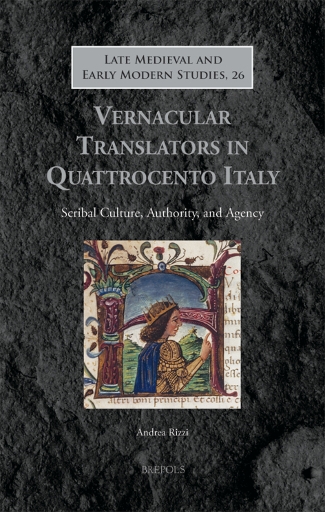
Vernacular Translators in Quattrocento Italy
Scribal Culture, Authority, and Agency
show More to view fulltext, buy and share links for:Vernacular Translators in Quattrocento Italy show Less to hide fulltext, buy and share links for: Vernacular Translators in Quattrocento ItalyThis book provides a richly documented study of vernacular translators as agents within the literary culture of Italy during the fifteenth century. Through a fresh and careful examination of these early modern translators, Rizzi shows how humanist translators went about convincing readers of the value of their work in disseminating knowledge that would otherwise be inaccessible to many. The translators studied in this book include not only the well-known ‘superstars’ such as Leonardo Bruni, but also little-known and indeed obscure writers from throughout the Italian peninsula.
Rizzi demonstrates that vernacular translation did not cease with the rise of ‘humanism’. Translations from Greek into Latin spurred the concurrent production of ‘new’ vernacular versions. Humanists challenged themselves to produce creative and authoritative translations both from Greek and occasionally from the vernacular into Latin, and from Latin into the vernacular. Translators grew increasingly self-assertive when taking on these tasks.
The findings of this study have wide implications: they trace a novel history of the use of the Italian language alongside Latin in a period when high culture was bilingual. They also shed further light on the topic of Renaissance self-fashioning, and on the workings of the patronage system, which has been studied far less in literary history than in art history. Finally, the book gives welcome emphasis to the concept that the creation and the circulation of translations (along with other literary activities) were collaborative activities, involving dedicatees, friends, and scribes, among others.
-
-
-

Vernacularity in England and Wales, c. 1300-1550
show More to view fulltext, buy and share links for:Vernacularity in England and Wales, c. 1300-1550 show Less to hide fulltext, buy and share links for: Vernacularity in England and Wales, c. 1300-1550Studies of the vernacular in the period 1300-1550 have tended to focus exclusively upon language, to the exception of the wider vernacular culture within which this was located. In a period when the status of English and ideas of Englishness were transforming in response to a variety of social, political, cultural and economic factors, the changing nature and perception of the vernacular deserves to be explored comprehensively and in detail. Vernacularity in England and Wales examines the vernacular in and across literature, art, and architecture to reach a more inclusive understanding of the nature of late medieval vernacularity.
The essays in this collection draw upon a wide range of source material, including buildings, devotional and educational literature, and parliamentary and civic records, in order to expand and elaborate our idea of the vernacular. Each contributor addresses central ideas about the nature and identity of the vernacular and how we appraise it, involving questions about nationhood, popularity, the commonalty, and the conflict and conjunction of the vernacular with the non-vernacular. These notions of vernacularity are situated within studies of reading practices, heresy, translation, gentry identity, seditious speech, and language politics. By considering the nature of vernacularity, these essays explore whether it is possible to perceive a common theory of vernacular use and practice at this time.
-
-
-
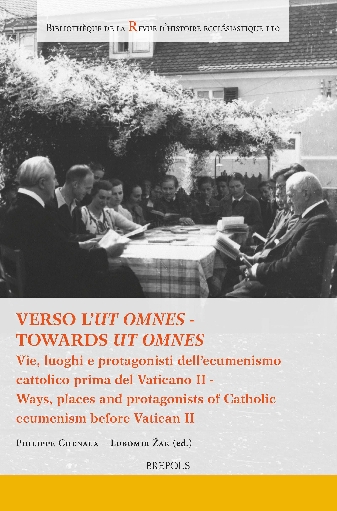
Verso l' Ut Omnes - Towards Ut Omnes
Vie, luoghi e protagonisti dell’ecumenismo cattolico prima del Vaticano II - Ways, places and protagonists of Catholic ecumenism before Vatican II
show More to view fulltext, buy and share links for:Verso l' Ut Omnes - Towards Ut Omnes show Less to hide fulltext, buy and share links for: Verso l' Ut Omnes - Towards Ut OmnesThe studies collected in this volume highlight the rising of an ecumenical consciousness within the Catholic Church in the early twentieth century. The Catholic paths, suggested in view of the hoped-for Christian unity before the Second Vatican Council, were different but complementary: the path of prayer and liturgy, that of theological refl ection, that of fraternal witness and that of martyrdom. The text offers valuable contributions on all these paths, written by specialists in the history of ecumenism.
-
-
-
Viator
Medieval and Renaissance Studies
show More to view fulltext, buy and share links for:Viator show Less to hide fulltext, buy and share links for: ViatorViator offers a space for renewed attention to transcultural studies from Late Antiquity into Early Modernity, while continuing its long-standing tradition of publishing articles of distinction in the established fields of medieval and Renaissance studies. In keeping with its title, “traveler,” the journal gives special consideration to articles that cross frontiers, focus on meetings between cultures, pursue an idea through the centuries, or employ methods of different disciplines simultaneously, while remaining accessible to the non-specialist reader. Viator particularly welcomes articles that look beyond Western Eurasia and North Africa and considers the history, literature, art, and thought of the eras of early global interconnection from broader perspectives.
More information about this journal on Brepols.net
-
-
-
Viator (English and Multilingual Edition)
show More to view fulltext, buy and share links for:Viator (English and Multilingual Edition) show Less to hide fulltext, buy and share links for: Viator (English and Multilingual Edition)Viator offers a space for renewed attention to transcultural studies from Late Antiquity into Early Modernity, while continuing its long-standing tradition of publishing articles of distinction in the established fields of medieval and Renaissance studies. In keeping with its title, “traveler,” the journal gives special consideration to articles that cross frontiers, focus on meetings between cultures, pursue an idea through the centuries, or employ methods of different disciplines simultaneously, while remaining accessible to the non-specialist reader. Viator particularly welcomes articles that look beyond Western Eurasia and North Africa and considers the history, literature, art, and thought of the eras of early global interconnection from broader perspectives.
-
-
-
Victorine Christology
show More to view fulltext, buy and share links for:Victorine Christology show Less to hide fulltext, buy and share links for: Victorine ChristologyThe Canons following the Rule of St Augustine at St Victor in Paris were some of the most influential religious writers of the Middle Ages. They combined exegesis and spiritual teaching in a theology that was deeply rooted in tradition but also attuned to current developments in the schools of Paris. The importance of Victorine Christology in this great age of theological speculation is unquestionable. The writings translated in this volume cover the foundational and maturing periods of Victorine Christology during the 1130s to the 1150s when Hugh of St Victor championed the paradigm of the “assumed man” (homo assumptus) and Robert of Melun advanced his Christology into the most comprehensive treatment in the twelfth century.
-
-
-
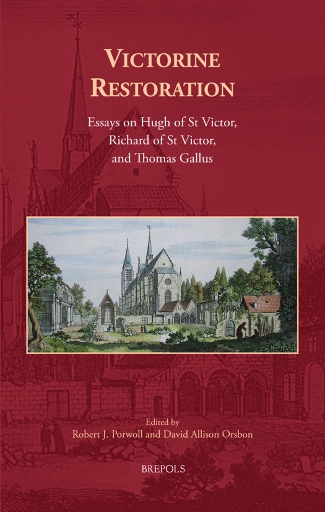
Victorine Restoration
Essays On Hugh Of St Victor, Richard Of St Victor, and Thomas Gallus
show More to view fulltext, buy and share links for:Victorine Restoration show Less to hide fulltext, buy and share links for: Victorine RestorationThe Victorines were scholars and teachers of philosophy, liberal arts, sacred scripture, music, and contemplation at the Abbey of Saint-Victor in Paris. This collection focuses on the three greatest Victorines: Hugh (d. 1141), who established the direction of the school; Richard (d. 1173), who developed Victorine contemplation; and Thomas Gallus (d. 1246), who culminated Victorine contemplative thought and transmitted it to other schools, especially the Franciscans. They offer an innovative revival of the Christian spiritual and intellectual tradition for their reforming pastoral mission in their urban setting and for the Church.
Their contemporaries saw the Victorines as beacons of spiritual love and intellectual richness. Later reformers and thinkers held their writings as touchstones of contemplative love, including, for example, Bonaventure, Thomas Aquinas, Jean Gerson, Thomas à Kempis, the Devotio Moderna, and many others. The writings of the Victorines found broad appeal among later medieval readers, as well as praise among early modern reformers, Protestant and Catholic alike. In recent decades, the Victorines have returned to scholarly attention and renewed appreciation. Scholarly studies, critical editions, and translation projects reveal the treasures of Victorine thought and spirituality.
This volume showcases the findings of recent research and scholarly advances in Victorine studies, offering new readers a status quaestionis of the field. It also features new research by eminent experts in Victorine thought that points out promising directions for future research, thus offering important new findings for established specialists.
-
-
-
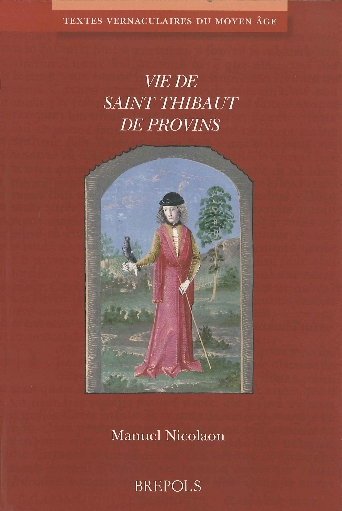
Vie de saint Thibaut de Provins
Edition critique d'après le Ms. Paris, BNF, fr. 17229, fol. 230d-233b (version française inédite en prose)
show More to view fulltext, buy and share links for:Vie de saint Thibaut de Provins show Less to hide fulltext, buy and share links for: Vie de saint Thibaut de ProvinsComment l’histoire si édifiante d’un jeune chevalier champenois du 11ème siècle qui, pour le seul amour de Dieu, délaisse pouvoir, famille et richesses et devient successivement ermite itinérant, pèlerin, prêtre et saint a-t-elle pu être écartée des fameuses compilations de vies de saints en français de la fin du Moyen Age et ainsi finalement tomber dans l’oubli ?
Bien sûr, la Vie de saint Thibaut de Provins n’est pas de ces textes qui mettent en évidence une figure emblématique ou des règles fondatrices de la religion chrétienne ; mais elle est loin cependant d’être une simple légende locale, et son intérêt réside sans aucun doute autant dans le caractère exemplaire de la vie qui est montrée que dans la valeur plus littéraire du récit qui, par le jeu de l’intertextualité, semble progressivement superposer la vie (ou plutôt la mort) de saint Thibaut à celle du Christ.
Accompagnée d’une introduction, d’une traduction, d’un appareil critique, de notes, d’un index, d’un glossaire et, en annexe, des différentes versions connues de la Vie de saint Thibaut, la présente édition souhaite ainsi permettre l’accès tant aux spécialistes de l’édition critique qu’aux amateurs de récits hagiographiques ou plus généralement d’histoire religieuse d’un texte français du 13ème siècle jusqu’alors inédit, dont la brièveté rend l’originalité et l’intérêt littéraire d’autant plus saillants.
-
-
-
Vie de sainte Marie l'Egyptienne
show More to view fulltext, buy and share links for:Vie de sainte Marie l'Egyptienne show Less to hide fulltext, buy and share links for: Vie de sainte Marie l'EgyptienneHildebert de Lavardin, évêque du Mans (1096-1125), puis archevêque de Tours (1125-1133), l’auteur de la Vita beate Marie Egyptiace, dont nous donnons ici la première traduction française, fut l’une des figures littéraires les plus importantes du Moyen Age: pendant plusieurs générations ses vers furent lus avec plaisir dans toute l’Europe occidentale; ses lettres servirent de modèles dans les écoles cathédrales et monastiques, pour leur élégance et leur noble distinction, et ses traités de philosophie morale et de droit canonique devinrent des manuels universellement appréciés.
La légende de Marie l’Égyptienne, compte parmi les figures du Moyen Age les plus connues et les plus vénérées de celles qui illustrent l’influence salutaire de Notre-Dame sur les plus grands pécheurs; elle a contribué pour une part nullement négligeable au développement du culte marial qui prend son essor définitif en Occident partir de l’époque carolingienne. Marie l’Égyptienne n’est pas seulement l’héroïne d’une parabole « évangélique », mais le personnage-clé d’un drame de la plus brûlante actualité : non seulement elle incarne en sa personne l’aspiration du monde féminin à rejoindre le mouvement des nouveaux ermites de l’époque d’Hildebert, mais elle intervient, en sa qualité d’ermite, pour donner des conseils au monde monastique. Le texte prend place dans la grande discussion de l'époque d'Hildebert sur la hiérarchie des vocations monastiques et leurs mérites respectifs, et sur les origines érémitiques du monachisme chrétien.
-
-
-

Vies de saints, légendes de soi
L'écriture hagiographique dominicaine jusqu'au Speculum sanctorale de Bernard Gui († 1331)
show More to view fulltext, buy and share links for:Vies de saints, légendes de soi show Less to hide fulltext, buy and share links for: Vies de saints, légendes de soiEntre 1312/1316 et 1329, le dominicain Bernard Gui rédige une collection de Vies de saints intitulée Speculum sanctorale. Située dans une histoire des légendiers dominicains, cette œuvre montre l’évolution de l’hagiographie de cet ordre. Alors que les hagiographes dominicains du XIIIe siècle répondent à des besoins ponctuels en privilégiant tantôt la sainteté locale tantôt la sainteté universelle, Bernard Gui cherche à faire la synthèse entre ces différentes voies. Il produit alors une somme hagiographique dont la composition minutieuse supporte les enjeux identitaires de la promotion des saints de l’ordre, des cultes locaux et universels.
Agnès Dubreil-Arcin a soutenu sa thèse de doctorat à Toulouse en 2007 et le présent ouvrage en est la version remaniée. Elle est membre du comité d’organisation des colloques d’histoire religieuse médiévale de Fanjeaux.
-
-
-
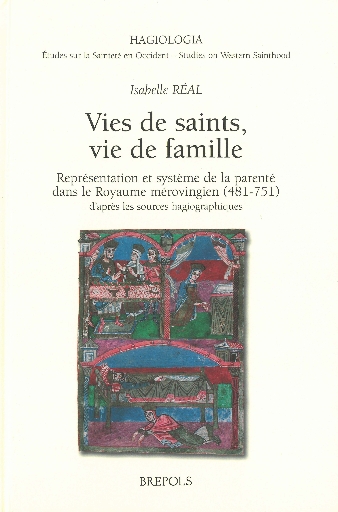
Vies de saints, vie de famille
Représentation et système de la parenté dans le royaume mérovingien (481-751) d'après les sources hagiographiques
-
-
-
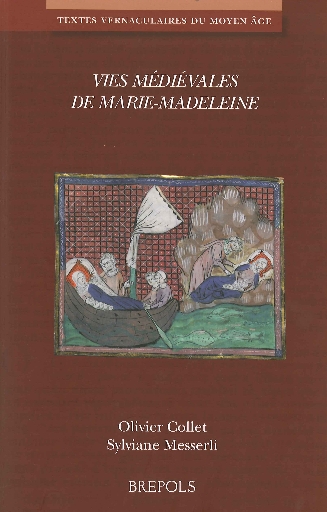
Vies médiévales de Marie-Madeleine
show More to view fulltext, buy and share links for:Vies médiévales de Marie-Madeleine show Less to hide fulltext, buy and share links for: Vies médiévales de Marie-MadeleineMarie-Madeleine a de tout temps nourri l’imaginaire chrétien. Figure de la pécheresse illuminée par la grâce, construite de toutes pièces par la patristique qui réunit en elle les traits de différentes femmes de la Bible, elle connaît au moyen âge un important développement. Le tournant des XIIe et XIIIe siècles lui invente même une vie légendaire et fait d’elle celle qui convertit la Gaule.
L’édition de la trentaine de textes actuellement connus que la tradition médiévale française lui consacre, établie à partir de plus de cent manuscrits, rend compte de la vitalité extraordinaire de la littérature hagiographique entre 1200 et 1500.
La description des exemplaires dans lesquels ces récits sont contenus affine notre compréhension de leurs conditions d’élaboration et de diffusion.
Ce riche matériau permet enfin de mettre à jour les mécanismes de traduction et les procédés d’écriture, puis de réécriture, utilisés par les auteurs. Il invite ainsi tant à l’interprétation littéraire qu’à des observations sur l’évolution de la langue ancienne.
-
-
-

Vigilemus et Oremus
The Theological Significance of ‘Keeping Vigil’ in Rome From the Fourth to the Eighth Centuries
show More to view fulltext, buy and share links for:Vigilemus et Oremus show Less to hide fulltext, buy and share links for: Vigilemus et OremusChristians have observed vigils in both East and West from earliest times. In the broad liturgical tradition of Christianity, the idea of keeping vigil appears to manifest the Church’s eschatological nature. Documentary evidence from the earliest centuries reveals that some Christians kept a night watch at the graves of martyrs and other heroes of the faith as to anticipate that dawn when the rising Sun of Justice would return in fulfilment of his promise. Eventually, vigils appear not just for Easter, Pentecost and saints’ days, but also for Christmas, the dedication of a church building, and on Saturday evening of the uniquely Roman quarterly Ember Weeks.
Liturgical sources of the sixth, seventh, and eighth centuries reveal that such practices became relatively standardized with the assignment of specific Mass texts and scriptural readings, yet we know very little about the precise elements which comprised a vigil liturgy and of their theological significance. At the same time these vigils were so important that they attracted to themselves the celebration of major sacramental liturgies during them. Hence, the Paschal Vigil, which existed for centuries as a vigil liturgy of scriptural readings and prayers gradually became the setting for the annual baptismal celebration. This book examines the nature of Roman vigil liturgies in the early centuries of Christianity to unravel the most primitive structure of keeping vigil and to provide a better understanding of the Paschal Vigil, which Augustine of Hippo affirms as the ‘mother of all vigils.’
-
-
-
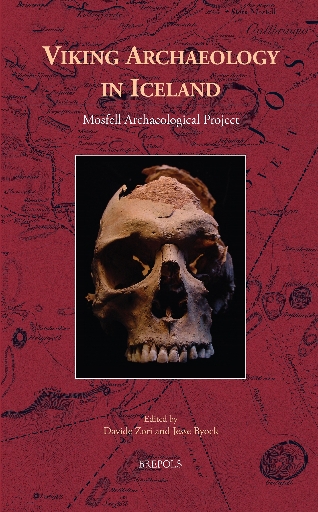
Viking Archaeology in Iceland
Mosfell Archaeological Project
show More to view fulltext, buy and share links for:Viking Archaeology in Iceland show Less to hide fulltext, buy and share links for: Viking Archaeology in IcelandThe Viking North Atlantic differs significantly from the popular image of violent raids and destruction characterizing the Viking Age in Northern Europe. In Iceland, Scandinavian seafarers discovered and settled a large uninhabited island. In order to survive and succeed, they adapted lifestyles and social strategies to a new environment. The result was a new society: the Icelandic Free State.
This volume examines the Viking Age in Iceland through the discoveries and excavations of the Mosfell Archaeological Project (MAP) in Iceland’s Mosfell Valley. Directed by Professor Jesse Byock with Field Director Davide Zori, MAP brings together scholars and researchers from Iceland, Britain, Canada, Denmark, Norway, Sweden, Germany, and the United States. The Project incorporates the disciplines of archaeology, history, saga studies, osteology, zoology, paleobotany, genetics, isotope studies, place-names studies, environmental science, and historical architecture. The decade-long research of MAP has led to the discovery of an exceptionally well-preserved Viking chieftain’s farmstead, including a longhouse, a pagan cremation site, a conversion-era stave church, and a Christian graveyard.
The research results presented here tell the story of how the Mosfell Valley developed from a ninth-century settlement of Norse seafarers into a powerful Icelandic chieftaincy of the Viking Age.
-
-
-

Viking and Medieval Scandinavia
show More to view fulltext, buy and share links for:Viking and Medieval Scandinavia show Less to hide fulltext, buy and share links for: Viking and Medieval ScandinaviaViking and Medieval Scandinavia is a multidisciplinary journal that covers the full range of studies in the field, stretching geographically from Russia to North America and chronologically from the Viking Age to the end of the medieval period.
More information about this journal on Brepols.net
-
-
-
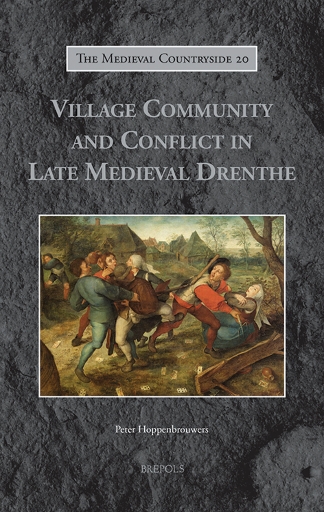
Village Community and Conflict in Late Medieval Drenthe
show More to view fulltext, buy and share links for:Village Community and Conflict in Late Medieval Drenthe show Less to hide fulltext, buy and share links for: Village Community and Conflict in Late Medieval DrentheVillage communities were the heart of the medieval countryside. But how did they operate? This book seeks to find some answers to that question by focusing on late medieval Drenthe, a region situated in a remote corner of the Holy Roman Empire and part of the prince-bishopric of Utrecht. Drenthe was an overwhelmingly localized, rural world. It had no cities, and consisted entirely of small villages. The social and economic importance of traditionally privileged sections of medieval society (clergy and nobility) was limited; free peasant landowners were the dominant social class.
Based on a careful reading of normative sources (Land charters) and thousands of short verdicts given by the so-called ‘Etstoel’ or high court of justice in Drenthe, this book focuses on three types of conflict: conflicts between villages, feud-like violence, and litigations about property. These three types coincide with three levels of involvement: that of village communities as a whole, that of kin groups, and that of households.
The resulting, comprehensive analysis provides a rigorous interrogation of generalized notions of the pre-industrial rural world, offering a snapshot of a typical peasant society in late medieval Europe.
-
-
-
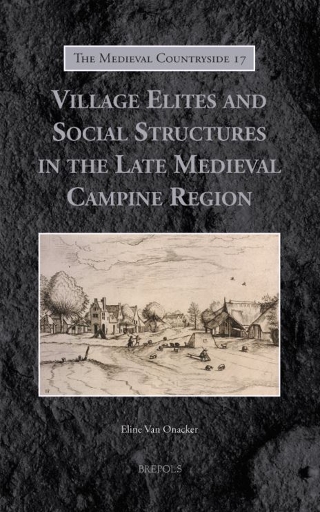
Village Elites and Social Structures in the Late Medieval Campine Region
show More to view fulltext, buy and share links for:Village Elites and Social Structures in the Late Medieval Campine Region show Less to hide fulltext, buy and share links for: Village Elites and Social Structures in the Late Medieval Campine RegionThe economy of the late medieval Low Countries is often portrayed in terms of dynamism and economic growth. However, several regions within this larger entity followed an alternate path of development. One example of this is the Campine (Kempen), a communal peasant region situated to the northeast of the sixteenth-century ‘metropolis’ of Antwerp. By contrast with other regions in the Low Countries, this area was characterised by a remarkable stability.
By focusing on ‘independent’ peasant elites, this study explores the social structures and the characteristics of inequality of this region, showing how these factors led to a different, more stable mode of economic development. Looking past standard societal measurements such as property distribution, this work combines a wide variety of sources to grasp the nuances of inequality in a communal society. It therefore takes into account other economic factors such as control over the commons, and market integration. It also focuses on political and social inequality, shedding light on aspects of inequality in village politics, social life, and poor relief.
Thus, in contrast to dominant depictions of pre-modern societies on the road to capitalism, this book provides a comprehensive portrayal of inequality and elite groups in a communal peasant society.
-
-
-
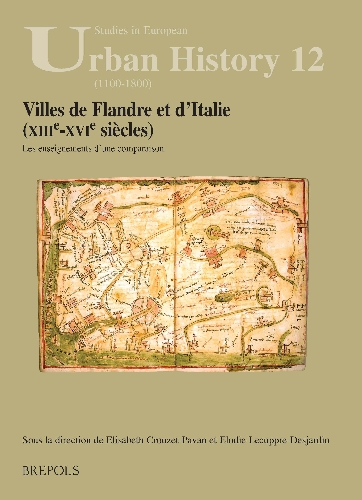
Villes de Flandre et d’Italie (XIIIe-XVIe siècle). Les enseignements d’une comparaison
show More to view fulltext, buy and share links for:Villes de Flandre et d’Italie (XIIIe-XVIe siècle). Les enseignements d’une comparaison show Less to hide fulltext, buy and share links for: Villes de Flandre et d’Italie (XIIIe-XVIe siècle). Les enseignements d’une comparaisonUne comparaison entre les villes de Flandre et d’Italie semble aller de soi tant apparaissent nombreuses, dans les études qui leur sont consacrées, les similitudes et les disparités esquissées. Entre les deux grands espaces urbanisés de l’Europe occidentale, pour qui s’intéresse à l’histoire des villes, le rapprochement paraît s’imposer. Pourtant, bien souvent, la juxtaposition prévaut et la comparaison se limite au seul domaine des convergences de l’histoire économique.
Cinq thèmes ont donc été retenus ici dans un souci de renouvellement et de réorientation des questionnements: la démographie, le fait religieux, les inscriptions et les symboliques du pouvoir, la «fabrique» de la mémoire et la représentation de l’espace. Dans cet ouvrage, est organisée une mise en parallèle qui permet d’identifier les spécificités qui façonnèrent en Italie et au nord de l’Europe les identités urbaines. Sur fond de relations marchandes et d’animation économique, les profils des communautés se précisent alors et la rare gageure d’une véritable histoire comparative est ainsi proposée au lecteur.
-
-
-
Vincent de Beauvais et le Grand Miroir du monde
show More to view fulltext, buy and share links for:Vincent de Beauvais et le Grand Miroir du monde show Less to hide fulltext, buy and share links for: Vincent de Beauvais et le Grand Miroir du mondeLe Grand Miroir du monde, Speculum maius, est la «Grande Encyclopedie» du Moyen Age. Ce livre présente les étapes de son élaboration comme outil du studium, par Frère Vincent de Beauvais, lecteur dominicain au service de son Ordre, et par ailleurs familier du roi Louis IX. Il caractérise la documentation mise en œuvre et son évolution. Conçu d'abord en deux parties, clans un esprit proche de la pensée victorine, ( vers 1244), l'ouvrage fut ensuite remis en avancées de la nouvelle science, tributaire d'Aristote et d'al-Farabi (vers 1260). L'influence naturaliste d'Albert le Grand faisant suite á celle, exégétique, de Hugues de Saint-Cher, le Speculum maius devient ainsi une œuvre en trois parties, Speculum naturale, consacre á l'histoire naturelle selon l'ordre des six jours de la création; Speculum doctrinale, inachevé, exposant toutes les branches du savoir (trivium propédeutique, sciences pratiques, sciences mécaniques, sciences théoriques); Speculum historiale, deroulant les facta et gesta de l'humanité (histoire proprement dite, histoire littéraire et hagiographie) jusqu'au Jugement dernier, selon la vision augustinienne de l'histoire.
Des documents traduits, dont !'important prologue, Libellus apologeticus, illustrent la méthode de composition et le contenu de l'œuvre, la mettent en relation avec d'autres ecrits paralleles du XIIIe siècle et témoignent de son succès au cours des siécles.
-
-
-
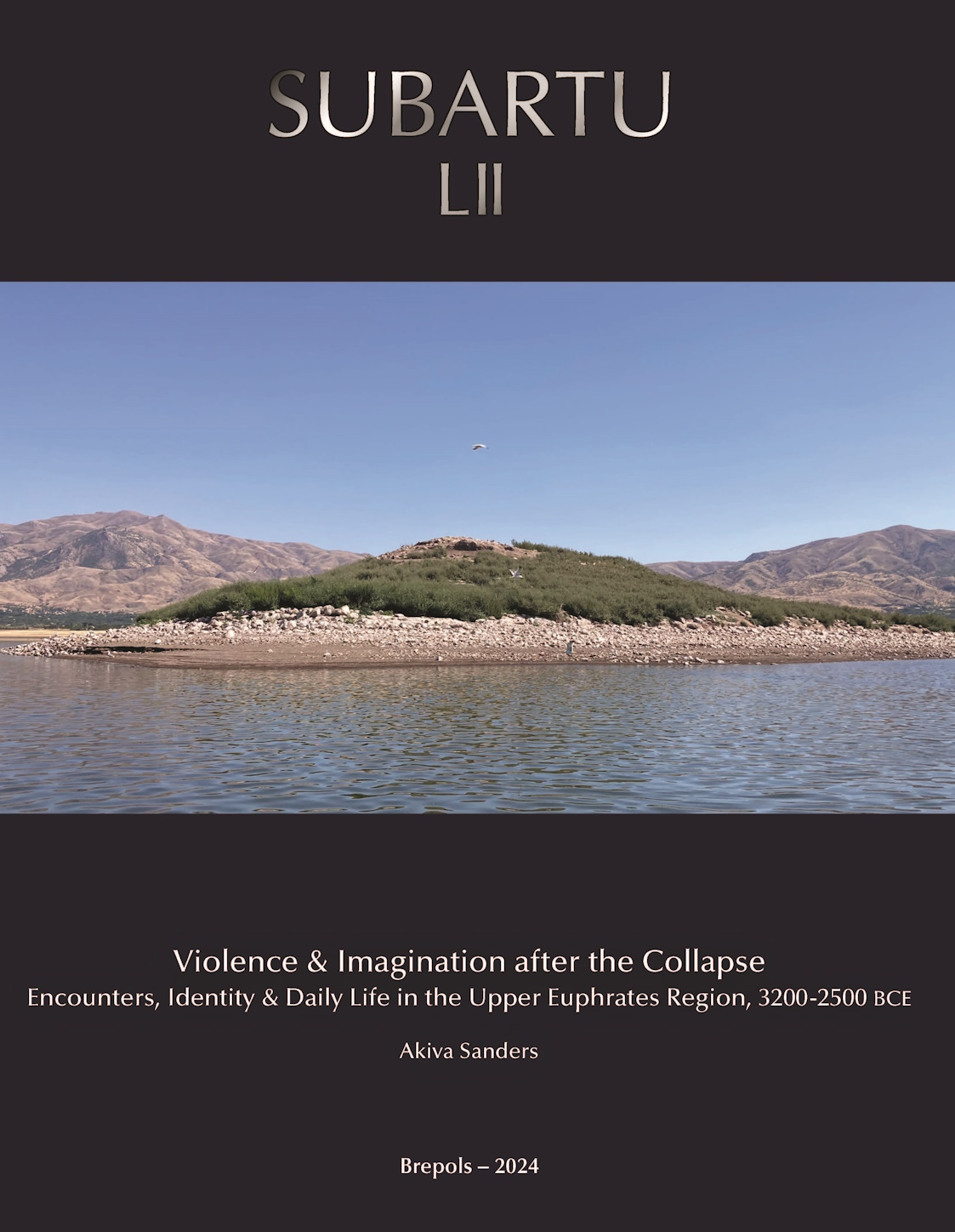
Violence and Imagination after the Collapse
Encounters, Identity and Daily Life in the Upper Euphrates Region, 3200-2500 BCE
show More to view fulltext, buy and share links for:Violence and Imagination after the Collapse show Less to hide fulltext, buy and share links for: Violence and Imagination after the CollapseIn the late fourth millennium BCE, the villages, temples, and palace of the Upper Euphrates region stood between two social worlds: the comparatively hierarchical, centrally organized Mesopotamian social tradition to the south and the comparatively egalitarian, decentralized Kura-Araxes social tradition to the north. Over the next seven centuries, this positioning and the interactions it sparked fed into reactions among the region’s inhabitants that ranged from cataclysmic violence to a flowering of innovation in visual culture and social arrangements. These events had a wide array of short-term and long-term impacts, some limited to a single house or settlement, and some, like the innovation of the Warrior Tomb template, that transformed societies across West Asia. With an eye towards detail, a theoretical approach emphasizing personal motivation, and multiple scales of analysis, this book organizes previously unpublished data from six sites in the region, Arslantepe, Ta kun Mevkii, Pulur, Nor untepe, Tepecik, and Korucutepe, dating to this dramatic and transformative period.
-
-
-
Virgins and Scholars
A Fifteenth-Century Compilation of the Lives of John the Baptist, John the Evangelist, Jerome, and Katherine of Alexandria
show More to view fulltext, buy and share links for:Virgins and Scholars show Less to hide fulltext, buy and share links for: Virgins and ScholarsThis collection of prose vitae of four virgins and scholars - Saints John the Baptist, John the Evangelist, Jerome, and Katherine of Alexandria - was almost certainly copied, and the texts very likely composed, at Syon Abbey or Sheen Charterhouse in the mid-fifteenth century. The lives cover a wide range of hagiographic modes, from hagiographic romance to affective, devotional appreciation to doctrinal treatise in narrative form. From the life of Jerome, composed by a monk for his aristocratic spiritual daughter, to the life of Katherine, reputedly translated for Henry V, to those of John the Baptist and John the Evangelist, which set their subjects in a recognizably Birgittine context, they show the interaction of men and women, lay and monastic, in the production of devotional literature. The diversity of their approaches and sources, moreover, shows the links between English dynastic politics and continental religious literature and spiritual traditions. As examples of translation practices, of monastic politics, and of religious instruction, these lives provide a window onto the devotional culture and literary worlds of fifteenth-century Europe.
-
-
-
Virtual Pilgrimages in the Convent
Imagining Jerusalem in the Late Middle Ages
show More to view fulltext, buy and share links for:Virtual Pilgrimages in the Convent show Less to hide fulltext, buy and share links for: Virtual Pilgrimages in the Convent‘Walking in Christ’s footsteps’ was a devotional ideal in the late Middle Ages. However, few nuns and religious women had the freedom or the funding to take the journey in the flesh. Instead they invented and adjusted devotional exercises to visit the sites virtually. These exercises, largely based on real pilgrims’ accounts, made use of images and objects that helped the beholder to imagine walking alongside Christ during his torturous march to Calvary. Some provided scripts whereby votaries could animate paintings and sculptures. Others required the nun to imagine her convent as a miniature model of Jerusalem. This volume is grounded in more than a dozen texts from manuscripts written by medieval nuns and religious women, which appear here transcribed and translated for the first time, and a multiplicity of (occasionally three-dimensional) images. They attest to the ubiquity and variety of virtual pilgrimages among religious women and help to reveal the functions of certain late medieval devotional images.
Kathryn M. Rudy, Lecturer at the University of St Andrews, is an authority on Northern European illuminated manuscripts and prints. She has written about indulgences and the functions of images.
-
-
-
Visible English
Graphic Culture, Scribal Practice, and Identity, c. 700-c. 1550
show More to view fulltext, buy and share links for:Visible English show Less to hide fulltext, buy and share links for: Visible EnglishVisible English recovers for the first time the experience of reading and writing the English language in the medieval period through the perspectives of littera pedagogy, the basis of medieval learning and teaching of literate skills in Latin. Littera is at the heart of the set of theories and practices that constitute the ‘graphic culture’ of the book’s title. The book shows for the first time that littera pedagogy was an ‘us and them’ discourse that functioned as a vehicle for identity formation. Using littera pedagogy as a framework for understanding the medieval English-language corpus from the point of view of the readers and writers who produced it, Visible English offers new insights on experiences of writing and reading English in communities ranging from those first in contact with Latin literacy to those where print was an alternative to manuscript. Discussing a broad range of materials from so-called ‘pen-trials’ and graffiti to key literary manuscripts, Visible English provides new perspectives on the ways that the alphabet was understood, on genres such as alphabet poems, riddles, and scribal signatures, and on the different ways in which scribes copied Old and Middle English texts. It argues that the graphic culture underpinned and transmitted by littera pedagogy provided frameworks for the development and understanding of English-language literacy practices and new ways of experiencing social belonging and difference. To be literate in English, it proposes, was to inhabit identities marked by Anglophone literate practices.
-
-
-
Visions of Medieval History in North America and Europe
Studies on Cultural Identity and Power
show More to view fulltext, buy and share links for:Visions of Medieval History in North America and Europe show Less to hide fulltext, buy and share links for: Visions of Medieval History in North America and EuropeIn this volume, scholars from North America and Europe explore the intersection of medieval identity with ethnicity, religion, power, law, inheritance, texts, and memory. They offer new historiographical interventions into questions of identity, but also of ethnonyms, conflict studies, the feudal revolution, gender and kinship studies, and local history. Employing interdisciplinary approaches and textual hermeneutics, the authors represent an international scholarly community characterized by intellectual restlessness, historiographical experimentation, and defiance of convention.
-
-
-
Visions of North in Premodern Europe
show More to view fulltext, buy and share links for:Visions of North in Premodern Europe show Less to hide fulltext, buy and share links for: Visions of North in Premodern EuropeThe North has long attracted attention, not simply as a circumpolar geographical location, but also as an ideological space, a place that is ‘made’ through the understanding, imagination, and interactions of both insiders and outsiders. The envisioning of the North brings it into being, and it is from this starting point that this volume explores how the North was perceived from ancient times up to the early modern period, questioning who, where, and what was defined as North over the course of two millennia.
Covering historical periods as diverse as Ancient Greece to eighteenth-century France, and drawing on a variety of disciplines including cultural history, literary studies, art history, environmental history, and the history of science, the contributions gathered here combine to shed light on one key question: how was the North constructed as a place and a people? Material such as sagas, the ethnographic work of Olaus Magnus, religious writing, maps, medical texts, and illustrations are drawn on throughout the volume, offering important insights into how these key sources continued to be used over time. Selected texts have been compiled into a useful appendix that will be of considerable value to scholars.
-
-
-
Visions of Unity after the Visigoths
Early Iberian Latin Chronicles and the Mediterranean World
show More to view fulltext, buy and share links for:Visions of Unity after the Visigoths show Less to hide fulltext, buy and share links for: Visions of Unity after the VisigothsThis study focuses on post-Visigothic Latin chronicles as testimonies of an intense search for models of stability and social cohesion on the Iberian Peninsula. As the principal source of Iberian political thought between the eighth and mid-thirteenth centuries, these texts have long been regarded from the perspective of modern-day national boundaries of a political entity called Spain. From the post-national perspective of Mediterranean studies, which considers Iberian centres of power in cultural contact with the broader world, post-Visigothic Iberian chronicle writing is seen as a cultural practice that seeks to reconcile the imperative of unity and stability with the reality of diversity and social change.
The book examines, firstly, the Andalusi Christian narrative of Visigothic political demise, which originated in Iberian dhimmī communities between the mid-eighth and mid-ninth centuries. Second, it explores the narrative of sovereignty, developed in Asturias-León from the late ninth century onwards. Finally, it examines the historiographical manipulation of both of these traditions in Rodrigo Jiménez de Rada’s Historia de rebus Hispanie (1243).
The ongoing contact between Iberian Latin textual communities and the broader Mediterranean is interpreted as central to both the development of Iberian historical mythology and its historiographical renovation.
-
-
-
Visual Constructs of Jerusalem
show More to view fulltext, buy and share links for:Visual Constructs of Jerusalem show Less to hide fulltext, buy and share links for: Visual Constructs of JerusalemThe special position of Jerusalem among the cities of the world stems from a long history shared by the three Abrahamic religions, and the belief that the city reflected a heavenly counterpart. Because of this unique combination, Jerusalem is generally seen as extending along a vertical axis stretching between past, present, and future. However, through its many ‘earthly’ representations, Jerusalem has an equally important horizontal dimension: it is represented elsewhere in all media, from two-dimensional maps to monumental renderings of the architecture and topography of the city’s loca sancta.
In documenting the increasing emphasis on studying the earthly proliferations of the city, the current book witnesses a shift in theoretical and methodological insights since the publication of The Real and Ideal Jerusalem in Jewish, Christian, and Islamic Art in 1998. Its main focus is on European translations of Jerusalem in images, objects, places, and spaces that evoke the city through some physical similarity or by denomination and cult - all visual and material aids to commemoration and worship from afar. The book discusses both well-known and long-neglected examples, the forms of cult they generate and the virtual pilgrimages they serve, and calls attention to their written and visual equivalents and companions. In so doing, it opens a whole new vista onto the summa of representations of Jerusalem.
-
-
-
Visual Liturgy: Altarpiece Painting and Valencian Culture (1442-1519)
show More to view fulltext, buy and share links for:Visual Liturgy: Altarpiece Painting and Valencian Culture (1442-1519) show Less to hide fulltext, buy and share links for: Visual Liturgy: Altarpiece Painting and Valencian Culture (1442-1519)In the introduction to his Early Netherlandish Painting, Erwin Panofsky characterised 15th-century European painting with an opposition between the art of Italy and that of Flanders, and significantly, he recalled that in the eyes of a Luther or of a Michelangelo, no other School deserved attention. Six centuries later, Spanish art of this period remains little known outside the Iberian Peninsula. The fact that a large number of the works of art are still kept in their original location surely plays a part in this, but there is also a lasting prejudice that this art is aesthetically and intellectually little exciting. Retables were then the utmost artistic expression. At first sight, they mostly look the same. Because this art seems changeless, its exegesis has been routine and vague.
The Visual Liturgy challenges this situation. Focusing on the Aragonese city of Valencia, then at the height of its pride and glory, it examines a school of painters, which reflects a wider scene, namely the civic and religious preoccupations of a whole culture. Not only does it provide a comprehensive view of current research on Valencian painting, it connects it to the wider context of Valencian piety and tackles the dialectics at work in civic culture: how the monarchy took hold of the municipality; how foreign influences challenged local tradition; how sophisticated altarpieces emerged from the standard stock of artistic production; how, finally, the liturgy prevented ruptures between the religion of the learned and more popular, even at times slightly unorthodox, expressions of the faith.
The Visual Liturgy thus provides a better understanding of 15th-century Spanish art. It sheds important new light on the birth of an artistic school in a context of competing foreign influences, and on the reception of such influences into a radically different culture; finally, it is the first attempt to explore the meaning of Valencian altarpieces with reference to their cultural, spiritual and liturgical context of creation.
-
-
-
Visualizing Justice in Burgundian Prose Romance
Text and Image in Manuscripts of the Wavrin Master (1450s–1460s)
show More to view fulltext, buy and share links for:Visualizing Justice in Burgundian Prose Romance show Less to hide fulltext, buy and share links for: Visualizing Justice in Burgundian Prose RomanceThis is the first monograph devoted to manuscripts illuminated by the mid-fifteenth-century artist known as the Wavrin Master, so-called after his chief patron, Jean de Wavrin, chronicler and councillor at the court of Philip the Good of Burgundy. Specializing in the production of pseudo-historical prose romances featuring the putative ancestors of actual Burgundian families, the artist was an attentive interpreter of these texts which were designed to commemorate the chivalric feats of past heroes and to foster their emulation by noble readers of the day. Integral to these heroes’ deeds is the notion of justice, their worth being measured by their ability to remedy criminal acts such as adultery, murder, rape, and usurpation. In a corpus of 10 paper manuscripts containing the texts of 15 romances and over 650 watercolour miniatures, the stylized, expressive images of the Wavrin Master bring out with particular clarity the lessons in justice which these works offered their contemporary audience, many of whom, from the Burgundian dukes downwards, would have been responsible for upholding the law in their territories. Chapters are devoted to issues such as the nature of just war and how it is linked to good rulership; what forms of legal redress the heroines of these tales are able to obtain with or without the help of a male champion; and what responses are available in law to a spouse betrayed by an adulterous partner. The book will be of interest to scholars of medieval art, literature, legal and cultural history, and gender studies.
-
-
-
Vivarium. I libri, il destino
show More to view fulltext, buy and share links for:Vivarium. I libri, il destino show Less to hide fulltext, buy and share links for: Vivarium. I libri, il destinoIn its understated way, this work establishes several theses each one of which, taken separately, could reasonably be considered sensational. First we have the discovery of the autograph of Cassiodorus. In shorthand, as one would expect from a busy man with a strong sense of time management, it testifies that Cassiodorus reviewed (Cassiodorus legi), or verified (perlegi Cassiodorus) a text. The signature occurs in codices that had already, through other considerations, been associated with Vivarium, and becomes in turn a strong criterion for the identification of works not previously associated with the Calabrian foundation. In some manuscripts a hand already known as 'manus prima', can now be identified with those of scribes active at Vivarium. These hands were not simply copying orthodox texts, but critically examining those written by authors of different persuasions: we know now that a codex well-known for its Arian scholia was studied and annotated at Vivarium. Cassiodorus and his team of writers/translators were squirreling away on texts by Church Fathers and heretics, analysing them, taking from them what could be suitable, reading everything. So, Vivarium was a militantly Chalcedonian monastery, but also one where the alternatives, dubbed by modern scholars 'Arian scholia' were duly studied and annotated. These essays by Fabio Troncarelli are an example of 'integral palaeography' in the sense of the definition, by now a classic, of Leonard E. Boyle (Medieval Latin Palaeography, Author's Preface, p. xv). Through the highly specialised technique of demanding discipline, the author succeeds in reconstructing the intellectual climate and the historical setting of Vivarium.
-
-
-
Vocabulaire des collèges universitaires (XIIIe - XVIe siècles)
Actes du colloque, Leuven 9-11 avril 1992
-
-
-
Vocabulaire des écoles et des méthodes d'enseignement au moyen âge
Actes du colloque, Rome 21-22 octobre 1989
-
-
-
Vocabulaire du livre et de l'écriture au moyen âge
Actes de la table ronde, Paris 24-26 septembre 1987
-
-
-
Vocabulary of Teaching and Research Between Middle Ages and Renaissance
Proceedings of the Colloquium London, Warburg Institute, 11-12 March 1994
-
-
-
Voisinages, coexistences, appropriations
Groupes sociaux et territoires urbains (Moyen Age-16e siècle)
show More to view fulltext, buy and share links for:Voisinages, coexistences, appropriations show Less to hide fulltext, buy and share links for: Voisinages, coexistences, appropriationsFruit des travaux du colloque intitulé «Groupes sociaux et territoires urbains (Moyen Age-16e siècle)» organisé en décembre 2004 à l’Université Libre de Bruxelles, cet ouvrage rassemble douze contributions originales consacrées aux dynamiques sociales de l’espace urbain en Europe de l’ouest durant le bas Moyen Âge.
Dans sa première partie, l’ouvrage montre la structuration à long terme de l’espace urbain par les stratégies d’occupation de groupes dominants: chapitres canoniaux, élites scabinales, métiers (Tours, Namur, Trévise). Il confronte ce processus d’appropriation à la capacité de réagencement matériel ou symbolique déployée par certains acteurs urbains. Accident aléatoire (Tortosa), circonstances politiques (Bruges), modulation des rapports à la ville (Ratisbonne) redessinent les territoires respectifs, rallument sans cesse la lutte pour la maîtrise de l’espace et de ses éléments signifiants.
Dans sa seconde partie, l’ouvrage donne à penser la société urbaine dans ses relations avec des horizons plus lointains. Dans un premier temps sont abordées les relations des villes avec leur arrière-pays, sur lequel les groupes citadins dominants réinventent sans cesse les modalités économiques et juridiques de leur contrôle (Bruxelles, Chieri, Dijon). Dans un second temps, sont considérées les armatures urbaines de certains territoires (Brabant, Hainaut, Saint-Empire) dont la vivacité économique dépend de l’intensité des relations marchandes.
Les articles réunis ici éclairent, souvent d’un jour nouveau, non seulement l’histoire singulière des villes concernées mais plus fondamentalement les processus et les logiques à l’œuvre dans l’agencement et le réagencement permanent des espaces urbains.
-
-
-
Von der Bernoullischen Brachistochrone zum Kalibrator-Konzept
Ein historischer Abriß zur Entstehung der Feldtheorie in der Variationsrechnung (hinreichende Bedingungen in der Variationsrechnung)
show More to view fulltext, buy and share links for:Von der Bernoullischen Brachistochrone zum Kalibrator-Konzept show Less to hide fulltext, buy and share links for: Von der Bernoullischen Brachistochrone zum Kalibrator-KonzeptDie Aufgabe der klassischen Variationsrechnung besteht darin, Kurven oder Funktionen zu bestimmen, denen im Vergleich mit anderen eine bestimmte Eigenschaft im größten oder kleinsten Maße zukommt. Die Art des Vergleichens bestimmt dabei den Charakter des Extremums. In dieser Studie wird die Frage untersucht, wie für starke Extrema (in der Norm des C 0) hinreichende Kriterien (sogenannten Feldtheorie) entstanden, entwickelt und eingesetzt worden sind. Diese Untersuchungen sind mit Namen wie Joh. Bernoulli, Jacobi, Weierstraß, Schwarz, Darboux, Hilbert, Kneser, Carathéodory, Lepage und anderen verbunden. Der Zeitraum reicht von Brachistochronenproblem 1696 bis in die Mitte des vorigen Jahrhunderts, betrachtet werden sowohl einfache als auch mehrdimensionale Variationsprobleme mit mehreren gesuchten Funktionen. Neben den entsprechenden gedruckten Arbeiten sind in die Untersuchungen in einem Maße, wie es in der Geschichte der Variationsrechnung bisher noch nicht erfolgt ist, ungedruckte Quellen wie einschlägige Briefe, Notizbücher, Vorlesungskonzepte, -mitschriften und -ausarbeitungen einbezogen worden, wodurch selbst in manchen Fragen auf die allgemeine Entwicklung der Variationsrechnung neues Licht geworfen wird.
-
-
-
Vérité et apparence
Mélanges en l’honneur de Carlos Lévy, offerts par ses amis et ses disciples
show More to view fulltext, buy and share links for:Vérité et apparence show Less to hide fulltext, buy and share links for: Vérité et apparenceBien qu’il soit encore bien trop tôt pour dresser un bilan critique de l’activité scientifique de Carlos Lévy, qui demeure en pleine évolution et qui promet toujours de nouvelles contributions à nos études, il est déjà évident qu’il a laissé une empreinte très importante dans les disciplines classiques au moins à deux égards : du point de vue de la méthode, Carlos Lévy a enseigné combien il est important, à une époque où la recherche se spécialise toujours plus, de ne pas perdre au contraire la capacité de « penser sans frontières », en joignant la sensibilité de l’intuition géniale à la rigueur des principes philologiques et à une compétence dans la discipline aussi solide qu’étendue et complète. C’est dans cette perspective que s’épanouit sa surprenante capacité de travailler à la fois comme historien de la philosophie, spécialiste de la pensée politique classique, expert en rhétorique et en éloquence, autant qu’en linguistique et en sémantique historique ; dans cette perspective encore que se comprend sa volonté d’étudier textes grecs comme textes latins, appartenant à toutes les écoles philosophique de l’Antiquité, et aussi ceux d’auteurs éloignés du domaine de la philosophie ; dans cette perspective enfin que se dessine son ouverture vers la modernité, la permanence de l’époque classique, le dialogue avec la philosophie contemporaine. Du point de vue des contenus, d’autre part, il est évident que l’activité scientifique de Carlos Lévy s’est concentrée surtout - mais certainement pas seulement - sur le sujet fascinant et toujours actuel du rapport entre vérité et apparence, entre dogme et incertitude, entre ontologie et gnoséologie. C’est donc autour du binôme vérité et apparence, envisagé autant d’un point de vue philosophique que d’un point de vue plus proprement rhétorique ou poétique, à travers l’étude d’auteurs de l’Antiquité à la Renaissance, que s’est construit ce volume d’amitié.
Perrine Galand, normalienne, ancien membre junior de l’Institut Universitaire de France, directeur d’études à l’École pratique des Hautes Études, est spécialiste de la poétique de la Renaissance européenne.
Ermanno Malaspina, professeur d’histoire de la langue latine à Turin, s’occupe de Cicéron, de Sénèque et du paysage littéraire en latin.
-
-
-
Walls and Memory: The Abbey of San Sebastiano at Alatri (Lazio), from Late Roman Monastery to Renaissance Villa and Beyond
show More to view fulltext, buy and share links for:Walls and Memory: The Abbey of San Sebastiano at Alatri (Lazio), from Late Roman Monastery to Renaissance Villa and Beyond show Less to hide fulltext, buy and share links for: Walls and Memory: The Abbey of San Sebastiano at Alatri (Lazio), from Late Roman Monastery to Renaissance Villa and BeyondThe abbey of San Sebastiano, which lies not far from the town of Alatri in Southern Lazio, preserves within its walls almost fifteen hundred years of history. This history is unusually bound to a number of important figures, from Saint Benedict to Pope Nicholas V and his circle of humanists. For the past four years a small team has been investigating the extant structures of the abbey, analyzing the stratigraphy of the standing walls and tracing the various building phases. The study has produced some startling discoveries: the plan and preserved walls of one of the oldest monasteries in Europe, and one of the earliest Renaissance villas. The book gives an account of the architecture and the history of the building, showing how each phase relates to the last both structurally and thematically.
The project was initiated at the American Academy in Rome, where Elizabeth Fentress was Andrew Mellon Professor, and Caroline Goodson, Margaret L. Laird and Stephanie C. Leone were Fellows. Margaret Laird and Stephanie Leone are now assistant professors at the University of Washington, Seattle and at Boston College. Other contributors include Caroline Bruzelius, Professor of the History of Art at Duke University, Antonio Manfredi, Vatican Library, Serena Romano, Professor of the History of Art at the University of Lausanne, Marco Rossi, director of the Museum of Alatri, and Ingrid Rowland, Andrew Mellon Professor at the American Academy in Rome.
-
-
-
Warrior Neighbours
Crusader Valencia in its International Context, Collected Essays of Father Robert I. Burns, S. J.
show More to view fulltext, buy and share links for:Warrior Neighbours show Less to hide fulltext, buy and share links for: Warrior NeighboursThis volume presents the impressive corpus of studies by Robert I. Burns, SJ, on the topic that he has spent a half-century exploring in meticulous detail: the Crusader Kingdom of Valencia. These studies focus on one of Europe’s greatest medieval monarchs, James the Conqueror of Aragon-Catalonia, who made an enduring contribution to Western civilization.
James I ‘the Conqueror’ conquered Mediterranean Spain from Islam during fifty crusading years (1225-1276). Not only did he contend with ‘infidel’ powers around him, he frequently vied with warring Christian neighbours. This book presents a rich depiction of King James’s warrior neighbours, Muslim and Christian, from the king who was his greatest ally and greatest rival, Alfonso X the Learned (1212-1284), to the redoubtable and resourceful al-Azraq, a Muslim adventurer, rebel, and leader of one of the most formidable Islamic countercrusades in Spain. These studies illuminate such themes as cultural conflict and interchange, border tensions and frontier relations, medieval warfare and crusading, piracy, brigandage and reprisals, grievance management, medieval queenship and papal relations, the role of Jews in a pluri-ethnic kingdom, Mudejars and Moriscos, and the warrior heroes of Islam. King James presided over a society more complex than any in Christendom, and these studies unlock the details of this stunning achievement.
Robert I. Burns, SJ, Ph.D. (Johns Hopkins University), Doc. es Sc. Hist. (Fribourg University, Switzerland), was Professor Emeritus of History at UCLA and Director of the Institute of Medieval Mediterranean Spain. He was an elected Fellow of the Medieval Academy of America, and of the Hispanic Society of America, and a Guggenheim Fellow. His distinctions include the Haskins gold medal of the Medieval Academy of America, seven national book awards, eight honorary doctorates, and the Order of the Cross of St George.
-
-
-
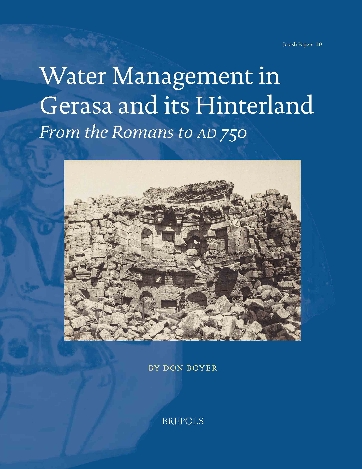
Water Management in Gerasa and its Hinterland
From the Romans to ad 750
show More to view fulltext, buy and share links for:Water Management in Gerasa and its Hinterland show Less to hide fulltext, buy and share links for: Water Management in Gerasa and its HinterlandThe Decapolis city of Gerasa has seen occupation since the Bronze Age but reached its zenith in the Roman to early Islamic period as a population centre and trading hub. Located in a fertile valley in the limestone foothills of the Ajlun mountains, the city benefitted from a benign climate and an excellent local water supply from karstic springs and perennial streams. By the Roman-Early Byzantine period, these water sources were harnessed and managed by extensive aqueduct and distribution networks that satisfied the broad range of water needs of both urban and rural dwellers.
This volume offers an up-to-date, comprehensive, and multidisciplinary analysis of the water management system employed in both Gerasa and its hinterland from the time of Roman occupation to the devastating earthquakes that struck the city at the end of the Umayyad period. Drawing on archaeological evidence from the author’s field research, together with a critical and detailed analysis of the evidence of water installations and the results of a radiocarbon dating study, this insightful book offers the first diachronic interpretation of Gerasa’s water distribution, setting the city in its geoarchaeological, historical, and landscape contexts, and contributing to the broader understanding of its archaeological history.
-
-
-
Water in Medieval Intellectual Culture
Case Studies from Twelfth-Century Monasticism
show More to view fulltext, buy and share links for:Water in Medieval Intellectual Culture show Less to hide fulltext, buy and share links for: Water in Medieval Intellectual CultureThis volume provides a new contribution to the understanding of twelfth-century monasticism and medieval intellectual culture by exploring the relationship between water and the composition of thought. It provides a fresh insight into twelfth-century monastic philosophies by studying the use of water as an abstract entity in medieval thought to frame and discuss topics such as spirituality, the natural order, knowledge visualization, and metaphysics in various high medieval texts, including Godfrey of Saint-Victor’s Fons Philosophiae, Peter of Celle’s letter corpus, and the Description of Clairvaux.
Through case studies of water in poetry, landscape narrative, and epistolary communication, this work traces the role of water as a uniquely medieval instrument of thought. Theoretical chapters of this book use water to explore the shaping of the medieval metaphor. Further case studies examine the differing and complex uses of water as a metaphor in various monastic texts. Focussing on the changeable power and material properties of water, this volume assesses the significance and deployment of environmental imagery in the composition, narration, and recollection of organized thought within the twelfth-century monastic community.
-
-
-
Wealth and Poverty in European Rural Societies from the Sixteenth to Nineteenth Century
show More to view fulltext, buy and share links for:Wealth and Poverty in European Rural Societies from the Sixteenth to Nineteenth Century show Less to hide fulltext, buy and share links for: Wealth and Poverty in European Rural Societies from the Sixteenth to Nineteenth CenturyThis book sheds new light on old problems of wealth, poverty and material culture in rural societies. Much of the debate has concentrated on north-west Europe and the Atlantic world. This volume widens the geographic range to compare less well known areas, with case studies on the Mediterranean world (Catalonia and Greece), from central Europe (Bohemia and Hungary), and from the Nordic countries (Denmark). Methodologically, several papers link the possession of goods to the use of room space, while others highlight the importance of the channels for the circulation of goods, problems of stocks and flows of goods, and the complexities of urban/rural difference. Finally, this book seeks to stimulate new comparative studies in living standards and lifestyles by providing an overview of achievements up till now.
John Broad is visiting academic at the Cambridge Group for the History of Population and Social Structure, University of Cambridge. He has published on rural society and poverty in England, and his current research interests include a book on English rural housing, and large-scale surveys of population, religion, and landholding in England in the eighteenth century.
Anton Schuurman is associate professor of Rural History at Wageningen University. He has published on the history of material culture and rural transformations in the Netherlands. Currently he is writing a book on the processes of modernisation and democratisation in the Dutch countryside from 1840 till 1920.
-
-
-
Weaving, Veiling, and Dressing
Textiles and their Metaphors in the Late Middle Ages
show More to view fulltext, buy and share links for:Weaving, Veiling, and Dressing show Less to hide fulltext, buy and share links for: Weaving, Veiling, and DressingChristianity is a religion of clothing. To become a priest or a nun is to take the cloth. The Christian liturgy is intimately bound with veiling objects and revealing them. Cloths hide the altar, making it all the more spectacular when it is revealed. Fragments of imported silk cradle the relic, thereby giving identity to the dessicated bone. Much of that silk came from the east, meaning that a material of Islamic origin was a primary signifier of sanctity in Christianity. Weaving, Veiling, and Dressing brings together twelve essays about text and textile, about silk and wool, about the formation of identity through fibre. The essays bring to light hitherto unseen material, and for the first time, establish the function of textiles as a culturally rich way to approach the Middle Ages. Textiles were omnipresent in the medieval church, but have not survived well. To uncover their uses, presence, and meanings in the Middle Ages is to reconsider the period spun, draped, clothed, shrouded, and dressed. Textiles in particular were essential to the performance of devotion and of the liturgy. Brightly dyed cloth was a highly visible maker of meaning. While some aspects of culture have been studied, namely the important tapestry industry, as well as some of the repercussions and activities of cloth guilds, other areas of textile studies in the period are yet to be studied. This book brings an interdisciplinary approach to new material, drawing on art history, anthropology, medieval text history, theology, and gender and performance studies. It makes a compelling miscellany exploring the nature of Christianity in the largely uninvestigated field of text and textile interplay.
-
-
-
Werewolves in Old Norse-Icelandic Literature
Between the Monster and the Man
show More to view fulltext, buy and share links for:Werewolves in Old Norse-Icelandic Literature show Less to hide fulltext, buy and share links for: Werewolves in Old Norse-Icelandic LiteratureAt the heart of any story of metamorphosis lies the issue of identity, and the tales of the werwulf (lit. ‘man-wolf’) are just as much about the wolf as about the man. What are the constituents of the human in general? What symbolic significance do they hold? How do they differ for different types of human? How would it affect the individual if one or more of these elements were to be subtracted?
Focusing on a group of Old Norse-Icelandic werewolf narratives, many of which have hitherto been little studied, this insightful book sets out to answer these questions by exploring how these texts understood and conceptualized what it means to be human. At the heart of this investigation are five factors key to the werewolf existence - skin, clothing, food, landscape, and purpose - and these are innovatively examined through a cross-disciplinary approach that carefully teases apart the interaction between two polarizations: the external and social, and the interior and psychological. Through this approach, the volume presents a comprehensive new look at the werewolf not only as a supernatural creature and a literary motif, but also as a metaphor that bears on the relationship between human and non-human, between Self and Other, and that is able to situate the Old-Norse texts into a broader intellectual discourse that extends beyond medieval Iceland and Norway.
-
-
-
Western Monasticism ante litteram
The Spaces of Monastic Observance in Late Antiquity and the Early Middle Ages
show More to view fulltext, buy and share links for:Western Monasticism ante litteram show Less to hide fulltext, buy and share links for: Western Monasticism ante litteramSpace has always played a crucial part in defining the place that monks and nuns occupy in the world. Even during the first centuries of the monastic phenomenon, when the possible varieties of monastic practice were nearly infinite, there was a common thread in the need to differentiate the monk from the rest: whatever else they were supposed to be, monks were beings apart, unique, in some sense separate from the mainstream. The physical contours of monastic topographies, natural and constructed, are thus fundamental to an understanding of how early monks went about defining the parameters of their everyday lives, their modes of religious observance, and their interactions with the larger world around them. The group of eminent historians and archaeologists present at the American Academy in Rome in March, 2007 for the conference ‘Western monasticism ante litteram. The spaces of early monastic observance’, whose contributions comprise the bulk of this volume, have sought to reconsider the theory, the practice and above all the spaces of early monasticism in the West, in the hope of creating a more complete picture of that seminal period, from the fourth century until the ninth, when notions of what it meant to be a monk were as numerous as they were varied and (often) conflicting.
-
-
-
What Nature Does Not Teach
Didactic Literature in the Medieval and Early-Modern Periods
show More to view fulltext, buy and share links for:What Nature Does Not Teach show Less to hide fulltext, buy and share links for: What Nature Does Not TeachThis interdisciplinary study takes as its subject the multi-faceted genre of didactic literature (the literature of instruction) which constituted the cornerstone of literary enterprise and social control in medieval and early-modern Europe. Following an introduction that raises questions of didactic meaning, intent, audience, and social effect, nineteen chapters deal with the construction of the individual didactic voice and persona in the premodern period, didactic literature for children, women as the creators, objects, and consumers of didactic literature, the influence of advice literature on adult literacy, piety, and heresy, and the revision of classical didactic forms and motifs in the early-modern period. Attention is paid throughout to the continuities of didactic literature across the medieval and early-modern periods — its intertextuality, reliance on tradition, and self-renewal — and to questions of gender, authority, control, and the socially constructed nature of advice. Contributors particularly explore the intersection of advice literature with real lives, considering the social impact of both individual texts and the didactic genre as a whole. The volume deals with a wide variety of texts from the early Middle Ages to the eighteenth century, written in languages from Latin through the European vernaculars to Byzantine Greek and Russian, offering a comprehensive overview of this pervasive and influential genre.
-
-
-
What is Medieval?
Decoding Approaches to the Medieval and Medievalism in the 21st Century
show More to view fulltext, buy and share links for:What is Medieval? show Less to hide fulltext, buy and share links for: What is Medieval?The Middle Ages and Medievalism have been used and abused throughout history–and this continues. This narrative deserves a reassessment. But, what is Medieval? This is the central question that unifies the contributions in this volume.
‘Medievalism’, or the study of the Middle Ages in its broadest sense, refers to the perception, conceptualisation and movement towards the era post the fifteenth century. Its study is therefore not about the period otherwise referred to as the ‘Middle Ages’, but rather the myriad ways it has since been conceived. And the field of medievalism is still in its relative infancy which has led to the emergence of various existential questions about its scope, remit, theoretico-methodological and pedagogical underpinnings, interpretation, periodization, and its relationship to established disciplines and more emerging subdisciplines and specialised fields—both within and without the academy.
In turn, neomedievalism has allowed insight into and a response to the medieval often dominated by the modern. This has provoked debate over the nature of neomedievalism as a discipline, subdiscipline, genre, field or offshoot in direct or contrasting relation to the more traditional medievalism.
Featuring interdisciplinary contributions from academics, educational practitioners as well as museum, digital and heritage professionals, this volume provides a fresh reflection on past methods to emerging pedagogies as well as new avenues of enquiry into the ways we think about the medieval. It is by reconciling these seemingly disparate forms that we can better understand the continual, interconnected, and often politicised, reinvention of the Middle Ages throughout cultures and study.
-
-
-
What is North?
Imagining the North from Ancient Times to the Present Day
show More to view fulltext, buy and share links for:What is North? show Less to hide fulltext, buy and share links for: What is North?The British Isles, Scandinavia, Iceland, Greenland, and Eastern Canada, alongside many small islands, form a broken bridge across the northern extremities of the Atlantic Ocean. This ‘North Atlantic World’ is a heterogeneous but culturally intertwined area, ideally suited to the fostering of an interest in all things northern by its people. For the storytellers and writers of the past, each more northerly land was far enough away that it could seem fabulous and even otherworldly, while still being just close enough for myths and travellers’ tales to accrue. This book charts attitudes to the North in the North Atlantic World from the time of the earliest extant sources until the present day. The varied papers within consider a number of key questions which have arisen repeatedly over the centuries: ‘where is the North located?’, ‘what are its characteristics?’, and ‘who, or what lives there?’. They do so from many angles, considering numerous locations and an immense span of time. All are united by their engagement with the North Atlantic World’s relationship with the North.
-
-
-
When Judaism Lost the Temple
Crisis and Reponse in 4 Ezra and 2 Baruch
show More to view fulltext, buy and share links for:When Judaism Lost the Temple show Less to hide fulltext, buy and share links for: When Judaism Lost the TempleThis book presents a study of religious thought in two Jewish apocalypses, 4 Ezra and 2 Baruch, written as a response to the destruction of the Jerusalem Temple by the Romans in 70 CE. The true nature of the crisis is the perceived loss of covenantal relationship between God and Israel, and the Jewish identity that is under threat. Discussions of various aspects of thought, including those conventionally termed theodicy, particularism and universalism, anthropology and soteriology, are subordinated under and contextualized within the larger issue of how the ancient authors propose to mend the traditional Deuteronomic covenantal theology now under crisis.Both 4 Ezra and 2 Baruch advocate a two-pronged solution of Torah and eschatology at the centre of their scheme to restore that covenant relationship in the absence of the Temple. Both maintain the Mosaic tradition as the bulwark for Israel’s future survival and revival. Whereas 4 Ezra aims to implant its eschatology into the Sinaitic tradition and make it part of the Mosaic Law, 2 Baruch extends the Deuteronomic scheme of reward and retribution into an eschatological context, making the rewards of the end-time a solution to the cycle of sins and punishments of this age. Considerable emphases are also placed on the significance of the portrayals of the pseudonymous protagonists, Ezra and Baruch, the use of symbolism in the two texts as scriptural exegesis, as well as their relationship with each other and links with the Hebrew Bible and other Jewish and Christian writings.
-
-
-
When the Potato Failed. Causes and Effects of the Last European Subsistence Crisis, 1845-1850
show More to view fulltext, buy and share links for:When the Potato Failed. Causes and Effects of the Last European Subsistence Crisis, 1845-1850 show Less to hide fulltext, buy and share links for: When the Potato Failed. Causes and Effects of the Last European Subsistence Crisis, 1845-1850The decade that gave rise to the term ‘the Hungry Forties’ in Europe is often regarded, and rightly so, as one of deprivation, unrest, and revolution. Two events, the Great Irish Famine and the various political events of ‘1848’, stand out. This book is the first to discuss the subsistence crisis of the 1840s in a truly comparative way. This subsistence crisis may be divided into two rather distinct elements. On the one hand, the failure of the potato caused by the new, unfamiliar fungus, phytophthera infestans, which first struck Europe in mid-1845, resulted in a catastrophe in Ireland that killed about one million people, and radically transformed its landscape and economy. Poor potato crops in 1845 and in the following years also resulted in significant excess mortality elsewhere in Europe. On the other hand, this period, and 1846 in particular, was also one of poor wheat and rye harvests throughout much of Europe. Failure of the grain harvest alone rarely resulted in a subsistence crisis, but the combination of poor potato and grain harvests in a single place was a lethal one. Connections between the local and the global, between the economic and the political, and between the rural and the industrial, make the crisis of the late 1840s a multi-layered one.
This book offers a comparative perspective on the causes and the effects of what is sometimes considered as the ‘last’ European subsistence crisis. It begins with an extensive introduction that treats the topic in comparative perspective. The subsistence crisis had its most catastrophic impact in Ireland, and three chapters in the current volume are concerned mainly with that country. A fourth chapter uses price data to shed comparative perspective on the crisis, while the remaining nine chapters are case studies covering countries ranging from Sweden to Spain and from Scotland to Prussia. Throughout, the contributors focus on a range of common themes, such as the extent of harvest deficits, the functioning of food markets, fertility and mortality, and public action at local and national levels.
Cormac Ó Gráda is professor of economics at University College, Dublin. He has worked extensively on the history of famines in Ireland and worldwide.
Richard Paping teaches economic and social history and economics at University of Groningen. He has done extensive research on developments in standard-of-living, economy and demography in the Netherlands.
Eric Vanhaute is professor social and economic history and world history at Ghent University. He has mainly published on the history of the rural society and of labour markets in Flanders and outside.
Table of contents:
Eric Vanhaute, Richard Paping and Cormac Ó Gráda, The European Subsistence Crisis of 1845-1850: a Comparative Perspective
PART I - The Irish Famine in an International Perspective
Cormac Ó Gráda, Ireland’s Great Famine. An overview - Mary E. Daly, Something Old and Something New. Recent Research on the Great Irish Famine - Peter M. Solar, The Crisis of the Late 1840s. What Can Be Learned From Prices? - Peter Gray, The European Food Crisis and the Relief of Irish Famine, 1845-1850
PART II - A Potato Famine Outside Ireland?
Tom M. Devine, Why the Highlands Did Not Starve. Ireland and Highland Scotland During the Potato Famine - Eric Vanhaute, “So Worthy an Example to Ireland”. The Subsistence and Industrial Crisis of 1845-1850 in Flanders - Richard Paping and Vincent Tassenaar, The Consequences of the Potato Disease in the Netherlands 1845-1860: a Regional Approach - Hans H. Bass, The Crisis in Prussia - Gunter Mahlerwein, The Consequences of the Potato Blight in South Germany - Nadine Vivier, The Crisis in France. A Memorable Crisis But Not a Potato Crisis - Jean Michel Chevet and Cormac Ó Gráda, Crisis: What Crisis? Prices and Mortality in Mid-Nineteenth Century France - Pedro Díaz Marín, Subsistence Crisis and Popular Protest in Spain. The Motines of 1847- Ingrid Henriksen, A Disaster Seen From the Periphery. The Case of Denmark - Carl-Johan Gadd, On the Edge of a Crisis: Sweden in the 1840s
-
-
-
William of Ware on the Sentences
Teaching Philosophy and Theology in the 13th Century between Thomas Aquinas and Duns Scotus
show More to view fulltext, buy and share links for:William of Ware on the Sentences show Less to hide fulltext, buy and share links for: William of Ware on the SentencesThe Franciscan William of Ware – the Magister Scoti – flourished as a theologian at the end of the thirteenth century. Although he wielded significant influence on fourteenth-century theological and philosophical debates, his thought remains little known and even less studied than it deserves. A major cause for this situation lies in the difficulty of accessing the text of his Questions on the Four Books of the Sentences, which is largely unedited.
This volume is the first entirely devoted to William of Ware. It aims to promote a renewed knowledge of his texts and doctrines. The book includes updated information on studies and editions of Ware's texts, and specific studies on crucial aspects of his doctrines, such as theology, metaphysics, physics, epistemology, Christology, and anthropology. Additionally, the volume presents previously unpublished questions from his Commentary on the Sentences.
Overall, the volume serves as an essential reference for the thought and texts of William of Ware and provides a new and illuminating perspective on scholastic culture during the turn from the thirteenth to the fourteenth century.
-
-
-
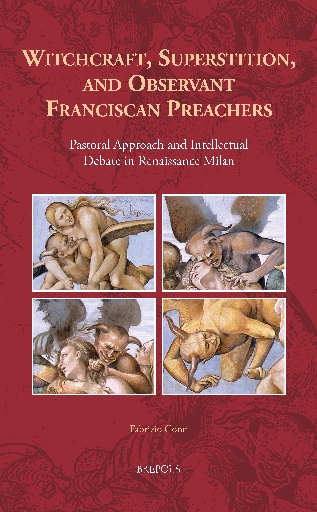
Witchcraft, Superstition, and Observant Franciscan Preachers
Pastoral Approach and Intellectual Debate in Renaissance Milan
show More to view fulltext, buy and share links for:Witchcraft, Superstition, and Observant Franciscan Preachers show Less to hide fulltext, buy and share links for: Witchcraft, Superstition, and Observant Franciscan PreachersThis book offers a new and innovative approach to the study of magic and witchcraft in Italy between the late Middle Ages and the early modern period. Unusually, this subject is explored not through inquisitorial trial records or demonological literature, but through the sermons and confession manuals produced by Observant Franciscan friars, focusing on the so-called ‘pastoral’ approach to folklore, superstition, and witchcraft - an approach that appears to have been notably less harsh than that taken by inquisitors and dedicated demonologists.
Central to this research are the writings of a number of friars active at the friary of St Angelo’s in Milan. Among them were preachers and confessors such as Bernardino Busti, who treated superstition as part of a model that categorized the beliefs and behaviours of the faithful, as well as dedicated intellectuals such as Samuele Cassini, who took scepticism towards elements of belief in witchcraft still further, ultimately leading to a clash with groups such as the Dominicans.
By considering the writings of these men in their wider literary and pastoral context, and in the light of the broader reforming aims of the Franciscans, this unique study not only offers new insights into the late medieval understanding of superstition and witchcraft, but also makes an important contribution to the history of pastoral care.
-
-
-
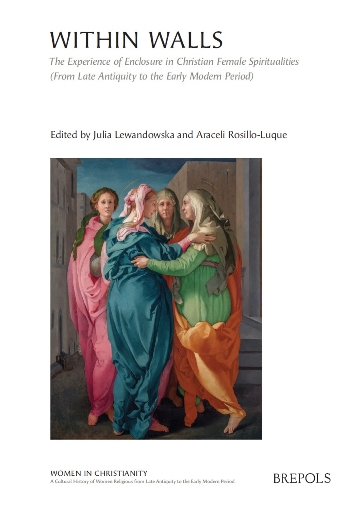
Within Walls
The Experience of Enclosure in Christian Female Spiritualities (From Late Antiquity to the Early Modern Period)
show More to view fulltext, buy and share links for:Within Walls show Less to hide fulltext, buy and share links for: Within WallsWhat different mechanisms did women religious use to interpret the communal and individual aspects of enclosure throughout history? To what extent was enclosure a pivotal feature of Christian spiritual, social and cultural life? How did social and political contexts shape the strategies of nuns and beatas in accepting or rejecting strict enclosure?
Within Walls explores the diverse experiences of enclosure within female Christian spiritualities, presenting it as a crucial concept for a deep understanding of the history of women religious. The volume primarily aims to show the different ways in which women religious lived, negotiated and redefined enclosure in its material and symbolic dimensions. Covering the period from the New Testament era to the late sixteenth century, and spanning regions from the Holy Land and Egypt to Western Europe and colonial Mexico, it explores the evolving meanings and uses of the confined life as experienced and shaped by women religious in Christianity.
The case studies presented in this volume—from the strategies of seclusion of early Christian anchoresses to the plethora of voices of Mediaeval and Early Modern female communities and the authority wielded by individual nuns, pilgrims, prioresses, reformers and mystics—argue that there was by no means a single form of enclosure in female Christian religious life. Instead, inspired by Philip Sheldrake’s interpretation of sacred spaces as polyphonic, this volume stresses the multivocality and multilocality of the term. Adopting an interdisciplinary approach that integrates microhistory, human geography, the cultural analysis of materiality, literary studies, feminist and gender studies, indigenous methodologies, art studies, postcolonial anthropology and the philosophy of religion and spirituality, Within Walls provides fresh perspectives on the most intricate dimension of religious life in history.
-
-
-
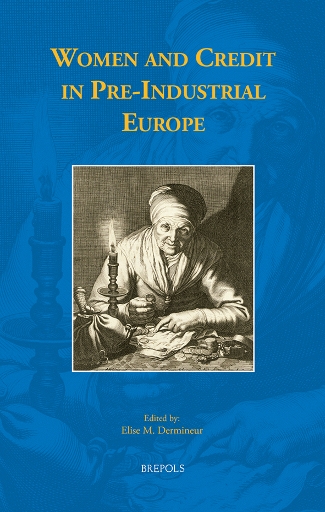
Women and Credit in Pre-Industrial Europe
show More to view fulltext, buy and share links for:Women and Credit in Pre-Industrial Europe show Less to hide fulltext, buy and share links for: Women and Credit in Pre-Industrial EuropeThis collection of essays compares and discusses women’s participation and experiences in credit markets in early modern Europe, and highlights the characteristics, common mechanisms, similarities, discrepancies, and differences across various regions in Europe in different time periods, and at all levels of society. The essays focus on the role of women as creditors and debtors (a topic largely ignored in traditional historiography), but also and above all on the development of their roles across time. Were women able to enter the credit market, and if so, how and in what proportion? What was then the meaning of their involvement in this market? What did their involvement mean for the community and for their household? Was credit a vector of female emancipation and empowerment? What were the changes that occurred for them in the transition to capitalism? These essays offer a variety of perspectives on women’s roles in the credit markets of early modern Europe in order to outline and answer these questions as well as analysing and exploring the nature of women, money, credit, and debt in a pre-industrial Europe.
-
-
-
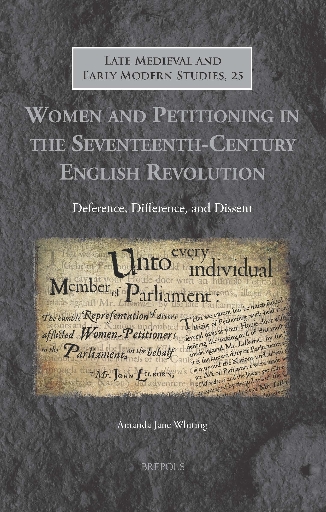
Women and Petitioning in the Seventeenth-Century English Revolution
Deference, Difference, and Dissent
show More to view fulltext, buy and share links for:Women and Petitioning in the Seventeenth-Century English Revolution show Less to hide fulltext, buy and share links for: Women and Petitioning in the Seventeenth-Century English RevolutionDuring the English Civil Wars and Revolution (1640-60), the affairs of Church and State came under a crucial new form of comment and critique, in the form of public petitions. Petitioning was a readily available mode of communication for women, and this study explores the ways in which petitioning in seventeenth-century England was adapted out of and differed from pre-Revolutionary modes, whilst also highlighting gendered conventions and innovations of petitioning in that period.
Male petitioning in the seventeenth century did not have to negotiate the cultural assumptions about intellectual inferiority and legal incapacity that constrained women. Yet just because women did not claim separate (and modern) women’s rights does not mean that they were passive, quiescent, or had no political agency. On the contrary, as this study shows, women in the Revolution could use petitioning as a powerful way to address those in power, precisely because it was done from an assumed position of weakness. The petition is not simply a text, authored by a single pen, but a series of social transactions, performed in multiple social and political settings, frequently involving people previously excluded from participation in political discussion or action. To the extent that women participated in collective petitioning, or turned their individual addresses into printed artefacts for public scrutiny, they also participated in the public sphere of political opinion and debate.
-
-
-
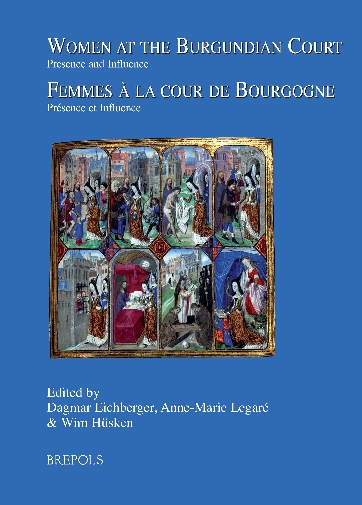
Women at the Burgundian Court: Presence and Influence
Femmes à la Cour de Bourgogne: Présence et Influence
show More to view fulltext, buy and share links for:Women at the Burgundian Court: Presence and Influence show Less to hide fulltext, buy and share links for: Women at the Burgundian Court: Presence and InfluenceThis collection of essays charts the role of women at the Burgundian court by analysing the ways in which medieval women, such as Isabella of Portugal, Margaret of York, Mary of Burgundy, Margaret of Austria made an impact through their physical, moral and spiritual presence at court. During the absence of the prince these well-educated and internationally experienced spouses, mothers and aunts were put in charge of the courtly household or were in some cases appointed regent of the Netherlandish territories for a limited period of time. The youngest generation of women represented by the sisters and consorts of Charles V and Ferdinand I — now forming part of the extended family network — continued this tradition and took it to Germany, Spain, France and Portugal. The court developed into a kind of ‘gender laboratory’, in which women actively negotiated their position of power, thus consolidating their influence in politics, diplomacy, education and art.
-
-
-
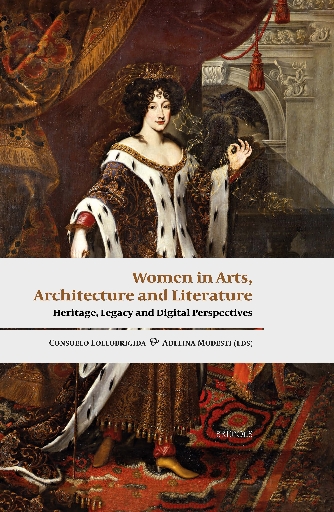
Women in Arts, Architecture and Literature: Heritage, Legacy and Digital Perspectives
Proceedings of the First Annual International Women in the Arts Conference
show More to view fulltext, buy and share links for:Women in Arts, Architecture and Literature: Heritage, Legacy and Digital Perspectives show Less to hide fulltext, buy and share links for: Women in Arts, Architecture and Literature: Heritage, Legacy and Digital Perspectives
Rome, 20–22 October 2021In the last few decades, the study of women in the arts has largely increased in terms of scholars involved in research and investigation, with the reception of the outcomes especially acknowledged by museums which are dedicating part of their mission to organizing exhibitions and/or acquiring the works of women. The Annual International Women in Arts Conference seeks to advance contemporary discussions on how female creativity has helped shape European culture in its heterogeneity since the Middle Ages. This volume collects the proceedings of the first conference organised in Rome, in October 2021. It focuses on the role of women in literature, art, and architecture. Throughout history, these domains were often seen as very masculine. Yet, there have been many women who have made their mark as writers, illuminators, artists and architects, or have played a decisive role as patrons and supporters in these arts. This collection of essays aims to bring these women to the fore and sheds a new light on the heritage and legacy of women in the creative arts and architecture from the Middle Ages until the 20th century.
-
-
-
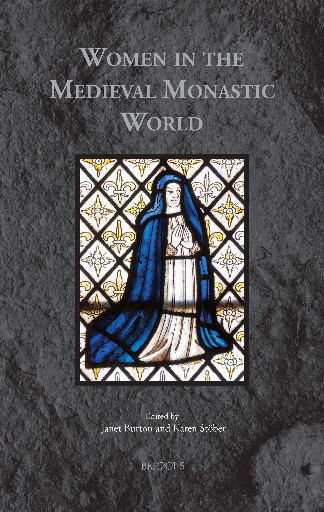
Women in the Medieval Monastic World
show More to view fulltext, buy and share links for:Women in the Medieval Monastic World show Less to hide fulltext, buy and share links for: Women in the Medieval Monastic WorldThere has long been a tendency among monastic historians to ignore or marginalize female participation in monastic life, but recent scholarship has begun to redress the balance, and the great contributions made by women to the religious life of the Middle Ages are now attracting increasing attention. This interdisciplinary volume draws together scholars from Spain, Italy, France, the Low Countries, Germany, Transylvania, Scandinavia, and the British Isles, and offers new insights into the history, art history, and material culture, and the religiosity and culture of medieval religious women.
The different chapters within this book take a comparative approach to the emergence and spread of female monastic communities across different geographical, political, and economic settings, comparing and contrasting houses that ranged from rich, powerful royal abbeys to small, subsistence priories on the margins of society, and exploring the artistic achievements, the interaction with neighbours and secular and ecclesiastical authorities, and the spiritual lives that were led by their inhabitants. The contributors to this volume address issues as diverse as patronage and relationships with the outside world, organizational structures, the nature of Cistercian observance and identity among female houses, and the role of male authority, and in doing so, they seek to shed light on the divergences and commonalities upon which the female religious life was based.
-
-
-
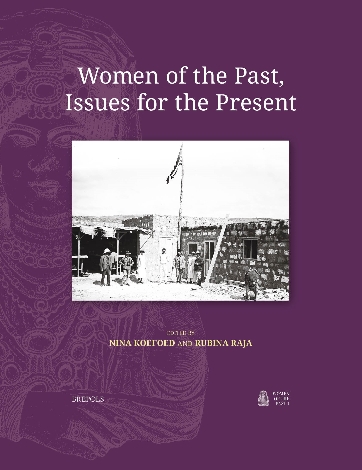
Women of the Past, Issues for the Present
show More to view fulltext, buy and share links for:Women of the Past, Issues for the Present show Less to hide fulltext, buy and share links for: Women of the Past, Issues for the PresentThe roles played by women in history, and even the very idea of what it is to be female, have always been in flux, changing over centuries, between cultures, and in response to diverse social and economic parameters. Even today, women’s roles and women’s rights continue to face changes and pressures. In establishing the series Women of the Past: Testimonies from Archaeology and History, the ambition is to build on the profound theoretical and empirical developments that have taken place over the last fifty years of gender-focused research and to explore them in a contemporary context.
The aim of this series is to shed light on not just the outstanding and extraordinary women who were trendsetters of their time, but also the not quite so outstanding women, often overshadowed by outstanding men, and the ordinary women, those who simply went about their everyday life and kept their world turning in their own quiet way. This edited volume, Women of the Past, Issues for the Present, is the inaugural volume of the series and shows the wide span of the series chronologically, geographically, and socially in terms of the research presented. From Roman slaves to Viking women, and from medieval wet-nurses to the nineteenth-century wives who supported their archaeologist husbands on excavation, this groundbreaking volume opens a new vista in our understanding of the past.
-
-
-
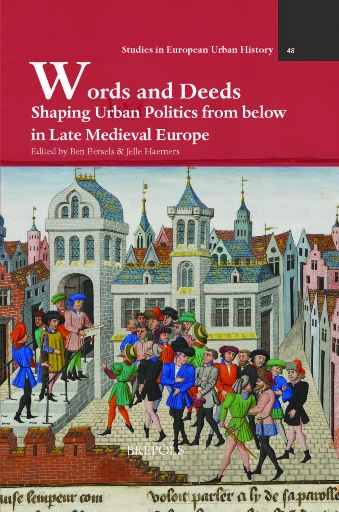
Words and Deeds
Shaping Urban Politics from below in Late Medieval Europe
show More to view fulltext, buy and share links for:Words and Deeds show Less to hide fulltext, buy and share links for: Words and DeedsThis book focuses on the city and urban politics, because historically towns have been an interesting laboratory for the creation and development of political ideas and practices, as they are also today. The contributions in this volume shed light on why, how and when citizens participated in the urban political process in late medieval Europe (c. 1300-1500). In other words, this book reconsiders the involvement of urban commoners in political matters by studying their claims and wishes, their methods of expression and their discursive and ideological strategies. It shows that, in order to garner support for and establish the parameters of the most important urban policies, medieval urban governments engaged regularly in dialogue with their citizens. While the degree of citizens’ active involvement differed from region to region and even from one town to the next, political participation never remained restricted to voting for representatives at set times. This book therefore demonstrates that the making of politics was not the sole prerogative of the government; it was always, to some extent, a bottom-up process as well.
-