Brepols
Brepols is an international academic publisher of works in the humanities, with a particular focus in history, archaeology, history of the arts, language and literature, and critical editions of source works.601 - 700 of 3194 results
-
-
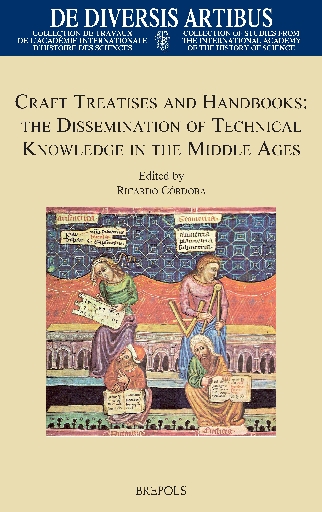
Craft Treatises and Handbooks
The Dissemination of Technical Knowledge in the Middle Ages
show More to view fulltext, buy and share links for:Craft Treatises and Handbooks show Less to hide fulltext, buy and share links for: Craft Treatises and HandbooksThis book is devoted to the study of medieval manuscripts of a technical nature that provide information about manual activities such as textile industry, metallurgy, painting and illumination. The high level of specialization of these crafts involved the need to rely on recipe books, handbooks and treatises. These texts illustrate the various aspects of transmission and dissemination of technical knowledge as well as the written culture of medieval craftsmen.
-
-
-

Crafting Knowledge in the Early Medieval Book
Practices of Collecting and Concealing in the Latin West
show More to view fulltext, buy and share links for:Crafting Knowledge in the Early Medieval Book show Less to hide fulltext, buy and share links for: Crafting Knowledge in the Early Medieval BookThis volume explores how knowledge was made in the early medieval book in the Latin West through two interrelated practices: collecting and concealing. The contributions present case studies across cultures and subject areas, including exegesis, glossography, history, lexicography, literature, poetry, vernacular and Latin learning. Collectio underpinned scholarly productions from miscellanies to vademecums. It was at the heart of major enterprises such as the creation of commentaries, encyclopaedic compendia, glosses, glossaries, glossae collectae, and word lists. As a scholarly practice, collectio accords with the construction of inventories of inherited materials, the ruminative imperative of early medieval exegesis, and a kind of reading that required concentration. Concealment likewise played a key role in early medieval book culture. Obscuration was in line with well-known interpretative practices aimed at rendering knowledge less than immediate. This volume explores the practices of obscuring that predate the twelfth-century predilection, long recognised by historians, for reading that penetrates beneath the “covering” (integumentum, involucrum) to reveal the hidden truth. Cumulatively, the papers spotlight the currency of two crucial practices in early medieval book culture and demonstrate that early medieval authors, artists, compilers, commentators, and scribes were conspicuous collectors and concealers of knowledge.
-
-
-
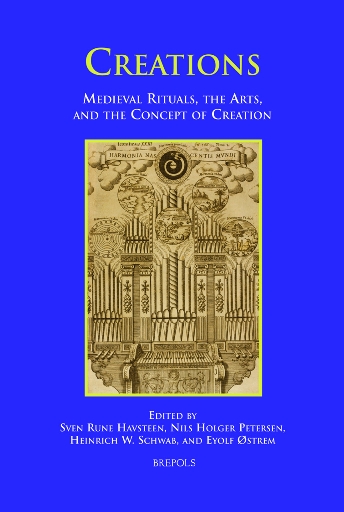
Creations
Medieval Rituals, the Arts, and the Concept of Creation
show More to view fulltext, buy and share links for:Creations show Less to hide fulltext, buy and share links for: CreationsThe meanings of the noun ‘creation’, and the verb ‘to create’, range from the traditional theological idea of God creating ex nihilo to a more recent sense of the process of artistic conception. This collection of thirteen essays, written by scholars of music, literature, the visual arts, and theology, explores the complicated relationship between medieval rituals and theology, and the development of an idea of human artistic creation, which came to the fore in the sixteenth century.
The volume concentrates on the period from the Carolingians to the Counter-Reformation but also includes some twentieth-century musicians. Each essay is dedicated to a particular topic concerned with ritual or artistic beginnings, inventions, harmony and disharmony, as well as representations or celebrations of creation. Central themes include the interplay of the ideas of God as creator, of God acting and recreating in medieval liturgy, of God as artist—the deus artifex of the Pythagorean cosmology, which was occasionally referred to as recently as the early nineteenth century—and, finally, of the homo creator, a concept in which man reflected (and eventually replaced) God in his artistic creativity.
This book therefore features new, significant, individual contributions from a range of scholarly disciplines, but, taken as a whole, it also constitutes a complex interdisciplinary study, with large-scale historical constructions.
-
-
-

Credit and the rural economy in North-western Europe, c. 1200-c. 1850
show More to view fulltext, buy and share links for:Credit and the rural economy in North-western Europe, c. 1200-c. 1850 show Less to hide fulltext, buy and share links for: Credit and the rural economy in North-western Europe, c. 1200-c. 1850This book retraces the nature and role of credit in the pre-industrial European countryside. As part of an ongoing examination of credit and its provision in European past societies, the nine papers collected in this volume offer further insight into the ways in which credit was provided and managed, as well as the opportunities which credit may or may not have presented in effecting economic and social change between c. 1200 and c. 1850. In these respects, the papers in this volume add to a developing investigation of the history of credit and of indebtedness in northern Europe, which also coincides with a continued interest in the structures of credit evident in studies of southern European societies. The present volume also, for a broad North Sea region, develops a concentration upon the economic and social history of credit from the late medieval period to the early nineteenth century. The themes here are deliberately focused on the nature of credit, its form and structure, as well as upon the economic and social impact of credit and the changing availability of the same.
Phillipp Schofield is Professor of Medieval History at Aberystwyth University. He has published extensively on the social, economic and demographic history of late medieval peasant society in England.
Thijs Lambrecht is postdoctoral researcher with the Research Foundation Flanders and the Department of Early Modern History at Ghent University. His research focuses on rural markets in the Southern Netherlands during the early modern period.
-
-
-
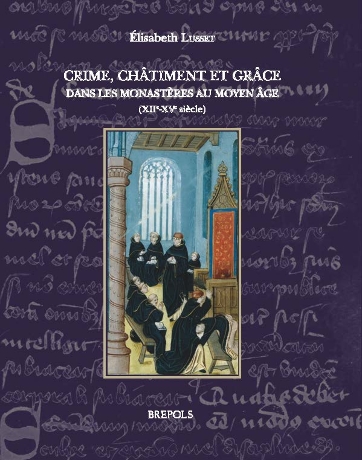
Crime, châtiment et grâce dans les monastères au Moyen Âge (XIIe-XVe siècle)
show More to view fulltext, buy and share links for:Crime, châtiment et grâce dans les monastères au Moyen Âge (XIIe-XVe siècle) show Less to hide fulltext, buy and share links for: Crime, châtiment et grâce dans les monastères au Moyen Âge (XIIe-XVe siècle)Ce livre analyse les crimes commis à l’intérieur des monastères médiévaux (violences, homicides ou encore vols) et la manière dont les religieux criminels étaient corrigés tant par les abbés, les évêques, les chapitres généraux des ordres religieux que par les organes de la curie romaine. Il compare, à l’échelle de l’Europe, les établissements de moines, chanoines réguliers et moniales, qu’ils appartiennent à un ordre (Cluny, Cîteaux, Prémontré, Grande Chartreuse) ou à une nébuleuse moins définie sur le plan juridique (abbayes et prieurés de moines bénédictins ou de chanoines réguliers). En explorant le fonctionnement de la justice claustrale, les peines prescrites ainsi que les mécanismes de réconciliation des criminels, l’ouvrage éclaire sous un angle nouveau les processus de construction institutionnelle et de réforme des ordres religieux entre les XII e et XV e siècles.
-
-
-
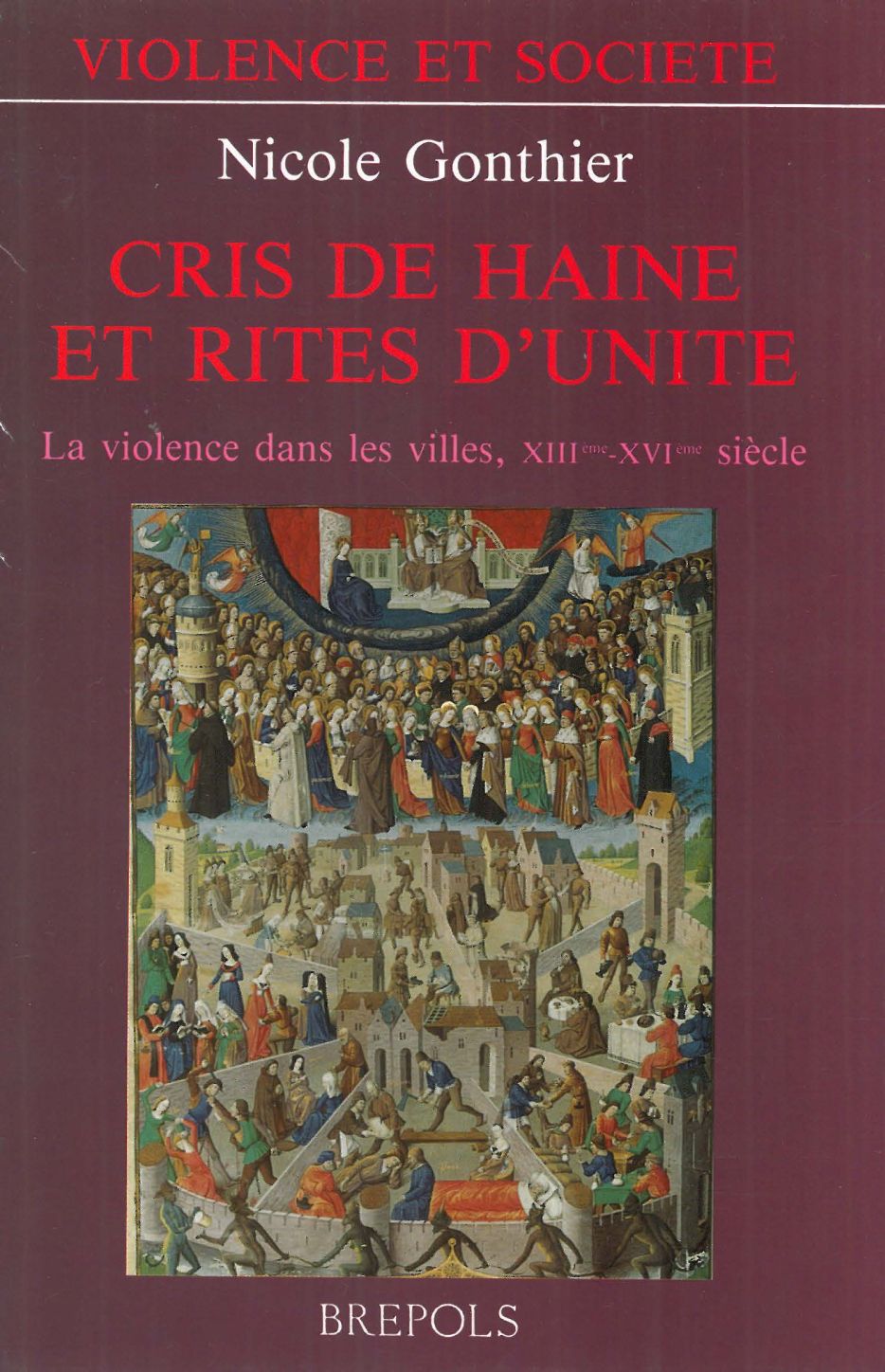
Cris de haine et rites d'unité
La violence dans les villes, 13e-16e siècle
show More to view fulltext, buy and share links for:Cris de haine et rites d'unité show Less to hide fulltext, buy and share links for: Cris de haine et rites d'unitéLa violence semble une composante permanente de la vie urbaine au Moyen-Age. Dans l'espace clos que ménagent les remparts, une société particulière s'est constituée en effet, que des dissensions multiples écartèlent. Jeunes et vieux, laïcs et clercs s'y adonnent également, partageant les rivalités politiques, les querelles d'intérêt, les rancœurs des laissés-pour-compte, ou les haines que développent parmi les populations chrétiennes la présence de minorités juives ou arabes. Quelles que soient ces manifestations - rixes, assassinats, viols, crimes crapuleux, attentats contre les forces de l'ordre, insultes ou blasphèmes - la violence trouve en ville le support de solidarités constituées et s'inscrit dans les rythmes quotidiens : ceux de l'habitation, de la rue, ou des multiples lieux de rencontre qu'offre la cité. Les temps exceptionnels de la fête ou de la révolte exaspèrent ses accès, la rendent sauvage et passionnelle. Pour la prévenir ou la maîtriser afin qu'elle se maintienne en deçà d'un seuil de tolérance, les autorités imaginent bien des procédés, depuis les instances de conciliation ou les prédications de paix jusqu'à la répression policière, en dépit des faiblesses qu'elle présente. Cependant, les peines et les exécutions publiques, qui légitiment les manifestations officielles de la pire cruauté, traduisent une interprétation sélective du crime et un jugement inégal des violents. Tolérée lorsqu'elle exprime le style de vie des notables, la violence est réprimée avec ardeur quand elle se charge d'une menace pour l'ordre politique ou social. A la fin du Moyen-Age, au moment où la puissance de l'Etat se veut démonstrative, la seconde interprétation devient plus fréquente et marginalise une fraction de la population urbaine dont on exagère ou redoute les excès.
-
-
-
Crisis in the Later Middle Ages
Beyond the Postan-Duby Paradigm
show More to view fulltext, buy and share links for:Crisis in the Later Middle Ages show Less to hide fulltext, buy and share links for: Crisis in the Later Middle AgesThese papers are taken from the first of a series of five international conferences devoted to the European conjuncture in 1300. They examine the enduring influence of Michael Postan’s Malthusian model of economic crisis, and in particular the impact upon non-English speaking historians of Postan’s ideas as interpreted by Georges Duby. Through both historiographical essays and original research, the authors reinterpret the later medieval crisis on the continent and in Britain. The vision they express is of a medieval society in which economic, political, and social threads wove together town and country in a complex web extending to the furthest reaches of the ‘margin’, in the highlands of the Mediterranean and on the heaths of England. In order to understand the later medieval crisis, our attention must shift to how individuals negotiated and manoeuvred among institutions of exchange, power, and culture in their bewildering complexity rather than focus upon the modelling of reified factors.
-
-
-
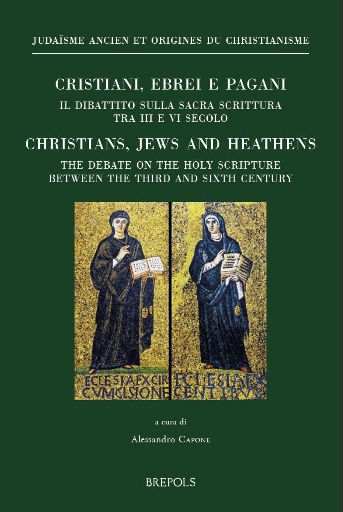
Cristiani, ebrei e pagani: il dibattito sulla Sacra Scrittura tra III e VI secolo - Christians, Jews and Heathens: the Debate on the Holy Scripture between the Third and the Sixth Century
show More to view fulltext, buy and share links for:Cristiani, ebrei e pagani: il dibattito sulla Sacra Scrittura tra III e VI secolo - Christians, Jews and Heathens: the Debate on the Holy Scripture between the Third and the Sixth Century show Less to hide fulltext, buy and share links for: Cristiani, ebrei e pagani: il dibattito sulla Sacra Scrittura tra III e VI secolo - Christians, Jews and Heathens: the Debate on the Holy Scripture between the Third and the Sixth CenturyMany of the contributions here collected were presented on the International Day of Studies entitled “Cristiani, ebrei e pagani: il dibattito sulla Sacra Scrittura tra III e VI secolo”, held in Lecce (October 4th, 2013). The book explores the different approaches to the Sacred Scriptures by Christians, Jews and Heathens considered according to their various internal, geographical and chronological articulations, and more generally to the debate on the Scriptures developed between the 3rd and the 6th centuries in a society in which the interactions and meetings between peoples, religions and intellectuals were rather widespread. In particular, the contributions, which contribute to the reconstruction of a complex and articulated cultural landscape, are organized in three sections: I. Contraddizioni bibliche e cultura pagana (S. Morlet, C. Moreschini, A. Capone); II. Esegesi e polemica: Celso e Macario di Magnesia (E. Saponaro, P. De Giorgi, A. Cataldo); III. III. Ebrei, pagani e Sacre Scritture (P. Andris, G. Rinaldi, M. Ryzhik).
-
-
-
Croire, s'engager, chercher. Autour de Jean Baubérot, du protestantisme à la laïcité
show More to view fulltext, buy and share links for:Croire, s'engager, chercher. Autour de Jean Baubérot, du protestantisme à la laïcité show Less to hide fulltext, buy and share links for: Croire, s'engager, chercher. Autour de Jean Baubérot, du protestantisme à la laïcitéJean Baubérot: l’historien et le sociologue des protestantismes, puis de la laïcité en France et dans le monde. Une œuvre dont l’unité puissante n’a d’égale que la variété des curiosités et des approches, le goût de l’idée et celui du débat, une inventivité parfois joyeuse, toujours scientifiquement fondée. Homme de responsabilités et conférencier internationalement reconnu, le président honoraire de l’École pratique des hautes études n’a jamais ménagé sa peine pour promouvoir ses idées dans un dialogue engagé. À l’occasion du vingtième anniversaire du Groupe Sociologie Religions Laïcités qu’il a fondé et dont le rayonnement est à l’image de celui de son œuvre, une trentaine de spécialistes des protestantismes et des laïcités, historiens, sociologues, philosophes, politistes…, français et étrangers, se sont réunis pour rendre à Jean Baubérot le seul hommage qui ait un sens: prolonger le travail et la discussion autour des thèmes qui lui sont chers et qui continuent à passionner la communauté des chercheurs mais aussi et surtout l’ensemble de la société française, et ailleurs dans le monde. Une grande leçon scientifique et citoyenne.
-
-
-

Crossing Borders in the Insular Middle Ages
show More to view fulltext, buy and share links for:Crossing Borders in the Insular Middle Ages show Less to hide fulltext, buy and share links for: Crossing Borders in the Insular Middle AgesThis volume offers an in-depth exploration of the cultural connections between and across Britain, Ireland, and Iceland during the high and late Middle Ages. Drawing together new research from international scholars working in Celtic Studies, Norse, and English, the contributions gathered together here establish the coherence of the medieval Insular world as an area for literary analysis and engage with a range of contemporary approaches to examine the ways, and the degrees to which, Insular literatures and cultures connect both with each other, and with the wider European mainstream.
The articles in this collection discuss the Insular histories of some of the most widely read literary works and authors of the Middle Ages, including Geoffrey of Monmouth and William Langland. They trace the legends of Troy and of Charlemagne as they travelled across linguistic and geographical borders, give fresh attention to the multilingual manuscript collections of great households and families, and explore the political implications of language choice in a linguistically plural society. In doing so, they shed light on a complex network of literary and cultural connections and establish the Insular world not as a periphery, but as a centre.
-
-
-
Crossing Boundaries
Issues of Cultural and Individual Identities in the Middle Ages and the Renaissance
show More to view fulltext, buy and share links for:Crossing Boundaries show Less to hide fulltext, buy and share links for: Crossing BoundariesThe essays presented here cover a range of topics and periods and testify to the breadth and depth of “boundaries” as a concept. The concept’s origins are located in the work of ethnographers, whose most cogent representative is Fredrik Barth. In his seminal work Ethnic Groups and Boundaries, a collection of articles by Barth and others published in 1967, he shifted the scholarly discussion about ethnicity away from particular attributes that define ethnic groups to the boundaries that separate them from another. Boundaries were less significant for what they enclosed than for their very nature and purpose. The disciplines that make most use of the concept of “crossing boundaries” are the youngest, such as feminist and gender studies or, more generally, cultural studies.
The first section of the collection consists of literary approaches to boundaries, ranging widely in subject matter from Norman drama to sixteenth-century goodnight ballads. In the second part, the concept of boundaries is brought to bear on the existentia1 plight of Byzantine refugees, Marian devotion in Milanese music, witch hunters’ manuals and finally strangers in Tudors England. In every case, literary texts come into play, but most of these authors seek to apply the concept of transgression and boundaries to their texts in different ways. Individually and as a group, the essays contribute fresh insights into wel1-known and some less familiar works of the Middle Ages and the Renaissance.
-
-
-

Crossing Disciplinary Boundaries in Studies of the Viking Age
show More to view fulltext, buy and share links for:Crossing Disciplinary Boundaries in Studies of the Viking Age show Less to hide fulltext, buy and share links for: Crossing Disciplinary Boundaries in Studies of the Viking AgeWhat happens when scholars cross outside the perceived ‘boundaries’ of their discipline? What problems arise when a scholar trained in one field employs materials or methodologies from an adjacent subject area, engaging with new sources, research methodologies, and traditions, and how can such issues be resolved? Taking as its starting point the increasing shift towards interdisciplinarity seen within Viking-age studies, this collection of essays aims to explore the benefits and pitfalls that can arise from crossing disciplinary borders in this area, and to gain new knowledge about how to address issues that have occurred in previous examples of interdisciplinary combinations. The volume draws together contributions from authors in different disciplines, among them philology, history, archaeology, literary studies, folklore studies and history of religion, in order to hold a constructive and multi-perspective discussion on the benefits and issues arising from interdisciplinary research in studies of the Viking Age. Together, these chapters aim to bridge the gap that often exists between scholars from adjacent fields of research, and in doing so, to stimulate the trend in interdisciplinary approaches to research that can improve our understanding of the past.
-
-
-
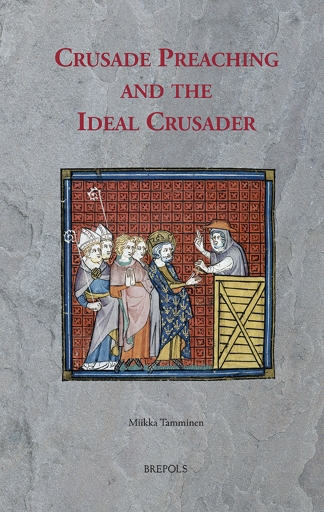
Crusade Preaching and the Ideal Crusader
show More to view fulltext, buy and share links for:Crusade Preaching and the Ideal Crusader show Less to hide fulltext, buy and share links for: Crusade Preaching and the Ideal CrusaderCrusade preachers had a number of responsibilities during the Middle Ages. Preachers were responsible for communicating crusading messages to Christian subjects. They recruited crusaders and sought supporters for the movement. They collected crusading funds and participated in campaigns. During the journeys, the preachers played a central role in creating the identity of the crusading armies, in sustaining the morale of the crusaders, and in explaining the goals of an expedition to the participants. This book explores the creation of the ideal crusader in thirteenth-century society. It presents, for the first time, a study of the crusade model sermons of the thirteenth century as a corpus in its entirety. How were the crusades promoted? How was crusading ideology disseminated throughout Christendom by experienced crusade preachers? What were the characteristics of the ideal crusader? The book considers various dimensions of crusade ideology and the values associated with crusading in thirteenth-century society - the qualities that were appreciated and valued by contemporaries, and the traits that were considered disadvantageous in a crusading context. The expectations, the aspirations, and the concerns of crusade preachers with regard to the conduct and the quality of the crusaders are also explored.
-
-
-
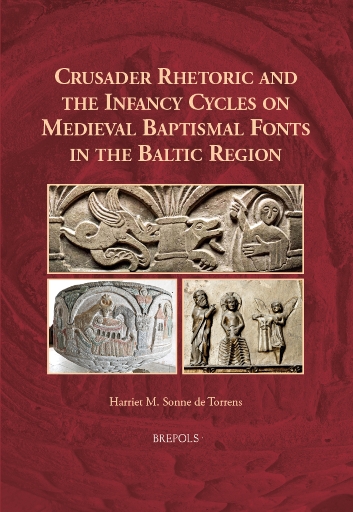
Crusader Rhetoric and the Infancy Cycles on Medieval Baptismal Fonts in the Baltic Region
show More to view fulltext, buy and share links for:Crusader Rhetoric and the Infancy Cycles on Medieval Baptismal Fonts in the Baltic Region show Less to hide fulltext, buy and share links for: Crusader Rhetoric and the Infancy Cycles on Medieval Baptismal Fonts in the Baltic RegionThis is the first comprehensive, interdisciplinary analysis to demonstrate that the representation of Infancy cycles on twelfth-and-thirteenth-century baptismal fonts was primarily a northern predilection in the Latin West directly influenced by the contemporary military campaigns. The Infantia Christi Corpus, a collection of approximately one-hundred-and-fifty fonts, verifies how the Danish and Gotland workshops modified and augmented biblical history to reflect the prevailing crusader ideology and rhetoric that dominated life during the Valdemarian era in the Baltic region. The artisans constructed the pictorial programs according to the readings of the Mass for the feast days in the seasons of Advent, Christmas and Epiphanytide. The political ambitions of the northern leaders and the Church to create a Land of St. Peter in the Baltic region strategically influenced the integration of Holy Land motifs, warrior saints, militia Christi and martyrdom in the Infancy cycles to justify the escalating northern conquests.
Neither before nor after, in the history of baptismal fonts, have so many been ornamented with the Infancy cycle in elaborate pictorial programs. A brief revival of elaborate Infancy cycles occurs on the fourteenth and fifteenth century fonts commissioned for sites previously located in the Christian borderlands east of the Elbe River with the rise of the Baltic military orders and the advancement of the Church authority. This extraordinary study integrates theological, liturgical, historical and political developments, broadening our understanding of what constituted northern crusader art in the twelfth and thirteenth centuries.
-
-
-

Crusading Europe
Essays in Honour of Christopher Tyerman
show More to view fulltext, buy and share links for:Crusading Europe show Less to hide fulltext, buy and share links for: Crusading EuropeThe image of the crusades often connotes exoticism and foreign adventuring. However, the underlying motivations, daily practicalities, and lasting impact of the crusades on their European birthplace are equally important. How did European anxieties, prejudices, and priorities propel the crusading movement? How did crusaders understand and manage the particularly European geographical, legal, and financial dimensions of their campaigns? How did the crusades mark medieval European architecture, spirituality, and literature? This volume not only engages these provocative questions but also serves as a monument to the career of Christopher Tyerman, who has done so much to integrate European and global crusading history. The collection of essays gathered here by leading crusade historians, Tyerman’s friends and former students, furthers study of the crusades within their European context, highlighting intriguing new directions for teaching and researching the crusades and their impact.
-
-
-

Crusading and Ideas of the Holy Land in Medieval Britain
show More to view fulltext, buy and share links for:Crusading and Ideas of the Holy Land in Medieval Britain show Less to hide fulltext, buy and share links for: Crusading and Ideas of the Holy Land in Medieval BritainCrusading and western interaction with the Holy Land is often a contentious topic, not least because modern popular perception of medieval east-west contact is that it was defined by violence, conquest, and religious persecution. Building on recent scholarship, this collection of essays takes an interdisciplinary approach to the role of crusading and contact with the Holy Land in medieval Britain in order to investigate the myriad ways in which these contacts influenced artistic, literary, visual, and social culture in medieval Britain. By looking at new material and focusing on the domestic response to crusading and the Holy Land, the contributions gathered here offer new insights into the influence of these contacts on the medieval British world view, as well as their impact on topics such as ideals about masculinity and kingship, geographical perception, and aspirational codes of conduct for the medieval British elite.
-
-
-
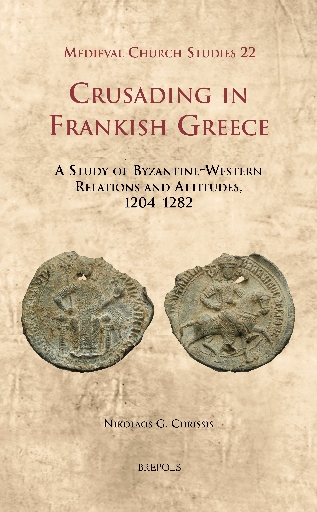
Crusading in Frankish Greece
A Study of Byzantine-Western Relations and Attitudes, 1204-1282
show More to view fulltext, buy and share links for:Crusading in Frankish Greece show Less to hide fulltext, buy and share links for: Crusading in Frankish GreeceAfter becoming a major aspect of the contact between East and West during the twelfth century, the Crusades were even more widely deployed in the thirteenth century at the frontiers of Latin Christendom (in the Holy Land, the Iberian peninsula, and the Baltic), as well as within western Europe. Another such front was opened up after the conquest of Constantinople by the army of the Fourth Crusade in 1204, where the opponents were the Christian but ‘schismatic’ Greeks. A series of crusades were proclaimed for the defence of the Frankish states which were set up in the formerly Byzantine territories.
This development defined the policy of the papacy, of the Latin powers, and of the Greek states in the area, and had a profound impact on Greco-Latin relations in the thirteenth century. At the same time, it constituted an important stage in the expansion of crusading at large, and was an integral part of the process of Latin Christendom’s self-definition against the various ‘others’ it came in contact with: Muslims, pagans, as well as Eastern Christians. Yet, despite their importance, these expeditions have not been systematically examined before.
This book addresses this omission. Drawing from both Byzantine and crusade historiography and making use of a wealth of unexploited sources, it investigates the evolution of crusading in Frankish Greece and places it in the context of Byzantine-western interaction, of political circumstances across Europe, and of developments in the theory and practice of Holy War.
-
-
-
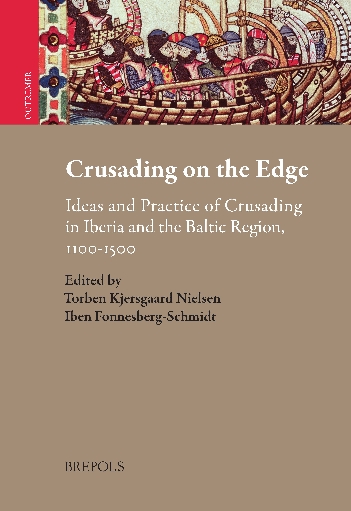
Crusading on the Edge
Ideas and Practice of Crusading in Iberia and the Baltic Region, 1100-1500
show More to view fulltext, buy and share links for:Crusading on the Edge show Less to hide fulltext, buy and share links for: Crusading on the EdgeThis volume brings together contributions from fifteen historians and art historians working on the history of the crusades, focusing on Iberia and the Baltic region. The subjects treated include the historiography of the Iberian and Baltic crusades; the transfer of crusading ideas from the Holy Land to Iberia and the Baltic region and the use of such ideas in local rhetoric and propaganda; the papal attitudes towards the Iberian and Baltic campaigns; the papal attitudes towards Muslims living in Christian Spain; the interaction between conquered and conquerors as reflected in art and architecture; and the exchange of information about the crusades in Iberia and the wider Baltic Region. The collection thus throws further light not only onto events in the Iberian Peninsula and the Baltic region but also onto the development of the crusade movement in general. It constitutes a valuable resource for both undergraduates and postgraduates studying the crusade movement in the Middle Ages.
Torben Kjersgaard Nielsen is Associate Professor in Medieval History at Aalborg University, Denmark. His main research interests cover the history of the Baltic Crusades, the medieval papacy, and Denmark in the Middle Ages.
Iben Fonnesberg-Schmidt is Professor (MSO) of Medieval History at Aalborg University, Denmark. Her research interests focus on papal communication and papal involvement in mission and crusades in the central Middle Ages.
-
-
-
Crusading, Society, and Politics in the Eastern Mediterranean in the Age of King Peter I of Cyprus
show More to view fulltext, buy and share links for:Crusading, Society, and Politics in the Eastern Mediterranean in the Age of King Peter I of Cyprus show Less to hide fulltext, buy and share links for: Crusading, Society, and Politics in the Eastern Mediterranean in the Age of King Peter I of CyprusThe King of Cyprus, Peter I of Lusignan (1359-1369), was one of the most fascinating figures in the history of the Latin East and the later crusades. He was involved in European power politics, his crusading activities brought him into conflict with the Turkish beyliks of Anatolia and the Mamluk sultanate of Egypt, and his rule was closely linked with broader developments in the Eastern Mediterranean, such as the decay of Byzantium, the East-West schism, and the beginning of the Ottoman expansion in the Balkans. His adventurous life constitutes a captivating case study of court life, feudal and chivalric ethos, and political culture in the fourteenth century. This volume investigates developments in the Eastern Mediterranean before and during the reign of Peter I from a comparative perspective. It consists of five parts, which treat the political, diplomatic, and ecological context of the crusading movement in the time between the fall of Acre (1291) and the sack of Alexandria (1365), Peter I’s crusading policy and the Alexandrian crusade, Cypriot society and court life in the time of Peter I, the situation in Muslim-Turkish Anatolia, the second target of King Peter’s crusading policy, and, finally, Byzantium, its encounter with the Turks, the schism of the Churches, and theological trends in the time of the Hesychast Controversy.
-
-
-
Crónicas hispanas del siglo XIII
show More to view fulltext, buy and share links for:Crónicas hispanas del siglo XIII show Less to hide fulltext, buy and share links for: Crónicas hispanas del siglo XIIILa Crónica latina de los reyes de Castilla es una historia de los reinos de Castilla y León desde la muerte del conde Fernán González (970) hasta 1236. Transmitida sin nombre de autor, hoy día existe un cierto consenso en atribuirla al obispo Juan de Osma (†1246). No obstante, el estilo diferente de su última parte (capp. 60-75) sugiere la existencia de un segundo redactor que habría trabajado sobre materiales del autor principal. La Historia de la traslación de san Isidoro es un relato hagiográfico anónimo elaborado verosímilmente en el monasterio de San Isidoro de León a finales del s. xii o comienzos del xiii. Se ocupa del traslado de las reliquias del santo desde Sevilla a León en 1063, de los últimos años de Fernando I (†1065) y de los milagros acaecidos junto a la tumba del santo en tiempos de Alfonso VI (1065-1109). El Poema de Julia Rómula, en versos goliárdicos, es obra de Guillermo Pérez de la Calzada, abad de Sahagún (1129-1232), luego privado de su cargo y fallecido en la mayor pobreza en el monasterio de San Zoilo de Carrión. Centrado en la conquista de Sevilla en 1248 por Fernando III (1230-1252), el poema fue dedicado en 1250 al infante don Alfonso, el futuro Alfonso X el Sabio.
El texto latino en el que se basa este volumen apareció en la serie Corpus Christianorum Continuatio Mediaeualis bajo el título de Chronica Hispana saeculi XIII (CCCM 73). En los márgenes de esta traducción pueden encontrarse las referencias a las páginas correspondientes de la edición.
Luis Charlo Brea es profesor emérito en el Departamento de Filología Clásica de la Universidad de Cádiz. Juan Antonio Estévez Sola es profesor titular de Universidad en el Departamento de Filologías Integradas de la Universidad de Huelva. Rocío Carande Herrero es catedrática de Universidad en el Departamento de Filología Griega y Latina en la Universidad de Sevilla.
-
-
-
Cult, Devotion, and Aesthetics in Later Byzantine Poetry
show More to view fulltext, buy and share links for:Cult, Devotion, and Aesthetics in Later Byzantine Poetry show Less to hide fulltext, buy and share links for: Cult, Devotion, and Aesthetics in Later Byzantine PoetryPublic religious ritual and private devotional practice together occasioned much of the production of Byzantine poetry. This includes not only hymns, an integral part of the liturgy since Late Antiquity, but also versified texts with a specific liturgical function (synaxaria, calendars, metrical prefaces), metrical hagiography, epigrams (inscribed on church buildings, icons, religious objects, books), or poems with a more personal character, such as versified prayers, catanyctic poems (i.e., poems of contrition) and self-addressed poems (eis heauton). These texts often have much in common, well beyond their metrical form: from their contexts of performance and reception to the themes, literary motifs, and rhetorical devices they contain. It was not uncommon for a single author to write in a variety of the aforementioned genres; and yet these texts are rarely studied together (not least due to the specialized nature of the expertise of individual scholars). Later Byzantium offers us a particularly rich spectrum of sacred poetry, which has only recently started to arouse significant interest. While most of its poetic genres have a long history in Byzantine literature, their metamorphoses in this period – connected to changes in socio-political, cultural and religious conditions – deserve closer study. It is the purpose of this volume to propose a broader scholarly approach to the aesthetics of Byzantine poetry, taking into consideration the contexts of religious practice and devotion from c. the 11th to the 15th centuries.
-
-
-
Cultic Graffiti in the Late Antique Mediterranean and Beyond
show More to view fulltext, buy and share links for:Cultic Graffiti in the Late Antique Mediterranean and Beyond show Less to hide fulltext, buy and share links for: Cultic Graffiti in the Late Antique Mediterranean and BeyondGraffiti, scratched or drawn on the walls of religious shrines, provide unique unmediated evidence of how ordinary men and women, many of them pilgrims, invoked and sought the help of God and the saints in Late Antiquity. The papers in this volume document and discuss cultic graffiti across the entire late antique Mediterranean, and into Nubia and Arabia. The principal focus is the Christian world, but there are also papers that look back to pre-Christian practice, and into the world of early Islam. Presenting evidence that is often unfamiliar, this is an important volume for anyone interested in the History and Archaeology of Late Antiquity. In examining cultic practice, we are almost always compelled to view the actions of devotees through texts written by the ecclesiastical elite, often with a clear hagiographical agenda in mind - cultic graffiti are evidence produced by the protagonists themsleves.
-
-
-

Cultivating the Earth, Nurturing the Body and Soul: Daily Life in Early Medieval England
Essays in Honour of Debby Banham
show More to view fulltext, buy and share links for:Cultivating the Earth, Nurturing the Body and Soul: Daily Life in Early Medieval England show Less to hide fulltext, buy and share links for: Cultivating the Earth, Nurturing the Body and Soul: Daily Life in Early Medieval EnglandHow did food impact social relationships in early medieval England? What cultivation practices were followed, to produce the best possible food supplies? What was the cultural significance of bread? How was the human body nourished? When sickness inevitably occurred, where did one go, and who was consulted for healing? And how was spiritual health also protected? The essays gathered together in this exciting volume draw on a range of different disciplines, from early medieval economic and social history, to experimental archaeology and medieval medicine, to offer a unique overview into day-to-day life in England nearly two millennia ago.Taking as their starting point the broad research interests of the volume’s honorand, Dr Debby Banham, contributors here offer new insights into the reproduction and ritual use of vernacular charms, examine the collation and translation of medieval medicine, elucidate monastic economies and production, and uncover the circumstances behind the production and transmission of medical manuscripts in early medieval England. Presenting new insights into agricultural practices and animal husbandry, monastic sign language and materia medica, plant knowledge and medical practices, the chapters within this volume not only offer a fitting tribute to Banham’s own groundbreaking work, but also shed new light on what it meant to nurture both body and soul in early medieval England.
-
-
-

Cultural Models for Emotions in the North Atlantic Vernaculars, 700–1400
show More to view fulltext, buy and share links for:Cultural Models for Emotions in the North Atlantic Vernaculars, 700–1400 show Less to hide fulltext, buy and share links for: Cultural Models for Emotions in the North Atlantic Vernaculars, 700–1400While the medieval regions that form modern-day Britain, Ireland, Iceland, and the Scandinavian states were, very much like today, home to diverse ethnic and linguistic groups, it is evident that the peoples who inhabited the north-western Atlantic seaboard at this time were nonetheless connected by key cultural, environmental, historical, and ideological experiences that set them apart from other regions of Europe. This volume is the first to focus specifically on these cultural and linguistic connections from the perspective of the history of emotions. The contributions collected here examine cultural encounters among medieval North Atlantic peoples with regard to the gradual development of shared emotional models and the emergence of early cross-cultural emotional communities in this region. The chapters also explore how the folk psychologies illustrated in the oldest European vernacular writing traditions (Irish, English, and Scandinavian) bear witness to cultural models for emotions that first took shape in pre-Christian times.
-
-
-
Culture and Literature in Latin Late Antiquity
Continuities and Discontinuities
show More to view fulltext, buy and share links for:Culture and Literature in Latin Late Antiquity show Less to hide fulltext, buy and share links for: Culture and Literature in Latin Late AntiquityIn recent decades many valuable studies have been highlighting the cultural changes that deeply affected the Roman world between the fourth and sixth centuries AD. These changes, mostly due to Christianization as well as reactions to it, occurred in literary and cultural fields. In the past they have been explained through a well-defined pattern, namely a twofold process, adapting changing contents to unchanging formal structures. However, this pattern may not be effective today, given the new framework arising from the increasing amount of data and its close examination.
The papers herein collected deal with many specific texts or issues, all included in the so-called literary area of ‘secularity’ (according to the definition by R. A. Markus). The aim of this case-studies gallery, ranging from the fourth to seventh centuries AD, is precisely to offer a multi-layered approach to the complex, unclear-cut interweaving of continuity and discontinuity. Indeed, this is at the heart of the transformation process of intellectual horizons in Latin Late Antiquity.
This volume consists of three sections, devoted to investigating the transformation of cultural heritage in poetry and prose respectively, and the key role of school education in shaping late ancient ‘secular’ culture.
-
-
-
Cultures in Contact
Scandinavian Settlement in England in the Ninth and Tenth Centuries
-
-
-
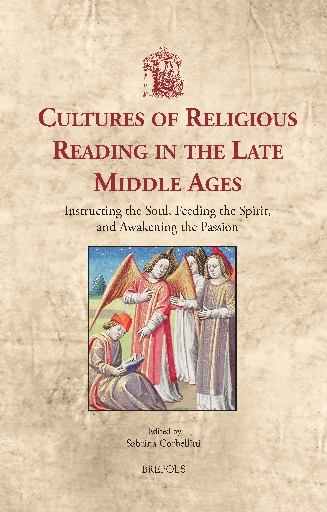
Cultures of Religious Reading in the Late Middle Ages
Instructing the Soul, Feeding the Spirit, and Awakening the Passion
show More to view fulltext, buy and share links for:Cultures of Religious Reading in the Late Middle Ages show Less to hide fulltext, buy and share links for: Cultures of Religious Reading in the Late Middle AgesRead often, learn all that you can. Let sleep overcome you, the roll still in your hands; when your head falls, let it be on the sacred page.
- St Jerome, 384 AD
With these words, the Church Father Jerome exhorted the young Eustochium to find on the sacred page the spiritual nourishment that would give her the strength to live a life of chastity and to keep her monastic vows. His call to read does not stand alone. Books and reading have always played a pivotal role in early and medieval Christianity, often defined as ‘a religion of the book’.
A second important stage in the development of the ‘religion of the book’ can be attested in the late Middle Ages, when religious reading was no longer the exclusive right of men and women living in solitude and concentrating on prayer and meditation. Changes in the religious landscape and the birth of new religious movements transformed the medieval town into a privileged area of religious activity. Increasing literacy opened the door to a new and wider public of lay readers. This seminal transformation in the late medieval cultural horizon saw the growing importance of the vernacular, the cultural and religious emancipation of the laity, and the increasing participation of lay people in religious life and activities.
This volume presents a new, interdisciplinary approach to religious reading and reading techniques in a lay environment within late medieval textual, social, and cultural transformations.
-
-
-
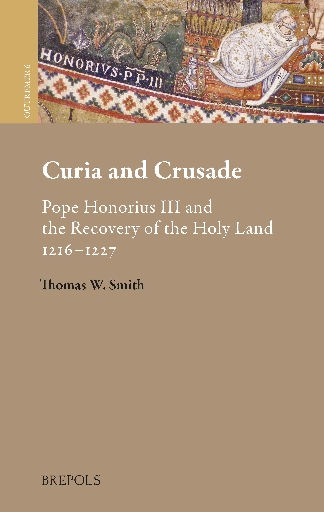
Curia and Crusade
Pope Honorius III and the Recovery of the Holy Land: 1216–1227
show More to view fulltext, buy and share links for:Curia and Crusade show Less to hide fulltext, buy and share links for: Curia and CrusadeThe pontificate of Honorius III (1216-27) ranks among the most important papal reigns of the thirteenth century: the pope organised two large-scale crusades to recover the Holy Land, the second of which recovered Jerusalem for the first time since 1187; he presided over a ‘golden summer’ of papal-imperial relations with the medieval stupor mundi, Frederick II, emperor of the Romans and king of Sicily; he developed an original theological conception of his office; and he laid the foundations for a centralised papal financial machine. Yet, despite his significant impact on thirteenth-century Christendom, Honorius has often languished in the shadow of his famous predecessor, Innocent III - a balance that the present book redresses.
Grounded in extensive original research into the manuscripts of Honorius’s letter registers, this study develops a revisionist interpretation of how the curia marshalled the crusading movement to recover the Holy Land. Questioning the utility of the historiographical construct of ‘papal policy’, this book provides new insights into crusade diplomacy, papal theology, the roles of legates, and the effectiveness of crusade taxation. It also includes a comprehensive and accessible introduction to the papal chancery and its documents, which will be of particular use to students and those approaching the medieval papacy for the first time.
-
-
-
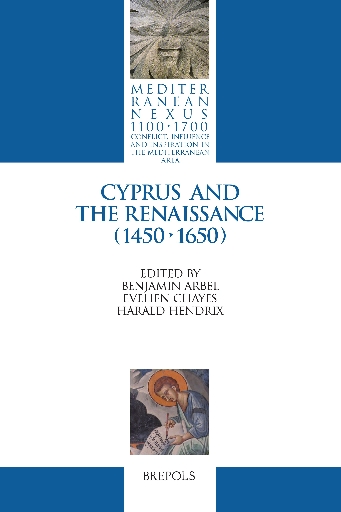
Cyprus and the Renaissance (1450-1650)
show More to view fulltext, buy and share links for:Cyprus and the Renaissance (1450-1650) show Less to hide fulltext, buy and share links for: Cyprus and the Renaissance (1450-1650)These twelve essays by leading scholars in the field are products of an international research project on early modern Cyprus and its relation to cultural developments in the West, started in November 2009.
Cyprus, an independent ‘Frankish’ kingdom from 1191 to 1473, became a Venetian protectorate, then, in 1489, a Venetian colony until its conquest by the Ottomans in 1570. Its population was diverse and rich in religious experience - preponderantly followers of the Greek rite, but also Latins, Eastern Christians and Jews.
Its heritage from Antiquity, as well as from the Byzantine and Frankish periods, its monasteries (which received, reproduced and produced manuscripts) and its geopolitically pivotal site on East-West trade routes attracted numerous Westerners. The cultural magnet drew deeper interests than those of pilgrimage and tourism.
The continuous to and fro of Europeans, many of them Venetian, the island’s importance to economic and military strategies, and the allure conferred by a mythological past stimulated and fostered a generous descriptive and allusive literature.
The present collection is the first of its kind, centered on written culture and exchanges during the Renaissance period, deepening their source-based documentary study, as well as our knowledge of the island’s culture and heritage in relation to cultural developments in Western countries.
-
-
-
Cyrano de Bergerac, Cyrano de Sannois
show More to view fulltext, buy and share links for:Cyrano de Bergerac, Cyrano de Sannois show Less to hide fulltext, buy and share links for: Cyrano de Bergerac, Cyrano de SannoisVoilà trois cent cinquante ans mourait, à l’âge de trente-six ans, le « vrai » Cyrano de Bergerac, personnage et auteur atypique encore peu connu du grand public. En 2005, en commémoration de sa disparition, un colloque international réunissant les meilleurs connaisseurs de l’homme et de l’écrivain se tenait à Sannois - la ville où il avait souhaité finir ses jours. La rencontre, dont on trouvera les actes dans ce volume, sut tenir toutes ses promesses, s’interrogeant sur la personnalité énigmatique et attachante de Cyrano, ses idées et ses idéaux, cherchant à percer les mystères de son oeuvre. Notre époque, à la mémoire sélective, a oublié que ce fut longtemps un auteur à succès, de référence. Cependant nous sommes de plus en plus nombreux à le relire et à étudier ses écrits. Rostand, qui n’est pas le moindre parmi les admirateurs de Cyrano, apprécierait certainement que nous rendions à son modèle la place qu’on lui doit dans l’histoire de la littérature française. Qui peut encore ignorer Cyrano ?
-
-
-

Dacia Ripensis
Topografia e cristianizzazione di una provincia danubiana nella Tarda Antichità
show More to view fulltext, buy and share links for:Dacia Ripensis show Less to hide fulltext, buy and share links for: Dacia RipensisLa Dacia Ripensis fu una provincia danubiana la cui esistenza si data fra gli anni ‘80 del III secolo e i primi anni del VII. Il suo territorio funse da cerniera fra il medio ed il basso corso del Danubio e, al tempo stesso, da raccordo fra il barbaricum e l’entroterra illirico. L’urbanizzazione vi ebbe un modesto successo; cionondimeno essa favorì la romanizzazione della provincia dove la militarizzazione si manifesta invece in modo evidente grazie a quanto noto dalla Notitia dignitatum e dall’archeologia. L’attenzione per la difesa dell’area era, del resto, giustificata per via della pressione esercitata da popolazioni come Goti, Unni, Slavi e Avari, che condizionarono la storia dell’intera penisola proprio attraversando la Dacia Ripensis.
Dalle fonti letterarie è noto che la provincia fu anche interessata dalla diffusione della religione cristiana, le cui prime testimonianze si datano ai primordi del IV secolo. Il processo rese possibile l’ascesa di sedi vescovili assai implicate nelle dispute teologiche e nella lotta a dottrine eretiche localmente diffuse ancora nel VI secolo. L’archeologia ha permesso di riconoscere la graduale formazione di questa rete ecclesiastica che, in forme monumentali, è riconoscibile sia in ambito urbano che rurale. Nonostante la sua importanza, questa provincia è stata finora studiata solo occasionalmente e questo volume vuole ovviare a questo problema proponendo uno studio aggiornato, mirato a definire le conoscenze storiche e archeologiche necessarie alla comprensione generale della topografia provinciale così come alla contestualizzazione del processo di cristianizzazione di questa porzione dell’area danubiana.
-
-
-
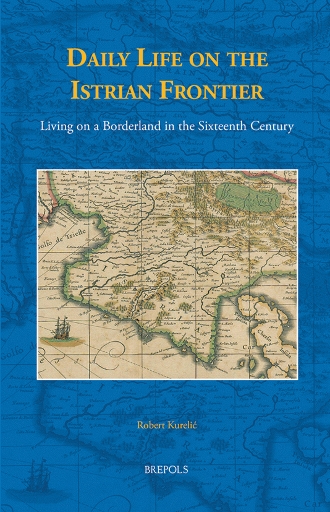
Daily Life on the Istrian Frontier
Living on a Borderland in the Sixteenth Century
show More to view fulltext, buy and share links for:Daily Life on the Istrian Frontier show Less to hide fulltext, buy and share links for: Daily Life on the Istrian FrontierThe Istrian peninsula, located at the head of the Adriatic Sea, has long been a land of divisions. Shared today between the modern-day countries of Italy, Slovenia, and Croatia, the region during the sixteenth century was divided between an urban coastline dominated by the Republic of Venice and a rural inland that fell under the sway of the Austrian Habsburgs. The subject populations of the peninsula - predominantly Slavic Croatians and Slovenians - thus found themselves split between these rival powers, despite their shared cultural background. The result was frequent and violent clashes over boundary markers, pastures, and forests, which, added to the ravages of war, famine, and plague, led to a severe regional depopulation.
This volume also explores the arrival and subsequent social impact of a new wave of immigrants to Istria set against the backdrop of these sixteenth-century tensions. The fearsome Morlaks, Slavic speakers who had fled north from the Balkan hinterlands in the face of the Ottoman threat, were invited into Istria by both Venetians and Habsburgs as a way of replenishing the dwindling population. These new arrivals lived an opportunistic lifestyle that often bordered on banditry, creating inevitable tensions with Istria’s existing population. Even so, some were able to integrate fully into their new homeland. Through a careful analysis of the geographically small, but socially and politically dynamic Istrian frontier, this volume sheds new light on to the complexity of life in a border region, and offers a unique insight into what life was like for ordinary people struggling to live everyday lives at the very end of the Middle Ages.
-
-
-
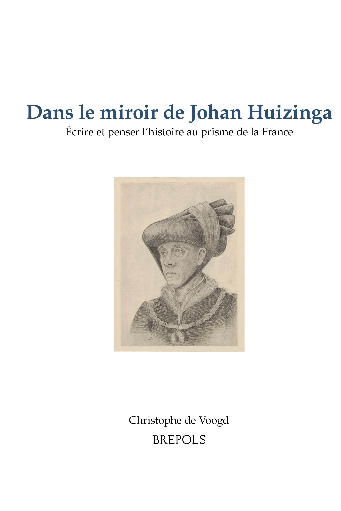
Dans le miroir de Johan Huizinga
Écrire et penser l’histoire au prisme de la France
show More to view fulltext, buy and share links for:Dans le miroir de Johan Huizinga show Less to hide fulltext, buy and share links for: Dans le miroir de Johan HuizingaÉcrire et penser l’histoire au prisme de la France L’automne du Moyen Âge (1919) est assurément l’un des grands classiques de l’historiographie, et le livre comme son auteur, Johan Huizinga (1872-1945), connaissent une attention internationale renouvelée. Mais force est de constater que l’historien néerlandais demeure en France une référence marginale en dehors du milieu des médiévistes, à la différence de son autre chef d’œuvre, Homo ludens (1938).
Or, la prise en compte de l’ensemble de ses écrits permet de mesurer combien son approche peut éclairer les débats épistémologiques de notre temps. Pionnier de l’histoire culturelle, Huizinga met la force des représentations au premier plan du processus historique ; il pratique et préconise une démarche herméneutique et non causale ou structurelle. Car - et c’est là une divergence majeure avec notamment Lucien Febvre et Marc Bloch - il s’agit moins pour lui d’expliquer le passé à travers ses traces que de comprendre ses acteurs à travers leurs signes. D’où le privilège des sources narratives et iconographiques dans une écriture qui, elle-même, prend la forme du récit : un récit nourri d’abondantes références françaises.
C’est pourquoi le présent livre s’efforce de retracer, à travers les relations de Huizinga avec la France, sa conception et son écriture de l’histoire, notamment dans L’automne du Moyen Âge dont on propose ici une relecture. Mais aussi de regarder la France, son histoire et ses historiens dans le miroir de Johan Huizinga, convaincu que l’on est des vertus d’un regard étranger pour éclairer le débat national.
-
-
-
Dante in Purgatory
States of Affect
show More to view fulltext, buy and share links for:Dante in Purgatory show Less to hide fulltext, buy and share links for: Dante in PurgatoryThis volume provides an advanced survey of Dante studies and offers a new, detailed, and accessible reading of his Purgatorio, making this very rich text freshly available to an English-speaking readership. Through analysis of a variety of emotional states across Dante’s three major works - the Purgatorio, Inferno, and Paradiso, and in his minor works, such as the Rime and the Convivio - Dante in Purgatory: States of Affect contends that emotions are historically constructed at different moments. The book also demonstrates that while Dante presents some emotions as defined and distinct, he depicts others as blends of several states of feeling, as emotions which are in process or metamorphosis. In particular, the author examines the seven cardinal vices (‘seven deadly sins’) amid a wider discussion of states of affect. He argues that the emotional states associated with these vices are different from contemporary conceptions of affective states. He compels us to acknowledge that there is a history of both the emotional states themselves and the methods with which we describe them. Above all, his study shows that there is a history of emotions which is part of the history of a European acquisition of a subjective sense of the self. To historicize emotion thus requires that the ‘human’ becomes increasingly defined, as the subject is ascribed further interior qualities which must be named. Dante in Purgatory is thus relevant not only to readers of Dante, but also to any reader interested in thinking about emotion and affectual states and how these can be described, and how they can be conceptualized.
-
-
-
Dante the Theologian
Pierre Mandonnet
show More to view fulltext, buy and share links for:Dante the Theologian show Less to hide fulltext, buy and share links for: Dante the TheologianThe Dominican master par excellence of the historical method, Pierre Mandonnet (1858-1936) came to Dante as one of the leading Thomists and medievalists of his generation. However, his monograph Dante le théologien (1935) was neglected and largely forgotten, mainly as a result of the lay historian Étienne Gilson’s book-length refutation in Dante et la philosophie (1939).
This new edition, and the first English translation, re-presents Mandonnet’s erudite and thought-provoking monograph to contemporary scholars and Dante enthusiasts. It includes a critical introduction that situates Mandonnet’s work in relation to prevailing currents of Dante scholarship in the early twentieth-century, and outlines how it might invite a reappraisal of central features of Dante’s thought today. Mandonnet’s historically-informed account of Dante the theologian as a preacher, doctrinarian, and distinctively medieval poet, as well as his sophisticated analysis of the theological purpose, method, and content of the Commedia will be an invaluable resource for anyone who seeks to understand Dante’s works and their highly contested reception history.
-
-
-
Das Buch Warum
Zur Liturgie im 11./12. Jahrhundert
show More to view fulltext, buy and share links for:Das Buch Warum show Less to hide fulltext, buy and share links for: Das Buch Warum„Der Liber Quare ist ein Traktat über Fragen der Liturgie in Katechismus-Form“, so charakterisiert Pater Götz, der Herausgeber der kritischen Edition, das Buch, geschrieben von einem anonymen Autor im 11. Jahrhundert. In 253 Fragesätzen und Antworten werden für Geistliche die Gründe für die Gestaltung des Offiziums und des Kirchenjahres behandelt. Die Gliederung ist locker: Die Zeit von Septuagesima bis Pfingsten (Fragen 1-118). Das Quatemberfasten und die Weihen der Kleriker (Fragen 119-139). Vom Advent bis Lichtmess (Fragen 140-154). Das Offizium bei Tage (Fragen 155-186) und bei Nacht (Fragen 187-217). Die Hierarchie der Kleriker (Fragen 218-241). Die liturgischen Gewänder (Fragen 242-253).
Der Ausgabe und Übersetzung des Liber Quare wurden auch Texte beigefügt, die in den Handschriften thematisch den einzelnen Fragen zugehörig sind. Sie ergänzen den knappen Test und entsprachen offenbar den Interessen der damaligen Schreiber. In den „Einfügungen“ (12./13. - 15. Jh.) stechen die Erläuterungen zum Vaterunser und die Aufnahme des bekannten Hymnus O Redemptor heraus. Bei den „Zusätzen“ im Anschluss an das Buch, ebenfalls aus dem 12./13. bis 15. Jh., werden manche Themen in den verschiedenen Handschriften ähnlich oder gegenteilig dargestellt: Stundengebet, Advents- und Weihnachtszeit, Fasten- und Osterzeit, liturgisches Brauchtum, allegorisch-aszetische Betrachtungen, Messfeier, Totengedächtnis, Weiheordines, liturgische Kleidung.
Die drei Teile des Bandes - Liber Quare, Einfügungen und Zusätze - ermöglichen einen kulturhistorischen Blick auf die Deutung der Liturgie in Antike und Mittelalter.
Der zugrundeliegende Text dieses Bandes erschien 1983 in der Reihe Corpus Christianorum. Continuatio Mediaeualis als Liturgica. Liber Quare (CC CM, vol. 60), herausgegeben von Georg Polykarp Götz OFMConv. Die Ziffern am Seitenrand verweisen auf die entsprechenden Seiten der Edition.
-
-
-
Das Leben der Maria von Oignies
show More to view fulltext, buy and share links for:Das Leben der Maria von Oignies show Less to hide fulltext, buy and share links for: Das Leben der Maria von OigniesIn diesem Band liegt zum ersten Mal eine deutsche Übersetzung der lateinischen Vita der Maria von Oignies vor. So wird dieses hagiographisch, literarisch und spirituell bedeutende Werk aus dem frühen 13. Jahrhundert einem breiteren Publikum zugänglich gemacht. Diese Vita ist unter vielen Aspekten bedeutsam und von heutigem Interesse. Denn sie gibt Zeugnis von einer hochmittelalterlichen Begine und Mystikerin, die in ständiger inniger Gottesverbindung eine rigorose Askese lebt, faszinierende mystische Erfahrungen hat, als Visionärin und Prophetin Vorhersagen gibt, mit der siebenfachen Geistgabe begnadet wird und Ereignisse des Irdenlebens Jesu imaginiert.
Iris Geyer wurde 1991 mit der Arbeit "Maria von Oignies. Eine hochmittelalterliche Mystikerin zwischen Ketzerei und Rechtgläubigkeit" in Heidelberg promoviert. Sie arbeitet als evangelische Pfarrerin an der Auferstehungskirche in München. Zuletzt, im Jahr 2012, erschien von ihr, in Zusammenarbeit mit Maike Schmauß, "Übers Wasser gehen. Wie die Bibel hilft, nicht im Alltag zu versinken".
Der zugrundeliegende Text dieses Bandes erschien in der Reihe Corpus Christianorum Continuatio Mediaevalis als Iacobus de Vitriaco, Vita Marie de Oegnies (CCCM 252), herausgegeben von R. B. C. Huygens. Die Ziffern am Seitenrand verweisen auf die entsprechenden Seiten der Edition.
-
-
-
Das nestorianische Christentum an den Handelswegen durch Kyrgystan bis zum 14. Jh
show More to view fulltext, buy and share links for:Das nestorianische Christentum an den Handelswegen durch Kyrgystan bis zum 14. Jh show Less to hide fulltext, buy and share links for: Das nestorianische Christentum an den Handelswegen durch Kyrgystan bis zum 14. JhThe missionary enterprise of the so-called Nestorian christianity in Asia is an amazing chapter of the religious history. Without any support by rulers or states and independent from the important western church centers Rome, Constantinople, Alexandria and Antioch, the Assyrian Church did not only survive so many centuries but it spread by the Silk Road through many parts of the Asian continent. The present book focuses for the first time on a limited region, the northern branch of the Silk Road in the modern state Kyrghyzstan. This concentration makes it possible to understand the conditions of expansion, survive and eclipse of Christianity there. The reader is introduced in the political and religious environment which its competition of Zoroastrianism, Manichaeism, Buddhism, Shamanism and Islam. Archaeological and literal sources and especially many tombstone inscriptions are not only introduced and discussed, but raised to live. The reader gets an intime impression of the society in the Kyrghyzstan of the 7th to the 14th century with its important Christian minority. This society was more similar to our's today than to that of the Middle Ages in Europe because in Europe Christianity was a state religion. Therefore the experiences of Christianity at the Silk Road can help us to understand the evolution of our own modern world.
-
-
-

De Bono Communi. The Discourse and Practice of the Common Good in the European City (13th-16th c.)
Discours et pratique du Bien Commun dans les villes d’Europe (XIIIe au XVIe siècle)
show More to view fulltext, buy and share links for:De Bono Communi. The Discourse and Practice of the Common Good in the European City (13th-16th c.) show Less to hide fulltext, buy and share links for: De Bono Communi. The Discourse and Practice of the Common Good in the European City (13th-16th c.)Traditionally confined to the sphere of the State and of auctoritas, the phrase the “Common Good” is set to conquer the cities in the late Middle Ages and at the beginning of the Early Modern period. But can we compare a kingdom like France where the cities defend their “Common Good” by making reference to the interest and benefit of the Kingdom with principalities like Flanders where, despite their fierce desire for autonomy, the cities use the notion with much greater reservation than their Italian counterparts? This volume traces the intellectual and theoretical roots that have led to the emergence of the notion of the “Common Good” in the urban world of Western Europe by analysing the practical forms of its manifestations.
-
-
-
De Dunhuang à Istanbul
Hommage à James Russell Hamilton
-
-
-
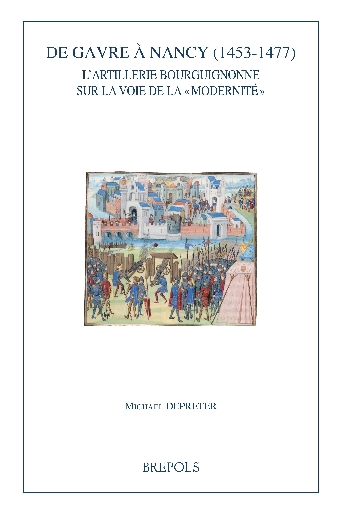
De Gavre à Nancy (1453-1477)
L’artillerie bourguignonne sur la voie de la « modernité »
show More to view fulltext, buy and share links for:De Gavre à Nancy (1453-1477) show Less to hide fulltext, buy and share links for: De Gavre à Nancy (1453-1477)Dans la veine de la « nouvelle histoire militaire », cette étude consacrée à l’artillerie « bourguignonne », de la guerre menée par Philippe le Bon contre les Gantois (1451-1453) à la mort de Charles le Hardi devant Nancy (5 janvier 1477), vise à cerner l’organisation d’un instrument militaire alors en plein essor, engendrant d’importantes dépenses - relevant également des domaines du génie et de la logistique - qu’une administration compétente devait encadrer au mieux. Au centre de l’objectif se trouve un personnel sans cesse croissant d’artisans-soldats dont la professionnalisation et la spécialisation reflètent les changements technologiques auxquels l’artillerie fut alors soumise sous l’impulsion des politiques des ducs de Bourgogne, et, en particulier, de Charles le Hardi, prince désirant disposer d’une artillerie puissante, efficace et à la pointe du progrès pour réaliser ses ambitions.
Michael Depreter , aspirant du F.R.S.-FNRS, étudie actuellement, à l’Université libre de Bruxelles, l’impact des relations entre l’artillerie, ses artisans et les pouvoirs, sur la construction de « l’Etat moderne ».
-
-
-
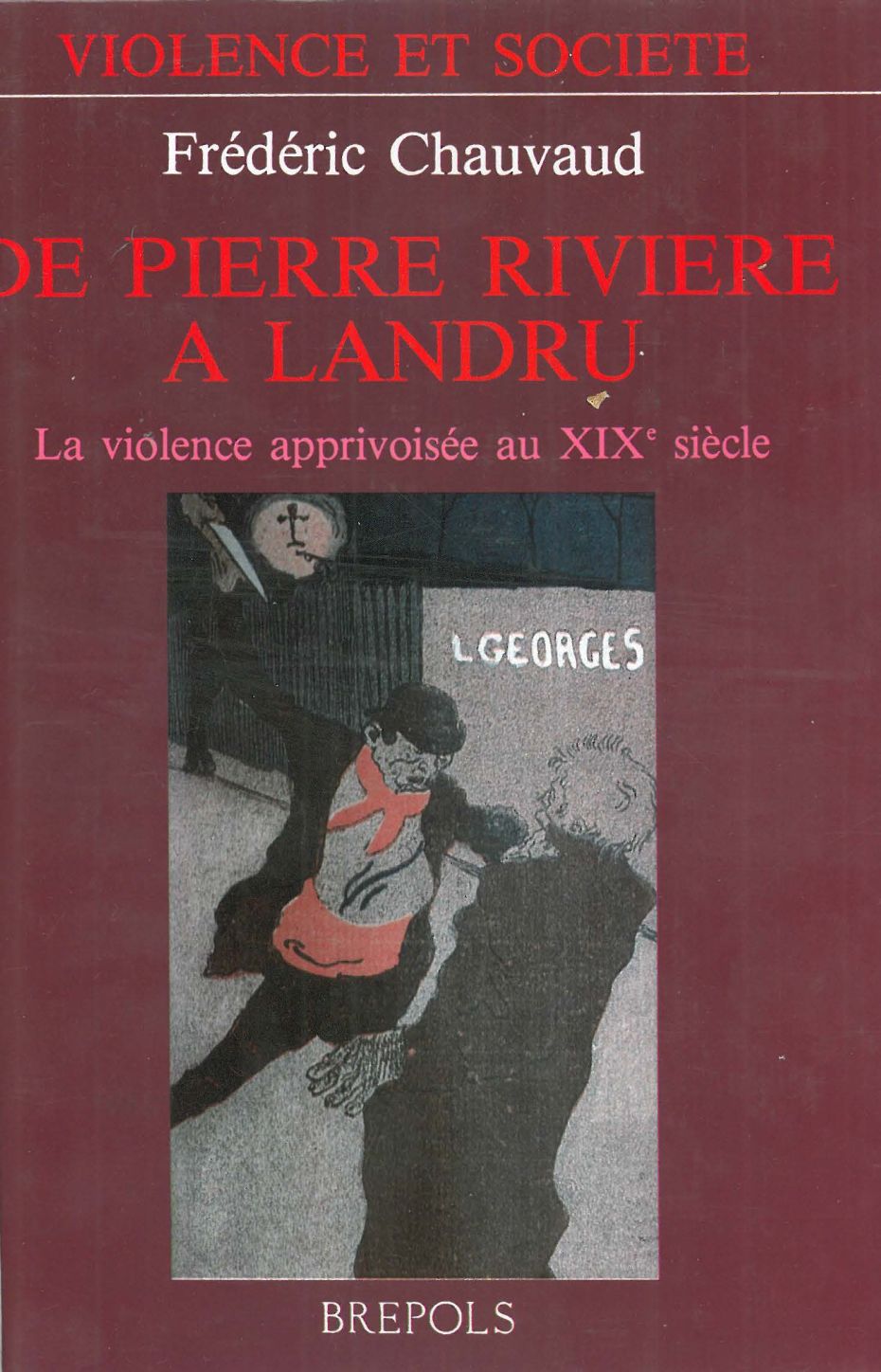
De Pierre Rivière à Landru
La violence apprivoisée au XIXe siècle
show More to view fulltext, buy and share links for:De Pierre Rivière à Landru show Less to hide fulltext, buy and share links for: De Pierre Rivière à LandruA l'époque de la Premiére Guerre, les crimes de Landru, les grèves ouvrières, les mauvais traitements infligés aux animaux apparaissent comme les ultimes manifestations de la force brutale.
Et pourtant, au début de la Restauration les coups sont fréquents et le sang coule d'abondance. Pierre Riviére égorga sa famille, les maisonnées et le voisinage connaissent de funestes démêlés, les pugilats au village comme les rixes en rase campagne foisonnent, les émeutes et la répression rythment le siécle. Comment est-on passé d'une époque où la brutalité était familière à une autre qui a rejeté toutes les formes de violence?
L'ouvrage retrace cette grande métamorphose à travers les pratiques, les discours et les perceptions.
-
-
-

De Sion exibit lex et verbum domini de Hierusalem
Essays on Medieval Law, Liturgy and Literature in Honour of Amnon Linder
show More to view fulltext, buy and share links for:De Sion exibit lex et verbum domini de Hierusalem show Less to hide fulltext, buy and share links for: De Sion exibit lex et verbum domini de HierusalemAmnon Linder, professor of medieval history at the Hebrew University of Jerusalem has published seminal studies in the history of the Christian Holy Land and in Jewish-Christian relations in Late Antiquity and the Middle Ages. In recent years he has dedicated himself to the study of medieval liturgy, particularly Crusader liturgy of the liberation and destruction of Jerusalem (forthcoming as the next volume in this series).
The essays gathered here from friends, colleagues and students of Prof. Linder pick up the themes of his publications — medieval law, liturgy and literature. The papers deal with a variety of sources, encompass the fourth to fifteenth centuries, and span from the Holy Land to the British Isles.
-
-
-

De canonicis qui seculares dicuntur
Treize siècles de chapitres séculiers dans les anciens Pays-Bas/Thirteen Centuries of Chapters of Secular Canons in the Low Countries
show More to view fulltext, buy and share links for:De canonicis qui seculares dicuntur show Less to hide fulltext, buy and share links for: De canonicis qui seculares dicunturÀ la veille de la révolution française, le territoire de l’actuelle Belgique comptait près de quatre-vingt communautés de chanoines séculiers, dont cinq communautés féminines. En dépit de cette densité extrêmement élevée par rapport aux autres pays et malgré la richesse de leurs archives, les chapitres de chanoines séculiers sont jusqu’à présent éclipsés dans l’historiographie par les établissements monastiques et les communautés de chanoines réguliers. Comparés à ces formes de vie religieuse mieux connues, les collèges de chanoines séculiers, dont la principale mission était l’office choral, souffrent d’une méconnaissance prolongée jusqu’à nos jours. Il s’agissait pourtant d’institutions complexes et très diverses. La flexibilité avec laquelle les chapitres séculiers se sont adaptés aux évolutions sociétales pendant le Moyen Âge et l’époque moderne est surprenante et explique la diversification de ces établissements qui présentent de nombreuses spécificités locales. Le présent recueil veut contribuer à une meilleure connaissance et compréhension de ces oubliés de l'histoire, en présentant un aperçu des recherches récentes en Belgique et aux Pays-Bas. Les contributions offrent des aperçus synthétiques des évolutions dans une région et durant une période données, mais aussi des études de cas avec des analyses plus détaillées de l’histoire d’un établissement ou d’une certaine thématique. La diversité des approches permet de présenter un panorama très large, allant du Haut Moyen Âge jusqu’au XXe siècle, qui reflète l’hétérogénéité et la flexibilité de la vie des chanoines et chanoinesses séculiers.
-
-
-
De l'Inde. Les voyages en Asie de Niccolo de' Conti
De varietate fortunae, livre IV
show More to view fulltext, buy and share links for:De l'Inde. Les voyages en Asie de Niccolo de' Conti show Less to hide fulltext, buy and share links for: De l'Inde. Les voyages en Asie de Niccolo de' ContiLe Livre IV du "De varietate fortunae" de Poggio Bracciolini rapporte le compte rendu que Niccolo de' Conti fit de ses voyages en Inde et dans le Sud-Est asiatique entre 1414 et 1439. A ce titre, il a joui d'une vaste diffusion, indépendamment du reste de l'ouvrage, comme l'attestent un certain nombre de manuscrits contenant le seul livre IV ainsi que la première édition du texte latin du "De varietate fortunae" ("India recognita", 1492), limitée elle aussi à ce dernier livre. Le succès du livre est lié aux informations nouvelles qu'il contient sur des régions jusque là mal connues (intérieur de l'Inde, Birmanie, Java, Bornéo, ...), qui seront exploitées par la cartographie et par les recueils de voyage, en particulier celui de Ramusio, "Delle navigazioni et viaggi". Mais le compte rendu de Conti assume aussi un intérêt majeur car il se situe à une période charnière, transition entre l'époque où l'Asie est "découverte" par les missionnaires et les marchands lors de la domination mongole (XIIIe et XIVe siècles: Guillaume de Rubrouck, Marco Polo, etc. ...) et celle où les expéditions maritimes des portugais vont leur assurer la maîtrise du commerce dans ces contrées. Le texte de Conti nous intéressera donc aussi bien dans son contenu que dans sa forme; l'introduction ainsi que les notes s'efforceront d'établir des comparaisons nombreuses avec d'autres récits de voyage concernant les mêmes contrées, tant par ceux qui ont précédé Conti (Marco Polo, Ibn Battuta ...) que par ceux qui l'ont directement suivi (Duarte Brabosa, Tomé Pires ...).
-
-
-
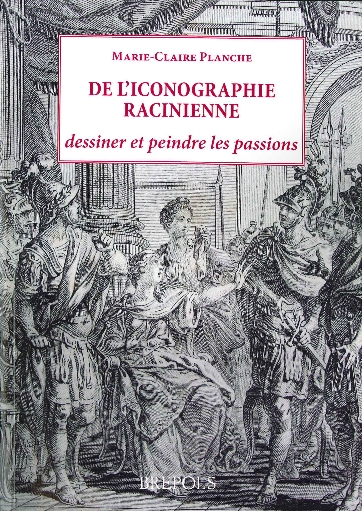
De l'iconographie racinienne, dessiner et peindre les passions
show More to view fulltext, buy and share links for:De l'iconographie racinienne, dessiner et peindre les passions show Less to hide fulltext, buy and share links for: De l'iconographie racinienne, dessiner et peindre les passionsLes sujets des tragédies de Racine ont été transposés dans les arts visuels dès le XVII e siècle. Ils ont inspiré des tableaux à quelques peintres, mais surtout ils ont agrémenté le livre à figures. Nous nous proposons d’étudier ces compositions dans un ensemble réunissant des œuvres exécutées de 1668 à 1815. Les représentations visuelles, qui illustrent différents instants des pièces, qui proposent des synthèses, s’inscrivent dans des contextes de création témoins de la réception de Racine. Leur étude ne se départit ni des principes théoriques qui régissent les arts et le théâtre, ni des convenances propres à chacun. En représentant les héros raciniens, en montrant leurs corps malmenés par les passions, les artistes ont instauré un dialogue entre le texte et l’image dont l’un des points de convergence est la quête de l’éloquence. Bien que leur inspiration littéraire s’inscrivît dans une longue tradition, n’y avait-il pas une difficulté extrême à illustrer ces drames ? En effet, comment se sont-ils approprié le vocabulaire visuel du poète, quelle couleur ont-ils donnée aux lieux et aux costumes, mais surtout par quel moyen ont-ils représenté les tensions et les passions ? Les artistes s’en sont acquittés avec une fortune inégale, mais leurs œuvres méritent d’être étudiées, analysées à la lumière des vers de Racine.
Biographie
Docteur en histoire de l’art moderne, enseignante et conférencière, ses recherches portent sur les rapports entre le texte et l’image. Cet essai prend appui sur les recherches entreprises dans le cadre de la thèse. De nombreux articles ont paru, souvent consacrés à des problématiques iconographiques : « À la lueur d’une flamme, Racine peintre de nocturnes », « Ornements et narrations, le dialogue des motifs gravés », « Poétique racinienne et arts visuels », « De l’usage de la lettre dans la gravure d’illustration », « Le décor dans l’Histoire naturelle de Buffon », « Jacques de Sève illustrateur du théâtre de Racine ».
-
-
-
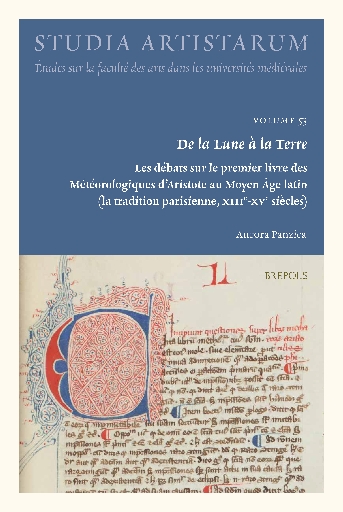
De la Lune à la Terre
Les débats sur le premier livre des Météorologiques d’Aristote au Moyen Âge latin (la tradition parisienne, XIIIe-XVe siècles)
show More to view fulltext, buy and share links for:De la Lune à la Terre show Less to hide fulltext, buy and share links for: De la Lune à la TerreLa météorologie ancienne et médiévale se distingue de son équivalent contemporain par un domaine d’études autrement plus vaste, s’étendant bien au-delà des phénomènes atmosphériques. Le premier livre des Météorologiques d’Aristote aborde en effet des sujets aussi divers que l’action de la sphère céleste sur la région terrestre, les liens entre mouvement, lumière et production de chaleur, les rapports quantitatifs entre les quatre éléments, la formation des comètes et de la Voie lactée, l’origine et le mouvement des fleuves, les variations périodiques dans la répartition entre mers et terres sèches. Fondée sur l’analyse d’une grande quantité de textes inédits, et prenant la forme d’un voyage de la Lune à la Terre, la présente étude explore les débats que ces sujets ont suscités chez les maîtres scolastiques qui, de la fin du XIIe au milieu du XVe siècle, se sont confrontés au texte aristotélicien dans le cadre de leur enseignement à la Faculté des arts.
-
-
-
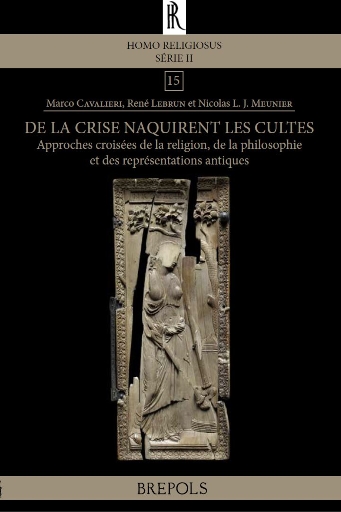
De la crise naquirent les cultes
Approches croisées de la religion, de la philosophie et des représentations antiques
show More to view fulltext, buy and share links for:De la crise naquirent les cultes show Less to hide fulltext, buy and share links for: De la crise naquirent les cultesDans le présent volume le lecteur prendra connaissance des contributions présentées à l’occasion d’un colloque international organisé à l’Université catholique de Louvain les 12 et 13 juin 2014 par le Centre d’étude des Mondes Antiques en collaboration avec le Centre d’Histoire des Religions Cardinal Julien Ries et les Actions de Recherche Concertées « A World in Crisis? ». Le thème se focalisait sur la corrélation des notions de « culte » et de « crise », dont les acceptions particulières se trouvent sensiblement modifiées et enrichies par leur mise en rapport. Le concept supérieur ainsi formé peut lui-même être mis en relation avec l’expression anglo-saxonne « Crisis Cults », originellement un des produits de la recherche ethno-anthropologique américaine des années 1970. Les contributeurs ont ainsi été invités à réfléchir sur la différence qu’ils pourraient éventuellement identifier, en se basant sur leur propre domaine de spécialisation, entre des cultes subissant une crise (ce que représente l’expression française « cultes en crise ») et des cultes issus d’une crise, autrement dit des cultes qui sont une réponse à une situation de crise (ce que traduit l’expression anglaise « Crisis Cults »).
Par son sujet même, ce volume se veut interdisciplinaire et subséquemment transversal aux thématiques abordées. Dans ces pages en effet ont été rassemblées les interventions de spécialistes provenant des domaines de l’archéologie, de la numismatique, de la philologie, de l’histoire et de la philosophie, autant de contributions portant sur des sujets aussi variés que le monde minoen, l’Égypte ancienne, les institutions de la Grèce classique, les civilisations anatoliennes, la philosophie platonicienne, la Rome aussi bien républicaine qu’impériale et l’époque tardo-antique.
Finalement, ce livre, non seulement constitue une avancée de la recherche dans différentes disciplines, mais ouvre aussi la voie à une étude phénoménologique et transversale des notions de « crise » et de « culte » et a ainsi posé quelques jalons en vue d’études ultérieures sur un sujet qui est loin d’être épuisé.
-
-
-
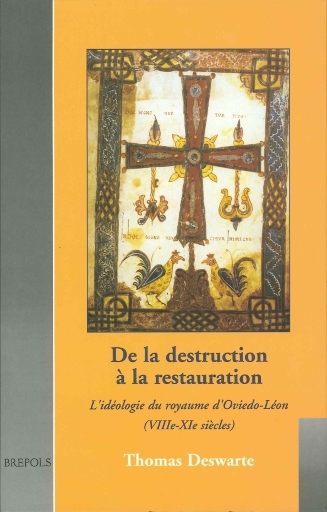
De la destruction à la restauration
L'idéologie dans le royaume d'Oviedo-Léon (VIIIe-XIe siècles)
show More to view fulltext, buy and share links for:De la destruction à la restauration show Less to hide fulltext, buy and share links for: De la destruction à la restaurationEntre les VIII e et XI e siècles, l’idéologie du royaume d’Oviedo-León n’est dominée ni par la notion de guerre sainte, ni par le concept de Reconquête, mais par celui de restauration. Cette notion participe d’une vision du monde, qui ambitionne de renouer avec le passé romano-gothique, détruit aux yeux des contemporains lors de l’invasion musulmane de la péninsule. Cette volonté de restauration se manifeste par un constant effort de rétablissement de la souveraineté monarchique, des notions politiques antérieures à 711 et de recouvrement des territoires perdus; elle implique donc une lutte contre tous les ennemis du royaume, les Musulmans comme les rebelles, destructeurs de la patria. L’esprit de restauration est intimement associé à une régénération spirituelle du royaume, marqué par un fort idéal ascétique et placé sous le patronage de saint Jacques. Ce programme dit ‘néogothique’ culmine à la fin du onzième siècle, sous Alphonse VI, avec la restauration en lieu et place du royaume de León, de l’Hispania, conçue comme un nouvel empire, dernier bastion de la civilisation romaine et chrétienne face aux barbares.
-
-
-
De la lettre à l’esprit / From the Letter to the Spirit
Travaux en hommage à Mohammad Ali Amir-Moezzi / Studies in Honour of Mohammad Ali Amir-Moezzi
show More to view fulltext, buy and share links for:De la lettre à l’esprit / From the Letter to the Spirit show Less to hide fulltext, buy and share links for: De la lettre à l’esprit / From the Letter to the SpiritLa parution du Guide divin dans le shî’isme originel en 1992 a marqué le début de l’itinéraire scientifique de Mohammad Ali Amir-Moezzi. Suivant une ligne directrice cohérente aux ramifications nombreuses, cet islamologue a transformé en profondeur les études shi’ites d’abord, notamment en soulignant l’importance de la « tradition ésotérique originelle » dans l’histoire de ce grand courant de l’islam, et les études coraniques ensuite, par la prise en compte des sources shi’ites anciennes et la critique du récit traditionnel « orthodoxe ». Détenteur de 1996 à 2024 de la chaire « Exégèse et théologie de l’islam shi’ite » à la section des sciences religieuses de l’École Pratique des Hautes Études, Mohammad Ali Amir-Moezzi est également un professeur hors du commun dont l’enseignement a formé et inspiré de nombreux chercheurs actuels. Ces volumes d’hommage réunissent quarante-quatre contributions de ses collègues et amis, dont nombre d’anciens étudiants, de tous horizons, portant sur les domaines d’études chers au dédicataire : études shi’ites ; études coraniques ; antiquité tardive et débuts de l’islam ; traditions mystiques de l’islam ; aspects de la vie religieuse et intellectuelle contemporaine. Témoignages d’amitié et de reconnaissance pour une œuvre scientifique majeure, les contributions savantes réunies dans ces volumes en font un ouvrage de référence.
-
-
-
De l’Europe ottomane aux nations balkaniques : les Lumières en question
From Ottoman Europe to the Balkan Nations: Questioning the Enlightenment
show More to view fulltext, buy and share links for:De l’Europe ottomane aux nations balkaniques : les Lumières en question show Less to hide fulltext, buy and share links for: De l’Europe ottomane aux nations balkaniques : les Lumières en questionThe Enlightenment has often been used as a fundamental reference point for understanding the evolution of societies. Nevertheless, the broad nature of this term hides great inequalities between different historiographical traditions, with some countries considered to have ‘ownership’ of this intellectual and cultural current, which arose in the eighteenth century, while other lands have been considered at best peripheral, or at worst have been wholly disregarded. This is particularly true of the Ottoman Empire, and of the Balkan states, founded in the first decades of the nineteenth century, which have often been studied only through their relationship with France, Great Britain, and German. This, however, is not sufficient for understanding how these countries entered modernity. The studies gathered in this book seek to question the invention of the National Enlightenment, the history of representations of the European Enlightenment and their variations in Balkan space and time, and the phenomena of acculturation and rejection that can be identified in the histories of these lands in order to offer new insights into the contradictory aspirations of nations that have often been torn between several different models of society.
-
-
-

De l’ancien français au français moderne
Théories, pratiques et impasses de la traduction intralinguale
show More to view fulltext, buy and share links for:De l’ancien français au français moderne show Less to hide fulltext, buy and share links for: De l’ancien français au français moderneLa traduction « intralinguale », du « même au même », selon la définition qu’en a donnée Michel Zink, est une invention de ces mêmes clercs médiévaux qui ont mis en communication à travers la translatio studii deux horizons culturels et linguistiques. Cette traduction constitue la trace la plus manifeste de l’évolution d’un idiome au sein du diasystème linguistique gallo-roman. Or d’un état à l’autre de la langue française, et contrairement à ce que l’on pourrait croire, ce transfert ne vas pas de soi. D’un côté il continue de témoigner d’une conscience de la différence, de l’autre, à la différence de ce que l’on constate au Moyen Âge, d’une indifférence traductologique affichée des translateurs de notre temps à l’égard de leur acte, des principes qui le fondent comme des choix techniques qui l’expriment. Ce livre met en lumière nombre des arguments qui peuvent expliquer ce silence des traducteurs modernes. Beaucoup d’entre eux ne voient-ils pas dans leur travail un simple moyen de rendre accessible de la manière la plus neutre possible un texte vieilli destiné à un lecteur non spécialiste ? La revendication stéréotypée de la fidélité respectueuse au texte source conduit alors bien des traductions actuelles à décalquer la langue d’origine dans un français artificiel qu’Antoine Berman nommait le « clerquois ».
Les différents travaux rassemblés dans le présent volume suivent quatre perspectives critiques : Théories et méthodologies, Pratiques poétiques, Traductions romanes, Seuils et impasses. Ils abordent différentes facettes de ces questions jusqu’ici inexplorées et présentent des solutions méthodologiques et pragmatiques qui permettront sans doute de dépasser les peurs françaises de la traduction intralinguale.
Claudio Galderisi est professeur de langues et littératures de la France médiévale à l’Université de Poitiers (CESCM). Il a dirigé les trois volumes des Translations médiévales. Cinq siècles de traductions en français au Moyen Âge. XIe-XVe s. (Brepols, 2011).
Jean-Jacques Vincensini est professeur de langue et littératures médiévales à l’Université de Tours (CESR). Il a édité et traduit notamment le Roman de Mélusine de Jean d’Arras et de Coudrette. Il prépare l’édition et la traduction de l’Escoufle de Jean Renart.
-
-
-
De l’espace aux territoires
La territorialité des processus sociaux et culturels au Moyen Âge. Actes de la table ronde des 8-9 juin 2006, CESCM (Poitiers)
show More to view fulltext, buy and share links for:De l’espace aux territoires show Less to hide fulltext, buy and share links for: De l’espace aux territoiresAu lieu d’une publication de plus sur l’espace — notion qui est un fourre-tout conceptuel —, une journée d’étude a été réunie à Poitiers les 8-9 juin 2006 sur le thème de la territorialité. Rassemblant, dans un cadre d’étude méditerranéen, des contributions qui abordent aussi bien le monde arabo-musulman que l’Occident méridional chrétien, cette rencontre visait à mieux cerner un phénomène essentiel dans l’histoire des sociétés complexes: les mécanismes de territorialisation, par lesquels les liens socio-politiques, les activités productives, les courants et les productions culturels et (plus classiquement) les constructions gouvernementales et administratives deviennent des systèmes spatiaux imbriqués, emboîtés et inter-connectés, avec une complexité qui constitue un défi à l’analyse historique.
Les auteurs des contributions rassemblées dans ce volume ont intégré l’analyse spatiale des géographes comme fondement de leur réflexion, dans une démarche transdisciplinaire, mais ils l’ont fait avec les moyens (limités par la nature des sources) des historiens. On trouvera ici des études, à différentes échelles, portant aussi bien sur les constructions idéelles de l’espace par les liturgistes ou les géographes médiévaux que sur les processus juridiques et matériels de la territorialisation, à partir de sources très variées requérant chacune une approche spécifique; mais toutes convergent pour une saisie globale de la territorialisation comme fondement des sociétés et des cultures médiévales — avec un espace conçu non pas comme un cadre, voire une simple toile de fond, mais comme un «ingrédient» majeur des processus.
Au moins pour l’Occident latin, la seconde moitié du Moyen Âge est privilégiée, pour des raisons historiques — la croissance démographique implique un poids croissant de l’homme et de ses activités dans l’espace matériel, notamment à l’échelle locale des communautés d’habitants — mais encore plus pour des raisons de sources; en effet, s’il est probable que les «topolignées» féodales sont plus fortement territorialisées que l’aristocratie impériale carolingienne, il reste à vérifier si l’agriculture, la centralité urbaine et l’encadrement des hommes ponctuaient moins fortement l’espace au haut Moyen Âge…
-
-
-
De l’oratoire privé à la bibliothèque publique
L'autre histoire des livres d'heures
show More to view fulltext, buy and share links for:De l’oratoire privé à la bibliothèque publique show Less to hide fulltext, buy and share links for: De l’oratoire privé à la bibliothèque publiqueLes livres d’heures, best-seller durant six siècles, sont le meilleur témoin des mutations qui affectent l’objet-livre entre le xiv e et le xx e siècle. L’économie dans laquelle il s’insère, les mutations iconographiques et textuelles, enfin les usages symboliques qu’en font leurs propriétaires sont révélateurs des inflexions majeures que connaît le livre au cours du temps. Au-delà d’une classique histoire du livre, cet essai entend aussi et surtout prolonger la réflexion en direction des usages patrimoniaux des livres de prière : comment un livre conçu pour les oratoires domestiques renaît-il aujourd’hui dans les réserves climatisées des bibliothèques publiques d’Occident ? Ce parcours est retracé dans le détail, des cabinets des collectionneurs depuis le xvii e siècle jusqu’aux équipements culturels actuels, en passant par les salles des ventes, les bureaux des érudits depuis le xix e siècle, les manuels scolaires, les tables à dessin des enlumineurs amateurs. Une attention particulière est réservée aux politiques culturelles et aux mesures conservatoires édictées par l’État depuis le début du xix e siècle, et aux effets des « classements » sur les biens patrimoniaux.
Cette histoire des livres d’heures entend donc articuler le temps de la production et de la consommation d’une part, et celui des requalifications patrimoniales sur le temps long.
-
-
-
De mundi recentioribus phænomenis
Cosmologie et science dans l’Europe des Temps modernes, xv e-xvii e siècles. Essais en l’honneur de Miguel Ángel Granada
show More to view fulltext, buy and share links for:De mundi recentioribus phænomenis show Less to hide fulltext, buy and share links for: De mundi recentioribus phænomenis« Sur les phénomènes les plus récents de l’univers » : le titre de ce recueil d’essais offerts à Miguel Ángel Granada est emprunté à l’ouvrage de Tycho Brahe sur la comète de 1577. Il fait allusion au lien entre les prodiges qui ont traversé le ciel, entre la fin du 16e et le début du 17e siècle (les supernovas de 1572 et de 1604, les grandes comètes de 1577 et 1618) et les renouvellements profonds, philosophiques, religieux, culturels, qui ont marqué cette période. Ce lien, le travail mené par Miguel Angel Granada depuis une trentaine d’années n’a cessé de l’approfondir. En explorant la complexité de ce qu’on appelle la Révolution scientifique, il a aussi été un acteur majeur de la transformation et de l’élargissement de l’histoire des sciences : l’étude de l’astronomie mathématique, longtemps centrale, s’intègre désormais à une histoire des savoirs, des institutions, des contextes politiques et religieux.
Les articles qui composent ce recueil s’inscrivent dans ce sillage. Ils s’inspirent des découvertes et des idées de ce grand chercheur, et prolongent certaines de ses enquêtes, en abordant tous les domaines, de la métaphysique à l’astrologie. Ils restituent ainsi l’image d’une Europe savante en train de se constituer par la circulation et la dissémination des idées, de Rostock à Naples, de Lisbonne à Prague, ou de Londres à Wittenberg.
-
-
-
Dealing with Disagreement
The Construction of Traditions in Later Ancient Philosophy
show More to view fulltext, buy and share links for:Dealing with Disagreement show Less to hide fulltext, buy and share links for: Dealing with DisagreementAncient philosophy is known for its organisation into distinct schools. But those schools were not locked into static dogmatism. As recent scholarship has shown, lively debate persisted between and within traditions. Yet the interplay between tradition and disagreement remains underexplored. This volume asks, first, how philosophers talked about differences of opinion within and between traditions and, second, how such debates affected the traditions involved. It covers the period from the first century BCE, which witnessed a turn to authoritative texts in different philosophical movements, through the rise of Christianity, to the golden age of Neoplatonic commentaries in the fifth and sixth centuries CE.
By studying various philosophical and Christian traditions alongside and in interaction with each other, this volume reveals common philosophical strategies of identification and differentiation. Ancient authors construct their own traditions in their (polemical) engagements with dissenters and opponents. Yet this very process of dissociation helped establish a common conceptual ground between traditions. This volume will be an important resource for specialists in late ancient philosophy, early Christianity, and the history of ideas.
-
-
-
Debating Inoculation in Eighteenth-Century Europe
show More to view fulltext, buy and share links for:Debating Inoculation in Eighteenth-Century Europe show Less to hide fulltext, buy and share links for: Debating Inoculation in Eighteenth-Century EuropeSmallpox (known as "variole" or "petite vérole" in French) spread relentlessly across Europe during the eighteenth century, gaining an unprecedented and deadly momentum. While there was no cure for this highly infectious and often fatal disease, those that recovered from it were immune to future infections. This phenomenon was the origin of a practice of inoculation, whereby infectious material was introduced into the body to induce immunity. In Europe, this practice was initially experimented with in England, and it was subsequently adopted across the continent during the eighteenth century. Inoculation was, however, not without controversy—not least because the practice originated outside of Europe—and it became the subject of intense debate. This debate, this volume argues, extended beyond medical circles to include intellectuals and the broader public—a phenomenon driven by a growing periodical press. As books, scientific treatises, and plays crossed regional and national boundaries, debates on inoculation must, this volume shows, be examined within a European, transnational perspective, thereby considering how ideas were shaped by adaptation, translations, and citation. Doing so, this volume not only sheds new light on the history inoculation as a practice, but also illustrates how cultural history can enrich history of medicine
-
-
-
Decorations for the Holy Dead
Visual Embellishments on Tombs and Shrines of Saints
show More to view fulltext, buy and share links for:Decorations for the Holy Dead show Less to hide fulltext, buy and share links for: Decorations for the Holy DeadDevotion to saints, their cult, and memory was enormously popular in medieval Europe. Factual evidence in the form of tombs, shrines, reliquaries, pilgrimages, vitae and souvenirs is legion and attests to the all-pervasive nature of the phenomenon. Despite the massive bibliography on hagiography, few if any books are devoted entirely to the study of saints’ burial places. The purpose of the papers gathered here, based on presentations sponsored by the International Center of Medieval Art at the International Medieval Congress in Leeds (1999), plus additional papers commissioned by the editors, is to examine the interaction between the visual arts at specific loci sancti and saints’ cults and, further, to enquire whether a corpus of more unusual motifs appeared at saintly sites, beyond the more predictable narrative, symbolic, and iconic representations of saints. The papers address the active role saints’ tombs and their embellishments assumed within the fabric of medieval society: rituals enacted at saints’ burial places, altarpieces, reliquaries, cloister as shrine, the aura of the venerable past, secular burial near saints’ tombs, and political and feminist elements in devotional practice. Monuments from Spain, France, Italy, Greece, Hungary, and England are examined and the volume incorporates 104 illustrations.
-
-
-
Defending Christ: The Latin Apologists before Augustine
show More to view fulltext, buy and share links for:Defending Christ: The Latin Apologists before Augustine show Less to hide fulltext, buy and share links for: Defending Christ: The Latin Apologists before AugustineThis work is a discussion of the African Latin apologists prior to St. Augustine. The time-frame ranges from the end of the second century into the opening of the fourth; one of the most important locations in the formative history of Christian doctrine and practice. In turn, the literary medium of the apology carries particular significance in this period. The apologetic writings of Minucius Felix, Tertullian, Cyprian, Arnobius of Sicca and Lactantius are considered in chronological order, highlighting aspects of a collective tradition as well as more individual apologetic concerns. Common themes, shared arguments, and probable lines of influence all support a highly workable generic connection of African Latin apologetics, provided that the nuances of each text are taken into account. The purpose of this study is to contribute to the dialogue of a tradition of African Latin apologetics before Augustine of Hippo’s landmark De ciuitate dei.
Nicholas Thomas did his graduate studies in Theology and Patristics at the University of Wales Lampeter, and is currently engaged in research focused on the history of pre-Constantinian Latin Christianity through the documents of the Latin fathers.
-
-
-
Demiurge and Providence. Stoic and Platonist Readings of Plato's Timaeus
show More to view fulltext, buy and share links for:Demiurge and Providence. Stoic and Platonist Readings of Plato's Timaeus show Less to hide fulltext, buy and share links for: Demiurge and Providence. Stoic and Platonist Readings of Plato's TimaeusOf the rich legacy of the Timaeus, this study deals with the cross-pollination between Stoic and Platonist readings of Timaeus, spanning the period from Plato's writings to that of the so-called Middle Platonist authors. Plato's Timaeus and Stoic doctrine had their fates intertwined from very early on, both in polemical and reconciliatory contexts. The blend of Platonic and Stoic elements ultimately constituted one of the main conceptual bridges between the pagan tradition on the one hand and the Judeo-Christian, in its own search for the distinction between transcendence and immanence, on the other. Contrary to the received opinion, later platonist authors do not merely borrow Stoic terminology. Rather, in a genuine 'discourse of assimilation' the Stoic analysis of the universe has left a profound mark on Platonist views of the principles, of the place of humans in the universe, as well as of human freedom and its interaction with divine Providence.
-
-
-
Den Menschen dem Menschen erklären
Deskriptivität und Normativität in den christlichen Anthropologien von Laktanz, Gregor von Nyssa und Nemesios von Emesa
show More to view fulltext, buy and share links for:Den Menschen dem Menschen erklären show Less to hide fulltext, buy and share links for: Den Menschen dem Menschen erklärenDen Menschen dem Menschen erklären stellt die erste, umfassende Vergleichsanalyse von drei anthropologischen Traktaten aus dem vierten Jahrhundert n. Chr. dar: Laktanzens De opificio Dei, Gregor von Nyssas De hominis opificio und Nemesios von Emesas De natura hominis. Diese Texte wurden oft als das jeweils erste Beispiel christlicher Anthropologie bezeichnet, doch ebenso oft waren die Kriterien, die zu diesem Urteil führten, unklar. Das Buch hinterfragt diese Einschätzungen und widmet sich der Analyse der literarischen Form und des philosophisch-theologischen Inhalts dieser Schriften. Es zeichnet die Intentionen, welche die drei Autoren beim Verfassen der Traktate verfolgten, nach. Es analysiert die philosophischen Grundgedanken, die diesen Beispielen christlicher Anthropologie zugrunde liegen. Es stellt dar, wie in den drei Texten eine deskriptive und eine normative Anthropologie miteinander verwoben werden, um ein protreptisch-paränetisches Ziel zu erreichen. Diese protreptische-paränetische Absicht, die auch – und insbesondere - eine überwiegend positive Einstellung zur menschlichen Körperlichkeit mit sich bringt, wird als gemeinsames Charakteristikum der drei Traktate identifiziert und als ein mögliches Hauptattribut christlicher Anthropologie erkannt. So will Den Menschen dem Menschen erklären eine Diskussion anstoßen, ob das anthropologische Traktat eine spezifisch christliche literarische Gattung darstellen könnte.
-
-
-
Der Codex Vindobonensis 418
Seine Vorlage und seine Schreiber
-
-
-
Der Traktat des Akakios Chalkeopulos zum Byzantinischen Kirchengesang
show More to view fulltext, buy and share links for:Der Traktat des Akakios Chalkeopulos zum Byzantinischen Kirchengesang show Less to hide fulltext, buy and share links for: Der Traktat des Akakios Chalkeopulos zum Byzantinischen KirchengesangDie musiktheoretische Schrift des Akakios Chalkeopulos stellt ein von allen bis jetzt im Rahmen des Corpus Scriptorum de Re Musica edierten Theorien unabhängiges Werk dar. Es entstand Anfang des 16. Jahrhunderts in Kreta, im venezianischen Einflussbereich. In dem Autographon, Athen, Hs. EBE 917, versuchte Akakios den Sonnen- und Mondzyklus mit der Berechnung des Paschalion aufzuzeigen, und eine Verbindung zur Kirchenmusik herzustellen. Neben diesen theoretischen Berechnungen weist eine große Zahl von Musikbeispielen darauf hin, dass für Akakios die Unterweisung der Sänger in der musikalischen Praxis Kretas ein großes Anliegen war. Besonders die Aufführungspraxis hatte die Aufmerksamkeit des Akakios auf sich gezogen, und seine Abhandlung ist das früheste Dokument, in dem der Begriff "Exegese" im Kontext des byzantinischen Gesangs verwendet wird. Da sowohl die Musiktheorie als auch das angeschlossene Anastasimatarion, das Hymnar des Akakios, ein Unikat darstellen, ist zu vermuten, dass mit den aufgezeichneten Melodien eine orale kretische Tradition zum Ausdruck kommt, die von Akakios weiterentwickelt wurde.
-
-
-
Des 'domus ecclesiae' aux palais épiscopaux
Actes du colloque tenu à Autun du 26 au 28 novembre 2009
show More to view fulltext, buy and share links for:Des 'domus ecclesiae' aux palais épiscopaux show Less to hide fulltext, buy and share links for: Des 'domus ecclesiae' aux palais épiscopaux[La découverte sur le site archéologique de l’ancien groupe cathédral d’Autun des vestiges probables de la domus ecclesiae mentionnée au VIIe siècle a conduit à examiner la question de ces structures aux fonctions multiples et à étudier leur devenir, puisque bien souvent elles sont à l’origine des palais épiscopaux, comme c’est clairement le cas à Autun.
C’est d’ailleurs à Autun même, dans l’évêché, que s’est tenu ce colloque les 26-28 novembre 2009. Les quatorze présentations ici réunies, qui concernent des cas européens et de l’ensemble du monde méditerranéen, tendent à mieux cerner la configuration des résidences épiscopales primitives par rapport aux édifices de culte, d’en saisir l’organisation et de suivre leur évolution. Elles soulignent également la difficulté de l’interprétation des données textuelles et archéologiques, quand elles existent.
,The discovery on the archeological site of the former cathedral group of Autun of the probable remains of the domus ecclesiae mentioned in the VIIth century led to an examination of the question of these structures with multiple functions and a study of their development, as they are very often at the origin of episcopal palaces, as it is clearly the case in Autun.
It is moreover at Autun itself, in the bishop’s palace, that this conference was held from November 26 to 28, 2009. The fourteen presentations joined together here, which concern European cases as well as those from the whole of the Mediterranean world, tend to define more fully the character of early episcopal residences in respect to buildings for worship, to comprehend their design and to follow their evolution. They also underline the difficulty of the interpretation of the textual and archaeological data, when they exist.
]
-
-
-
Des amitiés ciblées
Concours de tir et diplomatie urbaine dans le Saint-Empire, xv e-xvi e siècle
show More to view fulltext, buy and share links for:Des amitiés ciblées show Less to hide fulltext, buy and share links for: Des amitiés cibléesPlus d’un millier de concours de tir sont organisés aux xv e et xvi e siècles dans le sud du Saint-Empire. Comme pour les Jeux olympiques modernes, villes libres et résidences des princes rivalisent lors de compétitions d’arbalète et d’arquebuse. À travers des performances sportives, des rituels symboliques, des stratégies de communication, la constitution de délégations aux couleurs de chaque ville, ainsi que des descriptions poétiques, c’est la hiérarchie des villes allemandes et suisses ainsi que leur influence dans les réseaux régionaux ou confessionnels qui sont réaffirmées. Cet ouvrage contribue à la fois à l’histoire des villes de l’espace germanophone et à l’histoire des sports avant la modernité.
-
-
-
Des idoles mortes et muettes au Dieu vivant: Joseph, Aséneth et le fils de Pharaon dans un roman du Judaisme hellénisé
show More to view fulltext, buy and share links for:Des idoles mortes et muettes au Dieu vivant: Joseph, Aséneth et le fils de Pharaon dans un roman du Judaisme hellénisé show Less to hide fulltext, buy and share links for: Des idoles mortes et muettes au Dieu vivant: Joseph, Aséneth et le fils de Pharaon dans un roman du Judaisme helléniséLe Roman d'Aséneth était, jusqu'il y a peu, désigné sous le titre de Joseph et Aséneth. Les premières études relevant des "gender studies" ont toutefois démontré la prédominance du personnage d'Aséneth par rapport à celui de Joseph. Le titre de Roman d'Aséneth s'avère donc justifié. L'appellation Joseph et Aséneth, qui ne provient pas des manuscrits, marquait implicitement l'idée que ce texte appartenait à la même sphère, pour ne pas dire au même genre, que celle illustrée par des romans tels que Chairéas et Callirhoé, ou Habrocomès et Anthia, pour ne citer que ceux-là. Le changement de titre qui a été adopté ici indique donc d'emblée la parti pris (qui sera justifié plus loin) de ne pas mette l'écrit sur le même pied qu'un roman d'amour grec. Le Roman d'Aséneth fait partie de cette littérature dite apocryphe ou pseudépigraphique qui pose tant de problèmes aux chercheurs et aux simples lecteurs d'aujourd'hui. Il suscite de nombreuses difficultés tant d'édition, de datation, d'attribution et d'origine que d'interprétation. On parvient même difficilement à donner à la question fondamentale des buts poursuivis par son auteur anonyme une réponse entièrement satisfaisante. Ainsi, ce petit récit plein de mystère ne cesse-t-il, depuis la publication de ses éditions modernes, de faire l'objet de nouvelles interprétations, suggestions, et analyses en tout genre.
-
-
-
Des migrants invisibles ?
Les Français dans les espaces frontaliers des Pays-Bas habsbourgeois, xvi e-xvii e siècle (Artois, Hainaut, Flandre Wallonne)
show More to view fulltext, buy and share links for:Des migrants invisibles ? show Less to hide fulltext, buy and share links for: Des migrants invisibles ?During the Modern Period, the condition of the French migrant is fragile. He comes from a suspicious community that does not exist in substance, that of the "French", and is a part of an evolving category, the one of people without "rights". His foreign origin can also be an advantage and he can make it work in his favour. He cannot be defined as being from a State, yet his condition is inseparable from the international conjuncture and the construction of evolving modern States. Actually, to question the stakes in the reception of the French migrants is an open window to a better understanding of the social and political culture of the Spanish Low Countries. Indeed, this work probes the mechanisms of self-definition in border provinces within a catholic global empire, the Spanish Monarchy, in front of France. The exercise of power and the capacity for action appear there as the result of an equilibrium in which all social actors are negotiating their position. Most of all, it is the result of a dialogue fueled by the protagonists of History themselves.
-
-
-
Des nains ou des géants ?
Emprunter et créer au Moyen Âge
show More to view fulltext, buy and share links for:Des nains ou des géants ? show Less to hide fulltext, buy and share links for: Des nains ou des géants ?« Bernard de Chartres disait que nous sommes comme des nains assis sur les épaules de géants de sorte que nous pouvons voir davantage [de choses] qu’eux et plus loin non certes à cause de l’acuité de notre propre vue ou de la hauteur de notre corps, mais parce que nous sommes soulevés en hauteur et élevés à une hauteur gigantesque » (Jean de Salisbury, Metalogicon, III, 4).
Les géants de l’adage sont l’incarnation de l’autorité du passé, si prégnante dans la culture du Moyen Âge. Mais la tradition, qui est à la fois contrainte et force, porte en elle les germes d’une véritable inventivité. La nouveauté se nourrit de l’ancien, pour le transformer et le dépasser.
Issues d'un colloque interdisciplinaire organisé à Poitiers en 2011, les études de ce volume se proposent d'analyser la nature, le contenu, les modalités ou la finalité des emprunts pour appréhender des phénomènes plus complexes tels que la recomposition ou le déplacement, fondés plutôt sur la notion de référence, d’allusion, d’influence, de choix. Passifs ou délibérés, individuels ou collectifs, éphémères ou durables, ces réaménagements peuvent être considérés comme autant de créations nouvelles témoignant de la vitalité du Moyen Âge et de sa capacité à façonner un paysage culturel en perpétuel mouvement. Les éditeurs du volume - Claude Andrault-Schmitt, Edina Bozoky et Stephen Morrison -, sont professeurs à l'Université de Poitiers et membres du Centre d'études supérieures de Civilisation médiévale.
-
-
-
Des religieuses, les pieds sur terre et la tête dans le Ciel
Saint-Andoche et Saint-Jean-le-Grand d'Autun au Moyen Âge
show More to view fulltext, buy and share links for:Des religieuses, les pieds sur terre et la tête dans le Ciel show Less to hide fulltext, buy and share links for: Des religieuses, les pieds sur terre et la tête dans le CielÀ Autun, durant toute la seconde moitié du Moyen Âge - et à l’époque moderne -, deux abbayes de femmes de l’ordre de Saint-Benoît coexistent. Ces deux communautés naissent et se développent dans un double mouvement de complémentarité et de concurrence. L’analyse des origines et du mode de vie des religieuses montre que, issues des couches supérieures de la société autunoise et bourguignonne, voire auvergnate et comtoise, ces femmes retrouvent à l’intérieur de la clôture le confort auquel sont habitués leurs proches. Elles ne sont toutefois pas totalement coupées du monde, contrairement aux injonctions de certaines autorités ecclésiastiques et, si elles font appel à de nombreux officiers, tant temporels que spirituels, elles n’hésitent pas à sortir de l’enceinte monastique ; en fait, les deux communautés sont profondément intégrées dans la cité éduenne et dans la région. Elles possèdent en effet de nombreux biens et domaines et les religieuses surveillent attentivement la gestion de leur temporel ; elles jouent également un rôle spirituel important par leurs prières, la nomination de prêtres dans les églises de leurs domaines et la célébration de nombreux anniversaires pour leurs bienfaiteurs et les fondateurs d’obits.
-
-
-
Des saints et des livres
Christianisme flamboyant et manuscrits hagiographiques du Nord à la fin du Moyen Âge (xiii e-xvi e siècles)
show More to view fulltext, buy and share links for:Des saints et des livres show Less to hide fulltext, buy and share links for: Des saints et des livresÀ la fin du Moyen Âge, la production hagiographique manuscrite se transforme et connaît son dernier âge d’or entre le succès éditorial de la Légende dorée et l’arrivée de l’imprimerie. De nombreux textes anciens sont abrégés pour intégrer de nouvelles collections. Ce phénomène est en partie responsable du relatif désintérêt des historiens à leur égard : à quoi bon s’intéresser à ces abrégés alors qu’il reste tant à découvrir dans les grands légendiers du Moyen Âge central, et qu’on commence à peine à mieux connaître les tout premiers manuscrits conservés ? L’objectif de ce livre est de mieux saisir la fonction sociale du manuscrit hagiographique, à une période, celle du « christianisme flamboyant », caractérisée par l’accumulation et la multiplication des dévotions. En se focalisant sur les Pays-Bas méridionaux et une large France septentrionale, une région traversée par la devotio moderna et d’intenses dynamiques religieuses, son objectif est aussi de comprendre ensemble les légendiers latins et vernaculaires, en moyen néerlandais comme dans les parlers d’oïl. Il s’agit de saisir les conditions matérielles de la circulation des textes hagiographiques, mais aussi l’usage de ces manuscrits, dans le cadre de la pastorale et des pratiques cultuelles collectives comme dans celui de l’affirmation de l’individu à la fin du Moyen Âge.
-
-
-
Des villes en révolte
Les républiques urbaines aux Pays-Bas et en France pendant la deuxième moitié du XVIe siècle
show More to view fulltext, buy and share links for:Des villes en révolte show Less to hide fulltext, buy and share links for: Des villes en révolteEntre 1577 et 1585, plusieurs villes de Flandre et du Brabant s’instituent en des régimes insurrectionnels que les historiens désignent par le terme de ‘Républiques calvinistes’. Les anciens magistrats sont écartés des rouages du pouvoir, au profit de nouveaux conseils épris d’autonomie urbaine et proches des milieux réformés. Ces structures originales se figent peu à peu en de véritables bastions calvinistes, allant jusqu’à interdire l’exercice du culte catholique. Les assises politiques et religieuses des villes en question s’en trouvent bouleversées. Les répercussions sur la vie socio-économique et sur la production culturelle sont elles aussi multiples et profondes. La parenthèse des Républiques calvinistes se ferme en 1584/85 avec la reconquête par Alexandre Farnèse de ces avant-postes de la résistance au roi d’Espagne.
Cet ouvrage comble une lacune importante dans la recherche historique. Il met en évidence les liens étroits entre revendications religieuses, enjeux politiques et tensions sociales qui caractérisent les troubles du 16e siècle. Il replace aussi les Républiques calvinistes de Flandre et du Brabant dans une longue tradition de révoltes urbaines et d’idées républicaines. Enfin, il étend l’analyse au contexte européen plus large, en établissant des corrélations avec la France des Guerres de religion.
Monique Weis est chercheure qualifiée du Fonds national de la Recherche scientifique auprès de l’Université Libre de Bruxelles. Ses recherches et son enseignement portent sur l’histoire religieuse et l'histoire des idées en Europe du 16e au 18e siècles.
-
-
-

Descartes and Medicine
Problems, Responses and Survival of a Cartesian Discipline
show More to view fulltext, buy and share links for:Descartes and Medicine show Less to hide fulltext, buy and share links for: Descartes and MedicineThis volume provides a more exhaustive interpretation of René Descartes’ medical views and its reception in the seventeenth century. Filling the gap in the recent scholarship, the contributions in the volume follow four axes: exegetical, textual, philosophical, and contextual. Authors in this book deal with Descartes’ physiology, anatomy, and therapy by reconstructing Cartesian texts, detailing possible medical and philosophical sources, discussing medical collaborations and oppositions, and exploring obscurities and failures in Descartes’ medicine. In laying bare the more promising issues of Cartesian programme and discussing the reception and opposition in the seventeenth century, the volume also uncovers the limitations within his interpretation, ultimately revealing a more nuanced application of his methodology to a field of natural philosophy. While medical studies play a not secondary role in Descartes’ entire work, the volume aims to discuss in detail the importance of medicine as a suitable field to understand Cartesian philosophy from a significant perspective in seventeenth-century Europe.
-
-
-
Description de la ville de Paris 1434
Medieval French text with English translation
show More to view fulltext, buy and share links for:Description de la ville de Paris 1434 show Less to hide fulltext, buy and share links for: Description de la ville de Paris 1434In 1434 Guillebert from Geraardsbergen completed his description of Paris. It is a remarkable record of what was considered noteworthy at the time both historically and topographically. There are picturesque details which are often cited in annotations to the poetry of Francois Villon, notably concerning the Cemetery of the Innocents, the depiction of the Virgin and of heaven and hell in the Celestines and the reference to the famous beauties of the city. The author was an innkeeper and town councillor in his native Geraardsbergen, but also a profssional scribe involved in the book trade who was a 'libraire' for Philip the Good, Duke of Burgundy. The unique manuscript that contains this text also features an important illlustration by an otherwise unknown artist. A whole group of fifteenth-century Flemish manuscript illuminators is now associated with this master, who was given in 1915 the title 'Master of Guillebert De Mets'.
-
-
-

Deus Medicus
Actes du Colloque organisé à Louvain-la-Neuve les 15 et 16 juin 2012 par le 'Centre d'Histoire des Religions Cardinal Julien Ries'
show More to view fulltext, buy and share links for:Deus Medicus show Less to hide fulltext, buy and share links for: Deus MedicusDans le présent volume le lecteur prendra connaissance des contributions importantes de spécialistes belges, français et italiens présentées à l'occasion d'un colloque organisé à l'Université catholique de Louvain les 15 et 16 juin 2012 par le Centre d'Histoire des Religions Cardinal Julien Ries; le thème se focalisait sur les dieux guérisseurs dans l'antiquité méditerranéenne. Une mise au point s'avérait nécessaire en raison des découvertes récentes. L'action de divinités bienfaisantes, de leurs lieux de culte et de leur impact sociologique est analysée, parfois dans une solution de continuité depuis l'antiquité lointaine jusqu'au début de l'ère chrétienne. Les régions concernées sont la Mésopotamie, l'Égypte, l'Anatolie, le monde minoen, hellénique, biblique et paléo-chrétien.
-
-
-
Deus Unicus
Actes du colloque « Aux origines du monothéisme et du scepticisme religieux » organisé à Louvain-la-Neuve les 7 et 8 juin 2013 par le Centre d’histoire des Religions Cardinal Julien Ries
show More to view fulltext, buy and share links for:Deus Unicus show Less to hide fulltext, buy and share links for: Deus UnicusDans le présent volume le lecteur prendra connaissance des contributions importantes de nombreux spécialistes de l’histoire des religions liées à l'antiquité médierranéenne et présentées lors d’un colloque organisé à l’Université catholique de Louvain les 7 et 8 juin 2013 par le Centre d’Histoire des Religions Cardinal Julien RIES ; le thème s’articulait autour des origines du monothéisme en particulier en Méditerranée orientale et les régions adjacentes. L'analyse est difficile et réclame de fortes nuances ; notamment, il convient de ne pas confondre hénothéisme et monothéisme, et dans ce dernier cas, il convient de s'interroger sur la nature de cet être divin, son mode de fonctionnement ; y avait-il un signe annonciateur de ce qui deviendra la « métaphysique » aristotélicienne ?
-
-
-
Devenir fou pour être sage
Construction d'une raison chrétienne à l'aube de la réforme grégorienne
show More to view fulltext, buy and share links for:Devenir fou pour être sage show Less to hide fulltext, buy and share links for: Devenir fou pour être sageLe nom de "réforme grégorienne" évoque immanquablement pour les historiens et tous ceux qui s'intéressent à l'histoire du xi e et de la première moitié du xii e siècle une période de confrontation entre pouvoir papal et pouvoir impérial marquée par ce que l'on a coutume d'appeler la "querelle des investitures", c'est-à-dire le débat autour du droit de l'autorité séculière à conférer aux évêques et aux abbés les marques de leur fonction. Mais ce face à face entre les deux pouvoirs ne s'est pas joué seulement sur le terrain des institutions.
Cherchant en effet à opposer un modèle chrétien du savoir à celui des écoles séculières, les réformateurs choisirent de privilégier une théologie du sacrement qui les conduisit à proposer un modèle original de logique et de rationalité.
C'est à l'exploration de ce modèle logique et de ses répercussions dans le domaine littéraire et artistique à partir des écrits de quelques grands penseurs ou acteurs de la réforme que le présent ouvrage convie le lecteur.
-
-
-
Devotional Culture in Late Medieval England and Europe
Diverse Imaginations of Christ’s Life
show More to view fulltext, buy and share links for:Devotional Culture in Late Medieval England and Europe show Less to hide fulltext, buy and share links for: Devotional Culture in Late Medieval England and EuropeChrist’s life, as related through the Gospel narratives and early Apocrypha, was subject to a riot of literary-devotional adaptation in the medieval period. This collection provides a series of groundbreaking studies centring on the devotional and cultural significance of Christianity’s pivotal story during the Middle Ages.
The collection represents an important milestone in terms of mapping the meditative modes of piety that characterize a number of Christological traditions, including the Meditationes vitae Christi and the numerous versions it spawned in both Latin and the vernacular. A number of chapters in the volume track how and why meditative piety grew in popularity to become a mode of spiritual activity advised not only to recluses and cenobites as in the writings of Aelred of Rievaulx, but also reached out to diverse lay audiences through the pastoral regimens prescribed by devotional authors such as the Carthusian prior Nicholas Love in England and the Parisian theologian and chancellor of the University of Paris, Jean Gerson.
Through exploring these texts from a variety of perspectives - theoretical, codicological, theological - and through tracing their complex lines of dissemination in ideological and material terms, this collection promises to be invaluable to students and scholars of medieval religious and literary culture.
-
-
-
Devotional Literature and Practice in Medieval England
Readers, Reading, and Reception
show More to view fulltext, buy and share links for:Devotional Literature and Practice in Medieval England show Less to hide fulltext, buy and share links for: Devotional Literature and Practice in Medieval EnglandThis volume recognises that religious writings care deeply about how devotional reading takes place, providing models for improving reading as a way of improving one’s ability to worship. The abundant evidence from medieval England suggests a deep interest among devotional writers in documenting, teaching, and circumscribing devotional reading, given the importance of careful reading practices for salvation. This volume therefore draws together a wide range of interests in and approaches to studying the reading and reception of devotional texts in medieval England, from representations of readers and reading in devotional texts, to literary production and reception of devotional texts and images, to manuscripts and early books as devotional objects, to individual readers and patrons of devotional texts.
Prefaced by a substantial introduction by the editors - setting the community in its wider religious and cultural environment and against the backdrop of broad historiographical trends - this volume brings together substantial essays based on original research by new and leading scholars in the field of medieval English studies. This collection (and indeed, many of the individual articles) brings into dialogue a number of traditional disciplinary approaches - early and late medieval English literary studies, gender studies, manuscript studies, and religious studies. It strives to reflect trends in current scholarship of breaking down disciplinary boundaries and exploring the relationships between and among not only analytical and critical perspectives, but also the kinds of evidence examined.
-
-
-
Dialogues et résistances
Une anthologie de textes anglais de la fin du Moyen Âge
show More to view fulltext, buy and share links for:Dialogues et résistances show Less to hide fulltext, buy and share links for: Dialogues et résistancesLes textes présentés dans ce recueil, traduits pour la première fois en français, ont été composés entre le milieu du XIVe et du XVe siècle, alors que l’Angleterre connaît de fortes transformations dans tous les domaines - politiques, sociaux, culturels, économiques - non sans résistances. Poèmes, sermons ou encore tracts polémiques, produits dans un contexte de développement de la 'literacy' (aptitude à lire et à écrire) et d’une culture écrite en anglais, s’interrogent, et parfois contestent, ces évolutions. Ces textes suggèrent tous qu’en réalité, ces transformations fonctionnent ensemble et ils constituent tous des lieux de communication, de dialogue ou de résistance (voire les deux) dans une société anglaise alors en pleine ébullition.
Aude Mairey est chargée de recherche (CNRS) au Laboratoire de médiévistique occidentale de Paris. Elle travaille actuellement sur la constitution d’une culture laïque en Angleterre à la fin du Moyen Âge. Stephen Morrison est professeur de littérature anglaise médiévale à l’université de Poitiers et directeur-adjoint du Centre d'Etudes Supérieures de Civilisation Médiévale. Il s'intéresse principalement au travail d'édition de textes anciens.
-
-
-
Dictionaries of Medieval Germanic Languages
A Survey of Current Lexicographical Projects
show More to view fulltext, buy and share links for:Dictionaries of Medieval Germanic Languages show Less to hide fulltext, buy and share links for: Dictionaries of Medieval Germanic LanguagesSelected Proceedings of the International Medieval Congress University of Leeds
This second volume in this series International Medieval Research presents Forschungsberichte as well as papers on twelve current lexicographical projects on medieval Germanic languages. Each Forschungsbericht gives information about the dictionary (title, editors, institute, address), about the contents of the dictionary (type, subject/corpus, described period, described era, example of an entry), about the history of the project and planning (short history of the project, (planned) year of publication, form of publication), and details on lexicographical tools and methods (the hardware, the sofware). The papers were read at the first International Medieval Congress at the University of Leeds (4-7 July 1994), in the three sessions on Dictionaries of Medieval Languages (Projects, Historical Background, Scribes and Scholars). The volume contains valuable information not only for editors of exisitng lexicographical projects but also for editors of future projects. It will also give non-lexicographers a better insight into modern historical lexicography.
K.H. van Dalen-Oskam, K.A.C. Depuydt, W.J.J. Pijnenburg and T.H. Schoonheim are the editors of the Vroegmiddelnederlands Woordenboek (Dictionary of Early Middle Dutch) at the Institute for Dutch Lexicology, Leiden (the Nederlands).
-
-
-
Dictionnaires et répertoires au moyen âge
Une étude du vocabulaire
-
-
-
Die Dionysius-Rezeption im Mittelalter
Internationales Kolloquium in Sofia vom 8. bis 11. April 1999
show More to view fulltext, buy and share links for:Die Dionysius-Rezeption im Mittelalter show Less to hide fulltext, buy and share links for: Die Dionysius-Rezeption im MittelalterDer vorliegende Band enthält die Beiträge des internationalen Kolloquiums Die Dionysius-Rezeption im Mittelalter — La réception du Pseudo-Denys durant le moyen âge — The Reception of Pseudo-Dionysius in the Middle Ages, das vom 8. bis 11. April 1999 in Sofia unter der Schirmherrschaft der S.I.E.P.M. stattfand. Im Mittelpunkt steht die Rezeption der unter dem Namen des Pseudo-Dionysius Areopagita überlieferten Werke, die seit ihrem Erscheinen in Byzanz am Beginn des 6. Jahrhunderts und seit der Mitte des 9. Jahrhunderts im lateinischen Abendland einen großen Einfluß auf die europäische Geistesgeschichte ausgeübt haben. Das Corpus Dionysiacum ist nicht nur ein außerordentlich einflußreicher Traditionsstrang des Neuplatonismus bis in die Neuzeit hinein, es stellt darüber hinaus ein europäisches ‘cross-culture’-Phänomen dar, das auf exklusive Weise den griechisch-byzantinischen und den lateinisch-abendländischen Kulturkreis verbindet. Die Erforschung dieser byzantinisch-lateinischen Austauschbeziehung und damit verbunden eine weiterführende Sicht auf die Denkrichtungen der mittelalterlichen europäischen Kultur im Westen und im Osten vor dem Hintergrund der verschiedenen Interpretationen des Werkes des Pseudo-Dionysius Areopagita ist das Grundanliegen dieses Bandes.
-
-
-
Die Erforschung des Tocharischen und die alttürkische Maitrisimit
show More to view fulltext, buy and share links for:Die Erforschung des Tocharischen und die alttürkische Maitrisimit show Less to hide fulltext, buy and share links for: Die Erforschung des Tocharischen und die alttürkische MaitrisimitThis volume contains the proceedings of a small conference held by the Turfan Study Group (Turfanforschung) of the Berlin Brandenburg Academy of Sciences and Humanities, Berlin, in April 2008 on the 100th anniversary of E. Sieg and W. Siegling's article 'Tocharisch, die Sprache der Indoskythen. Vorläufige Bemerkungen über eine bisher unbekannte indogermanische Literatursprache' which marks the beginning of the new subject 'Tocharian studies'. This forgotten Indo-European language was just re-emerging in texts gathered by the various scientific expeditions to Eastern Central Asia at the beginning of the 20th century. On the basis of a colophon in the Old Turkish text Maitrisimit, F. W. K. Müller had already in 1907 suggested the name 'Tocharian' which, despite misgivings, continues to be used today for texts in two distinct but closely related varieties, 'A' and 'B'. The volume is in part devoted to aspects of the history of the study of Tocharian and to details of the languages themselves but also to palaeography and cataloguing the Tocharian fragments in Berlin. The colophon to the Old Turkish Maitrisimit is the starting point for the second theme of the volume: The interaction between Tocharian and Old Turkish Buddhist texts, a currently much discussed phenomenon. The contributions here range from a description of newly found Old Turkish fragments, to a discussion of parallel Tocharian and Old Turkish passages, aspects of the cult of Maitreya, the question of Buddhist doctrinal schools in Central Asia, the possible connection of Buddhist dramatical texts with the Chinese bianwen literature, the Old Turkish 'New Day' and other aspects of this and similar narrative religious texts. The book includes an extensive documentation of Tocharian and Old Turkish fragments in the Berlin Turfan Collection to illustrate the Tocharian fragments for which a C14-dating is now available and Tocharian palaeography as well as fragments containing passages of text common to the Tochrian A Maitreyasamitinataka and the Old Turkish Maitrisimit.
-
-
-
Die byzantinischen Bleisiegel der Sammlung Savvas Kophopoulos
Eine Siegelsammlung auf der Insel Lesbos, I
show More to view fulltext, buy and share links for:Die byzantinischen Bleisiegel der Sammlung Savvas Kophopoulos show Less to hide fulltext, buy and share links for: Die byzantinischen Bleisiegel der Sammlung Savvas KophopoulosWeltweit gibt es außer der bereits zum größten Teil publizierten Sammlung von George Zacos wenige Privatsammlungen byzantinischer Bleisiegel. Die Privatsammlung des auf der Insel Lesbos (Griechenland) ansässigen Arztes Savvas Kophopoulos scheint die größte in Griechenland und eine der bedeutendsten Privatsammlungen dieser Art weltweit zu sein.
Hier wird der erste Teil dieser byzantinischer Bleisiegel nach all den modernen Standards und neuesten Entwicklungen der byzantinischen Sigillographie publiziert. Es handelt sich um 120 Stück, die meisten unpubliziert, die hier zum Ersten Mal der Wissenschaft präsentiert werden. Chronologisch lassen sich diese Siegel vom 7. bis ins 17. Jh. datieren. Es sind Bleibullen, deren Aussteller Mitglieder der byzantinischen Aristokratie, Staats- und Kirchenfunktionäre waren sowie anonyme Siegel mit Monogrammen oder Heiligendarstellungen.
In vielen Fällen werden durch die hier publizierten Siegel Namen, die bis jetzt nicht belegt waren, sowohl unbekannte Verwaltungseinheiten des Byzantinischen Reiches als auch ikonographische Besonderheiten, die in der Sigillographie zum ersten Mal angetroffen werden, bezeugt.
Es ist ein Buch, was nicht nur für die Byzantinisten, Archäologen und Mediävisten sondern auch für Kunsthistoriker interessant wäre.
Christos Stavrakos ist Assistant Professor für Byzantinische Geschichte im Institut für Geschichte und Archäologie der Universität Ioannina (Griechenland).
-
-
-
Diegesis. Études sur la poétique des motifs narratifs au Moyen Âge (de la 'Vie des Pères' aux lettres modernes)
show More to view fulltext, buy and share links for:Diegesis. Études sur la poétique des motifs narratifs au Moyen Âge (de la 'Vie des Pères' aux lettres modernes) show Less to hide fulltext, buy and share links for: Diegesis. Études sur la poétique des motifs narratifs au Moyen Âge (de la 'Vie des Pères' aux lettres modernes)La littérature en langue d'oïl ne possède sans doute pas une oeuvre de synthèse à la fois philosophique, esthétique et poétique telle que la Comédie de Dante. La discontinuité poétique des genres peut, en outre, alimenter le sentiment d'une opposition esthétique entre poésie religieuse et littérature profane. Mais, il est indéniable que l'horizon dans lequel oeuvre le poète médiéval est celui de la Révélation chrétienne. Cette coexistence a ses règles et son esthétique, ses chefs-d'oeuvre aussi. La Vie des Pères est un des exemples les plus achevés de cette nouvelle poétique évangélique. Les contes de la première Vie révèlent le visage d'un poète théologien, "capable de faire jouer le suspens de l'aventure du salut avec autant d'art que d'autres celui de l'aventure chevaleresque". Écrits soixante-dix ans avant la Divine Comédie, ces récits ne sont pas sans rivaliser avec quelques-uns parmi les plus beaux passages du poème italien. Ils montrent aussi comment le poète sait se tourner vers la tradition, celle de la lettre écrite et celle du folklore, pour féconder avec ces récits son discours, et jeter ainsi un pont entre une symbolique intemporelle et l'allégorie chrétienne.
À travers l'étude de quelques-uns de ces stéréotypes narratifs, de leurs variantes thématiques, de leur spécificité linguistique, de leur structure narrative, de leur circulation pré et post-médiévale, ces études essayent de montrer comment leur traitement et leur articulation dépendent des contraintes épistémologiques. Comment, aussi, ils sont, selon les esthétiques, régis par une rhétorique de la transmission orale ou par une poétique de la lettre écrite. Comment, enfin, sous la plume de ce poète,ces motifs narratifs se transforment en un évangile romanesque de la vérité : celle immuable de la parole divine et celle mouvante et émouvante de son anonyme truchement poétique.
-
-
-

Dieu de l’Orage dans l’Antiquité méditerranéenne
Actes du colloque international organisé à Louvain-la-Neuve les 5 et 6 juin 2015 par le Centre d'Histoire des Religions Cardinal Julien Ries
show More to view fulltext, buy and share links for:Dieu de l’Orage dans l’Antiquité méditerranéenne show Less to hide fulltext, buy and share links for: Dieu de l’Orage dans l’Antiquité méditerranéenneDans le présent volume le lecteur prendra connaissance des contributions de plusieurs spécialistes de l’Histoire des Religions de l’Antiquité méditerranéenne centrées sur des aspects méconnus ou peu connus du dieu de l’orage dans diverses civilisations antiques : Égypte, Anatolie, Mésopotamie, Iran, Grèce, Rome, Étrurie, et présentées dans le cadre du colloque annuel organisé les 5 et 6 juin 2015 par le Centre d’Histoire des Religions Cardinal Julien Ries à l’Université catholique de Louvain (Louvain-la-Neuve). On y découvrira que ce grand dieu n’est pas uniquement un dieu de l’orage tonitruant, de la foudre, mais aussi un dieu souriant, bienfaiteur des agriculteurs, des viticulteurs, des forces vives de la Nature.
-
-
-
Dieu et les dieux dans le théâtre de la Renaissance
show More to view fulltext, buy and share links for:Dieu et les dieux dans le théâtre de la Renaissance show Less to hide fulltext, buy and share links for: Dieu et les dieux dans le théâtre de la RenaissanceDu mystère et de la moralité à la tragédie et à l’auto en passant par la sacra rappresentazione et le spectacle de cour, le théâtre de la Renaissance subit une mutation profonde que la figuration et le rôle de la divinité font apparaître avec une évidence particulière. Les auteurs de mystères n’éprouvent aucun scrupule à confier à des acteurs le rôle de Dieu, non seulement celui du Christ mais encore celui du Père ou même du Dieu-Trinité. Informée par la réflexion théologique sur l’image, la figuration théâtrale de Dieu en fait ressortir les lignes de force. Elle rencontre la tradition iconographique sans se confondre avec elle, si bien que la question ancienne de l’influence réciproque entre théâtre et arts plastiques s’en trouve dépassée. Dans la tragédie, le rôle de Dieu, de sa mémoire et de sa colère, mais aussi de son amour rédempteur, pèse sur les hommes, leurs actes et leur destin, mais comme personnage Dieu lui-même s’absente de la scène. Les dieux ne le remplacent pas. Ni destinateurs, ni metteurs en scène, ils signifient autre chose qu’eux-mêmes. Ils servent les desseins religieux et politiques des dramaturges, se plient à leurs préoccupations civiques, astrologiques et scientifiques, morales et philosophiques. Les trente-quatre communications rassemblées dans ce volume, précédées d’un essai de F. Boespflug, s’intéressent aussi bien aux modalités techniques de la représentation scénique du divin qu’à ses enjeux littéraires, spirituels et sociaux. Elles touchent toutes les aires linguistiques de l’Europe occidentale, du Portugal à l’Allemagne, de l’Angleterre à l’Italie sans oublier les tragédies latines. Rappelant que le théâtre est à la fois une entreprise artistique et un moyen de communicaiton de masse, elles permettent de cerner les identités locales et les déchirements confessionnels ou nationaux dans l’unité contestée de l’Europe. Elles renouvellent la dialectique de la continuité et de la rupture que l’historiographie de la Renaissance ne cesse de remodeler.
Le Centre d’Études Supérieures de la Renaissance, créé à Tours en 1956, est un laboratoire de recherche (UMR 6576 du CNRS, Université François-Rabelais de Tours) qui propose des publications concernant la période allant des débuts de l’humanisme jusqu’au milieu du xviie siècle européen. Ses équipes et ses axes de recherche témoignent d’une dimension interdisciplinaire dont cette collection est le reflet : histoire, histoire de l’art (peinture, architecture, iconographie), histoire du livre, langues et littératures européennes, philosophie, musicologie, histoire des idées, des sciences et des techniques.
La collection « Études Renaissantes » offre des monographies et des recueils collectifs destinés à approfondir la réflexion sur les mutations, les enrichissements et les crises caractéristiques de l’époque. Elle a pour ambition d’éclairer les grands courants intellectuels, techniques et artistiques qui inscrivent cette période de la civilisation européenne dans un cadre mondial.
-
-
-

Digital Philology and Quantitative Criticism of Medieval Literature
Unconventional Approaches to Medieval Latin Literature II
show More to view fulltext, buy and share links for:Digital Philology and Quantitative Criticism of Medieval Literature show Less to hide fulltext, buy and share links for: Digital Philology and Quantitative Criticism of Medieval LiteratureBuilding on The Carolingian Revolution: Unconventional Approaches to Medieval Latin Literature I (http://www.brepols.net/Pages/ShowProduct.aspx?prod_id=IS-9782503587998-1), this is the second of two volumes proposing ways of reading medieval Latin texts which, up to now, have had little or no attention within literary studies. This volume is founded on the belief that ‘the unprecedented empirical power of digital tools and archives offers a unique chance to rethink the categories of literary study’ (F. Moretti).
The book’s first section presents cases studies applying ‘quantitative’ criticism based on the linguistic and stylistic use of frequency wordlists which, thanks to digital tools and to a larger literature, are becoming more easily accessible and more powerful. The chapters of this section lead the reader from an application of stylometry within a traditional critical exercise, via the structured use of frequency indexing as a warning light for cultural or stylistic phenomena undetectable to the naked eye, to more technical corpus analysis experiments based on linguistic evolution or authorship attribution. The second section explores the encoding problems the author has faced when working on the realisation of digital editing projects such as the Corpus Rhythmorum Musicum, the Archivio della Latinità Italiana del Medioevo (ALIM), Lexicon, and the Eurasian Latin Archive (ELA), and proposes reflections on the typology of digital philological editions.
-
-
-
Digitizing Medieval Sources – L’édition en ligne de documents d’archives médiévaux
Challenges and Methodologies – Enjeux, méthodologie et défis
show More to view fulltext, buy and share links for:Digitizing Medieval Sources – L’édition en ligne de documents d’archives médiévaux show Less to hide fulltext, buy and share links for: Digitizing Medieval Sources – L’édition en ligne de documents d’archives médiévauxCet ouvrage rassemble les communications présentées lors du colloque qui s’est tenu à Nancy, les 9 et 10 juin 2016, sur le thème des éditions en ligne de documents d’archives médiévaux. Les communications présentées à cette occasion ont permis d’aborder les questions non seulement techniques mais également heuristiques soulevées par l’importance nouvelle des Humanités numériques pour les médiévistes.
-
-
-
Digénis Akritas, le héros des frontières
Une épopée byzantine
show More to view fulltext, buy and share links for:Digénis Akritas, le héros des frontières show Less to hide fulltext, buy and share links for: Digénis Akritas, le héros des frontièresHéros des confins, Digenis Akritas, le Métis des frontières, l'invincible héros à la force surhumaine, a durablement fait rêver les Byzantins et continue jusqu'à nos jours à émouvoir dans la mémoire des Grecs le sens de leur identité. Sa légende, imprégnée de souvenirs historiques du Xe siècle environ, émerge sous forme littéraire au tournant des XIe et XIIe siècle, à peu près comme celle de Roland. Ballades et chansons populaires, textes savants tissent autour de son souvenir un ensemble d'épisodes où chaque époque a mis un peu de son idéal et de ses nostalgies. Entre l'épopée et le roman, entre l'énergie un peu leste de certains épisodes et la courtoisie dont certains rédacteurs ont voulu l'embellir, le gardien des frontières aux limites orientales du monde chrétien est doté d'une biographie où domine surtout son amour romanesque pour son épouse, qu'il enlève à ses parents, puis défend contre tous ravisseurs, dans la solitude où il a choisi de vivre avec elle. Invaincu de main d'homme, il meurt de maladie en la tenant dans ses bras, dans son palais des bords de l'Euphrate, fleuve sorti du Paradis. La présente traduction, la première en français, permet de comparer aux épopées occidentales contemporaines la plus célèbre des oeuvres littéraires byzantines, de comprendre à quelles sources et modèles les rédacteurs ont eu recours, et de percevoir les élans et les contradictions d'une société byzantine éprise d'ordre et de décorum, lorsqu'elle dressait, face aux lions, brigands et dragons de ses hantises, la figure solitaire de l'Akrite, le héros qui se battait tout seul.
-