


Brepols
Brepols is an international academic publisher of works in the humanities, with a particular focus in history, archaeology, history of the arts, language and literature, and critical editions of source works.3101 - 3150 of 3194 results
-
-
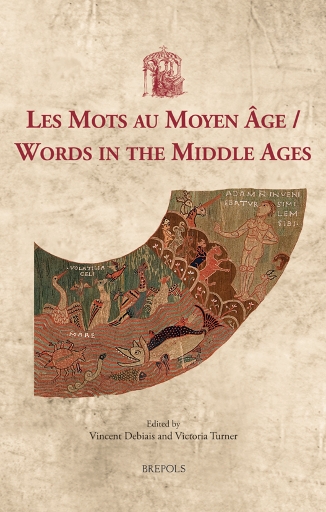
Words in the Middle Ages / Les Mots au Moyen Âge
show More to view fulltext, buy and share links for:Words in the Middle Ages / Les Mots au Moyen Âge show Less to hide fulltext, buy and share links for: Words in the Middle Ages / Les Mots au Moyen ÂgeThis collection of essays is a return to words of the Middle Ages in and of themselves, uniting philologists, historians, epigraphers, palaeographers, and art historians. It probes the intellectual, technical, and aesthetic principles that underpin their use and social function in medieval graphical practices, from epigraphy and inscriptions, to poetics, ‘mots’, and ‘paroles’. By analysing the material and symbolic properties of a particular medium, the conditions in which texts become signs, and scribal expertise, the contributors address questions that initially seem simple yet which define the very foundations of medieval written culture. What is a word? What are its components? How does it appear in a given medium? What is the relationship between word and text, word and letter, word and medium, word and reader? In a Middle Ages forever torn between economic and extravagant language, this volume traces the status of the medieval word from ontology to usage, encompassing its visual, acoustic, linguistic, and extralinguistic forms.
-
-
-
Worlds of the Silk Roads: Ancient and Modern
show More to view fulltext, buy and share links for:Worlds of the Silk Roads: Ancient and Modern show Less to hide fulltext, buy and share links for: Worlds of the Silk Roads: Ancient and ModernDefinitions of Inner Asia vary greatly. Inner Asia includes those lands that have linked the major agrarian civilisations of Eurasia, from China to India to the Mediterranean and Europe, since the late Neolithic period. In the 19th century, it became customary to refer to the trade routes between these regions as the 'Silk Roads'. But silk was just one of the goods exchanged through Inner Asia. religions, diseases, coins, cuisines, artistic fashions, political titles, all travelled the Silk Roads, as did Buddhism, Christianity, Manichaeism and Islam. Seen in this way, Inner Asia appears as the central knot in the vast tapestry of Eurasian history. To take Inner Asian history seriously is to see the underlying unity of Eurasian history. S.N.C. Lieu, From Iran to South China: The Eastward Passage of Manichaeism, L. Cansdale, Jews on the Silk Roads, C. Benjamin, An Introduction to Kushan Research, D. Christian, State Formation in the Inner Eurasian Steppes, S. Helms, Ancient Chorasmia: The Northern Edge of Central Asia from the 6th Century B.C. to the mid-4th Century A.D., H. Hendrischke, Chinese Concerns with Central Asia, C. Mackerras, Some observations on Xinjiang in the 1990s, W. Maley, The Dynamics of Regime Transition in Afghanistan, K. Nourzhanov, Traditional Kinship Structures in Contemporary Tajik Poilitics, S. Akbarzadeh, Reformism in the Bukharan Khanate, G. Lafitte, Re-orienting Mongolia, F. Patrikeef, Baron Ungern and the Eurasian Empire, R. Pitty, Russia and Eurasia in International Relations, A. Van Tongerloo, Turkestan: a Treasury of Civilisations, G. Watson, Central Asia as Hunting Ground: Sporting Images of Central Asia, T. Matthew Ciolek, 'Digital Caravanserais': Essential Online Resources for Inner Asian Studies.
-
-
-
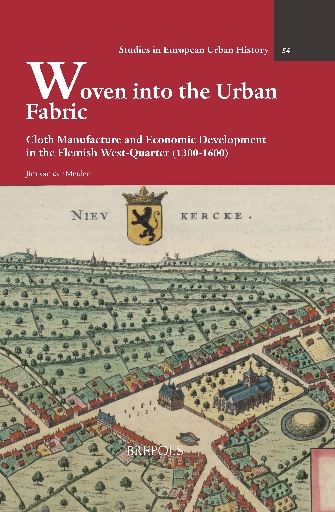
Woven into the Urban Fabric
Cloth Manufacture and Economic Development in the Flemish West-Quarter (1300-1600)
show More to view fulltext, buy and share links for:Woven into the Urban Fabric show Less to hide fulltext, buy and share links for: Woven into the Urban FabricThis regional study focuses on the socio-economic development of the so-called West-Quarter of the county of Flanders during the period 1300-1600. Through the expansion of potent textile industries in the countryside from the fourteenth century onwards, this region gradually attained distinctly ‘urban’ characteristics in terms of production scale, specialisation, product quality, and the aim for external markets. By the middle of the sixteenth century the West-Quarter had even become one of Flanders’s main production regions of woolen cloth. This book assesses how and why this economic expansion took place, why it happened at that particular moment, and why in this region. The broader aims of the research are twofold: first, to offer a contribution to the debate on Europe’s transition from a ‘feudal’ to a ‘capitalist’ or market economy by looking at the influence of specific social structures and institutional frameworks on the economic development of pre-industrial societies. Secondly, this book contributes to the debate about the divide between town and countryside in pre-industrial Europe, combining the outlooks and methods of both urban and rural historians in order to qualify this supposed dichotomy.
-
-
-
Writing Distant Travels and Linguistic Otherness in Early Modern England (c. 1550–1660)
show More to view fulltext, buy and share links for:Writing Distant Travels and Linguistic Otherness in Early Modern England (c. 1550–1660) show Less to hide fulltext, buy and share links for: Writing Distant Travels and Linguistic Otherness in Early Modern England (c. 1550–1660)As Britain’s global interests expanded from the mid-sixteenth century, geographic mobility encouraged many forms of multilingual practices in English writings. Translations, lexical borrowings, and records of exchanges between travellers and far-off lands and peoples diversely registered, communicated, engaged and politicised encounters with alterity. Meanwhile, earlier continental European translations also influenced and complicated the reception of distant otherness, entailing questions of linguistic hybridity or pluralism.
This volume explores some of the practices and strategies underpinning polyglot encounters in travel accounts produced, translated, or read in England, as well as in artistic and educational materials inflected by those travels. Drawing on linguistic, lexicographic, literary, and historical methodologies, the twelve chapters in this volume collectively look into the contexts and significances of textual contact zones. Particular attention is paid to uses of multilingualism in processes of identity construction, defining and promoting national or imperial agendas, appropriating and assimilating foreign linguistic capital, or meeting resistance and limits from linguistic and cultural otherness refusing to lend itself to a subjected or go-between status. Treating of indigenous languages, newly anglicized words, and new artistic and instructional materials, the volume makes the case for the vibrancy and influence of early modern English engagements with polyglossia and the need for multiple scales of approach to – and interdisciplinary perspectives on – the subject.
-
-
-
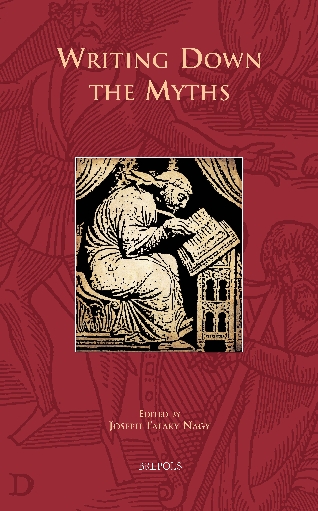
Writing Down the Myths
show More to view fulltext, buy and share links for:Writing Down the Myths show Less to hide fulltext, buy and share links for: Writing Down the MythsWhat are myths? Are there ‘correct’ and ‘incorrect’ versions? And where do they come from? These and many other related questions are addressed in Writing Down the Myths, a collection of critical studies of the contents of some of the most famous mythographic works from ancient, classical, medieval, and modern times, and of the methods, motivations, and ideological implications underlying these literary records of myth.
While there are many works on myth and mythology, and on the study of this genre of traditional narrative, there is little scholarship to date on the venerable activity of actually writing down the myths (mythography), attested throughout history, from the cultures of the ancient Middle East and the Mediterranean to those of the modern world. By assembling studies of the major literary traditions and texts through a variety of critical approaches, this collection poses - and seeks to answer - key questions such as these: how do the composers of mythographic texts choose their material and present them; what are the diverse reasons for preserving stories of mythological import and creating these mythographic vessels; how do the agenda and criteria of pre-modern writers still affect our popular and scholarly understanding of myth; and do mythographic texts (in which myths are, so to speak, captured by being written down) signal the rebirth, or the death, of mythology?
-
-
-
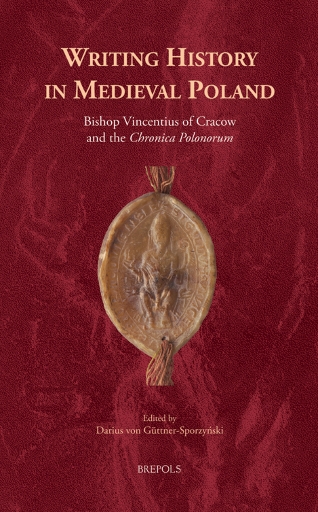
Writing History in Medieval Poland
Bishop Vincentius of Cracow and the 'Chronica Polonorum'
show More to view fulltext, buy and share links for:Writing History in Medieval Poland show Less to hide fulltext, buy and share links for: Writing History in Medieval PolandThis volume presents an in-depth analysis of the Chronica Polonorum, one of the greatest works of the twelfth-century renaissance which profoundly influenced history writing in Central Europe. The Chronica Polonorum was written by Poland’s first native historian Vincentius of Cracow. Educated in Paris and Bologna, he was the first canonically elected bishop of Cracow and a participant of the Fourth Lateran Council. The eyewitness accounts given in the Chronica Polonorum offer insights into the development of twelfth-century Poland, the ambitions of its dynasty, the country’s integration into Christendom, and the interaction between the Polish and Western elites. Vincentius’s work is considered a masterpiece in literary erudition grounded in classical training. The historical evidence it presents illuminates the socio-cultural interaction between Poland and the West during the period. Vincentius’s chronicle demonstrates the strong, enduring influence of the history, law, and traditions of ancient Rome in twelfth-century Europe.
This book deals with several subjects which have increasingly gained in prominence in English-language scholarship in recent years, such as the development of political culture, the diffusion and growth of ideas, the Christianization of the peripheral regions of Europe, and the interaction between cultural, political, and economic changes. In analysing the work of Vincentius and the Polish historiography of the Chronica Polonorum, this volume provides important insights into the development of the so-called peripheral regions of twelfth-century Europe and Poland’s engagement in the twelfth-century renaissance.
-
-
-
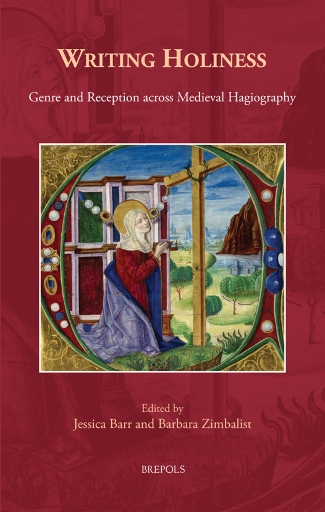
Writing Holiness
Genre and Reception across Medieval Hagiography
show More to view fulltext, buy and share links for:Writing Holiness show Less to hide fulltext, buy and share links for: Writing HolinessWriting Holiness contributes to exciting new critical conversations in the study of medieval hagiography in Western Christianity. Recent years have seen innovative approaches to the literatures of sanctity through emergent theoretical discourses, such as disability studies and trans theory. At the same time, traditional methodologies such as manuscript studies and reception history continue to generate new perspectives on the production, circulation, and reception of the sacred textual canon.
Through ten unique contributions that draw from both new and established theories and methodologies, this volume charts the development, movement, and reception of Christian hagiographic texts in localities ranging from the Iberian Peninsula to the Scandinavian Archipelago from the early to the late Middle Ages. Each chapter traces hagiographic development over generic, temporal, cultural, and linguistic boundaries, and considers the broader contours of the sacred imaginary that come into view as a result of such critically intersectional inquiry.
-
-
-
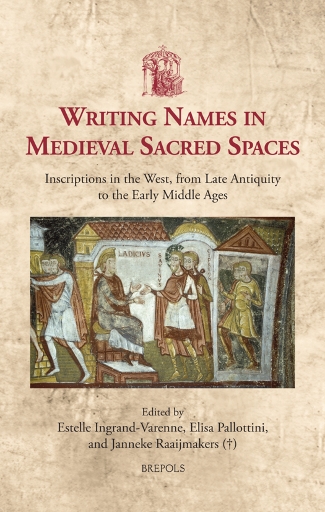
Writing Names in Medieval Sacred Spaces
Inscriptions in the West, from Late Antiquity to the Early Middle Ages
show More to view fulltext, buy and share links for:Writing Names in Medieval Sacred Spaces show Less to hide fulltext, buy and share links for: Writing Names in Medieval Sacred SpacesThis volume proposes a framework for reflection on practices of writing personal names in medieval sacred spaces, uniting historians, art historians, and specialists in written culture (both epigraphers and palaeographers). It traces the forms and functions of names that can be found within the space of early medieval churches and cemeteries, focusing mainly, but not solely, on inscriptions. By examining names written in various kinds of media, from liturgical books to graffiti and more formal inscriptions, the contributors investigate the intentions and effects of the act of writing one’s own name or having one’s name written down. Their interest resides less in the name itself than the interactions it had with its spatial, iconographic, linguistic, ritual, and cultural context, and what this indicates about medieval graphical practices. What is a name from a graphic point of view? What are the specificities of the epigraphic manifestations of names? By whom were names written, and for whom were they intended (if they were even meant to be accessed)? Addressing these and other questions, this volume shows the importance of inscriptions as historical sources and the contribution they give to the study of medieval societies at the intersection of history, anthropology, archaeology, linguistics, and semiology.
-
-
-
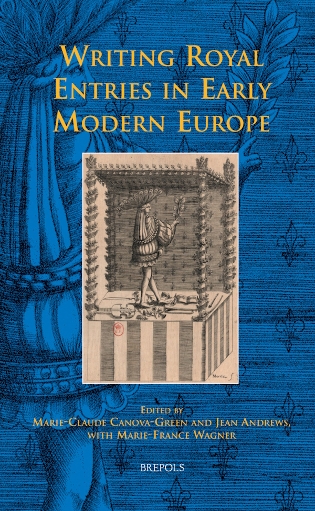
Writing Royal Entries in Early Modern Europe
show More to view fulltext, buy and share links for:Writing Royal Entries in Early Modern Europe show Less to hide fulltext, buy and share links for: Writing Royal Entries in Early Modern EuropeRoyal and ducal entries into major cities were an important aspect of political life in Renaissance and early modern Europe and the New World. The festivities provided an opportunity for the municipal authorities to show off their wealth, learning, political nous, and aspiration while allowing writers, painters, sculptors, architects, set-designers, scene-painters, dancers, musicians, choreographers, and others an unparalleled opportunity to showcase their wares. The essays in this volume cover a range of royal and ducal entries, some well documented and well known, others less so, some barely documented at all. Each essay tackles an aspect of the business of putting together an entry festivity, discusses a particular difficulty posed for the contemporary scholar by the extant documentation, or offers a consideration of issues central to the development of this type of festivity or the literature associated with it. The entries and royal progresses of members of the Habsburg, Medici, Valois, Bourbon, and Tudor dynasties are examined, as are the festivities commissioned and mounted by powerful and strategically important cities such as Berlin, Antwerp, Paris, Florence, London, and Mexico City to welcome these great personages or their marginally less great ducal representatives.
-
-
-
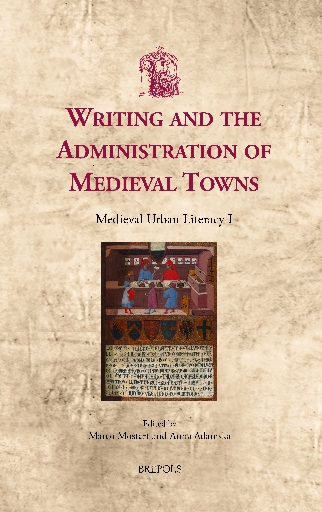
Writing and the Administration of Medieval Towns
Medieval Urban Literacy I
show More to view fulltext, buy and share links for:Writing and the Administration of Medieval Towns show Less to hide fulltext, buy and share links for: Writing and the Administration of Medieval TownsIn medieval towns, written statements of law and administration appear more prevalent than in non-urban spaces. Certain urban milieus participating in written culture, however, have been the focus of more scholarship than others. Considering the variety among town dwellers, we may assume that literacy skills differed from one social group to another. This raises several questions: Did attitudes towards the written word result from an experience of the urban educational system? On which levels, and in which registers, did different groups of people have access to writing? The need and the usefulness of written texts may not have been the same for communities and for individuals. In this volume we concentrate on the institutional written records that were most indispensable to communal order, including collections of written law, charters of liberties, and municipal registers.
-
-
-
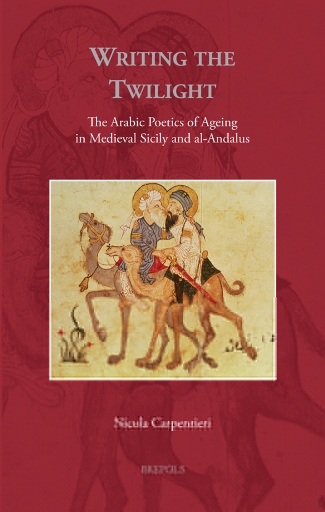
Writing the Twilight
The Arabic Poetics of Ageing in Medieval Sicily and al-Andalus
show More to view fulltext, buy and share links for:Writing the Twilight show Less to hide fulltext, buy and share links for: Writing the TwilightIn the eleventh century, as Muslim sovereignty in the Western Mediterranean was eroded by both internal divisions and external attacks, Sicily fell to the Normans. At the same time, al-Andalus fragmented into a series of small kingdoms that were then picked off by powerful conquerors. Against this backdrop, Arabic poets made use of their craft to try and explain the changes in their world. Among them were the Andalusian Abū Ishāq and the Sicilian Ibn Hamdīs, both of whom wrote vividly about their own ageing and mortality, as well as about the broader twilight of the worlds they knew.
Taking these two protagonists as its starting point, this extraordinary volume explores how Abū Ishāq and Ibn Hamdīs, despite their different locations, both made use of poetry. For them, it was a tool to confront their mortality, lament their own physical decay, and appeal to their age and experience, as well as a way of juxtaposing their concerns with the political and social dismemberment of their wider societies and the need for a restoration of world order. The result is also a broader discussion of the relationship between poetry and politics in Maghribī Islam, and a reminder of poetry’s importance as a medium to engage with the world.
-
-
-
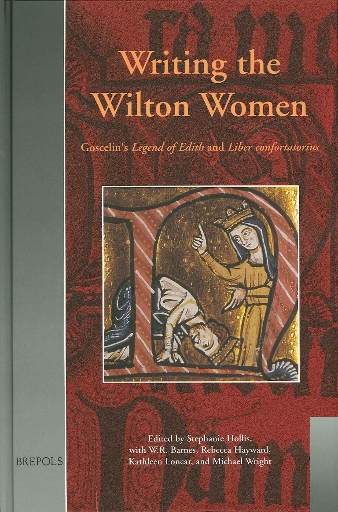
Writing the Wilton Women
Goscelin's Legend of Edith and Liber confortatorius
show More to view fulltext, buy and share links for:Writing the Wilton Women show Less to hide fulltext, buy and share links for: Writing the Wilton WomenThis collection of essays and translations brings together two closely related works by an important but little studied late eleventh-century author, Goscelin of Saint-Bertin. His Liber confortatorius (the earliest work of spiritual instruction for a female recluse known to have been written in England) is addressed to Eve. Goscelin, who may have been a chaplain at Wilton, had been Eve’s spiritual mentor since her childhood. Eve, however, left Wilton in her early twenties to become a recluse in Angers without even informing him of her plans, and in the Liber confortatorius, written in the form of an extended letter (c. 1082), Goscelin attempts to reassert and reconfigure their former close relationship.
Goscelin's account of the life and translation of St Edith, who was a member of the Wilton community until her death (in c. 986) at the age of twenty-three, was commissioned by the Wilton nuns and based on their oral report. Completed in c. 1080, the Legend gives a portrait of Edith and her mother Abbess Wulfthryth, and an account of the community’s posthumous relationship with its saint up until the time that Goscelin began work on it. It is (with the exception of Goscelin’s Life of Wulfhild of Barking) our only near contemporary narrative account of a late Anglo-Saxon women’s community.
The essays in this collection present a closely integrated account of some of the most central and striking aspects of the two texts. The essays and accompanying translations are the result of a collaborative research project undertaken at the University of Auckland.
-
-
-
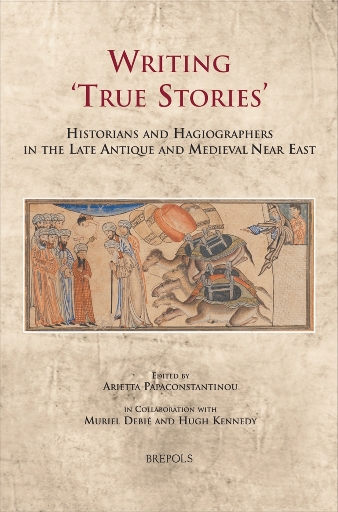
Writing ‘True Stories’
Historians and Hagiographers in the Late Antique and Medieval Near East
show More to view fulltext, buy and share links for:Writing ‘True Stories’ show Less to hide fulltext, buy and share links for: Writing ‘True Stories’The papers in this volume examine the interaction between history and hagiography in the late antique and medieval Middle East, exploring the various ways in which the two genres were used and combined to analyse, interpret, and re-create the past. The contributors focus on the circulation of motifs between the two forms of writing and the modifications and adaptations of the initial story that such reuse entailed. Beyond this purely literary question, the retold stories are shown to have been at the centre of a number of cultural, political, and religious strategies, as they were appropriated by different groups, not least by the nascent Muslim community. Writing ‘True Stories’ also foregrounds the importance of some Christian hagiographical motifs in Muslim historiography, where they were creatively adapted and subverted to define early Islamic ideals of piety and charisma.
-
-
-
Writings on the Spiritual Life
A Selection of Works of Hugh, Adam, Achard, Richard, Walter, and Godfrey of St Victor
show More to view fulltext, buy and share links for:Writings on the Spiritual Life show Less to hide fulltext, buy and share links for: Writings on the Spiritual LifeThe Canons following the Rule of St Augustine at St Victor in Paris were some of the most influential religious writers of the Middle Ages. They combined exegesis and spiritual teaching in a theology that was deeply rooted in tradition but also attuned to current developments in the schools of Paris. This selection of their writings on the spiritual life is divided into three sections. The first presents three works by Achard and Richard which treat the development of Christian life from the beginnings of conversion to the perfection of love and contemplation. Prayer, meditation and the gifts of the Holy Spirit are the subjects of the works by Hugh and Richard included in the second section. The final section presents poetical, exegetical and homiletic works honoring Mary by Hugh, Adam, Richard and Godfrey. This rich and representative sampling of Victorine works is a clear window into a world that still has much to offer modern readers interested in spirituality, medieval or modern.
The editor of this volume is Christopher P. Evans (PhD, St Louis University; Department of Theology, University of St. Thomas, Houston, TX), the editor of Hildegard of Bingen’s Explanatio symboli sancti Athanasii (2007), Vita sancti Disibodi, Vita sancti Ruperti and the Triginta octo questionum solutiones (forthcoming; Corpus Christianorum, Continuatio Mediaevalis) and Radulphus Ardens: The Questions on the Sacraments (2010).
-
-
-
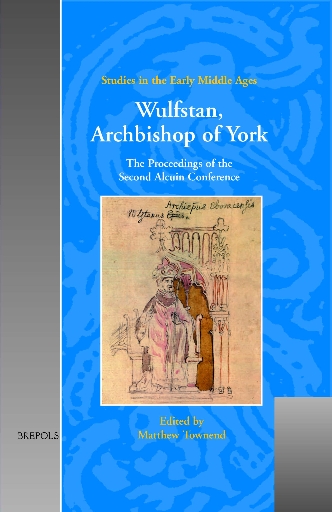
Wulfstan, Archbishop of York
The Proceedings of the Second Alcuin Conference
show More to view fulltext, buy and share links for:Wulfstan, Archbishop of York show Less to hide fulltext, buy and share links for: Wulfstan, Archbishop of YorkMost famous for his harrowing ‘Sermon of the Wolf to the English’, Archbishop Wulfstan II of York (1002-23) has emerged in recent decades as one of the most important and influential figures in the late Anglo-Saxon church and state. This volume, which arises from a conference held in 2002 to mark the millennial anniversary of Wulfstan’s appointment as archbishop, is the first collection of essays to be devoted to this crucial figure. Its twenty contributors address the whole range of Wulfstan’s activities and writings, and supply not only an up-to-date survey of Wulfstan studies but also many new directions, discoveries, and insights. The studies within this volume variously explore Wulfstan’s preaching and law-making; his position in the late Anglo-Saxon church; the places and contexts in which he lived and worked; and, more generally, his learning, concerns, and ideas. The contributors, drawn from a variety of disciplines, bring together literary, historical, and art historical approaches to the study of Wulfstan, and a recurrent focus is on the extant manuscripts associated with him. Altogether, therefore, this volume provides a thorough and wide-ranging exploration of the life, works, and contexts of one of the most important of all Anglo-Saxons.
-
-
-
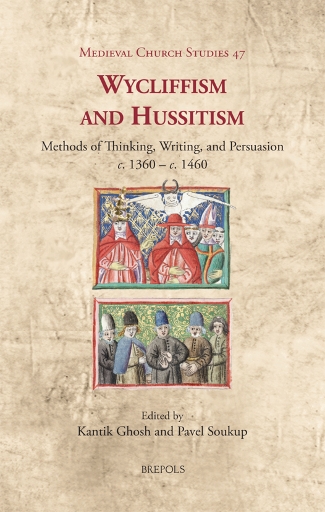
Wycliffism and Hussitism
Methods of Thinking, Writing, and Persuasion c. 1360 – c. 1460
show More to view fulltext, buy and share links for:Wycliffism and Hussitism show Less to hide fulltext, buy and share links for: Wycliffism and HussitismJohn Wyclif (d. 1384), famous Oxford philosopher-theologian and controversialist, was posthumously condemned as a heretic at the Council of Constance in 1415. Wyclif’s influence was pan-European and had a particular impact on Prague, where Jan Hus, from Charles University, was his avowed disciple and the leader of a dissident reformist movement. Hus, condemned to the stake at Constance, gathered around him a prolific circle of disciples who changed the landscape of late medieval religion and literature in Bohemia, just as Wyclif’s own followers had done in England.
Both thinkers, and the movements associated with them, played a crucial role in the transformation of later medieval European thought, in particular through a radically enlarged role of textual production in the vernaculars (especially Middle English and Old Czech), as well as in Latin, in the philosophical, theological, and ecclesiological realms.
This interdisciplinary volume of essays brings together cutting-edge research from scholars working in these and contiguous fields and asks fundamental questions about the methods that informed Wycliffite and Hussite writings and those by their interlocutors and opponents. Viewing these debates through a methodological lens enables a reassessment of the impact that they had, and the responses they elicited, across a range of European cultures, from England in the west via France and Austria to Bohemia in the east.
-
-
-

Wycliffite Controversies
show More to view fulltext, buy and share links for:Wycliffite Controversies show Less to hide fulltext, buy and share links for: Wycliffite ControversiesThe philosophical and theological ideas of John Wyclif, their dissemination among clerical and lay audiences, and the movement of religious dissent associated with his name all provoked sharp controversies in late medieval England. This volume brings together the very latest scholarship on Wyclif and Wycliffism, with its contributors exploring in interdisciplinary fashion the historical, literary, and theological resonances of the Wycliffite controversies. Far from adhering to the traditional binary divide between ‘orthodoxy’ and ‘heresy’ as a tool for explaining the religious turmoil of the late fourteenth, fifteenth, and early sixteenth centuries, essays here explore the construction and rhetorical use of those terms, collectively producing a more nuanced account of the religious history of pre-Reformation England. Topics include the use of religious lyrics and tables of lessons as indirect rebuttals of Wycliffite claims; the social networks through which dissenters transmitted their ideas; dissenting and mainstream readings of Scripture; the ‘survival’ of Wycliffism in the run-up to Henry VIII’s reformation; and the fate of Wyclif and Wycliffism in later historiography. Leading contributors include Anne Hudson, Alastair Minnis, and Peter Marshall.
-
-
-
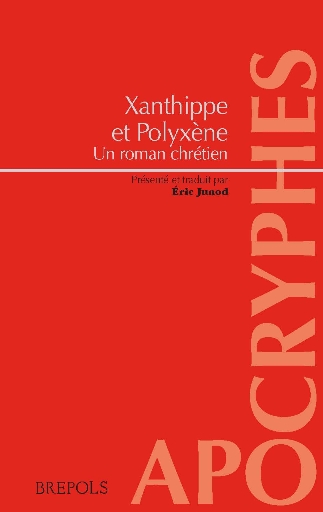
Xanthippe et Polyxène
Un roman chrétien
show More to view fulltext, buy and share links for:Xanthippe et Polyxène show Less to hide fulltext, buy and share links for: Xanthippe et PolyxèneCe petit roman chrétien, composé en grec vraisemblablement autour du v e siècle et manifestement influencé par les Actes apocryphes des apôtres, se compose de deux parties, chacune centrée sur une femme. L’héroïne du premier récit, Xanthippe, épouse d’un notable, est tournée vers l’ascèse et, bien que païenne, aspire à connaître le Dieu de Paul. Or, il se trouve que l’apôtre se rend en Espagne dans sa ville. Surmontant plusieurs épreuves avec détermination et faisant preuve d’un remarquable discernement spirituel, la chaste Xanthippe est baptisée par Paul et contribue à la conversion de son mari. Polyxène, sa jeune sœur, est l’héroïne du second récit, fort différent, qui se présente comme un véritable roman d’aventures et de voyages. Victime d’un enlèvement et emmenée en Grèce, elle voit sa virginité maintes fois menacée. Mais elle bénéficie de plusieurs aides efficaces, dont celles des apôtres Pierre, Philippe et André. Elle s’en retourne saine et sauve dans sa ville d’Espagne pour rester désormais attachée à l’apôtre Paul. L’ensemble de ce roman présente la particularité de fournir l’unique récit conservé des faits et gestes de Paul en Espagne.
-
-
-
The Yearbook of Langland Studies
show More to view fulltext, buy and share links for:The Yearbook of Langland Studies show Less to hide fulltext, buy and share links for: The Yearbook of Langland StudiesThe Yearbook of Langland Studies is the sole journal devoted to Piers Plowman studies. Since 1987, YLS has significantly shaped the expanding critical attention to the poem and its contexts. Each volume - including essays, debate, reviews, and annual annotated bibliography - offers access to the most significant and up-to-date scholarship on the poem and its literary, historical, codicological, and critical contexts.
More information about this journal on Brepols.net
-
-
-
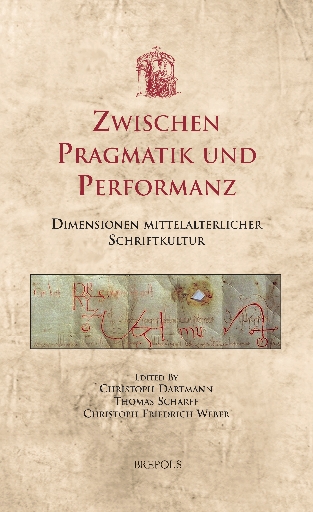
Zwischen Pragmatik und Performanz
Dimensionen mittelalterlicher Schriftkultur
show More to view fulltext, buy and share links for:Zwischen Pragmatik und Performanz show Less to hide fulltext, buy and share links for: Zwischen Pragmatik und PerformanzResearch on the practices and impacts of literacy has revolutionized the study of medieval history and culture. After initially having focused on investigating the modernising aspects of the development of literacy during the Middle Ages, the discussion now involves a large variety of topics, such as the performance of writing and reading, the use of the written word in political ritual and, on a general level, the ‘otherness’ of medieval communication. The volume presents essays dealing with a wide range of social and political uses of the written word during the Middle Ages, from the Carolingian era to late medieval Italy, Switzerland, Germany and Burgundy. It presents a panorama of the current state of the research and also offers new insights into the current conceptual debates about the history of communication in premodern Europe.
-
-
-
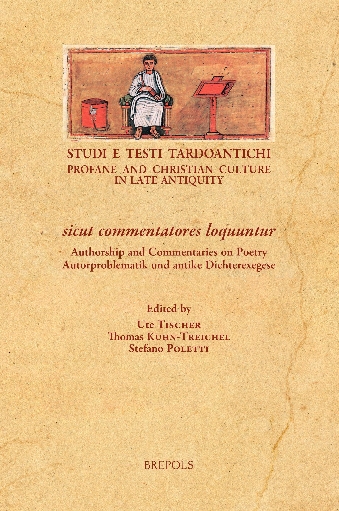
sicut commentatores loquuntur
Authorship and Commentaries on Poetry / Autorproblematik und antike Dichterexegese
show More to view fulltext, buy and share links for:sicut commentatores loquuntur show Less to hide fulltext, buy and share links for: sicut commentatores loquunturAncient commentaries on poetry - due to their heteronomous nature, their miscellaneous character, and the fact that most of them are transmitted in abridged and anonymous form - are usually not considered ‘authorial’ texts in the same way as poems or literary prose are. On the other hand, as didactic texts, they rely on authority to convey their interpretation, and they also often seem to have been perceived as products of authorial activity, as paratexts, references and pseudepigraphic attributions demonstrate.
The aim of this volume is to explore this tension and to examine commentaries and scholia on poetry in terms of authorship and ‘authoriality’. The contributions use several Latin and Greek corpora as case studies to shed light on how these texts were read, how they display authorial activity themselves, and how they fulfil their function as didactic works. They provide reflections on the relationship of author, authorship, and authority in ‘authorless’ traditions, explore how authorial figures and authorial viewpoints emerge in an implicit manner in spite of the stratified nature of commentaries, investigate the authorial roles adopted by commentators, compilers and scribes, and elucidate how commentators came to be perceived as authors in other exegetic traditions.
-
