EMISCA

Collection Contents
251 - 260 of 260 results
-
-
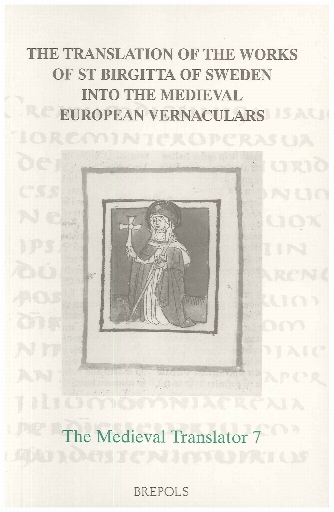
The Translation of the Works of St Birgitta of Sweden into the Medieval European Vernacular
show More to view fulltext, buy and share links for:The Translation of the Works of St Birgitta of Sweden into the Medieval European Vernacular show Less to hide fulltext, buy and share links for: The Translation of the Works of St Birgitta of Sweden into the Medieval European VernacularThis volume of papers, from an international Conference held in Beverley in 1997 on the translation into the medieval European vernaculars of the works of St Birgitta of Sweden, forms volume 7 in the series The Medieval Translator. Previous volumes in the series have been based on papers heard at the Cardiff Conferences on the Theory and Practice of Translation in the Middle Ages (1987- ). While future volumes in the series will continue to provide a record of the Cardiff Conference (the next is planned for Compostella in 2001), the present volume provides a welcome development for the series, and paves the way for scholarly monographs on individual works and writers — including editions of medieval translations — and other publications more narrowly angled at the different questions raised by the study of medieval translation.
-
-
-
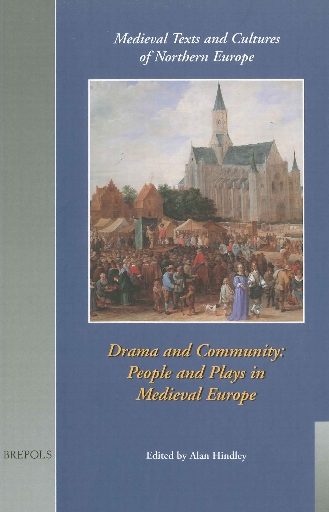
Drama and Community
show More to view fulltext, buy and share links for:Drama and Community show Less to hide fulltext, buy and share links for: Drama and CommunityIn recent years medieval drama has seen a marked revival of interest, much of it informed by an increasing appreciation of its multi-disciplinary nature. The drama of medieval Europe is not just literature; it is a social and indeed commercial event, essentially a communal enterprise, inextricably bound up with the structures of society. This collection of essays by international scholars working in collaboration examines various aspects of the inter-relationship between different European communities and the plays they performed. Its coverage of a wide range of theatres and play-types provides a critical and practical perspective on performance cultures of the Northern Middle Ages. The comparative nature of this volume has the effect of underlining drama as a true medieval mass medium.
-
-
-
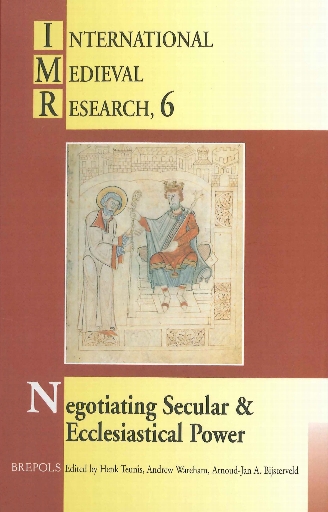
Negotiating Secular and Ecclesiastical Power
show More to view fulltext, buy and share links for:Negotiating Secular and Ecclesiastical Power show Less to hide fulltext, buy and share links for: Negotiating Secular and Ecclesiastical PowerTraditional historiography generally stresses the opposition and contradiction between secular and ecclesiastical power. By contrast, this volume focuses upon the interdependence of secular and ecclesiastical power and on the ways both secular rulers, kings, counts and other lords, and ecclesiastical authorities and institutions continuously interacted, trying to affirm the relationships between them. This selection of a historiographical introduction plus nine case-studies from England, northern France and the Low Countries enables a subtle comparison of secular and ecclesiastical links and social interactions in a series of regional and local contexts during the Central Middle Ages. The volume demonstrates that this process of negotiation led to an affirmation of shared values and contributed to the creation of common social values in medieval Europe.
Ludo Milis (Universiteit Gent), “This book, composed around three major themes (‘Texts as Tools of Power’, ‘Land and Kinship’, and ‘Conflict and Affirmation’), exemplifies how medievalists can reshape their discipline into a more responsive one. Its scope is not to offer a wide range of definitive explanations, but it shows how medievalists should try (and indeed do try) to return to a close reading of their documents. For far too long, institutional history, legal history, and histoire événémentielle have tried to monopolize power relationships and to encapsulate them in rather narrow explanatory schemes. This volume offers a broader and more encompassing approach.”
-
-
-

New Approaches to Medieval Communication
show More to view fulltext, buy and share links for:New Approaches to Medieval Communication show Less to hide fulltext, buy and share links for: New Approaches to Medieval CommunicationThis volume will serve as a textbook for studying this field, and as an introduction to current research. It is written in accessible language for non-specialists. The volume has three sections: introductions by two of the leading exponents worldwide: Michael Clanchy and Marco Mostert; a series of essays by members of the Utrecht ‘Pionierproject’ which consider writing and written culture against the background of all forms of communication available to a given medieval society, both in western and east-central Europe; and a comprehensive bibliography on the subject, comprising 1500 titles which will serve as a fundamental starting-point for work in this field.
-
-
-

New Trends in Feminine Spirituality
show More to view fulltext, buy and share links for:New Trends in Feminine Spirituality show Less to hide fulltext, buy and share links for: New Trends in Feminine SpiritualityWas there a women’s movement in the thirteenth century and is such a question meaningful in its medieval context? Far from being resolved, the issue of whether women had a thirteenth-century renaissance has still decisively to unsettle the periodization of Western European history in twelfth and sixteenth-century humanist renaissances. Herbert Grundmann long ago demonstrated the participation of women in the eremitically-inspired reforming movements of the twelfth and thirteenth centuries, and in the production of vernacular literature. Yet it is upon his work that this volume builds, for the diocese of Liège is the key area in this development. It was from Liège that Jacques de Vitry approached the papacy to secure permission for the women of the bishopric of Liège, France and Germany to live together and to promote holiness in each other by mutual example. The seventeen contributors to this volume examine not only the beguine religious life in the southern Low Countries, but also the impact of this movement on later medieval Sweden, England and France, the new modes of influence exerted by women in their religious lives, and the revivals of feminine spirituality in the late medieval West through to contemporary North America. Research does not yet allow for a whole new synthesis, but this volume directs scholars to detailed work on specific localities and persons, with an awareness of the problems and possibilities of wider European comparisons.
-
-
-
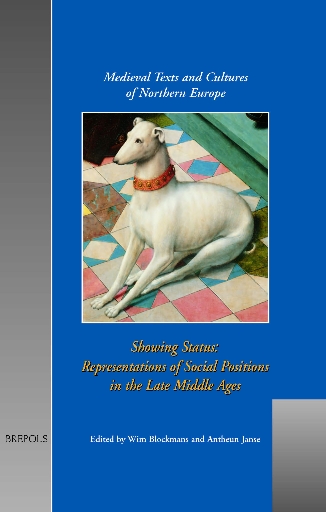
Showing Status
show More to view fulltext, buy and share links for:Showing Status show Less to hide fulltext, buy and share links for: Showing StatusHow did people in the late medieval period perceive and express social status? This volume brings together multi-disciplinary perspectives on representations of social difference in the Low Countries during a time of dynamic social change. The premise of the volume is that medieval social change may only be fully understood if hierarchies of wealth and power are examined alongside literary and artistic sources. Medieval texts and material culture expressed social standing and gave meaning to the experience of social change. The aim of the study is to recognise and translate the language of symbols used to encode and display status in the late Middle Ages.
-
-
-

The Commentary Tradition on Aristotle’s ’De generatione et corruptione’. Ancient, Medieval and Early Modern
show More to view fulltext, buy and share links for:The Commentary Tradition on Aristotle’s ’De generatione et corruptione’. Ancient, Medieval and Early Modern show Less to hide fulltext, buy and share links for: The Commentary Tradition on Aristotle’s ’De generatione et corruptione’. Ancient, Medieval and Early ModernIn this book, a dozen distinguished scholars in the field of the history of philosophy and science investigate aspects of the commentary tradition on Aristotle’s De generatione et corruptione, one of the least studied among Aristotle’s treatises in natural philosophy. Many famous thinkers such as Johannes Philoponus, Albert the Great, Thomas Aquinas, John Buridan, Nicole Oresme, Francesco Piccolomini, Jacopo Zabarella, and Galileo Galilei wrote commentaries on it. The distinctive feature of the present book is that it approaches this commentary tradition as a coherent whole, thereby ignoring the usual historiographical distinctions between the Middle Ages, the Renaissance, and the seventeenth century.
-
-
-
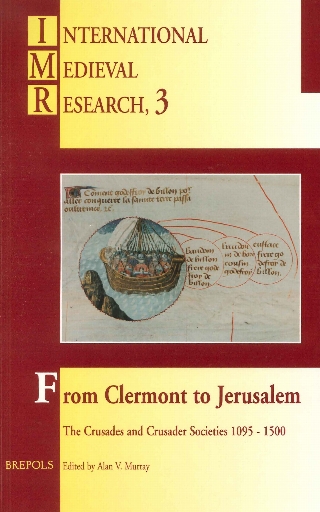
From Clermont to Jerusalem
show More to view fulltext, buy and share links for:From Clermont to Jerusalem show Less to hide fulltext, buy and share links for: From Clermont to JerusalemThis collection of seventeen original essays offers new perspectives on the history and sources of the crusades from the Council of Clermont in 1095 to the late fifteenth century, and of the societies they established in Palestine, Greece, Cyprus and the Baltic.
The volume begins with a masterly survey of the concepts and strategies of the crusading movement. The historical case studies deal with the reigns of Baldwin I and Baldwin IV of Jerusalem, the role of castles in Greece and Cyprus, the military orders and crusade vows in England, and female warriors in the Baltic crusades. The essays on sources provide critical assessments and re-assessments of the narratives of the First and Fourth Crusades, introduce little known Arabic sources on the Muslim population of crusader Palestine, and analyse interpretations of the last days of the crusader kingdom in medieval theology and modern historiography. The volume concludes with a classified bibliography of the First Crusade, comprising over 400 texts, monographs and articles published up to 1997.
-