EMISCA

Collection Contents
201 - 250 of 260 results
-
-
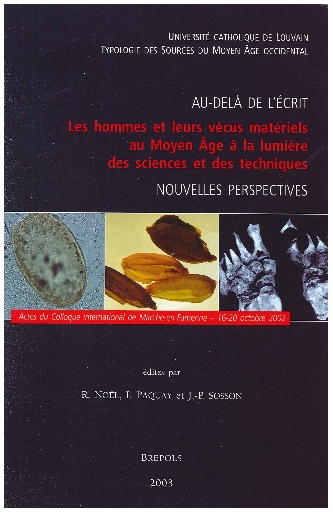
Au-delà de l’écrit. Les hommes et leurs vécus matériels au Moyen Âge à la lumière des sciences et des techniques
show More to view fulltext, buy and share links for:Au-delà de l’écrit. Les hommes et leurs vécus matériels au Moyen Âge à la lumière des sciences et des techniques show Less to hide fulltext, buy and share links for: Au-delà de l’écrit. Les hommes et leurs vécus matériels au Moyen Âge à la lumière des sciences et des techniques«L’histoire se fait avec des documents. Quand il y en a. Mais elle peut se faire, elle doit se faire avec tout ce que l’ingéniosité de l’historien peut lui permettre d’utiliser…» (L. Febvre). Ces propos, les médiévistes les ont faits leurs. Sciences naturelles et de la terre, méthodes de détection et d’enregistrement des traces de l’activité des hommes ont permis des avancées spectaculaires. Toujours plus sûres d’elles-mêmes, elles ouvrent sans cesse des perspectives au vrai vertigineuses.
La Typologie des sources du Moyen Âge occidental s’est résolument inscrite dans ce mouvement. Elle voudrait aujourd’hui faire le point, encourager aussi l’ouverture de nouveaux chantiers. Selon ses perspectives. Et en retenant deux approches complémentaires: théorique et pratique. La première mettra en valeur les développements récents et les perspectives nouvelles qu’offrent potentiellement sciences et techniques pour l’étude des communautés humaines dans leurs «vécus» matériels. La seconde privilégiera des cas particuliers illustrant concrètement les apports et les limites que la critique et la typologie des sources imposent à celles-là.
-
-
-
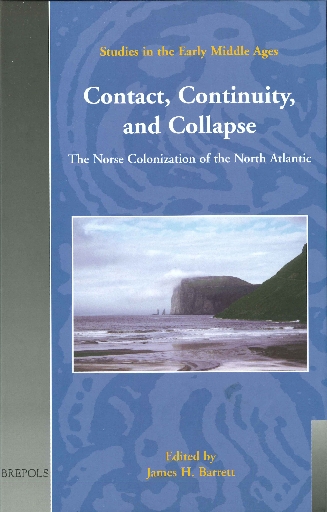
Contact, Continuity, and Collapse
show More to view fulltext, buy and share links for:Contact, Continuity, and Collapse show Less to hide fulltext, buy and share links for: Contact, Continuity, and CollapseThis volume explores the Viking Age colonization and exploration of the North Atlantic, from Arctic Norway to Vinland in eastern North America. Its contributors, predominately archaeologists by training, bring new evidence and an interdisciplinary perspective to a subject often dominated by sources of variable historicity. They explore the creation and transformation of ethnicity in new lands - some occupied, others empty. They also address the historiography of Norse Landnám, unravelling the processes by which scholarly interpretations of the Viking Age have been created. The result illuminates the consequences of migration in the early Middle Ages and the interplay of local and large-scale socio-economic processes. In concluding, the volume assesses the relationship between Norse expansion and later European ‘rediscovery’ of the New World.
-
-
-

Court Culture in the Early Middle Ages
show More to view fulltext, buy and share links for:Court Culture in the Early Middle Ages show Less to hide fulltext, buy and share links for: Court Culture in the Early Middle AgesThe role of the court in early medieval polities has long been recognised as an essential force in the running of the kingdom. The court was not only an organ of central government but a sociological community with its own ideology and culture, and a place where royal power was both displayed and negotiated. The studies within this volume reflect the diversity of modern court studies, considering the court as a social body and considering its educative and ideological activities. The contributors to this volume bring together historical, archaeological, art historical and literary approaches to the topic as they consider aspects of court life in England, Francia, Rome and Byzantium from the eighth to the tenth centuries. The volume therefore looks at court life in the round, emphasizes and invites connections between early medieval courts, and opens new perspectives for the understanding of early medieval courts.
-
-
-
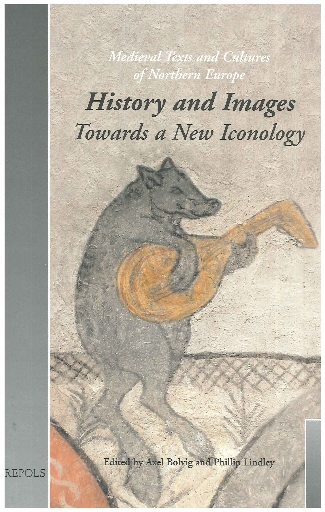
History and Images
show More to view fulltext, buy and share links for:History and Images show Less to hide fulltext, buy and share links for: History and ImagesThis versatile collection of essays sets out to underline the new visual agenda in today’s research into history and the history of art. The impact of alternative imagery, of image databases and of computer-generated material has effectively revealed a separate resource-category, offering further definitions of meaning and information and requiring new methodologies of interpretation. The volume’s subtitle, ‘Towards a New Iconology’, makes the point that our conventional approaches towards the image may no longer be adequate. Its nineteen contributions all represent a moving-away from the tradition passed down ever since Gregory the Great famously pronounced images to be the Bible of the illiterate. On the contrary, the authors of this volume demonstrate that images constitute another world altogether, with its own ideology and store of information, and with its own emotional charge and seductive qualities. History and Images contains articles by eminent scholars from Austria, Denmark, Finland, France, Germany, the Netherlands, Norway, Sweden, Switzerland, the UK and USA.
-
-
-
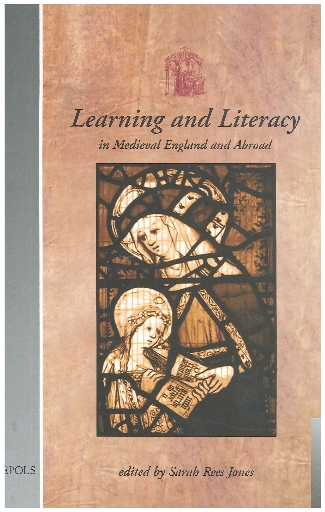
Learning and Literacy in Medieval England and Abroad
show More to view fulltext, buy and share links for:Learning and Literacy in Medieval England and Abroad show Less to hide fulltext, buy and share links for: Learning and Literacy in Medieval England and AbroadHow did people know what they knew, and learn what they learnt? As Derek Pearsall’s introduction makes clear this is the primary focus of the collection of essays published in celebration of the thirtieth anniversary of the foundation of the Centre for Medieval Studies at the University of York.
The learning materials included range from grammar books to mystery plays, and from court records to monastic chronicles, as well as liturgical and devotional texts. But the essays are not only concerned with texts alone, but with the broader and often fluid social environments in which learning took place. Many of the papers therefore question the validity of some distinctions habitually used in the discussion of medieval culture, such as the opposition between orality and literacy, between Latin and the vernacular or between secular and religious.
-
-
-
Love, Marriage, and Family Ties in the Later Middle Ages
show More to view fulltext, buy and share links for:Love, Marriage, and Family Ties in the Later Middle Ages show Less to hide fulltext, buy and share links for: Love, Marriage, and Family Ties in the Later Middle AgesThis volume addresses the current fashion for research on the family and domesticity in the past. It draws together work from various disciplines - historical, art-historical, and literary - with their very different source materials and from a broad geographical area, including some countries - such as Croatia and Poland - which are not usually considered in standard textbooks on the medieval family. This volume considers the various affective relationships within and around the family and the manner in which those relationships were regulated and ritualized in more public arenas. Despite their disparate approaches and geographical spread, these essays share many thematic concerns; the ideologies which structured gender roles, inheritance rights, incest law and the ethics of domestic violence, for example, are all considered here. This collection originates from the Leeds IMC in 2001 when the special strand was entitled ‘Domus and Familia’ and attracted huge participation. This book aims to reflect that richness and variety whilst contributing to an expanding area of historical enquiry.
-
-
-
L’architecture gothique au service de la liturgie
show More to view fulltext, buy and share links for:L’architecture gothique au service de la liturgie show Less to hide fulltext, buy and share links for: L’architecture gothique au service de la liturgieContrairement à ce que l’on a longtemps cru, l’architecture gothique ne naît pas simplement d’une évolution des formes et des techniques de construction. Bien au contraire, celles-ci ne sont que le moyen par lequel une génération nouvelle, dont Suger, abbé et maître d’œuvre de Saint-Denis, est le chef de file, adapte les lieux de culte à ses nouvelles exigences. Un premier colloque, tenu en 2000 à la fondation Singer-Polignac, avait permis de dessiner l’ambiance intellectuelle dans laquelle était né l’art nouveau: l’humanisme de l’école de Saint-Victor. À côté de ce renouveau intellectuel, il fallait également prendre en compte l’importance des transformations liturgiques qui se nouent au xii e siècle et qui jouent un rôle fondamental dans le renouveau inauguré par Saint-Denis. C’est la tâche dont se sont chargés sept historiens de l’art, de la littérature, de la musique, de la liturgie et des idées. Le rôle de Rome et des voyages italiens de l’abbé Suger apparaît prépondérant. L’architecture nouvelle adapte les édifices français aux exigences liturgiques créées par la réforme romaine, au lendemain de la querelle des investitures. Plus qu’un simple problème esthétique, et par-delà ses implications théologiques et philosophiques, le gothique est un art profondément ancré dans son époque et qui cherche à répondre aux problèmes nouveaux et aux nouveaux besoins fonctionnels qui s’affirment alors.
-
-
-
Political Assemblies in the Earlier Middle Ages
show More to view fulltext, buy and share links for:Political Assemblies in the Earlier Middle Ages show Less to hide fulltext, buy and share links for: Political Assemblies in the Earlier Middle AgesAssembly is a central feature of the European political process between the demise of the Roman Empire and the rise of the bureaucratic state in the twelfth and thirteenth centuries. Historians have often neglected the crucial rule of political assemblies in their own right, concentrating instead on exceptional or extraordinary attention-catching events which occurred at assemblies. Earlier generations of scholars tried to discern in such assemblies the forerunners of later medieval parliaments and other forms of representative government. By contrast, the contributors to this volume present medieval assemblies in their own terms.
Were political assemblies in the earlier Middle Ages convened to confirm decisions already taken elsewhere or were they genuinely deliberative? How, if at all, did political assemblies create consensus? At what level(s) of the political and administrative hierarchy were assemblies held, who attended such gatherings, how were they conducted, and where were they held? The main focus is on assemblies of emperors, kings, and princes, and on those of townsfolk, though some more local assemblies are also discussed. The over-arching thematic structure relates to the purposes of assemblies and how they worked, their practical and ritual or symbolic aspects, and the degree to which they were stage-managed, and by whom. The contributors bring archaeological, as well as historical, evidence to bear and present a range of geographical, political and historiographical approaches and traditions.
-
-
-
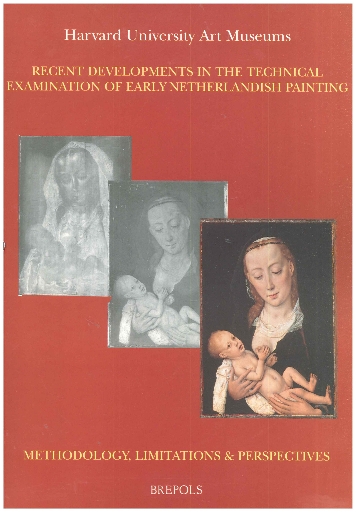
Recent Developments in the Technical Examination of Early Netherlandish Painting: Methodology, Limitations and Perspectives
show More to view fulltext, buy and share links for:Recent Developments in the Technical Examination of Early Netherlandish Painting: Methodology, Limitations and Perspectives show Less to hide fulltext, buy and share links for: Recent Developments in the Technical Examination of Early Netherlandish Painting: Methodology, Limitations and Perspectives
-
-
-
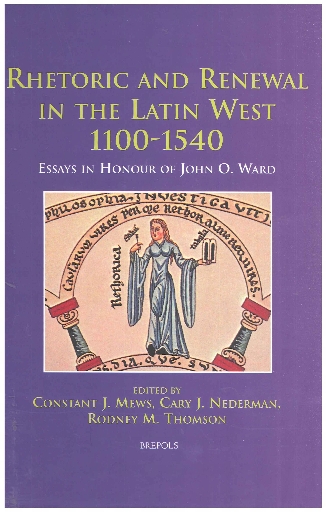
Rhetoric and Renewal in the Latin West 1100-1540
show More to view fulltext, buy and share links for:Rhetoric and Renewal in the Latin West 1100-1540 show Less to hide fulltext, buy and share links for: Rhetoric and Renewal in the Latin West 1100-1540The essays in this volume, presented in honour of John O. Ward, explore the role of rhetoric in promoting reform and renewal in the Latin West from Peter Abelard (1079-1142) to Juan Luis Vives (1492-1540). Ward, who has taught for many years at the University of Sydney, has been an influential and creative force in medieval and renaissance studies both in Australia and internationally. This volume opens with a personal memoir and bibliography of Ward’s publications, as well as an overview of the study of medieval rhetoric. The first of the three sections, ‘Abelard and Rhetoric’, relates Abelard’s rhetoric to his logic, his theology, and his relationship to Heloise. A second section, ‘Voices of Reform’, considers various writers (William of Malmesbury, John of Salisbury, Richard FitzNigel, and William of Ockham) who bring rhetorical techniques to bear upon analysis of social conditions. A third section, ‘Rhetoric in Transition’, deals with the evolution of rhetorical theory between the late fourteenth and early sixteenth centuries. The volume will be of interest not just to specialists in rhetoric, but to all concerned with issues of reform and renewal in European culture during the period 1100-1540.
-
-
-
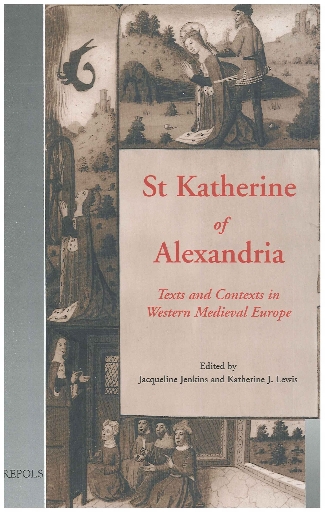
St Katherine of Alexandria
show More to view fulltext, buy and share links for:St Katherine of Alexandria show Less to hide fulltext, buy and share links for: St Katherine of AlexandriaSt Katherine of Alexandria was one of the most popular saints in medieval Europe. This book constitutes the first interdisciplinary collection of essays to explore her cult and the range of meanings which St Katherine embodied for her devotees. The essays between them consider a wide range of evidence, from visual representations (wall paintings, manuscript illuminations, stained glass, and seals), to literary texts (lives of the saint, prayers, hymns, devotional manuscripts, and breviaries) as well as documentary evidence (wills, chronicles, ecclesiastical records and antiquarian writings) and the physical remains of churches and chapels dedicated to St Katherine. These sources are interpreted as part of wider manifestations of devotion to the saint in England, France, Italy, Spain, Sweden, and Wales. The authors approach the cult from varying disciplinary and methodological perspectives, but all seek to uncover the various religious, social and cultural messages contained within the different versions of St Katherine which these particular texts and contexts offer. The volume as a whole therefore sheds light not only on devotion to St Katherine, but also on a much wider range of issues and ideologies governing the lives of her devotees and the societies in which they lived.
-
-
-
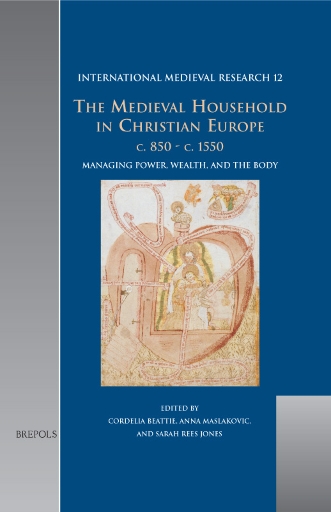
The Medieval Household in Christian Europe, c. 850-c. 1550
show More to view fulltext, buy and share links for:The Medieval Household in Christian Europe, c. 850-c. 1550 show Less to hide fulltext, buy and share links for: The Medieval Household in Christian Europe, c. 850-c. 1550This volume asks whether there was a common structure, ideology, and image of the household in the medieval Christian West. In the period under examination, noble households often exercised great power in their own right, while even quite humble households were defined as agents of government in the administration of local communities. Many of the papers therefore address the public functions and perceptions of the household, and argue that the formulation of domestic (or family) values was of essential importance in the growth and development of the medieval Christian state.
Contributors to this volume of collected essays write from a number of disciplinary perspectives (archaeological, art-historical, historical and literary). They examine socially diverse households (from peasants to kings) and use case studies from different regions across Europe in different periods within the medieval epoch from c. 850 to c. 1550. The volume both includes studies from archives and collections not often covered in English-language publications, and offers new approaches to more familiar material. It is divided into thematic sections exploring the role of households in the exercise of power, in controlling the body, in the distribution of wealth and within a wider economy of possessions.
-
-
-
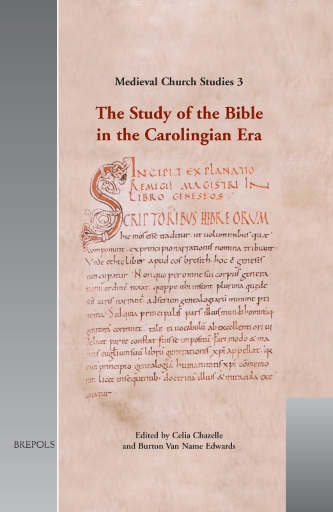
The Study of the Bible in the Carolingian Era
show More to view fulltext, buy and share links for:The Study of the Bible in the Carolingian Era show Less to hide fulltext, buy and share links for: The Study of the Bible in the Carolingian EraFrom the last quarter of the eighth until the beginning of the tenth century, Carolingian monasteries, cathedrals, and courts were the sites of a vigorous scholarship grounded in the study of sacred Scripture. The significance of Bible studies in this epoch is evident from the many extant Carolingian commentaries on virtually every book of the Old and New Testaments. More works of this kind survive from the period, often in multiple copies, than is true for any other genre of literature. Although scholars used to dismiss the Carolingian Bible commentaries as uncreative compilations of material borrowed from the Church Fathers, in recent years appreciation of these tracts’ essential creativity has grown significantly. In addition, there is now increased recognition of the degree to which the ‘exegetical’ culture nurtured within the Carolingian schools fertilized other aspects of contemporary intellectual and cultural endeavour.
The essays in this collection offer a fresh look at the range of biblical studies and their impact on diverse domains of Carolingian culture and learning. The bibliography provides a record of critical editions of Carolingian-era Bible commentaries and secondary scholarship in the field published within the last twelve years.
-
-
-
The Theory and Practice of Translation in the Middle Ages
show More to view fulltext, buy and share links for:The Theory and Practice of Translation in the Middle Ages show Less to hide fulltext, buy and share links for: The Theory and Practice of Translation in the Middle Ages[El interés que los autores de estos trabajos demuestran por las complejidades y consecuencias de la traducción en la Edad Media, o de la traducción de textos medievales en el período moderno, ha dado como resultado un volumen diverso y estimulante intelectualmente. Los trabajos del presente volumen, escritos en inglés, francés y español, se centran en el tema de la traducción desde muchas perspectivas, ofreciendo una amplia gama de interpretaciones del concepto de traducción. El volumen contiene trabajos que abarcan en el tiempo desde el período Anglo-Sajón hasta el presente, y en temática desde libros de recetas medievales hasta argumentos a favor de que las mujeres administren la Eucaristía. Las lenguas que se estudian incluyen no sólo lenguas no europeas sino también el Latín y numerosas vernáculas europeas, ya sean como lengua origen o lengua meta. Como cualquier traductor o estudioso de la traducción puede rápidamente constatar, es imposible separar lengua de cultura. Todos los autores de este volumen han analizado en profundidad las complejidades de la traducción como hecho cultural, aún cuando el foco de atención pareciera ser específicamente lingüístico. Son estas complejidades las que dotan al estudio de la teoría y práctica de la traducción en la Edad Media de su perdurable fascinación.
,The interest of the writers of these essays in the intricacies and implications of translation in the Middle Ages, or of the translation of medieval texts in the modern period, has resulted in a diverse and intellectually stimulating volume. The papers in this volume, written in either English, French, or Spanish, approach translation from a wide variety of perspectives and offer a range of interpretations of the concept of translation. The volume contains essays ranging in time from the Anglo Saxon period to the present, and in topic from medieval recipe books to arguments in favour of women administering the sacrament. Languages studied include non-European languages as well as Latin and numerous European vernaculars as both source and target languages. As any translator or student of translation quickly becomes aware, it is impossible to divorce language from culture. All the contributors to this volume struggle with the complexities of translation as a cultural act, even when the focus would seem to be specifically linguistic. It is these complexities which lend the study of the theory and practice of translation in the Middle Ages its enduring fascination.
,Complexité et fascination: deux mots qui reviennent souvent à l’esprit au contact des textes médiévaux, au point qu’ils pourraient servir à caractériser la nature des rapports qui unissent ces textes à leurs traducteurs. Dans leur diversité, les communications entendues à Saint-Jacques-de-Compostelle illustrent, chacune à sa manière, de nombreux aspects de cette complexité, qu’il s’agisse des sujets traités ou des problèmes techniques soulevés. Le rapport au temps qu’impose le texte médiéval se double d’un rapport à la distance, car la différence culturelle se présente au traducteur comme un éloignement, ce qui, dans le travail de rapprochement que constitue alors la traduction, introduit la notion d’interprétation. A son tour cette interprétation, avec ses degrés, est étroitement dépendante des objectifs pédagogiques, culturels, politiques ou religieux que s’est fixés le traducteur, comme cela apparaîtra clairement à la lecture d’un certain nombre de ces communications. Plusieurs études de ce recueil confirment également que la traduction, loin d’être un travail de solitaire, est avant tout un acte social, une activité de mise en relations. C’est cette patiente recherche d’adaptation à des publics différents, en fonction d’époques et de goûts différents, accompagnée de choix tour à tour réjouissants et frustrants, qui constitue le travail de tout traducteur, qu’il appartienne au Moyen Âge ou au monde moderne. C’est aussi cette richesse, venue du passé mais toujours actuelle, et cette recherche sans cesse reprise d’un équilibre toujours instable, qui font que la traduction, dans sa pratique comme dans sa théorie, exerce sur tant d’esprits une réelle fascination.
]
-
-
-
The White Mantle of Churches
show More to view fulltext, buy and share links for:The White Mantle of Churches show Less to hide fulltext, buy and share links for: The White Mantle of ChurchesWhen a monk living at the beginning of the last millennium described Europe ‘cladding itself everywhere in a white mantle of churches’, he precipitated several questions for historians to answer. Was there a surge in church-building at the time? If so, what were the causes of this, and what were the purposes? Does it help to explain our understanding of Romanesque architecture and art? Was there a connection between the ‘white mantle of churches’ and the millennium? Did people believe the world was coming to an end?
The supposition of apocalyptic expectations at the time was until recently dismissed as romantic myth, but the arrival of our new millennium has brought a revival in interest in the dawn of the second millennium, and new evidence of millennial fears. Yet millennial studies and architectural history largely continue to follow separate, parallel paths. This book therefore aims to add the architectural evidence to the millennial debate, and to examine this formative period in relation to the evolution of Romanesque architecture and art. As our own millennium gets under way with continuing hesitancy between European aspiration and national identity, it is also of interest to compare our time with the Europe of a thousand years ago.
-
-
-
Time and Eternity
show More to view fulltext, buy and share links for:Time and Eternity show Less to hide fulltext, buy and share links for: Time and EternityThis volume is composed of selected papers from the main strand ‘Time and Eternity’ at the seventh International Medieval Congress held in July 2000. It attests to the fact that the medieval experience of time and eternity was rich and complex, and that its investigation is open to various approaches and methods. Time and (the possibility or impossibility of) its beginning and its end were frontiers to be explored and to be understood.
To make the reader more familiar with the field of study, the volume begins with Wesley Stevens’s plenary address ‘A Present Sense of Things Past: Quid est enim tempus?’, a stimulating introduction not only with regard to some of the basic problems in conceptualizing the nature of time but also to the dating of historical events and the use of calendars for that purpose.
Following Stevens’s essay, the volume is organised into seven broader themes covering a variety of questions and trying to offer new insights into the medieval perception and constructions of time. They deal with the computation of time and the use of calendars; Jewish concepts of time and redemption; Christian philosophies of eternity and time; monastic and clerical conceptions; literary representations; time and art; and apocalyptic expectations. The volume’s selection of authors is international in scope and represents some of the leading current scholarship in the field. It proves that we still ‘thirst to know the power and the nature of time’ (St Augustine).
-
-
-
Urban public debts, urban government and the market for annuities in Western Europe (14th-18th centuries)
show More to view fulltext, buy and share links for:Urban public debts, urban government and the market for annuities in Western Europe (14th-18th centuries) show Less to hide fulltext, buy and share links for: Urban public debts, urban government and the market for annuities in Western Europe (14th-18th centuries)The essays in this volume offer a state-of-the-art analysis of a heretofore somewhat neglected part of financial history: the way in which urban governments in Western Europe during the Late Middle Ages and Early Modern Times handled the public debts their cities were confronted with. The technical aspects of the sale of annuities (renten, rentes) may have already been abundantly studied, but the links with social and political history still needed to be tackled. Who bought these annuities and thus participated in sharing the burden and profits which were likely to arise from them? What were their motives? How did the obvious links with urban elites work? And, perhaps most significantly, how did these occasional sales evolve into a structural way of linking financially important private persons with public finances, in the context both of cities and of growing states, since often the cities needed the money on a short-term basis in order to accomplish their own financial obligations toward ‘the state’. Participants in the colloquium where a large number of the essays were first presented represent in the first place the urban strongholds of Europe in the period under scrutiny: the Low Countries and Northern and Central Italy, but the Swiss cities, the cities of Aragon, London and papal Rome are also considered.
-
-
-
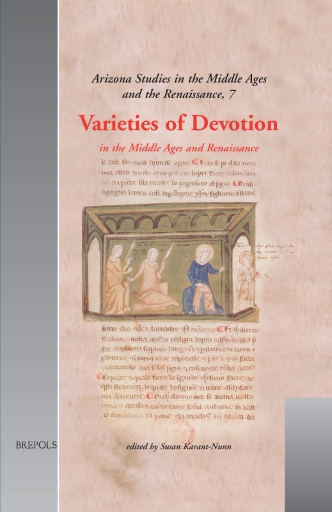
Varieties of Devotion in the Middle Ages and Renaissance
show More to view fulltext, buy and share links for:Varieties of Devotion in the Middle Ages and Renaissance show Less to hide fulltext, buy and share links for: Varieties of Devotion in the Middle Ages and RenaissanceIn the modern world, interest in religious devotion is as great as ever. This volume brings together the research of ten scholars into the diverse ways that Europeans expressed their quest for God over more than a millennium, from the formative centuries of Christianity up to the seventeenth century. Topics include women transvestite saints, Monophysite wall-paintings, Anglo-Saxon sainthood and painful martyrdom, Carmelite self-redefinition, the confident authorship of Gautier de Coinci and Matfre Ermengaud, competition between the bishop and a wandering preacher for popular favor in Le Mans, the contemplative philanthropies of the Poor Clares, Chester Nativity-cycle actors’ masculinity, Jean Gerson’s warm relations with his siblings, and George Herbert’s Eucharistic feeling. The authors’ profound familiarity with primary sources as well as the influence of current theory makes these essays vibrant and timely.
-
-
-
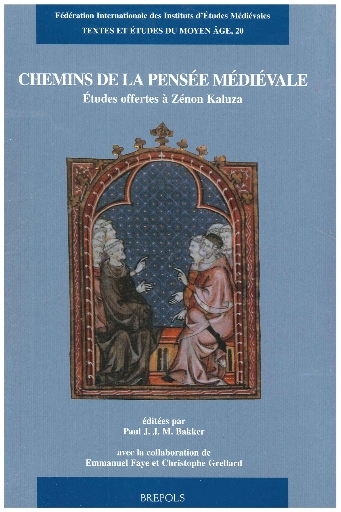
Chemins de la pensée médiévale
show More to view fulltext, buy and share links for:Chemins de la pensée médiévale show Less to hide fulltext, buy and share links for: Chemins de la pensée médiévaleHistorien de la philosophie et de la théologie du Moyen Âge tardif, spécialiste des xiv e et xv e siècles, Zénon Kaluza a profondément marqué les études médiévales des dernières décennies. Ses travaux portent sur plusieurs grands thèmes de l’histoire doctrinale du Moyen Âge, notamment le «platonisme» parisien et pragois, les méthodes et les langages de la philosophie et de la théologie, les contextes institutionnels du savoir et, enfin, la question du rapport entre l’Église et l’État. Pour rendre hommage à l’homme et à son œuvre, ses collègues et amis lui offrent ce recueil d’articles. Réunies sous le titre de Chemins de la pensée médiévale, ces études explorent différents aspects de l’histoire de la philosophie et de la théologie ainsi que, dans une perspective plus large, de l’histoire intellectuelle et sociale du Moyen Âge. Par l’ampleur de son orientation thématique, le présent volume offre une excellente présentation de l’état actuel de la recherche sur la pensée médiévale.
-
-
-
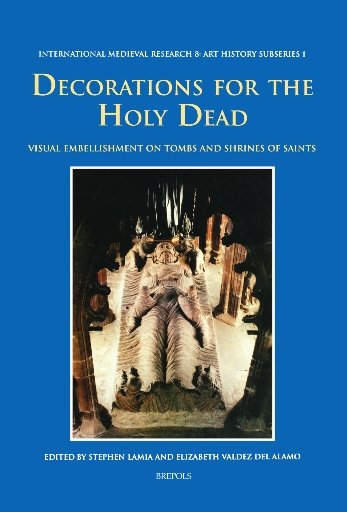
Decorations for the Holy Dead
show More to view fulltext, buy and share links for:Decorations for the Holy Dead show Less to hide fulltext, buy and share links for: Decorations for the Holy DeadDevotion to saints, their cult, and memory was enormously popular in medieval Europe. Factual evidence in the form of tombs, shrines, reliquaries, pilgrimages, vitae and souvenirs is legion and attests to the all-pervasive nature of the phenomenon. Despite the massive bibliography on hagiography, few if any books are devoted entirely to the study of saints’ burial places. The purpose of the papers gathered here, based on presentations sponsored by the International Center of Medieval Art at the International Medieval Congress in Leeds (1999), plus additional papers commissioned by the editors, is to examine the interaction between the visual arts at specific loci sancti and saints’ cults and, further, to enquire whether a corpus of more unusual motifs appeared at saintly sites, beyond the more predictable narrative, symbolic, and iconic representations of saints. The papers address the active role saints’ tombs and their embellishments assumed within the fabric of medieval society: rituals enacted at saints’ burial places, altarpieces, reliquaries, cloister as shrine, the aura of the venerable past, secular burial near saints’ tombs, and political and feminist elements in devotional practice. Monuments from Spain, France, Italy, Greece, Hungary, and England are examined and the volume incorporates 104 illustrations.
-
-
-
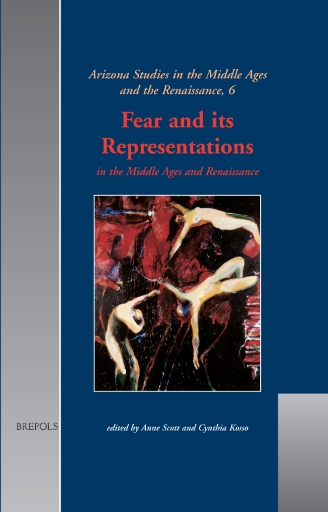
Fear and its Representations
show More to view fulltext, buy and share links for:Fear and its Representations show Less to hide fulltext, buy and share links for: Fear and its RepresentationsFear is a topic that appeals to a wide audience and is particularly of interest today. In the modern world, we fear war and terrorism, economic recession, and environmental degradation: these fears make up a great portion of the fabric of our daily lives. This is a volume of essays on fear and its representations in the Middle Ages and Renaissance. In it, the authors raise and try to answer questions about the ways in which individuals, families, and nations five-hundred, one-thousand, or even fifteen-hundred years ago approached the idea of fear.
The interdisciplinary nature of this volume and its editors (an historian of late antiquity and professor of literature of the Middle Ages) motivates an analysis of fear from a multitude of perspectives and within a host of secular and religious literature, historical treatises, scholastic works, art, and political accounts. The volume covers several main topics: Defining the Nature of Fear; Fear and Religion; Fear in Politics and Cultural Identity; Fear as a Literary and Dramatic Device; The Fears of Courtly Lovers, Knights, and Poets; Fear and the Mystic.
Through its breadth, depth, and interdisciplinary focus, the present volume makes a full contribution to the study of fear in medieval and Renaissance culture for historians, art historians, students of language and philosophy and anyone interested in how people in the past have experienced fear.
-
-
-
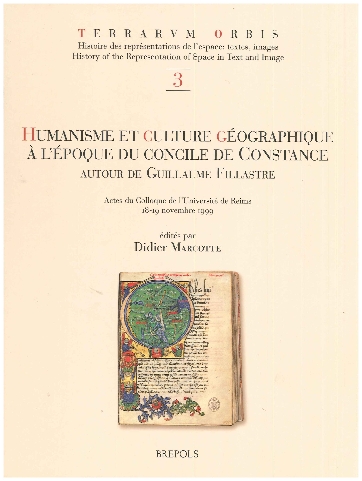
Humanisme et culture géographique à l’époque du concile de Constance. Autour de Guillaume Fillastre
show More to view fulltext, buy and share links for:Humanisme et culture géographique à l’époque du concile de Constance. Autour de Guillaume Fillastre show Less to hide fulltext, buy and share links for: Humanisme et culture géographique à l’époque du concile de Constance. Autour de Guillaume FillastreDoyen de Reims avant d’être cardinal, un des artisans, avec Pierre d’Ailly, de la résolution du Grand schisme d’Occident, Guillaume Fillastre a constitué, jusqu’à sa mort en 1428, une riche bibliothèque qui témoigne de sa formation d’humaniste et de son intérêt plus particulier pour la géographie de la tradition gréco-romaine. Son époque, qui est aussi celle du Pogge, voit le renouveau des études classiques s’imposer à toute l’Europe. À côté de la personnalité de l’érudit et de l’homme d’Église, on aborde ici les relations entre les premiers humanistes français et l’Italie, l’activité des philologues, les travaux des géographes et des cartographes dans les premières décennies du XVe siècle. Une place toute spéciale a été réservée à la Géographie de Ptolémée, dont la fortune, à la fin du moyen âge, a trouvé en Fillastre un de ses principaux vecteurs.
-
-
-
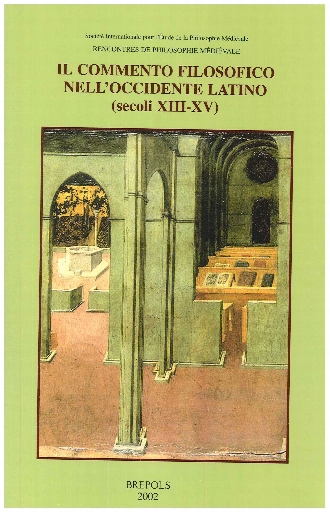
Il commento filosofico nell’occidente latino (secoli XIII-XV)
show More to view fulltext, buy and share links for:Il commento filosofico nell’occidente latino (secoli XIII-XV) show Less to hide fulltext, buy and share links for: Il commento filosofico nell’occidente latino (secoli XIII-XV)The practice of commentary upon authoritative texts is a prominent and fundamental feature of all teaching and learning during the Middle Ages. The roots of medieval commentaries made upon important philosophical texts lay in antiquity, but commentaries upon such texts — both ancient and more recent — flourished as never before during the late Middle Ages. Subsequently, beyond the end of the Middle Ages, the appeal and the habit of commentary declined, and to the point that today a considerable effort is required to understand medieval commentaries — their genres, their techniques, their evolution, their extraordinary persistence in use over many centuries — and perhaps too to understand the much diminished importance of the practice of commentary on select texts in current academic scholarship. The Philosophical Commentary in the Latin West (XIII-XV Centuries) proved to be a rich, varied and seemingly inexhaustible theme for the Colloquium of the International Society for the Study of Medieval Philosophy. The contributors who were invited discussed commentaries on texts of medicine, alchemy, biology, psychology, physics, ethics and politics as well as theology. The medieval commentators themselves were Arabs and Jews as well as Christians.
-
-
-
Latin Culture in the Eleventh Century
show More to view fulltext, buy and share links for:Latin Culture in the Eleventh Century show Less to hide fulltext, buy and share links for: Latin Culture in the Eleventh CenturyLatin Culture in the Eleventh Century is a collection of approximately sixty papers presented at the Third International Conference on Medieval Latin Studies held at the University of Cambridge in September 1998. The collection embraces a wide range of fields related to Medieval Latin, including poetry, hymnology, music, theology and philosophy, historiography, and inscriptions, in addition to Latin linguistics and metrics. Contributions are drawn from leading scholars from many European countries as well as from North America and Australia. The volume should prove invaluable to all students of this period.
-
-
-
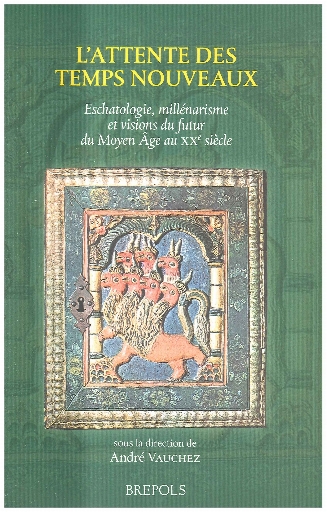
L’attente des temps nouveaux. Eschatologie et millénarismes et visions du futur du Moyen Âge au XXe siècle
show More to view fulltext, buy and share links for:L’attente des temps nouveaux. Eschatologie et millénarismes et visions du futur du Moyen Âge au XXe siècle show Less to hide fulltext, buy and share links for: L’attente des temps nouveaux. Eschatologie et millénarismes et visions du futur du Moyen Âge au XXe siècleDepuis plus d’un demi-siècle, les historiens et les sociologues se sont beaucoup intéressés aux courants de pensée et aux mouvements qui, au cours des siècles, ont lié l’aspiration à un ordre social plus juste ou à une réforme religieuse à l’avènement d’une ère nouvelle, placée sous le signe de la perfection et de la paix, qui durerait jusqu’à la fin des temps. On a longtemps considéré ces phénomènes comme des formes de fanatisme ou comme une expression “pré-politique” de la lutte des classes. Sans négliger ces facteurs, le présent volume vise à fournir une interprétation équilibrée et à jour de ces formes radicales d’attente et d’espoir d’un changement, qui n’ont rien perdu de leur actualité.
-
-
-
On Barbarian Identity
show More to view fulltext, buy and share links for:On Barbarian Identity show Less to hide fulltext, buy and share links for: On Barbarian IdentityEthnicity has been central to medieval studies since the Goths, Franks, Alamanni and other barbarian settlers of the former Roman empire were first seen as part of Germanic antiquity. Today, two paradigms dominate interpretation of barbarian Europe. In history, theories of how tribes formed (‘ethnogenesis’) assert the continuity of Germanic identities from prehistory through the Middle Ages, and see cultural rather than biological factors as the means of preserving these identities. In archaeology, the ‘culture history’ approach has long claimed to be able to trace movements of peoples not attested in the historical record, by identifying ethnically-specific material goods. The papers in this volume challenge the concepts and methodologies of these two models. The authors explore new ways to understand barbarians in the early Middle Ages, and to analyse the images of the period constructed by modern scholarship. Two responses to the papers, one by a leading exponent of the ‘ethnogenesis’ approach, the other by a leading critic, continue this important debate.
-
-
-
Rhétorique et poétique au Moyen Âge
show More to view fulltext, buy and share links for:Rhétorique et poétique au Moyen Âge show Less to hide fulltext, buy and share links for: Rhétorique et poétique au Moyen ÂgeLe présent Colloque, organisé par les Rencontres médiévales européennes, tend d’abord, ici comme dans d’autres recherches analogues qui ont déjà intéressé la même association, à mettre en lumière, par une démarche pluridisciplinaire, certains aspects de la culture médiévale qui manifestent à la fois sa complexité, sa profondeur et sa beauté. Il s’agit ici de la parole et de la beauté où s’accordent et s’unissent l’art littéraire et la sagesse, philosophique et même théologique.
Il est en effet possible de répondre aujourd’hui à certaines objections qui s’adressent communément au Moyen Âge lui-même et plus largement aux formes d’expression qu’il met en lumière. On lui reproche à la fois d’avoir abusé de la rhétorique et de l’avoir méconnue. Mais les chercheurs savent depuis quelques années que la rhétorique ne se réduit ni à l’abstraction scolastique ni à la sophistique. Dans la forme qu’elle prend jusqu’au xiv e siècle, en se référant à l’Antiquité et en préparant plus qu’on ne croit la Renaissance, elle suscite et reconnaît le progrès du langage, de sa justesse et de ses grâces. Pour cela, elle s’appuie à la fois sur la beauté de l’idéal et sur la rigueur de la pensée, sur la transcendance platonicienne et sur le bon-sens aristotélicien combiné avec l’étendue du savoir. Elle s’accorde aussi avec la poétique, latine ou profane, simplement lyrique, ou tournée vers la liturgie. Nous savons encore aujourd’hui que l’usage positif de l’intelligence peut s’associer avec la naïveté mystique dans un divino-humanisme.
Nous avons voulu montrer dans la tradition qui mène jusqu’à la modernité cette présence constante du coeur: dans la parole la plus fine chacun peut trouver l’amour le plus pur.
-
-
-
Anglo-Latin and its Heritage
show More to view fulltext, buy and share links for:Anglo-Latin and its Heritage show Less to hide fulltext, buy and share links for: Anglo-Latin and its HeritageFor some 40 years, A.G. Rigg has been defining the field of later Anglo-Latin literary scholarship, a task culminating in his History of Anglo-Latin Literature 1066-1422. Anglo-Latin and its Heritage is a collection of thirteen essays by his colleagues and students, past and present, which pays tribute to him both by exploring the field he has defined, and by making forays into its antecedents and descendants. The first section, “Roots and Debts,” includes essays on the migration of classical and late antique motifs and patterns of thought into early medieval Latin, and concludes with an essay which shows how a 12th-century writer reached back into that earlier period for stylistic models. The central section of the book, “Anglo-Latin Literature 1066-1422,” concentrates on Anglo-Latin writers of the period most studied by Rigg himself, and the seven essays in this section include analyses of poetic style and borrowing; discussions of patterns of reading; and essays which read Anglo-Latin works through their specific historical and cultural contexts. Two of the essays are elegant translations of significant Anglo-Latin poetic works. The final section of the book, “Influence and Survival,” offers three essays which consider Anglo-Latin literature in the late medieval and post-medieval world, from an edition of a Latin source for a late Middle English saint’s life; through an account of the migration of Latin texts into the royal libraries of Henry VIII; to the concluding essay, which explores a “mechanical” means of producing perfect Latin hexameter. A complete bibliography of Rigg’s works closes the volume. The chronological and methodological range of the essays in this collection is offered as a fitting tribute to one of Anglo-Latin’s most learned and indefatigable scholars.
-
-
-

De Sion exibit lex et verbum domini de Hierusalem
show More to view fulltext, buy and share links for:De Sion exibit lex et verbum domini de Hierusalem show Less to hide fulltext, buy and share links for: De Sion exibit lex et verbum domini de HierusalemAmnon Linder, professor of medieval history at the Hebrew University of Jerusalem has published seminal studies in the history of the Christian Holy Land and in Jewish-Christian relations in Late Antiquity and the Middle Ages. In recent years he has dedicated himself to the study of medieval liturgy, particularly Crusader liturgy of the liberation and destruction of Jerusalem (forthcoming as the next volume in this series).
The essays gathered here from friends, colleagues and students of Prof. Linder pick up the themes of his publications — medieval law, liturgy and literature. The papers deal with a variety of sources, encompass the fourth to fifteenth centuries, and span from the Holy Land to the British Isles.
-
-
-
Labour and labour markets between town and countryside (Middle Ages — 19th century)
show More to view fulltext, buy and share links for:Labour and labour markets between town and countryside (Middle Ages — 19th century) show Less to hide fulltext, buy and share links for: Labour and labour markets between town and countryside (Middle Ages — 19th century)Labour and labour markets in and between town and countryside have been puzzling to economic historians for generations. This book brings together specialists in economic and social history to explore a series of key mechanisms related to the organisation and interdependence of urban and rural labour markets.
A variety of issues, such as distribution, specialisation, and division of tasks, economies of urbanisation and (conversely) rural de-localisation, (temporary) mobility of labour and commercial links, organisation of working time, methods of remuneration, gendered specialisation of activities, are dealt with in this book from the viewpoint of (changing) relationships between rural and urban labour markets.
The renewed interest of social scientists in this research field is reflected by the diversity of the cases analysed according to geographical, demographic, and economic and political conditions. This book, therefore, provides interesting opportunities for a comparative reading of the significance of labour in the organisation of societies in the course of the centuries that preceded and led up to the ‘industrial age’ in Western Europe.
-
-
-
Les traducteurs au travail. Leurs manuscrits et leurs méthodes
show More to view fulltext, buy and share links for:Les traducteurs au travail. Leurs manuscrits et leurs méthodes show Less to hide fulltext, buy and share links for: Les traducteurs au travail. Leurs manuscrits et leurs méthodesLe moyen âge latin fut par définition une période de traduction. Soucieux d’avoir à leur disposition les textes d’autres cultures, les médiévaux n’ont eu de cesse de transférer d’une langue à l’autre les œuvres de l’Antiquité classique ainsi que l’héritage arabe et hébreu avec les moyens dont ils disposaient à leur époque.
Afin d’avoir une meilleure connaissance de leurs méthodes de travail et des problèmes inhérents au passage d’une langue à l’autre, il est important de retrouver les manuscrits qui ont servi de base de travail aux traducteurs. On y trouve des notes de leur main qui expliquent les difficultés rencontrées, les hésitations dans l’utilisation d’un terme plutôt qu’un autre pour rendre en latin un vocable de la langue source ainsi que des notes marginales qui sont autant de remarques philologiques, matériel de première main pour notre compréhension et notre connaissance des niveaux linguistiques tant des traducteurs que des utilisateurs depuis l’Antiquité jusqu’à la Renaissance.
D’autre part, lorsqu’elles existent, les préfaces laissées par les traducteurs en tête de leur travail constituent des documents de première importance pour notre compréhension de leurs problèmes et pour la reconstitution de la méthode utilisée pour les résoudre.
On trouvera dans ce volume beaucoup de matériel encore inédit. Les recherches menées sur les manuscrits ont permis de voir plus clair dans la problématique propre aux traductions faites tant sur le grec, l’arabe, le syriaque, l’hébreu qu’en langues vulgaires. Les exposés sont dus à des spécialistes des divers domaines concernés.
-
-
-
L’abbé Suger, le manifeste gothique de Saint-Denis et la pensée victorine
show More to view fulltext, buy and share links for:L’abbé Suger, le manifeste gothique de Saint-Denis et la pensée victorine show Less to hide fulltext, buy and share links for: L’abbé Suger, le manifeste gothique de Saint-Denis et la pensée victorineLa consécration en 1144 de la basilique de Saint-Denis par l’abbé Suger inaugure l’art gothique, dont la naissance fut longtemps expliquée par l’histoire des formes et des techniques: grâce à diverses découvertes architecturales, le nouveau style se serait peu à peu détaché du roman. La collaboration entre six historiens de l’art et de la pensée conduit à repenser cette explication. D’abord, l’art gothique apparaît bien moins comme la continuation du roman que comme le renouvellement d’un art paléochrétien, lequel était d’ailleurs bien présent dans la basilique présugérienne. Ensuite, le nouveau style est un art à la fois total et cohérent: dès Saint-Denis, l’architecture, la sculpture, le vitrail et les ornamenta ecclesiae sont intégrés dans un programme unifié qui ne saurait s’expliquer sans une étroite collaboration entre le commanditaire Suger et son maître d’œuvre anonyme. Tout ceci conduit à scruter la personnalité intellectuelle de l’abbé Suger: les sources littéraires de ses écrits attestent une familiarité avec la poésie paléochrétienne, tandis que leur tonalité théologique et spirituelle invite à explorer le jeu des relations avec l’école de Saint-Victor. Celle-ci se distingue par la place originale que font Hugues et Richard à l’architecture, soit comme technique, soit comme métaphore de la théologie ou de la vie spirituelle, et par une doctrine dont les thèmes favoris s’accordent de façon singulière avec les tendances profondes du nouveau style. En définitive, malgré son sobriquet de «gothique» dont on entendait flétrir au XVIe s. tout ce qui s’écarte de l’Antiquité, l’art nouveau, porté par le projet de Suger et la pensée humaniste des Victorins, doit être considéré comme un art de Renaissance.
-
-
-
Material Culture and Cultural Materialisms
show More to view fulltext, buy and share links for:Material Culture and Cultural Materialisms show Less to hide fulltext, buy and share links for: Material Culture and Cultural MaterialismsThe phrase ‘cultural materialism’, names an approach to cultural analysis that interrogates the socio-economic conditions within which artefacts are produced as well as their participation in other ideological and material fields of culture. Disciplines that have traditionally studied cultural artefacts like literature and painting have increasingly focused on the material production and ideological operation of objects once thought of in idealized or purely aesthetic terms. By the same token, historians - whose work, of necessity, has always tended to deal with the material traces of culture - have increasingly been willing to consider the social and ideological importance of art. The increasing popularity of this cultural studies approach to the past has in turn spurred investigation into other kinds of materiality. Recent historical and literary scholarship, for example, has become increasingly aware of the ways in which the lived materiality of the human body informs a range of cultural discources.
-
-
-
Peasants into Farmers?
show More to view fulltext, buy and share links for:Peasants into Farmers? show Less to hide fulltext, buy and share links for: Peasants into Farmers?Since his pioneering article of 1976 the American historian Robert P. Brenner has tried to come to terms with an issue that has puzzled historians for generations: how can we explain the differences in growth-patterns of North Western European countries in the transition from feudalism to capitalism. In a frontal attack on both the ‘(homeostatic) demographic’ and ‘commercialization’ models, Brenner traced the roots of the divergent evolutions back to rural and feudal ‘social-property relations’. In the debate that immediately followed Brenner’s first article, and in subsequent exchanges, the Low Countries were sorely neglected, although areas such as Flanders and Holland played a decisive role in the economic development of Europe. This was partly due to a lack of publications on Dutch rural history in foreign languages. This volume aims to fill this lacuna. It draws upon substantial research, and confronts the Brenner thesis with new results and hypotheses; and it contains a powerful and detailed response by Brenner himself.
-
-
-
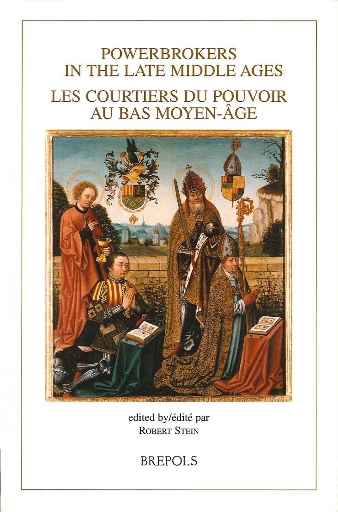
Powerbrokers in the Late Middle Ages. The Burgundian Low countries in a European Context
show More to view fulltext, buy and share links for:Powerbrokers in the Late Middle Ages. The Burgundian Low countries in a European Context show Less to hide fulltext, buy and share links for: Powerbrokers in the Late Middle Ages. The Burgundian Low countries in a European ContextThe fifteenth century was of crucial importance for the Low Countries. After centuries of gradual political disintegration, a rapid unification took place during the reign of the Burgundian dukes, Philip the Good and Charles the Bold. How did this new ‘state’ work? To most people the political high-points are well known; but the slow process of integration that had by then started remains, by contrast, largely unknown. In this process, the regional institutions, which were thoroughly modernised by the Burgundian dukes, seem to have played a key role. The first part of this volume discusses the role of these regional institutions. In particular it studies the role in the principalities of Brabant, Holland and Flanders of civil servants as formal and informal ‘powerbrokers’ between central government and subjects in the Low Countries during the Burgundian period.
The Low Countries, however, cannot be treated in isolation from its neighbours: they were situated literally on the frontier of the Holy Roman Empire and France and there were intensive commercial and political contacts with England. Therefore, by way of comparison, the second part of this volume contrasts developments in other European countries, in particular, France, the Empire and England.
The articles in this volume are written by a group of distinguished specialists in the field of administrative history, working at universities in Belgium, France, Germany, the Netherlands and the United Kingdom.
-
-
-
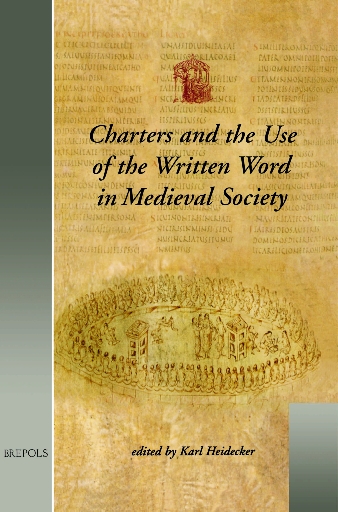
Charters and the Use of the Written Word in Medieval Society
show More to view fulltext, buy and share links for:Charters and the Use of the Written Word in Medieval Society show Less to hide fulltext, buy and share links for: Charters and the Use of the Written Word in Medieval SocietyThere have been periods of growth and of decrease in the quantity of writing produced in the medieval centuries. The present volume is concerned with qualitative developments, asking: which developments can be distinguished in the roles played by writing in medieval societies? In which fields was writing used, and by whom? Why did these changes take place? When attempting to answer these questions, the scholar confronts basic questions about the sources at one’s disposal. Why were documents written? Why were they preserved and in what form? The volume pays especial attention to charters, since these documents have been continuously present throughout the Middle Ages. They also had an impact on most layers of society.
-
-
-
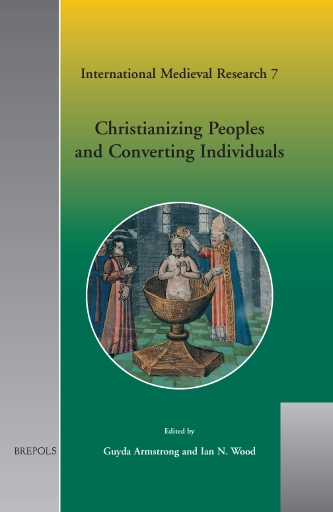
Christianizing Peoples and Converting Individuals
show More to view fulltext, buy and share links for:Christianizing Peoples and Converting Individuals show Less to hide fulltext, buy and share links for: Christianizing Peoples and Converting IndividualsThe anniversary of Augustine’s arrival in Kent in 597, and the subsequent christianization of England, made conversion an obvious theme for the 1997 International Medieval Congress. It was also a theme which attracted massive interest, and not just from early medievalists interested in the christianization of England and its near-contemporary parallels. This volume presents reworkings of 28 of these contributions.
The Early Middle Ages are represented in a number of papers concerned with Central and Eastern Europe and as far east as Georgia. Interest in the Baltic region took this aspect of the christianization of Europe well into the fourteenth century. Papers on these regions constitute a good proportion of the present volume, and they provide a very useful point of entry into work currently being done on christinization in areas which are less well known to most historians than is Western Europe not least because of the range of languages involved.
With respect to later periods of the Middle Ages two issues predominated: one was the interface between Christians and Muslims in Spain and in the Holy Land and also between Christians and Jews once again in Spain, but also in England, and more generally in Western Europe. The other was the rather more theological question of the nature of conversion, as discussed by Aquinas, and in Franciscan writings. This wide-ranging volume concentrates on historical approaches to the topic. The different types of questions posed and materials used are a fascinating indication of the different interpretations to be found among specialists in different fields.
Christianization, as a process affecting complete peoples, or at least large groups, attracts attention, as does conversion of the individual. By putting these varying approaches together, this collection indicates the range of current work on christianization and conversion history and the range itself, quite apart from the individual studies, is an eye-opener.
-
-
-
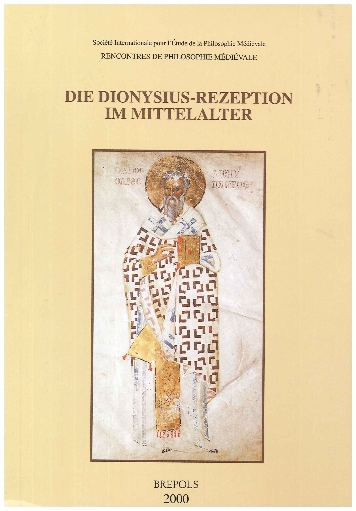
Die Dionysius-Rezeption im Mittelalter
show More to view fulltext, buy and share links for:Die Dionysius-Rezeption im Mittelalter show Less to hide fulltext, buy and share links for: Die Dionysius-Rezeption im MittelalterDer vorliegende Band enthält die Beiträge des internationalen Kolloquiums Die Dionysius-Rezeption im Mittelalter — La réception du Pseudo-Denys durant le moyen âge — The Reception of Pseudo-Dionysius in the Middle Ages, das vom 8. bis 11. April 1999 in Sofia unter der Schirmherrschaft der S.I.E.P.M. stattfand. Im Mittelpunkt steht die Rezeption der unter dem Namen des Pseudo-Dionysius Areopagita überlieferten Werke, die seit ihrem Erscheinen in Byzanz am Beginn des 6. Jahrhunderts und seit der Mitte des 9. Jahrhunderts im lateinischen Abendland einen großen Einfluß auf die europäische Geistesgeschichte ausgeübt haben. Das Corpus Dionysiacum ist nicht nur ein außerordentlich einflußreicher Traditionsstrang des Neuplatonismus bis in die Neuzeit hinein, es stellt darüber hinaus ein europäisches ‘cross-culture’-Phänomen dar, das auf exklusive Weise den griechisch-byzantinischen und den lateinisch-abendländischen Kulturkreis verbindet. Die Erforschung dieser byzantinisch-lateinischen Austauschbeziehung und damit verbunden eine weiterführende Sicht auf die Denkrichtungen der mittelalterlichen europäischen Kultur im Westen und im Osten vor dem Hintergrund der verschiedenen Interpretationen des Werkes des Pseudo-Dionysius Areopagita ist das Grundanliegen dieses Bandes.
-
-
-
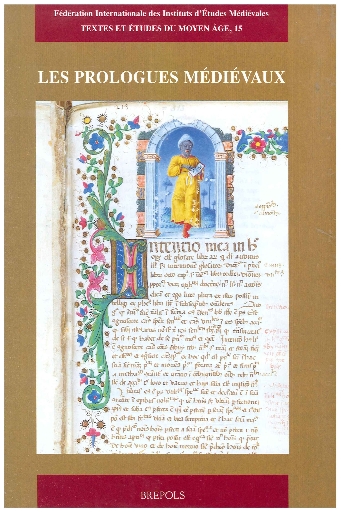
Les prologues médiévaux
show More to view fulltext, buy and share links for:Les prologues médiévaux show Less to hide fulltext, buy and share links for: Les prologues médiévauxCe livre rassemble une série de communications présentées lors d’un Colloque organisé à Rome sur Les prologues médiévaux. Le but était de montrer l’importance de ce genre littéraire et tout l’intérêt que les chercheurs peuvent tirer de l’analyse des introductions. Interdisciplinaire par excellence, le sujet touche tous les médiévistes et à ce titre mérite qu’on s’y attarde puisque à ce jour, malgré des recherches ponctuelles et des études consacrées à des domaines très particuliers, il n’a pas été l’objet d’études systématiques.
De nombreuses questions sont abordées par les auteurs: on peut citer parmi d’autres les problèmes terminologiques, les relations entre le titre d’une œuvre et son prologue, l’évolution du genre littéraire depuis l’Antiquité jusqu’à la fin du Moyen Age, la comparaison entre différents genres littéraires ainsi que l’examen de prologues en langues différentes: grecque, latine ou française.
Les articles publiés dans cet ouvrage permettront de faire un premier tour de la question et d’aboutir à une série de conclusions qui, même si elles ne sont pas définitives, feront progresser nos connaissances en la matière. Ce volume d’actes devrait constituer pour les médiévistes un point de référence sur le sujet.
-
-
-
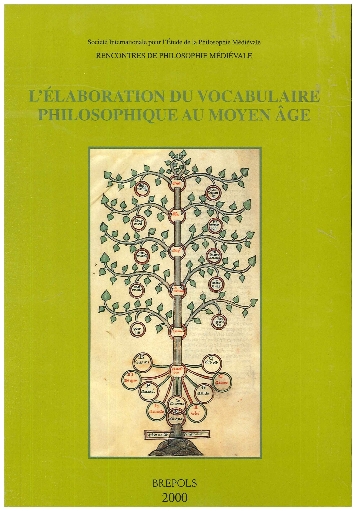
L’élaboration du vocabulaire philosophique au Moyen Age
show More to view fulltext, buy and share links for:L’élaboration du vocabulaire philosophique au Moyen Age show Less to hide fulltext, buy and share links for: L’élaboration du vocabulaire philosophique au Moyen AgeConçu comme un complément du volume consacré Aux origines du lexique philosophique européen, cet ouvrage contient des études qui tentent de montrer comment le vocabulaire philosophique a été élaboré au Moyen Âge occidental.
Les penseurs médiévaux — tant les traducteurs des textes philosophiques grecs, hébraïques et arabes que les philosophes et les théologiens — ont contribué à la multiplication de néologismes et à l’affinement du sens d’anciens concepts. Par leur «travail» linguistique, qui allait de pair avec des efforts de conceptualisation, ils ont forgé un langage propre à leurs diverses disciplines et orientations philosophiques. Les penseurs du Moyen Âge — d’Augustin à Suárez, en passant par tant d’autres maîtres de la scolastique — ont joué de diverses manières un rôle primordial dans la formation du vocabulaire philosophique.
-
-
-
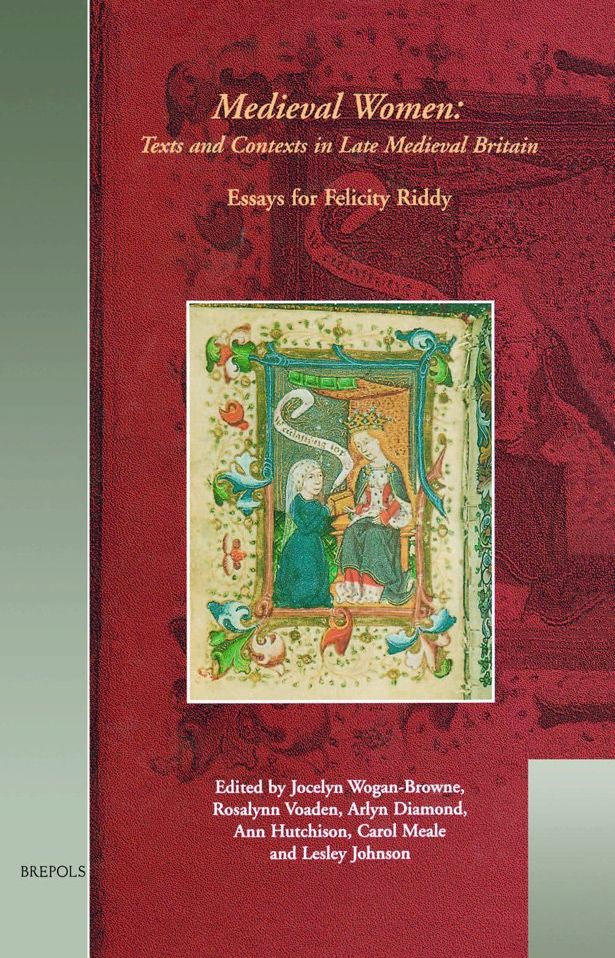
Medieval Women - Texts and Contexts in Late Medieval Britain
show More to view fulltext, buy and share links for:Medieval Women - Texts and Contexts in Late Medieval Britain show Less to hide fulltext, buy and share links for: Medieval Women - Texts and Contexts in Late Medieval BritainIn this themed collection by literary, historical and archaeological scholars, the study of medieval women is confidently and freshly mainstream. Profiting from the development of newly flexible models of gender, literacy, the political, the social, and the domestic, the volume is non-separatist, exploratory both of new source materials and new readings of established sources, and able to consider the broadest implications for the study of medieval culture without simply re-absorbing medieval women into invisibility. Grouped under the headings of matters of reading, of conduct and place, the essays move from legal cases to actual buildings and conceptions of the household, from conduct books to chronicles and romances, from saints’ lives to the medieval unconscious and back again, exemplifying the mature interdisciplinarity of current work on medieval women.
-
-
-
Miracle et Karama. Hagiographies médiévales comparées
show More to view fulltext, buy and share links for:Miracle et Karama. Hagiographies médiévales comparées show Less to hide fulltext, buy and share links for: Miracle et Karama. Hagiographies médiévales comparéesLa reconnaissance du miracle suscita des discussions théologiques dans le christianisme comme dans l’islam. Mais alors qu’une pratique du miracle sur les tombes des saints chrétiens est attestée par les collections de Miracula, la littérature hagiographique musulmane reste généralement sobre en la matière, même lorsqu’il s’agit de saints réputés pour leurs charismes. Les articles de ce volume tentent de déterminer les raisons de ces réticences et leurs rapports avec les circonstances historiques.
Bien que de nombreux miracles soient rapportés dans les Traditions, le Prophète de l’islam ne se signale pas par des miracles spectaculaires, contrairement à Jésus, considéré comme le thaumaturge par excellence. En revanche, Muhammad, recevant la révélation coranique à travers l’archange Gabriel, a été sujet à de multiples visions. Ce contraste entre les modèles, posés par les fondateurs respectifs de l’islam et du christianisme, pourrait expliquer que les miracles, dans l’hagiographie musulmane, soient plutôt constitués d’apparitions, de rêves ou de pouvoir d’ordre initiatique, alors que les miracles à dominante thaumaturgique abondent dans les Vies des saints chétiens.
L’étude des miracles conduit enfin à des comparaisons intéressantes entre christianisme et islam. La proportion entre miracles in vita et post mortem (tombeaux, reliques, images) semble constituer une différence majeure entre les deux religions, tandis que le recensement et la comparaison des topoi mènent à des rapprochements féconds, étant entendu que ces topoi peuvent être réinterprétés à chaque époque.
-
-
-
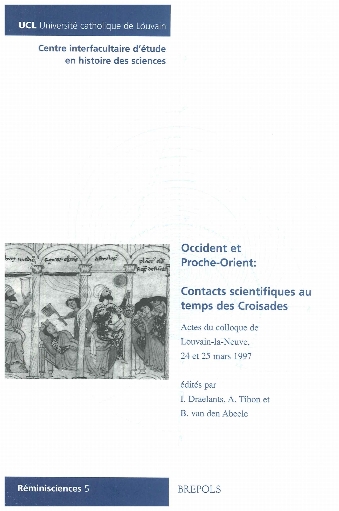
Occident et Proche-Orient: contacts scientifiques au temps des Croisades
show More to view fulltext, buy and share links for:Occident et Proche-Orient: contacts scientifiques au temps des Croisades show Less to hide fulltext, buy and share links for: Occident et Proche-Orient: contacts scientifiques au temps des CroisadesLes échanges entre Orient et Occident au Moyen Age ont fait l’objet de nombreux travaux récents. En histoire des sciences, l’attention a porté en priorité sur l’activité de traduction et de rédaction dans l’Espagne arabo-latine et l’Italie méridionale. Le colloque de Louvain-la-Neuve s’est proposé d’explorer les contacts scientifiques dans un contexte moins étudié, les états latins de Palestine, du XIe au XIIIe s. Les contributions intéressent les trois principales cultures en présence: arabe, byzantine et latine. L’éventail des disciplines abordées couvre l’alchimie, l’astronomie, l’histoire naturelle, les mathématiques, la médecine; une place est faite à l’histoire des techniques, ainsi qu’à certains milieux porteurs: la ville d’Antioche, la cour de Frédéric II de Hohenstaufen. On découvre ainsi que le Proche Orient des Croisades n’a pas seulement été un champ de bataille, mais qu’il y a eu place aussi pour des découvertes, des échanges, des influences réciproques.
-
-
-
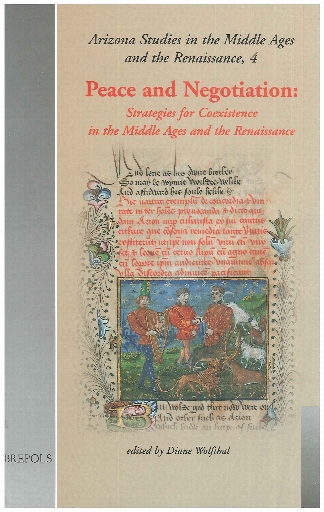
Peace and Negotiation: Strategies for Coexistence in the Middle Ages and the Renaissance
show More to view fulltext, buy and share links for:Peace and Negotiation: Strategies for Coexistence in the Middle Ages and the Renaissance show Less to hide fulltext, buy and share links for: Peace and Negotiation: Strategies for Coexistence in the Middle Ages and the RenaissancePeace was far from a pale, static concept - a simple lack of violence - in the Middle Ages and Renaissance. Rather, it was at times constructed as a rich and complex, positive and dynamic ideal. The thirteen articles in this volume cover a broad range of disciplines, times, and geographical areas and explore strategies that were used in the past to resolve conflict and attain peace. They examine events, texts, and images that date from the fifth through the sixteenth centuries, and their authors focus not only on Western Europe, but also on Scandinavia, the Caucausus, and Egypt. This volume rests on the assumption that peace covers a spectrum of situations that connects the personal and the political. Therefore, the papers presented here examine not only how nations negotiated peace, but also how individuals did. Similarly, although several essays spotlight those in the seat of power, others explore the situation of those lower on the social hierarchy. Our views about peace and conflict, as this collection makes clear, are shaped in part by the mentalités of the past. Although some peacemaking strategies may be unacceptable to us today - forced marriages and conversions, for example - we can learn from other strategies how to transcend or modify various modes of antagonistic thinking.
-
-
-

Sparks and Seeds
show More to view fulltext, buy and share links for:Sparks and Seeds show Less to hide fulltext, buy and share links for: Sparks and SeedsJohn Freccero is internationally renowned for his scholarship on Dante, Petrarch, Machiavelli, and other authors. Currently Professor of Italian and Comparative Literature at New York University, he has also taught at Yale, Stanford, Cornell, and Johns Hopkins. His numerous honors include Fulbright and Guggenheim fellowships and awards from the city of Florence and the Republic of Italy.
Despite the diverse expertise of their authors (fairly evenly divided between Italianists and scholars of English and Comparative Literature), all of the articles included in the volume appertain to Italian literature - from a literary analysis of Bonaventure’s Itinerarium to tracing the State of Maryland’s medieval Italian motto back through its English Renaissance sources. Many of the pieces are concerned with Dante directly, and several others dealing with medieval and Renaissance Italian subjects do so indirectly. Two articles are concerned with pre-modern cultural and literary implications of the history of science; the remainder trace the afterlife of medieval or Renaissance Italian motifs in modern culture. Despite the fact that the articles range from medieval scholasticism to twentieth-century cinema, this volume addresses applications of medieval and Renaissance Italian literature, influenced, above all, by the teaching and scholarship of John Freccero.
-