Brepols
Brepols is an international academic publisher of works in the humanities, with a particular focus in history, archaeology, history of the arts, language and literature, and critical editions of source works.1801 - 1900 of 3194 results
-
-
Mediaeval Studies
show More to view fulltext, buy and share links for:Mediaeval Studies show Less to hide fulltext, buy and share links for: Mediaeval StudiesMediaeval Studies is the annual journal published by the Pontifical Institute of Mediaeval Studies. It was established in 1939, with the primary goal of publishing research on the Middle Ages by scholars from around the world, particularly research involving unedited manuscripts and archival material. Most volumes are divided into three sections: Texts, containing extensive editions with substantial introductions; Articles, containing studies based on unedited or edited documents and texts as well as studies of other monuments of medieval culture; and Mediaevalia containing notices or short articles on specific documents or topics.
More information about this journal on Brepols.net
-
-
-
Medicean and Savonarolan Florence
The Interplay of Politics, Humanism, and Religion
show More to view fulltext, buy and share links for:Medicean and Savonarolan Florence show Less to hide fulltext, buy and share links for: Medicean and Savonarolan FlorenceThis volume examines Florentine society at crucial moments of change that are often treated separately in historical narratives: the later years of Medici government under the aegis of Lorenzo the Magnificent, the four tumultuous years of Savonarola’s religious regime from 1494 to 1498, and the unsettled early decades of the sixteenth century. Drawing upon original research conducted during the past decade, it provides important insights into the politics and conflicting ideologies in the city as experienced by different levels of society, not only by the politicians, preachers, and intellectuals whose voices are more familiar to us, but also by women and lower-class citizens. Since no single paradigm is adequate to describe these years of flux, this volume attempts to reassess the period by uncovering the debate underlying nearly all the topics it discusses. In this way, it offers a new and multifocused approach to the study of this important and influential period in Florentine history.
-
-
-
Medicina y Filología. Estudios de léxico médico latino en la Edad Media
show More to view fulltext, buy and share links for:Medicina y Filología. Estudios de léxico médico latino en la Edad Media show Less to hide fulltext, buy and share links for: Medicina y Filología. Estudios de léxico médico latino en la Edad MediaEl Grupo de investigación de la Universidad de Valladolid Speculum medicinae, compuesto por una docena de filólogos clásicos, en el que colaboran también un historiador de la medicina y una arabista, lleva trabajando muchos años en la elaboración del que se ha llamado Diccionario latino de andrología y ginecología (DILAG). En este momento se encuentra ya en fase de revisión.
El DILAG es un diccionario técnico especializado que recoge, en las fuentes médicas más significativas de la Antigüedad, la Edad Media y el Renacimiento, términos médicos latinos encuadrados en las especialidades de la andrología, la ginecología y la embriología. En la redacción del DILAG sus colaboradores han encontrado diferentes aspectos de la medicina medieval dignos de estudio, que abarcan los campos de la anatomía, la fisiología, la patología y la terapéutica o problemas relacionados con ellos, como la sexualidad o la deformación de términos técnicos mal interpretados. Con sus trabajos pretenden mostrar las múltiples aplicaciones, tanto médicas como filológicas o históricas, que los estudiosos pueden llevar a cabo con el material de dicho diccionario y apreciar las posibilidades investigadoras que brinda. Algunas de estas aportaciones de carácter parcial se presentaron en el IVe Congrès européen d´études médiévales, organizado por la FIDEM e la Officina di Studi Medievali en Palermo el año 2009, y otras han sido elaboradas expresamente para este libro.
Se reúnen en esta monografía, a modo de capítulos autónomos, los trabajos mencionados, con el fin de contribuir al conocimiento e investigación de un tipo de léxico que cada vez atrae más la atención de los estudiosos.
-
-
-
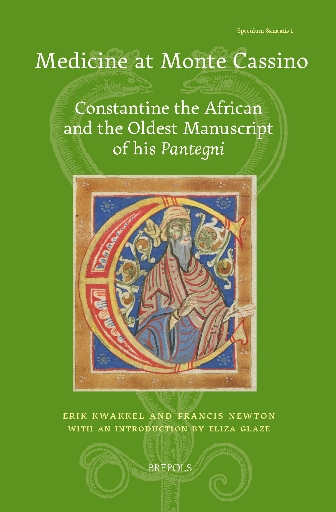
Medicine at Monte Cassino
Constantine the African and the Oldest Manuscript of his Pantegni
show More to view fulltext, buy and share links for:Medicine at Monte Cassino show Less to hide fulltext, buy and share links for: Medicine at Monte CassinoFleeing his North-African homeland for Italy, Constantine the African arrived in Salerno and then joined the abbey of Monte Cassino south of Rome in c. 1077. He dedicated his life to the translation of more than two dozen medical texts from Arabic into Latin. These great efforts produced the first substantial written body of medical theory and practice in medieval Europe. His most important contribution, an encyclopedia he called the Pantegni (The Complete Art), was translated and adapted from the Complete Book of the Medical Art by the Persian physician ‘Ali ibn al-‘Abbās al-Mağūsī (d. 982). This monograph focuses on the oldest manuscript of the Pantegni,Theorica, which represents a work-in-progress with numerous unusual features.
This study, for the first time, identifies Monte Cassino as the origin of this oldest Pantegni manuscript, and asserts that it was made during Constantine’s lifetime. It further demonstrates how a skilled team of scribes and scholars assisted the translator in the complex process of producing this Latin version of the Arabic text. Several members of this production team are identified, both in the Pantegni manuscript and in other copies of Cassinese manuscripts.
The book breaks new ground by identifying a range of manuscripts produced at Monte Cassino under Constantine’s direct supervision, as evidenced by their material features, script, and contents. In rare detail, this study explores some of the challenges met by ‘Team Constantine’ as they sought to reveal new knowledge to the West, which in turn revolutionized medical understanding throughout medieval Europe.
-
-
-
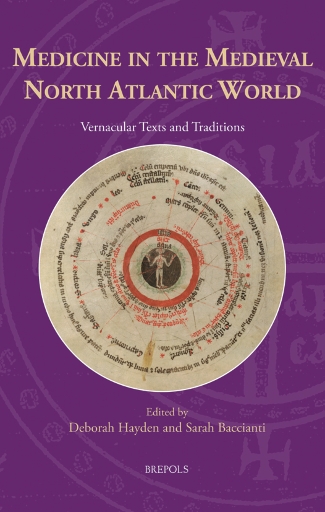
Medicine in the Medieval North Atlantic World
Vernacular Texts and Traditions
show More to view fulltext, buy and share links for:Medicine in the Medieval North Atlantic World show Less to hide fulltext, buy and share links for: Medicine in the Medieval North Atlantic WorldStudies of medical learning in medieval England, Wales, Ireland, and Scandinavia have traditionally focused on each geographical region individually, with the North Atlantic perceived as a region largely peripheral to European culture. Such an approach, however, means that knowledge within this part of the world is never considered in the context of more global interactions, where scholars were in fact deeply engaged in wider intellectual currents concerning medicine and healing that stemmed from both continental Europe and the Middle East.
The chapters in this interdisciplinary collection draw together new research from historians, literary scholars, and linguists working on Norse, English, and Celtic material in order to bring fresh insights into the multilingual and cross-cultural nature of medical learning in northern Europe during the Middle Ages, c. 700–1600. They interrogate medical texts and ideas in both Latin and vernacular languages, addressing questions of translation, cultural and scientific inheritance, and exchange, and historical conceptions of health and the human being within nature. In doing so, this volume offers an in-depth study of the reception and transmission of medical knowledge that furthers our understanding both of scholarship in the medieval North Atlantic and across medieval Europe as a whole.
-
-
-

Medieval Anglo-Irish Troubles
A Cultural Study of BL MS Harley 913
show More to view fulltext, buy and share links for:Medieval Anglo-Irish Troubles show Less to hide fulltext, buy and share links for: Medieval Anglo-Irish TroublesBritish Library MS Harley 913 is an early fourteenth-century trilingual manuscript whose paradoxically devotional and ribald contents display many distinct aspects of the Anglo-Irish socio-political reality of the day. However, several of its texts have, in the past, suffered from repeated scholarly misreadings, in part because scholars have not taken the time to seriously consider the manuscript’s contents as a whole, and in part because fluctuations in the political, social, and religious climate between Ireland and England have prejudiced how some scholars have approached these works.
This book examines these texts, as well as their subsequent misinterpretations, in the order in which they occur in the manuscript and reveals the pattern of politicized discourse surrounding this important medieval Anglo-Irish cultural artefact that has hitherto obscured, rather than elucidated, the very personal interactions of some of the era’s key figures. For the first time, this volume allows readers to visualize the manuscript in its entirety and complexity. Texts touching on the taboos of incest, regicide, and witchcraft, together with the clandestine manoeuvrings of the power-hungry and influential, reveal a surprisingly complicated interlacing of events across medieval Ireland, England, and the Continent.
-
-
-
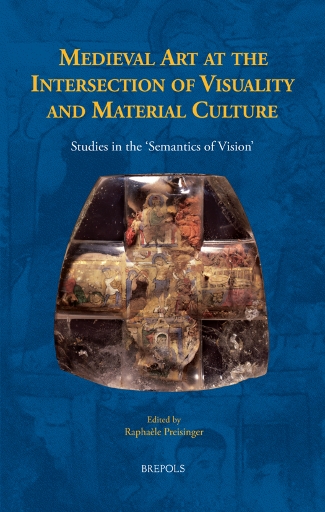
Medieval Art at the Intersection of Visuality and Material Culture
Studies in the ‘Semantics of Vision’
show More to view fulltext, buy and share links for:Medieval Art at the Intersection of Visuality and Material Culture show Less to hide fulltext, buy and share links for: Medieval Art at the Intersection of Visuality and Material CultureOver the last two decades the historiography of medieval art has been defined by two seemingly contradictory trends: a focus on questions of visuality, and more recently an emphasis on materiality. The latter, which has encouraged multi-sensorial approaches to medieval art, has come to be perceived as a counterpoint to the study of visuality as defined in ocularcentric terms.
Bringing together specialists from different areas of art history, this book grapples with this dialectic and poses new avenues for reconciling these two opposing tendencies. The essays in this volume demonstrate the necessity of returning to questions of visuality, taking into account the insights gained from the ‘material turn’. They highlight conceptions of vision that attribute a haptic quality to the act of seeing and draw on bodily perception to shed new light on visuality in the Middle Ages.
-
-
-
Medieval Autograph Manuscripts
Proceedings of the XVIIth Colloquium of the Comité International de Paléographie Latine, held in Ljubljana, 7-10 September 2010
show More to view fulltext, buy and share links for:Medieval Autograph Manuscripts show Less to hide fulltext, buy and share links for: Medieval Autograph ManuscriptsWhat is an autograph? How is it possible to define it? And how can we distinguish the hand of the writer, scientist, or translator - that is, of the learned person setting down his thoughts - from the hand of a pupil or copyist trained in the same style? Autographs have long been an especially challenging area of research into medieval manuscripts, for the finished product is intimately linked to both the author’s thought and his hand. Many well-known medieval authors had already been accorded scientific representations and became known as a result of these. They were joined by new names, a fact which widens the scope of research in the field of autographs and invites new questions. The XVIIth Colloquium of the Comité International de Paléographie Latine, which was held in Ljubljana between 7th and 10th September, 2010, was dedicated to autographs. In addition to scientific contributions by established paleographers, historians, literary and art historians, there were also inspiring papers by younger researchers. The colloquium was receptive to the presentation of new methods and processes of research into medieval manuscripts in general. These Proceedings of the XVIIth Colloquium contain 37 scientific papers documented with 239 illustrations as well as with further graphic elements.
-
-
-
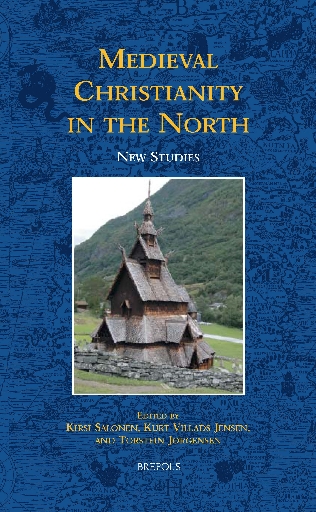
Medieval Christianity in the North
New Studies
show More to view fulltext, buy and share links for:Medieval Christianity in the North show Less to hide fulltext, buy and share links for: Medieval Christianity in the NorthAll those barbarious peoples who in far-distant islands frequent the ice-bound Ocean, living as they do like beasts - who could call them Christians?
Pope Urban II, 1095
Such condescending impressions about the peoples living at the ‘end of the world’ have been adapted by Scandinavian historians who, until recently, have stressed the isolation and the otherness of the North, and ignored the many similarities to the ‘culturally more developed’ Europe. This collection of articles by Nordic scholars is truly interdisciplinary, covering philology, history, archaeology, theology, and other approaches. It is divided into two parts, the first of which addresses conversion from a broad perspective, while the second is devoted to the consolidation of Christianity and ecclesiastical structures. The book investigates from a fresh viewpoint important aspects of Nordic Christianity in the Middle Ages and discusses to what extent ideas and institutions were adapted to local circumstances. It includes a variety of topics, such as the remnants of paganism, medieval saints’ cults, law, and church, to religious warfare, and the use of beer in cult and memory.
-
-
-
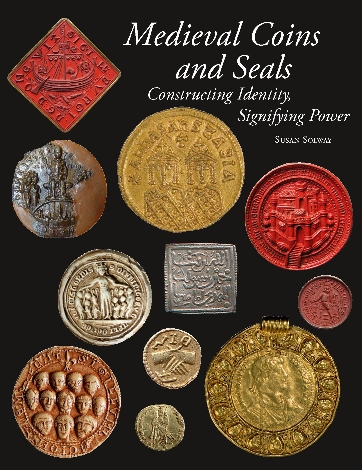
Medieval Coins and Seals: Constructing Identity, Signifying Power
show More to view fulltext, buy and share links for:Medieval Coins and Seals: Constructing Identity, Signifying Power show Less to hide fulltext, buy and share links for: Medieval Coins and Seals: Constructing Identity, Signifying PowerMedieval Coins and Seals: Constructing Identity, Signifying Power showcases these objects as intrinsic and highly significant aspects of medieval visual culture, and contributes to an understanding of the many ways in which they functioned as conveyors of meaning in Western European, Islamic, and Byzantine cultures from the fifth to the fifteenth century. The essays presented here, by art historians, numismatists, sigillographers, and historians on a wide variety of coins and seals, afford fresh insight into these tantalizing relics of medieval art and the vibrant cultural roles they played at the time of their creation. Through their images and inscriptions, they conveyed complex cultural attitudes by means of sophisticated visual strategies carefully constructed to further the subjective agendas of rulers and − in the case of seals − of aristocrats, ordinary individuals, towns, corporations, and government officials. The messages conveyed by these tightly controlled objects were, above all, ones of authority, identity, and legitimacy, with goals or subtexts that included the politics of self- presentation; the construction of personal, civic, national and cultural identity; the advertisement of dynastic succession; and much more. As forceful modes of visual discourse designed to carry calculated, at times propagandistic, communications to broadly dispersed audiences, coins and seals actively served during these centuries as sociocultural agents that helped mold public opinion (as they had in antiquity), and thereby shaped the medieval world.
-
-
-

Medieval Francophone Literary Culture Outside France
Studies in the Moving Word
show More to view fulltext, buy and share links for:Medieval Francophone Literary Culture Outside France show Less to hide fulltext, buy and share links for: Medieval Francophone Literary Culture Outside FranceIn medieval Europe, cultural, political, and linguistic identities rarely coincided with modern national borders. As early as the end of the twelfth century, French rose to prominence as a lingua franca that could facilitate communication between people, regardless of their origin, background, or community. Between the twelfth and fifteenth centuries, literary works were written or translated into French not only in France but also across Europe, from England and the Low Countries to as far afield as Italy, Cyprus, and the Holy Land. Many of these texts had a broad European circulation and for well over three hundred years they were transmitted, read, studied, imitated, and translated.
Drawing on the results of the AHRC-funded research project Medieval Francophone Literary Culture Outside France, this volume aims to reassess medieval literary culture and explore it in a European and Mediterranean setting. The book, incorporating nineteen papers by international scholars, explores the circulation and production of francophone texts outside of France along two major axes of transmission: one stretching from England and Normandy across to Flanders and Burgundy, and the other running across the Pyrenees and Alps from the Iberian Peninsula to the Levant. In doing so, it offers new insights into how francophone literature forged a place for itself, both in medieval textual culture and, more generally, in Western cultural spheres.
-
-
-
Medieval Glossaries from North-Western Europe
Tradition and Innovation
show More to view fulltext, buy and share links for:Medieval Glossaries from North-Western Europe show Less to hide fulltext, buy and share links for: Medieval Glossaries from North-Western EuropeGlossaries are the dictionaries of the medieval period. They were created at a time when no comprehensive dictionary of the Latin language existed, but lexicographical resources were urgently needed to engage with the writings of Classical and Late Antiquity as well as near-contemporary texts. In the non-Romance speaking areas in north-western Europe, the compilers of glossaries were quick to have recourse to their vernacular languages. Glossaries are often the places in which these languages were put into writing for the first time. Hence, the effort to explain Latin vocabulary resulted in bilingual lexicography and in the establishment of the vernaculars as written languages in their own right. The negotiation of linguistic and cultural barriers lies at the centre of the glossaries. Consequently, medieval traditions of glossography are highly interconnected.
This volume represents the first reference work dedicated to medieval glossaries in English and related traditions, including other languages spoken in the British Isles (Celtic languages, Anglo-Norman) and the Germanic languages (High and Low German, Dutch, Scandinavian, Gothic). As such, it is intended as a vademecum for researchers in order to facilitate modern approaches to medieval glossography, lexicology and lexicography, which often require some familiarity with different traditions. Written by experts in the field, the fifty chapters of this volume highlight important characteristics and themes of medieval glossaries and outline different glossographic traditions; they facilitate access to individual glossaries, or groups of related glossaries, by providing detailed discussions of the texts, their sources, relationships and transmission; they also give an account of the current state of research and highlight important resources.
-
-
-
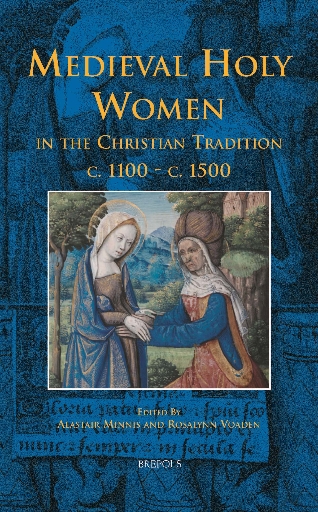
Medieval Holy Women in the Christian Tradition c.1100-c.1500
show More to view fulltext, buy and share links for:Medieval Holy Women in the Christian Tradition c.1100-c.1500 show Less to hide fulltext, buy and share links for: Medieval Holy Women in the Christian Tradition c.1100-c.1500Medieval Holy Women in the Christian Tradition offers the first wide-ranging study of the remarkable women who contributed to the efflorescence of female piety and visionary experience in Europe between 1100 and 1500. This volume offers essays by prominent scholars in the field which extend the boundaries of our previous knowledge and understanding of medieval holy women. While some essays provide new perspectives on the familiar names of the unofficial canon of mulieres sanctae, many others bring into the spotlight women less familiar now, but influential in their own time and richly deserving of scholarly attention. The five general essays establish a context for understanding the issues affecting female religious witness in the later Middle Ages. The geographical arrangement of the volume allows the reader to develop an awareness of the particular cultural and religious forces in seven different regions and to recognize how these influenced the writing and reception of the holy women of that area. Seventeen major figures have essays devoted exclusively to each of them; in addition, the survey chapters on each region introduce the reader to many more. The extensive bibliographies which follow each chapter encourage further reading and study.
Alastair Minnis was Director of the Centre for Medieval Studies and Head of the Department of English at the University of York, and is currently Douglas Tracy Smith Professor of English at Yale University. A Fellow of the Medieval Academy of America and of the English Association, he is the author of six monographs and the editor or co-editor of fifteen further volumes.
Rosalynn Voaden (D.Phil., University of York, UK) is the author of God’s Words, Women’s Voices, and is the editor or co-editor of several volumes in the field. She was a Research Fellow at St Anne’s College, Oxford, and is currently Associate Professor of English at Arizona State University.
-
-
-
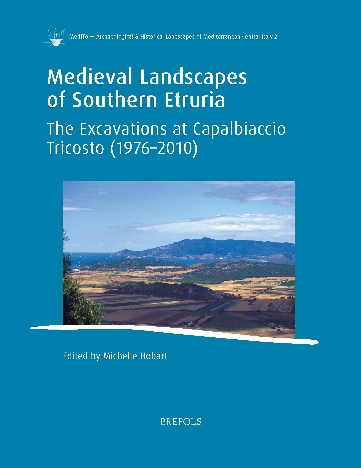
Medieval Landscapes of Southern Etruria
The Excavations at Capalbiaccio (1976–2010)
show More to view fulltext, buy and share links for:Medieval Landscapes of Southern Etruria show Less to hide fulltext, buy and share links for: Medieval Landscapes of Southern EtruriaThe fortified hilltop town of Capalbiaccio is a lost Etruscan settlement, a site that developed out of prehistory to become an important colony and grain provider for the Roman Empire, before being sacrificed to medieval intrigue and conquest by the Republic of Siena. The site, together with the castle of Tricosto, was first excavated forty-five years ago, but the results were never published. Then, in recent years, archaeologist Michelle Hobart was invited to explore the area with a new team and employ the latest techniques of remote sensing to explore the landscape and fortifications. The results of both explorations are presented here for the first time in this volume, which combines the invasive and non-invasive approaches of two generations of archaeologists to reveal what attracted settlers to this site, from the inhabitants of the late Bronze Age through to the most important families of medieval Tuscany. This book employs the best of the latest geophysical techniques and time-tested approaches to ground the history of Capalbiaccio, and to narrate how the fate of this small village was inextricably linked to regional and national networks, as control of the territory and the settlement’s reason for being evolved over time.
-
-
-
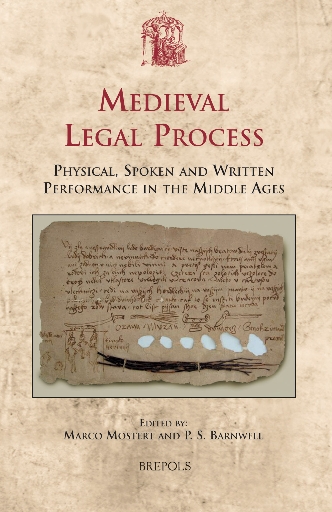
Medieval Legal Process
Physical, Spoken and Written Performance in the Middle Ages
show More to view fulltext, buy and share links for:Medieval Legal Process show Less to hide fulltext, buy and share links for: Medieval Legal ProcessIn medieval legal transactions the use of the written word was only one of many ways of conducting business. Important roles were played by the spoken word and by the ‘action’ of ritual. The relationship between ‘rituals’ and literacy has been the focus of much recent research. Medieval societies which made extensive use of written instruments in legal transactions have been shown to employ rituals as well. This has led to investigation of the respective functions of written instruments and legal rituals. What is the nature of legal rituals? If they included oral verbalization, how did the spoken words relate to those of the written instruments that played a role in the same legal transactions? Usually, we only have the written documents to answer these questions, and they are often silent about the rituals and oral elements of the transactions they document. Furthermore, the importance attached to written instruments and rituals may not have been the same at all levels of a society, differing, for example, between princely and local courts. The contributors to this volume discuss fifteen cases, ranging from the early Middle Ages to the eighteenth century, and from England to Galician Rus’.
-
-
-
Medieval Letters
Between Fiction and Document
show More to view fulltext, buy and share links for:Medieval Letters show Less to hide fulltext, buy and share links for: Medieval LettersModern scholarship on medieval letters has often focused on the divide between fictionality and historicity. Attempts have been made to distinguish between ‘real’ letters and those that were used as stylistic models, and discussion has focused on how to make use of these texts as historical sources. In this volume, which draws on the proceedings of the ‘Medieval Letters between Fiction and Document’ conference held in Siena in 2013, scholars including Peter Dronke, Ronald Witt, Joan Ferrante, and Sylvie Lefèvre analyse the historical value of medieval letters in both Latin and other European languages and explore different disciplinary approaches to the field. Comprising contributions on methodology, Latin literature up to the fifteenth century, Byzantine and Romance literature, and courtly letters, this unique book also documents the debate on unedited texts - including women’s love letters - and on celebrated cases of disputed authorship such as the Epistolae duorum amantium and Dante’s Epistola to Cangrande. It thus offers a significant re-evaluation of the huge and partly unpublished heritage of medieval letters across Europe, and provides important insights into the use of these unique sources in social, literary, and legal history.
-
-
-
Medieval Life Cycles
Continuity and Change
show More to view fulltext, buy and share links for:Medieval Life Cycles show Less to hide fulltext, buy and share links for: Medieval Life CyclesThe essays in this collection present new research into a variety of questions on birth, childhood, adolescence, adulthood, middle age, and old age, ordered in a more or less chronological manner according to the life cycle. The volume exposes attitudes and representations of the life cycle from the Anglo-Saxon period to the end of the Middle Ages as being full of inconsistencies as well as definitive categories, and of variation and stasis. This attests to the fact that medieval conceptions and representations of the stages of life and their interrelationships are much more nuanced and less idealized than is usually credited. Medieval conceptual, mental, artistic, cultural, and sociological processes are scrutinized using various approaches and methods that cross disciplinary boundaries. What is emphasized across the volume is that there were varying, context-dependent rhythms of continuity and change in every stage of life in the medieval period. The volume’s selection of authors is international in scope and represents some of the leading current scholarship in the field.
-
-
-
Medieval Livonia
History, Society and Economy of a Territory on the Baltic Frontier
show More to view fulltext, buy and share links for:Medieval Livonia show Less to hide fulltext, buy and share links for: Medieval LivoniaThe territory known as Livonia, on the eastern shore of the Baltic Sea, emerged as a result of the Baltic Crusades in the twelfth and thirteenth centuries. It was a region of multiple nations, languages and cultures, and the scene of their mutual interaction, connected to the Holy Roman Empire, the papal curia, Scandinavia and Lithuania, and mediating the Hanseatic trade with Russia. This book is a significant new study of the multiple facets of Baltic history, taking in social history, urban and rural culture, peasant economy and literacy, with novel perspectives on crusading, political history and the chief agents of power, notably the Teutonic Order. This first comprehensive treatment of Livonian history in English will serve as a valuable source of information for undergraduate and postgraduate students as well as a resource for studying the Baltic Crusades and crusader territories in general.
-
-
-
Medieval Liège at the Crossroads of Europe
Monastic Society and Culture, 1000–1300
show More to view fulltext, buy and share links for:Medieval Liège at the Crossroads of Europe show Less to hide fulltext, buy and share links for: Medieval Liège at the Crossroads of EuropeDuring the high Middle Ages, the bishopric of Liège found itself at a cultural crossroads between the German Empire and the French lordships. The Liègeois themselves summed up the situation when they declared that: ‘Gaul considers us its most distant inhabitants, Germany as nearby citizens. In fact we are neither, but both at the same time’. This same complexity is also echoed by present-day historians, who have described Liège as a hub of interactions between two great civilisations. Medieval monastic communities in Liège were key sites of this exchange, actively participating in the cultural developments, social networks, and political structures of both regions.
Bringing together the work of international scholars, this collection of essays addresses the problem of monastic identity and its formation in a region that was geographically wedged between two major competing socio-political powers. It investigates how monastic communities negotiated the uncertainties of this situation, while also capitalizing on the opportunities it presented. As such, this book sheds light on the agency of monastic identity formation in a small but complex region caught at the crossroads of two major powers.
-
-
-
The Medieval Low Countries
History, Archaeology, Art, and Literature
show More to view fulltext, buy and share links for:The Medieval Low Countries show Less to hide fulltext, buy and share links for: The Medieval Low CountriesThe Medieval Low Countries (MLC) is a peer-reviewed journal featuring articles on the Low Countries (viewed in its broadest sense as the estuaries of Scheldt, Meuse, Rhine and IJssel with their corresponding hinterlands), from the start of the fifth century to the second half of the sixteenth century. During these centuries, this region was one of the major centers of economic, cultural, religious and social development in Europe. By publishing the best of new scholarship concerning the region over the course of the Middle Ages, The Medieval Low Countries makes these achievements more visible and highlights the connections between changes in each domain. At the same time, the journal provides a forum for exchange and cooperation between established and upcoming scholars in several disciplines, whether in Europe, the United States, or beyond. The MLC is a continuation of the journals Millennium, Jaarboek voor Middeleeuwse Geschiedenis, and Medieval and Modern Matters: Archaeology and Material Culture in the Low Countries.
More information about this journal on Brepols.net
-
-
-
Medieval Manuscripts, Their Makers and Users
A Special Issue of Viator in Honor of Richard and Mary Rouse
show More to view fulltext, buy and share links for:Medieval Manuscripts, Their Makers and Users show Less to hide fulltext, buy and share links for: Medieval Manuscripts, Their Makers and UsersThe essays in this collection pertain to art history, medieval Latin culture both ecclesiastic and legal, the history of vernacular literatures, and the devotional practices of the laity. They reflect the patronage of authors and manuscript painters, from the royal through the monastic to the urban middle class, and they trace the sometimes astonishing afterlife of manuscripts. The subject matter of these studies ranges chronologically from late antiquity to the later Middle Ages, adding the emergent medievalism of the eighteenth and nineteenth centuries. Its geographic breadth extends through the major Western cultures and literatures, from England to Italy, Germany, and France. Its wide range in time and space reflects the lifetime of manuscript research, teaching, and collecting by its honorees, Richard and Mary Rouse.
A particular emphasis distinguishes this volume from other such collections: its stress on the use, and usefulness, of medieval manuscripts in the teaching of most historical disciplines in Western culture, from the broad undergraduate survey (of art, literature, history) to the specialized graduate seminar. In the last half century, public colleges and universities have increasingly appreciated the pedagogical opportunities inherent in building, through gift and purchase, collections of medieval manuscripts, formerly thought to be the province only of wealthy private schools. No similar collection of manuscript studies exhibits so clearly the role of medieval manuscripts in teaching.
The specialist authors represented in this volume have displayed, over the whole of their careers, an ability to combine the highest caliber of research with an eagerness to make their subject accessible to others through teaching and writing and public lectures. The essays offer the results of new and sometimes technical research, set forth in a manner intelligible not only to the expert but to the interested amateur.
-
-
-
Medieval MasterChef
Archaeological and Historical Perspectives on Eastern Cuisine and Western Foodways
show More to view fulltext, buy and share links for:Medieval MasterChef show Less to hide fulltext, buy and share links for: Medieval MasterChefThe focus in this varied collection of studies by key scholars in the field is on cuisine and foodways in the Mediterranean and north-western Europe during Medieval and Post-Medieval times (ca. 6th- 20th centuries). The scope of the contributions encompasses archaeological and historical perspectives on eating habits, cooking techniques, diet practices and table manners in the Byzantine Empire, the Islamic World, the Crusader States, Medieval and Renaissance Europe and the Ottoman Empire. The volume offers a state of the art of an often still hardly known territory in gastronomical archaeology, which makes it essential reading for scholars and a larger audience alike.
'The book’s strength lies in the authors’ recognition that incorporating archaeological, material culture, and textual evidence with culinary history is of paramount importance in developing a comprehensive and textured comprehension of meals and mealtimes in the past.' - Mary C. Beard.
-
-
-
Medieval Mausoleums, Monuments, and Manuscripts
French Royal Women’s Patronage from the Twelfth to the Fourteenth Centuries
show More to view fulltext, buy and share links for:Medieval Mausoleums, Monuments, and Manuscripts show Less to hide fulltext, buy and share links for: Medieval Mausoleums, Monuments, and ManuscriptsMedieval Mausoleums, Monuments, and Manuscripts: Royal Women’s Patronage from the Twelfth to the Fourteenth Centuries explores the manuscripts, monuments, and other memorabilia associated with the artistic patronage of Eleanor of Aquitaine (1122-1204), her daughters, Marie de Champagne (1145-98) and Matilda of Saxony (1156-98), as well as works generated by three queens of France, Marie de Brabant (1254-1322), Jeanne d’Évreux (1310-71), and Blanche de Navarre (1330-98). Through this study the shift in women’s artistic patronage over the centuries may be brought to light, as well as its evolution, evincing how each generation built upon the previous one.
Further, despite the assorted shapes these women’s efforts embodied, ranging from manuscripts to stained glass windows, from funerary plaques, paintings, jewels and linens to monuments, mausoleums and endowments of institutions, including a variety of other forms, these women were notably unified in that their greatest output tellingly occurred during precarious points in their lives that threatened their positions, such as the potential political turmoil associated with the deaths of husbands or children. At these times their participation in acts of patronage solidified their places at court, in society, and within cultural memory while doubling as assertions of their political power and lineage. Thus, testaments, manuscript books, monuments, and memorials were not only a declaration or signs of one’s possessions, but also sites and documents that continued the politicking of the deceased.
-
-
-
Medieval Memory. Image and Text
show More to view fulltext, buy and share links for:Medieval Memory. Image and Text show Less to hide fulltext, buy and share links for: Medieval Memory. Image and TextScholars of medieval literary and cultural history have grown more aware of the crucial role of memory in the production, reception and functioning of texts and manuscripts. We owe this to the pioneering studies of Frances Yates and, more recently, Mary Carruthers and Susan Hagen.
Historical linguists for their part try to describe the linguistic means by which listeners and readers are enabled to store the information flow in their memories.
The relationship between medieval texts and memory is at the centre of this book. Seven historians of literature, three linguists and one art historian have contributed eleven essays, subsumed under three sections. The first section, ‘Memory Texts’, discusses genres that belong to medieval mnemonics. In the second and most extensive section, ‘Memory Aspects in Texts’, the focus is on literature and, more particularly, on how attention for mnemonics can enhance our insight into the form, composition and functioning of literary texts and manuscripts. Mental and visual images play a central role here. ‘Text Memory’, the final section, analyses medieval (French) literary discourse as a fabric of reference chains, in which different grammatical markers generate and organise mental representations in the memory.
-
-
-
Medieval Multilingualism
The Francophone World and its Neighbours
show More to view fulltext, buy and share links for:Medieval Multilingualism show Less to hide fulltext, buy and share links for: Medieval MultilingualismThis volume contains essays on various aspects of multilingualism in medieval France, Italy, England, and the Low Countries. The fifteen contributions discuss the use of the different vernaculars and Latin in both literary and non-literary contexts, showing how cultural and social factors determined the choice of language for a particular purpose or type of text. The role of French in non-French contexts is a major theme of these essays: in the British Isles after the Norman Conquest, in Italy as a response to the need for mainly secular types of literature which did not exist in Italian, and in the Low Countries by virtue of geographic contiguity and change of rulers. Special attention is paid in the French context to the use of French and Occitan in areas of the South. Some essays examine specific cases or text-corpora, while others examine questions of multilingualism from more theoretical, linguistic, and rhetorical points of view. Together, they form an invaluable introduction to the topic of medieval multilingualism, illustrated by meticulously executed case-studies, which future work in the area will have to take into account.
-
-
-
Medieval Ritual and Early Modern Music
The Devotional Practice of Lauda Singing in Late-Renaissance Italy
show More to view fulltext, buy and share links for:Medieval Ritual and Early Modern Music show Less to hide fulltext, buy and share links for: Medieval Ritual and Early Modern MusicThe polyphonic lauda had its place of prominence in the lay devotional confraternities in Italian cities in the late Middle Ages and the early modern period. A main theme of this volume is the influence of art music in devotional contexts dominated by ritual functionality, where a modern aesthetic perspective is rarely employed. The authors raise fundamental questions about the validity of such a distinction between functional simplicity and aesthetic sensibility, where the latter is usually reserved for advanced, secular genres such as opera and the madrigal.
The question of an aesthetics avant la lettre as applied to devotional practices in the Middle Ages and the Renaissance is examined through analyses of records from youth confraternities in Renaissance Florence. Further, the use during the seventeenth century of the traditional genre of the lauda in settings which stylistically reflect polyphonic art music is discussed and exemplified through the publication of nineteen polyphonic laude from a seventeenth-century manuscript found in the archives of the Cathedral of Florence.
Combining aspects of recent scholarship in musicology, liturgical history, and confraternity studies, the authors (a musicologist and a church historian) explore both the devotional use of stylistically advanced music in the late sixteenth and early seventeenth centuries as well as the idea that the beauty of music enhances devotion.
The volume features an introduction and six chapters as well as a substantial appendix consisting of edited texts and music for several laude.
-
-
-
Medieval Romances Across European Borders
show More to view fulltext, buy and share links for:Medieval Romances Across European Borders show Less to hide fulltext, buy and share links for: Medieval Romances Across European BordersThey were the bestsellers of their time; in the late medieval period, a number of shorter romances and tales, such as Floire et Blancheflor, Partonopeus de Blois, Valentine and Orson, and many others, enjoyed striking popularity across different regions of Europe. In this volume, scholars from across Europe and beyond examine the processes by which medieval romances were adapted across regional and national borders. By considering how the content, form, and broader contextualisation of individual romances were altered by the transition from one region to another, the chapters variously address the role translators, narrators, editors, and compilers played in adapting the tales to different cultural and codicological settings. In this context, they discuss not only the shifting plotlines of the tales, but also the points at which the generic features of the texts shift in response to changing cultural codes. In doing so, they raise broader questions concerning the links between genre, manuscript form, cultural assimilation, and the popularity of certain romance texts in different cultural communities.
-
-
-
Medieval Rural Settlement in Marginal Landscapes
Peuplement rural dans les territoires marginaux au Moyen Âge. Mittelalterliche Siedlung in ländlichen Randgebieten
-
-
-
Medieval Science in the North
Travelling Wisdom, 1000–1500
show More to view fulltext, buy and share links for:Medieval Science in the North show Less to hide fulltext, buy and share links for: Medieval Science in the NorthMedieval science has become an increasingly popular area of academic interest over the past couple of decades, but much of this work has up to now concentrated on France and the Mediterranean, while relatively little attention has been paid to the north of Europe. This has led to the assumption that Northern Europe stood aside from the mainstream of scientific knowledge in the Middle Ages, when in fact the region was a vital part of the medieval network of scientific scholarship. This important volume aims to redress the balance in scholarship by bringing together for the first time a collection of studies on medieval scientific knowledge that focuses on both Scandinavia and England.
The essays gathered here examine topics as wide-ranging as the intellectual network between Denmark and Paris; the role of Dominican friars in spreading scientific knowledge in Scandinavia; the practical application of technology by English armourers; fragments of scientific manuscripts found in early modern Swedish documents; the use of scientific volumes and descriptions of university life in medieval Icelandic literature; and fresh insights into the careers of the English scientists Roger of Hereford, Roger Bacon, and Robert Grosseteste. Together, these papers show the dynamism and depth of science in the medieval North, and offer new insights into how scientific wisdom travelled through, across, and between the peoples of this region.
-
-
-
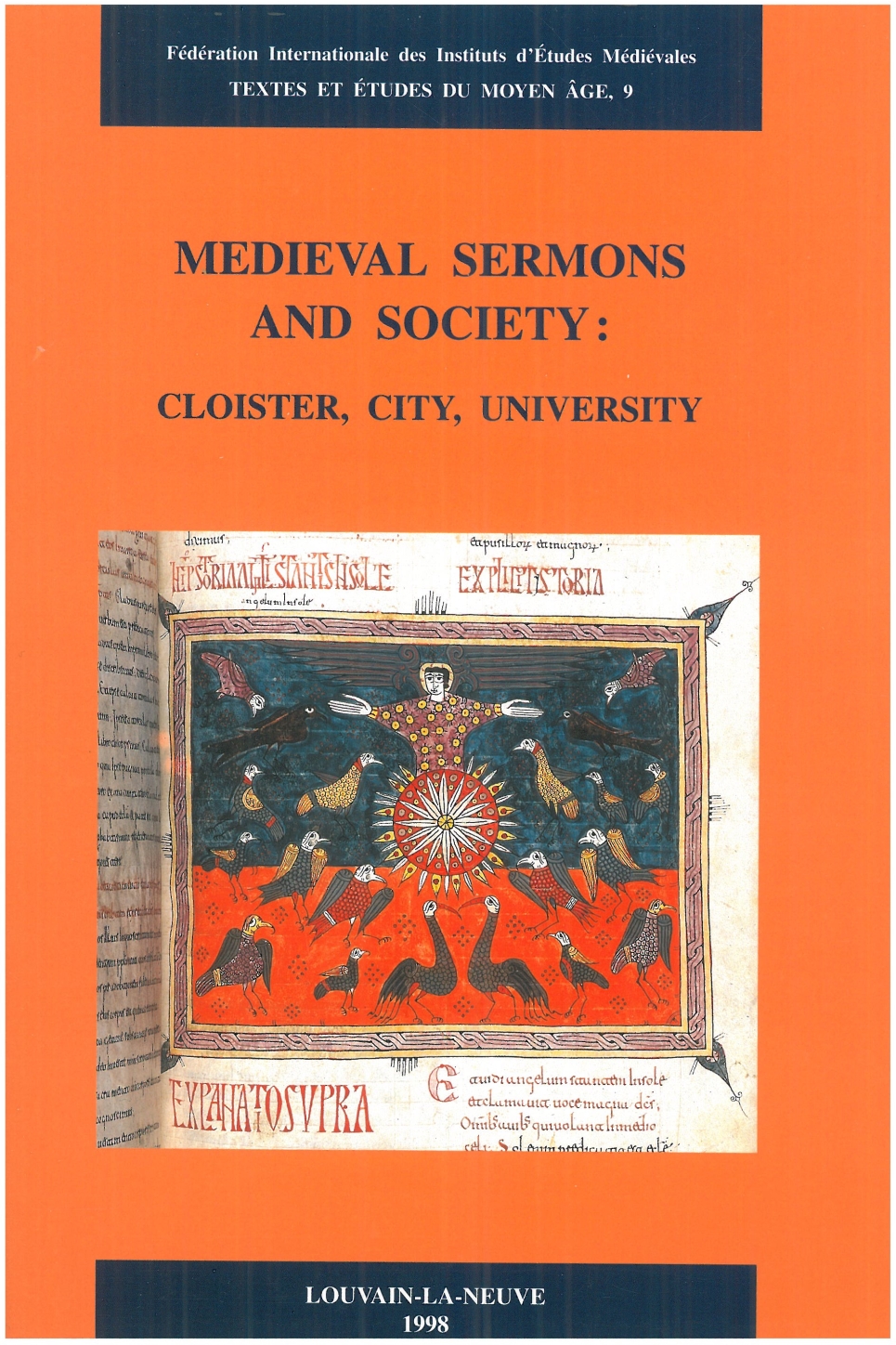
Medieval Sermons and Society: Cloister, City, University
show More to view fulltext, buy and share links for:Medieval Sermons and Society: Cloister, City, University show Less to hide fulltext, buy and share links for: Medieval Sermons and Society: Cloister, City, UniversityThe twenty-one essays in this volume focus on medieval sermons and their relationship to the society they reflect and to the diverse audiences they address, broadly divided into three groups: cloister, city and university. The chronological range of the essays extends from the early to the late Middle Ages, touching on the major periods in the history of preaching: monastic texts for use within religious communities; the preaching of pilgrim-missionary monks; sermons from the twelfth-century world reflecting heightened Marian devotion and also viewing the urbanisation of society with alarm; the Fourth Lateran Council in 1215 with its influential legislation on preaching; the vast preaching activities of the mendicant orders, including sermons written for communities of religious women, a crucial part of the cura monialium; the growth of the cathedral schools and the mendicant studia into universities where preachers were educated and aids for preaching and sermon collections were generated in great quuantities; the production of vernacular materials for lay audiences; and the persuasive power of preaching in urban centres such as London, or Florence, where Italian humanism exerted an early influence on the rhetoric of sermons. In all these eras and venues, medieval preachers both reflected and shaped the society around them. The essays in this volume illustrate amply the wealth of material that sermons offer for the social, intellectual, religious and political history of the Middle Ages.
The volume contains three sections: "The Cloister" with an introduction by D.L. Stoudt and articles by Z. Izydorczyk, L. Martin, J. Blaettler, A. Thayer, R.D; Hale, D.L. Stoudt and A. Syring; "The City" with an introduction by A. Thayer and articles by P.B. Roberts, B.M. Kienzle, C.A. Muessig, C. Ho, L. Carruthers, J. Dah,us, P. Horner and P. Howard; and "The University" with an introduction by J. Hamesse and articles by P.B. Roberts, N. Spatz, D. Pryds, E.W. Dolnikowski, and H.-J. Shiewer.
-
-
-

Medieval Stories and Storytelling
Multimedia and Multi-Temporal Perspectives
show More to view fulltext, buy and share links for:Medieval Stories and Storytelling show Less to hide fulltext, buy and share links for: Medieval Stories and StorytellingThe shaping and sharing of narrative has always been key to the negotiation and recreation of reality for individuals and cultural groups. Some stories, indeed, seem to possess a life of their own: claiming a peculiar agency and taking on distinct voices which speak across time and space. How, for example, do objects, manuscripts, and other artefacts communicate alternative or complementary narratives that transcend textual and linguistic boundaries? How are stories created, reshaped, and re-experienced, and how do these shifting contexts and media change meaning?
This volume of essays explores these questions about meaning and identity in a range of ways. As a collection, it demonstrates the importance of interdisciplinary and context-focused enquiry when approaching key issues of activity and identity in the medieval period. Ultimately, the process of making meaning through shaping narrative is shown to be as vital and varied in the medieval world as it is today.
With a wide range of different disciplinary approaches from leading scholars in their respective fields, chapters include considerations of art, architecture, metalwork, linguistics, and literature. Alongside examinations of medieval cultural productions are explorations of the representation and adaptation of medieval storytelling in graphic novels, classroom teaching, and computer gaming. This volume thus offers an interdisciplinary exploration of how stories from across the medieval world were shaped, transformed, and transmitted.
-
-
-

Medieval Svaneti: Objects, Images, and Bodies in Dialogue with Built and Natural Spaces
show More to view fulltext, buy and share links for:Medieval Svaneti: Objects, Images, and Bodies in Dialogue with Built and Natural Spaces show Less to hide fulltext, buy and share links for: Medieval Svaneti: Objects, Images, and Bodies in Dialogue with Built and Natural SpacesThe essays collected in this volume emphasize the importance of Svaneti, a historical region of the Georgian Great Caucasus as an unparalleled treasury of medieval arts, describe some of its outstanding monuments, provide interpretations of their political and religious role at the intersection of different cultural traditions, and explore the dynamics whereby they have constantly invested with new functions and associations throughout their long history.
-
-
-
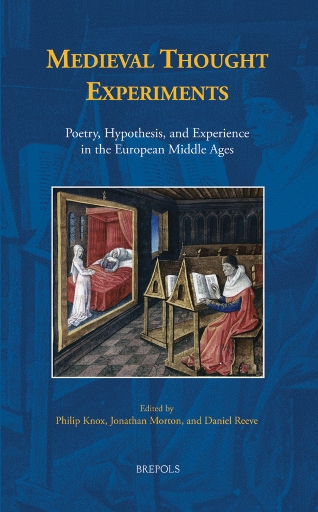
Medieval Thought Experiments
Poetry, Hypothesis, and Experience in the European Middle Ages
show More to view fulltext, buy and share links for:Medieval Thought Experiments show Less to hide fulltext, buy and share links for: Medieval Thought ExperimentsThroughout the Middle Ages, fictional frameworks could be used as imaginative spaces in which to test or play with ideas without asserting their truth. The aim of this volume is to consider how intellectual problems were approached - if not necessarily resolved - through the kinds of hypothetical enquiry found in poetry and in other texts that employ fictional or imaginative strategies. Scholars working across the spectrum of medieval languages and academic disciplines consider why a writer might choose a fictional or hypothetical frame to discuss theoretical questions, how a work’s truth content is affected and shaped by its fictive nature, or what kinds of affective or intellectual work its reading demands. By reading literary, philosophical, and spiritual texts from England, France, and Italy alongside each other, this collection offers a new interdisciplinary approach to the history of medieval thought.
-
-
-
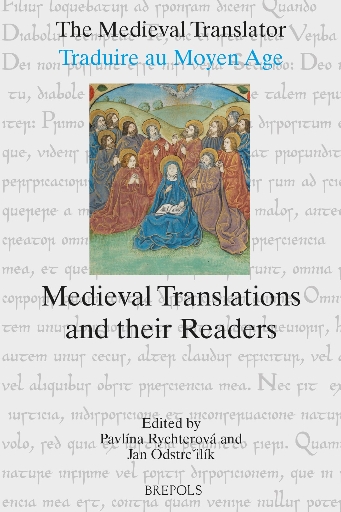
Medieval Translations and their Readers
show More to view fulltext, buy and share links for:Medieval Translations and their Readers show Less to hide fulltext, buy and share links for: Medieval Translations and their ReadersThe papers gathered in this volume focus on ‘Medieval Translations and their Readership’, the special strand of the 11th Cardiff Conference on the Theory and Practice of Translation in the Middle Ages. The volume discusses the role of the reader in the process of translation, communities of readers and their active participation in translators’ choices, and the translation as a result of a dialogue between author, text and its reader.
Translations of works of theology and religious education, the focus of most of the contributions to this volume, constitute excellent material for research into medieval lay audiences. Vernacular religious educational texts from the thirteenth to the sixteenth century show a great deal of conformity. Individual authors resorted to similar strategies and techniques to meet any translation challenges, to fulfil educational aims, or to relate to their readers and to accommodate their expectations. Simultaneously, the readers played a crucial role as they shaped the production of texts in many ways.
Research into Middle English pastoral and devotional literature and the conditions of its production still dominates scholarly work in the field. Religious texts in vernaculars other than Middle English have so far received little attention. This volume tries to tackle this lacuna by offering a careful comparative analysis of relevant vernacular texts across Europe, including Slavonic works, using historiographical, philological, and linguistic methods as well as literary scholarly approaches.
The sixteen chapters are organized in three sections. The first one, ‘Authors and Readers’, brings together articles examining the idea of a model reader as expressed in translations of biblical texts and texts of religious instruction. The contributions in the second section, on the ‘Dissimination of Knowledge’, focus on how translators addressed readers, how people read, and how they used the manuscripts and printed books made for them. The target audience or model reader of the first section is here put into perspective with the help of discussions of reading practices. The last section, ‘Religious Education in Transition’, comprises contributions which focus on textual material from the period when printed books gradually changed, the relationship between languages, texts, authors, and readers.
-
-
-
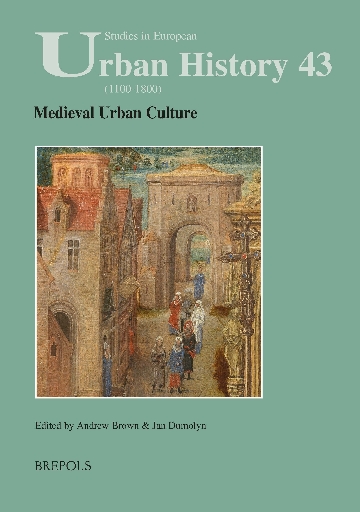
Medieval Urban Culture
show More to view fulltext, buy and share links for:Medieval Urban Culture show Less to hide fulltext, buy and share links for: Medieval Urban CultureThis volume explores the specificity of the urban culture in western Europe during the period c. 1150-1550. Since the mid-twentieth century, many studies have complicated the association, traditionally made, between the medieval growth of towns and the birth of a modern, secular world; but few have given any attention to what actually made urban culture ‘urban’. This volume begins by placing medieval ‘urban culture’ within its spatial context, to consider how urban conditions determined the perception and representation of the city-dweller. Contributors examine a variety of urban cultures, from the political to the artistic, from London and Bruges to Florence and Venice, and beyond Europe. They show how urban culture involved a process of interaction with other discourses (royal, noble, ecclesiastical) and that it was not monolithic: the relationship between urban environments and the cultures they generated were hybrid, fluid and dynamic.
-
-
-

Medieval Welsh Perceptions of the Orient
show More to view fulltext, buy and share links for:Medieval Welsh Perceptions of the Orient show Less to hide fulltext, buy and share links for: Medieval Welsh Perceptions of the OrientThis book introduces a new theoretical framework for the examination of medieval Western European perceptions of the Orient. Through the application of the medieval concept of translatio studii et imperii, it proposes the identification of three distinct conceptions of the Orient in medieval sources: Biblical, Classical, and Contemporary. Welsh textual material from the twelfth and thirteenth centuries is used as a case-study to develop and illustrate this theory.
This study brings historical sources to bear on previously unexplained literary phenomena and it examines the evolution of texts and ideas in the process of transmission and translation. The sources analysed here include vernacular and Latin texts produced in Wales, as well as material that has been translated into Welsh such as Imago mundi and legends about Charlemagne. It thus combines an important and much-needed account of the development of Welsh attitudes to the East with a unique analysis of Oriental references across an extensive literary corpus.
-
-
-
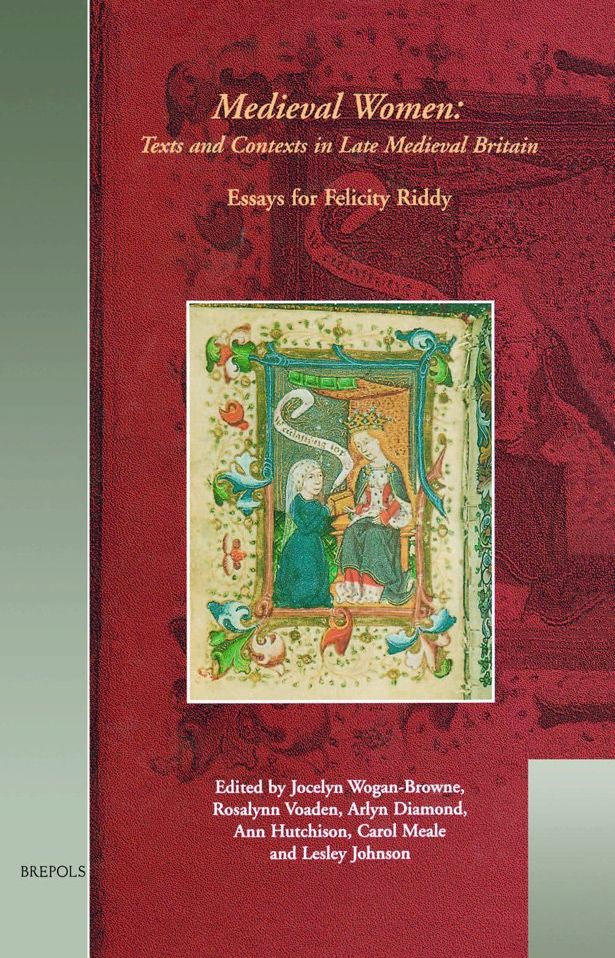
Medieval Women - Texts and Contexts in Late Medieval Britain
Essays for Felicity Riddy
show More to view fulltext, buy and share links for:Medieval Women - Texts and Contexts in Late Medieval Britain show Less to hide fulltext, buy and share links for: Medieval Women - Texts and Contexts in Late Medieval BritainIn this themed collection by literary, historical and archaeological scholars, the study of medieval women is confidently and freshly mainstream. Profiting from the development of newly flexible models of gender, literacy, the political, the social, and the domestic, the volume is non-separatist, exploratory both of new source materials and new readings of established sources, and able to consider the broadest implications for the study of medieval culture without simply re-absorbing medieval women into invisibility. Grouped under the headings of matters of reading, of conduct and place, the essays move from legal cases to actual buildings and conceptions of the household, from conduct books to chronicles and romances, from saints’ lives to the medieval unconscious and back again, exemplifying the mature interdisciplinarity of current work on medieval women.
-
-
-
Medieval and Classical Traditions and the Renaissance of Physico-Mathematical Sciences in the 16th Century
Proceedings of the XXth International Congress of History of Science (Liège, 20-26 July 1997) Vol. VIII
show More to view fulltext, buy and share links for:Medieval and Classical Traditions and the Renaissance of Physico-Mathematical Sciences in the 16th Century show Less to hide fulltext, buy and share links for: Medieval and Classical Traditions and the Renaissance of Physico-Mathematical Sciences in the 16th CenturyCe volume est une contribution à l'histoire de la transition entre la science médiévale et la science moderne, en ce qui concerne les mathématiques et la science du mouvement. Le processus de cette transformation a été relativement peu étudié: les études historiques se sont concentrées de façon dominante sur la description de la phase finale de ce processus; le travail historique a établi une description très documentée et structurée de la situation de la philosophie naturelle à l'aube de la science classique. Au cours des dernières décennies des travaux sur des auteurs et des oeuvres du XVIe siècle peu étudié font cependant apparaître que cette description est altérée structurellement par des interprétations anachroniques de certains concepts qui y occupent manifestement une place centrale. Les études présentées dans ce volume sont un reflet des travaux effectués récemment dans ce sens sur deux aspects singuliers d'un tel programme: l'oeuvre scientifique de MAurolico d'une part, et l'émergence de la science galiléenne du mouvement d'autre part.
-
-
-
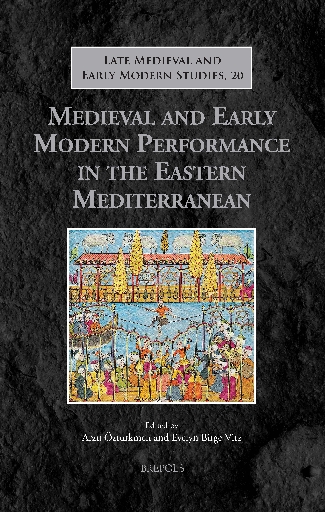
Medieval and Early Modern Performance in the Eastern Mediterranean
show More to view fulltext, buy and share links for:Medieval and Early Modern Performance in the Eastern Mediterranean show Less to hide fulltext, buy and share links for: Medieval and Early Modern Performance in the Eastern MediterraneanThis book brings to life an impressively broad array of performances in the Eastern Mediterranean. It covers many traditional types of performance, including singers, dancers, storytellers, street performers, clowns, preachers, shadow-puppeteers, fireworks displays, and semi-theatrical performances in folk and other celebrations. It explores performance of the secular as well as of the sacred in its many forms, including Sunni, Shiite, Sufi, and Alevi Muslims; Sephardic Jews and those in the Holy Land; and Armenian, Greek, and European Catholic Christians. The book focuses on the Medieval and Early Modern periods, including the Early Ottoman. Some papers reach backward into Late Antiquity, while others demonstrate continuity with the modern Eastern Mediterranean world.
The articles discuss evidence for performers and performance coming from archival sources, architectural and manuscript images, musical notation, historical and ethnographic accounts, literary works, and oral tradition. Across the broad range of issues, chronology, and geography, certain fundamental topics are central: concepts of drama and theatricality; varied definitions of ‘performance’ and related terms; the sacred and the profane, and their frequent intersection; and complex relations between oral and written traditions.
-
-
-
Medieval and Modern Matters
Archaeology and Material culture in the Low Countries
show More to view fulltext, buy and share links for:Medieval and Modern Matters show Less to hide fulltext, buy and share links for: Medieval and Modern MattersThe archaeology of the Middle Ages and the Modern Period in the Low Countries is flourishing more than ever. This new effort produces a wealth of evidence, new interpretations and interesting perspectives on themes of international interest, such as rural development, the rise of the town, material culture and European expansion overseas. The initiative was taken to create a new international journal on the archaeology of the Middle Ages and Modern Period in the Low Countries (Belgium and the Netherlands).
-
-
-

Medievalism and the Gothic in Australian Culture
show More to view fulltext, buy and share links for:Medievalism and the Gothic in Australian Culture show Less to hide fulltext, buy and share links for: Medievalism and the Gothic in Australian CultureThis collection opens up a new field of academic and general interest: Australian medievalism. That is, the heritage and continuing influence of medieval and gothic themes, ideas and cultural practices. Geographically removed from Europe, and distinguished by its eighteenth-century colonial settlement, Australia is a fascinating testing-ground on which to explore the cultural residues of medieval and gothic tradition. These traditions take a distinctive form, once they have been 'transported' to a different topographical setting, and a cultural context whose relationship with Europe has always been dynamic and troubled.
Early colonists attempted to make the unfamiliar landscape of Australia familiar by inscribing it with European traditions: since then, a diverse range of responses and attitudes to the medieval and gothic past have been played out in Australian culture, from traditional forms of historical reconstruction through to playful postmodernist pastiche.
These essays examine the early narratives of Australian 'discovery' and the settlement of what was perceived as a hostile, gothic environment; exercises of medieval revivalism and association consonant with the British nineteenth-century rediscovery of chivalric ideals and aesthetic, spiritual and architectural practices and models; the conscious invocation and interrogation of medieval and gothic tropes in Australian fiction and poetry, including children's literature; the transformation of those tropes in fantasy, role-playing games and subcultural groups; and finally, the implication of the medieval past for discussions of Australian nationalism.
-
-
-
Medievalism in the Modern World
Essays in Honour of Leslie Workman
show More to view fulltext, buy and share links for:Medievalism in the Modern World show Less to hide fulltext, buy and share links for: Medievalism in the Modern WorldThe twenty-six essays in this volume have been written by a select number of experienced practitioners of medievalism, most of whom also happen to be friends and/or collaborators of Leslie J. Workman. While using different approaches and discussing topics in a variery of specialised fields, all the contributors clearly centre on negotiating the reception of medieval culture in the Early Modern, Modern, and Contemporary periods, thus presenting a broad and representative picture of current research in medievalism. The essays examine the process of creating the Middle Ages. In so doing they honour Workman by leading the academic study of medievalism towards the comprehensiveness which Lord Action as early as 1859 had promised: 'Two great principles divide the world, and contend for the mastery: antiquity and the Middle Ages. These are the two civilizations that have preceded us, the two elements of which ours is composed. All political as well as religious questions reduce themselves practically to this. This is the great dualism that runs through our society. '
-
-
-
Meditations of the Heart: The Psalms in Early Christian Thought and Practice
Essays in Honour of Andrew Louth
show More to view fulltext, buy and share links for:Meditations of the Heart: The Psalms in Early Christian Thought and Practice show Less to hide fulltext, buy and share links for: Meditations of the Heart: The Psalms in Early Christian Thought and PracticeThe Psalms are one of the most important biblical texts in Patristic exegesis, commentary, preaching, liturgical practice and theological reflection. Their language and imagery is all-pervasive; they were not only interpreted by the fathers but a good deal of Patristic exegetical practice actually evolved from engagement with them; they directly informed Christological and Ecclesiological reflection; were central to early monasticism; inspired early Christian poetry and provided material for liturgical chant, prayers, hymns and penitential or doxological expression. This volume of essays on the Psalms in Early Christian Thought and Practice is offered with profound gratitude, admiration and respect by colleagues and friends of Professor Andrew Louth FBA, to honour his long and immensely distinguished career as priest, teacher and prolific author in almost every aspect of Greek and Latin Patristics.
-
-
-
Meeting of the Minds. The Relations between Medieval and Classical Modern European Philosophy
Acts of the International Colloquium held at Boston College, June 14-16, 1996, organized by the Société Internationale pour l'Etude de la Philosophie médiévale
show More to view fulltext, buy and share links for:Meeting of the Minds. The Relations between Medieval and Classical Modern European Philosophy show Less to hide fulltext, buy and share links for: Meeting of the Minds. The Relations between Medieval and Classical Modern European PhilosophyMeeting of the Minds records the proceedings of the S.I.E.P.M. conference held in Boston from June 14-16, 1996. The conference participants centred their attention on the relationships between medieval and classical modern philosophy. These relationships have been painted in dramatically different ways by those who have presented overviews of the two eras. Hans Blumenberg, in The Legitimacy of the Modern Age and his subsequent works, discovers the seeds of modernity in the medieval authors themselves. Leo Strauss and his followers, see a radical difference between the classical world views of the ancients and medievals and the successive layers of modern thought. These general portraits demand specifics, and the strength of the conference, whose results are contained in this volume, was that it provided many specific examinations of concrete relations between the philosophical positions of celebrated medieval and modern thinkers.
Our hope is that this collection of papers will suggest the direction for further cooperative efforts on the interplay of the philosophical views represented by these two eras, and that the issues commonly debated by the medieval and early modern thinkers represented in this volume will give renewed consideration to important philosophical points that have been ignored in more recent debates.
-
-
-
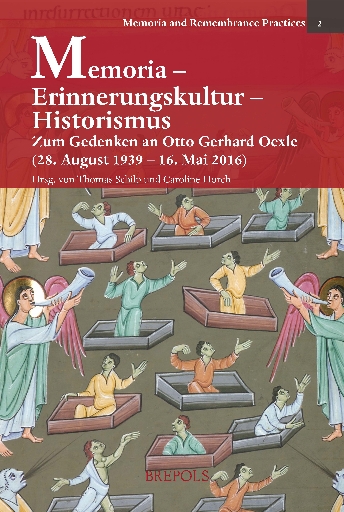
Memoria – Erinnerungskultur – Historismus
Zum Gedenken an Otto Gerhard Oexle (28. August 1939 – 16. Mai 2016)
show More to view fulltext, buy and share links for:Memoria – Erinnerungskultur – Historismus show Less to hide fulltext, buy and share links for: Memoria – Erinnerungskultur – HistorismusZum Gedenken an Person und Wirken von Otto Gerhard Oexle (28. August 1939 - 16. Mai 2016).
Die Erforschung der Erinnerungskultur der vormodernen Gesellschaften Europas ist untrennbar mit Otto Gerhard Oexle, Direktor des Max-Planck-Instituts für Geschichte in Göttingen von 1987 bis 2004, verknüpft: Er hatte das Totengedenken des Ancien Régime als ‘totales soziales Phänomen’ und ‘Memoria’ als Exempel der transdisziplinären Historischen Kulturwissenschaften erkannt und erforscht. Dieser Band vereint Beiträge von Kollegen, Freunden und Schülern, die Themen, Thesen und Anregungen von Otto Gerhard Oexle aufgreifen - erweiternd, vertiefend und fortführend. Der Band führt einen Nachruf mit Beiträgen zusammen: eine ‘Schülerbiographie’ in Auseinandersetzung mit Otto Gerhard Oexle, zu Stiftung und Memoria in universalhistorischer Perspektive, über Memoria in textilen Schenkungen des Früh- und Hochmittelalters, zu Deutungsschemata der ‘mittelalterlichen Gesellschaft’ in Weltgerichtsbildern, über Stadtbau und Memoria im Italien des 15. und 16. Jahrhunderts, zu Ernst Robert Curtius und den Mittelalterbildern des 20. Jahrhunderts, zum Historismus, über das Gesetz vom Sinai in literarischen Verarbeitungen, bis hin zur Kultur der Erinnerung an die verfolgten und ermordeten Juden in den Niederlanden unter dem NS-Regime.
-
-
-
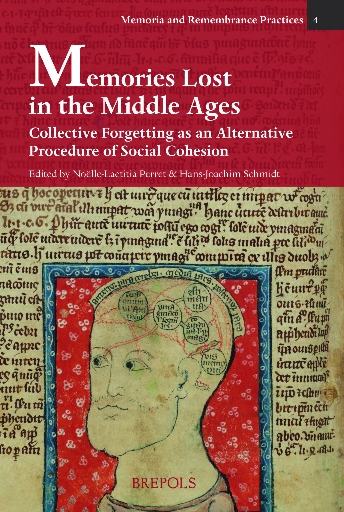
Memories Lost in the Middle Ages: Collective Forgetting as an Alternative Procedure of Social Cohesion/L’oubli collectif au Moyen Âge: Un autre processus constitutif de la cohésion sociale
show More to view fulltext, buy and share links for:Memories Lost in the Middle Ages: Collective Forgetting as an Alternative Procedure of Social Cohesion/L’oubli collectif au Moyen Âge: Un autre processus constitutif de la cohésion sociale show Less to hide fulltext, buy and share links for: Memories Lost in the Middle Ages: Collective Forgetting as an Alternative Procedure of Social Cohesion/L’oubli collectif au Moyen Âge: Un autre processus constitutif de la cohésion socialeThe aim of this book is to examine the social, political and cultural consequences of ‘collective forgetting’ in the Middle Ages. Since the seminal work of Maurice Halbwachs, historical research has focused on ‘collective memory’ as the basis of social cohesion. Jan Assmann has introduced the slightly different concept of ‘cultural memory’, which he sees as a constitutive condition of political organisations and their stabilisation. Drawing on this Assmannian concept, this book examines this other process of ‘collective forgetting’.
Cet ouvrage ambitionne d’examiner les conséquences sociales, politiques et culturelles de « l’oubli collectif » au Moyen Âge. Depuis les études fondatrices de Maurice Halbwachs, la recherche historique s’est intéressée à la « mémoire collective » en tant que fondement de la cohésion sociale. Jan Assmann a introduit le concept légèrement différent de « mémoire culturelle », condition constitutive selon lui des organisations politiques et de leur stabilisation. Tout en s’appuyant sur ce concept assmannien, cet ouvrage propose d’étudier cet autre processus que constitue « l’oubli collectif ».
-
-
-
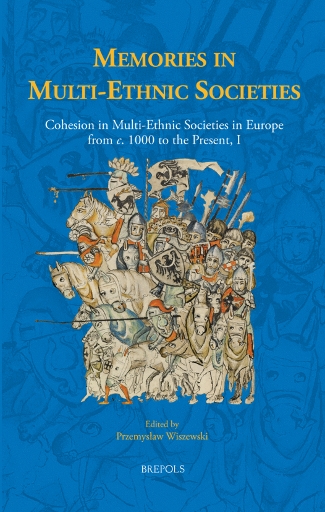
Memories in Multi-Ethnic Societies
Cohesion in Multi-Ethnic Societies in Europe from c. 1000 to the Present, I
show More to view fulltext, buy and share links for:Memories in Multi-Ethnic Societies show Less to hide fulltext, buy and share links for: Memories in Multi-Ethnic SocietiesThe three-volume project Cohesion in Multi-Ethnic Societies in Europe from c. 1000 to the Present explores and seeks to find solutions to a crucial problem facing contemporary Europe: in what circumstances can different ethnic groups co-operate for the common good? They apparently did so in the past, combining to form political societies, medieval and early modern duchies, kingdoms, and empires. But did they maintain their ethnic traditions in this process? Did they pass on elements of their cultural memory when they were not in a dominant position in a given polity?
This first volume of the project focuses on the cohesive function of memory, tradition, and identity politics in multi-ethnic societies. Featuring chapters written by authors from Southern, Central, and Eastern Europe, it presents sixteen case studies of the co-habitation or co-operation of different ethnic groups from the so-called ‘peripheries’ of medieval and early modern Europe that resulted in peaceful acculturation or the birth of a new identity on the basis of multi-ethnic political society. The volume suggests that ethnic identities were consciously accepted as one among various forms of identity that were possessed by social groups: they were rarely absolutized, and members of these groups preferred pragmatic approaches in their relations with other ethnicities.
-
-
-

Memory and Recollection in the Aristotelian Tradition
Essays on the Reception of Aristotle’s De memoria et reminiscentia
show More to view fulltext, buy and share links for:Memory and Recollection in the Aristotelian Tradition show Less to hide fulltext, buy and share links for: Memory and Recollection in the Aristotelian TraditionAristotle’s De memoria et reminiscentia (‘On Memory and Recollection’) is the oldest surviving systematic study of the nature of human memory. Forming part of Aristotle’s other minor writings on psychology that were intended as a supplement to his De anima (‘On the Soul’) and known under the collective title Parva naturalia, Aristotle’s De memoria et reminiscentia gave rise to a vast number of commentaries in the Middle Ages. The present volume offers new knowledge on the ancient and medieval understanding of Aristotle’s theories on memory and recollection across the linguistic borders and philosophical traditions in the Byzantine Greek, Latin, and Arabic reception.
-
-
-
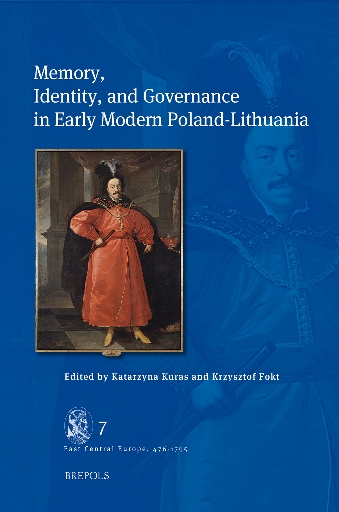
Memory, Identity, and Governance in Early Modern Poland‑Lithuania
show More to view fulltext, buy and share links for:Memory, Identity, and Governance in Early Modern Poland‑Lithuania show Less to hide fulltext, buy and share links for: Memory, Identity, and Governance in Early Modern Poland‑LithuaniaIn the early modern period, Poland–Lithuania stood as a realm where the echoes of a storied past intertwined with the ambitions of a dynamic present. This volume illuminates how its diverse populace navigated the complexities of their shared heritage, weaving tradition with innovation to craft a uniquely multi-layered identity. The essays presented here examine the dual nature of historical inheritance in this vast polity. On the one hand, the past served as a treasure trove of enduring ideas, compelling narratives, and time-tested practices that enriched cultural and political life. On the other, it posed formidable challenges, requiring creative adaptation to meet the demands of changing times. By exploring established narratives, performative traditions, and historical frameworks, the contributors uncover the intricate ways in which memory influenced decision-making and societal evolution. They reveal how the past was neither static nor simply an obstacle, but was an active force that shaped contemporary aspirations and inspired visions of the future. Through the lenses of rulers, nobles, intellectuals, and commoners, this collection offers fresh perspectives on how the people of Poland–Lithuania harnessed the power of history to craft a legacy that transcended their era. Essential reading for scholars and enthusiasts alike, this work examines the enduring dialogue between memory and identity in one of Europe’s most compelling early modern states.
-
-
-
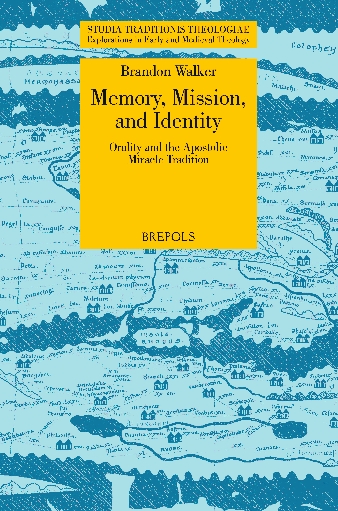
Memory, Mission, and Identity
Orality and the Apostolic Miracle Tradition
show More to view fulltext, buy and share links for:Memory, Mission, and Identity show Less to hide fulltext, buy and share links for: Memory, Mission, and IdentityThis book uses social memory theory to evaluate the miracle stories of Peter and Paul in three second-century texts: canonical Acts, the Acts of Peter and the Acts of Paul. Far from negligible to the spread of early Christianity, the memory of Jesus' miracles and those related to apostles Peter and Paul were important for establishing early Christian identity and promoted discipleship. The memory of miracles of Peter and Paul were retained and developed in an effort to promote imitation of Jesus in second-century Christian communities.
-
-
-
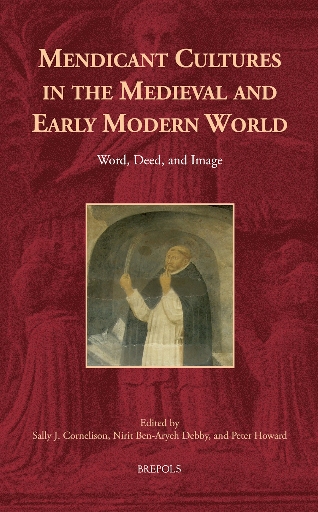
Mendicant Cultures in the Medieval and Early Modern World
Word, Deed, and Image
show More to view fulltext, buy and share links for:Mendicant Cultures in the Medieval and Early Modern World show Less to hide fulltext, buy and share links for: Mendicant Cultures in the Medieval and Early Modern WorldThe eleven interdisciplinary essays that comprise this book complement and expand upon a significant body of literature on the history of the Franciscan and Dominican orders during the later Middle Ages and the early modern period. They elucidate and examine the ways in which mendicant friars established, sustained, and transformed their institutional identities and shaped the devotional experiences of the faithful to whom they ministered via verbal and visual culture. Taking primary texts and images as their point of departure, these essays break new scholarly ground by revising previous assumptions regarding mendicant life and actions and analysing sites, works of art, and texts that either have been neglected in the existing literature or that have not been examined through the lens of current methodologies such as sermon studies, ritual, gender, and cross-cultural interactions. Indeed, the varied methods and subjects of these essays demonstrate there is still much to be learned about the mendicant orders and the ways and spaces in which they operated and presented themselves on the local, regional, and global stages.
-
-
-
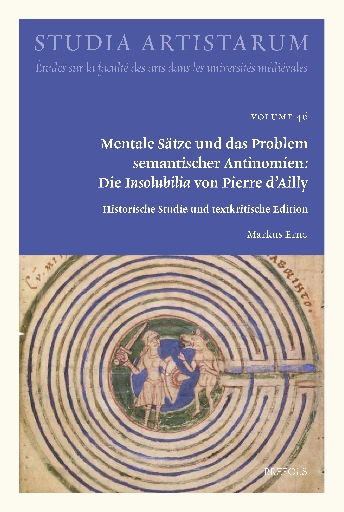
Mentale Sätze und das Problem semantischer Antinomien: Die Insolubilia von Pierre d’Ailly
Historische Studie und textkritische Edition
show More to view fulltext, buy and share links for:Mentale Sätze und das Problem semantischer Antinomien: Die Insolubilia von Pierre d’Ailly show Less to hide fulltext, buy and share links for: Mentale Sätze und das Problem semantischer Antinomien: Die Insolubilia von Pierre d’AillyPierre d’Aillys Insolubilia, verfasst um 1372 an der Universität von Paris, sind ein wichtiges Zeugnis in der Geschichte der Logik und Philosophie des späten Mittelalters. Sie erfreuten sich bereits eine Generation nach ihrer Entstehung aufgrund ihres klaren Stils großer Beliebtheit bei zeitgenössischen Autoren und stießen noch über das 15. Jahrhundert hinaus auf reges Interesse. Ihr Thema - semantische Antinomien wie die berühmte Antinomie des Lügners - wurde seit dem späten 12. Jahrhundert für mehr als drei Jahrhunderte an den Artes-Fakultäten kontrovers diskutiert, eine reich überlieferte Insolubilia-Literatur entstand. Indem Antinomien wie der „Lügner“ mit dem aristotelischen Gesetz vom Widerspruch in Konflikt stehen, fordern sie die traditionelle Logik in einem ihrer wichtigsten Prinzipien heraus. Die sophismatische Disputation solcher Non-Standard-Materialien führte so zur Analyse der fundamentalen Begriffe des Satzes, der Wahrheit und der Bedeutung. Abhandlungen wie die Insolubilia Pierre d’Aillys geben damit einen Einblick in die zur Zeit des Autors vertretenen Positionen zum Verhältnis von Sprache, Geist und Wirklichkeit. Die vorliegende Edition ist die erste moderne, textkritische Edition der Insolubilia und basiert auf Grundlage aller Zeugen des Textes. Sie bietet dem heutigen Leser erstmals einen zuverlässigen und authentischen Text des Traktats.
-
-
-
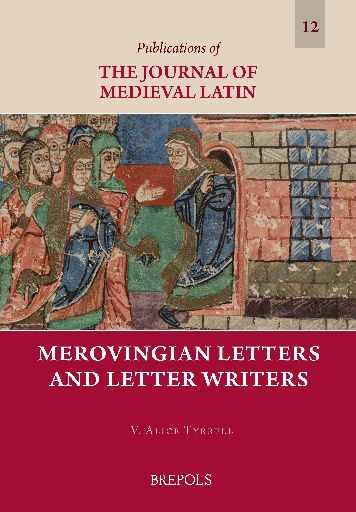
Merovingian Letters and Letter Writers
show More to view fulltext, buy and share links for:Merovingian Letters and Letter Writers show Less to hide fulltext, buy and share links for: Merovingian Letters and Letter WritersPrimary sources from the Frankish kingdom during the Merovingian era (ca. 500-750) are few and far between. This volume is a survey of more than 600 Latin letters, selected by the author, that were exchanged between persons in Gaul during that time period. Many are almost entirely unknown and have never been translated into any modern language. While most of the letters were authored by clerics and highly-placed laymen, a small but significant number was composed by women, both religious and lay.
For elite individuals, letter networks were the social media of their day. Letters were written to maintain the bonds of friendship, to seek or extend patronage and political alliance, to instruct, rebuke, defend, console, and recommend. Many have come down to us in collections; others are strays embedded in other texts or deperdita that come to light only in the replies of others.
This book is a valuable tool for scholars and students alike. In seven readable chapters, the author discusses numerous aspects of the letters and explores how they fit with, and enlarge upon, the better-known sources of the period such as the works of Gregory of Tours, Fredegar, the anonymous History of the Franks (LHF), and various saints’ vitae. An appendix containing a summary of each letter in translation renders these texts more readily accessible to the English speaker.
-
-
-
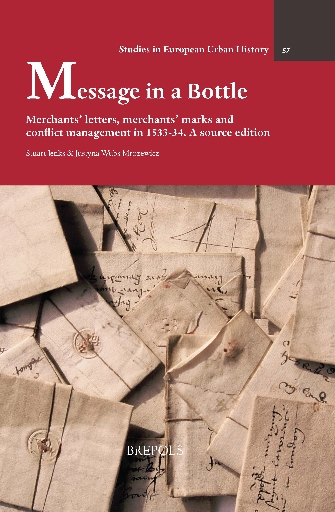
Message in a Bottle
Merchants' letters, merchants' marks and conflict management in 1533-34. A source edition
show More to view fulltext, buy and share links for:Message in a Bottle show Less to hide fulltext, buy and share links for: Message in a BottleIn 1533, a batch of merchant letters was to be delivered from Antwerp to London. They never reached their destination, and were only opened in a Hanseatic archive almost 500 years later. Like a message in a bottle, the letters unfold unknown individual stories and large-scale drama. They offer a fascinating glimpse into the world of the early 16th century, from hard-nosed business and prices in code sent to a wife, to the fond greetings of an English father to his three young sons or a secretive message of a grandmother from Antwerp. At the backdrop, war was looming: the letters were part of a booty taken in the English Channel in August of 1533. Lübeck privateers plundered six neutral ships, carting the goods of English, Dutch, Spanish, Venetian and Hanseatic merchants off to Lübeck and Hamburg. As a result, Henry VIII of England exploded with rage and restitution claims were made. Soon after, Lübeck realized the potential political cost of the action and an administrative machinery for the return of the booty was set in motion. Extensive documentation was produced under the eye of notaries, providing an overview of properties of the involved parties, including many merchant marks.
The combination of unique letters and administrative documents offers new openings into the study of economic, political and social history of pre-modern northern Europe. Highlights are the migration of people and goods, resourceful conflict management and the voice of ordinary people, captured in their letters.
-
-
-
Messages de pierre
La lecture des inscriptions dans la communication médiévale (XIIIe-XIVe siècle)
show More to view fulltext, buy and share links for:Messages de pierre show Less to hide fulltext, buy and share links for: Messages de pierreLa culture écrite médiévale se caractérise par la diversité et l’originalité de ses formes et de ses fonctions. Au sein de cet éventail très large des pratiques de l’écriture, les inscriptions tracées sur la pierre, le bois, le verre ou le métal dans le but de communiquer un message pour la plus longue durée occupent une place particulière bien qu’encore assez mal définie aujourd’hui. Née en France à la fin des années 1960, l’épigraphie médiévale s’est jusqu’à présent principalement attachée au texte de l’inscription et à son contenu, en étudiant la forme des lettres, les sources de la composition et les informations transmises par le document.
Si elles ont permis des avancées considérables dans la connaissance des formes de l’écriture épigraphique, ces études, en se concentrant sur le contenu du texte, ont isolé le document de sa fonction réelle dans la communication médiévale. Le public des inscriptions, la façon dont il appréhende, par les sens et par l’esprit, le texte vu dans le paysage graphique quotidien, et l’utilisation qu’il peut en faire échappent encore pour beaucoup à la connaissance du médiéviste. C’est en posant l’inscription au cœur du système culturel médiéval et en essayant de déterminer sa place effective dans la transmission des informations que ce livre entend discuter la réalité de la fonction publicitaire du texte épigraphique et déterminer les modalités de lecture, de compréhension et d’utilisation de l’écriture exposée. Au tournant des xiii e-xiv e siècles, alors que se met en place une nouvelle culture écrite, définie par une diffusion plus profonde du texte dans la société médiévale, l’inscription devient un élément incontournable dans la ville et y joue des rôles très différents (affichage des décisions, commémoration des événements, structuration des espaces, affirmation des autorités) qui constituent autant d’occasions pour le public d’exercer sa familiarité avec l’écriture et de s’affirmer en tant que lecteur potentiel.
Docteur en histoire médiévale, ingénieur de recherche au CNRS spécialisé en analyse des sources anciennes et membre du Centre d’études supérieures de civilisation médiévale de Poitiers, Vincent Debiais est l’auteur depuis 2005 du Corpus des inscriptions de la France médiévale et participe aux activités de recherche du CESCM sur la culture écrite au Moyen Âge.
-
-
-
Metal Finds and Coins
Final Publications from the Danish-German Jerash Northwest Quarter Project II
show More to view fulltext, buy and share links for:Metal Finds and Coins show Less to hide fulltext, buy and share links for: Metal Finds and CoinsThe Decapolis city of Jerash has long attracted attention from both travellers and scholars, due both to the longevity of the site, and the remarkable finds uncovered during successive phases of excavation that have taken place from 1902 onwards. Between 2011 and 2016, a Danish-German team, led by the universities of Aarhus and Münster, focused their attention on the Northwest Quarter of Jerash - the highest point within the walled city - and this volume is the second in a series of books presenting the team’s final results.
This volume offers an in-depth analysis of the coins and metal remains found in Jerash during the excavations. The contributions gathered here cover the small metal finds from the Northwest Quarter, as well as examining Greek, Roman, Byzantine, and Islamic coins.
-
-
-
Metalogicon
show More to view fulltext, buy and share links for:Metalogicon show Less to hide fulltext, buy and share links for: MetalogiconJohn of Salisbury has long been celebrated as one of the foremost humanists of the twelfth-century renaissance, an erudite correspondent, legal expert, historian, poet, diplomat and political thinker, and clerk to two successive archbishops of Canterbury, Theobald and Thomas Becket. His Metalogicon, ostensibly a defence of the role of logic and of Aristotle’s Organon in the educational syllabus of the day, makes a powerful argument for an educational system of real practical utility for society, one whose intellectual coherence and rigour should underpin political morality and rational governance. As such, it has been seen to stand alongside the more famous Policraticus as an integral part of the intellectual contribution of one of Europe’s great political theorists. Based on John’s own experiences as a student and a teacher, the treatise offers unique evidence of the educational system of twelfth-century Paris at a critical stage in the early development of the schools, and of the earliest reception of the Aristotelian texts of the ‘new logic’. It is also an important contribution to the tradition of pedagogical and educational thought, with its unique attention to teaching methods and its belief in the purpose of education both for the formation of the person and for the good of society. The treatise has been accorded an important place in many modern scholarly debates, including those on the origins of the universities, on medieval philosophy and on medieval humanism. This new translation is based on the edition of J.B. Hall, auxiliata K.S.B. Keats-Rohan, which appeared in Corpus Christianorum Continuatio Mediaeualis as Iohannes Saresberiensis - Metalogicon (CCCM 98), and so makes available to the student and general reader for the first time a translation of a text of this important work established on modern critical principles. References to the corresponding pages of the Corpus Christianorum edition are provided in the margins of this translation.
Professor J.B. Hall is Hildred Carlile Professor of Latin Emeritus, University of London. Apart from John of Salisbury, he has published books on the textual criticism of Claudian, Ovid and Statius.
Dr Julian P. Haseldine is Senior Lecturer in Medieval History at the University of Hull. He has edited the letters of Peter of Celle and published widely on medieval friendship and friendship networks.
-
-
-
Metamorphoses
Tracing the Translator in the Long Eighteenth Century, 1660–1830
show More to view fulltext, buy and share links for:Metamorphoses show Less to hide fulltext, buy and share links for: MetamorphosesTranslators are crucial to the constitution, dissemination, and adaptation of literatures, cultures, and ideas. However, their presence in the historical record often proves difficult to recognise or retrace. This volume places front and centre this key problem for historians of translation, as well as for historians of literature, culture, and ideas. It sheds new light on the much-debated (in)visibility of historical translators by investigating in what contexts and through what strategies translators sought to render themselves either (in)visible, and how critics and scholars can now trace these efforts. When and how does the visible metamorphose into the invisible, and vice versa?
The volume focuses on the long eighteenth century, a period which witnesses a metamorphosis in literature and culture that tells powerfully on translators. From relatively visible cultural actors, they are reduced to enforced invisibility as cultural products stabilised their meanings around singular authors. Tracing this shift across a swathe of products and practices, the book conducts its investigations across a range of genres, ranging from radical politics over philosophy to opera; taking in languages and cultures across Western Europe.
Chapters employ case studies to develop methodological and theoretical models that will empower scholars of translation history to recover translators, both from the direct evidence of their work and from the networks and tools that supported them.
-
-
-
Metaphrasis in Byzantine Literature
show More to view fulltext, buy and share links for:Metaphrasis in Byzantine Literature show Less to hide fulltext, buy and share links for: Metaphrasis in Byzantine LiteratureThroughout the centuries Byzantium's ambitious authors were conscious of the significance of literary registers for the reception of their texts. They deliberately made use of stylistic elements or refrained from using certain features in order to reach their target audience. There are certain groups of texts dating from various periods where these stylistic elements can be tracked precisely by comparison of two or even more versions with their model text. Such examples of rewriting can be found particularly within genres with a broader audience appeal, namely hagiography and historiography. It is in both genres that we encounter metaphrastic processes, in terms of stylistic elaboration and in terms of stylistic simplification.
As well as stylistic reshaping, metaphrasis may also encompass the addition or removal of literary and/or thematic aspects. All these processes signify intent as well as authorial interpretation. Frequently, the ideological orientation of a text is refurbished through rewriting. Teasing out these strands for exploration helps to supply a potential wealth of information on the author (if known), cultural (social, religious, historical) context, and creative ability, as well as levels of education and literacy.
-
-
-
Metaphysics in the Twelfth Century
On the Relationship among Philosophy, Science and Theology
show More to view fulltext, buy and share links for:Metaphysics in the Twelfth Century show Less to hide fulltext, buy and share links for: Metaphysics in the Twelfth CenturyAlthough metaphysics as a discipline can hardly be separated from Aristotle and his works, the questions it raises were certainly known to authors even before the reception of Aristotle in the thirteenth century. Even without the explicit use of this term the twelfth century manifested a strong interest in metaphysical questions under the guise of “natural philosophy” or “divine science”, leading M.-D. Chenu to coin the expression of a twelfth century “éveil métaphysique”. In their commentaries on Boethius and under the influence of Neoplatonism, twelfth century authors not only anticipate essential elements of thirteenth century metaphysics, they also make an original contribution to the history of metaphysics by attempting to integrate the theory of first principles, philosophical theology and ontology. This volume presents and examines the contributions of the twelfth century to metaphysics made by selected Jewish, Christian and Muslim authors of the Iberian Peninsula and Francia.
-
-
-
Metropolitan Museum Journal
show More to view fulltext, buy and share links for:Metropolitan Museum Journal show Less to hide fulltext, buy and share links for: Metropolitan Museum JournalThe Metropolitan Museum Journal is issued annually by the Metropolitan Museum of Art. Its purpose is to publish original research on works in the Museum’s collection and the areas of investigation they represent.
-
-
-

Mettre en prose aux XIVe-XVIe siècles
show More to view fulltext, buy and share links for:Mettre en prose aux XIVe-XVIe siècles show Less to hide fulltext, buy and share links for: Mettre en prose aux XIVe-XVIe sièclesLoin de concerner uniquement romans et poèmes épiques — comme le ferait penser l’étude magistrale de Georges Doutrepont (1939) —, le phénomène «mise en prose» a touché aux xiv e-xvi e siècles tous les genres littéraires: vies de saints, œuvres de dérivation biblique, traités de dévotion, nouvelles, pièces de théâtre, voire la traduction en prose française de poèmes antérieurs en langue étrangère. Revisités depuis une trentaine d’années grâce à de nombreuses éditions critiques et à des études surtout littéraires, ces «nouveaux» textes méritaient une réflexion plus articulée: c’est ce qui a fait l’objet du iii e Colloque de l’aiemf (Association Internationale pour l’Étude du Moyen Français), qui s’est tenu à Gargnano del Garda — Università degli Studi di Milano, du 28 au 31 mai 2008. Les contributions réunies ici analysent donc des œuvres très diverses, de trois points de vue: linguistique, philologique, littéraire.
-
-
-
Michele Savonarola y el primer tratado panitaliano de balneis
show More to view fulltext, buy and share links for:Michele Savonarola y el primer tratado panitaliano de balneis show Less to hide fulltext, buy and share links for: Michele Savonarola y el primer tratado panitaliano de balneisEn la Italia del Renacimiento, Michele Savonarola, abuelo del famoso Girolamo, es llamado a la corte de los Este en Ferrara, donde ejercerá como médico de la familia gobernante y como profesor de la universidad de la ciudad. Poco a poco la escritura se convertirá en su principal ocupación, dando lugar a una prolija y variada producción literaria que acoge temas políticos, religiosos, históricos o morales, sin descuidar su principal interés: la medicina. En este ámbito dedica escritos a materias tan dispares como la ginecología o la parasitología, y acoge todos ellos en su obra enciplopédica Practica. Analizamos en el presente trabajo su obra monográfica sobre el termalismo y los baños de Italia, texto fundamental que marca un punto de inflexión en la evolución del género de balneis, al incluir en su estudio de los baños de Italia termas ubicadas en Sicilia y gran parte de la península itálica, desde Padua hasta Nápoles, además de analizar los diversos tipos de baños y la composición química de las aguas mineromedicinales.
-
-
-
Middle English Religious Writing in Practice
Texts, Readers, and Transformations
show More to view fulltext, buy and share links for:Middle English Religious Writing in Practice show Less to hide fulltext, buy and share links for: Middle English Religious Writing in PracticeAlthough the Middle English texts broadly categorized as ‘devotional literature’ have received considerable scholarly attention in recent years, much work remains to be done on the cultural meanings and textual transformations of vernacular religious writing during the later medieval period and into the sixteenth century. During these years, popular (but still little-studied) late medieval works such as the Pore Caitif circulated in varied forms amid changing circumstances: the expansion of audiences for Middle English texts, the emergence and persecution of Lollardy, attempts at ecclesiastical censorship, the advent of printing, and the Henrician Reformation. How did Middle English religious texts answer changing cultural and practical needs and the requirements of orthodoxy? How did older texts find new readers; how did these readers alter and deploy them? This collection capitalizes on widespread current interest in these questions, gathering original essays that analyse the many forms, meanings, and legacies of Middle English religious writing.
-
-
-
Middle and Late Byzantine Poetry: Texts and Contexts
show More to view fulltext, buy and share links for:Middle and Late Byzantine Poetry: Texts and Contexts show Less to hide fulltext, buy and share links for: Middle and Late Byzantine Poetry: Texts and ContextsIt is only in recent years that Byzantine poetry - a long-neglected aspect of Byzantine literature - has attracted the attention of philologists, literary and cultural historians. This holds true especially for the poetry written in middle and late Byzantium.Though many collections of poems are available in modern critical editions, a considerable amount of texts still remains completely unedited or accessible only in outdated and unreliable editions. Moreover, many works of this period have never been studied thoroughly with regard to their cultural impact on society. Issues of authorship and patronage, function, literary motives, generic qualities, and manuscripts still await further study.
This volume aims to take a step to fill this gap. Although it includes studies on poetry from the early tenth to the fifteenth centuries, the main focus is placed on the Komnenian and Palaeologan times. It presents editions of completely unknown texts, such as a twelfth-century cycle of epigrams on John Klimax. It includes studies on various types of poetry, including didactic, occasional, and even poetry written for liturgical purposes. By analysing these works and placing them within their literary and socio-cultural context, we can draw conclusions about the cultural tastes of the Byzantines and acquire a more nuanced picture of middle and late Byzantine poetry.
-
-
-
Midsummer
A Cultural Sub-Text from Chrétien de Troyes to Jean Michel
show More to view fulltext, buy and share links for:Midsummer show Less to hide fulltext, buy and share links for: MidsummerMidsummer was not only a season for purification, it was primarily viewed as a time of change. The moment of the sun's power crisis was used as an analogy for mankind's mid-life crisis and for reversals, or wished-for reversals, in social power-structures. A number of factors combined to make truth-telling, even slander on those in authority, licensed at this season. This volume reveals for the first time the significance of the season for popular tradition, for literature, for theatre, and for civic politics in France and the Low Countries. And the new evidence, on which it is based, shows that subversion was inherent at the feast of St John's Nativity three centuries before it became associated with Carnival.
Sandra Billington is a Reader at the Department of Theatre, Film and Television Studies at the University of Glasgow.
-
-
-
Migrations of Concepts
From Philosophical Text to Scene
show More to view fulltext, buy and share links for:Migrations of Concepts show Less to hide fulltext, buy and share links for: Migrations of ConceptsMigrations of Concepts brings together the results of an experimental research on the migration of philosophical concepts into the languages of the arts. The monograph explores the intersection of philosophy, literature and art and presents a theoretical-performative investigation on the transposition of philosophical contents into theatrical and musical performance. Starting with Giambattista Vico and Samuel Beckett, a first part elaborates the paradigm of the ‘Disbelonging’ of the I – which is the condition of the I who realizes that it is both its own and foreign at the same time –, shows how this is transposed into the language of sounds, and reflects on the significance of public performance of a philosophical work. The second and third parts further explore the transposition of philosophical thought into art by presenting the theatrical performances written and directed by the author. More specifically, the book contains the text of two theatre readings on Vico and Gorgia, and the libretto of two melologues dedicated to Hegel and the Prince of Sansevero, with the corresponding scores of music composed by Rosalba Quindici. By exploring the boundaries of adaptation studies this monograph radically proposes a new and innovative way to study and communicate philosophical concepts.
-
-
-
Mind Matters
Studies of Medieval and Early Modern Intellectual History in Honour of Marcia Colish
show More to view fulltext, buy and share links for:Mind Matters show Less to hide fulltext, buy and share links for: Mind MattersMarcia Colish is one of the most influential scholars of the history of medieval and early modern thought, the author of numerous books and scores of articles in the field, as well as a pioneering President of the Medieval Academy of America. This volume honours her accomplishments with papers by her many colleagues, friends, and former students, who are themselves prominent scholars from across a range of disciplines. The chapters are diverse chronologically and topically, yet they are all stimulated by themes that Prof. Colish has explored during her long and distinguished career. They address the richness of European intellectual history between the twelfth and the sixteenth centuries, treating the multiple heritages of philosophy, theology, political theory, historiography, classical reception, and many other subjects to which her scholarship extends. The volume demonstrates the power of ideas in the development of European history generally, revealing that the careful study of the works of the ‘mind’ does indeed ‘matter’.
-
-
-
Ministerium sermonis.
Philological, Historical and Theological Studies on Augustine's Sermones ad Populum
show More to view fulltext, buy and share links for:Ministerium sermonis. show Less to hide fulltext, buy and share links for: Ministerium sermonis.The Sermones ad populum are a part of Augustine’s work that, especially in its relation to the rest of the Augustinian corpus, deserves more attention. Frequently studied topics are the transmission of the sermons, the bishop’s homiletic methodology, his use of Scripture and classical rhetoric, his view on the episcopate, his theology of proclamation and his opinions about the cult of the martyrs. Augustine’s sermons also serve as an invaluable source for the study of the North African Church and its liturgical practices at the end of the fourth and the beginning of the fifth century. The dating and the chronology of the sermons have likewise been the object of many publications. As a matter of fact, they are still much debated.
On May 29-31, 2008, the research units History of Church and Theology and Literary Studies: Latin Literature of the Katholieke Universiteit Leuven organized an international conference on Augustine’s Sermones ad populum in collaboration with the Scientific Committee of the Series Latina of Corpus Christianorum (Brepols Publishers), the Revue bénédictine (Maredsous) and the Augustinian Historical Institute (Heverlee). The conference was intended to bring together scholars who have recently made important contributions to the study of Augustine’s work in general and his preaching in particular, as well as specialists in the field of Early Christian homiletics.
This volume elaborates the contributions presented during the conference and includes articles by I. Bochet, P.-M. Bogaert, L. De Coninck, R. Dodaro, V.H. Drecoll, H. Drobner, A. Dupont, M. Lamberigts, G. Partoens, E. Rebillard, P. Tombeur, P. Van Geest, H. Van Oort, D. Weber, C. Weidmann, J. Yates.
-
-
-
Minni and Muninn
Memory in Medieval Nordic Culture
show More to view fulltext, buy and share links for:Minni and Muninn show Less to hide fulltext, buy and share links for: Minni and MuninnIn recent years, various branches of memory studies have provided useful tools of analysis that offer new ways of understanding medieval cultures. The articles in this collection draw on these new theoretical tools for studying - and conceptualizing - memory, in order to reassess the function of memory in medieval Nordic culture. Despite its interdisciplinary and comparative basis, the volume remains very much an empirical study of memory and memory-dependent issues as these took form in the Nordic world.
In addition, the articles deal with a variety of theoretical concepts and areas of investigation which are of relevance when dealing with memory studies in general, such as transmission and media, preservation and storage, forgetting and erasure, and authenticity and falsity. The articles cover a wide range of medieval texts, such as saga, myth, poetry, law, historiography, learned literature, and other forms of verbal expression, such as runic inscriptions.
-
-
-
Minorities in Contact in the Medieval Mediterranean
show More to view fulltext, buy and share links for:Minorities in Contact in the Medieval Mediterranean show Less to hide fulltext, buy and share links for: Minorities in Contact in the Medieval MediterraneanWhat is a minority? How did members of minority groups in the medieval Mediterranean world interact with contemporaries belonging to other groups? In what ways did those contacts affect their social positions and identities? The essays collected in this volume approach these questions from a variety of angles, examining polemic, social norms, economic exchange, linguistic transformations, and power dynamics.
These essays recast the concept of minority - as a mutable condition rather than a fixed group designation - and explore previously-neglected collective and individual interactions between and among minorities around the medieval Mediterranean basin. Minorities are often defined as such because they were in some way excluded from access to resources or denied participation as a consequence of a group affiliation or facet of their identity. Yet, at times their distinctiveness also lay less in their exclusion than in particular ways of relating to spheres of power, whether political or moral, and in certain dissenting conceptions of the world. Through these contributions we shed light on both the continuities that such interactions displayed across intervals of space and time, and the changes that they underwent in particular locales and historical moments.
-
-
-
Miracle et Karama. Hagiographies médiévales comparées
show More to view fulltext, buy and share links for:Miracle et Karama. Hagiographies médiévales comparées show Less to hide fulltext, buy and share links for: Miracle et Karama. Hagiographies médiévales comparéesLa reconnaissance du miracle suscita des discussions théologiques dans le christianisme comme dans l’islam. Mais alors qu’une pratique du miracle sur les tombes des saints chrétiens est attestée par les collections de Miracula, la littérature hagiographique musulmane reste généralement sobre en la matière, même lorsqu’il s’agit de saints réputés pour leurs charismes. Les articles de ce volume tentent de déterminer les raisons de ces réticences et leurs rapports avec les circonstances historiques.
Bien que de nombreux miracles soient rapportés dans les Traditions, le Prophète de l’islam ne se signale pas par des miracles spectaculaires, contrairement à Jésus, considéré comme le thaumaturge par excellence. En revanche, Muhammad, recevant la révélation coranique à travers l’archange Gabriel, a été sujet à de multiples visions. Ce contraste entre les modèles, posés par les fondateurs respectifs de l’islam et du christianisme, pourrait expliquer que les miracles, dans l’hagiographie musulmane, soient plutôt constitués d’apparitions, de rêves ou de pouvoir d’ordre initiatique, alors que les miracles à dominante thaumaturgique abondent dans les Vies des saints chétiens.
L’étude des miracles conduit enfin à des comparaisons intéressantes entre christianisme et islam. La proportion entre miracles in vita et post mortem (tombeaux, reliques, images) semble constituer une différence majeure entre les deux religions, tandis que le recensement et la comparaison des topoi mènent à des rapprochements féconds, étant entendu que ces topoi peuvent être réinterprétés à chaque époque.
-
-
-
Miracles in Medieval Canonization Processes
Structures, Functions, and Methodologies
show More to view fulltext, buy and share links for:Miracles in Medieval Canonization Processes show Less to hide fulltext, buy and share links for: Miracles in Medieval Canonization ProcessesWhen a beneficiary or an eye-witness to a miracle met a scribe at a saint’s shrine or a notary at a canonization hearing, it was necessary to establish that the experience was miraculous. Later, the same incident may have been re-told by the clergy; this time the narration needed to entertain the audience yet also to contain a didactic message of divine grace. If the case was eventually scrutinized at the papal Curia, the narration and deposition had to fulfil the requirements of both theology and canon law in order to be successful. Miracle narrations had many functions, and they intersected various levels of medieval society and culture; this affected the structure of a collection and individual narration as well as the chosen rhetoric.
This book offers a comprehensive methodological analysis of the structure and functions of medieval miracle collections and canonization processes as well as working-tools for reading these sources. By analysing typologies of miracles, stages of composition, as well as rhetorical elements of narrations and depositions, the entertaining, didactic, and judicial aspects of miracle narrations are elucidated while the communal and individual elements are also scrutinized.
-
-
-
Miroirs Arthuriens entre images et mirages
Actes du xxiv e Congrès de la Société Internationale Arthurienne
show More to view fulltext, buy and share links for:Miroirs Arthuriens entre images et mirages show Less to hide fulltext, buy and share links for: Miroirs Arthuriens entre images et miragesCe volume, issu des travaux du XXIVe Congrès de la Société Internationale Arthurienne, réunit les derniers acquis de la recherche sur les romans arthuriens et leur réception au fil du temps. Organisées en fonction des axes thématiques du Congrès, les contributions apportent du nouveau au sujet des manuscrits arthuriens et de leurs impressionnants programmes iconographiques, suivant un mélange fascinant de philologie et histoire de l’art. Les interférences des motifs arthuriens, qui font en grande partie la richesse de ces textes, occupent aussi une place importante de même qu’elles préoccupent les médiévistes depuis quelques années. L’anthropologie culturelle n’est pas négligée non plus : des interventions sur les identités arthuriennes ainsi que sur les enjeux politiques de ces romans tellement de fois récupérés par les royautés européennes en guise de modèles rappellent l’universalité de l’arthurianisme qui fascine des milliers de lecteurs et auditeurs à travers le temps. Ceci explique également la riche réception des textes médiévaux, adaptés aussi bien à la modernité qu’à la période contemporaine. En somme, traitant des périodes variées ainsi que des espaces géopolitiques des plus divers, les articles réunis dans ce volume forment un beau bouquet arthurien mélangeant des réflexions les plus savantes aux contes de fées et aux couleurs d’antan.
-
-
-
Mirrors of Revolution
Conflict and Political Identity in Early Modern Europe
show More to view fulltext, buy and share links for:Mirrors of Revolution show Less to hide fulltext, buy and share links for: Mirrors of RevolutionFrom the English Civil War to the Fronde, from Masaniello to Robespierre, this book is one of the first attempts to create a European, transnational approach to the problems of the early modern age. It proposes a detailed reconstruction of the main interpretative tendencies that have developed around the English Civil War, the French Revolution, the so-called ‘Seventeenth-Century Crisis’: the Fronde and the Neapolitan revolt of Masaniello. And yet, Mirrors of Revolution agrees with neither the traditional social interpretations of the causes of revolt, nor with revisionist approaches that privilege the influence of discursive registers. Instead, it proposes an original interpretation of revolution based on the concept of political identity. In the terms of this analysis, revolutions do not reveal previously hidden social groups. Rather, revolutions become the central ground upon which new identities coalesce. With its usage of the Fronde and Masaniello as case-studies for extensive investigation, Mirrors of Revolution outlines a challenging and exciting reformulation of the concept, and causes, of revolution.
-
-
-
Miscellaneous Objects
Final Publications from the Danish-German Jerash Northwest Quarter Project VI
show More to view fulltext, buy and share links for:Miscellaneous Objects show Less to hide fulltext, buy and share links for: Miscellaneous ObjectsThe Decapolis city of Jerash has long attracted attention from travellers and scholars, due both to the longevity of the site and the remarkable finds uncovered during successive phases of excavation that have taken place from 1902 onwards. Between 2011 and 2016, a Danish-German team, led by the universities of Aarhus and Münster, focused their attention on the Northwest Quarter of Jerash — the highest point within the walled city — and this volume is the sixth in a series of books presenting the team’s final results.
In this volume, a wide range of miscellaneous items discovered in the Northwest Quarter are presented, ranging from prehistoric lithics to Ottoman pipes. Material finds covered include stone sculpture, utensils, and inscriptions, as well as bone objects, spindle whorls, and bread stamps, while some scientific analyses of jewellery and terracotta figurines complement the studies. These chapters ensure that all finds from the Northwest Quarter — no matter how small — are made available to researchers, with the contributions gathered here offering unique new insights into the material groups from Gerasa, later Jerash, and into the lives of the population of the city from a longue durée perspective.
-
-
-
Mises en scène et mémoires de la consécration de l’église dans l’Occident médiéval
show More to view fulltext, buy and share links for:Mises en scène et mémoires de la consécration de l’église dans l’Occident médiéval show Less to hide fulltext, buy and share links for: Mises en scène et mémoires de la consécration de l’église dans l’Occident médiévalLe déroulement de la consécration ou dédicace d’une église est codifié dans l’Église latine aux vii e et viii e siècles pour devenir, au Moyen Âge central, un rituel fastueux. La consécration apparaît alors comme l’acte fondateur d’un nouvel espace-temps polarisé par le bâtiment ecclésial. Les paroles prononcées et les gestes effectués lors du rituel contribuent à manifester cette nouvelle naissance et les transformations qu’elle implique. Les mesures prises pour en conserver le souvenir inscrivent l’événement dans la mémoire de la communauté liée au lieu consacré.
Œuvre commune d’un groupe d’historiens, d’historiens de l’art et d’archéologues médiévistes, le présent ouvrage propose une réflexion sur les implications sociales de la consécration de l’église au Moyen Âge central. Il s’agit tout d’abord de comprendre la dynamique du rituel et ses effets sociaux, en étudiant les déplacements des protagonistes, les gestes des célébrants, tant furtifs (bénédictions, signes de croix, onctions) que durables (marquages au sol ou sur les murs), les paroles prononcées, la musique, les chants et les odeurs qui plongent le rituel dans une atmosphère multi-sensorielle. Il s’agit ensuite d’examiner les conditions de production d’un commentaire normatif et exégétique sur la consécration, tant en amont qu’en aval de la célébration, et de comprendre les liens qui unissent ces différents modes de discours sur le rituel. Il s’agit enfin de comprendre les formes et les effets sociaux des narrations de l’événement-consécration, tant par le verbe (de la notice à la chronique) que par l’inscription monumentale et l’image peinte ou sculptée. Ces trois axes de la réflexion sont envisagés de manière croisée et complémentaire.
Les auteurs ayant contribué à cet ouvrage sont implantés dans des structures universitaires ou de recherche en France, Suisse, Belgique, Canada et États-Unis.
-
-
-
Missionnaires et églises en Afrique et à Madagascar (XIXe-XXe siècles)
show More to view fulltext, buy and share links for:Missionnaires et églises en Afrique et à Madagascar (XIXe-XXe siècles) show Less to hide fulltext, buy and share links for: Missionnaires et églises en Afrique et à Madagascar (XIXe-XXe siècles)L’Afrique et Madagascar ont été, aux xix e et xx e siècles, un continent parcouru en tous sens par des missionnaires, catholiques comme protestants. Ils ont laissé beaucoup de témoignages. Cette anthologie réunit des documents inédits - souvent à usage interne - qui permettent de revivre un certain nombre de faits saillants de leurs actions, ordinaires ou extra-ordinaires. La variété des textes et des illustrations emmène le lecteur du Maghreb à l’Afrique du Sud ou du Sénégal à la Tanzanie voire aux Congos ou en Zambie, du Burkina Faso à Madagascar en passant par toute la côte du Golfe de Guinée, le Rwanda ou le Burundi. Autant d’occasions d’évoquer, appareil scientifique à l’appui, la Mission dans tous ses états, ses difficultés et ses réalisations, dans des époques et des milieux différents.
Annie Lenoble-Bart, agrégée d’histoire, professeur émérite en sciences de l’information et de la communication de l’Université Bordeaux-Montaigne, a collaboré ici avec des chercheurs d’horizons et de disciplines variés (archivistes, historiens, géographes, théologiens…), parmi lesquels: François Bart, Jean-Marie Bouron, Edouard Brion, Jean-Claude Ceillier, Jean-Pierre Chrétien, Paul Coulon, Gérard Demeerseman, Catherine Foisy, Didier Galibert, Émilie Gangnat, Geneviève Lecuir-Nemo, Catherine Marin, François Richard, Hildegunde Schmidt, Marc Spindler, Pierre Trichet, Gérard Vieira, Waltraud Verlaguet.
-
-
-
Missions chrétiennes en terre d'islam (XVIIe-XIXe siècles)
show More to view fulltext, buy and share links for:Missions chrétiennes en terre d'islam (XVIIe-XIXe siècles) show Less to hide fulltext, buy and share links for: Missions chrétiennes en terre d'islam (XVIIe-XIXe siècles)Hommes, femmes, catholiques, protestants, Européens, Américains, appartenant à des congrégations missionnaires prestigieuses ou membres de sociétés plus modestes, les missionnaires auteurs des textes réunis dans cette anthologie vivent tous en terre d’islam au contact, même distant, des musulmans : hommes de pouvoir et plus rarement de religion, élèves ou étudiants fréquentant leurs établissements scolaires, malades soignés dans leurs dispensaires ou leurs hôpitaux. Quelles étaient leurs relations avec ces musulmans ? Que savaient-ils de l’islam ? Ces différentes questions ont guidé les choix des textes de cette anthologie qui évoquent l’Algérie, la Tunisie, la Syrie, la Palestine, l’Anatolie et l’Iran.
Chantal Verdeil est maître de conférences en histoire du Moyen-Orient contemporain à l’INALCO (Institut National des Langues et Civilisations Orientales). Elle a notamment publié en 2011 La mission jésuite du Mont-Liban et de Syrie (1830-1864) et, en collaboration avec A.-L. Dupont et C. Mayeur-Jaouen, Le Moyen-Orient par les textes.
-
-
-
Mit Sphaera und Astrolab
‚Die Entdeckung der Natur‘ in südostdeutschen Klöstern im hohen Mittelalter
show More to view fulltext, buy and share links for:Mit Sphaera und Astrolab show Less to hide fulltext, buy and share links for: Mit Sphaera und AstrolabThis book offers a study of the scientific landscape of medieval Bavaria during the higher Middle Ages. Based on manuscripts as well as medieval library catalogues, it tries to quantify the so-called ‘Discovery of Nature’ and tries to analyse it from the perspective of a monastic landscape in which the arrival of the astrolab in the 11th century marked a significant turning point. By introducing new methods and questions into the traditional body of Carolingian astronomy, monastic scholars of this area played a decisive, albeit neglected, role in the development of medieval astronomy.
The book reconstructs the studies of the monk Wilhelm von Hirsau who tackled some of the most urgent problems of astronomy of his time: correcting the dates of the solstices and finding latitude. These studies are then placed in the broader development of medieval science, particularly focusing on his sphaera, an instrument that has often been wrongly understood as a teaching device. In contrast, the present study argues that this instrument is not only William’s lost astronomical clock, but also the first example for stationary observational astronomy in medieval Europe as well as an important milestone towards the empirical astronomy of future centuries.
-
-
-
Mitralis
Der Gottesdienst der Kirche
show More to view fulltext, buy and share links for:Mitralis show Less to hide fulltext, buy and share links for: MitralisDie vorliegende Übersetzung gilt einer um 1200 verfassten Gesamtdarstellung der Liturgie. Der Autor Sicard (etwa 1150-1215) war in seiner Zeit ein bedeutender Bischof, Politiker, Historiker und Jurist. In jahrelanger Arbeit erforschte er die Riten nicht nur der römischen, sondern auch der regionalen und lokalen Kirchen. Er verarbeitete dafür die Fachliteratur besonders des 12. Jahrhunderts. Bei der Deutung von Herkunft und Sinngebung der einzelnen Formeln und Formen legt sich Sicard nicht auf eine einzige Theorie fest. Neben historischen Aspekten bietet er stets umfangreiche christologische Bezüge. Seine profunde Kenntnis der Bibel, gerade des Alten Testaments, hilft ihm dabei sichtlich. Auch die Perikopen bezieht er in seine Kommentierung ein. Im Zentrum seiner Betrachtung steht immer Christus als Herr der Kirche. Darum wählt er auch den ausgefallenen Titel ‚Mitralis’ (zu ergänzen ‚liber’): Christus ist der sichtbare Oberste Bischof in der Mitra. Seine wissenschaftliche Methode ist, wie in der damaligen Zeit üblich, die Allegorie. In neun Büchern werden geschildert: I das Kirchengebäude (einschließlich des künstlerischen Schmucks), II die Kleriker (Ordination und Tracht), III die Messe, IV das Offizium, V - VIII das Kirchenjahr (gegliedert nach den Festkreisen), IX Heiligenfeste. Mit seiner anspruchsvollen Darstellung möchte Sicard durch bessere Kenntnis der Materie zur Wertschätzung der Liturgie einladen. Er hat dabei ein einzigartiges literarisches Werk geschaffen.
Der zugrundeliegende Text dieses Bandes erschien 2008 in der Reihe Corpus Christianorum Continuatio Mediaeualis 228 Sicardi episcopi Cremonensis Mitralis de officiis, herausgegeben von Dr. Gábor Sarbak, Mitarbeiter der Akademie der Wissenschaften Budapest, und Lorenz Weinrich, ehem. Professor für mittelalterliche Geschichte an der Freien Universität Berlin. L. Weinrich hat u. a. zahlreiche Übersetzungen mittellateinischer Werke veröffentlicht. Die Ziffern am Seitenrand verweisen auf die entsprechenden Seiten der Edition.
-