Brepols
Brepols is an international academic publisher of works in the humanities, with a particular focus in history, archaeology, history of the arts, language and literature, and critical editions of source works.101 - 200 of 3194 results
-
-
Allusions to Scripture in the Psalms of Solomon
Textual Tradition, Interpretation, and Historical Implications
show More to view fulltext, buy and share links for:Allusions to Scripture in the Psalms of Solomon show Less to hide fulltext, buy and share links for: Allusions to Scripture in the Psalms of SolomonLike other Jewish works from the late Second Temple period, Psalms of Solomon alludes constantly to passages in Scripture—particularly the Pentateuch, the Prophetic books and Psalms. Gathering all passages where the Psalms of Solomon refer to a specific verse in Scripture, the present monograph ventures to analyze the authors’ use of Scripture and to identify the textual tradition underlying the allusions. The conclusion this leads to is that the authors used a Greek version, close to the Septuagint but sporadically revised on the basis of the proto-Masoretic Hebrew text. This conclusion agrees with recent research on revisionary work on the Septuagint, which must have begun in the first century BCE, long before the named recensions of the second century CE (Aquila, Symmachus, Theodotion).
The textual analysis casts a new light on the Psalms of Solomon. Although they came into being in Jerusalem in the aftermath of Pompey’s conquest of the city in 63 BCE, they were not composed in Hebrew, but in Greek. The identity of the Greek-speaking group that produced the Psalms of Solomon, and their religious views, are discussed in the final chapter of this monograph.
-
-
-
Almagest
Journal for the Transnational History of Technoscience
show More to view fulltext, buy and share links for:Almagest show Less to hide fulltext, buy and share links for: AlmagestThe journal Almagest transitioned from an International Journal for the History of Scientific Ideas into a Journal for the Transnational History of Technoscience. The shift signifies that the journal will place a new emphasis on the rich histories of not just scientific ideas but also of experiments, people, objects, images, devices, instruments, and epistemic ‘things’ as they cross multiple national and/or institutional boundaries. This change is intended to reflect a prolific disciplinary (dis)order, in which science is seen as deeply entangled with technology, diplomacy as strongly related to science, and knowledge as inherently political.
More information about this journal on Brepols.net
-
-
-
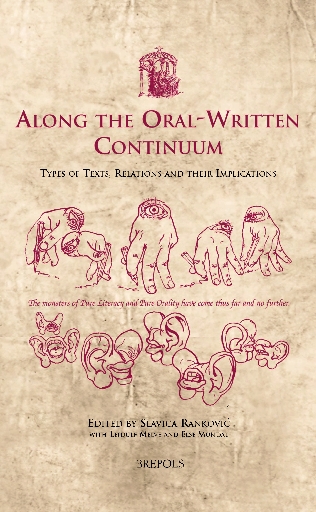
Along the Oral-Written Continuum
Types of Texts, Relations and their Implications
show More to view fulltext, buy and share links for:Along the Oral-Written Continuum show Less to hide fulltext, buy and share links for: Along the Oral-Written ContinuumEver since its introduction in the 1970s, Ruth Finnegan’s notion of the oral-written, or the oral-literate, continuum has served as one of the most effective means of dispelling the dichotomous understanding of the two principal media of communication in the Middle Ages. However, while often casually invoked, the concept has never been made a focus of study in its own right. The present volume is an attempt to place the oral-written continuum at the heart of discussion as an object of a head-on theoretical investigation, as a backdrop to distinct processes of acquisition of literacy in different European regions, and, indeed, as a tool for navigating the rugged landscape of verbal forms, exploring the complexity of oral-literary interrelationships that they manifest. The articles probe the concept with a variety of theoretical and methodological approaches, span diverse texts and genres, and involve a range of European cultural contexts, with special emphasis on Scandinavia and Northern Europe, but also reaching out to various other corners of the continent: from France, the Netherlands and England in the West, over Germany, Bohemia and Poland in the central region, to Serbia and Bosnia in the Southeast.
-
-
-
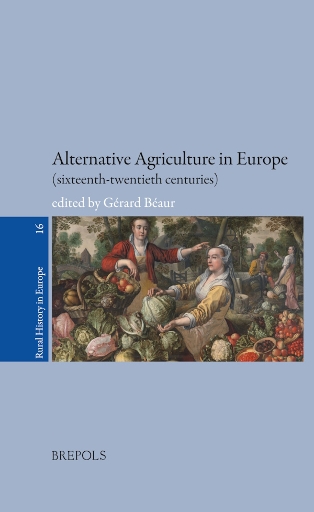
Alternative Agriculture in Europe (sixteenth-twentieth centuries)
show More to view fulltext, buy and share links for:Alternative Agriculture in Europe (sixteenth-twentieth centuries) show Less to hide fulltext, buy and share links for: Alternative Agriculture in Europe (sixteenth-twentieth centuries)The treatment of long-term agricultural transformation remains a lively topic for historians. Much debate arose when agricultural development patterns were discovered that did without a dominant, production-oriented cereal crop, even when it was accompanied by livestock farming. Joan Thirsk hoped to conclude this debate by putting forward the hypothesis that such “alternative agriculture” was the farmers’ way of responding to the difficulties caused by periods of low agricultural prices. This theory stirred up controversy and arguments both for and against.
The contributions to this volume take this hypothesis seriously and attempt to assess its validity. Examining a large number of “alternative agricultures” over the long term, from the fifteenth to the twentieth century, they discuss the issues encountered in tracing the links between the spread of alternative crops, such as fruits and vegetables, flowers, and industrial crops, and the general economic environment, across a vast swathe of territory stretching from Flanders to Spain and from France, through Italy and Switzerland, as far as Russia.
-
-
-
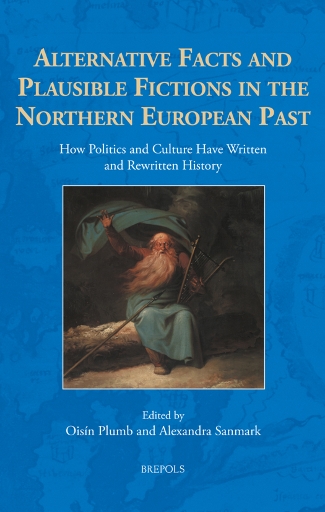
Alternative Facts and Plausible Fictions in the Northern European Past
How Politics and Culture Have Written and Rewritten History
show More to view fulltext, buy and share links for:Alternative Facts and Plausible Fictions in the Northern European Past show Less to hide fulltext, buy and share links for: Alternative Facts and Plausible Fictions in the Northern European PastThe use of the past for contemporary purposes has been a feature of historical and archaeological investigation from ancient times. This ‘politicization of the past’ is often associated with, at best, an inadvertent detachment from an objective use of evidence, and at worst, its wilful misuse. Such use of the past is perhaps most evident in the construction of narratives of nations and ethnic groups — particularly in relation to origins or the perceived ‘golden ages’ of peoples.
This book seeks to assess the role played by different ideologies in the shaping of the past, from early times up until the present day, in the interpretation of the history and archaeology of Northern Europe, whether in Northern Europe itself or further afield. It also considers how those who research, interpret, and present the Northern European past should respond to such uses. The chapters drawn together here explore key questions, asking how contemporary ideologies of identity have shaped the past, what measures should be taken to discourage an inaccurate understanding of the past, and if scholars should draw on the past in order to counter racism and xenophobia, or if this can itself lead to potentially dangerous misunderstandings of history.
-
-
-
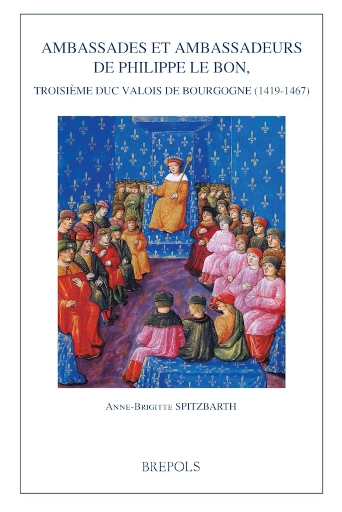
Ambassades et ambassadeurs de Philippe le Bon, troisième duc Valois de Bourgogne (1419-1467)
show More to view fulltext, buy and share links for:Ambassades et ambassadeurs de Philippe le Bon, troisième duc Valois de Bourgogne (1419-1467) show Less to hide fulltext, buy and share links for: Ambassades et ambassadeurs de Philippe le Bon, troisième duc Valois de Bourgogne (1419-1467)De 1419 à 1467, l’Etat bourguignon connut une expansion sans précédent, en partie servie par la politique diplomatique du duc de Bourgogne. Acteur central du mémorable congrès d’Arras de 1435, Philippe le Bon se posa en arbitre de l’Europe, grâce à ses alliances successives avec l’Angleterre et la France, mais aussi aux liens tissés dans toute la chrétienté.
L’enjeu de cette recherche, grâce à l’étude des moyens conceptuels, humains et matériels mobilisés par la diplomatie bourguignonne, est de resituer la place de la diplomatie dans la politique globale de Philippe le Bon.
L’étude des quelque 1412 ambassades et 621 ambassadeurs dépêchés par le duc durant son règne, la mise à jour de tactiques de négociation, de stratégies d’expertise, ainsi que la puissance financière mobilisée permettent d’éclairer un modèle de diplomatie ambitieuse, à l’heure où l’ambassadeur n’était encore qu’un « artisan de paix », où les ambassades permanentes n’existaient guère et où les concepts et le droit des gens étaient encore en pleine fixation.
Anne-Brigitte Spitzbarth est normalienne, agrégée et docteur en histoire de l’Université Lille 3 où elle a enseigné l’histoire médiévale. Elle est membre du CRHEN-O et d’IRENE. Ses recherches portent sur la diplomatie et la négociation.
-
-
-
Ambigua to John
Volume I: Translation
show More to view fulltext, buy and share links for:Ambigua to John show Less to hide fulltext, buy and share links for: Ambigua to JohnIn the Ambigua to John, the great early Byzantine monastic theologian and philosopher Maximus the Confessor (580–662) is at work in his most creative and expansive mode. Using difficult passages in Gregory Nazianzen as starting points for his thinking, Maximus draws together various strands of the theological and philosophical traditions he inherited and shapes an ever-moving, kaleidoscopic vision of the journey through the world of place, time, and materiality to final dynamic repose in eternity. Throughout the text, Maximus takes his readers along the many paths his own mind traveled to clarify this breathtaking reflection of the teachings of Scripture and the patristic tradition. In this translation of the first fully critical edition of Maximus’s text, the streams of the Confessor’s divine philosophy are revealed in their own right. This translation will be followed with the first full commentary on the Ambigua to John in English, to appear in Corpus Christianorum in Translation.
The source text of this volume will appear in Corpus Christianorum, Series Graeca, vol. 84.
-
-
-
Ambigua to Thomas and Second Letter to Thomas
show More to view fulltext, buy and share links for:Ambigua to Thomas and Second Letter to Thomas show Less to hide fulltext, buy and share links for: Ambigua to Thomas and Second Letter to ThomasMaximus the Confessor, a monk and theologian of the seventh century, was a transmitter and creative interpreter of the dogmatic and ascetical traditions of the Greek-speaking Church, and an innovative mind in his own right. An important figure on the theological landscape of his day, he became deeply involved in the post-Chalcedonian Christological controversies concerning the natures, activities (energies), and wills in Christ, eventually suffering at the hands of the imperial authorities for his rejection of certain imperial dogmatic decrees. These decrees in his view denied the principle of the salvation of the cosmos: the perfect communion of divinity and humanity - as preserved in their own proper natures - in the one Christ. He died in exile on the Black Sea coast, soon after his trial in Constantinople, in 662.
The Ambigua to Thomas are a collection of chapters devoted to the exposition of passages from Gregory Nazianzen and Ps. Denys the Areopagite. Maximus uses the texts as a means of expounding the meaning of the perfect union of divinity and humanity in the one Christ, arriving ultimately at an interpretation of the phrase from Denys, which affirmed that Christ “conducted his life among us according to a certain new theandric activity.”
The source text of this volume appeared in Corpus Christianorum Series Graeca as Maximus Confessor - Ambigua ad Thomam una cum epistula secunda ad eundem (CCSG 48). References to the corresponding pages of the Corpus Christianorum edition are provided in the margins of this translation.
Joshua Lollar is currently conducting research at the Theology Department of the University of Notre Dame (USA).
-
-
-
Ambiguum 10 of Maximus the Confessor in Modern Study
Papers Collected on the Occasion of the Budapest Colloquium on Saint Maximus, 3–4 February 2021
show More to view fulltext, buy and share links for:Ambiguum 10 of Maximus the Confessor in Modern Study show Less to hide fulltext, buy and share links for: Ambiguum 10 of Maximus the Confessor in Modern StudyAmbiguum 10 is an important sample of Maximus the Confessor’s philosophical exegesis, which has not received concentrated scholarly attention so far. This volume includes a new critical text edition by Prof. Carl Laga and a new English translation by Dr. Joshua Lollar. It also offers a unique insight into the universe of the great Christian thinker, showcasing his extensive knowledge of Aristotelian, Platonic and Neoplatonic philosophy and offering possible parallels with the Corpus Hermeticum and Ps-Dionysius the Areopagite. The present volume is the first attempt to bring together scholars from different traditions to understand the message and the reception of this seminal work.
-
-
-
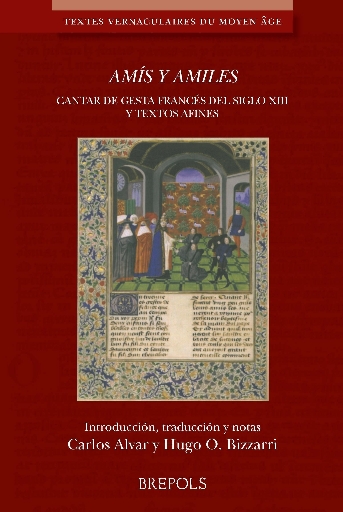
Amís y Amiles
Cantar de gesta francés del siglo XIII y textos afines
show More to view fulltext, buy and share links for:Amís y Amiles show Less to hide fulltext, buy and share links for: Amís y AmilesAmís y Amiles son los protagonistas de una serie de obras que se difunden por todo el occidente europeo desde el siglo XII, dando lugar a una epístola en latín, un cantar de gesta en francés, un relato hagiográfico en latín, varios exempla, una pieza teatral... La huella del tema de la amistad fraternal se encuentra también en catalán y en castellano.
Este libro, preparado por los profesores Carlos Alvar (Université de Genève) y Hugo O. Bizzarri (Université de Fribourg), presenta en edición bilingüe los principales textos en los que aparece el motivo de “los dos hermanos” o “los dos amigos”.
-
-
-

An Anonymous Dialogue with a Jew
show More to view fulltext, buy and share links for:An Anonymous Dialogue with a Jew show Less to hide fulltext, buy and share links for: An Anonymous Dialogue with a JewThe work is a translation of the Greek text entitled Anonymus dialogus cum Iudaeis, edited by José Declerck in CCSG 30. The introduction covers the textual history, historical setting, literary setting, and other matters. The translation is divided into thirteen chapters following the original structure of the book and the edition by Declerck. Brief footnotes accompany the text in order to clarify matters of translation. Indexes of Scripture, ancient documents, names, and subjects complete the work.
The source text of this volume appeared in Corpus Christianorum Series Graeca as Anonymus - Dialogus cum Iudaeis saeculi ut videtur sexti (CCSG 30). References to the corresponding pages of the Corpus Christianorum edition are provided in the margins of this translation.
Lee M. Fields holds a Ph.D. in Hebraic and Cognate Studies from Hebrew Union College-Jewish Institute of Religion with an emphasis in Judaic Studies in the Greco-Roman Period and is currently Chair of the Department of Biblical Studies at Mid-Atlantic Christian University (Elizabeth City, North Carolina, United States).
-
-
-
An Exposition on the Six-day Work
show More to view fulltext, buy and share links for:An Exposition on the Six-day Work show Less to hide fulltext, buy and share links for: An Exposition on the Six-day WorkPeter Abelard's Expositio in hexaemeron, or interpretation of the six-day work of creation, was commissioned by Heloise for the community of the Paraclete. The work is unusual in that it gives priority to the historical over the allegorical sense, and bears strong affinities to the writings of Thierry of Chartres and other twelfth century students of the natural sciences. As such, it is evidence both for the general state of twelfth century knowledge of cosmology, and for the quality of scholarship available in particular to a community of women religious.
The source text of this volume appeared in Corpus Christianorum Continuatio Mediaeualis as Expositio in Hexameron (CCCM 15). References to the corresponding pages of the Corpus Christianorum edition are provided in the margins of this translation.
Wanda Zemler-Cizewski is Associate Professor of historical theology in the Department of Theology at Marquette University in Milwaukee, Wisconsin. She received her doctorate in Medieval Studies at the University of Toronto in 1983, and is the author of numerous articles on early scholastic biblical interpretation and theology.
-
-
-
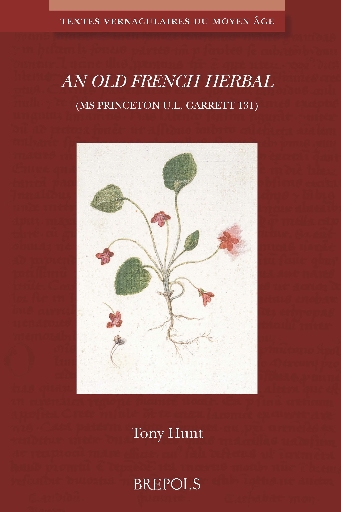
An Old French Herbal (Ms Princeton U.L. Garrett 131)
show More to view fulltext, buy and share links for:An Old French Herbal (Ms Princeton U.L. Garrett 131) show Less to hide fulltext, buy and share links for: An Old French Herbal (Ms Princeton U.L. Garrett 131)The earliest Old French herbal in verse, here edited for the first time, is a surprisingly comprehensive work (3188 octosyllables), based on an eleventh-century Latin treatise 'De viribus herbarum' attributed to a certain 'Macer'. It occupies a significant place in the development of herbals and is an interesting witness to writing in Western France in the thirteenth century and to the unusual syntax and concentrated style of its author. Some one hundred and twenty-five plants are described together with their medicinal uses, which cover a remarkable range of ailments. For ease of recognition the sections of text which do not seem to be based on the received text of 'Macer' are printed in italics. Quotations from the principal source and from parallels are given in the notes. This work will be of great value to all those interested in Old French, in medieval translation, the vernacular transmission of learning, and the history of medicine.
-
-
-
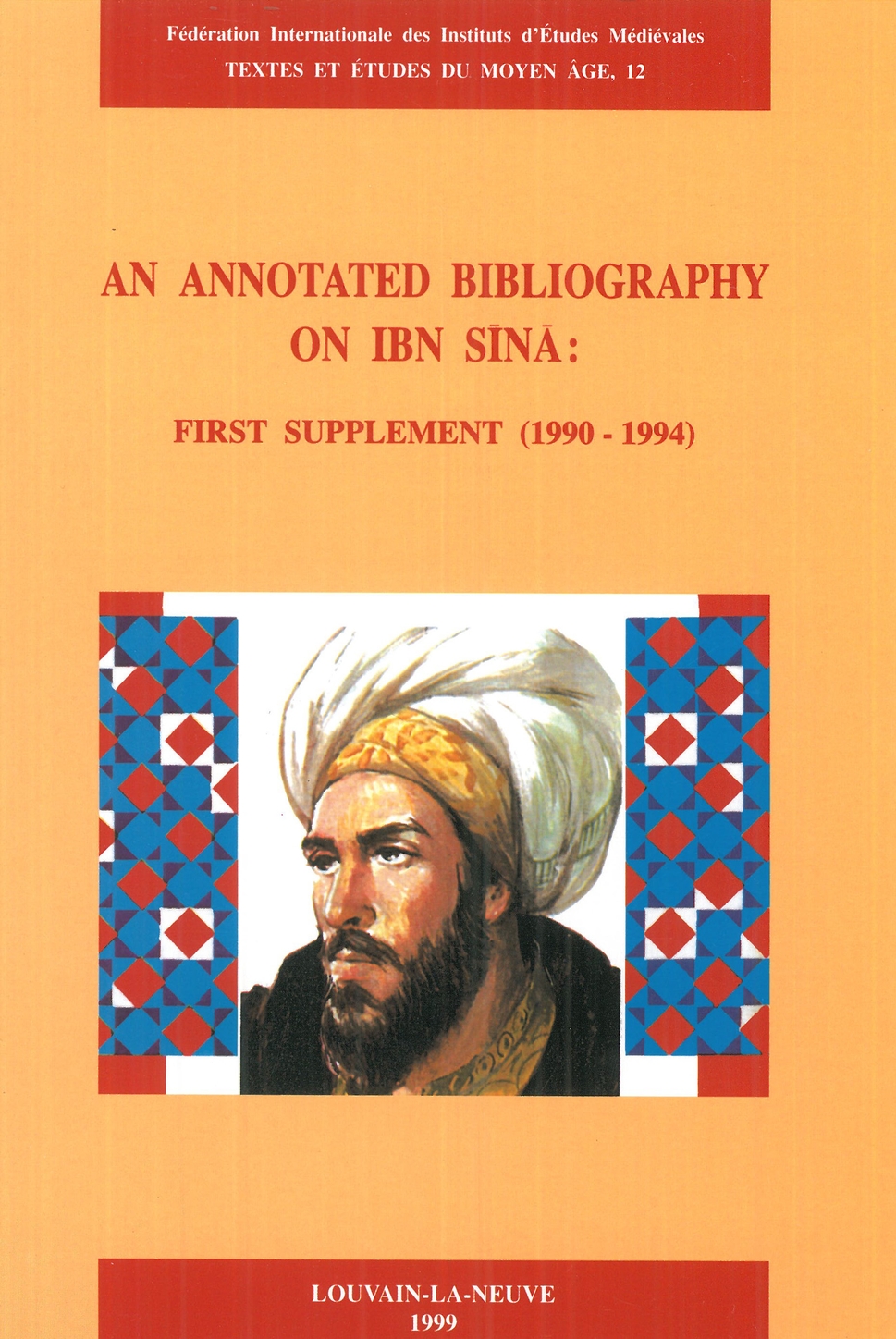
An annotated bibliography on Ibn Sina. First supplement (1990-1994)
show More to view fulltext, buy and share links for:An annotated bibliography on Ibn Sina. First supplement (1990-1994) show Less to hide fulltext, buy and share links for: An annotated bibliography on Ibn Sina. First supplement (1990-1994)This first supplement to my An Annotated Bibliography on Ibn Sînâ (1979-1989), published in 1991, informs the reader about all new studies on Ibn Sînâ (Avicenna) published in the period 1990-1994, and also offers corrigenda and addenda to the former bibliography. Also in the supplement, attention is paid to Western, and to non-Western publications. Moreover, it has been tried to be even more exhaustive by including publications, which have not Ibn Sînâ (Avincenna) in the title, but which nevertheless are offering important and innovative information about his life or thought.
First, an overview is given of the new editions and/or translations of Ibn Sînâ's works, which are once more identified according to the classic bibliographies of G.C. Anawati and M.Mehdavî. Hereafter, separate chapters are dedicated to studies of a biographical and a bibliographical nature. No less than ten chapters are devoted to materials dealing with Ibn Sînâ's philosophical thought (e.g., logic, psychology, metaphysics, religious thought, sources, influences both in the East and the West). Finally, materials dealing with Ibn Sînâ's scientific and medical contributions, are treated within two separate chapters. It has to be noted that almost all publications are annotated with a summary of their most original points and a short critical evaluation. An index, which includes the names of all authors, ancient, medieval and contemporary, has been added.
In sum, this work aims at providing a clear, concise and comprehensive work- instrument for all future Avicenna research. It is not only of great interest for all scholars working in Arabic-Islamic philosophy, science and medicine, but also for historians of philosophy and mediaevalists.
-
-
-
Analecta Bollandiana
show More to view fulltext, buy and share links for:Analecta Bollandiana show Less to hide fulltext, buy and share links for: Analecta BollandianaThe journal Analecta Bollandiana was launched in 1882, initially as a complement to the Acta Sanctorum series, but it soon acquired a life of its own, featuring articles by Bollandists and other scholars, text editions, book reviews, and more. After 140 years, it still remains the main reference in the field of critical hagiography.
Since the very beginning, this journal was intended to provide continuous updates to the Acta Sanctorum series, and to serve as an entirely new instrument devoted to hagiographical research. Every issue contains both critical editions of hagiographical texts (Greek, Latin, Oriental) and fundamental research on hagiography. The articles are published in modern international languages (English, French, German, Italian, and Spanish), and are accompanied by summaries in both English and French. A large section of each issue is devoted to book reviews and bibliography, making the Analecta Bollandiana indispensable for any department of medieval, Byzantine, Slavonic and Christian Oriental studies, as well as Church history, comparative religion, ethnology, and folklore.
More information about this journal on Brepols.net
-
-
-

Analogical Identities: The Creation of the Christian Self
Beyond Spirituality and Mysticism in the Patristic Era
show More to view fulltext, buy and share links for:Analogical Identities: The Creation of the Christian Self show Less to hide fulltext, buy and share links for: Analogical Identities: The Creation of the Christian SelfIs it possible for nihilism and an ontology of personhood as will to power to be incubated in the womb of Christian Mysticism? Is it possible that the modern ontology of power, which constitutes the core of the Greek-Western metaphysics, has a theological grounding? Has Nietszche reversed Plato or, more likely, Augustine and Origen, re-fashioning in a secular framework the very essence of their ontology? Do we have any alternative Patristic anthropological sources of the Greek-Western Self, beyond what has been traditionally called "Spirituality" or "Mysticism"? Patristic theology seems to ultimately provide us with a different understanding of selfhood, beyond any Ancient or modern, Platonic or not, Transcendentalism. This book strives to decipher, retrieve, and re-embody the underlying mature Patristic concept of selfhood, beyond the dichotomies of mind and body, essence and existence, transcendence and immanence, inner and outer, conscious and unconscious, person and nature, freedom and necessity: the Analogical Identityof this Self needs to be explored.
-
-
-
Analogical Identities: The Creation of the Christian Self
Volume 2: Self-Catholicization, Meta-Narcissism, and Christian Theology
show More to view fulltext, buy and share links for:Analogical Identities: The Creation of the Christian Self show Less to hide fulltext, buy and share links for: Analogical Identities: The Creation of the Christian SelfFollowing the first volume entitled Analogical Identities: The Creation of the Christian Self of a trilogy dedicated to Christian anthropology in a modern re-assessment, the present second volume deals with the specific content of this concept of “Analogical Identity” as a new hermeneutic retrieval of Christian anthropology in its relation with its historical roots and in the light of modern Philosophical and Psychological thought, to which we thus introduce some new conceptual tools. At the same time, a theological criticism of modern Philosophy and Psychology is initiated, and some new anthropological concepts of theological provenance are proposed.
-
-
-
Analysis of Ancient and Medieval Texts and Manuscripts: Digital Approaches
show More to view fulltext, buy and share links for:Analysis of Ancient and Medieval Texts and Manuscripts: Digital Approaches show Less to hide fulltext, buy and share links for: Analysis of Ancient and Medieval Texts and Manuscripts: Digital ApproachesHow has the digital turn truly changed the nature of our research, particularly in the field of medieval scholarship where our collections are almost never large enough to justify the term 'big data'? All kind of new avenues of research are emerging, thanks to the creativity of scholars and to their interest in what digital means can offer. This collection of articles aims to give an up-to-date overview of the use of computer-assisted methods in several fields of scholarship dealing with ancient and medieval texts and manuscripts (from codicology and palaeography to textual criticism and literary or historical studies), across the boundaries of language and period. In moving away from theoretical debates about what the field of digital humanities is or should be, we present here a clearer picture of what textual scholars can achieve when they use computers for their research needs and purposes, and what their expectations may be in terms of the technology and developments in computational methodology.
List of contributors: T. Andrews, P. Andrist, F. Cafiero, J.-B. Camps, A. Cantera, A. Castro Correa, T. Heikkilä, A. Hoenen, A. Jordanous, E. R. Luján, C. Macé, E. Orduña, I. Rabin, P. Roelli, M. Romanov, S. Rubenson, L. Spinazzè, F. Stella, C. Tupman, K. Van Dalen-Oskam, J. van Zundert.
-
-
-
André Alciat (1492-1550) : un humaniste au confluent des savoirs dans l'Europe de la Renaissance
show More to view fulltext, buy and share links for:André Alciat (1492-1550) : un humaniste au confluent des savoirs dans l'Europe de la Renaissance show Less to hide fulltext, buy and share links for: André Alciat (1492-1550) : un humaniste au confluent des savoirs dans l'Europe de la RenaissanceQuelle place occupe l’humaniste André Alciat dans le panorama de la Renaissance européenne ? Comment rendre compte à la fois de la diversité et de l’unité des ouvrages qui composent le corpus alciatique, dont on ne voit souvent que le recueil d’Emblemata, en oubliant la masse des écrits juridiques ?
Pour comprendre les forces qui nourrissent et stimulent cette oeuvre protéiforme, il convenait de replacer dans leur contexte historique et culturel les étapes biographiques et les activités scientifiques multiples du grand juriste milanais, tour à tour « archéologue » précoce et historien, avocat et professeur de droit, mais aussi poète à ses heures. Alciat entretient en effet des relations mouvementées tant avec les princes qu’avec les institutions académiques. Il noue des liens avec les humanistes de toute l’Europe, tels Érasme ou Budé, et sa carrière universitaire témoigne en particulier de la dynamique des échanges entre France et Italie. Dans la genèse et la diffusion de ses travaux, il traite avec les éditeurs comme un stratège en campagne. Son oeuvre enfin remet clairement en question le statut des disciplines constituées et manifeste une authentique sensibilité aux mutations intellectuelles et religieuses de son temps. Les enjeux de la production alciatique dépassent pourtant de beaucoup ces constats. On soulignera tout spécialement l’importance accordée par Alciat au langage symbolique et à l’eikôn, deux voies privilégiées pour assimiler et interpréter l’héritage gréco-latin. On doit également mettre en avant le rôle joué par la réception contemporaine et postérieure - imitateurs, commentateurs, traducteurs et émules - qui, en réinventant, voire en trahissant parfois l’héritage intellectuel d’Alciat, en a fait fructifier les promesses.
Les contributions proposées ici mettent en évidence l’étendue des domaines d’investigation embrassés par Alciat, les multiples facettes de ses compétences, la cohérence de son travail historique, juridique et philologique, les rapports complexes qu’il entretient avec l’Antiquité gréco-romaine et les relations contrastées qu’il développe avec ses contemporains. Des chercheurs venus d’horizons très divers retracent les étapes connues et moins connues d’une existence riche en péripéties, repèrent les fils conducteurs qui assurent la cohésion d’une oeuvre profuse, soulignent le rôle de ses modèles et s’interrogent sur les modalités d’élaboration d’une méthode nouvelle où se fondent les savoirs.
-
-
-
Anglo-Latin and its Heritage
Essays in Honour of A.G. Rigg on his 64th Birthday
show More to view fulltext, buy and share links for:Anglo-Latin and its Heritage show Less to hide fulltext, buy and share links for: Anglo-Latin and its HeritageFor some 40 years, A.G. Rigg has been defining the field of later Anglo-Latin literary scholarship, a task culminating in his History of Anglo-Latin Literature 1066-1422. Anglo-Latin and its Heritage is a collection of thirteen essays by his colleagues and students, past and present, which pays tribute to him both by exploring the field he has defined, and by making forays into its antecedents and descendants. The first section, “Roots and Debts,” includes essays on the migration of classical and late antique motifs and patterns of thought into early medieval Latin, and concludes with an essay which shows how a 12th-century writer reached back into that earlier period for stylistic models. The central section of the book, “Anglo-Latin Literature 1066-1422,” concentrates on Anglo-Latin writers of the period most studied by Rigg himself, and the seven essays in this section include analyses of poetic style and borrowing; discussions of patterns of reading; and essays which read Anglo-Latin works through their specific historical and cultural contexts. Two of the essays are elegant translations of significant Anglo-Latin poetic works. The final section of the book, “Influence and Survival,” offers three essays which consider Anglo-Latin literature in the late medieval and post-medieval world, from an edition of a Latin source for a late Middle English saint’s life; through an account of the migration of Latin texts into the royal libraries of Henry VIII; to the concluding essay, which explores a “mechanical” means of producing perfect Latin hexameter. A complete bibliography of Rigg’s works closes the volume. The chronological and methodological range of the essays in this collection is offered as a fitting tribute to one of Anglo-Latin’s most learned and indefatigable scholars.
-
-
-

Anglo-Saxons in a Frankish World, 690-900
show More to view fulltext, buy and share links for:Anglo-Saxons in a Frankish World, 690-900 show Less to hide fulltext, buy and share links for: Anglo-Saxons in a Frankish World, 690-900The Anglo-Saxon mission to early medieval Germany and the Netherlands has long been seen as a major contribution to the foundation of Christian Europe. Encouraged by the activities of prominent Anglo-Saxons such as St Willibrord (d. 739) and St Boniface (d. 754), pious men and women left their homes in England to reform and reinvigorate the culture and politics of the Church in Northern Europe, while greatly expanding the frontiers of Christendom. Anglo-Saxons in a Frankish World, 690-900 provides the first major reassessment of the Anglo-Saxons' influence on the Frankish world for fifty years. It argues that, because figures like Boniface were so important to the cult of saints east of the Rhine, stories about them became central to the ways in which different groups responded to the rapidly changing landscape of Carolingian culture and politics. The study draws on letters, charters, and other evidence to recontextualize the numerous hagiographies written about the Anglo-Saxons on the European mainland, while providing fresh perspectives on attitudes to mission, monasticism, authority, and the secular world in East Frankish society.
-
-
-

Anima mea. Prières privées et textes de dévotion du Moyen Age latin
Autour des 'Prières ou Méditations' attribuées à saint Anselme de Cantorbéry (XIe-XIIe siècle)
show More to view fulltext, buy and share links for:Anima mea. Prières privées et textes de dévotion du Moyen Age latin show Less to hide fulltext, buy and share links for: Anima mea. Prières privées et textes de dévotion du Moyen Age latinSt. Anselm of Canterbury's († 1109) Orationes siue Meditationes offers a most instructive testimony of the change that occurred in the late eleventh century in Western spirituality. Thanks to the beauty of its language and the freshness of its approach, Anselm's volume truly touched the minds of contemporaries and aroused so great a passion that the book was copied, imitated, and incorporatedinto apocryphal collections. These new books illustrate by their variety, originality, and even commonplace aspects the profuse resources of a literary genre that is too often unrecognized although most deserving of interest. After exposing the political and religious background of the Anglo-Norman world, as well as treating the rhetorical tradition of private prayers, the present work offers the first critical edition, with a French translation, of the Anselmian collections of the 12th century.
-
-
-
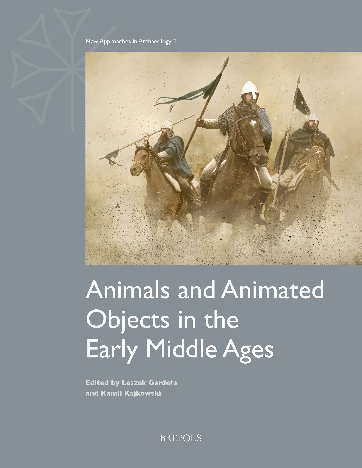
Animals and Animated Objects in the Early Middle Ages
show More to view fulltext, buy and share links for:Animals and Animated Objects in the Early Middle Ages show Less to hide fulltext, buy and share links for: Animals and Animated Objects in the Early Middle AgesSince time immemorial, animals have played crucial roles in people’s lives. In Continental and Northern Europe, especially in the Migration Period and the Early Middle Ages, animals were both feared and revered. Varying and often ambivalent perceptions of fauna were expressed through everyday practices, religious beliefs, and the zoomorphic ornamentation of a wide plethora of objects that ranged from jewellery, weapons, and equestrian equipment to wagons and ships. This timely volume critically investigates the multivalence of animals in medieval archaeology, literature, and art in order to present human attitudes to creatures such as bears, horses, dogs, and birds in a novel and interdisciplinary way.
The chapters gathered together here explore the prominence of animals, animal parts, and their various visual representations in domestic spaces and the wider public arena, on the battlefield, and in an array of ritual practices, but also examine the importance of zoomorphic art for emerging elites at a time of social and political tensions across Scandinavia and the oft-overlooked Western Slavic and Baltic societies. This innovative book draws together scholars from across Europe in order to pave the way for a nuanced international and interdisciplinary dialogue that has the capacity to substantially increase our perception of human and animal worlds of the Early Middle Ages.
-
-
-
Annali di Scienze Religiose
International Journal of Religious Scholarship with an Annotated Bibliography of Ambrosian Studies
show More to view fulltext, buy and share links for:Annali di Scienze Religiose show Less to hide fulltext, buy and share links for: Annali di Scienze ReligioseAnnali di Scienze Religiose is a periodical stemming from the research activities of the Department of Religious Science at the Università Cattolica di Milano (Catholic University of the Sacred Heart in Milan), which apply a multidisciplinary approach to religious phenomena and particularly focus on the three monotheistic religions and religions of the ancient Mediterranean world. The journal features contributions from Italian and foreign scholars writing in the main European languages and Arabic. Each issue is divided into a monographic section, which gives its name to the subtitle of the issue, a section on conferences featuring texts that apply a scientific approach to a wide range of historical and comparative topics, and a final section presenting studies that offer timely contributions on specific themes. Every issue ends with the Ambrosian Bibliography, an annual survey of publications regarding the person and works of Ambrose of Milan.
More information about this journal on Brepols.net
-
-
-
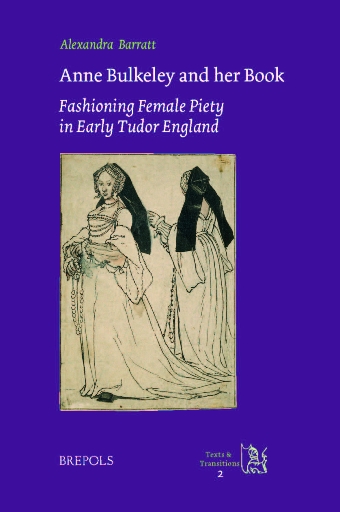
Anne Bulkeley and her Book
Fashioning Female Piety in Early Tudor England
show More to view fulltext, buy and share links for:Anne Bulkeley and her Book show Less to hide fulltext, buy and share links for: Anne Bulkeley and her BookThis study is focused on bl ms Harley 494, a small manuscript book which can be dated between 1532 and 1535 and which has many of the features of a preces privatae volume, or private prayer book. It contains prayers in English and Latin but also a number of brief devotional treatises in English. ms Harley 494 possesses two more features of interest: it belonged to a Hampshire widow, Anne Bulkeley (and possibly later to her daughter Anne, a nun at Amesbury Priory); and it emerged from a Birgittine textual community. Barratt edits and annotates the complete manuscript to provide an accessible and informative edition of this little known manuscript. However, Anne Bulkeley and her Book is not a conventional edition of a late Middle English text. Rather, Barratt carefully contextualizes the manuscript within its historical background just before the Dissolution of the Monasteries, and meticulously investigates the varied, and often unusual, sources of many of the individual items in the book. In addition, the discussion encompasses several related manuscripts (principally Lambeth Palace ms 3600 and the so-called Burnet Psalter (Aberdeen University Library ms 25)). This broad focus enables the volume to examine not only the evolution of the manuscript as a whole, but also to answer wider questions of its owner’s identity, her family connections, and her (and her book’s) place in literary, cultural, and religious history.
-
-
-

Anonymi Artium Magistri Questiones super Librum Ethicorum Aristotelis (Paris, BnF, lat. 14698)
show More to view fulltext, buy and share links for:Anonymi Artium Magistri Questiones super Librum Ethicorum Aristotelis (Paris, BnF, lat. 14698) show Less to hide fulltext, buy and share links for: Anonymi Artium Magistri Questiones super Librum Ethicorum Aristotelis (Paris, BnF, lat. 14698)Les années qui précédèrent et suivirent la condamnation du 7 mars 1277 furent parmi les plus difficiles dans l’histoire de l’Université de Paris. Parmi les témoins des événements qui ont bouleversé à cette époque la Faculté des Arts, une place privilégiée doit être accordée à un fragment d’une reportatio anonyme d’un cours sur l’Éthique à Nicomaque, contenu dans le manuscrit Paris, BnF, lat. 14698. L’auteur de ce texte - un maître de philosophie écrivant très probablement au début des années 1280 - recherche un difficile équilibre entre le devoir d’expliquer la philosophie d’Aristote et la contrainte de ne pas contredire les dogmes de la foi chrétienne. Ce volume offre une édition intégrale du texte, précédée d’une introduction où sont abordés à la fois les problèmes que pose l’édition scientifique d’une reportatio (sa structure, son rapport avec le déroulement du cours oral, les critères spécifiques requis pour l’établissement du texte d’une reportatio) et les enjeux historiques liés à ce texte (sa datation et son rapport avec la condamnation de mars 1277, l’utilisation de la Summa theologiae de Thomas d’Aquin, et l’hypothèse de l’identification de l’auteur avec le maître parisien Jacques de Douai).
-
-
-
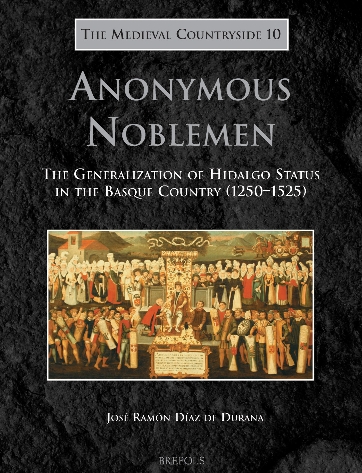
Anonymous Noblemen
The Generalization of Hidalgo Status in the Basque Country (1250-1525)
show More to view fulltext, buy and share links for:Anonymous Noblemen show Less to hide fulltext, buy and share links for: Anonymous NoblemenTowards the end of the Middle Ages one of Europe’s most important concentrations of nobility was to be found on the Spanish Atlantic coast between Asturias and Guipúzcoa. Many of these nobles were hidalgos, proud but impoverished nobles common in sixteenth-century picaresque novels a full four hundred years before historians turned their attention to them. This book (which is linked to over a decade of research by a team of specialists into the social, economic, political, and ideological transformations that the Basque Country underwent between the fourteenth and sixteenth centuries) analyses the group in the Basque Country, with particular emphasis on the question of how and why hidalgo status became universal in the coastal areas but not in the interior. In part one the author reviews the historiography both of this group and of the lesser nobility elsewhere in Europe. The group is then characterized and placed in its historical context: the social conflicts that racked the fourteenth and fifteenth centuries. Finally, in a series of case studies of the hidalgos of Álava and their commoner neighbours, with whom they frequently struggled for control of village life, the author studies their reactions to the political transformations which took place at the time, as well as their relationship with the landed aristocracy, in whose client networks they inevitably became involved.
-
-
-

Anselm of Canterbury (1033-1109). Philosophical Theology and Ethics
Proceedings of the Third International Conference of Medieval Philosophy, held at the Pontifical Catholic University of Rio Grande do Sul (PUCRS), Porto Alegre / Brazil (02-04 September 2009)
show More to view fulltext, buy and share links for:Anselm of Canterbury (1033-1109). Philosophical Theology and Ethics show Less to hide fulltext, buy and share links for: Anselm of Canterbury (1033-1109). Philosophical Theology and EthicsThis volume collects several studies on Anselm of Canterbury’s philosophical theology and ethics originally presented at the Third International Conference of Medieval Philosophy at the Pontifical Catholic University of Rio Grande do Sul (PUCRS), Porto Alegre / Brazil, 02-04 September 2009. In commemoration of the 900th anniversary of Anselm’s death, the conference facilitated a unique exchange of ideas among Latin American, North American and European scholars on current issues in Anselmian scholarship. The papers included in the volume concern diverse areas of interest: Anselm’s method in different phases of his career and his attitude towards philosophy; Anselm’s contribution to logic and semantics in De grammatico; the continuing challenge of interpreting his “proof” in Proslogion (revisited with an eye into contemporary accounts of his unum argumentum); the topic of guilt and punishment in Anselm’s works, as well as the understanding of his moral-theological project, in dialogue with contemporary discussions of deontology; the fundamental aspects of his view on human being; the reception of Anselm’s theory of perfections in Duns Scotus’s metaphysics; and the place of Anselm’s thought in Karl Barth’s understanding of theology. These contributions, through their engagement with Anselm’s works, seek to shed light on philosophical and theological issues of perennial interest.
The volume contain the contributions of R.H. Pich (Porto Alegre), C. Viola (Paris), S. Magnavacca (Buenos Aires) , J. Müller (Bochum), Th. S. Leite (Porto Alegre), G. Wyllie (Rio de Janeiro), J. M .C. Macedo (Porto), A. Culleton (São Leopoldo), M. Tracey (Lisle - IL), L.A. De Boni (Porto Alegre), G. K. Hasselhoff (Bochum).
-
-
-
Anselmo d’Aosta e il pensiero monastico medievale
show More to view fulltext, buy and share links for:Anselmo d’Aosta e il pensiero monastico medievale show Less to hide fulltext, buy and share links for: Anselmo d’Aosta e il pensiero monastico medievaleQuesto volume raccoglie le relazioni discusse da oltre venti studiosi italiani e tedeschi al XVIII Convegno della Società Italiana per lo Studio del Pensiero Medievale (SISPM), dedicato al pensiero e all’influenza di Anselmo d’Aosta (1033-1109), una delle figure chiave della filosofia e della teologia medievali. I saggi presentano i principali aspetti della speculazione di Anselmo, con particolare attenzione alle posizioni teologiche da lui sostenute, alla sua metodologia per la costruzione di un pensiero sistematico e razionale, e ai suoi orientamenti in materia di pedagogia, politica, logica, nonché alla sua concezione della vita monastica. Molti studi sono inoltre dedicati alla diffusione e all’influsso del suo pensiero: tracce della sua speculazione sono facilmente riconoscibili nei maggiori pensatori del secolo xii (a partire da Abelardo e Ugo di San Vittore) e giungono fino a Duns Scoto e Nicolò Cusano.
Per la varietà degli approcci d’indagine, e la profondità e l’attenzione delle analisi filosofiche e teologiche dei singoli contributi, il volume si propone di offrire una completa panoramica sullo stato degli studi su Anselmo e la cultura monastica del suo tempo.
-
-
-
Anthropologie de l’Antiquité. Anciens objets, nouvelles approches
show More to view fulltext, buy and share links for:Anthropologie de l’Antiquité. Anciens objets, nouvelles approches show Less to hide fulltext, buy and share links for: Anthropologie de l’Antiquité. Anciens objets, nouvelles approchesLes contributions réunies dans ce livre sont nées d’une collaboration et d’une proximité intellectuelle entre deux institutions de recherche : l’équipe PLH-ERASME qui travaille, à Toulouse, dans les domaines de la réception de l’Antiquité et de l’anthropologie historique, et le centre ANHIMA (Anthropologie et Histoire des mondes antiques), qui réunit, à Paris, des chercheurs engagés dans tous les domaines et toutes les périodes de l’Antiquité. Ce rapprochement s’est traduit par l’organisation de deux journées d’étude internationales à Toulouse, en mars 2010, et par la création d’une nouvelle collection : « Antiquité et sciences humaines. La traversée des frontières », accueillie par les éditions Brepols.
Ces initiatives témoignent de la vitalité et du renouvellement des perspectives anthropologiques : redéfi nir les concepts les mieux connus (comme le don, le commerce), s’attacher à un champ d’études laissé à l’écart (l’archéologie gallo-romaine), prendre en compte des déplacements de catégories entre hommes et femmes, masculin et féminin dans les études de genre, explorer des domaines nouveaux (les émotions, la perception des couleurs).
La prise en compte des différences qui nous sépare nt des hommes de l’Antiquité, l’attention portée aux spécifi cités qui marquent l’ensemble de leurs représentations et de leurs comportements dans tous les champs de la vie sociale, politique, religieuse, culturelle, la conscience des mutations qui se sont opérées sur la longue durée, c’est ce que chacun des auteurs de ce volume, dans le domaine qui lui est propre, a tenté de mettre en oeuvre.
Liste des contributeurs : Vincent Azoulay, Maurizio Bettini, Corinne Bonnet, Violaine Sebillotte-Cuchet, Ton Derks, Adeline Grand-Clément, Pascal Payen, Nicholas Purcell, Évelyne Scheid-Tissinier, Pauline Schmitt Pantel, Emmanuelle Valette, Andreas Wittenburg.
-
-
-
Anthropology of Roman Housing
show More to view fulltext, buy and share links for:Anthropology of Roman Housing show Less to hide fulltext, buy and share links for: Anthropology of Roman HousingAt a time when we reflect intensively on the issue of social cohesion, on the influence of architecture in lifestyles, and on relationships between neighbourhoods within large modern cities, this book aims to approach the study of "inhabiting modes" in Roman urban dwellings. Drawing on concepts common to historical anthropology and incorporating evidence from multiple lines of research (archaeological, iconographic, textual, and others), this volume aims to contribute to the invigoration of a social history of ancient housing through new research projects, publications, and digital tools from both individual and collaborative efforts. This field of study is currently undergoing a period of disciplinary revitalization and this volume is an opportunity to present the most recent work and to conduct a dialogue in an interdisciplinary perspective.
-
-
-
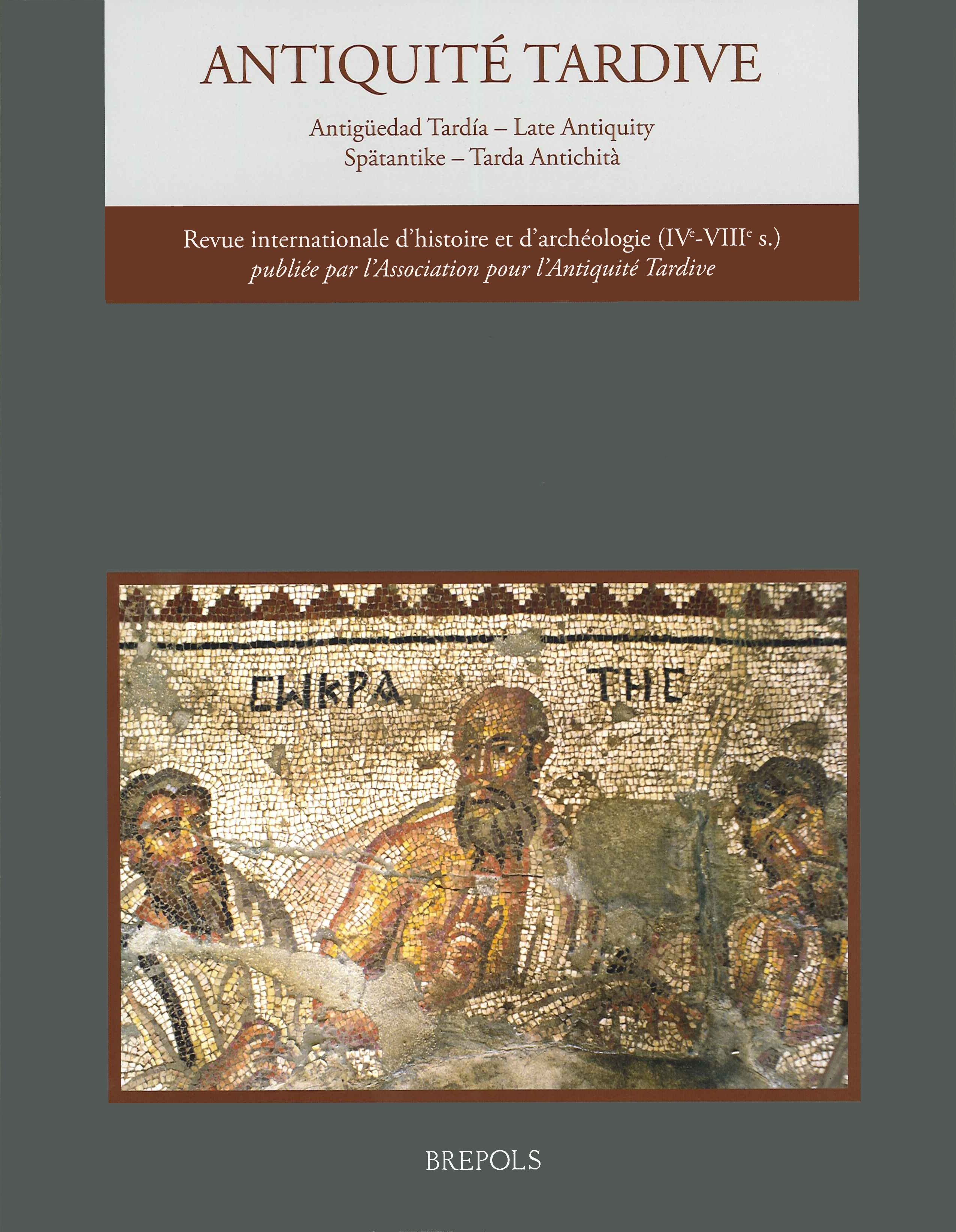
Antiquité Tardive - Late Antiquity - Spätantike - Tarda Antichità
Revue Internationale d'Histoire et d'Archéologie (IVe-VIIIe siècle)
show More to view fulltext, buy and share links for:Antiquité Tardive - Late Antiquity - Spätantike - Tarda Antichità show Less to hide fulltext, buy and share links for: Antiquité Tardive - Late Antiquity - Spätantike - Tarda AntichitàThis international journal is published by the Association pour l’Antiquité Tardive, which was founded in Lyon to prepare for the International Congress of Christian Archaeology held there in 1986. The Association’s journal aims at enriching the study of written texts from the fourth to the eighth century by placing them into a wider context using a multidisciplinary approach covering history, archaeology, epigraphy, law and philology.
More information about this journal on Brepols.net
-
-
-
Antiquité tardive et humanisme: de Tertullien à Beatus Rhenanus
Mélanges offerts à François Heim à l'occasion de son 70e anniversaire
show More to view fulltext, buy and share links for:Antiquité tardive et humanisme: de Tertullien à Beatus Rhenanus show Less to hide fulltext, buy and share links for: Antiquité tardive et humanisme: de Tertullien à Beatus RhenanusAu total, 29 études rédigées par des philologues de réputation internationale, précédées d'un avant-propos et d'une introduction et suivies d'un index général ainsi que d'une table des matières, 550 p. Les contributions scientifiques des divers coauteurs ressortissent aux deux domaines de spécialité du dédicataire : d'une part les littératures antiques du IIIe au VIe siècles, de l'autre le mouvement intellectuel et spirituel de la Renaissance. Mais, outre les articles afférents à ces deux axes de recherche privilégiés, les miscellanées en l'honneur de F. Heim accueillent aussi des essais transversaux sur la réception des auteurs tardifs - tant chrétiens que païens - par les humanistes européens des XVe, XVIe et XVIIe siècles.
-
-
-
Antwerp in the Renaissance
show More to view fulltext, buy and share links for:Antwerp in the Renaissance show Less to hide fulltext, buy and share links for: Antwerp in the RenaissanceThis book engages with Antwerp in the Renaissance. Bringing together several specialists of sixteenth-century Antwerp, it offers new research results and fresh perspectives on the economic, cultural and social history of the metropolis in the sixteenth century. Recurrent themes are the creative ways in which the Italian renaissance was translated in the Antwerp context. Imperfect imitation often resulted from the specific social context in which the renaissance was translated: Antwerp was a metropolis marked by a strong commercial ideology, a high level affluence and social inequality, but also by the presence of large and strong middling layers, which contributed to the city’s ‘bourgeois’ character. The growth of the Antwerp market was remarkable: in no time the city gained metropolitan status. This book does a good job in showing how quite a few of the Antwerp ‘achievements’ did result from the absence of ‘existing structures’ and ‘examples’. Moreover, the city and its culture were given shape by the many frictions, and uncertainties that came along with rapid urban growth and religious turmoil.
-
-
-
Apocalyptic Cultures in Medieval and Renaissance Europe
Politics and Prophecy
show More to view fulltext, buy and share links for:Apocalyptic Cultures in Medieval and Renaissance Europe show Less to hide fulltext, buy and share links for: Apocalyptic Cultures in Medieval and Renaissance EuropeThe essays in this collection were presented at the 2020 Symposium on Apocalypticism, sponsored by the Marco Institute for Medieval and Renaissance Studies at the University of Tennessee. The authors offer new readings of medieval and Renaissance Apocalypticism in quotidian terms, not as ‘counterculture’ but as the pragmatic expression of spiritualities that informed both debate and practice, on subjects as mundane and diverse as warfare, pilgrimage, gender, cartography, environmentalism, and governance. Topics include the origins of imperial eschatology; reflections on cosmology and the fate of the earth; the fusion of history, prophecy, and genealogy; Joachite readings of the political landscape of Italy; the influence of the Great Schism on Burgundian art; eschatology and gender in pilgrimage literature; the late medieval interpretation of the Revelationes of Pseudo-Methodius; and the appropriation of apocalyptic tropes in the propaganda and policies of the German emperor Maximilian I. The essays that open and close this collection offer meditations on the enduring legacy of Apocalypticism by focusing on the events — pandemic, political unrest, and the proliferation of conspiracy theories manifest in both — that mark the historical era in which this symposium took place.
-
-
-
Apocrypha
Revue internationale des littératures apocryphes. International Journal of Apocryphal Literatures
show More to view fulltext, buy and share links for:Apocrypha show Less to hide fulltext, buy and share links for: ApocryphaApocrypha is published with the scholarly assistance of the Association pour l’Étude de la Littérature Apocryphe Chrétienne (AELAC) and the Société pour l’Étude de la Littérature Apocryphe Chrétienne (SELAC). The journal focuses on the wealth of material borne through literature and expressions of the imagination over the course of two millennia. This material was generated, cultivated and transmitted by numerous Jewish and Christian communities across Asia, Africa, and Europe. The articles are written by scholars who, within their own disciplines and through their own research, have reason to study this common material. Such scholarship aids to restore the real dimensions of these texts and draws attention to ideas which shaped the imagination, minds and living spaces of so many societies and cultures.
More information about this journal on Brepols.net
-
-
-
Apocryphité. Histoire d'un concept transversal aux religions du Livre
En hommage à Pierre Geoltrain
show More to view fulltext, buy and share links for:Apocryphité. Histoire d'un concept transversal aux religions du Livre show Less to hide fulltext, buy and share links for: Apocryphité. Histoire d'un concept transversal aux religions du LivreAu point de départ, le concept d’apocryphité suppose le concept de canonicité. C’est donc d’abord la constitution d’un corpus d’écrits dits canonisés qui génère ensuite de diverses manières une littérature définie comme apocryphe. Le concept d’apocryphité repose donc apparemment sur une simple équation - il est le produit d’un autre concept, celui de la canonicité. Même s’il convient de ne pas généraliser à tous les cas un tel paramètre, c’est, semble-t-il, une évidence. Ce phénomène a touché l’ensemble des religions dites du Livre au sens actuel de l’expression qui est bien large, mais aussi les religions grecques et romaines de l’Antiquité dans lesquelles la constitution de corpus a entraîné la formation d’une frange apocryphe. En la matière, ce qui se passe dans le christianisme provient évidemment du judaïsme, mais se déroule aussi, sous des formes plus ou moins similaires, dans le mazdéisme et le manichéisme.
Cet ouvrage, qui est le fruit d’un projet collectif du Centre d’études des religions du Livre (Unité mixte de recherche EPHE-CNRS), concerne non seulement les antiquisants et les médiévistes, mais aussi les modernistes. C’est aux XVIe et XVIIe siècles, en effet, que certains corpus d’apocryphes chrétiens, non des moindres, ont pris forme.
-
-
-
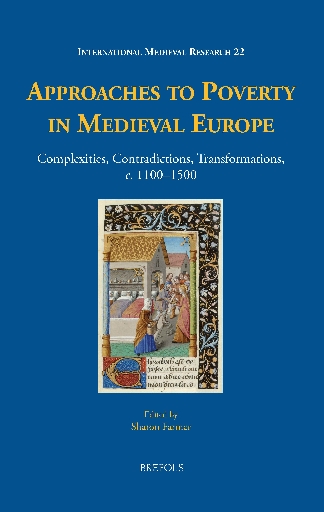
Approaches to Poverty in Medieval Europe
Complexities, Contradictions, Transformations, c. 1100-1500
show More to view fulltext, buy and share links for:Approaches to Poverty in Medieval Europe show Less to hide fulltext, buy and share links for: Approaches to Poverty in Medieval EuropeThe essays in this volume re-examine two major medieval turning points in the relationship between rich and poor: the revolution in charity of the twelfth and thirteenth centuries, and the era of late medieval crises when the vulnerability of the poor increased dramatically and charitable generosity often declined. Drawing on a variety of sources from England, France, the Low Countries, Italy, and Iberia, the contributors to this volume add new perspectives on the agency of the poor, the influence of gendered forms of devotion, parallels in Christian and Jewish representations of the deserving and undeserving poor, and the effect of mendicant piety on the status of the involuntary poor. A broader implication of the volume as a whole is that medieval studies of poverty and wealth need to pay more attention to the role of rulers, ruling elites, and public policy in shaping the experiences of the poor.
-
-
-
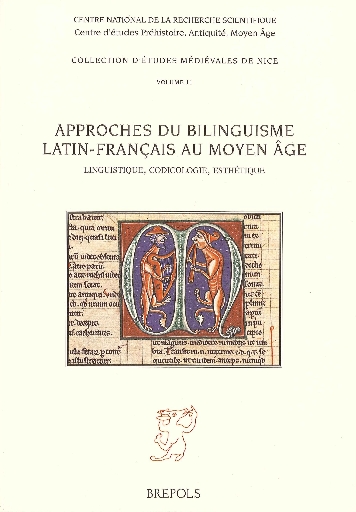
Approches du bilinguisme latin-français au Moyen Âge: linguistique, codicologie, esthétique
show More to view fulltext, buy and share links for:Approches du bilinguisme latin-français au Moyen Âge: linguistique, codicologie, esthétique show Less to hide fulltext, buy and share links for: Approches du bilinguisme latin-français au Moyen Âge: linguistique, codicologie, esthétiqueLe Moyen Âge a vu naître les langues romanes. L’émergence progressive de ces nouveaux systèmes linguistiques, puis leur accession à l’écrit et à la littérature, n’a pourtant pas rendu caduc l’usage du latin. Témoignent de cette résistance du latin la diglossie de nombreux locuteurs, auteurs ou copistes médiévaux, ainsi que le bilinguisme courant de leurs énoncés et de leurs productions textuelles. Ces phénomènes ont été éclairés et illustrés par d’abondants travaux dont l’apport est régulièrement signalé par les auteurs de ce volume.
L’originalité du présent recueil tient au fait qu’y sont analysées les modalités de cohabitation du latin et de la langue d’oïl dans les textes du Moyen Âge central et tardif. Cette réflexion collective, adossée à un souci permanent de définition théorique, se montre attentive à l’évolution chronologique, depuis les Psautiers bilingues du xii e siècle jusqu’aux imprimés du xvi e siècle. Elle est sensible aussi à des enjeux variables, depuis l’enseignement élémentaire de la grammaire ou du vocabulaire jusqu’à la mise en œuvre de dispositifs esthétiques complexes. En s’appuyant sur les témoins — pour la plupart manuscrits — qu’a pu susciter la double compétence linguistique médiévale, les auteurs du volume interrogent la conception des textes bilingues, leurs conditions d’élaboration, leur transmission, leur réception. L’insertion souvent discrète de fragments latins au sein de textes français, tout comme la présence plus rare de la langue d’oïl au sein de manuscrits latins, se lit alors comme un mode d’expression aussi raffiné que spontané, susceptible d’enrichir les usages prévus pour le texte enchâssant. Au-delà, l’ensemble de ces études permet d’entrevoir la conscience linguistique des locuteurs du Moyen Âge.
-
-
-

Appropriation, Interpretation and Criticism
Philosophical and Theological Exchanges Between the Arabic, Hebrew and Latin Intellectual Traditions
show More to view fulltext, buy and share links for:Appropriation, Interpretation and Criticism show Less to hide fulltext, buy and share links for: Appropriation, Interpretation and CriticismThe contributions in this volume are dedicated to cross-cultural exchanges during the Middle Ages among exponents of the Arabic, Hebrew and Latin philosophical and theological traditions. They draw particular attention to the intellectual approaches which shaped the interplays among these traditions - interplays that were characterized by the contact of various languages being used by people of different religious beliefs in their quest for knowledge: Spanish Jews writing in Arabic, Jews collaborating in the translation of Arabic texts into Latin through the vernacular, Western Muslims whose writings were read mainly by Jews and Christians in Hebrew and Latin, etc. Altogether, the eleven studies contained in this book wish to offer new insights into the rich exchanges of knowledge among communities of learning and their scholarly traditions during the Middle Ages and beyond.
-
-
-
Apuleius and the Metamorphoses of Platonism
show More to view fulltext, buy and share links for:Apuleius and the Metamorphoses of Platonism show Less to hide fulltext, buy and share links for: Apuleius and the Metamorphoses of PlatonismThis book presents a thorough re-examination of Apuleius’ Platonic philosophy, encompassing both his philosophical and literary works. Its primary concern lies in demonstrating how there is no significant gap between the Platonic philosophy of the Opuscula (De deo Socratis, De Platone et eius dogmate, De mundo) and the literary tastes of his rhetorical and most important output, such as the Apologia, the Florida, and foremost the Metamorphoses. Apuleius’ Middle-Platonism did not limit itself to technical works, but also influenced his literary interests.
Up to now, Apuleius’ Platonism has been very poorly investigated. It had attracted the attention of only a few - although prominent - scholars (Festugière, Dodds, Theiler), before being taken briefly into consideration in the monographs by John Dillon (The Middleplatonists, London 1977) and Stephen Gersh (Middle Platonism and Neoplatonism. The Latin Tradition, Notre Dame 1986). Because of his multifaceted interests and brilliant style, which is reflected in his conferences, judicial orations and in the novel, Apuleius was mainly treated as a sophist. In the wake of a recent revival of interest in Greek Middle Platonism and in its predecessors (such as Philo of Alexandria or Plutarch), the rhetor of Madauros is worthy of a new examination. This book aims at considering Apuleius as a Philosophus Platonicus who, at the same time, is a Latin Sophist, showing how the two aspects are closely intertwined.
Examining only one aspect would be easy, but would not do justice to Apuleius’ personality. In particular, it is necessary to insert him into a philosophical line, which runs from the first to the third century AD, thus outlining the specifics of Latin Platonism. On the other hand, it is necessary to take into account the concerns of the Second Sophistic in philosophy, though in a somewhat trivialized and less systematic way.
The title of the book (Apuleius and the Metamorphoses of Platonism) indeed underlines how Apuleius’ chameleonic Platonism ‘transforms’ itself, both in his philosophical and his literary works. While challenging the current scholarly trend that overrates the philosophical presence in the Metamorphoses, this book suggests new outlooks, as well as providing a new perspective on many hypotheses previously considered as a given. In order to do this, it investigates the literary, religious and philosophical, Graeco-Roman / African milieu in which Apuleius lived from a literary, religious and philosophical point of view, while considering his influence on authors from Late Antiquity.
-
-
-
Arbor scientiae. Der Baum des Wissens von Ramon Llull
Akten des Internationalen Kongresses aus Anlass des 40-jährigen Jubiläums des Raimundus-Lullus-Institutes der Universität Freiburg. 29. September - 2. Oktober 1996
-
-
-
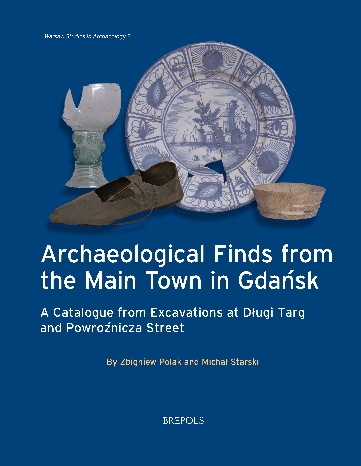
Archaeological Finds from the Main Town in Gdańsk
A Catalogue from Excavations at Długi Targ and Powroźnicza Street
show More to view fulltext, buy and share links for:Archaeological Finds from the Main Town in Gdańsk show Less to hide fulltext, buy and share links for: Archaeological Finds from the Main Town in GdańskBetween 2002 and 2004, archaeological excavations took place on Powroźnicza Street, in the city of Gdańsk, Poland. Twelve burghers’ plots, located in the centre of this former medieval metropolis, were investigated, and yielded a rich collection of archaeological finds, among them ceramics, and items of wood, metal, and glass, from a period stretching from the fourteenth to the twentieth century. These finds are presented here for this first time in this richly illustrated bilingual volume, published in both English and Polish, which lays out a detailed catalogue of all the items, together with a discussion of the site, its settlement phases, and its most significant discoveries.
-
-
-
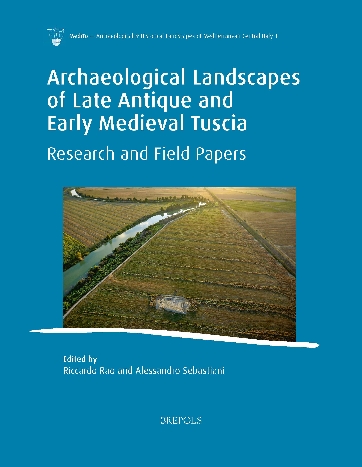
Archaeological Landscapes of Late Antique and Early Medieval Tuscia
Research and Field Papers
show More to view fulltext, buy and share links for:Archaeological Landscapes of Late Antique and Early Medieval Tuscia show Less to hide fulltext, buy and share links for: Archaeological Landscapes of Late Antique and Early Medieval TusciaThis volume, the third in the series MediTo, investigates the changing landscapes of Tuscany during Late Antiquity and the Early Middle Ages. Through a selection of thematic case studies, presented initially during the second International workshop held in Paganico (Grosseto, Italy) in June 2019 and here further developed, the volume explores the concepts of settlement, economic, and societal changes in both Tuscany and its broader Mediterranean context over the course of several centuries. Together, the contributions gathered here showcase how cities and rural settlements, when studied in their archaeological and historical context, shed light on a dynamic landscape in which natural resources played a crucial role in defining the success or later abandonment of sites.
-
-
-
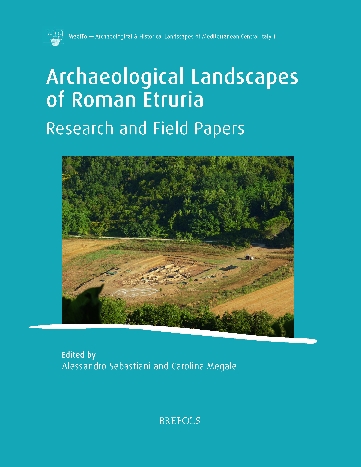
Archaeological Landscapes of Roman Etruria
Research and Field Papers
show More to view fulltext, buy and share links for:Archaeological Landscapes of Roman Etruria show Less to hide fulltext, buy and share links for: Archaeological Landscapes of Roman EtruriaThis volume, the first in a new series dedicated to the archaeological and historical landscapes of central Mediterranean Italy, aims to offer a fresh and dynamic new approach to our understanding of central-southern maritime Tuscany during the Roman period. Drawing on research that was initially presented at the first International Mediterranean Tuscan Conference (MediTo) held in Paganico (Grosseto, Italy) in June 2018, and supported by invited papers from other experts in the field, this collection of essays offers the most up-to-date research into Roman and Late Antique landscapes within Tuscany and its broader Mediterranean context, as well as the political, economic, and social networks that developed in this area during the Classical Period. Ultimately, what emerges from this in-depth study of river valleys, urban centres, and coastal settlements is an understanding of a dynamic Roman territory of cities and villages, villas and sanctuaries, minor sites, and manufacturing districts in which the local population fought to establish and maintain connections with the wider Mediterranean.
-
-
-
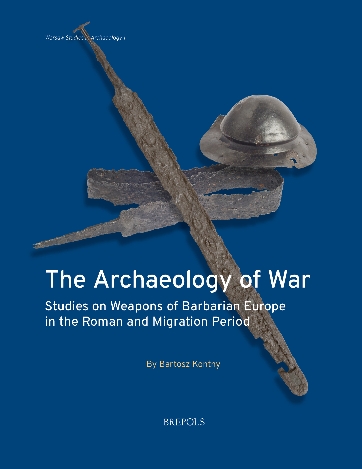
Archaeology of War
Studies on Weapons of Barbarian Europe in the Roman and Migration Period
show More to view fulltext, buy and share links for:Archaeology of War show Less to hide fulltext, buy and share links for: Archaeology of WarFrom graves to settlements, and from the battlefield to underwater sacrificial sites, weapons dating to the Roman and Migration Period have long been found in an array of contexts throughout the region that forms modern-day Poland. This volume for the first time aims to draw together research into these finds, gathered throughout the author’s career, in a synthetic approach that sees discoveries of swords and other armaments analysed against a broad, comparative background. The work begins with a focus on votive deposits from lakes, here used as a lens for addressing questions about military strategy and war ritual more generally, before moving on to explore the weapons and warriors of the Przeworsk and Wielbark Cultures, as well as shedding light on the lives of the Balts. Finally, an in-depth analysis is made of shields from the protohistoric period, exploring the genesis and variability of the forms taken by this protective weapon. Through this approach, this richly illustrated volume sheds new light not only on the typology and chronology of weaponry from the Roman and Migration Periods, but also on the symbolism and functionality that these arms held.
-
-
-
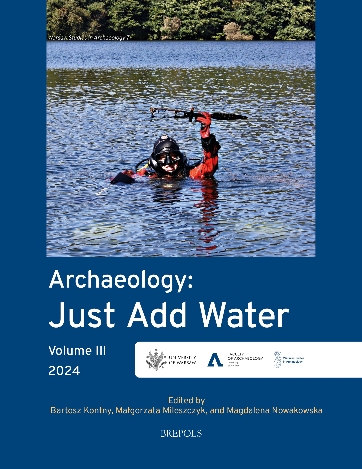
Archaeology: Just Add Water
Volume III
show More to view fulltext, buy and share links for:Archaeology: Just Add Water show Less to hide fulltext, buy and share links for: Archaeology: Just Add WaterWhile archaeology is often considered to focus on the land that lies beneath our feet, significant amounts of material culture have been lost to us beneath water, whether in seas, lakes, rivers, or submerged caves. The world of underwater archaeology, however, is increasingly recognized as a field that is vital to our understanding of the past. The chapters gathered together into this volume draw on research first presented at the Fourth Warsaw Seminar on Underwater Archaeology, held at the University of Warsaw on 18–20 November 2021. From the seas of the Caribbean through to the Mediterranean and Norway, and from Antiquity through to contemporary times, the chapters presented here offer a dazzling array of different approaches to underwater archaeology and outline the potential that changing technology presents in this expanding field.
-
-
-
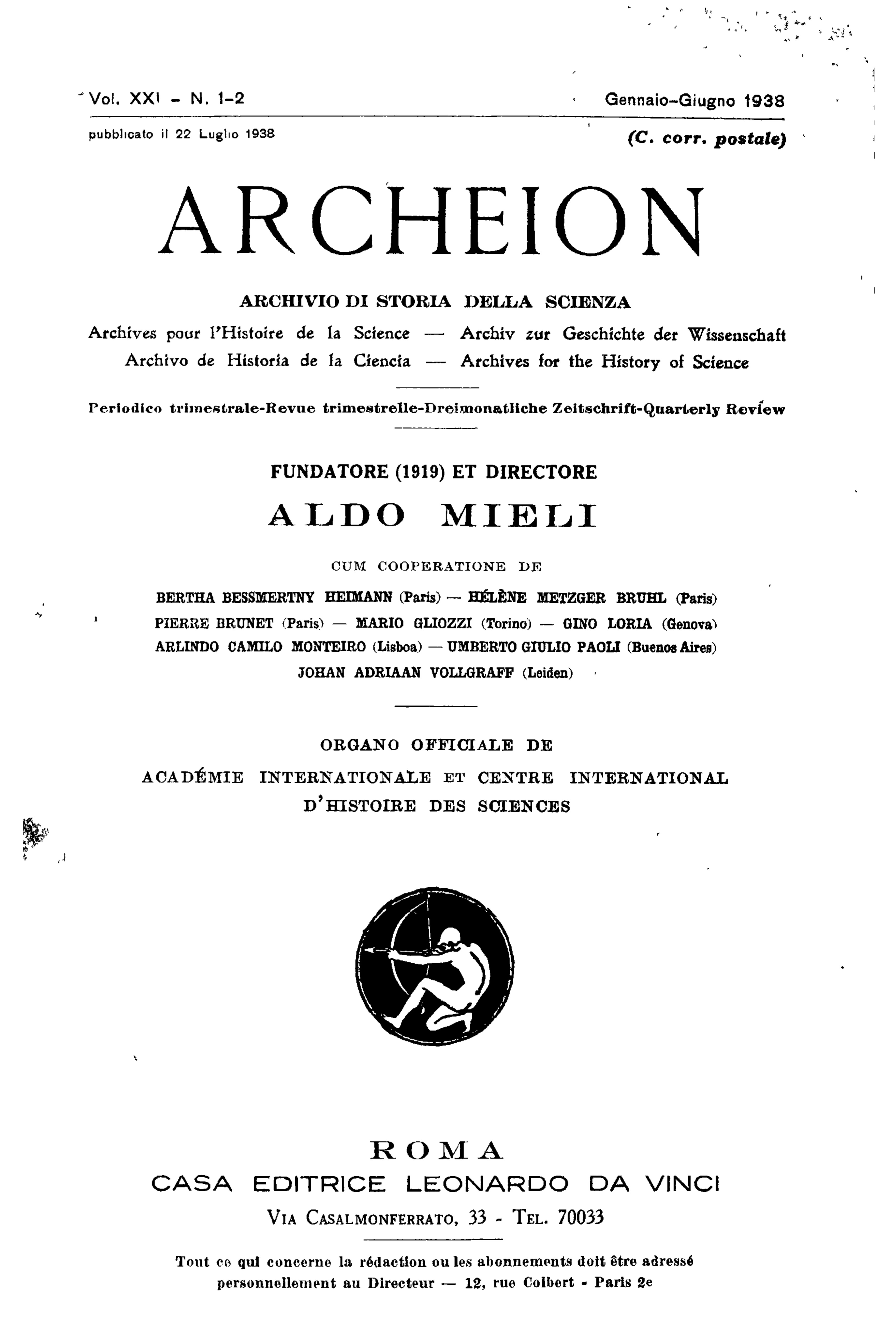
Archeion
Archivio di Storia della Scienza
show More to view fulltext, buy and share links for:Archeion show Less to hide fulltext, buy and share links for: ArcheionArcheion, founded in Rome in 1919 by its editor Aldo Mieli (1879-1950), has had a profound influence on the internationalization of the study of the history of science. The journal serves as a repository of knowledge, shedding light on the gradual development of connections among European countries through congresses, reviews, associations, and scientific societies.
More information about this journal on Brepols.net
-
-
-
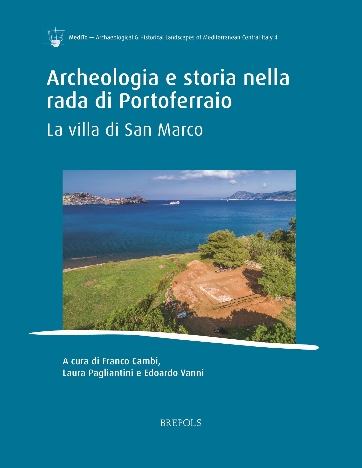
Archeologia e storia nella rada di Portoferraio
La villa di San Marco
show More to view fulltext, buy and share links for:Archeologia e storia nella rada di Portoferraio show Less to hide fulltext, buy and share links for: Archeologia e storia nella rada di PortoferraioIl libro raccoglie una serie di contributi che scaturiscono dallo scavo e dallo studio della villa romana di San Marco sull’isola d’Elba, dei suoi reperti e del suo contesto storico ed ambientale. I ritrovamenti archeologici sono pertinenti un periodo molto ristretto di vita dell’insediamento, all’incirca tra il II secolo a.C e il II secolo d.C., quando la villa fu verosimilmente distrutta da un’incendio. Tale drammatico evento ha permesso la conservazione straordinaria di una serie di reperti organici (come la travatura di un solaio), attraverso i quali è stato possibile procedere ad una ricostruzione dettagliata della planimetria e degli elevati dell’edificio. Lo studio poi delle incredibili decorazioni pittoriche, insieme ad i ritrovamenti epigrafici, hanno permesso di attribuire la villa ad una delle proprietà dell’importante famiglia senatoria dei Valerii.
-
-
-
Archetypal Narratives. Pattern and Parable in the Lives of Three Saints
show More to view fulltext, buy and share links for:Archetypal Narratives. Pattern and Parable in the Lives of Three Saints show Less to hide fulltext, buy and share links for: Archetypal Narratives. Pattern and Parable in the Lives of Three SaintsSaints’ Lives have been read as documentary evidence for their particular historical periods, biographies of their heroic protagonists, folklore for the entertainment of monks, or propaganda in defense of a cult. None of these readings, however, address the problem of theologically interpreting narratives that were conceived and dispersed within a Christian monastic environment. Concentrating on the earliest extant Lives of Sts Brigit, Samson, and Cuthbert, the author adopts an interpretive approach that combines close textual analysis with a theological hermeneutic to uncover the deep biblical influences within the narratives, and poses the possibility that many of the stories within them are actually parables - stories intended to be both metaphorical and illustrative, but hardly factual. Building on this foundation, each narrative is then explored for its internal structural logic, a step which is seen to identify each hagiographer’s unique skills, as well as literary and theological concerns. A theological interpretation of the narratives opens up a fresh appreciation of their religious impact, and the possibility of a widened ‘horizon of meaning’ for readers.
-
-
-
Architectural Elements, Wall Paintings, and Mosaics
Final Publications from the Danish-German Jerash Northwest Quarter Project IV
show More to view fulltext, buy and share links for:Architectural Elements, Wall Paintings, and Mosaics show Less to hide fulltext, buy and share links for: Architectural Elements, Wall Paintings, and MosaicsThe Decapolis city of Jerash has long attracted attention from travellers and scholars, due both to the longevity of the site and the remarkable finds uncovered during successive phases of excavation that have taken place from 1902 onwards. Between 2011 and 2016, a Danish-German team, led by the universities of Aarhus and Münster, focused their attention on the Northwest Quarter of Jerash - the highest point within the walled city - and this is the fourth in a series of books presenting the team’s final results.
This two-part set offers a comprehensive presentation of Jerash’s rich building heritage from the Late Hellenistic period up to the city’s destruction in the mid-eighth century ad through a discussion of architectural elements, together with analysis of the mosaics, wall paintings, and building ceramics excavated from the Northwest Quarter. As well as providing a general overview of the city’s changing patterns of habitation, the contributions gathered here also include close case- studies and object biographies that shed new light on the intense use, reuse, and recycling of materials that testify to evolving urban practices and optimization of resources across the Roman, Byzantine, and Islamic periods.
-
-
-
Architecture and Visual Culture in the Late Antique and Medieval Mediterranean
Studies in Honor of Robert G. Ousterhout
show More to view fulltext, buy and share links for:Architecture and Visual Culture in the Late Antique and Medieval Mediterranean show Less to hide fulltext, buy and share links for: Architecture and Visual Culture in the Late Antique and Medieval MediterraneanThis book comprises sixteen essays addressing issues of art and architecture together with archaeology within the context of sacred space, broadly defined. It encompasses a wide range of territories, methodologies, perspectives, and scholarly concerns. Our point of departure is the built environment, with all that this entails, including religious and political ceremony, painted interiors, patronage, contested spaces, structural and environmental concerns, sensory properties, the written word as it pertains to architectural projects, and imagined spaces. In all, the scholars involved in this project find fresh approaches and uncover new meanings and interpretations in the material examined within this volume, including buildings and objects from Europe to Asia, and spanning from Late Antiquity through the end of the Middle Ages.
-
-
-
Architecture as Profession
The Origins of Architectural Practice in the Low Countries in the Fifteenth Century
show More to view fulltext, buy and share links for:Architecture as Profession show Less to hide fulltext, buy and share links for: Architecture as ProfessionFifteenth-century Florence is generally considered the cradle of the modern architect. There, for the first time since Antiquity, the Vitruvian concept which distinguishes between builder and designer was recognised in architectural theory, causing a fundamental rupture in architectural practice. In this well-established narrative Northern Europe only followed a century later when, along with the diffusion of Italian treatises and the introduction of the all’antic style, a new type of architect began to replace traditional gothic masters. However, historiography has largely overlooked the important transformations in building organisation that laid the foundations for our modern architectural production, such as the advent of affluent contractors, public tenders, and specialised architectural designers, all of which happened in fifteenth-century Northern Europe. Drawing on a wealth of new source material from the Low Countries, this book offers a new approach to the transition from the Middle Ages to the Early Modern Period by providing an alternative interpretation to the predominantly Italo-centric perspective of the current literature, and its concomitant focus on style and on Vitruvian theory.
-
-
-
Architecture of Disjuncture
Mediterranean Trade and Cathedral Building in a New Diocese (11th - 13th Centuries)
show More to view fulltext, buy and share links for:Architecture of Disjuncture show Less to hide fulltext, buy and share links for: Architecture of DisjunctureThrough careful analysis of the Romanesque cathedral of Molfetta (in Apulia, southern Italy), Williams demonstrates how the commercial boom of the medieval Mediterranean changed the way churches were funded, designed, and built. The young bishopric of Molfetta, emerging in an economy of long-distance trade, competed with much wealthier institutions in its own diocese. Funding for the cathedral was slow and unpredictable. To adapt, the builders designed toward versatility, embracing multi-functionalism, change over time, specialization, and a heterogeneous style.
-
-
-
Architecture, Liturgy and Identity
Liber Amicorum Paul Crossley
show More to view fulltext, buy and share links for:Architecture, Liturgy and Identity show Less to hide fulltext, buy and share links for: Architecture, Liturgy and IdentityThis collection of essays, written in honour of the eminent architectural historian Paul Crossley, brings together some of the most distinguished scholars of medieval art and architecture from the United States and many parts of Europe. Covering a broad spectrum of topics and approaches including recent discoveries, new interpretations and critical debates, this book and its counterpart Image, Memory and Devotion (also published in the Studies in Gothic Art series) offer a fitting tribute to the exceptional range of Professor Crossley’s intellectual interests, while providing invaluable insights into the present study of the Middle Ages.
-
-
-
Architecturer l'invisible
Autels, ligatures, écritures
show More to view fulltext, buy and share links for:Architecturer l'invisible show Less to hide fulltext, buy and share links for: Architecturer l'invisibleDes ethnologues, des hellénistes, un assyriologue, une médiéviste, conscients du risque d'ethnocentrisme que fait peser l'utilisation de la catégorie de la «présence» dans le champ du religieux, ont cependant placé cette abstraction au centre de leurs travaux : ils ont fait de la «présence» un dénominateur commun dans un large spectre de catégories comparatives que l'on a coutume d'étudier séparément, comme la divination, le sacrifice, la possession. La simple approche concrète de ce que l'on pourrait appeler «autel» dans les cultures particulières, a démontré que cet artefact rituel pouvait se réaliser indépendamment de toute procédure spécifique d'aménagement ou de construction, mais plus directement dans la gestuelle de présentation de l'offrande, animée ou inanimée ; et l'instance pouvait elle-même se réaliser sous la forme d'un autel. Simultanément, des corrélations nouvelles, rarement repérées, ont pu émerger entre des composantes du rite, faisant apparaître ici, une articulation étroite entre parole, écriture et ligature, là la récurrence de «bouches» pour faire taire, ingérer, proférer, révéler, maudire, ailleurs encore la grammaire complexe et les gestes à suivre pour les formes variées du dépôt. Les contributions se distribuent entre trois verbes d'action : ouvrir, parce que toute instauration et toute «reprise» d'un culte requièrent l'invention et la mise en place d'un commencement; œuvrer, parce que le rite fait feu de tout bois dans les manipulations qui, par métaphore ou par métonymie, construisent des lieux de mise en présence des acteurs et des instances ; écrire, parce qu'en toute performance rituelle, y compris dans les sociétés réputées sans écriture, surgissent un temps d'inscription et un temps de déchiffrement du signe, sur un support rendu efficace tant par ses qualités propres que par cette inscription même.
Michel Cartry, ethnologue de l'Afrique Noire (École Pratique des Hautes Études), Jean-Louis Durand, helléniste et anthropologue (CNRS, Centre Louis Gernet), Renée Koch Piettre, helléniste et comparatiste (École Pratique des Hautes Études), animent ensemble à Paris un groupe de travail sur les pratiques des polythéismes, en s'inspirant des travaux de Marcel Detienne. Leurs travaux croisés ont exploré les aires sacrificielles, avant de s'orienter vers la question de la «présence» des puissances de l'au-delà.
-
-
-
Architectures du monachisme
Une histoire monumentale de l’Île Saint-Honorat de Lérins, Ve-XIIIe siècle
show More to view fulltext, buy and share links for:Architectures du monachisme show Less to hide fulltext, buy and share links for: Architectures du monachismeL’île Saint-Honorat de Lérins accueille des religieux depuis le début du Ve siècle. Il s’agit d’un haut lieu du monachisme, témoin des expériences ascétiques insulaires qui se développent en Occident durant l’Antiquité tardive. Le caractère exceptionnel de Lérins tient aussi à la longue durée d’occupation du site par des religieux. Ce n’est qu’à partir de 2005 qu’ont été entreprises des recherches archéologiques d’envergure sur l’île : fouilles et archéologie du bâti, qui font de Lérins la seule île monastique pour laquelle il existe des vestiges archéologiques remontant de façon assurée aux premières expériences ascétiques occidentales. En présentant ce dossier, l’ouvrage de Yann Codou apporte un éclairage inédit sur la genèse du monachisme en Occident, où des expériences érémitiques cohabitent, au sein de l’espace insulaire, avec des formes de vie plus collectives. Les données restituent également les dynamiques du monachisme au cours du haut Moyen Âge et dans les siècles suivants, en particulier le processus de communautarisation du monachisme. L’architecture est ici un document historique à part entière, qui dialogue avec les sources écrites. Les multiples monuments qui composent le paysage insulaire offrent un terrain de choix pour comprendre des mécanismes de construction identitaire, fondés sur la création et la réinterprétation des espaces sacrés. Les enjeux de la recherche dépassent largement l’histoire de la seule communauté lérinienne pour s’inscrire dans une réflexion sur l’organisation des espaces monastiques et leurs mutations tout au long du Moyen Âge.
-
-
-
Archival Historiographies
The Impact of Twentieth-Century Legacy Data on Archaeological Investigations
show More to view fulltext, buy and share links for:Archival Historiographies show Less to hide fulltext, buy and share links for: Archival HistoriographiesArchives held in institutions around the world hold a wealth of material but traditionally, the fields of Classical and ancient Near Eastern archaeology have been slow to make use of such legacy data in their investigations. In recent years, however, this trend has begun to change, and scholars increasingly recognize the importance of archival material to their research. Drawing directly on these trends, this volume offers the first in-depth analysis of what it means to engage in archive archaeology and how it can influence understandings of both the ancient world and the recent past. Excavation historiographies and the formation of archaeological archives in the twentieth century are investigated in locations from across the Eastern Mediterranean and the Middle East, with current understanding of sites such as Dura Europos or Palmyra being fundamentally reassessed in the light of the archival material. Crucially, the volume contributions gathered here look to the future as well as to the past: archives are acknowledged as essential to cultural heritage preservation and restitution initiatives, and chapters explore best practices, as well as presenting some of the manifold potentials of archive and legacy data to future research.
-
-
-

Archives Internationales d'Histoire des Sciences
show More to view fulltext, buy and share links for:Archives Internationales d'Histoire des Sciences show Less to hide fulltext, buy and share links for: Archives Internationales d'Histoire des SciencesArchives Internationales d’Histoire des Sciences aims to publish works in the history of science, epistemology, and philosophy of science across various fields: from biology and medicine to mathematics and astronomy, by way of the physical and chemical sciences, arts and architecture, and studies considering the institutional and political contexts in which science has developed. Archives Internationales d’Histoire des Sciences encourages the publication of original works. Hence the journal gives priority to new discoveries and interpretations which enrich, deepen, and renew knowledge in the fields in which the journal is concerned, for all cultural areas from Antiquity to contemporary times.
The Archives Internationales d’Histoire des Sciences publish 2 issues per year in six languages: English, French, Italian, German, Russian, and Spanish. Each issue should contain varied and duly evaluated contributions, as well as individual articles, thematic sets of papers, and reviews of recent books.
More information about this journal on Brepols.net
-
-
-
Aristoteles Romanus
La réception de la science aristotélicienne dans l'Empire gréco-romain
show More to view fulltext, buy and share links for:Aristoteles Romanus show Less to hide fulltext, buy and share links for: Aristoteles RomanusThe scholarly contributions which form this volume aim at a better understanding of one of the key stages in the transmission of Aristotle’s philosophical message from antiquity to modernity. It’s an established fact that Aristotelianism, because of an encyclopedic vocation for exploring all of the real, is perfectly in accordance with the cognitive universalism of the Greco-Roman Empire. Indeed Aristotle had classified the whole knowledge in a series of well-ordered disciplines, beginning with logic regarded as an essential instrument for learning and based on the philosophy of first principles that is metaphysics. But his investigations had also led him to renew physics, meteorology, grammar, poetics, rhetoric, politics, ethics, and above all to create the life sciences. This research and study wide-ranging program has without fail subsequently first aroused deep interest among the Roman encyclopedists, then among the Greek commentators, anxious to restore the original prestige of Aristotelian philosophy.
The result of a colloquium organized by the Universities of Strasbourg and Naples, Aristoteles Romanus. The survival of Aristotelian science in the Greco-Roman Empire is an ordered, if not complete, approach originating from a varied investigation of the permanence of a phenomenon into modern times.
-
-
-
Aristotle in Britain during the Middle Ages
show More to view fulltext, buy and share links for:Aristotle in Britain during the Middle Ages show Less to hide fulltext, buy and share links for: Aristotle in Britain during the Middle AgesThis volume contains the papers given at the S.I.E.P.M. conference held at Trinity College, Cambridge in 1994 on Aristotle in Britain during the Middle Ages. The subject was chosen so as to bring together a wide variety of different specialists and to illustrate the range of Britain's contribution to medieval philosophy. A number of the discussions throw new light on celebrated British medieval philosophers, such as Robert Grosseteste and John Duns Scotus. Others show the importance of less well-known thinkers, such as Richard Fishacre, Richard Rufus and Thomas Wylton. The subjects of the papers range widely, both chronologically - from Anselm of Canterbury in the eleventh century to the political and ethical writers of fifteenth-century Oxford and Cambridge - and in method - from philosophical analyses to manuscript studies.
-
-
-
Aristotle’s De anima at the Faculties of Arts (13th-14th Centuries)
show More to view fulltext, buy and share links for:Aristotle’s De anima at the Faculties of Arts (13th-14th Centuries) show Less to hide fulltext, buy and share links for: Aristotle’s De anima at the Faculties of Arts (13th-14th Centuries)This book explores the intersection between the early development of medieval universities and the arrival of Aristotle's works in the Christian West, especially De anima: one of his most famous and obscure writings, straddling the fields of biology and psychology, and devoted to the functions of living beings – including the human being.
The leading figures in this very special meeting of cultures, also involving scientific writings from the Islamic world, are the Masters of Faculties of Arts. From the first half of the 13th century, they embarked on a theoretically very demanding enterprise, namely to restore a complete understanding of De anima; and they accomplished this difficult task by establishing a close – and often polemical – relationship with their more famous colleagues: theologians such as Albert the Great and Thomas Aquinas.
By resorting to the research and teaching methods of their time, the Masters of Arts addressed crucial topics such as the soul/body relationship, sense perception, intellectual knowledge and the special status of the human intellect, mediating, as far as possible, between scientific requirements and those of the Christian faith.
Authors such as Adam of Buckfield, Peter of Spain, Siger of Brabant, John of Jandun and John Buridan, together with other, less famous ones and a small crowd of completely anonymous – yet theoretically no less interesting – scholars, gave rise to a choral narrative that disclosed new philosophical perspectives on man. It is in this intellectual context that the roots of Modern philosophical thought lie.
-
-
-

Armeeführung und Militäreliten in Byzanz, 1081–1203
Selektion, Hierarchie, Repräsentation
show More to view fulltext, buy and share links for:Armeeführung und Militäreliten in Byzanz, 1081–1203 show Less to hide fulltext, buy and share links for: Armeeführung und Militäreliten in Byzanz, 1081–1203Das mittelalterliche Byzanz erlebte während des „langen“ zwölften Jahrhunderts (1081-1204) eine letzte Phase als mediterrane Großmacht. Nach den Krisen des ausgehenden elften Jahrhunderts führte die Etablierung der komnenischen Herrscherdynastie zu einer Periode innerer und äußerer Stabilität. Erst in den politisch und militärisch turbulenten 1180er Jahren sollte das System erneut unter massiven Druck geraten, bevor die Zäsur des IV. Kreuzzuges (1204) gar das vorläufige Ende der staatlichen Einheit brachte.
Die byzantinischen Streitkräfte spielten in dieser Zeit stets eine zentrale Rolle für Staat und Gesellschaft, nicht nur als Instrument der Gewaltausübung und Herrschaftsdurchsetzung, sondern auch als Arbeitgeber, Konsument von Gütern und Dienstleistungen, Betätigungsfeld der Machtelite, Kanal sozialen Aufstiegs und Ort der Integration ausländischer Eliten. Die kaiserlichen Feldherren und Kommandeure lassen sich nicht als reine Funktionselite betrachten, sondern sie waren eingebunden in den Mikrokosmos des Hofes, in Familien- und Patronagebeziehungen, regionale und ethnische Netzwerke. Ihre Geschichte ist nicht nur Militär- sondern stets auch Sozial-, Politik,- Wirtschafts-, und Kulturgeschichte.
Das vorliegende Werk analysiert zum ersten Mal systematisch die personelle, soziale, ethnische und regionale Zusammensetzung der kaiserlichen Feldherren und Offiziere. Die Dynamik politischer, gesellschaftlicher und militärischer Rahmenbedingungen veränderte immer wieder die Personalstrategien der aufeinanderfolgenden Regierungen wie auch die Praktiken der Auswahl und Selektion sowie den Umgang mit formellen und informellen Hierarchien. Die Strukturen und Praktiken militärischer Führung waren dabei stets in gesellschafts- und zeitspezifische Semantiken und Diskurse eingebettet, die ein spezifisch byzantinisches Bild militärischer Führungskultur erkennen lassen.
-
-
-
Arnaud de Villeneuve: Lettre sur l’imposture de la magie nigromantique - Epistola de reprobacione nigromantice ficcionis
Magie et rationalité chez un penseur du xiii e siècle
show More to view fulltext, buy and share links for:Arnaud de Villeneuve: Lettre sur l’imposture de la magie nigromantique - Epistola de reprobacione nigromantice ficcionis show Less to hide fulltext, buy and share links for: Arnaud de Villeneuve: Lettre sur l’imposture de la magie nigromantique - Epistola de reprobacione nigromantice ficcionisVers 1280, Arnaud de Villeneuve publie une courte démonstration à la fois philosophique, théologique et médicale de l’illusion de ces lettrés musulmans, juifs et chrétiens qui prétendaient pouvoir, selon les instructions de manuels de magie alors en vogue, commander aux démons pour obtenir d’eux la réalisation des vœux les plus divers - ce que l’on appelait la nigromancie. Cette édition bilingue est la première en français d’un document représentatif aussi bien du rationalisme aristotélicien que de la médecine galénique qui accompagnèrent le développement de l’enseignement scolastique. Olivier Rimbault commente Arnaud de Villeneuve en historien, en philosophe et en anthropologue. Il montre en effet ce que la rationalité des Modernes doit à cette longue période paradoxale et méconnue qu’est le Moyen Âge, et de cette synthèse tire des parallèles avec la nôtre, mettant en évidence l’irrationnel à l’œuvre dans nos propres croyances les plus « scientifiques » et réhabilitant en conclusion une forme de « magie philosophique » qui pourrait répondre aux défis du XXIe siècle.
-
-
-
Arnobe : le combat Contre les païens
Religion, mythologie et polémique au IIIe siècle ap. J.-C.
show More to view fulltext, buy and share links for:Arnobe : le combat Contre les païens show Less to hide fulltext, buy and share links for: Arnobe : le combat Contre les païensArnobius is a man of one book. A little known author, he was a rhetor and a teacher at Sicca Veneria, a town named after Venus - it is a predestined confluence of rhetoric and religion ! - in the 3rd century AD, and his book, Against the Heathen, has never been the subject of a thoroughgoing study in French. Having converted to Christianity at the end of his life, this African rhetor proves to be, not only a brilliant and spirited writer, but also a man of culture, at home in Greek literature and in Latin. Remaining intellectually very close to the pagan ideas of his contemporaries, he adopts, in the seven books of an apology that he left unfinished at his death, a vehement and insidious tone of controversy - verging upon dishonesty - in order to turn ancestral Roman religion and Greek mythology from their purpose, with the sole aim of magnifying the glory of the Christian God.
-
-
-
Arnobius Iunior, Praedestinatus
show More to view fulltext, buy and share links for:Arnobius Iunior, Praedestinatus show Less to hide fulltext, buy and share links for: Arnobius Iunior, PraedestinatusFor the first time in English, the Praedestinatus represents a moment in the fifteen-century old theological conversation in Latin Christianity about the topics of grace, predestination and free will. Written as a response to Augustine’s growing theological influence, this book should not merely be regarded as a work of apologetics, despite the author’s intention, but seen as breaking controversial new ground because of his claim that a small circle of heretics was acting as a ‘fifth column’ within the Church, undermining orthodox beliefs concerning God, his providence and all-inclusive love.
After a three hundred year hiatus since Jacques Sirmond’s 1643 editio princeps, interest in the Praedestinatus revived in the twentieth century thanks to German and French scholars who studied the book’s theological trajectory and claims. Its critical edition was eventually accomplished in 2000 by Italian scholar Franco Gori. The present translation is based on Gori’s edition.
-
-
-
Arnold Geulincx, Éthique
show More to view fulltext, buy and share links for:Arnold Geulincx, Éthique show Less to hide fulltext, buy and share links for: Arnold Geulincx, ÉthiqueEn juillet 1665 paraît, en Hollande, le premier traité de l’Éthique d’Arnold Geulincx. Le texte complet n’en paraîtra en 1675, quelques années après la mort de son auteur. Qui aujourd’hui le sait ? De ces lieux, de ces temps, est-ce cette Éthique-là qui a fait date? Certainement non! Et c’est sans doute justice que nombre d’études consacrées à cet auteur, - Geulincx - prennent pour interrogation principale la question de son rapport à Spinoza dont l’Éthique, pense-t-on, dut commencer à être rédigée vers 1665 et achevée vers l675. Geulincx néanmoins connut des tribulations, géographiques et intellectuelles, qui l’amenèrent à formuler, de manière unique et singulière ses vues sur ce que la philosophie de l’époque pouvait affirmer en matière d’éthique. Question peu simple à cette croisée des perspectives, où l’on ne savait trop selon quelles modalités l’homme devait être mis au centre du discours philosophique - centre vide, «égout» pour reprendre une terminologie baroque assumée par Geulincx, ou épicentre d’une raison ou d’une vertu capable de sauver, dans le cadre de religions peu amènes pour les capacités propres de l’homme, la possibilité d’une liberté pensée comme soumission à la Raison.
Le présent travail entend avant tout donner à entendre à la voix d’un homme dont il est aujourd’hui attesté qu’elle fut entendue de son temps et contribua de manière significative, ne serait-ce que par les impasses dont elle a pu témoigner, à l’évolution de la pensée de l’époque. Aussi, dans cette perspective, laisserons-nous de côté la question aussi récurrente qu’implicite, en histoire des idées et de la philosophie, sur les grands et les petits. Inventeur ou créateur, continuateur ou précurseur, Geulincx présente l’intérêt d’une figure originale dans l’histoire des idées, et son Éthique condense des questions qui trouveront dans l’avenir les réponses diversement appréciées, diversement cohérentes : Spinoza, Malebranche, voire Leibniz puis Kant.
Est-il si primordial, d’emblée, de le caractériser - ce qui du reste est peu contestable - comme occasionnaliste ? Cette étiquette ne risque-t-elle pas d’épuiser à tort les potentialités d’une pensée qui trouvera bien d’autres développements ? Avant d’enrôler ce « mineur » dans les grands courants de l’histoire de la philosophie, ce travail de traduction voudrait lui donner la chance d’être lu dans des directions peut-être, sait-on jamais, insoupçonnées.
-
-
-
Arnoul de Lisieux (1105/1109-1184)
Lettres d'un évêque de cour dans l'embarras
show More to view fulltext, buy and share links for:Arnoul de Lisieux (1105/1109-1184) show Less to hide fulltext, buy and share links for: Arnoul de Lisieux (1105/1109-1184)Si la cour d’Henri II d’Angleterre (1154-1189) a connu des évêques partisans du roi ou, comme le montre le cas de Thomas Becket, des adversaires farouches, Arnoul de Lisieux a été un homme de compromis, convaincu de la nécessaire collaboration du regnum et du sacerdotium. Voué aux gémonies par le parti de Becket, Arnoul n’a pas su gagner pour autant la sympathie indéfectible d’Henri II. Sa carrière d’évêque de cour fut pour lui jusqu’à la fin une source d’inquiétude et d’insatisfaction, comme le montrent ses lettres. Harmonieux au début du règne, les rapports avec le roi se sont rapidement refroidis, et si Arnoul comptait, entre 1164 et 1172, parmi les curiales influents, à la suite de la révolte des princes royaux (1173-1175) contre leur père, il a perdu la confiance du monarque. Sachant que le roi ne pardonnerait pas s’il avait conçu de la haine pour quelqu’un, l’évêque dut assister, impuissant et endetté, à la perte de ses revenus. Poussé vers la sortie par Henri II, il se retira, en 1181, à Saint-Victor, où il mourut (1184). Sous Henri II, vouloir être à la fois l’ami du pape et celui du roi fut une erreur lourde de conséquences pour qui avait des ambitions politiques.
-
-
-
Ars Habsburgica
New Perspectives on Sixteenth-Century Art
show More to view fulltext, buy and share links for:Ars Habsburgica show Less to hide fulltext, buy and share links for: Ars HabsburgicaStarting from a political reality, which is, at the same time, artistic and cultural, the book Ars Hasburgica aims to review the still so common historiographical conception of the Renaissance that conceives this period from a geographically Italocentric, artistically classicist and politically centered the idea of "national" arts and schools.
But Renaissance is a more global and complex phenomenon. What this book aims to offer is an idea of the art of that period that considers the role played by the Habsburg dynasty and its various courts in this period, trying to verify whether, by applying other historiographic models, and having the art of the Casa de Austria as a focus, traditional ideas can continue to be maintained well into the twenty-first century. We refer to the so-called "Vasari paradigm", on which art history of the sixteenth century has largely been built over the last centuries. It is also intended to structure concepts about the art of the period not so much around nationalist considerations and identities of the arts, but to raise these issues throughout ideas such as that of the court as a political, artistic and cultural sphere, in the wake of the classical studies by Norbert Elias, Amedeo Quondam or Carlo Ossola.
-
-
-
Ars Lyrica
Journal of the Lyrica Society for Word-Music Relations
show More to view fulltext, buy and share links for:Ars Lyrica show Less to hide fulltext, buy and share links for: Ars LyricaThe journal Ars Lyrica foregrounds what is basic to Comparative Literature, Musicology and Ethnomusicology as disciplines: analysis of relations between and among composers, authors, performance practices, works, languages, traditions, cultures, nations, continents, and histories, and exploration of the methods and mechanisms by which those relations create meaning. Topics and theories involving points of cultural contact and crossings remain critical to the journal’s focus.
-
-
-
Art Auctions and Dealers
The Dissemination of Netherlandish Art during the Ancien Régime
show More to view fulltext, buy and share links for:Art Auctions and Dealers show Less to hide fulltext, buy and share links for: Art Auctions and DealersThis collection of essays presents a status quaestionis concerning the dissemination of Flemish and Dutch art during the period 1500-1800, and highlights the role art auctions and dealers have played in this process. Auctions emerged as the primary channel for art sales at the end of the seventeenth century in the Low Countries and started a trent whereby countless local art collections were broken up and sold to the highest bidder. Especially (old master) paintings exchanged hands in great numbers at these public sales, and the finest pieces frequently ended up in foreign holdings.
The activities of the professional art dealer form the focus of several essays. These intermediaries played an instrumental role in the commercialization and expansion of the art trade in early modern Europe. They had a profound impact on the history of collecting as they mediated and even influenced taste. Naturally, the role of art dealers changed over time. Therefore, the historians, art historians and economists who contributed to this volume have approached this phenomenon in an interdisciplinary fashion in order to properly understand how art markets functioned. In doing so, these essays explore the various ways in which art dealers helped shape markets for art, and how they facilitated the increasing volume of exports of Netherlandish art from the sixteenth century onwards.
Hans Vlieghe is professor emeritus at the University of Leuven. He has published extensively on Flemish art of the 17th century, especially on Rubens and his circle.
Filip Vermeylen is assistant professor of Cultural Economics at the Erasmus University in Rotterdam. His current research focuses on the history of art markets.
Dries Lyna works at the Center for Urban History (University of Antwerp), where he is currently preparing a Ph.D. thesis on art auctions in eighteenth-century Antwerp and Brussels.
-
-
-
Art, Architecture and Religion Along the Silk Roads
show More to view fulltext, buy and share links for:Art, Architecture and Religion Along the Silk Roads show Less to hide fulltext, buy and share links for: Art, Architecture and Religion Along the Silk RoadsArt, Architecture and Religion Along the Silk Roads will be volume 12 in the Silk Road Studies series. It has been produced by the Ancient History Documentary Research Centre at Macquarie University, Australia and edited by Ken Parry, Senior Research Fellow, Department of Ancient History, Macquarie University. It consists of selected papers from the 2004 conference of the Australasian Society for Inner Asian Studies. The volume contains 14 articles of 350 pages with 40 illustrations and covers topics relating to Ancient Chorasmia, Sogdia and China, Buddhist and Manichaean art, Middle Iranian manuscripts and Buddhist manuscripts from Afghanistan, Nestorian Christianity and contemporary Islam, Silk Road clowns and headcoverings of Central Asia. The collection highlights the range and depth of Australasian scholarship on Inner Asia and demonstrates that there are still many unexplored aspects of Silk Road Studies.
-