EMISCA

Collection Contents
101 - 150 of 260 results
-
-

Les élites et leurs espaces
show More to view fulltext, buy and share links for:Les élites et leurs espaces show Less to hide fulltext, buy and share links for: Les élites et leurs espacesVenant à la suite du volume sur «les élites au haut Moyen Âge: crises et renouvellements», cet ouvrage analyse le rapport des élites à la distance et à l’espace. Laissant de côté les concepts de noblesse ou d’aristocratie, on adopte ici celui d’élite, emprunté à la sociologie, pour faire porter l’étude sur tous ceux qui, d’une manière ou d’une autre, exercent un pouvoir social lié à l’excellence, que ce soit celle de la naissance et du sang, ou celle de la capacité, dans telle ou telle activité, à se distinguer et à en tirer prestige, richesse ou honneur. Historiens des textes et archéologues croisent les approches et examinent la relation qu’entretiennent les élites avec les notions d’espace, de territoire et de distance — une relation changeante selon le contexte politique et économique, et qui vaut comme critère de hiérarchisation sociale. L’espace ici étudié peut être lâche ou structuré, fini ou ouvert. On le voit être transformé en territoire, à l’initiative de personnes et de groupes. En même temps, les auteurs prennent en compte l’idée de distance: les élites la maîtrisent, elles contrôlent, modèlent, fondent des zones d’influence ou des territoires. L’étude du rapport des diverses élites à la distance, à l’espace et aux lieux de pouvoir permet ainsi de renouveler profondément l’approche du phénomène élitaire en privilégiant la pratique par rapport aux critères théoriques et juridiques de la distinction. La présente enquête est conduite sur la longue durée, depuis la fin du monde antique jusqu’au XIe siècle, et couvre une bonne partie de l’Europe (Allemagne, Angleterre, Espagne, France, Italie).
-
-
-
Livres et lectures de femmes en Europe entre moyen âge et renaissance
show More to view fulltext, buy and share links for:Livres et lectures de femmes en Europe entre moyen âge et renaissance show Less to hide fulltext, buy and share links for: Livres et lectures de femmes en Europe entre moyen âge et renaissance
-
-
-

Léon IX et son temps
show More to view fulltext, buy and share links for:Léon IX et son temps show Less to hide fulltext, buy and share links for: Léon IX et son tempsLe pontificat de Léon IX (1049-1054) marque un tournant dans l’histoire de l’Eglise. Energique et déterminé, Léon IX voyage au sud comme au nord des Alpes, tient de nombreux conciles, fait sentir même aux évêques le poids de l’autorité romaine, tente de mener une politique cohérente face aux Normands et aux Byzantins, réforme la vieille chancellerie pontificale… Il lance ainsi, dans le respect de l’autorité impériale, la réforme de l’Eglise qui deviendra ensuite la réforme grégorienne.
Saisissant le prétexte du millénaire de sa naissance, un colloque réuni à Strasbourg en juin 2002 a fait le point sur les origines, la personnalité, l’action et l’entourage de ce pape, ainsi que sur les sources, narratives, diplomatiques, épistolaires, nécrologiques, archéologiques et autres, de l’histoire de son pontificat.
-
-
-
Making and breaking the rules: succession in medieval Europe, c. 1000-c.1600. Établir et abolir les normes: la succession dans l’Europe médiévale, vers 1000-vers 1600
show More to view fulltext, buy and share links for:Making and breaking the rules: succession in medieval Europe, c. 1000-c.1600. Établir et abolir les normes: la succession dans l’Europe médiévale, vers 1000-vers 1600 show Less to hide fulltext, buy and share links for: Making and breaking the rules: succession in medieval Europe, c. 1000-c.1600. Établir et abolir les normes: la succession dans l’Europe médiévale, vers 1000-vers 1600Les stratégies familiales au Moyen Âge recourent à un vaste éventail de dispositifs destinés à assurer la survie de la famille et du pouvoir qu’elle gère parfois. Mariages, alliances, processus d’adoption même permettent de conserver et d’étendre l’identité familiale, que ce soit sous la forme de la lignée ou de la parenté large; mais ce sont sans doute les stratégies adoptées au moment des successions qui sont les plus cruciales pour la perpétuation des familles. Les études réunies ici tentent de confronter et de comparer les systèmes de succession en vigueur dans les différentes régions d’Occident, de la Russie à l’Irlande, de la Scandinavie à la péninsule Ibérique. Dans le cas des successions princières, elles démontrent que l’étude du principe électoral permet de mieux comprendre, a contrario, ce qui fait la force du sentiment dynastique, jamais absent. Et la comparaison avec d’autres domaines où jouent les processus de succession, qu’il s’agisse de l’Église ou de l’office, vient alimenter des interrogations nouvelles sur les formes du désir de pérennité.
-
-
-

Manuscripts and Monastic Culture
show More to view fulltext, buy and share links for:Manuscripts and Monastic Culture show Less to hide fulltext, buy and share links for: Manuscripts and Monastic CultureEach of the studies in this volume draws upon a manuscript, or a group of manuscripts, that shed light on the practice of monastic life during this period of reform. Many, but not all, of the papers focus on the monastery of Admont in central Austria. Admont was one of the most important spiritual, cultural, and intellectual centres in the high Middle Ages, and its magnificent library still houses an extensive collection of manuscripts - a rich resource both for the history of the monastery and for the broader history of medieval religious life. The book brings together the work of an international group of scholars whose work touches on various aspects of twelfth-century Admont, and the broader movement for reform and renewal in Germany and Austria.
With the publication of Charles Homer Haskin’s important work, The Renaissance of the Twelfth Century (1933), came a new way of looking at the civilization of the high Middle Ages. Scholars have since investigated many aspects of this revival: the rise of the universities, the development of canon law, the emergence (or re-emergence) of a heightened sense of human individuality, and the revival of religious fervour that has been labelled a reformation before the Reformation. Much of this scholarly work has focused on northern-central Italy, France, and England. Germany, however, has been little studied in this context, in part because the nature and trajectory of the reform there differed from that seen elsewhere in Europe. The essays in the book both explore connections between Germanic lands and the wider western European context, and consider the unique spiritual and intellectual climate of Germany’s monasteries.
-
-
-
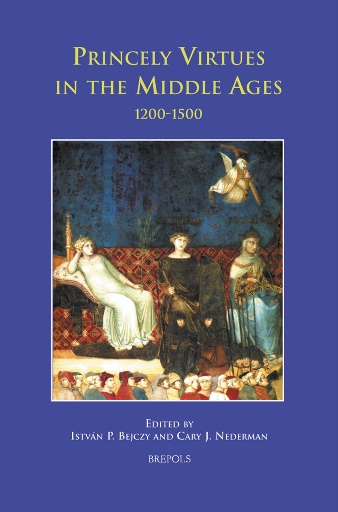
Princely Virtues in the Middle Ages
show More to view fulltext, buy and share links for:Princely Virtues in the Middle Ages show Less to hide fulltext, buy and share links for: Princely Virtues in the Middle AgesThe contributors to this book examine the diverse roles played by moral virtues in the political writing of the Later Middle Ages. Medieval political thought has a long tradition of scholarship, and its ethical dimension has always received sustained attention. This volume specifically concentrates on the meaning and function of virtues in a political context, a theme which has thus far been neglected. The authors deal with Latin texts (occasionally in combination with vernacular ones) from the thirteenth to fifteenth centuries that define, legitimize, or criticize secular rule by using catalogues of virtues, originating from ancient philosophy as well as Christian moral theology. The contributions discuss various aspects related to this theme, such as the relation between the virtues of rulers and general moral precepts; the tension between secular or philosophical perspectives on virtue and Christian moral thought; the use of moral virtues for political ends; the balance between praise of the prince’s virtues and criticism of his vices; and so forth. The medieval texts under discussion are of French, German, English, Italian, and Spanish origin, and vary from educational treatises and historiography to moral theology and political philosophy.
-
-
-
Religious and Laity in Western Europe, 1000-1400
show More to view fulltext, buy and share links for:Religious and Laity in Western Europe, 1000-1400 show Less to hide fulltext, buy and share links for: Religious and Laity in Western Europe, 1000-1400This volume examines forms of interaction between monastic or mendicant communities and lay people in the high Middle Ages in Britain, France, the Low Countries, and Scandinavia. The nineteen papers explore these issues in geographically and chronologically diverse settings in a way that no English-language collection has yet attempted. It brings together the latest research from established as well as younger historians. The first section ‘Patrons and Benefactors: power, fashion, and mutual expectations’ examines lay involvement in foundations, the rights held by patrons, and how they used these powers, as well as networks of relationships within broader groups of benefactors. The authors demonstrate how changing fashions shaped the fortunes of particular orders and houses and explore how power relations between different types of patrons and benefactors - royal figures, kinship, and other social groupings - affected the mutual expectations of the various parties. The second section of the volume, entitled ‘Lay and Religious: negotiation, influence, and utility’, shows how lay people’s ideas of the role of religious houses could impact upon their patronage of, and support for, monastic or mendicant institutions. Conversely, religious communities offered multi-faceted benefits - practical, intellectual, or spiritual - for the secular world. The book concludes by focusing on the rapid growth of confraternities, their relation to their urban mendicant and monastic contexts, and how the role and forms of confraternities evolved in the late medieval period.
-
-
-
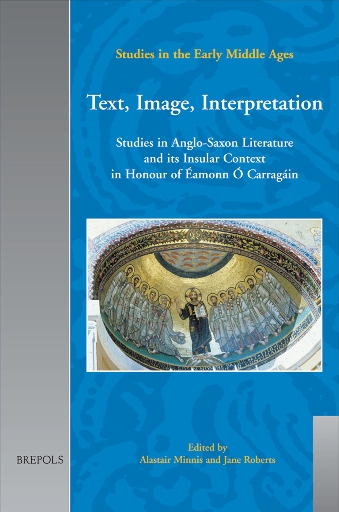
Text, Image, Interpretation:
show More to view fulltext, buy and share links for:Text, Image, Interpretation: show Less to hide fulltext, buy and share links for: Text, Image, Interpretation:In emulation of Professor Éamonn Ó Carragáin, who has, over the last few decades, demonstrated how words and images together join in that extraordinary cultural achievement which is the Ruthwell Cross, the volume seeks to transcend the established methods of the single discipline.
The twenty-six essays draw together insights from fields as diverse as archaeology, art history, and liturgy to reflect on the literature and material culture of the Anglo-Saxons. The first section looks outwards from the insular context, to medieval Rome, more generally to western Europe, and backwards to the world-geography of the ancient world; its illustrations include colour plates to illumine the hangings, clothing and vestments extant from Anglo-Saxon England. A range of texts is considered in the central section, Latin, English, and Old Norse. The third section focuses on sculpture, buildings and the insular landscape, juxtaposing the sculptured stonework of Northern Britain with early Christian monuments and remains from Ireland; among the illustrations are striking coloured photographs of Irish ecclesiastical sites. The contributors are from Canada, the United States, Italy, Britain, and Ireland.
-
-
-

Texte et discours en moyen français
show More to view fulltext, buy and share links for:Texte et discours en moyen français show Less to hide fulltext, buy and share links for: Texte et discours en moyen françaisC’est dans le cadre du renouveau de la linguistique diachronique et de l’attention croissante portée au moyen français que s’inscrivent les présentes études sur la linguistique textuelle du moyen français. Quels sont, dans cette période, les éléments linguistiques contribuant à la structuration du texte? Comment la cohésion textuelle et la continuité thématique sont-elles assurées? Les contributions réunies ici explorent ces domaines, en décrivant l’emploi d’une série de connecteurs, modalisateurs et signes de ponctuation et en analysant les mécanismes sous-jacents au fonctionnement des expressions anaphoriques et des constructions topicalisantes et focalisantes.
Le présent volume, qui est le fruit du XIe colloque international sur le moyen français tenu à Anvers (19-21 mai 2005), offre une analyse originale et détaillée des outils linguistiques dont dispose le moyen français pour rendre accessible son discours.
-
-
-
The Crisis of the Oikoumene
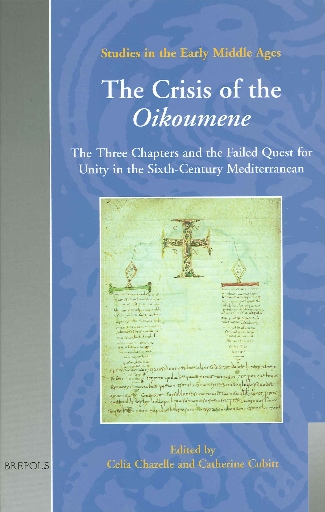
show More to view fulltext, buy and share links for:The Crisis of the Oikoumene show Less to hide fulltext, buy and share links for: The Crisis of the OikoumeneThe sixth-century theological controversy over the ‘Three Chapters’, which centred on the nature of Christ, provoked one of the most serious and long-lived religious schisms of the early Middle Ages. The fault lines ran not only between the Byzantine imperial court and the papacy, but between Rome and the churches in the former western empire’s successor states. In Italy, the schism endured into the seventh century, and the repercussions were felt long thereafter. Though rooted in the complexities of christological debate, the tensions reveal the growing political as well as cultural divide between Byzantium, Rome, and the West. Thus the controversy is critical for our understanding of the late-antique and early-medieval Mediterranean world, and of the inheritance of empire in western Europe and North Africa. This book presents ten chapters by an international group of scholars who examine different facets of the Three Chapters Controversy and its profound impact on these regions.
-
-
-
The Medieval Cathedral of Trondheim
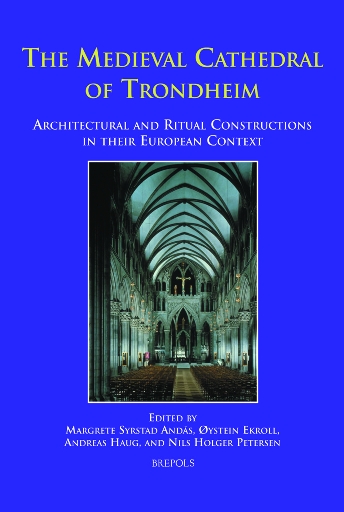
show More to view fulltext, buy and share links for:The Medieval Cathedral of Trondheim show Less to hide fulltext, buy and share links for: The Medieval Cathedral of TrondheimMedieval cathedrals and the various practices connected to them form an important and complex part of the European cultural heritage. The buildings themselves and their reception into the modern arts ensure their presence within today’s cultural memories and sensibilities. In the mid-twelfth century, a new archbishop’s seat was erected in the Norwegian city of Trondheim (or Nidaros) in the far north of Europe. This interdisciplinary volume, written by scholars of history, architecture, and liturgy, explores the medieval cathedral of Trondheim as a local construction in a European context. As a see of the Western Church, it was set in an international Latinate culture. At the same time, the construction of the building itself and the ritual practices in and around it were influenced by local political, religious, and cultural conditions. The relationship between the physical construction of a cathedral and its function in medieval liturgical and other ritual practices is a topic of wide relevance for architectural and liturgical scholarship. The so-called Ordo Nidrosiensis, the thirteenth-century ordinal of the province of Nidaros, is an immense help in interpreting the architectural construction and sacred space of Nidaros Cathedral and the Ordo is dealt with in many of the articles. In accordance with general medieval practice, both the Nidaros ordinal and this volume may be described as international in content but edited with regard to local considerations.
-
-
-
The Medieval Translator. Traduire au Moyen Age
show More to view fulltext, buy and share links for:The Medieval Translator. Traduire au Moyen Age show Less to hide fulltext, buy and share links for: The Medieval Translator. Traduire au Moyen Age[Fundamental to all translation work, the concept of “displacement” allows one to take into account the multiple successive states inhering in a single text, and to interpret these variations. Translation is, in effect, a form of transfer; more specifically, it involves a movement from one context to another, be it national, social, political, historical, linguistic or religious. The texts examined here illustrate, each in their unique way, the relationship between contextual change and audience. They are also the product of subtle interactions between a variety of elements, the result of which is a “reinvention” of their respective roles and uses over time. For example, a text intending to entertain may also have educational outcomes; a book of local miracles may attract pilgrims and contribute to the economic life of a monastery; a text and its translations may at some point be appropriated for polemical purposes, while a library of translated texts founded on humanist principals may also serve political ends.
Furthermore, each successive adaptation and its accompanying annotations impacts upon the tonality of a text. While this diversity of meanings may inspire some (such as the medieval poet Marie de France), it moreover raises a number of important and difficult questions for the modern translator. How, for example, does one translate the “harmonics” underlying a series of mystical puns? The “solution” usually involves a compromise that both enhances and undermines the translated text.
This volume presents a selection of twenty-eight papers delivered at the Seventh International Conference dedicated to The Theory and Practice of Translation in the Middle Ages, which took place at the University of Paris III — Nouvelle Sorbonne in July 2004. The period covered by the texts and their translations extends from antiquity to the present day. The literary and critical breadth of these papers, as well as the rigorous interrogation of the modern translation theory, illustrates the remarkable vitality and diversity of current scholarship in this field.
,Au cœur de toute activité de traduction, le concept de déplacement permet de rendre compte des multiples états successifs d’un même texte et d’en interpréter les variations. Toute traduction est en effet une translation, c’est-à-dire un changement d’environnement, que ce dernier soit national, social, politique, historique, linguistique ou ecclésial. Les textes examinés ici témoignent chacun à sa manière des transformations qu’ils ont subies lorsque, changeant de langue, de style ou d’époque, ils ont changé de destinataires. La dynamique qui les traverse se nourrit de subtils côtoiements: un désir légitime de divertir peut fort bien s’accommoder d’une intention didactique; un recueil de miracles locaux peut attirer des pèlerins, contribuant ainsi à la vie économique d’un monastère; un texte et ses traductions peuvent devenir l’objet d’utilisations polémiques; se constituer en humaniste une bibliothèque de traductions peut aussi servir un dessein politique.
Par ailleurs les transpositions successives et leurs gloses, comme en musique, entraînent des changements de tonalité. Ce ‘surplus’ de sens qu’encourage Marie de France pourra cependant se heurter à des résistances: comment par exemple préserver d’une langue à l’autre toutes les harmoniques que libère un enchaînement de jeux de mots mystiques? Ainsi l’inévitable compromis qui s’imposera au traducteur sera souvent le choix d’un enrichissement doublé d’une déperdition.
Ce volume présente une sélection des communications entendues lors du septième colloque international consacré à la théorie et la pratique de la traduction des textes au Moyen Age qui s’est tenu à l’Université de Paris III — Sorbonne Nouvelle en juillet 2004. La période couverte par ces textes et leurs traductions s’étend de l’Antiquité jusqu’à nos jours. Ce sont au total vingt-huit études qui sont ici proposées. La richesse des domaines abordés, la haute technicité des analyses, de même que la place faite aux questionnements de la traductologie moderne illustrent la remarquable vitalité des études actuelles relatives aux multiples aspects de la traduction des textes médiévaux.
]
-
-
-
The Narrator, the Expositor, and the Prompter in European Medieval Theatre
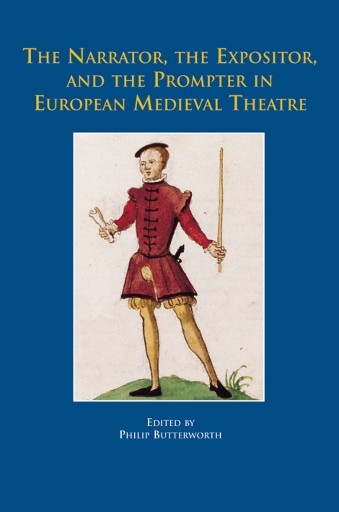
show More to view fulltext, buy and share links for:The Narrator, the Expositor, and the Prompter in European Medieval Theatre show Less to hide fulltext, buy and share links for: The Narrator, the Expositor, and the Prompter in European Medieval TheatreInterest in the content of this book has developed out of an examination of the prompter who operated in full view of the audience and offered all the lines to the players. In 2001 at Groningen a production of the Towneley Second Shepherds’ Play focused on an examination of this convention. Many of the audience responses then were concerned with the figure of the prompter as he was seen to operate simultaneously both ‘inside’ and ‘outside’ the action of the play. Such a role and its function is fascinating, not only in its own right, but also in relation to how it might inform us about the nature and purpose of presented theatre. The ability of such a figure to move in and out of the action, and thus different realities, characterizes a relationship to the action and the audience. The same fascination exists in relation to roles of the narrator and the expositor. Sometimes these roles are overt ones; sometimes they ‘double up’ with roles of actors, personages or characters. These figures are of pivotal significance in the communication of those plays in which they operate. The purpose of this book is to investigate the nature of these roles in order to identify their influence upon the performance of medieval plays.
-
-
-
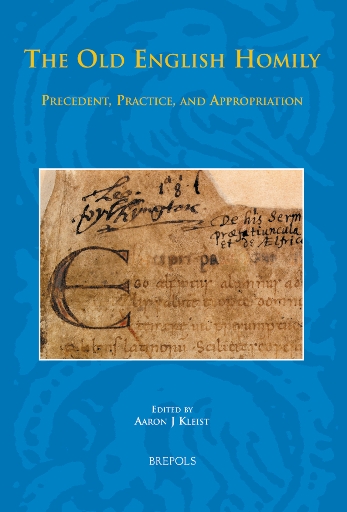
The Old English Homily
show More to view fulltext, buy and share links for:The Old English Homily show Less to hide fulltext, buy and share links for: The Old English HomilyThe quarter-century that has passed since Paul Szarmach’s and Bernard Huppé’s groundbreaking The Old English Homily and its Backgrounds (1978) has seen staggering changes in the field of Anglo-Saxon homiletics. Primary materials have become accessible to scholars in unprecedented levels, whether digitally or through new critical editions, and these have generated in turn a flood of secondary scholarship. The articles in this volume showcase and build on these developments. The first five essays consider various contexts of and infuences on Anglo-Saxon homilies: patristic and early medieval Latin sources, continental homiliaries and preaching practices, traditions of Old Testament interpretation and adaptation, and the liturgical setting of preaching texts. Six studies then turn to the sermons themselves, examining style and rhetoric in the Vercelli homilies, the codicology of the Blickling Book, sanctorale and temporale in the works of Ælfric, and the challenges posed by Wulfstan’s self-referential corpus. Finally, the last entries take us past the Conquest to discuss the re-use of homiletic material in England and its environs from the eleventh to eighteenth century. Together these articles offer medieval scholars a new Old English Homily, one that serves both as an introduction to key figures and issues in the field and as a model of studies for the next quarter-century.
-
-
-
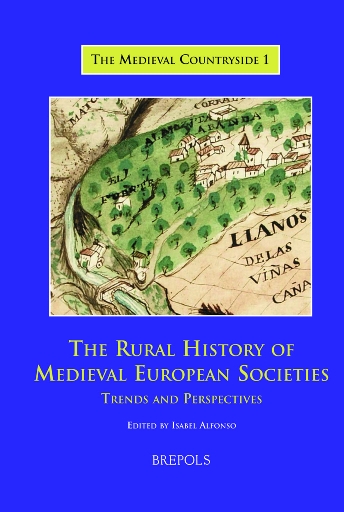
The Rural History of Medieval European Societies
show More to view fulltext, buy and share links for:The Rural History of Medieval European Societies show Less to hide fulltext, buy and share links for: The Rural History of Medieval European SocietiesThis collection gathers together a range of scholars who reflect on recent historiographical developments in medieval rural history within their respective countries. Each contribution provides a survey of a recent area of research, as well as documenting its significant results, and offering perspectives for future investigations. This international approach not only provides a deeper insight into how medieval rural studies relates to current debates in the social sciences, but it also highlights the connections between specific national historical traditions and present-day research issues in their historical contexts. By comparing different European regions it is possible to see more clearly the similarities and the differences which lie between them; this volume therefore constitutes a truer means of constructing syntheses and for identifying fruitful lines of future research.
-
-
-
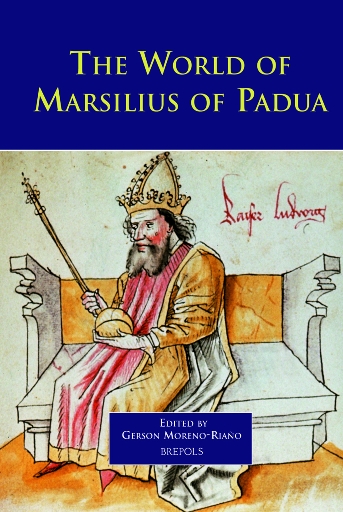
The World of Marsilius of Padua
show More to view fulltext, buy and share links for:The World of Marsilius of Padua show Less to hide fulltext, buy and share links for: The World of Marsilius of PaduaPerhaps no author of the Latin Middle Ages has been the subject of so much controversy and even vitriol than Marsilius of Padua (c. 1275-1342/43). As author of the notorious heretical tract, the Defensor Pacis, Marsilius became an infamous figure throughout the intellectual and political centres of Europe during his own lifetime. His magnum opus, a sharply pointed dissection of the damage done to earthly political life by the incursions of the papacy and a plea for conciliar ecclesiology, was repeatedly condemned during the fourteenth century and in later years. Yet the treatise continued to be disseminated and received translation into several vernacular languages. During the Reformation, Marsilius and his Defensor Pacis enjoyed another round of acclamation and denunciation, depending upon one’s confession. In July 2003, a group comprising many of the world’s most renowned scholars of medieval political thought gathered for a ‘Marsilius of Padua World Congress’. The contents of the present volume represent a compendium of innovative scholarly contributions to the understanding of Marsilius, his life and times, and his lasting impact on Western thought. Included are chapters that reflect a range of recent, ground-breaking research by both senior scholars and the future leaders in the field. After a general survey of the current state of scholarship on Marsilius, the volume divides into three thematically organized sections, covering a variety of historical, textual, methodological, theological, and theoretical questions. In all of the essays, readers will discover the wealth and complexity of Marsilius’s thought as well as the startling range of approaches and methods of interpretation taken in the study of his work. The volume’s selection of authors is international in scope and represents the first interdisciplinary scholarly collaboration in the field of Marsilian studies to occur in the twenty-first century.
-
-
-
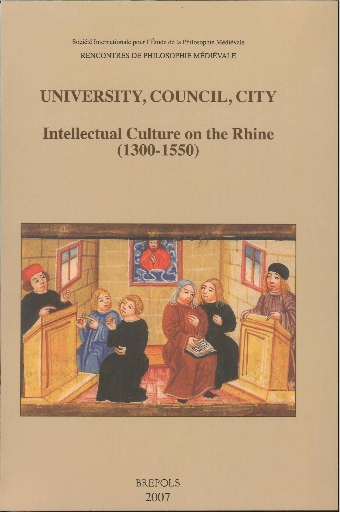
University, Council, City. Intellectual Culture on the Rhine (1300-1550)
show More to view fulltext, buy and share links for:University, Council, City. Intellectual Culture on the Rhine (1300-1550) show Less to hide fulltext, buy and share links for: University, Council, City. Intellectual Culture on the Rhine (1300-1550)Stretching from Basel to Cologne, the Rhine formed the geographical axis of a broad cultural realm in the late Middle Ages, lending vitality not only to its cities and universities but also to the two great Councils to which it played host. Already in the fourteenth century, the lives of such famous German mystics as Meister Eckhart, Heinrich Seuse and Johannes Tauler testify to the presence of an advanced intellectual culture in the cities of the upper and lower Rhine. In the fifteenth century, the most famous Councils of the late Middle Ages took place along the Rhine, namely the Councils of Constance and Basel, which formed loci of intellectual exchange and which became seedbeds of philosophical ideas that engaged and influenced such participants as Heymericus de Campo and Nicholas of Cusa. With the establishment of the Universities of Cologne (1388), Freiburg (1457), Basel (1459) and Mainz (1476), the intellectual culture of this region took an institutional form that continues to exist to this day, and symbolizes the stability of the intellectual culture of the Rhineland. The main purpose of this volume is to explore the intellectual richness and vitality of the Rhineland in its various facets and on its different levels.
-
-
-
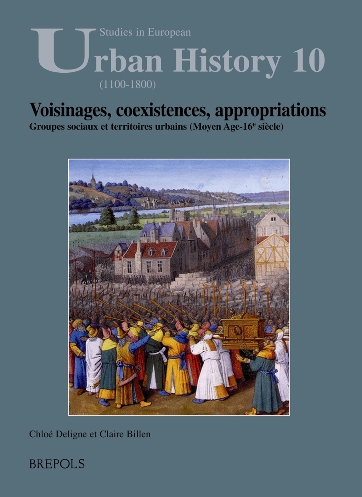
Voisinages, coexistences, appropriations
show More to view fulltext, buy and share links for:Voisinages, coexistences, appropriations show Less to hide fulltext, buy and share links for: Voisinages, coexistences, appropriationsFruit des travaux du colloque intitulé «Groupes sociaux et territoires urbains (Moyen Age-16e siècle)» organisé en décembre 2004 à l’Université Libre de Bruxelles, cet ouvrage rassemble douze contributions originales consacrées aux dynamiques sociales de l’espace urbain en Europe de l’ouest durant le bas Moyen Âge.
Dans sa première partie, l’ouvrage montre la structuration à long terme de l’espace urbain par les stratégies d’occupation de groupes dominants: chapitres canoniaux, élites scabinales, métiers (Tours, Namur, Trévise). Il confronte ce processus d’appropriation à la capacité de réagencement matériel ou symbolique déployée par certains acteurs urbains. Accident aléatoire (Tortosa), circonstances politiques (Bruges), modulation des rapports à la ville (Ratisbonne) redessinent les territoires respectifs, rallument sans cesse la lutte pour la maîtrise de l’espace et de ses éléments signifiants.
Dans sa seconde partie, l’ouvrage donne à penser la société urbaine dans ses relations avec des horizons plus lointains. Dans un premier temps sont abordées les relations des villes avec leur arrière-pays, sur lequel les groupes citadins dominants réinventent sans cesse les modalités économiques et juridiques de leur contrôle (Bruxelles, Chieri, Dijon). Dans un second temps, sont considérées les armatures urbaines de certains territoires (Brabant, Hainaut, Saint-Empire) dont la vivacité économique dépend de l’intensité des relations marchandes.
Les articles réunis ici éclairent, souvent d’un jour nouveau, non seulement l’histoire singulière des villes concernées mais plus fondamentalement les processus et les logiques à l’œuvre dans l’agencement et le réagencement permanent des espaces urbains.
-
-
-
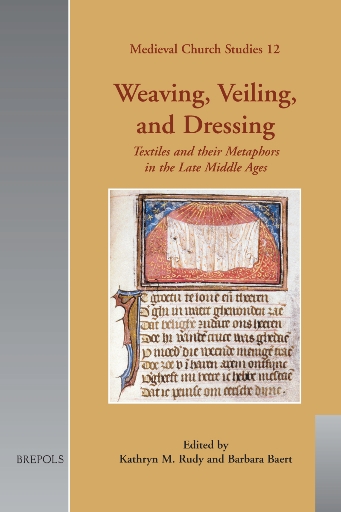
Weaving, Veiling, and Dressing
show More to view fulltext, buy and share links for:Weaving, Veiling, and Dressing show Less to hide fulltext, buy and share links for: Weaving, Veiling, and DressingChristianity is a religion of clothing. To become a priest or a nun is to take the cloth. The Christian liturgy is intimately bound with veiling objects and revealing them. Cloths hide the altar, making it all the more spectacular when it is revealed. Fragments of imported silk cradle the relic, thereby giving identity to the dessicated bone. Much of that silk came from the east, meaning that a material of Islamic origin was a primary signifier of sanctity in Christianity. Weaving, Veiling, and Dressing brings together twelve essays about text and textile, about silk and wool, about the formation of identity through fibre. The essays bring to light hitherto unseen material, and for the first time, establish the function of textiles as a culturally rich way to approach the Middle Ages. Textiles were omnipresent in the medieval church, but have not survived well. To uncover their uses, presence, and meanings in the Middle Ages is to reconsider the period spun, draped, clothed, shrouded, and dressed. Textiles in particular were essential to the performance of devotion and of the liturgy. Brightly dyed cloth was a highly visible maker of meaning. While some aspects of culture have been studied, namely the important tapestry industry, as well as some of the repercussions and activities of cloth guilds, other areas of textile studies in the period are yet to be studied. This book brings an interdisciplinary approach to new material, drawing on art history, anthropology, medieval text history, theology, and gender and performance studies. It makes a compelling miscellany exploring the nature of Christianity in the largely uninvestigated field of text and textile interplay.
-
-
-
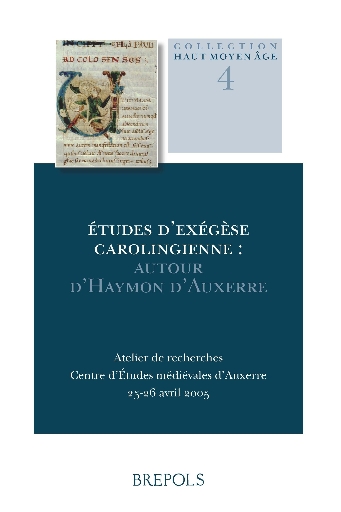
Études d’exégèse carolingienne: autour d’Haymon d’Auxerre
show More to view fulltext, buy and share links for:Études d’exégèse carolingienne: autour d’Haymon d’Auxerre show Less to hide fulltext, buy and share links for: Études d’exégèse carolingienne: autour d’Haymon d’AuxerreL’interprétation juste de la Bible constitue l’un des principaux enjeux de la renaissance carolingienne. Révéler le sens du Livre, en partie déterminé par la tradition exégétique, revient à fournir aux réformateurs modèles et prescriptions. En cela, l’exégèse est une source majeure non seulement pour l’histoire culturelle, mais aussi pour l’histoire des représentations. Pourtant, les commentaires bibliques demeurent, aujourd’hui encore, peu utilisés par les historiens, en partie parce que les textes sont souvent inédits.
C’est à ces sources que s’attache le présent volume, rassemblant les contributions d’un atelier de recherches tenu à Auxerre les 25 et 26 avril 2005. Le champ balayé par ces études, centrées sur la figure d’un exégète carolingien majeur, Haymon d’Auxerre, est vaste: critique d’authenticité, examen de la tradition manuscrite, comparaison avec les sources et les contemporains du moine d’Auxerre pour comprendre la spécificité de sa pensée. Il en résulte une connaissance plus fine non seulement de l’exégèse du maître auxerrois, mais aussi des échanges entre lettrés carolingiens et de la postérité médiévale de leurs œuvres.
-
-
-
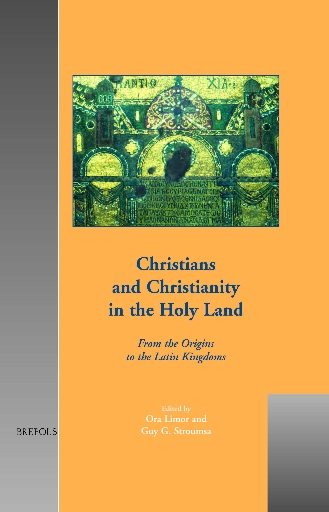
Christians and Christianity in the Holy Land
show More to view fulltext, buy and share links for:Christians and Christianity in the Holy Land show Less to hide fulltext, buy and share links for: Christians and Christianity in the Holy LandThis volume fills a major desideratum in historical scholarship on the religious history of the Holy Land. It presents a synthesis of our knowledge of the history of Christianity and the various churches that coexisted there from the beginnings of Christianity to the fall of the Crusader Kingdoms. It also offers analytical studies of major topics and problems. While the first part is organized chronologically, the second follows a thematic plan, dealing with the major themes pertaining to the topic, from various points of view and covering several disciplinary fields: history, theology, archaeology, and art history. The volume represents the outcome of an international project initiated by Yad Izhak Ben-Zvi of Jerusalem, and the contributors are leading experts in their fields.
-
-
-
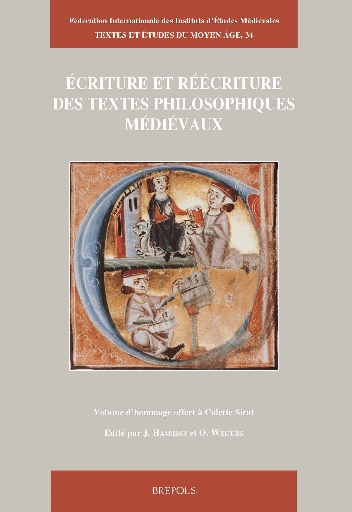
Ecriture et réécriture des textes philosophiques médiévaux
show More to view fulltext, buy and share links for:Ecriture et réécriture des textes philosophiques médiévaux show Less to hide fulltext, buy and share links for: Ecriture et réécriture des textes philosophiques médiévauxPhilosophe et paléographe, Colette Sirat s’est illustrée dans ces deux domaines pendant toute sa carrière académique. Un fil conducteur relie d’ailleurs ces deux secteurs d’activité: les manuscrits qui sont toujours à la base de ses recherches, fournissant ainsi les sources mêmes et les documents de première main de ses études philosophiques.
Ses publications ont fait date tant dans l’histoire de la philosophie juive que dans les études de paléographie hébraïque et d’histoire de l’écriture. Le thème de ce volume la préoccupe depuis bien longtemps. En effet, la manière d’écrire des textes au moyen âge, la réécriture constante pour beaucoup d’entre eux, constitue un sujet encore peu étudié, bien qu’il s’agisse d’un trait essentiel de la culture écrite de cette époque. Il a été limité aux textes philosophiques, domaine dans lequel ce phénomène est particulièrement présent et qui est l’un des terrains de chasse de la récipiendaire.
Dans tous ses travaux, on découvre les mêmes traits fondamentaux, dont une grande curiosité intellectuelle, une largeur de vue due à un vaste programme de lectures dans des domaines très divers et une richesse d’idées nouvelles sont peut-être les plus marquants.
-
-
-
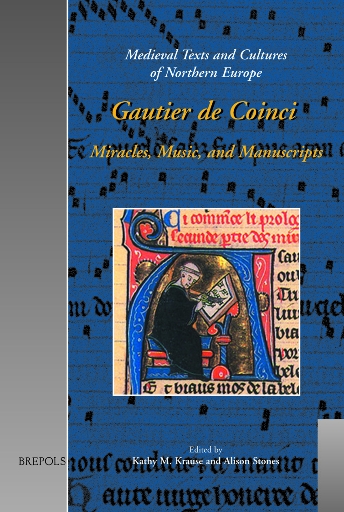
Gautier de Coinci
show More to view fulltext, buy and share links for:Gautier de Coinci show Less to hide fulltext, buy and share links for: Gautier de CoinciGautier de Coinci (c. 1177-1236) was a Benedictine prior, a poet and composer, and the author of several very popular religious works, including a large collection of Miracles of the Virgin in French, which enjoyed a wide circulation during the Middle Ages. Gautier drew on multiple Latin sources for his work, embellishing and personalizing them as he adapted them to his poetic design. Conceiving of his collection of miracles as a complete work, Gautier carefully organized the tales into two books, framing each with authorial exordia and lyrics praising the Virgin. In addition to its obvious literary interest, the subsequent manuscript tradition offers a remarkable panorama of medieval manuscript production, in particular due to the fascinating combination of text, music and illustration. Bringing together a select group of scholars from multiple disciplines (including art history, musicology, and literary studies), this collection of essays explores complementary aspects of Gautier, his works, and his manuscripts. The volume offers both breadth and depth in its examination of Gautier de Coinci and his Miracles de Nostre Dame. It promises to redefine Gautier studies through its interdisciplinary consideration of the varied facets of his work as it makes available to scholars and students the first interdisciplinary examination of this key figure in medieval vernacular religious culture.
-
-
-
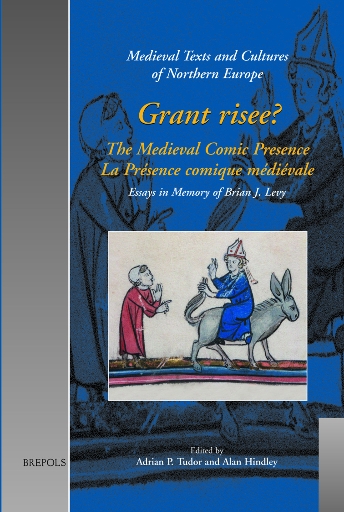
Grant risee?
show More to view fulltext, buy and share links for:Grant risee? show Less to hide fulltext, buy and share links for: Grant risee?Celebrating the work of Brian J. Levy in the realm of comedy and humour in the Middle Ages, this collection of twenty essays explores unusual, unexpected or unacknowledged elements of humour in medieval literature and art. Scholars from Britain, France, Italy, the USA, Denmark, and the Netherlands consider comic elements taking an unusual form; a comic presence in unexpected places; comic elements intentionally or unintentionally hidden; comic elements surprisingly vaunted; a comic presence in standard contexts which stands out for a particular reason; comic elements which are for some reason controversial; comic elements as yet unidentified or unacknowledged; a commonly acknowledged comic presence which is in fact no such thing. Essays in English and French deal with a broad range of subjects. If the Roman de Renart is particularly well represented amongst these essays, other subjects make up the majority of the book. These include: Cicero’s De Oratorei; the Mannekin pis; late-medieval wall paintings; German and French Drama; fabliaux; vernacular pious tales and dits; the romance epic Richard Coeur de Lyon; Les Quinze joyes de mariage; bestiaries; and misericords. Sometimes shocking, often surprising, and always intriguing, the medieval comic presence rarely corresponds to our expectations and assumptions. This book shows that in numerous cases the medieval joke is actually on the modern scholar.
-
-
-
Insignis Sophiae Arcator
show More to view fulltext, buy and share links for:Insignis Sophiae Arcator show Less to hide fulltext, buy and share links for: Insignis Sophiae ArcatorSome thirty years ago Michael Herren burst on the medieval Latin scene with his edition and translation of the notoriously difficult Hisperica Famina, and followed this a few years later with his translation of the prose works of Aldhelm. Notice was given that a junior scholar, unafraid to tackle some of the most obscure, complex, and arcane Latin, wished to make it accessible to non-Latinists as well as to those Latinists who lacked his particular skills. Not content with labouring alone in that field, Herren gathered scholars in Toronto to a conference on “Insular Latin Studies,” the proceedings of which he published two years later. Over the years he shed considerable light on such obscure texts and authors as Virgilius Maro Grammaticus, John Scottus Eriugena, and the Cosmographia by the pseudonymous Aethicus Ister. His research trail led him again and again to Ireland, and the Irish contribution to early medieval Latinity and to English, Carolingian, and even Italian culture. Recognizing the rich diversity of medieval Latin, Herren in 1990 founded The Journal of Medieval Latin and has, as its editor, provided a home for medieval Latinists of all stripes.
-
-
-
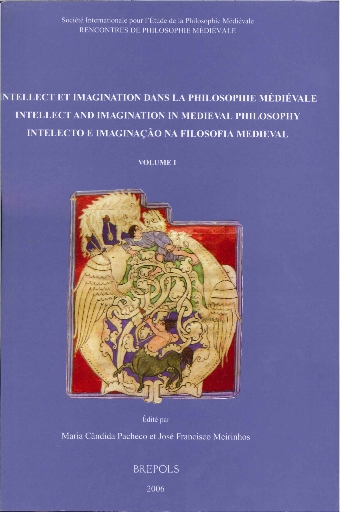
Intellect et imagination dans la philosophie médiévale / Intellect and Imagination in Medieval Philosophy / Intelecto e imaginação na Filosofia Medieval
show More to view fulltext, buy and share links for:Intellect et imagination dans la philosophie médiévale / Intellect and Imagination in Medieval Philosophy / Intelecto e imaginação na Filosofia Medieval show Less to hide fulltext, buy and share links for: Intellect et imagination dans la philosophie médiévale / Intellect and Imagination in Medieval Philosophy / Intelecto e imaginação na Filosofia MedievalLe XIème Congrès International de Philosophie Médiévale de la Société Internationale pour l’Étude de la Philosophie Médiévale (S.I.E.P.M..) s’est déroulé à Porto (Portugal), du 26 au 30 août 2002, sous le thème général: Intellect et Imagination dans la Philosophie Médiévale. A partir des héritages platonicien, aristotélicien, stoïcien, ou néo-platonicien (dans leurs variantes grecques, latines, arabes, juives), la conceptualisation et la problématisation de l’imagination et de l’intellect, ou même des facultés de l’âme en général, apparaissaient comme une ouverture possible pour aborder les principaux points de la pensée médiévale. Les Actes du congrès montrent que «imagination» et «intellect» sont porteurs d’une richesse philosophique extraordinaire dans l’économie de la philosophie médiévale et de la constitution de ses spécificités historiques. Dans sa signification la plus large, la théorisation de ces deux facultés de l’âme permet de dédoubler le débat en au moins six grands domaines: — la relation avec le sensible, où la fantaisie/l’imagination joue le rôle de médiation dans la perception du monde et dans la constitution de la connaissance; — la réflexion sur l’acte de connaître et la découverte de soi en tant que sujet de pensée; — la position dans la nature, dans le cosmos, et dans le temps de celui qui pense et qui connaît par les sens externes, internes et par l’intellect; — la recherche d’un fondement pour la connaissance et l’action, par la possibilité du dépassement de la distante proximité du transcendant, de l’absolu, de la vérité et du bien; — la réalisation de la félicité en tant qu’objectif ultime, de même que la découverte d’une tendance au dépassement actif ou mystique de toutes les limites naturelles et des facultés de l’âme; — la constitution de théories de l’image, sensible ou intellectuelle, et de ses fonctions.
-
-
-
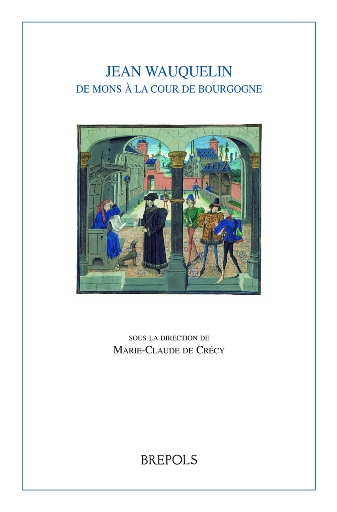
Jean Wauquelin
show More to view fulltext, buy and share links for:Jean Wauquelin show Less to hide fulltext, buy and share links for: Jean WauquelinWauquelin, «escripvaing» de ce grand mécène que fut le duc de Bourgogne, est longtemps resté dans l’ombre de son jeune confrère, David Aubert. Son œuvre embrasse cependant des champs variés, qui accueillent aussi bien des traductions que des compilations et des mises en prose. Les éditions récentes de certains de ses textes, et les études auxquelles elles ont donné lieu, permettent de mieux connaître cet auteur aujourd’hui. Répondant parfaitement aux désirs de ses différents commanditaires, son œuvre s’inscrit dans les courants de pensée et les idéologies de l’époque.
Mais Wauquelin ne fut pas seulement un auteur. Il participa lui-même aux étapes de l’élaboration matérielle des manuscrits dont son atelier assurait la transcription et la reliure, tandis que l’illustration était confiée à des artistes réputés, résidant notamment à Bruges.
Le colloque interdisciplinaire qui lui fut consacré à Tours, en septembre 2004, avait pour ambition d’éclairer toutes les facettes de son activité et de la situer dans les pratiques d’écriture mais aussi «éditoriales» de son temps. Les articles qu’il a inspirés sont accompagnés ici d’une bibliographie exhaustive.
Cette présentation en un volume de l’ensemble des connaissances que l’on peut considérer comme acquises sur Wauquelin, dans des domaines aussi divers que la philologie, la linguistique, la littérature, la codicologie ou l’histoire de l’art, voudrait susciter des interrogations et ouvrir la voie à de nouvelles recherches.
-
-
-

La méthode critique au Moyen Âge
show More to view fulltext, buy and share links for:La méthode critique au Moyen Âge show Less to hide fulltext, buy and share links for: La méthode critique au Moyen ÂgeLe Moyen Âge est considéré par beaucoup comme l’«âge de la foi». Aujourd’hui, on insiste plus volontiers sur les progrès qu’il a fait accomplir à la pensée, aux techniques, aux sciences. Mais peut-on parler pour autant d’une réflexion critique, voire, comme le suggère le titre un peu provocateur de ce livre, d’une méthode critique, c’est-à-dire d’une attitude consciente permettant un discernement dans les données de la foi, de l’histoire ou de la science? Les études rassemblées ici montrent que cette réflexion critique a bien eu lieu durant tout le Moyen Âge et qu’elle s’est exercée dans les domaines de la critique textuelle, de la critique des faits, de la critique d’authenticité et de la critique doctrinale. Si la critique historique se montre parfois hésitante, on sera peut-être surpris de constater que c’est dans le champ du religieux que l’esprit critique s’exerce le plus intensément et le plus rigoureusement, qu’il s’agisse de l’établissement du texte de la Bible, du rejet de certaines superstitions ou de la mise à l’épreuve de toutes les thèses de la théologie, y compris des plus fondamentales. Deux contributions portant sur le xvi e siècle, considéré comme le début de l’esprit critique, montrent que le Moyen Âge soutient bien la comparaison. Cet esprit critique se développe en effet dans tous les domaines, surtout à partir des contradictions entre autorités: que faire quand deux autorités de même niveau s’affrontent? Les auteurs du Moyen Âge ne se sont pas résolus à l’aporie et, après avoir examiné tous les aspects d’une «question» (théologique, scientifique, historique…), ont toujours cherché une solutio, manifestant ainsi une liberté qui nous étonne.
-
-
-
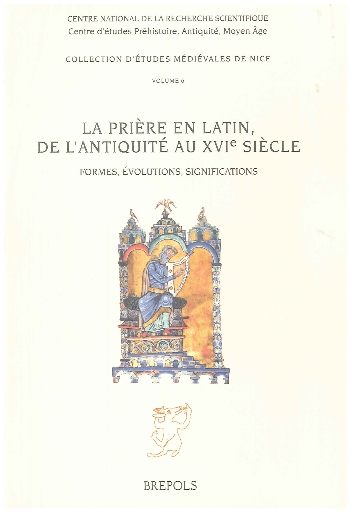
La prière en latin, de l’Antiquité au XVIe siècle : formes, évolutions, significations
show More to view fulltext, buy and share links for:La prière en latin, de l’Antiquité au XVIe siècle : formes, évolutions, significations show Less to hide fulltext, buy and share links for: La prière en latin, de l’Antiquité au XVIe siècle : formes, évolutions, significationsÀ un moment où plusieurs travaux sont consacrés à la prière et où cette question semble de plus en plus intéresser la communauté scientifique, une trentaine de spécialistes — littéraires, linguistes, historiens, philosophes, théologiens — se sont réunis à Nice afin d’étudier les formes, les évolutions et les significations de la prière en latin, depuis ses origines étrusco-italiques jusqu’à la Réforme protestante. C’est ainsi plus de vingt siècles de textes eucologiques latins qui sont abordés, selon des perspectives et des approches différentes mais complémentaires, dans un dialogue riche de débats.
L’ouvrage présente tout d’abord, sur un objet central dans l’histoire de l’Occident latin, corpus des sources et problématiques: écriture et oralité, liturgie et dévotion personnelle, ruptures et continuités entre la prière païenne et chrétienne… Il illustre ensuite la rencontre entre des chercheurs de disciplines diverses qui ont entrepris d’étudier la prière latine dans toutes ses harmoniques, ainsi que sa place dans différentes sociétés: civilisation romaine, Antiquité chrétienne, Moyen Âge occidental, Réforme protestante et réaction catholique. Ce livre offre enfin une large matière à réflexions pour tous ceux qui s’intéressent au sacré et à son expression.
-
-
-

La vie culturelle, intellectuelle et scientifique à la cour des Papes d’Avignon
show More to view fulltext, buy and share links for:La vie culturelle, intellectuelle et scientifique à la cour des Papes d’Avignon show Less to hide fulltext, buy and share links for: La vie culturelle, intellectuelle et scientifique à la cour des Papes d’AvignonSi nous sommes bien informés concernant la vie scientifique et l’importance de la médecine à la Cour des Papes pendant le 13e siècle, il n’en va pas de même à propos de la Cour des Papes d’Avignon. Aucune étude d’ensemble n’a paru jusqu’à présent et la vie culturelle, scientifique et intellectuelle qui s’y déroula reste encore peu connue à bien des égards.
Afin de pallier cette lacune, plusieurs chercheurs ont accepté de présenter le résultat de recherches ponctuelles afin de donner un premier aperçu de la richesse de ce milieu. Les exposés illustrent la dimension interdisciplinaire du projet et portent surtout sur la bibliothèque des Papes, la production de manuscrits et les débats théologiques qui eurent lieu à Avignon. En outre, on trouvera un nouvel inventaire des manuscrits de Clément VI réalisé à l’aide de découvertes récentes ainsi que l’édition critique inédite de quelques textes susceptibles de mieux mettre en lumière les débats théologiques qui se déroulèrent à la Cour des Papes.
Les différents Papes eurent chacun leur politique et leurs intérêts. Mais de manière générale, on peut dire que sous leur pontificat la vie culturelle, scientifique, intellectuelle et artistique se développa de manière brillante. Il reste à espérer que ce volume incitera les chercheurs à montrer dans des recherches futures qu’il reste encore bien des aspects à mettre en lumière et bien des découvertes à faire dans les manuscrits et les archives.
-
-
-

Les élites au haut moyen âge
show More to view fulltext, buy and share links for:Les élites au haut moyen âge show Less to hide fulltext, buy and share links for: Les élites au haut moyen âgeL’ouvrage propose un objet d’étude fascinant et paradoxal à la fois, celui des crises et du renouvellement des élites au haut Moyen Âge. Laissant de côté les concepts de noblesse on d’aristocratie, il adopte celui d’élites, emprunté à la sociologie, et braque ainsi le projecteur sur tous ceux qui d’une manière ou d’une autre exercent, dans leur champ, un pouvoir social lié à l’excellence, que ce soit celle de la naissance et du sang, on celle de la capacité, dans une activité quelconque, à se distinguer et à en tirer prestige, richesse ou honneur, celle du savoir enfin. Il prend donc en compte les élites du royaume autant que celle du village, les ecclésiastiques comme les laïcs. Reprenant l’idée de circulation des élites, il recherche les processus qui ont permis aux élites de survivre aux crises et de continuer d’asseoir leur domination quand le changement est si fort qu’il affecte l’ensemble de la société. L’enquête a été conduite sur la longue durée, depuis la fin du monde antique jusqu’au XIe siecle, et dans diverses régions (Espagne, France, Allemagne, Italie). Elle s’est attachée à des moments particuliers de mutation, à des types de crises, à des groupes d’élites en difficulté, à des familles qui ont connu une ascension rapide avant de s’effacer lentement… Les crises ont exacerbé la compétition sociale, elles ont aussi accéleré la mobilité et le renouvellement des élites. Indubitablement, les élites out survécu aux crises en tant que groupes dominants, mais assurément, dans la durée, elles ne se composaient ni des mêmes groupes, ni des mêmes familles.
-
-
-
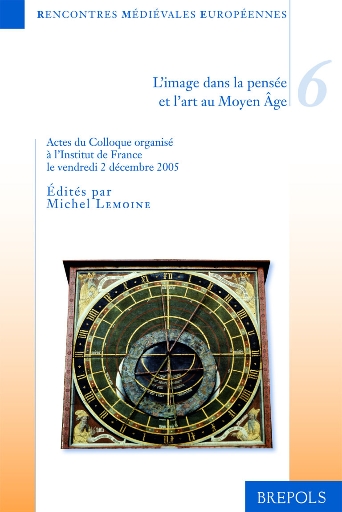
L’image dans la pensée et l’art au Moyen Age
show More to view fulltext, buy and share links for:L’image dans la pensée et l’art au Moyen Age show Less to hide fulltext, buy and share links for: L’image dans la pensée et l’art au Moyen AgeChaque année, depuis l’an 2000, un colloque pluridisciplinaire organisé par Rencontres Médiévales européennes permet l’approfondissement des études sur l’art et la liturgie au Moyen-Âge, principalement aux xii e et xiii e siècles. Ce sont les différentes composantes de la pensée religieuse qui sont ainsi cernées et qui se révèlent être une part importante de l’originalité de la civilisation européenne. Ce n’est pas une culture morte qui est exhumée mais bel et bien les points de repère qui font cruellement défaut à la société actuelle.
L’image pour l’image est un produit du xxi e siècle. Le tourbillon de représentations visuelles qui matraquent certains individus à toute heure, en tous lieux, avec des conséquences dramatiques parfois, est l’apanage malheureux de notre époque. Nos ancêtres, eux, se donnaient le temps de réfléchir à ce que signifiait ce à quoi ils allaient donner forme. C’est pourquoi l’image religieuse médiévale nous frappe autant, non seulement par son côté esthétique, mais parce qu’elle est lourde de spiritualité et de sens. Les hommes avaient ainsi conscience d’appartenir à une même société car ils savaient que, derrière chaque image, l’histoire racontée était la leur.
-
-
-

L’écrit et le manuscrit à la fin du Moyen Âge
show More to view fulltext, buy and share links for:L’écrit et le manuscrit à la fin du Moyen Âge show Less to hide fulltext, buy and share links for: L’écrit et le manuscrit à la fin du Moyen ÂgeDu XIVe au début du XVIe siècle, le processus de création littéraire dévoile un nouveau rapport de l’auteur à son œuvre sous-tendu par le souci de donner corps à un livre, de donner vie à un objet qui transmettra un écrit. Cette singulière préoccupation véhicule un étonnant acte de foi en l’avenir, en une permanence que les aléas de la tradition manuscrite, voire de la réception contemporaine, démentent parfois. Centrées sur la préoccupation pour la matérialité jusque dans ses plus infimes détails, les contributions rassemblées dans ce volume font revivre les auteurs médiévaux et leurs œuvres dans le concret de l’espace manuscrit, et leur confèrent ainsi un nouvel éclairage, que n’apporte pas la seule lecture littéraire. Trente spécialistes de l’histoire du livre et de la littérature présentent, dans ce volume issu du 2e colloque international du Groupe de recherche sur le moyen français de l’Université catholique de Louvain (12, 13 et 14 mai 2005), un discours original et stimulant sur les rapports du codex et de ses contextes.
-
-
-
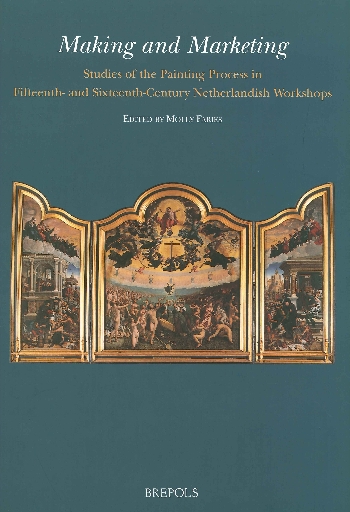
Making and Marketing: Studies of the Painting Process in Fifteenth- and Sixteenth-Century Netherlandish Workshops
show More to view fulltext, buy and share links for:Making and Marketing: Studies of the Painting Process in Fifteenth- and Sixteenth-Century Netherlandish Workshops show Less to hide fulltext, buy and share links for: Making and Marketing: Studies of the Painting Process in Fifteenth- and Sixteenth-Century Netherlandish Workshops
-
-
-

Mary of Oignies
show More to view fulltext, buy and share links for:Mary of Oignies show Less to hide fulltext, buy and share links for: Mary of OigniesMary of Oignies (1177-1213) was one of the first of the holy women who transformed religious life in the late twelfth and early thirteenth centuries. Living as a beguine and a free anchoress, she offered spiritual and temporal guidance to people from a diverse range of social stations and professions, including high clerics and common lay-people. Indeed, contemporary and later accounts reveal that Mary of Oignies greatly influenced the medieval Christian world.
-
-
-

Narrative and History in the Early Medieval West
show More to view fulltext, buy and share links for:Narrative and History in the Early Medieval West show Less to hide fulltext, buy and share links for: Narrative and History in the Early Medieval WestThis collection deliberately brings together work which is chronologically, geographically and generically diverse. Texts studied include traditional narrative historiography, alongside poetry, chronicles, charters, dispute settlements and hagiography. The essays range from Italy and Frankia to Scandinavia and England, as they examine texts produced from the seventh to the early twelfth century. In exploring the nature and function of narrative in texts, which modern scholars use to study the Middle Ages, the contributors to this interdisciplinary volume integrate social, political, intellectual and literary history. Each essay and the volume as a whole illustrate that narrative form offers both new vantage points on the Middle Ages and new opportunities for collaborative study.
-
-
-

People and Space in the Middle Ages, 300-1300
show More to view fulltext, buy and share links for:People and Space in the Middle Ages, 300-1300 show Less to hide fulltext, buy and share links for: People and Space in the Middle Ages, 300-1300This book compares community definition and change in the temperate zones of southern Britain and northern France with the starkly contrasting regions of the Spanish meseta and Iceland. Local communities were fundamental to human societies in the pre-industrial world; crucial in supporting their members and regulating their relationships, as well as in wider society. While geographical and biological work on territoriality is very good, existing archaeological literature is rarely time-specific and lacks wider social context; most of its premises are too simple for the interdependencies of the early medieval world. Historical work, by contrast, has a weak sense of territory and no sense of scale; like much archaeological work, there is confusion about distinctions - and relationships - between kin groups, neighbourhood groups, collections of tenants and small polities.
The contributors to this book address what determined the size and shape of communities in the early historic past and the ways that communities delineated themselves in physical terms. The roles of the environment, labour patterns, the church and the physical proximity of residences in determining community identity are also examined. Additional themes include social exclusion, the community as an elite body, and the various stimuli for change in community structure. Major issues surrounding relationships between the local and the governmental are investigated: did larger polities exploit pre-existing communities, or did developments in governance call local communities into being?
-
-
-

Plantagenêts et Capétiens: confrontations et héritages
show More to view fulltext, buy and share links for:Plantagenêts et Capétiens: confrontations et héritages show Less to hide fulltext, buy and share links for: Plantagenêts et Capétiens: confrontations et héritagesAu printemps 1204, Aliénor d’Aquitaine s’éteint tandis que les armées de Philippe Auguste conquièrent l’Anjou et la Normandie. La disparition de la reine coïncide avec l’effondrement de l’Empire Plantagenêt, tout comme, une cinquantaine d’années auparavant, son remariage avec Henri II avait présidé à la naissance de ce conglomérat disparate de territoires de l’Ouest de la France et des îles britanniques. Épouse, mère ou veuve, Aliénor est le personnage clef de cette construction géopolitique, qui est avant tout une histoire de famille. Il en va de même dans le combat acharné qui oppose les Plantagenêts, sa nouvelle dynastie d’adoption, aux Capétiens de Louis VII, dont elle fut jadis la femme, et de Philippe Auguste, son beau-fils. Le conflit entre les deux maisons touche directement des principautés territoriales du continent. Les lignages aristocratiques de Normandie, Bretagne, Anjou, Poitou et Gascogne participent ainsi à ces luttes, qu’attisent parfois les fils d’Henri II ou le neveu de Jean Sans Terre, en révolte contre leur père ou oncle. Enfin, pour mieux gouverner et pour donner de l’éclat à leur cour, les Plantagenêts s’entourent d’intellectuels promouvant une culture originale. Parenté, guerre et savoir aux XIIe et XIIIe siècles sont au cœur de cet ouvrage.
-
-
-
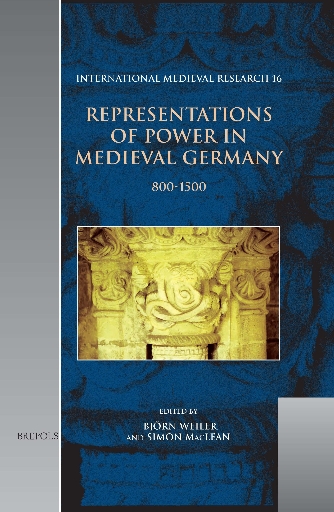
Representations of Power in Medieval Germany
show More to view fulltext, buy and share links for:Representations of Power in Medieval Germany show Less to hide fulltext, buy and share links for: Representations of Power in Medieval GermanyThis book brings together a group of leading experts on the political history of Germany and the medieval Empire from the Carolingian period to the end of the Middle Ages. Its purpose is to introduce and analyze key concepts in the study of medieval political culture. The representation of power by means of texts, buildings and images is a theme which has long interested historians. However, recent debates and methodological insights have fundamentally altered the way this subject is perceived, opening it up to perspectives unnoticed by its pioneers in the middle of the twentieth century. By taking account of these debates and insights, this volume explores a series of fundamental questions. How was power defined in a medieval context? How was it claimed, legitimized and disputed? What were the moral parameters against which its exercise was judged? How did different spheres of political power interact? What roles were played by texts, images and rituals in the maintenance of, and challenges to, the political order? The contributors bring varied and original approaches to these and other questions, illuminating the complex power relationships which determined the changing political history of medieval Germany.
-
-
-
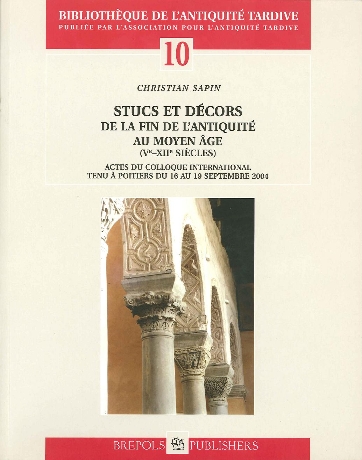
Stucs et décors de la fin de l’Antiquité au Moyen Âge (Ve-XIIe siècle)
show More to view fulltext, buy and share links for:Stucs et décors de la fin de l’Antiquité au Moyen Âge (Ve-XIIe siècle) show Less to hide fulltext, buy and share links for: Stucs et décors de la fin de l’Antiquité au Moyen Âge (Ve-XIIe siècle)Le stuc, un art à part entière
L’importance du stuc comme matériau et processus de décor a longtemps été ignorée. Les diverses contributions à ce colloque permettent, pour la première fois, d’en saisir la portée sur une longue durée. Avec ses origines antiques ou moyen-orientales, ses croisements avec la peinture ou la sculpture, sa diversité dans une grande partie de l’Europe, sa présence est désormais perçue comme permanente entre le iv e et le xii e siècle. Une meilleure connaissance de sa fabrication grâce à de nombreuses analyses en laboratoire, une relecture d’ensembles jusque-là peu étudiés comme Disentis, ou découverts par l’archéologie comme Vouneuil-sous-Biard, Bordeaux ou Arles-sur-Tech, illustrent mieux aujourd’hui cette conception particulière de l’art du relief transmise et sans cesse renouvelée depuis l’Antiquité tardive.
-
-
-
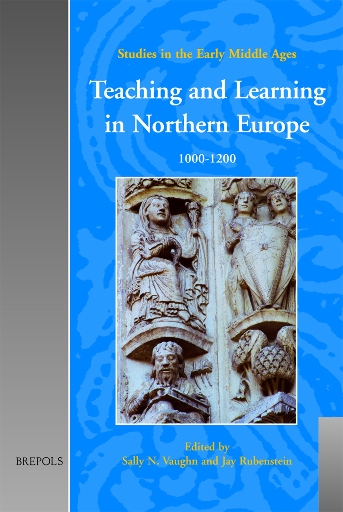
Teaching and Learning in Northern Europe
show More to view fulltext, buy and share links for:Teaching and Learning in Northern Europe show Less to hide fulltext, buy and share links for: Teaching and Learning in Northern EuropeThe essays in this collection focus not on texts but on people, specifically on teachers and their students, beginning with the late Carolingian era and continuing through the creation of monastic and secular schools in the centuries before the first universities. Central to the articles in this volume are the schools and communities of Northern France and England, including Reims, Bec, Soissons, and Canterbury, whose patterns of thought and learning gave shape to intellectual endeavours throughout medieval Europe. In addition to some of the most prominent personalities of the day (among them Gerbert of Reims, Lanfranc and Anselm of Bec, Ivo of Chatres, and John of Salisbury), the contributors examine those teachers and students who worked in the shadows: figures like the biblical exegete Richard of Préaux and the musical innovator Theinred of Dover. The focus throughout the volume is on personalities and personal relationships, thus recreating the human connections that lay behind medieval humanism and the Twelfth-Century Renaissance. Taken together, the essays here create a coherent and compelling picture of the tumultuous time before the universities came to organize and take control of teaching and learning, a seminal period when teaching methods and curricula grew out of the particular experience of specific teachers and their interactions with their students.
-
-
-
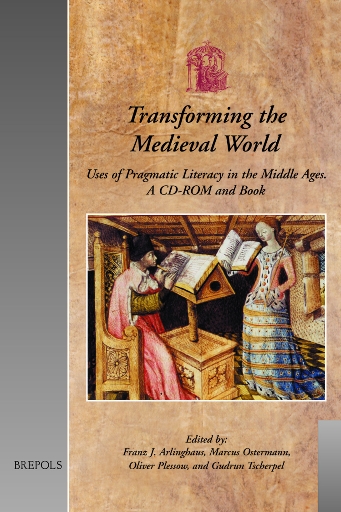
Transforming the Medieval World
show More to view fulltext, buy and share links for:Transforming the Medieval World show Less to hide fulltext, buy and share links for: Transforming the Medieval WorldWhen viewed retrospectively, the period between the eleventh and the fifteenth centuries was a phase of European history that was characterized by a radical and fundamental media transformation. Before this time, the vast majority of the population had never encountered the written word in their day-to-day activities. From the beginning of the second millennium, however, texts began to appear in, and influence, almost every sphere of human life. Medieval written texts were subject to revision, copying, embellishments, and deletions; they were read silently and aloud, and they were recited in a variety of contexts. The multimedia environment offered on the CD visualizes these textual transformations and illustrates the adaptability and dynamism of writing and its reception. The uses of writing in this early phase of intensive European literacy are analysed in eleven separate multimedia presentations, which are almost all based on research carried out by the Special Research Unit (SFB) between 1986 and 1999. The CD also contains an anthology of important essays, which provide the user with further reading materials, as well as a general bibliography. The book which accompanies the CD-ROM facilitates the use of the CD itself, and provides the various multimedia presentations in written format. As such, Transforming the Medieval World will be invaluable to both scholars and students interested in medieval literacy.
-
-
-
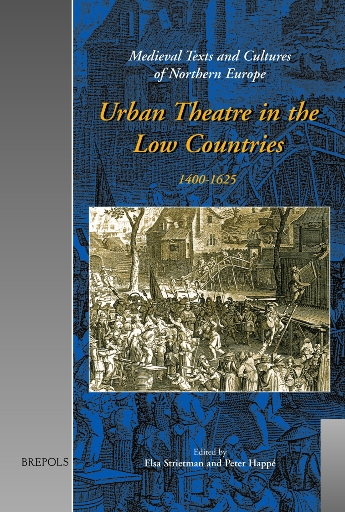
Urban Theatre in the Low Countries
show More to view fulltext, buy and share links for:Urban Theatre in the Low Countries show Less to hide fulltext, buy and share links for: Urban Theatre in the Low CountriesThis collection of essays by international scholars focuses on the vernacular urban culture of the Chambers of Rhetoric in the Low Countries of the fifteenth and sixteenth centuries. Reflecting social, religious, and economic realities at a time of fundamental change, the Rhetoricians’ plays also reveal a range of poetic and theatrical conventions that make them an important source of information both on practical stagecraft and on the role of theatre in the urban community, as seen in their involvement in civic processions or the organization of drama competitions. The volume sets the Rhetoricians’ drama in the cultural life of the provinces of the Low Countries during a period dominated by ruling foreign dynasties: the Burgundian dukes and then the Habsburg dynasty, most prominently the Emperor Charles V and his son King Philip II of Spain. It was a time of intense religious controversy which gave rise to debates both on and off stage. These debates, far from damaging Rhetorician culture, actually stimulated its activities and development to such an extent that Rhetoricians became representative voices for their time. The admixture of entertainment and education offered by the Chambers to their own members - and to a wider public - was one which, though originating in a medieval context, soon became linked with humanist and Renaissance thinking. This volume illustrates how, as a consequence, the Chambers of Rhetoric contributed to the development in the Low Countries of an increasingly articulate society.
-
-
-
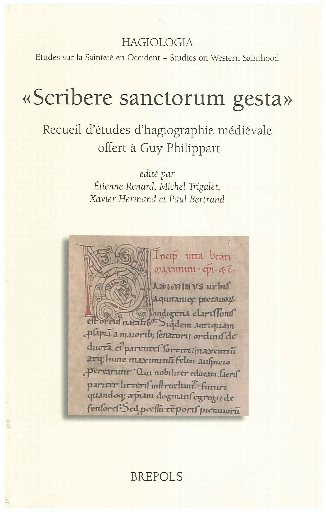
"Scribere sanctorum gesta"
show More to view fulltext, buy and share links for:"Scribere sanctorum gesta" show Less to hide fulltext, buy and share links for: "Scribere sanctorum gesta"Dans les études hagiographiques comme dans d’autres domaines de l’histoire médiévale, il s’avère indispensable de retourner aux sources, et d’abord aux manuscrits et aux œuvres qu’ils véhiculent. Le manuscrit ancre le texte dans un contexte particulier, informe sur les milieux dans lesquels il a été produit ou reçu, documente sur les stratégies qui ont présidé à sa diffusion. À qui sait lire les apparats critiques et les descriptions codicologiques, il apporte une moisson d’informations. Lorsqu’ils sont regroupés en ensembles — ensembles des exemplaires d’une même œuvre, ensembles des exemplaires d’une même collection, ensembles de collections apparentées —, les textes hagiographiques acquièrent un intérêt plus large encore, éclairant les champs culturel, social ou économique à la lumière de l’histoire de leur édition. En la matière, les travaux de Guy Philippart sont à placer au premier plan de la recherche des trente dernières années. Songeons à sa contribution fondamentale à la typologie des légendiers médiévaux, à la base de données «Légendiers latins», qui a donné naissance à la BHLms, et à l’Histoire internationale de la littérature hagiographique en cours de publication. C’est tout naturellement autour de la littérature hagiographique, en particulier les thèmes de l’écriture — de la réécriture — et de l’édition manuscrite des textes hagiographiques médiévaux, que quatre de ses anciens étudiants ont réuni une trentaine de spécialistes de renommée internationale. Le résultat? Une collection d’études qui aborde un large éventail de problématiques actuelles. Au-delà de l’hommage au chercheur et à l’enseignant, ce livre se veut aussi témoignage d’amitié.
-
-
-

"Tout le temps du veneour est sanz oyseuseté"
show More to view fulltext, buy and share links for:"Tout le temps du veneour est sanz oyseuseté" show Less to hide fulltext, buy and share links for: "Tout le temps du veneour est sanz oyseuseté"Pour honorer le professeur Yves Christe, des chercheurs de six pays se sont réunis et ont fait le bilan de leurs recherches sur des sujets chers au dédicataire de ce volume: l’iconographie chrétienne, l’Apocalypse, les manuscrits des Bibles moralisées, le conditionnement des œuvres par rapport à leur contexte historique et liturgique, et l’histoire de leur conservation. Cet assemblage dessine un panorama d’une grande richesse, passionnante pour toute personne s’intéressant à l’art chrétien et à la civilisation du Moyen Age. Yves Christe est l’un des meilleurs spécialistes de l’iconographie paléochrétienne et médiévale; ses travaux sur l’Apocalypse et le Jugement dernier font autorité.
-
-
-
Abbatiat et abbés dans l’ordre de Prémontré
show More to view fulltext, buy and share links for:Abbatiat et abbés dans l’ordre de Prémontré show Less to hide fulltext, buy and share links for: Abbatiat et abbés dans l’ordre de PrémontréLe présent volume rassemble une vingtaine de communications données lors du 25e colloque du Centre d’Études et de Recherches Prémontrées, tenu à l’abbaye de Tongerlo (Belgique). La thématique de cette rencontre était double: d’une part examiner, au long de l’histoire d’un ordre religieux ancien (xii e-xxi e siècles) le fonctionnement du régime abbatial, avec ses évolutions spirituelles, juridiques, sociales, liées aux transformations du monde où les communautés se meuvent. D’autre part, proposer comme une galerie de portraits d’abbés, significatifs des diverses époques de l’histoire norbertine. Cette douzaine de figures permet de réfléchir encore à la nature de la fonction, à la manière dont les abbés eux-mêmes conçoivent et investissent leur rôle.
Dans cette passionnante enquête sur un matériau vivant et diversifié, la quantité et la qualité des sources varient aussi: tandis que l’époque médiévale contient beaucoup d’inconnues (les «listes abbatiales» elles-mêmes sont peu assurées, à haute époque), la période moderne et contemporaine fait apparaître des champs de recherche tout à fait inexplorés: il manque encore non seulement une prosopographie générale, mais aussi une étude approfondie des cursus honorum, des modes et pratiques d’élections, des rapports souvent conflictuels entre le pouvoir central, le pouvoir local, et la «base».
La complexité du pouvoir abbatial (spirituel, pastoral, économique, politique) se dessine à travers ces études, et cet ouvrage se veut autant un état de la question qu’une invitation à de nouvelles recherches dans un domaine peu exploré de l’histoire monastique ou canoniale.
-
-
-
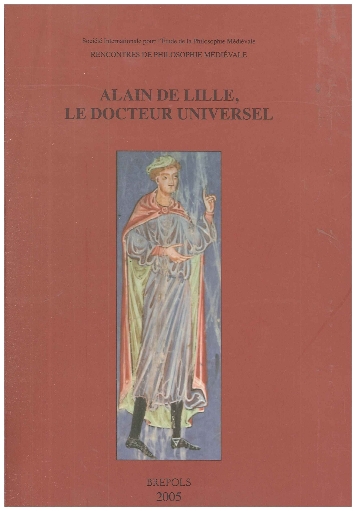
Alain de Lille, le docteur universel
show More to view fulltext, buy and share links for:Alain de Lille, le docteur universel show Less to hide fulltext, buy and share links for: Alain de Lille, le docteur universelNé aux alentours de 1120, surnommé le «Docteur universel», Alain de Lille doit ce titre à ses talents de philosophe, de théologien, de prédicateur et de poète, ainsi qu’à l’étendue de ses connaissances. Celui dont l’épitaphe dit qu’«il a su tout ce que l’homme pouvait savoir» est à lui seul un résumé des intérêts multiples de son temps. Sa pensée est le point de rencontre des grands courants philosophico-théologiques du XIIe siècle; au fait des dernières avancées techniques dans les arts libéraux, il demeure en même temps un parfait témoin de l’humanisme littéraire. A l’occasion du huitième centenaire de sa mort, il était nécessaire de réexplorer la synthèse qu’a opérée Alain des savoirs de cette époque charnière, et de rappeler les pistes et les problématiques qu’il a ouvertes, peu avant le grand essor universitaire du XIIIe siècle.
-