


Brepols
Brepols is an international academic publisher of works in the humanities, with a particular focus in history, archaeology, history of the arts, language and literature, and critical editions of source works.301 - 400 of 3194 results
-
-
Bibliotheca Hieronymiana manuscripta
La tradition manuscrite des oeuvres de saint Jérôme
-
-
-
Bibliotheca Hieronymiana manuscripta
La tradition manuscrite des oeuvres de saint Jérôme
-
-
-
Biens publics, biens du roi
Les bases économiques des pouvoirs royaux dans le haut Moyen Âge
show More to view fulltext, buy and share links for:Biens publics, biens du roi show Less to hide fulltext, buy and share links for: Biens publics, biens du roiLes sociétés politiques du haut Moyen Âge sont caractérisées par une forte centralité royale, que l'historiographie a étudiée sous de multiples aspects comme les rituels et les formes de communication, la parenté et les alliances entre groupes aristocratiques, la compétition pour le trône ou la faveur du souverain etc. Le présent volume replace l'attention sur les fondements économiques des pouvoirs des pouvoirs des rois, ducs et princes en une période où l'imposition directe d'origine tardoantique s'est étiolée au profit de la rente. Que s'est-il passé entre l'épuisement de l'impôt foncier direct aux vi e-vii e siècles et la diffusion à large échelle des pouvoirs seigneuriaux, aux xi e-xii e siècles ? De quelles ressources foncières disposait le roi et quels étaient ses rapports avec l'exercice du pouvoir au niveau central et local ? Quels étaient les modes de redistribution de la terre publique, de quelle manière était-elle h économique des pouvoirs du souverain ? Historiens et archéologues s'efforcent de répondre à ces questions pour la plupart des régions de l'Europe occidentale.
-
-
-
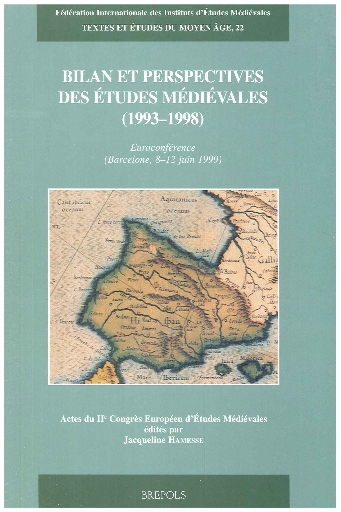
Bilan et perspectives des études médiévales (1993-1998)
Euroconférence (Barcelone, 8-12 juin 1999)
show More to view fulltext, buy and share links for:Bilan et perspectives des études médiévales (1993-1998) show Less to hide fulltext, buy and share links for: Bilan et perspectives des études médiévales (1993-1998)Le bilan des études médiévales en Europe dressé lors du Ier Congrès européen d’Etudes médiévales organisé pour la première fois à Spolète en mai 1993 n’avait pas pu couvrir tous les domaines de notre discipline. Aussi le IIème Congrès a-t-il continué ce bilan en s’attachant par priorité à traiter des sujets peu ou insuffisamment couverts en 1993. Ce fut le cas de l’histoire politique, de l’archéologie médiévale, de l’histoire économique et sociale, de l’histoire religieuse, de la spiritualité et de l’hagiographie, de la philologie et de la littérature latines du moyen âge, de l’histoire de l’art, de l’étude des manuscrits, de la philosophie et de la théologie, de l’histoire des sciences, de la musique et de la liturgie, des études byzantines ainsi que du passage du moyen âge à la Renaissance.
Les bilans contenus dans cet ouvrage sont l’œuvre des meilleurs spécialistes en la matière. Ils permettent de voir les progrès réalisés de 1993 à 1998 ainsi que les lacunes qui existent encore dans certaines disciplines. Ils inciteront surtout de jeunes chercheurs à entreprendre des études dans des domaines encore mal connus.
-
-
-
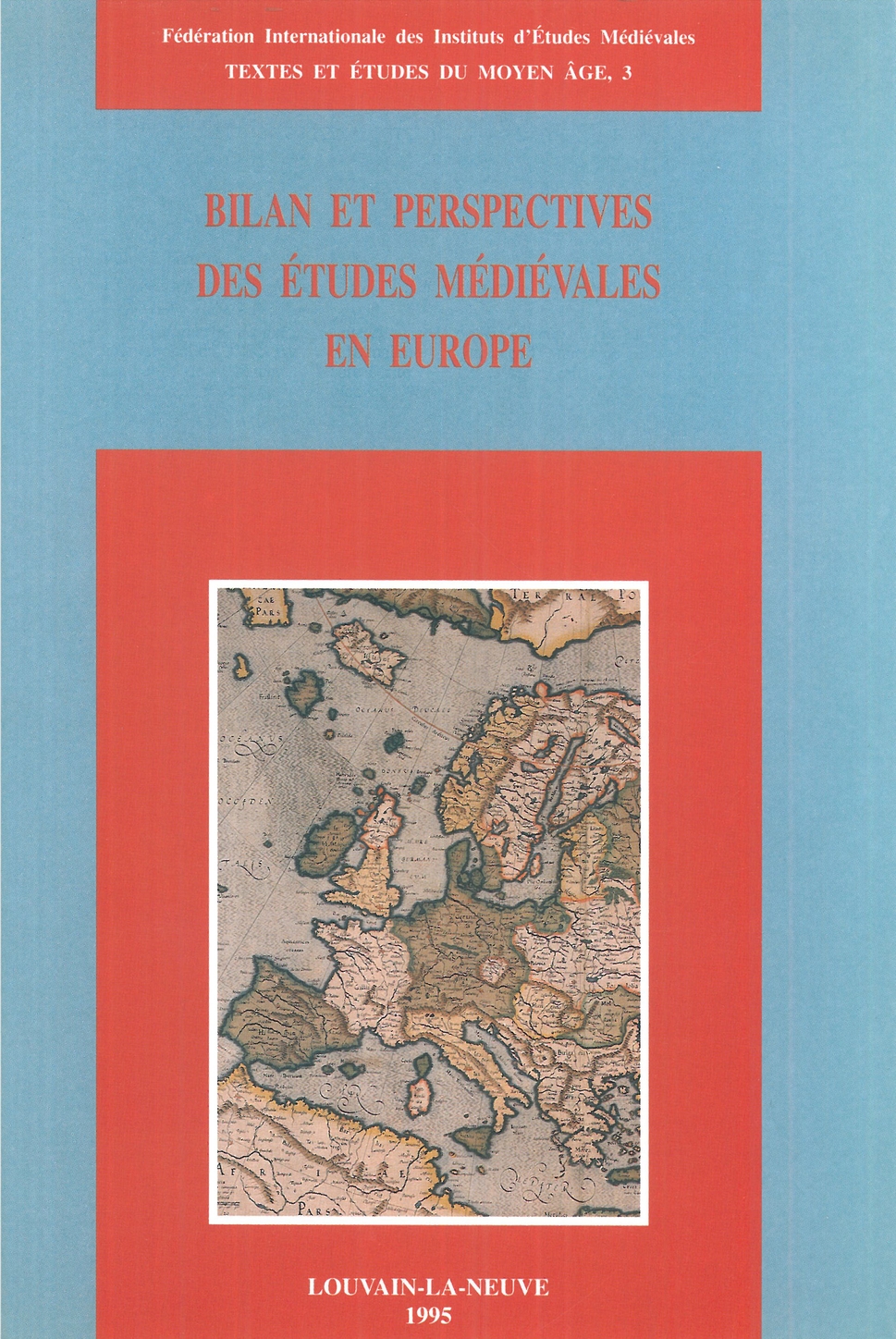
Bilan et perspectives des études médiévales en Europe
Actes du premier congrès européen d'études médiévales. (Spoleto 27-29 mai 1993)
show More to view fulltext, buy and share links for:Bilan et perspectives des études médiévales en Europe show Less to hide fulltext, buy and share links for: Bilan et perspectives des études médiévales en EuropeLes études médiévales ont connu une expansion extraordinaire après la seconde guerre mondiale. Depuis trente ans, nos collègues américains organisent chaque année un congrès annuel pour faire le point concernant les progrès réalisés dans les divers domaines concernés. Une expérience similaire n'avait jamais eu lieu en Europe. La F.I.D.E.M. a donc pris l'initiative d'organiser tous les cinq ans un congrès européen permettant de faire le point à propos de nos disciples.
Les bilans contenus dans cet ouvrage sont l'oeuvre des meilleurs spécialistes actuels en la matière. Ils appârtiennent aux différents pays européens, ce qui a permis de dresser un bilan à propos des recherches menées dans notre continent. Ces rencontres perpetten également de montrer aux jeunes chercheurs les perspective d'avenir dans chaque domaine.
L'Europe actuelle doit au moyen âge une grande partie de son patrimoine culturel. Ces congrès sont donc l'occasion de retrouver nos racines communes et de proposer de nouveaux sujets de recherce à explorer.
-
-
-
Biological and Medical Sciences
Proceedings of the XXth International Congress of History of Science (Liège, 20-26 July 1997) Vol. XI
show More to view fulltext, buy and share links for:Biological and Medical Sciences show Less to hide fulltext, buy and share links for: Biological and Medical SciencesThis volume begins with an essential and unpublished text of the late Mirko D. Grmek (1924-2000) on rising diseases. A set of 34 papers deals with the most diverse aspects of biological and medical sciences : biology in the classical age, natural history and world exploration, pathologies, medicine, hygiene, physiology, biochemistry and biotechnologies.
-
-
-
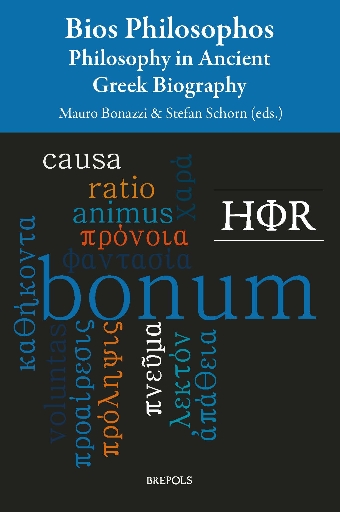
Bios Philosophos. Philosophy in Ancient Greek Biography
show More to view fulltext, buy and share links for:Bios Philosophos. Philosophy in Ancient Greek Biography show Less to hide fulltext, buy and share links for: Bios Philosophos. Philosophy in Ancient Greek BiographyIn the 4th century B.C., philosophers began to write not only philosophical texts, but also biographical ones. As biographers, they often presented members of their own schools as the epitome of their ideals, or tried to prove that the followers of others lived in ways inconsistent with their own doctrines. The papers collected in this volume explore the many ways in which philosophy was incorporated into such texts, as well as how the genre was used as a means of philosophical instruction, discussion and polemics.
-
-
-
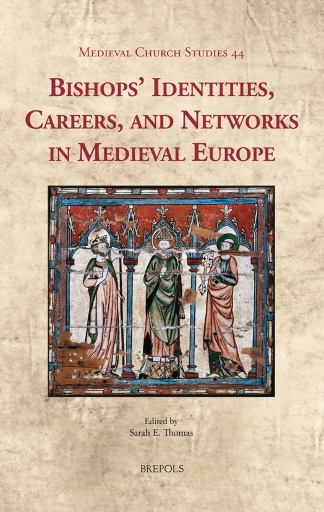
Bishops’ Identities, Careers, and Networks in Medieval Europe
show More to view fulltext, buy and share links for:Bishops’ Identities, Careers, and Networks in Medieval Europe show Less to hide fulltext, buy and share links for: Bishops’ Identities, Careers, and Networks in Medieval EuropeBishops were powerful individuals who had considerable spiritual, economic, and political power. They were not just religious leaders; they were important men who served kings and lords as advisers and even diplomats. They also controlled large territories and had significant incomes and people at their command. The nature of the international Church also meant that they travelled and had connections well beyond their home countries, were players on an increasingly international stage, and were key conduits for the transfer of ideas.
This volume examines the identities and networks of bishops in medieval Europe. The fifteen papers explore how senior clerics attained their bishoprics through their familial, social, and educational networks, their career paths, relationships with secular lords, and the papacy. It brings together research on bishops in central, southern, and northern Europe, by early career and established scholars. The first part features five case-studies of individual bishops’ identities, careers, and networks. Then we turn to examine contact with the papacy and its role in three regions: northern Italy, the archbishopric of Split, and Sweden. Part III focuses on five main issues: royal patronage, reforming bishops, nepotism, social mobility, and public assemblies. Finally Part IV explores how episcopal networks in Poland, Sigüenza, and the Nidaros church province helped candidates achieve promotion. These contributions will thus enhance of our understanding of how bishops fit into the religious, political, social, and cultural fabrics of medieval Europe.
-
-
-
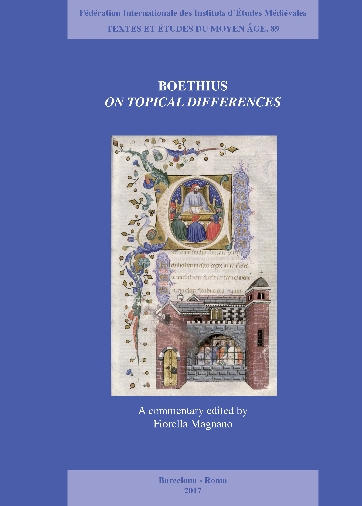
Boethius On Topical Differences
A commentary edited by Fiorella Magnano
show More to view fulltext, buy and share links for:Boethius On Topical Differences show Less to hide fulltext, buy and share links for: Boethius On Topical DifferencesThis volume contains the first modern commentary to Boethius’s last logical monograph entitled De topicis differentiis, his most original work written around 522 A.D., just before the incarceration and death of the Roman philosopher. His textbook aims at providing a method for the discovery of arguments, that is an art that teaches how to solve any kind of question through the use of the topics, litteraly places of our mind able to produce arguments subsequently developed into argumentations. Boethius inherited this teaching from two different traditions, the Greek and Latin. In light of the differences found in them, the Roman scholar undertook the writing of the De topicis differentiis precisely in order to show the possible way of reconciling these two philosophical traditions. In this way Boethius was able to disseminate a unified vision of this matter to the Latin world, restoring the centrality that the Topics had in the Aristotelian Logic and restoring their noblest function, that of being instruments at the service of the search for Truth. Finally, he also provided the list of the rhetorical topics by showing the differences with dialectical topics. This study provides a full reconstruction of the structure of the Boethian work, retraces and evaluates the sources, investigates the implications, and explains why the De topicis differentiis remains a foundational work for anyone who wants to understand the development of European Logic through the Middle Ages and the Renaissance.
-
-
-
Boire sous l’œil de Gorgias
Un commentaire rhétorique du Banquet de Platon et du Banquet de Xénophon
show More to view fulltext, buy and share links for:Boire sous l’œil de Gorgias show Less to hide fulltext, buy and share links for: Boire sous l’œil de GorgiasPlato’s Symposium and Xenophon’s Symposium are unexpected and untapped sources on rhetoric and its links to the socio-religious rite of banqueting. They offer two different and sometimes opposing points of view on rhetoric, and both, contrary to what has often been said, include a critical view of the rituals of sociability. Plato and Xenophon both react to the realities of their times and suggest, each in his own way, that rhetoric, under certain conditions, can be a mode of conviviality, i.e. an intellectual tool, an exercise in citizenship learning, a research instrument, or even a step towards truth. In both cases, the tutelary and fascinating figure of Gorgias is summoned, sometimes to criticize the deadly rhetoric of the sophists which constitutes an obstacle to convivial dialogue, sometimes to promote a constructive practice of speech in the communicational and visual space that symposium creates.
-
-
-
Bonds and Boundaries among the Early Churches
Community Maintenance in the Letter of James and the Didache
show More to view fulltext, buy and share links for:Bonds and Boundaries among the Early Churches show Less to hide fulltext, buy and share links for: Bonds and Boundaries among the Early ChurchesThis book is a text-based study on social dynamics of early Christian communities. By combining modern social-scientific theories with careful exegesis, it investigates the tensions, especially intra-communal tensions that confronted early communities of Jesus-followers. It contributes to both biblical studies and the understanding of the early church by showing that two early Christian compositions, the letter of James and the Didache reflect similar discords among early Christians, and they show similar concerns for community solidarity. It also offers an analysis of their community maintenance strategies with the frameworks of social identity theory and conflict theories.
Through observing both similarities and differences between James and the Didache, this book highlights the different perspectives and attitudes of the two compositions on group conflicts and their resolution, and provides new insights into the significance of these two writings for the early church as well as for the Christian communities today.
-
-
-
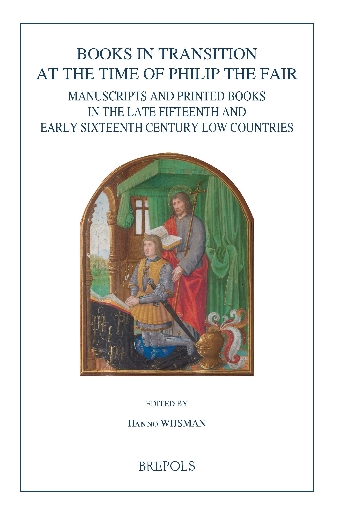
Books in Transition at the Time of Philip the Fair
Manuscripts and Printed Books in the Late Fifteenth and Early Sixteenth Century Low Countries
show More to view fulltext, buy and share links for:Books in Transition at the Time of Philip the Fair show Less to hide fulltext, buy and share links for: Books in Transition at the Time of Philip the FairIn 2006, 500 years after his death, the Royal Library of Belgium organised an exhibition (curated by Bernard Bousmanne and Hanno Wijsman) revealing treasures from the era of Philip the Fair (1478-1506), last duke of Burgundy. This volume reunites most of the papers delivered at a conference held during the exhibition, increased with four new chapters. Ten specialists from Belgium, the Netherlands and the United States discuss the book market and its place in society in this transitional period when manuscripts and printed books were produced and used next to one another. The various chapters are illustrated with more than 70 reproductions, most of which formerly unpublished. The contributions are organised around five topics: Philip the Fair and his books, art in books, music in books, politics in books, the book market.
-
-
-
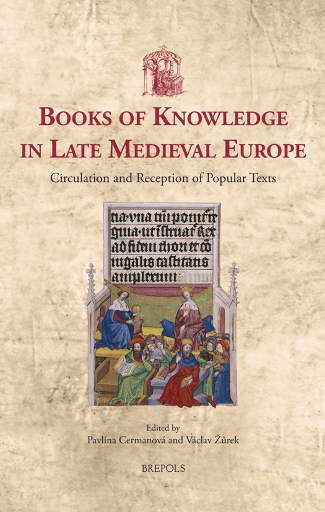
Books of Knowledge in Late Medieval Europe
Circulation and Reception of Popular Texts
show More to view fulltext, buy and share links for:Books of Knowledge in Late Medieval Europe show Less to hide fulltext, buy and share links for: Books of Knowledge in Late Medieval EuropeThis book provides a series of studies concerning unique medieval texts that can be defined as ‘books of knowledge’, such as medieval chronicles, bestiaries, or catechetic handbooks. Thus far, scholarship of intellectual history has focused on concepts of knowledge to describe a specific community, or to delimit intellectuals in society. However, the specific textual tool for the transmission of knowledge has been missing. Besides oral tradition, books and other written texts were the only sources of knowledge, and they were thus invaluable in efforts to receive or transfer knowledge. That is one reason why texts that proclaim to introduce a specific field of expertise or promise to present a summary of wisdom were so popular. These texts discussed cosmology, theology, philosophy, the natural sciences, history, and other fields. They often did so in an accessible way to maintain the potential to also attract a non-specialised public. The basic form was usually a narrative, chronologically or thematically structured, and clearly ordered to appeal to readers. Books of this kind could be disseminated in dozens or even hundreds of copies, and were often available (by translation or adaptation) in various languages, including the vernacular.
In exploring these widely-disseminated and highly popular texts that offered a precise segment of knowledge that could be accessed by readers outside the intellectual and social elite, this volume intends to introduce books of knowledge as a new category within the study of medieval literacy.
-
-
-
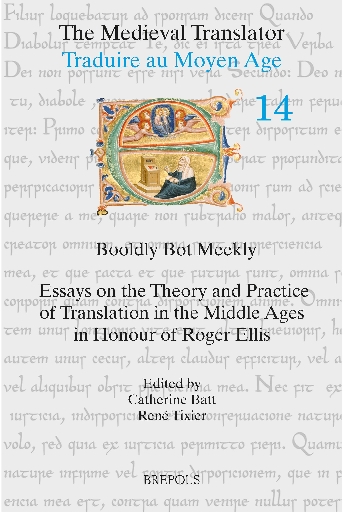
Booldly bot meekly
Essays on the Theory and Practice of Translation in the Middle Ages in honour of Roger Ellis
show More to view fulltext, buy and share links for:Booldly bot meekly show Less to hide fulltext, buy and share links for: Booldly bot meeklyWhen, back in the 1980s, Roger Ellis first sounded out academic colleagues in British universities and beyond about their possible interest and participation in a conference on medieval translation theory and practice, he perhaps did not envisage that the resulting gathering - intellectually curious, animated, convivial - at Gregynog Hall in Wales (1987) would be the first of a series of international conferences with a strong continental European base, which now provides a regular forum in which one can initiate, and engage with, research questions about this near all-encompassing aspect of medieval culture. Since that first meeting, the Cardiff Conferences on the Theory and Practice of Translation in the Middle Ages have charted and drawn anew the parameters of scholarly debate on the topic, while their Proceedings, hosted since 1996 by Brepols’ Medieval Translator series, cumulatively present a body of work valuable to anyone interested in translation in its medieval, broadly European, manifestations.
The contributors of this volume’s essays, assembled in tribute to Roger Ellis on the occasion of his seventieth birthday, have profited from the intellectual opportunities the Medieval Translator conferences foster, and in particular from Roger’s friendship and academic acumen. The essays draw in many cases on Roger’s work to inform a collective project that reflects on his specific interests in translation, including latemedieval piety and Birgittine texts, scholarly editions and studies of genre, considering literary and linguistic relations within and across languages, registers, national boundaries, time and space, refining, even re-defining, our understanding of translation. We offer these essays with warm thanks to and appreciation of Roger Ellis for his work in this field, not least for establishing, with this conference series, a means to demonstrate that translation, and translation studies, is above all a question of different voices speaking productively in dialogue.
-
-
-
Borders, Barriers, and Ethnogenesis
Frontiers in Late Antiquity and the Middle Ages
show More to view fulltext, buy and share links for:Borders, Barriers, and Ethnogenesis show Less to hide fulltext, buy and share links for: Borders, Barriers, and EthnogenesisThis collection addresses an audience of early medievalists with an interest in material culture and its use in building ethnic boundaries. The traditional concept of frontier is a subject of current debate by historians and archaeologists alike, but sometimes without reference to each other. For instance, the social and cultural construction of (political) frontiers remains outside the current focus of post-processualist archaeology, despite the significance of borders for the representation of power, one of the most popular topics with archaeologists interested in symbols and ideology. Similarly, historians of the early Middle Ages have only recently developed an interest in the political manipulation of cultural difference across state frontiers. Perhaps the most interesting aspect of this new direction of research is the emphasis on political frontiers as crucial for the creation, rather than separation, of ethnic configurations. Recent work on the relation between monastic communities and political frontiers has shown the potential for a study of frontier symbolism. The idea of the present volume grew out of the realization that there was a great deal of new work being done in this direction which deserved a wider audience. This was true both of studies of late antique frontiers and of more recent research on medieval frontier societies. In addition, several authors address the issue of religious identities and their relations with ethnicity and state ideology. In that respect, the book is directed to a large audience, particularly because of its wide geographical range, from Iberia and the Balkans to Cilicia and Iran.
-
-
-
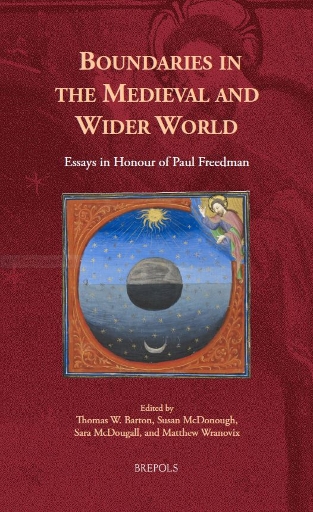
Boundaries in the Medieval and Wider World
Essays in Honour of Paul Freedman
show More to view fulltext, buy and share links for:Boundaries in the Medieval and Wider World show Less to hide fulltext, buy and share links for: Boundaries in the Medieval and Wider WorldThroughout his distinguished career at Vanderbilt and Yale, Paul H. Freedman has established a reputation for pushing against and crossing perceived boundaries within history and within the historical discipline. His numerous works have consistently ventured into uncharted waters: from studies uncovering the hidden workings of papal bureaucracy and elite understandings of subaltern peasants, to changing perceptions of exotic products and the world beyond Europe, to the role modern American restaurants have played in taking cuisine in exciting new directions.
The fifteen essays collected in this volume have been written by Paul Freedman’s former students and closest colleagues to both honour his extraordinary achievements and to explore some of their implications for medieval and post-medieval European society and historical study. Together, these studies assess and explore a range of different boundaries, both tangible and theoretical: boundaries relating to law, religion, peasants, historiography, and food, medicine, and the exotic. While drawing important conclusions about their subjects, the collected essays identify historical quandaries and possibilities to guide future research and study.
-
-
-
Boundaries of Holiness, Frontiers of Sainthood
Negotiating the Image of Christian Holy Figures and Saints in Late Antiquity
show More to view fulltext, buy and share links for:Boundaries of Holiness, Frontiers of Sainthood show Less to hide fulltext, buy and share links for: Boundaries of Holiness, Frontiers of SainthoodMany excellent studies have been published on the phenomenon of holy (wo)men and saints. As a rule, however, they focus on successful candidates for holiness who played the roles of charismatic leaders and patrons of social and religious life.
This volume offers a new perspective on ancient and medieval holiness — its main focus is holiness as defined by its peripheries, and not by its conceptual centre. The contributors explore stories of men and women whose way to sainthood did not follow typical ‘models’, but who engaged with it from its outskirts. Several essays examine the strategies employed by hagiographical authors to tailor the images of candidates for holiness whose lives provided less obvious examples of moral and/or religious ideals. These include attempts to make saints out of emperors, heretics, and other unlikely or obscure figures. Other case studies focus on concerns with false holiness, or unusual cases of holiness being ascribed prior to a saint’s death. Another concept explored in the volume is space. The spatial boundaries of holiness are discussed in relation to the transmission of relics, to the opposition between urban and rural spaces, holy sites, and even imagined space.
Holiness and sainthood have been crucial concepts for Christianity from its inception. By exploring their ‘marginal’ and ‘peripheral’ aspects, the essays in this book offer vital new perspectives on the religious world of Late Antiquity.
-
