EMISCA

Collection Contents
101 - 120 of 260 results
-
-

Les élites et leurs espaces
show More to view fulltext, buy and share links for:Les élites et leurs espaces show Less to hide fulltext, buy and share links for: Les élites et leurs espacesVenant à la suite du volume sur «les élites au haut Moyen Âge: crises et renouvellements», cet ouvrage analyse le rapport des élites à la distance et à l’espace. Laissant de côté les concepts de noblesse ou d’aristocratie, on adopte ici celui d’élite, emprunté à la sociologie, pour faire porter l’étude sur tous ceux qui, d’une manière ou d’une autre, exercent un pouvoir social lié à l’excellence, que ce soit celle de la naissance et du sang, ou celle de la capacité, dans telle ou telle activité, à se distinguer et à en tirer prestige, richesse ou honneur. Historiens des textes et archéologues croisent les approches et examinent la relation qu’entretiennent les élites avec les notions d’espace, de territoire et de distance — une relation changeante selon le contexte politique et économique, et qui vaut comme critère de hiérarchisation sociale. L’espace ici étudié peut être lâche ou structuré, fini ou ouvert. On le voit être transformé en territoire, à l’initiative de personnes et de groupes. En même temps, les auteurs prennent en compte l’idée de distance: les élites la maîtrisent, elles contrôlent, modèlent, fondent des zones d’influence ou des territoires. L’étude du rapport des diverses élites à la distance, à l’espace et aux lieux de pouvoir permet ainsi de renouveler profondément l’approche du phénomène élitaire en privilégiant la pratique par rapport aux critères théoriques et juridiques de la distinction. La présente enquête est conduite sur la longue durée, depuis la fin du monde antique jusqu’au XIe siècle, et couvre une bonne partie de l’Europe (Allemagne, Angleterre, Espagne, France, Italie).
-
-
-
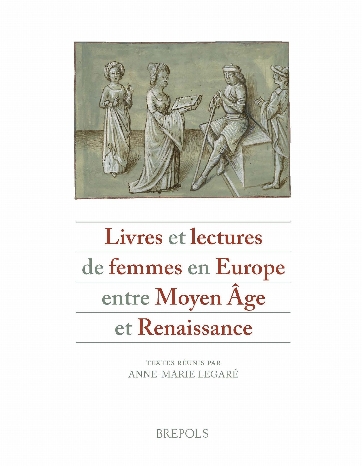
Livres et lectures de femmes en Europe entre moyen âge et renaissance
show More to view fulltext, buy and share links for:Livres et lectures de femmes en Europe entre moyen âge et renaissance show Less to hide fulltext, buy and share links for: Livres et lectures de femmes en Europe entre moyen âge et renaissance
-
-
-

Léon IX et son temps
show More to view fulltext, buy and share links for:Léon IX et son temps show Less to hide fulltext, buy and share links for: Léon IX et son tempsLe pontificat de Léon IX (1049-1054) marque un tournant dans l’histoire de l’Eglise. Energique et déterminé, Léon IX voyage au sud comme au nord des Alpes, tient de nombreux conciles, fait sentir même aux évêques le poids de l’autorité romaine, tente de mener une politique cohérente face aux Normands et aux Byzantins, réforme la vieille chancellerie pontificale… Il lance ainsi, dans le respect de l’autorité impériale, la réforme de l’Eglise qui deviendra ensuite la réforme grégorienne.
Saisissant le prétexte du millénaire de sa naissance, un colloque réuni à Strasbourg en juin 2002 a fait le point sur les origines, la personnalité, l’action et l’entourage de ce pape, ainsi que sur les sources, narratives, diplomatiques, épistolaires, nécrologiques, archéologiques et autres, de l’histoire de son pontificat.
-
-
-
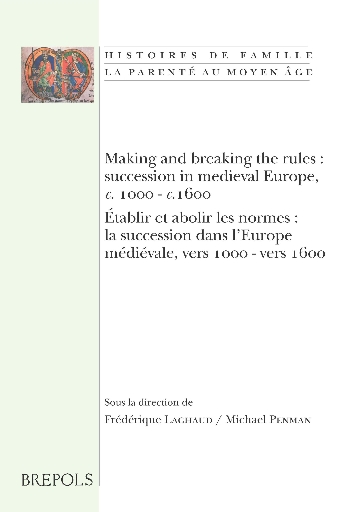
Making and breaking the rules: succession in medieval Europe, c. 1000-c.1600. Établir et abolir les normes: la succession dans l’Europe médiévale, vers 1000-vers 1600
show More to view fulltext, buy and share links for:Making and breaking the rules: succession in medieval Europe, c. 1000-c.1600. Établir et abolir les normes: la succession dans l’Europe médiévale, vers 1000-vers 1600 show Less to hide fulltext, buy and share links for: Making and breaking the rules: succession in medieval Europe, c. 1000-c.1600. Établir et abolir les normes: la succession dans l’Europe médiévale, vers 1000-vers 1600Les stratégies familiales au Moyen Âge recourent à un vaste éventail de dispositifs destinés à assurer la survie de la famille et du pouvoir qu’elle gère parfois. Mariages, alliances, processus d’adoption même permettent de conserver et d’étendre l’identité familiale, que ce soit sous la forme de la lignée ou de la parenté large; mais ce sont sans doute les stratégies adoptées au moment des successions qui sont les plus cruciales pour la perpétuation des familles. Les études réunies ici tentent de confronter et de comparer les systèmes de succession en vigueur dans les différentes régions d’Occident, de la Russie à l’Irlande, de la Scandinavie à la péninsule Ibérique. Dans le cas des successions princières, elles démontrent que l’étude du principe électoral permet de mieux comprendre, a contrario, ce qui fait la force du sentiment dynastique, jamais absent. Et la comparaison avec d’autres domaines où jouent les processus de succession, qu’il s’agisse de l’Église ou de l’office, vient alimenter des interrogations nouvelles sur les formes du désir de pérennité.
-
-
-

Manuscripts and Monastic Culture
show More to view fulltext, buy and share links for:Manuscripts and Monastic Culture show Less to hide fulltext, buy and share links for: Manuscripts and Monastic CultureEach of the studies in this volume draws upon a manuscript, or a group of manuscripts, that shed light on the practice of monastic life during this period of reform. Many, but not all, of the papers focus on the monastery of Admont in central Austria. Admont was one of the most important spiritual, cultural, and intellectual centres in the high Middle Ages, and its magnificent library still houses an extensive collection of manuscripts - a rich resource both for the history of the monastery and for the broader history of medieval religious life. The book brings together the work of an international group of scholars whose work touches on various aspects of twelfth-century Admont, and the broader movement for reform and renewal in Germany and Austria.
With the publication of Charles Homer Haskin’s important work, The Renaissance of the Twelfth Century (1933), came a new way of looking at the civilization of the high Middle Ages. Scholars have since investigated many aspects of this revival: the rise of the universities, the development of canon law, the emergence (or re-emergence) of a heightened sense of human individuality, and the revival of religious fervour that has been labelled a reformation before the Reformation. Much of this scholarly work has focused on northern-central Italy, France, and England. Germany, however, has been little studied in this context, in part because the nature and trajectory of the reform there differed from that seen elsewhere in Europe. The essays in the book both explore connections between Germanic lands and the wider western European context, and consider the unique spiritual and intellectual climate of Germany’s monasteries.
-
-
-
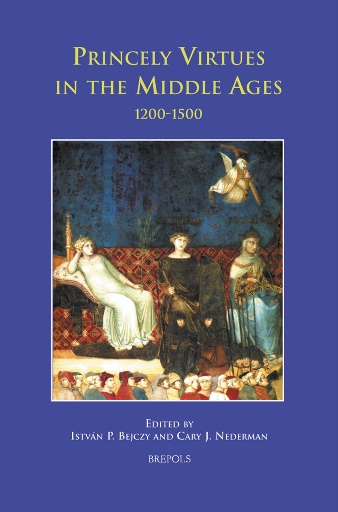
Princely Virtues in the Middle Ages
show More to view fulltext, buy and share links for:Princely Virtues in the Middle Ages show Less to hide fulltext, buy and share links for: Princely Virtues in the Middle AgesThe contributors to this book examine the diverse roles played by moral virtues in the political writing of the Later Middle Ages. Medieval political thought has a long tradition of scholarship, and its ethical dimension has always received sustained attention. This volume specifically concentrates on the meaning and function of virtues in a political context, a theme which has thus far been neglected. The authors deal with Latin texts (occasionally in combination with vernacular ones) from the thirteenth to fifteenth centuries that define, legitimize, or criticize secular rule by using catalogues of virtues, originating from ancient philosophy as well as Christian moral theology. The contributions discuss various aspects related to this theme, such as the relation between the virtues of rulers and general moral precepts; the tension between secular or philosophical perspectives on virtue and Christian moral thought; the use of moral virtues for political ends; the balance between praise of the prince’s virtues and criticism of his vices; and so forth. The medieval texts under discussion are of French, German, English, Italian, and Spanish origin, and vary from educational treatises and historiography to moral theology and political philosophy.
-
-
-
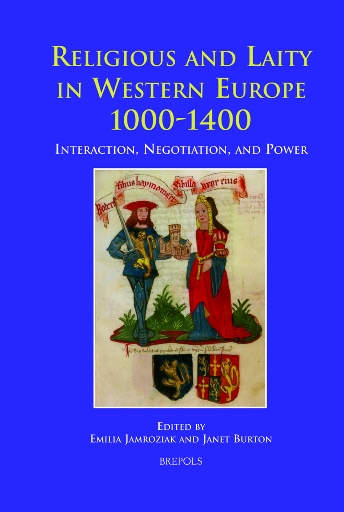
Religious and Laity in Western Europe, 1000-1400
show More to view fulltext, buy and share links for:Religious and Laity in Western Europe, 1000-1400 show Less to hide fulltext, buy and share links for: Religious and Laity in Western Europe, 1000-1400This volume examines forms of interaction between monastic or mendicant communities and lay people in the high Middle Ages in Britain, France, the Low Countries, and Scandinavia. The nineteen papers explore these issues in geographically and chronologically diverse settings in a way that no English-language collection has yet attempted. It brings together the latest research from established as well as younger historians. The first section ‘Patrons and Benefactors: power, fashion, and mutual expectations’ examines lay involvement in foundations, the rights held by patrons, and how they used these powers, as well as networks of relationships within broader groups of benefactors. The authors demonstrate how changing fashions shaped the fortunes of particular orders and houses and explore how power relations between different types of patrons and benefactors - royal figures, kinship, and other social groupings - affected the mutual expectations of the various parties. The second section of the volume, entitled ‘Lay and Religious: negotiation, influence, and utility’, shows how lay people’s ideas of the role of religious houses could impact upon their patronage of, and support for, monastic or mendicant institutions. Conversely, religious communities offered multi-faceted benefits - practical, intellectual, or spiritual - for the secular world. The book concludes by focusing on the rapid growth of confraternities, their relation to their urban mendicant and monastic contexts, and how the role and forms of confraternities evolved in the late medieval period.
-
-
-
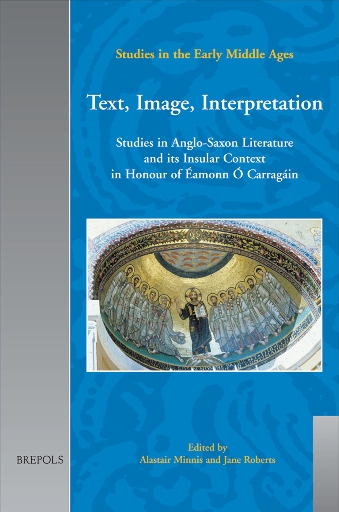
Text, Image, Interpretation:
show More to view fulltext, buy and share links for:Text, Image, Interpretation: show Less to hide fulltext, buy and share links for: Text, Image, Interpretation:In emulation of Professor Éamonn Ó Carragáin, who has, over the last few decades, demonstrated how words and images together join in that extraordinary cultural achievement which is the Ruthwell Cross, the volume seeks to transcend the established methods of the single discipline.
The twenty-six essays draw together insights from fields as diverse as archaeology, art history, and liturgy to reflect on the literature and material culture of the Anglo-Saxons. The first section looks outwards from the insular context, to medieval Rome, more generally to western Europe, and backwards to the world-geography of the ancient world; its illustrations include colour plates to illumine the hangings, clothing and vestments extant from Anglo-Saxon England. A range of texts is considered in the central section, Latin, English, and Old Norse. The third section focuses on sculpture, buildings and the insular landscape, juxtaposing the sculptured stonework of Northern Britain with early Christian monuments and remains from Ireland; among the illustrations are striking coloured photographs of Irish ecclesiastical sites. The contributors are from Canada, the United States, Italy, Britain, and Ireland.
-
-
-

Texte et discours en moyen français
show More to view fulltext, buy and share links for:Texte et discours en moyen français show Less to hide fulltext, buy and share links for: Texte et discours en moyen françaisC’est dans le cadre du renouveau de la linguistique diachronique et de l’attention croissante portée au moyen français que s’inscrivent les présentes études sur la linguistique textuelle du moyen français. Quels sont, dans cette période, les éléments linguistiques contribuant à la structuration du texte? Comment la cohésion textuelle et la continuité thématique sont-elles assurées? Les contributions réunies ici explorent ces domaines, en décrivant l’emploi d’une série de connecteurs, modalisateurs et signes de ponctuation et en analysant les mécanismes sous-jacents au fonctionnement des expressions anaphoriques et des constructions topicalisantes et focalisantes.
Le présent volume, qui est le fruit du XIe colloque international sur le moyen français tenu à Anvers (19-21 mai 2005), offre une analyse originale et détaillée des outils linguistiques dont dispose le moyen français pour rendre accessible son discours.
-
-
-
The Crisis of the Oikoumene
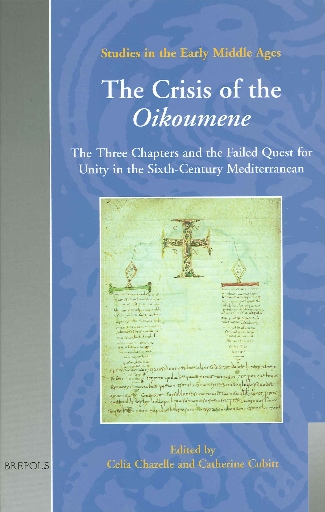
show More to view fulltext, buy and share links for:The Crisis of the Oikoumene show Less to hide fulltext, buy and share links for: The Crisis of the OikoumeneThe sixth-century theological controversy over the ‘Three Chapters’, which centred on the nature of Christ, provoked one of the most serious and long-lived religious schisms of the early Middle Ages. The fault lines ran not only between the Byzantine imperial court and the papacy, but between Rome and the churches in the former western empire’s successor states. In Italy, the schism endured into the seventh century, and the repercussions were felt long thereafter. Though rooted in the complexities of christological debate, the tensions reveal the growing political as well as cultural divide between Byzantium, Rome, and the West. Thus the controversy is critical for our understanding of the late-antique and early-medieval Mediterranean world, and of the inheritance of empire in western Europe and North Africa. This book presents ten chapters by an international group of scholars who examine different facets of the Three Chapters Controversy and its profound impact on these regions.
-
-
-
The Medieval Cathedral of Trondheim
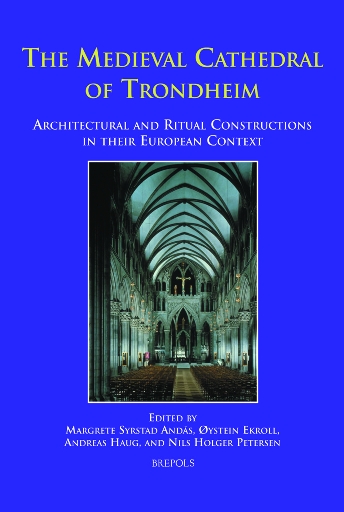
show More to view fulltext, buy and share links for:The Medieval Cathedral of Trondheim show Less to hide fulltext, buy and share links for: The Medieval Cathedral of TrondheimMedieval cathedrals and the various practices connected to them form an important and complex part of the European cultural heritage. The buildings themselves and their reception into the modern arts ensure their presence within today’s cultural memories and sensibilities. In the mid-twelfth century, a new archbishop’s seat was erected in the Norwegian city of Trondheim (or Nidaros) in the far north of Europe. This interdisciplinary volume, written by scholars of history, architecture, and liturgy, explores the medieval cathedral of Trondheim as a local construction in a European context. As a see of the Western Church, it was set in an international Latinate culture. At the same time, the construction of the building itself and the ritual practices in and around it were influenced by local political, religious, and cultural conditions. The relationship between the physical construction of a cathedral and its function in medieval liturgical and other ritual practices is a topic of wide relevance for architectural and liturgical scholarship. The so-called Ordo Nidrosiensis, the thirteenth-century ordinal of the province of Nidaros, is an immense help in interpreting the architectural construction and sacred space of Nidaros Cathedral and the Ordo is dealt with in many of the articles. In accordance with general medieval practice, both the Nidaros ordinal and this volume may be described as international in content but edited with regard to local considerations.
-
-
-
The Medieval Translator. Traduire au Moyen Age
show More to view fulltext, buy and share links for:The Medieval Translator. Traduire au Moyen Age show Less to hide fulltext, buy and share links for: The Medieval Translator. Traduire au Moyen Age[Fundamental to all translation work, the concept of “displacement” allows one to take into account the multiple successive states inhering in a single text, and to interpret these variations. Translation is, in effect, a form of transfer; more specifically, it involves a movement from one context to another, be it national, social, political, historical, linguistic or religious. The texts examined here illustrate, each in their unique way, the relationship between contextual change and audience. They are also the product of subtle interactions between a variety of elements, the result of which is a “reinvention” of their respective roles and uses over time. For example, a text intending to entertain may also have educational outcomes; a book of local miracles may attract pilgrims and contribute to the economic life of a monastery; a text and its translations may at some point be appropriated for polemical purposes, while a library of translated texts founded on humanist principals may also serve political ends.
Furthermore, each successive adaptation and its accompanying annotations impacts upon the tonality of a text. While this diversity of meanings may inspire some (such as the medieval poet Marie de France), it moreover raises a number of important and difficult questions for the modern translator. How, for example, does one translate the “harmonics” underlying a series of mystical puns? The “solution” usually involves a compromise that both enhances and undermines the translated text.
This volume presents a selection of twenty-eight papers delivered at the Seventh International Conference dedicated to The Theory and Practice of Translation in the Middle Ages, which took place at the University of Paris III — Nouvelle Sorbonne in July 2004. The period covered by the texts and their translations extends from antiquity to the present day. The literary and critical breadth of these papers, as well as the rigorous interrogation of the modern translation theory, illustrates the remarkable vitality and diversity of current scholarship in this field.
,Au cœur de toute activité de traduction, le concept de déplacement permet de rendre compte des multiples états successifs d’un même texte et d’en interpréter les variations. Toute traduction est en effet une translation, c’est-à-dire un changement d’environnement, que ce dernier soit national, social, politique, historique, linguistique ou ecclésial. Les textes examinés ici témoignent chacun à sa manière des transformations qu’ils ont subies lorsque, changeant de langue, de style ou d’époque, ils ont changé de destinataires. La dynamique qui les traverse se nourrit de subtils côtoiements: un désir légitime de divertir peut fort bien s’accommoder d’une intention didactique; un recueil de miracles locaux peut attirer des pèlerins, contribuant ainsi à la vie économique d’un monastère; un texte et ses traductions peuvent devenir l’objet d’utilisations polémiques; se constituer en humaniste une bibliothèque de traductions peut aussi servir un dessein politique.
Par ailleurs les transpositions successives et leurs gloses, comme en musique, entraînent des changements de tonalité. Ce ‘surplus’ de sens qu’encourage Marie de France pourra cependant se heurter à des résistances: comment par exemple préserver d’une langue à l’autre toutes les harmoniques que libère un enchaînement de jeux de mots mystiques? Ainsi l’inévitable compromis qui s’imposera au traducteur sera souvent le choix d’un enrichissement doublé d’une déperdition.
Ce volume présente une sélection des communications entendues lors du septième colloque international consacré à la théorie et la pratique de la traduction des textes au Moyen Age qui s’est tenu à l’Université de Paris III — Sorbonne Nouvelle en juillet 2004. La période couverte par ces textes et leurs traductions s’étend de l’Antiquité jusqu’à nos jours. Ce sont au total vingt-huit études qui sont ici proposées. La richesse des domaines abordés, la haute technicité des analyses, de même que la place faite aux questionnements de la traductologie moderne illustrent la remarquable vitalité des études actuelles relatives aux multiples aspects de la traduction des textes médiévaux.
]
-
-
-
The Narrator, the Expositor, and the Prompter in European Medieval Theatre
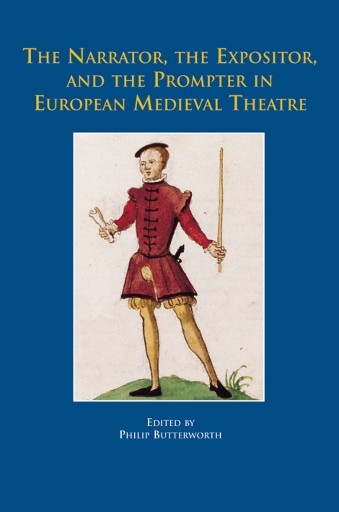
show More to view fulltext, buy and share links for:The Narrator, the Expositor, and the Prompter in European Medieval Theatre show Less to hide fulltext, buy and share links for: The Narrator, the Expositor, and the Prompter in European Medieval TheatreInterest in the content of this book has developed out of an examination of the prompter who operated in full view of the audience and offered all the lines to the players. In 2001 at Groningen a production of the Towneley Second Shepherds’ Play focused on an examination of this convention. Many of the audience responses then were concerned with the figure of the prompter as he was seen to operate simultaneously both ‘inside’ and ‘outside’ the action of the play. Such a role and its function is fascinating, not only in its own right, but also in relation to how it might inform us about the nature and purpose of presented theatre. The ability of such a figure to move in and out of the action, and thus different realities, characterizes a relationship to the action and the audience. The same fascination exists in relation to roles of the narrator and the expositor. Sometimes these roles are overt ones; sometimes they ‘double up’ with roles of actors, personages or characters. These figures are of pivotal significance in the communication of those plays in which they operate. The purpose of this book is to investigate the nature of these roles in order to identify their influence upon the performance of medieval plays.
-
-
-
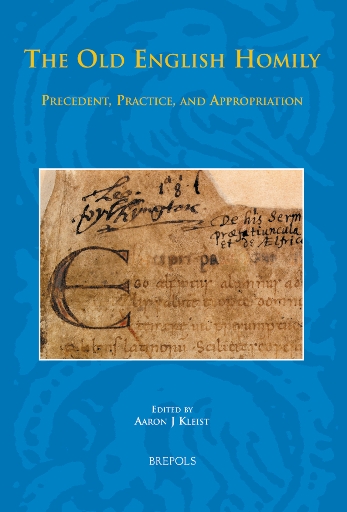
The Old English Homily
show More to view fulltext, buy and share links for:The Old English Homily show Less to hide fulltext, buy and share links for: The Old English HomilyThe quarter-century that has passed since Paul Szarmach’s and Bernard Huppé’s groundbreaking The Old English Homily and its Backgrounds (1978) has seen staggering changes in the field of Anglo-Saxon homiletics. Primary materials have become accessible to scholars in unprecedented levels, whether digitally or through new critical editions, and these have generated in turn a flood of secondary scholarship. The articles in this volume showcase and build on these developments. The first five essays consider various contexts of and infuences on Anglo-Saxon homilies: patristic and early medieval Latin sources, continental homiliaries and preaching practices, traditions of Old Testament interpretation and adaptation, and the liturgical setting of preaching texts. Six studies then turn to the sermons themselves, examining style and rhetoric in the Vercelli homilies, the codicology of the Blickling Book, sanctorale and temporale in the works of Ælfric, and the challenges posed by Wulfstan’s self-referential corpus. Finally, the last entries take us past the Conquest to discuss the re-use of homiletic material in England and its environs from the eleventh to eighteenth century. Together these articles offer medieval scholars a new Old English Homily, one that serves both as an introduction to key figures and issues in the field and as a model of studies for the next quarter-century.
-
-
-
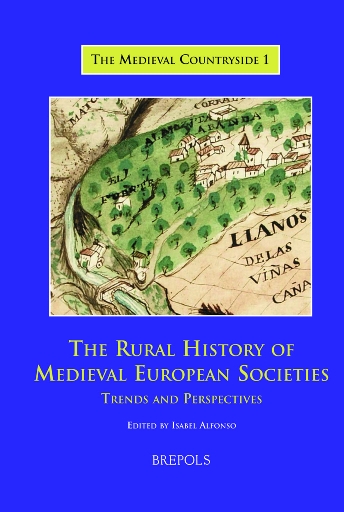
The Rural History of Medieval European Societies
show More to view fulltext, buy and share links for:The Rural History of Medieval European Societies show Less to hide fulltext, buy and share links for: The Rural History of Medieval European SocietiesThis collection gathers together a range of scholars who reflect on recent historiographical developments in medieval rural history within their respective countries. Each contribution provides a survey of a recent area of research, as well as documenting its significant results, and offering perspectives for future investigations. This international approach not only provides a deeper insight into how medieval rural studies relates to current debates in the social sciences, but it also highlights the connections between specific national historical traditions and present-day research issues in their historical contexts. By comparing different European regions it is possible to see more clearly the similarities and the differences which lie between them; this volume therefore constitutes a truer means of constructing syntheses and for identifying fruitful lines of future research.
-
-
-
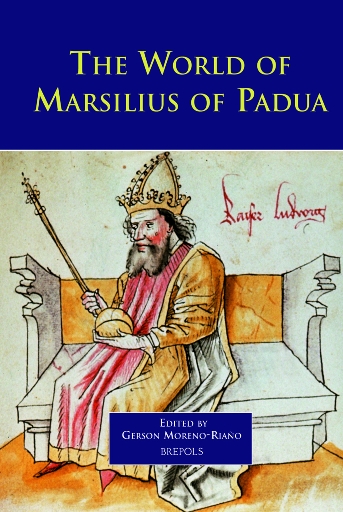
The World of Marsilius of Padua
show More to view fulltext, buy and share links for:The World of Marsilius of Padua show Less to hide fulltext, buy and share links for: The World of Marsilius of PaduaPerhaps no author of the Latin Middle Ages has been the subject of so much controversy and even vitriol than Marsilius of Padua (c. 1275-1342/43). As author of the notorious heretical tract, the Defensor Pacis, Marsilius became an infamous figure throughout the intellectual and political centres of Europe during his own lifetime. His magnum opus, a sharply pointed dissection of the damage done to earthly political life by the incursions of the papacy and a plea for conciliar ecclesiology, was repeatedly condemned during the fourteenth century and in later years. Yet the treatise continued to be disseminated and received translation into several vernacular languages. During the Reformation, Marsilius and his Defensor Pacis enjoyed another round of acclamation and denunciation, depending upon one’s confession. In July 2003, a group comprising many of the world’s most renowned scholars of medieval political thought gathered for a ‘Marsilius of Padua World Congress’. The contents of the present volume represent a compendium of innovative scholarly contributions to the understanding of Marsilius, his life and times, and his lasting impact on Western thought. Included are chapters that reflect a range of recent, ground-breaking research by both senior scholars and the future leaders in the field. After a general survey of the current state of scholarship on Marsilius, the volume divides into three thematically organized sections, covering a variety of historical, textual, methodological, theological, and theoretical questions. In all of the essays, readers will discover the wealth and complexity of Marsilius’s thought as well as the startling range of approaches and methods of interpretation taken in the study of his work. The volume’s selection of authors is international in scope and represents the first interdisciplinary scholarly collaboration in the field of Marsilian studies to occur in the twenty-first century.
-
-
-
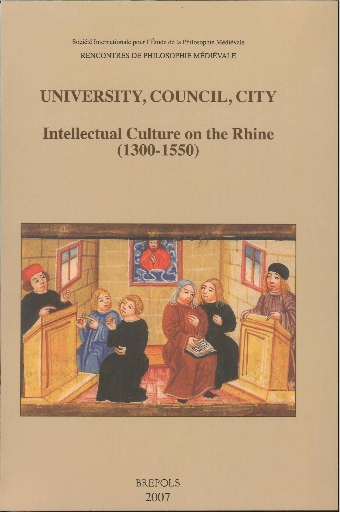
University, Council, City. Intellectual Culture on the Rhine (1300-1550)
show More to view fulltext, buy and share links for:University, Council, City. Intellectual Culture on the Rhine (1300-1550) show Less to hide fulltext, buy and share links for: University, Council, City. Intellectual Culture on the Rhine (1300-1550)Stretching from Basel to Cologne, the Rhine formed the geographical axis of a broad cultural realm in the late Middle Ages, lending vitality not only to its cities and universities but also to the two great Councils to which it played host. Already in the fourteenth century, the lives of such famous German mystics as Meister Eckhart, Heinrich Seuse and Johannes Tauler testify to the presence of an advanced intellectual culture in the cities of the upper and lower Rhine. In the fifteenth century, the most famous Councils of the late Middle Ages took place along the Rhine, namely the Councils of Constance and Basel, which formed loci of intellectual exchange and which became seedbeds of philosophical ideas that engaged and influenced such participants as Heymericus de Campo and Nicholas of Cusa. With the establishment of the Universities of Cologne (1388), Freiburg (1457), Basel (1459) and Mainz (1476), the intellectual culture of this region took an institutional form that continues to exist to this day, and symbolizes the stability of the intellectual culture of the Rhineland. The main purpose of this volume is to explore the intellectual richness and vitality of the Rhineland in its various facets and on its different levels.
-